Forsythia × intermedia 'Show Off' ('Mindor')
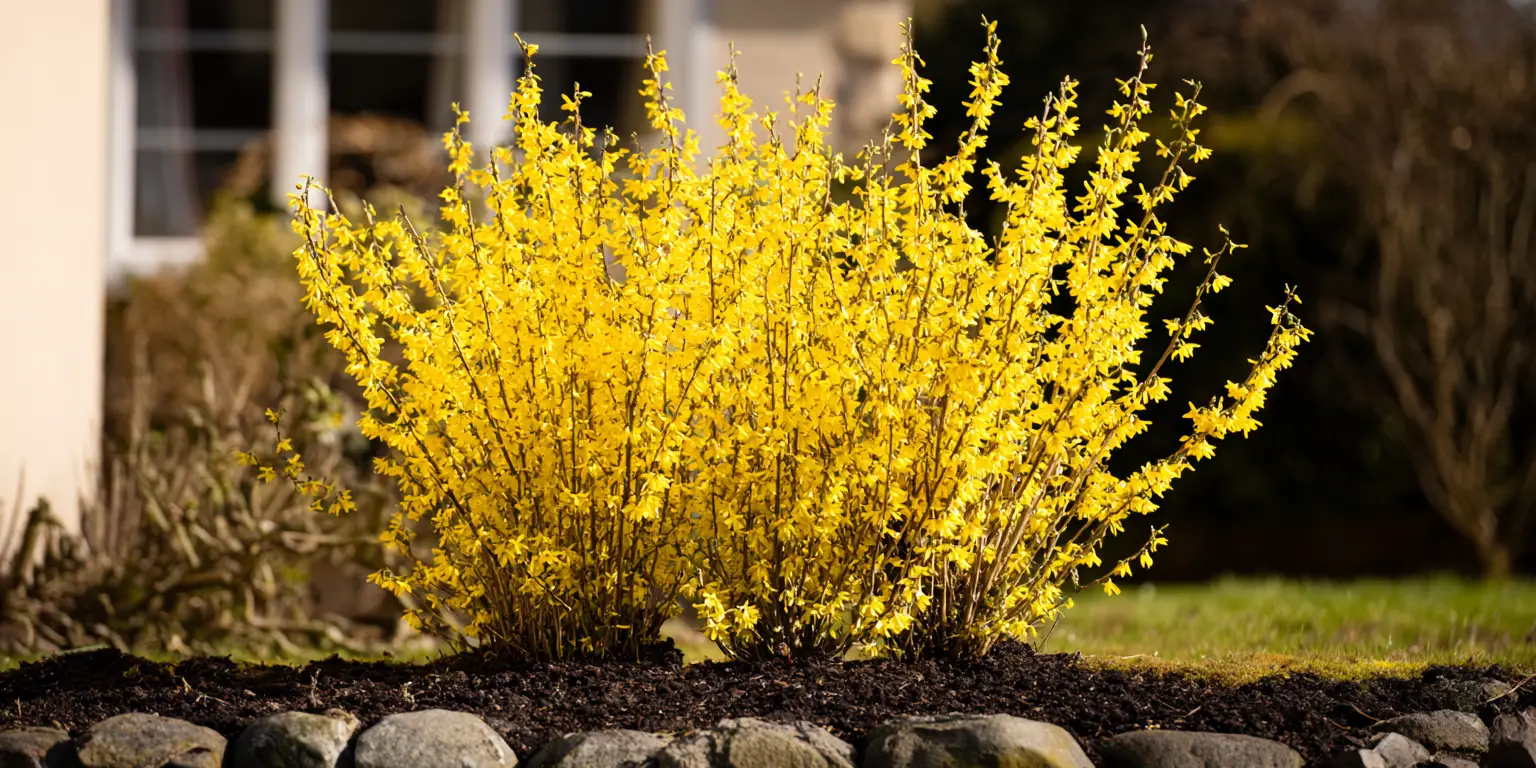
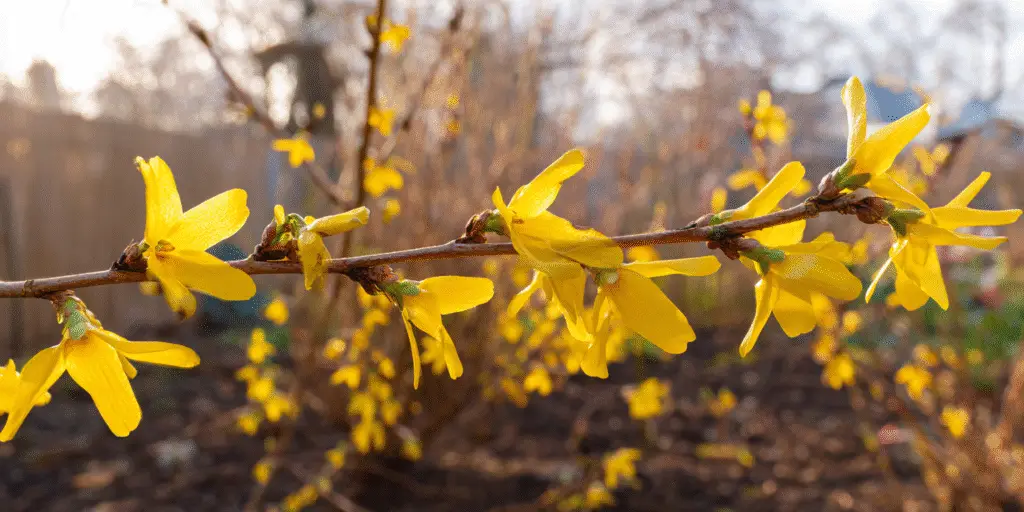
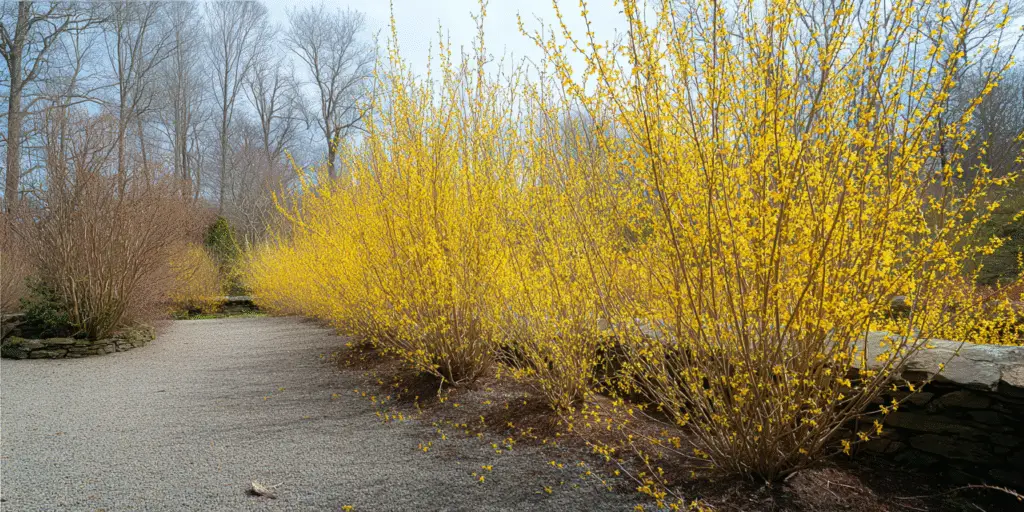
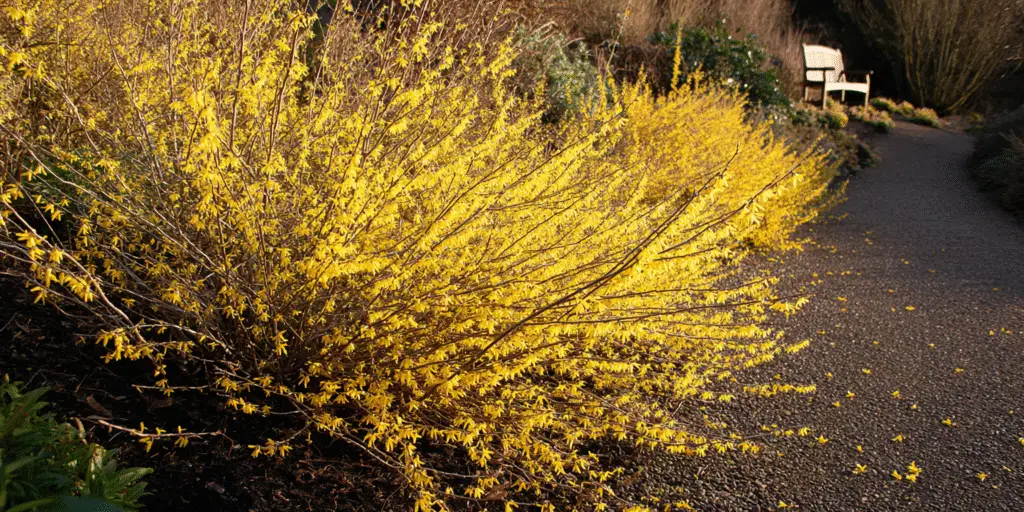
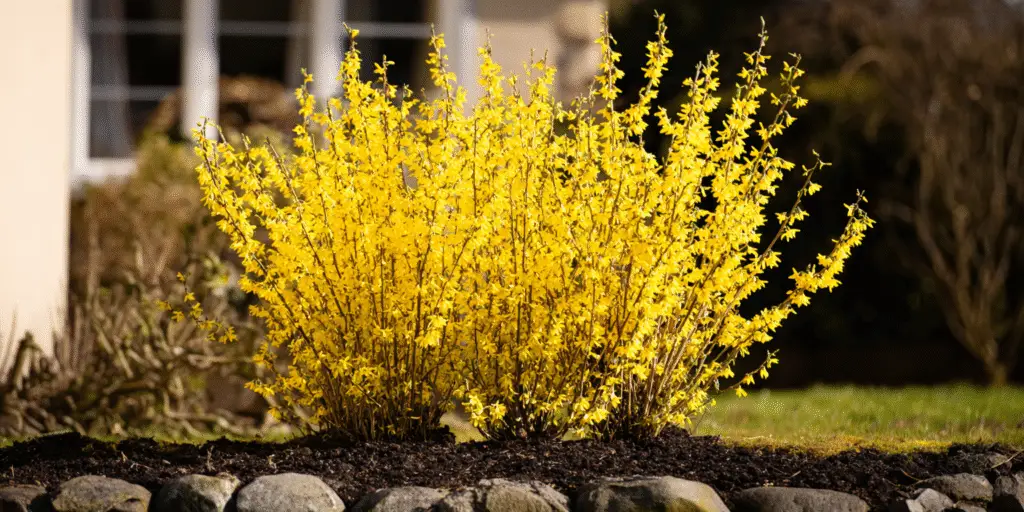
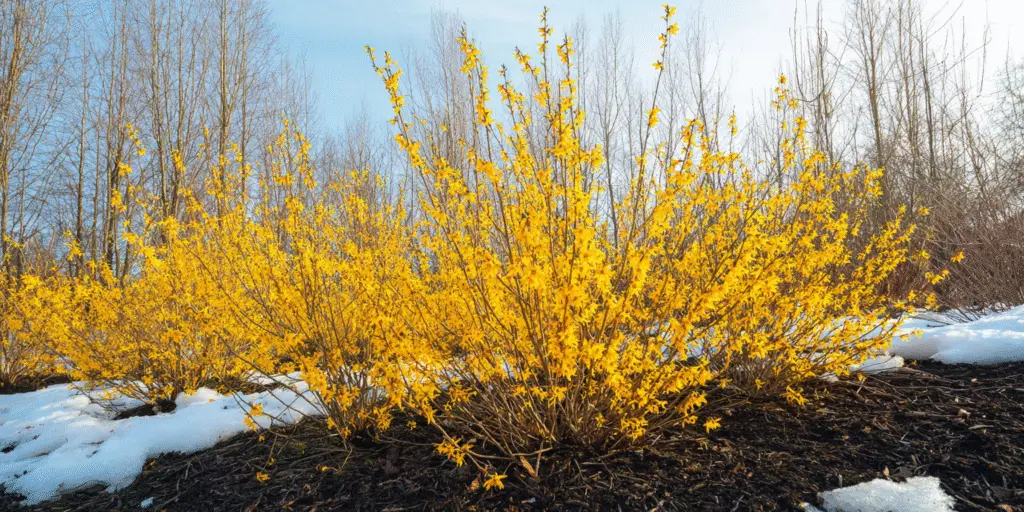
A mid‑size border forsythia selected for dense, uniform flowering along the stems. Plants form an upright to outward‑spreading mound and stay manageable in small landscapes. Golden yellow flowers open before leaves in late winter to early spring. Best performance is in full sun and average, well‑drained soil. Prune after bloom to maintain the tidy outline.
At‑a‑glance
- Group/Class: Hybrid border forsythia (deciduous shrub)
- Height × spread: 3-6 ft × 3-6 ft (0.9-1.8 m × 0.9-1.8 m)
- Bloom window: late winter to early spring
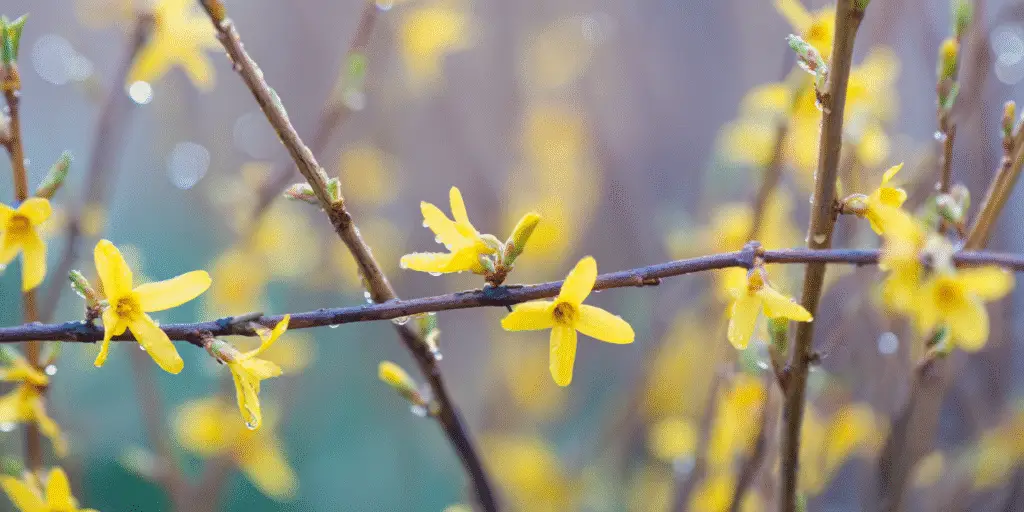
- Color & flower form: Golden yellow; single, along stems
- Fragrance: 0 none
- USDA hardiness: zones 5-8
- Breeder / Year / Origin: Jean‑Paul Davasse; 2008 (US patent); France
- Awards/registration: U.S. Plant Patent PP19,321
- Cut‑flower notes: forces easily; vase life about 5-7 days when kept cool
- Pet safety: safe (ASPCA: non‑toxic to cats and dogs)
How it differs
- Shorter and denser than older tall cultivars.
- Flowers are distributed from base to tips in good light.
- Good fit for small hedges and foundations.
Strengths
- Even, showy coverage of flowers.
- Compact habit with easy upkeep.
Care in one minute
- Full sun is best; part shade reduces bloom.
- Average, well‑drained soil; avoid soggy sites.
- Water to establish; water in extended droughts.
- Renewal‑prune after bloom; light tip‑pruning keeps shape.
Watch‑outs
- Needs sun for heavy bloom; shade reduces flowers.
- Buds may be nipped by late frosts in cold pockets.
Best uses (tags)
low hedge; foundation; borders; cutting
Provenance note
A sport of ‘Fiesta’ found in Angers, France in 1997; protected by U.S. Plant Patent PP19,321.
References
- Missouri Botanical Garden Plant Finder. Forsythia × intermedia ‘Mindor’ SHOW OFF.
- Justia Patents. U.S. Plant Patent PP19,321 – Forsythia ‘Mindor’.
- ASPCA. Golden Bells (Forsythia) – Non‑toxic.
- University of Illinois Extension. Forcing branches indoors.
Written by: Your Flowers Guide editorial team
We are a small independent group of flower lovers who research and review each guide using trusted horticultural and educational sources. Learn more about us