How to Grow and Care for Mexican Sunflower
Contents
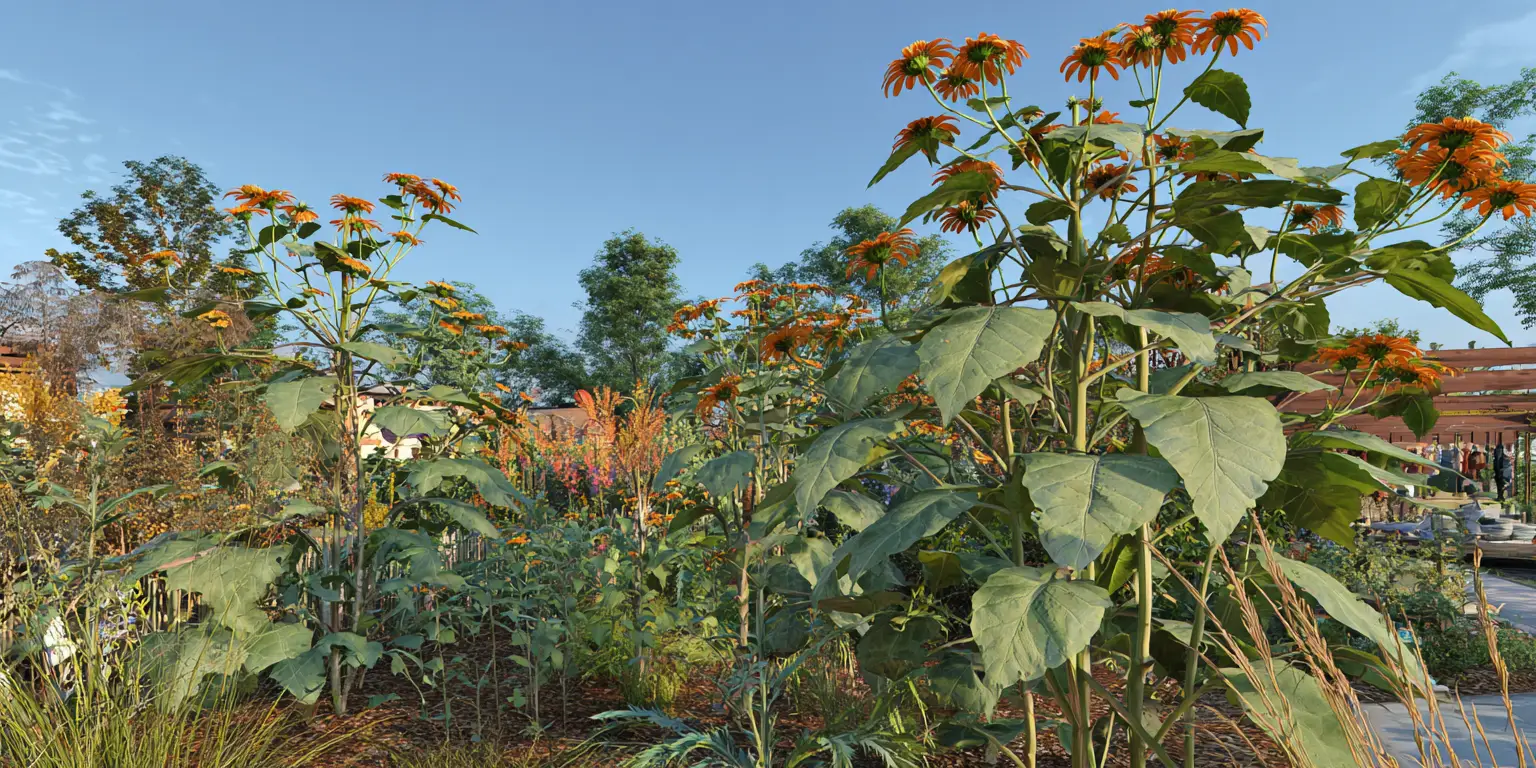
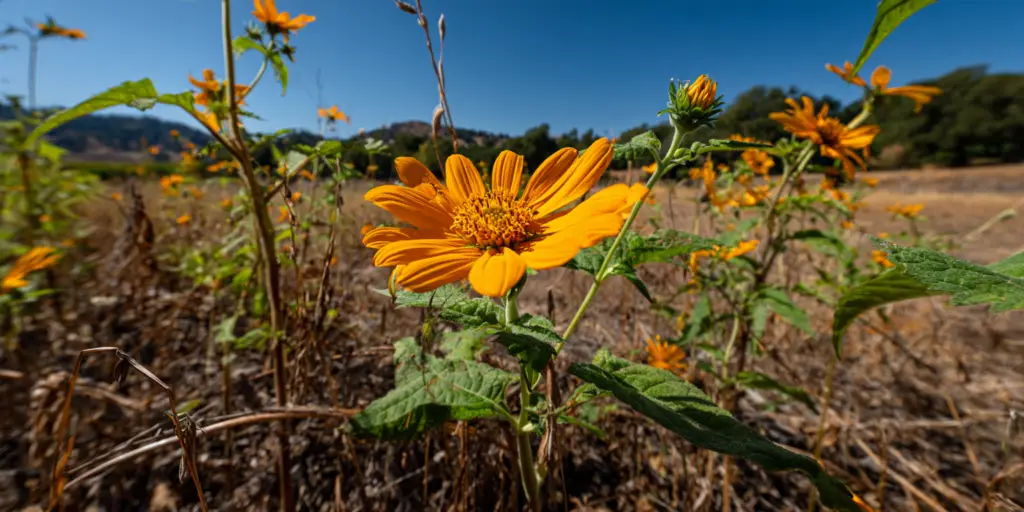
Mexican sunflower is a heat loving annual grown for months of saturated color and nonstop pollinator activity. The accepted botanical name is Tithonia rotundifolia in the aster family Asteraceae. You may also see it labeled simply as tithonia or red sunflower. It is native to Mexico and Central America and is usually grown as an annual across the United States, although it can behave as a tender perennial in frost free areas. Mexican sunflower thrives in full sun with long, hot days and lean, well drained soil. Successful Mexican sunflower care comes down to starting either from seed or sturdy transplants after frost, giving plants room to branch, watering deeply during establishment, and resisting the urge to over fertilize. In return, the plants typically flower from mid summer to frost, offering vivid orange or orange red daisies that draw butterflies, bees, and hummingbirds to almost any style of garden.
Mexican sunflowers are upright and fast growing, typically maturing about 3 to 6 feet tall and 2 to 3 feet wide, depending on the cultivar and climate. Leaves are coarse textured and often triangular with a slight fuzz, which helps plants tolerate heat and short dry spells once roots are down. This species is not a true sunflower in the genus Helianthus, yet the flower form and hot palette make it an easy companion to classic annuals like zinnias and cosmos. If you garden for pollinators, a mass of tithonia can be a magnet during late summer when nectar demand peaks. If your priority is low input color in hot weather, it is hard to beat Mexican sunflower as a backbone plant in mixed borders or a seasonal screen behind shorter annuals and perennials such as zinnias and cosmos.
Soil & Bed Preparation
Mexican sunflower is adaptable to many garden soils, but it performs best where water moves through the root zone at a steady pace. Aim for a crumbly loam or sandy loam that is well drained. Heavy clay that stays wet after storms can lead to weak stems and root problems. If your soil is tight, blend in 2 to 3 inches of finished compost through the top 6 to 10 inches, or build a raised bed that lifts the root zone above seasonal puddling. In very sandy soils that dry quickly, the same 2 to 3 inches of compost helps water holding while still allowing air to circulate around roots. Avoid woody chips mixed into the planting zone because they can tie up nitrogen during decomposition and encourage lanky, leafy growth with fewer flowers. Mexican sunflower is a light to moderate feeder. A soil organic matter level around 3 to 5 percent suits it well. If your recent soil test shows organic matter above that range, skip additional compost and rely on a thin mulch after planting. If your soil test shows very low organic matter, amend before planting rather than after. That timing lets biology catch up and creates a looser, more oxygen rich bed. Work amendments uniformly rather than filling individual holes with rich mix. Uniform preparation helps roots explore broadly and resist wind rock. Keep traffic off prepared beds if rain is forecast because compaction undoes good preparation quickly. For drainage, dig a hole about 12 inches deep and 12 inches wide in the intended bed. Fill it with water and allow it to drain completely. Refill and time the drop. Water should disappear within about 3 to 8 hours. Faster than that suggests droughty soil that will need more organic matter and a thicker mulch. Slower than that suggests poor drainage that calls for raised beds or a different site. For pH, Mexican sunflower grows well in slightly acidic to neutral soil. A target pH of 6.0 to 7.0 is ideal. Use a cooperative extension soil test to confirm your baseline. If pH is too low, apply garden lime at the rate recommended by your test and retest in a few months. If pH is too high, finely ground elemental sulfur is the standard correction. Always work pH amendments into the top few inches where roots are active and water well after application so material begins reacting. Raised beds are a simple solution where native soil drains poorly. A bed that is 8 to 12 inches tall and open on the bottom lets roots reach into the native subsoil while keeping the crown out of standing water. In dry regions, avoid overly sandy raised bed mixes. A blend with compost and mineral soil retains moisture better between irrigations. In well drained in ground beds, loosen soil across the entire planting area so roots can anchor quickly. Regardless of bed style, avoid over enriching the soil. Excess fertility produces lush, weak growth and fewer flowers in this species.
Planting Calendar by USDA Zone
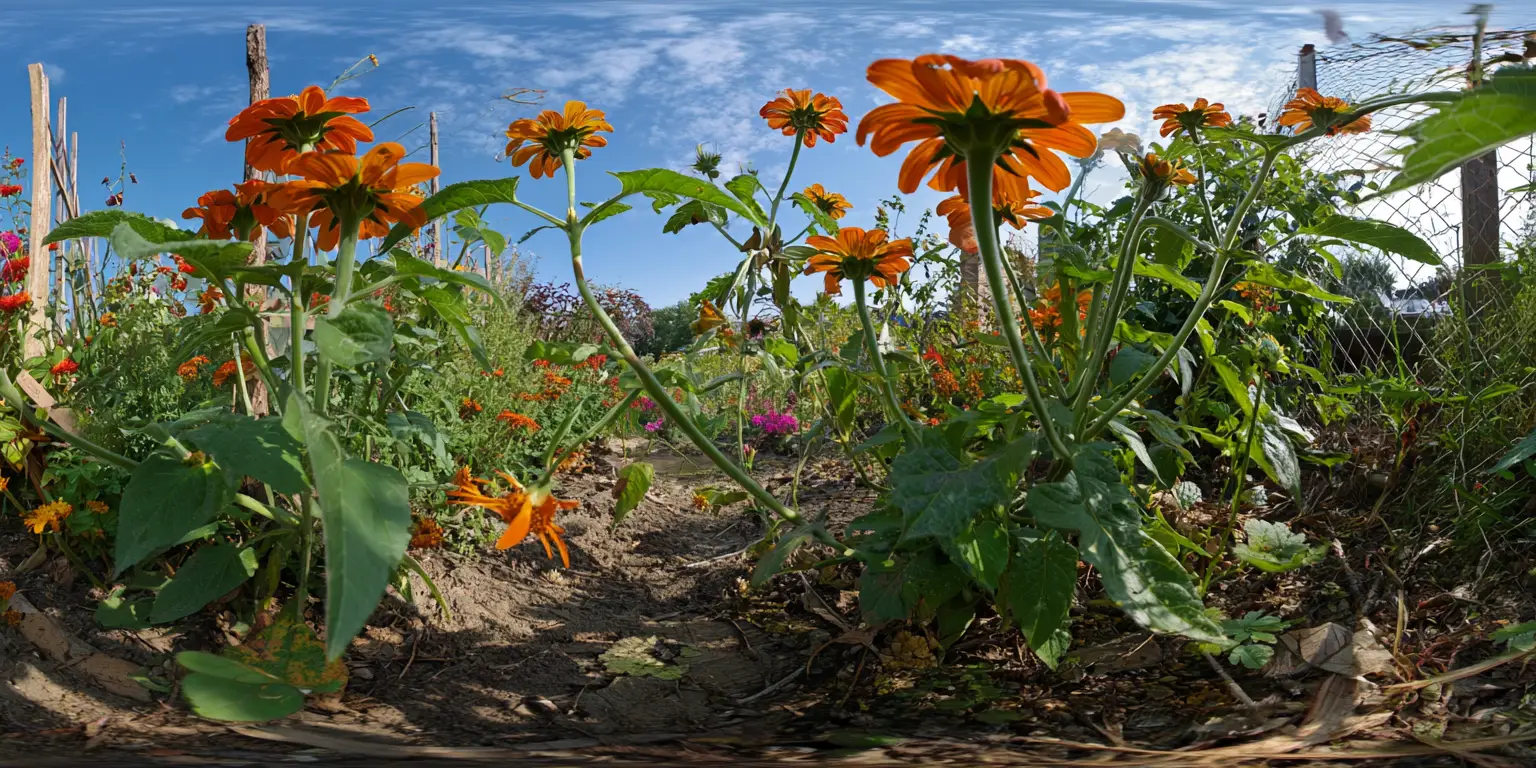
Mexican sunflower is damaged by frost and cold soil. Plan around your average last spring frost and first fall frost rather than fixed calendar dates. Direct sow or transplant only after the last frost when the top few inches of soil are consistently 60 to 65°F. If you start seeds indoors, sow 6 to 8 weeks before your last frost and set out once night temperatures are reliably above 50°F. In short season climates, using transplants is the surest way to reach full bloom before first fall frost.
Zones 3 to 5. In the northern interior and high elevation West, start seeds indoors 6 to 8 weeks before your last frost, then harden off and transplant 1 to 2 weeks after that date when soil is warm. You can also direct sow 1 to 2 weeks after the last frost, but flowering will start later. Expect the outdoor window for transplanting to run roughly late May to early June in many Zone 3 areas, mid to late May in Zone 4, and early to mid May in Zone 5, adjusting for local microclimate and elevation. Plan for earlier sowings if you use low tunnels or warm south facing walls that speed soil warming.
Zones 6 to 7. In the mid Atlantic, lower Midwest, and much of the interior West, transplant around mid April to mid May after the last frost, or direct sow in the same window once the soil is warm. In the hotter parts of Zone 7, late March to mid April can be workable for transplants during warm springs. If you garden in a humid coastal zone with frequent spring storms, wait for a settled forecast so young tithonia is not battered by wind before stems thicken.
Zones 8 to 9. In the lower South and much of the coastal West, set out transplants from March to April after your last frost and when soil temperatures are steady. Direct sow at the same time. In Zone 9 deserts and areas with very hot dry winds, do not rush. Slightly later planting often catches more stable weather. Afternoon shade from a fence or shrub on the west side helps young plants transition through the first scorching weeks.
Zones 10 to 11. In frost free and near frost free climates, tithonia can be planted in late winter through early spring for long summer bloom. In the warmest parts of Zone 10 and 11, it may also be planted in fall for winter to spring color where summers are blisteringly hot. In those hot regions, choose a site with full morning sun and a bit of late day shade to keep blossoms from scorching during extended heat waves. In coastal Zone 9 to 10 locations with salt spray and wind, select a spot with a windbreak and expect a little extra staking, since stems are strong but can be brittle in gusts.
Planting: Depth & Spacing
Mexican sunflower seeds are large enough to handle but still germinate best when sown shallow. Rake the bed smooth, then press seeds into the surface and cover with only about 1⁄8 inch to 1⁄4 inch of fine soil or vermiculite, which is roughly 3 to 6 millimeters. The seed needs light to germinate, so err on the shallow side. Keep the top half inch of soil consistently moist until sprouts are 1 to 2 inches tall. Thin gradually to final spacing once seedlings have two or three true leaves. Thinning improves airflow and reduces the chance of powdery mildew later in the season. Mexican sunflower is almost always grown from seed rather than divisions, so you will rarely encounter a bare root option. If you are offered rooted cuttings, treat them like tender transplants. Plant so the top of the root system sits level with the surrounding soil. Firm gently and water in with a dilute starter fertilizer if your soil test suggests phosphorus is low. Set transplants at the same depth they grew in the pot. Space typical tall cultivars 24 to 36 inches apart and leave 36 to 48 inches between rows for access and airflow in cutting beds. Compact selections like ‘Fiesta del Sol’ and ‘Goldfinger’ can be spaced 18 to 24 inches apart. Mexican sunflower appreciates elbow room. Crowding encourages lanky stems and increases disease pressure. Immediately after transplanting, water to settle soil around roots, then mulch lightly to hold surface moisture. Harden off indoor started seedlings over 7 to 10 days. Start with a few hours outdoors in bright shade, then gradually extend time and move into full sun. Avoid planting just before a strong cold front or a blasting heat spell. Shield young plants with a temporary shade cloth on day one if the sun is intense. A light pinch of the growing tips when plants are 12 to 18 inches tall encourages branching and sturdier habit. Tie tall plants to a stake loosely with a soft tie so stems can flex in the wind without snapping.
Watering & Mulching
Right after sowing or transplanting, keep the top 2 to 3 inches of soil evenly moist. That typically means light irrigation every day or two in hot, dry weather and every three days in milder weather until roots run deeper. After three to four weeks, shift to fewer, deeper waterings that moisten soil 8 to 12 inches down. A practical target for established plants is about 1 to 1.5 inches of total water per week from rain and irrigation during typical summer conditions. Increase frequency during heat waves or on very sandy soils. Always let the surface dry a bit between waterings to discourage mildew. Once seedlings are several inches tall, apply 2 to 3 inches of mulch between plants, keeping the mulch pulled back 2 to 3 inches from stems to prevent rot. Shredded leaves, pine straw, or fine bark chips are excellent choices in ornamental borders. In very hot climates and reflective sites near driveways or walls, a light colored organic mulch helps moderate soil temperatures near the crown. In cutting beds, a clean straw mulch works well to limit mud splash on lower foliage and flowers after thunderstorms. Overhead watering is acceptable for tithonia, but it is better to water in the morning so leaves dry quickly. That habit helps control powdery mildew during humid spells. In heat spikes that push above 95°F for several days, increase watering frequency and consider light afternoon shade for newly planted blocks. In coastal gardens with salty breezes, choose a location with a bit of shelter and rinse foliage with fresh water if salt spray accumulates after storms. Where household water is very hard, occasional deep flushing through the root zone prevents salt build up in containers.
Feeding
Mexican sunflower produces the most flowers when soil is modestly fertile. Overfeeding, especially with high nitrogen fertilizers, leads to lots of leaves and fewer blooms. If you prepare beds with 1 to 2 inches of compost and your soil test shows adequate nutrients, you can often skip granular fertilizer entirely. If a fertilizer is needed, a balanced slow release product in the neighborhood of 5 10 10 or 10 10 10 at a light label rate at planting is sufficient for the season. In poorer soils, side dress once in mid summer with a similar low rate. Liquid feeds are rarely necessary outdoors unless plants are in containers where nutrients leach faster. Feed the soil, not only the plant. Compost and mulches support earthworms and microbial life that cycle nutrients slowly and stabilize soil structure. In new beds, retest soil every two to three years to track organic matter and pH. In containers, refresh at least one third of the potting mix each season if you plan to reuse the pot for another round of annuals. Flush containers thoroughly a few times over the summer to remove accumulated salts from fertilizer and hard water.
Pruning & Support
Deadhead spent blossoms to keep color coming without pause. You can snip individual flowers or shear lightly across the top when many blooms are fading at once. Leave some seed heads late in the season if you want to feed finches or collect seed for next year. If plants are shooting skyward, pinch the growing tips once they reach 12 to 18 inches tall to encourage more branches and a bushier silhouette. In mid season, a light shearing of one third the height can restore balance if stems have leaned in wind or grown leggy in rich soil. Tall plantings benefit from staking because stems can be brittle in gusty weather. Use bamboo stakes or tomato cages and soft ties. Space stakes just inside the plant canopy so they disappear quickly. Drive them in at planting time if your site is windy. Clean pruning shears before moving to a new block by wiping with alcohol or a 10 percent bleach solution and a quick rinse. Good tool hygiene reduces the spread of fungal spores and sap sucking pests that occasionally hop between host plants in crowded beds. Mexican sunflower is usually trouble free. In humid periods, powdery mildew can cloud lower leaves. Improve airflow, water in the morning, and avoid overhead irrigation during cool evenings. Slugs and snails may nibble young seedlings in wet springs. Hand pick or use barriers until stems toughen. Aphids and whiteflies are uncommon on vigorous plants but can colonize stressed specimens. A strong jet of water or insecticidal soap is often enough if intervention is needed.
Overwintering
In most of the United States, Mexican sunflower is grown as a summer to fall annual and will blacken with the first hard frost. After frost cuts plants down, clear spent stems and leaves to limit disease carryover and unwanted reseeding. If you want volunteers next year, shake a few mature seed heads in place before cleanup, then mulch lightly after the ground cools. In very cold and windy winters, a winter mulch of leaves spread over cleaned beds helps protect soil structure and the roots of adjacent perennials. In Zone 9b to 11, tithonia can behave as a short lived perennial. Cut back in late winter to the strongest framework and renew mulch around the base. Where winter rains are heavy and soils stay wet, keep mulch thinner and be sure the site drains well. In containers, bring pots into a bright, sheltered location before the first frost if you want to carry them for a second season. Water sparingly during cool weather and move back into full sun as days lengthen and growth resumes. Replace part of the potting mix before the new season and prune to a healthy framework to prevent lanky regrowth.
Growing Environments
Mexican sunflower can succeed in large containers on sunny patios and rooftops. Use a pot that holds at least 5 gallons, about 12 inches in diameter and depth, for compact cultivars. For full size varieties, 10 to 15 gallons provides better stability and moisture reserves. Make sure the container has large drainage holes and fill with a high quality, peat or bark based potting mix. Do not use heavy garden soil in pots, since it compacts and sheds water unevenly. Water container plants more frequently than in ground beds, since roots are confined and warm pots dry quickly. Mexican sunflower wants full sun, defined as at least 6 to 8 hours daily. Morning to mid afternoon sun is ideal. In extreme heat regions, a bit of late day shade preserves flower quality. Wind exposure encourages sturdier stems, but constant strong wind increases breakage risk. Use stakes where needed and tuck tall plantings near fences or hedges that slow the wind without casting heavy shade. In urban sites with reflected heat from pavement and walls, mulch well, irrigate deeply, and space plants on the wider side of the recommended range to keep air moving through the canopy.
Companion Planting & Design
The saturated orange of Mexican sunflower makes it a natural partner for purple and blue companions such as blue flowers like salvia and verbena, and for deep burgundy foliage like ornamental millet. For a high energy summer border, combine tithonia with zinnias and marigolds then thread in silver foliage or airy grasses to keep the composition from feeling heavy. If your garden leans to a softer palette, place tithonia in repeated drifts at the back of the border so the color reads as warmth rather than a single bright spot. If supporting butterflies and hummingbirds is the goal, mix Mexican sunflower with complementary nectar sources that cover more of the season. Early summer bloomers like yarrow and coreopsis set the table before tithonia peaks. Late summer and fall staples like goldenrod and native asters carry the torch when nights cool. Give each clump enough space for airflow, since crowded plantings are more prone to mildew. In kitchen gardens, plant tithonia near squash and tomatoes to draw in pollinators without shading crops. Leave a few seed heads late for birds that browse seed through fall.
References
- University of Wisconsin–Madison Division of Extension. Mexican sunflower, Tithonia rotundifolia.
- North Carolina Extension Gardener Plant Toolbox. Tithonia rotundifolia (Mexican Sunflower). NC State University.
- Missouri Botanical Garden Plant Finder. Tithonia rotundifolia — Mexican sunflower.
- University of Illinois Extension. Brighten up your fall landscape with Tithonia.
- Clemson Cooperative Extension, Home & Garden Information Center. Growing Annuals.
- Iowa State University Extension and Outreach. Testing and improving soil drainage.
- University of Maryland Extension. Soil health, drainage, and improving soil.
- Penn State Extension. Soil testing.
- University of Alaska Fairbanks, Georgeson Botanical Garden. Seed starting chart for annuals and perennials: Mexican sunflower listing.
- NC State Extension, Brunswick County Center. Tithonia rotundifolia (Mexican sunflower) coastal notes.
- ASPCA. Toxic and Non‑Toxic Plants database.
Written by: Your Flowers Guide editorial team
We are a small independent group of flower lovers who research and review each guide using trusted horticultural and educational sources. Learn more about us