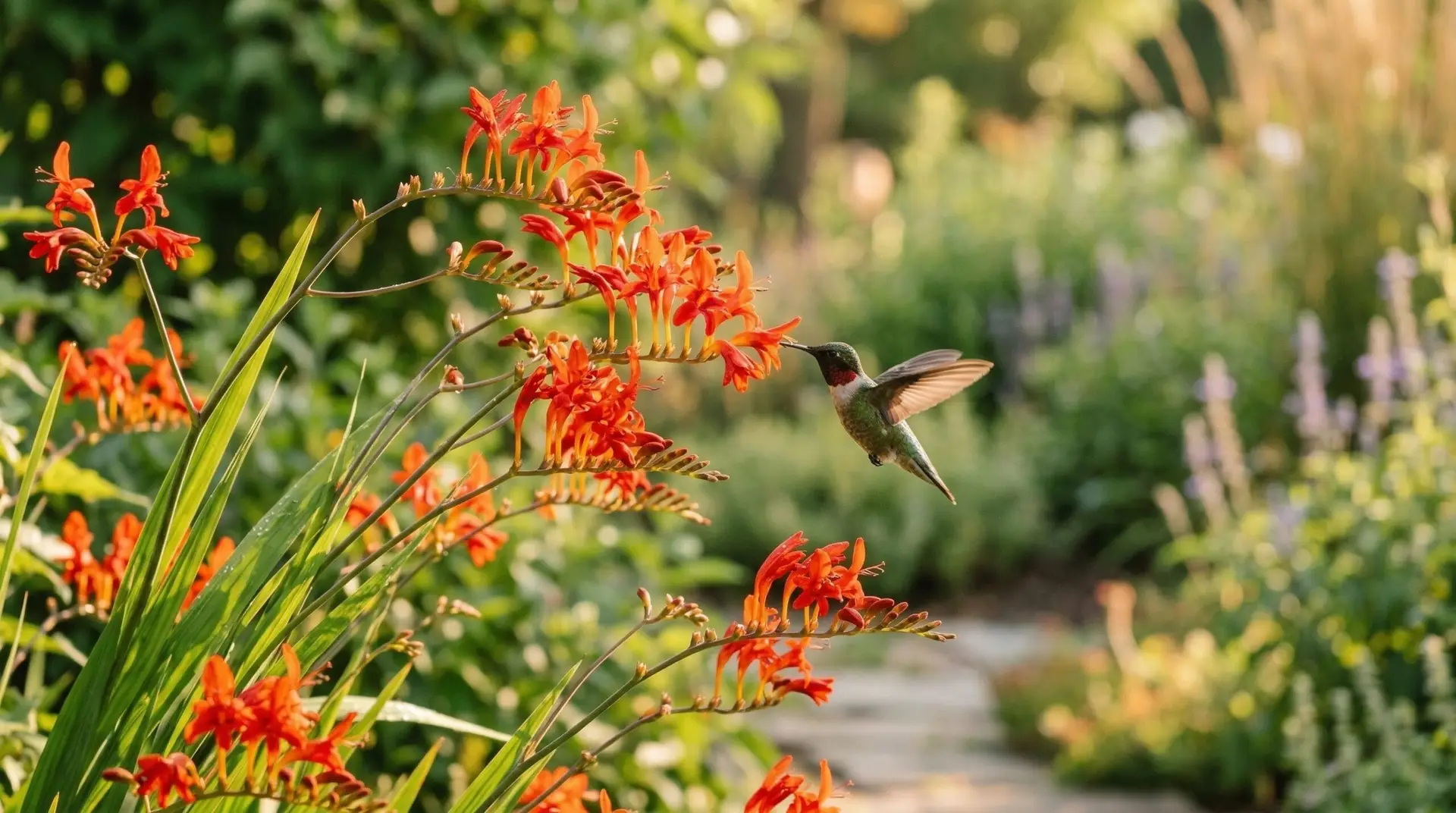
The August sun crests the eastern ridge, casting long, pale shadows across the dew-soaked grass. In the quiet corner of the yard, a sudden thrumming breaks the morning stillness. A ruby-throated hummingbird hovers beside a towering stalk of crocosmia, its wings a blur of iridescent green against the morning light. The bird maneuvers with absolute precision, inserting its needle-thin beak into one fiery orange blossom after another. Watching this interaction, I am struck by the profound intimacy between animal and plant. They move together in a silent, ancient choreography that has played out across countless summers. The crocosmia blooms for more than my own viewing pleasure, opening its throat to feed a creature that weighs less than a copper penny and sustaining a metabolism that burns like a tiny furnace.
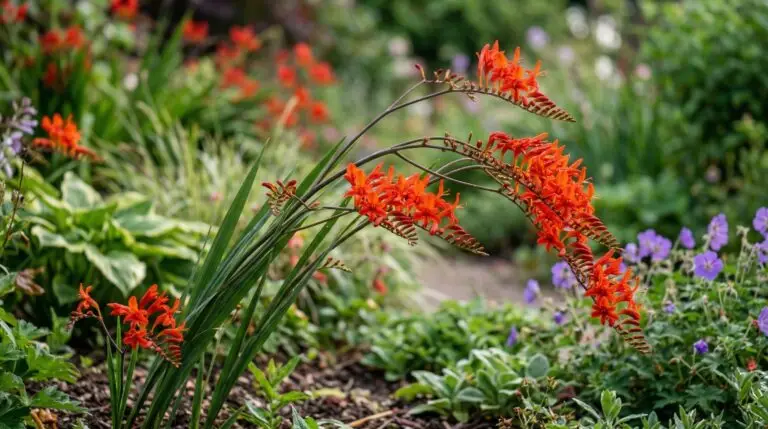
To understand crocosmia hummingbirds, one must look closely at the shape of the blossoms lining the arched stems. Each flower is a narrow tube, flaring slightly at the mouth, designed entirely to exclude the wrong visitors while welcoming the right ones. Bees, with their short tongues and bulky bodies, find it difficult to navigate the deep corridors where the nectar pools. The hummingbird, however, possesses the exact anatomical tools required to reach the sweet reward hidden at the base of the corolla. As the bird drinks, the flower brushes pollen against its feathered forehead, turning the avian visitor into an unwitting courier. This relationship is a quiet marvel of ecological design, forged over millennia of shared existence. The plant offers high-octane fuel, and in exchange, the bird guarantees the continuation of the crocosmia lineage.
The architecture of attraction
Color acts as the first visual invitation across the expanse of the garden. Hummingbirds are particularly sensitive to the red and orange spectrum, seeing these hues with a clarity that draws them from great distances. The fiery arching sprays of crocosmia are a botanical lighthouse, signaling a reliable source of sustenance. When I plant these corms alongside other tubular, nectar-rich flowers like scarlet sage, the garden becomes a deliberate corridor for migrating birds. The bright reds and deep oranges cut through the green foliage, creating a map of calories for creatures that live perpetually on the edge of starvation. It is a humbling realization that my aesthetic choices in the garden have real consequences for the survival of wild things. I am not just arranging colors, but laying out a banquet table for travelers passing through my small patch of earth.
Gardening often requires a quiet acceptance of delayed gratification, a willingness to bury something small and hard in the dirt and wait for months. I plant crocosmia corms in the damp soil of early spring, spacing them carefully to allow the sword-like foliage room to breathe and multiply. Thinning crowded clumps feels like a small act of cruelty, but plants left to compete too fiercely for water and light will eventually cease to bloom. The leaves emerge first, pleated and upright, resembling the broad foliage of a canna lily but on a more slender, graceful scale. For weeks, they wait as quiet green sentinels, gathering the sun and building strength beneath the soil. The wait demands patience, a virtue the modern world rarely asks of us, but the garden insists upon it. When the wiry flower stalks finally rise and begin to swell with buds, the anticipation shifts into a daily watch for the first flash of color.
Timing the late summer feast
The true value of crocosmia pollinators becomes apparent in the heavy, humid days of late summer. By August, many of the early blooming perennials have exhausted themselves, dropping their petals and turning their energy toward setting seed. The hummingbird, however, is preparing for a monumental flight south and requires more nectar than ever to build fat reserves. Just as the garden seems to quiet down, the crocosmia bursts into flame, offering a continuous succession of blooms along its arching stems. The lower flowers open first, and the blossoming moves sequentially up the stalk over a period of several weeks. This staggered opening ensures a daily renewed supply of nectar, keeping the birds returning to the same patch morning after morning. It is a dependable rhythm that sustains the local ecology when resources are otherwise growing scarce.
Designing a space for these birds means thinking in terms of layers and blooming successions rather than static pictures. I weave the crocosmia through the middle ground of the garden borders, letting their arching stems lean over shorter, sprawling plants. A nearby patch of lantana provides a resting place and a secondary nectar source, its clustered flower heads drawing butterflies that share the space in a peaceful, fluttering truce. The hummingbirds claim the tall crocosmia stalks as their primary territory, fiercely defending the orange archways from rivals with loud, chattering calls and aerial dogfights. To watch them spar over a patch of flowers is to witness the raw, unfiltered drive for survival playing out among the petunias and mulch. A successful hummingbird garden is a dynamic, living system full of motion, competition, and life. The plants are the stage, and the birds are the actors in a daily drama of territorial claims and caloric necessity.
A seasonal connection
The season eventually turns, bringing cooler nights and a shift in the angle of the light. The crocosmia flowers begin to fade, leaving behind small, rounded seed capsules that weigh down the drying stems. The hummingbirds grow scarce, their internal clocks urging them southward ahead of the frost, leaving the garden feeling suddenly empty and still. I leave the withered stalks standing through the autumn, a physical memory of the bright, frantic energy that occupied this space just weeks before. Gardening is an ongoing practice of letting go, of watching things rise, bloom, and inevitably decay. Yet, beneath the cooling soil, the corms are already multiplying, storing the energy of this year to fuel the growth of the next. When the hummingbirds return on the warm winds of another spring, the quiet green shoots will be waiting, ready to begin the ancient cycle all over again.
More About Crocosmia
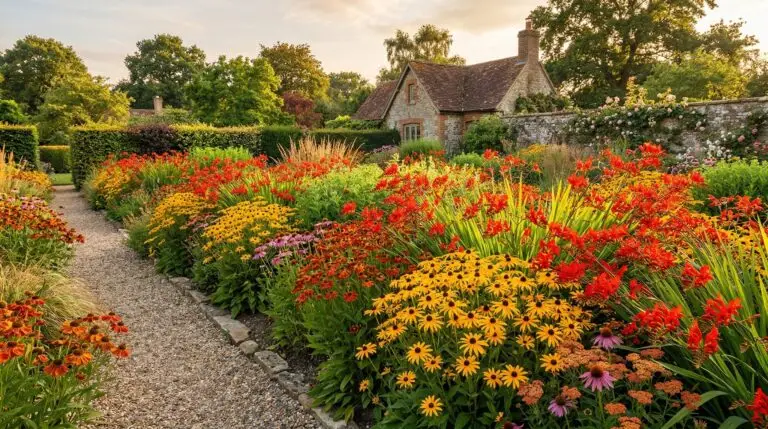
Crocosmia companion plants: what to grow, what to avoid

Overwintering crocosmia corms in cold climates zones 5 and below
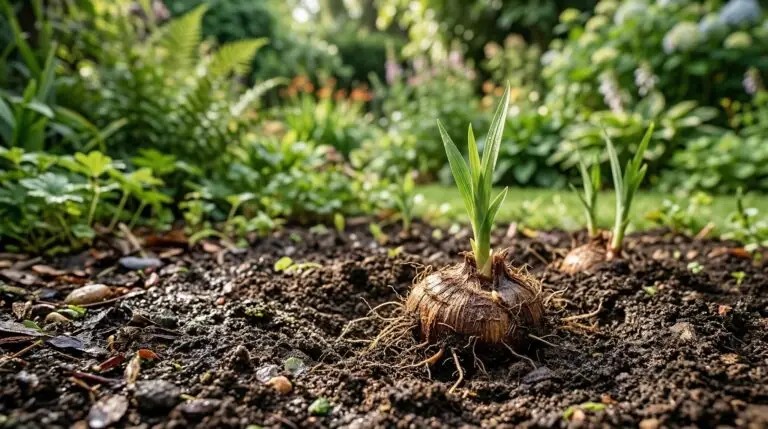
How to grow crocosmia for fiery arching sprays of color in midsummer gardens
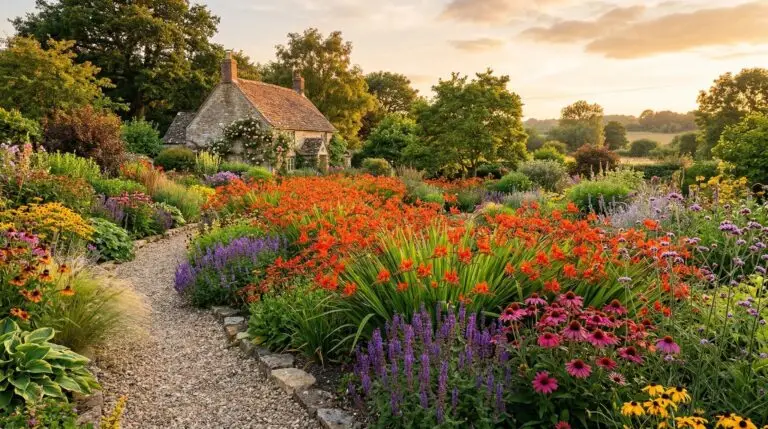
Designing a late summer garden with crocosmia that peaks when spring flowers are gone
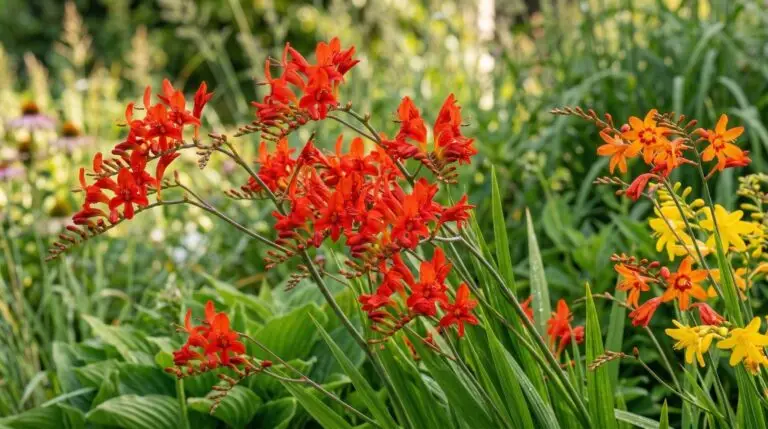
Best crocosmia varieties from fiery Lucifer to golden Emily McKenzie
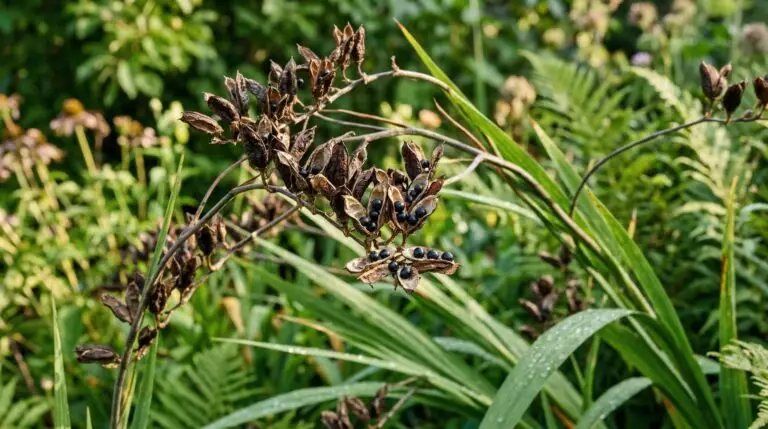
Crocosmia seed pods and how to propagate new plants from seed for unique varieties
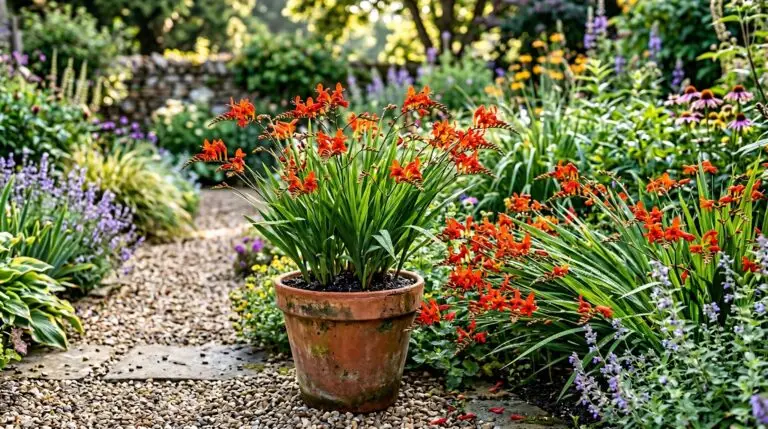
Growing crocosmia in containers for tropical-looking patio displays