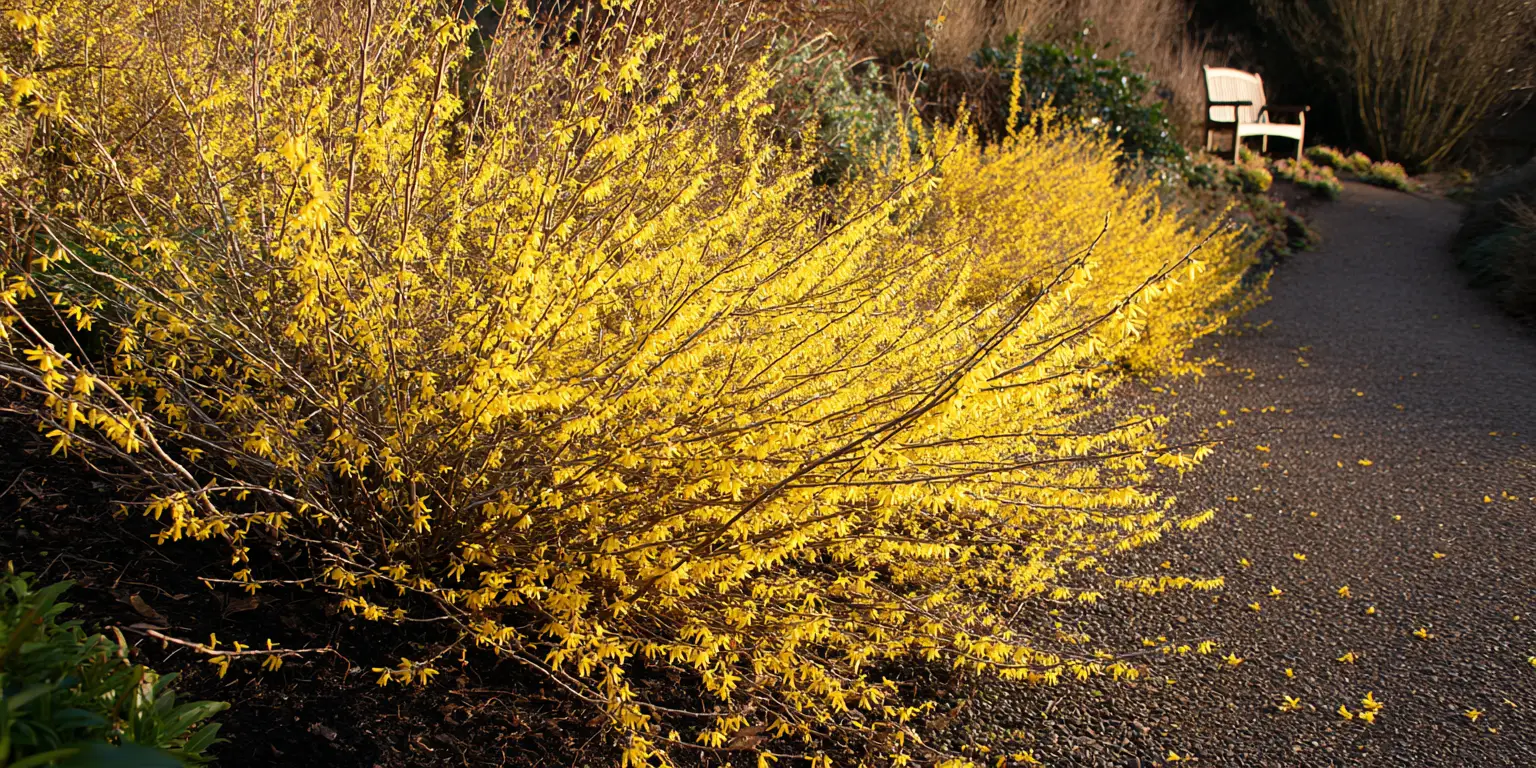
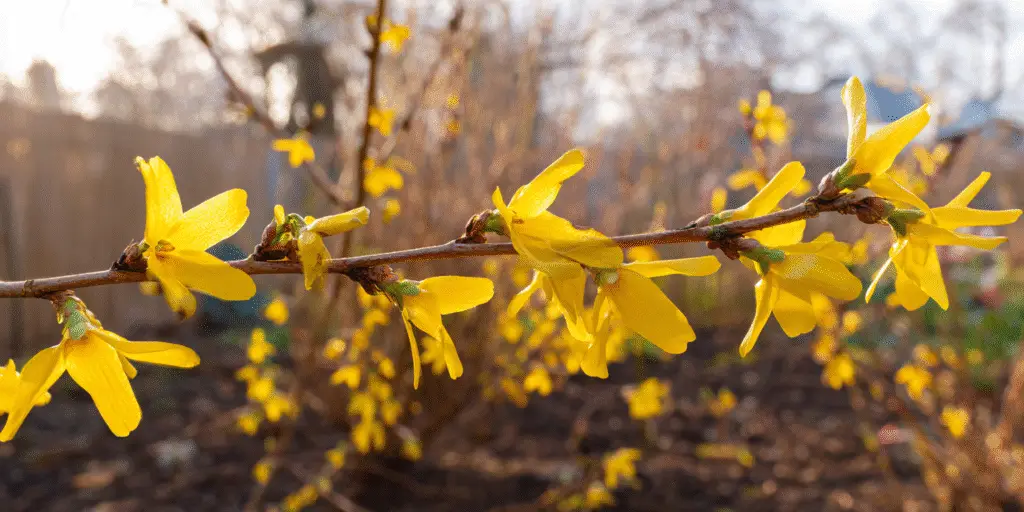
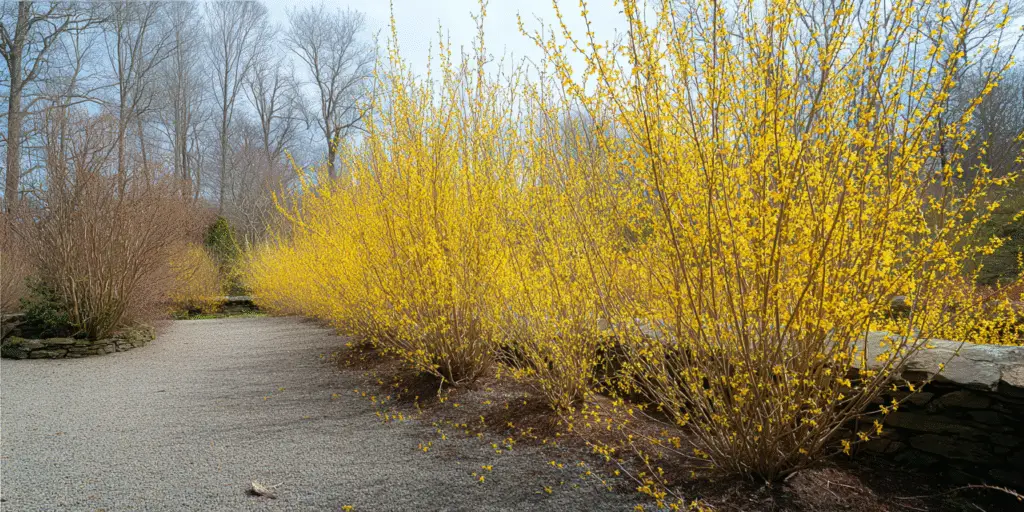
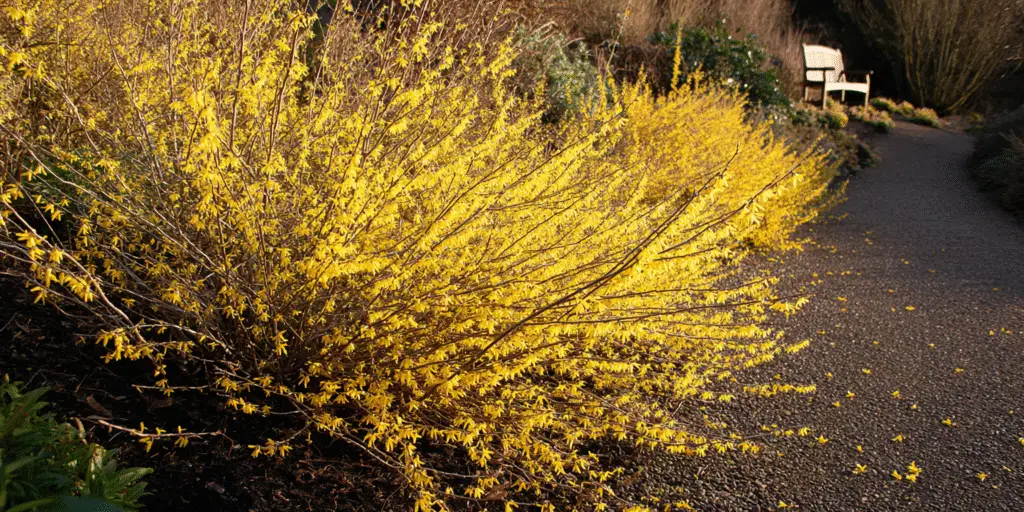
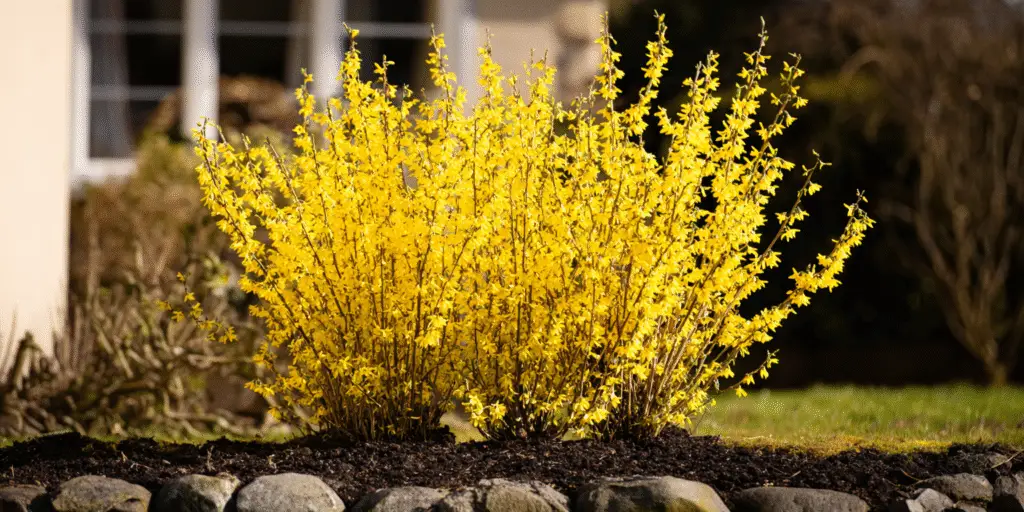
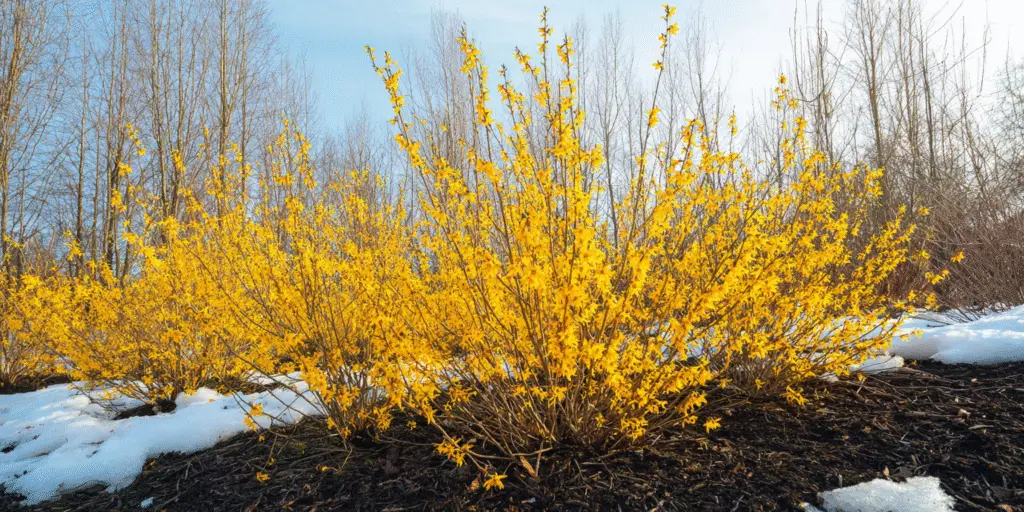
A dwarf, low‑spreading border forsythia for groundcover and small spaces. Short internodes create a dense mound covered with lemon‑yellow flowers in early spring. Plants stay under 3 feet and spread wider than tall. Best in full sun and average, well‑drained soils. Widely recognized for reliable garden performance.
Height × spread: 20-32 in × 3-5 ft (50-80 cm × 0.9-1.5 m)
Bloom window: late winter to early spring
Color & flower form: Lemon to bright yellow; single
Fragrance: 0 none
USDA hardiness: zones 5-8
Breeder / Year / Origin: M. Alain Cadic; 1995; France
Awards/registration: RHS Award of Garden Merit; U.S. Plant Patent PP9104 (expired)
Cut‑flower notes: Short branches; forces easily; vase life about 5-7 days when kept cool
Pet safety: safe (ASPCA: non‑toxic to cats and dogs)
How it differs
Much lower and wider than typical border forsythia.
Dense habit gives strong flower coverage.
Designed for groundcover and front‑of‑border use.
Strengths
Compact and easy to maintain.
Abundant early bloom in sun.
Suited to slopes and small spaces.
Care in one minute
Full sun for best bloom; light shade lowers flowering.
Average, well‑drained soil; tolerates clay once established.
Water to establish; irrigate only in extended droughts.
Light shaping right after bloom if needed.
Watch‑outs
Short stems limit use for large cut arrangements.
Buds can be reduced by late freezes in zone 5.
Best uses (tags)
groundcover; front of border; slopes; low hedge; containers
Provenance note
Selected in France from open‑pollinated progeny of a gamma‑irradiated ‘Spring Glory’ derivative; marketed as ‘Gold Tide’ with cultivar name ‘Courtasol’; U.S. Plant Patent issued in 1995.
Written by: Your Flowers Guide editorial team We are a small independent group of flower lovers who research and review each guide using trusted horticultural and educational sources. Learn more about us