Growing Jasmine Indoors: How to Get Long-Lasting Blooms Year After Year
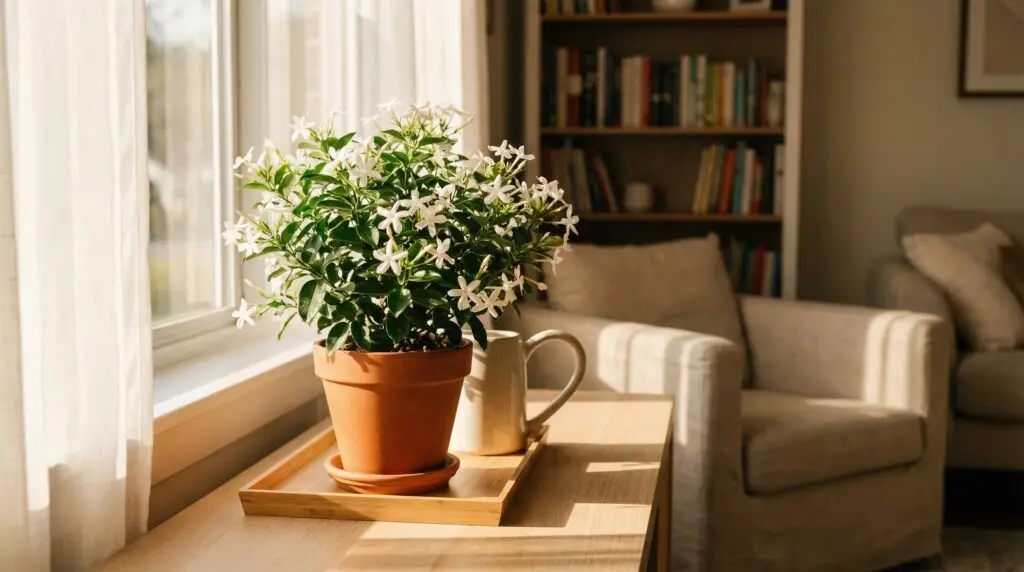
Jasmine has a reputation. People think of it as a sprawling outdoor vine, something that belongs on a fence or an arbor in a warm climate. But several jasmine species do remarkably well in pots, indoors, in ordinary rooms with ordinary windows. The payoff is real: weeks of small white or pale yellow flowers that fill an entire room with a scent so strong you notice it the moment you open the front door.
The catch is that jasmine is not a set-it-and-forget-it houseplant. It needs the right light cycle, a cool rest period, and soil that drains fast. Skip any one of those steps and you get a healthy-looking green vine that never flowers. This guide covers everything you need to know to avoid that outcome and keep your indoor jasmine producing blooms season after season.
What makes indoor jasmine worth the effort
Most houseplants are grown for foliage. Jasmine is one of the few that earns its spot purely on fragrance. A single plant in bloom can scent a living room, a hallway, even a bedroom if you keep the door closed overnight. The flowers are small, usually less than an inch across, but they appear in clusters and keep opening in succession over several weeks.
There is also something satisfying about coaxing a flowering vine to bloom indoors. It takes a bit more attention than a pothos or a snake plant, but the reward is proportional. When your jasmine pushes out its first buds after a cool winter rest, you feel like you actually accomplished something.
Beyond the scent, jasmine is a surprisingly long-lived houseplant. Woody-stemmed varieties can grow for a decade or more in the same pot if you repot them every couple of years. The vines can be trained around a small trellis or hoop, keeping the plant compact and tidy on a table or shelf.
Picking the right jasmine variety for indoors
Not every plant sold as “jasmine” is actually jasmine. Star jasmine (Trachelospermum jasminoides) and Confederate jasmine are not true jasmines at all. They belong to a different plant family. They can still smell wonderful, but their care requirements differ. For indoor growing, stick with plants in the genus Jasminum.
Jasminum polyanthum (pink jasmine)
This is the variety you will most often find at garden centers in late winter and early spring, usually already covered in buds. It is a vigorous twining vine that blooms in late winter through spring. The flowers are white with pink-tinged backs, and the fragrance is intense, almost overwhelming in a small room. It needs a cool period (around 40 to 50 degrees Fahrenheit for about six weeks) to set buds. Without that cold snap, it simply will not flower.
Jasminum sambac (Arabian jasmine)
Arabian jasmine is the species used to make jasmine tea. It is a shrubby, less viney plant that blooms off and on from spring through fall, sometimes even into early winter if conditions are right. The flowers are waxy, intensely fragrant, and open white before fading to pink. Unlike J. polyanthum, Arabian jasmine does not require a cold dormancy period. That makes it easier for growers in homes where winter temperatures stay above 60 degrees.
Jasminum officinale (common jasmine)
Common jasmine is the classic species, the one poets wrote about. It is a strong grower with white flowers that bloom in summer. Indoors, it needs bright light and good air circulation. It appreciates a mild cool period in winter, though it is less demanding about cold temperatures than J. polyanthum. The trade-off: it can get leggy fast without regular pruning.
If you are new to indoor jasmine, start with Jasminum sambac. Its bloom cycle is the most forgiving, and it handles typical indoor temperatures without complaint.
Light, temperature, and humidity needs
Light
Jasmine wants bright, indirect light for most of the day. A south-facing or west-facing window works well in most homes. Direct morning sun is fine and even welcome, but harsh afternoon sun through glass can scorch the leaves, especially in summer. If your only option is a north-facing window, supplement with a full-spectrum grow light running 12 to 14 hours a day during the growing season.
Light is the single biggest factor in whether your jasmine blooms or just sits there looking green. A plant that gets fewer than four hours of bright light daily will grow leaves and stems, but it will put out few flowers or none at all.
Temperature
During active growth (spring through early fall), jasmine likes daytime temperatures between 65 and 75 degrees Fahrenheit. Nighttime temperatures should drop a bit, ideally into the low 60s. That day-night temperature swing actually helps trigger bud formation.
For species that need a cold dormancy, like J. polyanthum, you will need to provide six to eight weeks of temperatures between 40 and 55 degrees. An unheated garage, a cool basement, or even a bright, drafty window in winter can work. This is the step most indoor growers skip, and it is the main reason their polyanthum never reblooms after that first store-bought flush.
Humidity
Jasmine prefers humidity levels between 40 and 60 percent. Most heated homes in winter drop well below that. You have a few options: group your jasmine with other plants (they collectively raise local humidity through transpiration), set the pot on a pebble tray filled with water, or run a small humidifier nearby. Misting the leaves directly is a common suggestion, but it is mostly cosmetic. The humidity boost from misting evaporates within minutes and can actually promote fungal problems if water sits on the foliage overnight.
Watering, feeding, and soil mix
Soil mix
Jasmine roots hate sitting in water. Use a fast-draining mix. A good starting point: two parts standard potting soil, one part perlite, and one part coarse orchid bark. The bark opens up air pockets in the soil, and the perlite keeps things from compacting over time. If you notice water pooling on the surface and taking more than a few seconds to drain through, your mix is too dense.
Always use a pot with drainage holes. Decorative cache pots without holes look nice, but they turn into swamps at the bottom. If you want the look of a ceramic planter, use a plastic nursery pot inside it and pull it out to water.
Watering
During the growing season, water when the top inch of soil feels dry. Push your finger into the mix. If it feels damp at your first knuckle, wait another day. When you do water, soak the entire root ball until water runs freely from the drainage holes. Then let it drain completely before putting the pot back on its saucer.
In winter, cut back on watering. The plant is resting, not actively growing, and wet soil in cool conditions is a recipe for root rot. Water just enough to keep the soil from going bone dry. Every ten days to two weeks is a reasonable starting point, but check the soil rather than following a calendar.
Feeding
Feed every two weeks from spring through late summer with a balanced liquid fertilizer diluted to half strength. A formula with a slightly higher phosphorus number (the middle number on the label, something like 10-30-20 or 7-9-5) can encourage more flower buds. Stop feeding entirely in fall and winter. Fertilizing during dormancy pushes weak, leggy growth that will not flower.
If you notice leaf tips turning brown or a white crusty buildup on the soil surface, you may be overfeeding. Flush the pot with plain water, letting it run through for a minute or two, and skip the next feeding.
Common problems and how to fix them
Buds forming but dropping before opening
This is the most frustrating issue. The plant sets dozens of buds, then they yellow and fall off before they ever open. The usual causes: sudden temperature changes (like a draft from a heating vent), moving the plant to a new location after buds have formed, or inconsistent watering. Once buds appear, keep the plant in one spot. Avoid placing it near doors that open to cold air or heating ducts that blow dry air directly on the foliage.
Lots of leaves, no flowers
This almost always traces back to one of two things: not enough light or no cool rest period (for species that need one). Check both. If your plant sits in a dim corner, move it closer to a window. If you are growing J. polyanthum and it has not had its cold treatment, plan for that next fall. Also, check your fertilizer. Too much nitrogen relative to phosphorus pushes leafy growth at the expense of flowers.
Yellowing leaves
A few yellow leaves at the base of the plant are normal, especially in fall as the plant prepares for its rest. Widespread yellowing usually means overwatering. Check the soil. If it is soggy, let it dry out and review your watering schedule. Root rot from chronic overwatering smells sour and earthy. If you catch it early, unpot the plant, trim any brown or mushy roots, and repot in fresh, dry mix.
Sticky leaves and tiny insects
Jasmine is a magnet for aphids, mealybugs, and spider mites, especially in dry indoor air. Check the undersides of leaves and the joints where leaves meet stems. Aphids leave a sticky residue called honeydew. Mealybugs look like tiny cotton tufts. Spider mites are almost invisible but leave fine webbing between leaves.
For light infestations, wipe affected areas with a cotton swab dipped in rubbing alcohol. For heavier problems, spray the entire plant with insecticidal soap, covering both sides of every leaf. Repeat every five to seven days for three rounds. Isolate the plant from your other houseplants until you are sure the pests are gone.
Leggy, sparse growth
Jasmine vines grow fast and will reach for light. If your plant looks stretched out with long bare stems and leaves only at the tips, it needs more light and a good pruning. Right after the bloom cycle ends, cut the vines back by about a third. This encourages branching lower on the stem and gives you a fuller, more compact plant. Do not prune in late fall or winter, because buds for next season form on mature wood.
Keeping it going year after year
The real trick with indoor jasmine is rhythm. It needs a clear cycle: active growth and feeding in spring and summer, a cool or reduced-water rest in fall and winter, then a return to warmth and light to trigger blooming. Once you lock into that pattern, the plant becomes predictable. You will start to recognize when buds are forming weeks before they open, and you will know to leave the pot alone and let the plant do its work.
Repot every two years in spring, stepping up one pot size. Refresh the soil mix each time. Prune after flowering. Feed during growth, stop during rest. Give it the brightest window you have. That is genuinely all it takes. The fragrance of a jasmine in full bloom, drifting through your house on an ordinary Tuesday morning, is worth every bit of the attention.