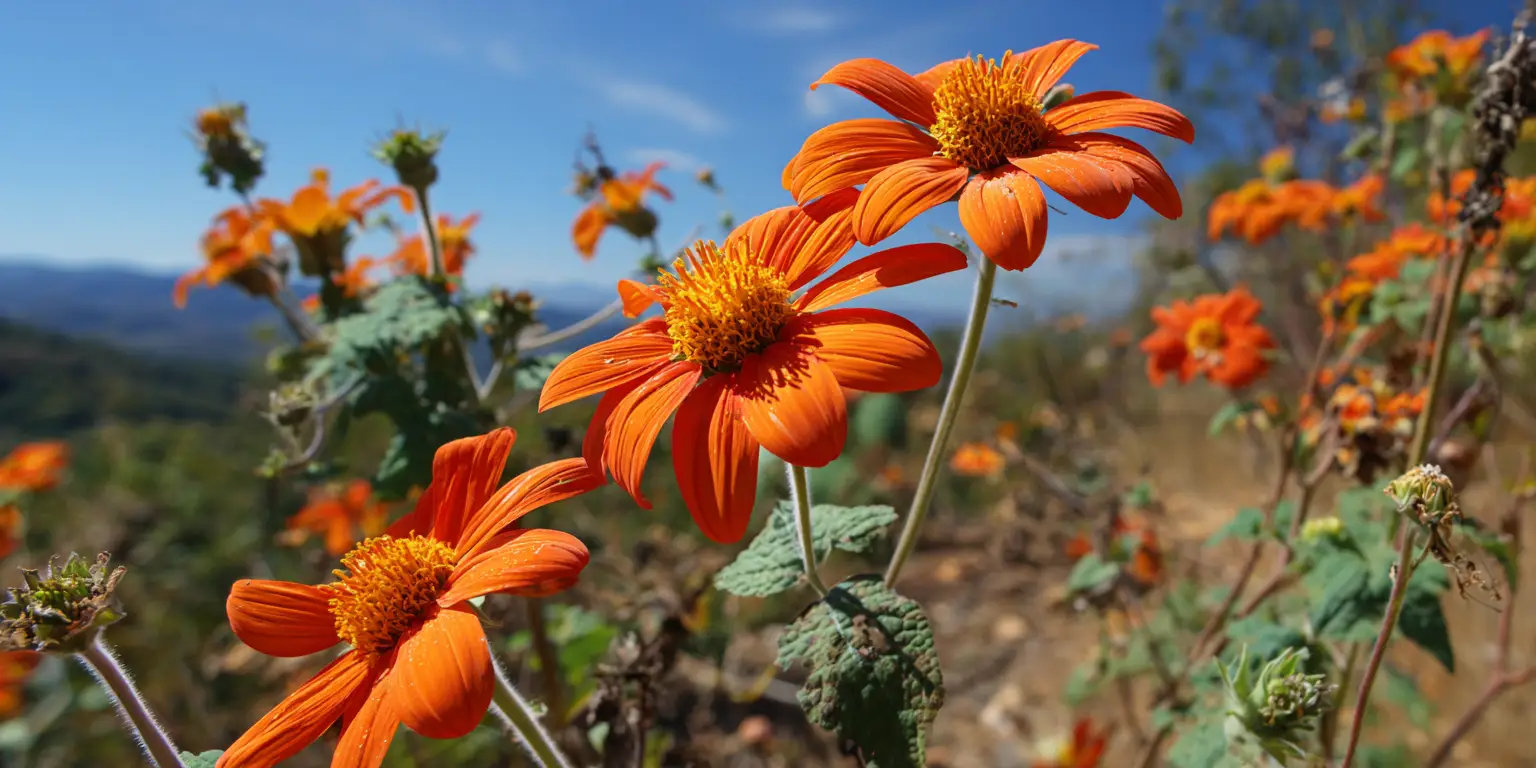
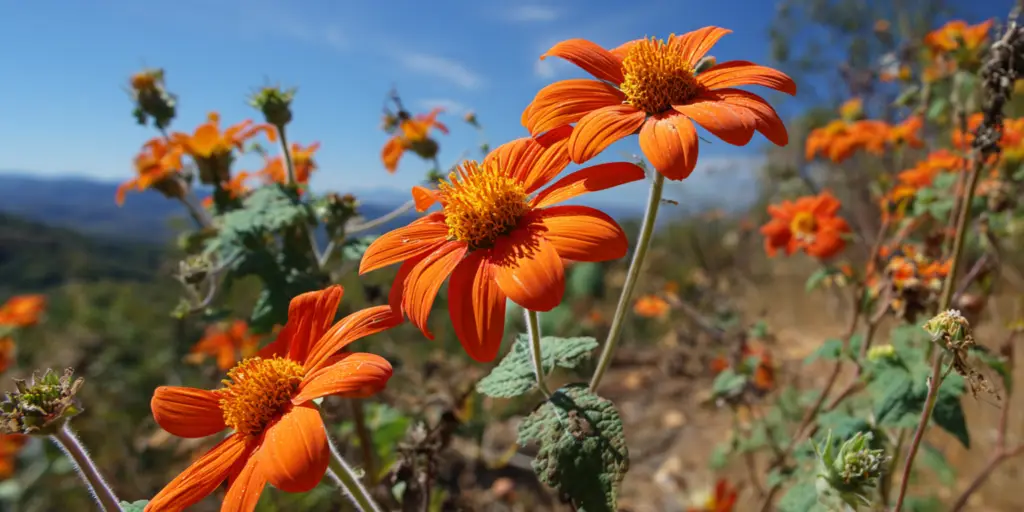
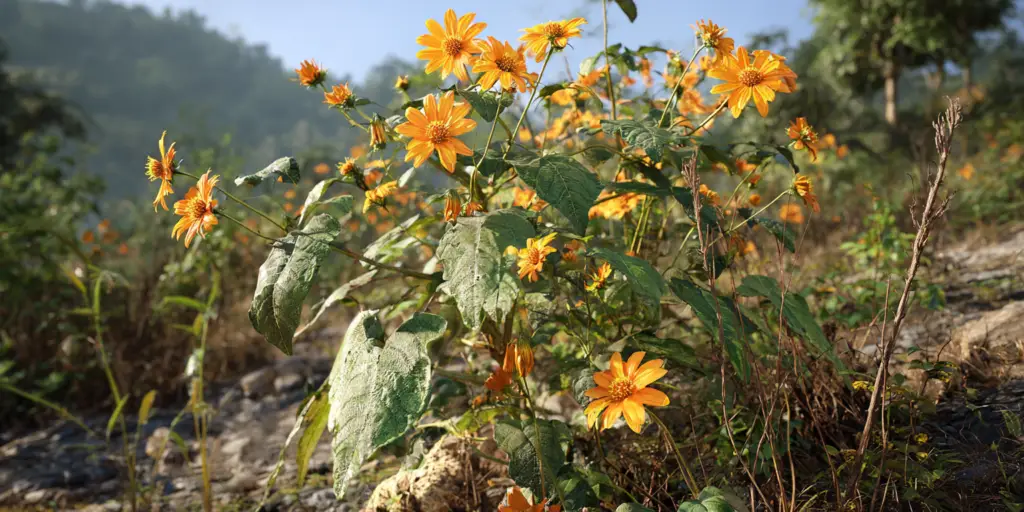
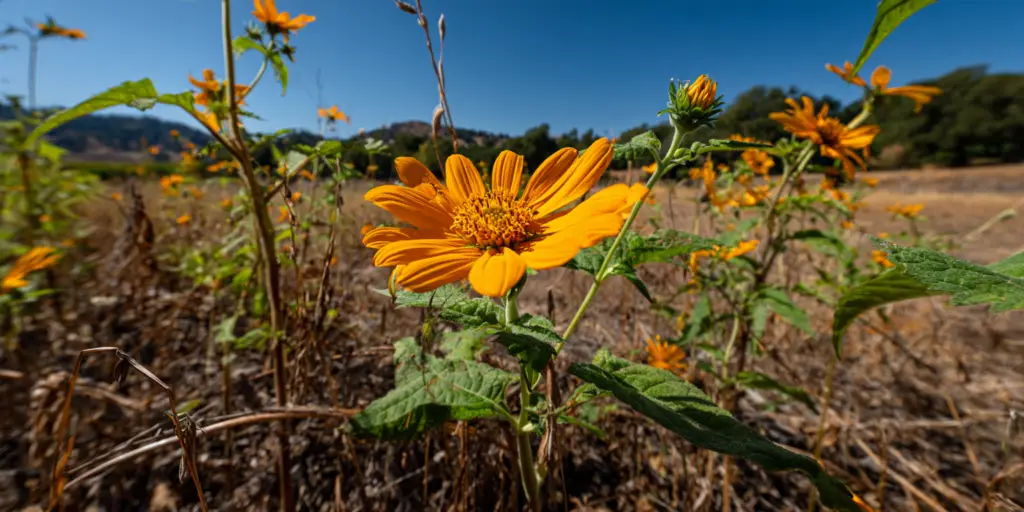
This species is the classic Mexican sunflower for North American gardens. It is a warm season annual with bright orange to red orange daisylike flowers. It thrives in full sun and well drained, lean soils. It blooms from midsummer to frost in most regions. It draws bees, butterflies, and hummingbirds. It may need staking in windy locations.
At‑a‑glance
Group/Class: species; warm season annual
Height x spread: 4 to 6 ft (1.2 to 1.8 m) x 2 to 3 ft (0.6 to 0.9 m)
Bloom window: July to frost (varies by climate)
Color & flower form: orange to red orange daisylike heads 2 to 3 in (5 to 7.5 cm) across
Fragrance: 0 none
USDA hardiness: grown as annual in most of North America; frost tender
Breeder / Year / Origin: unknown, unknown, Mexico and Central America
Cut-flower notes: stems are hollow and can be brittle; used as cut flower; handle gently
Pet safety: unknown
How it differs
Classic orange to red orange color instead of yellow tones in other species.
Moderate height fits the back of standard borders.
Reliable midsummer to frost bloom in temperate gardens.
Strengths
Heat and drought tolerance in summer conditions.
High nectar value for butterflies and bees.
Flowers in average to poor soils.
Care in one minute
Grow in full sun with well drained soil and neutral to slightly acidic pH.
Water to establish; then water deeply but infrequently.
Avoid high nitrogen feeding.
Pinch once at 12 in (30 cm) to branch; stake if exposed.
Watch‑outs
Stems can be brittle and break in wind.
Rich soil can cause weak, floppy growth.
Not frost hardy; tall plants may need staking.
Best uses (tags)
cutting; borders; pollinators; late season; heat tolerant
Provenance note
Native to Mexico and Central America. Widely introduced as an ornamental and commonly grown from seed each summer.
Written by: Your Flowers Guide editorial team We are a small independent group of flower lovers who research and review each guide using trusted horticultural and educational sources. Learn more about us