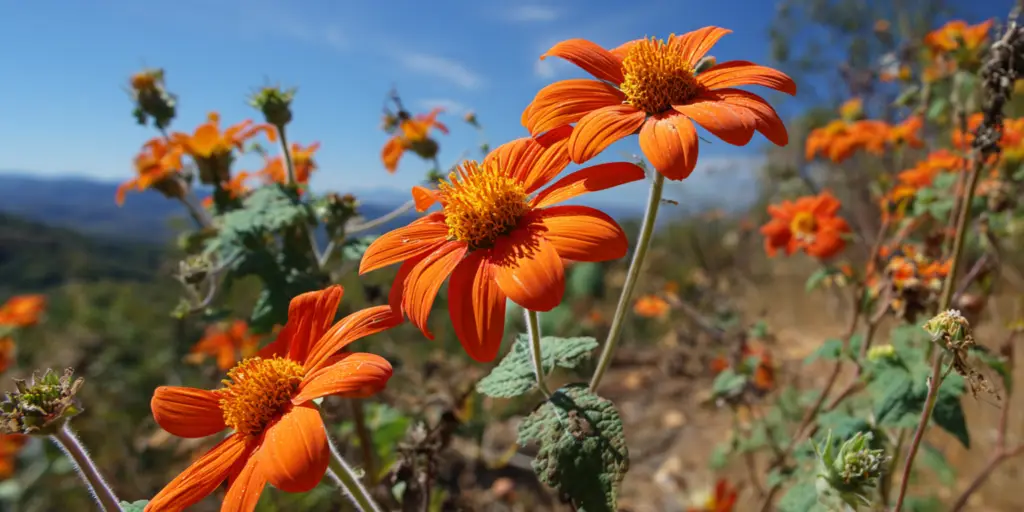
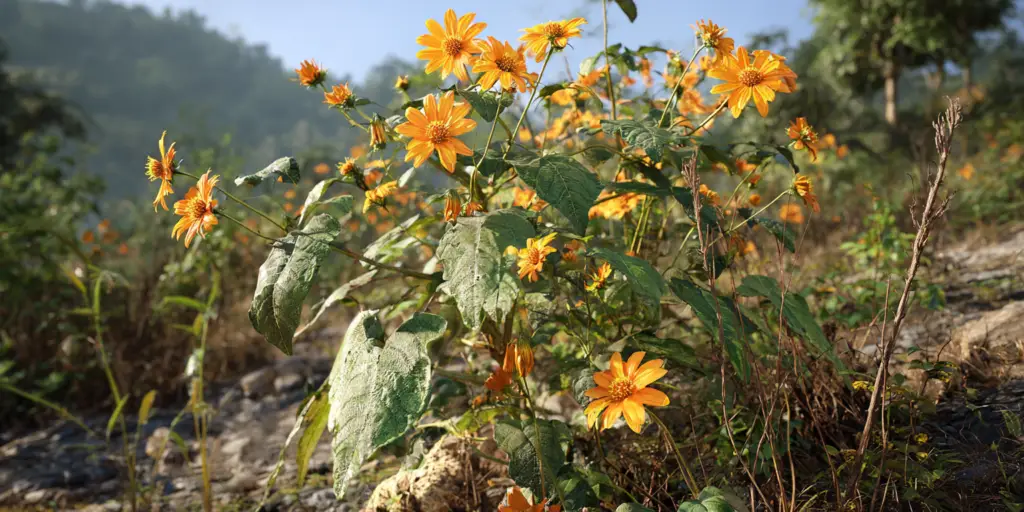
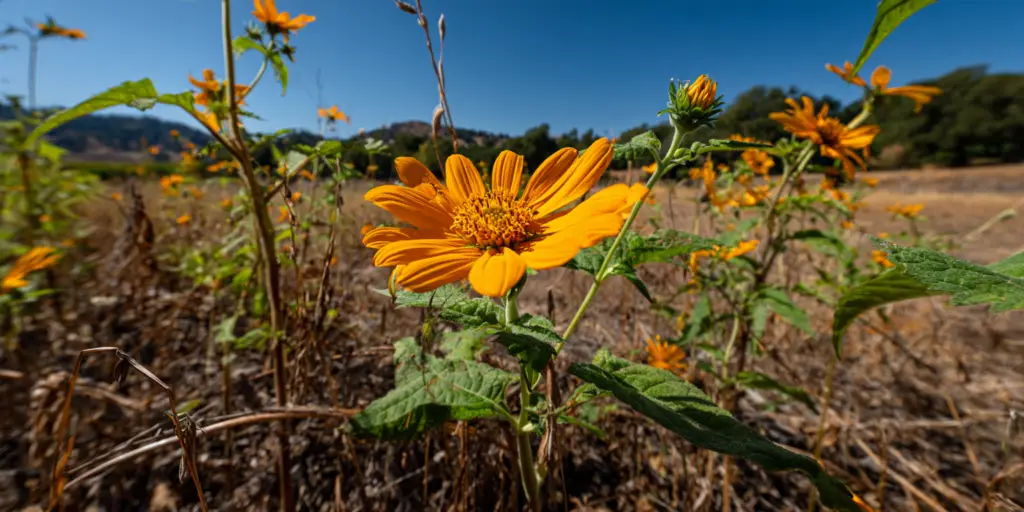
This tall Mexican sunflower species grows as a fast annual in long, warm seasons. It carries yellow daisylike flowers on long, branching stems. It thrives in full sun and well drained soil. It can reseed and naturalize where winters are mild. It is not reliably hardy in most of North America. It suits large naturalistic plantings where height is welcome.
At‑a‑glance
Group/Class: species; warm season annual
Height x spread: 6 to 10 ft (1.8 to 3 m) x 3 to 5 ft (0.9 to 1.5 m)
Bloom window: late summer to fall (varies by climate)
Color & flower form: yellow daisylike heads 3.5 to 5.5 in (9 to 14 cm) across
Fragrance: 0 none
USDA hardiness: grown as annual in most of North America; frost tender
Breeder / Year / Origin: unknown, unknown, Mexico to Honduras
Pet safety: unknown
How it differs
Taller and more open habit than the common annual Mexican sunflower.
Yellow flowers instead of orange red tones.
Readier self seeding in mild climates.
Strengths
Fast growth to make a seasonal screen.
Good heat and drought tolerance once established.
Long stems for airy effects and pollinator support.
Care in one minute
Grow in full sun with well drained soil and average fertility.
Irrigate to establish; then deep water during dry spells.
Pinch once at 12 in (30 cm) for branching; stake if windy.
Deadhead to limit reseeding and encourage more bloom.
Watch‑outs
Can self seed and spread; remove volunteers where unwanted.
Tall stems may need staking in exposed sites.
Listed as invasive in parts of South America and southern Africa.
Written by: Your Flowers Guide editorial team We are a small independent group of flower lovers who research and review each guide using trusted horticultural and educational sources. Learn more about us