Easiest Types of Flowers to Grow for Beginners
Why Some Flowers Are Perfect for First-Timers
Flowers that work well for beginners share a few traits: they germinate reliably, they tolerate irregular watering, they recover from mistakes, and they reward you with blooms quickly. A new gardener who plants lavender from seed in clay soil will likely be disappointed. One who plants zinnias in the same conditions might have a spectacular display by August.
The flowers below were chosen not just because they’re easy, but because they’re genuinely beautiful and worth growing. Easy shouldn’t mean boring.
Easiest Annuals for Beginners
Sunflowers – Almost Impossible to Fail
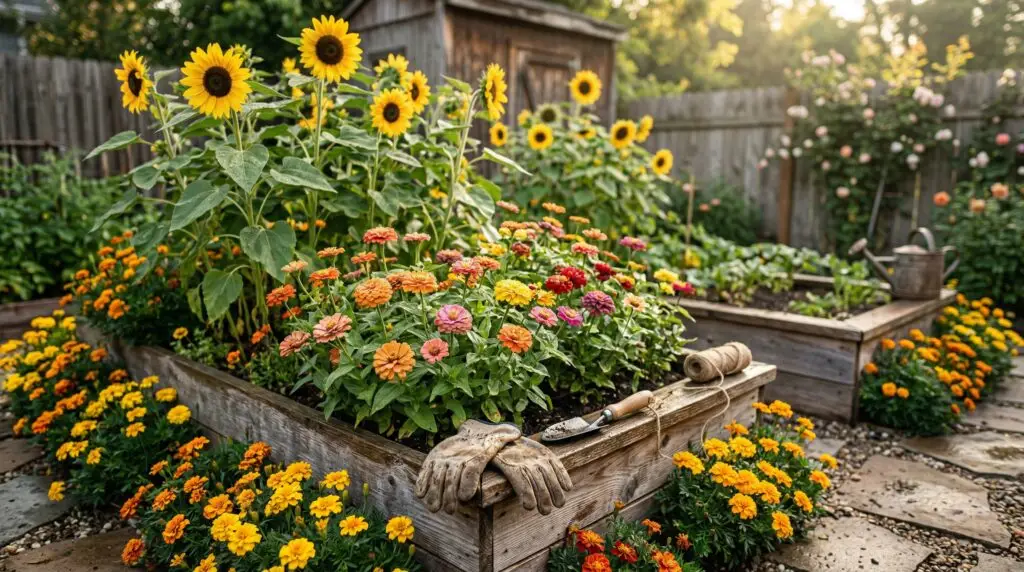
Sunflowers are arguably the most foolproof flower you can grow. Push the seed into the soil, water it, and step back. They germinate in about a week and grow visibly fast, which is enormously satisfying for first-time growers. The giant varieties are especially dramatic – ‘Russian Giant’ can reach 10 feet. Dwarf varieties work well in pots.
They do need full sun – at least 6 hours a day – and they’re not keen on waterlogged soil. But beyond those two requirements, they forgive almost everything else.
Zinnias – Sow and Forget
Zinnias are the ideal beginner annual. Direct sow after the last frost, thin the seedlings to give them space, and water during dry spells. They’ll bloom in 8 weeks and keep going until frost. The more you cut them, the more flowers appear. They’re also remarkably heat-tolerant, which makes them reliable in summer.
Marigolds – Hardy and Pest-Resistant
Marigolds are nearly indestructible. They grow fast from seed, bloom reliably in almost any soil, and the strong scent of their foliage deters many garden pests. French marigolds stay small and tidy; African marigolds grow large and bold. Both are excellent for beginners.
Nasturtiums – Grow in Poor Soil
Nasturtiums actually do better in poor soil than in rich soil. In nutrient-rich beds, they put all their energy into leaves and little into flowers. Push seeds directly into average or even quite poor soil and they’ll bloom reliably. The round leaves and open flowers are cheerful and distinctly cottage-garden in character. The flowers are also edible – a nice bonus.
Cosmos – Feather-Light and Self-Seeding
Cosmos are tall, airy, and self-seeding. Sow once and you may never have to sow again – they drop their own seeds and reappear the following year. They grow quickly, bloom prolifically, and fill border gaps with a wild, meadow-like grace. They need very little feeding and dislike being pampered.
Easiest Perennials for Beginners
Lavender – Once Established, Nearly Zero Effort
Lavender takes a season or two to establish, but once it does, it’s one of the lowest-maintenance plants in any garden. It needs full sun, good drainage, and almost nothing else. Cut it back by a third after flowering to keep it bushy. It’s drought-tolerant, fragrant, and loved by bees.
Black-Eyed Susans – Drought-Tolerant Wildflower
Black-eyed Susans are North American natives that thrive in poor, dry conditions. They spread gradually to fill gaps in a border, bloom from July to October, and attract butterflies and birds. Once planted, they look after themselves with minimal intervention.
Daylilies – Nearly Indestructible
Daylilies are among the toughest perennials available. They grow in almost any soil, tolerate drought once established, and multiply on their own. Each flower lasts one day, but the plant produces many buds over a long season. They’re almost impossible to kill – which makes them perfect for gardening beginners.
Coneflowers (Echinacea) – Tough and Rewarding
Echinacea is a prairie plant that evolved to handle heat, drought, and poor soil. It blooms in July and August and holds its form beautifully even after the petals fall. The seed heads are ornamental in winter and attractive to goldfinches. A reliable and rewarding perennial that asks for almost nothing.
Easiest Bulb Flowers for Beginners
Daffodils – Plant and Walk Away
Daffodils are the definition of a plant-and-forget bulb. Plant them in autumn, about 6 inches deep, and they’ll flower reliably every spring for years. They’re not eaten by deer, squirrels leave them alone (they’re mildly toxic), and they naturalize beautifully in grass.
Alliums – No Pests, No Rot
Alliums – ornamental onions – are among the easiest bulbs available. They’re virtually pest-free, bulbs don’t rot in average soil, and the large spherical flower heads are architecturally striking. Plant in autumn and enjoy the show in May and June.
Common Beginner Mistakes and How to Avoid Them
Overwatering
More beginner plants die from too much water than from too little. Most flowers prefer soil that dries out a little between waterings. If you’re unsure, push a finger into the soil – only water if the top inch is dry.
Planting in Too Much Shade
Most flowers need at least 4 to 6 hours of direct sunlight per day. Planting sun-lovers in deep shade results in leggy, non-flowering plants. Check how much sun a spot gets before deciding what to plant there.
Skipping Deadheading
Deadheading – removing spent flowers – is the single most effective thing you can do to extend the flowering season. It takes 10 minutes a week and makes a dramatic difference. Don’t skip it.
What Tools Do You Actually Need as a Beginner?
The honest answer: very few. A hand trowel, a watering can or garden hose, and a pair of scissors or secateurs for deadheading will handle most beginner gardening tasks. Don’t let anyone persuade you that you need an extensive toolkit to start.
FAQ
What is the easiest flower to grow from seed?
Sunflowers and zinnias are consistently the easiest flowers to grow from seed, with high germination rates and fast growth.
What flowers can I grow in pots as a beginner?
Marigolds, petunias, zinnias, and dwarf sunflowers all grow well in containers with basic care.
Do beginner flowers need fertilizer?
Most annuals in the ground don’t need much feeding if the soil is decent. Container plants benefit from a liquid feed every two weeks during summer.