Types of Flowers Safe for Cats and Dogs: The Complete Guide
Why Your Flower Choices Matter for Pets
Most people never think twice about bringing home a bouquet of lilies or tulips. They look beautiful, they smell wonderful – and they can send a cat to the emergency vet within hours. Flower toxicity in pets is one of the most under-discussed dangers in the home, yet it affects thousands of animals every year.
The good news is that plenty of gorgeous flowers are completely harmless to cats and dogs. You don’t have to choose between loving flowers and loving your animals. You just need to know which is which.
Types of Flowers Safe for Both Cats and Dogs
Roses
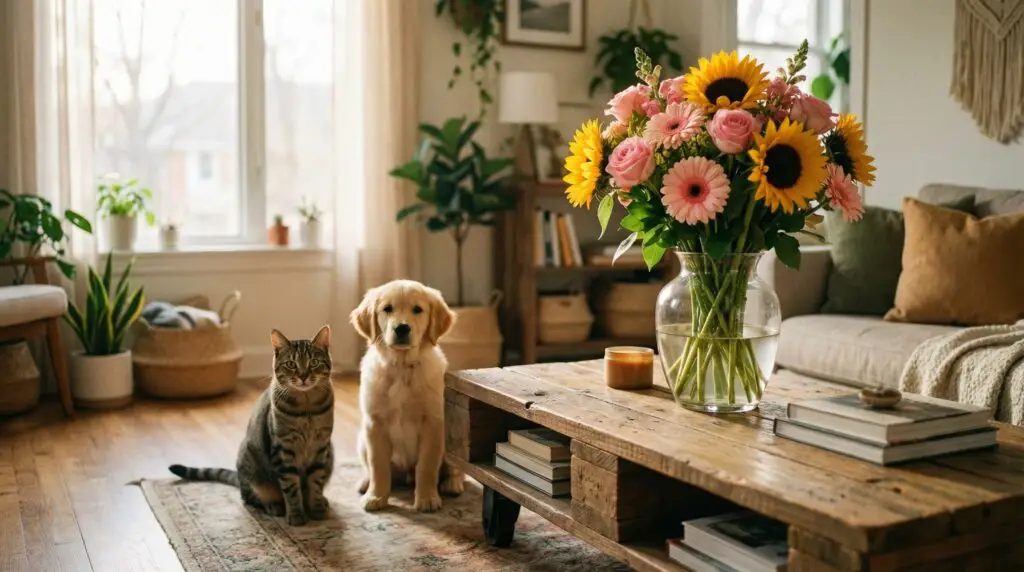
Roses are non-toxic to both cats and dogs. The petals, stems, and leaves won’t cause poisoning – though the thorns can scratch a curious nose. A rose bouquet is one of the safest options you can bring into a pet-friendly home.
Sunflowers
Sunflowers are completely safe for cats and dogs. They’re bold, cheerful, and long-lasting in a vase. The only minor issue is that some dogs will try to eat the petals, which may cause a mild stomach upset if consumed in large amounts – but there’s no toxicity involved.
Gerbera Daisies
Gerbera daisies are non-toxic and visually striking. They come in almost every color imaginable and hold up well in arrangements. A solid choice for homes with curious pets.
Zinnias
Zinnias are safe for cats and dogs alike. They’re also some of the easiest flowers to grow from seed, which makes them a good option if you want a pet-safe garden as well as pet-safe arrangements.
Orchids (Phalaenopsis)
Phalaenopsis orchids – the kind sold in most garden centers and supermarkets – are non-toxic to cats and dogs. They’re elegant, long-lasting, and genuinely safe for a pet-filled household.
Snapdragons
Snapdragons are listed as non-toxic by the ASPCA for both cats and dogs. Their unusual shape adds drama to any arrangement without adding risk.
Asters
Asters are soft, daisy-like flowers that are safe around pets. They bloom in late summer and autumn and bring purples, pinks, and whites into seasonal arrangements.
Alstroemeria (Peruvian Lily)
Alstroemeria – sometimes called the Peruvian lily – is non-toxic to dogs. There is some mild concern for cats with large quantities, but it’s generally considered much safer than true lilies. When in doubt, keep any lily-related flower out of reach of cats.
Freesia
Freesia is non-toxic to both cats and dogs. It’s also one of the most fragrant affordable flowers available, which makes it a popular filler in bouquets.
Celosia
Celosia – with its distinctive feathery or crested blooms – is safe for pets and adds unusual texture to arrangements and gardens.
Flowers Safe for Dogs but Toxic to Cats
Lilies – Why They Are Deadly for Cats
This is the most critical section in this guide. True lilies – including Easter lilies, tiger lilies, Asiatic lilies, and daylilies – are acutely toxic to cats. Even a tiny amount, including pollen that falls onto fur and is then groomed off, can cause rapid kidney failure.
Lilies are generally considered safe for dogs. But if you have a cat in your home, treat any true lily as an immediate hazard and keep it out of the house entirely. The risk is not worth it.
Flowers That Are Toxic to Both Cats and Dogs
Tulips
Tulips contain toxins concentrated in the bulb but present throughout the plant. Eating tulip leaves or petals can cause drooling, stomach upset, and in larger quantities, more serious symptoms. Keep tulips away from pets.
Daffodils
Daffodils are toxic to both cats and dogs. The bulb is the most dangerous part, but all parts of the plant can cause vomiting, diarrhea, and in severe cases, heart rhythm issues.
Hyacinths
Hyacinths contain compounds that cause vomiting and stomach pain if eaten. The bulbs are especially dangerous. Forced hyacinth bulbs in pots are a common spring gift – beautiful, but not safe in a pet household.
Azaleas
Azaleas and rhododendrons are seriously toxic to both cats and dogs. Even small amounts can cause vomiting, weakness, and cardiovascular problems. Avoid these entirely in pet-friendly gardens.
Irises
Irises are mildly to moderately toxic to cats and dogs. The underground parts carry the highest concentration of irritants. Symptoms include drooling, stomach upset, and skin irritation.
How to Create a Pet-Safe Floral Arrangement
Building a pet-safe bouquet doesn’t mean limiting yourself to boring options. Start with roses, sunflowers, or gerbera daisies as your statement flowers. Add freesia or snapdragons for variety. Use eucalyptus foliage cautiously – it’s mildly toxic in large amounts, so placing arrangements out of reach is wise.
If you receive a mixed bouquet as a gift, check every flower in it before putting it where your pet can reach it. Many florists include lilies in standard arrangements without labeling them as such.
Pet-Safe Garden Planting Ideas
If your cat or dog spends time in the garden, consider filling your borders with zinnias, marigolds, sunflowers, and roses. Avoid planting tulip or daffodil bulbs in areas where dogs dig. Lavender is generally considered low-risk and works beautifully as a garden edge plant.
What to Do If Your Pet Eats a Flower
If you suspect your pet has eaten a toxic flower, act immediately. Don’t wait for symptoms to appear. Contact your vet or an emergency animal poison hotline with the name of the plant. If you can, bring a photo or sample of the flower. Time matters – especially with lily ingestion in cats, where treatment within a few hours can prevent permanent kidney damage.
FAQ
Are sunflowers safe for cats?
Yes. Sunflowers are non-toxic to both cats and dogs.
What flowers are dangerous for dogs?
Tulips, daffodils, hyacinths, azaleas, and irises are among the most commonly dangerous flowers for dogs.
Can I have lilies in my house if I have a cat?
It’s strongly advised not to. True lilies can cause fatal kidney failure in cats even from very small exposures, including pollen.
Are roses toxic to cats?
No. Roses are non-toxic to cats. The thorns can cause physical injury, but the plant itself is safe.