Types of Flowers That Bloom All Summer Long
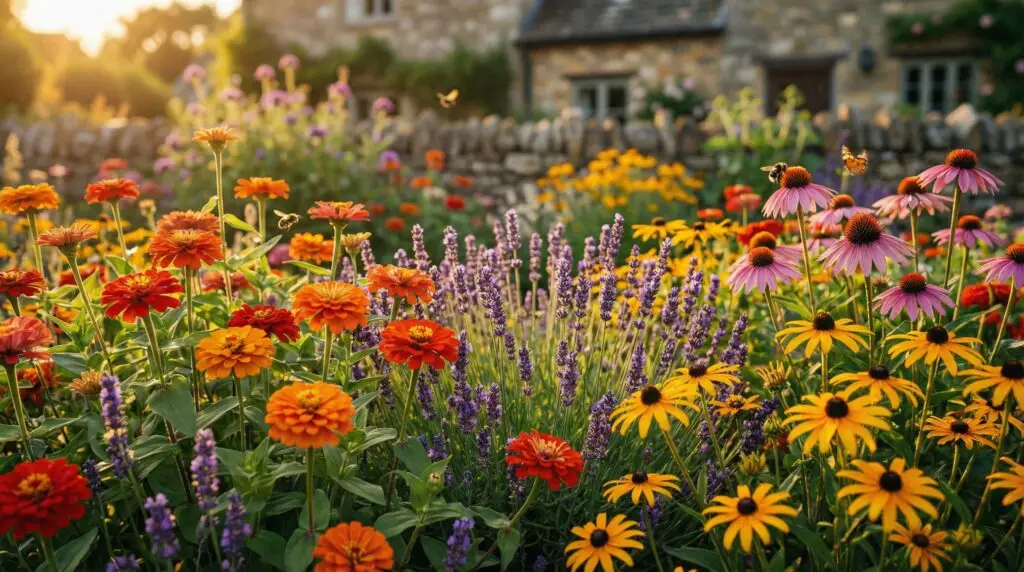
The Secret to a Garden That Never Stops Blooming
Most gardens peak in June and look tired by August. The trick to non-stop summer color isn’t one magic plant – it’s layering annuals and perennials with staggered bloom times, then deadheading regularly to keep them going.
The flowers in this guide were chosen because they bloom continuously from early summer through to the first frosts, not just for a dazzling two-week window. Many of them actually get better as the season progresses.
Annual Flowers That Bloom All Summer
Zinnias
Zinnias are probably the best summer-long annual in existence. Sow directly in the ground after the last frost, and they’ll start blooming within 8 weeks – then keep going until October without stopping. They come in virtually every color, thrive in heat, and the more you cut them, the more flowers they produce. Deadhead spent blooms every week and they won’t slow down.
Marigolds
Marigolds bloom from early summer until hard frost with almost no effort. They’re drought-tolerant, pest-repellent, and reliably cheerful. French marigolds stay compact and bushy. African marigolds grow tall and bold. Both types keep blooming as long as old flowers are removed.
Petunias
Petunias are a summer container staple. They bloom continuously through summer heat, though they benefit from a mid-season trim – cut them back by a third in late July and they’ll flush with fresh growth and blooms for August and September. Wave petunias in hanging baskets are particularly prolific.
Cosmos
Cosmos are fast-growing, airy annuals that self-seed freely. Once established, they bloom without interruption from early summer until frost. They handle poor soil well and don’t need much feeding – rich soil actually makes them produce more leaves than flowers.
Impatiens (for shade)
For shady spots that receive little sun, impatiens are the go-to summer annual. They flower continuously in conditions where most summer bloomers simply refuse to perform. New Guinea impatiens tolerate a bit more sun and come in vibrant, saturated colors.
Perennial Flowers That Bloom All Summer
Lavender
Lavender blooms from late June through August and, if cut back lightly after the first flush, will often produce a second wave of flowers. It’s drought-tolerant once established and fills the garden with scent as well as color. English lavender is hardier than French varieties in cooler climates.
Black-Eyed Susan (Rudbeckia)
Black-eyed Susans start blooming in July and continue well into autumn. They’re native wildflowers in North America, which means they’re incredibly tough, drought-tolerant, and reliable. The golden-yellow flowers with dark centers are a classic of late summer borders.
Coreopsis (Tickseed)
Coreopsis is one of the longest-blooming perennials available. It starts in May or June and, with regular deadheading, can still be producing flowers in October. It’s heat-tolerant, drought-resistant, and comes in yellow, orange, and pink forms.
Daylilies (Hemerocallis)
Individual daylily flowers last only one day – hence the name – but a healthy plant produces dozens of buds that open in succession over six to eight weeks. Plant a mix of early, mid, and late-season varieties to extend color across the whole summer.
Salvia
Salvias are tireless bloomers. Hardy perennial varieties like Salvia nemorosa bloom from June onwards and respond well to cutting back after the first flush. Tender salvias used as annuals, like Salvia splendens, flower from planting until frost.
Echinacea (Coneflower)
Echinacea blooms from July through September and has a quiet persistence that many showier flowers lack. The daisy-like flowers in pink, purple, orange, and white hold up well in heat and attract butterflies and bees. Leave the seed heads in autumn and birds will thank you.
How to Combine Flowers for a Seamless Bloom Sequence
Spring-to-Summer Handoff
Plant early perennials like alliums and geraniums alongside your summer annuals. As the spring flowers finish in May and June, the annuals hit their stride and fill in the gaps. This avoids the awkward dead-patch period many gardens experience in late June.
Summer-to-Fall Handoff
Layer in late-blooming perennials like rudbeckia, echinacea, and asters alongside your summer flowers. As zinnias and petunias wind down in September, the autumn bloomers carry the color into October and even November.
Care Tips for Keeping Summer Flowers Blooming
Deadheading: What It Is and Why It Matters
Deadheading means removing spent flowers before they set seed. A plant’s biological goal is to reproduce – once it produces seeds, it stops making flowers. Removing old blooms regularly tricks the plant into continuing its flowering effort. This one habit doubles or triples the flowering season of most annuals.
Watering and Feeding for Maximum Blooms
Most summer flowers prefer deep, infrequent watering over a daily shallow sprinkle. Watering deeply once or twice a week encourages roots to grow down rather than staying shallow. Feed container plants with a liquid fertilizer every two weeks. In-ground beds benefit from a mid-summer top-dressing of balanced fertilizer.
Best Summer Blooms for Containers and Small Spaces
If you’re working with a balcony, patio, or small courtyard, the best summer performers in pots are petunias, zinnias, marigolds, and salvia. Use a good quality potting mix, ensure containers have drainage holes, and feed regularly. Containers dry out faster than beds, so check moisture levels every day in hot weather.
FAQ
What flowers bloom the longest in summer?
Zinnias, marigolds, coreopsis, and petunias are among the longest-blooming summer flowers, often flowering continuously from early summer until the first frost.
Do I need to deadhead summer flowers?
For most annuals and many perennials, yes. Regular deadheading significantly extends the blooming period.
What summer flowers come back every year?
Lavender, echinacea, rudbeckia, coreopsis, and daylilies are all perennials that return each year without replanting.