Types of Flowers That Grow in Shade: The Complete Guide
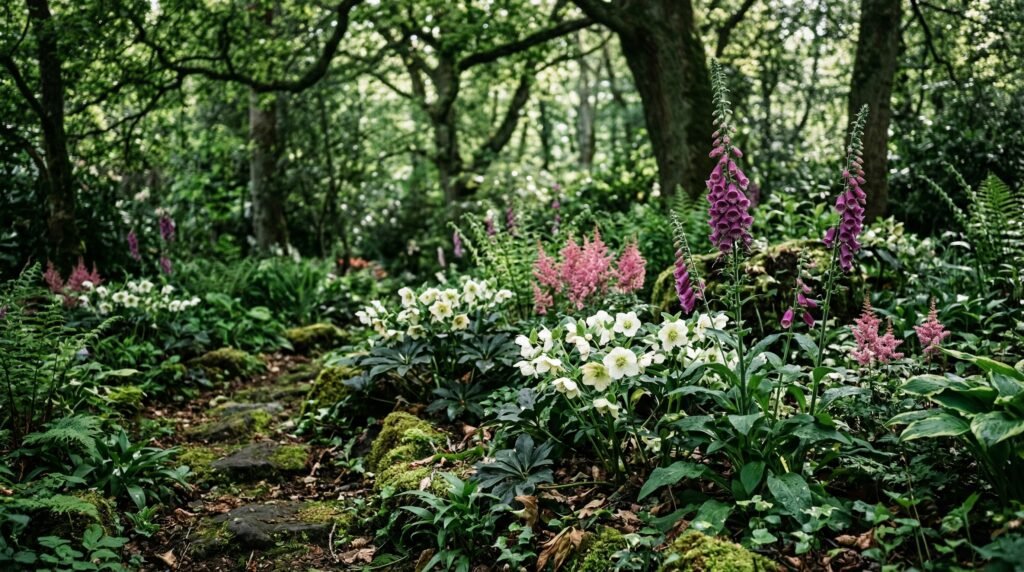
The Shade Garden Myth (You CAN Have Color)
The idea that shade gardens are dull, green, and flowerless is simply wrong. Some of the most beautiful garden plants on earth prefer shade – they evolved in forests and woodlands where full sun never reaches. Understanding which flowers thrive in low light opens up garden spaces that most people write off entirely.
The key distinction is between deep shade (under dense canopy, north-facing walls), partial shade (2-4 hours of direct sun), and dappled shade (shifting light through foliage). Different plants suit different types of shade.
Flowers for Deep Shade
Impatiens – The Classic Shade Annual
Impatiens are the most reliable annual for deep shade. They flower continuously from planting until frost in conditions where almost nothing else will perform. Standard impatiens prefer cool, moist conditions; New Guinea impatiens tolerate a little more warmth and sun. They come in white, pink, coral, red, and orange.
Hellebore (Lenten Rose) – Winter and Spring Color
Hellebores are extraordinary plants. They bloom from December through April – often through snow – in deep shade conditions. Their nodding flowers come in cream, pale pink, deep purple, near-black, and spotted varieties. They’re long-lived perennials that slowly multiply into impressive clumps and require almost no maintenance once established.
Lily of the Valley – Fragrant and Woodland Native
Lily of the valley is a woodland native that actively dislikes full sun. It spreads slowly by rhizome to form a fragrant groundcover in deep shade. The white bell-shaped flowers in May are intensely sweet-scented. Note that all parts of the plant are toxic if ingested.
Flowers for Partial Shade (2-4 Hours of Sun)
Hydrangea – The Showstopper
Hydrangeas are among the most spectacular flowering shrubs for partial shade. Lacecap and mophead varieties bloom through summer with enormous flower heads in blue, pink, white, and purple. They dislike harsh afternoon sun, which makes a position with morning sun and afternoon shade ideal.
Astilbe – Feathery and Colorful
Astilbe produces feathery plumes in pink, red, white, and lavender above ferny foliage. It’s a true shade perennial that actually performs better away from full sun, especially in warmer climates where direct sun scorches the leaves. It likes consistently moist soil.
Begonias – Reliable and Bold
Wax begonias are compact, tough, and flower continuously in partial shade. Tuberous begonias offer enormous, dramatically ruffled flowers in shades from white through yellow, orange, and deep red – and they’ll grow and bloom in surprisingly low light conditions.
Foxglove – Tall and Dramatic
Foxgloves are biennial – they grow foliage the first year and flower magnificently the second. They prefer partial shade and reliably self-seed, so a single planting often becomes a colony over time. The tall spikes of tubular flowers in purple, pink, cream, and white bring height to shaded borders.
Columbine (Aquilegia) – Delicate and Dainty
Columbines produce unusual, spurred flowers in a wide color range in late spring. They’re naturally woodland plants that prefer partial shade and cool conditions. They self-seed freely and can colonize a shaded border quite quickly.
Ground Cover Flowers for Shady Areas
Ajuga (Bugle Flower)
Ajuga forms a low, spreading mat with small blue flower spikes in spring. It’s extremely tough and grows in even quite dry shade, which makes it useful under trees where conditions are challenging for most plants.
Violets
Violets – both the native wood violet and garden varieties – thrive in shade and spread to form loose, informal groundcover. The small purple, white, or yellow flowers appear in spring. They’re remarkably tough and tolerate dry shade once established.
Lungwort (Pulmonaria)
Lungwort is one of the earliest shade perennials to flower – often in February – with small pink, blue, and purple flowers appearing on the same plant simultaneously. The spotted foliage is ornamental through summer. It handles dry shade better than most woodland plants.
Shade Flowers for Containers and Pots
For a shaded patio or balcony, begonias and impatiens are the most reliable container choices. Fuchsias also perform beautifully in hanging baskets in partial shade – their pendulous flowers in pink and purple add color where sun-loving petunias would fade. Use a high-quality potting mix and water consistently, as containers in shade can still dry out.
How to Improve Light in a Shady Garden
Sometimes the most practical approach is to increase light rather than only choosing shade plants. Thinning tree canopy by removing lower branches lets more dappled light in. Painting nearby walls white reflects light. Removing or reducing large shrubs that block sunlight can transform what’s possible in a previously dark border.
Combining Shade Flowers for Year-Round Interest
Layer shade plants by bloom season: hellebores for winter and early spring, lungwort and columbines for mid-spring, astilbe and foxgloves for early summer, and begonias and impatiens for summer through autumn. Add ferns and hostas for foliage texture between flowering periods. A well-planned shade garden can have color and interest in every month of the year.
FAQ
What flowers grow in full shade?
Impatiens, hellebores, and lily of the valley are among the few flowering plants that genuinely tolerate full or deep shade.
Can hydrangeas grow in full shade?
Hydrangeas prefer partial shade – some morning sun helps them flower well. In full deep shade, flowering can be sparse.
What annual flowers grow in shade?
Impatiens, begonias, and fuchsias are the most reliable shade-tolerant annual flowers for beds and containers.