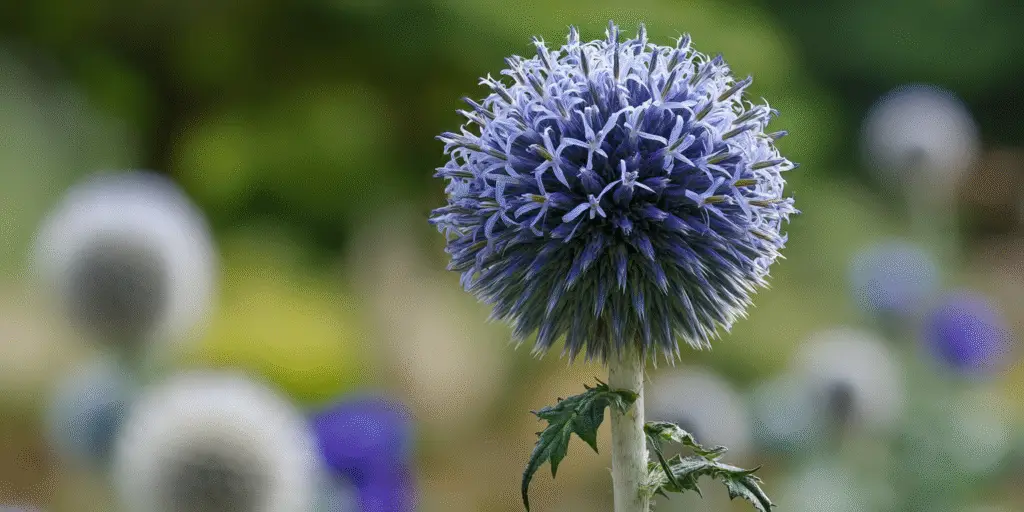
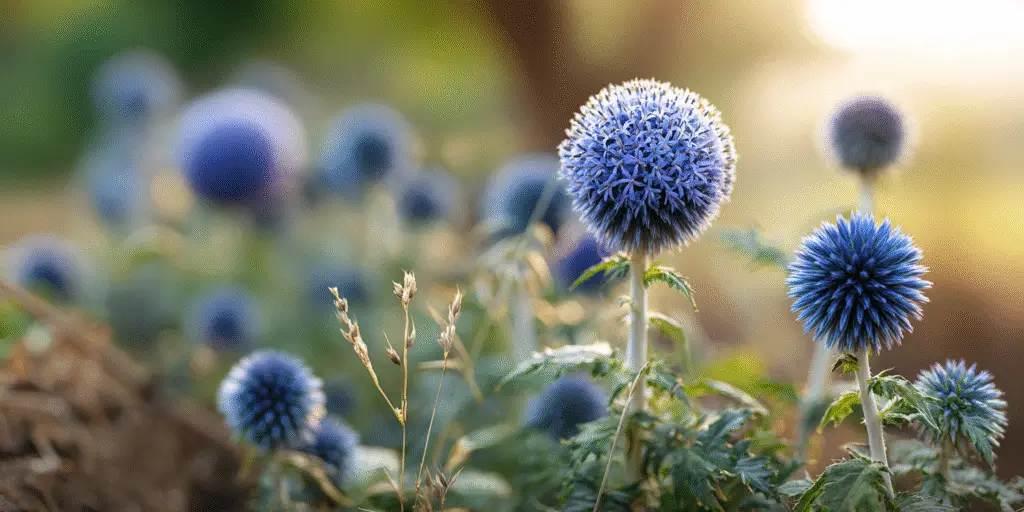
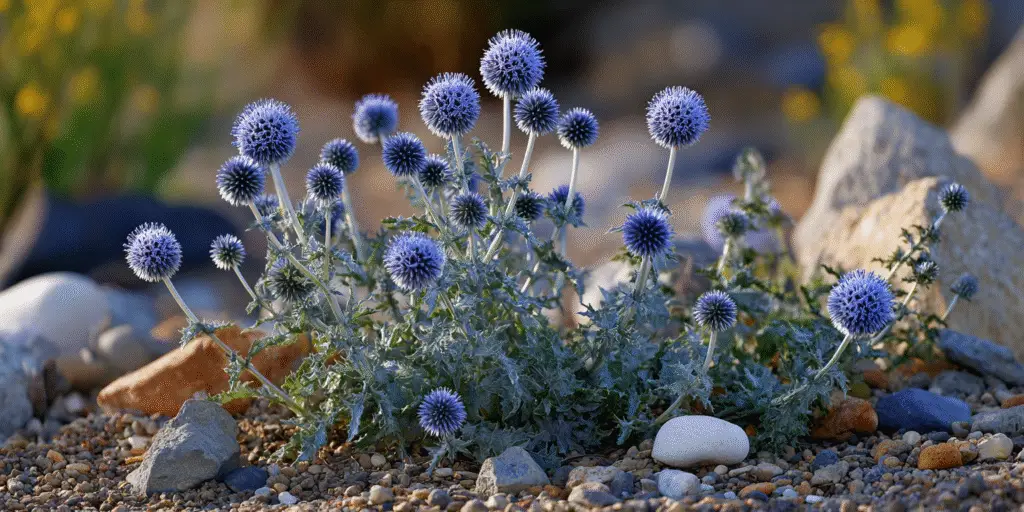
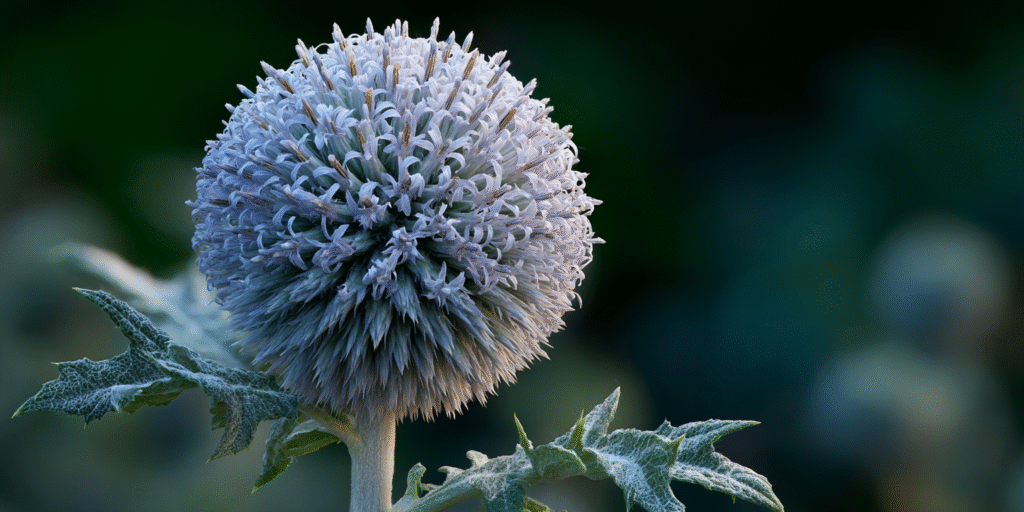
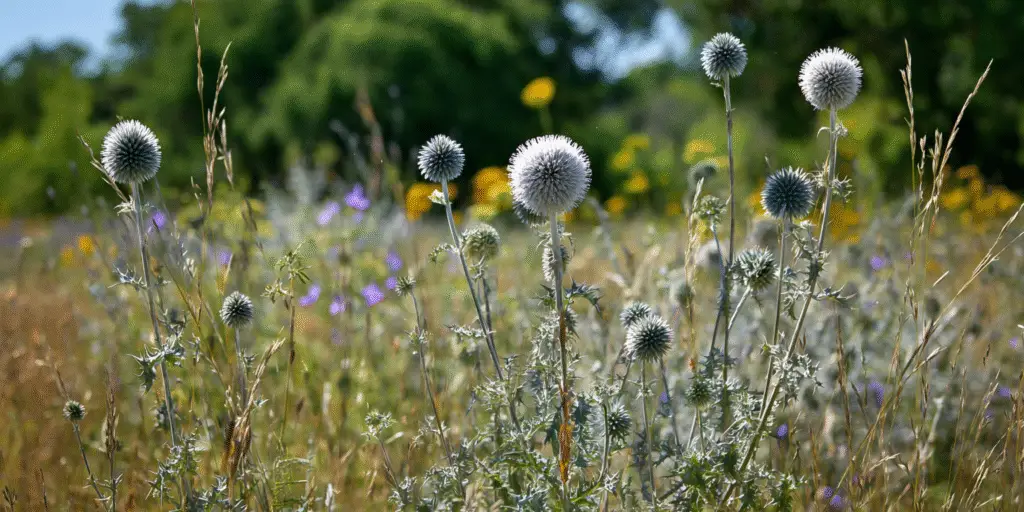
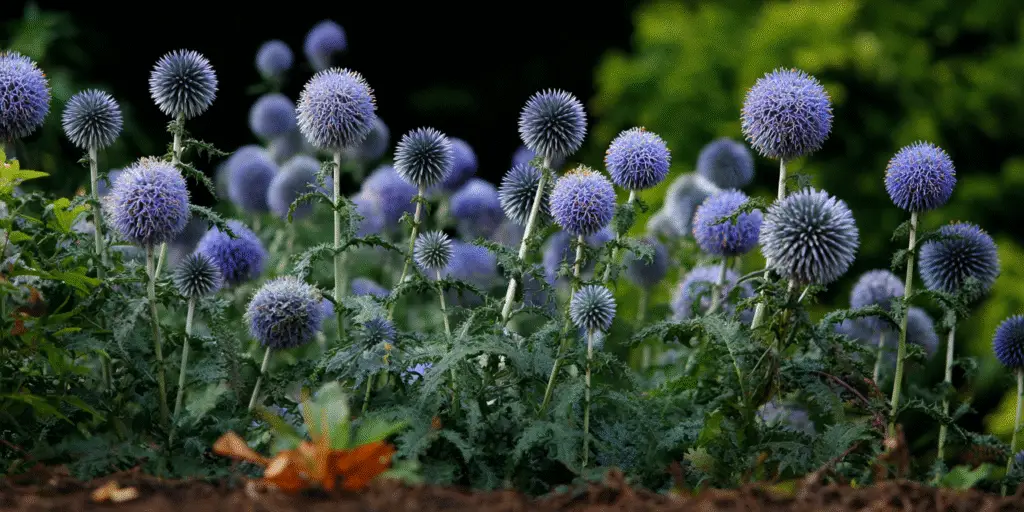
This tall globe thistle bears big steel blue flower heads on branching stems. It stands out for height and flower count in midsummer borders. It performs best in full sun and lean, well‑drained soil. Plants handle heat and dry spells after establishment. Spiny foliage is gray green above and white beneath.
At‑a‑glance
Group/Class: Herbaceous perennial
Height × spread: 40–60 in (1.0–1.5 m) × 20–40 in (0.5–1.0 m)
Bloom window: mid summer to early fall
Color & flower form: steel blue spherical heads
Fragrance: 1 trace
USDA hardiness: zones 3–8
Breeder / Year / Origin: unknown
Cut‑flower notes: Firm stems; good fresh and dried.
Pet safety: safe
How it differs
Taller than many globe thistles
Large heads on well‑branched stems
Color holds best in full sun
May need support in rich soil
Strengths
Drought tolerant once established
Deer and rabbit resistant foliage
Pollinator friendly
Low maintenance in lean soils
Care in one minute
Plant in full sun with open exposure.
Provide well‑drained, average to poor soil; neutral to slightly alkaline pH.
Water to establish; then water deeply but infrequently.
Avoid high nitrogen fertilizers.
Deadhead to limit self‑seeding; stake if needed.
Watch‑outs
Flops in rich or wet soil
Spiny leaves can irritate skin
Taproot makes moving difficult
Best uses (tags)
cutting; borders; pollinators; dried flowers
Provenance note
A selection of the southeastern European species Echinops bannaticus; raiser and date unknown.
Written by: Your Flowers Guide editorial team We are a small independent group of flower lovers who research and review each guide using trusted horticultural and educational sources. Learn more about us