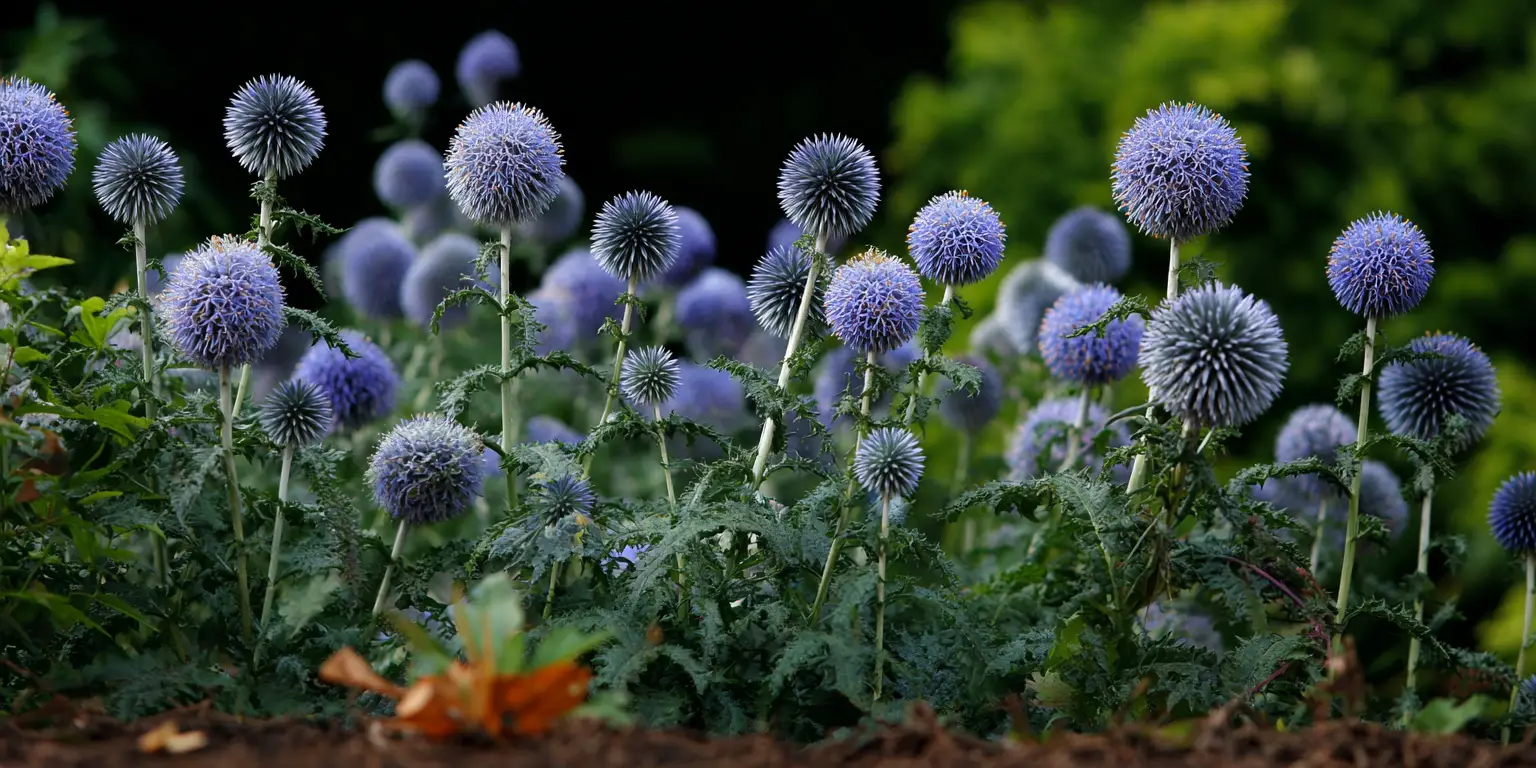
in bloom
now
through Sep
Bloom calendar
Platinum Blue
Herbaceous perennial
At‑a‑glance
- Group/Class: Herbaceous perennial
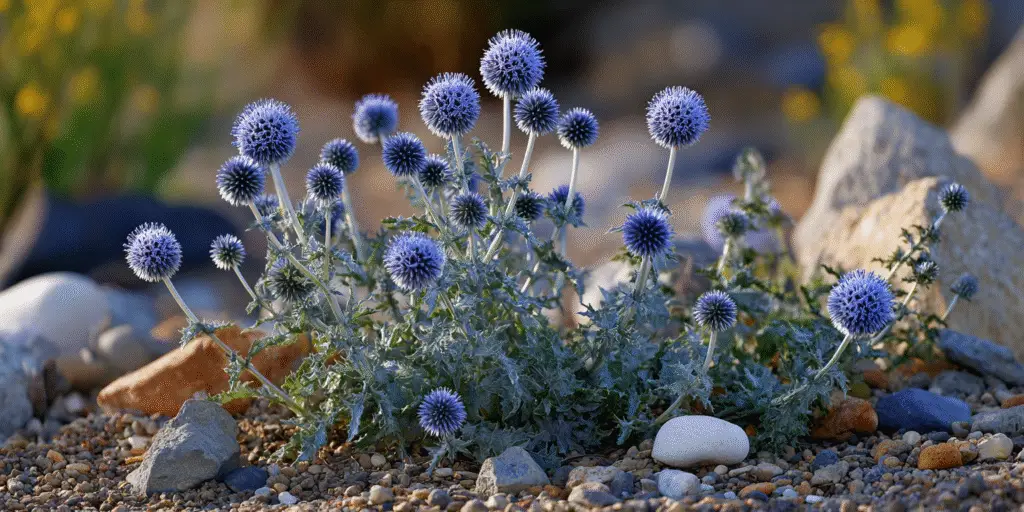
- Height × spread: 30–36 in (80–90 cm) × 12–20 in (30–50 cm)
- Bloom window: late summer
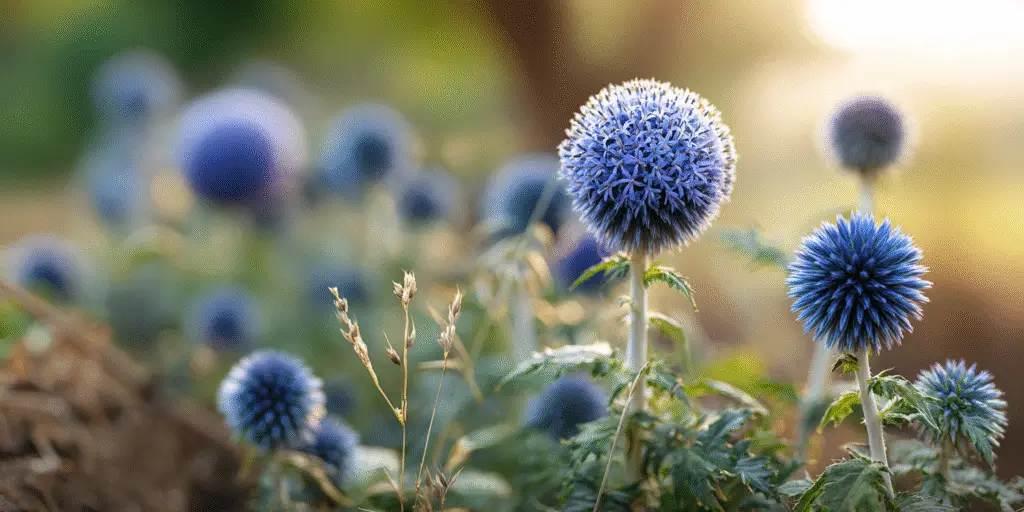
- Color & flower form: metallic blue spherical heads; pale stems
- Fragrance: 1 trace
- USDA hardiness: zones 3–8
- Breeder / Year / Origin: unknown
- Cut‑flower notes: Firm stems; good fresh and dried.
- Pet safety: safe
How it differs
- More compact than many blue globe thistles
- Silvery, branched stems add strong contrast
- Reported to come true from seed
- Fits small spaces and containers with excellent drainage
Strengths
- Compact habit
- Tolerates poor, dry soils after establishment
- Pollinator friendly
- Useful fresh or dried
Care in one minute
Provide full sun and well‑drained soil; amend heavy clay.
Water regularly in year one; reduce after establishment.
Avoid over‑fertilizing to keep stems sturdy.
Deadhead to limit self‑seeding or leave heads for winter display.
Watch‑outs
- Taprooted; avoid moving mature plants
- Can lean in overly rich soil
- Spiny foliage requires gloves for handling
Best uses (tags)
Provenance note
A compact selection within Echinops ritro subsp. ruthenicus; detailed breeder data are not documented on public profiles.
References
- Royal Horticultural Society – Echinops ritro subsp. ruthenicus ‘Platinum Blue’
- Missouri Botanical Garden – Echinops ritro subsp. ruthenicus
- ASPCA – Echinops spp. non‑toxic to pets
Similar Flowers

Enjoying our flower guides? Add YourFlowersGuide as a preferred source on Google. It helps more readers find us.
Add to Preferred Sources