

Rose bloom time across the US
Interactive map
 See the interactive map
Drag the date and the bloom moves north across the country. Every point has its own window, and the map says where it has no records rather than guessing. Free, with nothing to sign up for. Open the rose map.
City by city
Typical window, earliest first. Cultivars of the same flower can open days or weeks apart.
Taxonomy and origin
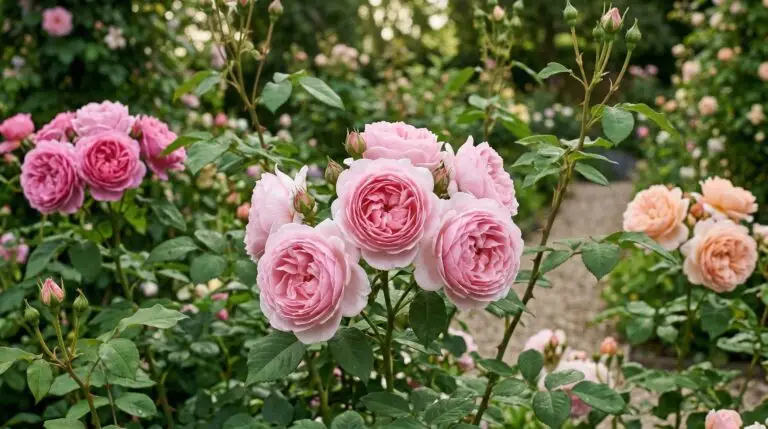
The rose belongs to the genus Rosa in the family Rosaceae, alongside apples, cherries, and strawberries. Around 150 wild Rosa species have been described, spread through the temperate Northern Hemisphere, and the cultivated descendants number in the tens of thousands. Wild roses grow as deciduous shrubs, climbing vines, and trailing groundcovers, and the greatest diversity sits in Asia. Humans have grown roses for a very long time, with cultivation in China dating back at least 5,000 years. The turning point for the modern garden rose came when Chinese repeat-blooming roses reached Europe in the late eighteenth century and passed their ability to flower again and again into the European breeding lines, which is the reason most roses sold today rebloom rather than flowering once and stopping.
Knowing the type matters more than knowing the species, because growth habit, bloom pattern, scent, and pruning needs all follow from it. The table below sorts the main groups a buyer will meet, and the garden rose profile covers the classic bush forms in more depth.
| Rose type | Flower form | Bloom habit | Scent | Best use |
|---|---|---|---|---|
| Hybrid tea | One large bloom per long stem | Repeat | Often strong | Cutting, formal beds |
| Floribunda | Clusters of medium blooms | Repeat, heavy | Light to moderate | Color in borders, hedges |
| Grandiflora | Large blooms in small clusters | Repeat | Moderate | Tall accent, cutting |
| Climbing | Varies, on long canes | Repeat or once | Varies | Walls, arbors, fences |
| Shrub | Open, informal | Repeat or once | Varies | Mixed borders, low care |
| English (David Austin) | Full, many-petaled | Repeat | Strong | Romantic borders, cutting |
| Miniature | Small blooms, low plant | Repeat | Light | Pots, edging, patios |
| Landscape (Knock Out) | Simple to semi-double | Repeat, nonstop | Light | Low-maintenance mass planting |
For a first rose or a low-fuss bed, landscape and shrub types like Knock Out carry the strongest disease resistance and forgive missed pruning. Hybrid teas give the classic florist bloom on a long stem but demand more spraying and care. Floribundas trade single-stem perfection for sheer quantity, English roses pair old-rose fullness and scent with modern reblooming, and climbers cover structures but need their canes trained and tied. Match the form to the use and the climate first, then narrow by color and fragrance.
Roses that came through an eight-year trial with nothing sprayed on them
Texas A&M's Earth-Kind programme runs eight-year field trials in which no fertilizer of any kind is permitted, no irrigation after the initial year is permitted, and no pesticides are used, across 12 Texas trial sites and later expanded to 25 states and four countries, with northern trials specifically testing zones 3 and 4. Designation requires an extremely high level of landscape performance coupled with outstanding disease and insect tolerance. Twenty-one cultivars hold it; these eight are the ones worth a photograph, and the badge records only whether this row's figures were checked against that cultivar's own Texas A&M page.
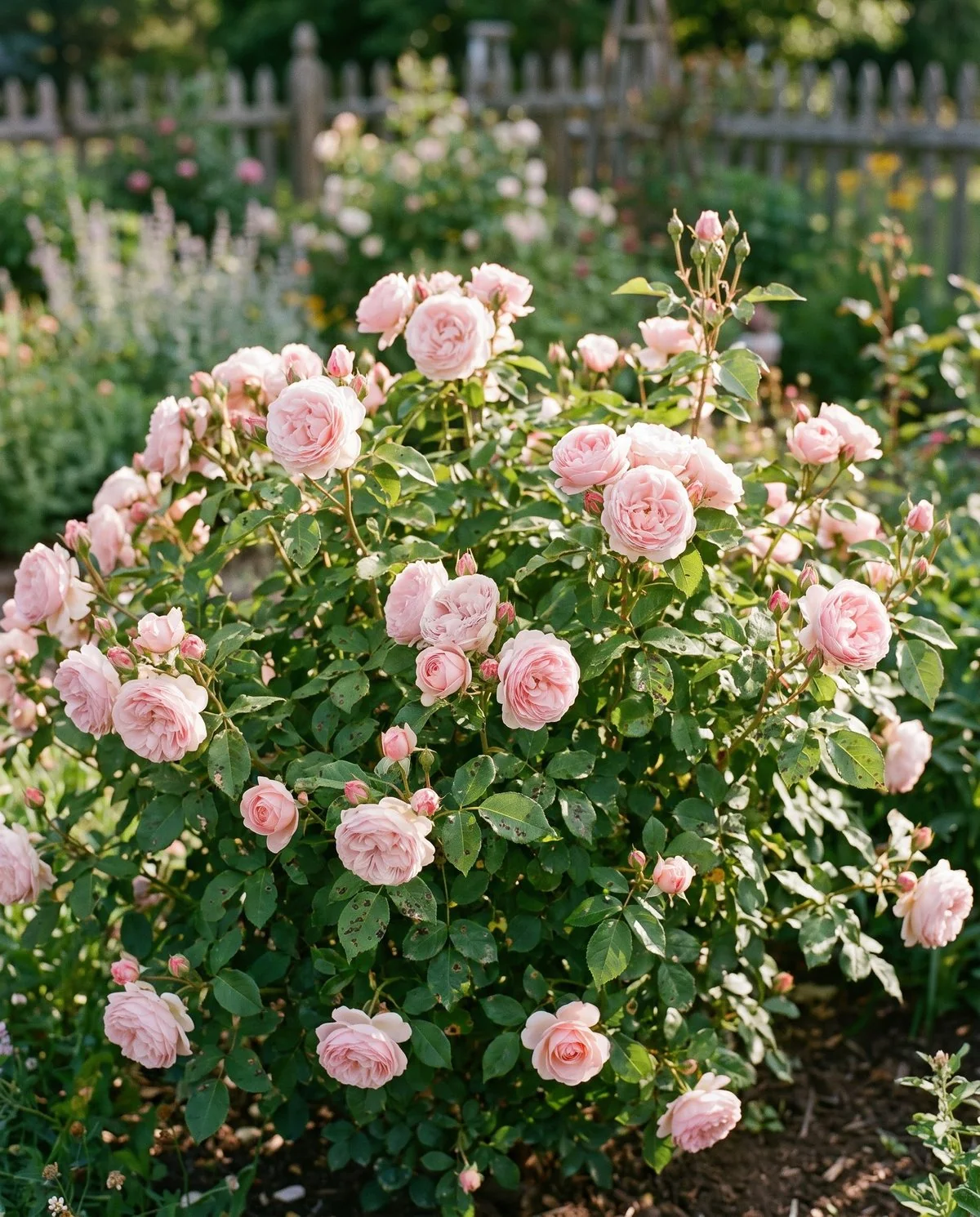
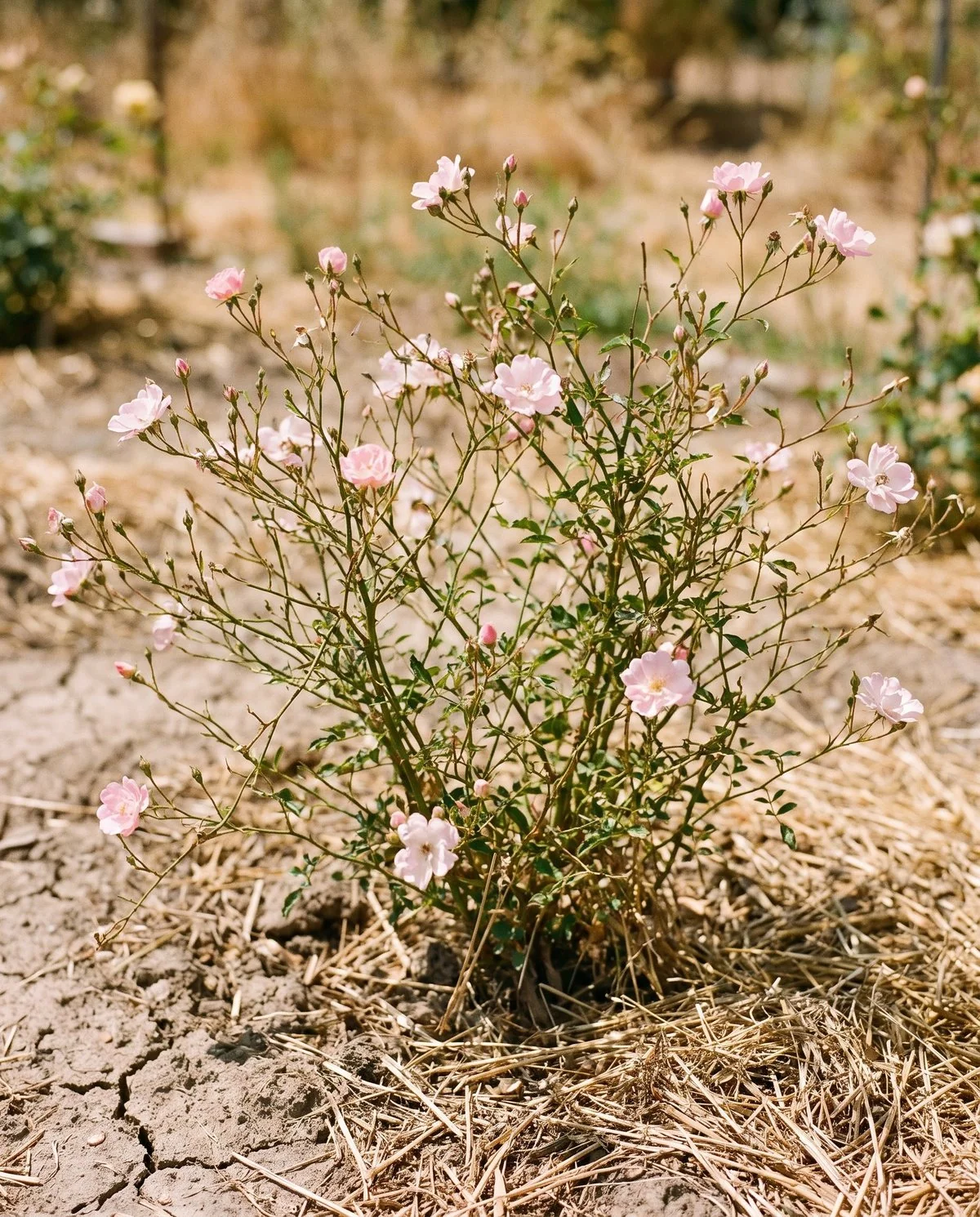
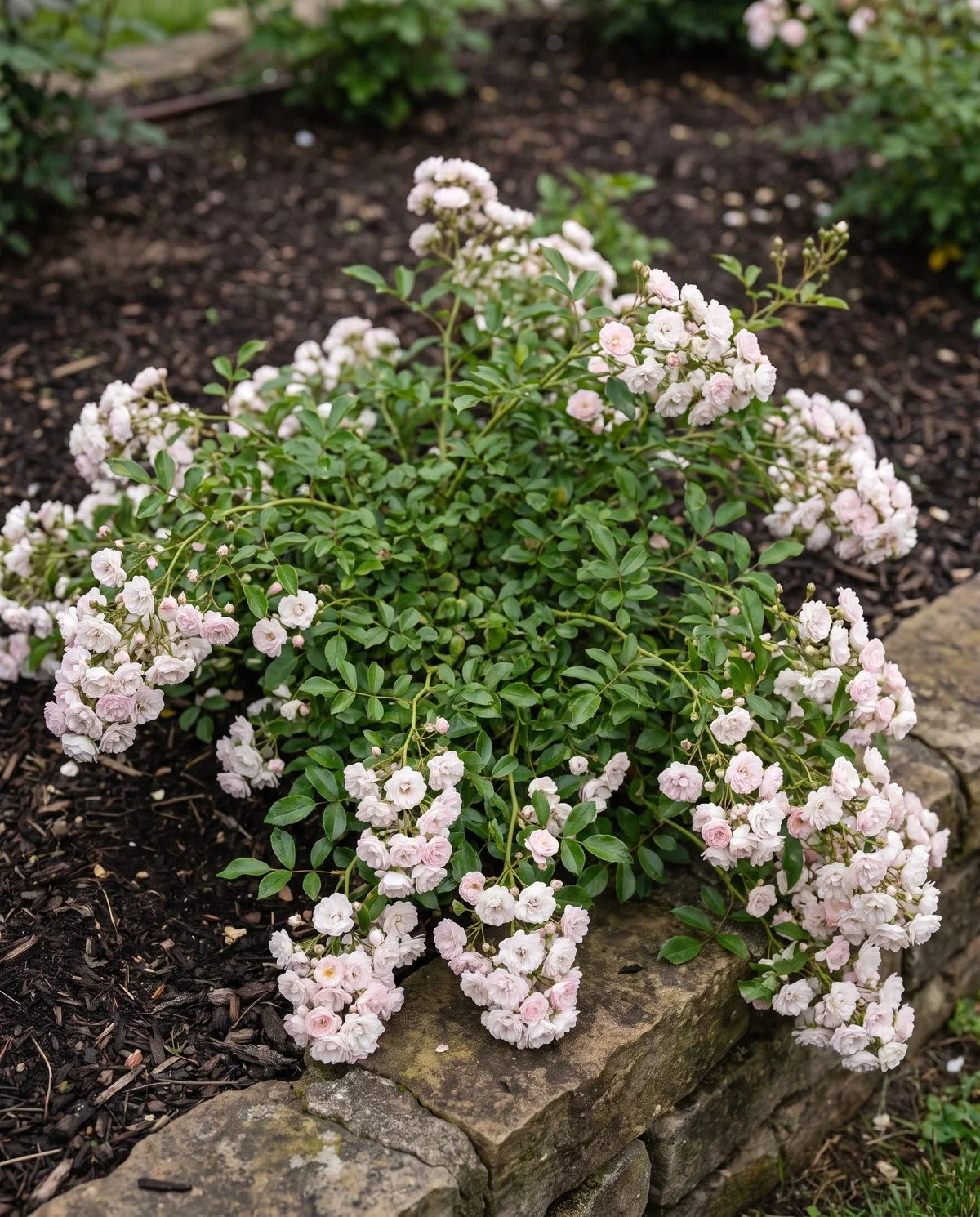
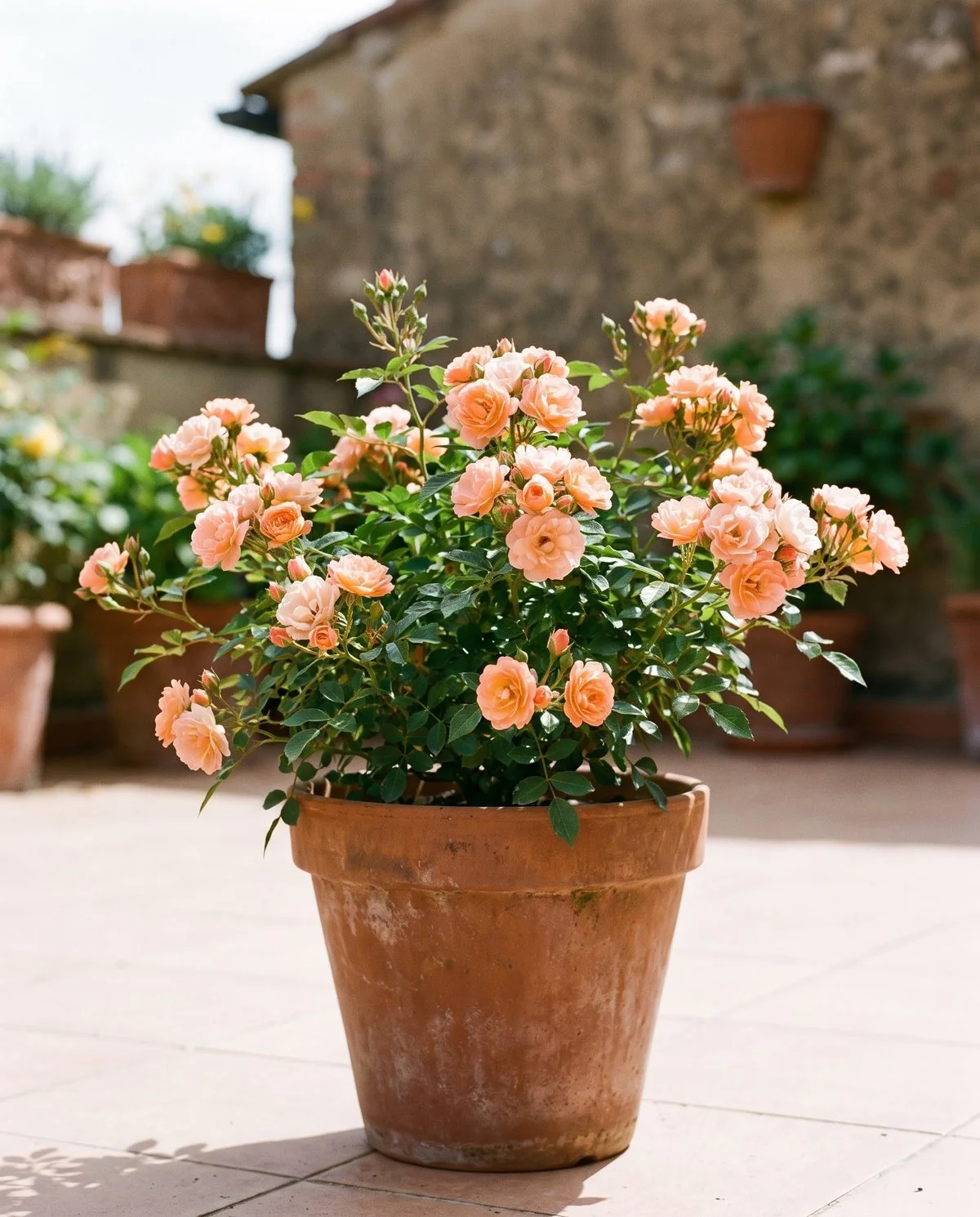
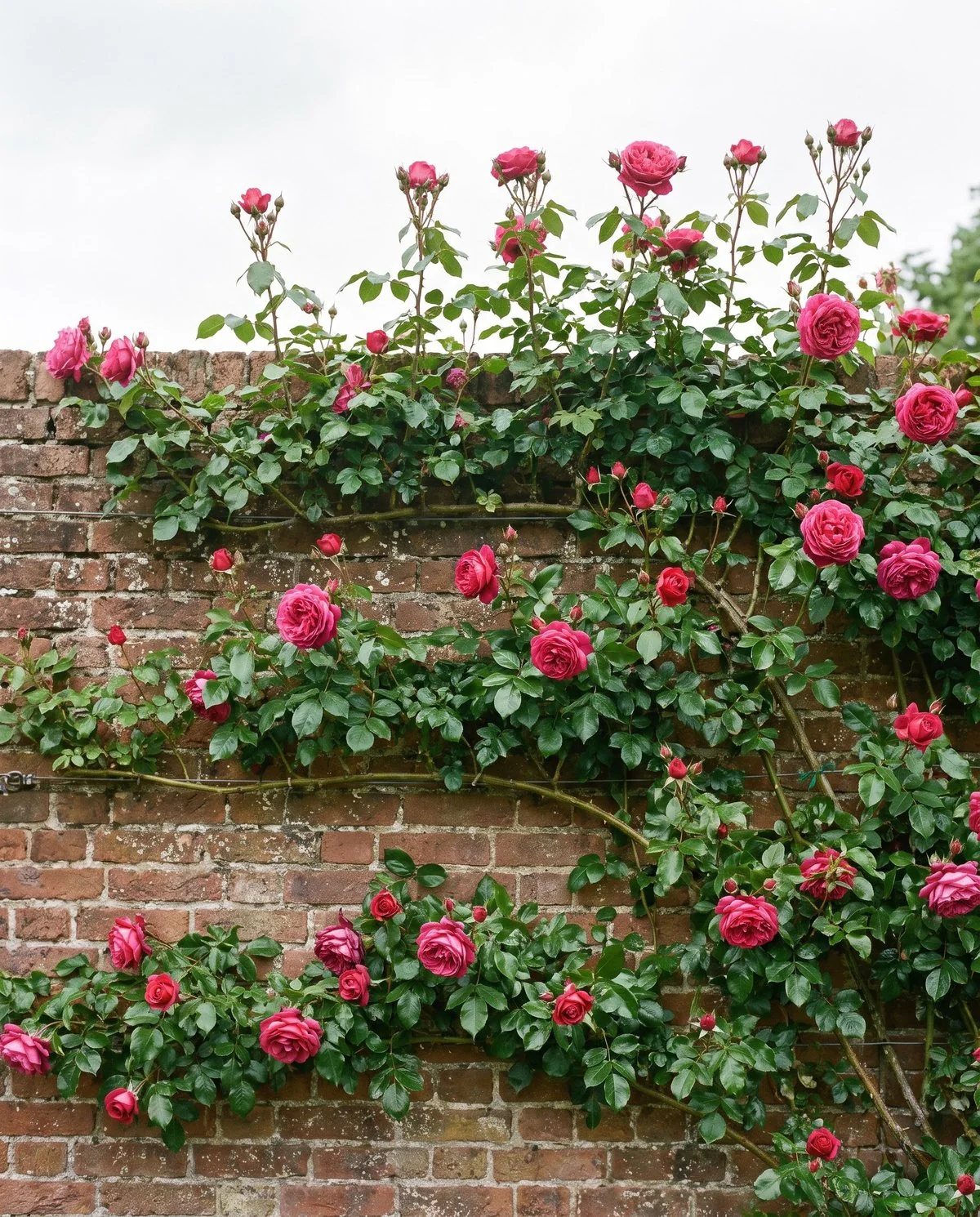
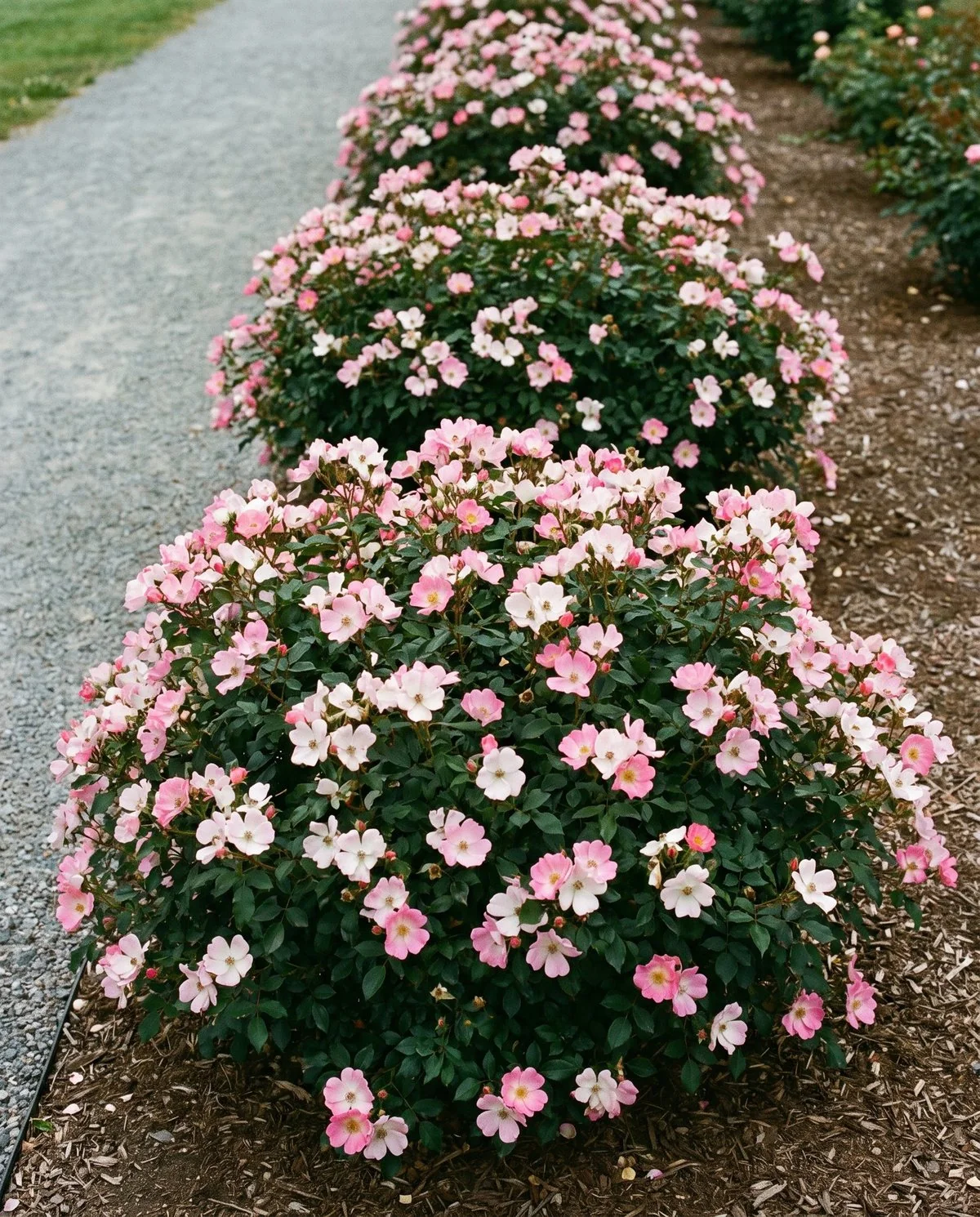
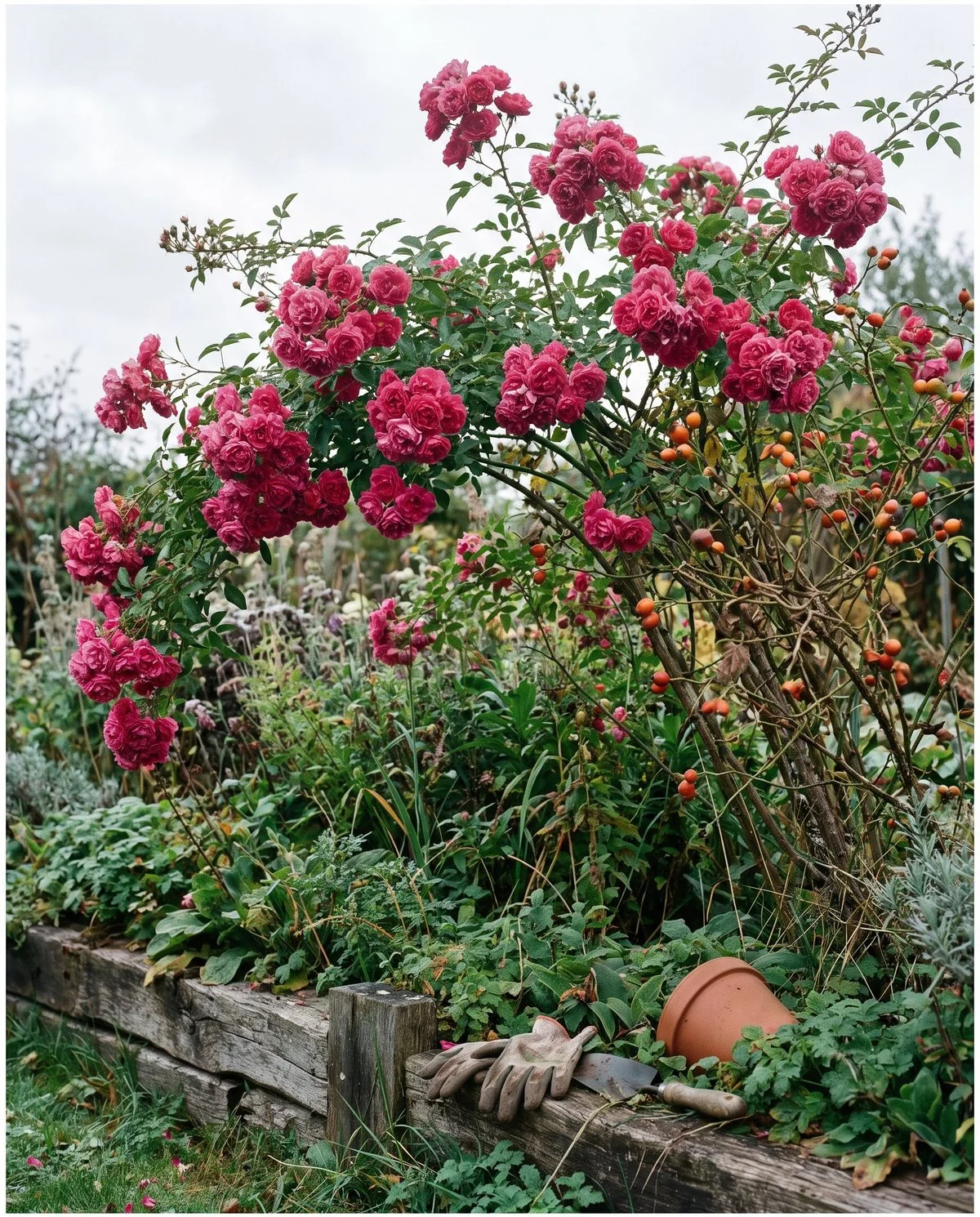
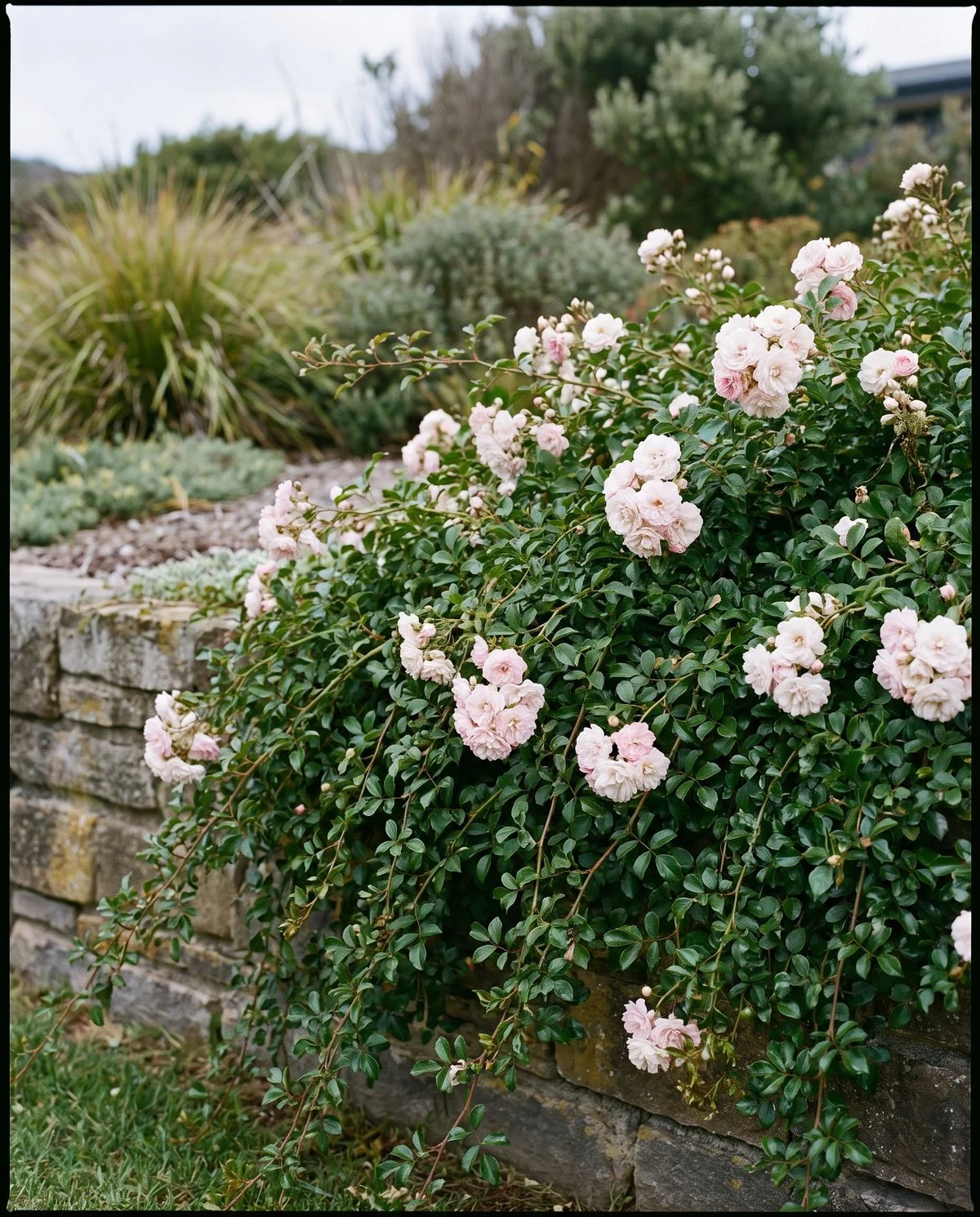
Four more Earth-Kind cultivars sit in the same tier with thinner per-cultivar data: Caldwell Pink resists blackspot and powdery mildew and blooms non-stop; Ducher is very disease-resistant and tolerates heat, drought and poor soil; Perle d'Or is drought-resistant and takes alkaline clay, with stress data stronger than its disease data; Climbing Pinkie is usually thornless and fast, with the weakest disease-specific record of the group. One more honest note on the trials themselves: American Rose Trials for Sustainability runs the same kind of programme, with no pesticides or fertilizers applied and control cultivars planted alongside entries in each region, and its Master award goes only to a rose that beats the local control in at least four of six trialing regions, but per-cultivar disease scores were not published in a form that could be read this pass, so no A.R.T.S. numbers are quoted here.
Bloom time
Most modern roses are repeat bloomers, opening their first flush in late spring and cycling through new flushes every four to eight weeks into fall wherever the season is long enough. Some old garden roses and many ramblers bloom once, in a single heavy display in early summer, and then stop. That difference drives pruning timing, so it is worth confirming which kind you have before cutting. Deadheading spent flowers on repeat bloomers pushes the plant toward more buds instead of seed hips and keeps the cycle moving, though many landscape roses clean themselves and rebloom without it. Steady feeding and consistent water between flushes do more for total bloom count than any single intervention.
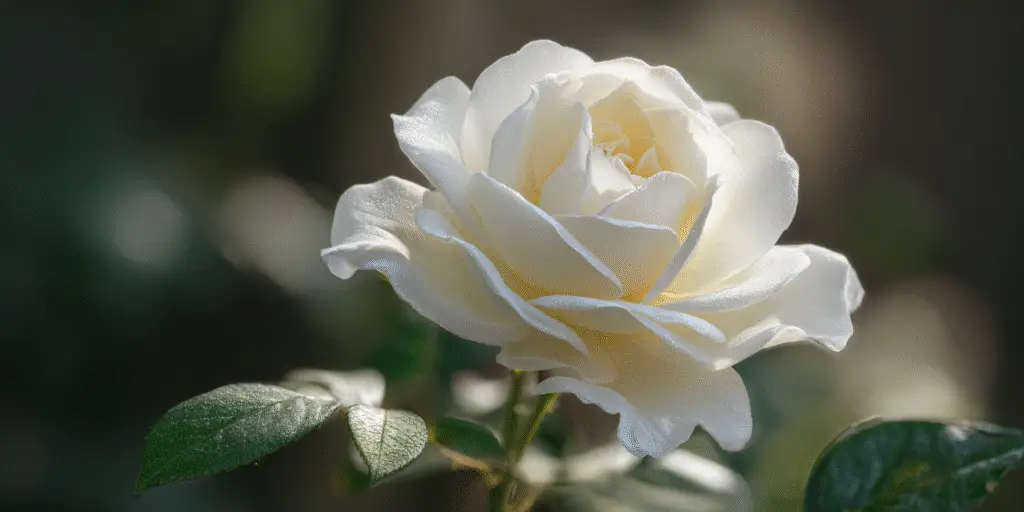
Year one, the flush cycle, and the rose that changed colour
A newly planted rose blooms less in its first year because most of its energy goes into roots rather than flowers, and Oregon State Extension's bare-root planting guide frames the whole first season that way, establishment first. Growers commonly put the first flowers at roughly eight to twelve weeks after planting and full mature size and performance closer to year three or four; the pattern is uncontested across every source checked, but those exact week counts come from grower and consumer horticulture rather than an extension publication with matching numbers, so they are reported here as trade experience rather than a measured figure. The same caution applies to the flush cycle. Reported cycle length runs roughly 28 to 70 days and tracks petal count: low-petal roses, the minis, singles and many Chinas, noisettes and polyanthas at five to twelve petals, turn a cycle fastest at around 28 to 32 days, while high-petal roses at 45 to 50 petals commonly take about six weeks. Every source located for that range is a grower or rose-society site rather than a university, which is worth knowing before treating any single number in it as measured. What is properly sourced is the strangest thing a rose does. Most older grafted hybrid teas are budded onto a vigorous rootstock, very often 'Dr. Huey', and when the grafted top dies back from winter cold, disease or age, the rootstock below the union survives and sends up its own canes. Those canes bloom as Dr. Huey itself: small, roughly two-inch, dark red flowers with prominent yellow centres, once a year, nothing like the variety that was bought. Michigan State University Extension covers the outcome, and it explains something that looks impossible, a whole neighbourhood of rose beds appearing to turn into the same dark red rose in the same season. It is not a mutation. It is one rootstock surfacing in bush after bush.
Height and spread
Size depends entirely on the type. Miniature and patio roses stay around 1 to 2 feet tall, which suits pots and bed edges. Traditional bush roses such as hybrid teas and floribundas usually run 3 to 6 feet tall and 2 to 4 feet wide. Larger shrub roses can reach 6 to 8 feet high with a matching spread if left unpruned, and climbing and rambling roses easily reach 10 to 15 feet or more along a support. Spacing follows from this: give bushes enough room that air moves freely between plants, because crowded roses hold moisture on their leaves and invite the fungal diseases described later.
Light
Roses need at least 6 hours of direct sun a day, and full sun produces both the heaviest bloom and the healthiest foliage. Morning sun is especially useful because it dries dew off the leaves early, and dry leaves resist the fungal spores that cause black spot and powdery mildew. A spot that gets sun but also good air movement beats a sheltered, shaded corner where damp lingers. Roses can limp along in part shade, but they bloom less and stay wet longer, which makes disease more likely. If a rose stops flowering well, too little light is the first thing to rule out.
Water
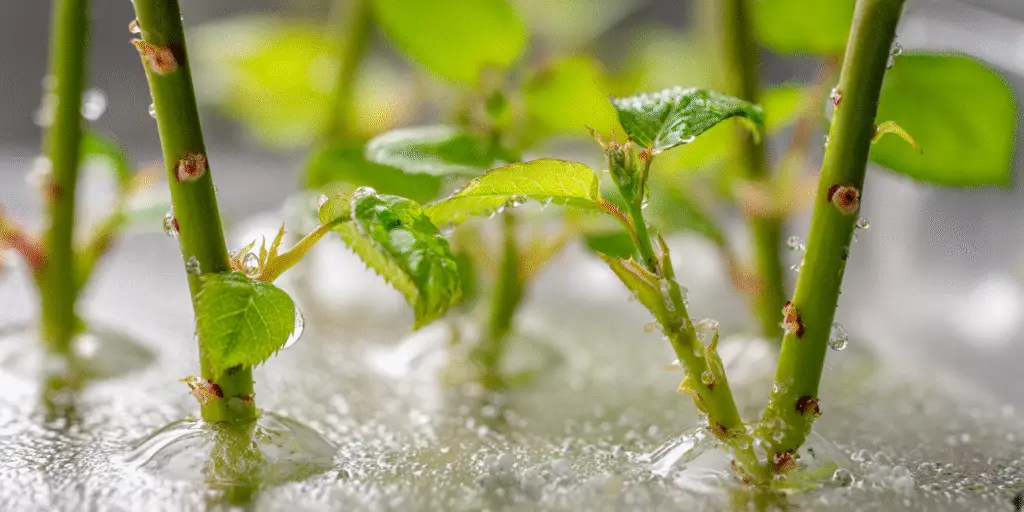
Roses want about 1 inch of water a week, delivered as a deep soaking at the base rather than frequent light sprinkles. Water deeply once or twice a week, whenever the top inch or two of soil has dried, which drives roots down and builds a drought-steady plant. The single most useful watering habit is to keep water off the foliage. Overhead watering wets the leaves and spreads black spot and mildew, so soaker hoses or a wand aimed at the soil are the way to go, ideally in the morning so any splash dries fast. A 2 to 3 inch layer of organic mulch over the root zone holds moisture, steadies soil temperature, and keeps soil from splashing spores up onto the lower leaves. Soil should stay evenly moist but never waterlogged.
Four things poured on roses that do nothing
The myth: Epsom salt makes roses bloom bigger and greener.
The reality: Washington State University Extension published a dedicated review of the question, FS308E by Chalker-Scott and Guggenheim. No research supports a rose-specific benefit. Epsom salt helps only where a real, diagnosed magnesium deficiency exists, which is uncommon in garden soil, and the deficiency has to be diagnosed rather than assumed.
The myth: Banana peels buried at the base feed the plant.
The reality: The potassium in a peel is real but locked in slow-decomposing tissue, so it is not plant-available on any timeline that matters to this season's bloom, and buried peels attract pests. This one is debunked in the NPR segment on garden myths rather than by an extension service, which is stated plainly rather than dressed up as university sourcing.
The myth: Coffee grounds fertilize the soil or acidify it around roses.
The reality: University of California's Marin Master Gardeners list this among busted garden myths. Used grounds have minimal effect on soil pH at garden scale. They function as organic matter and mulch, which is a real if modest contribution, and not as fertilizer.
The myth: Rooting a rose cutting inside a potato works.
The reality: The potato competes with the cutting for moisture rather than supplying it, and does not decompose fast enough to matter. One cited study reports cuttings placed in potatoes simply failing to root, though that citation was surfaced through a search summary rather than fetched, so it is quoted here as a reported result and not as verified evidence.
Soil and pH
Roses do best in fertile, well-drained loam enriched with compost or aged manure, in soil that holds moisture without staying soggy. The target pH is slightly acidic, roughly 6.0 to 6.5, which is the range that keeps iron and other nutrients available to the plant. Heavy clay benefits from working in organic matter to open drainage, and pure sand benefits from the same amendment to hold water and feed. Roses are heavy feeders, so a balanced rose fertilizer or a generous compost topdressing in spring as growth starts, with a second feeding in midsummer, supports both bloom and the vigorous foliage that shrugs off disease. Stop feeding by late summer so soft new growth has time to harden before frost.
USDA hardiness
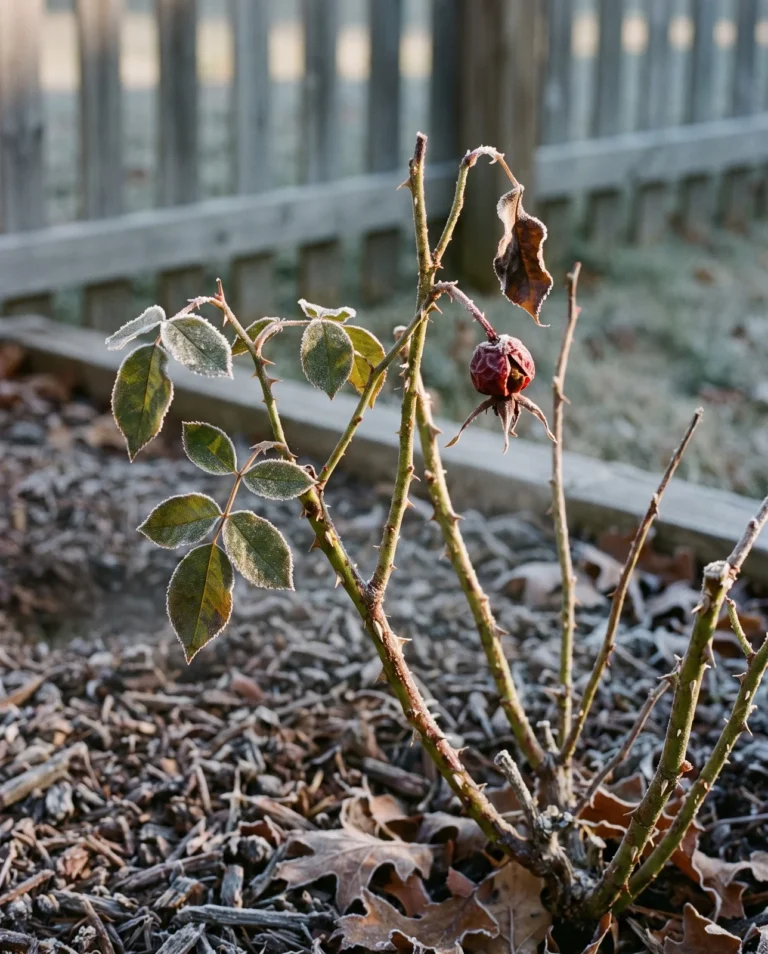
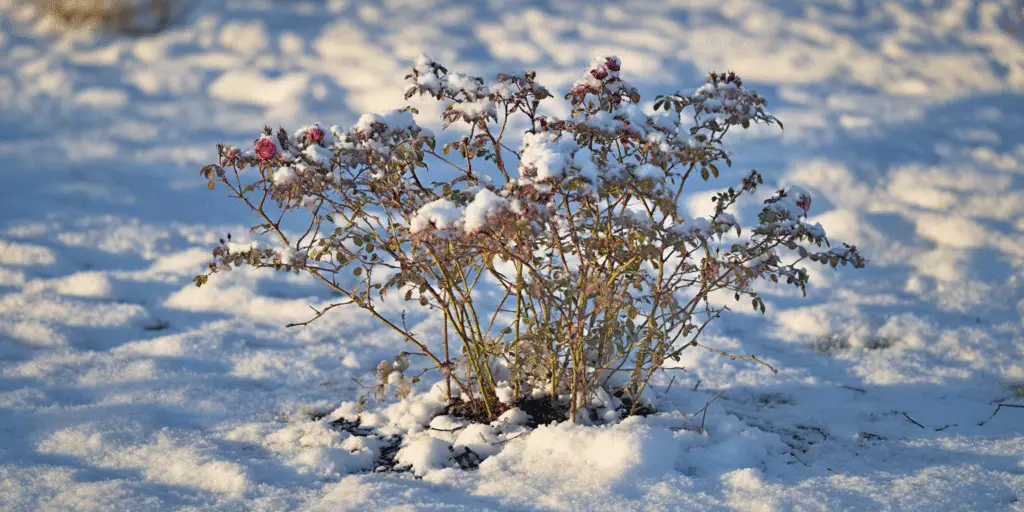
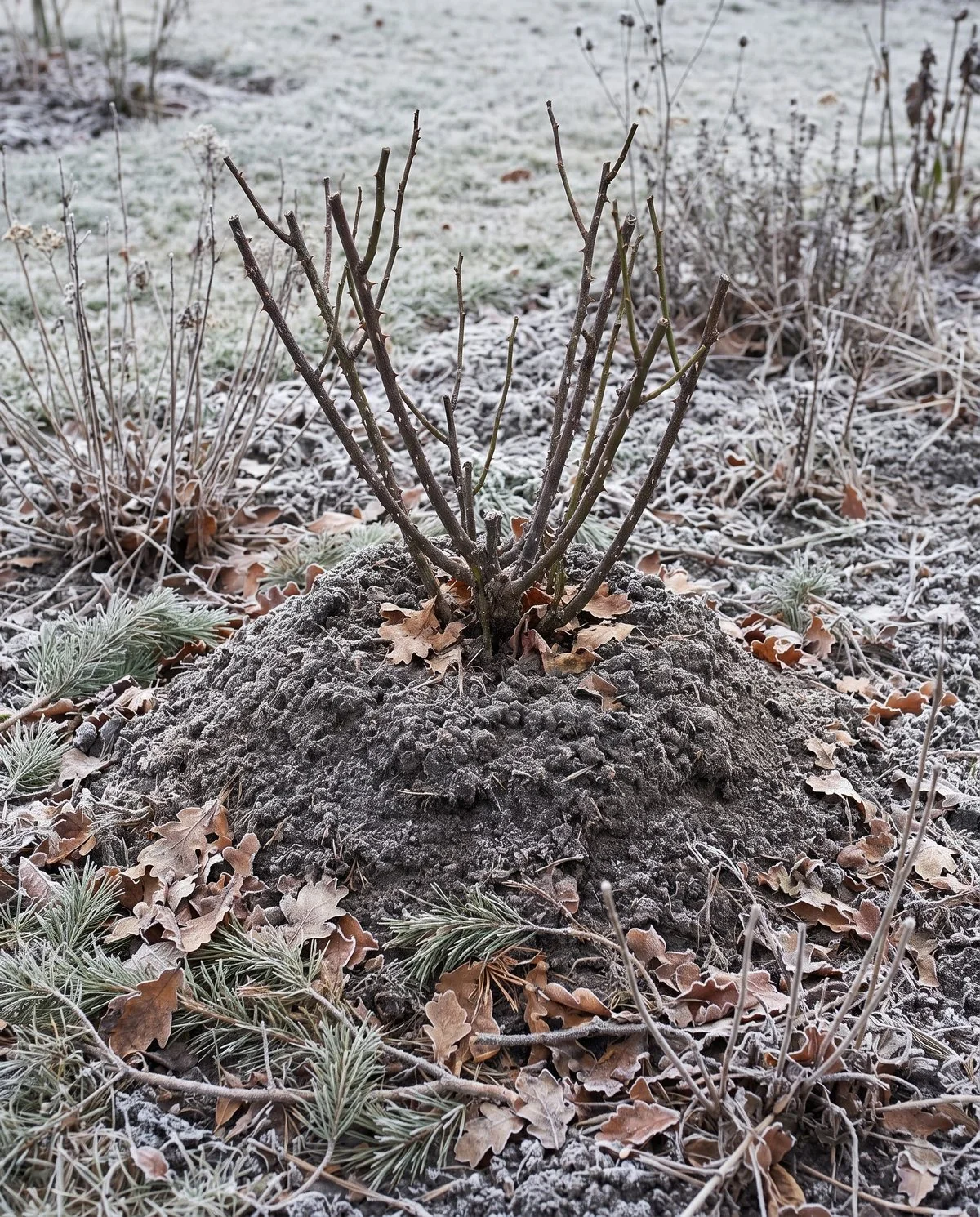
Most rose cultivars are reliable in USDA zones 5 through 9. Hardy and own-root varieties handle the colder zones 3 and 4, while tender types are better suited to the milder zones 8 through 11. In zones with hard winters, grafted roses need their graft union protected, since the cold can kill the grafted variety while the rootstock survives and sends up a different rose. Mounding soil or mulch 8 to 12 inches over the base after the ground starts to freeze insulates the union through winter, and the mound comes off in spring. Own-root roses skip this worry, because the whole plant is the variety you bought, which is one reason they suit cold gardens.
Dates by region, from the extension services that publish them
Nothing here is generic advice. Each row is what one named extension service publishes for its own region, and where a service does not state a figure it is left out rather than filled in from somewhere else. The one number every temperate source anchors to is the last safe feeding date.
Propagation and longevity
Roses propagate from stem cuttings, layering, grafting, or seed. The common home method is rooting a cutting: take a 6 to 8 inch piece of healthy young stem with a few leaves, set it in a moist rooting medium, and keep it humid until roots form, which clones the parent exactly. Layering bends a low cane down, buries part of it until it roots, then separates it. Most commercial roses are grafted, with a chosen variety budded onto a hardy rootstock, while seed is mainly a breeder’s tool since seedlings do not come true to the parent.
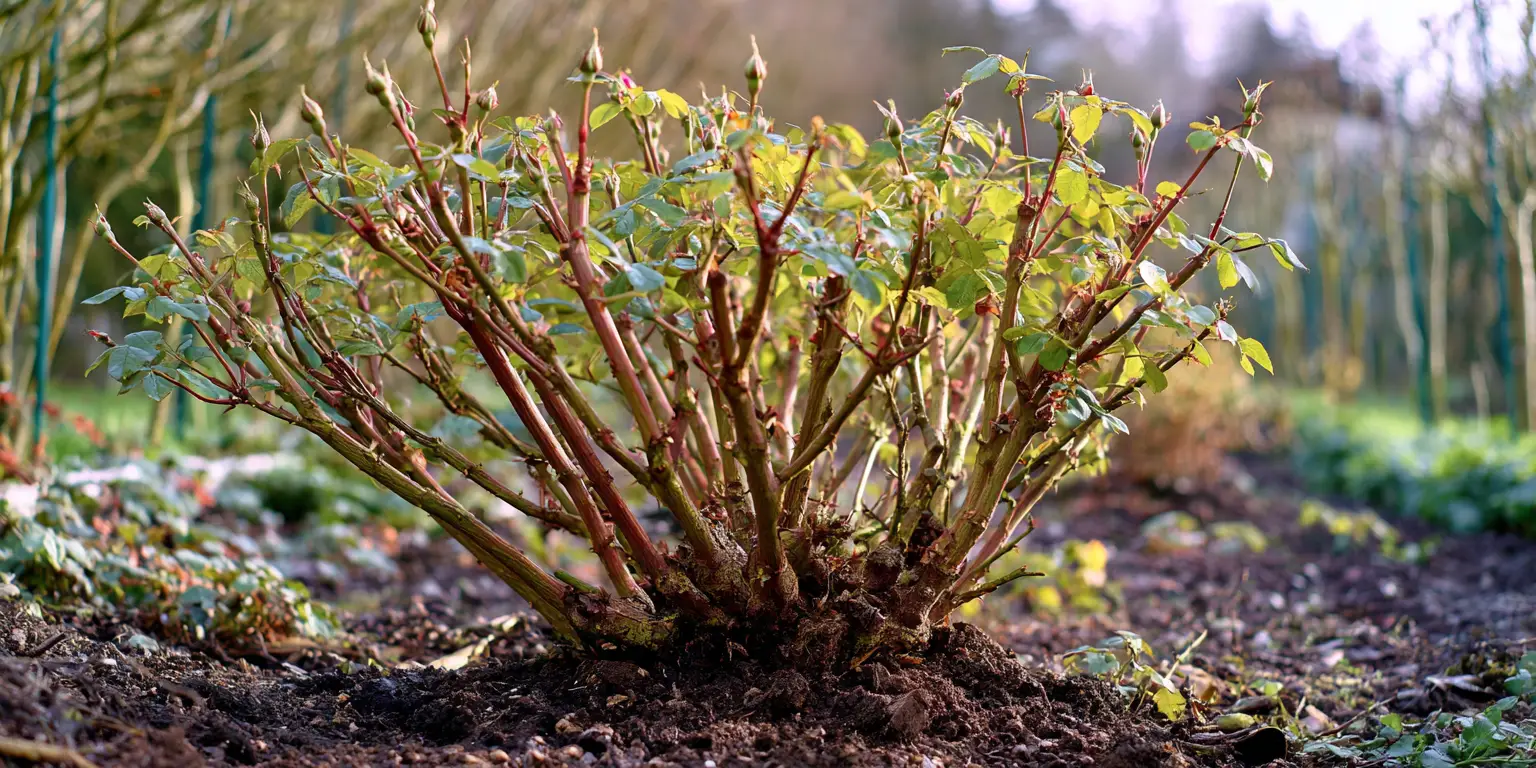
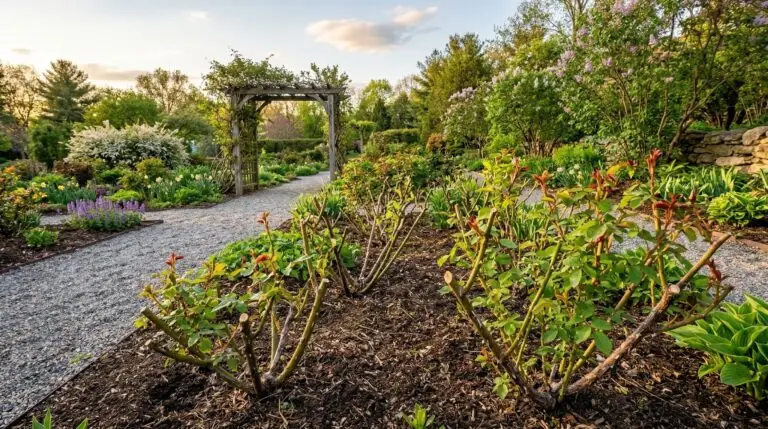
This is also where pruning belongs, because both shape the plant’s long life. Major pruning happens during dormancy, in late winter to early spring as the buds begin to swell, often around late February or March depending on the region. Cut about 1/4 inch above an outward-facing bud at a slant so the new growth opens outward and water runs off the cut, and remove all dead, damaged, weak, and crossing canes to open the center to light and air. The one rule that catches people out is timing by bloom habit: repeat-blooming roses take this spring pruning, but once-blooming old garden roses and many climbers set their flowers on old wood and must be pruned right after they finish blooming, because cutting them in spring removes that year’s display. A healthy rose lives a long time, commonly 10 to 15 years for modern bushes and several decades for hardy old garden and climbing roses. The famous "Thousand-year Rose" on Hildesheim Cathedral in Germany, a wild dog rose documented at around 700 years old, still blooms each year against the apse wall.
Fragrance
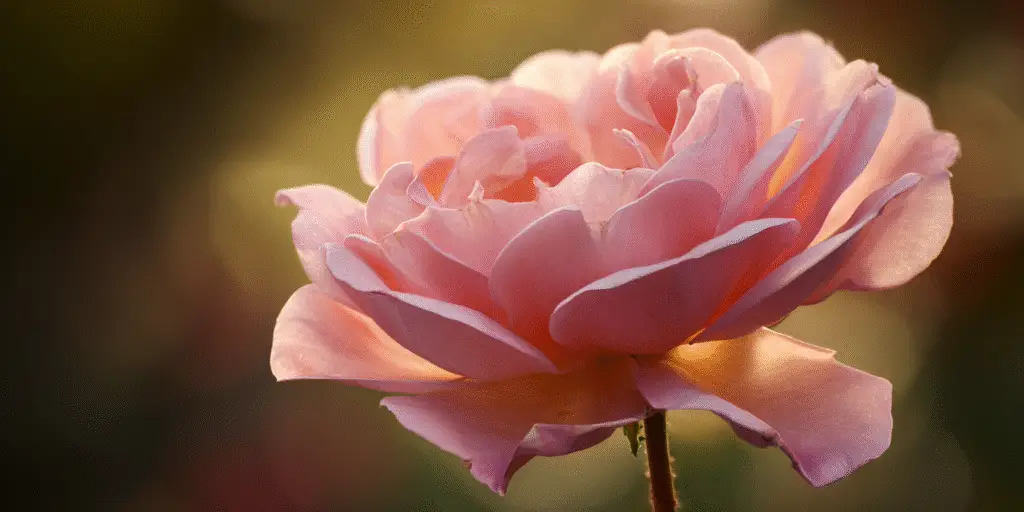
Fragrance is one of the rose’s defining pleasures, though it varies widely by variety. Old garden roses are often intensely scented and carry the classic "rose perfume," while modern hybrids run the full range from richly fragrant to nearly scentless, since breeders sometimes traded scent for bloom form, color, or vase life. As a loose rule, pink and red roses tend to hold the strongest traditional rose smell, and warmth and humidity bring the scent out, so a rose is most fragrant on a still, warm morning. Anyone buying for fragrance should smell before buying or choose a variety named for its scent, because a beautiful rose is not necessarily a perfumed one.
Toxicity and pet safety
True roses are non-toxic to cats, dogs, and horses according to the ASPCA, so a pet that nibbles a petal or leaf faces no poisoning risk. The only real hazard is mechanical: the thorns can scratch or puncture a curious mouth, paw, or eye, so place thorny canes where pets are not pushing through them. The catch is the name. Several plants called a "rose" are not true roses and some are genuinely toxic, so the reassurance only applies to actual Rosa. Rose of Sharon is a hibiscus, desert rose is Adenium and is toxic, and Christmas rose and Lenten rose are both Helleborus and toxic as well; primrose and moss rose also carry the name without being roses. Identify the plant before trusting any rose to be pet-safe. For a wider view of which blooms are safe around animals, see the guide to flowers safe for cats and dogs.
Vase life
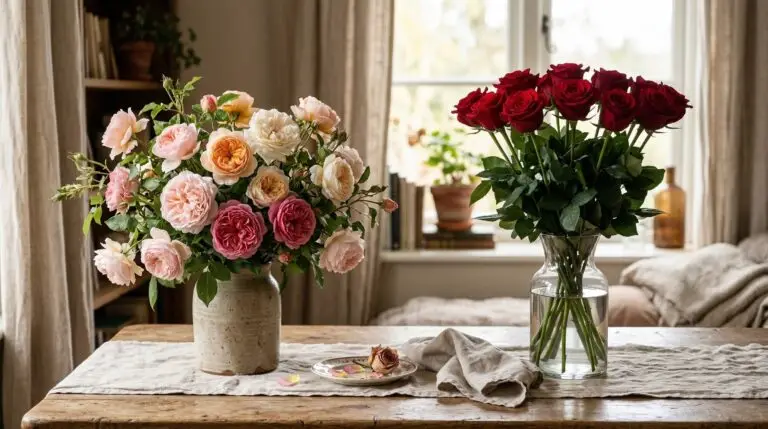
Cut roses last about 7 to 10 days with the right handling. Cut or buy stems with buds just starting to open, and recut each stem about an inch from the bottom at an angle, ideally under running water, so no air bubble blocks the stem and stops it drinking. Strip every leaf that would sit below the waterline, since submerged foliage rots fast and fouls the water, which is the usual reason roses fade early. Use clean water with flower food, keep the vase out of direct sun and away from ripening fruit, and refresh the water with a quick recut every two or three days. Roses cut from the garden in the cool of the morning and conditioned in deep water before arranging hold up noticeably longer. Their long-stemmed form and scent make them a fixture in wedding flowers, where vase life is part of the planning.
How long cut roses really last, by who measured it
There is no single number, because the figure depends on cultivar, harvest handling and what is being measured. Three source types are given instead of one averaged answer, which is the honest version of this section.
A penny in the vase keeps cut roses fresh.
US pennies minted after 1982 are zinc under a thin copper plating, and that copper is not soluble enough to act as an antimicrobial. No measured extension of vase life has been found for the trick.
Aspirin in the vase water extends life.
Tested with no consistent effect in either direction. It neither clearly helps nor clearly harms, which makes it a waste of the tablet rather than a risk.
A splash of vodka keeps flowers fresher.
The theory is that it slows ethylene production, but side-by-side tests show no reliable benefit, and in one published comparison the vodka vase was drooping and greying by day four.
Pests and diseases
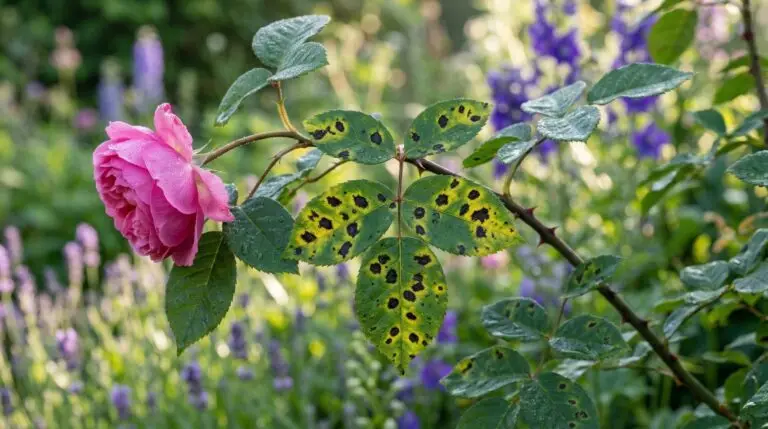
Black spot is the signature rose disease and the one most growers will meet. It is a fungus, Diplocarpon rosae, that prints dark spots ringed with yellow on the leaves, then causes them to drop until a badly hit bush stands half bare, weakened, and shy to bloom. It thrives on wet foliage, since the spores need several hours of moisture to take hold, so managing it is mostly about keeping leaves dry: plant disease-resistant varieties, water at the base instead of overhead, space and prune for airflow through the plant, and rake up and bin fallen leaves so spores cannot overwinter and splash back up. The same dry-leaf, good-airflow approach holds back powdery mildew, the white coating that distorts new growth in humid, crowded conditions. The table below pairs the most common problems with what fixes them.
| Problem | What you see | Cause | Fix |
|---|---|---|---|
| Black spot | Dark spots with yellow halos, leaf drop | Fungus, wet foliage | Resistant varieties, water at base, airflow, clear fallen leaves |
| Powdery mildew | White powder on new leaves and buds | Fungus, humidity, poor airflow | Improve spacing and airflow, water at base, prune crowded growth |
| Aphids | Clusters of soft green insects on buds | Sap-sucking insects | Blast off with water, encourage ladybugs, insecticidal soap |
| Japanese beetles | Skeletonized leaves, chewed petals | Beetles in early summer | Hand-pick into soapy water, avoid lure traps near roses |
| Rust, downy mildew, botrytis | Orange pustules, leaf spots, gray mold | Fungal, damp conditions | Airflow, clean up debris, remove affected parts |
| Rose rosette virus | Witches’ broom, red distorted growth | Mite-spread virus, no cure | Remove and destroy the whole plant promptly |
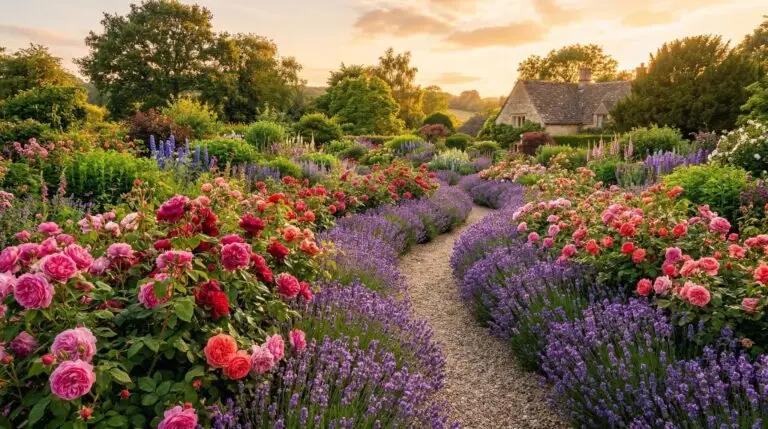
Frequent inspection is the real defense, because a few aphids or the first black spots are easy to deal with, while an outbreak is not. Most rose disease traces back to wet leaves and crowding, so the watering and airflow habits in the sections above prevent more trouble than any spray. For pairing roses with companions of the same warm tone, the red flowers hub gathers blooms that suit a classic rose border.
When the infected rose is not yours
The mite that carries rose rosette cannot fly. It is wingless, it drifts on moving air, and it also rides on clothing and tools, which makes direction and distance the two things worth knowing when the diseased plant belongs to a neighbor or stands in a hedgerow down the road. The published buffer between garden roses and a known stand of wild multiflora rose is about 300 feet, and more where that stand sits upwind. Almost no home garden can deliver 300 feet, so the useful question is not how to get the distance but what remains inside your control.
More than it first appears. The mites overwinter on living rose tissue, under bark and on bud scales, which means your own plants are the reservoir you are able to empty even when the source is not yours. Cutting the roses back hard in late winter, by roughly two thirds, takes out a large share of them before they move onto new growth, and a horticultural oil applied straight after that pruning reaches what the shears missed. Repeating the oil through the season slows spread rather than halting it, which is the honest ceiling for a garden: the miticides that genuinely suppress this mite sit mostly in professional hands.
Layout carries the rest. Roses planted shoulder to shoulder hand the mite along a hedge, while the same roses spaced apart with other shrubs between them break that path, and a mixed border is harder to cross than a bed of nothing but roses. Your hands are a vector as well, so an afternoon that starts in an infected plant and finishes in your own bed moves the mite faster than any breeze. When a diseased rose does come out, bag it before cutting rather than after, take the roots with it, and keep every piece out of the compost.
What people actually bring to a rose, by frequency
Counted from a 2,094-post sample across r/Roses, r/gardening and r/plantclinic, May to July 2026. Themes overlap, one post can carry two, and about 118 posts or 5.6 percent of the sample fell outside all 18 named themes, so the shares do not sum to 100 and this is a ranked index rather than a partition. The percentage of each theme's posts that arrived with a photo attached is given in the check line, because that number is the reason this section exists at all.
Water, heat and recent purchase, in that order, before disease. 93 percent of these arrive with a photo, and the top example is a rose bought two days earlier at a market.
Flower form, cluster or single stem, and cane habit. 87 percent carry a photo, and this theme plus the one above make up a third of everything asked.
Disease resistance for your climate before colour. The most common phrasing is simply easiest roses to grow for beginners.
Whether the leaf veins survived. 89 percent arrive with a photo, and skeletonized against windowpane splits most of them.
How deep the water goes, not how often it is applied. Epsom salt, banana peels and coffee grounds all live in this theme.
Whether a bare-root plant is alive at all, which is the literal top question here, and then graft-union depth for the zone.
Six hours of direct sun as the floor, with morning sun preferred because it dries the leaves early.
Bloom habit before calendar. The single highest-engagement how-to in the whole sample, at 491 points, is about keeping a climber flat against a wall.
Pot volume and watering frequency. Containers dry far faster than garden soil, so the same schedule fails here.
Lesion margins, and whether last year's fallen leaves were removed. 96 percent of these posts carry a photo, the highest rate of any theme.
Whether the red greens up. The source ranking splits these into two themes at 1.7 and 1.6 percent; they are the same emotional job and 68 posts once merged, which makes it a top-six problem.
Whether foliage is sitting below the waterline. The most-searched phrasing asks how to keep roses alive in a vase without flower food.
Nitrogen and sun. Treat 0.7 percent as a floor rather than the demand: this is a search-heavy and Reddit-light problem, since there is no photograph to post of a rose that is simply green.
Two ordered paths, and the boring causes come first
University of Maryland Extension's diagnostic framework opens by telling gardeners that most plant problems are not caused by a disease or an insect. That order is the point of both lists below: the non-living causes are checked first, because they are more common, cheaper to fix, and because feeding or spraying the wrong diagnosis makes the real one worse.
Seven look-alikes, and the one detail that separates each
Undiagnosed panic is the single largest thing people bring to a rose, and 93 percent of those posts arrive with a photo attached. These are the forks that photo is usually stuck on. Where a card has no photo, that is deliberate: a lesion pattern or a mould texture is a pathogen fingerprint and has to come from a real reference photo, so the difference is given in words instead of a generated approximation.
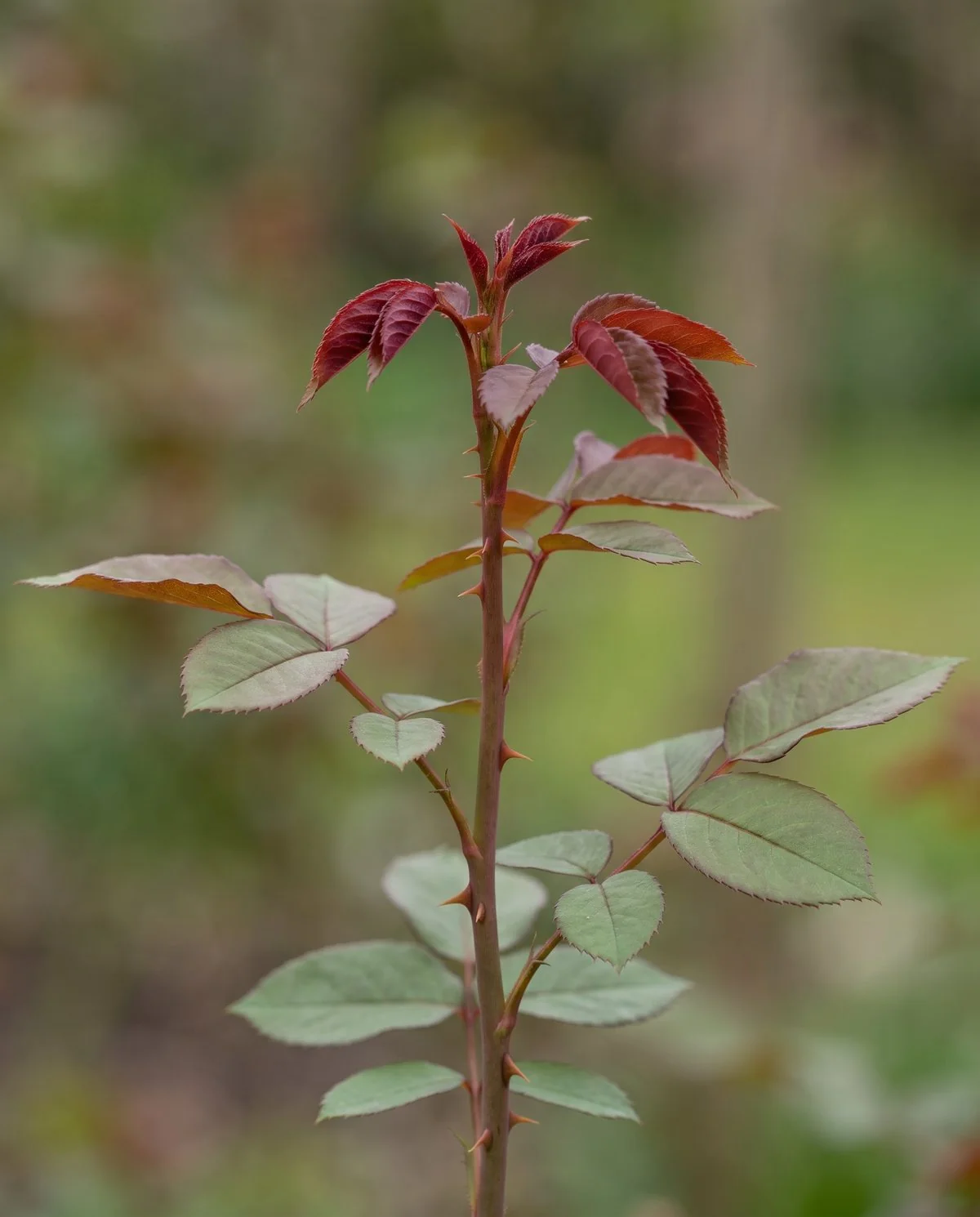
Time is the differentiator, and University of Maryland Extension names it: normal new growth reddens from an anthocyanin flush and then greens up within days to a couple of weeks. Rose rosette does not green up. It also adds a witches' broom, many thin stems crowding out of one point, and excessive soft thorns on distorted, mottled leaves. Because the treatment is to uproot and destroy the plant, this call is worth making on the greening, not on the redness.
Glyphosate or 2,4-D drift twists, curls and cups the leaves and usually hits an entire flush of new growth at once, and, critically, it resolves the following year unless the plant is exposed again. Rose rosette adds the two things herbicide injury never does, excessive thorniness and red pigmentation that persists, and it does not resolve on its own. Both sides of this pair are left photo-less on purpose: University of Maryland Extension's guidance ends in destroying the plant, so the comparison needs real photographs.
Margins decide it. Black spot lesions have feathery, fringed margins. Cercospora prints small maroon to dark-purple lesions with smooth margins, and older ones develop a dead tan center inside a purple border. University of Maryland Extension adds the fact that makes this pair matter: Cercospora is increasingly prevalent on black-spot-resistant varieties, so the gardener who bought resistance specifically to dodge black spot is the one most likely to be looking at its look-alike.
Downy mildew lesions read more angular or square than round, and the leaf underside carries visible sporulation. Black spot lesions are round with feathery margins and nothing on the underside. Turning the leaf over is the whole test, which is also why this pair has no photo here: underside sporulation is a texture a generated image smooths over.
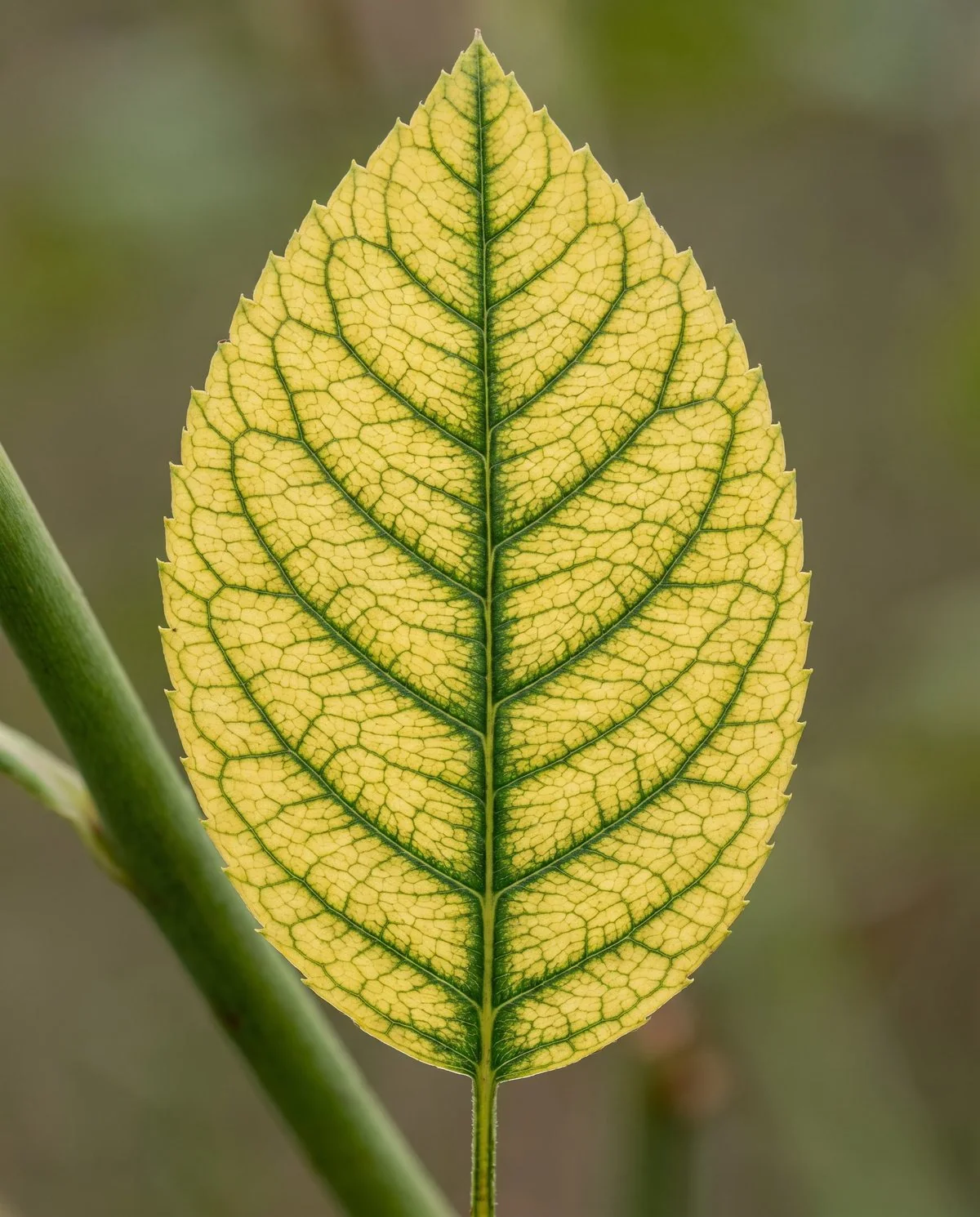
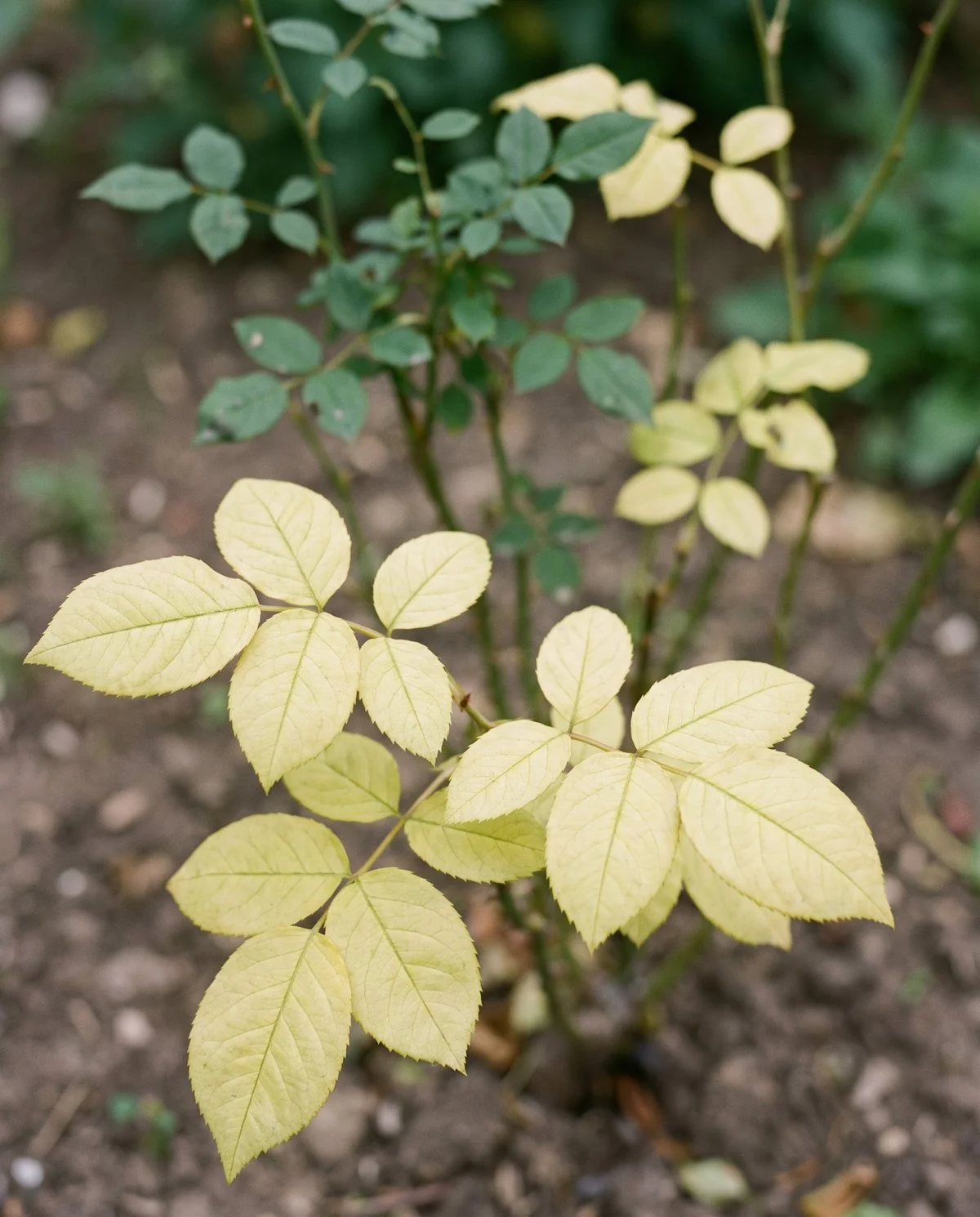
Three different patterns, per University of Maryland Extension. Nitrogen deficiency is uniform pale yellow-green over the whole plant, usually lower and older leaves first, with stunted growth. Iron chlorosis yellows the leaf tissue while the veins stay green, and it comes from high soil pH locking up iron rather than from a shortage in the soil. Overwatering and poor drainage produce the reverse pattern, green tissue between veins with the veins themselves turning yellow, from oxygen-starved roots. Match the pattern before feeding, because fertilizing an overwatered rose makes it worse.
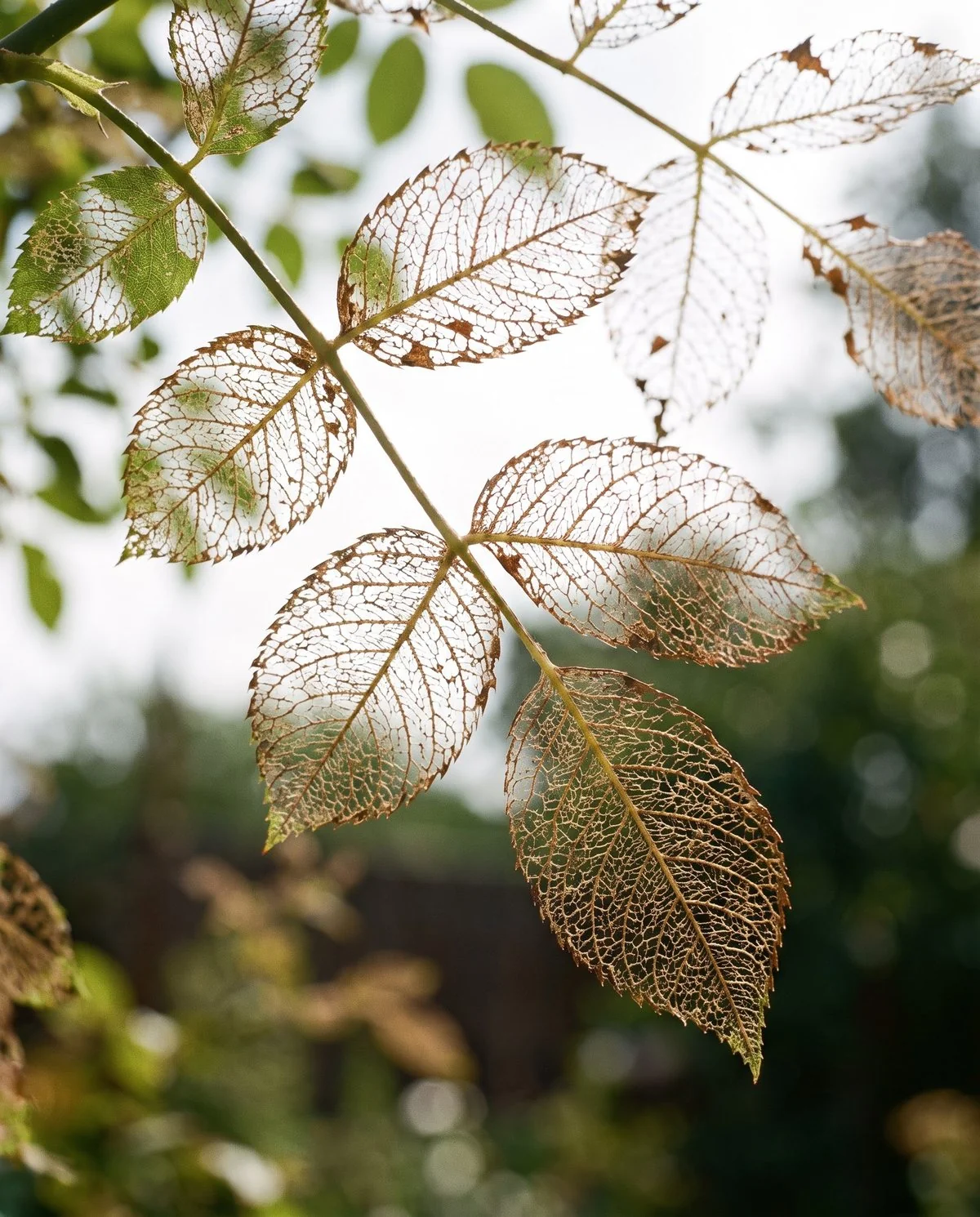
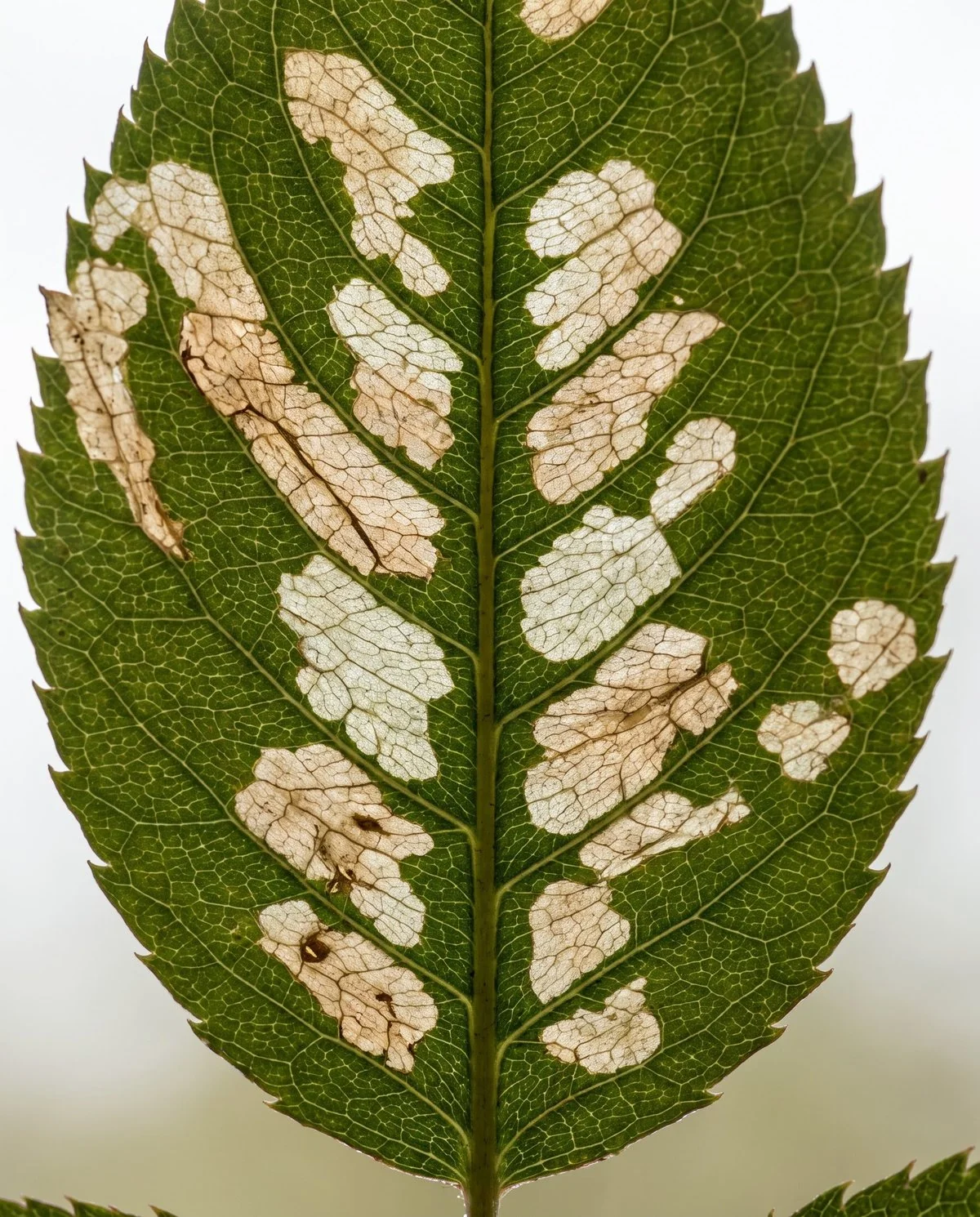
Japanese beetles skeletonize, eating everything but the veins, feeding by day and usually working the upper canopy. Sawfly larvae scrape instead, taking only surface tissue and leaving the leaf's skin intact so the damage reads as translucent windowpanes, concentrated on the undersides and often in tidy rows, with actual holes appearing only once the larvae grow. Wording here is consistent across Clemson's rose insect factsheet and extension pest guides rather than quoted from one page.
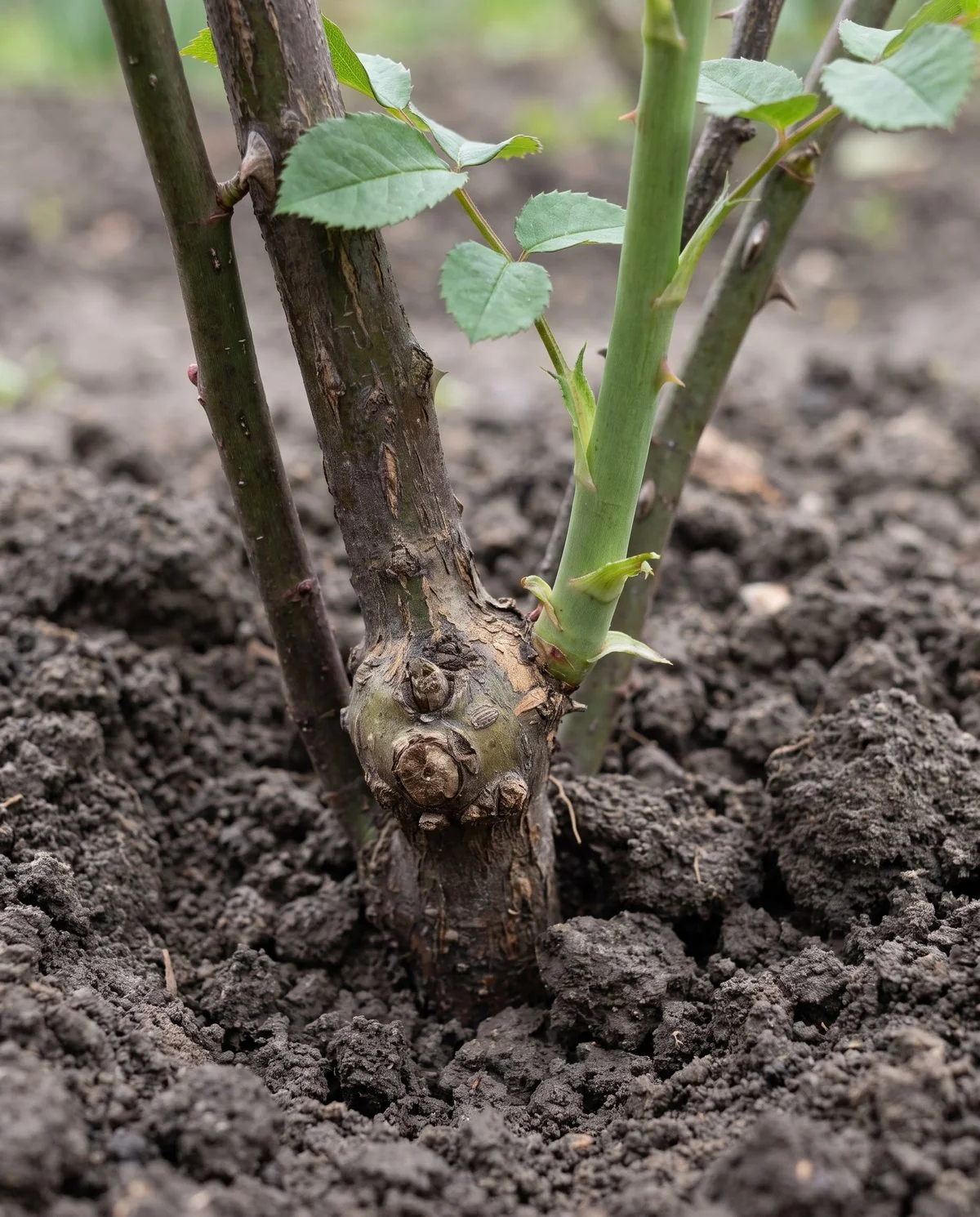
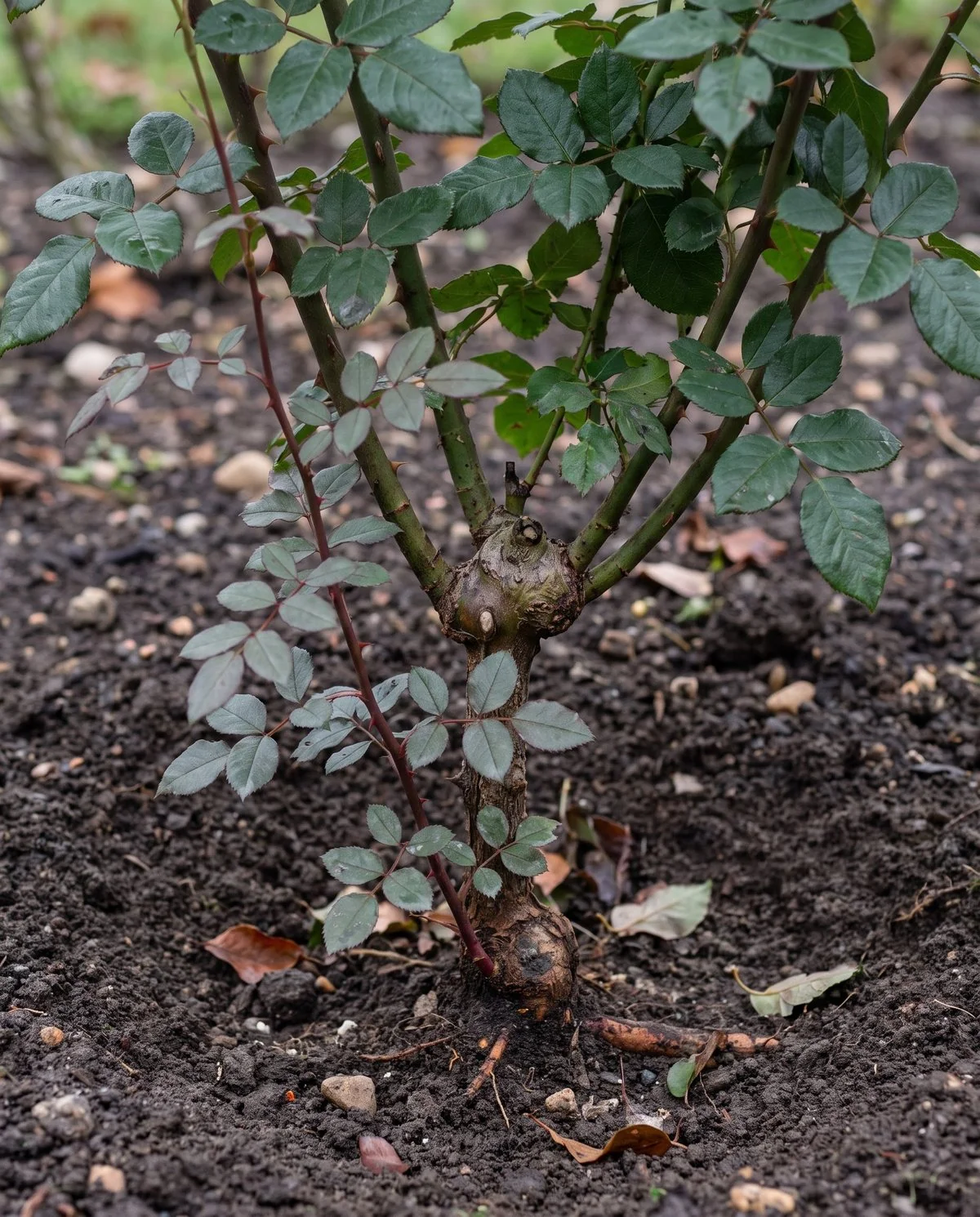
Where it comes out of the plant is the only reliable indicator. A basal break arises at or above the bud union and becomes a strong productive cane, so it stays. A sucker arises below the union, from the rootstock's own roots. Leaf and thorn cues support the call without settling it, since a sucker often carries more leaflets per leaf, seven to nine against the scion's usual five, with different leaf colour and gloss and different thorns. Follow the cane down to the graft before cutting anything.
Flower photos
FAQ
How and when should I prune roses?
Prune most roses during dormancy, in late winter to early spring as the buds swell, often late February or March. Cut about 1/4 inch above an outward-facing bud at a slant, and remove dead, damaged, weak, and crossing canes. The exception matters: once-blooming old roses and many climbers bloom on old wood, so prune them right after they flower, not in spring, or you cut off that year’s bloom.
What type of rose should I choose?
Match the type to the job. Choose landscape roses like Knock Out or tough shrub roses for low-care mass color, hybrid teas for long-stemmed cutting blooms, floribundas for heavy clustered color, English roses for old-rose fullness and scent with reblooming, climbers for walls and arbors, and miniatures for pots. Pick disease-resistant varieties wherever black spot is common.
Why does my rose have black spots on its leaves?
That is black spot, a fungal disease spread by wet foliage. Water at the base instead of overhead, improve airflow with spacing and pruning, rake up fallen leaves, and replant with resistant varieties over time. Morning sun that dries the leaves early helps a great deal.
How often should I water roses?
Give about 1 inch a week as a deep soak at the base, usually once or twice a week, whenever the top inch or two of soil dries. Keep water off the leaves and mulch the root zone to hold moisture.
Are roses safe for cats and dogs?
Yes. True roses are non-toxic to cats, dogs, and horses per the ASPCA. The only hazard is the thorns. Be careful with look-alikes such as desert rose, Christmas or Lenten rose, and rose of Sharon, which are not true roses and can be toxic.
How do I keep cut roses fresh?
Recut the stems at an angle under water, strip any leaves below the waterline, use clean water with flower food, keep the vase out of sun and away from fruit, and refresh the water every two or three days. Expect 7 to 10 days.
Can I grow roses in containers?
Yes, in a deep pot at least 14 to 18 inches across with good drainage, larger for big varieties. Container roses dry out faster, so water more often and feed through the growing season.
Why are my roses dying?
There is rarely one cause, and the order of checking is what matters. Rule out the boring things first, underwatering or overwatering, transplant shock, heat stress, too much fertilizer, before assuming disease or pests, which is exactly how University of Maryland Extension's own diagnostic framework is built. If the plant came from a grocery store or a big-box display, stress from poor in-store care is a common and fixable starting point in its own right.
Why are my rose bush leaves turning yellow?
It depends on the pattern, not the colour. Uniform pale yellow-green across the whole plant points to nitrogen deficiency. Yellow tissue with the veins staying green points to iron chlorosis, caused by high soil pH locking up iron. The reverse, yellow veins with green tissue between them, points to overwatering or poor drainage. Match the pattern before reaching for fertilizer, since feeding a rose that is already too wet makes it worse.
Is this rose rosette disease or just new growth?
Normal new growth reddens and then turns green within days to a couple of weeks. If yours is greening, it is fine. Rose rosette adds a cluster of many thin stems from one point, excessive soft thorns, and distortion that never greens up. There is no cure, and University of Maryland Extension's guidance is to uproot and remove a confirmed plant promptly rather than prune it out, because pruning will not cure it and risks spreading it to neighbouring roses.
Why is my rose bush growing but not blooming?
Usually too much nitrogen, which pushes leaves at the expense of flowers, too much shade, or a plant that is young or once-blooming and has not reached its stride. One more check separates two different problems: if buds are forming and then rotting before they open, that is balling, usually Botrytis in humid weather, which is not the same thing as never forming buds at all.
How do I get rid of black spots on my roses?
Remove and destroy fallen infected leaves rather than composting them, because the fungus overwinters in leaf litter and reinfects the plant each spring. Water at the base rather than overhead, and start any fungicide programme at new-growth emergence rather than after spots appear, per University of Florida guidance. If spraying has not worked, check the diagnosis itself: Cercospora leaf spot needs the same sanitation and is increasingly common specifically on black-spot-resistant varieties.
When should I prune, and when do I stop deadheading?
Timing is regional rather than universal. North and central Florida prune in February or March, south Florida in December, and colder climates wait for spring growth cues, which Washington State's calendar pins to forsythia coming into bloom rather than to a date. Deadheading runs all season, cutting back to the first outward-facing five-leaflet leaf, and Illinois Extension puts a stop date on it: after October 1, leave the hips, so the plant starts hardening off instead of pushing new growth into a frost.
Interesting tips
The biggest lever is the buy itself, not the upkeep: a disease-resistant, climate-matched rose prevents most problems before it goes in the ground, and own-root plants in cold regions shrug off a winter that would kill the grafted top of a budded rose. Fragrance does not follow looks, so smell a rose before buying or choose one bred for scent, because plenty of show-stopping blooms have almost none. When planting a bed for a long season, mix an early once-bloomer with steady repeat bloomers so something is always in flower, and stagger heights so air still moves through the planting. Buy from an own-root grower or a reputable bare-root supplier in the dormant season for the widest choice and the strongest start, and plant the graft union, where present, at the depth your zone calls for, deeper where winters bite.
Related Guides & Flowers
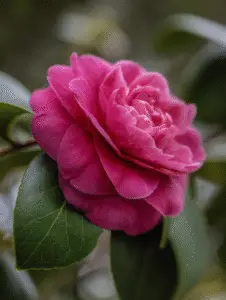
Camellia
rose-like evergreen blooms for late winter to spring.
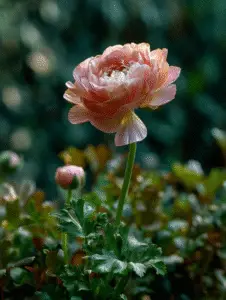
Ranunculus
layered petals that mimic garden roses in bouquets.
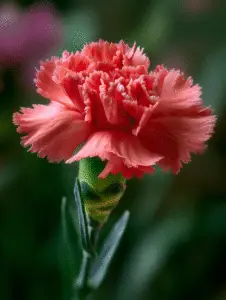
Carnation
ruffled, clove-scented classic that pairs well with roses.
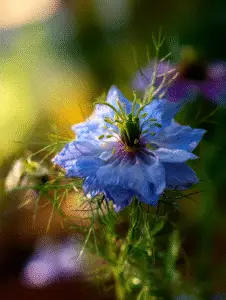
Love-in-a-Mist
airy cottage filler that complements romantic rose styles.
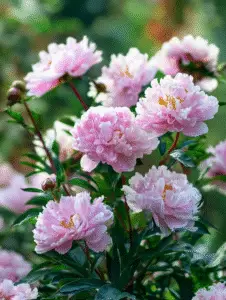
Peonies
lush spring alternative to roses for wedding work.
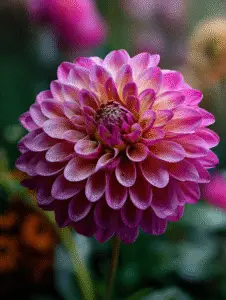
Dahlia
summer to frost showstopper, a rose-alternative for late season.
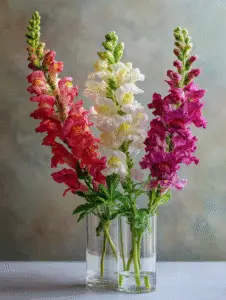
Snapdragon
vertical spikes as a classic bouquet companion to roses.
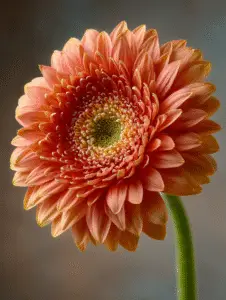
Gerbera Daisy
bold, round faces for modern rose mixes.
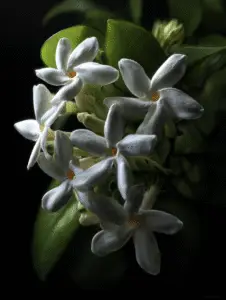
Stephanotis
richly scented wedding vine often paired with roses.
References
Enjoying our flower guides? Add YourFlowersGuide as a preferred source on Google. It helps more readers find us.
Add to Preferred Sources