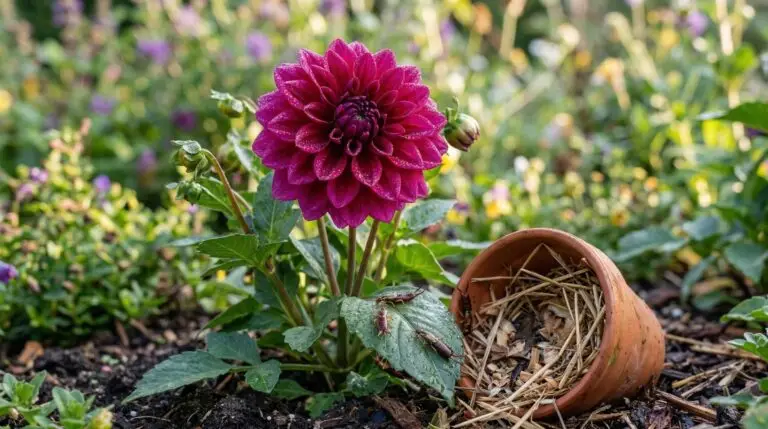
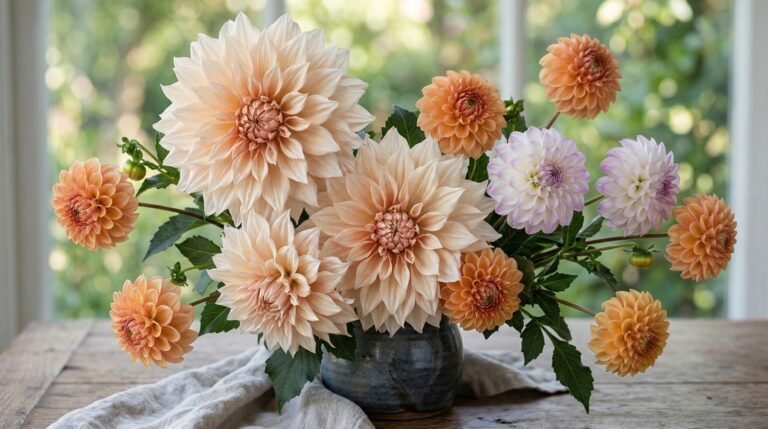
Dahlia bloom time across the US
Interactive map
 See the interactive map
Drag the date and the bloom moves north across the country. Every point has its own window, and the map says where it has no records rather than guessing. Free, with nothing to sign up for. Open the dahlia map.
City by city
Typical window, earliest first. Cultivars of the same flower can open days or weeks apart.
Taxonomy and origin
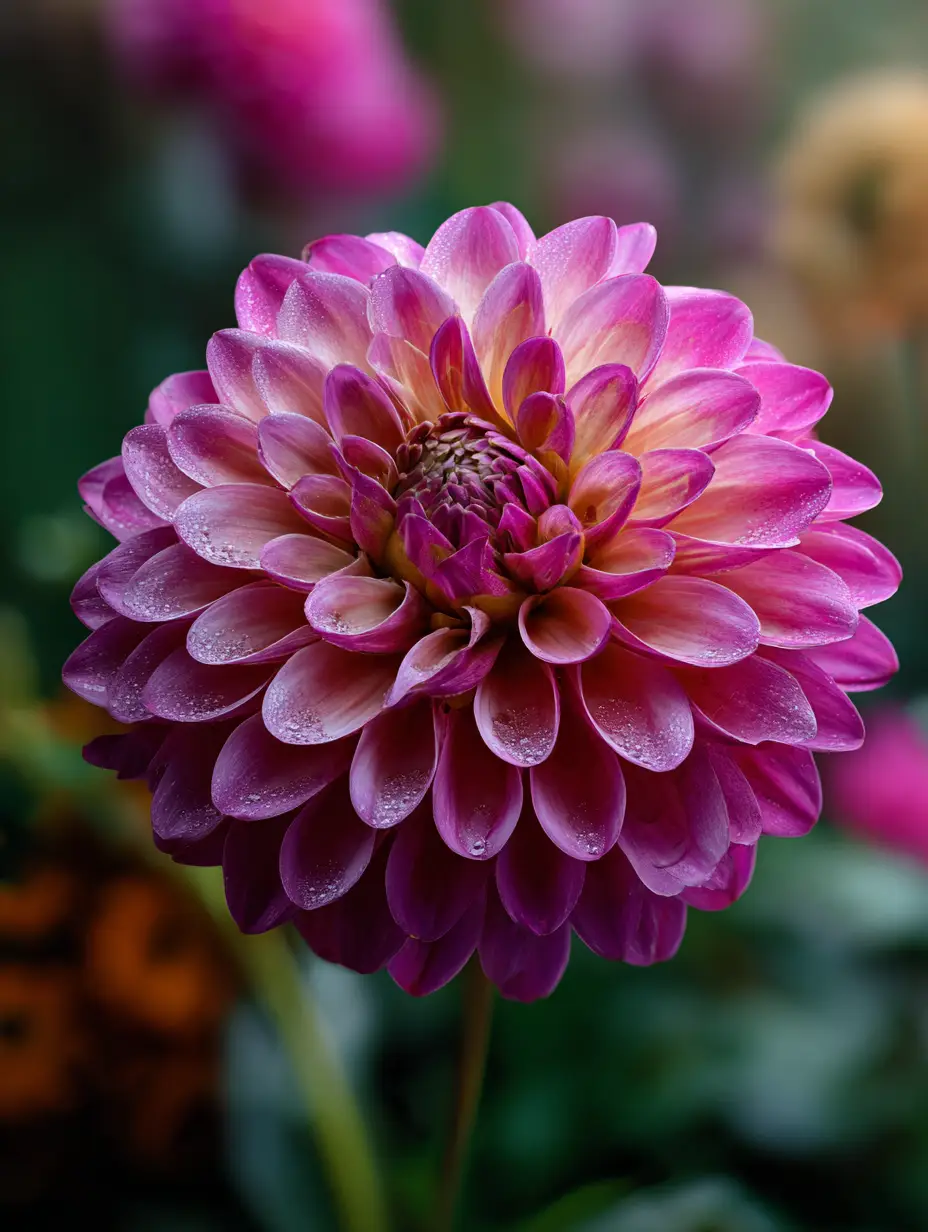
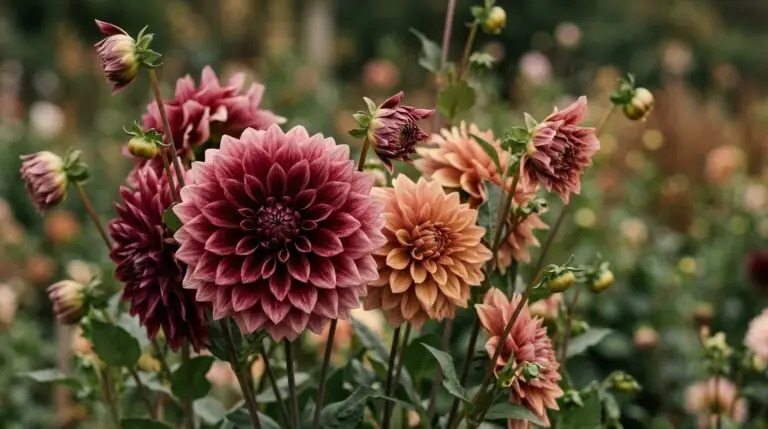
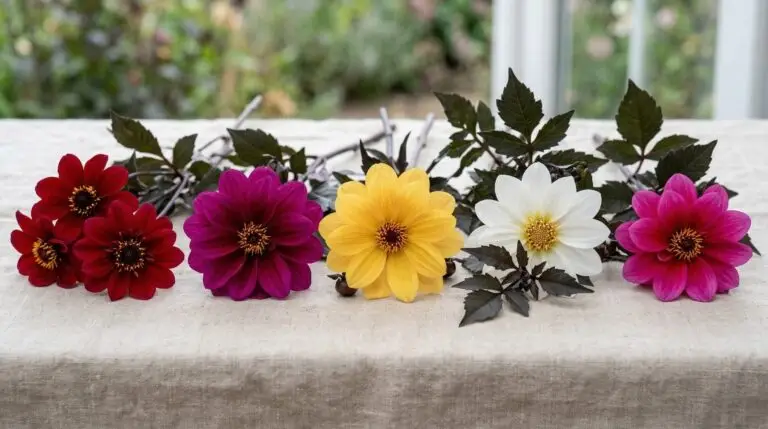
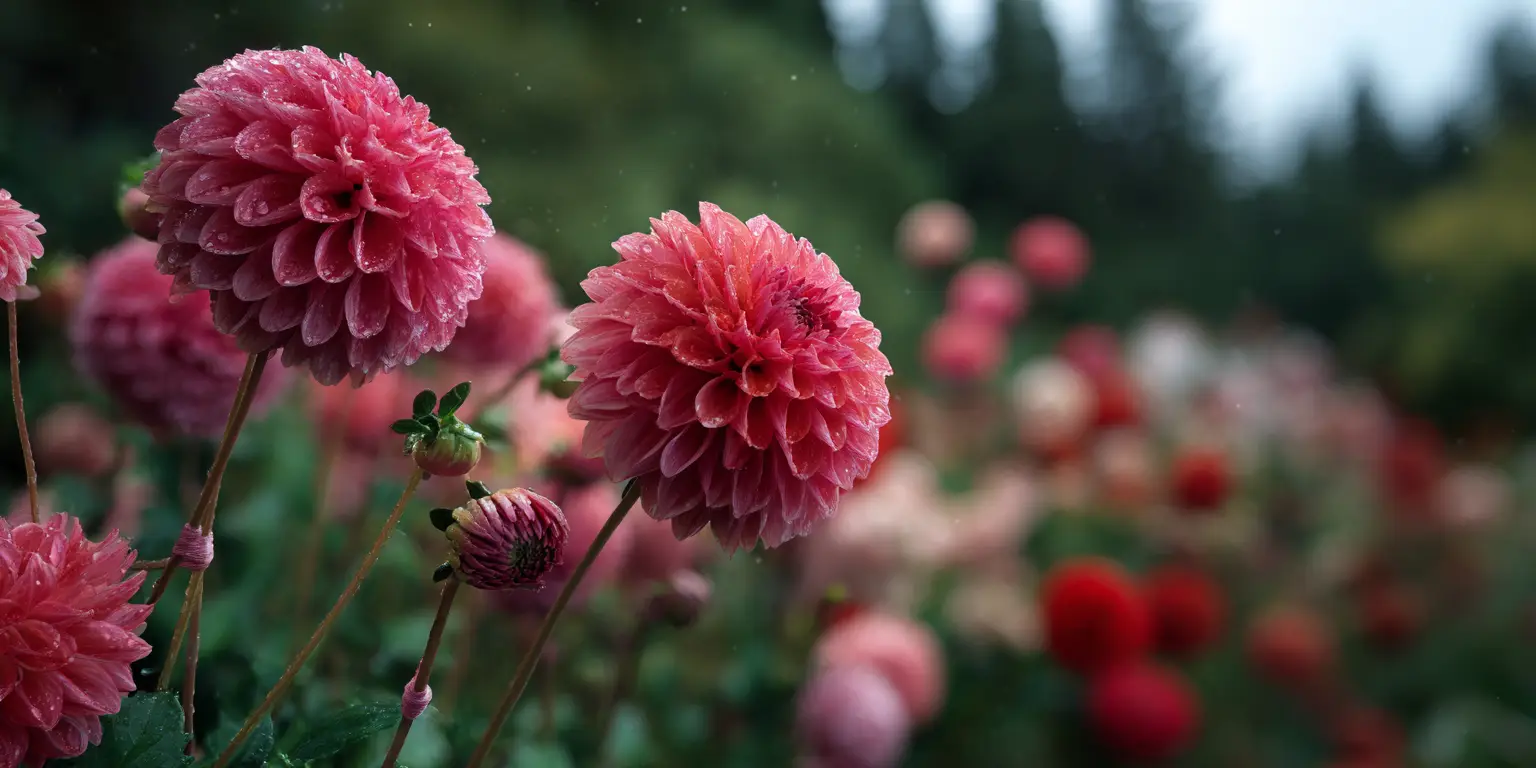
Dahlia is a genus of bushy, tuberous perennials in Asteraceae, the daisy and composite family it shares with sunflowers, marigolds, zinnias, and asters. Around 42 wild species are recognized, native to the mountain highlands of Mexico and Central America, where indigenous cultures grew them long before European contact. The genus is named for the eighteenth-century Swedish botanist Anders Dahl, and the plant reached Europe in the late 1700s after Spanish collectors sent material from Mexico City to the botanical garden in Madrid, where the first dahlias flowered in Europe around 1789. Hybridizers seized on the plant’s genetic variability, and the garden dahlias grown today are all complex hybrids, tens of thousands of named cultivars with more than 57,000 registered over the years, that trace to no single wild species. Mexico declared the dahlia its national flower in 1963. Because the lineage is tangled, dahlias are classified not by species but by flower form, and those form classes are what most people actually shop by.
The dinnerplate types drive much of the searching, but they are one class among several, and the differences matter when you are choosing plants for a border, a container, or a vase. The table below covers the main garden forms.
| Form class | Look | Typical bloom size | Plant height | Best use |
|---|---|---|---|---|
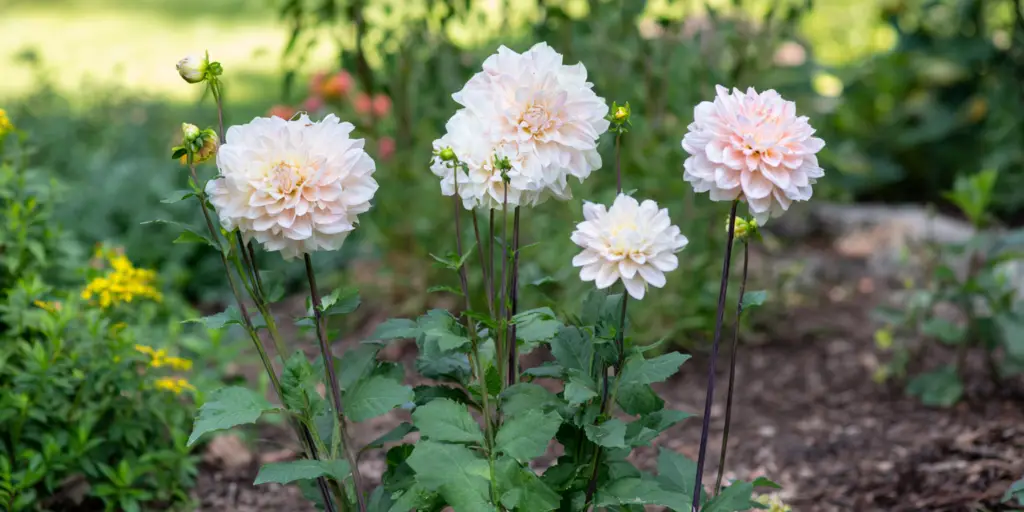
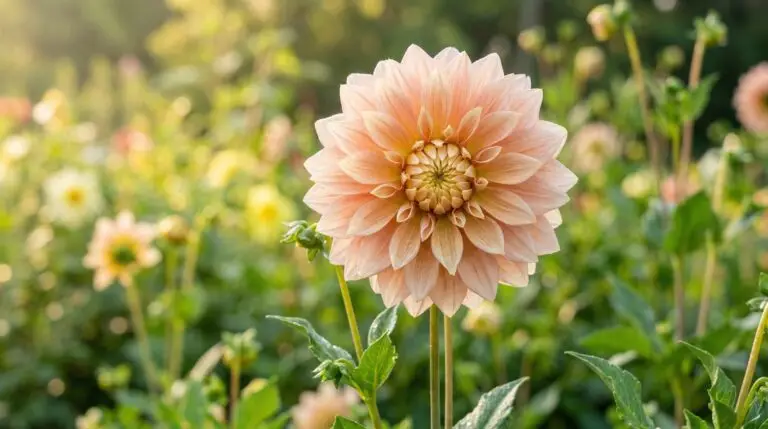
| Dinnerplate (giant decorative) | Huge, full, exhibition-scale flowers | 8 to 12+ in | 4 to 6 ft | Focal points, show blooms, big statement stems |
| Decorative | Full double, broad flat-tipped petals | 4 to 8 in | 3 to 4 ft | All-purpose borders and cutting |
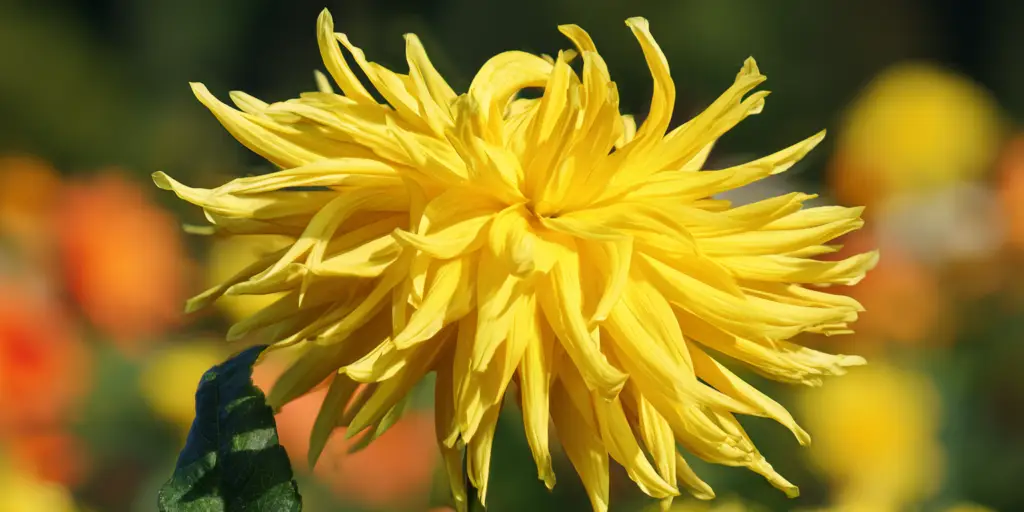
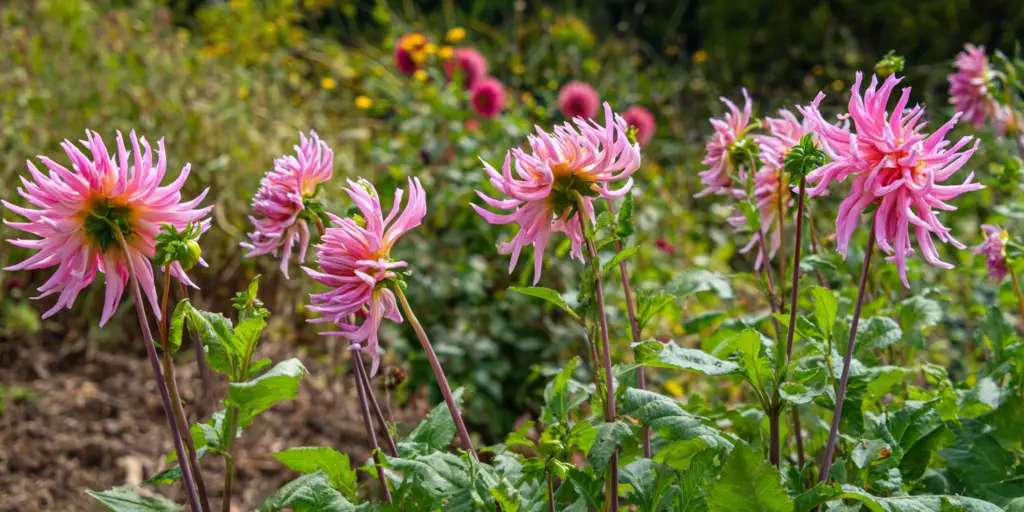
| Cactus and semi-cactus | Spiky, rolled, pointed petals | 4 to 8 in | 3 to 4 ft | Texture, dramatic arrangements |
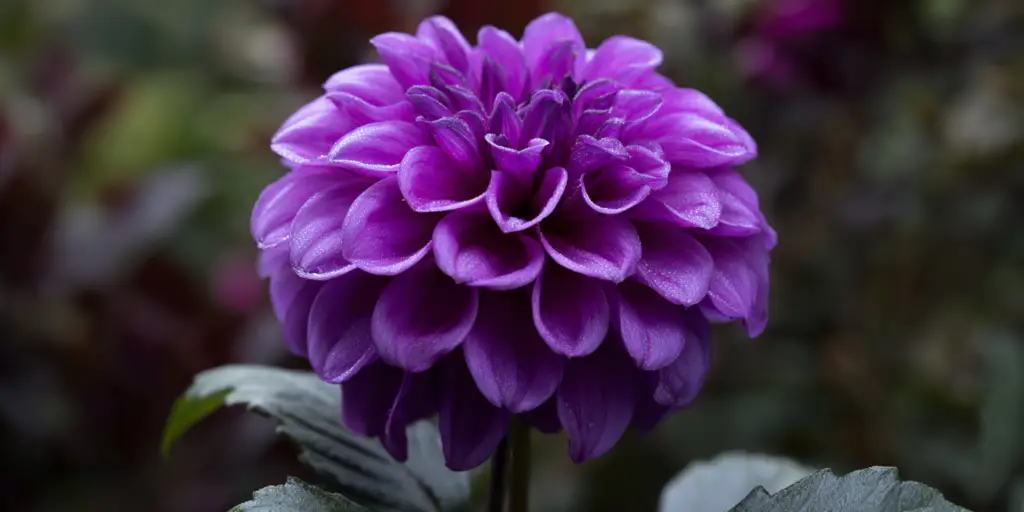
| Ball | Rounded, densely packed globe | 2 to 4 in | 3 to 4 ft | Long-lasting cut flowers |
| Pompon | Small tight spheres | Under 2 in | 3 to 4 ft | Cutting, edging, bouquets |
| Single and collarette | Open face, visible center, pollinator-friendly | 2 to 4 in | 1 to 3 ft | Bees and butterflies, informal beds |
| Waterlily and anemone | Shallow overlapping or cushion-centered | 3 to 6 in | 3 to 4 ft | Elegant borders and arrangements |
Nine dahlias, and what each one is actually for
The American Dahlia Society classifies dahlias by form and size rather than by species, using a four-digit code: size runs from AA for giants over 10 inches down to MC for micros under 2 inches, and form codes cover the fully double classes (FD formal decorative, ID informal decorative, SC semi-cactus, BA ball, P pompon, WL water lily) and the open-centered ones (PE peony, CO collarette, S single). The verdicts below are the sources' own words about cutting performance, not our ranking.
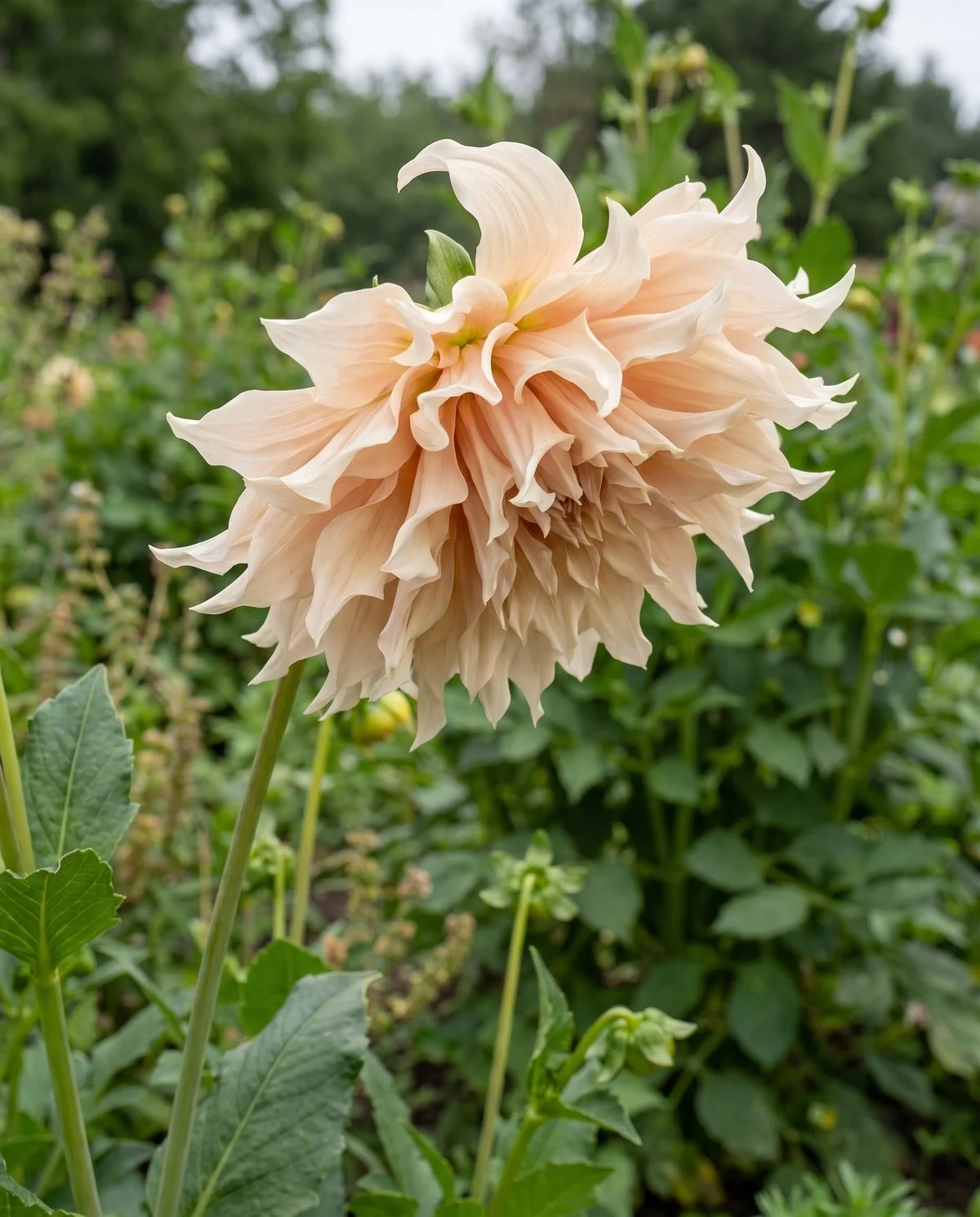
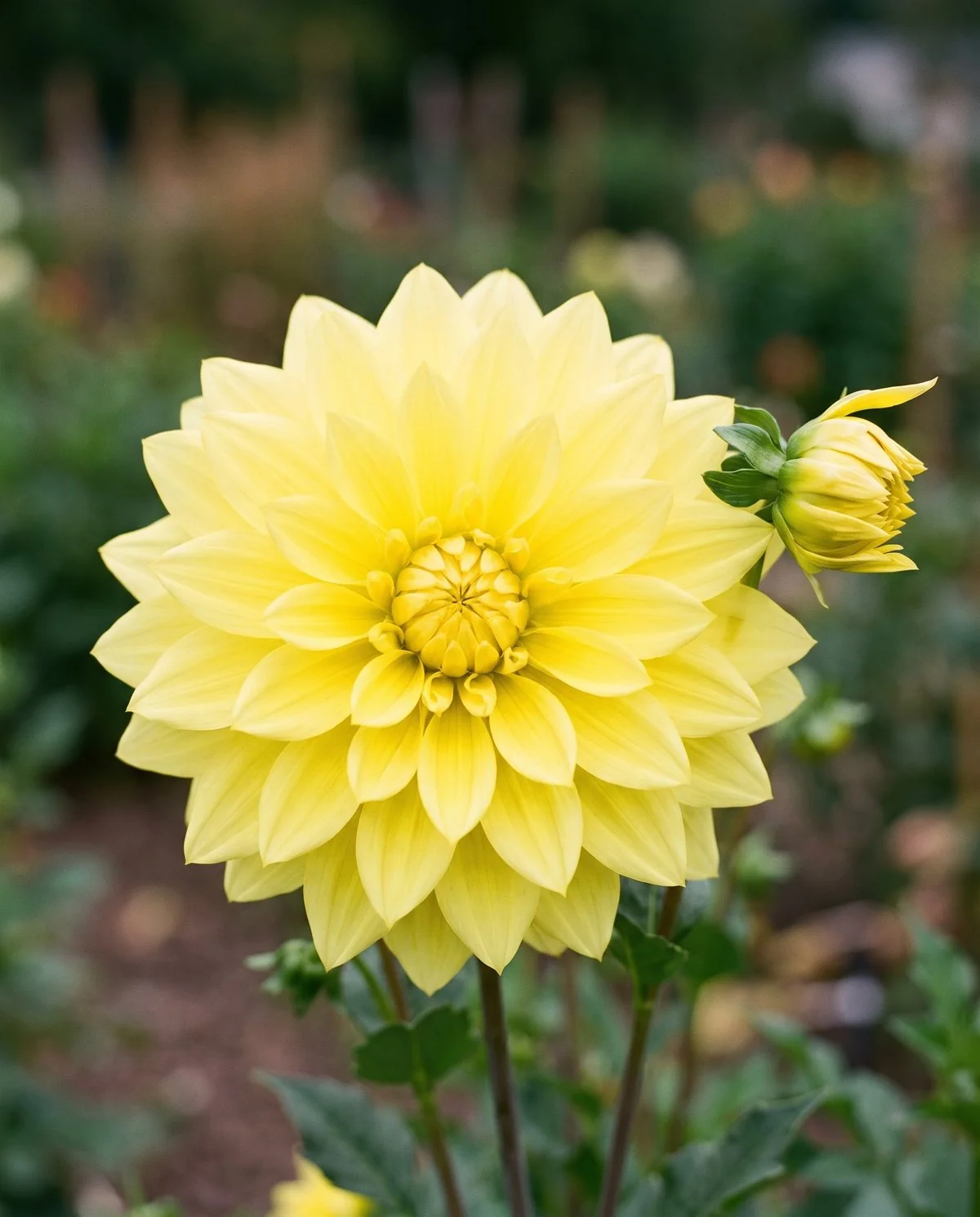
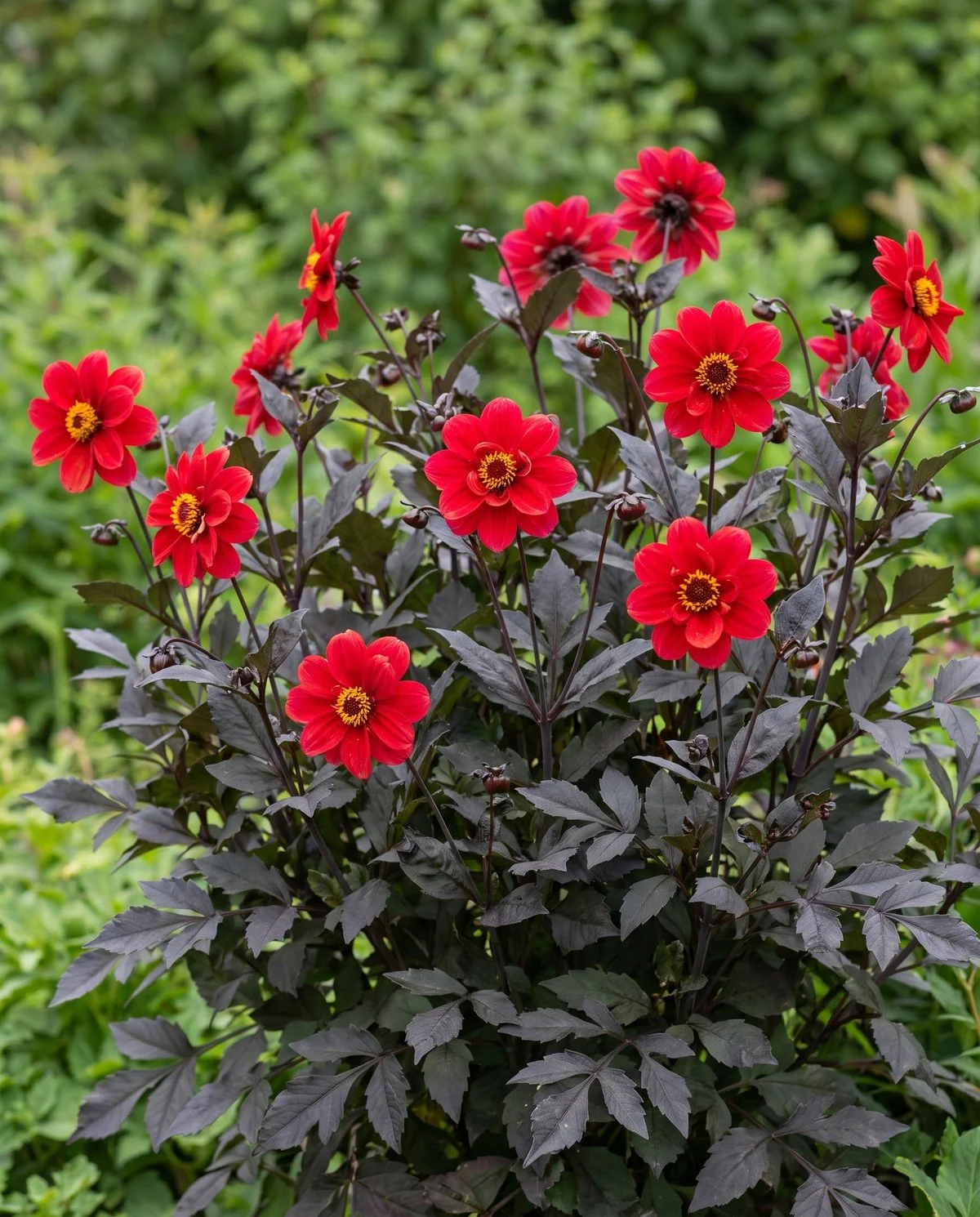
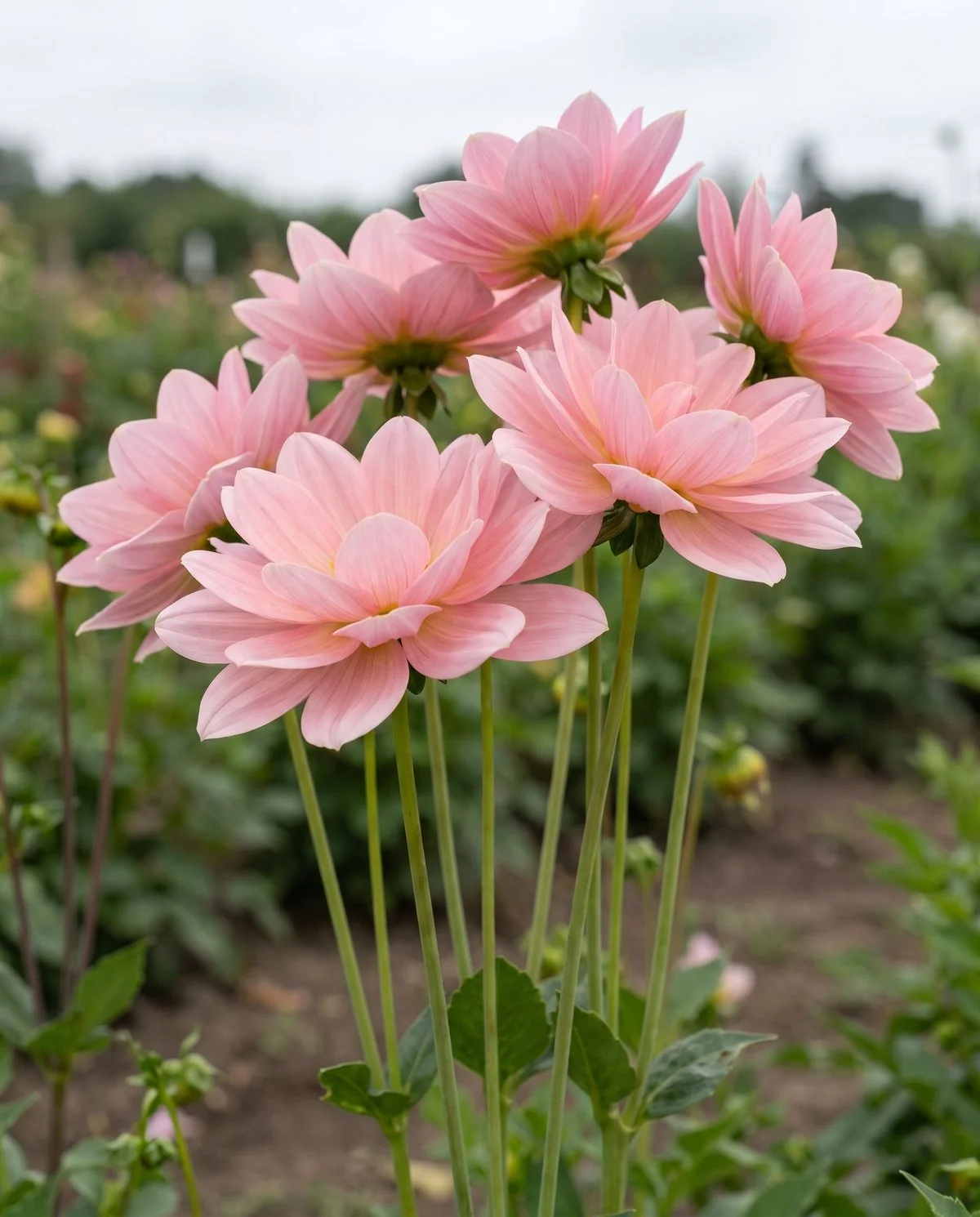
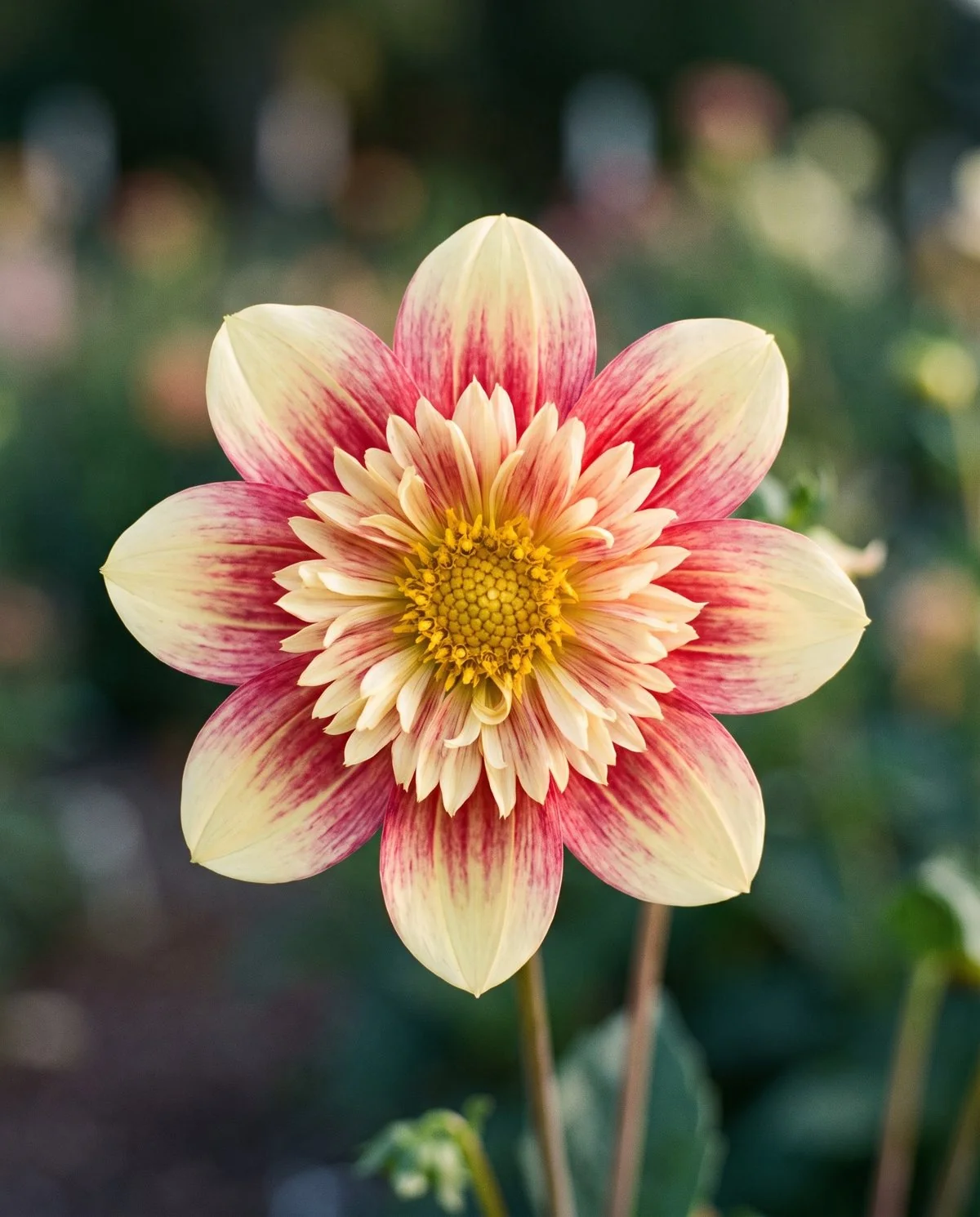
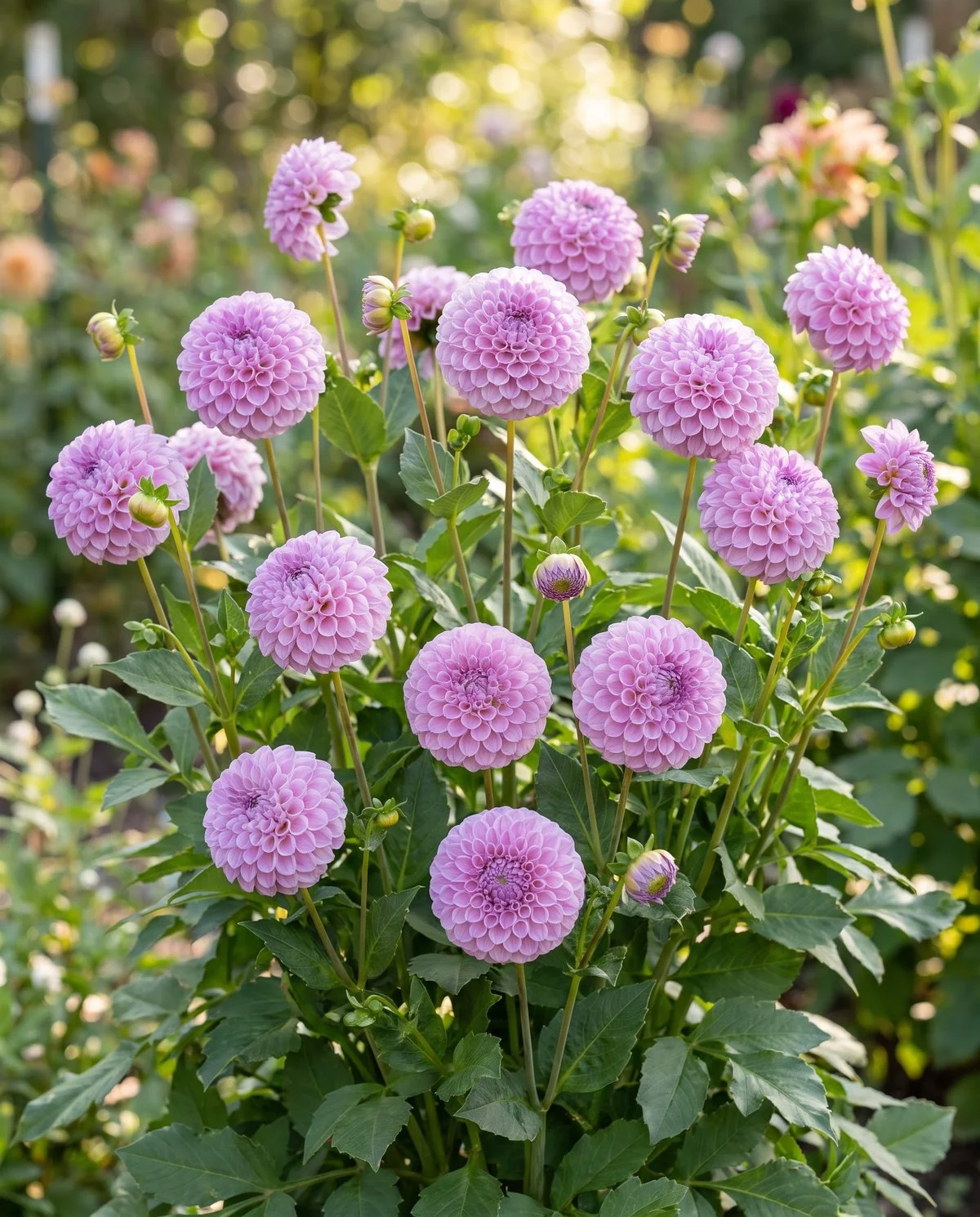
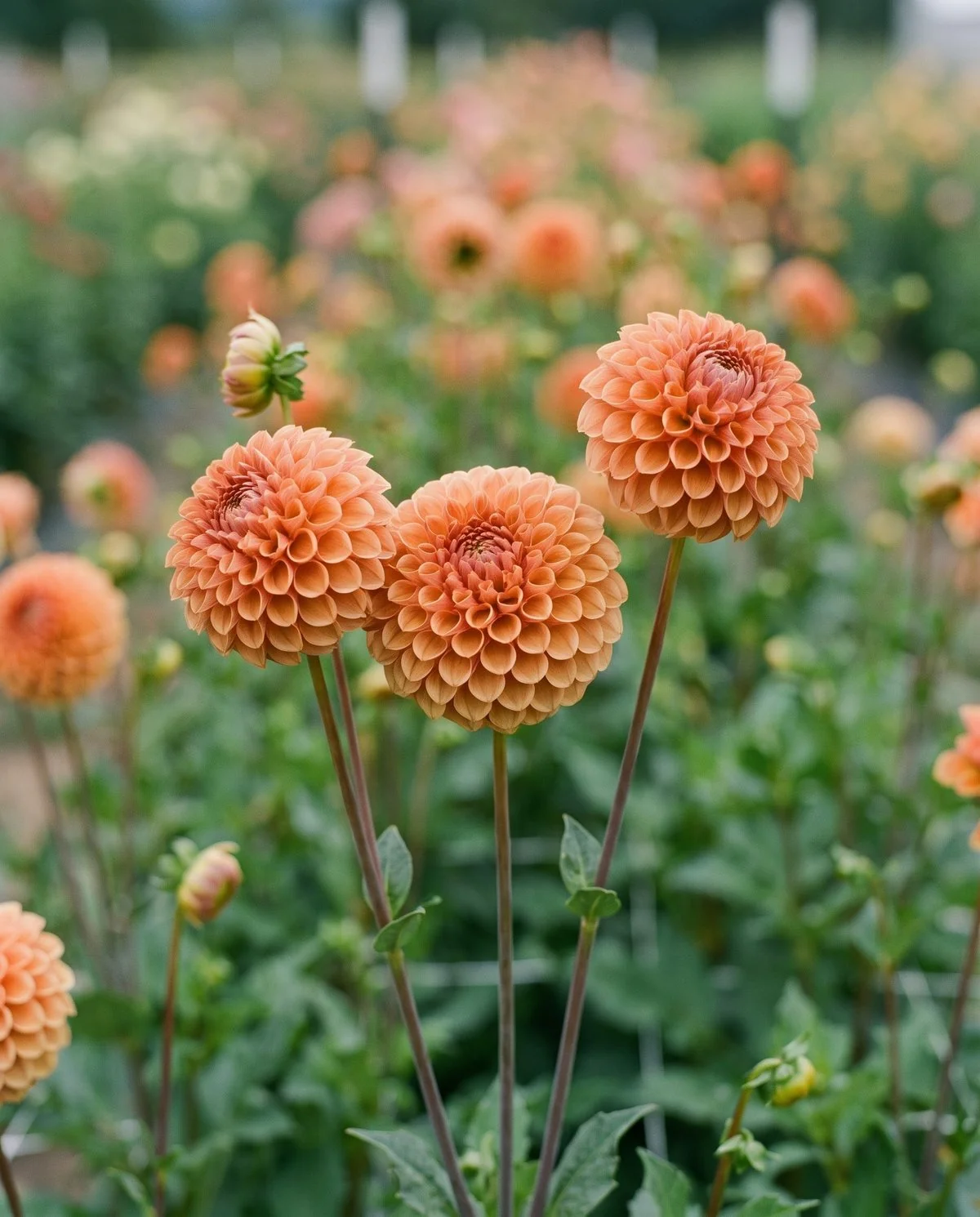
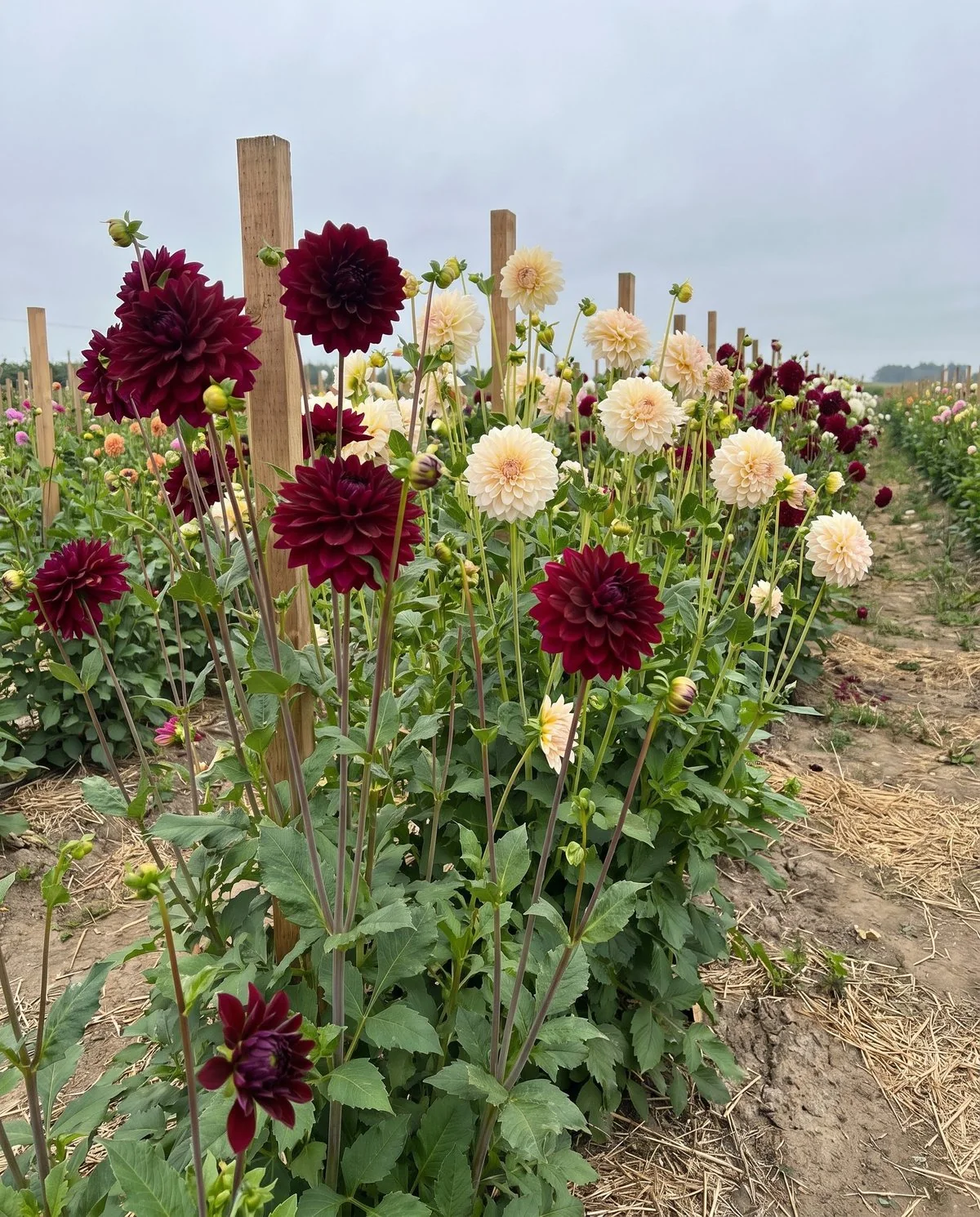
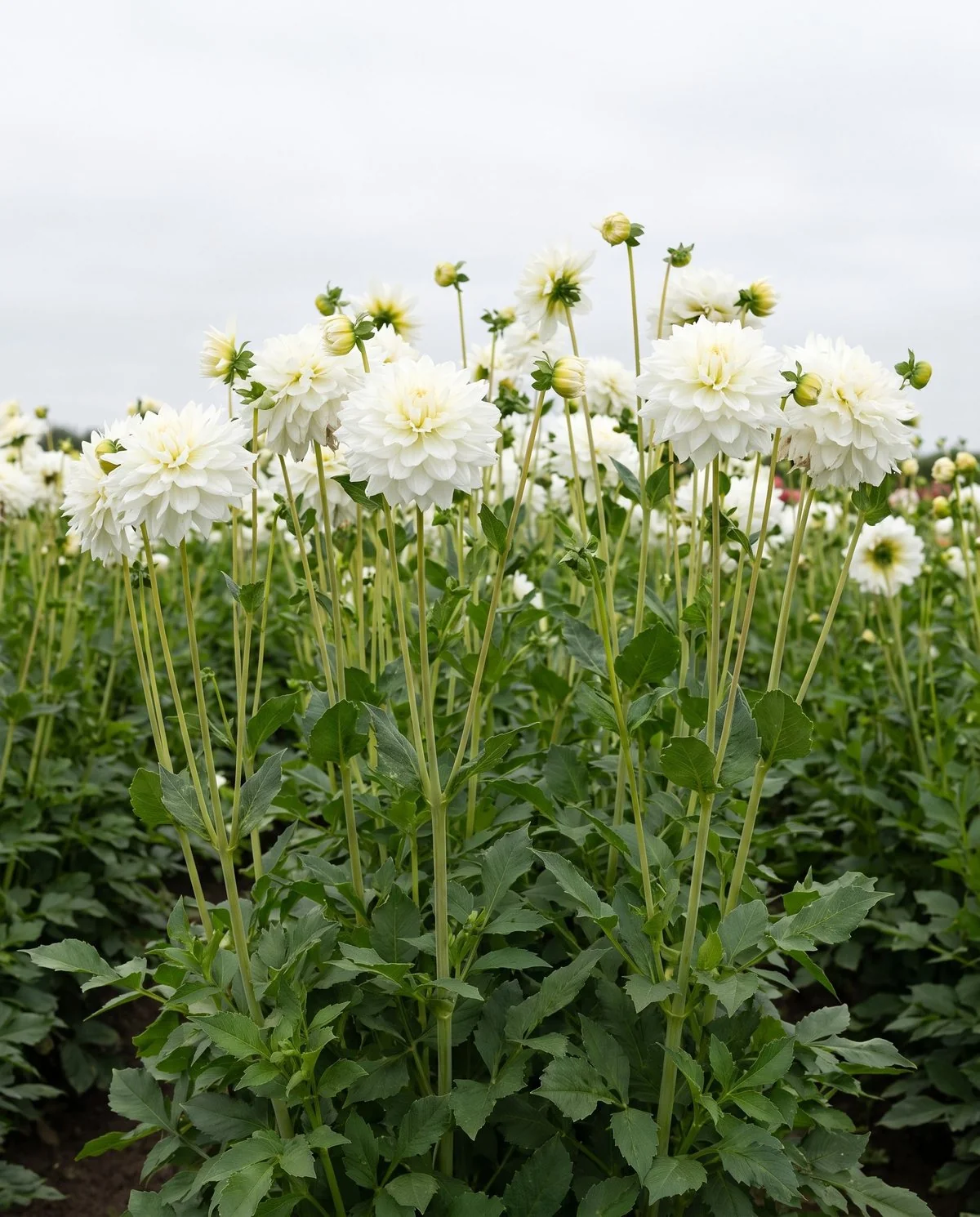
The hard trade-off behind the whole grid: pompon, mignon and petite decorative plants give dozens of blooms across a season, while a dinnerplate cultivar may carry as few as two open flowers at a time at peak. Baron Katie, the other cultivar in the same 2018 ASCFG trial, averaged 18 in stems at roughly 10 stems per plant, with one trialer reporting up to 30. No dahlia equivalent of a multi-year, no-spray university disease-resistance trial exists, so this is cut-flower performance data, not disease data.
Bloom time
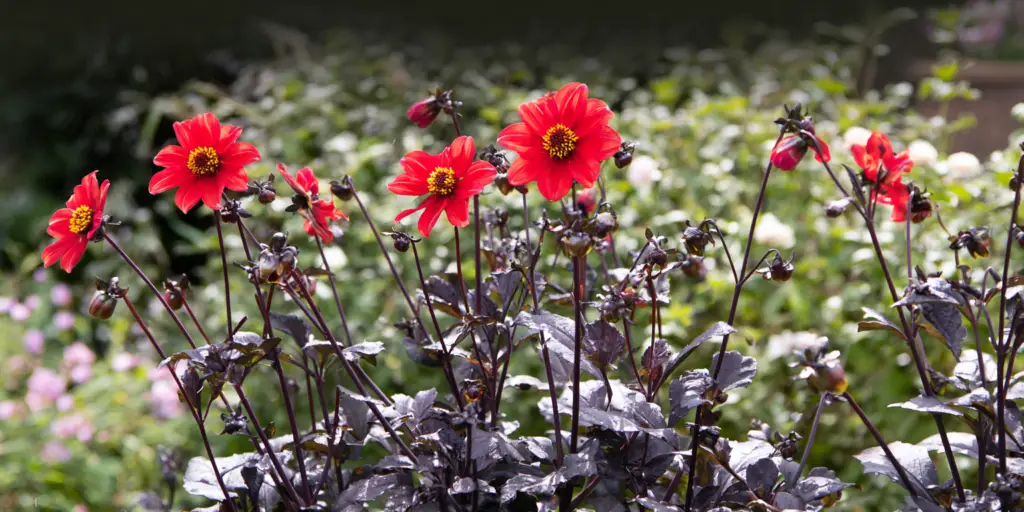
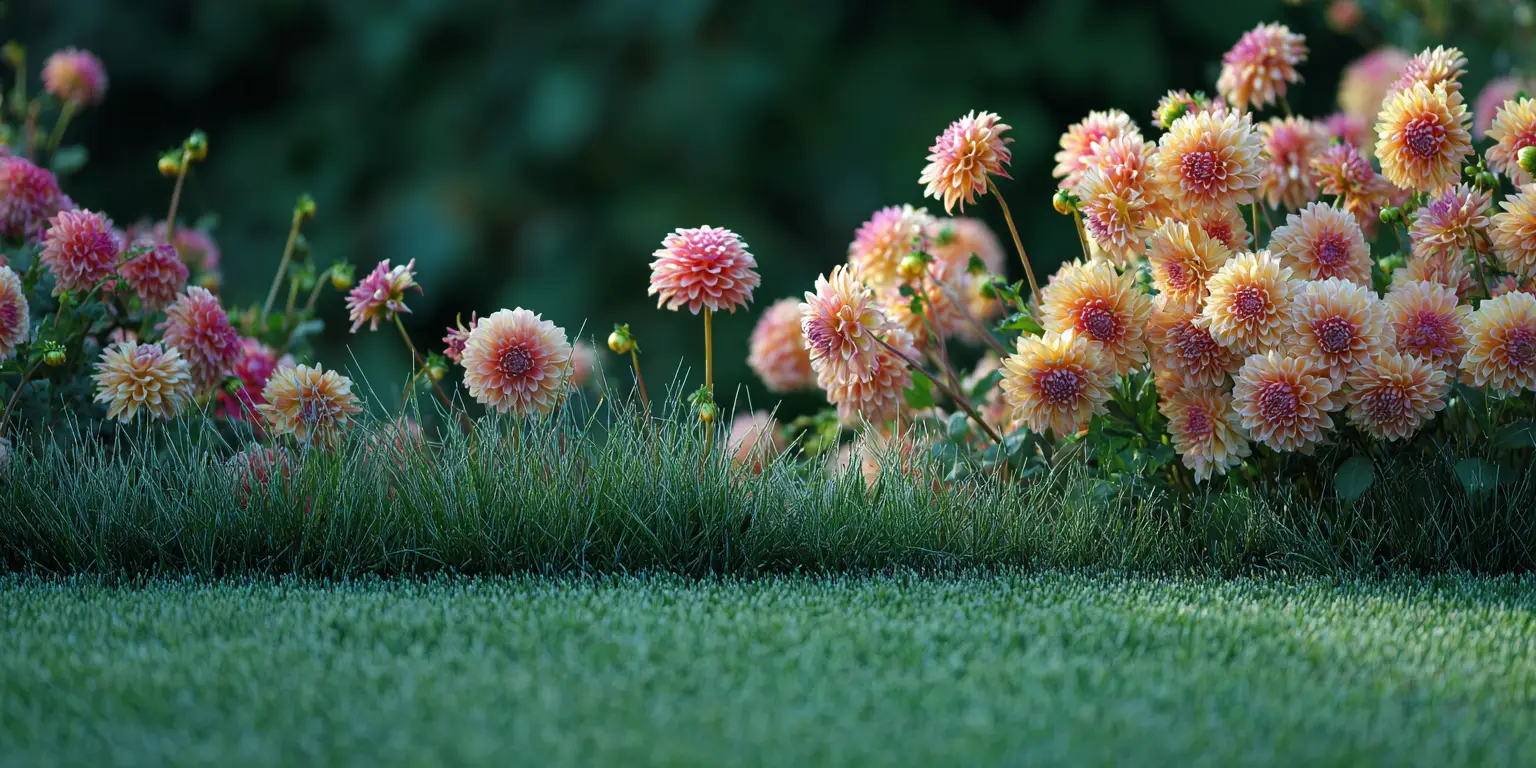
Dahlias flower roughly 8 to 12 weeks after the tubers go in, so a mid-spring planting usually opens its first buds in July, peaks in August and September, and keeps going until the first hard frost blackens the plant. In warm regions the season can start in early summer and run into October. Each bloom lasts about a week, and a well-grown plant carries many buds at once, so the display is continuous rather than a single flush. The single biggest lever on flower count is the plant’s own drive to set seed: every bloom you cut or deadhead pushes it to make more. Pinching the growing tip when the young plant reaches about 12 to 16 inches forces side branches and multiplies the number of flowering stems, and disbudding, removing the two small side buds beside a central bud, concentrates the plant’s energy into fewer, larger show blooms.
When a dahlia grows lush and green but refuses to flower, the cause is almost always one of three things. Too much nitrogen, from a high-nitrogen lawn feed or over-rich soil, drives leafy growth at the expense of buds. Too little sun, under six hours or in the shade of taller plants, starves the flowering response. And extreme heat with warm nights can stall bud set until temperatures ease, which is why some southern gardens see a lull in high summer and a strong second wind in fall. Feeding with a low-nitrogen, higher-phosphorus and potassium fertilizer and giving the plant full sun corrects the first two; the third usually corrects itself.
What the first season honestly looks like
A dahlia tuber is mature tissue rather than a seedling, so there is no sleep, creep and leap year to sit through: year one is a full performance year, and a disappointing one points at a specific fixable failure rather than at establishment. The sprout usually breaks the surface 4 to 6 weeks after planting, longer while the soil is still cool, and potting tubers up 4 to 6 weeks before the last frost and transplanting them already growing pulls the first flowers forward by close to a month. NC State's plant record puts the bloom window at mid-summer to mid-fall, and growers consistently report the best flower quality in September as the nights cool. From then on the plant works as a cut-and-come-again crop, and the cutting rhythm ramps from about once a week early in the season to every second day at peak, because every bloom removed pushes the plant to make another. The tubers themselves do most of their multiplying in late summer and early autumn as the days shorten and the plant moves energy into storage, and one clump yields somewhere between 3 and 15 divisible tubers depending on variety and vigor, a range wide enough that it should be read as an estimate rather than a figure. The honest low end is worth stating too: a season with rot losses, late planting or too much nitrogen can mean almost no flowers until mid-September and very few even then. Against that, the American Dahlia Society's benchmark for good mature tubers is 90 to 95 percent surviving winter storage, so losing more than one in ten is a signal that the method needs changing rather than bad luck.
Work the two failures in order
Both of these arrive on r/dahlias as a single question with a photo attached. Both have an ordered answer, and in both the cheap, non-disease checks come first.
Height and spread
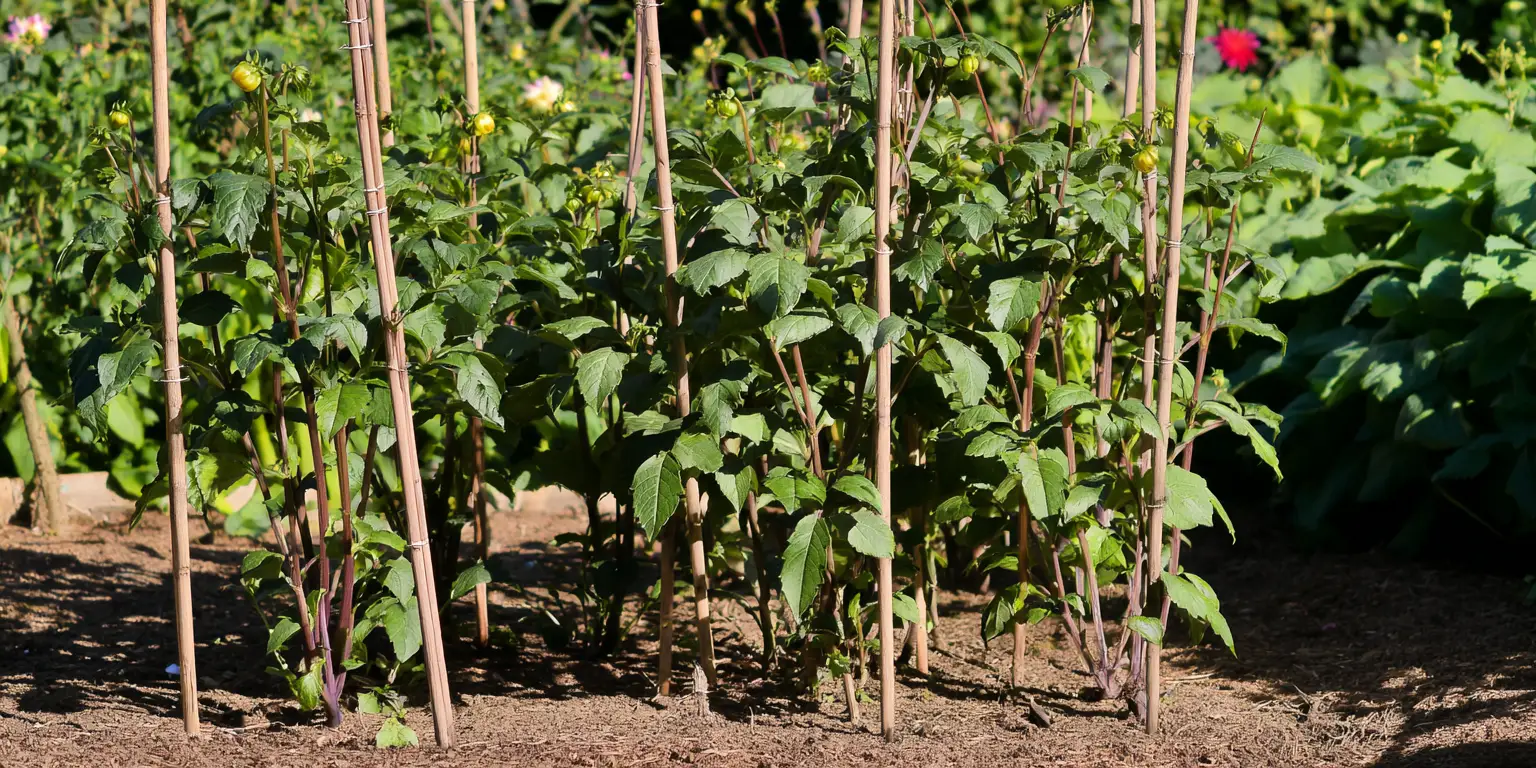
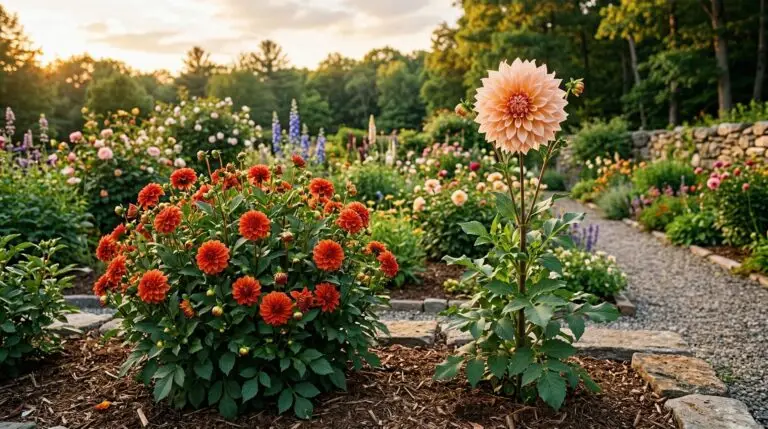
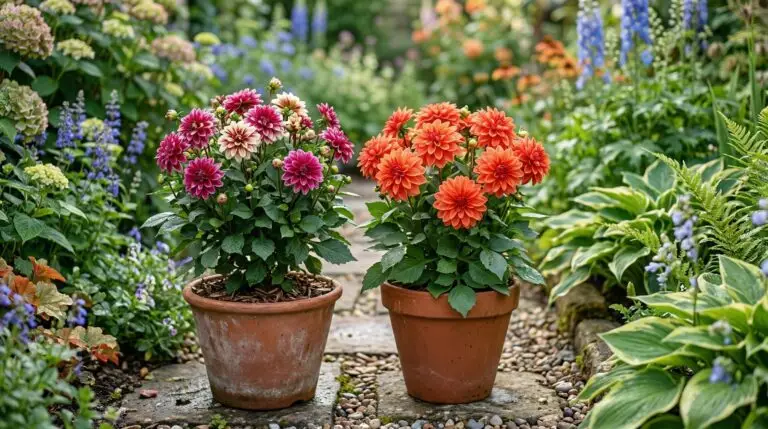
Height depends entirely on the form. Dwarf bedding dahlias stay near a foot tall and wide, which suits edging and containers, while decorative, cactus, and ball types generally run 3 to 4 feet, and the tall exhibition and dinnerplate cultivars reach 4 to 6 feet with a 2 to 3 foot spread on thick, hollow, brittle stems. The tree dahlia, Dahlia imperialis, can climb well over 10 feet in frost-free climates, but nearly all garden dahlias stay under 6 feet. Each tuber clump sends up multiple stems. Space plants by their mature spread, roughly 12 inches for dwarfs and 2 to 3 feet for large types, and set short varieties at the front of a bed with tall ones behind. The tall, top-heavy forms need staking, and because a stake driven late can spear the tuber, the stake goes in at planting time, covered under propagation below.
Light
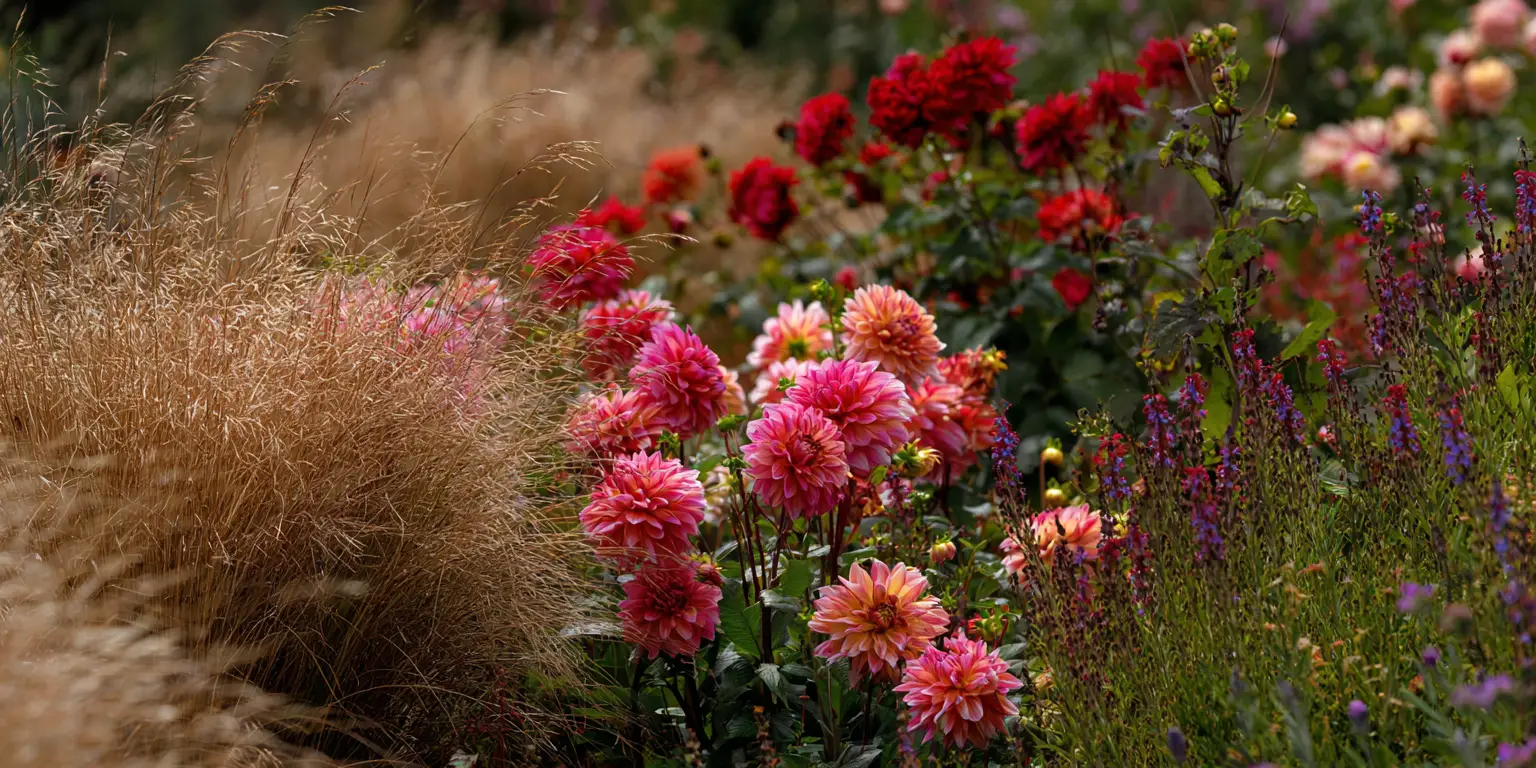
Dahlias want full sun, at least 6 to 8 hours of direct light a day, and they flower best where they get morning and early-afternoon sun. In too much shade the plants stretch, grow leggy, and produce far fewer blooms. The one exception is very hot climates, where light afternoon shade takes the edge off the extreme heat and warm nights that would otherwise slow flowering. Strong wind is a real threat to the tall, hollow-stemmed types, so a sheltered position helps, and container-grown dahlias need the brightest spot available.
Water
Water is where new growers most often go wrong, and the mistake runs in two directions. Established, actively growing dahlias are thirsty, wanting about an inch of water a week and more in heat, applied as deep, consistent soakings at the base rather than light sprinkles; a soaker hose or drip line that wets the soil 6 to 8 inches down while keeping the foliage dry is close to ideal. Freshly planted tubers are the opposite. A dormant tuber sitting in cold, wet soil rots before it can sprout, so you do not water at planting and hold off until green shoots break the surface, letting the tuber draw on whatever moisture the soil already holds. Once shoots appear, begin regular watering. Good drainage is non-negotiable at every stage, containers dry out fast and need frequent checking, and midday wilting in heat is not always a sign of thirst.
Five things repeated about dahlias that do not hold
Each reality below names the evidence behind it, including the two cases where the research could not find a university or American Dahlia Society source and says so.
The myth: Peat moss is the standard, safe way to pack tubers for winter.
The reality: The American Dahlia Society puts peat moss on its own list of media to avoid, citing shriveling when it dries and rot when it stays moist, and names coarse vermiculite as its preference instead. Plenty of consumer guidance still recommends peat, so this is a live disagreement between the breed authority and the wider internet rather than a settled point.
The myth: Seed saved from a named dahlia gives you the same flower again.
The reality: Dahlias are octoploid, carrying eight sets of chromosomes, with a famously unstable genome, so seed from a named variety is a lottery for color, form and size. Only the tubers are clones. The octoploidy itself is documented in the academic literature; the practical consequence is grower consensus.
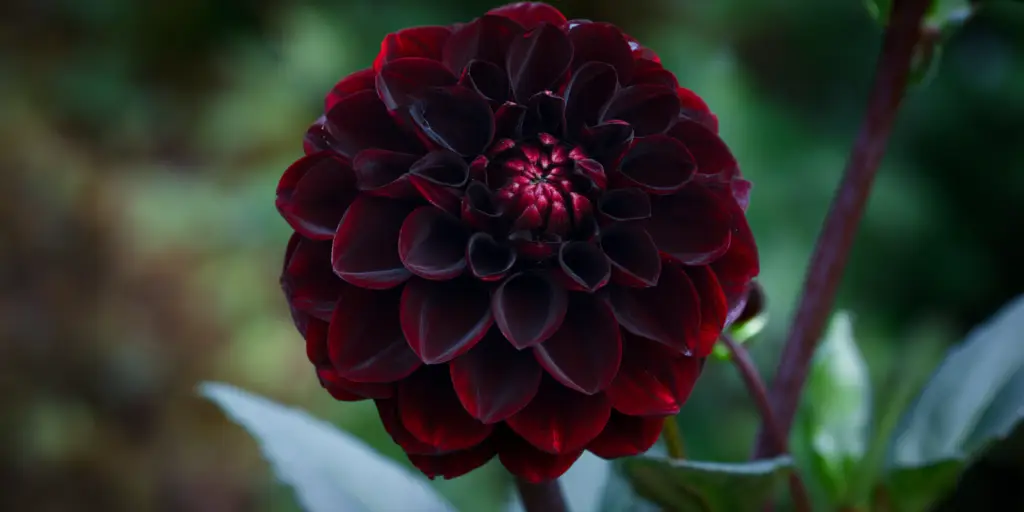
The myth: There are true black dahlias.
The reality: No black pigment exists in dahlia genetics. The near-black varieties are extremely dense concentrations of red and purple anthocyanins, which is the same pigment-chemistry reason true blue is out of reach: the genus lacks the delphinidin pathway. Pigment-chemistry sources, not a university extension page.
The myth: Dahlias grow from bulbs.
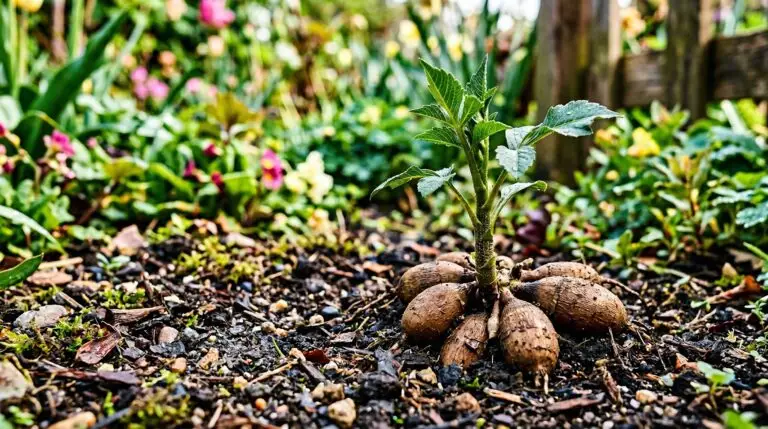
The reality: A dahlia tuber is a swollen root: solid and starchy inside, with no layers and no basal plate. A true bulb, like a tulip's, is a modified stem with layered scales and an embryonic shoot inside it. That is why dahlia growth points sit only on the crown and never on the body, which matters every time somebody divides a clump.
The myth: Epsom salt is a harmless bonus for any dahlia.
The reality: Most garden soils already carry adequate magnesium, so Epsom salt without a soil test showing a deficiency does very little. The widely repeated warning that applying it while buds are setting distorts the blooms could not be traced to a university or American Dahlia Society source in this research, so it stays a plausible grower warning rather than a stated fact.
Soil and pH
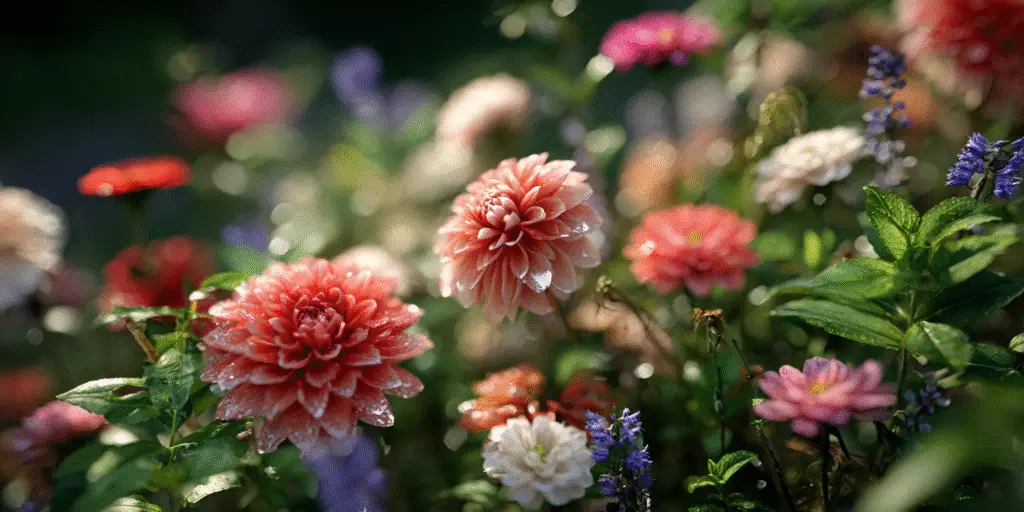
Dahlias are heavy feeders that want rich, loose, well-draining soil with plenty of organic matter. A sandy or loamy soil that holds moisture but drains freely gives the tubers the oxygen they need; heavy, wet clay suffocates and rots them. Working compost or well-rotted manure into the top 8 to 12 inches before planting sets the bed up for the season. The target pH is slightly acidic to neutral, around 6.5 to 7.0, though the plants tolerate roughly 6.0 to 7.5. For feeding, reach for a balanced or bloom-oriented fertilizer that is low in nitrogen and higher in phosphorus and potassium, such as a 5-10-10 or 10-20-20 formula; a high-nitrogen feed gives lush foliage and few flowers, the single most common cause of a leafy, bloomless plant.
USDA hardiness
Dahlias are tender perennials, reliably winter-hardy only in about USDA zones 8 to 11 where the ground does not freeze deeply. In that band the tubers can stay in the ground year-round, protected by a mulch blanket at the cold end of the range, dying back after frost and resprouting in spring. In zone 7 and colder the tubers will not survive a hard freeze in the soil, so they are either treated as annuals and replaced each year or, far more commonly, lifted and stored over winter and replanted. The practical upshot is that dahlias can be grown as summer flowers almost anywhere, even zones 3 and 4, as long as the tubers go in after the last spring frost and come out before the ground freezes. Plant in spring once frost danger has passed and the soil has warmed to about 60 °F (16 °C). The growing range is wide while the hardy-in-ground range is narrow.
Dates and temperatures by zone band
Assembled from Cornell Cooperative Extension in Monroe County, UMN Extension, UNH Extension, NC State's plant record and the American Dahlia Society's own digging and storing article. No single university publishes this table, which is why it is here.
Propagation and longevity
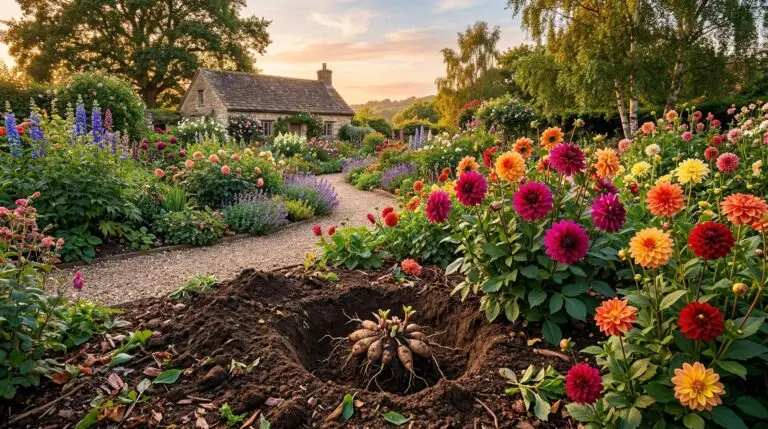
Dahlias grow from tubers, and getting the planting right sets up the whole season. Plant after the last frost once the soil has warmed to roughly 60 °F (16 °C), setting each tuber 4 to 6 inches deep with the eye, the growth bud near the old stem base, facing up. Choose a full-sun spot with rich, well-drained soil, and space by size, about 12 inches for dwarfs and 2 to 3 feet for dinnerplate types. Do not water until green shoots emerge, since a tuber in cold, wet soil rots. For any tall or dinnerplate variety, drive the stake at planting time, before you set the tuber or immediately after, so you never spear the tuber by staking later. When the young plant reaches about 12 to 16 inches, pinch out the growing tip; the plant branches from below the cut and returns far more stems and blooms. Besides tubers, dahlias can be grown from spring basal cuttings or from seed, though seedlings do not come true to the parent cultivar and are used mainly by breeders and for single-season bedding.
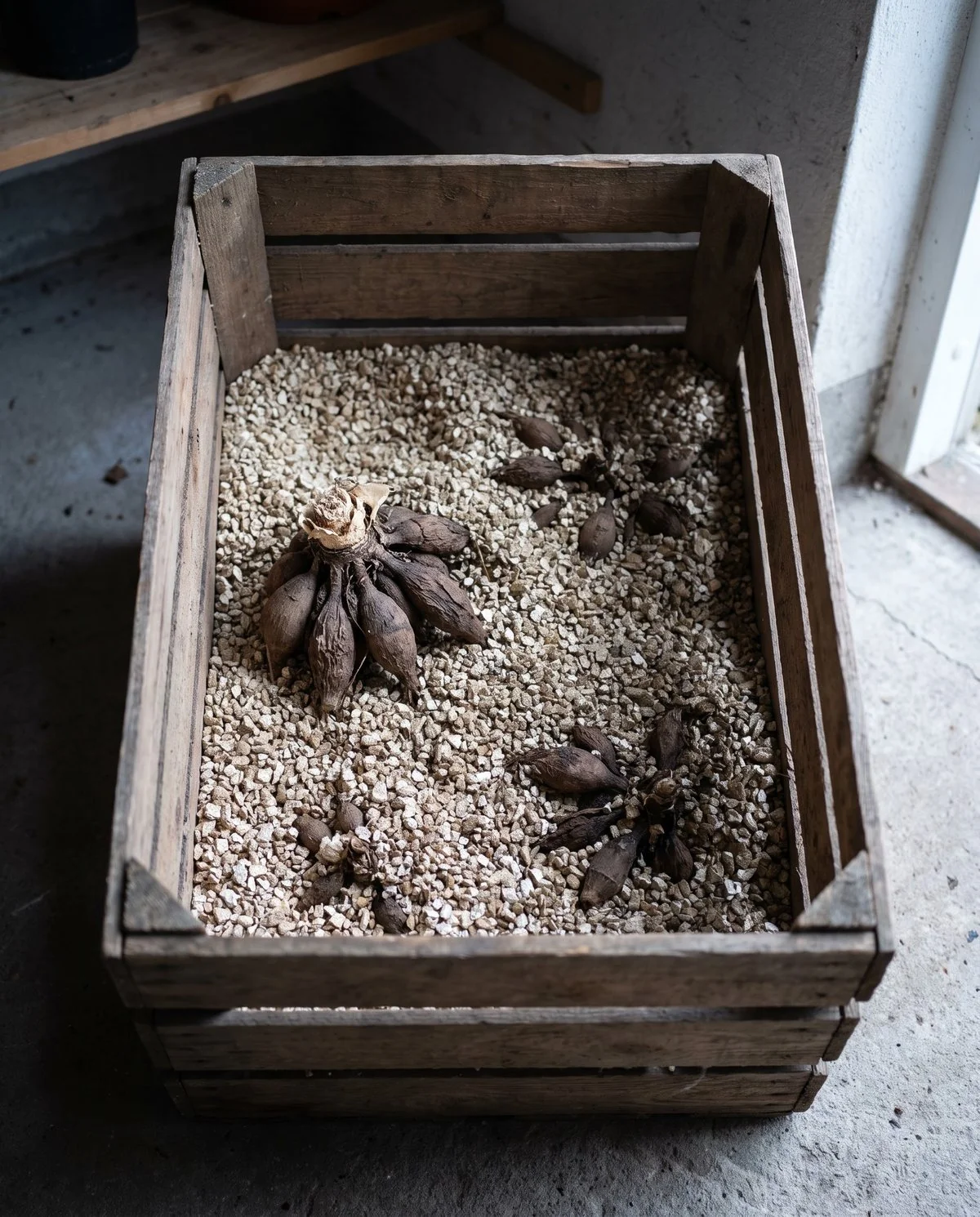
Overwintering is the part that stops many gardeners in zone 7 and colder, and it is straightforward once broken into steps. After the first hard frost blackens the foliage, cut the stems back to a few inches and dig the whole clump carefully with a fork, lifting from well outside the root zone so you do not slice through tubers. Brush or gently rinse off the soil, then cure the clump for a few days in a dry, airy spot out of direct sun so the surface skins over. At that point you can divide, and each division must keep at least one eye near the crown or it will never sprout, since the eyes sit on the neck of the tuber, not on its body. Pack the tubers in barely damp peat moss, vermiculite, or wood shavings, and store them cool and dark at around 40 to 50 °F (4 to 10 °C) at moderate humidity, checking through winter and discarding any that turn soft or rot. Replant in spring after the frost date. In zones 8 to 11 the tubers can stay in the ground under mulch, but even there it pays to lift and divide the clumps every few years to relieve overcrowding and keep them vigorous. The tuber timeline below sums up the year.
| Stage | When | What to do |
|---|---|---|
| Plant | After last frost, soil 60 °F (16 °C) | Tuber 4 to 6 in deep, eye up, stake tall types now, do not water yet |
| Pinch | At 12 to 16 in tall | Remove growing tip for a bushier plant and more blooms |
| Bloom and maintain | Midsummer to frost | Deadhead, cut often, feed low-nitrogen |
| Lift | After first hard frost | Cut back, dig clump carefully, cure a few days out of sun |
| Store | Through winter | Divide with an eye each, pack in peat or vermiculite, hold at 40 to 50 °F (4 to 10 °C), check for rot |
Fragrance
Dahlias offer color and form rather than scent. The great majority are unscented or carry only a faint, sweet or spicy note in a handful of cultivars, because they attract pollinators with bright color and open, pollen-rich centers rather than perfume. That lack of fragrance is an advantage for scent-sensitive people who still want a bold cut flower. Gardeners who want perfume near their dahlias usually plant aromatic companions such as lavender, lilies, or roses nearby.
Toxicity and pet safety
The ASPCA lists dahlias as toxic to cats, dogs, and horses, though the risk is low rather than alarming. If a pet eats the flowers, leaves, or tubers, the usual result is mild gastrointestinal upset such as drooling, vomiting, or diarrhea, and the sap can cause mild skin irritation in some animals and people. The specific irritant has never been pinned down, and serious poisoning is not typical. The sensible approach is to keep pets from grazing on the plants and to call a veterinarian if an animal eats a large amount and shows symptoms. For people, dahlias are generally not considered poisonous, though handling the foliage can occasionally provoke a mild allergic skin reaction, so gloves are a reasonable precaution for anyone who reacts. Households wanting a fully non-toxic planting can cross-check options in the guide to flowers that are safe around cats and dogs.
Vase life
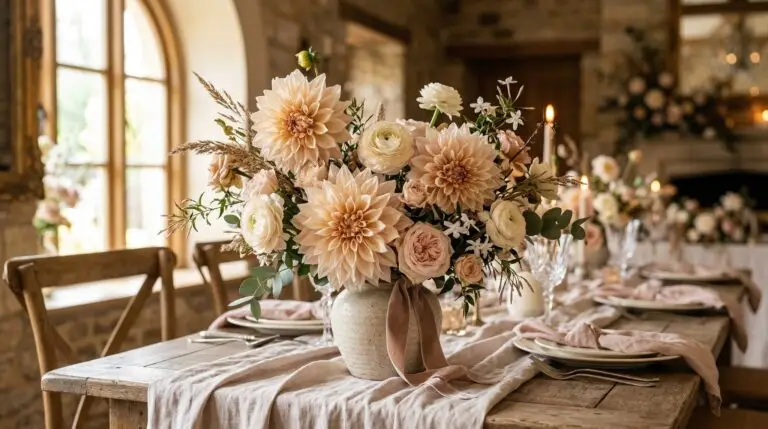
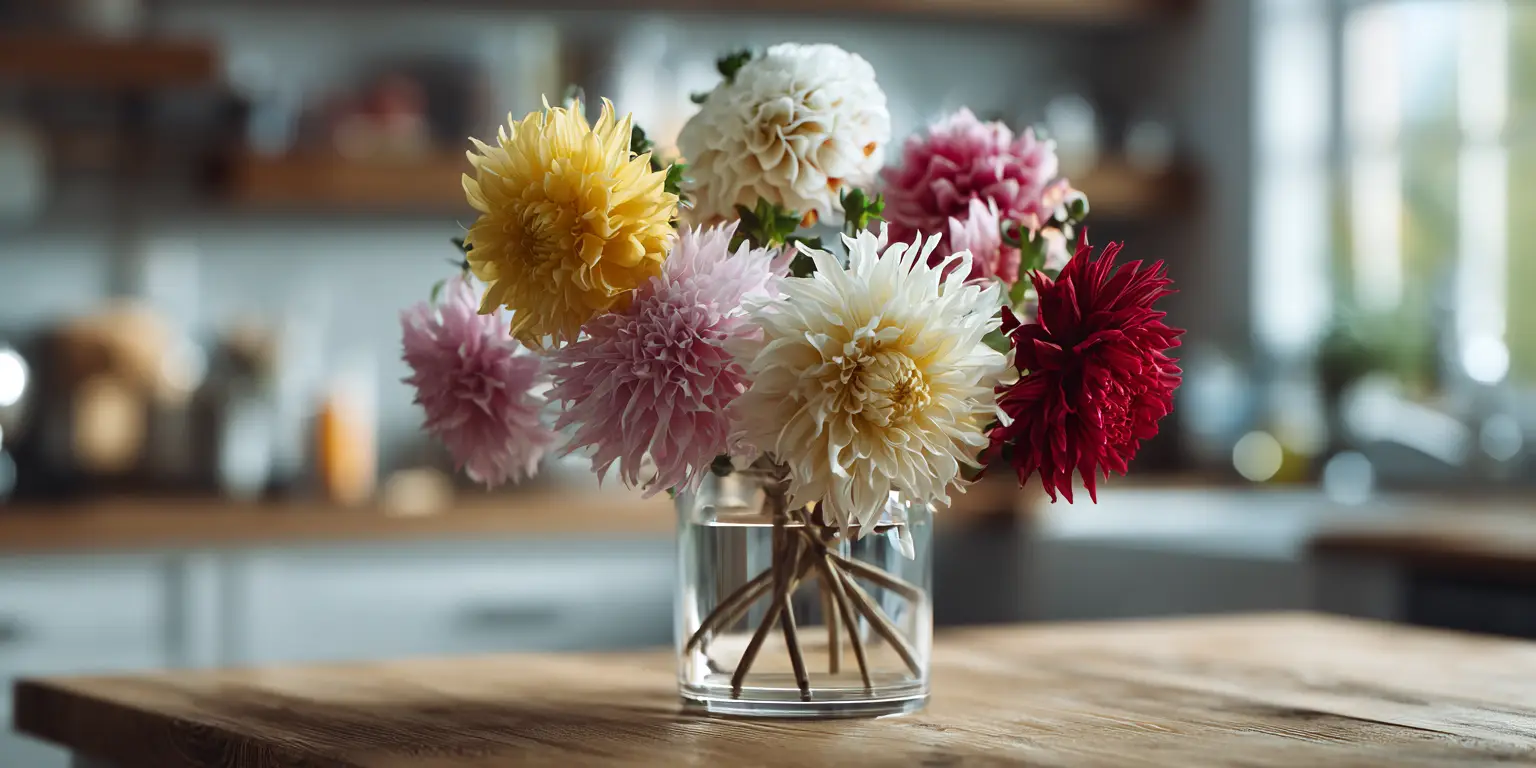
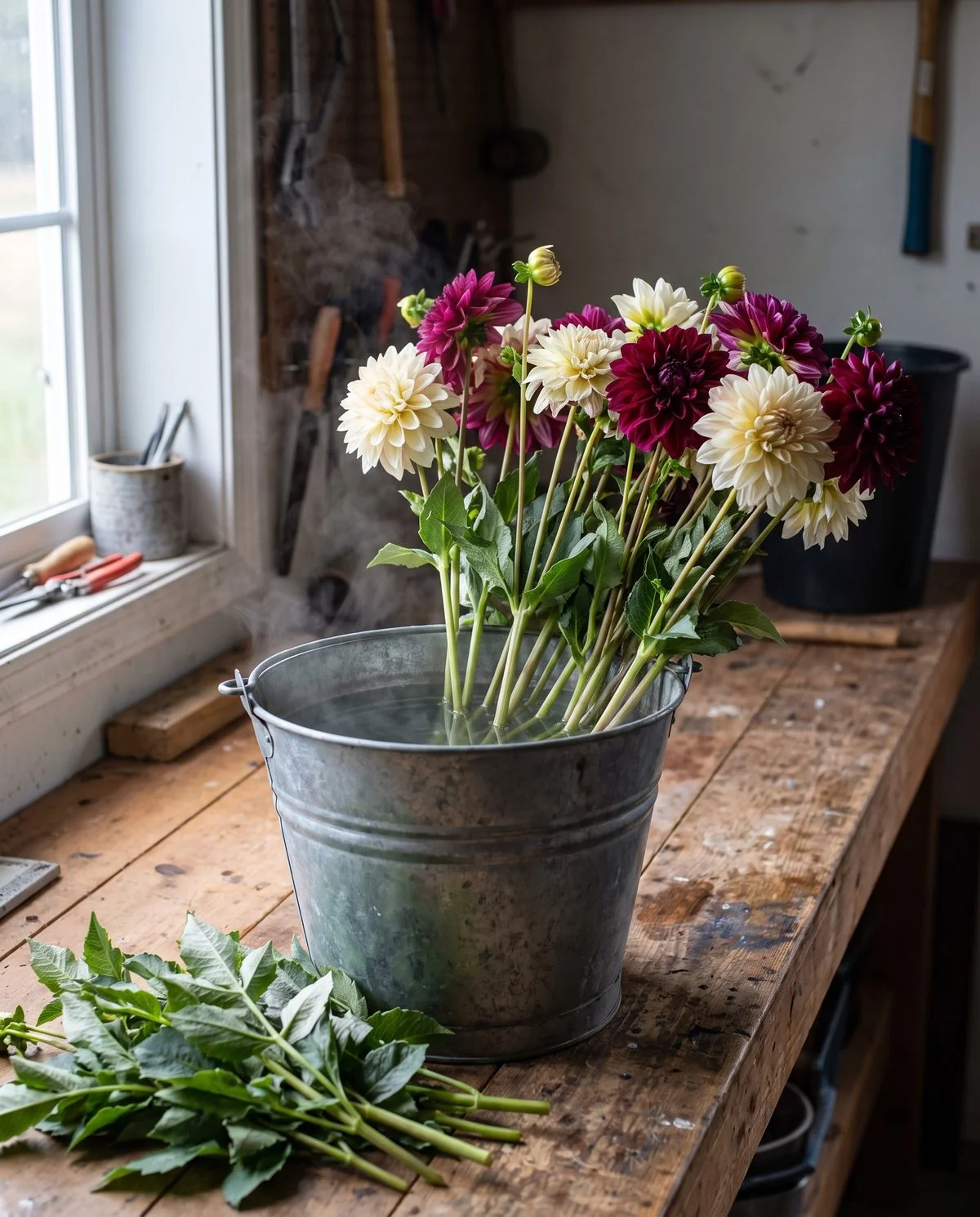
Dahlias are prized cut flowers with one real drawback: they do not last long, typically 4 to 6 days in the vase, with tight ball and pompon types sometimes reaching a week and huge dinnerplate blooms fading in about three days. The critical detail is that a dahlia barely opens further once cut, so it must be harvested when the flower is about three-quarters to nearly fully open, never in tight bud. Cut early in the morning with a sharp, clean blade and get the stems straight into cool water, stripping any leaves that would sit below the waterline. Conditioning helps: some growers hold the cut stem ends in warm water for an hour, or dip them briefly in near-boiling water, to improve uptake before arranging. Keep the finished vase cool and out of direct sun and refresh the water daily. Their color and dramatic form make dahlias a favorite for late-summer and fall events, including wedding flowers, and because cutting drives new flowering, a productive plant and a full vase go together.
The near-boiling dip is worth knowing what it does and does not buy. Someone put it to a side-by-side test on stems cut from one plant on the same morning: plain water, water with flower food, and the boiling dip followed by flower food. The dip added nothing over flower food on its own. The flower food was what moved the number.
That makes the ranking simple. Flower food first, every time, because it is the step with the measurable effect. The boiling dip earns its place only when there is no flower food in the house: a fresh cut, about thirty seconds with the stem end in boiling water, then straight into the vase. Neither trick rescues a dahlia cut in the afternoon heat or one left dry on a bench, which is where most short vase lives are decided.
Measured vase life, and the numbers behind it
Most garden dahlias converge on 3 to 7 days, with a tighter practical band of 4 to 6. The figures below are the ones that come from trial or breeder data rather than from consensus.
Pests and diseases
The first pest a dahlia faces is the one that can end the season before it starts: slugs and snails devour tender emerging shoots overnight, sometimes stripping a sprouting tuber to nothing, so protecting new growth as it breaks the surface is the single most important early defense. Once the plant is up, aphids cluster on soft new stems and buds and can spread virus, spider mites flare in hot, dry spells and stipple the foliage, and earwigs, thrips, and capsid or tarnished plant bugs chew ragged holes in leaves and petals. Late in the season powdery mildew coats the foliage with a gray-white film, especially where air is stagnant and leaves stay wet. In the soil, crown and tuber rot set in wherever drainage is poor or watering is heavy, and the same rot is the main enemy of stored tubers over winter. The most serious problem is viral: dahlias are prone to viruses, notably dahlia mosaic virus, which mottles and distorts the leaves and stunts the plant, has no cure, and spreads through propagation and sap-feeding aphids, so infected plants should be dug and destroyed rather than divided.
Most of this is managed culturally rather than sprayed. Space plants for good airflow and keep the center open so foliage dries quickly, water at the base in the morning rather than overhead in the evening, and set slug defenses around shoots the moment they emerge. Watch new growth for aphids and knock them back early, both to limit damage and to slow virus spread. Improve drainage or grow in raised beds where rot is a recurring problem, and inspect stored tubers through the winter, discarding any that turn soft, moldy, or shriveled before the rot spreads to the rest.
What actually goes wrong, by frequency
From 1,079 unique posts collected across r/dahlias, r/gardening, r/plantclinic, r/GardeningUK, r/IndoorGarden and r/HomeGarden, with r/dahlias supplying 88 percent of them. The figure beside each problem is the share of the whole sample whose title reads as a live question rather than a showcase, which is the ranking signal used throughout. A post can match more than one theme, so the shares do not sum.
Firmness first, then the American Dahlia Society float test. 94 posts mention it, and the two highest-scoring posts in the whole sample, at 940 and 598 upvotes, are people sharing a storage method before they fail rather than after.
Whether the shoots are separate or fused at the base. 63 posts, and the reason r/dahlias runs a standing weekly megathread on this one question.
Whether the yellowing is patchy with vein clearing, or uniform from the bottom up. 45 posts, and the honest endpoint is a lab test through an extension office.
The underside of the leaf, and a tap test over white paper. Mites dominate these 42 posts and are routinely posted as virus or mildew.
The nitrogen number on the feed, then the calendar. 29 posts, larger than the first analysis pass suggested.
Whether the coating sits on top of the leaf surface. 27 posts, and mosaic or mildew? is a verbatim title in the sample.
Where the damage is: petals of open flowers, or new growth near the ground. 32 posts, with the highest photo rate of any theme at 37 percent.
Whether the plant was pinched recently, cut too tight, or is rotting at the crown. These 33 posts braid three separate causes together.
The crown, because that is where the eyes are. Only 7 posts, but the single highest-engagement question in the entire sample, at 159 upvotes and 42 comments, is one of them.
What you are actually looking at
The six pairs r/dahlias confuses most often, with the one visual detail that separates each. Gall and virus have no photograph here on purpose: both are bacterial or viral infections whose signatures experienced growers dispute on the same photo, so this section describes them in words and shows only the healthy state for comparison.
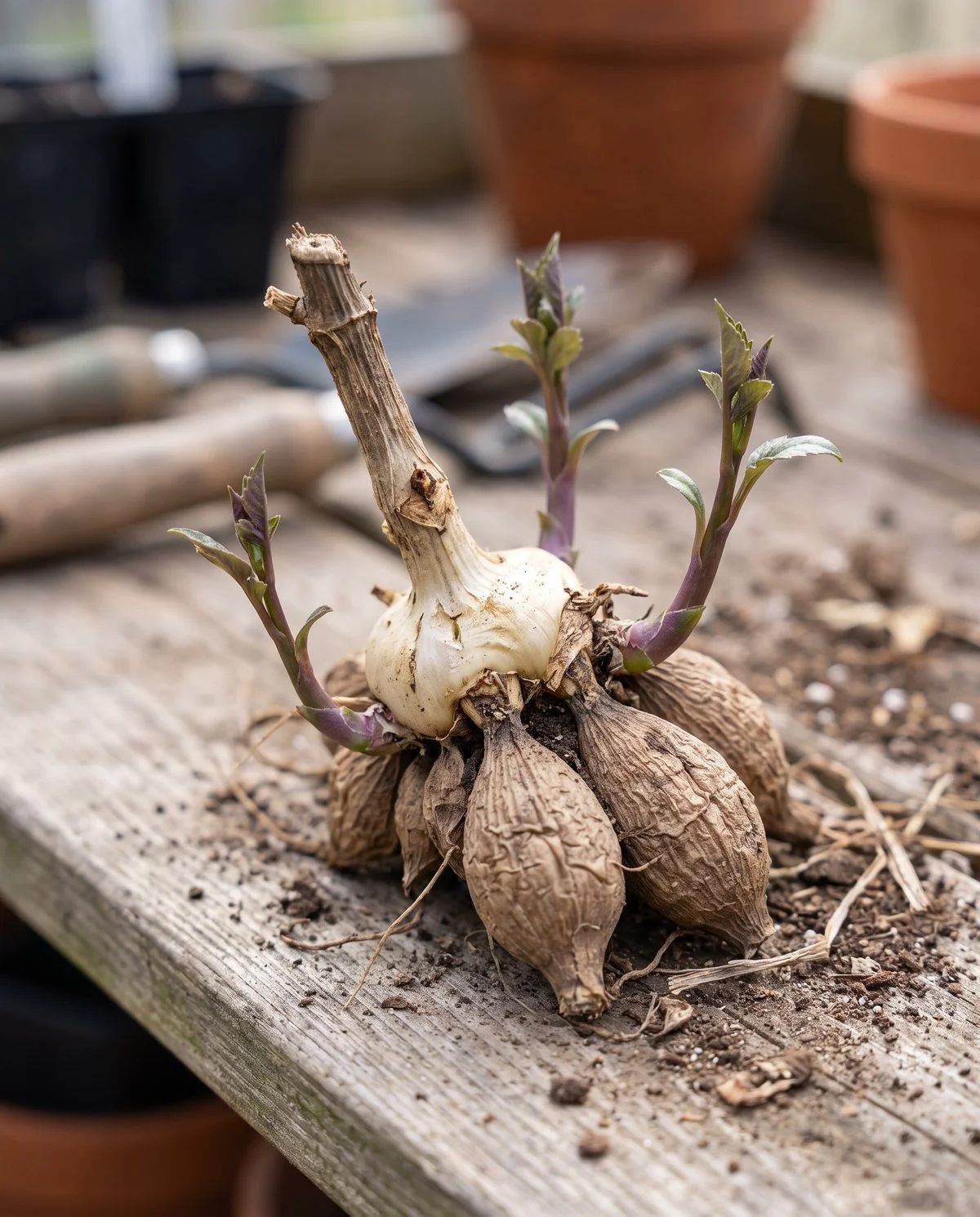
Normal growth is individual, discrete sprouts rising from separate eyes. Leafy gall is a dense cluster of leaves from stunted shoots, or a mass of shoots fused at their base, sometimes described as cauliflower-like. Crown gall is different again: rough, wart-like growths at the stem base at or just below the soil line, darkening from cream to brown with age. UC ANR's own article on the two galls explains why nobody can settle this from one photo, stating that leafy gall resembles normal growth that emerges in the spring and can take up to two years to show up on a dahlia. r/dahlias runs a standing weekly Is it gall? megathread for exactly this reason. When genuinely unsure, isolate the tuber instead of guessing.
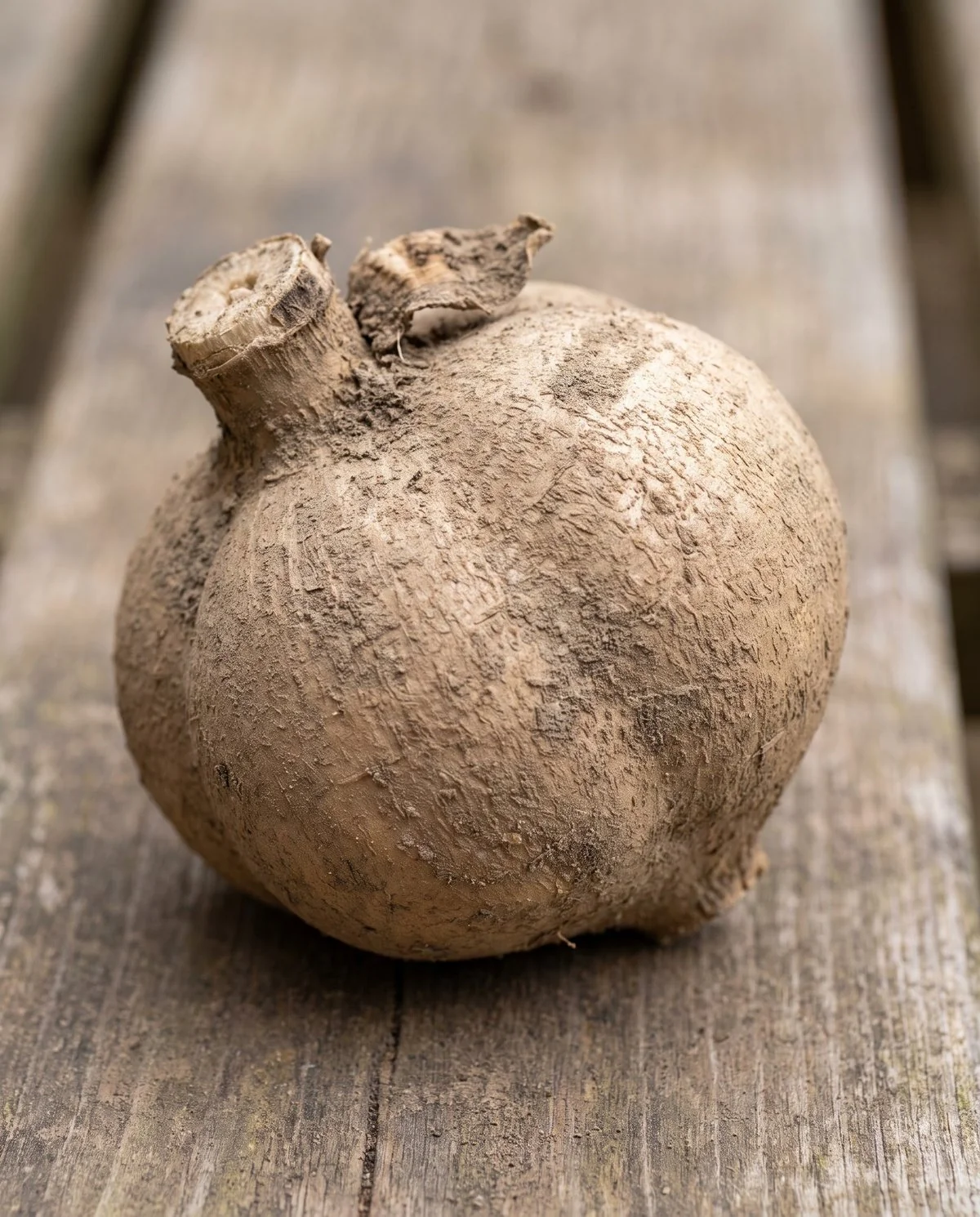
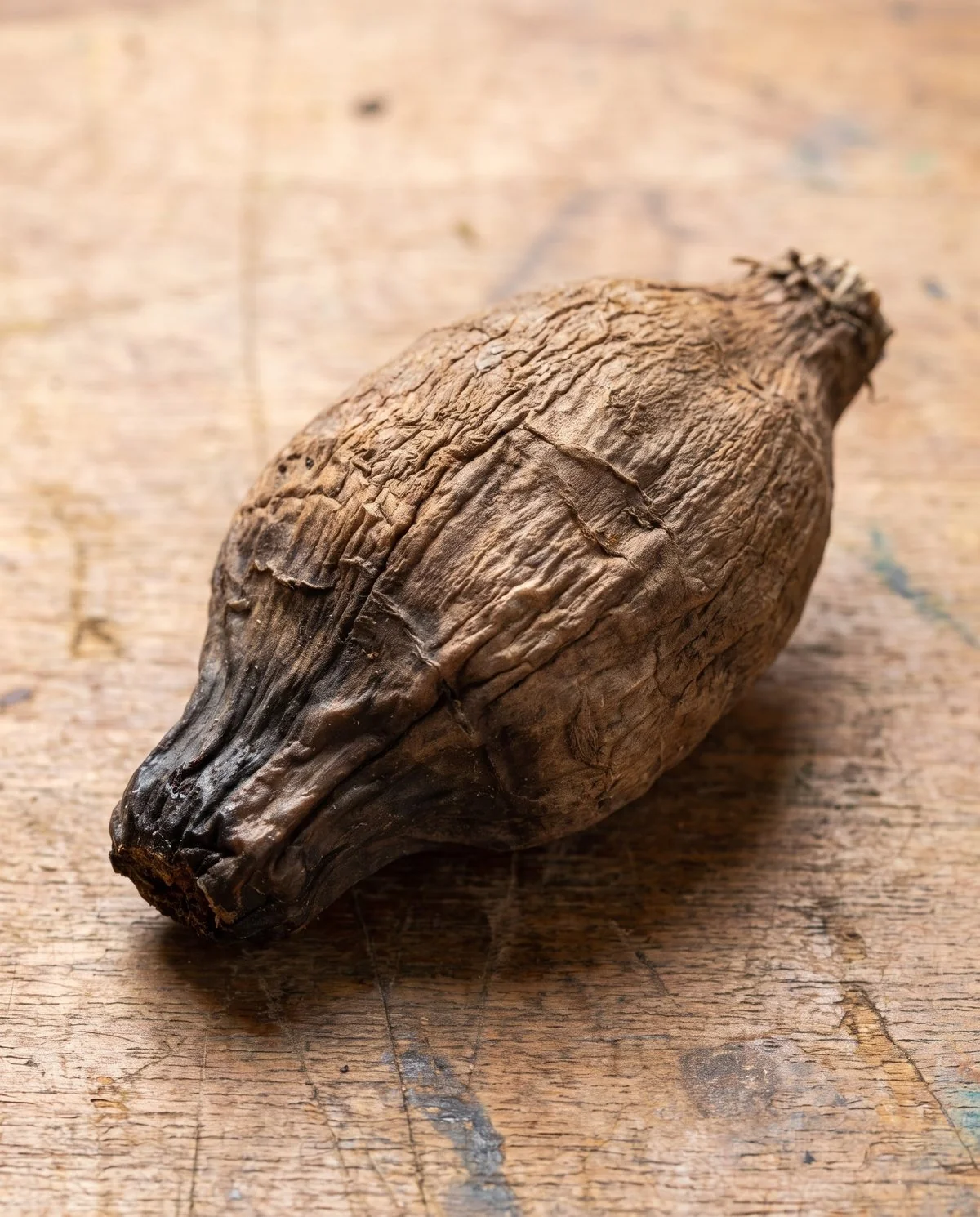
A sound tuber is firm under a gentle squeeze with its skin intact, and may look dusty or dry on the outside. Rot is soft and mushy, or wrinkled and squishy at once, which is how growers describe the same failed tuber in the same sentence. The American Dahlia Society's own tiebreaker settles it without judgement calls: a tuber that floats in water goes in the bin.
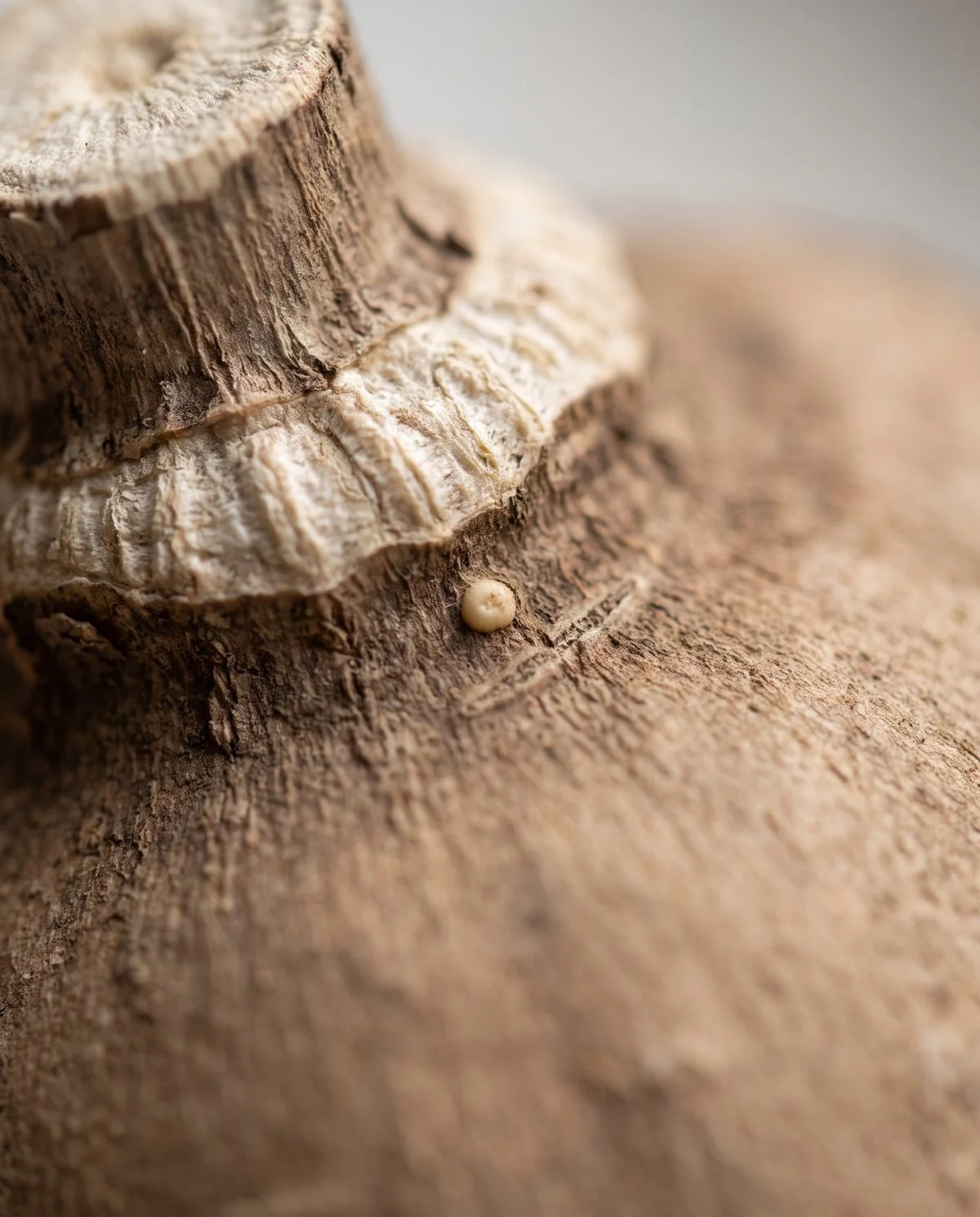
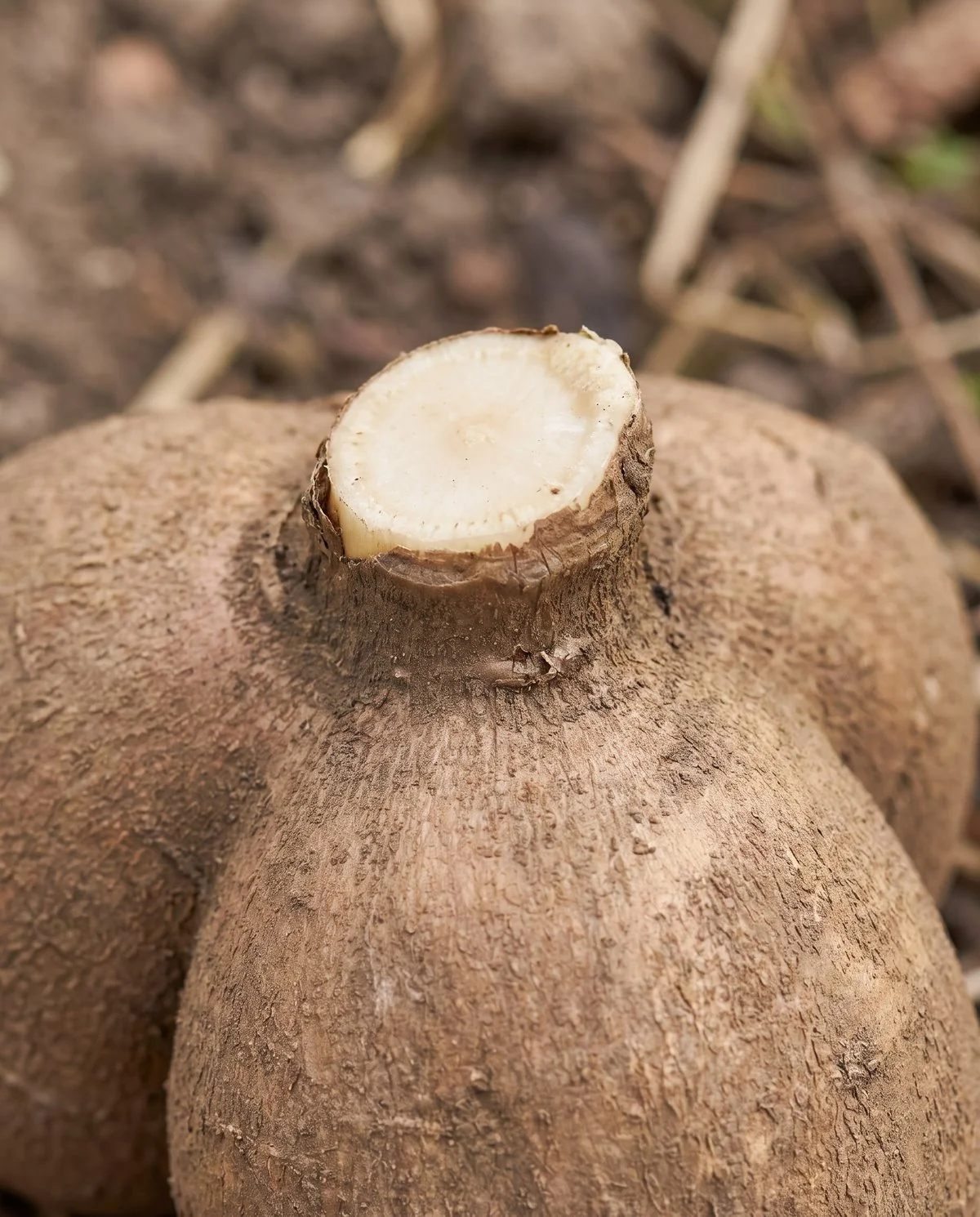
Eyes appear only on the crown, where the neck meets the old stem, and never on the body of the tuber. Look for a small raised bump like a pale pimple, or a short pale zip-like line on the skin. Wake the tuber first: two to four weeks somewhere warm and slightly damp. If no bump has appeared by then, the tuber is blind and will not sprout, however large and firm the body feels. This is the one pair in the research with no university source behind it, only grower explainers.
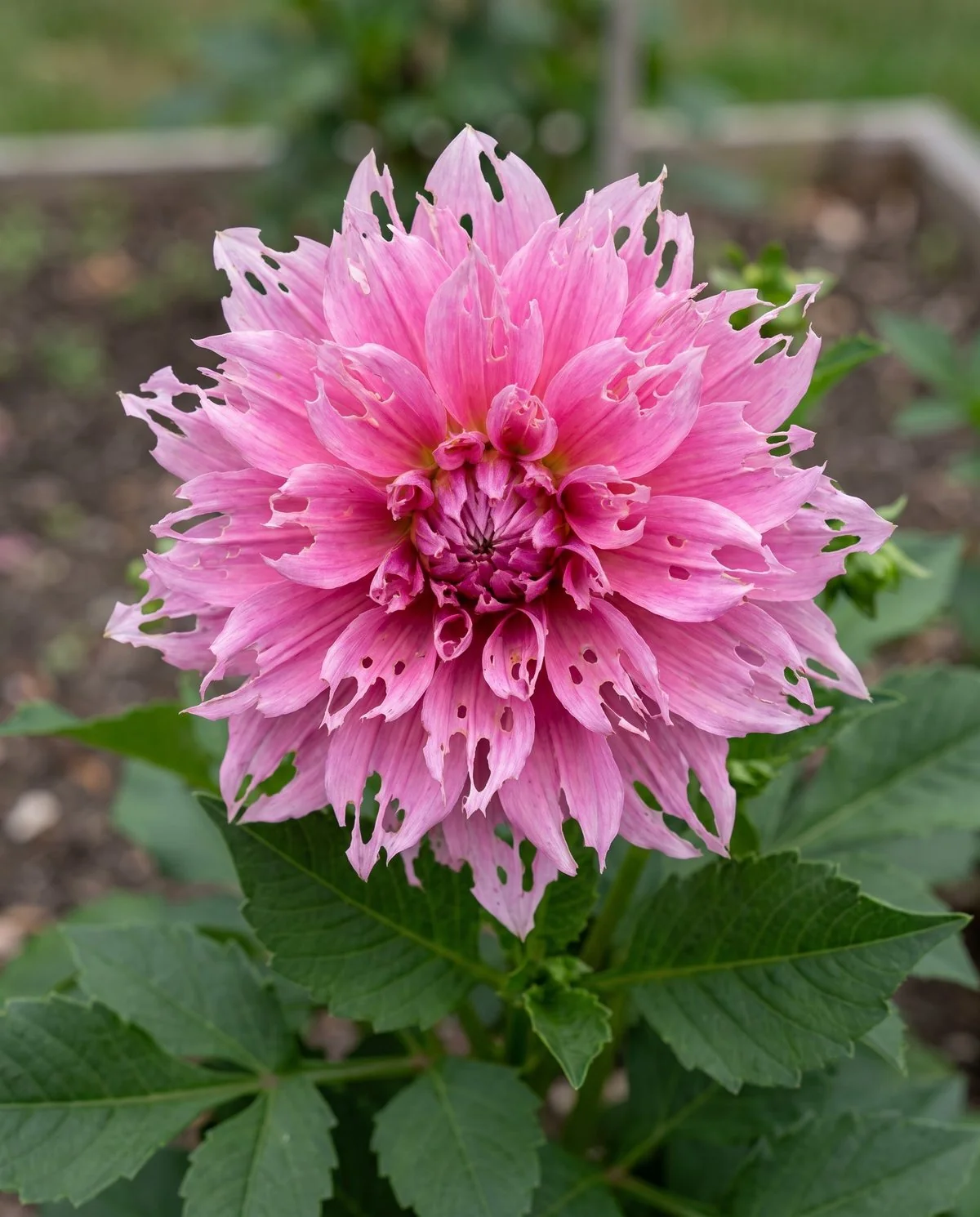
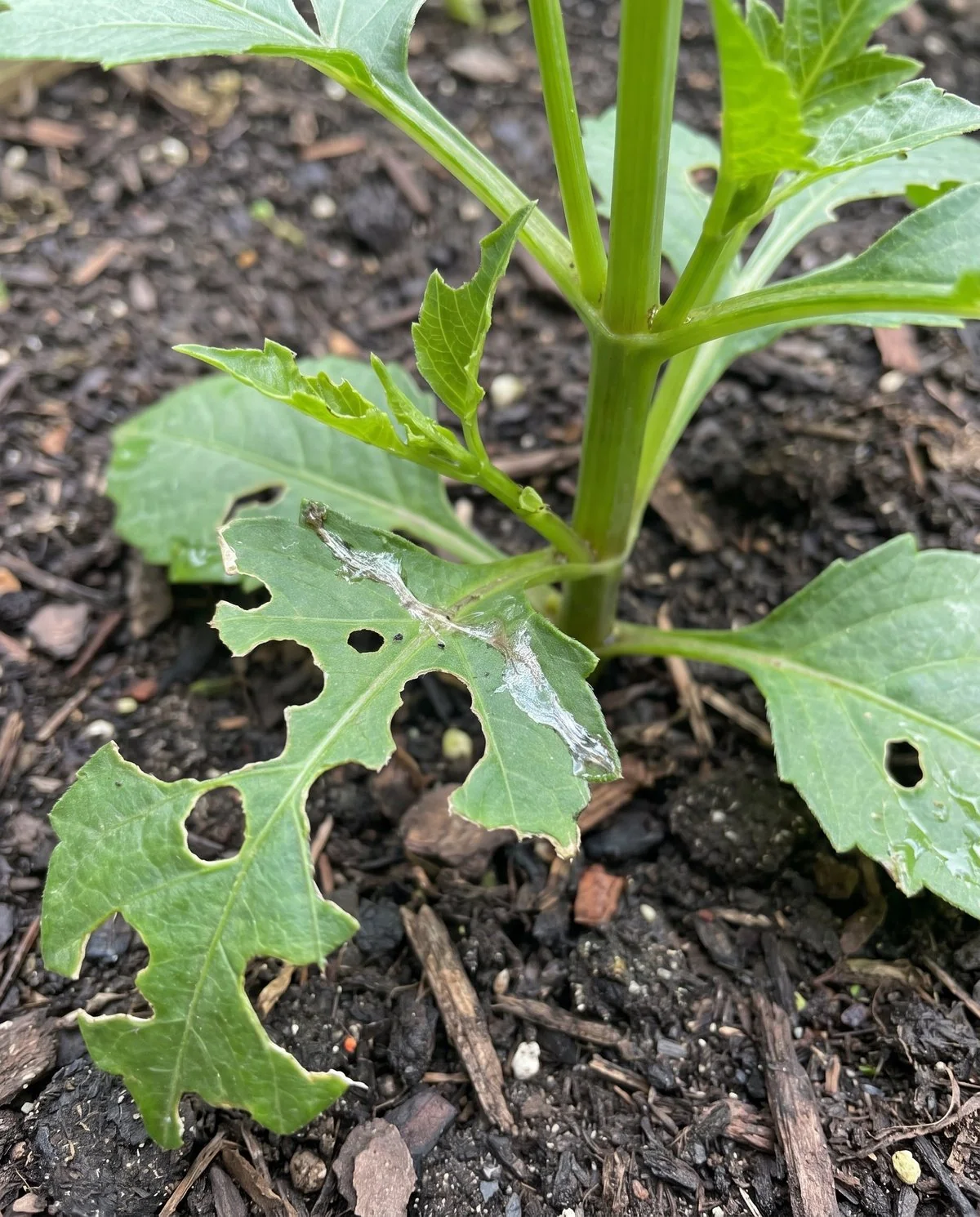
Earwig damage is shredded and lacy, concentrated on the petals of open blooms, with the leaves mostly untouched and no slime trail. Slug and snail damage is irregular and jagged, concentrated on new growth and the lower leaves near the ground, and dries to a diagnostic silvery trail. The rule holds without ambiguity: damage near the ground on a young plant is slugs, shredded petals on open flowers are earwigs, and a silver trail is slugs confirmed. The Pacific Northwest Pest Management Handbooks carry the earwig entry for dahlia specifically.
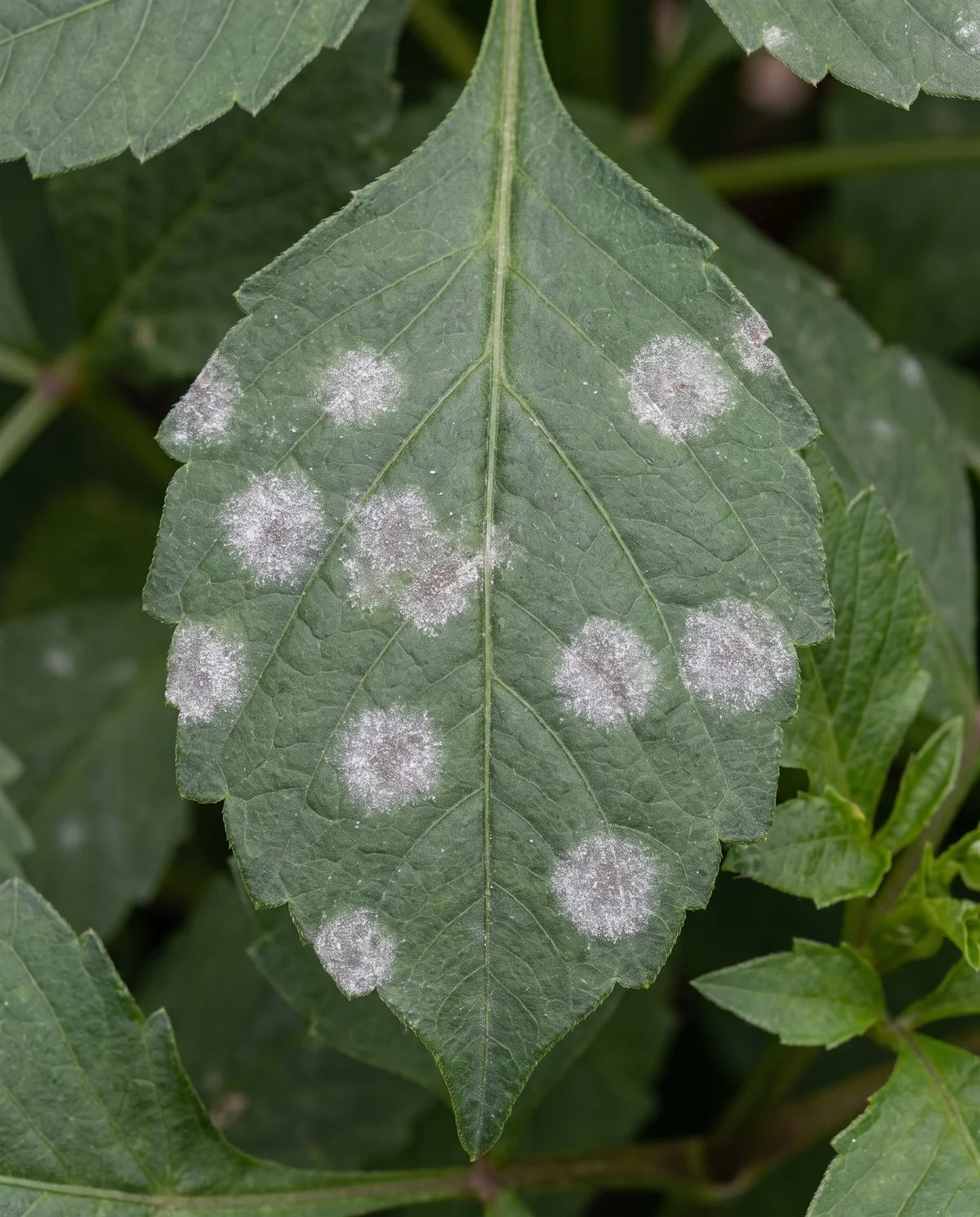
Mildew is a white to gray powdery coating in circular patches, starting on the upper surface of older leaves, and UMass Extension and the Pacific Northwest handbooks tie it to shade, humidity above 95 percent and temperatures of 68 to 86 F. Virus reads differently: light and dark green mosaic patches, vein clearing, color-breaking on the flowers, stunting and twisted new growth, with ring-spot patterns in the case of tomato spotted wilt. Mosaic or mildew? appears verbatim twice in the sample, so the confusion is real. Utah State Extension runs a dedicated dahlia mosaic virus research page, and the honest answer is that certainty comes from a lab test through a local extension office, often free or low cost, not from a photograph.
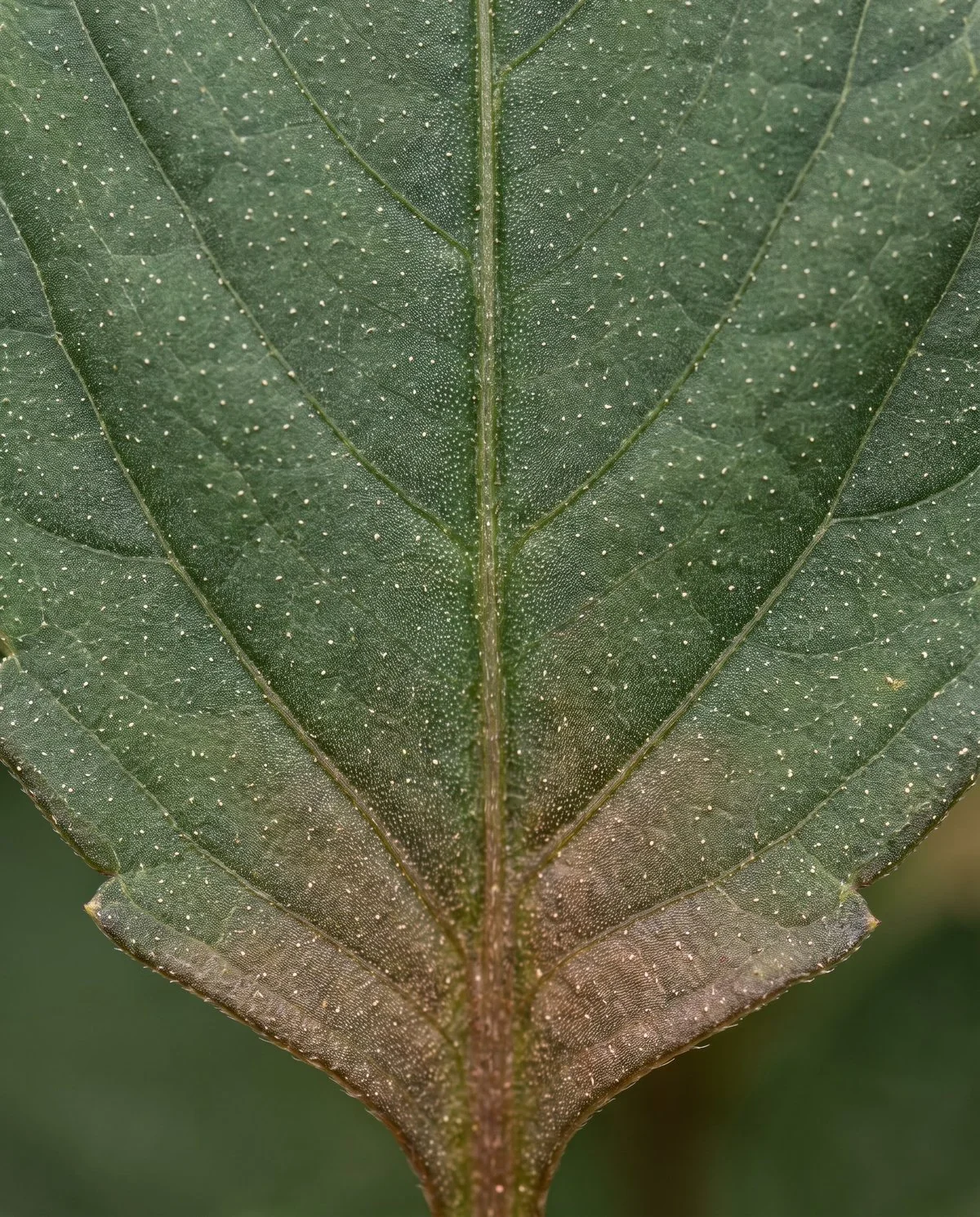
Mites begin as fine pale stippling and progress to bronze or reddish discoloration, with leaves turning leathery and curled and fine webbing on the undersides and between buds and stems in heavier infestations. Aging leaves fade without the stippling stage. The American Dahlia Society's own spider mite article gives the confirming test: tap a leaf over white paper and watch for moving specks.
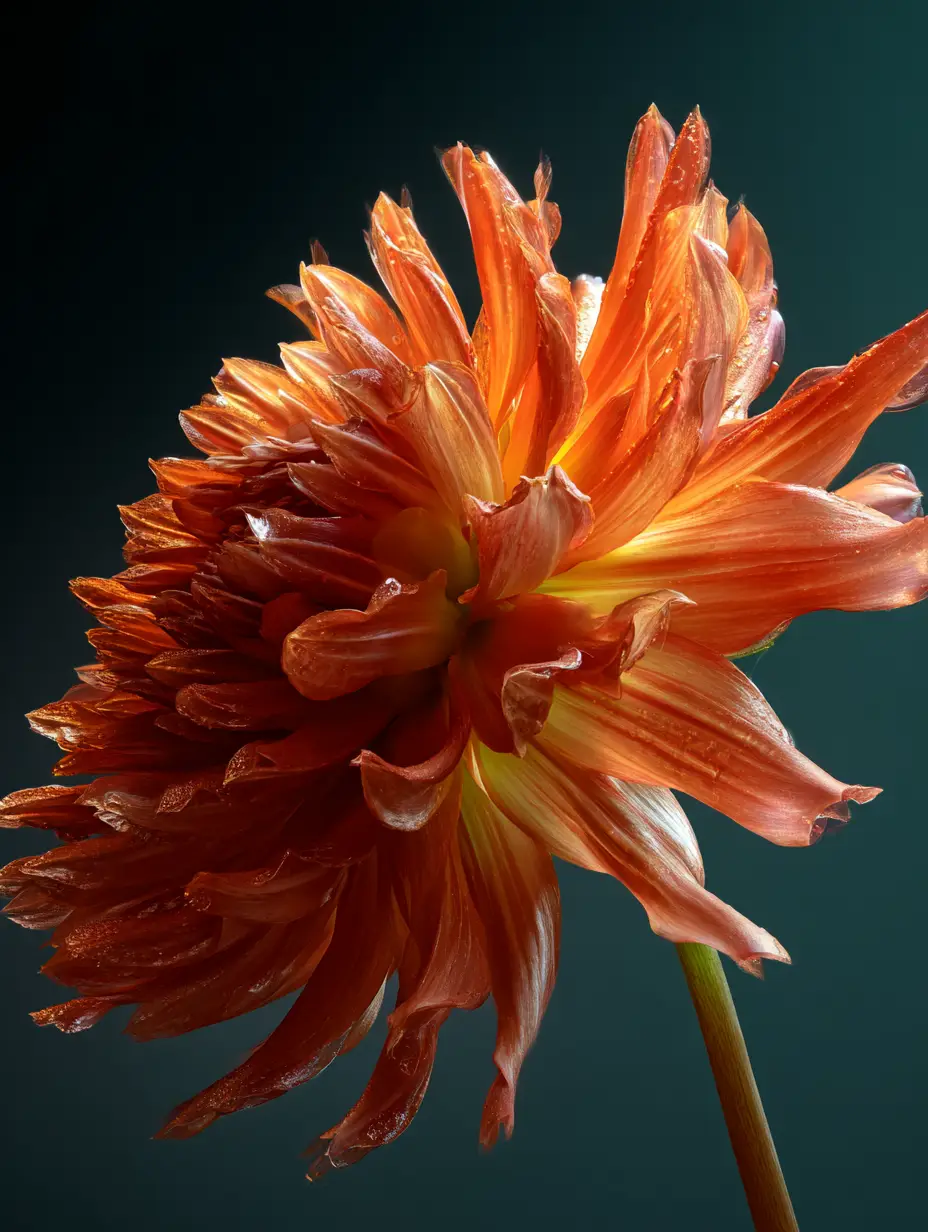
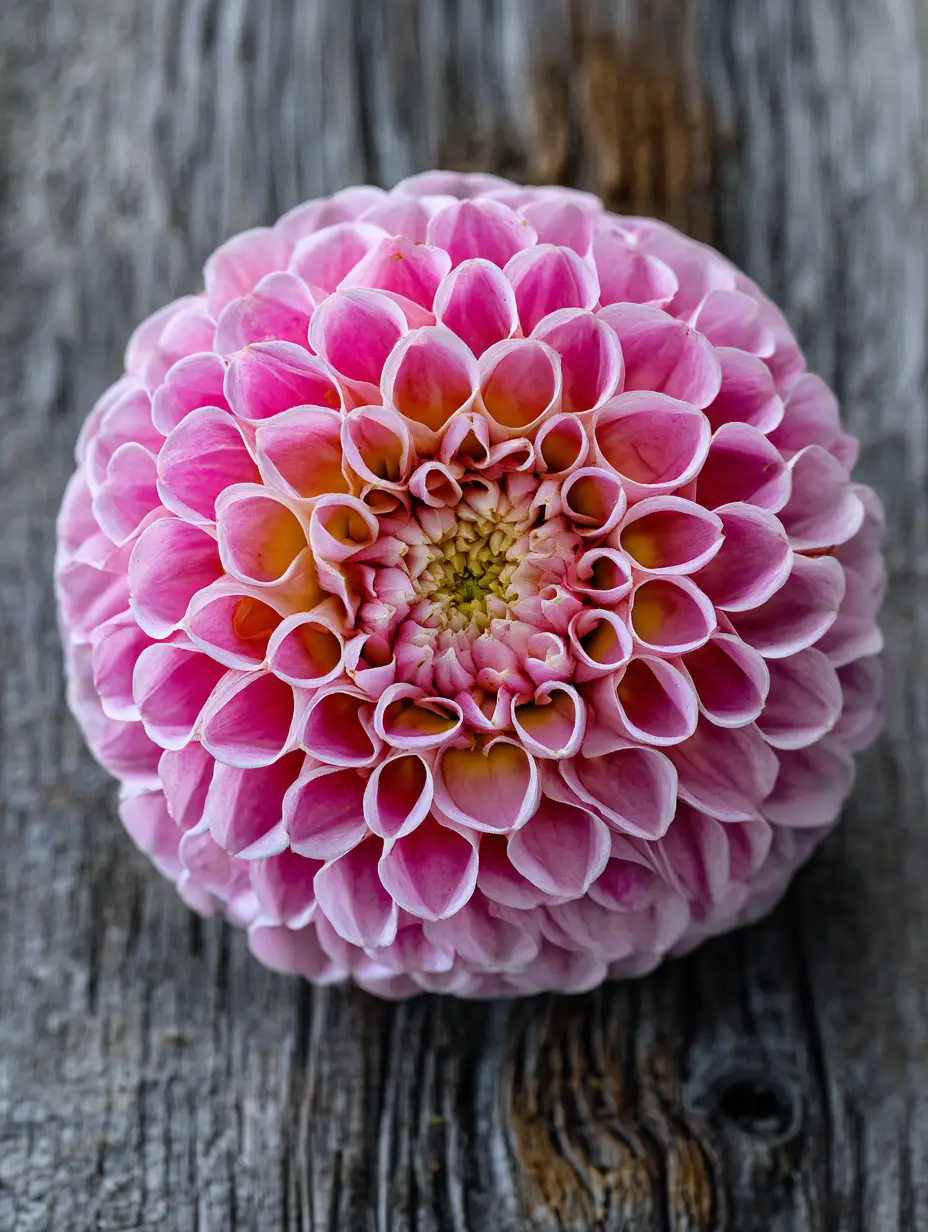
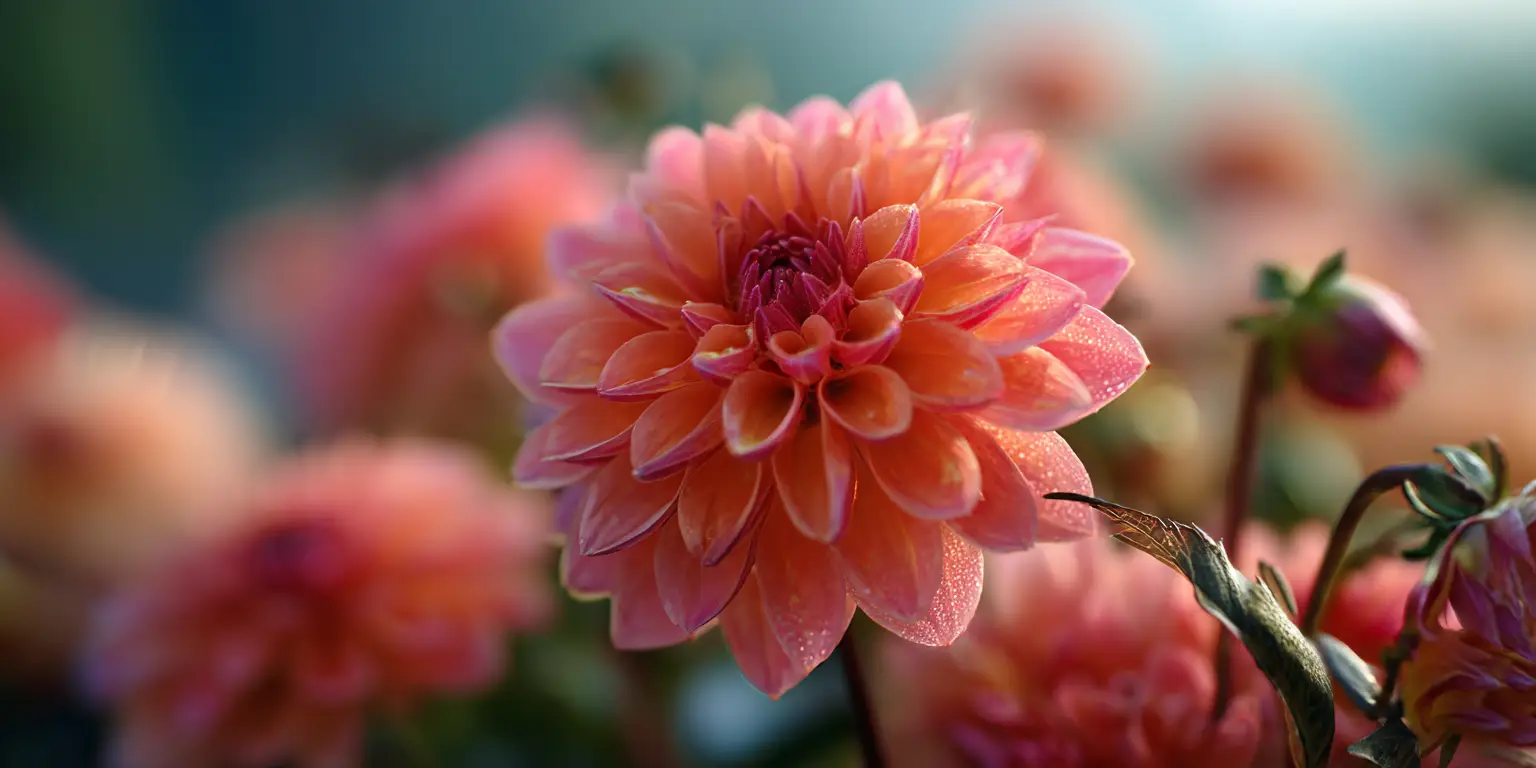
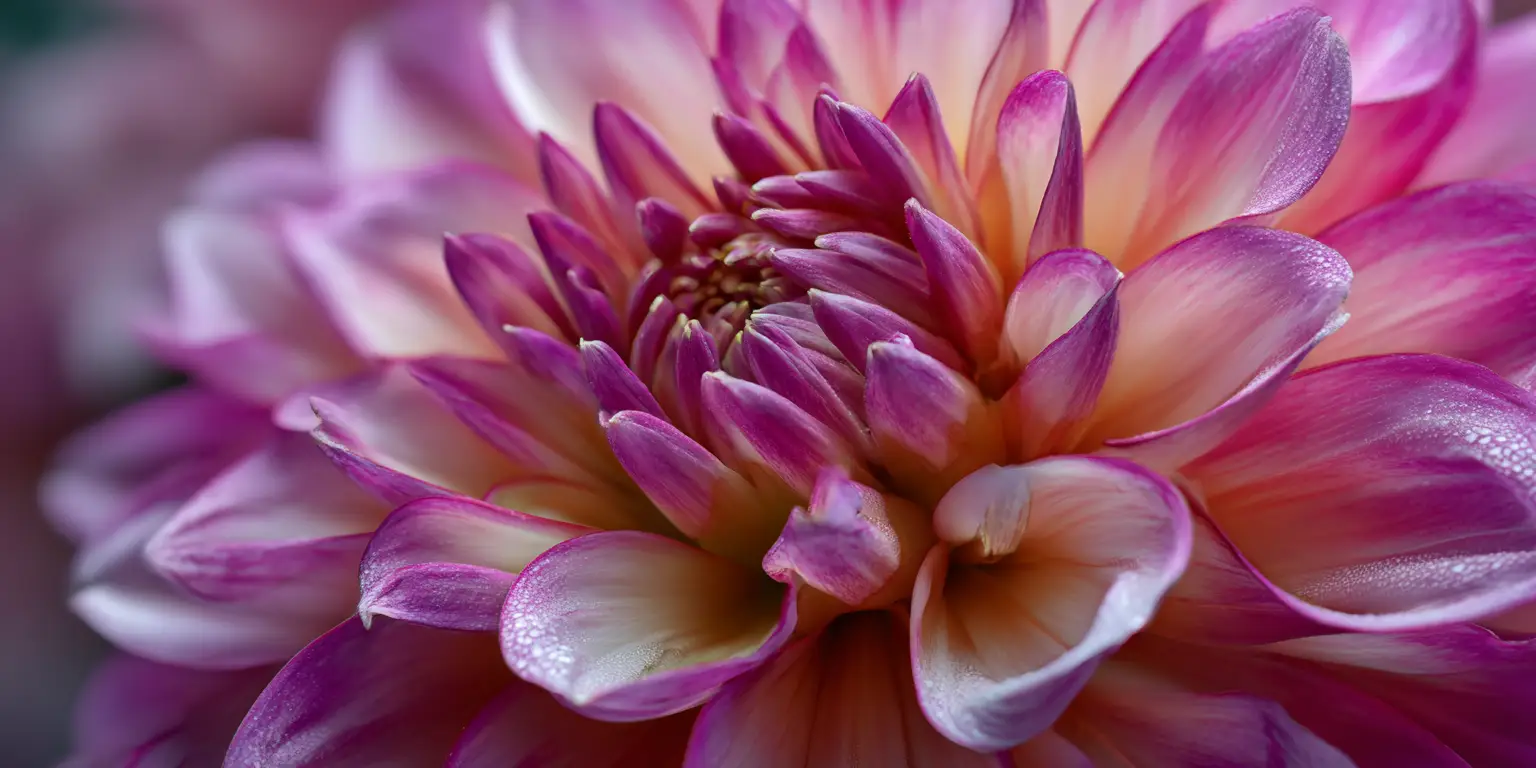
Flower photos
FAQ
Are dahlias annuals or perennials?
They are tender tuberous perennials. In zones 8 to 11 they overwinter in the ground and return each year, but in zone 7 and colder the tubers will not survive a hard freeze, so many gardeners either grow them as annuals or lift and store the tubers to replant in spring.
When should I plant dahlia tubers?
Plant in spring after the last frost, once the soil has warmed to about 60 °F (16 °C). Set each tuber 4 to 6 inches deep with the eye facing up, in full sun and well-drained soil, and do not water until green shoots appear, because a tuber in cold, wet soil rots.
How do I overwinter my dahlias and store the tubers?
After the first hard frost blackens the foliage, cut the stems back, carefully dig the clump, and cure it a few days out of direct sun. Optionally divide it, keeping at least one eye on each division, then pack the tubers in barely damp peat, vermiculite, or wood shavings and store them at 40 to 50 °F (4 to 10 °C). Check for rot through winter and replant in spring.
Why are my dahlias not blooming?
Usually too much nitrogen, which drives leaves instead of flowers, too little sun, or extreme heat stalling bud set. Switch to a low-nitrogen, higher-phosphorus feed, make sure the plant gets at least six hours of direct sun, and keep pinching and deadheading to push more blooms.
Are dahlias poisonous to pets?
The ASPCA lists them as toxic to cats, dogs, and horses, but the effect is mild. Eating the plant usually causes mild stomach upset, and the sap can irritate skin, though serious poisoning is not typical. Keep pets from chewing the plants and call a vet if an animal eats a lot and shows symptoms.
How long do cut dahlias last in a vase?
About 4 to 6 days, with ball and pompon types sometimes lasting a week and dinnerplate blooms fading faster. Cut them three-quarters to nearly fully open in the early morning, since they barely open further once cut, and keep the vase cool with fresh water.
Does this tuber have an eye?
Eyes appear only on the crown, where the old stem meets the tuber, and never on the body. Look for a small raised bump like a pale pimple or a short zip-like pale line. If nothing has appeared after two weeks somewhere warm and slightly damp, the tuber is blind and will not sprout, however firm the body feels.
How do I tell rot from a tuber that is simply dry?
Firm skin with no give when you squeeze gently is fine, and a dusty dry surface is normal. Soft, mushy, or wrinkled and squishy at the same time is rot, and it goes out. The American Dahlia Society's tiebreaker: a rotten tuber floats.
Is this gall or normal new growth?
Separate sprouts from distinct eyes are normal. A dense cluster of shoots fused at the base is the leafy gall warning sign. UC ANR states that leafy gall can take up to two years after infection to appear and that it resembles normal spring growth, which is exactly why experienced growers disagree on the same photo. When unsure, isolate the tuber rather than guess.
When exactly do I dig the tubers?
Wait for the first frost to blacken the foliage, then wait another 10 to 14 days before digging, per Cornell Cooperative Extension and UMN Extension. That interval lets the remaining stem energy finish moving into the tubers and lets the skin toughen for storage.
What temperature and what medium for storage?
40 to 45 F is the American Dahlia Society's own target, and it warns against sustained warmth above 50 F. It packs in barely damp coarse vermiculite and puts peat moss on its avoid list, citing shriveling when dry and rot when moist. Check the crate monthly through winter.
Where do I cut when I divide a clump?
Every division has to carry a piece of crown with at least one eye on it, because the eyes sit on the crown and never on the tuber body. This is the single highest-engagement question in the whole forum sample, at 159 upvotes and 42 comments, and it comes from people who kept the clump alive and then got stuck at the knife.
Is this mites or a virus?
Mites start as fine pale stippling and move to bronzing, with webbing on the leaf undersides, and a tap over white paper shows moving specks. Virus shows patchy mosaic, vein clearing, color-breaking on the flowers and distorted new growth. When the two are genuinely hard to separate, a lab test through a local extension office, often free or low cost, is the only certain answer, and no photograph substitutes for it.
Interesting tips
Pinch out the growing tip when a young plant reaches about 12 to 16 inches for a bushier plant with more flowering stems, and drive stakes for tall varieties at planting time so you never spear a tuber later. Deadhead spent blooms down to a pair of leaves to keep new buds coming, and feed with a low-nitrogen formula such as 5-10-10 or 10-20-20 rather than a high-nitrogen fertilizer that grows leaves at the expense of flowers. Water deeply but infrequently in the morning and keep the foliage dry to hold off late-season mildew. Cut flowers in the cool of early morning and condition them in cool water in a dark spot before arranging. When lifting tubers in fall, label them so you know what you are replanting, store them in barely damp peat or vermiculite, and inspect them in spring, discarding any that have gone mushy or bone-dry. In a cutting garden dahlias pair naturally with zinnias and cosmos, which share their sun, soil, and long bloom season.
Related Guides & Flowers

Chrysanthemum
Full late-season flower heads with many petals and a similar color range to dahlias. Useful for extending the display into autumn and for mixed borders.
Zinnias
Bright annual flowers with bold daisy and semi-double forms that echo smaller dahlia shapes. Popular for cutting gardens and summer beds.

Gerbera Daisy
Large modern-looking flower heads in vivid colors that pair well with dahlias in bouquets and containers.
Ranunculus
Layered, rose-like blooms from tuberous roots that offer a similar lush, romantic look in spring and early summer arrangements.
Anemone
Elegant cup-shaped flowers with dark centers that mix well with dahlias in florist-style bouquets and cool-season beds.
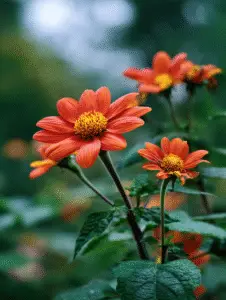
Mexican Sunflower
Tall, branching plants with bright orange daisy-like blooms that give the same bold, high-impact color as many dahlia varieties in late summer.
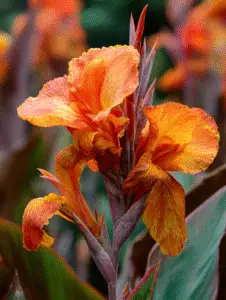
Canna Lily
Tuberous plants with tropical foliage and large flowers that create a dramatic backdrop for dahlias in sunny borders.
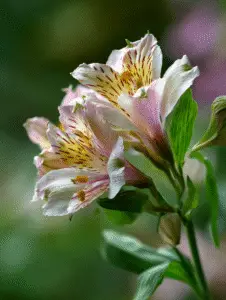
Alstroemeria
Long-lasting cut flowers with speckled petals that combine well with dahlias in vases and provide repeat color through the warm season.
References
Enjoying our flower guides? Add YourFlowersGuide as a preferred source on Google. It helps more readers find us.
Add to Preferred Sources