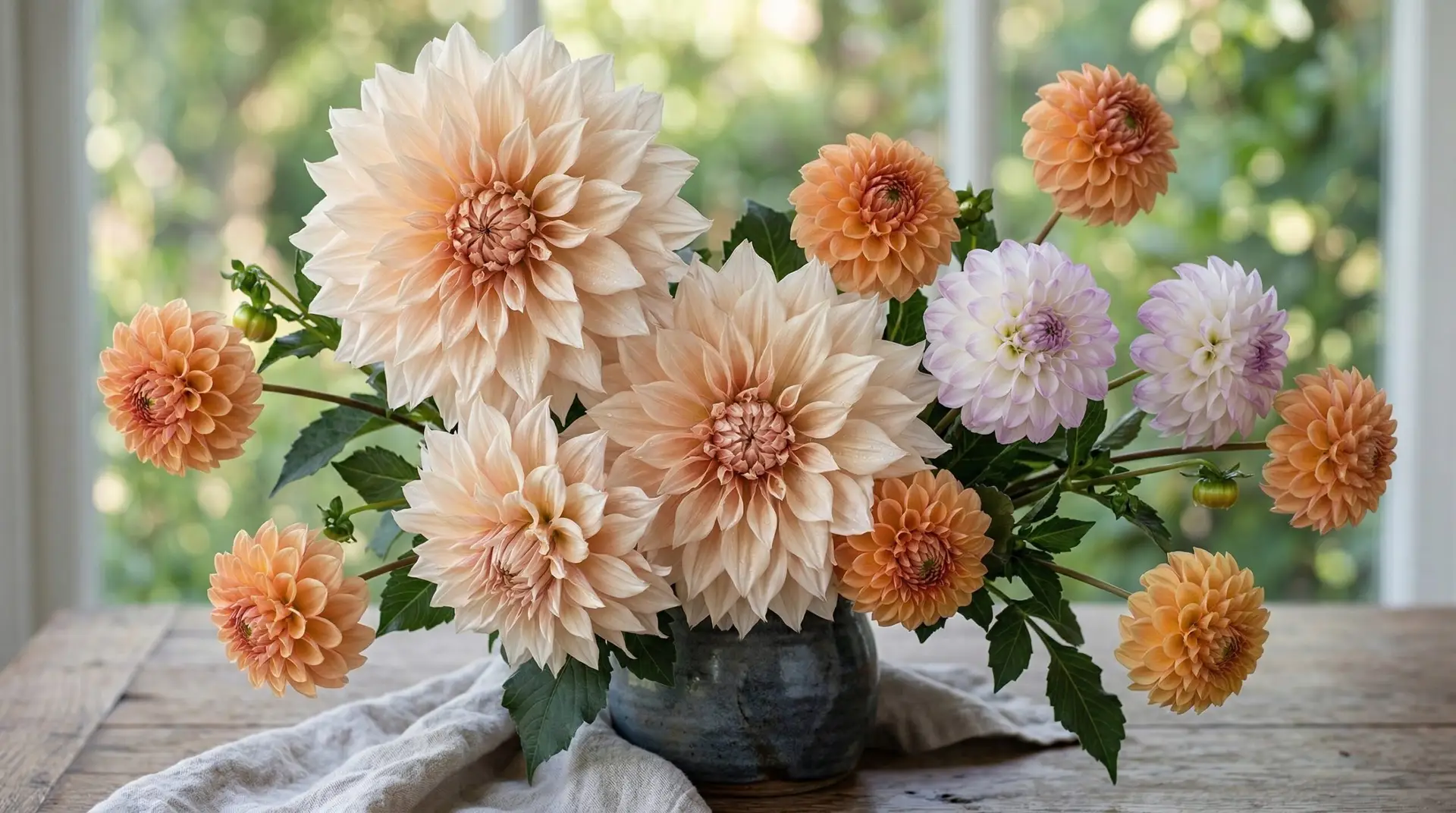
A cutting garden demands different traits than a landscape border or a show bench. Many gardeners fill their carts with massive exhibition dahlias, only to find they produce three flowers all season on stems too thick to fit in a standard vase. When selecting dahlias specifically for floral design and constant harvesting, productivity and vase life matter far more than sheer diameter. A good cut flower variety must push out long, straight stems, resist insect damage, and hold its petals for at least five days in water. By filtering out the fragile cactus forms and the low-yielding giants, we are left with a specific group of workhorse varieties that will reliably fill buckets from late summer through the first frost. These selected varieties prioritize performance over novelty, ensuring your garden space yields actual usable material.
To build a truly functional dahlia cutting garden, form is just as important as color. The tightly rolled petals of ball and pompon dahlias make them nearly indestructible in arrangements, while the looser decorative types provide necessary volume and movement. Gardeners often plant tall cutting zinnias for early summer volume, but dahlias take over the heavy lifting in August and September. Choosing the right mix of forms ensures you have both the focal flowers and the supporting cast needed for balanced arrangements. Rather than chasing every new introduction, a reliable cutting garden relies on proven varieties that florists and experienced growers return to year after year. The following selections represent the most reliable, productive, and useful dahlias for consistent harvesting.
Contents 4 sections
The reliable ball and pompon forms
Ball and pompon dahlias are the absolute foundation of any serious cutting garden because their geometry makes them incredibly durable. Their petals cup inward, creating a tight sphere that sheds water in the garden and resists bruising during harvest and transport. Among these, Cornel Bronze is universally recognized as a superior producer. This ball dahlia yields dozens of perfectly round, copper-orange blooms on stiff, straight stems that require very little staking or coaxing. The color bridges the gap between late summer brights and autumn earth tones, making it exceptionally useful in floral design. Many guides recommend the popular Linda’s Baby for a peach ball form, but in practice, it often produces weaker stems late in the season compared to the unyielding architecture of Cornel Bronze.
For a slightly smaller flower with the same structural integrity, Wizard of Oz is a pompon variety that belongs in every cutting patch. It produces tightly quilled, two-inch spheres of soft, dusty pink that mix easily with almost any other color palette. Pompon dahlias are necessary for floral arrangements because they provide textural contrast without overwhelming the primary focal flowers. Wizard of Oz is particularly useful because it begins blooming earlier than many larger varieties and responds to heavy cutting by pushing out even more stems. While you might use airy cosmos stems to give an arrangement a wild, untamed feeling, Wizard of Oz provides the visual weight and structure to anchor the design. The stems are wiry but strong, making them easy to thread through the dense foliage of a mixed bouquet.
Decorative varieties that hold their shape
Informal decorative dahlias offer a looser, more relaxed petal structure than the rigid ball forms, providing volume and romance to a vase. The variety Labyrinth is a standout in this category, offering large, twisting petals in a complex blend of peach, raspberry, and coral. Unlike many large decorative types that face downward on their stems, Labyrinth holds its blooms at a perfect upward angle, which is an important trait for floral design. The stems are robust enough to support the heavy, five-inch flowers without snapping under their own weight. The color shifting on Labyrinth is highly responsive to temperature and sunlight, meaning a single plant will produce a nuanced gradient of tones throughout the late summer. It offers the visual impact of an exhibition dahlia but maintains the high bloom count required for a practical cutting garden.
Many growers are tempted by the spiky, dramatic appearance of cactus and semi-cactus dahlias when planning their rows. I intentionally exclude most cactus forms from this curated list because their rolled, pointed petals are notoriously fragile and prone to shattering shortly after being cut. If you want a textural, pointed look in a vase, you are often better off growing a branching sunflower variety with a shaggy petal structure. For dahlias, the informal decorative class provides a much better balance of interesting texture and actual vase life. Labyrinth satisfies the desire for a complex, unruly flower shape while still surviving the journey from the garden to the kitchen table. Focusing your garden space on these durable decorative types ensures your hard work translates into actual usable flowers rather than compost pile additions.
The dinnerplate exception
Dinnerplate dahlias are generally a poor choice for a dedicated cutting garden because they produce very few flowers, require massive support systems, and often wilt within hours of being cut. However, Cafe au Lait is the one mandatory exception to this rule. This variety produces massive, eight-inch blooms in a highly sought-after shade of creamy blush that sometimes leans toward warm beige or pale mocha. It has maintained its status as a highly requested wedding flower for a decade because no other bloom replicates its specific color and soft, ruffled form. Despite its large size, Cafe au Lait is surprisingly productive if you pinch the central stem early in the season to encourage branching. The stems are thick and woody, capable of holding the heavy blooms upright in a large, heavy vase.
Growing Cafe au Lait does require more attention than the smaller ball varieties, but the reward justifies the garden space. The sheer size of the blooms means you only need one or two stems to completely fill a vase or anchor a large centerpiece. To get the longest vase life from this giant, you must cut the stems early in the morning before the sun hits the patch, and place them immediately into deep, cool water. While other dinnerplates like Emory Paul or Kelvin Floodlight are impressive in the garden, they are simply too heavy and short-lived for practical cut flower use. Cafe au Lait strikes the rare balance between massive visual impact and reasonable performance as a cut stem. It remains the only giant dahlia that truly earns its keep in a high-production cutting patch.
The definitive choice for consistent blooms
If a gardener has space for only one dahlia variety, the choice requires balancing reliability, stem strength, and sheer volume of flowers. While Cafe au Lait provides the most dramatic focal points and Labyrinth offers complex color, neither can match the steady, relentless production of a well-grown ball dahlia. My top recommendation for any cutting garden is Cornel Bronze. It is a true workhorse plant that shrugs off minor pest pressure, stands up to late summer rainstorms, and produces perfect, usable stems from August until the first hard frost. The flowers last up to a full week in a vase, and their medium size makes them incredibly easy to arrange. Planting a row of Cornel Bronze guarantees you will have armloads of high-quality flowers to cut, arrange, and share throughout the entire late summer season.
More About Dahlia
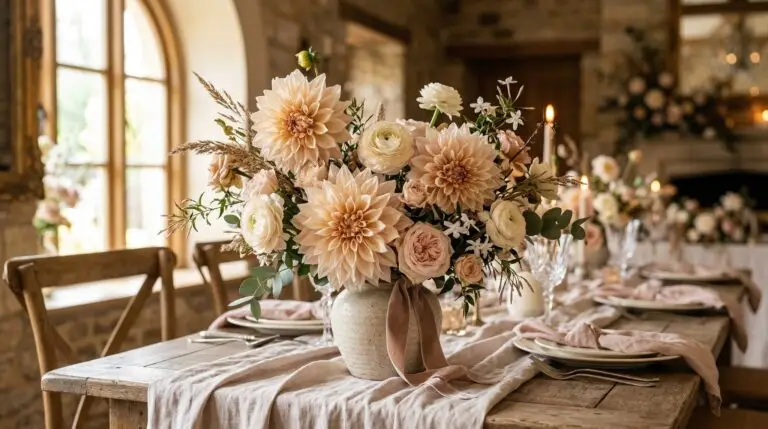
Dahlia wedding flowers and why brides are choosing dahlias over traditional roses

Dahlia tuber storage over winter so your favorite varieties survive until spring
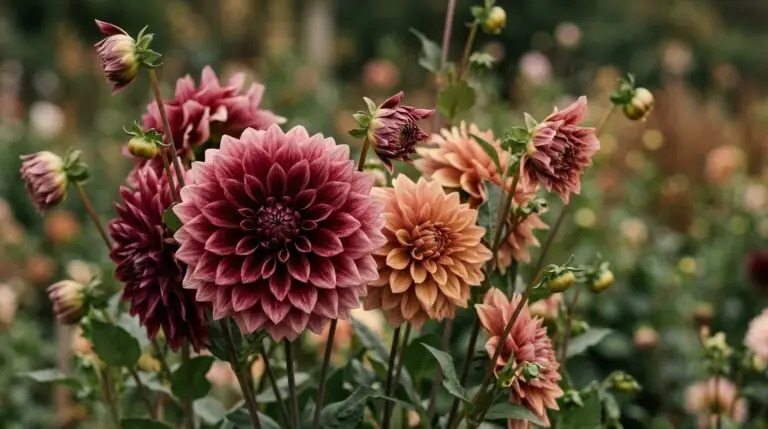
Dahlia flower meaning and the Victorian language of flowers message behind each color
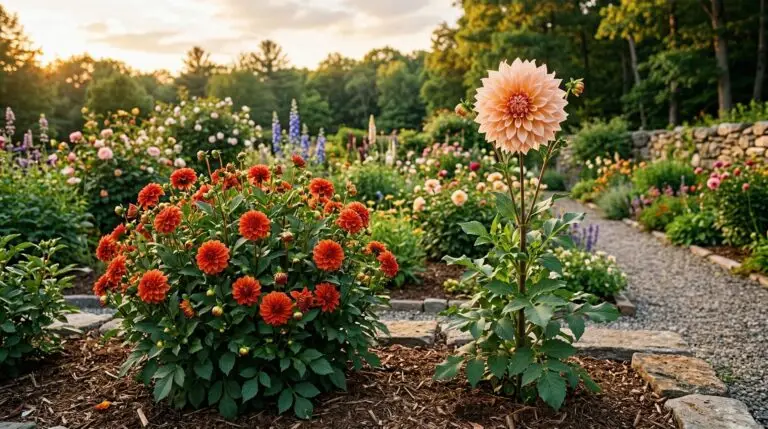
How to pinch and disbud dahlias for more flowers or bigger individual blooms
Dark-leaved dahlias that bring drama with stunning foliage and jewel-toned flowers
How to divide dahlia tubers in spring for more plants from your collection
How to grow dinner plate dahlias for enormous blooms that stop people in their tracks
Growing dahlias in containers for a patio flower show from midsummer to frost
Dahlia pests and diseases including earwigs slugs and powdery mildew solutions
Enjoying our flower guides? Add YourFlowersGuide as a preferred source on Google. It helps more readers find us.
Add to Preferred Sources