

Sunflower bloom time across the US
Interactive map
 See the interactive map
Drag the date and the bloom moves north across the country. Every point has its own window, and the map says where it has no records rather than guessing. Free, with nothing to sign up for. Open the sunflower map.
City by city
Typical window, earliest first. Cultivars of the same flower can open days or weeks apart.
Taxonomy and origin
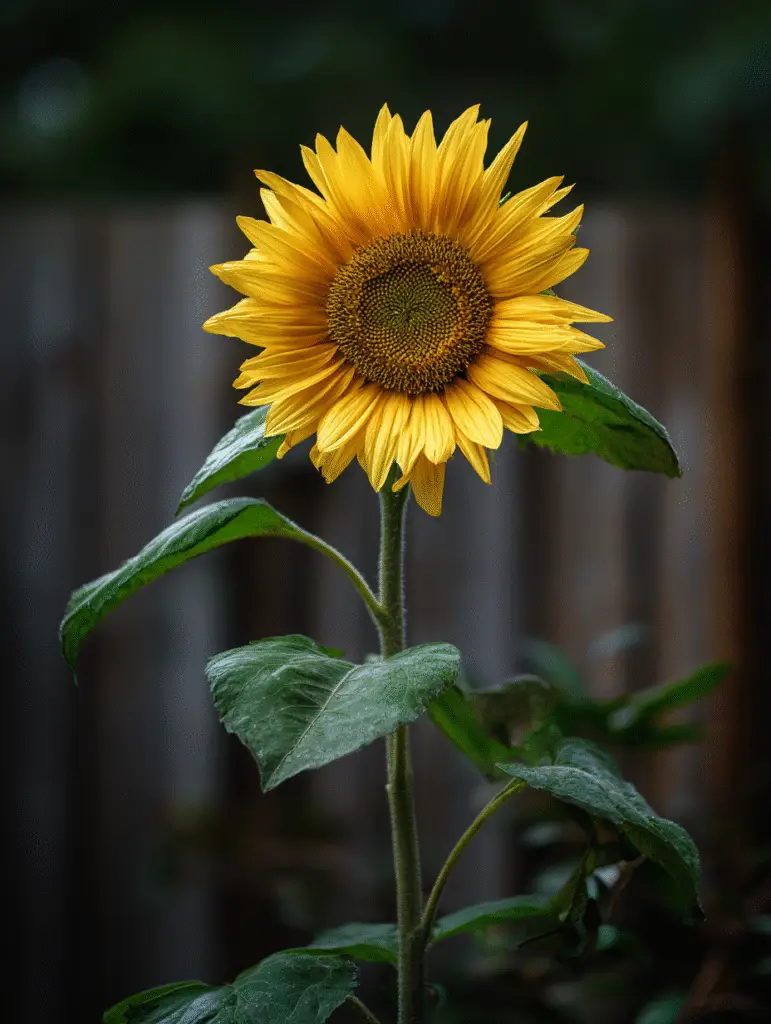
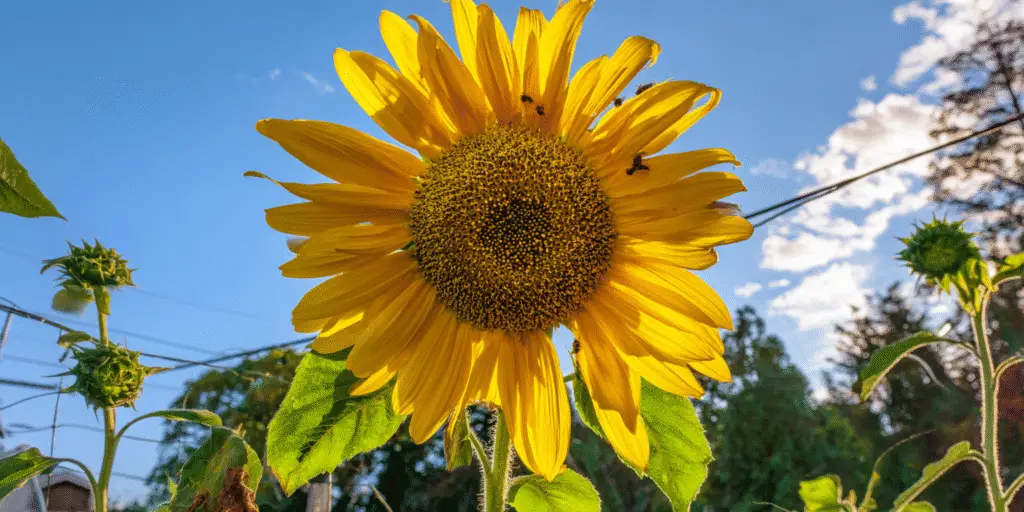
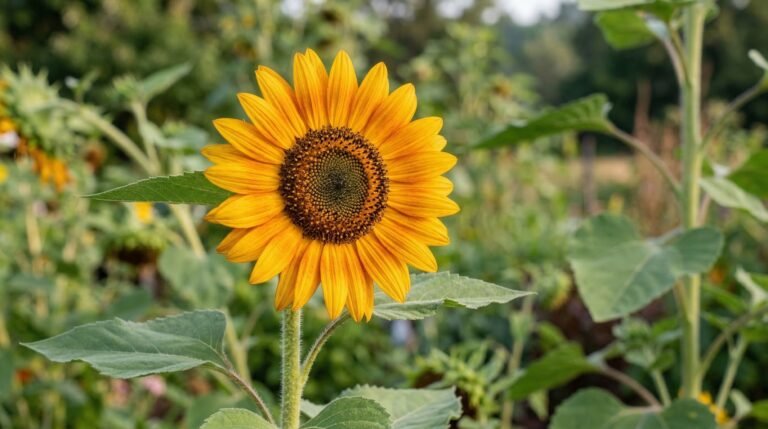
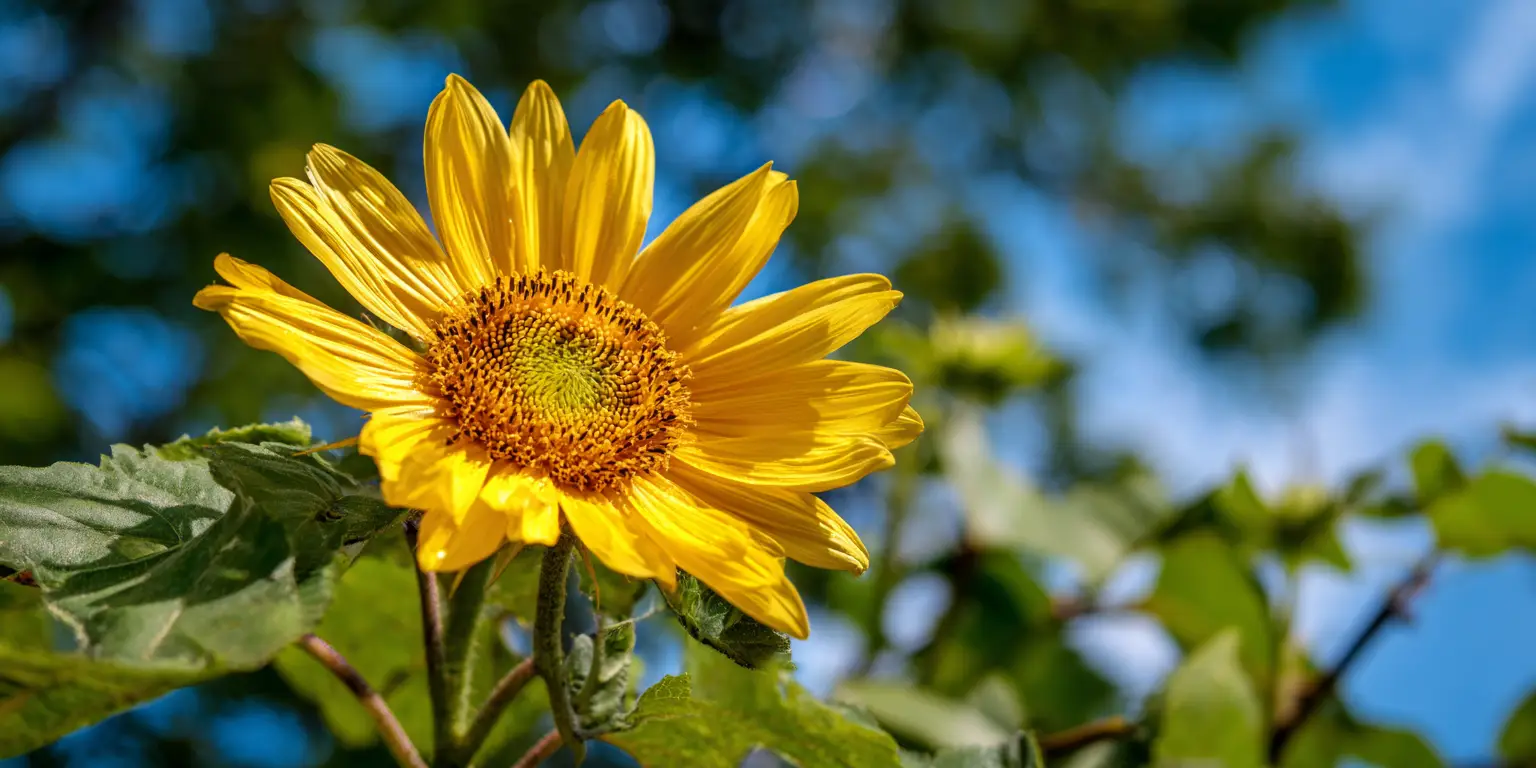
The name Helianthus comes from the Greek helios (sun) and anthos (flower), and the plant earns it twice over: the bloom looks like a sun, and the young plant tracks the sun across the sky. Sunflowers were domesticated in North America thousands of years ago by Indigenous peoples, who grew them for seed, oil, and dye long before Spanish explorers carried them to Europe in the 16th century, where they spread as both ornamentals and an oilseed crop. What reads as one flower is actually a composite head: hundreds of tiny fertile disc florets packed into the center, ringed by the showy ray florets most people call petals, with the central florets often arranged in interlocking spirals.
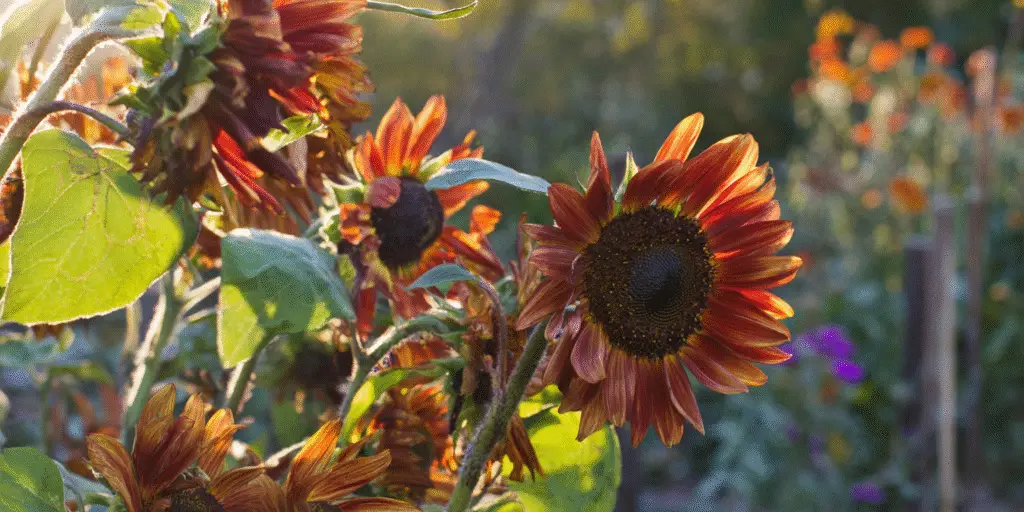
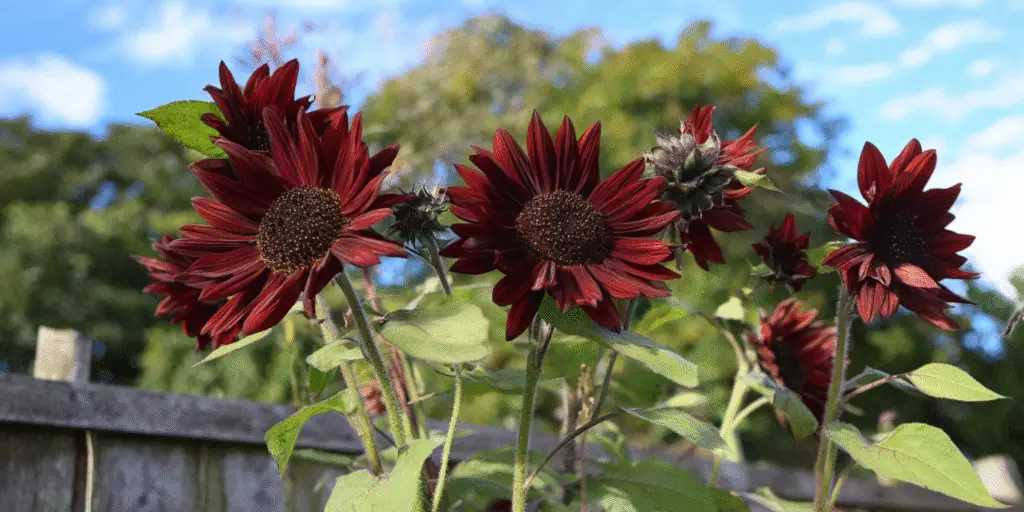
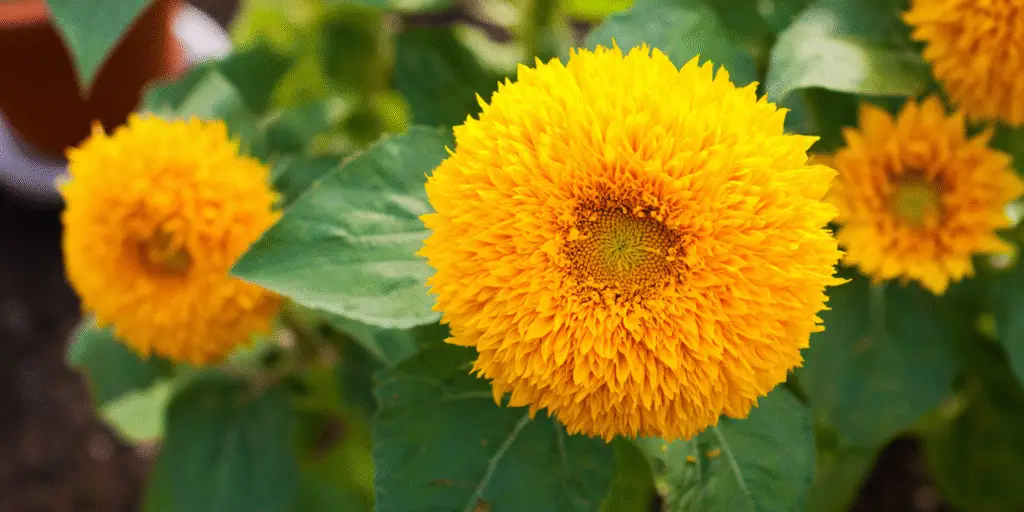
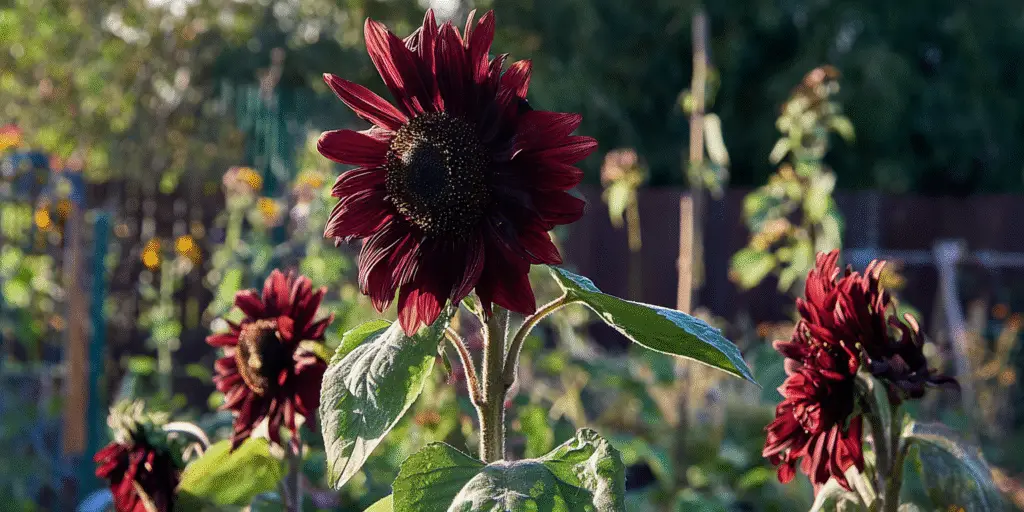
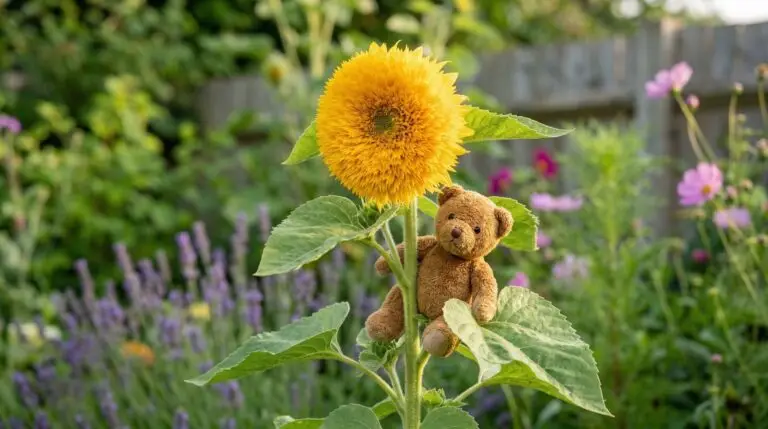
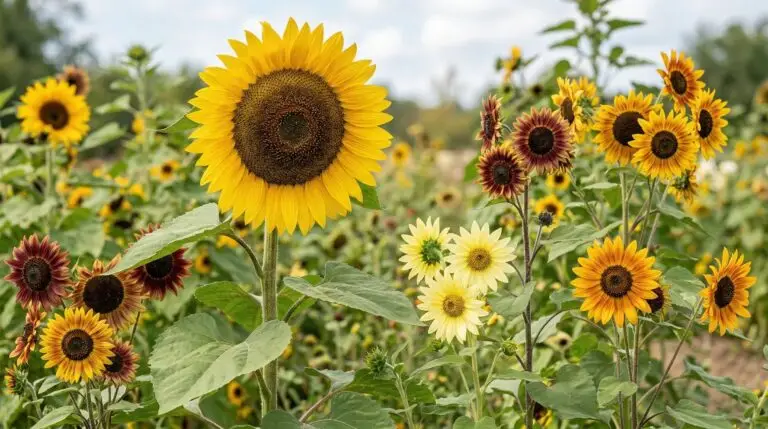
For a grower, the useful split is by type, because Helianthus annuus covers an enormous size and habit range. Giant cultivars such as Mammoth Russian (also sold as Russian Giant) push 10 to 15 feet on a single thick stalk and carry one huge seed-filled head, the classic plant for height and a seed harvest. Dwarf types such as Teddy Bear stay around 1 to 3 feet, branch low, and thrive in containers or at the front of a bed. Branching or multi-head cultivars throw many smaller blooms over a long window and are the workhorses for cutting, especially the pollenless cultivars bred to shed no pollen so they do not drop yellow dust on a table. Colored selections in red, bronze, and rust broaden the palette beyond the familiar yellow. Settling on the type first, before the seed packet, decides most of what follows about spacing, staking, and use.
| Type | Typical height | Best for |
|---|---|---|
| Giant (Mammoth, Russian) | 10 to 15 ft | Maximum height, big seed harvest, single head |
| Dwarf (Teddy Bear) | 1 to 3 ft | Pots, containers, front of bed, kids |
| Branching / multi-head | 4 to 8 ft | Long bloom season, cut flowers |
| Pollenless (cutting) | 4 to 7 ft | Clean indoor arrangements, no pollen drop |
The four groups, and which two are actually bred for the vase
Iowa State states the split plainly: in the last decade three new garden types joined the classic tall single-head sunflower, a branching type, a dwarf type and a pollenless cut-flower type. UGA names cultivars and heights inside those groups, and NC State runs the ASCFG National Cut Flower Trial Program, which is where the measured numbers for the cutting types come from. The badge below follows what each group was bred to do rather than how it looks.
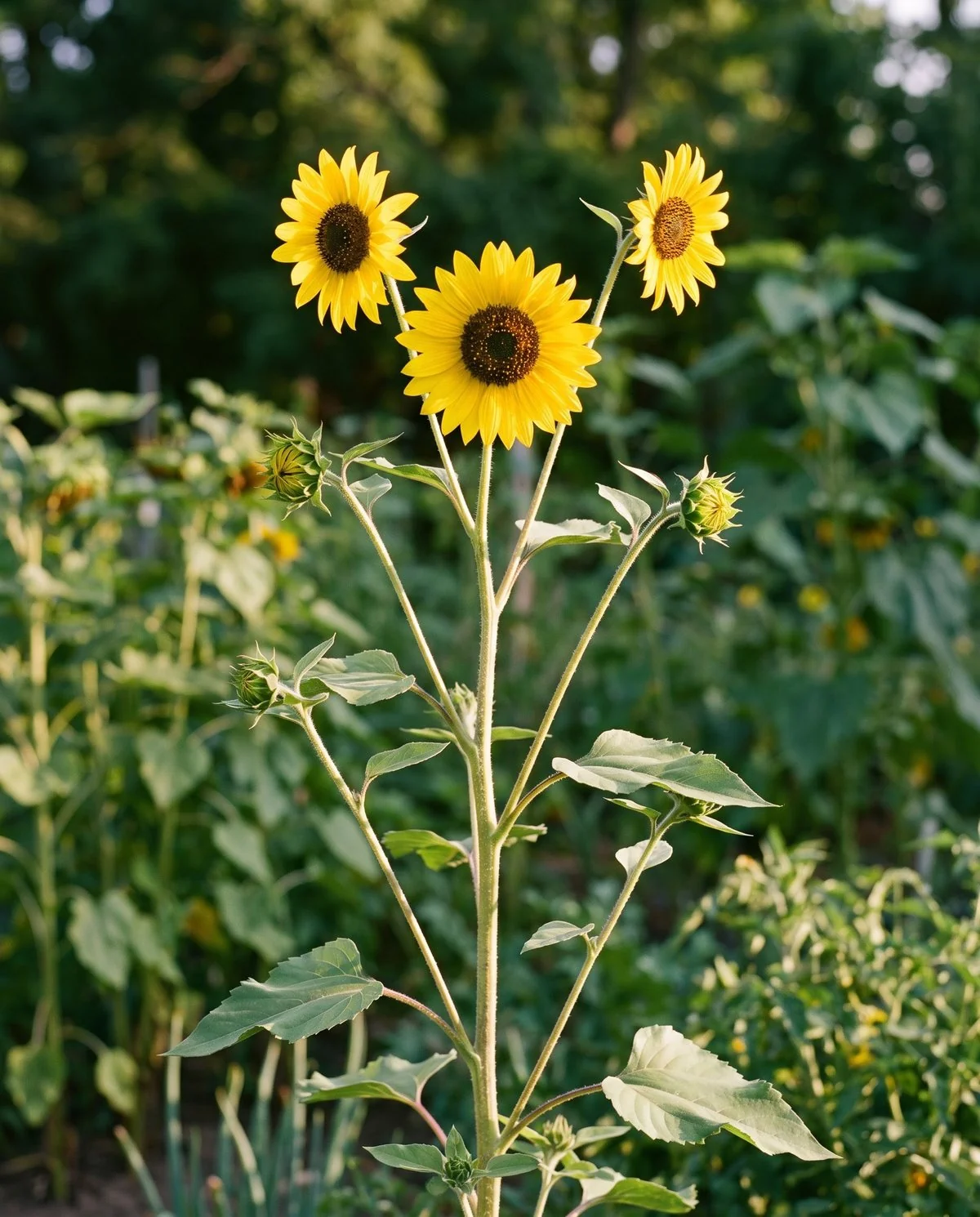
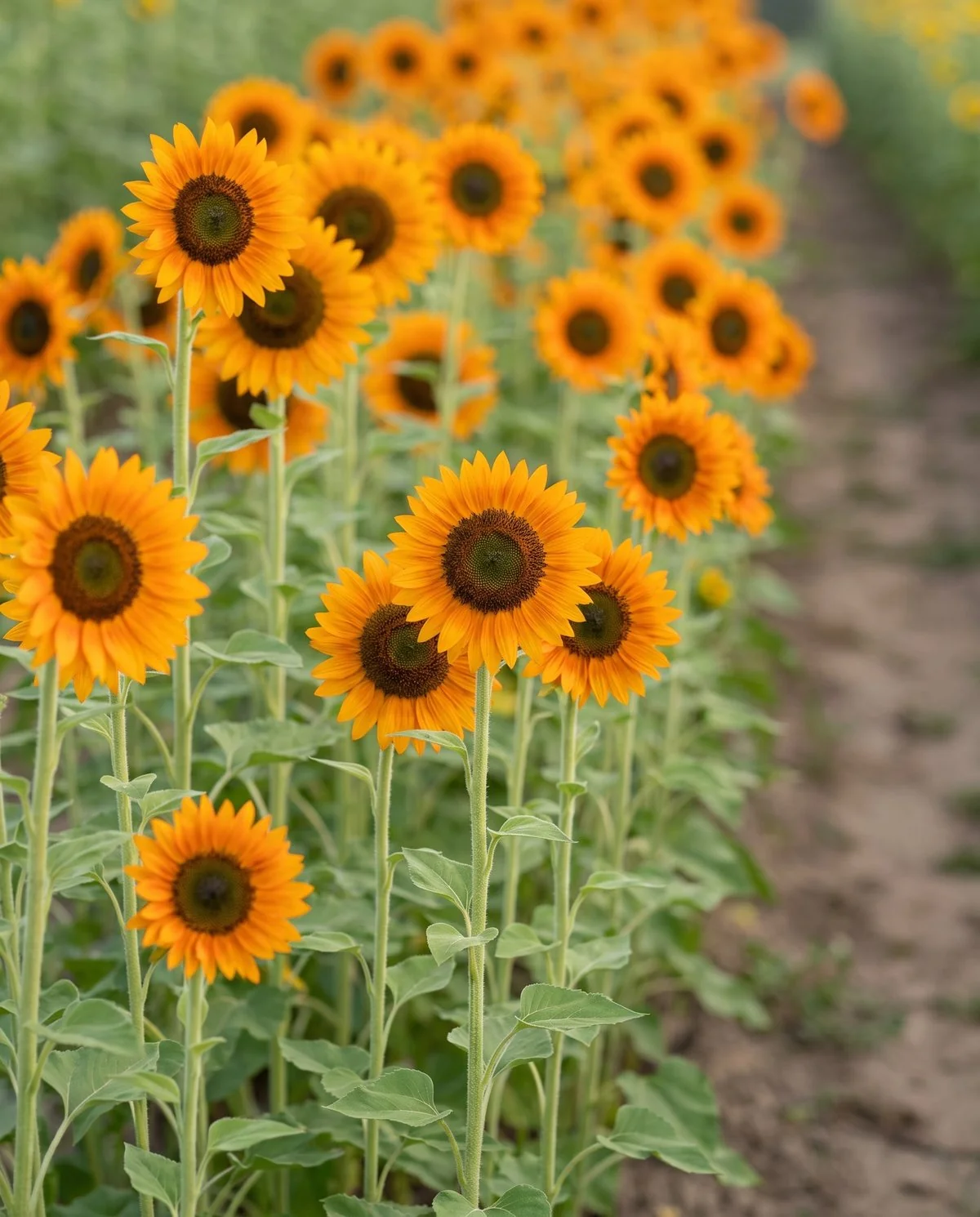
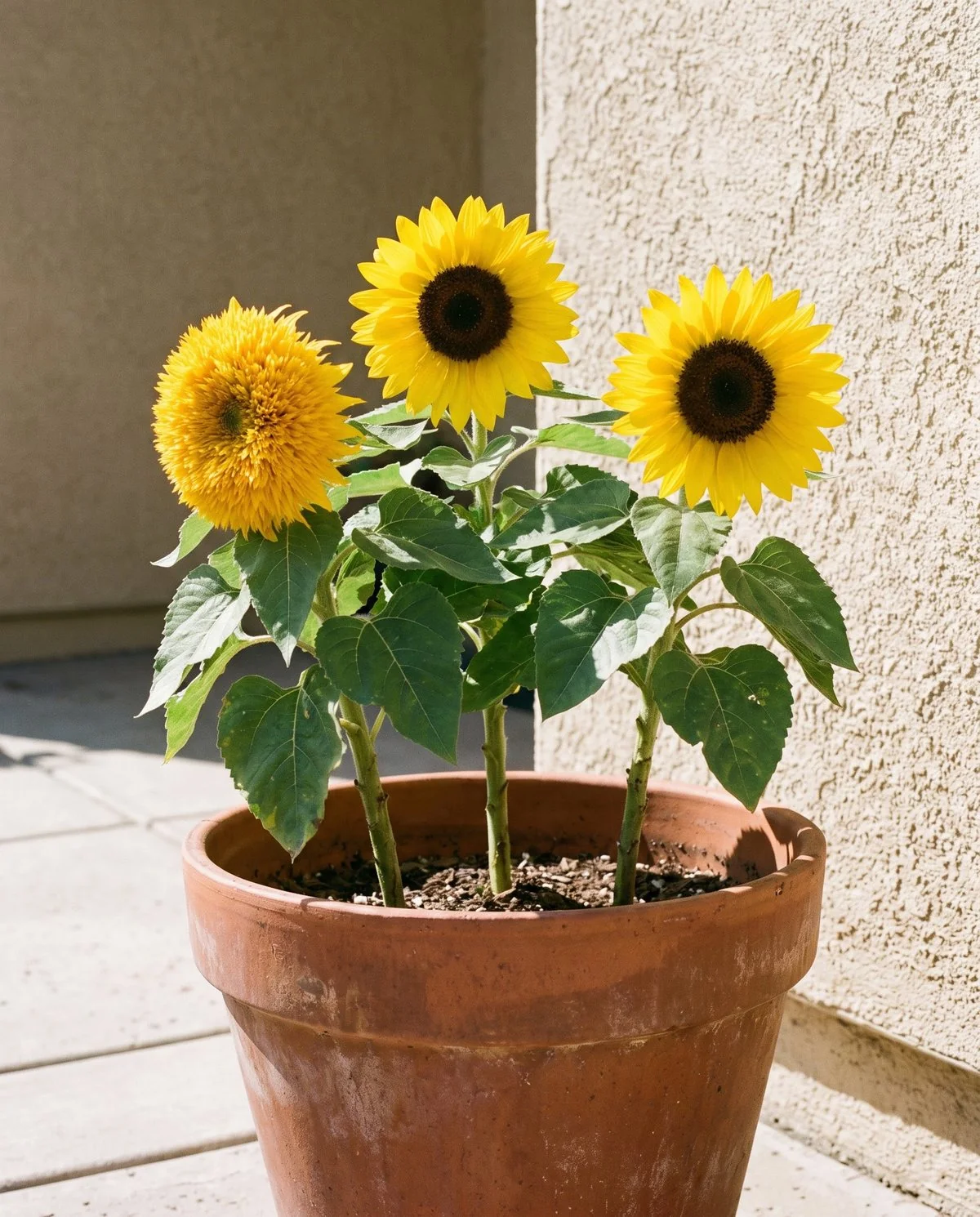
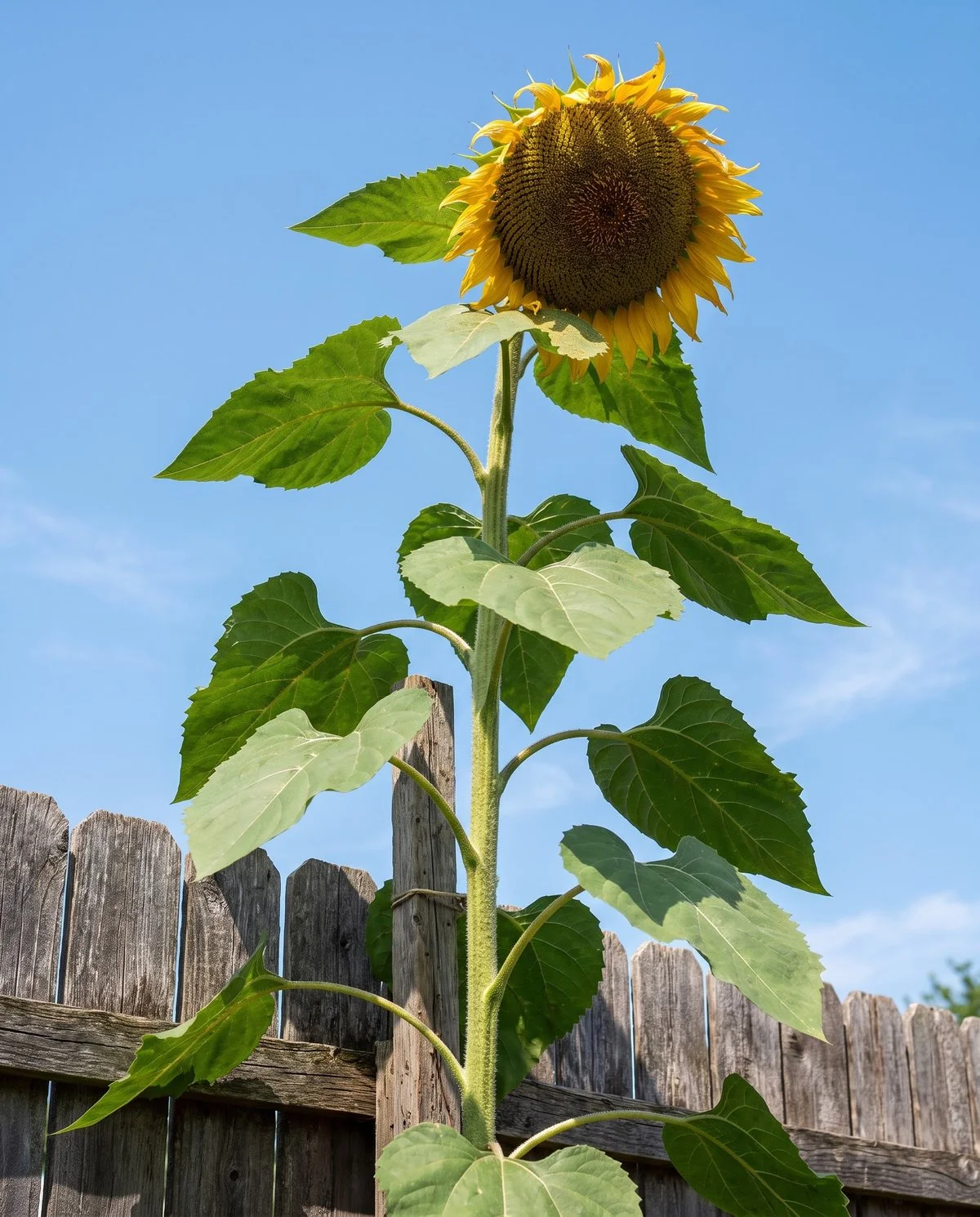
Two figures sit under all four groups. Iowa State and UGA independently give the same 70 to 100 days from seed to maturity, and neither breaks that figure down by group, so the ordering inside it, dwarf soonest and giant latest, is directional rather than a per-group day count. Spacing is UGA's: seed 6 in apart in the row at planting, thinned to 12 to 15 in between plants once established, rows a minimum of 2 to 3 ft apart, planting depth 1 to 2 in and deeper in sandy soil. For the cutting groups specifically the seed trade adds figures no university source in this pack gives, 4 to 6 in for single-stem types since each plant is harvested once and pulled, against 18 to 24 in for larger branching types so the side branches have room to develop. One novelty note kept deliberately short: the current tallest-sunflower record verified by Guinness World Records, with measurement support from Purdue University Master Gardener volunteers and the Allen County weights and measures office, stands at 10.90 m, grown in Fort Wayne, Indiana and confirmed on 3 September 2025. That is a record rather than a target.
Bloom time
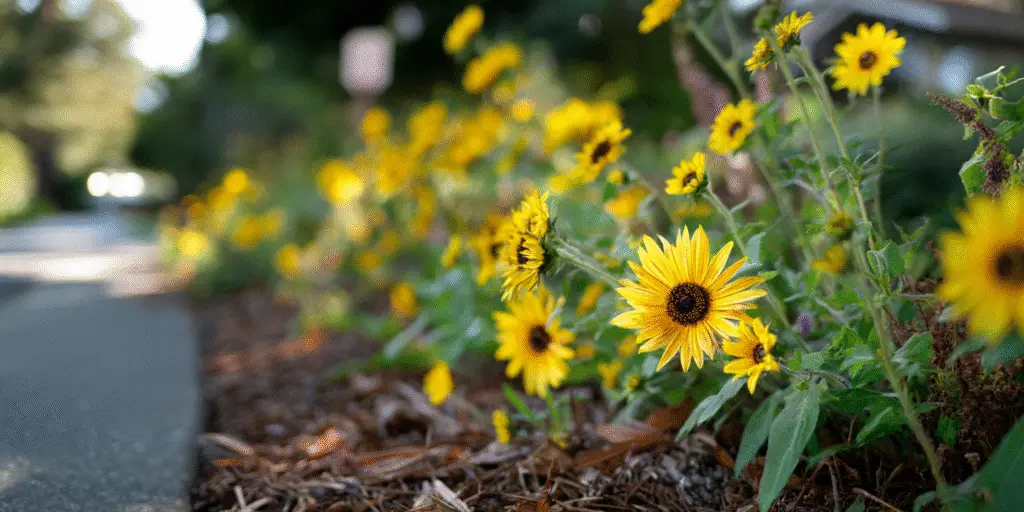
Sunflowers open in summer and carry on into early fall, usually from July or August onward depending on when seed went in and how warm the season runs. From sowing to the first open face takes roughly 70 to 100 days, with fast dwarfs flowering in as little as 60 days and giants or branching types nearer 90 to 100. Single-stem varieties give one big head around midsummer and then they are done, which is why cut-flower growers sow them in succession, a fresh batch every week or two, to keep a steady supply. Branching cultivars bloom in waves, producing smaller heads in sequence from midsummer well into fall, and light deadheading of spent flowers pushes them to keep going. Across both groups the open heads pour out pollen and nectar that pull in bees and butterflies, so the flowering window doubles as a feeding station for the garden.
Germination to first bloom, and why one sowing is never a season
Germination runs 7 to 10 days at an ideal 70 to 80 F soil temperature per UMN, with Illinois Extension's threshold sitting under it: seed will germinate at 39 F, but at least 46 to 50 F is required for satisfactory germination, and UMN adds the honest failure mode for an impatient early sowing, that seed in cold wet soil can rot outright rather than simply come up slowly. From there Iowa State and UGA independently give the same 70 to 100 days from seed to maturity, and neither subdivides it, so the ordering inside that range is directional: a dwarf container type shows colour well before a giant does. What the type changes is what bloom even means. A single-stem pollenless cultivar gives exactly one flower per plant, which is why cutting it costs nothing that was coming anyway, while a branching type keeps opening new flowers from side shoots for weeks after the first, which is the specific reason Iowa State calls that group excellent for cutting. The mid-season reality follows from that: one sowing of any type gives a finite window rather than season-long colour, and continuous bloom is a practice rather than a plant. Illinois Extension recommends resowing every 1 to 3 weeks, UGA every couple of weeks, and Mississippi State profiles a grower who sows weekly and stops new rounds roughly 60 days before her first frost date so the last sowing still has time to mature, which in her area meant fresh sunflowers every week for about ten weeks. At the end of the season the honest note is about the seed rather than the plant. A head left standing to fully mature and drop seed can self-sow, and the pollenless and many branching types are F1 hybrids whose dropped seed will not reproduce true to the parent, which is standard hybrid-seed genetics rather than a sunflower-specific trial result and is flagged here as general horticultural knowledge. One contrast worth keeping straight: a NC State Clay County Extension Master Gardener's growing notes describe perennial Helianthus species spreading rapidly and becoming invasive in a bed, and those are a different group entirely from the common annual sunflower this page is about.
Two paths, worked in order
Both start with the calendar, the light and the feeding rather than with a disease, because for sunflower the two commonest questions in a 1,224-post sample resolve there far more often than at a pathogen.
Height and spread
Height is the first thing to match to the spot, because the range is dramatic. Most common garden varieties land between 5 and 10 feet, tall enough to read as a back-of-border plant or a quick seasonal screen along a fence. Giant cultivars routinely clear 12 feet and reach 15 in good conditions, and the tallest specimens ever recorded under exceptional care have topped 30 feet. Dwarf varieties hold at 1 to 3 feet, the only group that suits a windowsill pot or a low edge. Footprint follows habit: single-stem types occupy a narrow 1 to 2 feet across, while branching types spread 2 to 4 feet, which matters when spacing a row. Anything over about 8 feet usually needs a stake or a fence at its back, since a heavy head on a tall stalk topples in wind or a hard rain.
Light
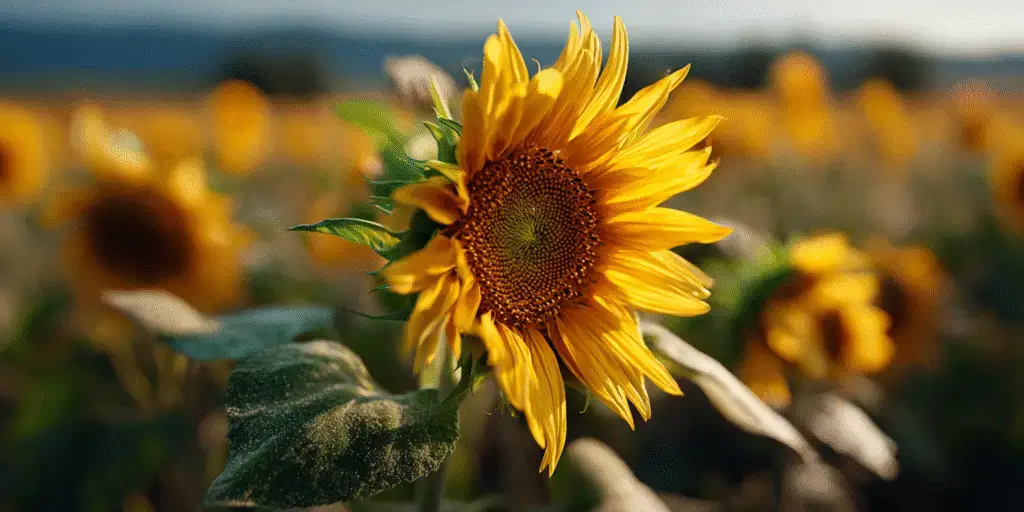
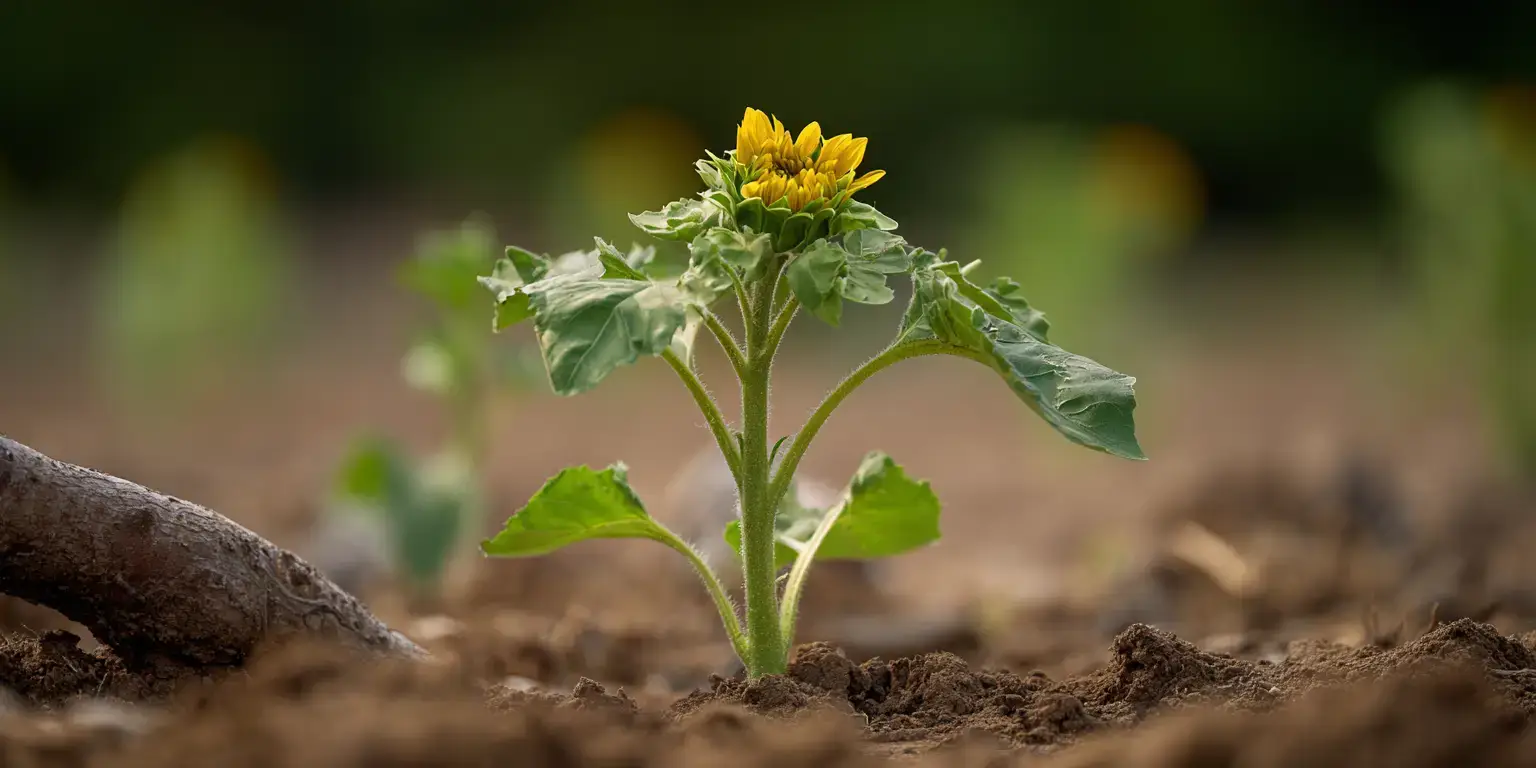
Full sun is non-negotiable, and it means at least six to eight hours of direct light a day, with more being better. Sun builds the thick stem and the large head; a sunflower given less than six hours stretches, leans, and flowers smaller and later. This is the single most important siting decision, so a south-facing, open spot beats a richer bed in part shade every time. The species’ famous sun-following habit happens here, in the young plant: while it is still growing, the buds and upper leaves turn east to west through the day to chase the light, then swing back overnight to face east before dawn. Once the flower opens fully and the stem stiffens, that tracking stops for good. Sunflowers are not alone in earning a place in a sunny bed; they slot in naturally among other cheerful yellow flowers that want the same conditions.
Water
A sunflower wants steady moisture while it is young and while it is setting buds, then turns fairly drought-tolerant once the deep taproot is down. Water when the top inch or two of soil has dried, and water deeply rather than often, since a long soak draws roots downward and anchors a tall plant better than frequent sips. Large heads in a heat wave drink heavily and will wilt visibly if the soil bakes dry, so the biggest types reward attention through July and August. Drainage matters as much as supply: the taproot rots in waterlogged ground, and standing water invites the fungal problems covered below. A container sunflower needs the most watchfulness, because pots dry out far faster than open beds.
Soil and pH
Well-draining, fertile soil produces the strongest plants, and a loose loam that holds moisture without staying soggy is the target. Working compost or other organic matter into heavy clay before sowing both feeds the plant and opens the drainage the taproot needs. Sunflowers tolerate a fairly wide pH band, from slightly acidic to neutral, roughly 6.0 to 7.5, with a reading around 6.0 to 6.8 considered ideal. They adapt to imperfect ground better than many flowers, but the extremes still cost performance: strongly acidic or strongly alkaline soil locks up nutrients and shows up as pale leaves and weaker stems. Rich soil also fuels the height the giant types are grown for.
Three claims, and what the researchers actually measured
The myth: Sunflowers poison whatever is planted near them.
The reality: A real mechanism, badly overstated as a blanket claim, and the one sunflower fact almost nobody thinks to ask about. Sunflowers release allelopathic compounds through root exudates into the surrounding soil, and those can inhibit the germination, growth or vigour of some nearby plants, with documented symptoms running from stunting and leaf wilting and yellowing to the death of part or all of a neighbour. The limits matter as much as the effect: it is described as less pronounced for plants in the grass family than for other families, and the allelochemicals degrade in soil over time rather than leaving lasting toxicity. The source is an Ask Extension expert response in the university extension network, and the useful detail in it is that the expert initially assumed sunflowers posed no threat to neighbouring plants and changed that assessment after checking the research. In this pack's own 1,224-post sample the subject appears three times, because a slow invisible soil effect gives a photo-driven forum nothing to photograph.
The myth: A sunflower tracks the sun for its whole life.
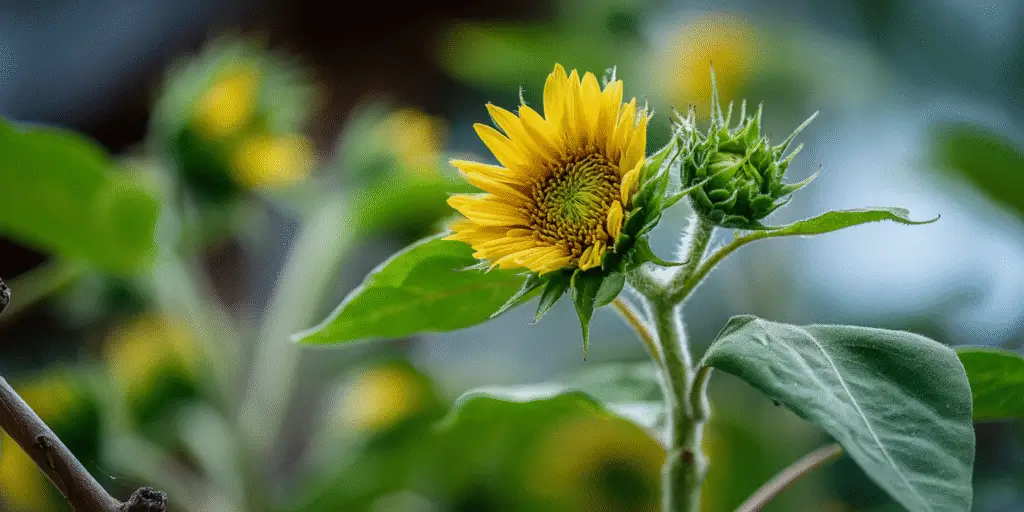
The reality: True while young, and false for a mature bloom, with a measured reason behind the switch. UC Davis's Harmer lab, with Nicky Creux and collaborators at UC Berkeley and the University of Virginia, published the mechanism in New Phytologist in August 2016: a developing head tracks the sun under the plant's own circadian clock, and as the stem matures and stiffens the daily tracking fades out and the head settles facing geographic east. Two experiments carry it past observation. Artificially warming west-facing heads with small heaters made them attract pollinators at the same higher rate as naturally east-facing ones, isolating warmth rather than direction as the cause, and genotyping work showed east-facing plants fathered more offspring through greater pollen contribution. The fixed east-facing habit is a fitness advantage that was measured, not an aesthetic one.
The myth: Empty hulls at harvest mean the harvest failed or was cut too early.
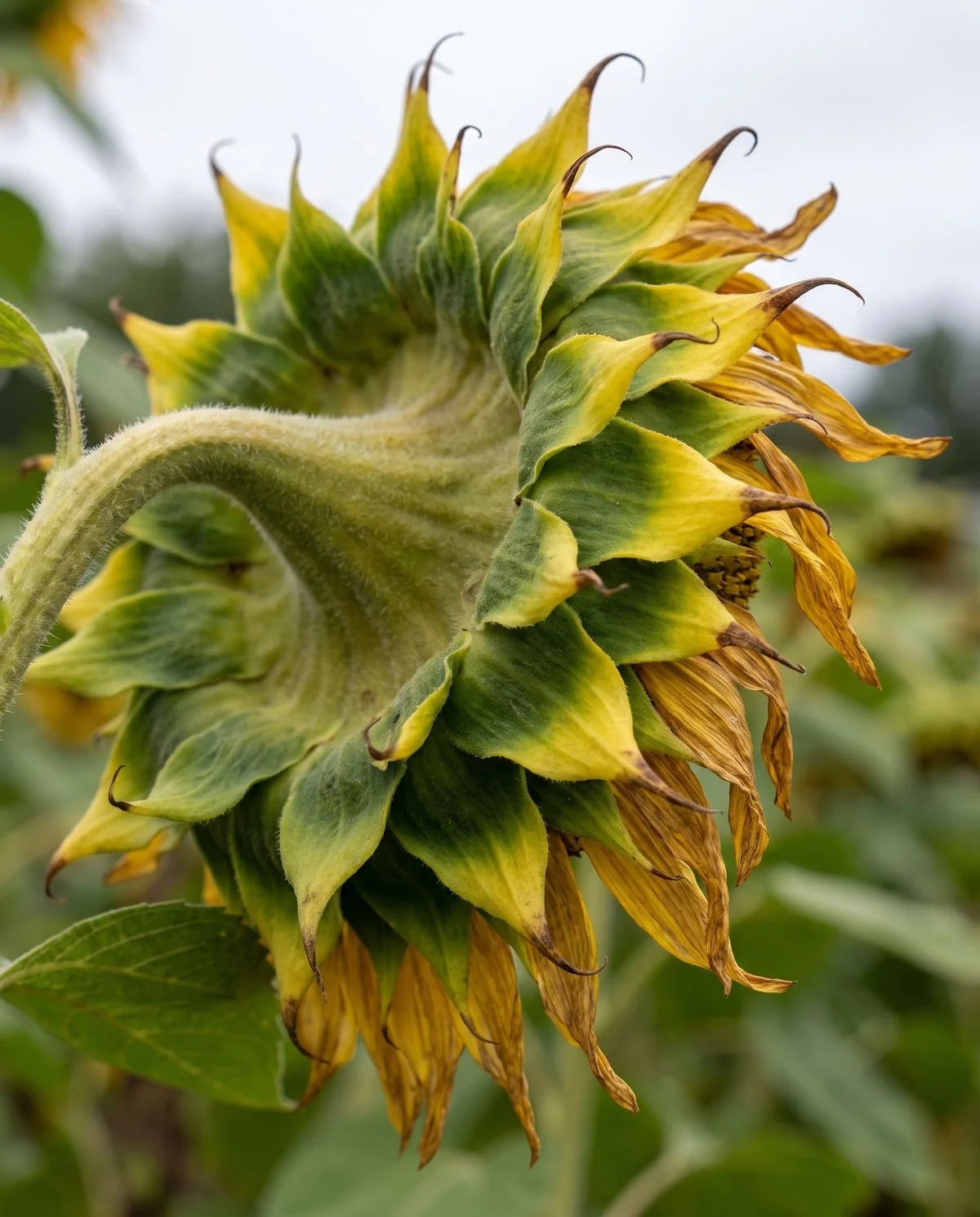
The reality: It means something that happened months earlier. K-State states it directly: if there are empty shells, this usually indicates a lack of pollination earlier in the year. The harvest-timing signals are separate and checkable on their own, shrivelled central florets, a lemon-yellow back to the head and heads facing down, with the verbatim ultimate check being to pull a few seeds and see whether they have turned black with white stripes. A gardener who reads empty hulls as a timing mistake will keep adjusting the wrong variable.
USDA hardiness
The common sunflower is grown as a warm-season annual almost everywhere, so hardiness zones matter less than frost dates and season length. Gardeners across roughly USDA Zones 2 through 11 can grow them during the frost-free stretch of the year. Seed germinates once soil warms past about 50°F (10°C), though a soil temperature closer to 60°F gives faster, more even sprouting, and the plant has no frost tolerance: a light frost burns seedlings and a hard frost kills mature plants, so annual sunflowers never overwinter and are sown fresh each spring. The practical rule is to sow after the last spring frost while leaving enough runway, about two to three months, for the plant to grow, bloom, and ripen seed before the first autumn frost. In short-season northern gardens, fast dwarf and early varieties are the safe bet.
Sowing windows and thresholds, with the tier of each source stated
One zone in this table has a directly sourced university window and the rest do not, which is the honest position rather than a gap to paper over: UGA publishes dates for Georgia, and no single .edu source in this pack gives a full zone-by-zone sunflower planting chart. What is universally sourced are the temperature thresholds underneath every row, so those carry the weight here.
Propagation and longevity
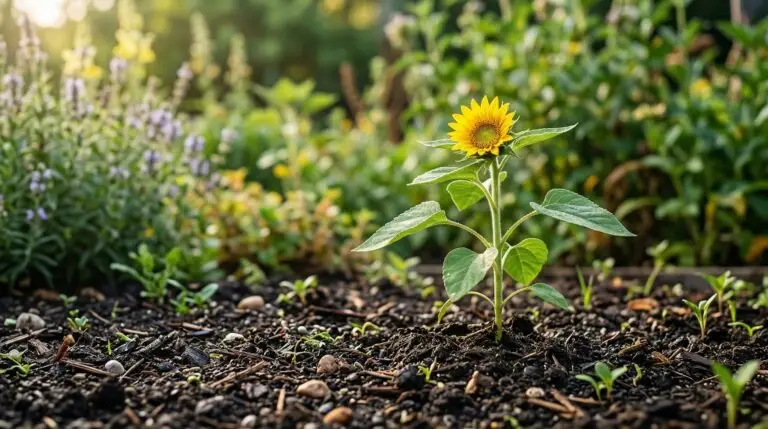
Sunflowers are grown from seed, sown directly where they are to bloom, because the sensitive taproot resents transplanting and a disturbed seedling sulks or stalls. Wait until the last frost has passed and the soil has warmed, then sow seed about 1 inch (2.5 cm) deep, spacing the plants according to the mature size of the variety, closer for dwarfs and a foot or more apart for giants and branching types. Germination usually follows within 7 to 14 days in warm soil. If a head start is needed in a cold region, start seed in biodegradable pots that go into the ground intact so the root is never bared. The whole life cycle runs in a single season, from germination through flowering to seed set in just a few months, after which an annual sunflower naturally dies. Succession sowing every week or two stretches the display across the season.
| Step | What to do |
|---|---|
| When | After the last frost, soil above 50°F (10°C) |
| Where | Final position in full sun (taproot resents transplanting) |
| Depth | About 1 inch (2.5 cm) deep |
| Spacing | 6 in for cutting rows, 1 to 2 ft apart for big single-stem types |
| Germination | 7 to 14 days in warm soil |
| To bloom | About 70 to 100 days from sowing |
| Long season | Sow a fresh batch every 1 to 2 weeks |
If you want to save a few seeds, leave a head on the plant until its back turns from green to yellow-brown and the seeds plump and loosen, then cut it with a length of stem and finish drying it somewhere airy. A handful can be roasted or simply sown again next spring, and any head left standing feeds finches and other birds through fall, which is reason enough to leave one or two in place. Stray self-sown seed often sprouts on its own the following year.
Fragrance
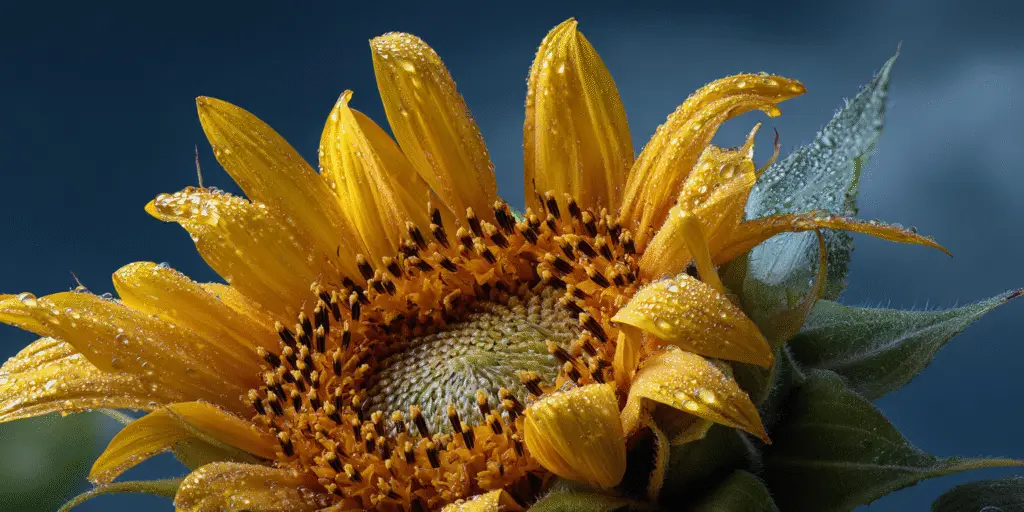
Sunflowers are grown for the eye, not the nose. Helianthus annuus blooms carry a very faint scent at most, usually described as subtly earthy or mildly sweet and easily missed altogether. Unlike roses or lilies, a sunflower does not perfume a room, and it draws its bees and butterflies with bold color and a generous supply of pollen and nectar rather than fragrance. For cut-flower use this is a quiet advantage, since a vase of sunflowers brightens a table without competing with the scent of food.
Toxicity and pet safety
Sunflowers are non-toxic, which makes them an easy pick for a household with animals. The ASPCA lists the sunflower (Helianthus) as not poisonous to cats, dogs, or horses, and the plant contains no compounds known to harm common household pets. A curious cat or dog that chews a leaf or petal might get a mild, passing stomach upset from the roughage, the same as with most plants, but there is no poisoning risk; the seeds themselves turn up in pet foods and bird feeds, and people eat them by the handful. The sensible cautions are ordinary ones: discourage pets from gorging on any garden plant, and keep any pesticide sprayed on ornamental sunflowers pet-safe. For a wider list of animal-safe choices, see the guide to flowers that are safe for cats and dogs.
Vase life
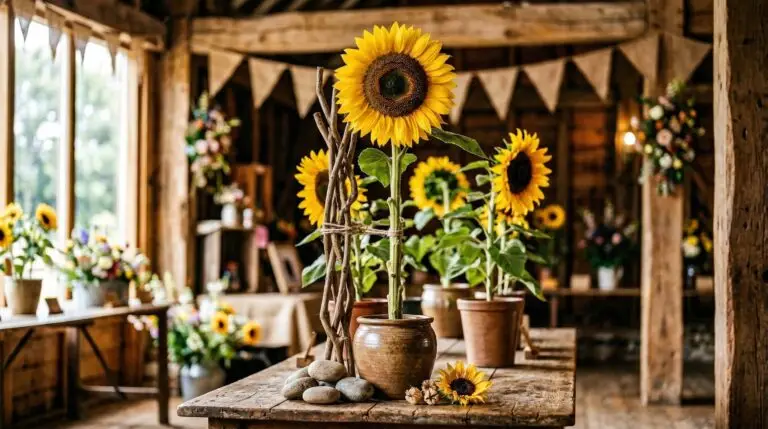
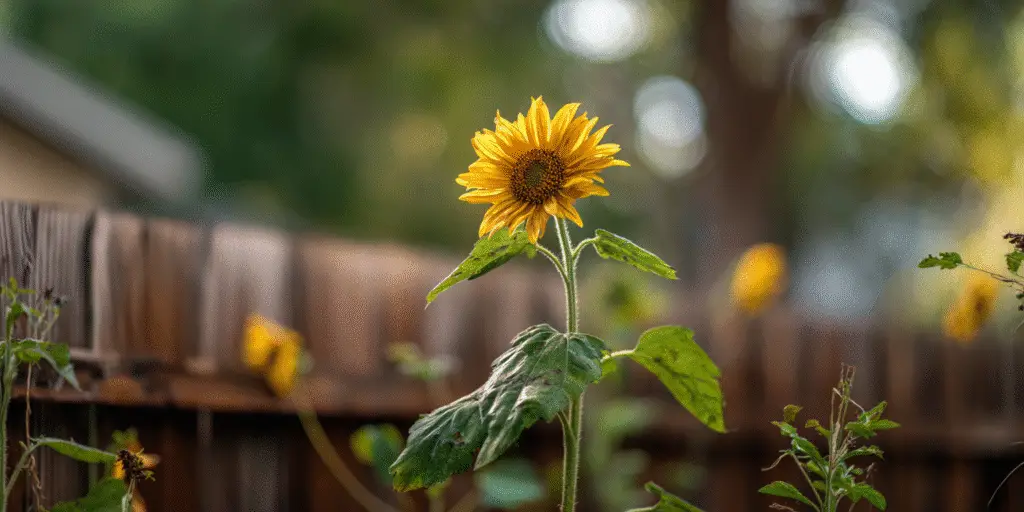
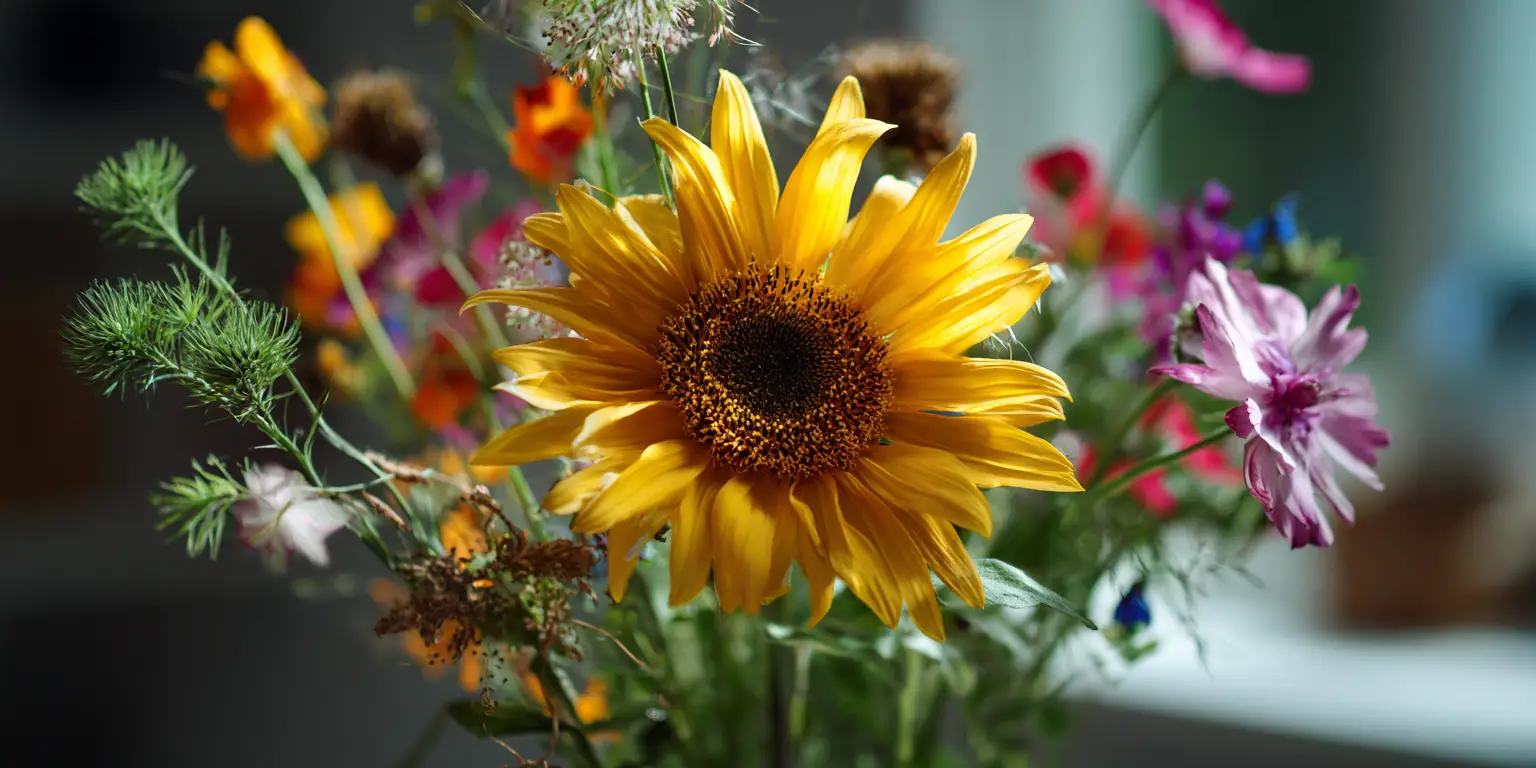
Cut sunflowers hold well, typically lasting about 5 to 10 days in a vase and up to roughly two weeks under good conditions. The trick to the long end of that range is cutting at the right moment, just as the petals start to unfurl, before the face is fully open, and cutting in the cool of early morning when the stem is fully hydrated. Strip the lower leaves so nothing sits below the waterline to rot, set the stems straight into clean lukewarm water, and add a floral preservative to slow bacteria. Topping up the water daily and re-cutting the stem ends every few days keeps the bloom drinking. Pollenless cutting cultivars are the arrangement favorite, since they shed no pollen to stain a cloth and often last a touch longer. For a bolder vase, sunflowers pair well with the hot-orange daisies of the related Mexican sunflower, which flowers in the same late-summer window.
Five years of trial data, cultivar by cultivar
Sunflower is one of the most important field-grown cut flowers in the specialty trade, and the sourcing matches: NC State administers the ASCFG National Cut Flower Trial Program and its postharvest group has tested sunflowers across multiple years. Test conditions for the numbers below were stems held at 68 F plus or minus 4 under roughly 200 footcandles of light for 12 hours daily.
Drop a penny in the vase water.
Dead as of 1982, and NC State Extension says why in its own words: pennies are made mostly of zinc now, it used to work back when pennies were made of copper because copper is a fungicide. A modern US penny is 97.5 percent zinc under a thin copper plating, too little to slow bacterial growth in vase water.
An aspirin, or a shot of vodka, in the water.
An honest gap rather than a verdict. No university or peer-reviewed trial specific to sunflower, or to cut flowers generally, was located for this pack that measurably validates either additive. What is genuinely sourced is the mechanism the aspirin folklore is reaching for, that cut flowers prefer mildly acidic vase water and commercial preservatives are formulated at roughly pH 3.5 to 5.0, and nothing found here shows aspirin reliably acidifying vase water enough to matter or outperforming a commercial preservative. Flagged open rather than resolved by picking the plausible-sounding side.
Why a cut sunflower bends at the neck
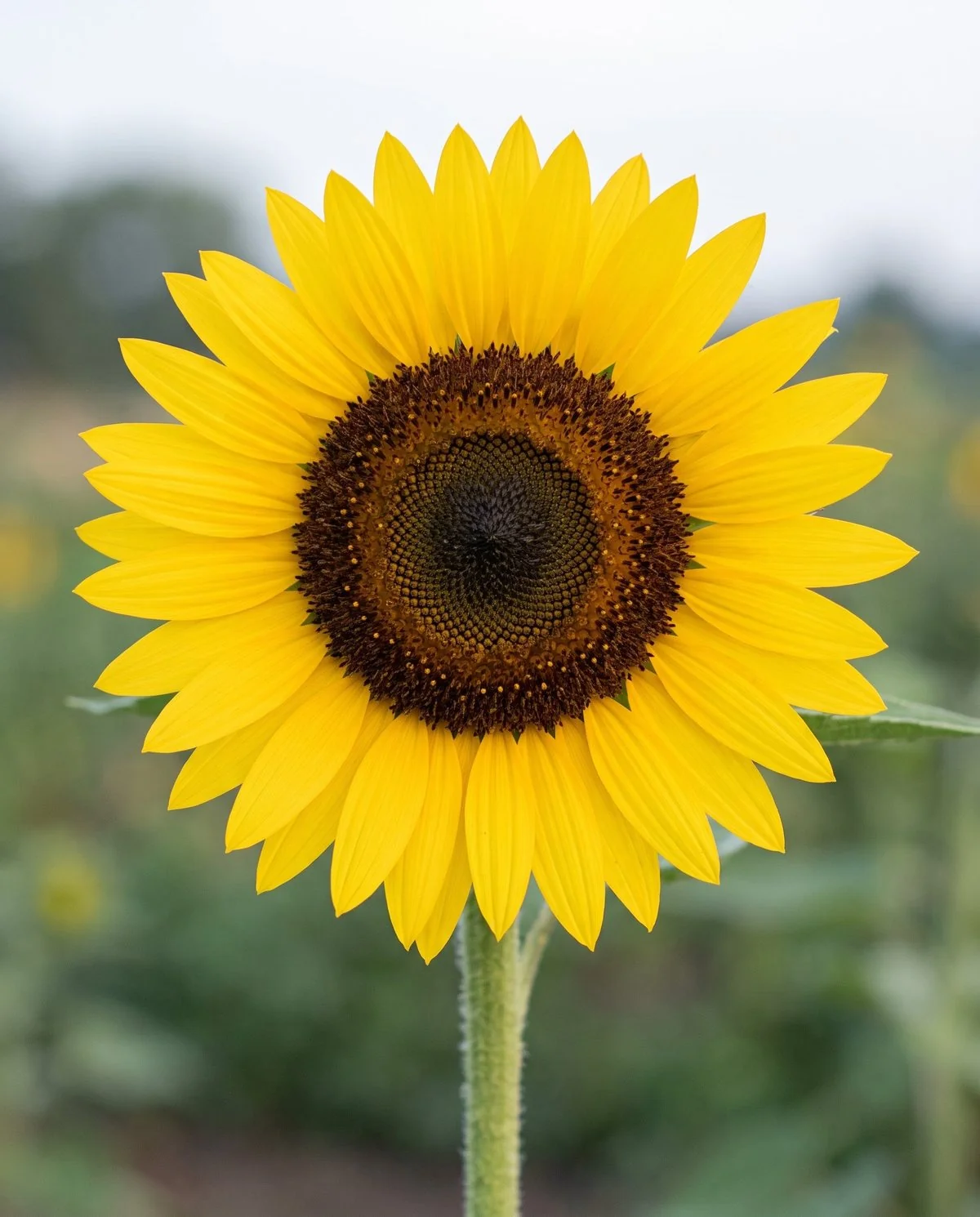
A sunflower that leaves the garden straight and arrives at the table with its head tipped over has usually done nothing wrong. Sunflowers keep tracking light after they are cut, and the neck is the thinnest part of a stem carrying the heaviest flower on it, so a head that leans toward a window one day is bent by the next. Turning the vase daily keeps the pull even and the stem upright for longer.
The bends that do not correct come from three things instead. A stem that spent too long out of water before it reached the vase never rehydrates fully, a flower cut past its best stage bends within a day, and a dirty vase blocks the stem ends within two. Sunflowers also drink more than almost anything else in a mixed bunch, so the vase has to hold real volume and be heavy enough that the head does not tip it, and the water level wants checking daily rather than every few days.
Handling matters more with this flower than with most. Carry the stem, never the head: the petals crease where fingers press and the crease shows for the rest of the vase life. Strip every leaf that would sit below the water, recut the stem at a sharp angle before it goes in, and keep the arrangement out of direct sun, which drives the bending it is meant to be enjoying.
Pests and diseases
Tough as they are, sunflowers still attract a handful of pests. Aphids cluster on stems and buds and sap vigor when they build up; caterpillars, including sunflower moth larvae, chew petals or tunnel into the developing head; and assorted beetles and weevils graze the leaves and ripening seed. A healthy plant shrugs off light feeding, and a heavy infestation usually clears with a hand-pick or a spray of insecticidal soap. The larger raiders are birds, squirrels, deer, and rabbits, all of which work the maturing seed heads and nibble young growth, so a netting bag over a ripening head protects a seed harvest.
Disease tends to be fungal and tied to wet, crowded conditions. Powdery mildew dusts the leaves white by late summer where air does not move, rust raises reddish-brown pustules, and downy mildew stunts young plants with a fuzzy mold under the leaves in cool damp spells. Soil-borne Verticillium wilt and Sclerotinia (white mold) cause wilting, stem rot, or outright collapse in poorly drained ground, and aster yellows, spread by leafhoppers, deforms the bloom and yellows the plant, with affected plants best pulled and removed at once. Most of this is prevented by the same few habits: space plants for airflow, water at the base instead of overhead, rotate where sunflowers grow from year to year, and clear diseased debris at season’s end. Done that way, serious outbreaks are rare in a home garden.
Photo pairs, and the three pairs left unphotographed on purpose
Growth posture, animal damage and insect presence are safe to photograph and are here in full. Three pairs are not, and they are the ones people most often photograph and ask about: downy mildew's cottony sporulation, rust pustules, powdery mildew mycelium and the two angular leaf-spot signatures are checkable fingerprints where a generated image could invert the very detail a reader is trying to match, so those sides wait for real reference photographs.
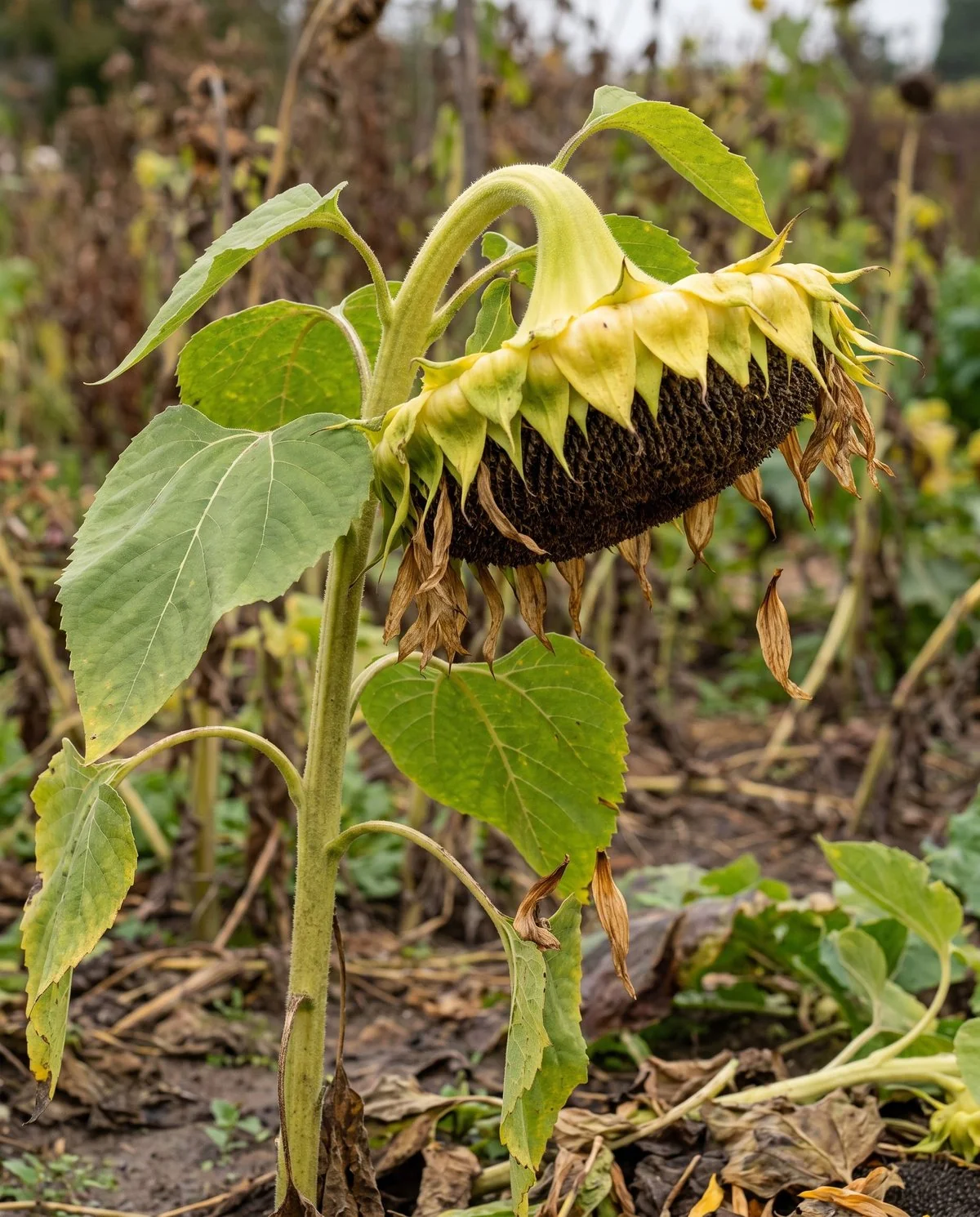
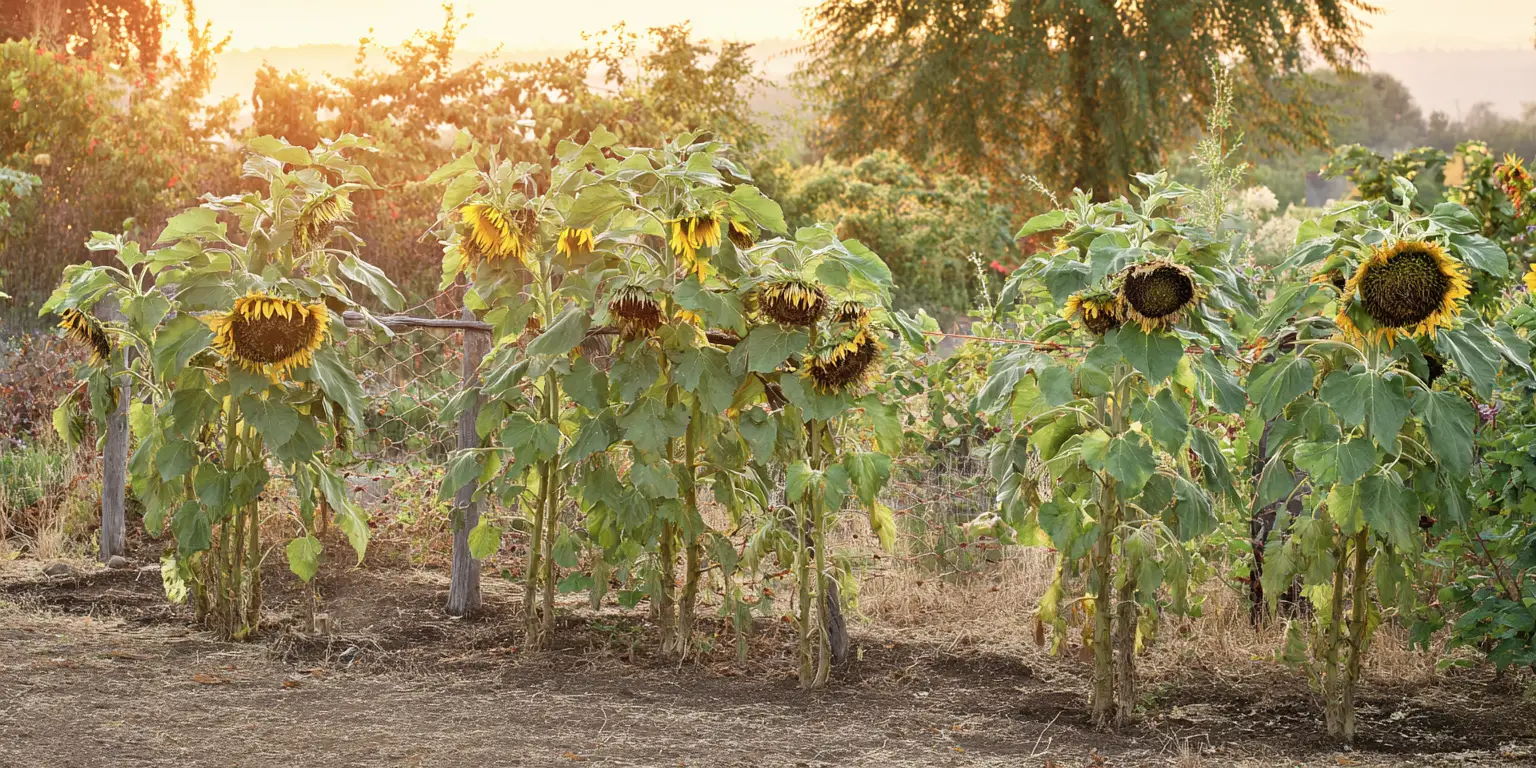
Look at the posture of the whole plant, not the head alone. As a head matures and seed fills, the weight simply nods it downward, and K-State treats that same nod as one of its three harvest signals alongside shrivelled central florets and a lemon-yellow back. NDSU describes the alternative from the other end: systemic downy mildew, caused by the soilborne Plasmopara halstedii, stunts the plant, yellows the leaves along the veins on the upper side and produces a white cottony growth on the undersides, and a systemically infected plant characteristically holds its head rigid and roughly horizontal rather than nodding, because the whole plant's growth is disrupted instead of merely loaded. Only the normal nodding side is photographed here.
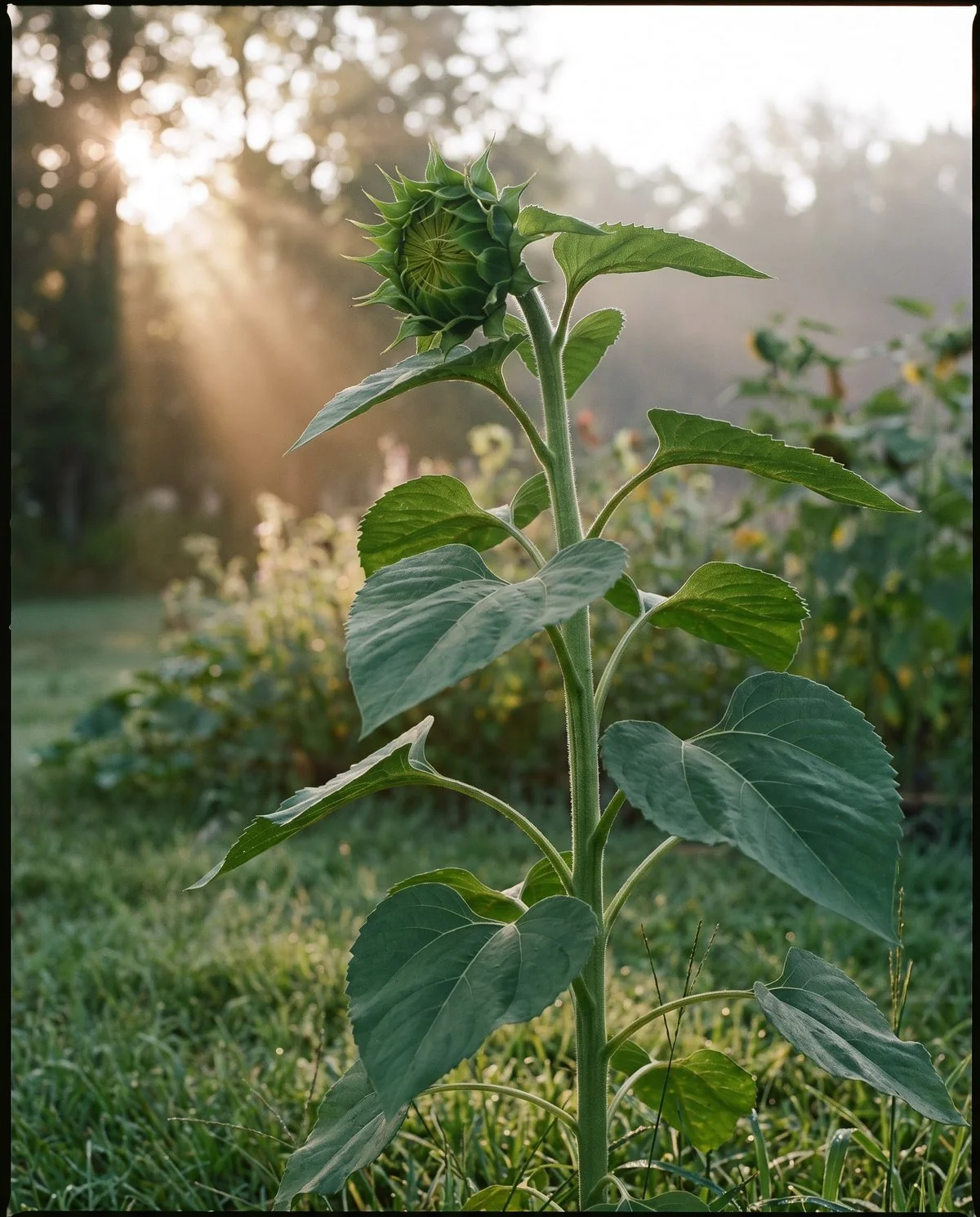
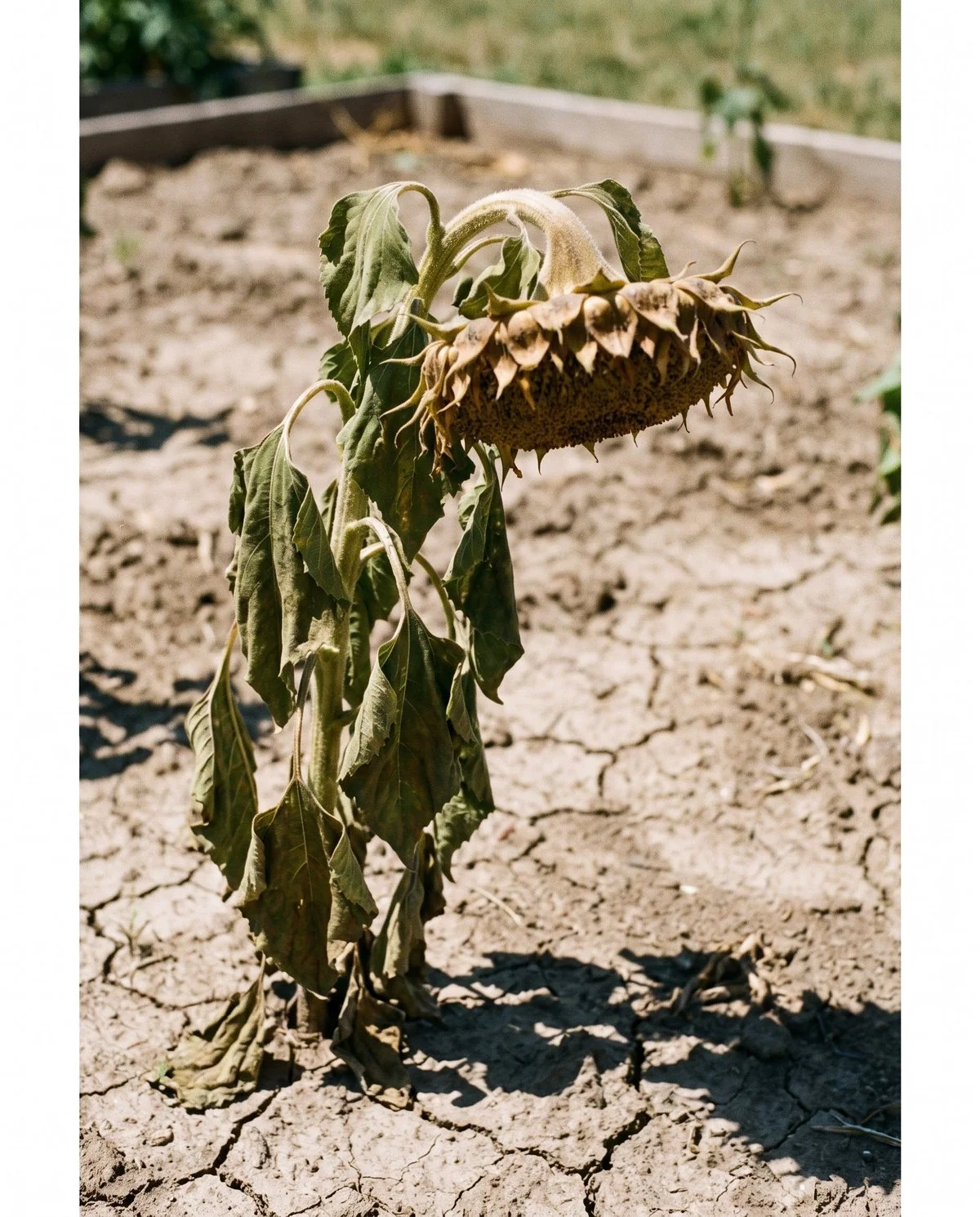
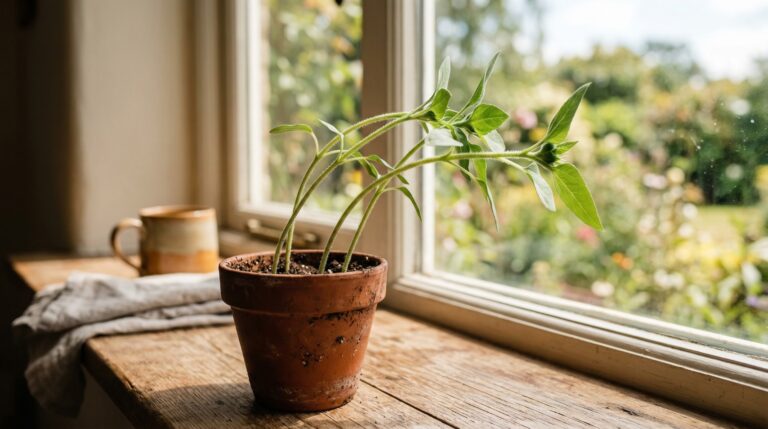
Touch the stem. UC Davis's Harmer lab showed that young, still-growing sunflower heads track the sun back and forth across the sky each day under circadian-clock control, and through all of it the stem stays firm and turgid and the plant is actively growing. True wilting is the opposite state in the same posture: the stem or neck goes soft and limp and the leaves lose turgor, from underwatering, heat stress, or a cut stem reaching the end of its vase life. Both sides are photographed, because neither is a pathogen.
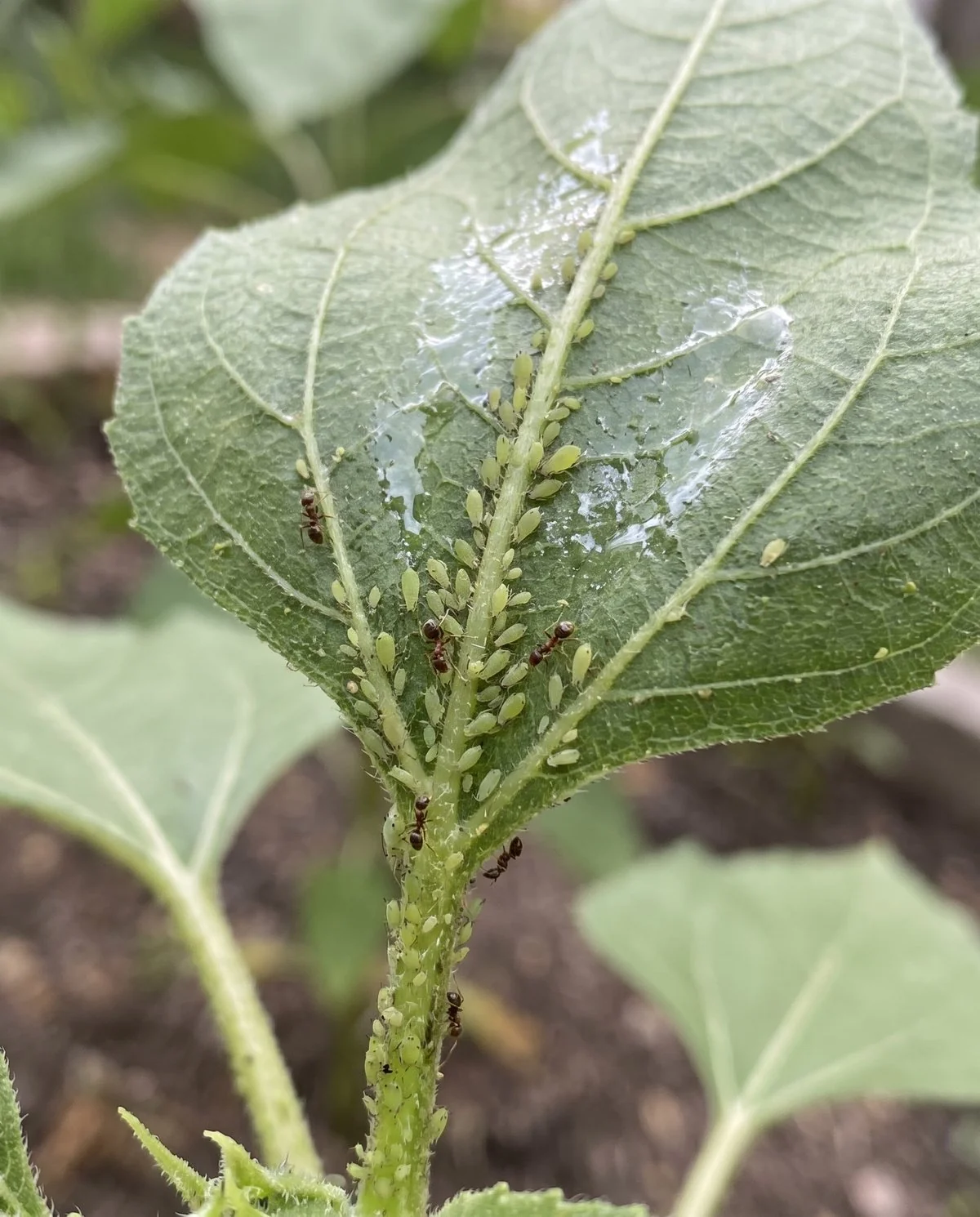
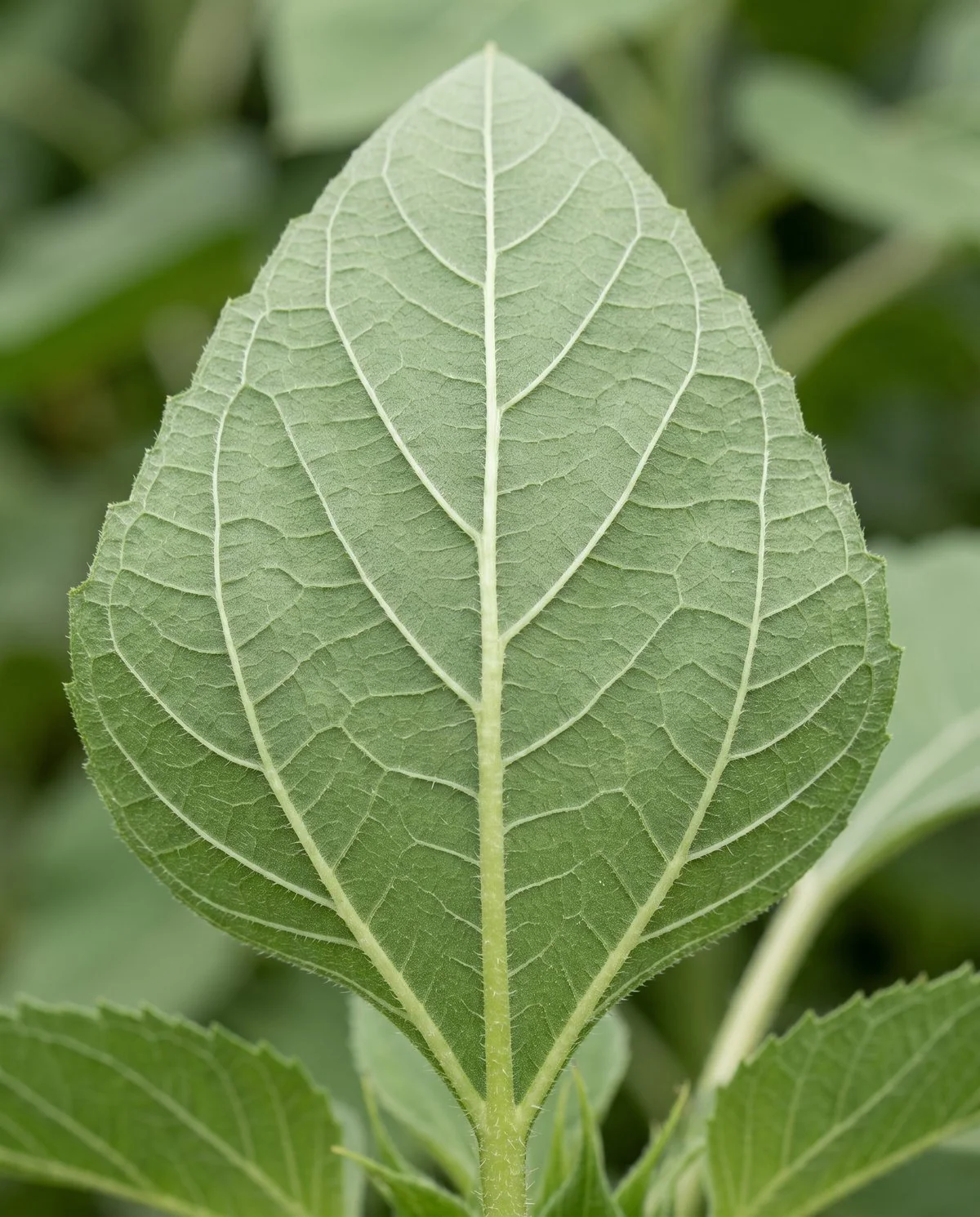
Look under the leaves and follow the stickiness. UMN puts sunflower aphids at one sixteenth to one eighth of an inch, pear-shaped and soft-bodied, usually on the stems and undersides of leaves, with heavy feeding causing wilting, leaf yellowing, curling and distortion and stunted or distorted new shoots, and honeydew often the most visible sign before the insects themselves. A clean leaf underside has no clusters and no sticky residue. Both sides are photographed; insect presence is safe to illustrate.
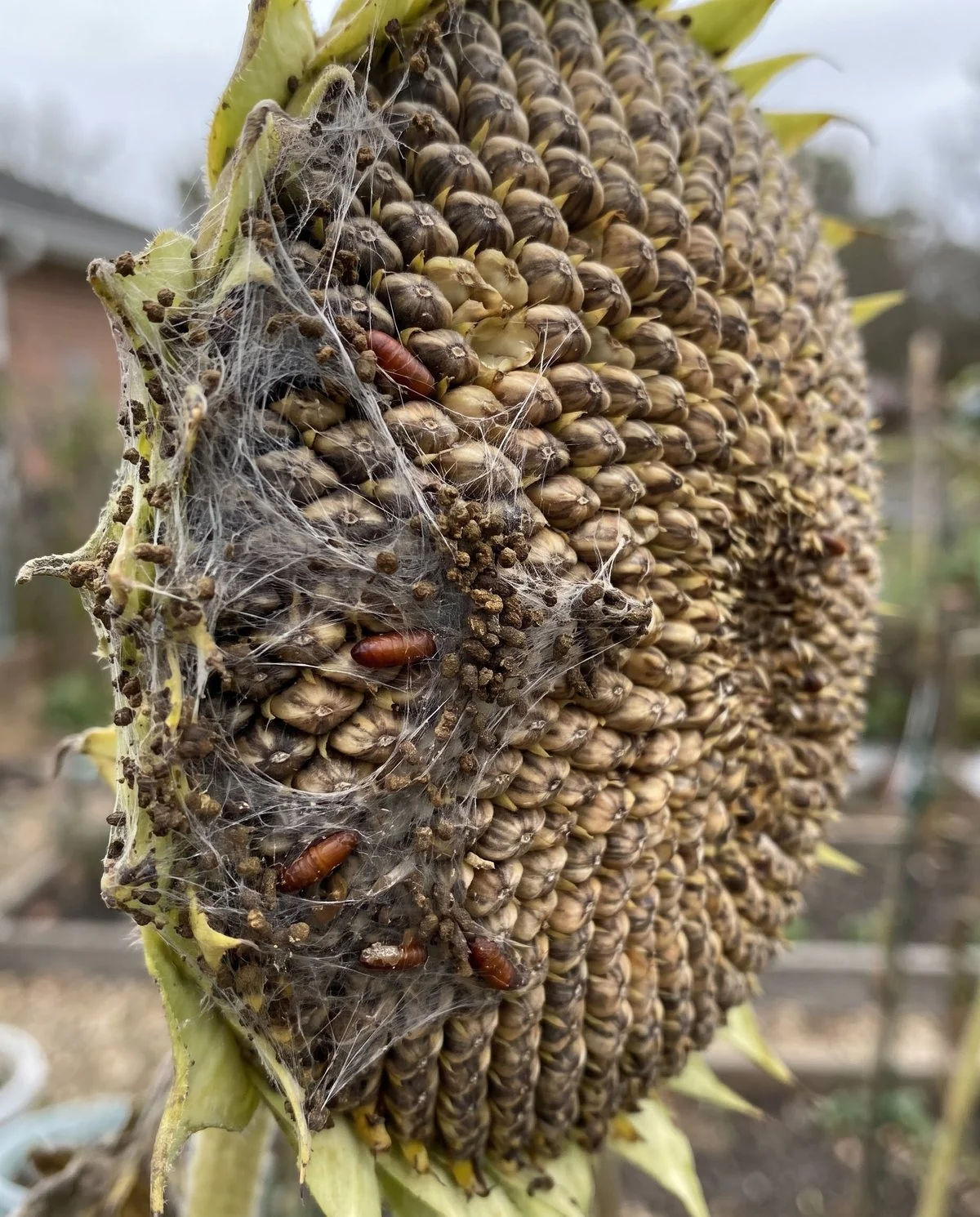
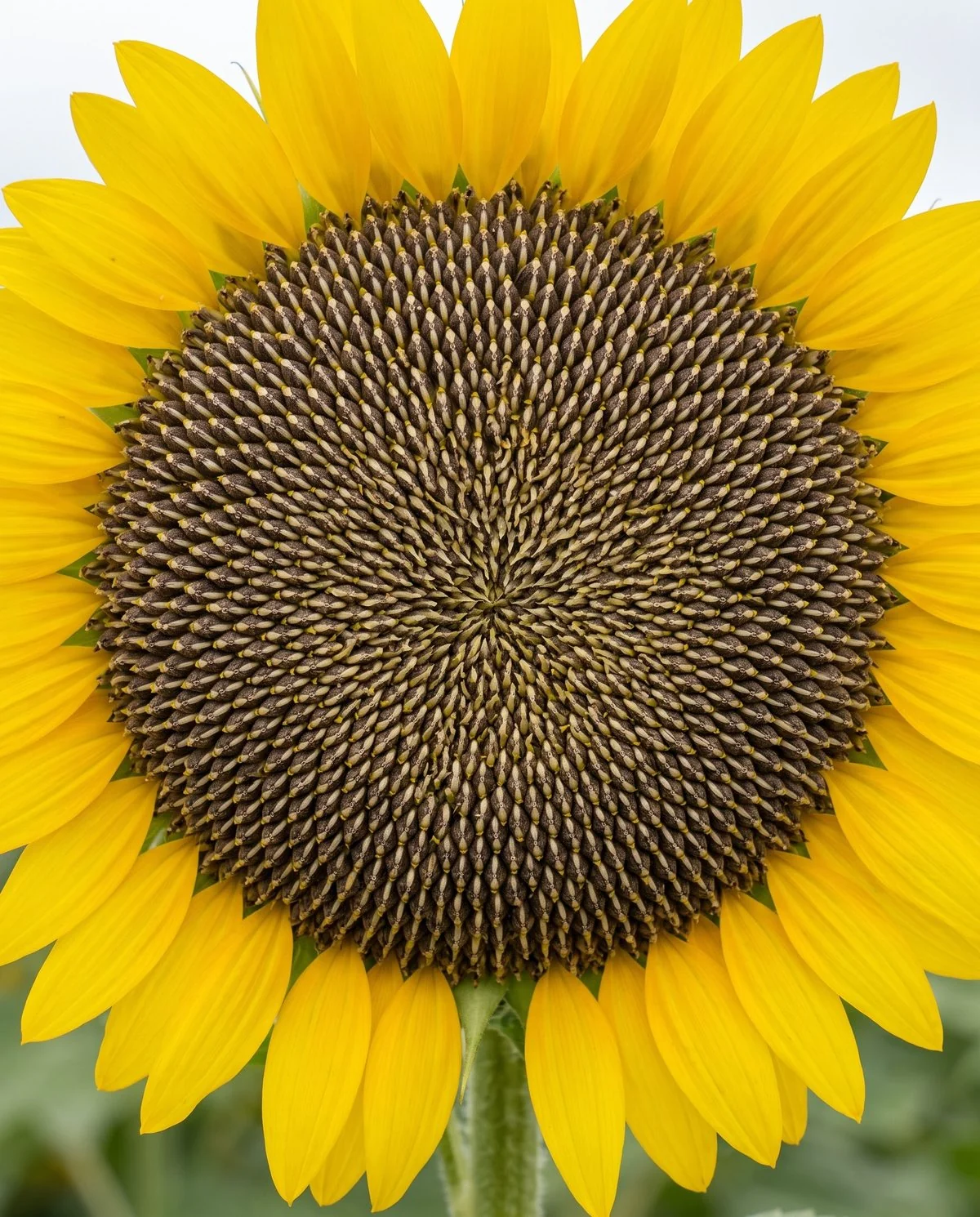
Look for what the insect leaves behind rather than for the insect. SDSU's entomology records that sunflower seed maggot larvae tunnel through the head feeding on florets and ovaries and form oblong pupae, tan or yellow at first and later reddish brown, visible as small brown structures sticking out of the head, with a single larva able to damage 10 to 12 ovaries. Sunflower moth larvae leave heads disfigured with dark frass pellets and tangled mats of webbing, and severe infestations can cost 30 to 60 percent. A healthy head is tightly packed developing seed with no webbing, no frass and nothing protruding. Both sides are photographed as insect-damage evidence; the specific pupal colour would read more credibly from a real photograph.
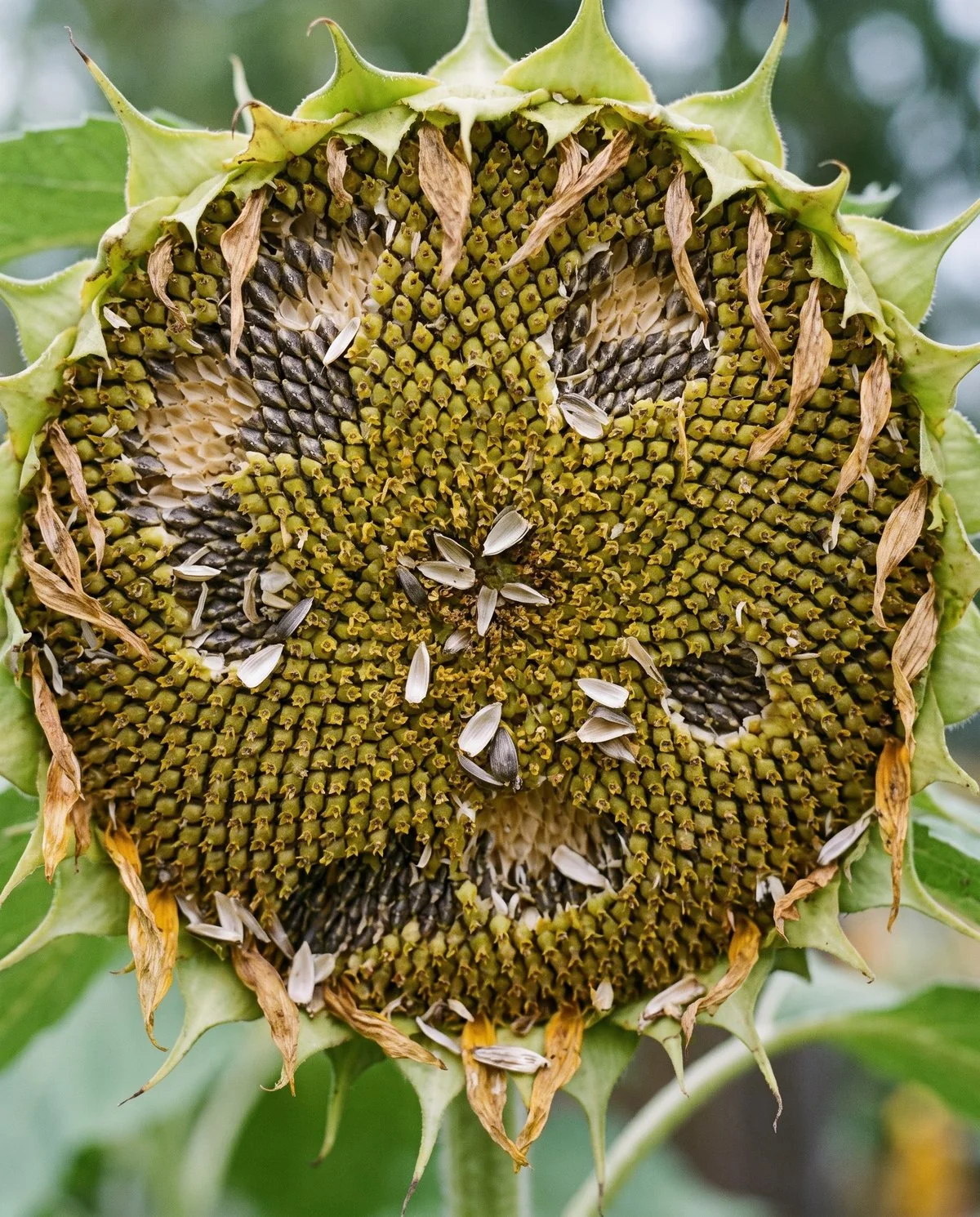
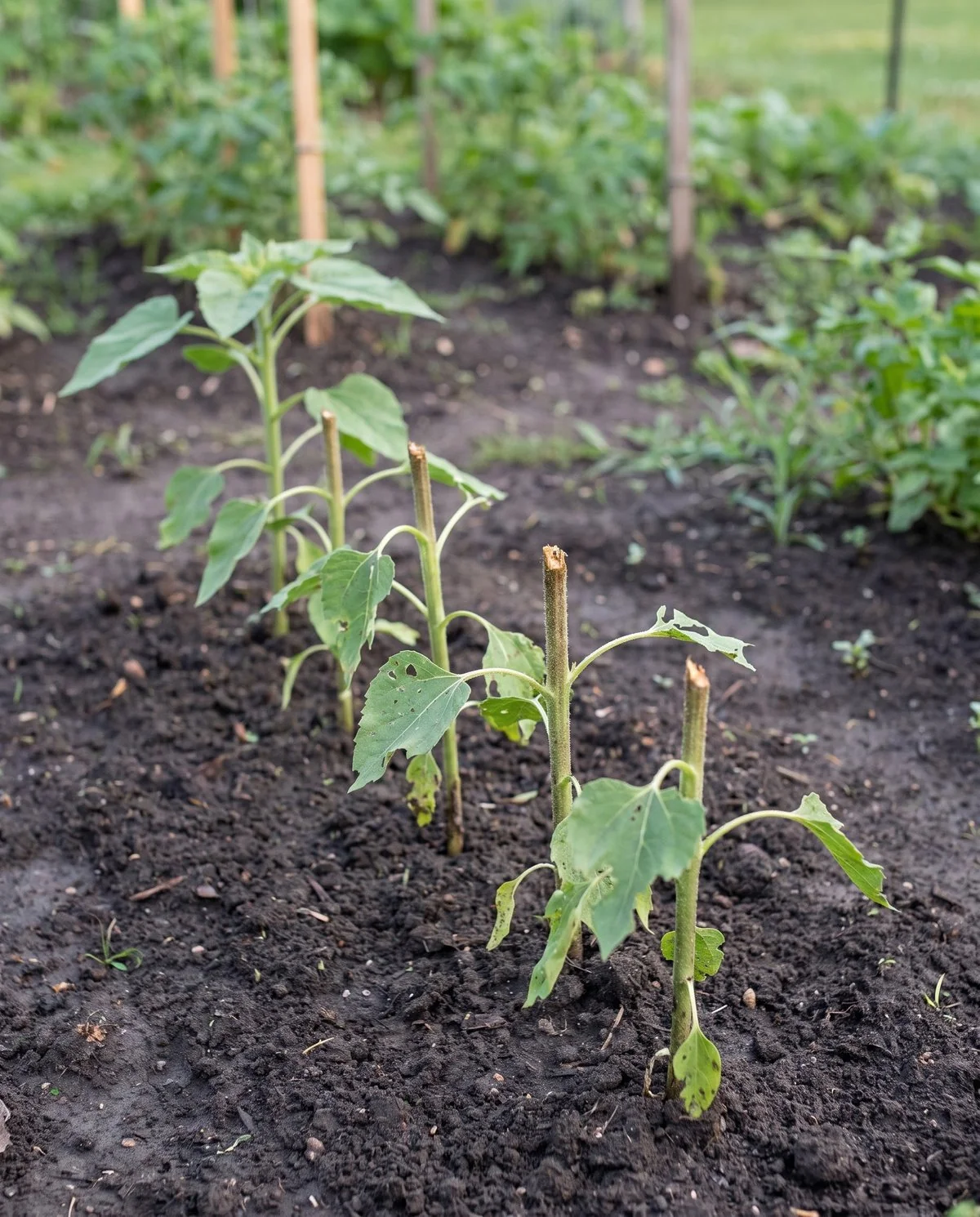
Read where the damage sits and when it appeared. A bird or squirrel raid works the head itself, leaving it patchy and disturbed with shelled or missing seeds, and it starts once the seeds begin to fill and harden. Deer and rabbit browse is lower down and earlier, buds or young stems bitten or snapped off cleanly, often overnight and often at the seedling stage. That the two are genuinely separate problems shows in the sources: K-State publishes a routine covering method for seed theft while UGA flags deer separately as needing fencing or repellents in high-population areas.
Rub it, then look for a halo. NDSU describes powdery mildew as white spots of fungal mycelium that are easily rubbed off, typically appearing on both leaf surfaces and favoured by humidity without needing free water on the leaf. Rust changes with the season in the same source: yellow to orange pycnia bumps and orange aecial cups early, then dusty cinnamon-brown pustules that also rub off easily and often carry a yellow halo, and finally hard black telia pustules at crop maturity. The stakes are real rather than cosmetic, with rust yield losses up to roughly 80 percent reported in North Dakota and extension agronomists treating at 1 percent severity on upper leaves at or before bloom. Neither side is photographed here.
Look for the halo, because that is the difference and it is easy to invert. NDSU describes Alternaria leaf blight as small, dark, angular spots that coalesce with surrounding yellowing as it progresses, and bacterial leaf spot, in the same diagnostic series, as angular necrotic spots with yellow haloes. The guide keeps them as two separate entries precisely because they are close enough to confuse from a photograph alone, which is also why neither side is generated here.
What sunflower growers actually ask about, ranked by frequency
1,224 unique posts from r/gardening and r/plantclinic, deduplicated by permalink, counted by a keyword pass over full title and body text with the matched posts dumped out and read alongside each count. Two rows are flagged inside the list rather than quietly cleaned: the seedling bucket is regex-broad rather than problem-specific, and the allelopathy row is a floor that means the opposite of what its size suggests. Themes overlap and do not add to 100.
Which animal, and at which stage, because the two ends need different answers. K-State treats bird and squirrel seed theft as routine enough to publish a standard method, covering the head with a paper sack or cheesecloth secured with a rubber band once the petals brown, which also stops ripe seed dropping out of the head. UGA flags deer separately as a threat in high-population areas needing fencing or repellents. The distinctive sub-pattern in this sample is squirrels and birds planting volunteer sunflowers from stolen feeder seed, which is not damage at all.
Read the number before the row. This is the largest raw count in the sample and it is deliberately not ranked first, because hand-inspection shows it captures a large share of ordinary seedling narration and proud look-what-sprouted posts alongside genuine failures, unlike the animal-damage row above it, which is problem-specific by construction. Where a real failure sits inside it, the first thing to check is soil temperature: Illinois Extension records that seed will germinate at 39 F but at least 46 to 50 F is required for satisfactory germination, and UMN adds that in cold wet soil the seed can rot outright rather than merely germinate slowly.
Which leaves, before anything else. This is a genuinely mixed bucket on inspection: some posts describe classic lower-leaf senescence, which is ordinary ageing, and others describe patchy or premature yellowing tied to overwatering, nutrient stress or disease. If the yellowing is confined to the lowest, oldest leaves and the rest of the plant looks sound, that is the normal version, and the split is what the decision path on this page exists to work through.
Whether the stem is firm. A maturing head nods downward as seed fills, which is mechanics rather than a symptom, and UC Davis's Harmer lab work shows young heads tracking the sun back and forth under circadian control with the stem staying firm and turgid throughout. True wilting goes soft and limp at the stem or neck. A bought bouquet dropping petals is often simply the end of that stem's vase life.
Three signals at once, per K-State: shrivelled florets in the centre of the disk, the back of the head turning lemon-yellow, and heads facing down. The verbatim ultimate check is to pull a few seeds and see whether they have turned black with white stripes. UGA adds that seed then needs several weeks of curing before a few days of refrigerated storage.
The leaf undersides and the ants. UMN describes sunflower aphids as pear-shaped soft-bodied insects one sixteenth to one eighth of an inch long, usually on stems and leaf undersides, causing wilting, yellowing, curling and distorted new shoots, with sticky honeydew often the most visible sign. Several posters in this sample correctly work out the ant connection themselves, since the ants are farming the aphids for that honeydew.
Whether the damage is on foliage or inside the head, because those are two different insects. Several posts in this row explicitly rule out animals first before landing on an insect cause.
The seedlings first, and then, less obviously, a drying head. One photographed case in this sample is a grower who cut a head early to dry it outdoors and found a horde of slugs inside the seed head when they came to take the seed out.
Sun hours, then feeding, then the calendar. The pack's own count splits across two overlapping regex buckets at 2.6 and 1.2 percent, and both are floors for the same reason every slow, unphotogenic problem is: a plant that simply has not flowered yet gives nothing to photograph. The three named causes are too little direct sun, a high-nitrogen feed that pushed leaf growth over budding, and a plant that is not yet mature against its type's 70 to 100 day window.
Whether the spots have haloes and what shape they are, which is the whole difference between the two candidates. NDSU's diagnostic series separates Alternaria leaf blight, small dark angular spots that coalesce with surrounding yellowing, from bacterial leaf spot, angular necrotic spots with yellow haloes, and keeps them as two entries specifically because they are hard to tell apart from a photograph.
The group, since staking is only a named requirement for one of them. UGA records that giant cultivars require staking at 2 ft spacing, while Iowa State calls the branching type a plant that stands without staking and UGA records its semi-dwarfs standing unaided.
Whether the break went through the stem, because that decides whether there is anything to save. Small in count and vivid in the text: several posters ask about grafting a snapped stem back together, and the one gardener in this sample who actually tried it ended with a failed graft.
Whether it rubs off, and whether it is even sunflower. NDSU describes powdery mildew as white spots of fungal mycelium that are easily rubbed off, typically on both leaf surfaces. Several posts matched into this row are actually about squash or cucumber in the same bed with a sunflower mentioned in passing, and they were hand-inspected out rather than left to inflate the figure.
The season, since rust changes appearance across it. NDSU records yellow to orange pycnia bumps and orange aecial cups early, dusty cinnamon-brown pustules that rub off easily and often carry a yellow halo through the season, and hard black telia at crop maturity. Multiple posters in this row ask is this rust without being sure, which is why the photo pair for it stays unphotographed until a real reference image exists.
Read this row backwards. Allelopathy is a slow, invisible soil-chemistry effect with nothing to photograph, so it is almost absent from a photo-driven forum while being real, named and university-documented. Three posts is not evidence the problem is rare; it is evidence of what a forum sample cannot see, and the confirmation is that a gardener took the question to a university expert network directly, where an Ask Extension expert changed their own initial assessment after checking the research.
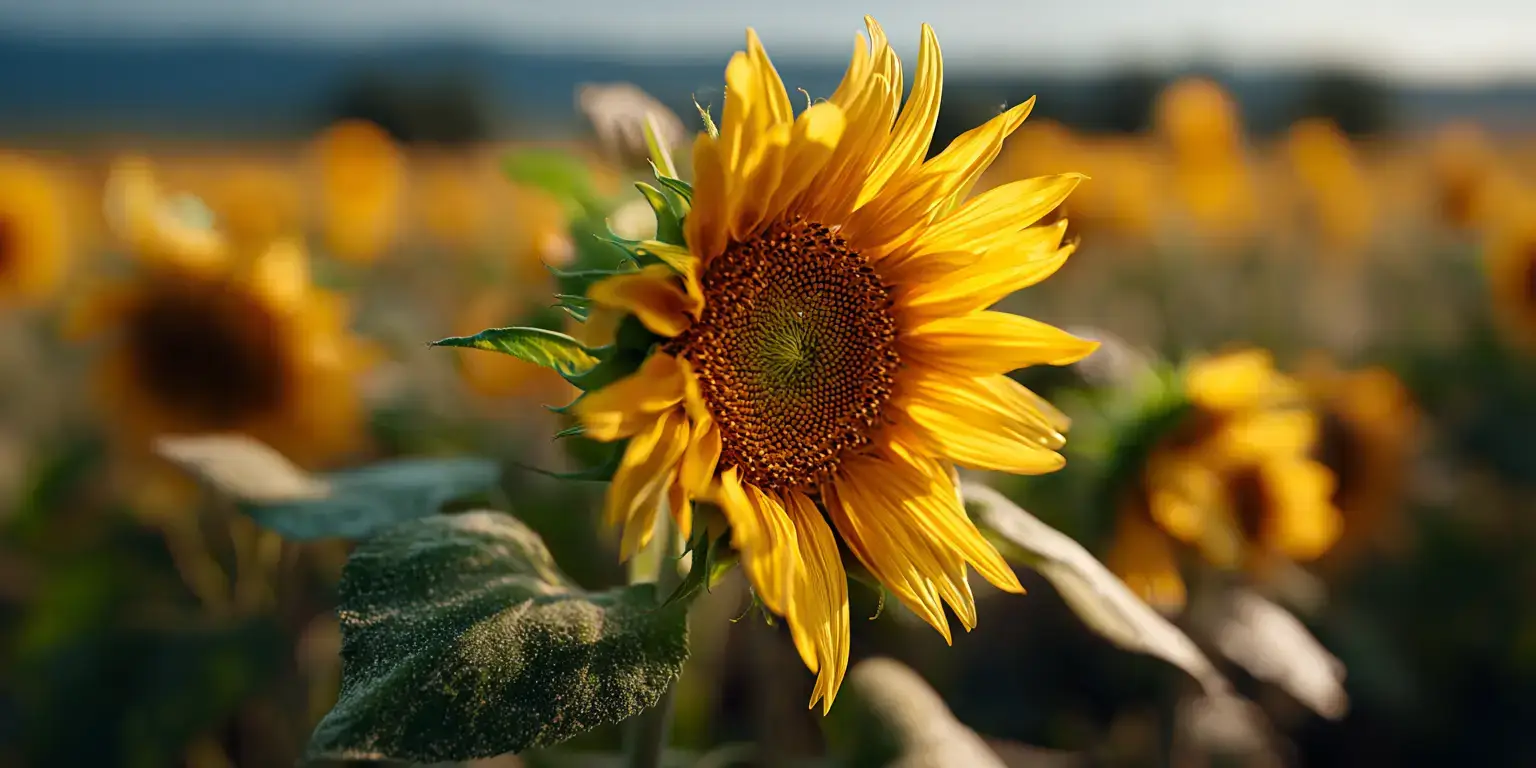
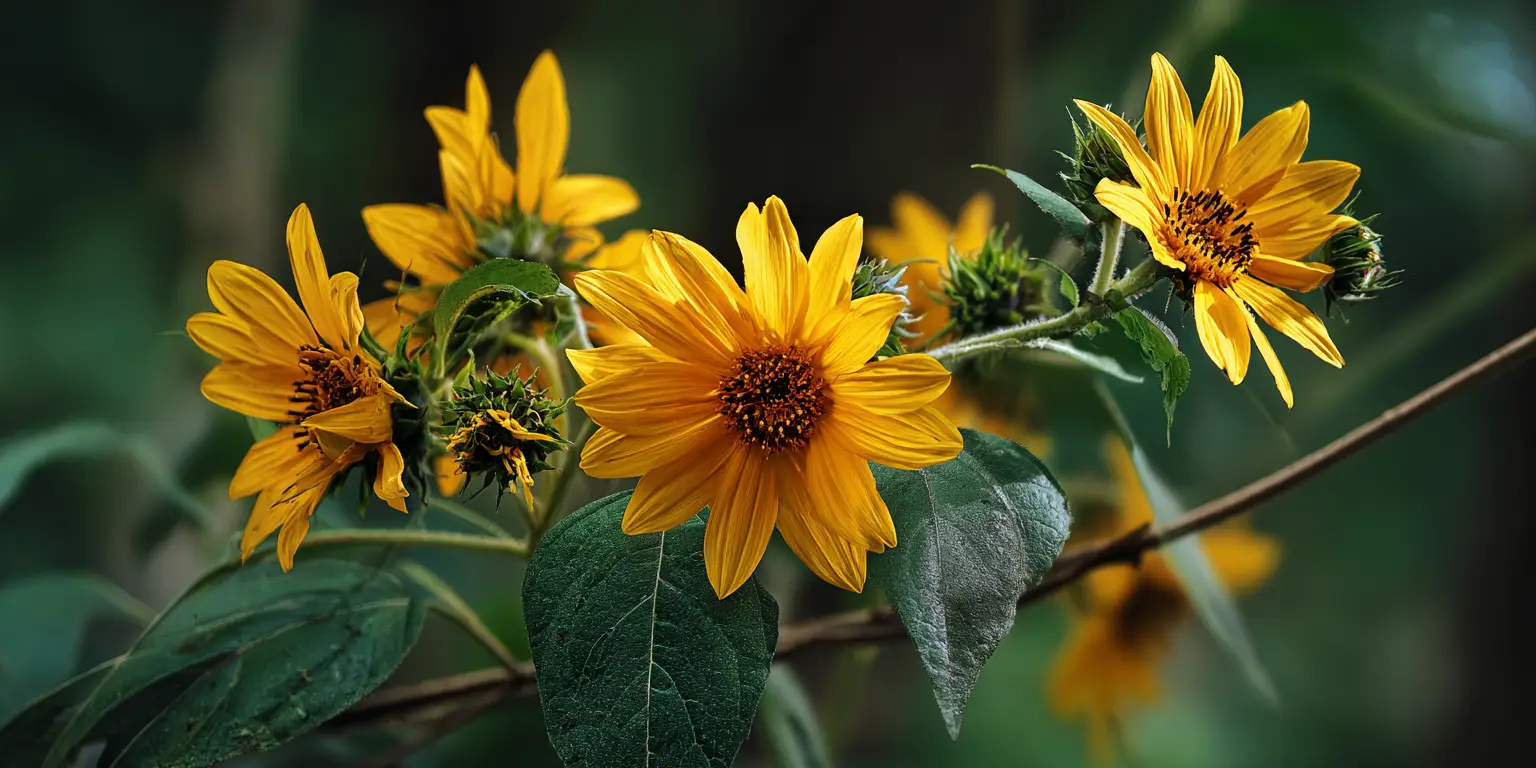
Flower photos
FAQ
Do sunflowers come back every year?
Most garden sunflowers (Helianthus annuus) are annuals: they bloom, set seed, and die in one season and do not regrow from the same root, so they are sown again each spring. Several perennial species exist within the genus Helianthus, but they are distinct from the familiar annual and less commonly grown. Saved or self-sown seed is what brings sunflowers back the following year.
How long do sunflowers take to bloom from seed?
About 70 to 100 days from sowing, depending on type and conditions. Fast dwarf varieties can flower in as little as 60 days, while giant and branching types run closer to 90 or 100. Warm weather, full sun, and decent soil all speed things along.
How tall do sunflowers get?
It depends entirely on variety. Common garden types reach 5 to 10 feet, giant cultivars commonly hit 12 to 15 feet, and the tallest ever recorded have passed 30 feet. Dwarf varieties stay at 1 to 3 feet, the ones to choose for pots or a low edge.
Do sunflowers really follow the sun?
Young ones do, mature ones do not, and that distinction is the whole answer. While a sunflower is still growing, the buds and upper leaves turn east to west through the day and reset overnight, a movement called heliotropism. Once the flower opens fully and the stem stiffens, the head stops rotating and settles facing east, where it stays. The idea that an open sunflower swivels to follow the sun all day is a myth.
Can sunflowers grow in pots?
Yes, with the right variety. Dwarf and compact types do well in a deep pot, at least 12 to 16 inches across, with good drainage and rich potting mix, given a very sunny spot and regular water, since containers dry out fast. Tall and giant varieties are a poor fit, as the height and head weight make a pot tip over.
How do you harvest sunflower seeds?
Let the head ripen on the plant until the back turns yellow-brown and the seeds plump and start to loosen, then cut it with a length of stem and dry it further somewhere airy. Rub the seeds free once dry. They are edible for people and a favorite of birds, so a head left in the garden feeds wildlife straight off the stalk.
Are sunflowers toxic to cats or dogs?
No. The ASPCA lists sunflowers as non-toxic to cats, dogs, and horses. A pet that chews a leaf might get a mild, brief stomach upset from the plant material, but there is no poisoning risk, which makes sunflowers a safe choice to grow around animals.
How do I graft a snapped sunflower to give it a shot to heal?
Honestly, once the stem has snapped through it is usually not salvageable as one plant, and the gardener in this pack's own corpus who tried exactly this ended with a failed graft. If the bud was already close to opening, the realistic outcome is to cut the top portion and condition it as a cut stem in water rather than to expect the plant to knit itself back together. Eighteen posts in the sample describe a snapped stalk, several of them after a squirrel worked the base.
If I cut the flower for a vase, will the plant have the energy to make another?
It depends entirely on the group, and for one of them the question answers itself. A true single-stem type produces exactly one bloom, so cutting it sacrifices nothing that was coming. A branching type is the opposite case: cutting the first bloom can actually push the side branches to develop further, which is the habit Iowa State points to when it calls that group excellent for cutting.
There are empty shells in my head. Did I harvest wrong?
No, and the cause is months old. K-State states that empty shells usually indicate a lack of pollination earlier in the year, which is a separate matter from harvest timing. Timing has its own three signals: shrivelled florets in the centre of the disk, the back of the head turning lemon-yellow, and heads facing down, with the final check being to pull a few seeds and see whether they have turned black with white stripes.
Is the yellowing on my lower leaves fungal, or is it normal?
If it is confined to the lowest, oldest leaves and the rest of the plant looks sound, that is ordinary lower-leaf senescence rather than disease. Yellow leaves are 12.3 percent of this pack's 1,224-post sample and the bucket genuinely splits, with the other side being patchy or premature yellowing tied to overwatering, nutrient stress or disease. Which leaves are affected is the distinction that separates them, and it is the one most of the posts leave out.
Can I plant something where a sunflower recently was?
Yes, with a real caveat that is specific and temporary rather than blanket. Sunflowers release allelopathic compounds through their roots that can inhibit germination, growth or vigour in some neighbouring plants, with the effect described as less pronounced for the grass family than for others, and the compounds degrade in soil over time rather than leaving lasting toxicity. The source is an Ask Extension expert response, and the useful part of it is that the expert revised their own initial assumption after checking the research.
Interesting tips
A field of open sunflowers all facing the same way is no accident: once mature they lock to the east, an orientation that warms the bloom early and, in a much-cited study, drew several times more morning pollinators than a west-facing flower. For staking, the moment to act is before the bud swells, because a tall stalk that has already grown crooked toward the light will not straighten, and driving a stake next to an open giant risks spearing the taproot. To stagger a long cutting season from a single packet, sow a short row every week or two and pinch the growing tip of branching types early, which trades one big bloom for a cluster of smaller, vase-sized stems. And a sunflower head is worth leaving on the plant past its prime on purpose, because a dried head feeds finches and chickadees through fall and self-sows next year’s volunteers for free. That same generous, sunny face is why sunflowers anchor so many birthday and other cheerful arrangements.
Related Guides & Flowers
Mexican Sunflower
Tithonia diversifolia
A tall, fast growing annual with fiery orange daisy like blooms that draw in butterflies, bees, and other pollinators all summer in full sun.
Coreopsis
Tickseed
Easygoing sun lover with masses of yellow daisy like flowers and very good drought tolerance, perfect for bright, low care borders with a wildflower feel.
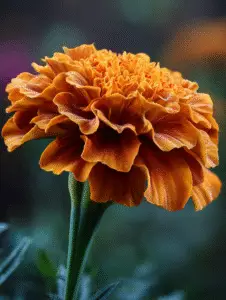
Marigolds
Tagetes
Bright yellow and orange annuals from the daisy family that thrive in summer heat, bloom for months, and work well with sunflowers in rustic beds and cutting rows.
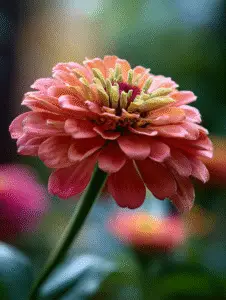
Zinnias
Heat loving annuals with bold, long lasting daisy like blooms from summer to frost, great for pollinators and for cheerful cut flower bouquets beside sunflowers.
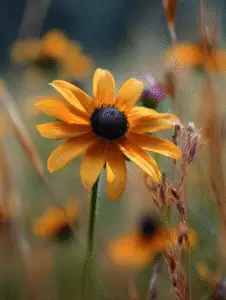
Black eyed Susan
Rudbeckia
Classic North American wildflower with golden petals and a dark center, very close in look and garden use to smaller sunflowers, ideal for naturalistic borders.
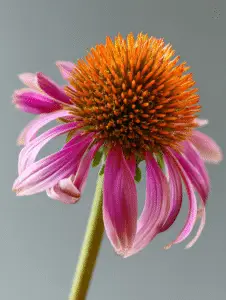
Coneflower
Echinacea
Tough prairie perennial with daisy like blooms and raised cones, valued for summer color, pollinator support, and a similar informal style to sunflowers.
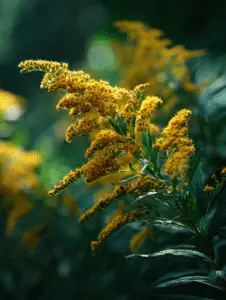
Goldenrod
Solidago
Sun loving perennial with tall plumes of golden flowers that light up late summer and fall and act as a strong nectar source when many other blooms are fading.
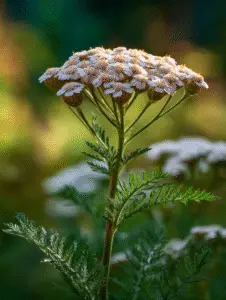
Yarrow
Achillea
Hardy perennial with flat clusters of tiny flowers and feathery foliage, very drought tolerant and great for sunny meadows and mixed borders with sunflowers.
References
- Sunflowers, University of Minnesota Extension→
- Growing sunflowers in the home garden, University of Georgia Extension→
- Sunflower (Helianthus) is non-toxic to dogs, cats, and horses, ASPCA→
- Mature sunflower inflorescences face east to maximize absorbed light energy, peer-reviewed study→
- Circadian regulation of sunflower heliotropism, floral orientation, and pollinator visits (Atamian et al., Science 2016)→
Enjoying our flower guides? Add YourFlowersGuide as a preferred source on Google. It helps more readers find us.
Add to Preferred Sources