Tulip bloom time across the US
Interactive map
 See the interactive map
Drag the date and the bloom moves north across the country. Every point has its own window, and the map says where it has no records rather than guessing. Free, with nothing to sign up for. Open the tulip map.
City by city
Typical window, earliest first. Cultivars of the same flower can open days or weeks apart.
Taxonomy and origin
The tulip sits in the genus Tulipa in the lily family, Liliaceae, alongside lilies and fritillaries. Botanists describe roughly 75 wild species, and the center of their diversity is the mountains of Central Asia, the Tien Shan and Pamir-Alai ranges, from where they spread naturally into the Middle East, North Africa, and southern Europe. These are plants of cold-winter, dry-summer steppe and high country, which explains almost everything about how they are grown: they need a long winter chill to flower and they want their soil dry while they rest in summer. Tulips were prized in the gardens of the Ottoman Empire, reached Western Europe in the 1500s, and set off the Dutch "tulip mania" of the 1630s, when single rare bulbs briefly traded for the price of a house before the market collapsed. The Netherlands has been the heart of tulip growing ever since. The name Tulipa is usually traced to a Persian word for turban, a nod to the shape of the closed flower.
Tulip divisions, and which ones actually come back
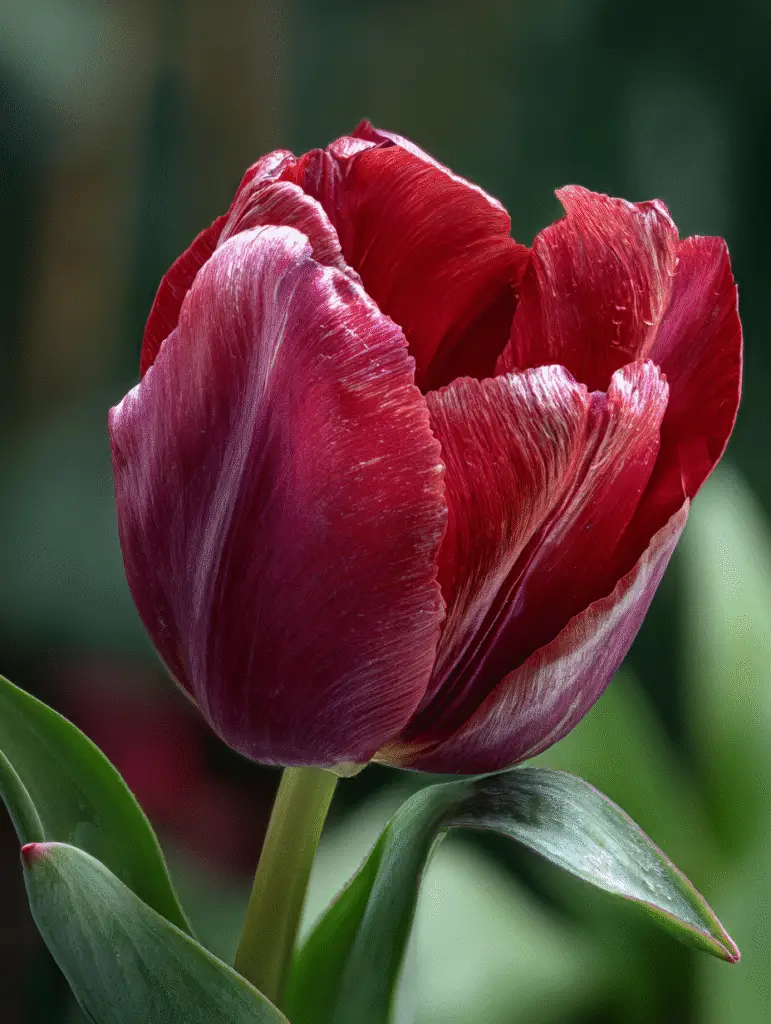
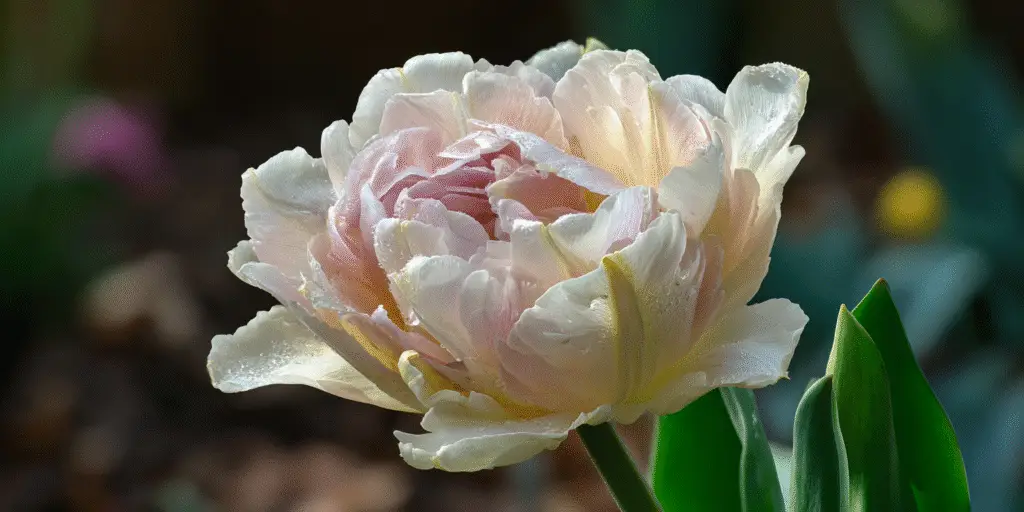
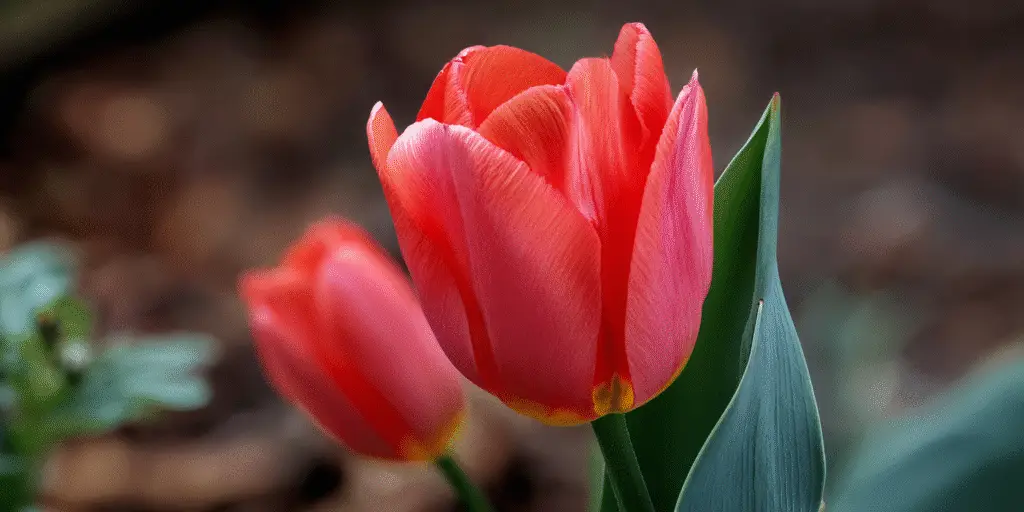
The bulb trade sorts Tulipa into 15 official divisions plus a sixteenth multi-flowering group, restated for gardeners by Iowa State Extension. These eight cover almost everything sold in a garden centre. The verdict under each photo is Iowa State's own wording on perennializing, not our summary of it.
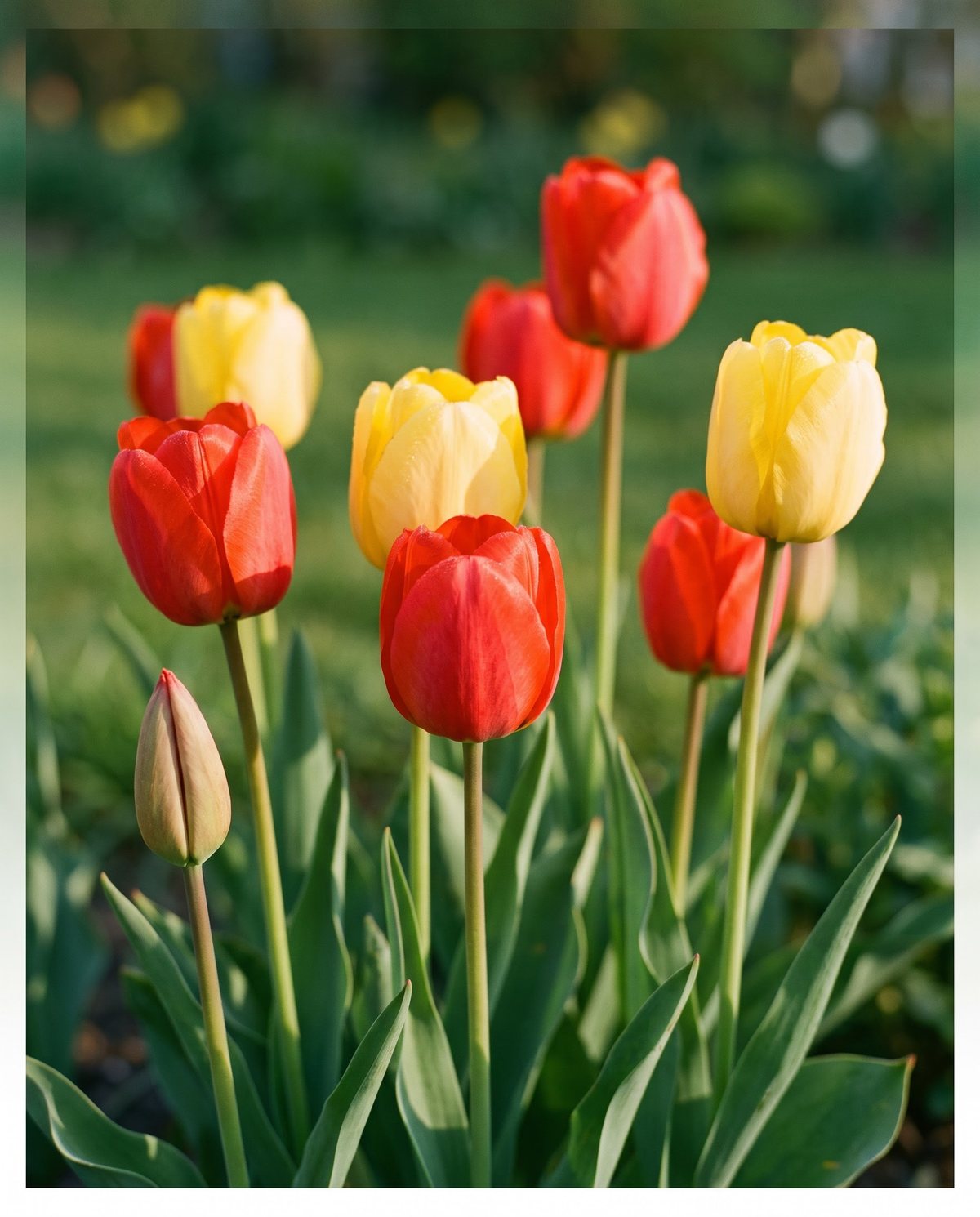
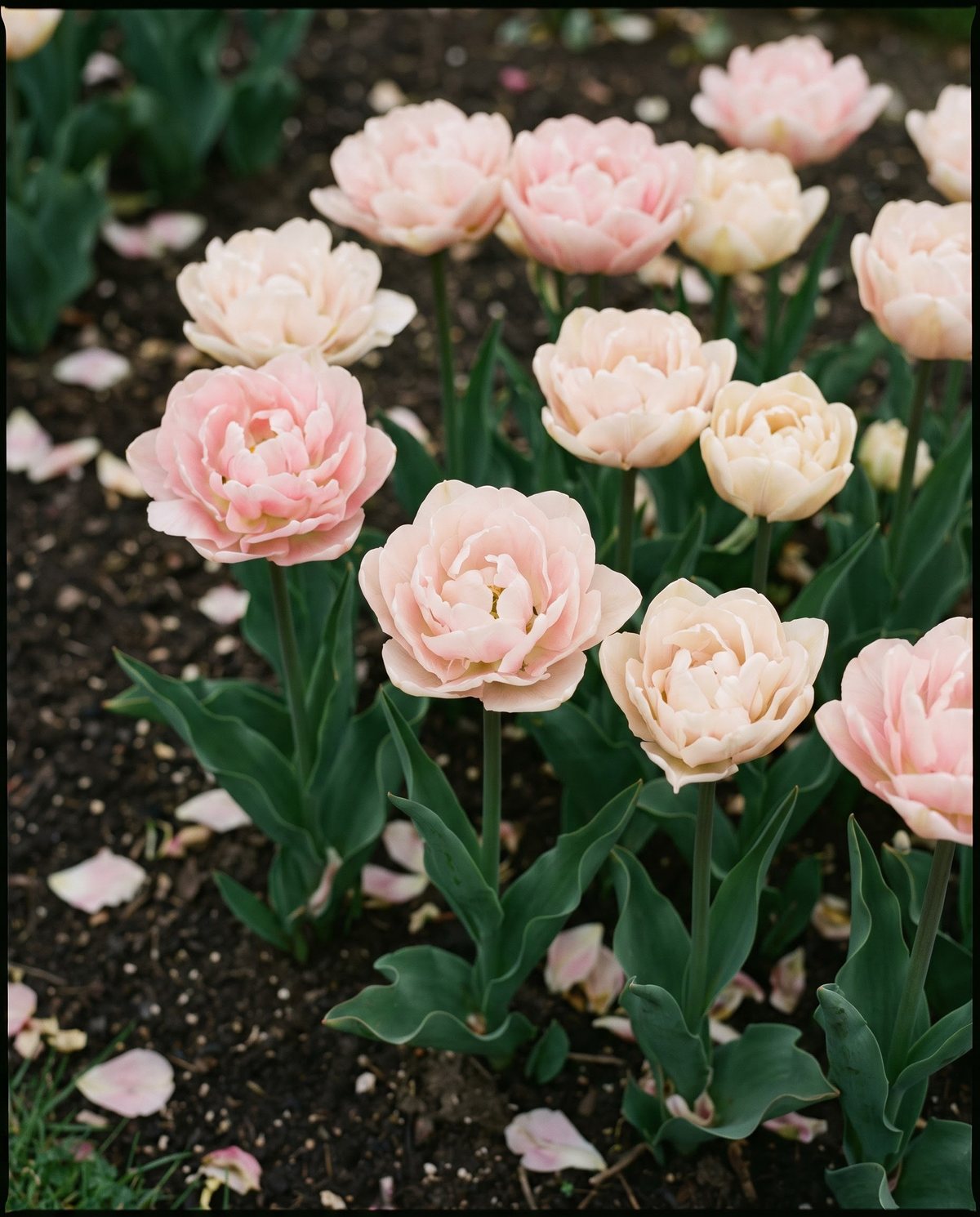
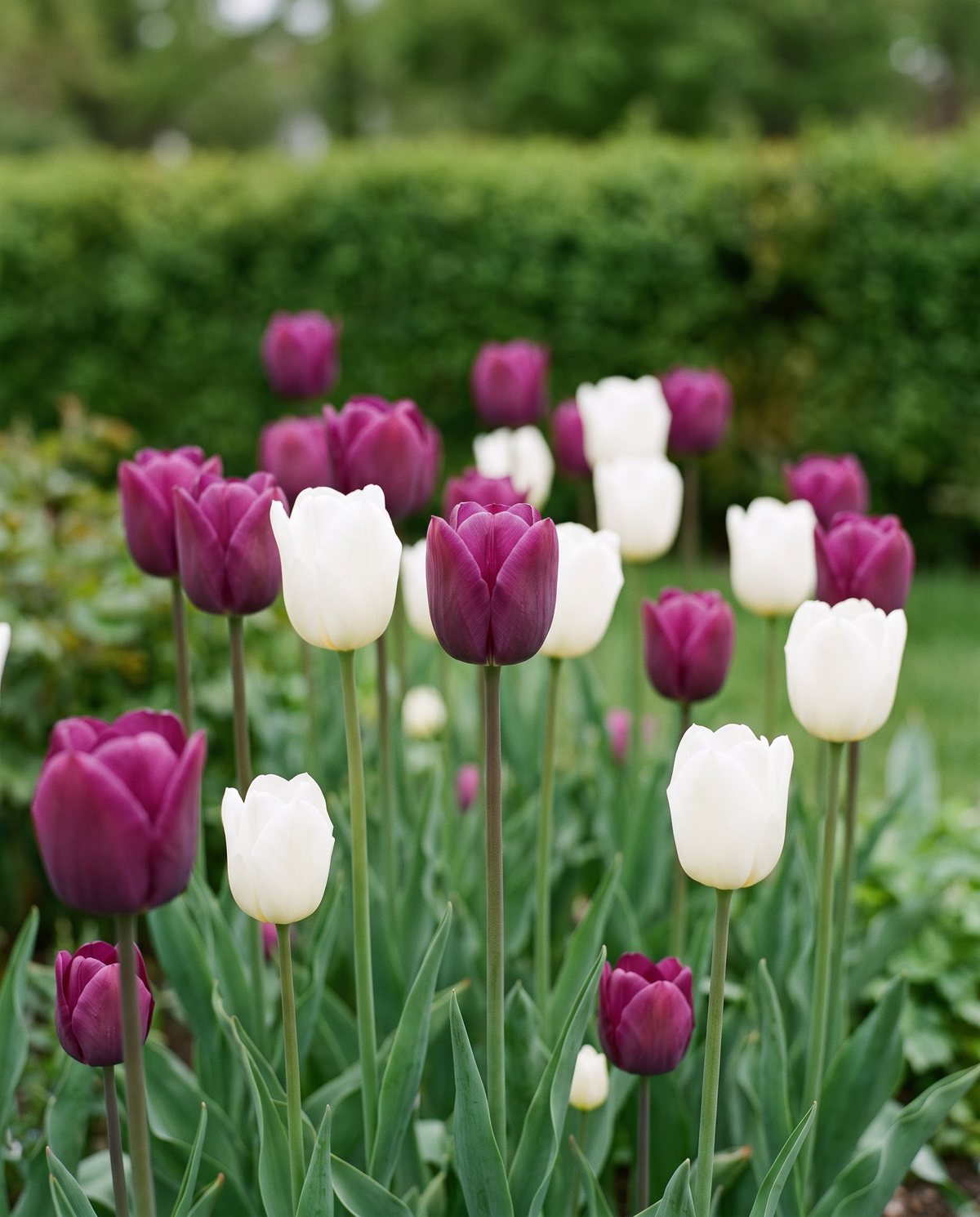
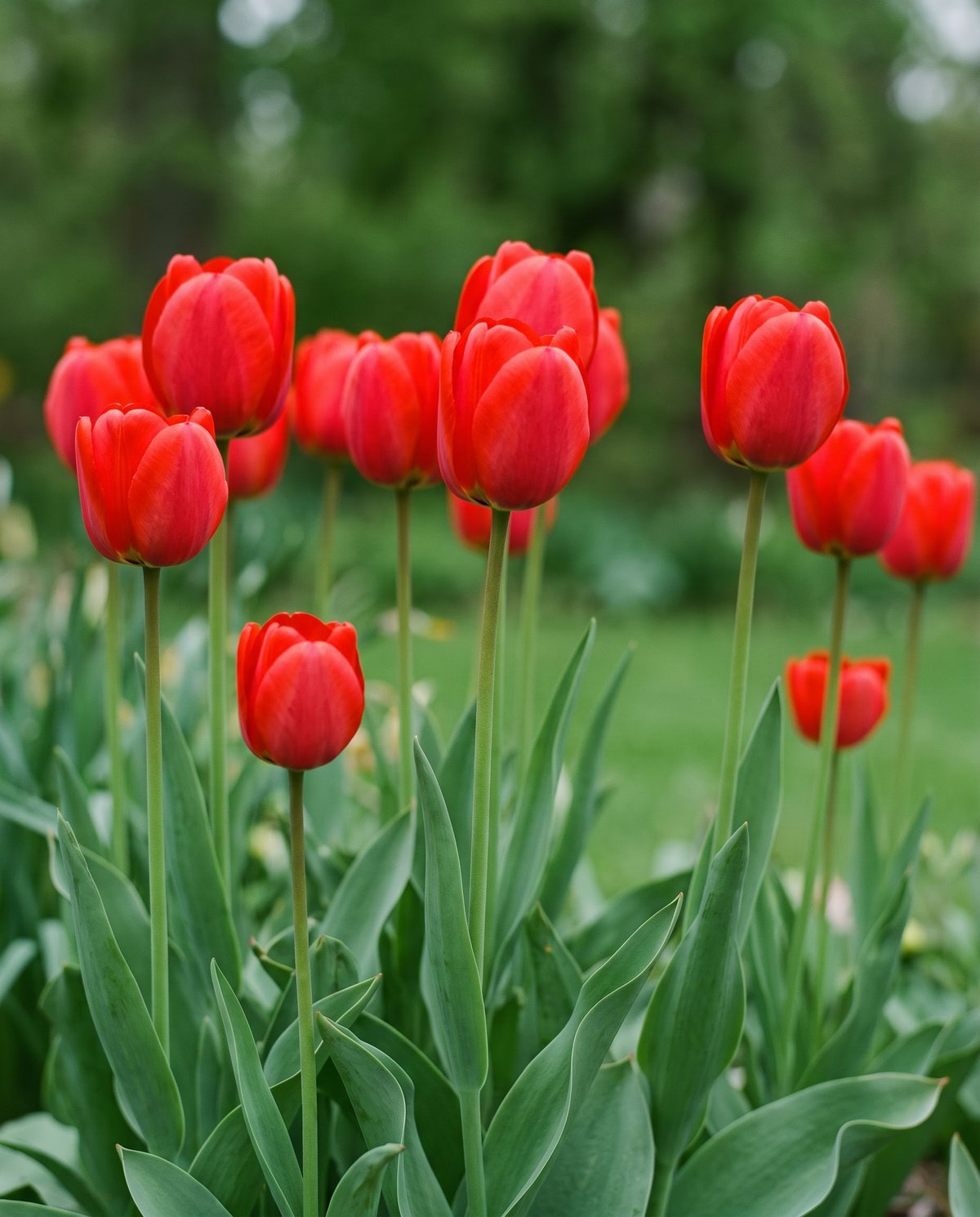
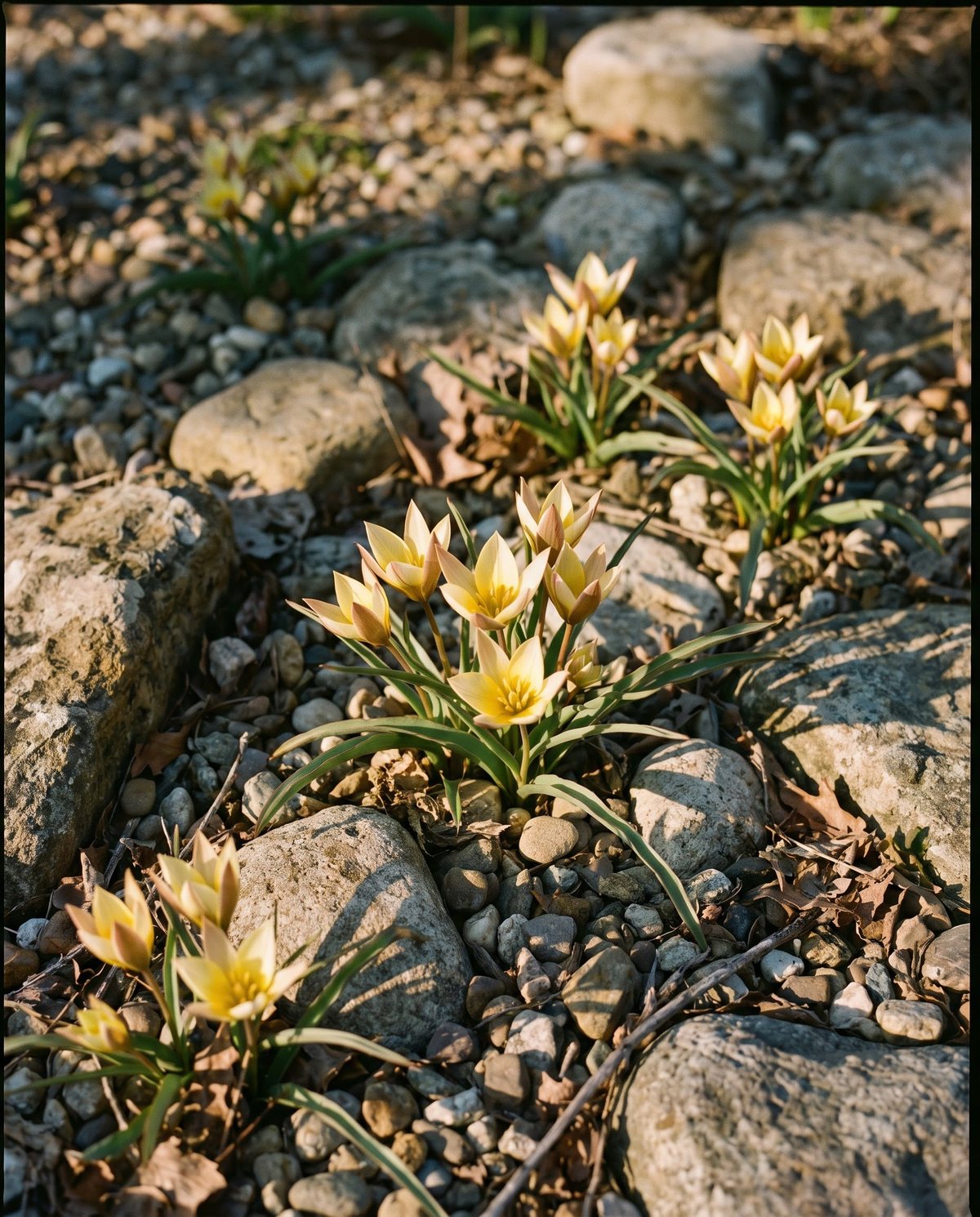
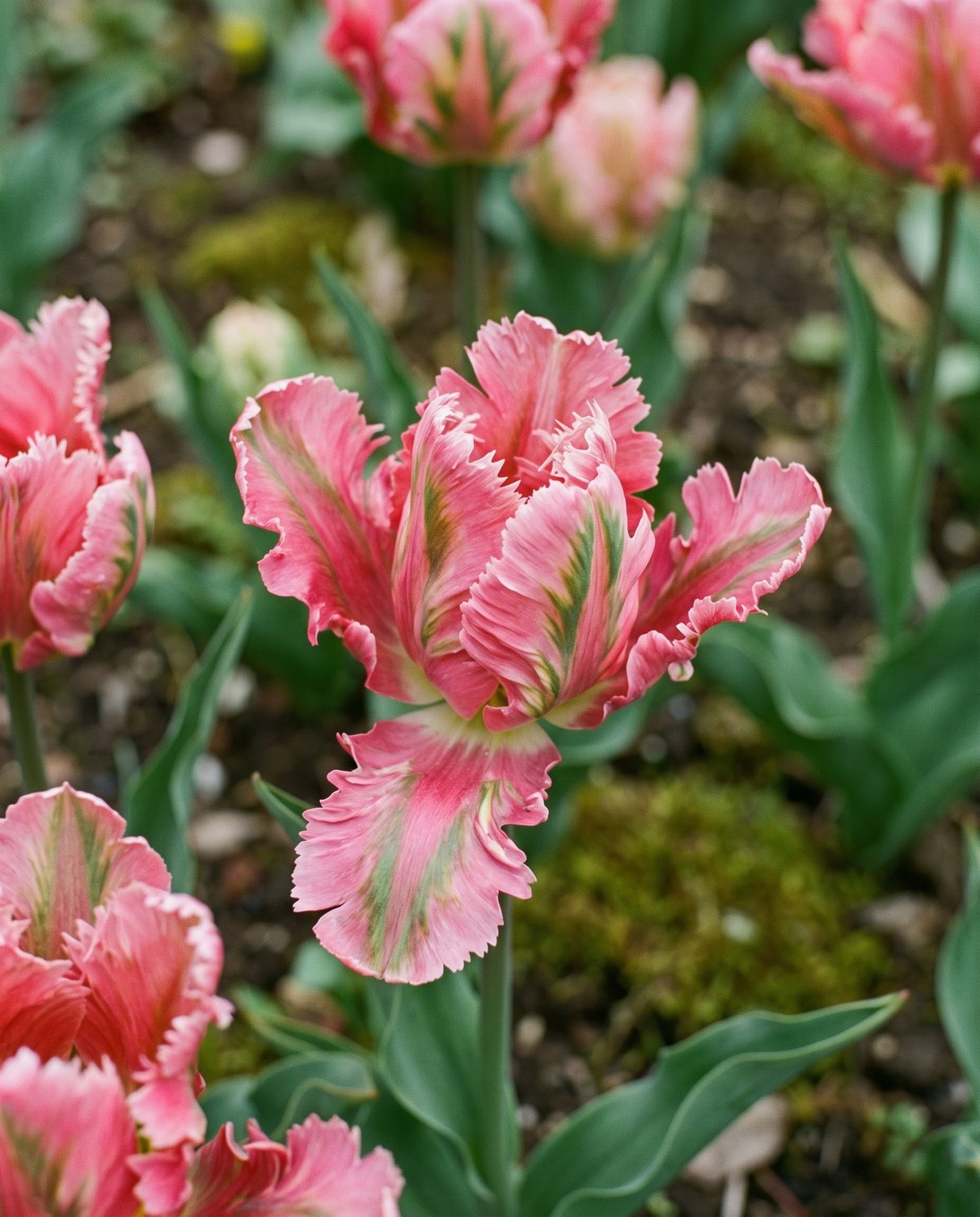
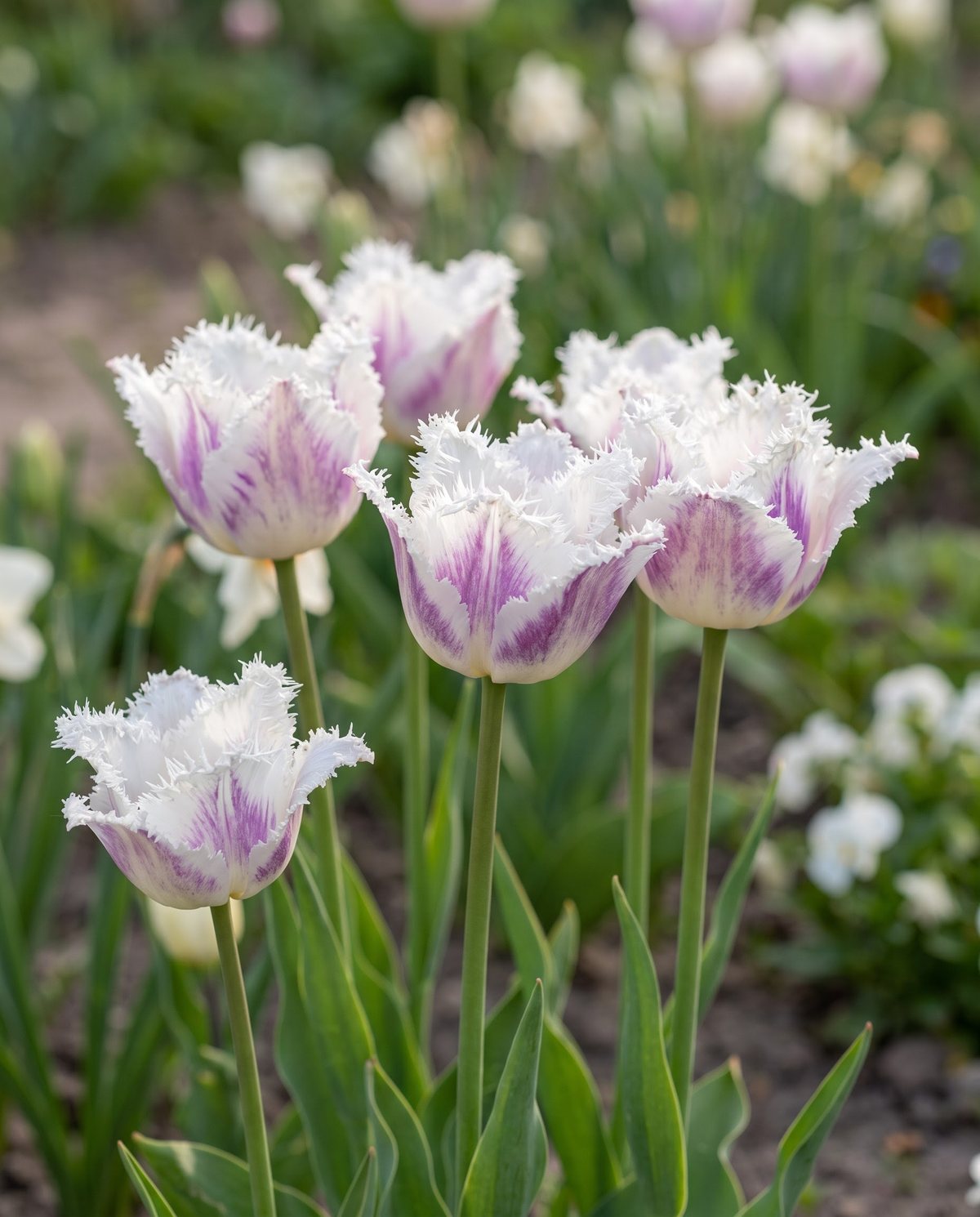
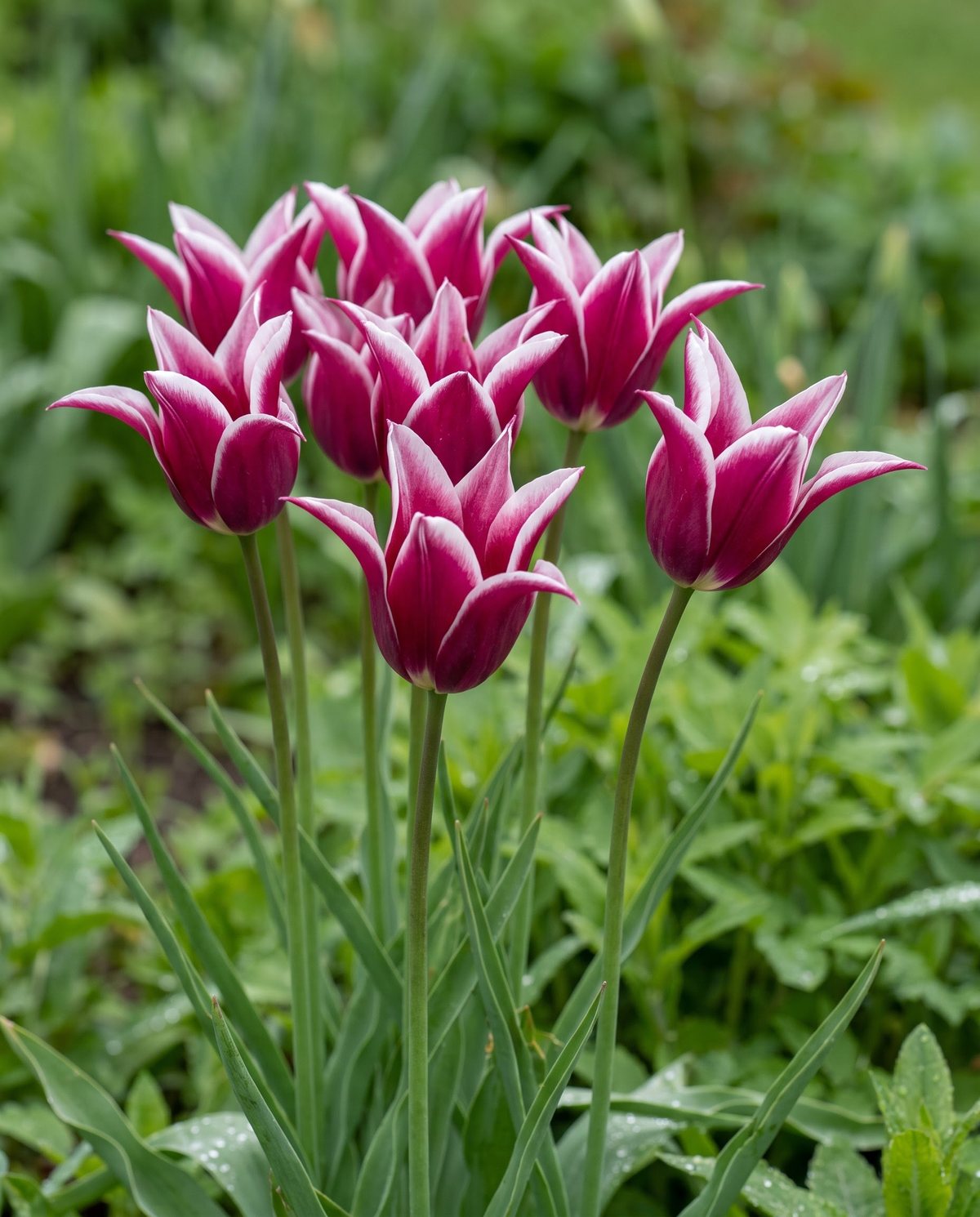
Three divisions not photographed here carry the same good verdict: Kaufmanniana, the waterlily tulip at 6 to 8 in, is named a long-lived perennial, and Fosteriana (the Emperor tulips) and Greigii are both named as perennializing well. Species tulips only sometimes naturalize, and Iowa State is specific about the condition: favourable growing conditions, which for a tulip means a dry summer. Iowa State puts most modern varieties at 3 or 4 years of good bloom on its perennializing FAQ and at 3 to 5 years on its problems page; both figures are its own.
Bloom time
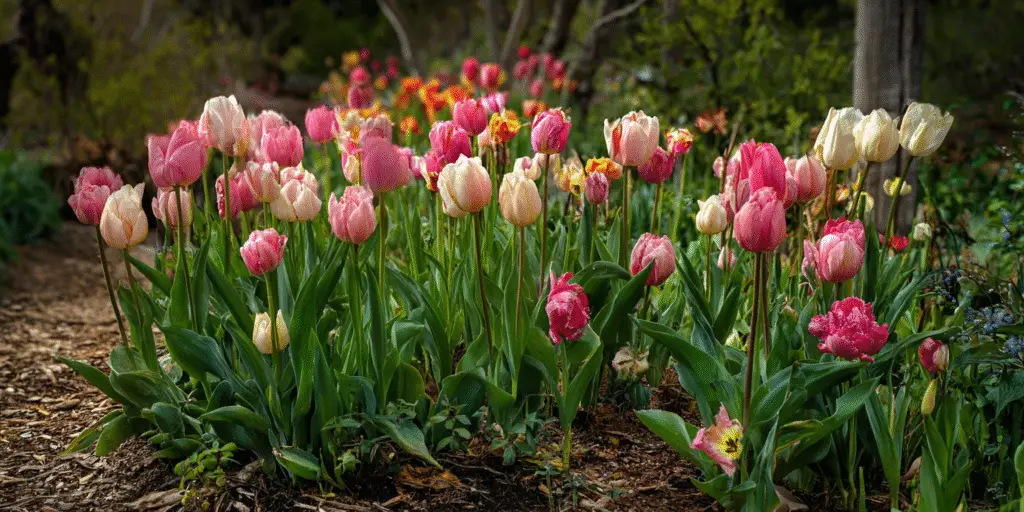
Tulips bloom in spring, generally from March through May depending on the type and the weather. Early classes such as Kaufmanniana and single early tulips can open in late March, mid-season Darwin hybrids and Triumphs follow in April, and lily-flowered, parrot, and single late tulips carry into May. Planting a mix of early, mid, and late classes stretches color across six weeks or more from a single bed. Cool weather holds each flower longer while a warm spell can shorten the show to a matter of days, since heat pushes the petals to drop. Once the flowers fade, the plant is not finished: the leaves keep feeding the bulb for several weeks, building the energy for next year's flower before the whole plant goes dormant by early summer.
What to expect from tulips year to year
Year one is close to guaranteed for any bulb planted at the right depth in well-drained soil with its cold requirement met, naturally in zones 3 to 7 or by refrigeration in zones 8 to 10; bloom size and stem length still vary by division, but first-year flowering itself is the reliable part of the tulip life cycle. After that the honest odds split by class. Iowa State Extension states it consistently across three of its own pages, at 3 or 4 years of good bloom on the perennializing FAQ and 3 to 5 years on the problems page, and both figures are quoted here rather than one being quietly chosen. Inside that decline curve Triumph is Iowa State's own named weakest performer, a short-term perennial blooming only a few years, while Darwin Hybrid is its named best, one of the better perennial tulips, often blooming well for several seasons. Fosteriana, Kaufmanniana, Greigii and the true species tulips are the classes flagged as long-term perennializers or naturalizers, and every other large-flowered hybrid division, Single Early and Late, Double Early and Late, Lily-flowered, Fringed, Viridiflora and Parrot, follows the general 3 to 5 year decline unless a source says otherwise. Two real gardeners recorded the curve better than any average could: one planting was beautiful two years ago, a bit scraggly last year, and now carries a few petals and no buds; another, seven or eight years in the ground, has flowers getting visibly smaller and all now one colour where a rainbow was planted. The second gardener's colour convergence has a plausible explanation, that weaker strains in a mixed planting die out first while one vigorous one persists, but that is inference rather than a sourced fact and is marked as such. The condition that changes the whole picture is the pair of seasons tulips evolved for: a genuinely cold winter followed by a hot, dry summer bake. Given both, Darwin Hybrids, Fosteriana, Kaufmanniana, Greigii and species tulips multiply and improve year over year instead of merely surviving.
Height and spread
Height depends on the type. Small botanical and species tulips stand only 4 to 8 inches tall, which suits rock gardens and bed edges, while Greigii and Kaufmanniana types run 6 to 12 inches. Most familiar garden hybrids sit in the 12 to 20 inch range, and tall Darwin hybrids and single late tulips reach 20 to 28 inches on sturdy stems built for cutting. Each bulb sends up a single flowering stem with a handful of broad, strap-like leaves near the base, so tulips do not spread the way a shrub does. When gardeners talk about spread here they mean spacing: set bulbs about 4 to 6 inches apart in groups or drifts, because a tight cluster reads far better from a distance than a straight row of singles. Healthy bulbs form small offsets at the base over time, so a clump can slowly thicken, but tulips do not run or self-sow into a carpet.
Light
Tulips need full sun during their spring growing season, at least 6 hours of direct light a day. Strong sun keeps the stems short and sturdy and warms and dries the soil, which is exactly what a bulb wants as it grows and then rests. A bed under deciduous trees can work well, because those trees are still bare in early spring while the tulips are up, as long as the spot gets plenty of light before the canopy closes. Deep shade is the problem: tulips there stretch into tall, weak stems that lean and flop, produce fewer flowers, and are quicker to fail the following year. If a planting throws leaves but few blooms, too little sun is one of the first things to rule out.
Water
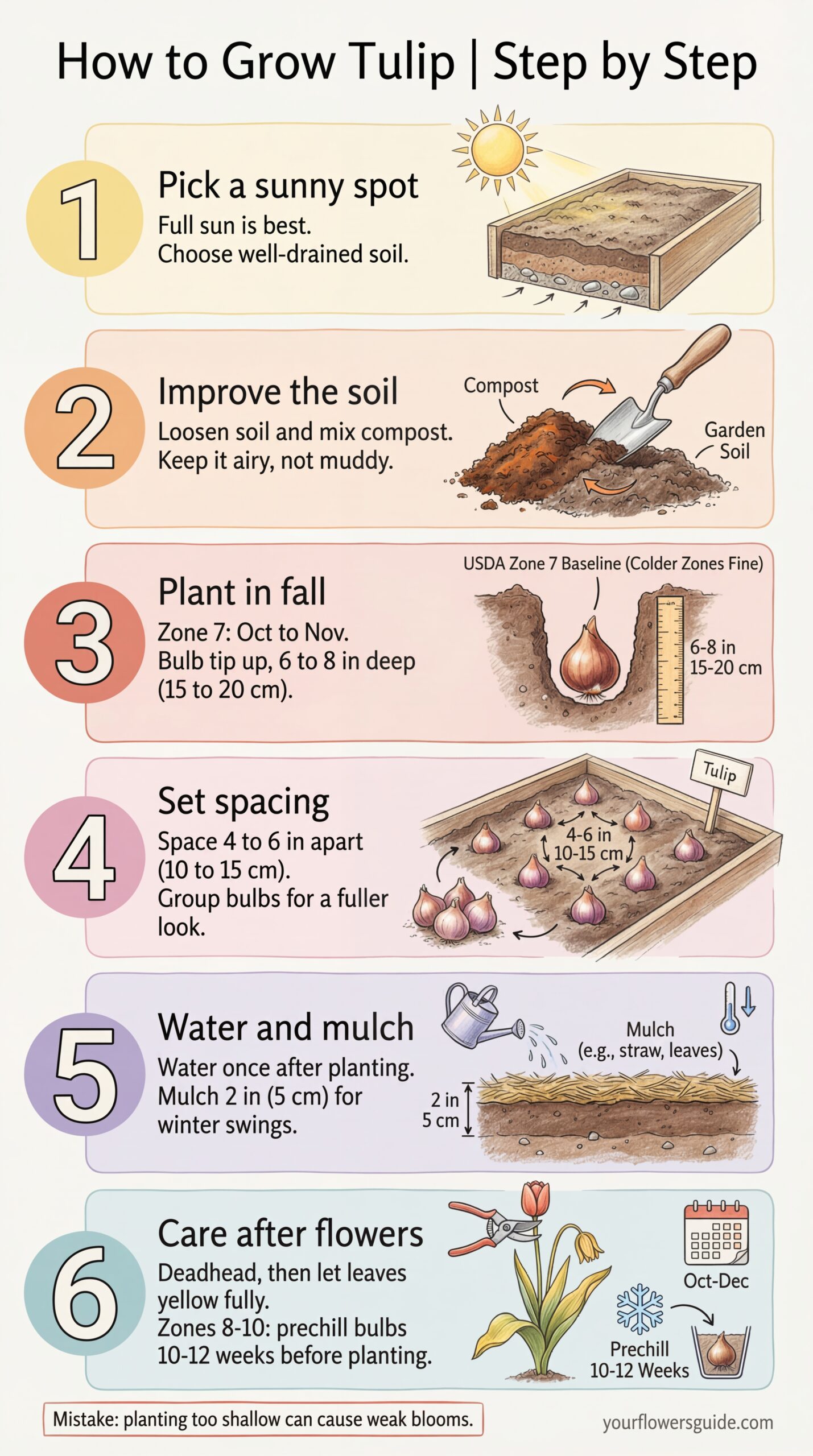
Tulips want moderate, even moisture while they are actively growing in spring, and in many gardens normal spring rain supplies most of it. During a dry spell, a thorough soak about once a week keeps the soil evenly moist without saturating it. Drainage is the part that matters most, because a bulb sitting in cold, wet soil rots rather than roots. Once the flowers have finished and the leaves begin to yellow in late spring, cut back sharply on water: dormant bulbs prefer dry summer soil, and a bed that stays wet through a humid summer is the classic way to lose them to rot. Where summers are wet, some gardeners lift the bulbs after the foliage dies and store them dry until fall. A light mulch helps hold spring moisture and steady the soil temperature as the bed dries into summer.
Tulip myths worth dropping
The myth: Tulips stop coming back because the bulb simply wears out.
The reality: Chicago Botanic Garden states the requirement in one sentence: tulips need moisture in spring while they are actively growing, followed by a dry, dormant period during summer. Most large hybrids fail as perennials because gardeners plant water-loving annuals or companion perennials over the spent bulbs, and that summer irrigation holds the soil wet through the dry season the bulb evolved for in the Central Asian mountains, rotting it. That makes my tulips died out a garden-management fact rather than a mystery of tulip biology.
The myth: Bulbs sold as deer-resistant are safe to plant.
The reality: A Utah State University research publication on mule deer browsing found the opposite ranking: browsing was greatest on tulips, grape hyacinths and crocuses, and lowest on iris and daffodils. The study's subtler finding matters more than the headline, because crocus only ranked high through emerging earlier; when plants were synchronized to sprout together crocus were rarely eaten, while tulips and grape hyacinths were still browsed heavily. Daffodils and iris are the inherently unpalatable choice for a deer-pressured garden. A label is not.
Soil and pH
Sharp drainage is the single most important soil requirement for tulips. A loose sandy or loamy bed is ideal, while heavy clay needs compost, leaf mold, or coarse grit worked in to open it up, and a raised bed or a slope solves a drainage problem more reliably than any amendment. Tulips grow best in soil of moderate fertility; too much nitrogen pushes lush leaves at the expense of flowers, so a bulb food or bone-meal type feed higher in phosphorus suits them better than a high-nitrogen lawn fertilizer. Aim for a neutral to slightly acidic pH, roughly 6.0 to 7.0. Tulips tolerate mildly alkaline beds, and a simple soil test takes the guesswork out if bloom has been poor. Mixing a little compost into the planting hole improves both structure and the rooting that carries the bulb through winter.
USDA hardiness
Tulips behave as hardy perennials only where winters are genuinely cold, which is why the reliable range runs roughly through USDA zones 3 to 7, with zone 8 marginal. The bulbs need a sustained cold period, several weeks below about 48 degrees Fahrenheit, to trigger flowering; without it they send up leaves and little else. In zones 9 and 10, natural winter chill is too short, so tulips are grown as annuals from pre-chilled bulbs and replaced each year. Gardeners in those warm climates buy bulbs already chilled or refrigerate their own for 12 to 16 weeks before planting, which mimics winter. One detail matters during that fridge chill: keep the bulbs away from apples and other ripening fruit, because the ethylene gas the fruit gives off can kill the flower bud forming inside the bulb, leaving a plant that leafs out but never blooms.
A tulip planting calendar by zone
Iowa State Extension is the directly sourced anchor here, for its own zone 5, along with all the depth and foliage figures. The other zone dates are consistent bulb-trade consensus rather than a university publication, which is stated plainly rather than dressed up, because no single .edu source publishes this table.
Propagation and longevity
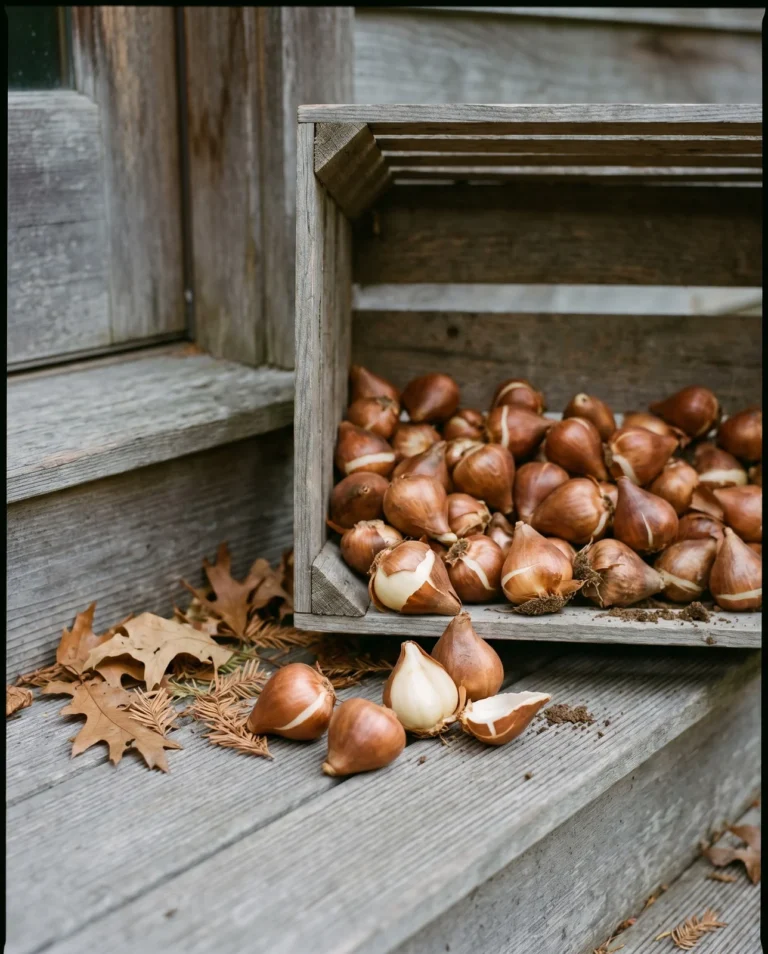
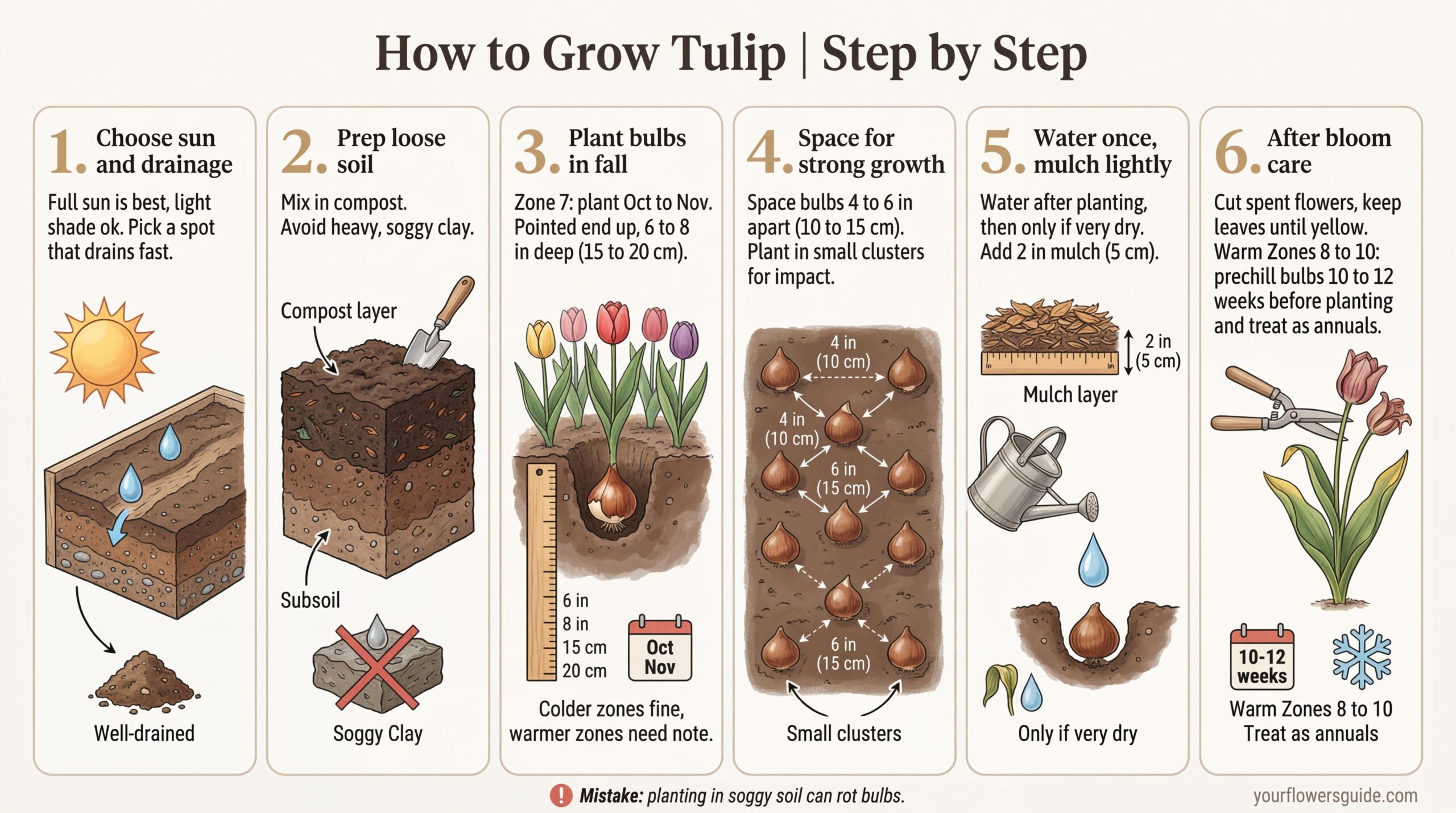
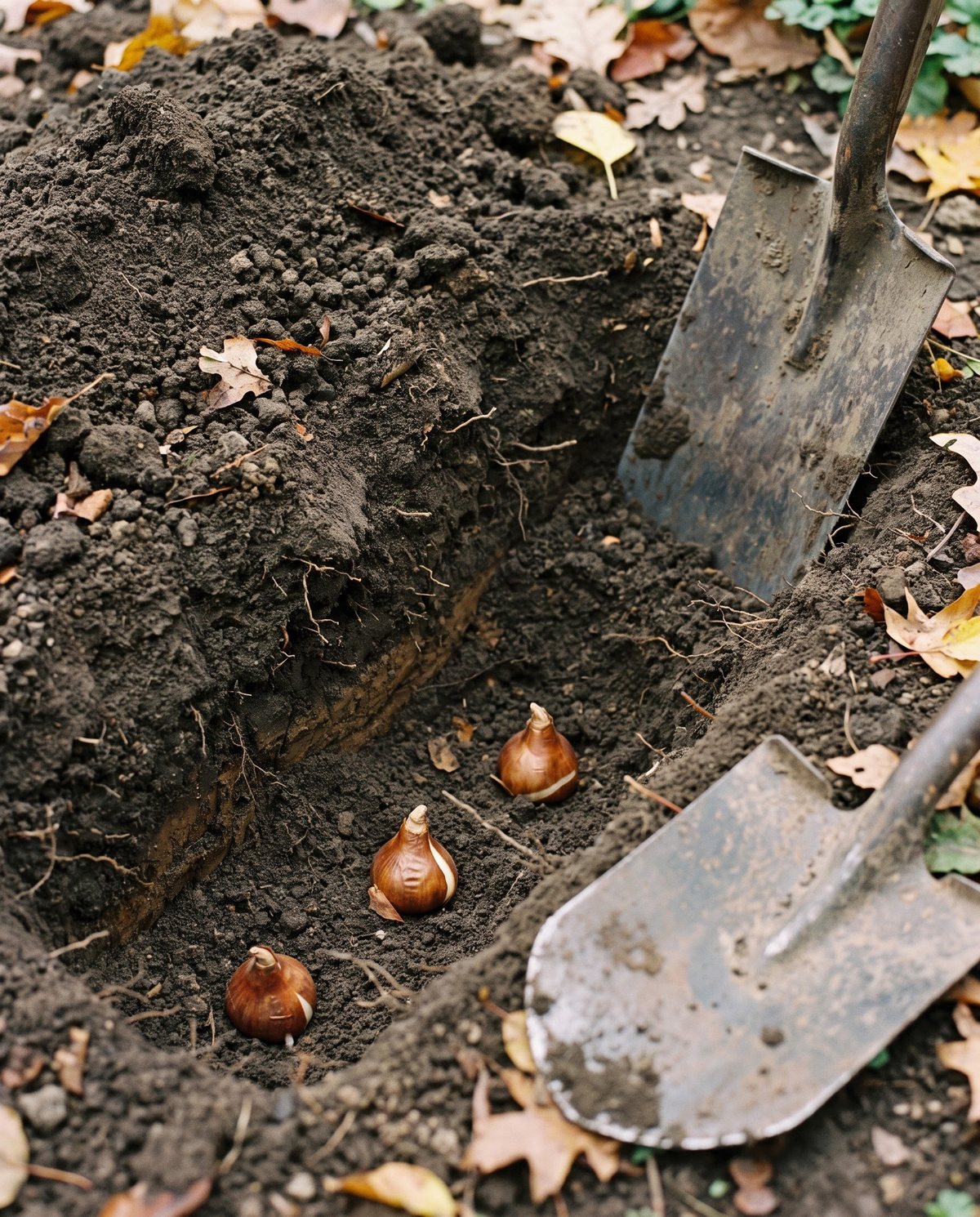
Tulips grow from bulbs, and this is where their most-asked question lives: will they come back? Plant in fall, about six to eight weeks before the ground freezes hard and once the soil has cooled, setting each bulb pointed end up at a depth of roughly 6 to 8 inches, which follows the rule of two to three times the bulb's height, and spacing them 4 to 6 inches apart. Planting on the deeper end, near 8 inches, both helps the perennial types persist and puts the bulbs below the reach of many digging rodents. Whether they come back depends heavily on the type. Species and botanical tulips and their hybrids naturalize best and come back year after year, and among the larger hybrid groups the Darwin hybrids, the Fosteriana or Emperor tulips, and the Greigii and Kaufmanniana types return most reliably. Most parrot, double, fringed, and many Triumph and single hybrids put on a spectacular first spring and then fade, because the original bulb splits into offsets too small to flower, which is why those showy types are so often treated as annuals and replanted fresh each fall.
To coax any tulip into returning, plant deep in sharp-draining soil and full sun, deadhead the spent flower so the plant spends its energy on the bulb rather than on setting seed, and above all let the foliage yellow and wither completely before removing it, since those green leaves are what recharge the bulb for next year. Cutting the leaves down while they are still green is the surest way to guarantee a one-season plant. Bulbs multiply by forming offsets, and a lifted clump can be separated after the foliage dies, though the small offsets often take two to three years to reach flowering size. Growing tulips from seed is possible but belongs to breeders, since seedlings can take five years or more to bloom and rarely match the parent.
Fragrance
Most tulips carry little or no scent, and they are grown for color and form rather than perfume. A handful of groups are the exception: some single early and double early tulips, several Fosteriana types, and the wild woodland tulip Tulipa sylvestris have a light, sweet fragrance that is easiest to notice up close on a warm, still day. If scent matters in a spring bed, the usual approach is to plant tulips among strongly perfumed companions such as hyacinths, which supply the fragrance the tulips lack. In a cut arrangement the same holds true: tulips bring clean lines and color, but almost no smell, which makes them a good choice for anyone sensitive to heavily scented flowers.
Toxicity and pet safety
Tulips are toxic to cats, dogs, and horses according to the ASPCA. The plant contains tulipalin A and tulipalin B, irritant compounds found throughout the leaves, stems, and flowers but most concentrated in the bulb. A pet that chews a leaf or a petal usually gets away with drooling, an upset stomach, vomiting, or diarrhea, and the bigger danger is a dog that digs up and eats bulbs, since a mouthful of bulb can bring on more serious illness that warrants a call to the veterinarian. The practical steps are to plant bulbs where pets cannot dig them, to store loose bulbs well out of reach, and to watch dogs that like to excavate a fresh bed. Handling bulbs has its own minor hazard for people: repeated contact with the sap can cause a contact dermatitis known as "tulip fingers," so gloves are worth wearing if your skin is sensitive. For a broader look at which blooms are safe to keep around animals, see the guide to flowers safe for cats and dogs.
The tulips you bought, not the ones you planted
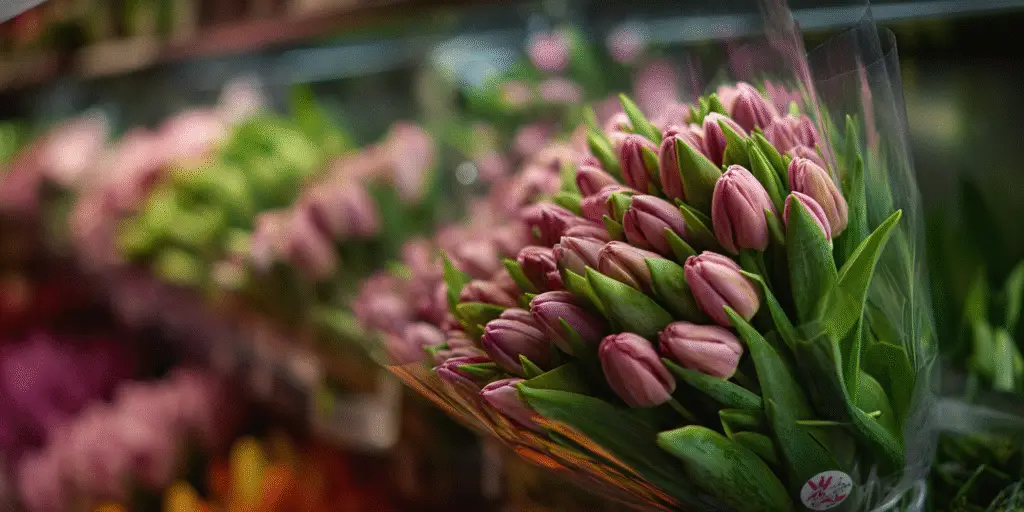
Most tulip advice assumes a bulb going into the ground in fall. A large share of the tulips people actually own arrive another way: cut stems from a supermarket, or a pot in full bloom bought for a holiday. Both were forced, meaning growers gave the bulbs an artificial winter in cold rooms and then warmth, so the flower opens months ahead of its natural season.
Forcing explains the two complaints that follow a tulip home. A potted plant that opens fully within a day of arriving is not defective; a warm room finishes the job the grower started, and the warmer the room, the faster it runs. Keep the pot at 60 to 65 F, out of direct sun and away from radiators, and the display stretches by days rather than hours.
The second complaint is the bulb itself. Flowering spends most of what a bulb stored, and forced bulbs hold little value for outdoor planting afterward; composting them once the flowers finish is the usual outcome. Planting one out is worth doing as an experiment, not as a plan. If you try it, cut the flower stem when the petals drop but leave every leaf, water until the foliage yellows on its own, plant the bulb in fall at full garden depth, and expect leaves rather than flowers for the first spring or two.
Vase life
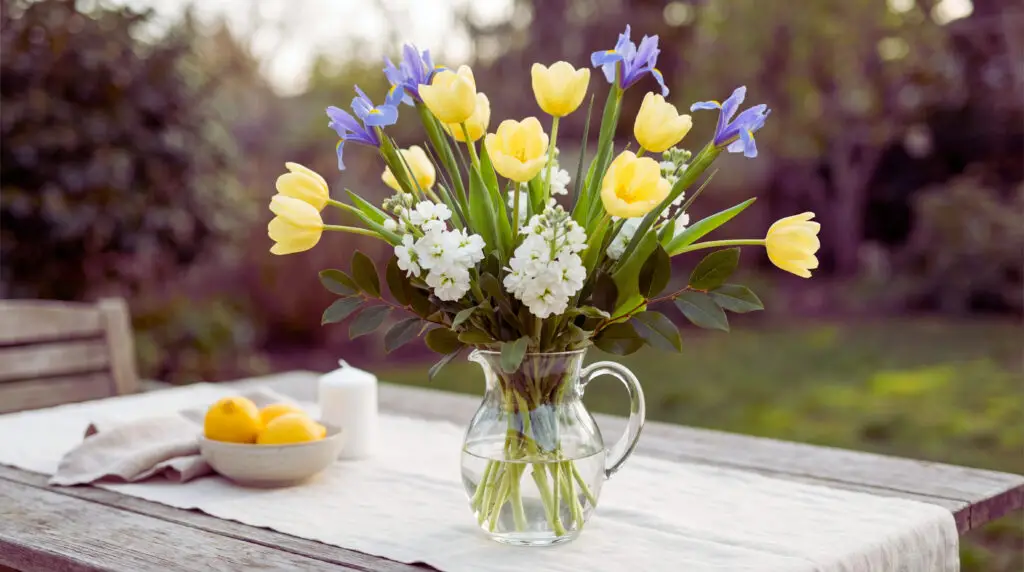
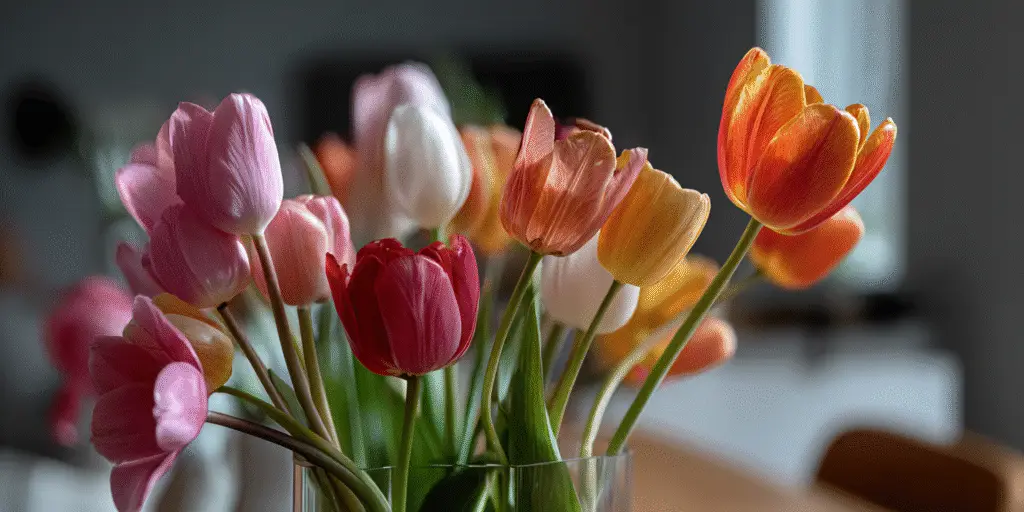
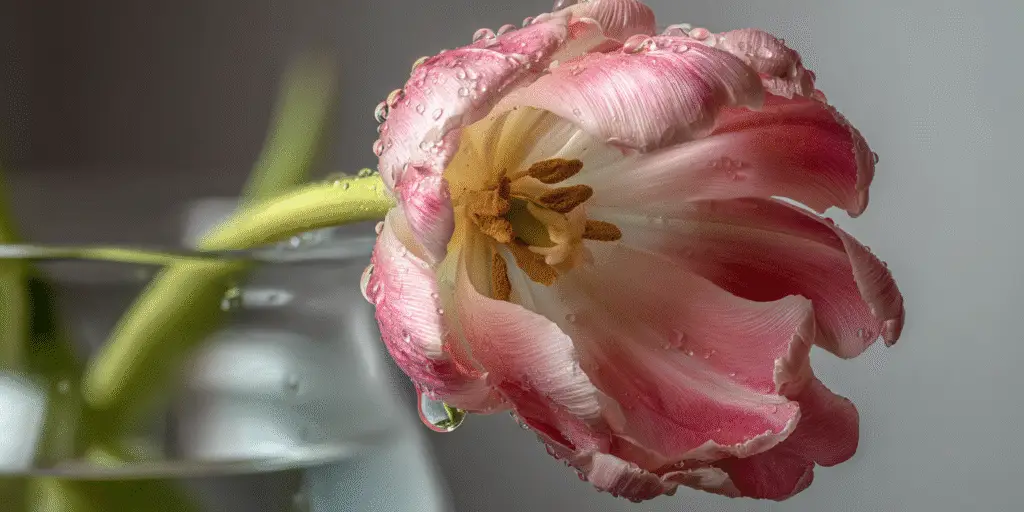
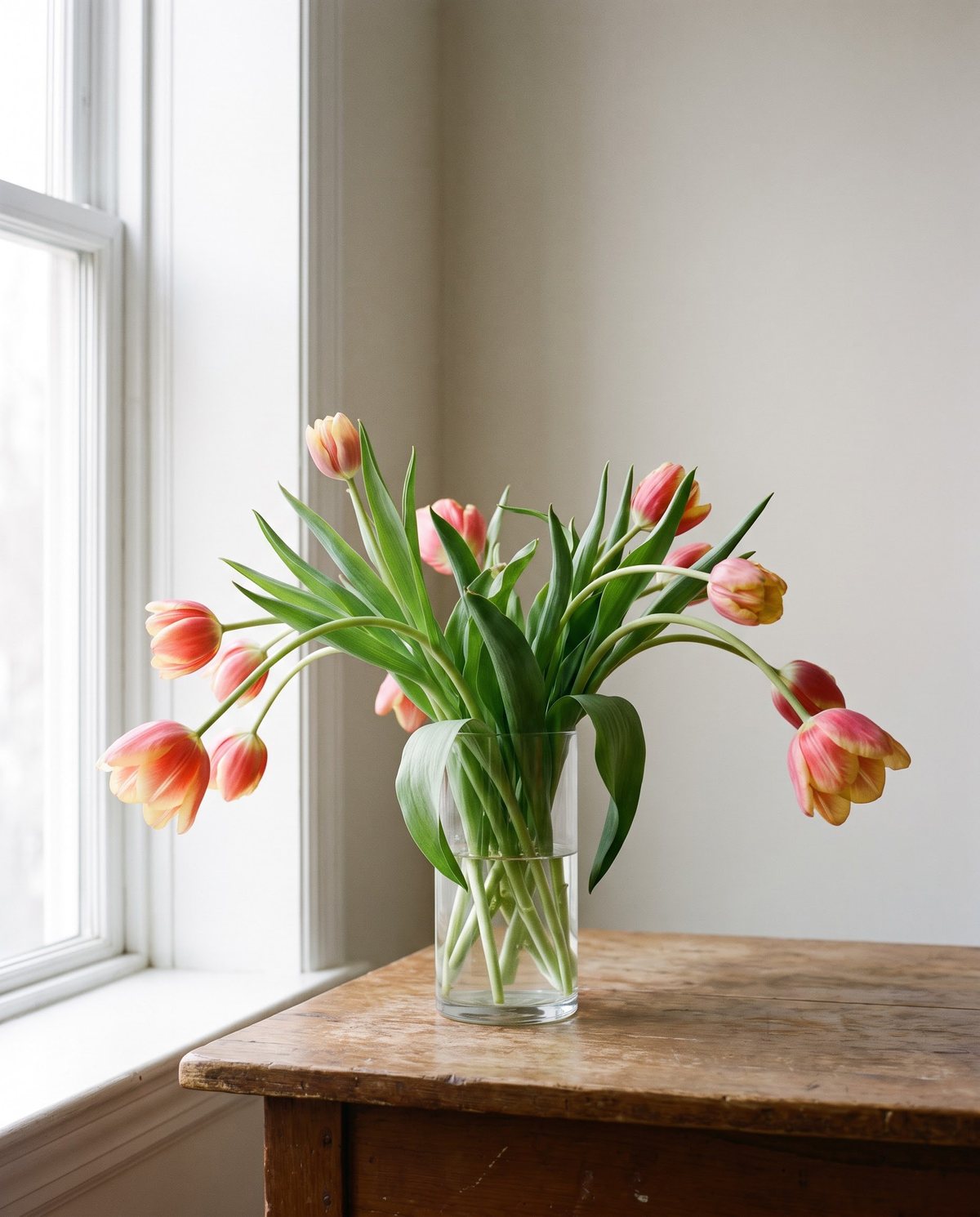
Cut tulips last about 5 to 7 days in a vase, and they behave unlike most cut flowers in one respect: the stems keep growing after cutting. Tulip stems are strongly drawn to light and against gravity, so an arrangement can lengthen by an inch or more and lean and curve toward a window over a few days, which is part of their charm rather than a fault. Cut or buy stems in tight bud with the color just showing, recut the ends at an angle, and stand them in a clean vase of cool water. Tulips do fine in plain water and rarely need preservative, but they do want to be kept out of direct sun and heat and away from ripening fruit. If stems flop, a snug wrap of paper around the top halves and a few hours standing in deep cold water will firm them up. Tulips pair naturally in spring bouquets with the petal-packed blooms of ranunculus, whose sturdier stems hold a mixed arrangement in place as the tulips shift.
Measured vase life, and the growth that looks like failure
The numbers below come from a named-researcher trial rather than a repeated consumer figure: Jahnke and Dole, Department of Horticultural Science, NC State University, published as To Cut or Not to Cut in The Cut Flower Quarterly, volume 31 number 3, read as the full PDF.
Cut tulips stop growing once they are in the vase.
False, and measurably so. The NC State trial recorded 3.7 to 4.7 in of stem gain after cutting, and tulips bend toward light as they do it, so a vase visibly reshapes itself over a few days in a way a non-growing cut flower cannot. Rotating the vase, or standing it where light arrives from more than one direction, keeps the stems straighter for longer.
A penny in the vase keeps cut tulips fresh.
True historically, false today. NC State Extension puts it directly: pennies are made mostly of zinc now, it used to work back when pennies were made of copper, because copper is a fungicide. Pre-1982 US pennies were 95 percent copper; post-1982 ones are 97.5 percent zinc under a thin plating, and a penny found in a pocket also introduces its own dirt and bacteria.
Ice cubes in the vase make tulips last longer.
Unproven rather than debunked, and worth saying so. Cold water genuinely slows a cut flower's metabolism, but no university or peer-reviewed source was found showing that ice specifically outperforms simply using the coldest available tap water, and some florist sources note that direct ice contact with the stems is not the active ingredient.
Vase advice that has a mechanism behind it
Tulips want cold water, which reverses the usual advice. Warm water moves into most stems faster, but bulb flowers have soft stems that take up cold water better, and cold also slows the stretching that sends tulips over the rim of the vase.
Daffodils are the one flower to keep out of a tulip vase on the first day. Cut daffodil stems leak a latex sap that clogs the vascular system of whatever shares the water. The fix is not to avoid them but to condition them alone for several hours in their own water, then move them across without recutting the stems.
The kitchen remedies do less. A copper coin is credited with acidifying the water, but a modern penny is mostly zinc under a thin copper skin, and copper in quantity harms flowers rather than helping them. The small effect of an aspirin is credited to its carbohydrate content rather than to the drug. A clean vase and cold water outperform both.
Pests and diseases
The most serious tulip pests are not insects but animals. Deer graze the buds and open flowers and count tulips among their favorite spring plants, capable of stripping a bed overnight, while squirrels, chipmunks, and voles dig up and eat the bulbs themselves, worst in the fall and winter just after planting. The most effective defenses are physical and companion-based: bury a cage or a sheet of wire mesh over the bulbs at planting so shoots grow up through it but diggers cannot reach the bulb, apply a liquid animal repellent to bulbs and emerging foliage, and interplant tulips among daffodils, which deer and rodents avoid and which give a tulip bed a measure of built-in cover. Once shoots are up and growing in spring the bulbs are largely safe underground, though rabbits will still nibble tender new growth. On the disease side, tulip breaking virus streaks and mottles the petals and weakens the plant, spread by aphids, and any plant showing odd streaking that is not part of the named cultivar should be pulled and destroyed before it spreads. Damp conditions bring fungal trouble: botrytis, known as "tulip fire," spots and distorts the leaves and coats them in gray mold, and bulb rot from Fusarium turns bulbs soft and moldy so they fail to sprout. Prevention comes down to starting with firm, healthy bulbs, planting in sharp-draining soil, keeping water off the foliage, and clearing away any diseased plant material rather than composting it.
Work down the list before you blame a disease
Two failures account for most of what goes wrong: leaves without flowers, and leaves yellowing at the wrong time. Both have a fixed order of checks, and in both the boring non-living causes come first, because depth, foliage timing and summer water explain far more tulip failures than any pathogen does.
What actually goes wrong with tulips
Counted from 239 unique tulip posts pulled from r/gardening and r/plantclinic through the Arctic Shift Reddit archive, deduplicated by permalink. Themes overlap, since one post can carry two problems, so the shares do not sum to 100 and this is a ranked index rather than a partition. Two entries are marked as undercounted on purpose, because nothing dramatic happens to photograph when a bulb simply fails to come up.
Whether the stem is firm or soft. A firm stem bending toward a window is the flower growing, not failing. A limp neck with the head hanging is the end of a vase life measured at 5.5 days for 'Renown' in the NC State University trial.
Above ground or below. Iowa State lists rabbits, deer, chipmunks, voles, mice and gophers together, digging bulbs in fall and eating foliage and buds in spring, so the damage pattern is what identifies the culprit, not the season.
Spots with dark, water-soaked margins rather than uniform bleaching. Only two posts in the sample named tulip fire outright; the rest described spots and asked for an identification.
Mostly small unidentified insects on potted tulips, and a few of these posts overlap with the spotting theme above.
Whether flowering has finished. This one theme splits into a non-problem and a real problem, and the fork is entirely about timing and evenness.
Planting depth first, then last year's foliage timing. Treat 3.8 percent as a floor rather than the real demand: this is search-heavy and Reddit-light, and Iowa State gives it a dedicated page while GardeningKnowHow ranks it as its second most-asked tulip question.
Whether the bulb was ever standing in water. These posts arrive entangled with is-this-a-pest-or-a-disease questions about skin texture.
Which division was bought. Height is a division trait, and several of these posts are new gardeners disappointed that bulbs sold as tall came up short.
Uniform white bleaching, collapsing all at once, with no spots and no mould. These posts often arrive asking about tulip fire in the same sentence.
Where the light comes from. This is a real tulip behaviour rather than a disease, and it is the same mechanism that reshapes an arrangement in a vase.
The zone calendar below. Small in count but persistent, and it is the theme that feeds most of the no-bloom cases a season later.
How many springs it has flowered. One gardener's 7 to 8 year planting had flowers getting smaller and converging on a single colour out of a rainbow that was planted; another described the curve exactly, beautiful two years ago, scraggly last year, and now a few petals and no buds. A slow multi-year pattern nobody photographs, so the count is meaningless and the pattern is not.
Tulip look-alikes, and how to tell them apart
Each card carries the one visual detail that separates the pair. Two of them are the exact forks real gardeners posted with a photo and could not resolve: leaves without a bud, and spots after a cold spring.
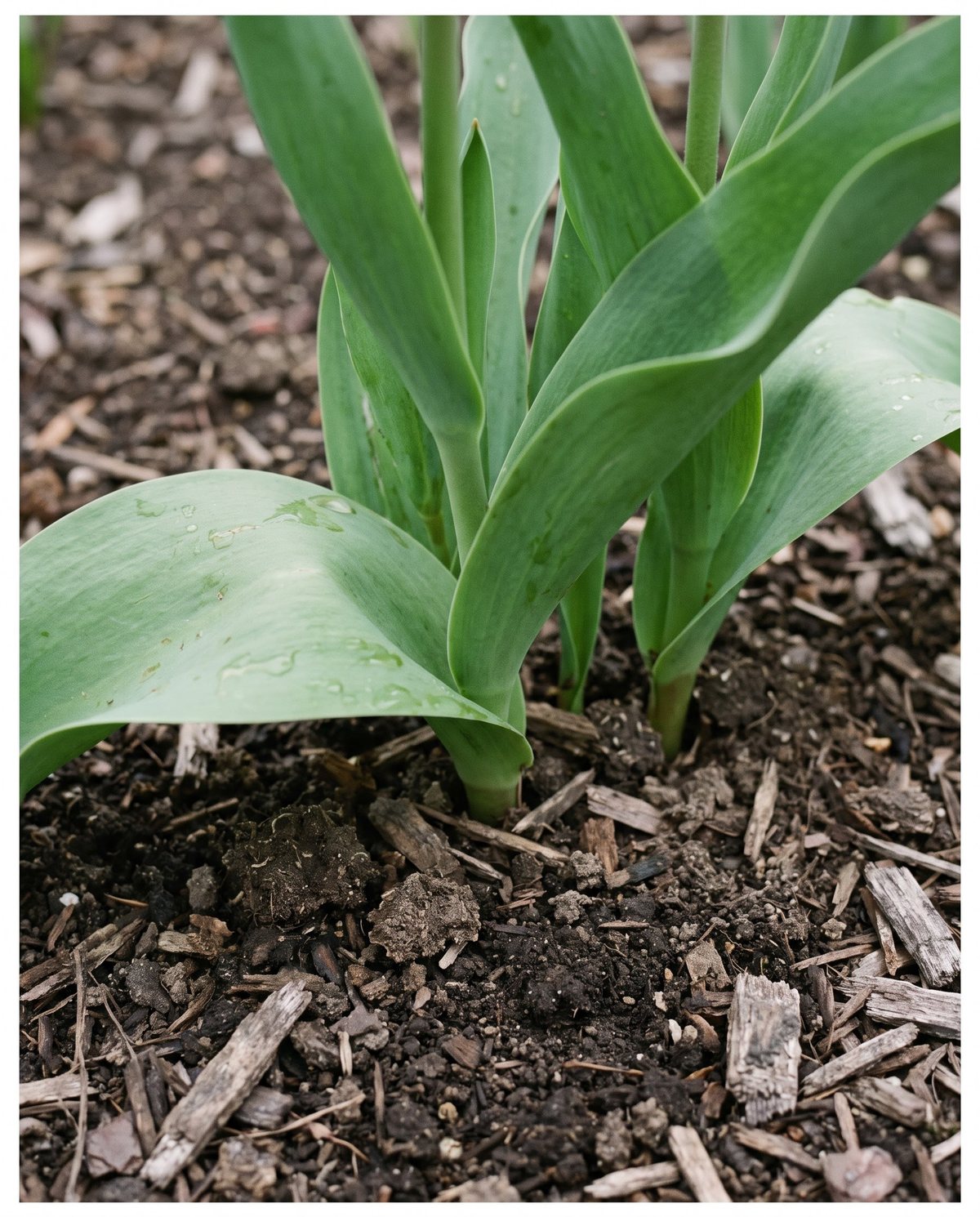
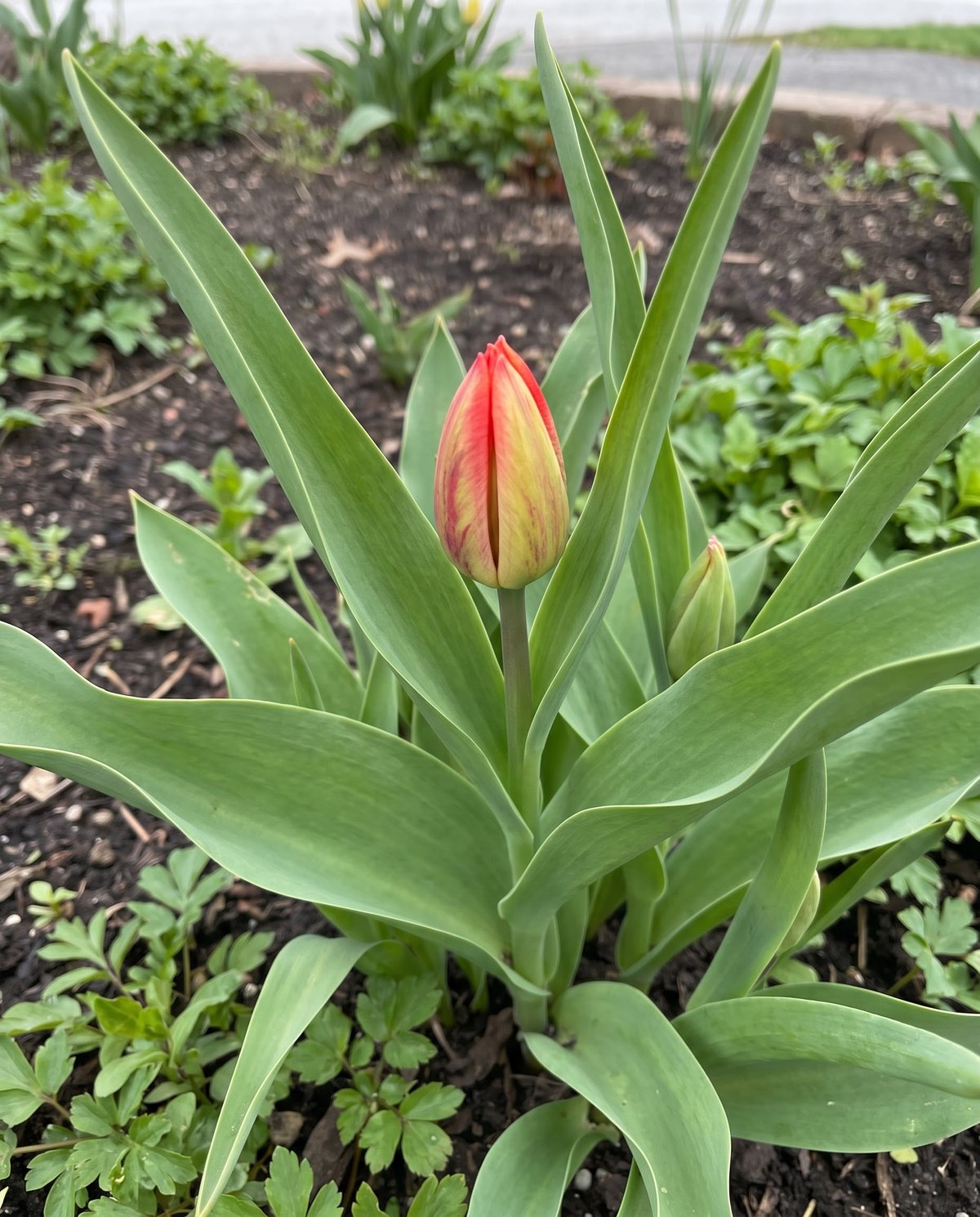
The leaf is the tell. Iowa State states it flatly: weak bulbs produce large, floppy leaves but no flowers. A bulb with enough stored energy carries a firm upright stalk with a bud already taking colour beside the same leaves, so if there is no stalk at all by the time neighbouring tulips are in bud, nothing is going to arrive.
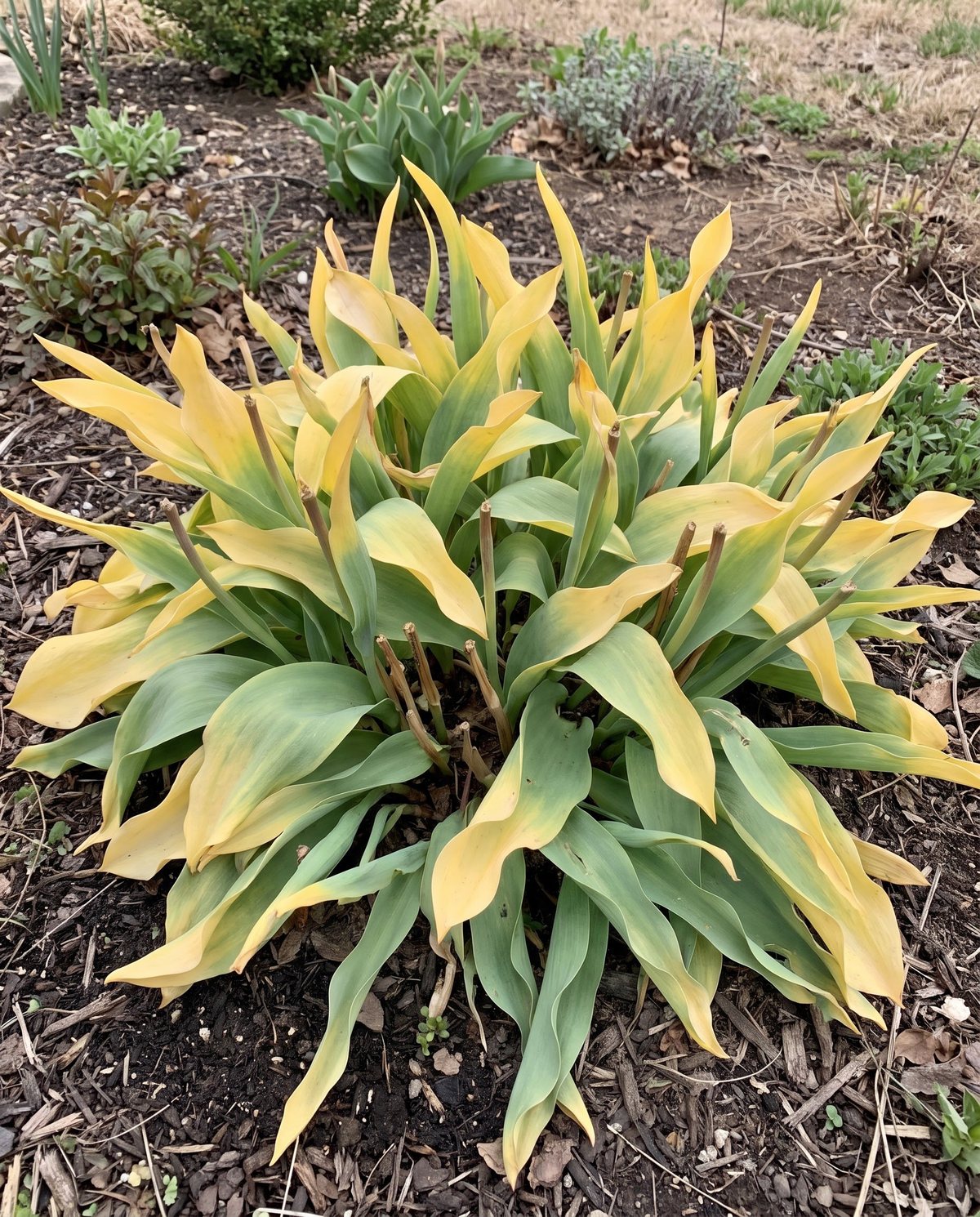
Normal dieback fades the whole clump together and evenly, tip inward, and only after flowering, typically 4 to 6 weeks after bloom and landing in late June or early July in temperate zones. Rot yellows early, before or during bloom, hits some plants while their neighbours stay green, and comes with a bulb base that is soft, discoloured or malodorous, per Iowa State; Texas A&M's plant disease handbook adds roots that are slimy, soft, dry, hard or powdery.
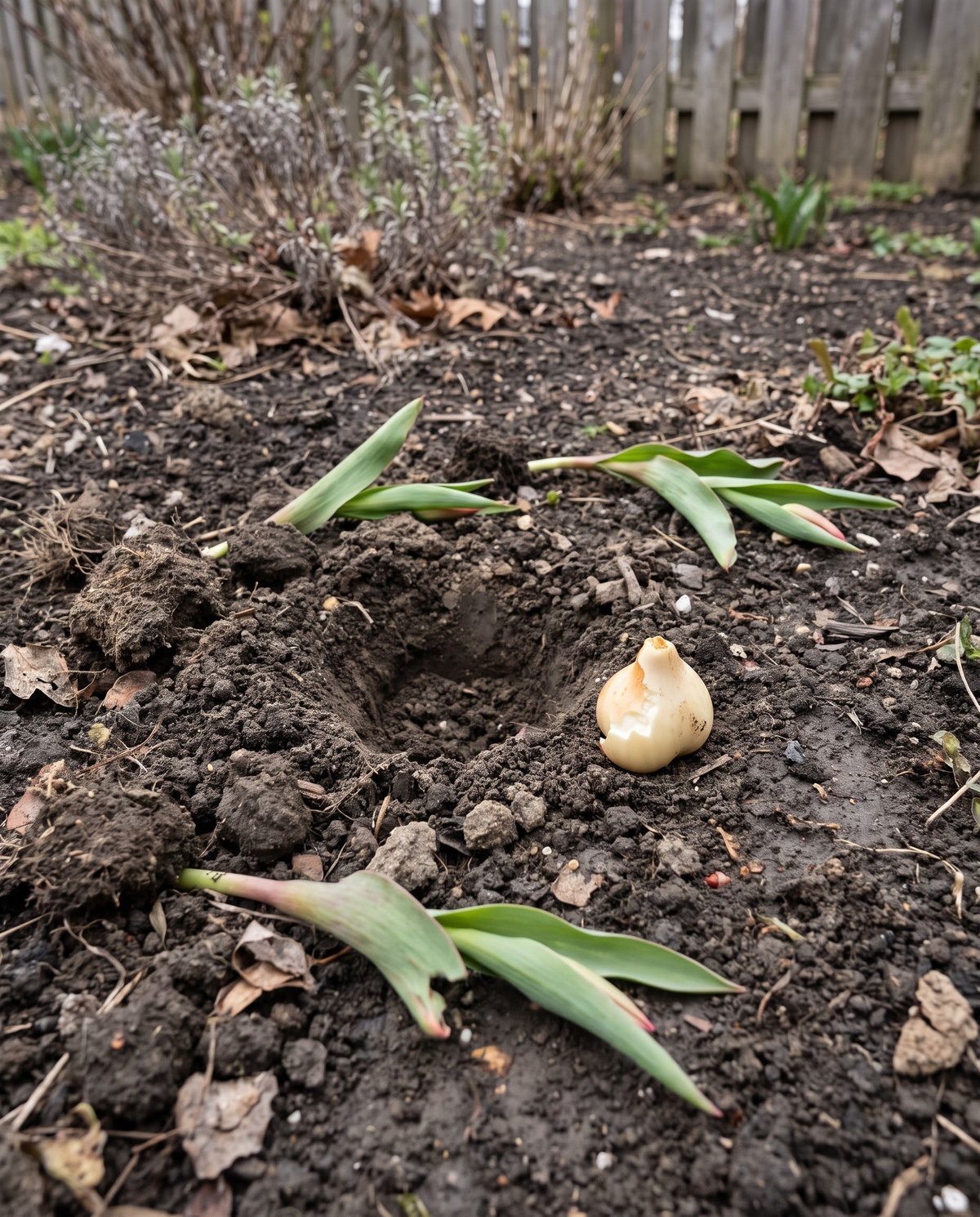
Deer and rabbits work above ground: buds or whole flower heads bitten or snapped off, sometimes left lying uneaten, foliage often untouched, damage appearing overnight. Squirrels and voles work below it: whole bulbs missing, digging holes, disturbed soil, plants toppled or vanished with no bite mark anywhere on a standing stem. Random patchiness rather than damage following the planted rows also points underground.
Frost bleaches uniformly: Iowa State describes foliage that may turn white and collapse, whole leaf tips at once, no discrete spots, no mould, appearing the morning after a specific cold night. Tulip fire prints discrete oval, slightly sunken spots, yellow to light tan, each ringed by a water-soaked area, and in wet weather it grows a fuzzy grey mould over dead tissue. The unmistakable tell, per Cornell's Plant Disease Diagnostic Clinic, is tiny shiny black sclerotia on rotting leaves, stems or bulb tissue, which frost never produces. No photo pair here on purpose: a pathogen fingerprint has to come from a real reference photo, not a generated one.
Flower photos


FAQ
When should I plant tulip bulbs, and how deep?
Plant tulip bulbs in fall, about six to eight weeks before the ground freezes hard, so they root in cool soil before winter. Set them pointed end up at a depth of roughly 6 to 8 inches, following the rule of two to three times the bulb's height, and space them 4 to 6 inches apart so they read as a group. Planting toward the deeper end helps perennial types last and keeps some rodents off the bulbs.
Do tulips come back every year, or are they annuals?
It depends on the type. Species and botanical tulips and their hybrids come back and naturalize reliably, and among the big hybrid groups the Darwin hybrids, Fosteriana or Emperor tulips, and Greigii and Kaufmanniana types return best. Many parrot, double, fringed, and Triumph hybrids bloom brilliantly the first spring and then dwindle, so gardeners often treat those as annuals and replant each fall. Triumph is the weakest repeat bloomer of any division, even though it carries the widest color range of them all. Planting deep, growing in full sun with sharp drainage, and letting the foliage die back naturally all improve the odds of a return.
How do I stop deer and squirrels from eating my tulips?
Bury a cage or wire mesh over the bulbs at planting so shoots grow through but diggers cannot reach them, use a liquid repellent on bulbs and foliage, and interplant with daffodils, which deer and rodents leave alone. Fencing or planting near the house helps against deer. Rodents are most active on newly planted bulbs in fall, so protection at planting time matters most.
Can I grow tulips in a warm climate or force them indoors?
Yes, but they still need a cold period first. In zones 9 and 10, buy pre-chilled bulbs or refrigerate your own for 12 to 16 weeks before planting, keeping them away from ripening fruit. To force tulips indoors, pot the bulbs, give them the same 12 to 16 weeks near 40 degrees Fahrenheit, then bring the pot into bright, cool light and they will bloom in a few weeks. Forced and warm-climate tulips are best treated as a one-season display.
What do I do after tulips bloom, and why are the leaves turning yellow?
Yellowing leaves in late spring are normal: the plant is pulling energy back into the bulb before going dormant. Snip off the spent flower head so the plant does not waste energy setting seed, but leave every green leaf in place. Let the foliage yellow and wither on its own, then remove it once it is fully dry and pulls away easily. A light feed of bulb fertilizer right after bloom helps the bulb recharge.
Why do my cut tulips keep growing and drooping in the vase?
Tulip stems keep growing after they are cut and bend toward the light, so an arrangement lengthens and shifts over a few days. It is normal, not a sign of poor flowers. Keep them in cool water out of direct sun, recut the stems, and if they flop, wrap the top of the bunch snugly and stand them in deep cold water for a few hours to firm up.
Are tulips poisonous to cats and dogs?
Yes. Tulips are toxic to cats and dogs, with the bulb being the most concentrated part. Chewing leaves or flowers usually causes drooling, vomiting, and diarrhea, while eating bulbs can cause more serious illness. Store loose bulbs out of reach and keep digging dogs away from planted beds; if you think a pet has eaten part of a tulip, call your veterinarian.
Why are there no flowers on my bulbs, just green leaves?
Several causes stack. The bulb did not store enough energy last year, often because the foliage was cut back before it browned or the soil stayed wet through summer; it was planted too shallow, 3 or 4 in instead of 6 to 8; the winter was not cold enough to trigger flowering; or it is an older hybrid past its 3 to 5 year window. Check depth and last year's foliage timing before assuming anything is diseased.
How can I tell if this is tulip fire or frost damage?
Frost damage is uniform white or tan bleaching across the whole leaf, with no discrete spots and no mould, and it appears right after a specific cold night. Tulip fire shows distinct oval spots with dark, water-soaked margins, and the one unmistakable tell is tiny black sclerotia, the fungal resting bodies, on affected tissue in wet weather. An Ask Extension expert answering this exact question was blunt about the threshold: any bulb with spots on the leaves and petals is probably infected, so remove affected material rather than waiting to see.
My tulips have been in the ground for years. Should I dig them up?
If the flowers have visibly gotten smaller or sparser over several springs, yes. Dig the clump after the foliage has fully died back, separate the offset bulbs, and replant the largest ones at full depth. The small offsets may need two or three more years to reach flowering size on their own.
When should I plant tulip bulbs?
October is the sweet spot across most of the US, and the trigger to watch is soil temperature 6 in down dropping below 60F, since planting into warm September soil can push bulbs into emerging in the fall. In zones 8 to 10 the timing question is replaced by the fridge: pre-chill for 10 to 14 weeks, then plant from late November through January.
Is it too late to plant these, or should I keep them until next year?
Plant them. Iowa State lists unplanted bulbs among the real problems of growing tulips for a specific reason: if tulip bulbs are not planted before winter, they often shrivel up and die over winter. A late-planted bulb in the ground has a chance; the same bulb in a bag in the garage has none.
Interesting tips
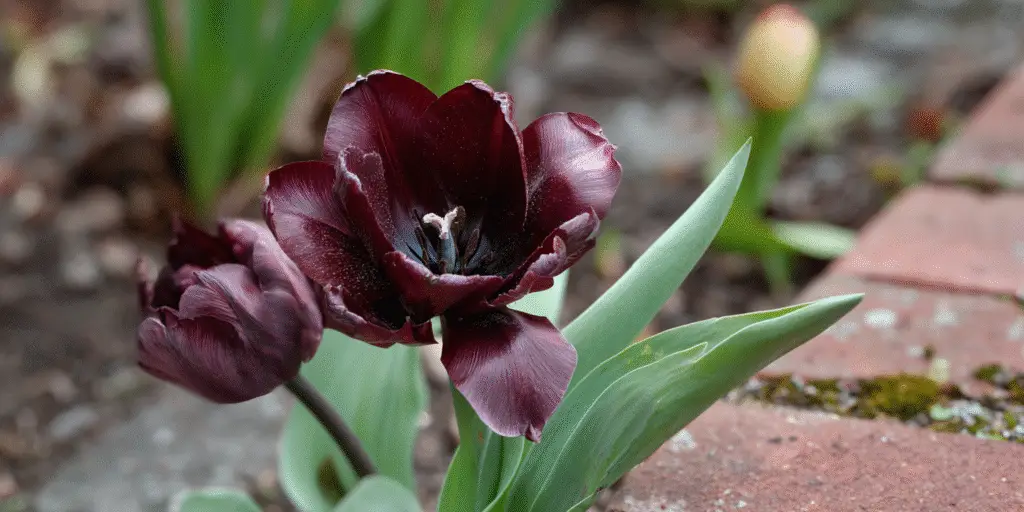
The single best thing you can do for a tulip display happens at the garden center: buy the biggest, firmest bulbs you can find, since a large, heavy bulb holds the energy for a large first-year flower while a soft or moldy one rarely performs. Plant them on the deep side, around 8 inches, if you want perennial types to persist and to slow down the squirrels, and try a layered or "lasagna" planting in beds and pots, stacking late-blooming bulbs deeper with early bloomers just above them in the same hole to draw weeks of sequence from one spot. Design with color the way a florist would: mass a single shade rather than scattering a rainbow, since a block of one color reads from across the garden, and pair a dark cultivar such as the near-black 'Queen of Night' with pale companions for contrast, an effect the purple flowers hub gathers more of. In mild-winter regions, chill bulbs in the refrigerator for 12 to 16 weeks and keep them away from apples and other fruit, whose ethylene gas quietly aborts the flower inside. When cutting for the house, take stems in tight bud in the cool of the morning and expect them to grow and lean in the vase over the days that follow.
Related Guides & Flowers
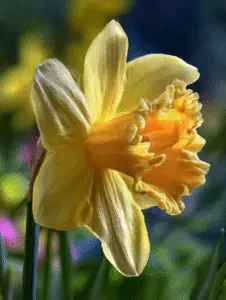
Daffodils (Narcissus)
Classic spring bulbs that bloom with or just before tulips; great for layered displays.

Irises
Swordlike foliage and elegant blooms that bridge late spring into early summer near tulip beds.
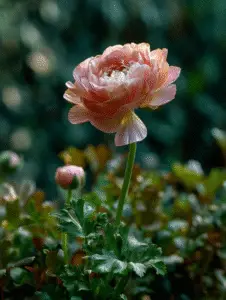
Ranunculus
Petal-packed spring cut flowers that pair beautifully with tulips in bouquets.

Forget-Me-Nots
Low, airy blue carpet that fills around tulip stems without competing.
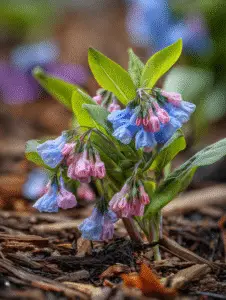
Virginia Bluebells
Spring ephemerals with drooping blue bells that naturalize under trees by tulip plantings.
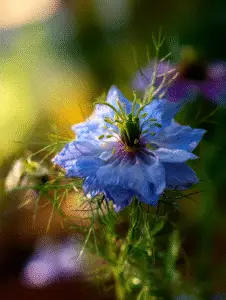
Love-in-a-Mist (Nigella)
Lacy foliage and pale blooms that complement pastel tulips in cottage borders.

Blue Flax
Fine texture and soft blue flowers for a light, meadowy look after tulips fade.
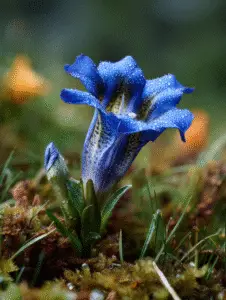
Gentian
Intense blue, chalice-like blooms for cool palettes that echo blue tulip cultivars.

Globe Thistle
Architectural orbs that add structure and contrast to spring bulb borders later in the season.
References
- ASPCA – Tulip: Toxicity to Pets – Confirms Tulipa spp. are toxic to cats, dogs, and horses; bulbs are most potent.
- NC State Extension – Tulipa (Tulip) – Genus profile with growth notes and "low-severity poison" flag.
- University of Minnesota Extension – Planting Bulbs, Tubers, and Rhizomes – Fall planting guidance and hardy bulb basics for tulips and companions.
- Penn State Extension – Plant Bulbs in the Fall for a Spring Celebration – Practical rule of thumb for planting depth with a tulip example.
Enjoying our flower guides? Add YourFlowersGuide as a preferred source on Google. It helps more readers find us.
Add to Preferred Sources