A bulb lasagna is a pot of spring bulbs stacked in layers at different depths, planted in one autumn session so a single container flowers for six to eight weeks the following spring instead of two. Tulips go in deepest, hyacinths sit above them, and crocuses go nearest the surface, and each tier comes up in its own turn as the soil warms from the top down. The order is bloom order rather than size order: the last flowers to open are the ones buried farthest down.
The technique belongs to porches, patios, and balconies, where there is no bed to spare and one container has to carry the whole spring. It also puts bulbs somewhere harsher than a garden. Ground soil holds its temperature and buffers a bulb through winter, while a pot has cold air on every side, so it freezes and thaws faster and dries out in a way buried soil never does. That leaves three things to get right that no amount of careful layering can fix: enough depth for root run beneath the lowest tier, drainage sharp enough that the mix never sits wet through the dormant months, and winter temperatures managed so the bulbs take their full chilling period without the root zone freezing solid. What follows covers how to size the container and pick the bulbs, the layering protocol depth by depth, and the winter care each USDA zone band calls for.
On this page 4 sections
Selecting bulbs and container depth
Start with the pot, because container depth decides whether a layered planting works before a single bulb goes into the soil. Add the layers up: 2 to 3 inches of potting mix at the base for root run and drainage, 6 to 8 inches of soil above that for the tulip layer, another 3 to 4 inches covering the hyacinth and crocus tiers, and 2 to 3 inches of mulch plus headspace under the rim. The arithmetic lands on 14 to 16 inches of usable depth for a three-tier planting, not the 8 to 10 inches of the pots commonly sold at garden centers. Drainage holes at the base have to be open and stay open, since water standing in cold potting mix rots bulb scales quickly. UGA Extension puts numbers on both of the soil questions that follow: soil drains well enough for bulbs if a one-foot test hole empties within 8 to 10 hours, and the best pH range for spring bulbs runs 6.0 to 6.8. Fill the pot with a lightweight potting mix inside that range. Pot material also influences winter survival. Unglazed terracotta breathes but splits during a hard freeze-thaw cycle, while glazed ceramic, thick cedar, and frost-proof composite containers hold together and insulate the root zone better.
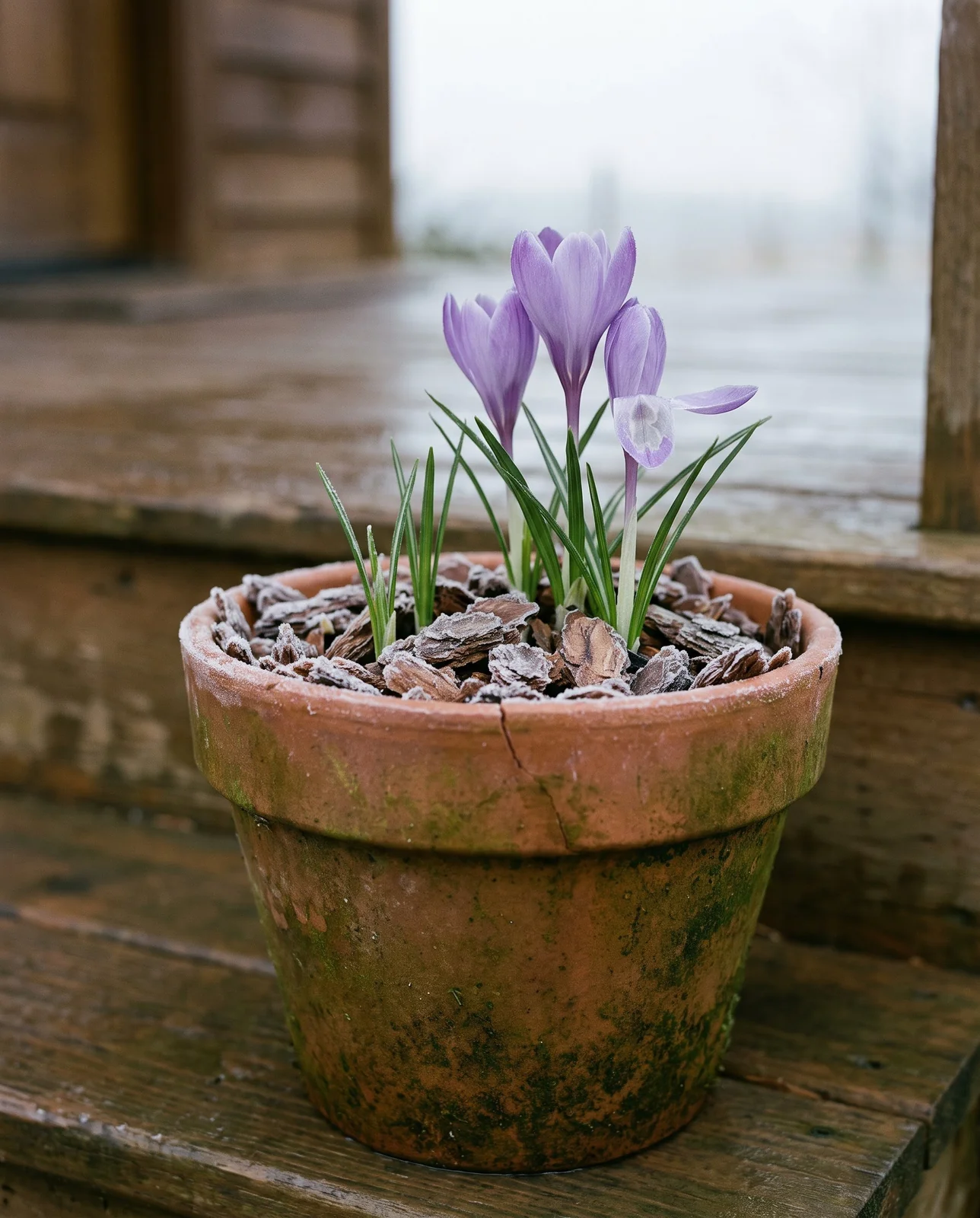
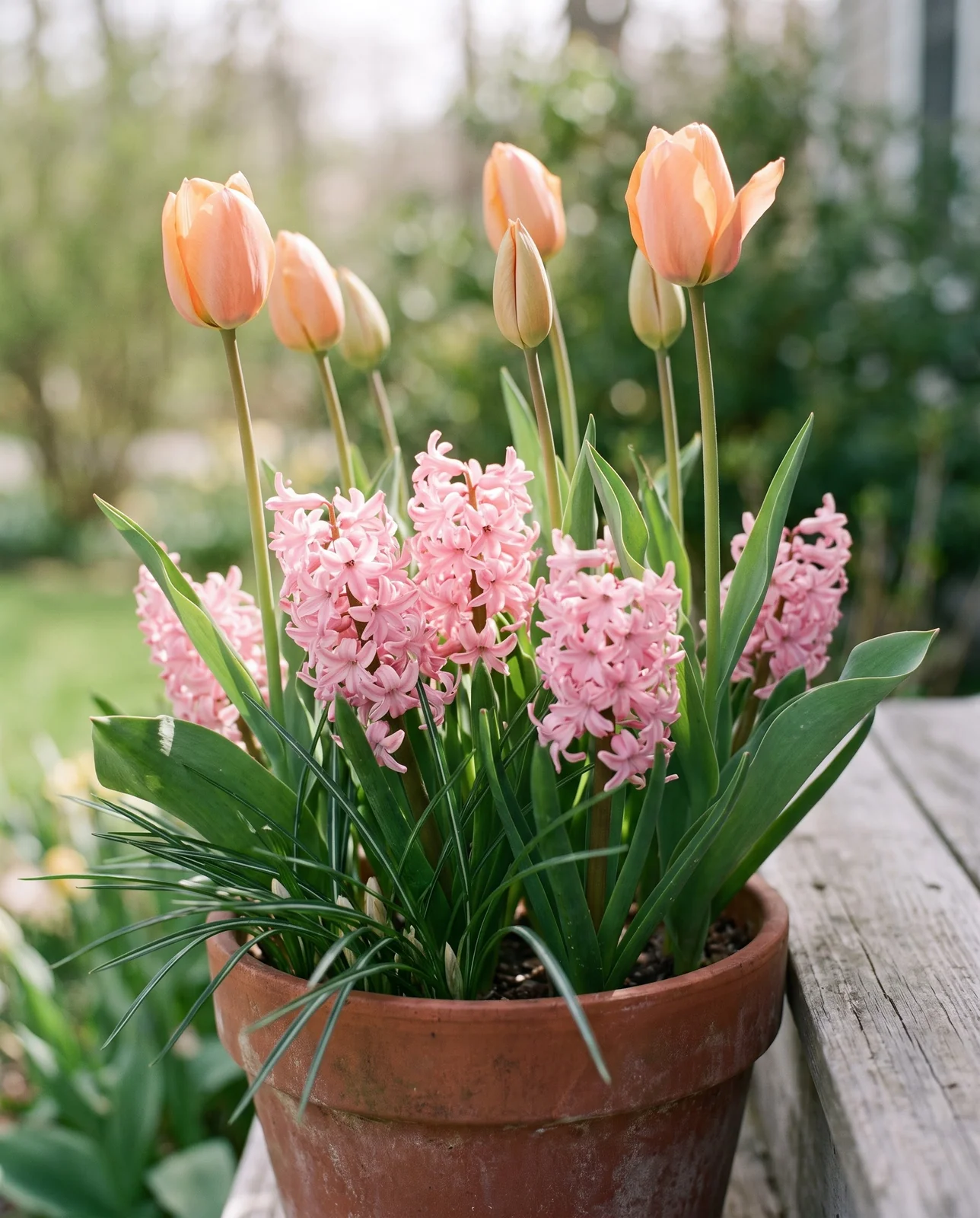
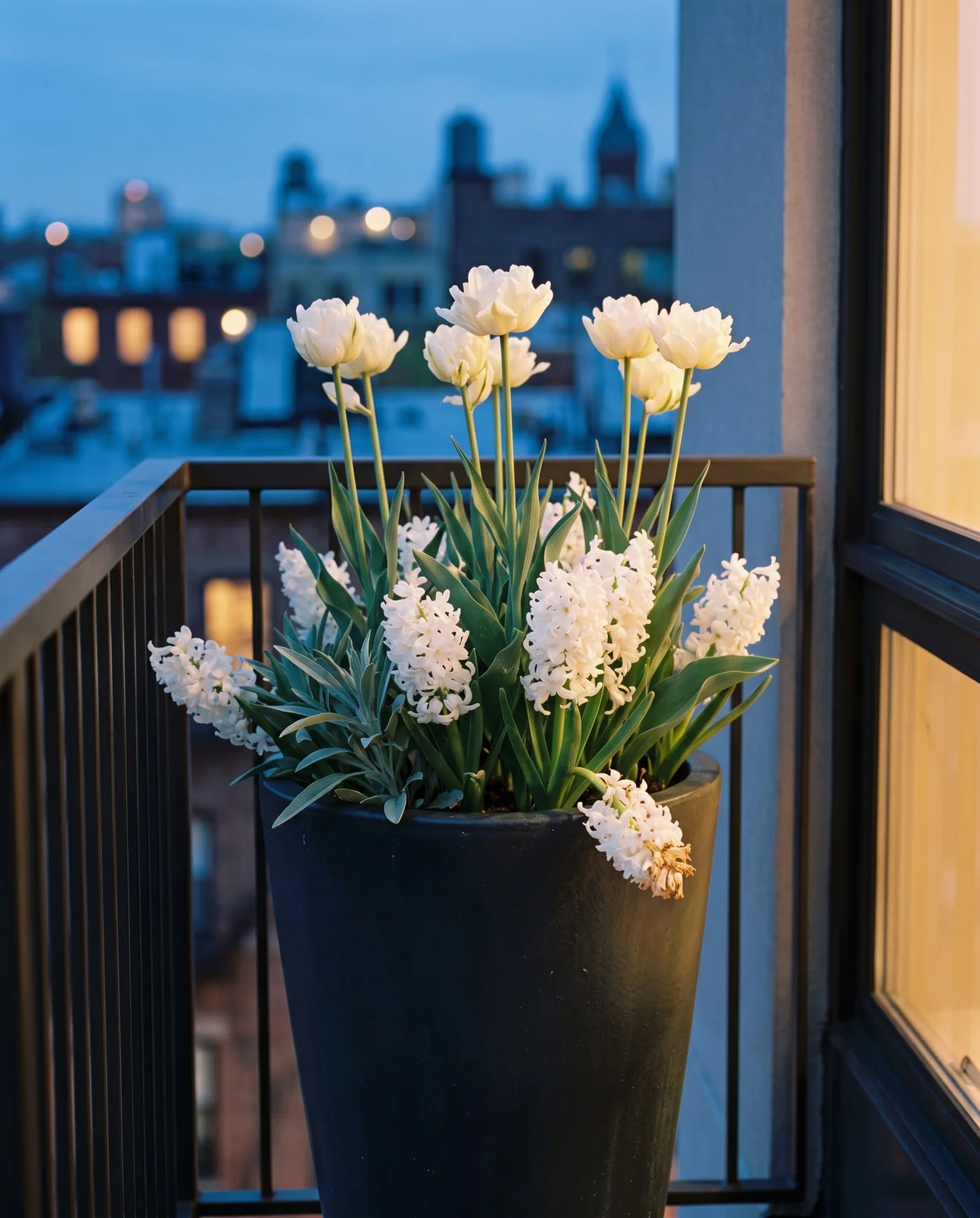
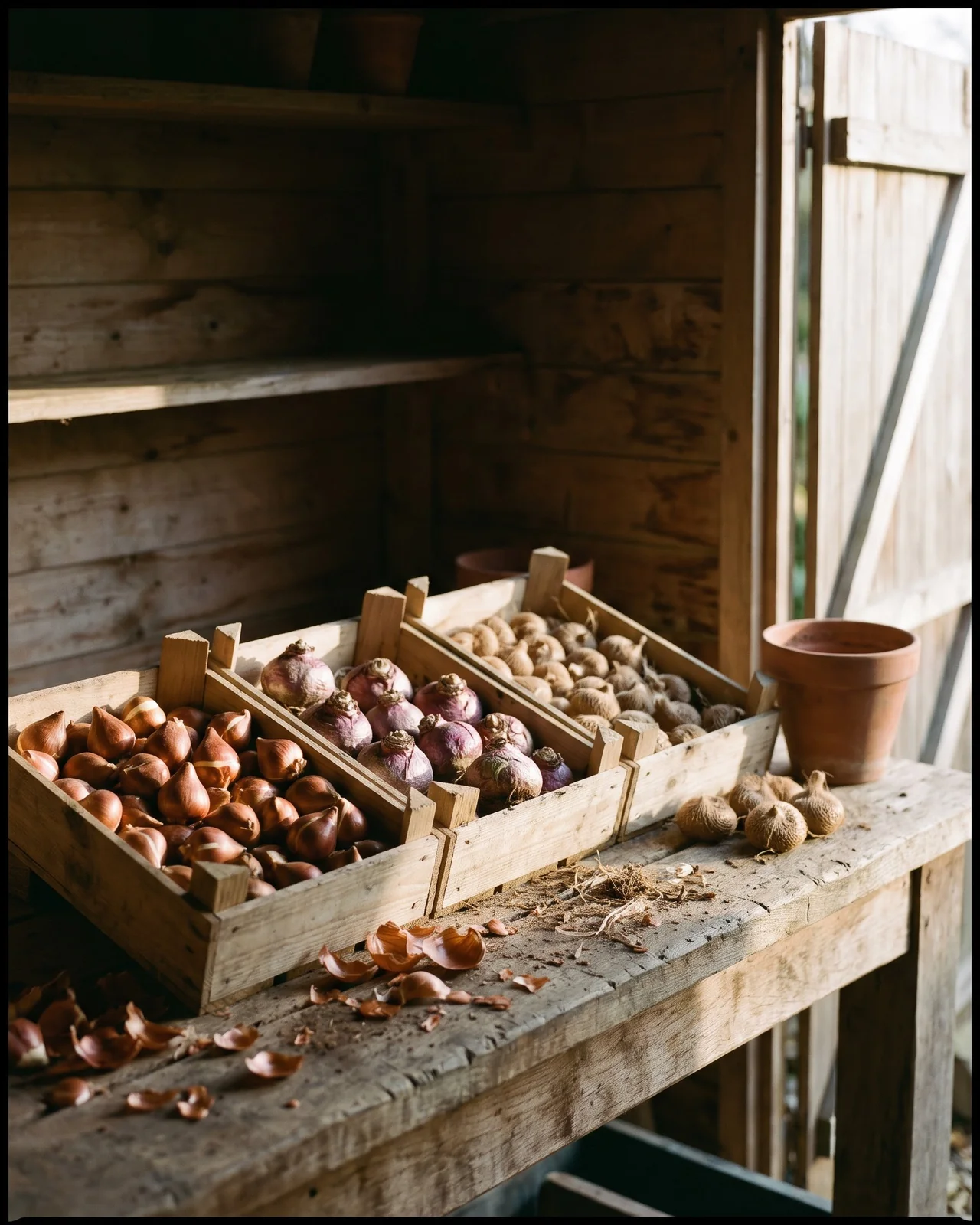
Sort the bulbs by when they flower rather than by how big they are, and the stacking order writes itself: late-spring tulips at the bottom, mid-spring hyacinths (Hyacinthus orientalis) in the middle, early-spring crocuses near the surface. NC State Extension notes that a hyacinth bulb usually produces only one flower spike, which is why the middle layer has to be packed shoulder to shoulder to read as a band of color instead of a scatter of single stems, and it puts crocus corms at 35 to 70 per square foot, spaced 2 inches apart, for a carpet dense enough to notice from the porch door. Layers can be swapped or added: snowdrops push the season back into late winter, daffodils fill mid-spring, and compact alliums carry it into early summer. Wear gloves for the hyacinth layer, because NC State Extension warns that the calcium oxalate crystals and alkaloids on the bulb surfaces cause contact dermatitis and skin irritation.
Match your container depth to a bulb lasagna plan
Container depth decides the layering plan. Run the squirrel check afterward.
The layering protocol
Soil temperature sets the planting date, not the calendar. Clemson HGIC advises holding off on spring bulbs until the soil at planting depth stays below 60 degrees Fahrenheit. Warm mix pushes premature leaf growth and burns through the reserves inside the bulb, and NC State Extension notes that tulips lose floral vigor outright once soil reaches 70 degrees. Bulbs bought early keep better than bulbs planted early: store them dry at 60 to 65 degrees per UGA Extension guidelines, and keep them away from ripening fruit, since Clemson HGIC warns that fruit-produced ethylene gas damages floral embryos and prevents blooming. Once autumn nights hold the pot below that 60-degree line, lay a piece of mesh over the drainage hole so soil stays in while water runs out, then add 2 to 3 inches of fresh, damp potting mix as the root floor for the deepest bulbs. Without a soil test, the UGA Extension bed rate is 1 to 2 pounds of 5-10-10, 10-10-10, or 8-8-8 per 100 square feet, which scales down to a light teaspoon blended evenly into that bottom layer of a standard container.
The three depth tables that matter do not agree on tulips. Clemson HGIC puts them 6 to 8 inches down, measured from the base of the bulb, UGA Extension gives a general figure of 4 to 6 inches, measured from the top of the bulb, and NC State works in ratios, three times the height of the bulb. In a deep container the generous end wins: set large tulip bulbs 6 to 8 inches below the planned finished surface, where they get root stability and the most insulation the pot can offer. Space them 4 to 6 inches apart, pointed end up. Gardeners worry that a bulb down there will run into the layer above it on the way up, and it will not; a shoot steers around a solid object and keeps climbing toward light and surface warmth. Cover the tulips with 2 inches of mix and press it between the bulbs with your fingertips, closing the large air pockets without knocking any of the tips off vertical.
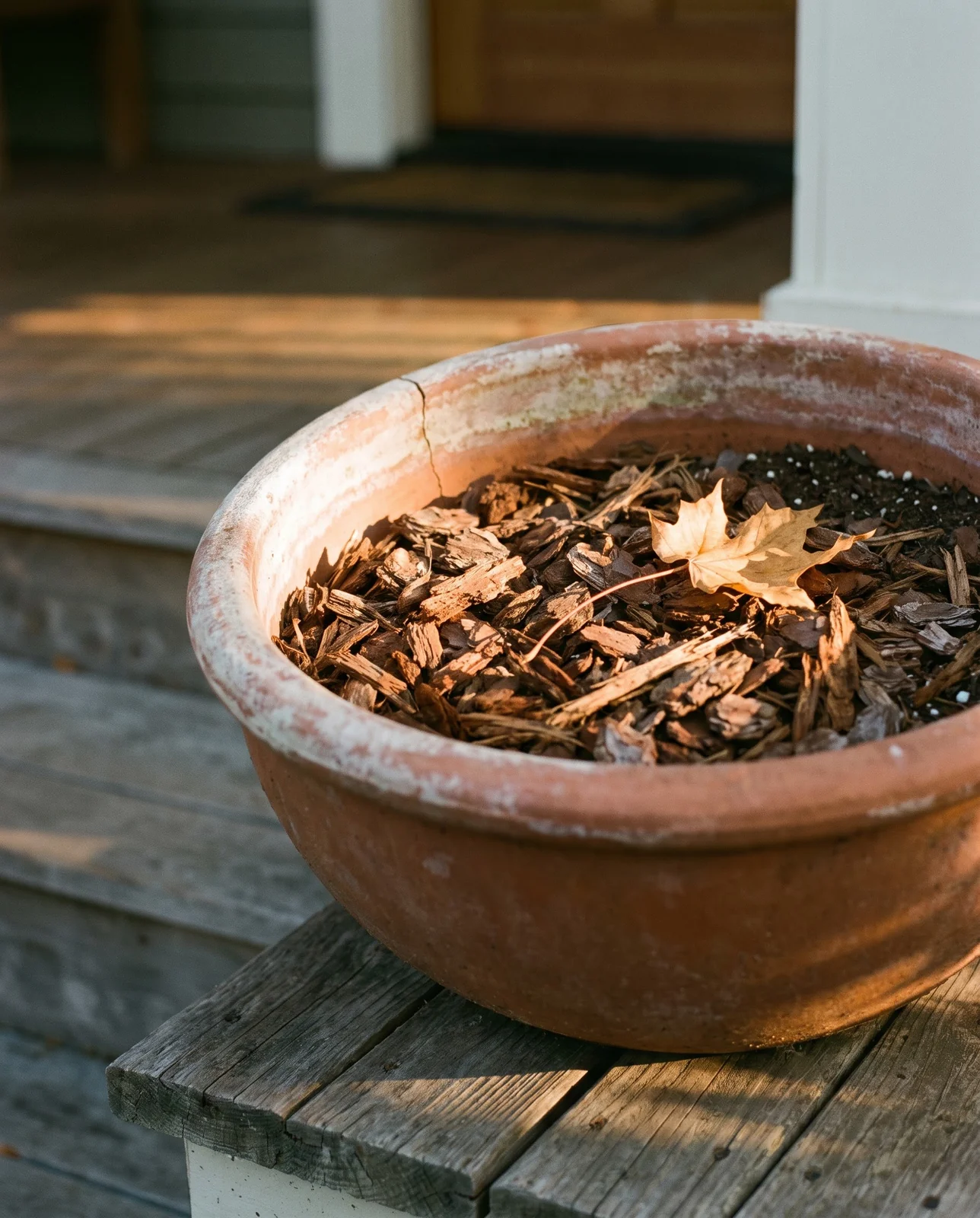
Work upward from there. Set the hyacinths so their tops sit 4 to 6 inches below the finished surface, 3 to 6 inches apart per Clemson HGIC, then cover them with another 1 to 2 inches of mix and firm it into a smooth bed for the last layer. Crocus corms go 2 inches apart at a depth of 2.5 inches by the NC State figure or 3 inches by Clemson HGIC, a half-inch spread not worth agonizing over. Add mix over the corms until the soil sits 1 to 2 inches below the rim, which leaves room to water without washing the top layer over the edge. Finish with 2 to 3 inches of organic mulch, which Clemson HGIC notes holds moisture, flattens the swings in soil temperature, and stops rain from splashing mud onto the first crocus flowers. Then water the whole pot through until it runs steadily from the drainage hole. NC State Extension emphasizes keeping hyacinth soil moist immediately after planting, so the roots establish before the cold shuts everything down.
Winter care and container protection
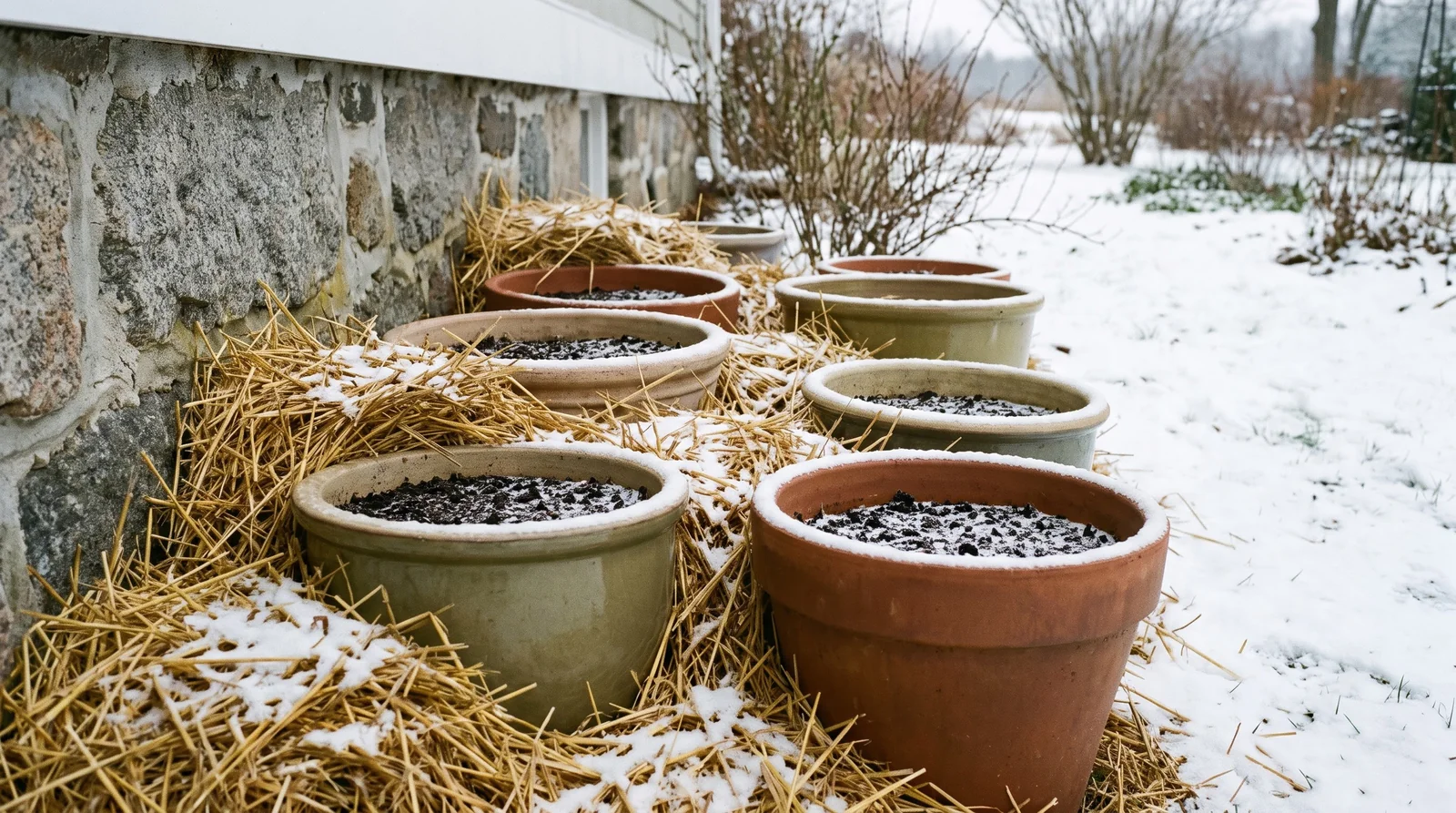
Cold is the point and also the risk. Spring bulbs need a long chill to build a normal stem, and UGA Extension puts the requirement at 12 to 16 weeks between 40 and 50 degrees Fahrenheit; Clemson HGIC describes what happens to bulbs that get less, flowers opening almost at the soil line on stunted, short stems. A garden bed supplies that chill without supplying much danger, because the mass of surrounding earth changes temperature slowly. A pot has none of that. Its soil quickly matches the air temperature, with cold coming through the sides and the base as well as the top. In USDA Zones 3 through 6, a pot left in the open through a hard winter can freeze into a solid block, tearing root tissue and drying the bulbs out. The standard extension-office answer is to move the container into an unheated garage, cold frame, or basement held near 40 degrees once hard freezes begin, or to push several pots together against a sheltered foundation wall and bank straw mulch around them.
Across USDA Zones 8 through 10 the problem inverts, because the winter is not cold enough for long enough. Hyacinths in coastal and deep southern gardens need six to eight weeks of refrigerated chilling at 40 to 50 degrees before they go into the pot, per Clemson HGIC, while tulips want the full 12 to 16 weeks in ventilated packaging, per UGA Extension. Warmth moves the whole spring calendar forward as well, and by a wide margin: UGA Extension records spring bulbs flowering more than two weeks earlier in Zone 9 than in Zone 7.
Wildlife is the other winter problem. Clemson HGIC reports animals digging up and eating tulip and crocus bulbs through the winter months while leaving daffodils alone, and NC State Extension confirms that squirrels actively dig up newly planted tulip bulbs and crocus corms. Clemson’s position on the fix is blunt: enclosing the bulbs in wire mesh at planting is the only dependable defense. Cut a circle of half-inch hardware cloth to the inner diameter of the pot and lay it flat over the crocus layer before the last of the soil and the mulch go on. Shoots come up through the mesh in spring; paws do not go down through it.
Water sparingly and by feel through the cold months. Keep the mix lightly moist into late autumn while roots are still running, then cut back hard once the pot goes dormant, since cold soil gives up almost no moisture to evaporation and a saturated container in midwinter is how basal rot starts. The first sign the plan worked comes early, when crocus shoots pierce the mulch ahead of everything else, opening in morning sun and folding shut at night and under heavy cloud, per NC State Extension. When the last tier finishes, leave every leaf attached for at least six weeks, or until it browns completely, which Clemson HGIC notes lets the bulbs photosynthesize and store energy. Even then, treat the pot as a single-season display. UGA Extension advises discarding container-forced bulbs outright, since they seldom grow or flower well once moved into the garden, and NC State Extension confirms that both tulips and hyacinths lose substantial vigor after their first season. Emptying the pot in early summer and starting again in autumn with fresh, vigorous, disease-free stock is what keeps the display dense.
Bulb lasagna planting and winter care by USDA zone
Planting window, chilling method, and winter protection each shift by zone band.
Frequently asked questions
What is the minimum pot depth needed for a three-layer bulb lasagna?
Fourteen to sixteen inches of usable depth. That covers 2 to 3 inches of mix under the deepest bulbs for root run, 6 to 8 inches of planting depth for tulips measured from the bulb base per Clemson HGIC, the intermediate covers over hyacinths and crocuses, and 2 to 3 inches of mulch with room left below the rim for watering. The 8 to 10 inch pots sold as standard at garden centers will not hold three honest layers.
Will bulbs in lower layers get blocked by bulbs planted directly above them?
No. A shoot that meets a bulb above it steers around the obstruction and keeps climbing toward light and warmth. There is no need to line the upper bulbs up with the gaps below, though offsetting them a little spreads roots and water more evenly through the pot.
Can a bulb lasagna pot survive freezing winter temperatures outdoors?
In USDA Zones 3 through 6, not reliably. Container soil freezes faster than a garden bed because cold air surrounds the pot on every side, and an exposed pot can freeze through and damage roots. Move the container into an unheated garage or basement held near 40 degrees Fahrenheit during hard freezes, or cluster pots against a foundation wall and bank straw mulch around them.
How do I stop squirrels from digging up bulbs in my containers?
Use a physical barrier. Clemson HGIC reports that animals regularly dig up tulip and crocus bulbs, and that enclosing bulbs in wire mesh is the only dependable defense. Cut a circle of hardware cloth to the inner diameter of your pot and lay it flat above the top crocus layer before you cover it with soil and mulch.
Can I reuse the bulbs from a lasagna container next year?
Plan on fresh bulbs. UGA Extension notes that container-forced bulbs decline after flowering and rarely bloom well when replanted in the garden. For dense color every spring, empty the pot in early summer and plant new bulbs the following autumn.
More About Tulips
Enjoying our flower guides? Add YourFlowersGuide as a preferred source on Google. It helps more readers find us.
Add to Preferred Sources