
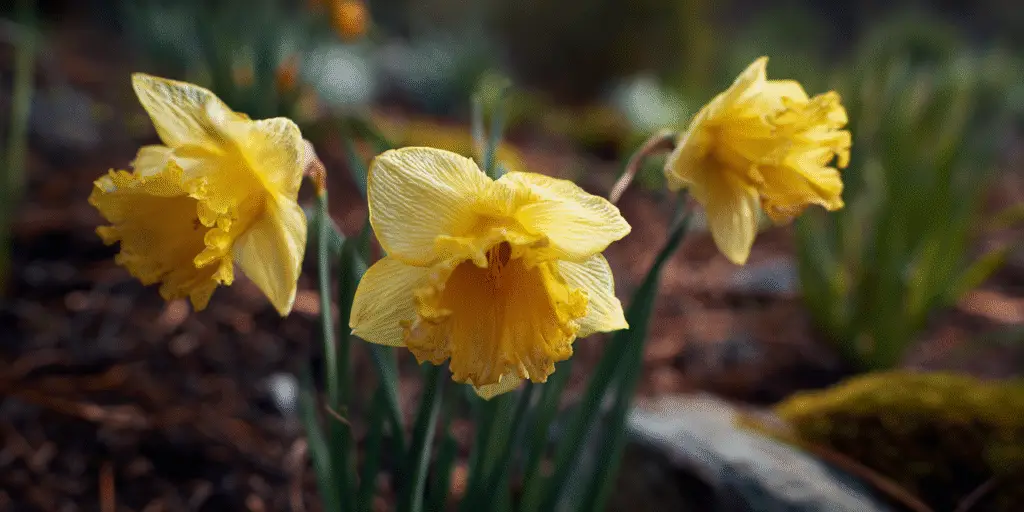
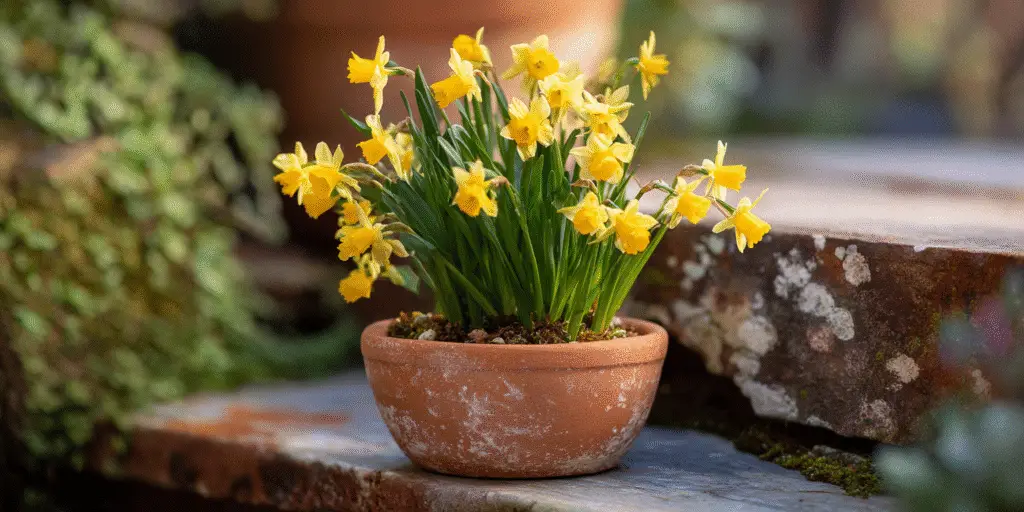
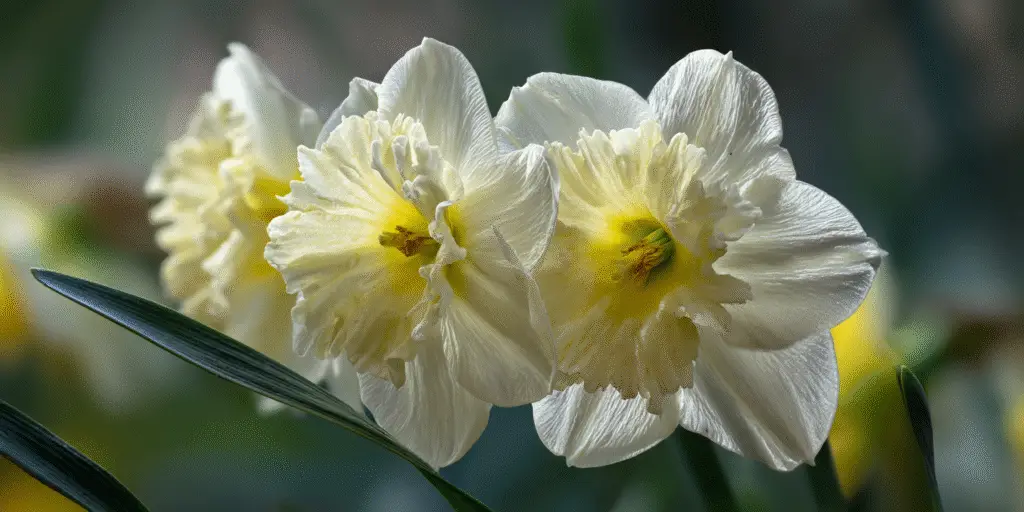
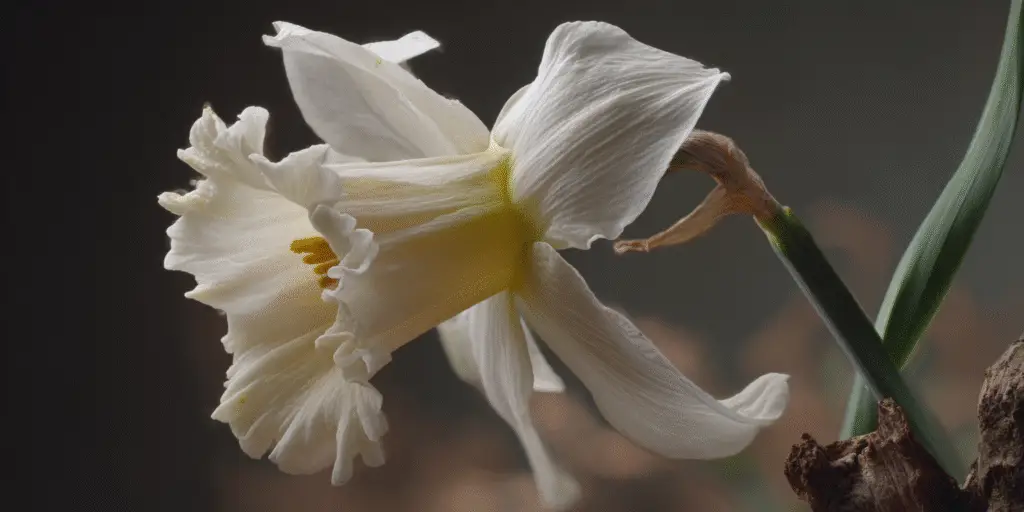
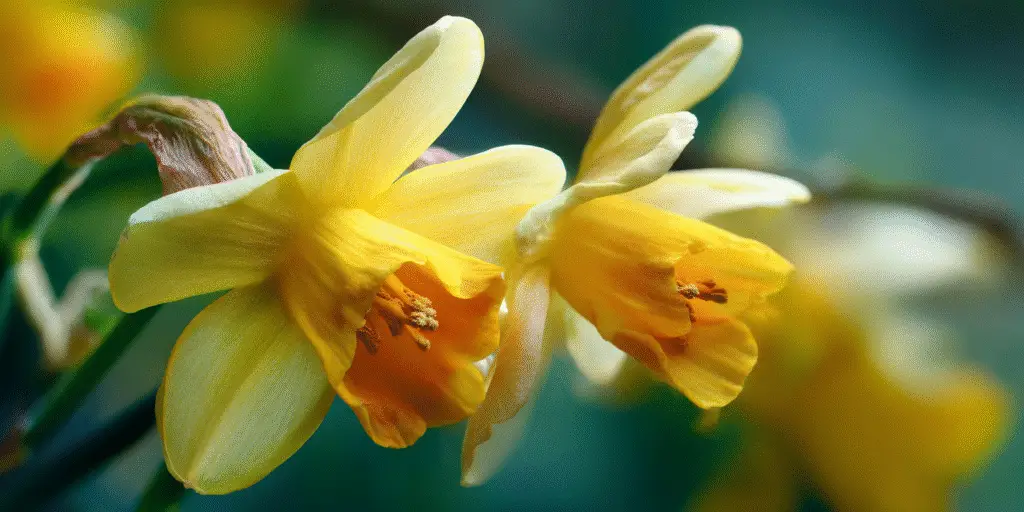
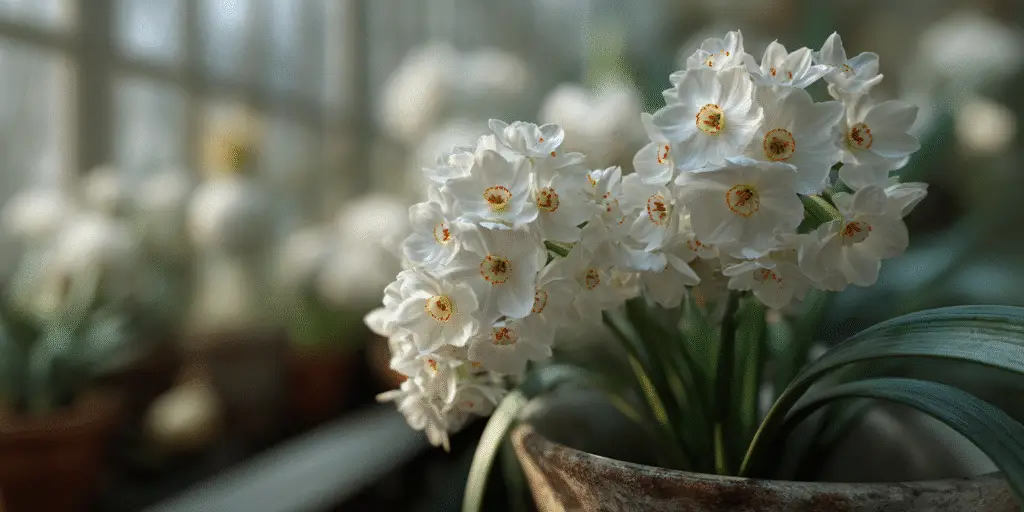
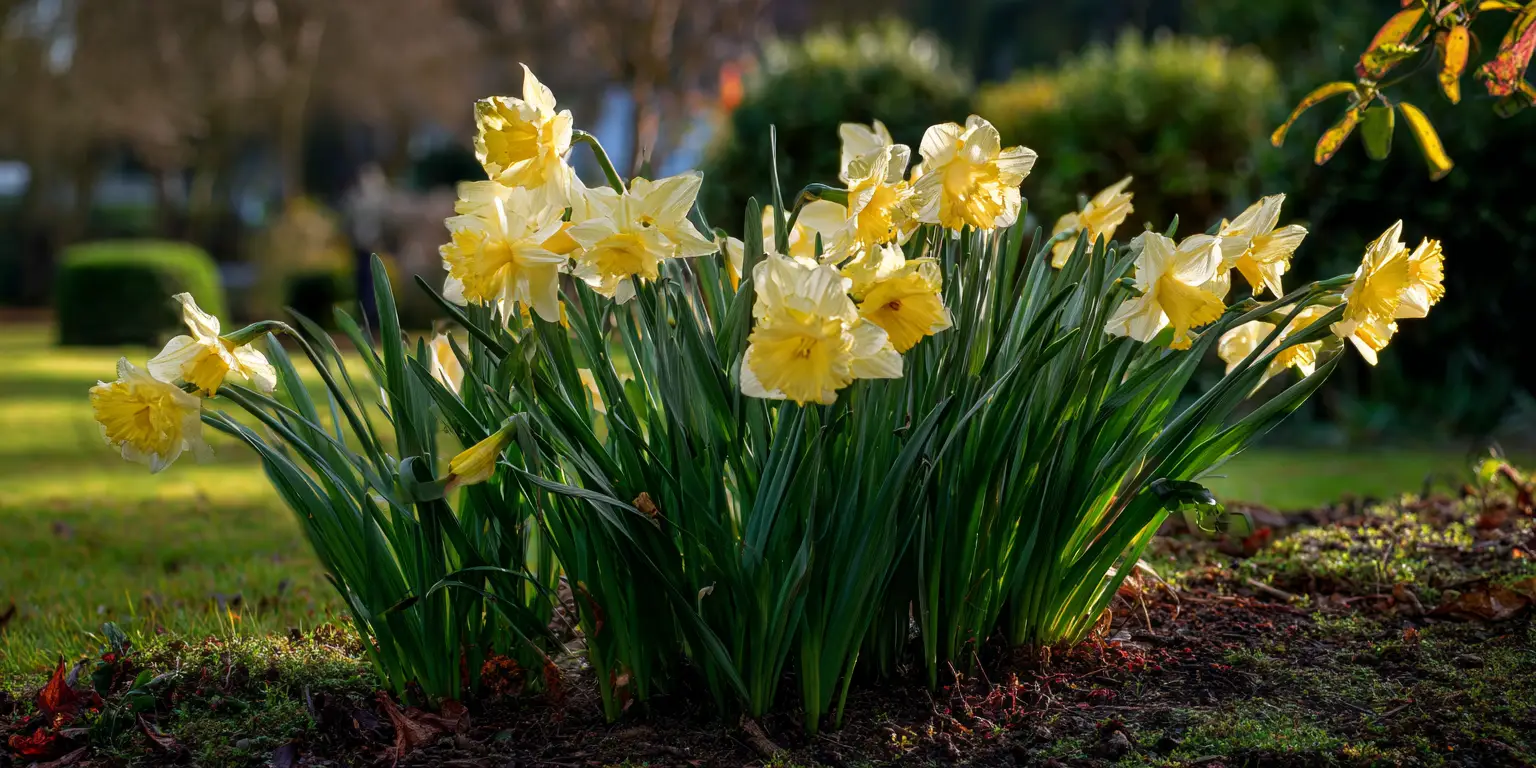
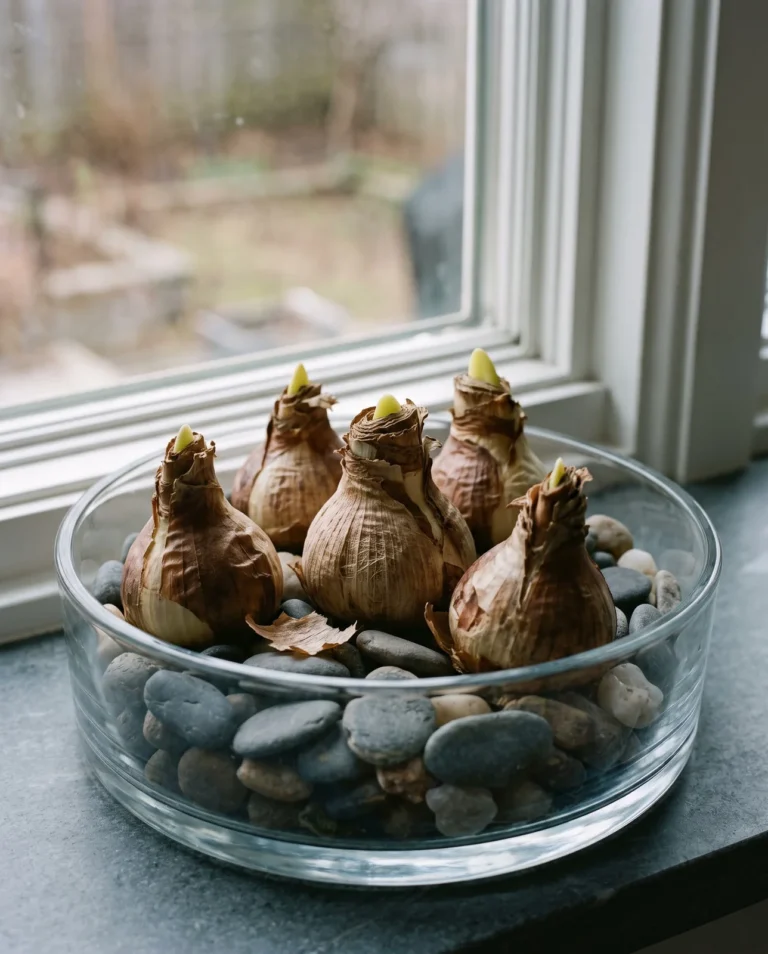

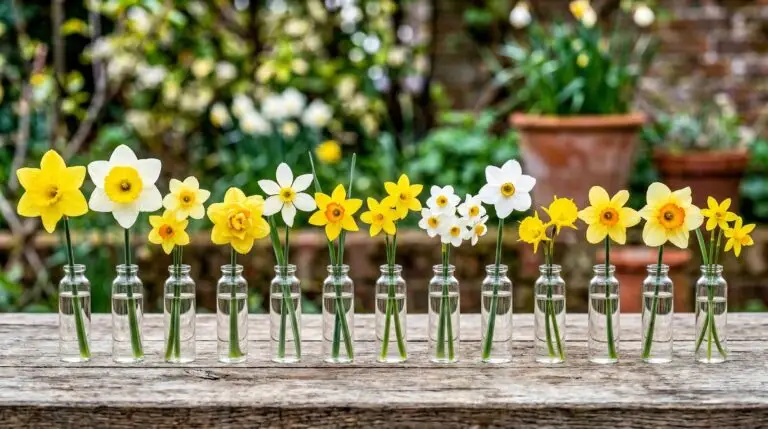
Daffodil bloom time across the US
Interactive map
 See the interactive map
Drag the date and the bloom moves north across the country. Every point has its own window, and the map says where it has no records rather than guessing. Free, with nothing to sign up for. Open the daffodil map.
City by city
Typical window, earliest first. Cultivars of the same flower can open days or weeks apart.
Taxonomy and origin
Daffodils belong to the amaryllis family, Amaryllidaceae, in the genus Narcissus, which holds several dozen wild species of spring-flowering bulbs. In gardening every member of the genus is a daffodil, while "jonquil" is a narrower term for the fragrant, rush-leaved Narcissus jonquilla and its hybrids. The wild species are native to Europe, North Africa, and western Asia, with their center of diversity in the Mediterranean, where they grow in meadows, woodland, and rocky slopes adapted to wet winters and dry summers. The common wild daffodil, Narcissus pseudonarcissus of western Europe, stands behind many of the classic yellow trumpets. The name traces to the Greek myth of Narcissus and to the root narke, meaning numbness, a nod to the plant's toxic alkaloids.
Breeders have turned those species into more than 25,000 registered cultivars, sorted by flower form into 13 horticultural divisions. Knowing the division tells you more than the species does, because it predicts the flower shape, the scent, and how the plant behaves in the garden. The table below covers the ones a buyer actually meets.
For a first planting or a naturalized drift meant to spread on its own, the trumpet and large-cupped divisions like Carlton and Dutch Master are the toughest and multiply fastest. Choose jonquilla or poeticus types for fragrance, tazetta paperwhites for forcing indoors and for mild-winter gardens, and cyclamineus miniatures like Tete-a-Tete for pots and the front of a bed. Doubles and split-coronas give the fullest cut flower, though their heavy heads can flop in spring rain, so they do best with a little shelter.
The four groups a buyer actually chooses between
The thirteen-division classification is real and it is what the bulb trade names its stock by, but it is not the decision a buyer makes. The decision is early or late, miniature or standard, double or single, and whether the planting will come back on its own. The groups below are sorted by that last question, and one of them behaves differently from every other daffodil in a mild winter.
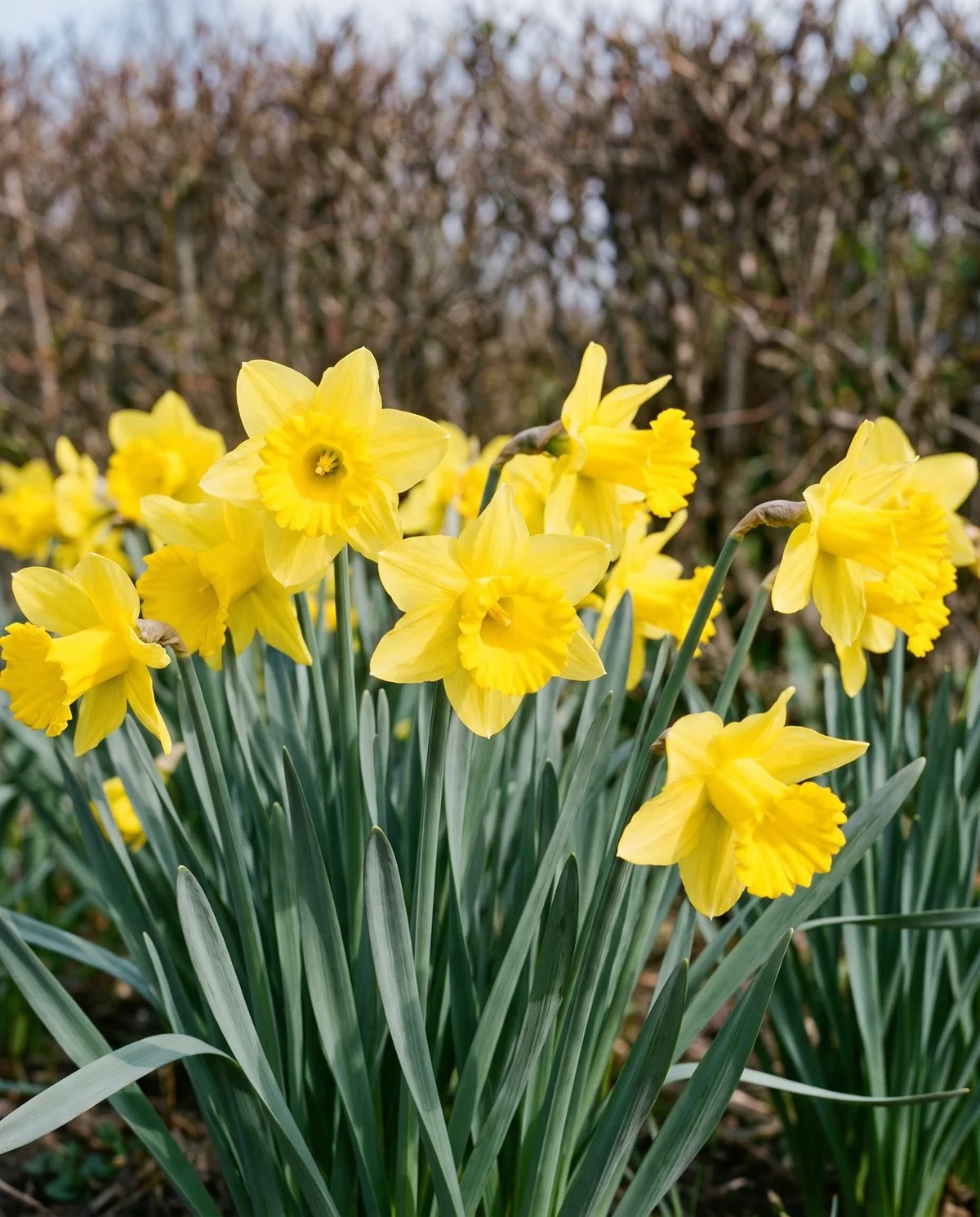
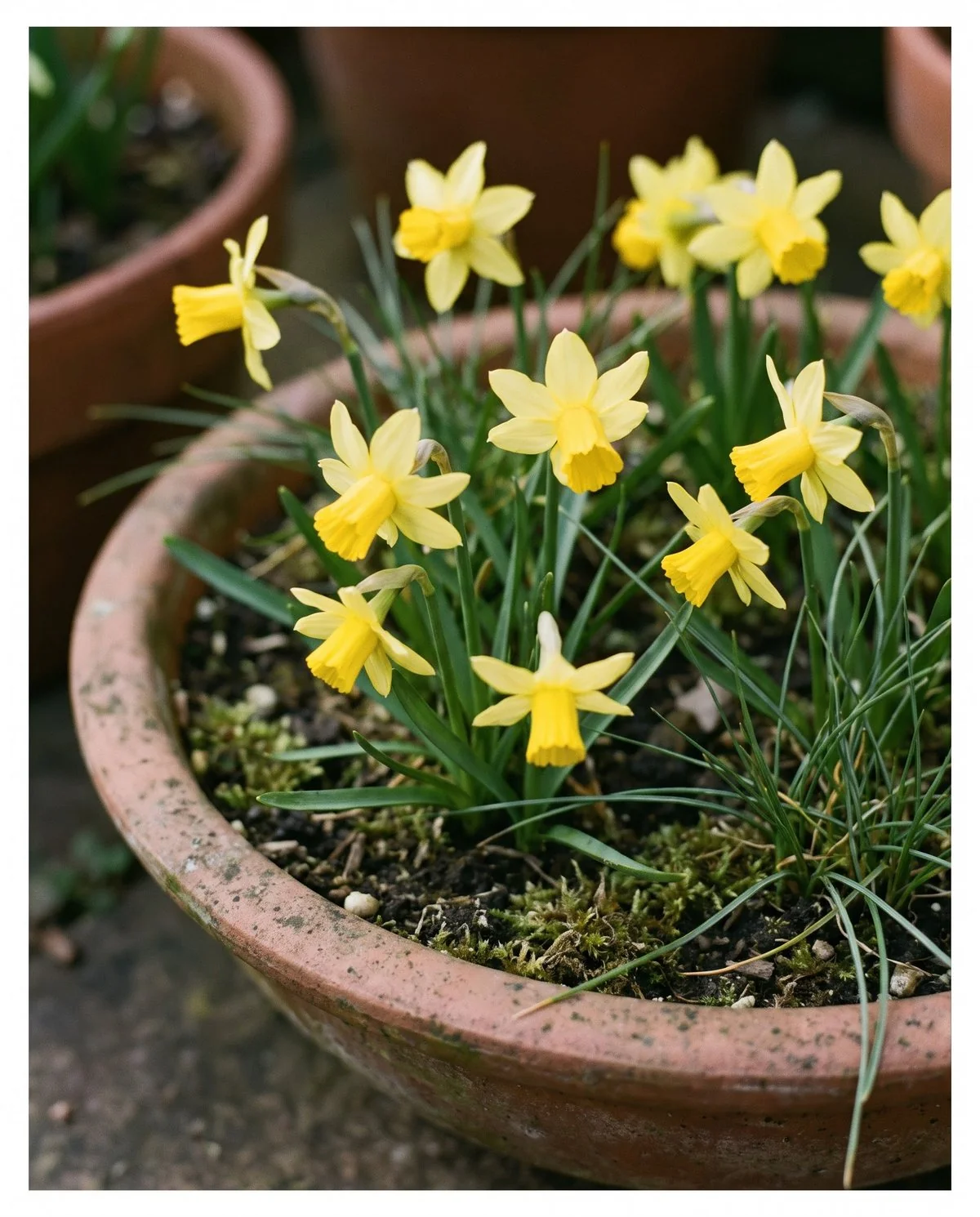
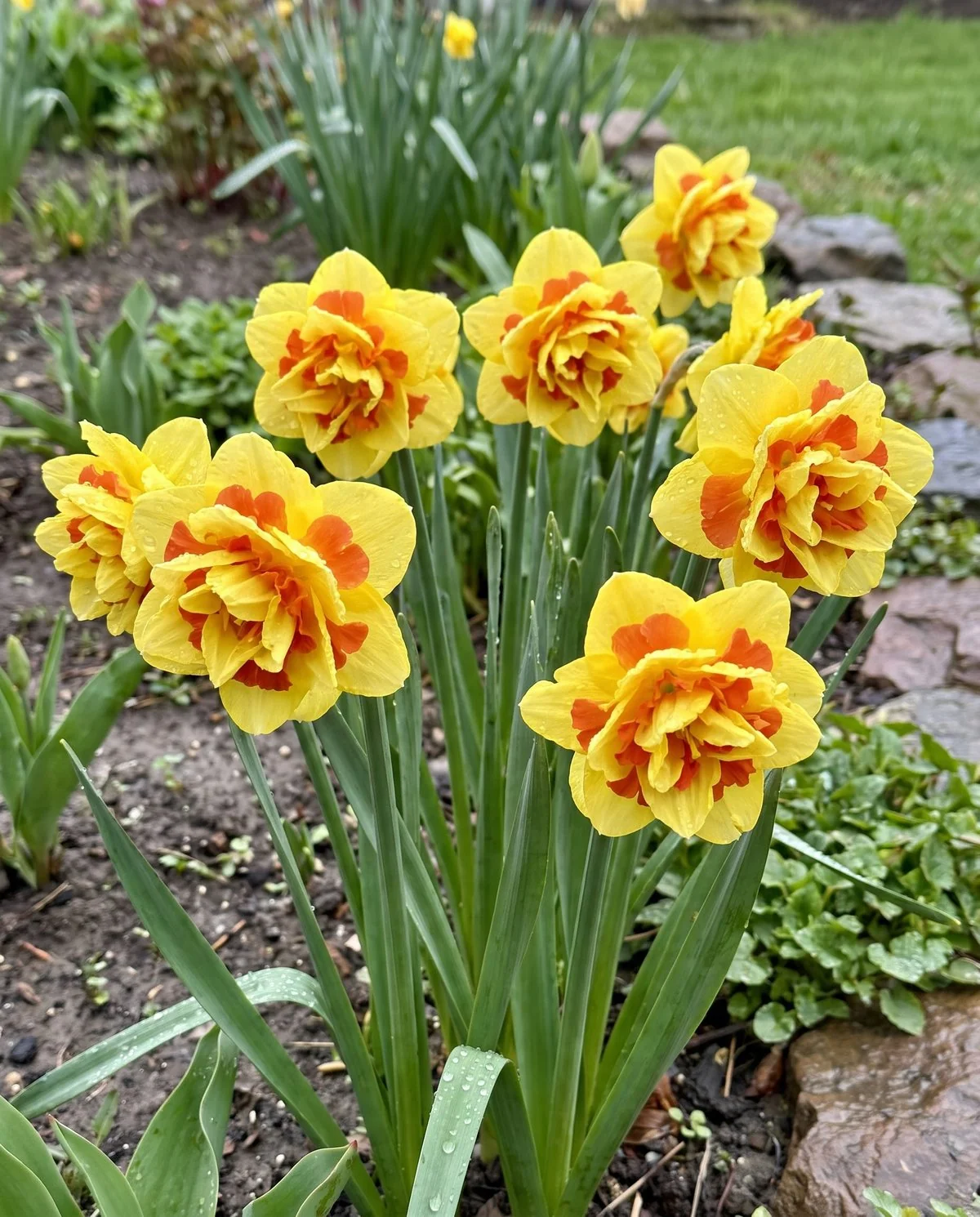
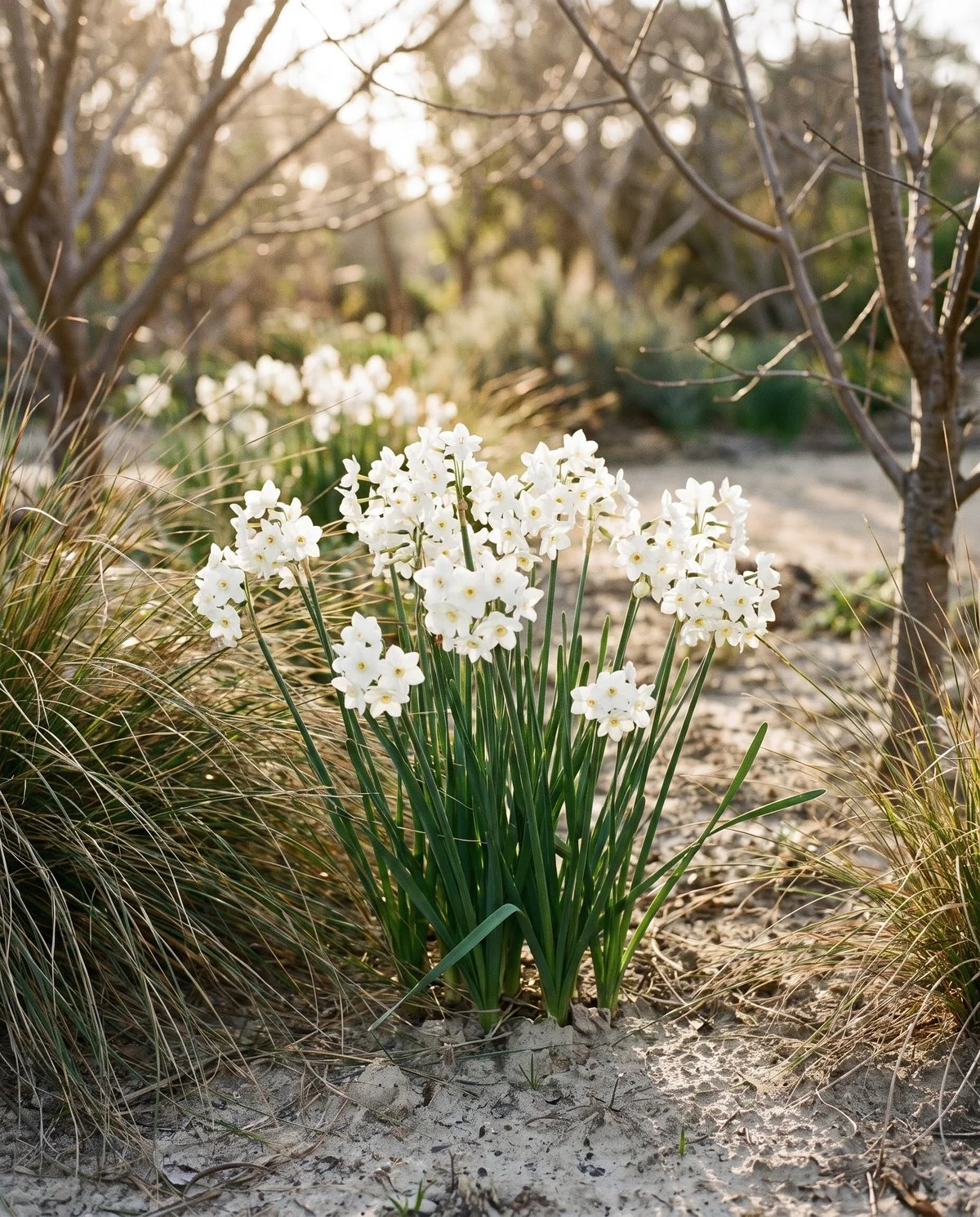
The formal system underneath all this is the RHS classification, restated by the American Daffodil Society, running thirteen divisions from Trumpet through Double, Triandrus, Cyclamineus, Jonquilla, Tazetta, Poeticus, Bulbocodium and Split-cupped to the species and wild hybrids of Division 13. Three honest loose ends sit alongside it. First, the standard caution that double daffodils flop in wind and heavy rain is trade-tier: no university source in this research quantified rain damage across the division, and Missouri Botanical Garden's 'Tahiti' entry runs the other way for that one cultivar. Second, a commercial naturalizer list and RHS's own basal-rot page name the same cultivar, since RHS names 'Carlton' and 'Golden Harvest' as susceptible cultivars to avoid where basal rot is already a problem, which means one name can be the right buy in one garden and the wrong one in another. Third, an unresolved oddity worth recording rather than explaining away: two posts in the forum sample asked why a clump that used to produce double flowers stopped doing so, and this research found nothing that accounts for it.
Bloom time
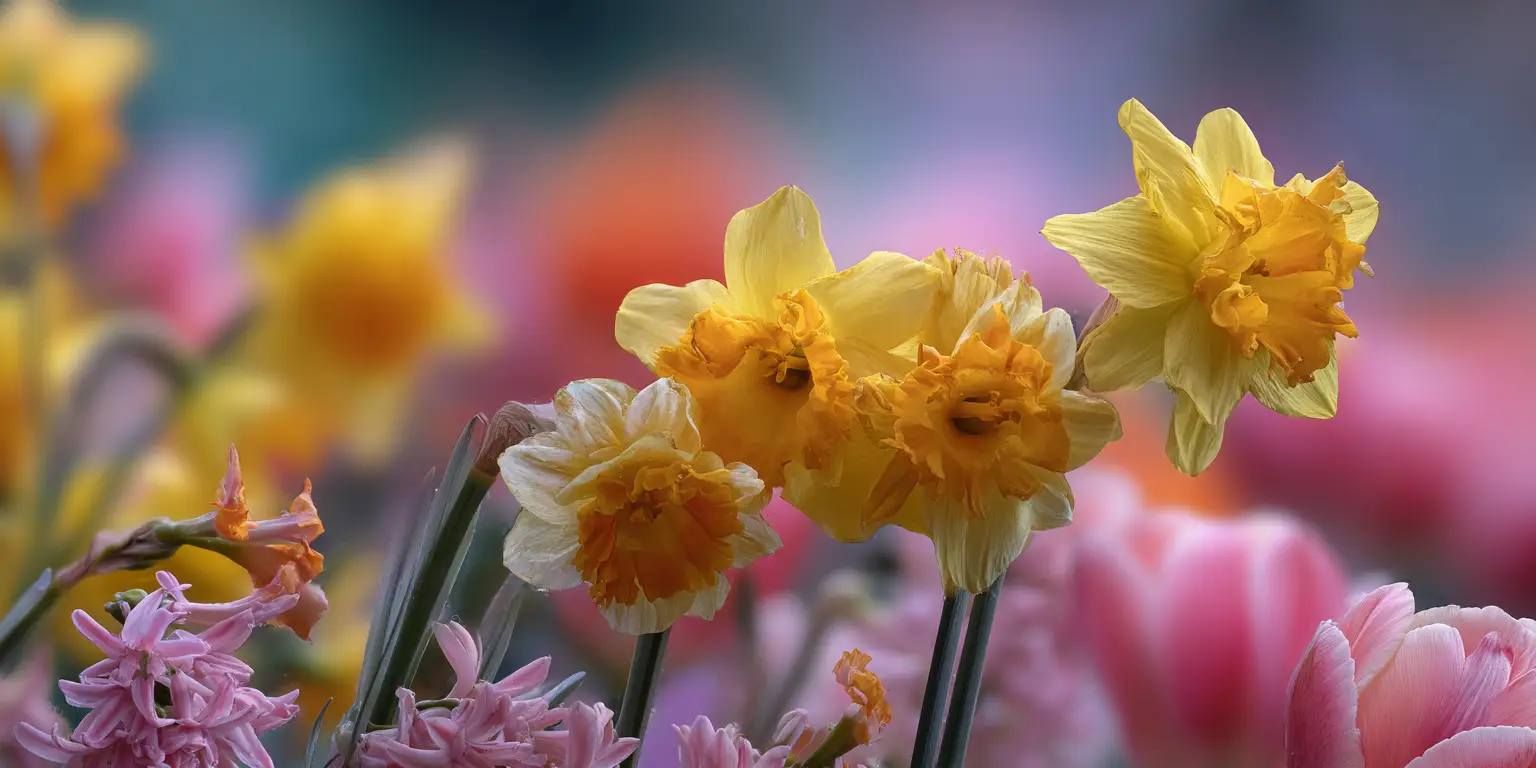
Most daffodils flower between late winter and mid-spring, and the exact window depends on the cultivar. Early types can open in February and push straight through late snow, while late varieties hold off until April or May, so a planting that mixes early, mid, and late divisions carries color for well over a month. Each individual flower lasts about one to two weeks, longer in cool weather and shorter in a sudden warm spell. They bloom alongside early tulips and hyacinths and hand off to irises and alliums as spring moves on, which is why a bulb bed built in layers never falls quiet. If an established clump comes up with plenty of leaves but few or no flowers, it has gone blind, a common problem with several plain causes that the propagation section below sorts out.
Two paths, worked in order
The first path is the reason Iowa State Extension keeps a dedicated FAQ for one question, and its five causes are worked here in the order that service lists them, which puts what the gardener did ahead of anything the bulb did. The second path is for the planting that produced nothing at all, where the answer is underground and the checks are physical.
Height and spread
Size follows the type. Dwarf and rock-garden daffodils reach only 4 to 6 inches, standard garden varieties stand 12 to 18 inches in bloom, and a few large trumpets approach 24 inches. The flower stems are leafless and rise above narrow, strap-shaped leaves that run roughly 8 to 16 inches long. A single bulb does not sprawl. It makes a tight clump of leaves and one or more stems from nearly the same point, so bulbs are set 4 to 6 inches apart at planting. Over the years healthy bulbs split off new offsets and the clump widens slowly into a broad colony, but this is a gradual spread from the base, not the running growth of a groundcover, which is what makes daffodils so well suited to naturalizing in lawns and under trees.
Light
Full sun, meaning at least six hours a day, gives the strongest stems and the heaviest bloom. Daffodils also take partial shade well, especially the dappled light under deciduous trees that leaf out only after the bulbs have finished, which is why they naturalize so happily in woodland. Deep shade is the problem. In too little light a bulb throws up abundant leaves and no flower buds, the classic blind response, so a spot that bakes in spring sun even if it shades over in summer beats a corner that stays dark all season. If a clump that once bloomed well starts skipping years, failing light from a growing tree or shrub is the first thing to check.
Water
Daffodils want evenly moist soil while they are growing and flowering, from late winter through spring, and normal spring rain usually covers it. In a dry spell a deep soak once a week keeps the display going. Drainage matters more than watering, because a bulb sitting in waterlogged ground rots quickly, so soil that holds moisture without turning to muck is the target. Once the flowers fade, keep the soil from drying out while the leaves are still green and feeding the bulb. After the foliage yellows and the bulb goes dormant in early summer, daffodils prefer to bake dry, and beds that get heavy summer irrigation invite rot. Consistent spring moisture followed by a dry summer rest is the whole watering story.
Soil and pH
Plant daffodils in well-drained, reasonably fertile soil, ideally a loam or sandy loam that stays moist in spring but never sits wet. Heavy clay is worth opening up with compost and grit before planting, and pure sand benefits from compost to hold a little moisture through the growing season. The plants are not fussy about richness, and average garden soil suits them, though a scattering of bulb fertilizer or compost worked in at planting supports the long haul. The pH they prefer is slightly acidic to neutral, roughly 6.0 to 7.0, and they tolerate a bit either side of that. Extremely acidic or strongly alkaline soil can lock up nutrients and show as weak growth or yellow leaves, which a simple soil test and a corrective dose of lime or sulfur will fix.
USDA hardiness
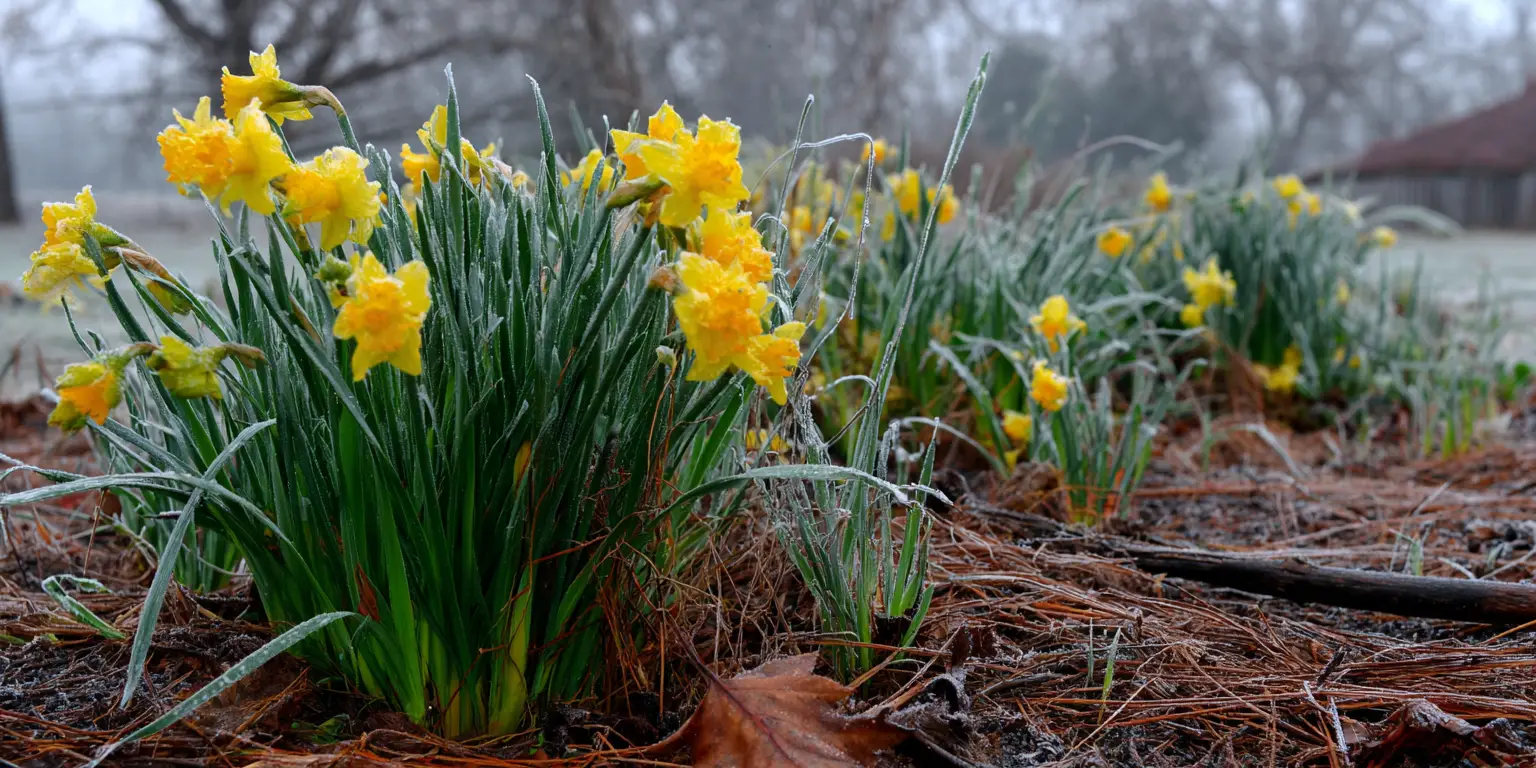
Most daffodils are hardy in USDA zones 3 through 8 and return dependably each spring, tolerating deep frost and late snow while dormant. They actively need a cold winter to set flower buds, so gardeners in the coldest zones tend to get the best performance from them, not the worst. Warm regions are where the trouble starts. In zones 8 and 9 the winters may not deliver enough chilling hours, and bloom thins out, so southern gardeners lean on low-chill tazetta and jonquilla types or pre-chill standard bulbs in a refrigerator for 8 to 10 weeks before fall planting. Past zone 9 most daffodils will not perennialize and are grown as annuals or in pots with artificial chilling. The exception is the paperwhite, a tazetta that needs no cold at all and blooms readily indoors in any climate.
Planting windows, depths and the chill each zone band gets
One extension service anchors this table with its own zone: Iowa State Extension publishes October as the ideal month for a zone 5 garden and gives a reason for avoiding September. The other bands are bulb-trade consensus consistent with that anchor, and they are labelled as such rather than presented as university figures. The frost threshold at the bottom is a real number a reader can check a forecast against.
Propagation and longevity
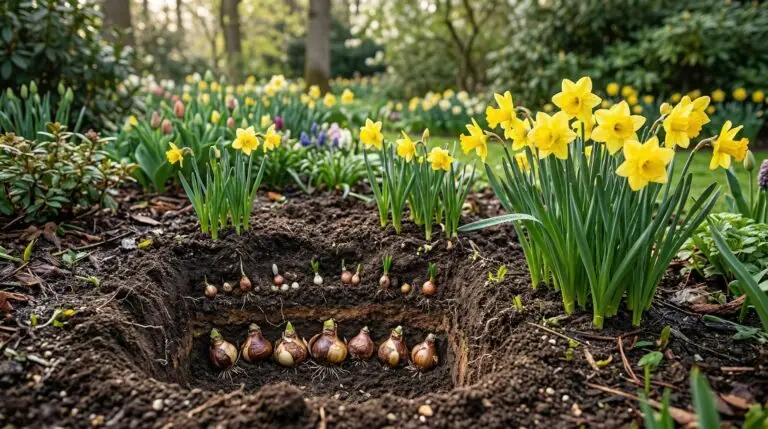
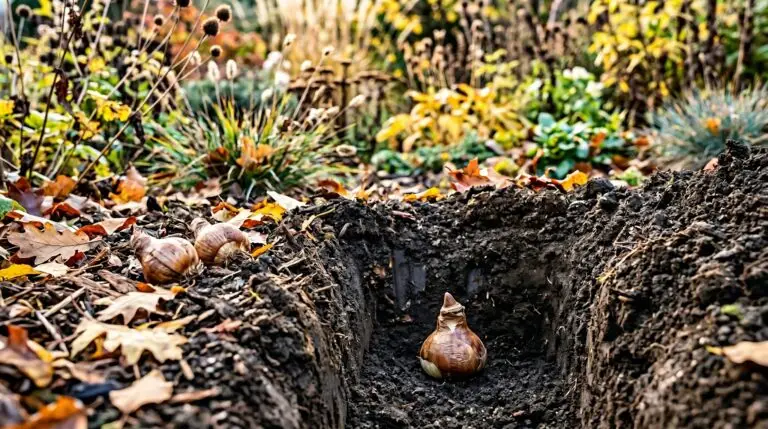
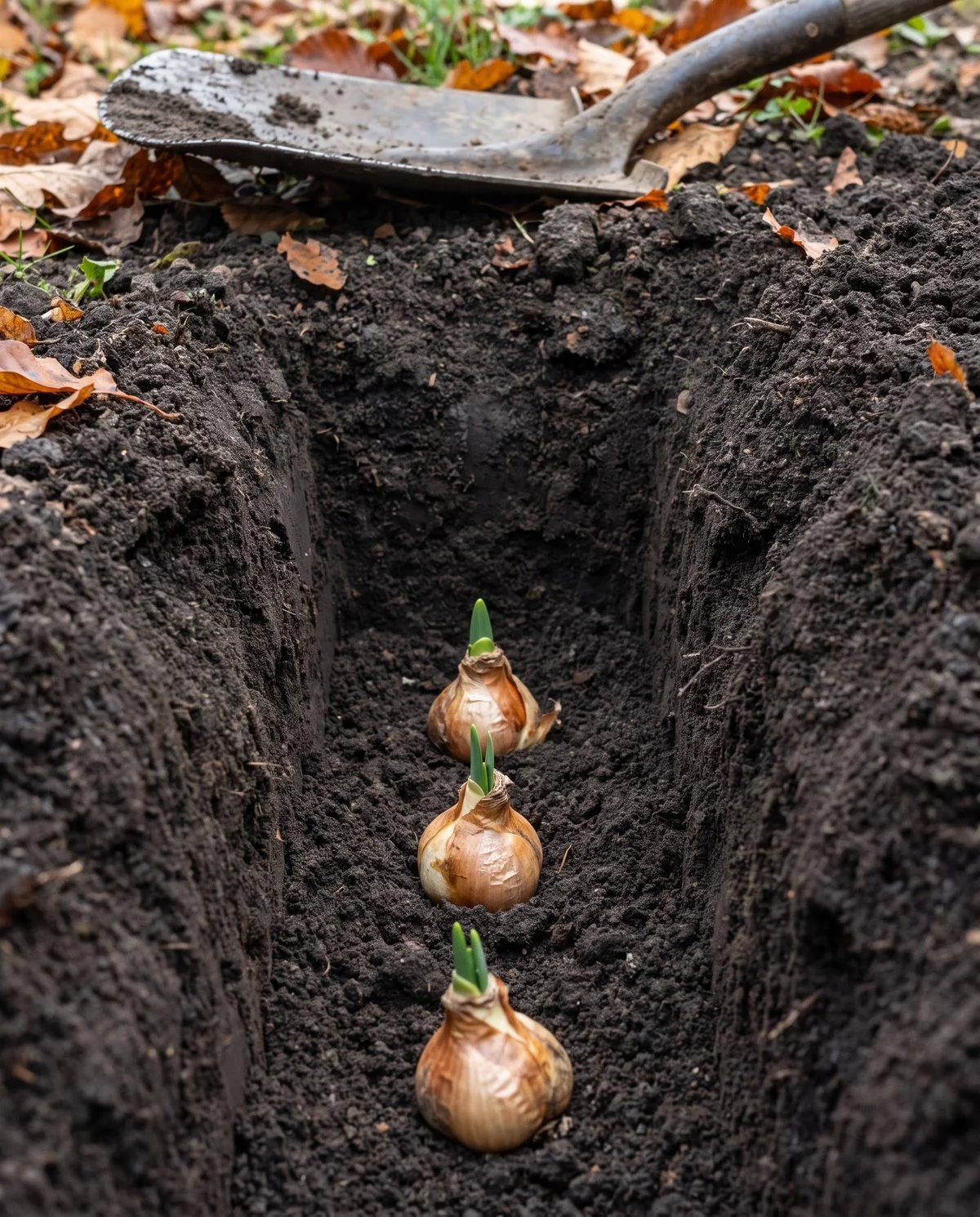
Everything about a long-lived daffodil planting starts at the planting hole. Set bulbs in fall, from about October into early November, two to four weeks before the ground freezes so the roots have time to grow. Plant at two to three times the bulb's own height, which puts a large bulb roughly 6 inches deep to its base, pointed end up, spaced 4 to 6 inches apart. Bulbs planted too shallow bloom for a year or two and then peter out, so err toward the deeper end. From then on the plant multiplies itself: each bulb splits off small offsets, and after a few years a clump that has grown congested and started to bloom less can be lifted once the foliage has died back, teased apart into individual bulbs, and replanted with fresh spacing. Divided this way every five to ten years, a planting renews itself indefinitely, and undisturbed daffodils around old homesteads have persisted and bloomed for fifty years and more.
The one habit that keeps a clump flowering is leaving the leaves alone after the show. The foliage spends about six weeks after bloom photosynthesizing and packing next year's flower into the bulb, so it needs to stay in place, in the light, until it yellows and pulls away easily. Cutting it green, mowing it, or the popular trick of braiding and folding the leaves all reduce the surface area gathering sun and starve the bulb, which is the surest way to a blind clump the following spring. There is more detail on the right way to handle daffodil foliage after flowering, but the short version is simple: deadhead the spent flower so the plant does not waste energy on seed, then let the leaves fade on their own schedule. When daffodils come up blind, the cause is almost always one of a short list, and the fix follows from it.
| Why a clump goes blind | What you see | Fix |
|---|---|---|
| Overcrowded bulbs | Many leaves, few or no flowers, congested clump | Lift after foliage dies back, divide, replant with space |
| Foliage cut or tied too early | Weak or no bloom the next spring | Leave leaves about six weeks until brown, never braid or mow green |
| Too much shade | Abundant leaves, no buds | Move to a spot with six or more hours of spring sun |
| Starved or dry after bloom | Gradual year-on-year decline | Feed after flowering, water while leaves stay green |
| Planted too shallow | Bloom fades out over a few seasons | Replant at two to three times the bulb's height |
Why this bulb gets better for years, and what happens around year five
Year one is the reliable part of the daffodil life cycle: a correctly planted, adequately sized, properly chilled bulb flowers in its first spring, the same as a tulip does. What happens afterwards is where the two part company. Daffodils generally increase rather than decline, with each bulb producing roughly three to five offsets over three to five years, a figure that comes from bulb-trade consensus rather than from any university trial found in this research and is reported as such. The practical consequence is that a planting usually gets fuller and showier year over year, which is the structural opposite of the tulip pattern, where most modern varieties bloom well for only a few years. The absence behind that claim is worth stating too, because it was looked for: no source in this research named a weak daffodil division the way Iowa State Extension names tulip's Triumph division as an unreliable repeat bloomer. The closest finding was RHS naming individual cultivars, 'Carlton' and 'Golden Harvest', as basal-rot susceptible, which is a disease-risk statement rather than a decline statement. Around year five, variety depending, the same multiplication that improved the display starts to work against it. Iowa State Extension's own guidance is that a clump can become crowded enough that flowering drops off while the plant stays otherwise healthy, and that the fix is mechanical rather than nutritional: dig after the foliage has fully died back, separate the individual bulbs, replant immediately at full spacing and depth. Feeding a crowded clump does not address what is wrong with it. One exception runs against all of this. Standard and hybrid divisions grown outside their natural chill zone need the same annual pre-chilling intervention that tulips need in a warm climate, and without it the leaves-and-no-flower pattern becomes close to inevitable rather than occasional, which a gardener in a zone 10a Mediterranean climate in the forum sample diagnosed correctly in real time. The Tazetta and paperwhite group is the sourced exception that naturalizes in those same warm zones with no chilling trick at all.
Fragrance
Scent runs entirely by division. The jonquilla types carry a sweet, fruity perfume, the tazettas including the indoor paperwhites throw a strong musky scent that can fill a room, and the poeticus daffodils are prized for a spicy, clove-like fragrance. At the other end, many of the big trumpet hybrids are only faintly scented or have no smell at all, since breeders selecting for flower size and form do not always keep the perfume. Sensitivity varies too, and the same paperwhite that one person plants for its scent another finds overpowering in a closed room. Anyone buying for fragrance should shop by division or by a label that names the scent rather than trust that a beautiful bloom will smell of anything.
Toxicity and pet safety
Daffodils are genuinely poisonous, to people and animals alike, which sets them apart from harmless garden flowers like roses. Every part contains lycorine and related alkaloids, and the bulb holds the highest concentration, so the most serious cases start when a bulb is mistaken for an onion or dug up and chewed. The ASPCA lists Narcissus as toxic to dogs, cats, and horses, with vomiting, drooling, and diarrhea the usual signs, and convulsions, tremors, low blood pressure, and cardiac arrhythmia possible after a large ingestion. A pet that has eaten any part, especially a bulb, is a call to a veterinarian or to the ASPCA poison line. Cut flowers and their vase water carry the toxins too, so an arrangement is worth keeping out of a curious cat's reach. Handling has a milder cost of its own: the sap holds sharp calcium oxalate crystals that bring on "daffodil itch," a contact dermatitis, so gloves are sensible when planting or cutting in quantity. For a broader look at what is and is not safe around animals, see the guide to flowers that are safe for cats and dogs.
That same toxicity is the plant's great garden virtue. Deer, rabbits, voles, and squirrels all recognize daffodils as inedible and leave them untouched, so a bulb that would be a deer's breakfast anywhere else survives in the open. Gardeners plagued by wildlife use this on purpose, ringing beds of tulips, which deer and rodents devour, with a protective border of daffodils that nothing wants to cross. The poison that makes daffodils a hazard indoors is exactly what makes them the one bulb you can plant and forget outdoors.
Three claims worth pinning down, and the first one is true
The myth: Daffodils are deer-proof and rodent-proof.
The reality: True, and it is worth saying so plainly rather than hedging out of habit, because there is a trial behind it. Utah State University's study of the susceptibility of spring-flowering garden plants to herbivory by mule deer found that browsing was greatest on tulips, grape hyacinths and crocuses, and lowest on iris and daffodils. That is ranked feeding-trial evidence rather than anecdote. The mechanism is the bulb's own lycorine and related alkaloids, which squirrels and voles detect and avoid by smell, and Colorado State Extension's deer- and rodent-resistant plant lists point the same way. The forum sample confirms it twice from the field, once at 398 upvotes from a gardener who went all in on daffodils after squirrels raided his other bulbs, and once from a gardener who found deer had eaten literally everything he had researched as deer resistant except poppies and daffodils, after putting in 1,500 daffodil bulbs.
The myth: The real poisoning risk is a child or a pet eating a flower.
The reality: The documented cases are adults cooking the bulbs. A 2020 peer-reviewed case report by Ageta and colleagues in Acute Medicine and Surgery describes a father who chopped daffodil bulbs from his own garden into a curry, taking them for onions. Laboratory analysis found 3,100 micrograms of lycorine per gram in the bulbs against 5.5 micrograms per gram in the finished sauce, and that diluted amount still caused vomiting and abdominal pain in three family members within 30 to 60 minutes. The same paper cites Japan's Ministry of Health, Labour and Welfare recording 195 accidental daffodil poisonings between 2009 and 2019, including one death. The bitter taste is usually what stops a larger dose, and the case report has the father spitting his first mouthful out because the onions tasted a little bitter. The ASPCA lists both Daffodil and Narcissus as toxic to dogs, cats and horses on the same alkaloids, with the bulb the most concentrated part.
The myth: Daffodil bulbs need bone meal or another phosphorus feed at planting.
The reality: Overstated for most gardens, and University of New Hampshire Extension gives two reasons. First, most bulbs a gardener buys have already stored more than enough energy to produce their spring flowers and do not need supplementation. Second, phosphorus does not move or leach through soil the way nitrogen does, so most garden soil that has ever been fertilized already holds enough of it, which makes a soil test rather than a habit the right way to decide. There is a slightly ironic third reason specific to this plant: bone meal smells attractive to exactly the digging rodents that daffodils are otherwise naturally resistant to, so an unnecessary handful can undercut the plant's own best defence.
Vase life
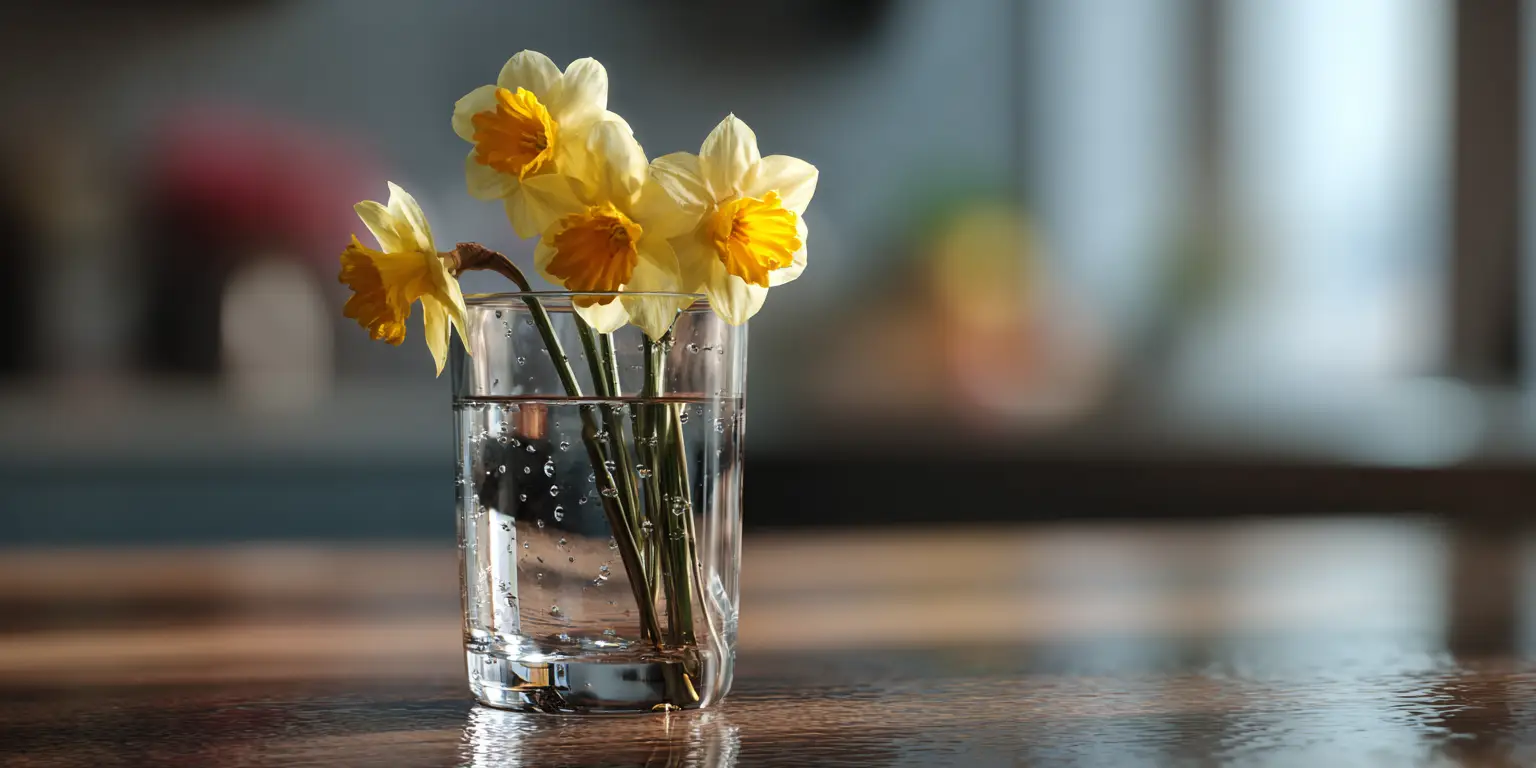
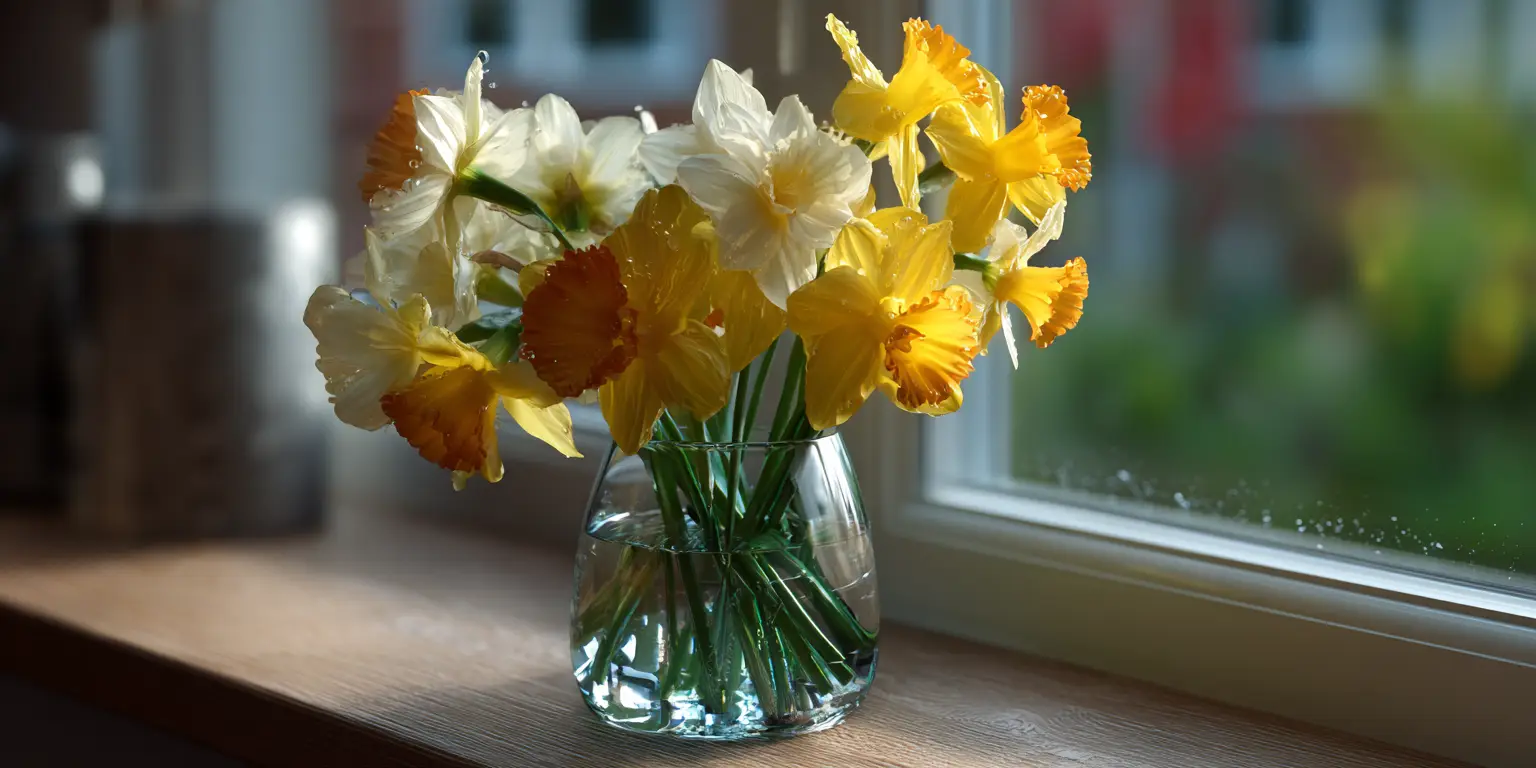
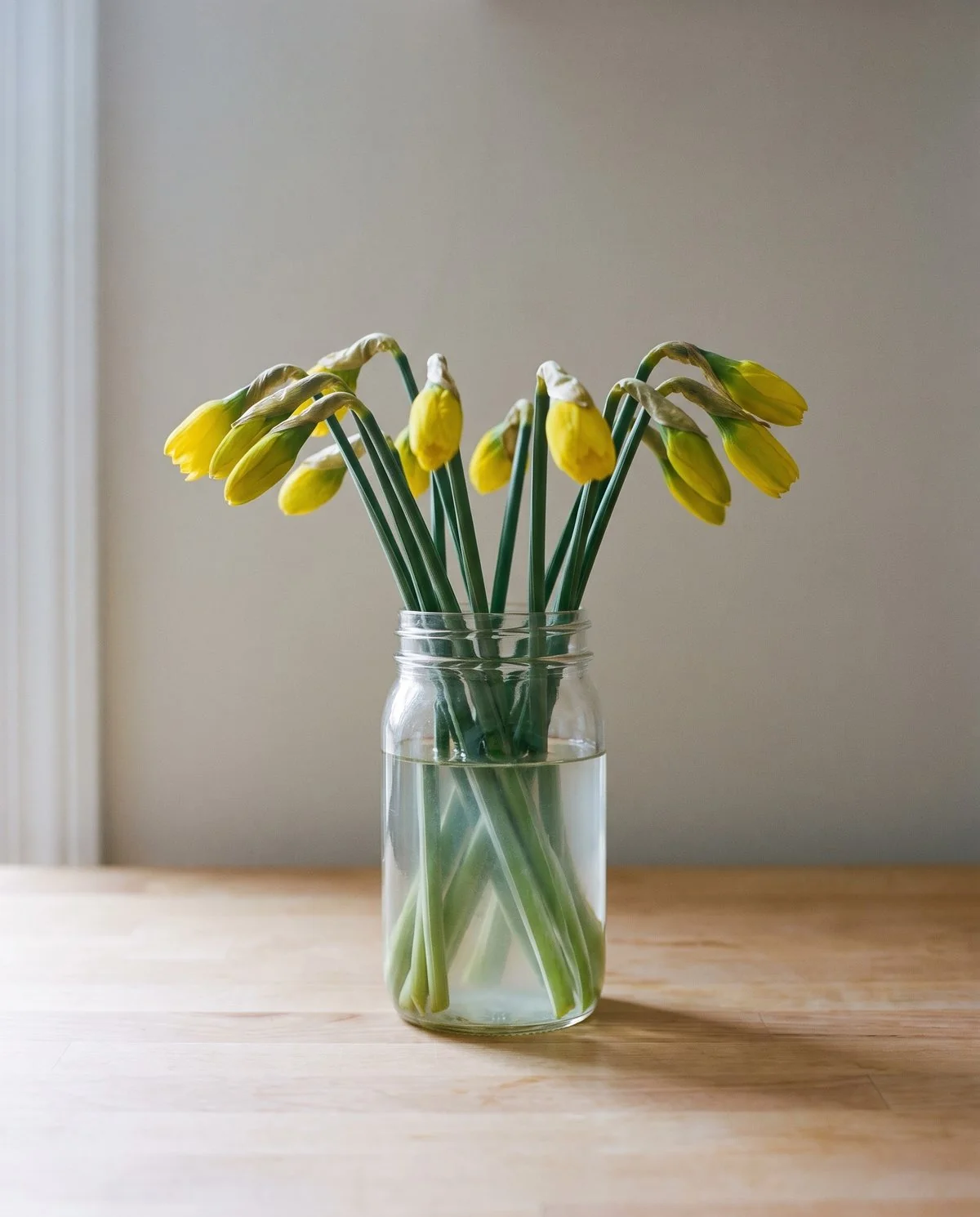
Cut daffodils last about five to seven days, and they open well if you cut them at the "gooseneck" stage, when the bud has bent over and is showing color but has not yet opened. The catch that trips people up is the sap. A freshly cut daffodil stem bleeds a slippery juice full of the same alkaloids, and in a shared vase that sap can cut the life of other flowers by as much as half. The fix is to condition daffodils on their own first: stand the cut stems in their own water for several hours, ideally overnight, so the sap drains out, then move them into a mixed arrangement without cutting the stems again, because a fresh cut simply starts the bleeding over. Kept in their own vase they need no special handling at all. Either way, refresh the water every day or two, keep the arrangement cool and out of direct sun and away from ripening fruit, and a jar of daffodils will hold most of a week.
What a cut daffodil does to everything else in the water
The measured research on cut daffodils is not about how long they last, it is about what they do to their neighbours, and that is the rarer and more useful fact. The one number for daffodil's own vase life is missing from this research and is reported as missing rather than filled in from a florist's estimate.
Rinsing the cut ends is enough to make daffodils safe for a mixed vase.
Rinsing is not what the research measured. The documented procedure is a 12 to 24 hour soak alone in the daffodil's own water, followed by moving the stems into the arrangement without cutting them again, because a fresh cut restarts the leaching the soak was meant to seal.
Daffodil sap harms every other flower in the vase.
Iris is the documented exception and it goes the other way, lasting longer for the same chemical reason that shortens tulips and roses. The general rule holds for most companions; the exception is worth knowing because it is counterintuitive and specific.
This is a florist's superstition rather than a measured effect.
One gardener in the forum sample rediscovered it unprompted, cutting a daffodil, noticing liquid coming from the stem, and finding out afterwards that the liquid is toxic to other flowers in a vase. The underlying trial is a 1998 peer-reviewed journal paper, not a rule of thumb, which is why the figure survives being restated.
Pests and diseases
Daffodils are among the least troubled plants in the garden, protected by the same alkaloids that keep animals off them, but a few specialist problems are worth knowing. The narcissus bulb fly is the main one: a bee-like fly lays eggs at the base of the foliage in early summer, and the larva bores into the bulb and hollows it out, leaving a bulb that fails to grow or throws only thin, weak leaves. An infested bulb cannot be saved and should be dug and binned, and keeping lifted bulbs covered rather than lying in the open gives the flies fewer targets. Bulb mites and nematodes can trouble stored or waterlogged bulbs as well. The most damaging disease is basal rot, a Fusarium fungus that attacks the base of the bulb, shows as a pink or brown decay, and cannot be cured, so affected bulbs are destroyed and the spot is left unplanted with daffodils for a couple of years. Botrytis, sometimes called daffodil fire, spots the leaves in long damp spells, and aphid-spread viruses streak the foliage and distort the flowers with no remedy but removal. Nearly all of this is prevented by the same basics: plant sound bulbs, give them good drainage and room for air to move, and resist the urge to overwater.
What daffodil owners actually ask about, ranked by frequency
394 unique posts from r/gardening and r/plantclinic, 365 from a title-filtered pull plus 29 from a partial theme-query supplement that rate limiting cut short. Themes overlap and do not add to 100. Two hand corrections are baked into these figures rather than hidden: a naive keyword pass tagged 39 posts as yellowing problems, 9.9 percent, but most of those were using yellow as the flower's own colour, so the corrected count is 9 posts, and the animal-damage row is stated as a range because a handful of the raw keyword matches were tangential mentions.
Whether the tone of the report is a complaint at all. This theme is unusually mixed: several of the highest-scoring posts in it are delighted confirmations that squirrels and deer leave daffodils alone, including one gardener at 398 upvotes who went all in on daffodils after a squirrel raid took his other bulbs, and another who planted 1,500 daffodil bulbs after finding deer had eaten everything else on his deer-resistant list.
Whether the plant is finishing or failing. This is the beginner entry point the tulip and rose research also found: the plant arrives as a gift with no context, and the asker cannot tell normal senescence from a problem. One poster had read that the flowers were supposed to be left to die naturally and wanted to know whether that was what was happening.
Last year's foliage history, then the sun hours, then the clump density. This row carries the sample's highest-scoring practical question at 604 upvotes and 77 comments, and Iowa State Extension needs five separate named causes to answer it, which is itself evidence the real demand is larger than 3 percent.
Whether the damage is progressing or frozen in place. The genuine unique count here is about 12 rather than the raw 21, after removing a triple-posted report of one Indiana snow and ice event and a duplicate cross-post about brown spots.
Not a problem, but a real and sizeable demand pattern in its own right, and worth separating from the pest and disease rows rather than folded into them.
When the yellowing started and whether it is even. This row is the corrected figure, 9 posts of 394: the raw keyword count was 39, and most of those posts were describing a yellow flower rather than a yellow problem.
Whether the bulb is soft, and where the mould sits. The theme includes a forced-bulb-in-water mould report, an in-ground rot report across mixed spring bulbs, and mould appearing near freshly planted bulbs.
Nothing on the plant, since this question arrives before a problem does. The count doubled once dedicated queries ran and is still almost certainly below real demand, because poison-control call volume suggests this is asked in a search box rather than on a forum.
The bulb's own height, since depth is a multiple of it rather than a fixed number, and whether the ground has frozen yet.
A dug bulb, because there is nothing else to check. This is the clearest case of forum under-representation in the whole sample: the damage is invisible until a gardener lifts a bulb that never sprouted, so there is nothing to photograph in real time. University of Maryland Extension keeps a dedicated page on it for exactly that reason, and this row never received its own theme query before rate limiting resumed, so one post is a floor rather than a count.
Photo pairs for the daffodil look-alikes
One of these pairs is unusual and worth reading first: the blind bulb has no visual fingerprint at all, because three different causes produce an identical plant. The rest split the normal way. Pathogen detail is not photographed here, since basal rot's fungal colour, the bulb fly's hollowed interior and leaf scorch's fruiting bodies are all checkable diagnostic facts that a generated image could render wrong for somebody deciding whether a bulb is worth keeping.
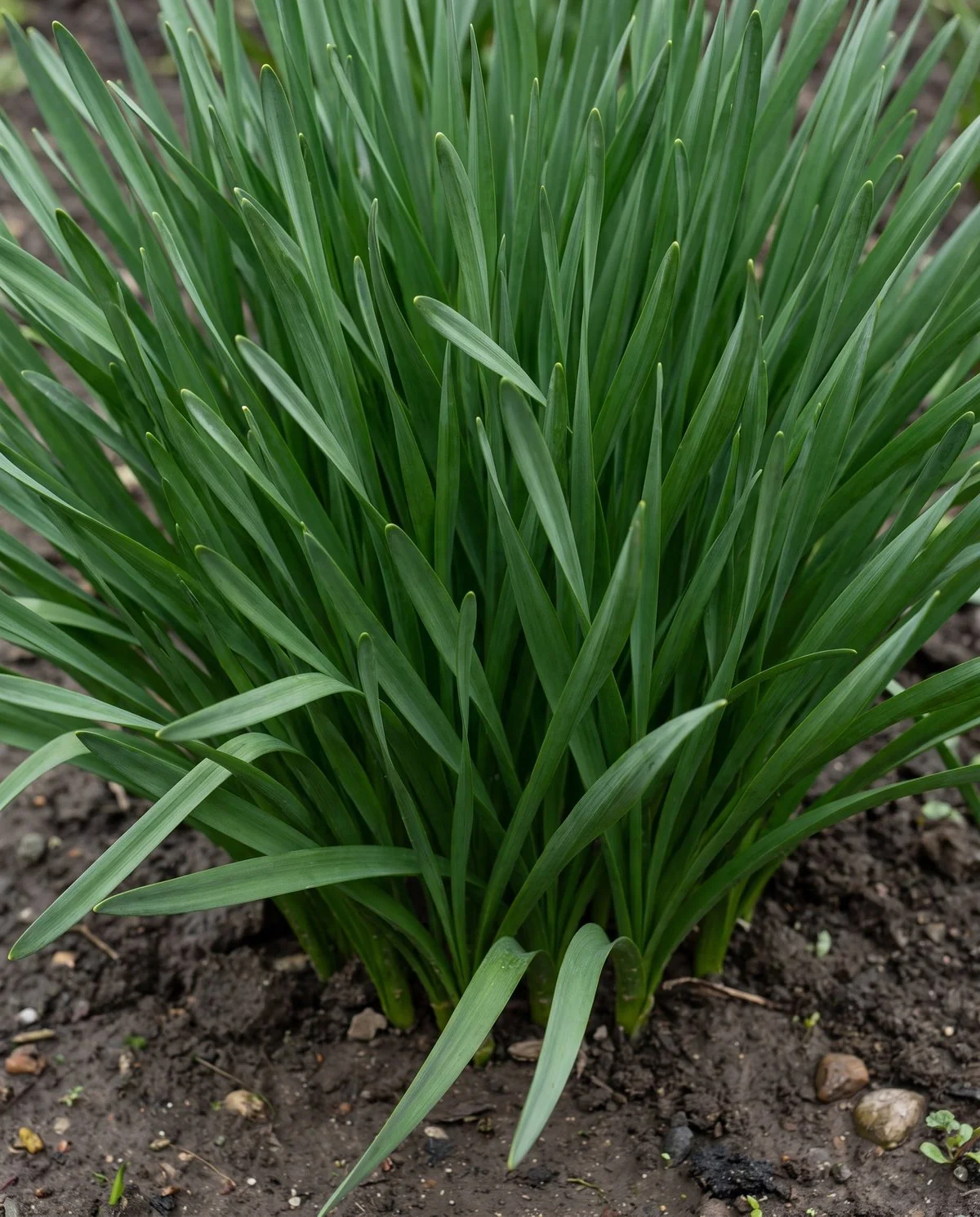
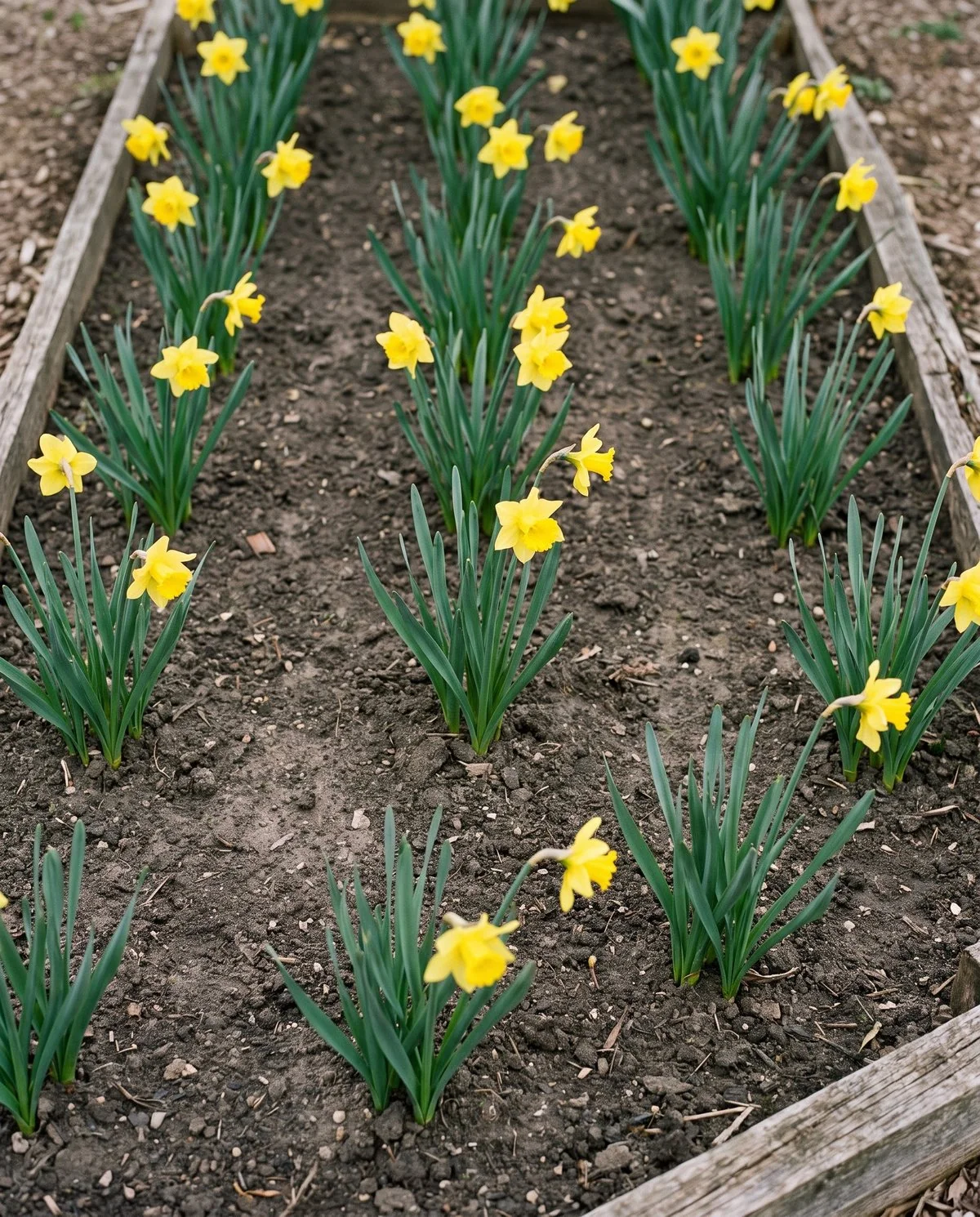
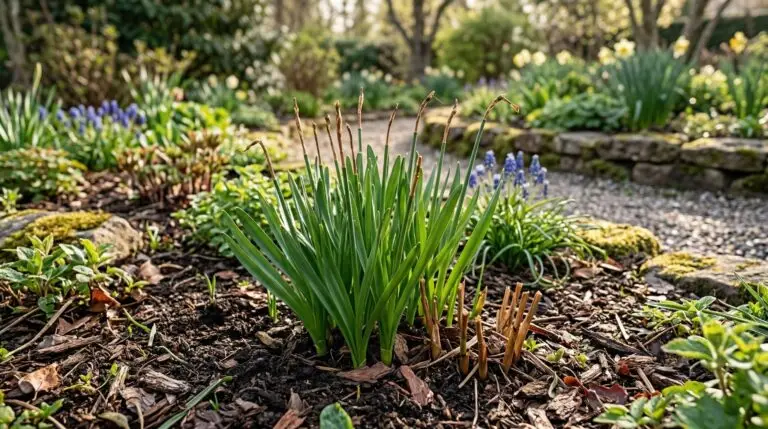
Nothing on the plant separates them, which is the finding rather than a gap: overcrowding, foliage cut or tied too early, and too little sun all produce the same leaves and the same absence. The differentiating evidence is context. Iowa State Extension supplies all three in its own words: large clumps of daffodils may stop flowering due to overcrowding; cutting off the foliage before it has died back naturally may prevent the plants from storing adequate food in the bulbs; and daffodils need at least six hours of direct sun per day. So the checks are clump density, what happened to last year's leaves, and the sun the bed actually gets in May and June, in that order.
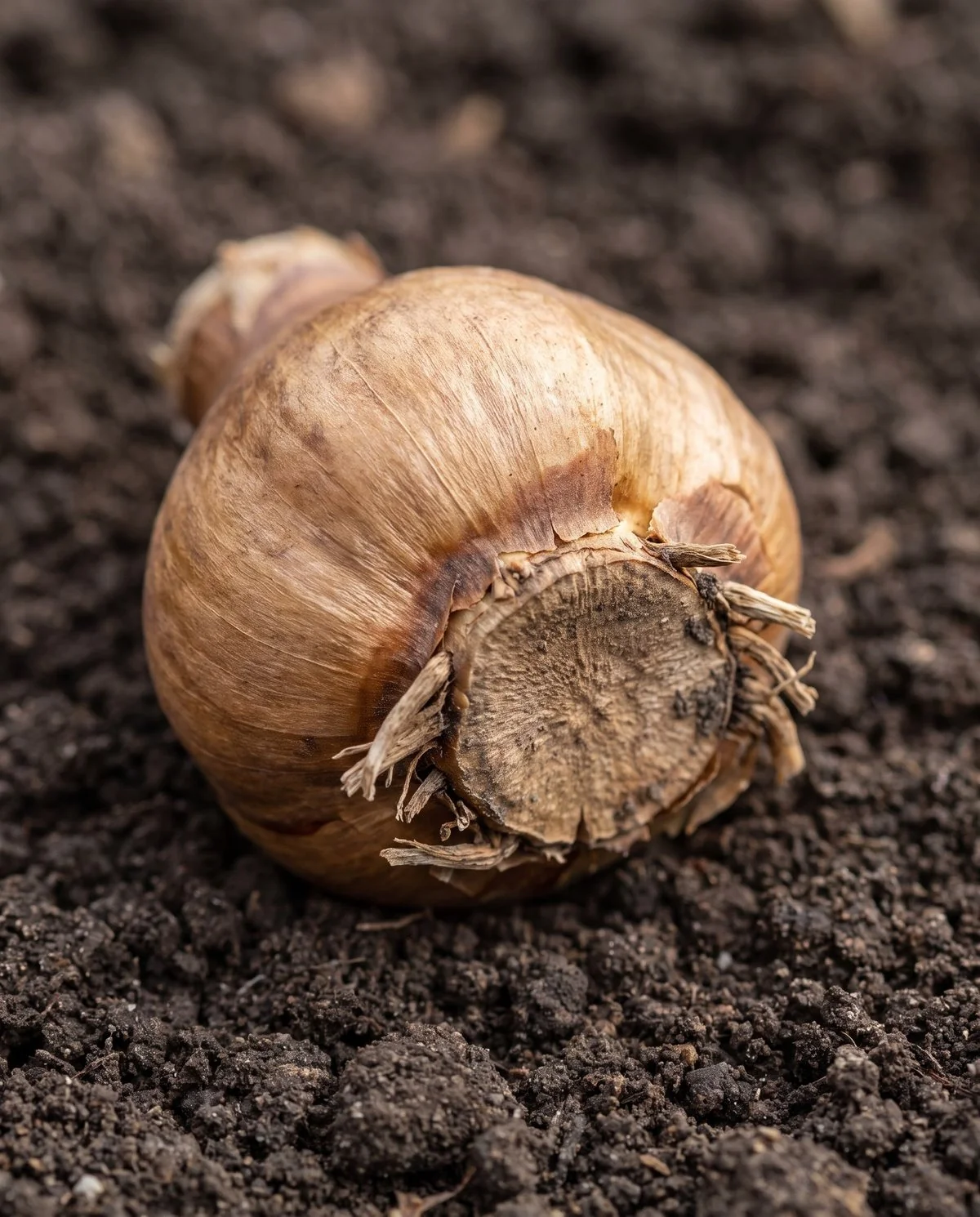
Weight and what is inside. A healthy dormant bulb is firm, heavy for its size, solid under a squeeze and dry papery tan on the outside. University of Maryland Extension describes a bulb-fly casualty as soft, light, spongy or hollow, with the centre brown and eaten out, decayed scales, a muddy residue and a single plump white to yellow maggot half to three-quarters of an inch long inside. RHS describes basal rot differently: the bulb feels slightly soft, with a pinkish-white fungus visible between the affected scales and on the basal plate, and in storage the bulb appears mummified. Washington State University's Hortsense adds brown to purplish-red discoloration of the affected tissue and whitish to pink mould between the scales. Only the healthy bulb is photographed.
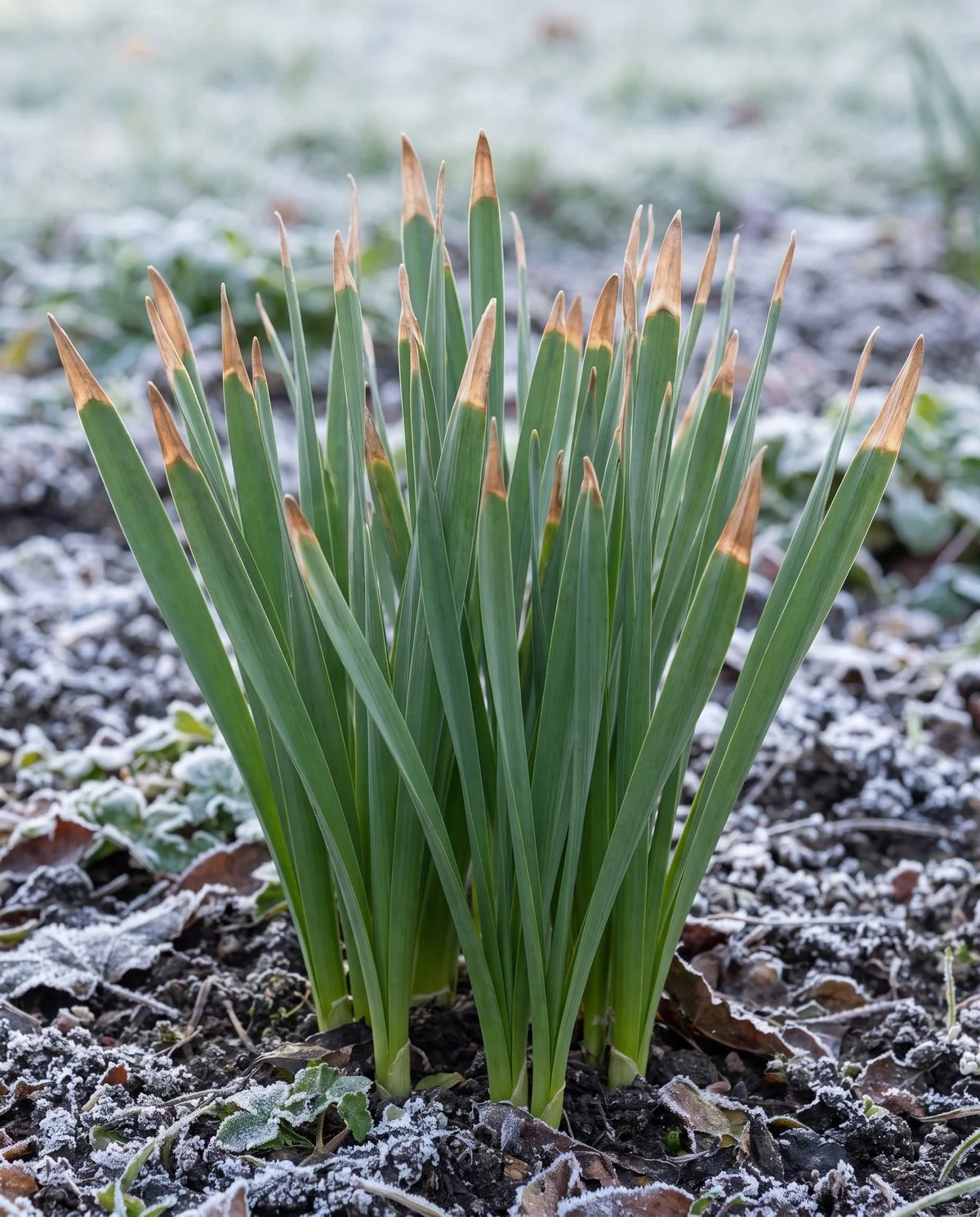
Whether it progresses. RHS names the confusion itself: the name leaf scorch derives from the scorched or reddish-brown appearance of emerging leaf tips, and that initial symptom may easily be mistaken for frost or herbicide damage. Frost damage is a one-time event tied to a specific cold night, uniform at the tips, and it does not spread into new tissue afterwards. Leaf scorch keeps going, developing minute water-soaked spots with yellow centres that turn red-brown and necrotic, each lesion staying small, rarely over two by five millimetres, and under magnification carrying numerous small spherical brown fruiting bodies about two tenths of a millimetre across, which is what separates it from frost and from two other look-alike diseases. Only the frost side is photographed.
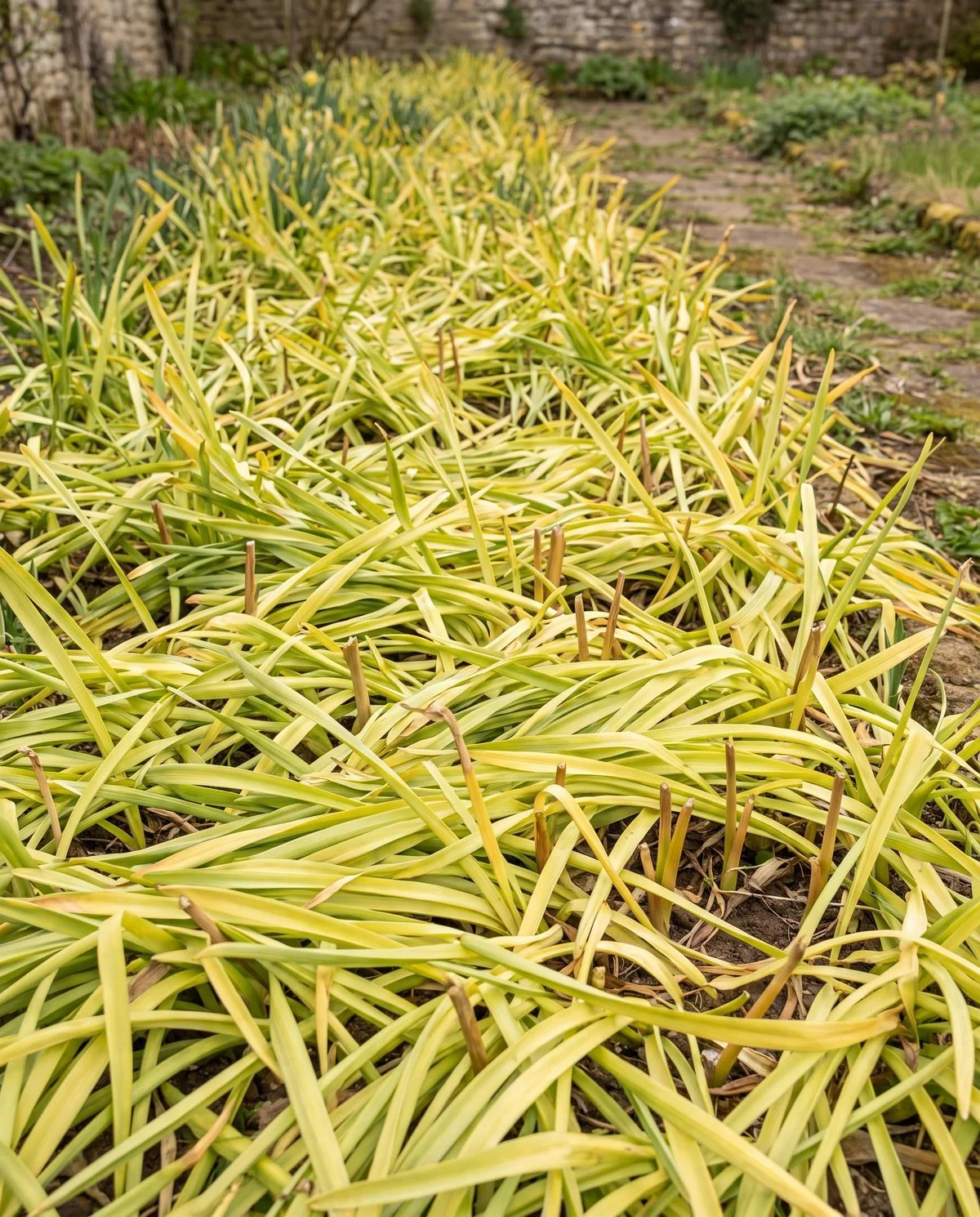
Timing and evenness. The normal fade starts only after flowering finishes, takes the whole bed together and uniformly, and runs over the four to six weeks the leaves spend rebuilding the bulb. Trouble yellows early, before or during bloom, or patchily, with some plants affected while their neighbours are fine, and it pairs with a soft or discoloured bulb base. Washington State University's Hortsense adds that infected plants become stunted and yellowed and develop few roots. Only the normal fade is photographed, since the early patchy version is worth checking against a real photograph.
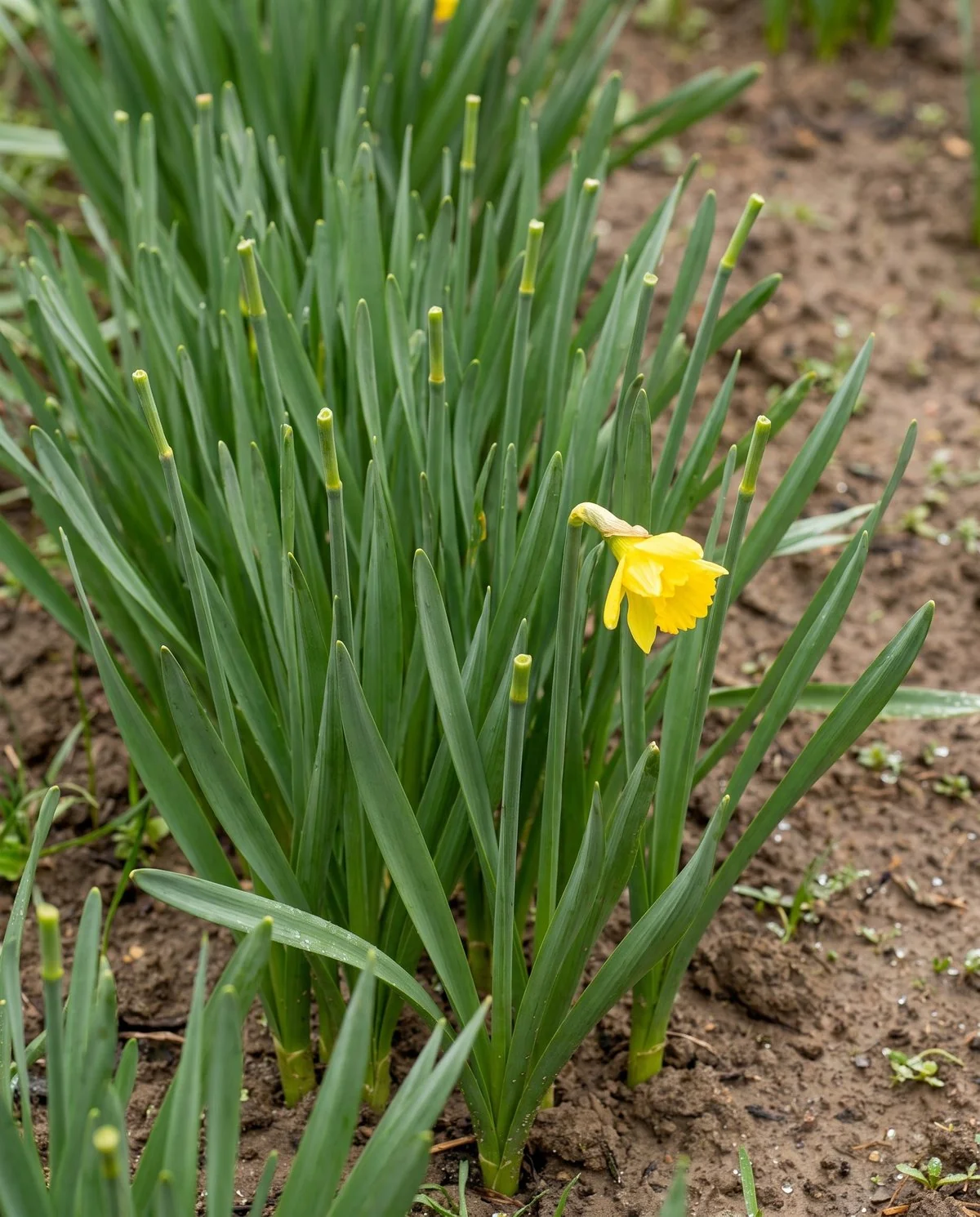
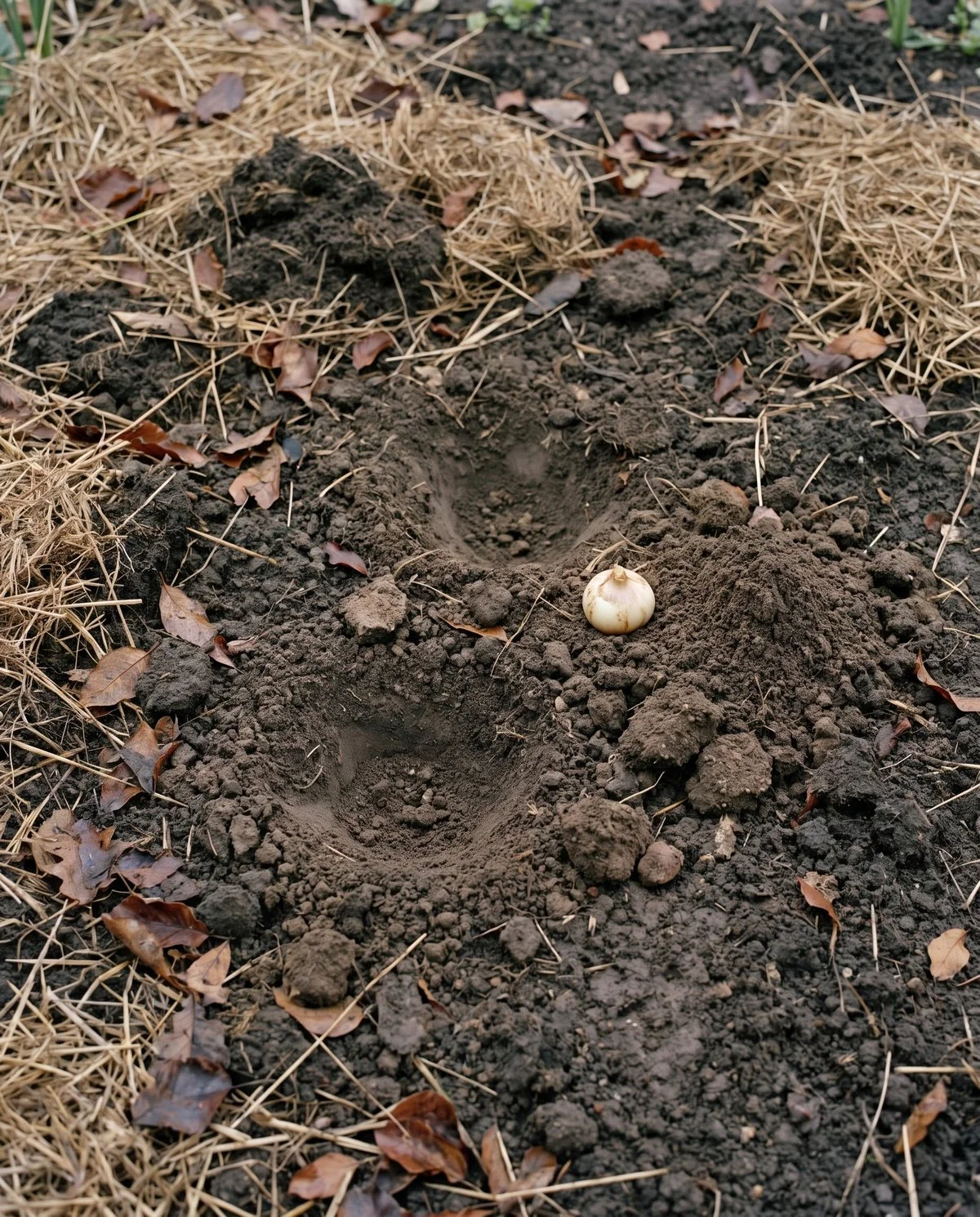
Whether anything is missing above ground or below it. Deer and rabbit work leaves buds or blooms cleanly bitten with the foliage comparatively intact, usually overnight, and the sample has a precise example of a deer taking the top out of a daffodil early enough that it opened as a stubby little flower. A squirrel or vole raid leaves the opposite signature: bulbs entirely gone, soil disturbed, no bite marks visible anywhere above ground, and sometimes a relocated bulb surfacing elsewhere in the garden weeks later, which is what one poster found when squirrels planted daffodils in his green onions. Both photographs here are wide rather than forensic, since a close bite-pattern shot belongs to a real reference photograph.
Flower photos
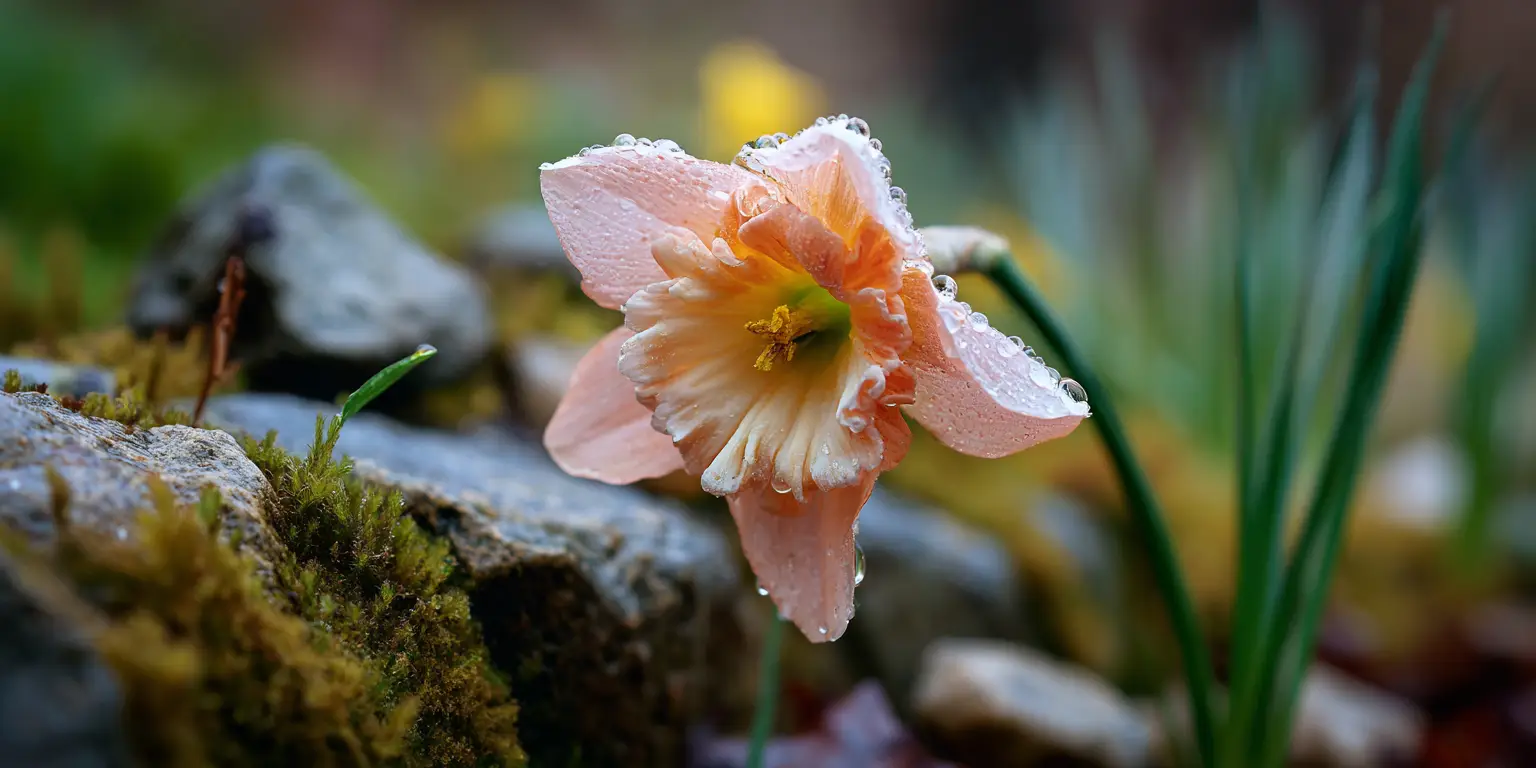
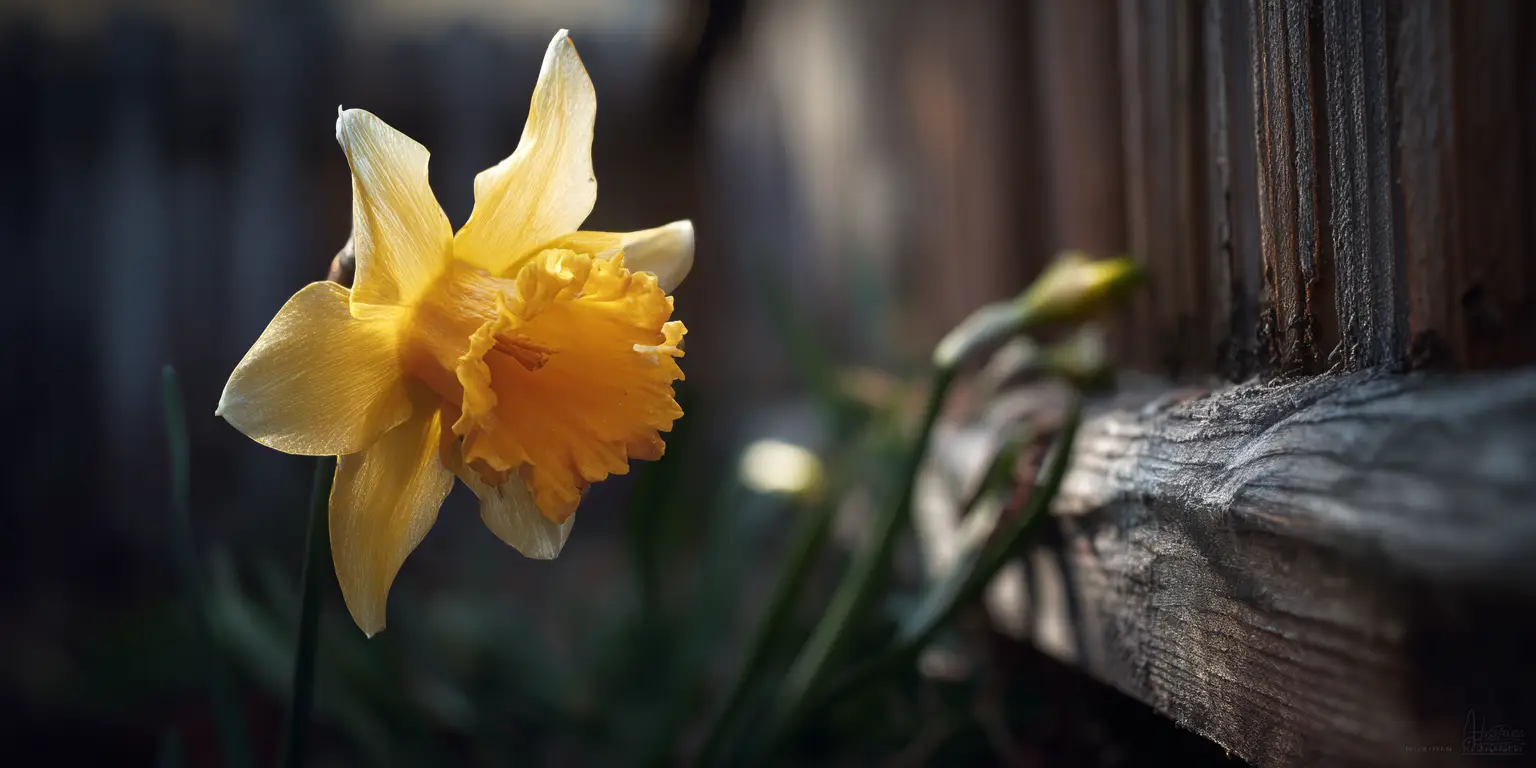
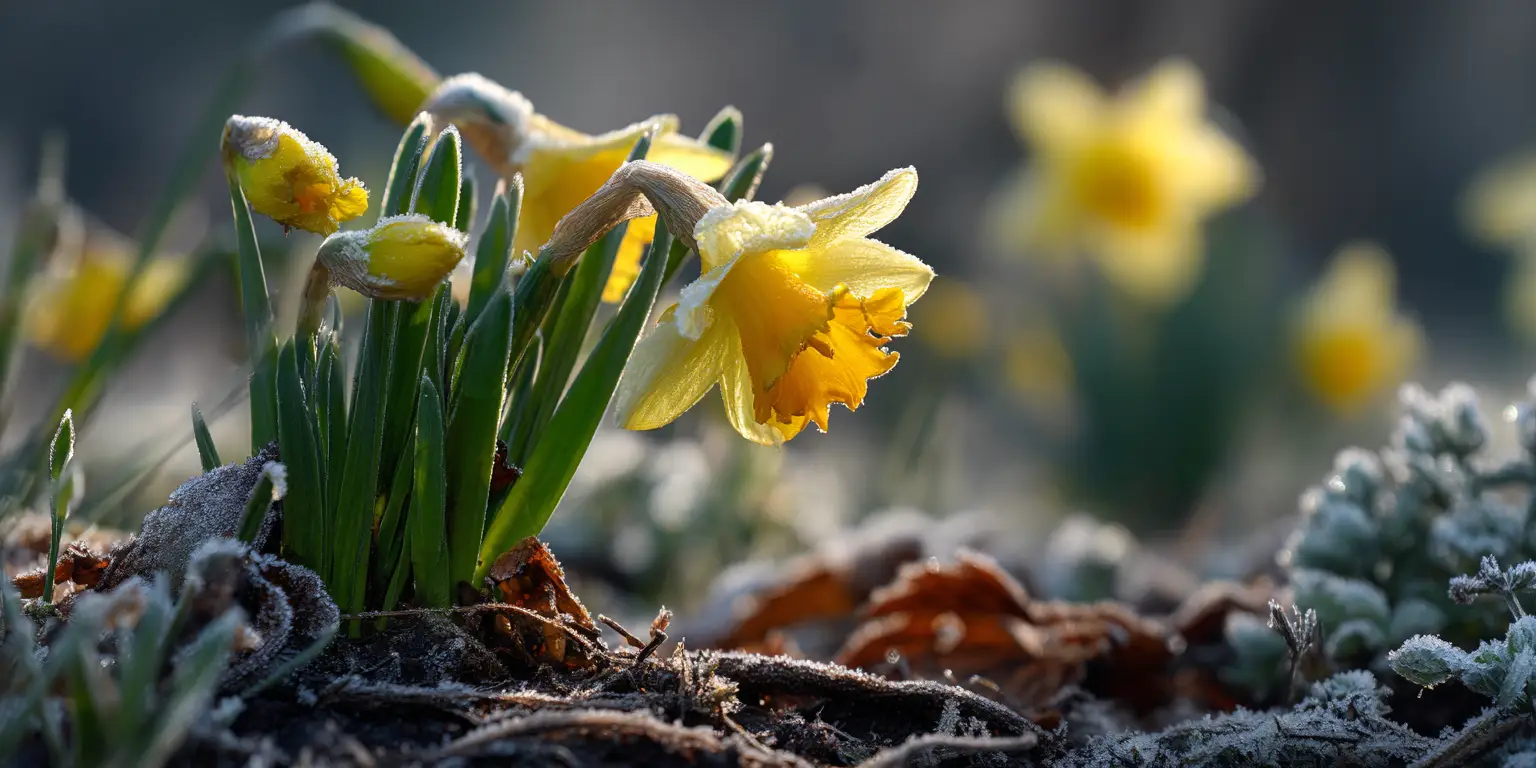
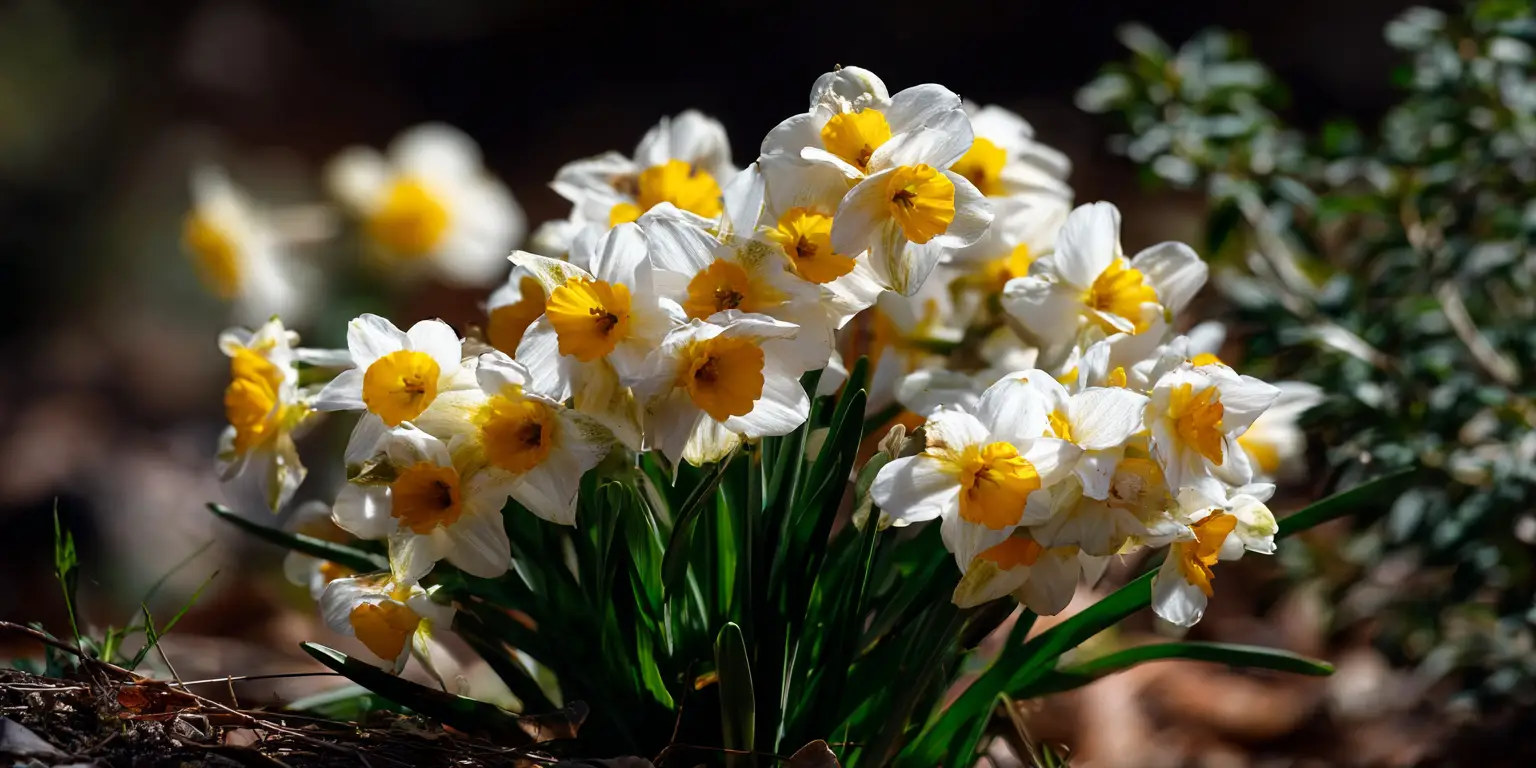
FAQ
When and how deep should I plant daffodil bulbs?
Plant in fall, about two to four weeks before the ground freezes: September or October in zones 3 to 6, October or November in zones 7 to 9. Set each bulb two to three times its own height deep, so a large bulb sits about 6 inches down to its base and smaller bulbs 4 to 5 inches, pointed end up, spaced 4 to 6 inches apart in a sunny, well-drained spot. Water once after planting and leave them to root before winter.
Do daffodils come back and multiply every year?
Yes. They are true perennial bulbs that return each spring and slowly increase, since every bulb splits off small offsets that grow into flowering bulbs within a year or two. Given sun and a chance to recharge after bloom, a planting gets fuller each season, which is why daffodils are the classic bulb for naturalizing.
Why did my daffodils come up with leaves but no flowers?
That is a blind clump, and the cause is almost always overcrowding, foliage that was cut or tied back too early last year, or too much shade. Lift and divide congested clumps after the leaves die down, give them at least six hours of spring sun, feed after flowering, and always let the foliage yellow on its own. There is a fuller walkthrough of how to get blind daffodils flowering again.
What is the difference between a daffodil, a narcissus, and a jonquil?
All daffodils are Narcissus, which is simply the genus name, so daffodil and narcissus mean the same plant, with narcissus used more in botanical and poetic writing. Jonquil is narrower: strictly it means Narcissus jonquilla and its hybrids, which have several small fragrant flowers and rounded, rush-like leaves, though in parts of the American South people call any daffodil a jonquil.
What should I do with daffodils after they finish blooming?
Snap off the faded flower so the plant does not put energy into seed, then leave the leaves completely alone. They need about six weeks to feed the bulb, so let them yellow and wither naturally and resist any urge to cut, mow, or braid them. A little balanced feed after flowering helps build next year's bloom.
Can I grow daffodils in pots or force them indoors?
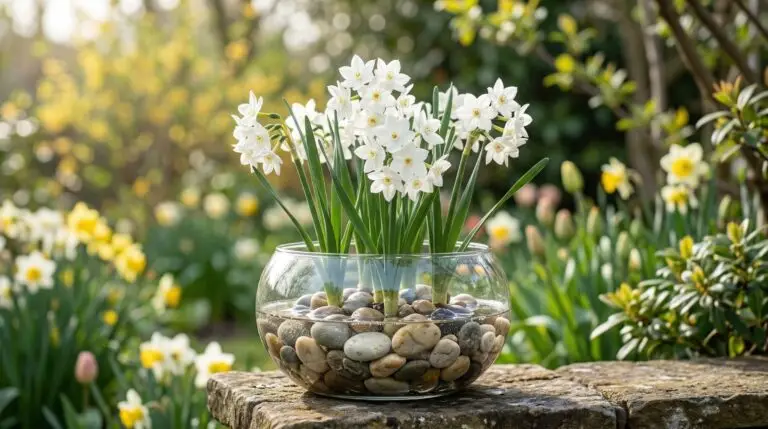
Yes. In outdoor pots, plant in fall at the same depth as in the ground in free-draining mix and keep them cool over winter. For indoor bloom, paperwhites need no chilling and grow in mix or pebbles and water, while other daffodils need about 12 to 15 weeks of cold before they are brought into a bright room. Forced bulbs are usually spent afterward and are best planted out to recover or discarded.
Are daffodils really deer-proof and rodent-proof?
Effectively, yes. Their toxic alkaloids taste foul and make animals sick, so deer, rabbits, voles, and squirrels avoid eating them, and a daffodil bed stays intact where tulips would be grazed to nubs. The one exception is that a squirrel may dig up a newly planted bulb out of curiosity rather than hunger, so covering fresh plantings with mulch or mesh until the soil settles is worth doing.
Why did my daffodils not bloom (or stop blooming)?
If your daffodils produced leaves but no flowers (sometimes called "blind" daffodils), several factors could be at play. The most common reasons are lack of sunlight (for example, if they’re now in deep shade under growing trees) or the bulbs being too crowded after years of multiplying (which means they compete for nutrients). Another possibility is that the foliage was cut back too early the previous year, so the bulbs didn’t get enough energy stored. Daffodils also need a cold winter dormancy. In very mild climates they might not bloom well unless pre-chilled. Less commonly, nutrient depletion or bulb disease can cause lack of blooms. Try to address these issues by ensuring they get enough sun, dividing overcrowded clumps in summer, leaving the leaves to die back naturally, and perhaps adding some bulb fertilizer after flowering. With the right conditions restored, they should resume blooming.
The tips of my daffodil leaves are turning brown. Is that a root issue, frost, or scorch?
Watch it for a few days rather than deciding now. Frost damage is tied to one specific cold night, browns the tips fairly uniformly and then stops, and Iowa State's threshold explains when it happens at all: light freezes in the upper 20s to low 30s Fahrenheit do little to no harm, while record cold below the mid-20s damages foliage and flowers significantly. Narcissus leaf scorch keeps developing, adding minute water-soaked spots with yellow centres that turn red-brown and necrotic, each lesion staying small. RHS itself notes that its early reddish-brown tip colour is easily mistaken for frost or herbicide damage, so the season fitting a frost is not evidence.
The squirrels dug up my newly planted daffodils. I thought they didn't eat them?
They mostly do not, and digging is not the same as eating. Squirrels cache bulbs they have no intention of eating, which is why one poster in the sample found squirrels had planted daffodils in his green onions. Two things make a fresh planting more attractive than an established one: the disturbed soil itself, and anything scented that went into the hole. University of New Hampshire Extension's point about bone meal matters here, since its smell attracts the same diggers the bulb's own alkaloids repel. Covering a new planting until the soil settles is the usual answer.
I have 22 bunches of daffodils not blooming at all. The bulbs were planted about 35 years ago by the original homeowner.
Overcrowding is the leading suspect, and it is the one cause that gets worse the longer a planting succeeds. Iowa State Extension states that large clumps of daffodils may stop flowering due to overcrowding, and the mechanism is the same offsetting that made the display better for years, with each bulb producing roughly three to five offsets over three to five years. The fix is mechanical rather than nutritional: dig the clump once the foliage has fully died back, separate the individual bulbs, and replant immediately at full spacing and depth. A version of this exact post at 141 upvotes reported exactly one flower from a planting that size.
Is it too late to plant the bulbs I bought and never got in the ground?
If the ground is not frozen solid it is usually still worth planting them, even into December in a milder zone. A bulb that establishes some roots before hard winter has a real chance, and the worst realistic outcome is that it skips flowering its first spring rather than the planting being wasted. The reason to avoid the opposite error is separate and specific: Iowa State warns against planting in September while soil temperatures have not yet cooled, because that can push bulbs into emerging in the fall.
I cut a daffodil and noticed liquid coming from the stem. Do I need to worry about the other plants growing nearby?
The measured effect is about shared vase water rather than shared soil. van Doorn's 1998 journal work found a single daffodil stem cutting the vase life of tulips and roses by almost half in the same water, through bacterial growth fed by the mucilage in roses and direct alkaloid toxicity in tulips, and iris is the documented exception that lasts longer for the same reason. Nothing in this research addresses whether a cut daffodil affects neighbouring plants still growing in a container or a bed, so that part of the question is left open rather than answered by extension from the vase result.
Interesting tips
The biggest gains come at the buying and planning stage. Top-size "double-nose" bulbs, the ones with two growing points, flower harder in their first spring than smaller grades, and planting in loose drifts of a single variety rather than straight rows reads as a natural sweep instead of a line of soldiers. Layering divisions by season, an early cyclamineus, a mid-season large-cup, and a late poeticus, stretches bloom across two months from the same bed. Where daffodils naturalize in a lawn, mow around them and hold off on that patch for the full six weeks the foliage needs, and choose a spot you are content to leave shaggy that long. Because nothing eats them, a ring of daffodils makes the cheapest deer fence a tulip bed will ever have. Their arrival at winter's end is why the daffodil is the birth flower for March and the emblem of cancer-awareness fundraising in many countries, a flower that has come to stand for the turn of a hard season toward hope.
- According to Greek mythology, the first daffodil (narcissus) sprang from the spot where a beautiful youth named Narcissus died after becoming entranced by his own reflection. This legend is how the flower and genus got its name.
- Daffodils symbolize rebirth and new beginnings, since they emerge at winter’s end. Fittingly, they are the birth flower for the month of March. The daffodil is also used as a symbol of hope by cancer awareness organizations in many countries (e.g. "Daffodil Day" fundraisers).
- There are over 25,000 named daffodil cultivars registered worldwide, with new ones introduced each year. To help gardeners navigate this variety, daffodils are classified into 13 divisions based on their floral form and heritage (such as trumpet, large-cup, small-cup, double, triandrus, jonquilla, tazetta, poeticus, etc.).
- The daffodil is the traditional flower for the 10th wedding anniversary. Its bright, enduring blooms represent the joy and happiness of a decade of marriage.
- Folklore says you should always display daffodils in a bunch, never a single flower alone. A solitary daffodil is thought to bring misfortune, while a cluster of daffodils is said to bring good luck and prosperity.
Related Guides & Flowers
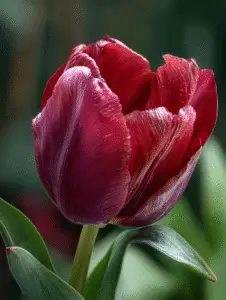
Spring bulb twin: Tulips
classic spring bulb pairing with similar planting depth and timing.
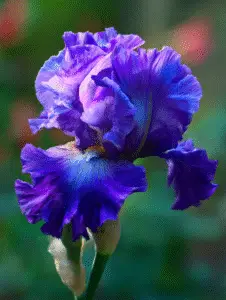
Sword-leaf spring perennial: Irises
strappy foliage and bold blooms that follow daffodil season.
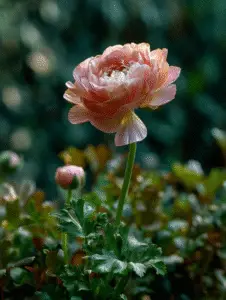
Romantic spring corms: Ranunculus
lush, layered flowers for cool-season displays and cutting.
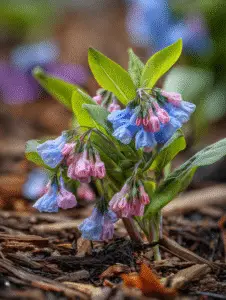
Blue spring companion: Virginia bluebells
woodland ephemeral that carpets under trees as daffodils fade.
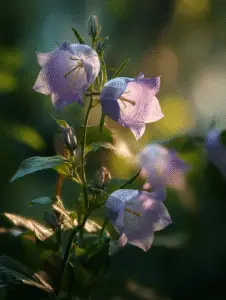
Bell-shaped accents: Bellflower (Campanula)
nodding bells echo the trumpet mood in late spring to summer.
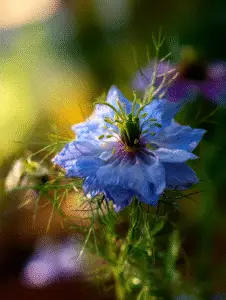
Airy cottage annual: Love-in-a-Mist (Nigella)
feathery foliage and jewel-like blooms for post-daffodil beds.
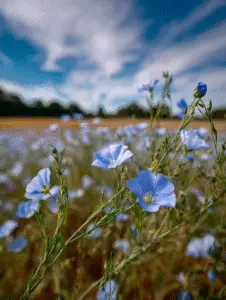
Fine-textured blue: Blue flax
light, sky-blue flowers that suit naturalistic borders with spring bulbs.
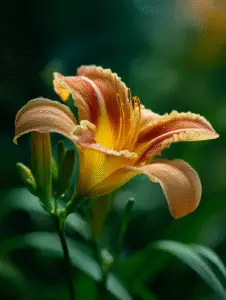
Trumpet look-alike: Daylily (Hemerocallis)
similar flower form and foliage, extending color into summer.
References
- ASPCA: Narcissus (Daffodil) Toxicity, confirms lycorine and other alkaloids; toxic to cats, dogs, and horses, with bulbs most hazardous. Useful for the Toxicity section.
- Penn State Extension, "Narcissus: The Daffodil" (2024), practical culture notes on light, soil, and why deep shade causes "blind" plants. Great for Light and Soil/Care.
- Kew Science: Plants of the World Online (Narcissus pseudonarcissus / genus profile), botanical description and native range for accurate taxonomy and origins.
Enjoying our flower guides? Add YourFlowersGuide as a preferred source on Google. It helps more readers find us.
Add to Preferred Sources