Paperwhite narcissus (Narcissus tazetta) bloom indoors in a bowl of water and pebbles, without the weeks of cold that tulips and standard daffodils have to have first. Dry bulbs go straight onto a bed of gravel, the water comes up only as far as the root plate, and white roots push down into the stones within days. Clusters of fragrant white flowers follow on an indoor tabletop. Skipping the chill is what makes them one of the fastest winter flower displays you can set up indoors.
The trouble starts once they are growing. In a warm room with weak winter light the strap-like leaves and the flower stalks stretch toward the nearest window, and top-heavy stems collapse across tables and mantels. Two other things catch people out: bulbs started at random open at random, which is no help when the flowers are meant for a winter gathering alongside something like a Christmas cactus, and the plant carries toxic alkaloids concentrated in the bulbs, which sit half exposed in a low dish where a curious animal can reach them. What follows covers how to set the bulbs and where the water line goes, how to count backward from a bloom date, the alcohol dilution Cornell tested against the flopping, keeping the bowl away from animals, and what to do with the bulbs afterward.
On this page 6 sections
Setting bulbs in water and pebbles instead of soil
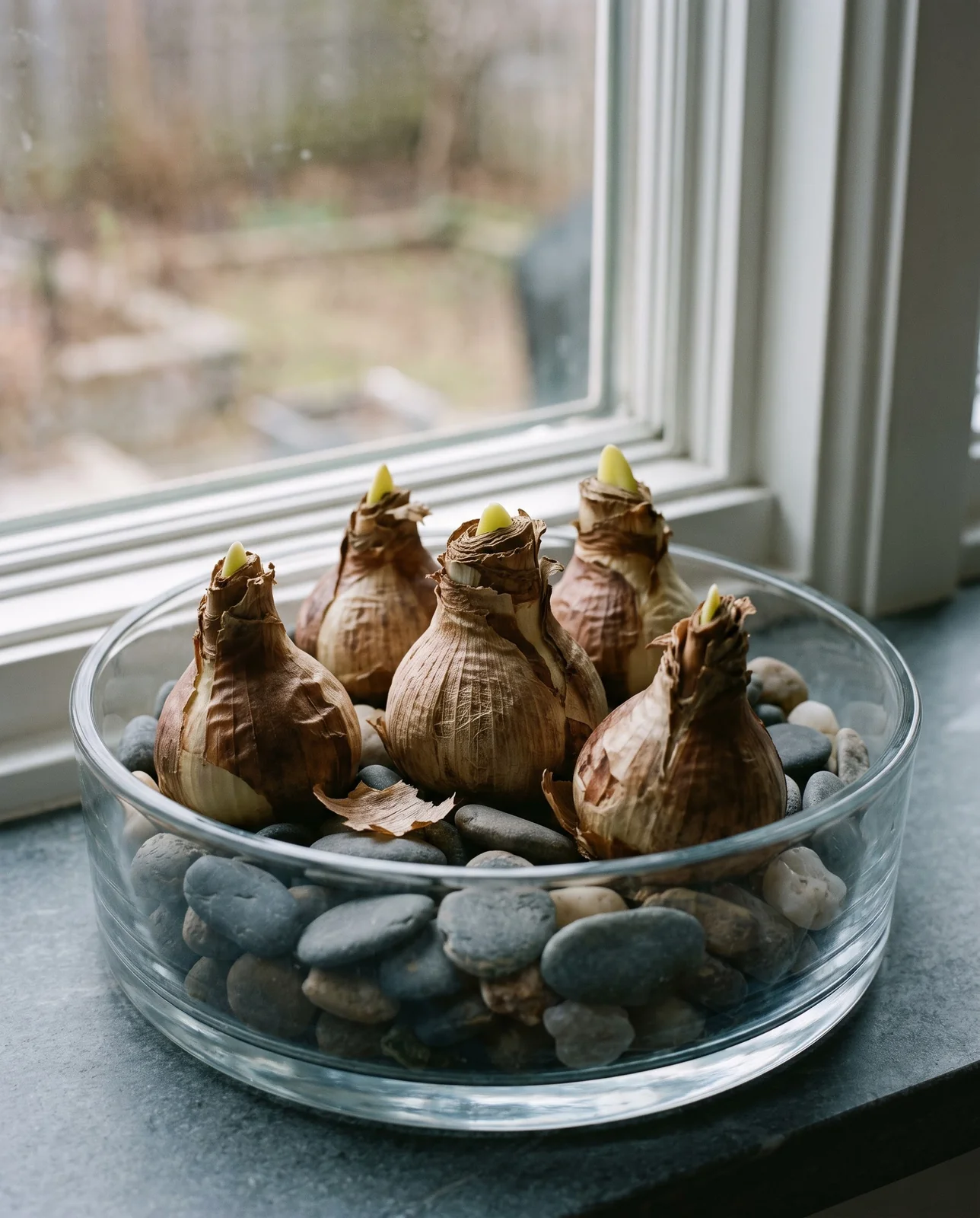
Paperwhites root and flower with no soil at all. A shallow glass dish, a ceramic bowl, or any watertight container will do, filled with gravel, river stones, or glass marbles that hold the bulbs steady and keep the base clean. Lay a level bed of stones in the bottom first, then set the bulbs on it with their pointed tips up and their shoulders almost touching, because a tight cluster reads as one full head of flowers rather than a scatter of singles. Pack more pebbles in around the sides until the bottom of each bulb is anchored and the upper part stands clear of the stones in open air. That collar of stone is what keeps the display upright later, once the roots have filled the gaps and the stems are carrying weight.
The quickest way to lose a bowl of paperwhites before it ever flowers is to drown it. North Carolina State University Extension notes that wet conditions bring on bulb rot in this species. Pour in clean water until the surface just touches the basal root plate at the bottom of the bulb, and no higher: the fleshy body of the bulb stays dry and in the air. As the roots run down through the pebbles and the shoot starts drawing water up, top the bowl back up to keep the water at the root tips without ever letting it rise against the bulb itself. The same line governs an amaryllis held over stones on an indoor table, and for the same reason.
Timing bulbs to a date, not just “a few weeks”
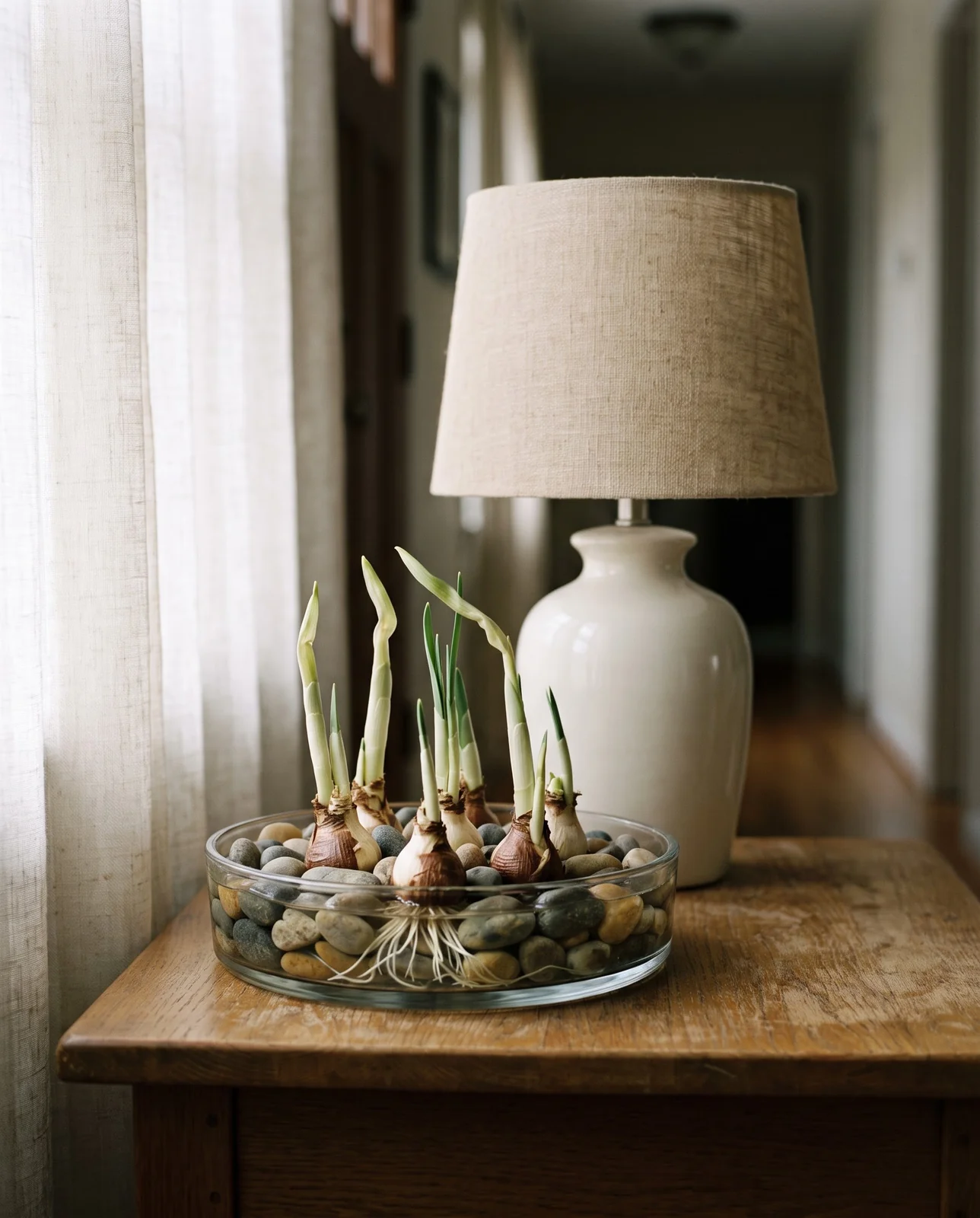
Paperwhites run on a short and fairly reliable clock, which is what makes them worth planning around. Cornell University’s forcing work has the bulbs pushing white roots into the stones within days of planting, with a green shoot standing one to two inches above the bulb after roughly a week, and the fragrant flowers opening two to three weeks from the day they went in. Counting backward from a date is arithmetic rather than guesswork. Start a second bowl two weeks after the first and a third two weeks after that, and one set of flowers opens as the previous set browns, which carries the scent right through the winter beside a poinsettia on the same table. The calendar below does the counting for four common target dates.
Planting dates for four holiday bloom targets
Four schedules counted back from a target date. The rhythm is the same every time: a week in plain water, the alcohol solution swapped in once the shoots reach 1 to 2 inches, bloom two to three weeks after planting.
Why the stems flop, and the fix Cornell actually tested
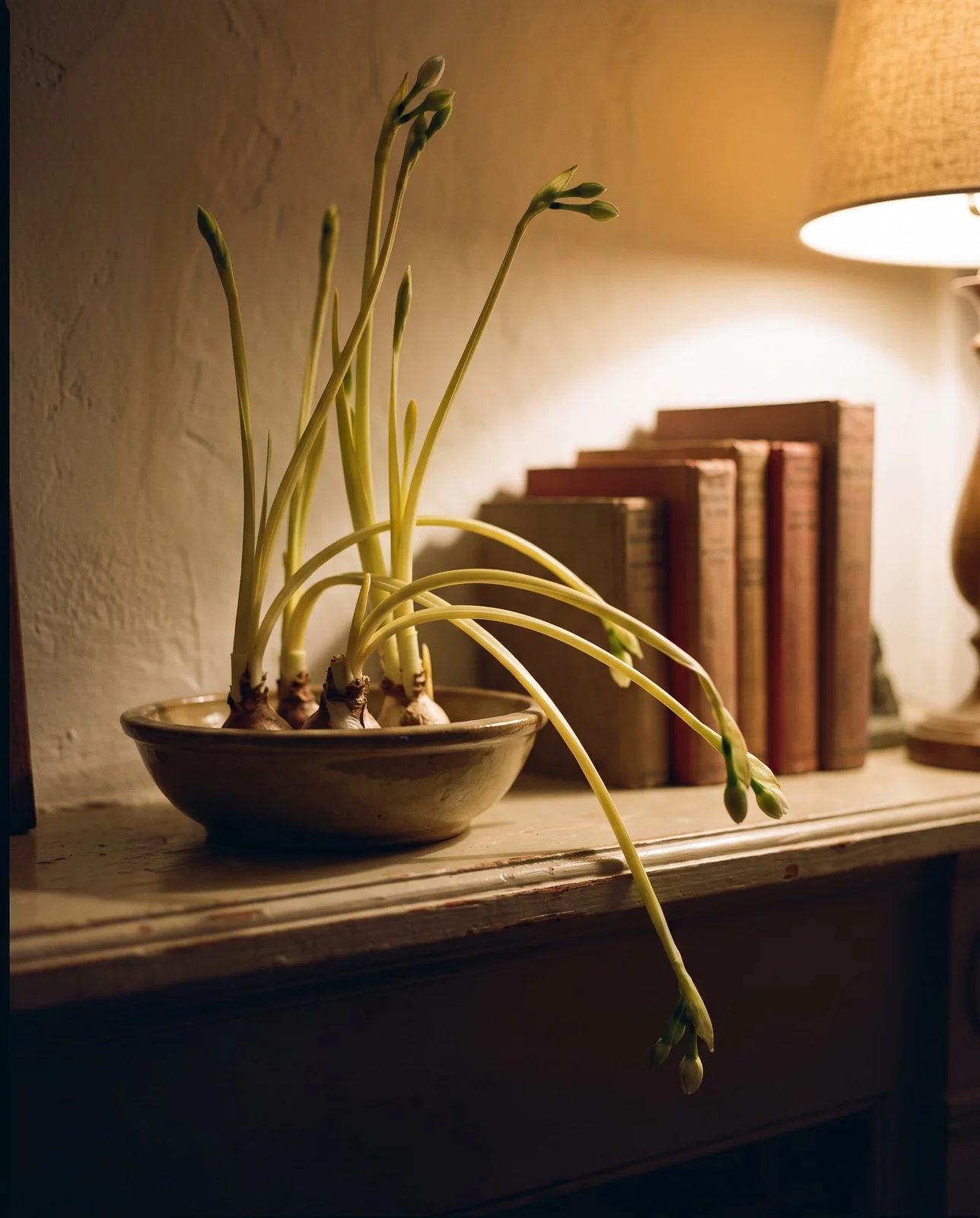
Flopping is the standard complaint about forced paperwhites, and it is a light problem before it is anything else. NC State Extension puts the erect, strap-like leaves at up to 16 inches and the flowering stems at 18 inches, with 30 inches on record, and every stem carries an umbel of 3 to 20 flowers. In a dim room the leaves and the stalk stretch further still as they reach for the window, so a heavy flower head finishes up on a long, thin stem that is already leaning. Gravity does the rest.
The Cornell University Flower Bulb Research Program, under Dr. William Miller, put numbers on the fix: watering paperwhites with a 4% to 6% alcohol solution brings the finished stems and leaves in by one-third to one-half. The alcohol works by holding the plant in slight water stress, enough to check leaf and stem growth, not enough to touch flower size, fragrance, or how long the blooms last. Timing is the part most accounts leave out. Start the bulbs in plain water and leave them alone for about a week, until roots are running into the stones and the shoot stands green and one to two inches above the bulb. Then pour the plain water off completely, which puts the alcohol at full strength around the roots, and refill with the mixture. Every top-up after that uses the same solution.
Mixing it is arithmetic. One part 40% distilled spirit, gin, vodka, whiskey, rum, or tequila, to seven parts water is an eight-fold dilution and lands at 5% alcohol, in the middle of the safe band. Isopropyl rubbing alcohol leaves the bottle at 70%, so it goes one part to ten or eleven parts water. Anywhere inside 4% to 6% the rule is that more alcohol means shorter plants, so you can pitch the mix to the height you want and have the flowers stand upright on a table without stakes. Past that the margin closes fast: Cornell recorded growth problems well above 10%, and 25% alcohol is severely toxic. Beer and wine stay out of the bowl altogether, because the sugars in them cause major problems for the plants.
Three myths about using alcohol on paperwhites
The myth: Any alcoholic beverage, including beer or wine, can be used to keep paperwhites short.
The reality: Cornell rules both out, and the sugars are the reason rather than the alcohol. Use distilled spirits or rubbing alcohol, diluted to 4% to 6%.
The myth: Watering paperwhites with alcohol will reduce bloom size and dull fragrance.
The reality: The dilute solution holds the plant in slight water stress, which takes one-third to one-half off the stem height. Bloom diameter, scent and flower life come through unchanged.
The myth: Alcohol solution should be added on the first day bulbs are placed in pebbles.
The reality: Bulbs go into plain water first, for about a week, until roots form and the green shoot reaches 1 to 2 inches. Only then is that water poured off and replaced with the dilute mix.
Keeping them away from cats and small kids
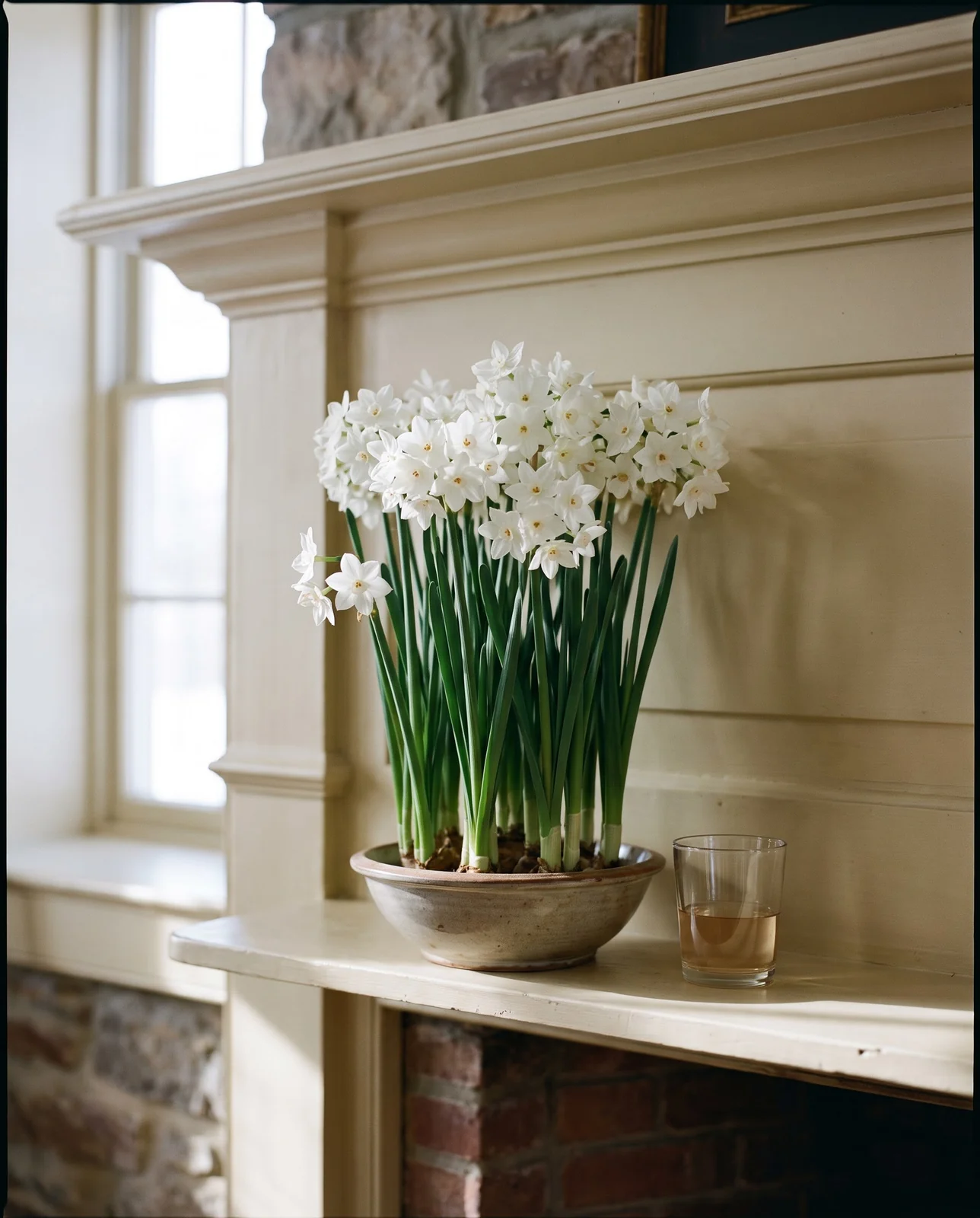
Narcissus tazetta is toxic to dogs, cats, and horses, a listing carried by NC State Extension and the ASPCA alike, and the bulbs are the most poisonous part of the plant. The toxic principle is lycorine along with other alkaloids. A forced bowl puts the worst of it within easy reach: the bulbs sit half exposed above the stones, and a cat that chews a stem or bites a bulb takes the compounds in directly. The ASPCA lists the signs of ingestion as vomiting, salivation, and diarrhea, with large amounts bringing on low blood pressure, tremors, convulsions, and cardiac arrhythmias. If a dog or cat has chewed or swallowed any part of a paperwhite, call your veterinarian or ASPCA Animal Poison Control at (888) 426-4435 straight away. The practical answer in a house with animals is height: a mantel, a high shelf, or a plant stand with no route onto it. Where nothing in the room qualifies, pick from the types of flowers safe for cats and dogs instead.
What to do once the blooms fade
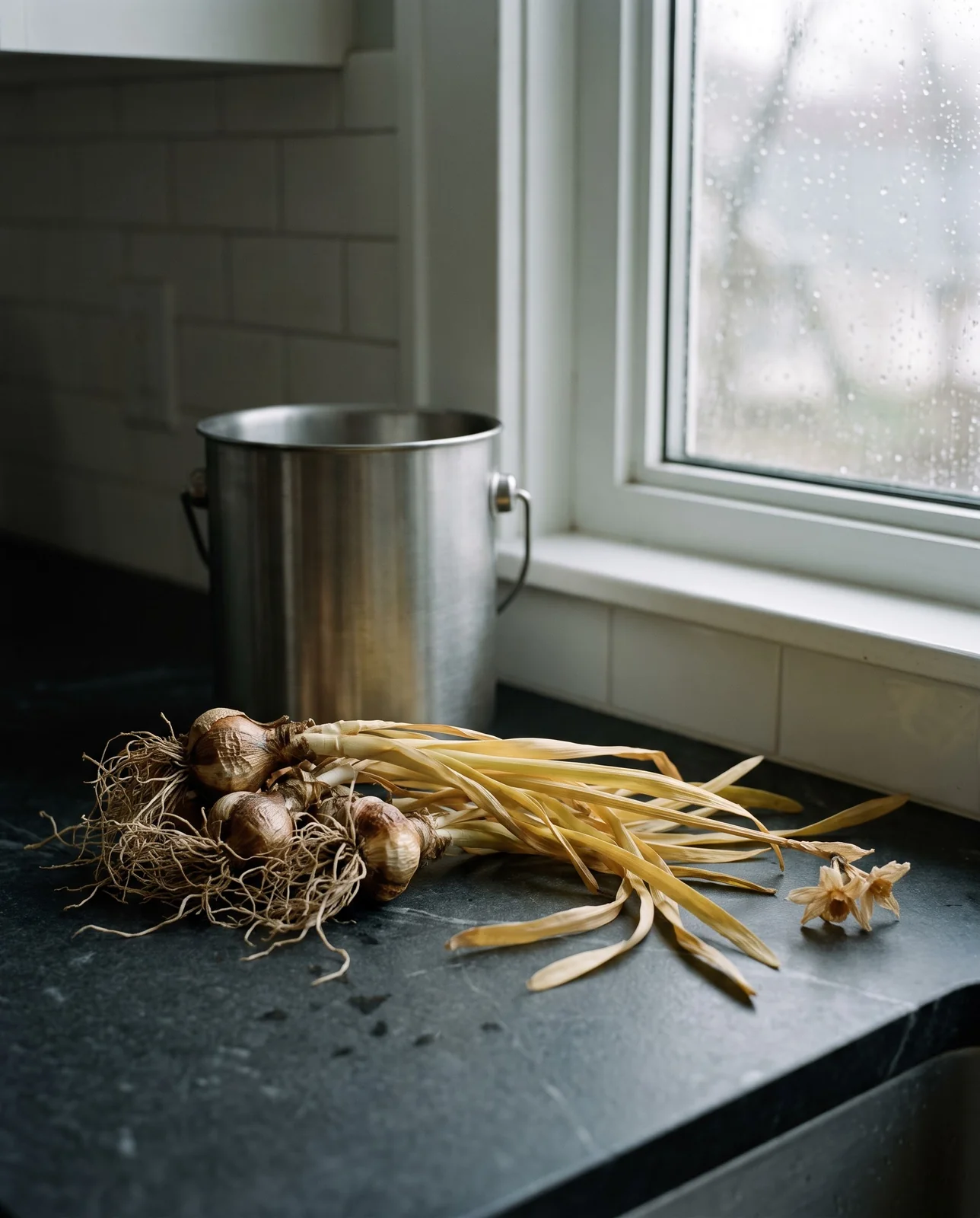
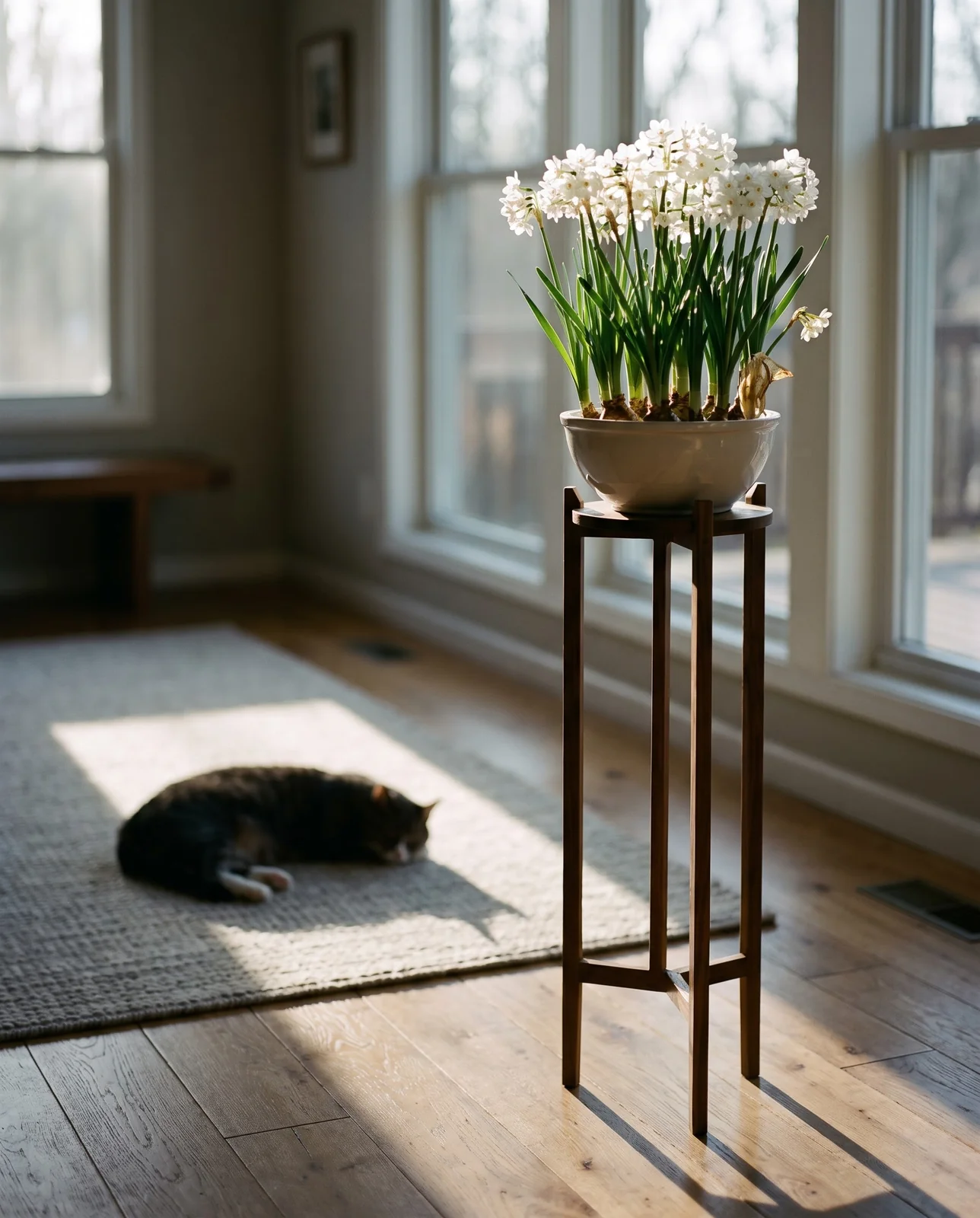
A paperwhite forced in water and pebbles has spent everything it had by the time the last flower browns. The bulb went into the stones with a full store of food packed inside it, and 3 to 20 flowers on every stem, each with a small cup-shaped yellow corona under an inch across, draw that store down to nothing. Standing in stones, the bulb takes up no nutrients to replace what it used, so there is no second indoor round to wait for. In a cold-winter garden the spent bulbs go on the compost heap with the yellowing foliage.
Where the climate suits them outdoors, the bulbs are worth putting in the ground instead. NC State Extension has Narcissus tazetta going in during fall, six weeks before the first freeze, into organically rich, well-drained soil of medium moisture, in full sun to part shade. Set each bulb two to three times its own size deep and no shallower than three inches, space them 4 to 10 inches apart with the larger bulbs given the wider gaps, and work bone meal or superphosphate into the hole. Take the spent flowers off after bloom but leave the foliage standing until it browns on its own. Once established, the same alkaloids that make the plant dangerous to a cat keep pests and diseases off it.
FAQ
Do paperwhite bulbs require chilling before planting indoors?
No. Paperwhite narcissus (Narcissus tazetta) skip the cold period that tulips and standard daffodils have to have. Dry bulbs go straight into a bowl of pebbles and water at room temperature, and roots and shoots start moving within days.
Why do indoor paperwhites stretch and flop over?
Low winter light indoors draws the stems and the strap-like leaves up long and thin. Flowering stems reach 18 inches and have been recorded at 30, and the weight of 3 to 20 blossoms on top of that pulls the stalk sideways unless the height is held down with dilute alcohol.
How do you mix alcohol to prevent paperwhites from flopping?
Mix 1 part 40% distilled liquor, such as vodka, gin, whiskey, rum or tequila, with 7 parts water; with 70% rubbing alcohol, use 1 part to 10 or 11 parts water. Cornell puts the safe range at 4% to 6%. Start the bulbs in plain water for about a week until the shoots reach 1 to 2 inches, then pour that water off and use the alcohol solution from then on.
Can you use beer or wine to keep paperwhites short?
No, beer and wine never go into the bowl. Cornell University research puts the blame on the sugars in them, which cause major problems for the plants. Only distilled spirits or rubbing alcohol, diluted, belong in the water.
Are paperwhites toxic to household pets?
Yes, paperwhites are toxic to dogs, cats and horses through lycorine and other alkaloids, and the bulbs are the most poisonous part. Ingestion brings vomiting, salivation and diarrhea, while a large amount can cause low blood pressure, tremors, convulsions and cardiac arrhythmias.
More About Daffodils (Narcissus)

Designing a succession of daffodils that bloom from February through May

Naturalizing daffodils in lawns and woodland areas for wild spring beauty year after year
Daffodil meaning, from new beginnings to the Narcissus myth, honestly explained
Growing daffodils in containers and pots for spring color on patios and porches
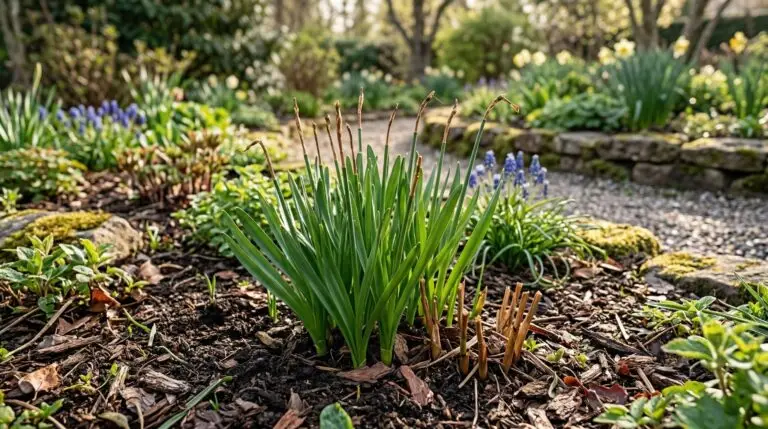
Why daffodils stop blooming after the first year and how to get flowers back
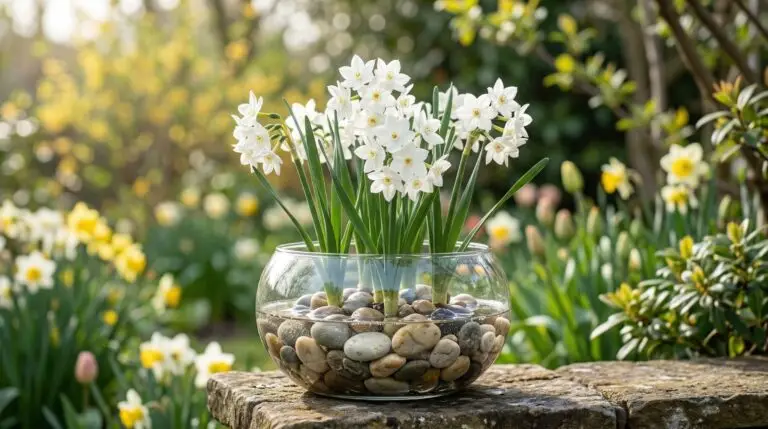
How to force daffodil bulbs indoors for cheerful winter blooms on your windowsill
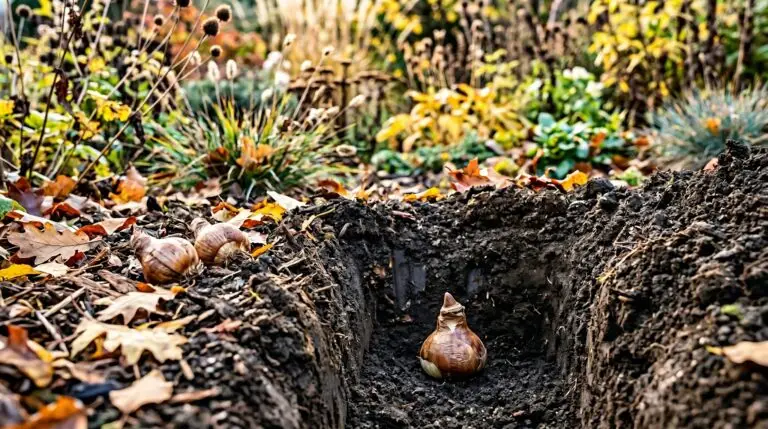
How to plant daffodil bulbs in fall for a golden carpet of spring flowers

What to do with daffodil foliage after blooming and why you must leave it alone
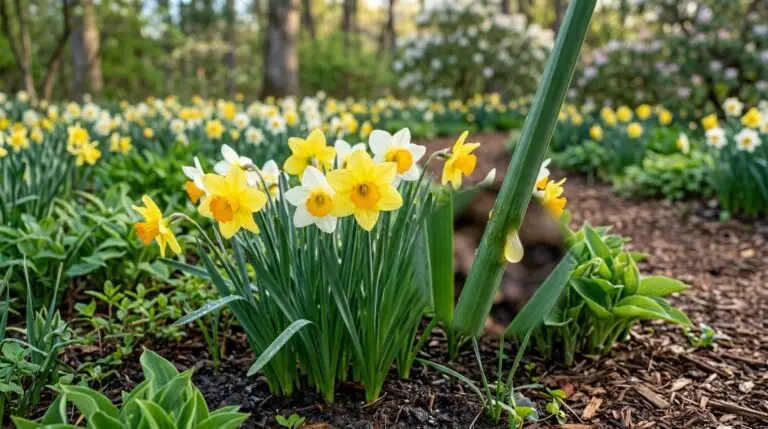
Daffodils as deer-proof and squirrel-proof bulbs that nothing wants to eat
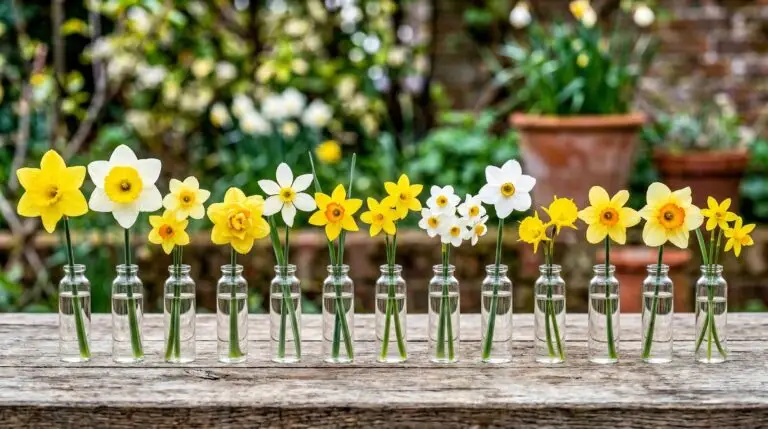
Best daffodil varieties for every garden from tiny Tete-a-Tete to giant King Alfred
Enjoying our flower guides? Add YourFlowersGuide as a preferred source on Google. It helps more readers find us.
Add to Preferred Sources