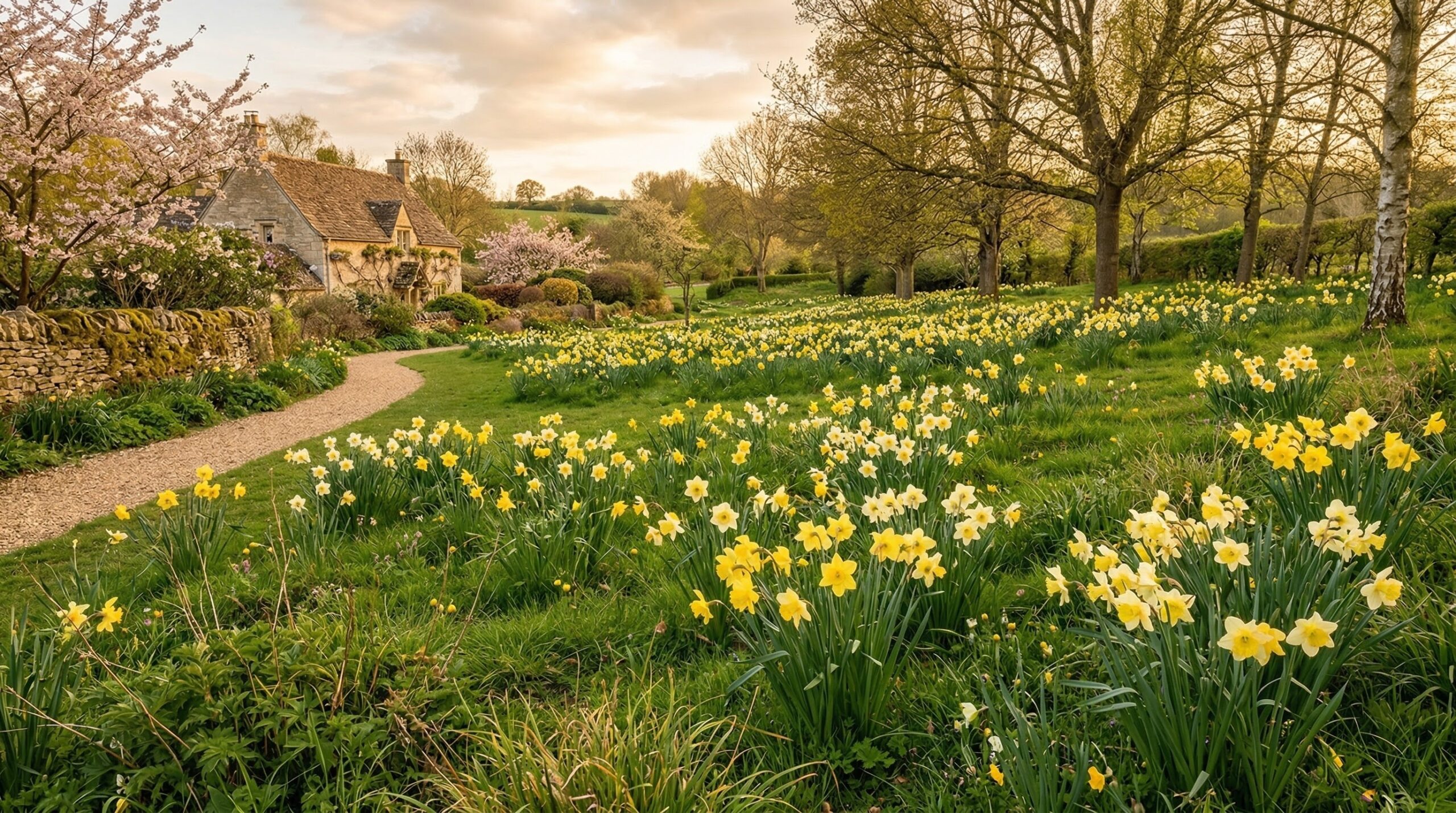
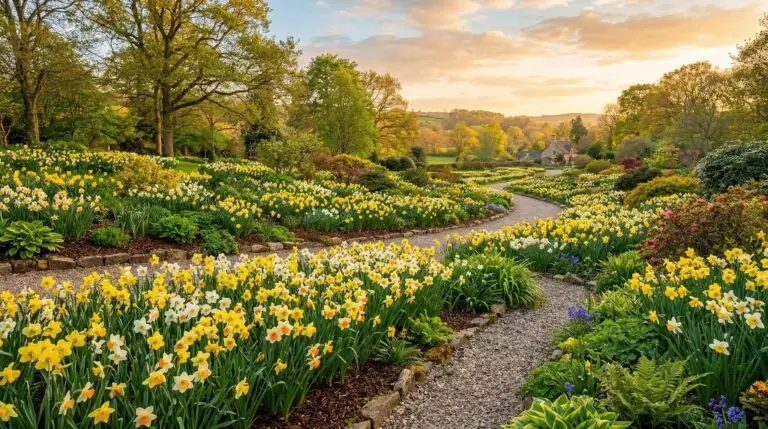
The late March wind carries a damp chill off the ridge, smelling of thawed earth and wet oak leaves. I walk the perimeter of the lower pasture just after dawn, watching the frost melt into dark patches where the morning sun strikes the ground. Here, in the ragged edge between the mown grass and the tree line, green spears push through the thatch of last year’s dead fescue. These are the first naturalizing daffodils, rising exactly where I tossed them three autumns ago. They do not look planted, but rather as if they decided on their own that this particular slope suited their needs. Their arrival feels different from the careful borders near the house, carrying a feral independence that makes the cold morning feel suddenly alive. Before the snowdrop has entirely faded into the mud, these yellow heads nod in the gray light, signaling a shift in the season.
A naturalized bulb becomes a participant in the local ecology rather than a captive specimen. When the first tight buds break open, they offer early pollen to the native solitary bees emerging from their winter burrows in the bare soil. The flowers bend under the weight of a heavy bumblebee queen, her legs dusted with yellow as she moves methodically from the trumpet of one blossom to the next. The toxic sap of the daffodil protects it from the deer and voles that decimate other spring greens, allowing the plant to establish deep, undisturbed colonies. Below the surface, the bulb pulls moisture from the thawing earth, storing energy while the canopy above remains bare and the sun reaches the forest floor. This is the quiet work of early spring, happening entirely without human intervention once the initial planting is done.
Contents 3 sections
The geometry of the scattered bulb
Human hands naturally want to impose order, placing bulbs in straight rows or predictable triangles that betray our desire for control. True wildness requires a relinquishing of this geometry, trusting the random distribution of a casual throw. I take a burlap sack of small, hardy species bulbs into the yard and simply broadcast them by the handful, letting them roll and settle where they land. Some cluster tightly together in pairs or trios, while others end up stranded a few yards away, exactly as seed might scatter on the wind. I dig the holes exactly where the bulbs fall, peeling back a flap of sod, dropping the brown teardrop into the cold earth, and pressing the soil back into place. The physical labor is repetitive and quiet, a late autumn meditation that ends with muddy knees and a deep trust in the darkness of winter.
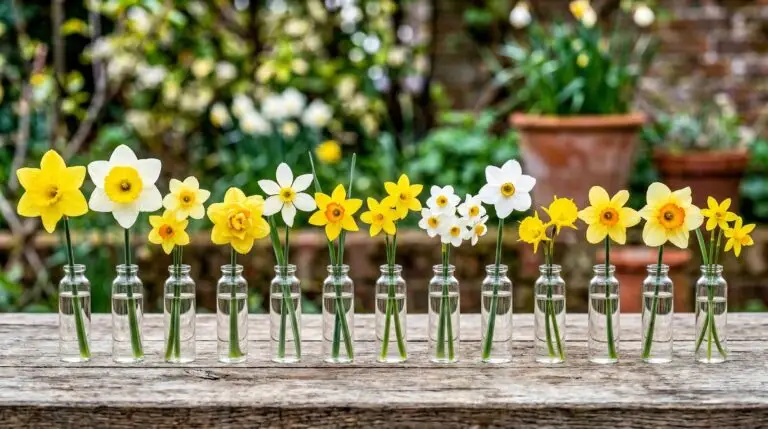
The success of this endeavor depends heavily on choosing the right participants for the pasture. The large, heavy-headed hybrids developed for exhibition often struggle in the competition of a meadow or a woodland edge, their stems snapping in the spring rains. Instead, the older, smaller species and historic varieties possess the rugged constitution required to survive in wild grass and unamended soil. Varieties like Narcissus poeticus or the small wild daffodils known as Lent lilies push up through heavy clay and creeping roots with the same vigor they show in their native mountain meadows. These older forms multiply slowly through offset bulblets and occasionally by seed, creating drifts that follow the natural contours of the land. Over the years, they map the moisture and light of the slope, thriving where conditions suit them and quietly retreating from the places that stay too wet or too dark.
A negotiated peace with the spring grass
Growing daffodils in lawn requires a shift in how we perceive a proper yard, asking us to tolerate a period of necessary shagginess. After the yellow blooms wither and turn brown, the foliage must remain standing to photosynthesize and rebuild the bulb for the following year. The grass around the plants grows tall and goes to seed, creating islands of wild meadow in the middle of the mown turf. This waiting period tests the patience of anyone accustomed to neat, uniform green spaces. Yet, this temporary meadow provides immediate cover for ground-foraging birds and hunting spiders that require tall stalks for their webs. I watch the robins pull worms from the damp soil beneath the sheltering leaves, realizing that my delay in mowing supports a broader community than just the bulbs themselves.
By late June, the green strapping of the daffodil leaves begins to turn a pale, papery yellow at the tips. The plant slowly withdraws its resources back into the earth, abandoning the above-ground world until the next spring. Only when the foliage pulls away easily with a gentle tug is it time to bring the mower over the patch. The blade chops the dried leaves and the tall grass, returning their organic matter to the soil surface to decompose. The lawn returns to its uniform appearance, hiding the sleeping bulbs completely from view. No one walking across the short summer grass would ever know that thousands of flowers wait just inches below their feet, biding their time through the heat of August and the deep freeze of January.
Companions in the warming woods
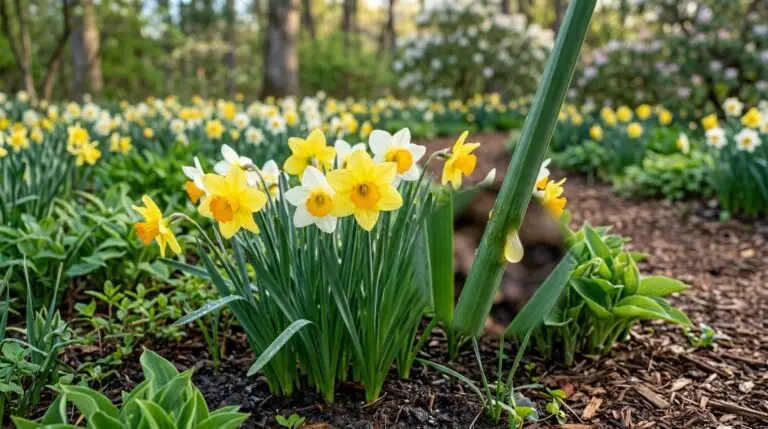
Moving away from the open grass, the edge of the woods offers a different environment for naturalizing bulbs. The deciduous forest floor is a place of fleeting opportunity, bathed in sunlight only until the oaks and maples unfurl their broad leaves and cast the ground into deep shade. Daffodils planted here must complete their entire lifecycle of flowering and recharging before the canopy closes completely overhead. They thrive among the leaf litter, their bright yellow and white faces illuminating the gray trunks and brown earth of the early woods. Here, they mingle with native ephemerals like Virginia bluebells, creating a brief, sharp layer of color that feeds the first pollinators of the year. The decaying tree leaves provide a natural mulch, feeding the soil fungi that eventually support the roots of the bulbs.
The woodland edge becomes a complex community where plants share the same space by utilizing different layers of time. As the daffodils begin to fade, the low-growing rosettes of the forget-me-not rise to obscure the yellowing foliage with clouds of tiny blue flowers. The roots of the trees draw water from deep below, while the bulbs occupy the upper few inches of soil, rarely competing directly for the same resources. Fungi wrap around the roots of the trees and the bulbs alike, creating an unseen network of exchange in the dark earth. Watching this progression unfold week by week teaches a gardener to see the living world not as a static picture, but as a slow, continuous movement. Every plant has its appointed hour, stepping forward into the light and then gracefully retreating to make room for the next.
Planting a bulb in wild ground is an act of faith in the cyclical nature of the world. We bury something that looks entirely lifeless, trusting the cold rains and the turning earth to wake it months later. When the wild daffodils return each spring, multiplying and spreading further across the hillside, they mark the passage of years with a quiet, persistent beauty. They outlive the hands that planted them, persisting in abandoned farmyards and forgotten fence lines long after the houses have fallen away. They are a promise written into the soil, a reminder that life continues to rise from the dark, cold earth exactly when we need it most.
More About Daffodils (Narcissus)
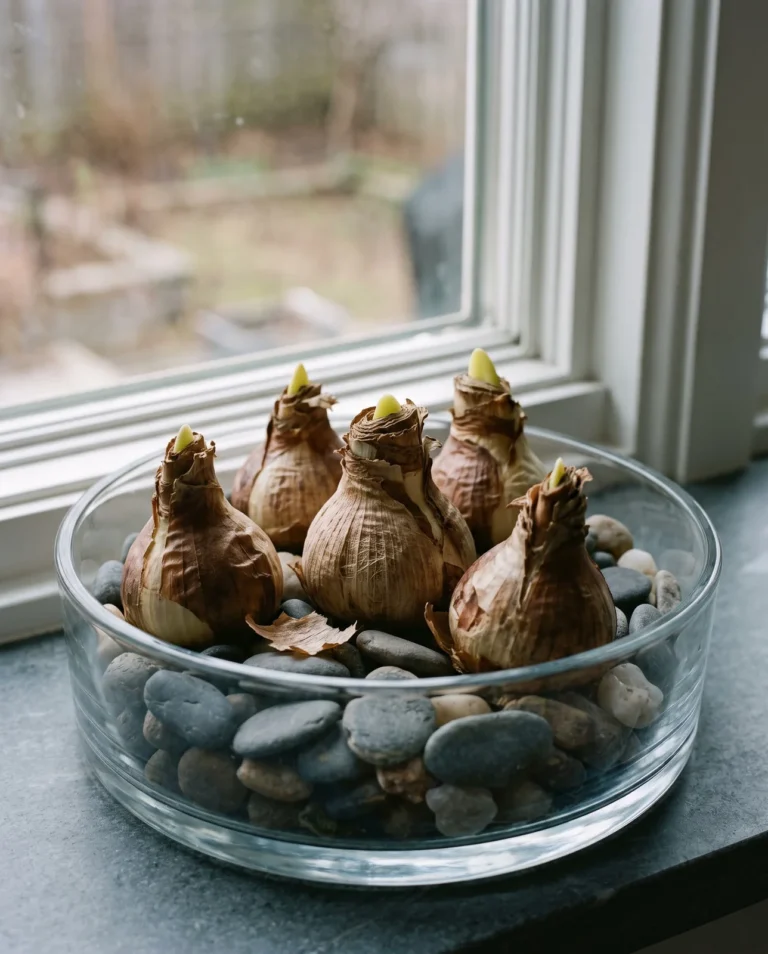
Paperwhites indoors: water, timing, and the flop fix
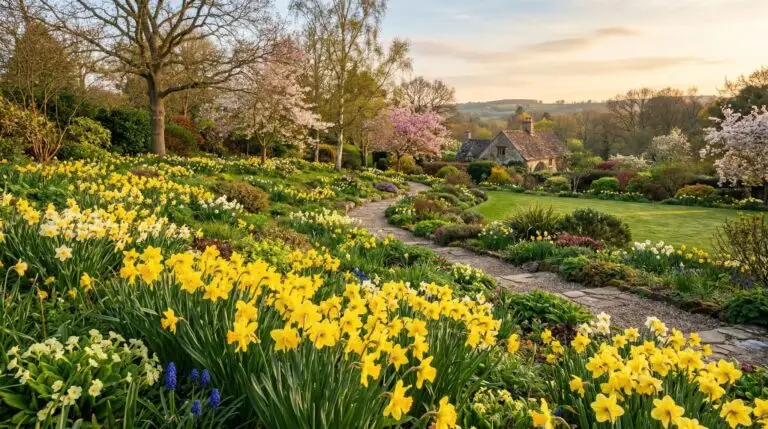
Designing a succession of daffodils that bloom from February through May
Daffodil meaning, from new beginnings to the Narcissus myth, honestly explained
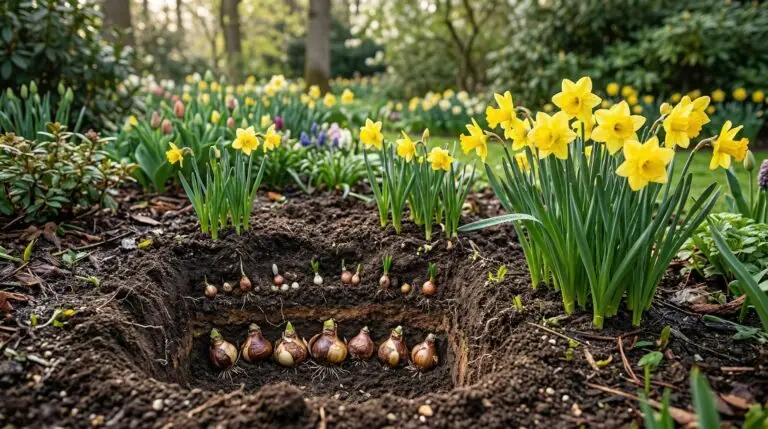
Growing daffodils in containers and pots for spring color on patios and porches
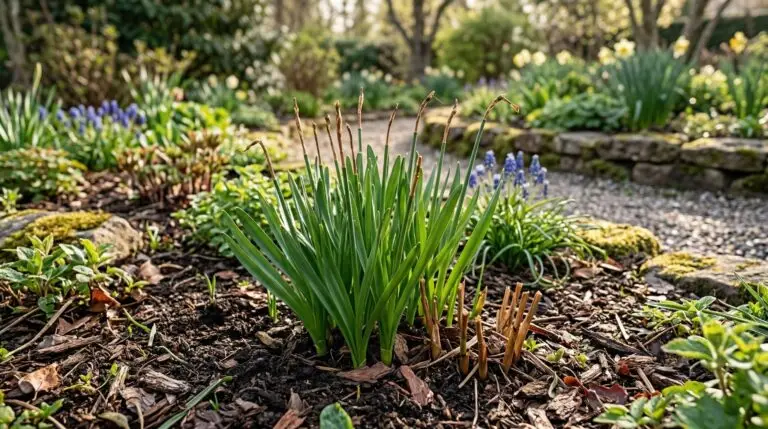
Why daffodils stop blooming after the first year and how to get flowers back
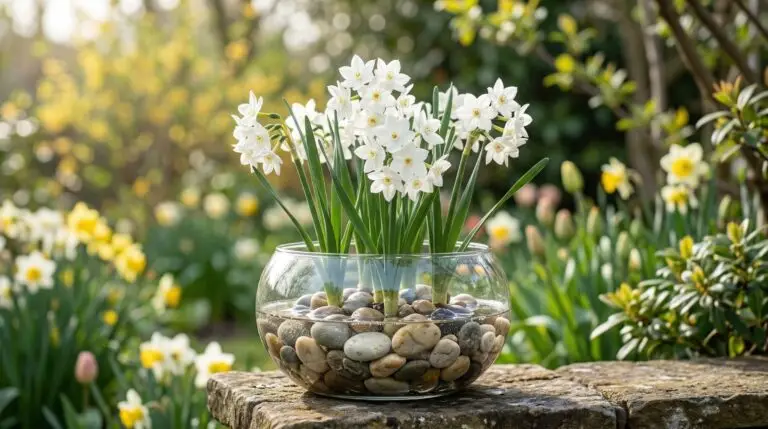
How to force daffodil bulbs indoors for cheerful winter blooms on your windowsill
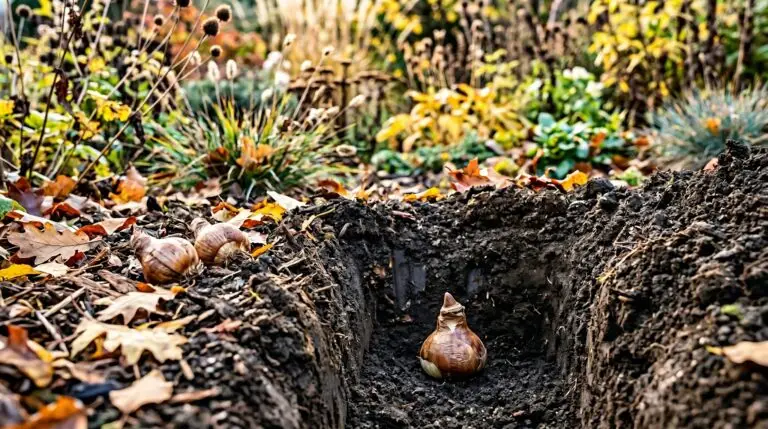
How to plant daffodil bulbs in fall for a golden carpet of spring flowers
What to do with daffodil foliage after blooming and why you must leave it alone
Daffodils as deer-proof and squirrel-proof bulbs that nothing wants to eat
Best daffodil varieties for every garden from tiny Tete-a-Tete to giant King Alfred
Enjoying our flower guides? Add YourFlowersGuide as a preferred source on Google. It helps more readers find us.
Add to Preferred Sources