

Taxonomy and origin
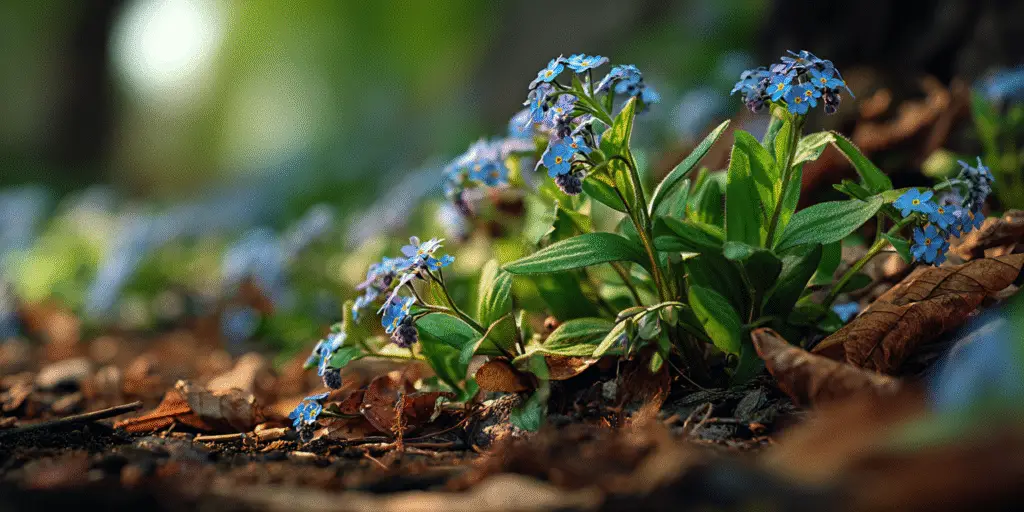
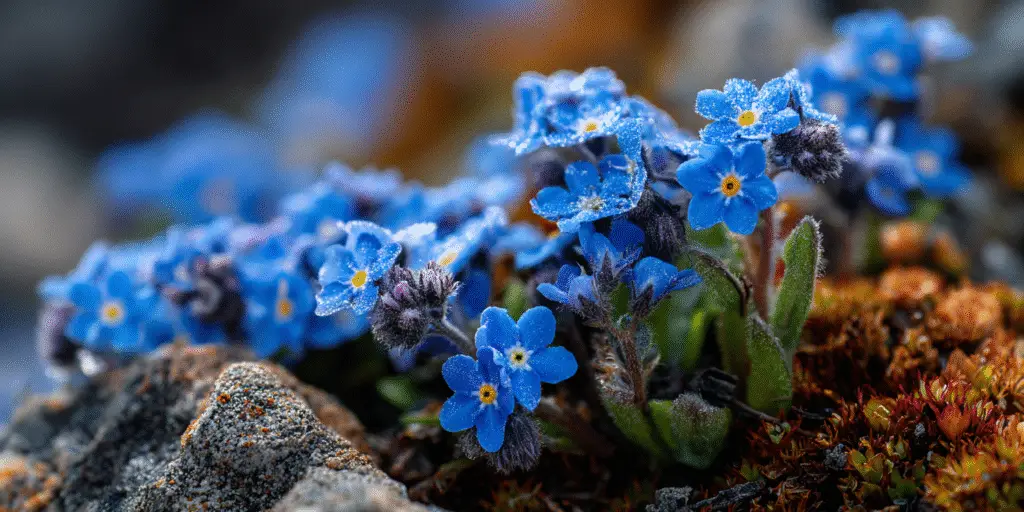
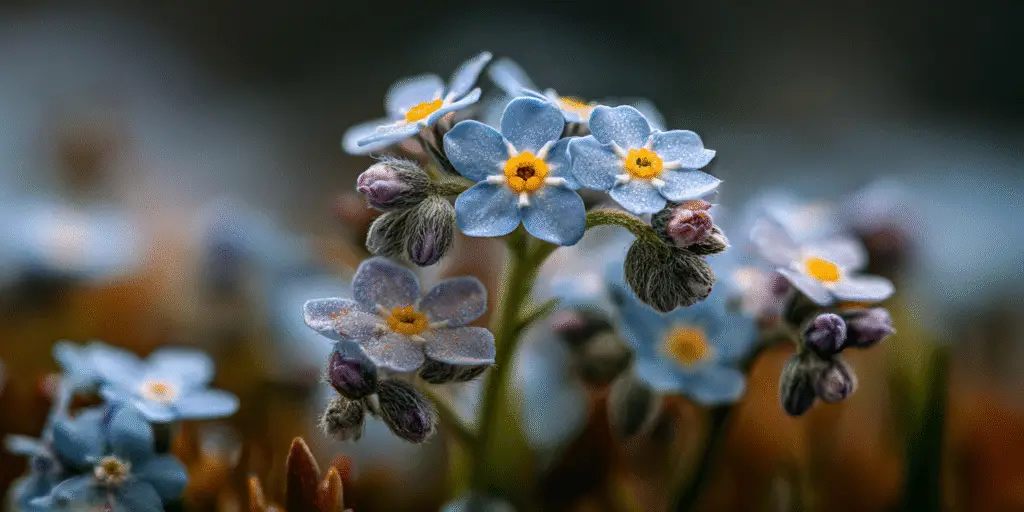
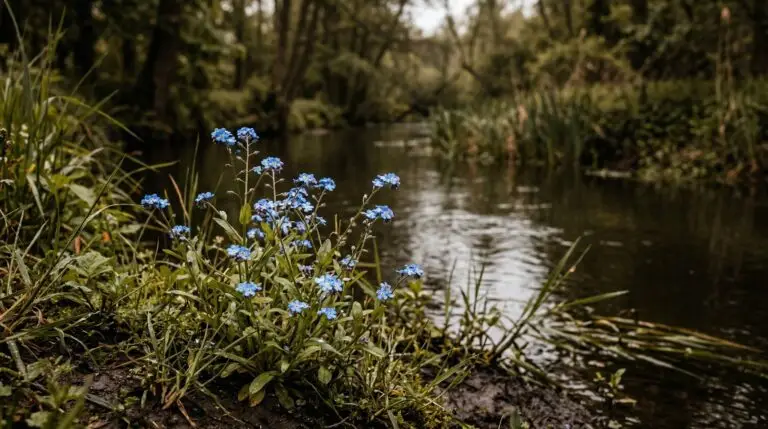
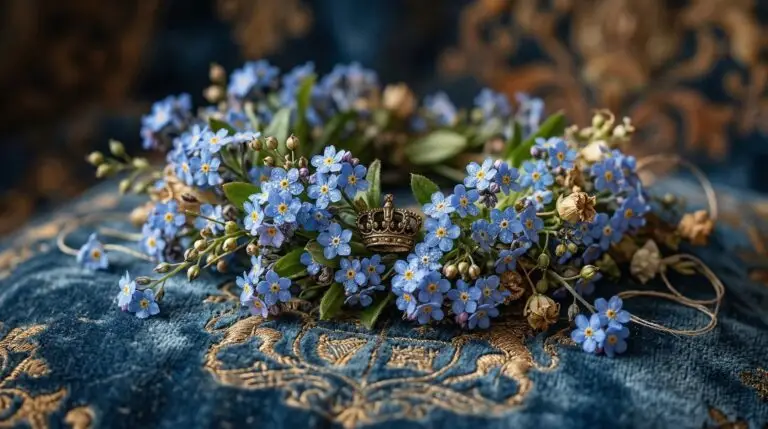
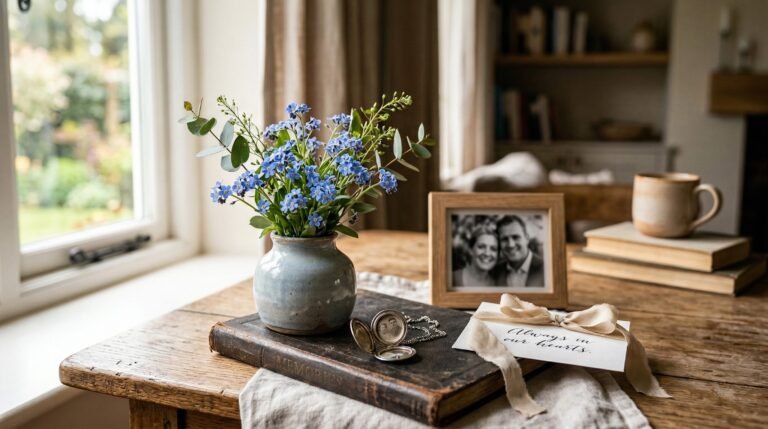
Forget-me-nots belong to the genus Myosotis in the borage family (Boraginaceae). The name comes from the Greek “myosotis,” meaning “mouse ear,” a nod to the plant’s small, fuzzy leaves. There are many Myosotis species worldwide, including annuals, biennials, and short-lived perennials. The common garden forget-me-not (Myosotis sylvatica, often called woodland forget-me-not) comes from temperate woodlands of Europe and Asia. It has been introduced to other regions and can naturalize in moist, shaded places such as stream edges and forest margins. Another well-known species is alpine forget-me-not (Myosotis alpestris), the state flower of Alaska. The common name “forget-me-not” is also tied to an old European legend about faithful love and remembrance.
Bloom time
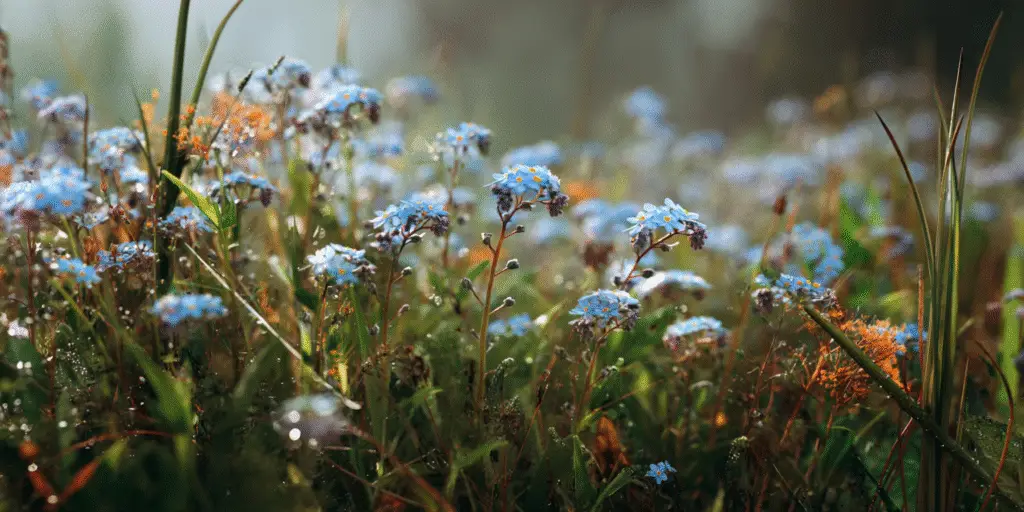
Forget-me-nots bloom in the cool part of the year. In many gardens, the main show runs from April into May, sometimes stretching into early June. As the weather warms, tight buds open into small five-petaled flowers and the plant quickly looks sprinkled with blue. Expect a few solid weeks of bloom, usually peaking in mild mid-spring weather. In cool-summer areas or light shade, plants can keep a few flowers going into summer. In warmer places, fall-sown plants may start flowering in late winter. Individual flowers do not last long, but new buds keep opening for weeks. Like other early wildflowers such as Virginia bluebells, forget-me-nots make the most of moist spring soil and then slow down when summer heat arrives. You can pinch off spent blooms to tidy the patch, but it usually does not cause a strong rebloom.

Height and spread
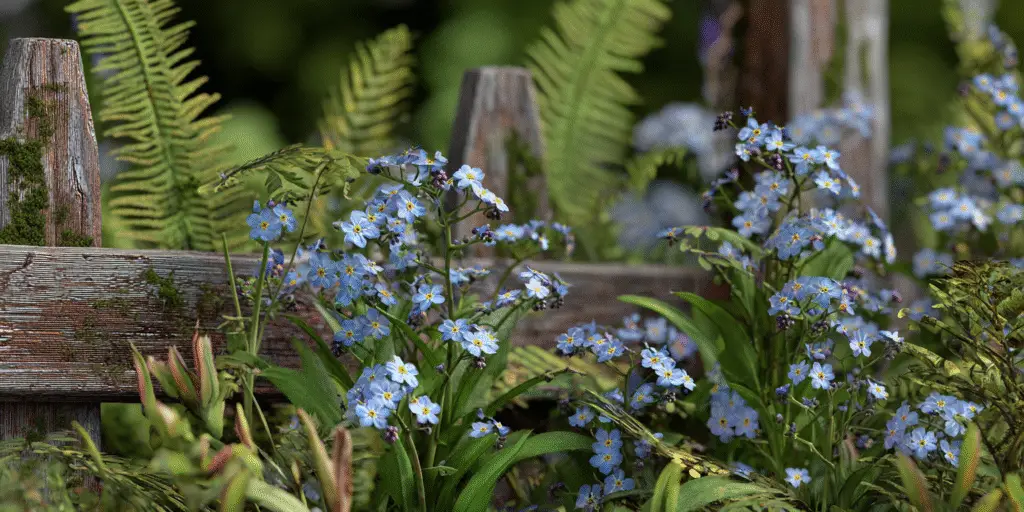
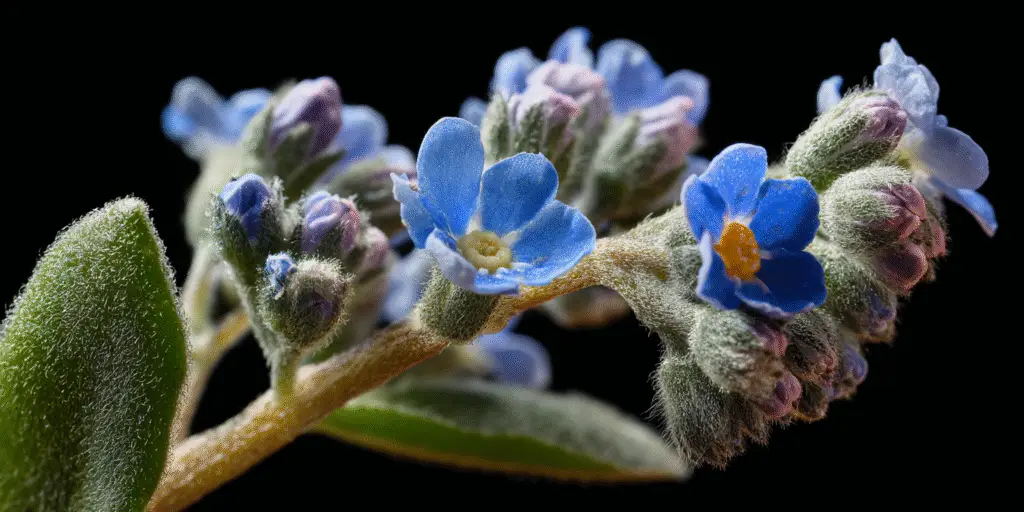
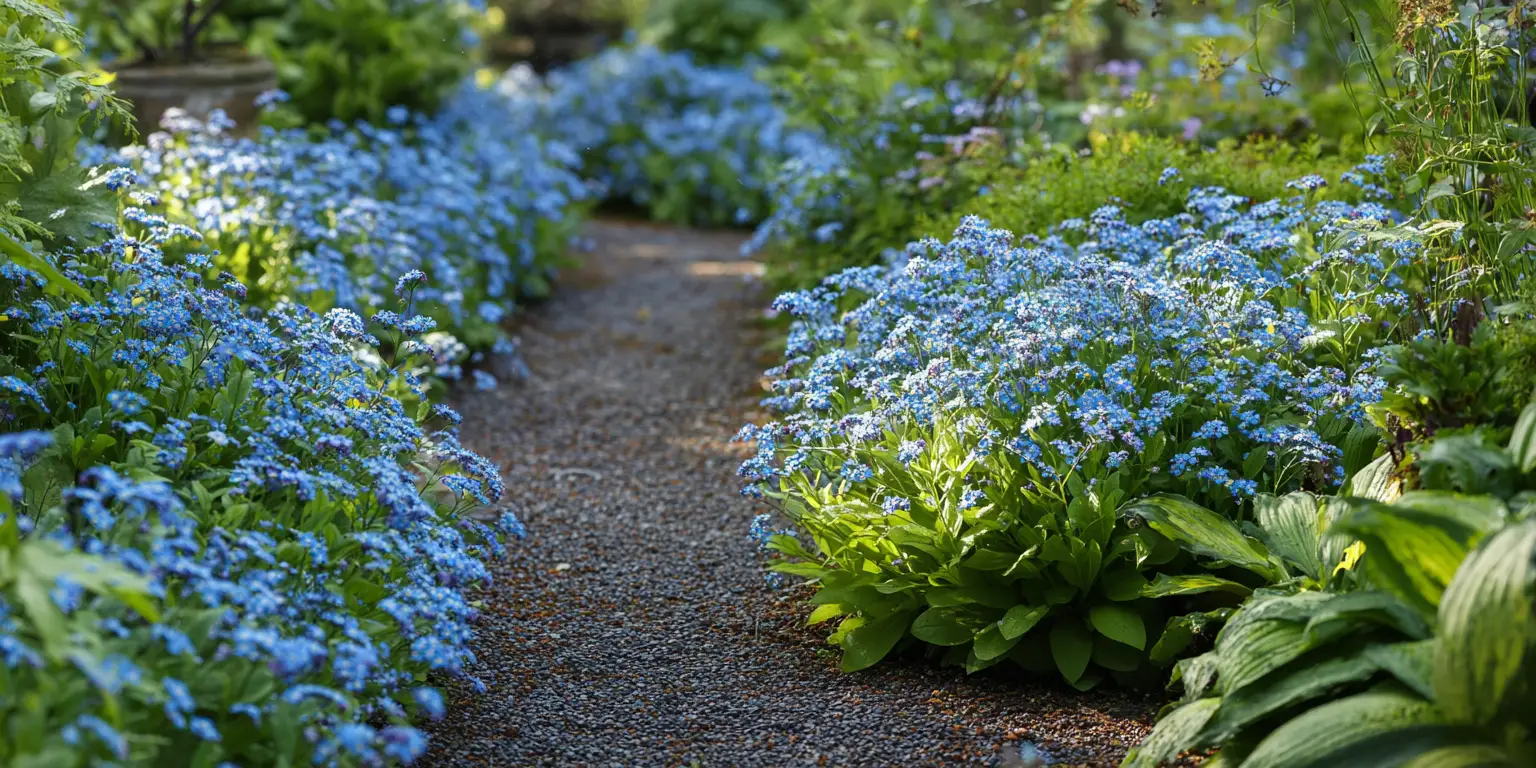
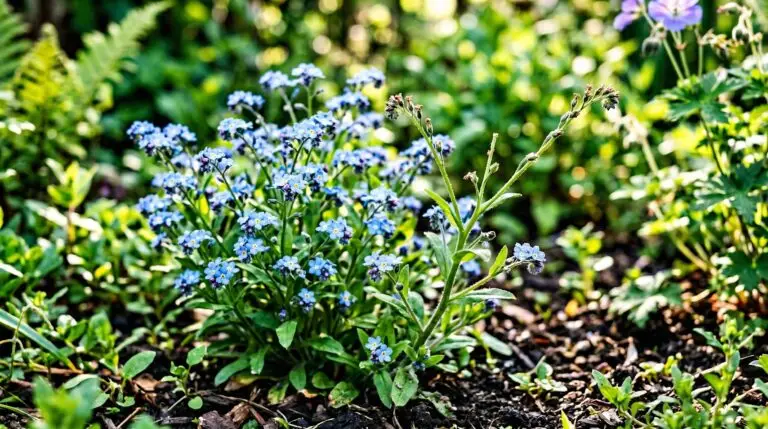
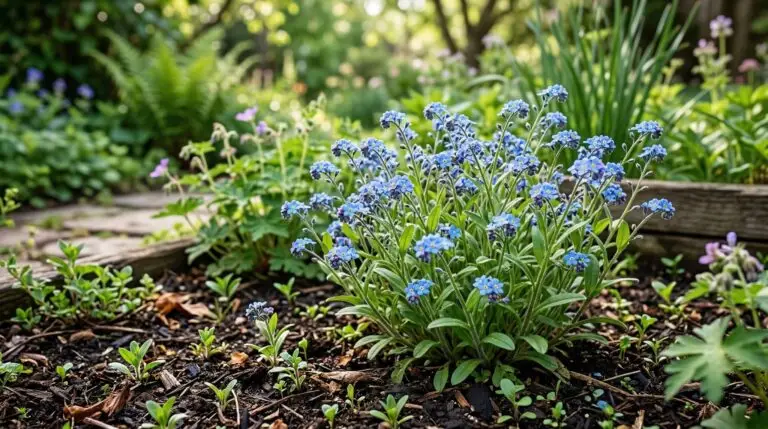
Forget-me-not plants stay small, forming low mounds topped with flowers. Most reach about 6 to 12 inches tall (15 to 30 cm) when blooming and spread roughly 6 to 9 inches (15 to 23 cm). Several stems rise from the base, so the clump looks a bit bushy at peak growth. Leaves are narrow to lance-shaped and slightly fuzzy. Forget-me-nots do not spread by runners, but they often drop seed nearby. In spring, a planting can knit together into a dense groundcover. Space plants about 8 to 10 inches apart (20 to 25 cm) so air can move and leaves dry faster, which helps reduce disease.
Light
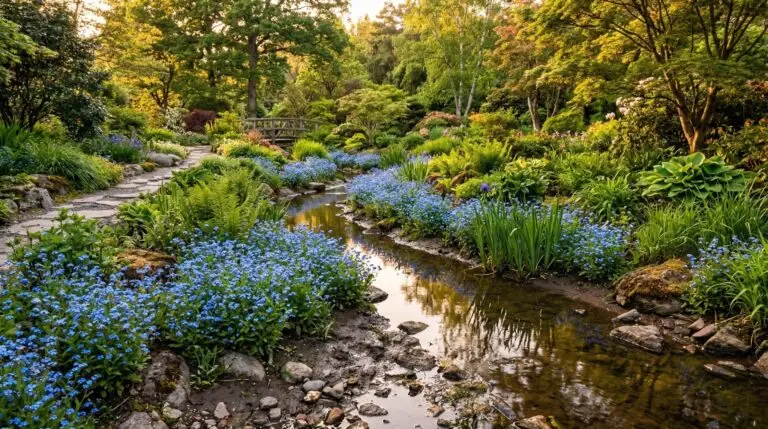
Forget-me-nots grow best in partial shade, similar to woodland edges where sunlight filters through. In cool or northern climates, they can also handle full sun if the soil stays evenly moist. In hot-summer areas or at the warm end of their USDA range, afternoon shade makes a big difference. Strong midday sun can wilt plants and scorch petals. A spot with morning sun and shade later in the day usually keeps them blooming longer. Deep shade is less ideal, and plants may stretch and flower less.

Water
Forget-me-nots like steady moisture. They do not handle long dry spells, and drought can make them droop, rush to seed, or die back. Water when the top inch of soil starts to dry, and soak the root zone so the moisture reaches the roots. Even so, the soil should drain well. Constantly soggy ground can lead to root rot, especially in containers. A light layer of organic mulch helps keep the root zone cool and the soil evenly damp. Potted plants may need water more often because potting mix dries faster. Water at the base when you can, since wet leaves encourage fungal problems.
Soil and pH
Forget-me-nots are not picky about soil type as long as their moisture needs are met. They grow best in soil that holds water but still drains, especially soil with plenty of organic matter. Loose loam amended with compost is a good match for their woodland roots. In heavy clay, compost helps with structure and drainage. In sandy soil, compost helps hold moisture.
Soil pH is usually not a concern for forget-me-nots. They tolerate slightly acidic to slightly alkaline conditions, around pH 6.0 to 7.5. Most garden soils fall in that range. Instead of chasing a perfect number, focus on improving texture and fertility with compost or leaf mold, and avoid extremes.

USDA hardiness
Garden forget-me-nots (Myosotis sylvatica and similar species) handle cold winters well. They are generally hardy in USDA Zones 3 to 8 when grown as biennials or short-lived perennials. In colder areas, seed often sits in the soil through winter and sprouts in spring, or plants overwinter as small leaf rosettes under snow. In Zones 7 and 8, they often behave more like biennials. They grow one season, bloom the next spring, then fade in summer heat. In very warm regions (Zone 9 and above), they usually do not last through hot, humid summers, so they are often grown as cool-season annuals from fall or winter sowing. Even where the cold is not a problem, heat and humidity can shorten their season. A sheltered spot with light shade and consistently moist soil can help in borderline areas.
Propagation and longevity
Forget-me-nots are easy to propagate because they reseed. After spring bloom, plants form small seed pods filled with tiny black seeds that fall nearby. If the area is left alone, seedlings often show up the following season. You can also collect dry seed pods in early summer and save the seed for sowing later. If you want to start a patch on purpose, sowing seed is the simplest approach. In colder climates, many gardeners sow outdoors in mid to late summer so young plants can settle in before winter and bloom the next spring. Seeds can also be started indoors about two months before the last frost and transplanted outside. In warmer regions, fall sowing lets plants establish and bloom during cool spring weather. Press seed onto the soil surface, keep it lightly moist until it sprouts, and thin seedlings to about 8 to 10 inches apart once they are established.
Most forget-me-nots are short-lived once they flower and set seed. A plant often lasts one or two years, but new seedlings replace it. For that reason, a patch can stick around for many years if you let some plants go to seed each season. If you want to slow the spread, pull extra seedlings or remove spent plants after flowering before seeds drop. Cuttings and division are rarely needed.

Fragrance
Forget-me-not flowers are not known for fragrance. In normal garden conditions, they have little or no scent. If you lean in close, you might notice a faint sweet or earthy smell on a cool, damp evening, but it is subtle. Pollinators still visit for nectar and pollen, so the flowers can help support spring insects even without a noticeable perfume.
Toxicity and pet safety
Forget-me-nots (Myosotis) are generally listed as non-toxic for people and common pets. They are a good choice for gardens where kids, cats, or dogs may wander. Even so, any plant material can upset a stomach if a pet eats a lot of it, so it is still best to discourage nibbling.
Forget-me-nots are not grown as a food plant, even though the flowers are sometimes used as a small decorative garnish. If you have pets or young children, treat garden plants as “look, do not eat,” and wash hands after gardening.

Vase life
Forget-me-nots are usually enjoyed outdoors, but you can cut small sprays for a vase. Many stems last about 5 to 7 days, and sometimes closer to 10 with fresh water and good care. Cut stems in the cool of morning when plants are well hydrated. Choose stems with a mix of open flowers and buds, then place them in water right away. Remove any leaves that would sit below the water line to keep the water cleaner. Because the flowers are small, they work best as a light accent in mixed bouquets or small posies.
Pests and diseases
Forget-me-nots are usually easy plants, but a few pests can show up. Deer and rabbits often ignore them, likely because of the slightly hairy leaves, though hungry animals may still sample them. Aphids sometimes gather on tender tips and buds. A strong rinse of water can knock them off, and removing badly infested growth helps. Slugs and snails may chew holes in leaves in damp, shady spots. Hand-picking and keeping the area free of wet debris can reduce damage.
Most diseases on forget-me-nots are fungal and tend to appear in damp, crowded growth. Powdery mildew can show up as a whitish coating on leaves, often later in the season, and rust may create orange-brown spots on the undersides. Good spacing, watering at the base, and better airflow help prevent problems. If plants look badly mildewed or ragged by late spring, many gardeners remove them since they have usually dropped seed for next year. Serious outbreaks are uncommon, and heavy treatments are rarely needed.
Flower photos


FAQ
Are forget-me-nots annuals or perennials?
Forget-me-nots can be grown as short-lived perennials, but many garden types like Myosotis sylvatica are treated as biennials. They usually bloom in their second year, set seed, then die back. Because they reseed so freely, they often show up each year and can feel almost like annuals.
Do forget-me-nots prefer sun or shade?
Forget-me-nots grow best in partial shade or dappled light. They handle some morning sun and usually appreciate shade in the afternoon. In cooler climates, they can grow in full sun if the soil stays moist. In hotter regions, too much direct sun stresses the plants and shortens the bloom period.
Will forget-me-nots spread or become invasive?
Forget-me-nots spread mostly by self-seeding. In a garden bed, they can pop up in new spots each year if allowed to set seed. In many gardens this is manageable, but in some moist, mild regions they can escape into natural areas. If you are concerned, remove extra seedlings or trim plants after bloom before seeds drop. Check local guidance if you garden near wetlands or sensitive habitats.
Are forget-me-nots toxic to pets?
Forget-me-nots (Myosotis) are generally considered non-toxic to cats and dogs. If a pet chews a small amount, it is unlikely to cause harm, though mild stomach upset is possible. It is still smart to discourage pets from eating garden plants.
Do deer or rabbits eat forget-me-nots?
Deer and rabbits usually leave forget-me-nots alone. The leaves have a slightly fuzzy texture that many grazers do not love. No plant is completely safe when animals are hungry, but forget-me-nots are not a first choice for most.
Should I deadhead forget-me-nots after flowering?
Deadheading is optional. Removing spent flowers tidies the plant and may extend bloom a little, but it does not usually trigger a big second flush. If you want plants to reseed, leave some flowers in place until seeds mature. If you want fewer seedlings next year, trim plants after bloom before seeds drop.
Can I grow forget-me-nots in containers or indoors?
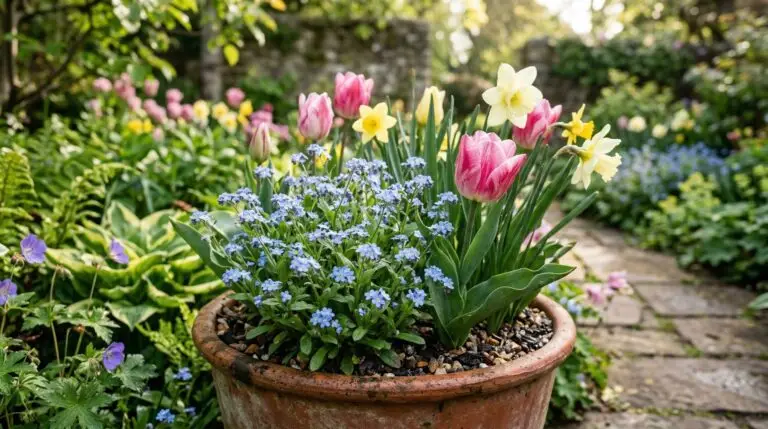
Forget-me-nots grow well in containers such as pots or window boxes. Use a well-draining potting mix and keep it consistently moist. Because container soil dries faster, pots may need more frequent watering in active growth. Indoors can be tricky since forget-me-nots prefer cool temperatures and bright, indirect light. Most people have better luck growing them outdoors and using containers on a porch or patio.
Interesting tips
- Plant forget-me-nots under deciduous shrubs or trees (like hydrangeas) so they bloom before the canopy fills in.
- Pair forget-me-nots with spring bulbs such as tulips and daffodils. The blue flowers help cover fading bulb foliage.
- If you want forget-me-nots to return each year, let some plants set seed. Seedlings often appear the next spring.
- If they spread too much, pull extra seedlings or remove plants after flowering before seeds drop.
- In USDA Zone 9 and warmer, grow forget-me-nots as cool-season annuals. Sow in fall or winter for spring flowers, then remove plants as heat builds.
- Water forget-me-not (Myosotis scorpioides) likes consistently wet soil and can grow at pond edges. Choose it only for spots that stay damp.
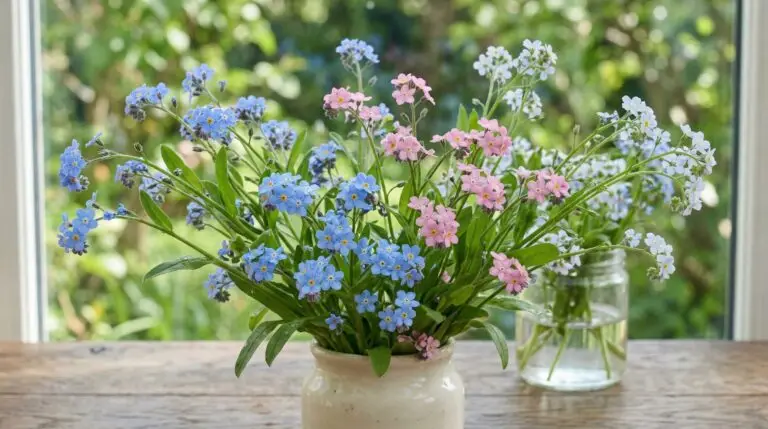
- Mix blue, pink, and white varieties if you want a softer look in spring.
- You can also grow forget-me-nots in hanging baskets or pots outdoors. Keep the soil evenly moist so plants do not dry out.
Related Guides & Flowers
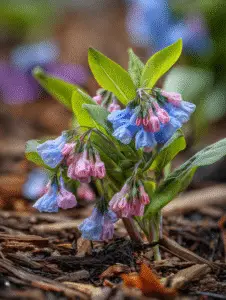
Virginia Bluebells (Mertensia virginica)
spring woodland clusters of soft blue bells; gentle shade companion to forget-me-not.
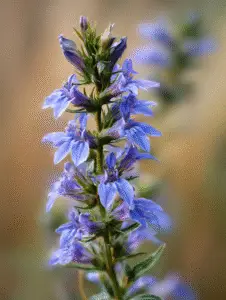
Great Blue Lobelia (Lobelia siphilitica)
bold mid- to late-summer blue spikes for moist beds and pond edges.
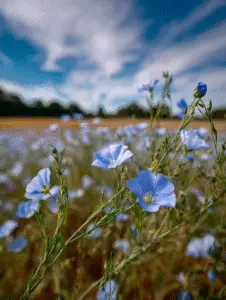
Blue Flax (Linum perenne)
airy sky-blue blooms that self-sow lightly in meadows and borders.
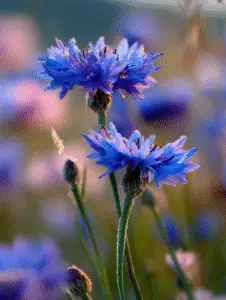
Cornflowers (Centaurea cyanus)
classic true-blue daisies for cottage borders and cut flowers.
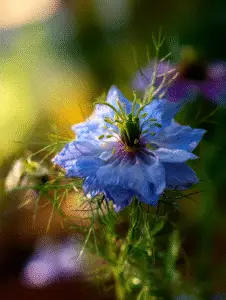
Love-in-a-Mist (Nigella damascena)
delicate blue blossoms framed by ferny “mist,” great for self-seeding accents.
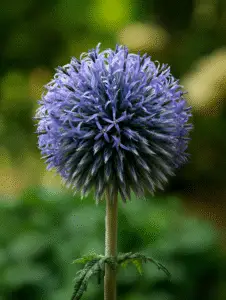
Globe Thistle (Echinops spp.)
sculptural steel-blue globes that draw pollinators and add texture.
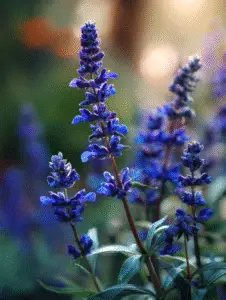
Blue Salvia
dependable blue spires; heat-tolerant annual/perennial depending on zone.
References
- NC State Extension – Myosotis sylvatica (Woodland forget-me-not): horticultural profile, growth habit, culture, and garden uses.
- University of Maine Cooperative Extension – “Are forget-me-nots invasive or native?”: species seen in New England, legal status, and self-seeding/aggressiveness notes.
- UC Davis Weed Research & Information Center – Myosotis latifolia (PDF): identification, habitat, invasiveness notes; mentions potential livestock toxicity.
- Wisconsin DNR – Aquatic forget-me-not (Myosotis scorpioides): status, ecology, and management context for wet sites.
- USGS NAS – Myosotis scorpioides species profile: distribution and ID notes in U.S. waters.
Enjoying our flower guides? Add YourFlowersGuide as a preferred source on Google. It helps more readers find us.
Add to Preferred Sources