
Taxonomy and origin
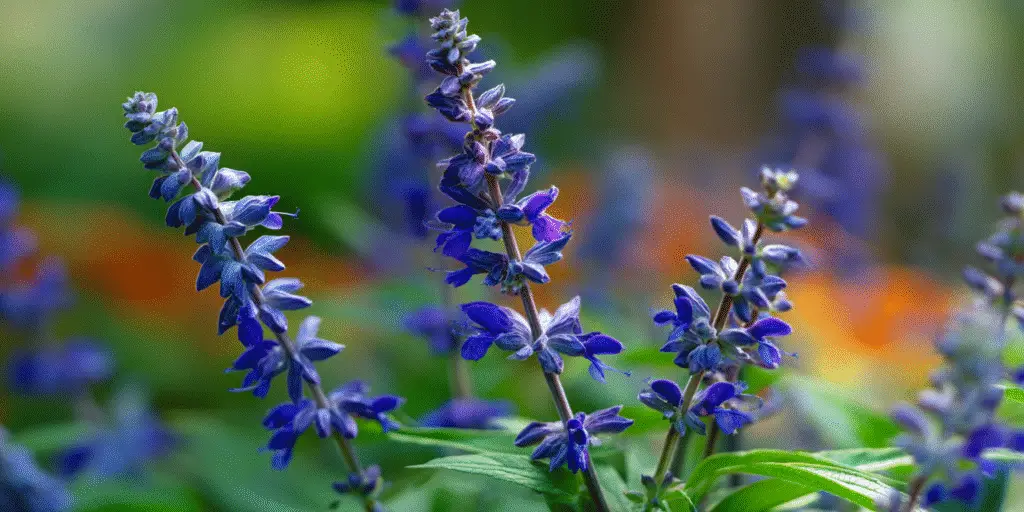
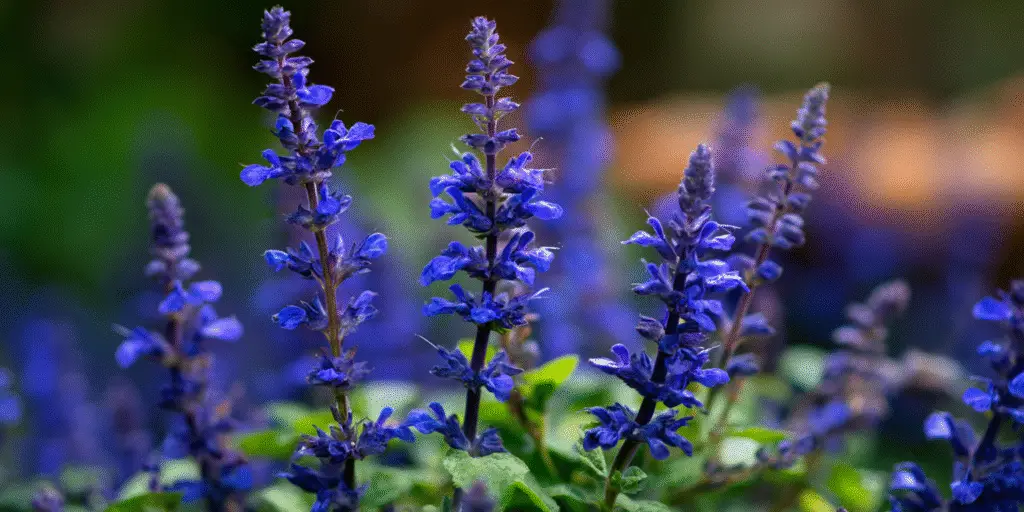
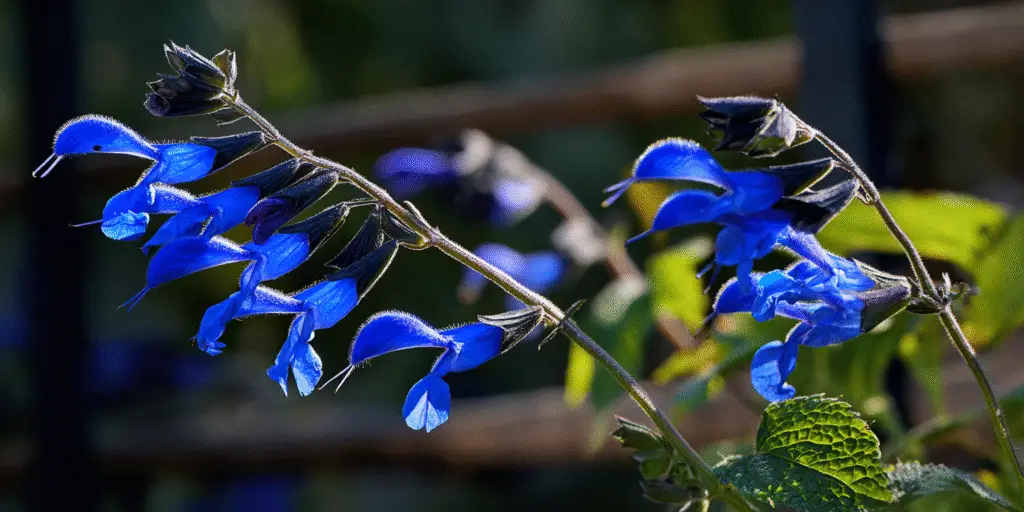
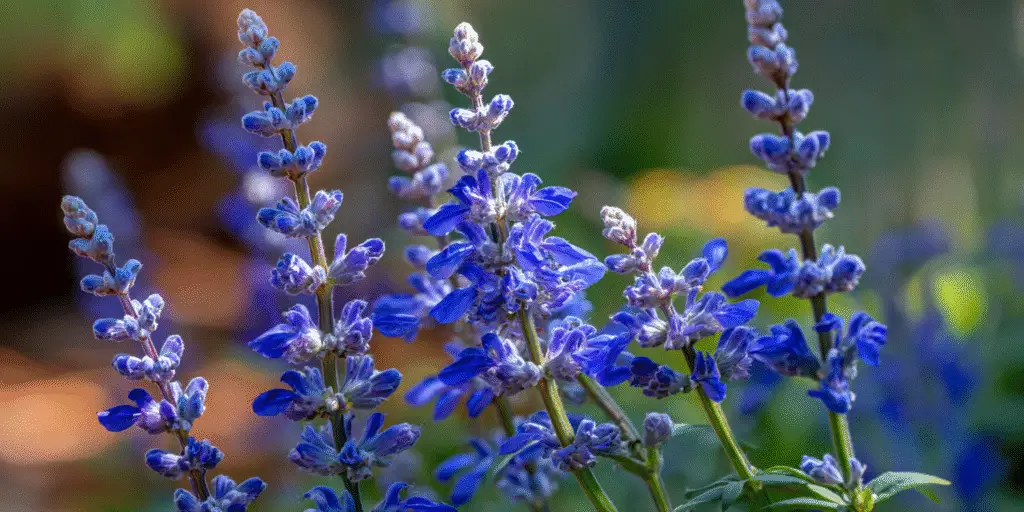
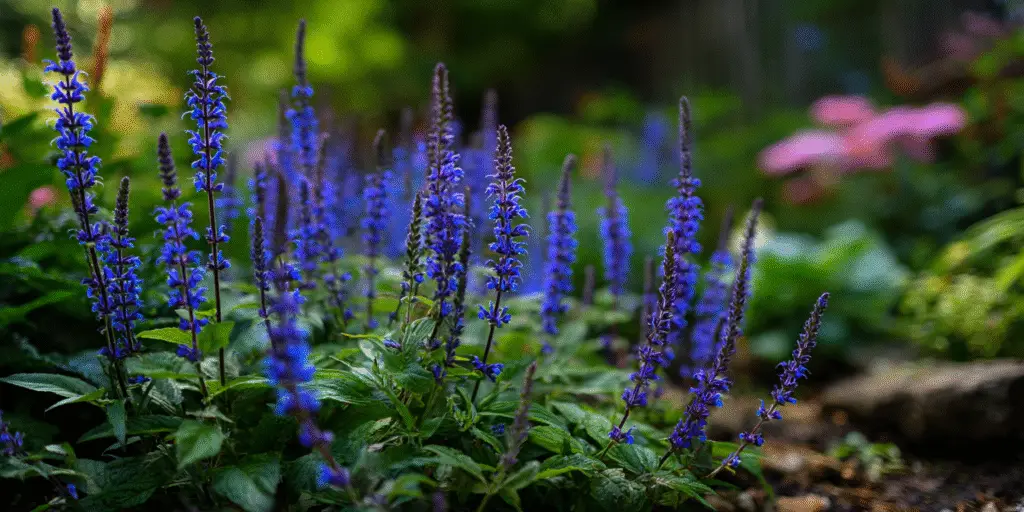
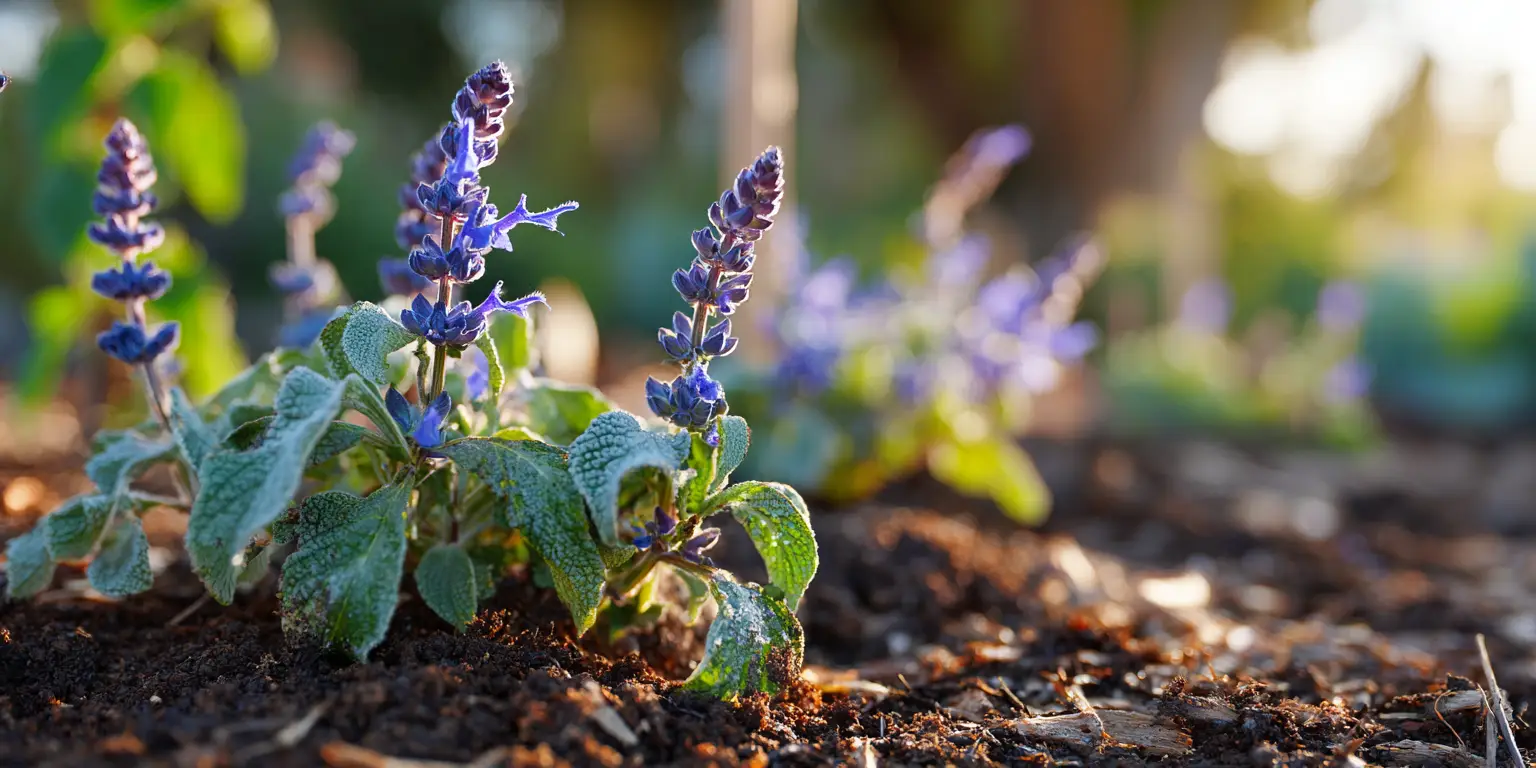
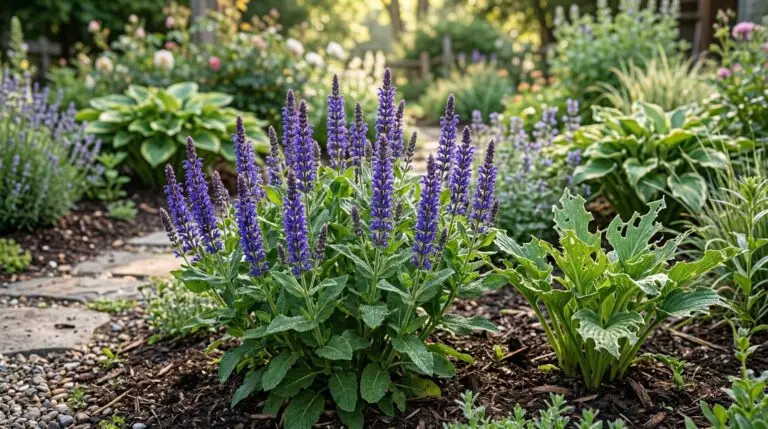
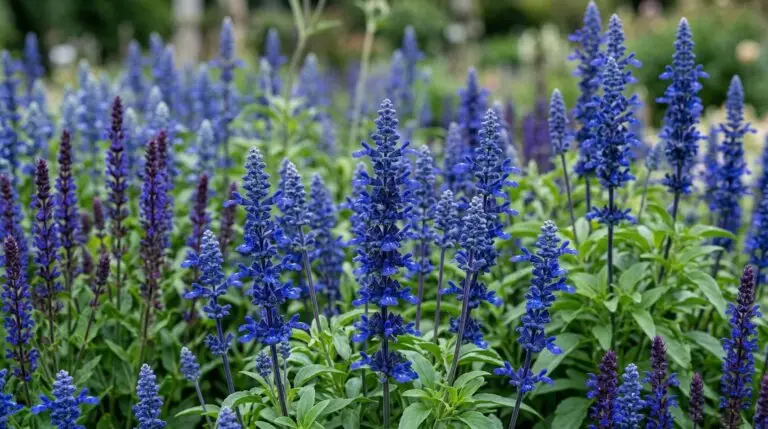
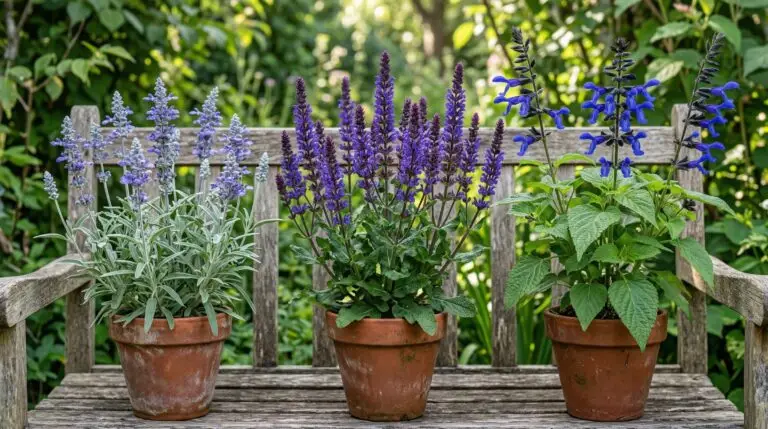
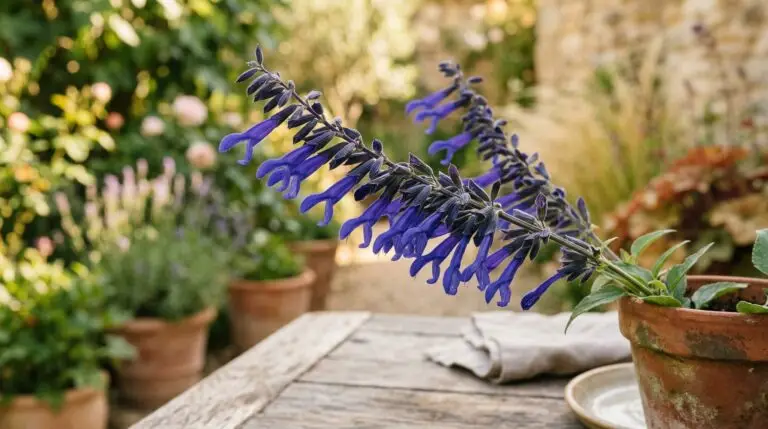
Salvia is one of the largest genera in the mint family (Lamiaceae), with hundreds of species grown as ornamentals, culinary herbs, or wildflowers. The common bedding “Blue Salvia” is usually Salvia farinacea, native to the southern United States and Mexico. You can see its mint-family traits in the square stems and the lightly aromatic leaves. You may also hear people call other blue-flowering salvias “blue salvia” (such as Salvia guaranitica), but their size and hardiness can be different. The care notes in this profile fit best with S. farinacea and its popular cultivars.
Bloom time
Blue Salvia is known for a long bloom season. In many gardens it starts flowering in late spring or early summer and keeps going until frost. Each spike opens from the bottom up, so you get color for a while before it fades. If blooms slow down mid-season, a quick snip of the spent spikes usually brings a fresh flush. In warm climates, plants may bloom earlier and continue later. In cooler areas, growth ramps up once nights stay consistently mild.

Height and spread
Most Blue Salvia varieties grow about 1 to 3 feet tall (30 to 90 cm) while in bloom, with a spread around 1 to 2 feet (30 to 60 cm). Compact cultivars stay closer to the low end, while taller types can make a stronger vertical line in the back of a bed. Give plants enough room for airflow and straight stems. As a general guide, spacing them 10 to 18 inches apart works well, depending on the variety and how full you want the planting to look.
Light
Blue Salvia does best in full sun, ideally 6 or more hours of direct light per day. In bright sun it stays sturdier and blooms more heavily. In very hot climates, a little afternoon shade can help the plant look fresher, especially in containers. Too much shade usually means fewer flowers and softer, leggier growth.

Water
Water Blue Salvia regularly during its first few weeks so it can settle in and build roots. After that, it prefers an even but not soggy routine: water deeply, then let the top inch of soil dry a bit before watering again. In the ground, established plants handle short dry spells better than they handle constantly wet soil. Container plants dry out faster, especially in summer. Check pots often and water when the mix feels dry a couple inches down. If you see drooping in the heat of the day but the plant perks up by evening, that is usually temporary heat stress rather than a sign that the plant needs constant wet soil.
Soil and pH
Good drainage matters more than rich soil for Blue Salvia. It grows well in average garden soil as long as excess water can move through. Sandy or loamy beds are ideal, but heavier soil can work if you loosen it and mix in compost to improve structure. A slightly acidic to neutral pH is fine for most salvias, and Blue Salvia is fairly adaptable. Avoid heavy, frequent fertilizing. Too much nitrogen can give you lots of leaves and fewer flower spikes.

USDA hardiness
Hardiness depends on the species and cultivar, but Salvia farinacea is often treated as a tender perennial. In warmer areas (commonly USDA Zones 8-10) it can come back from year to year, especially with good drainage and winter protection from constant wet. In colder zones it is usually grown as an annual. If you garden on the edge of its hardiness range, mulch after the ground cools and cut plants back in spring once new growth starts. In places with freezing winters, plan to replant each year or start new plants from seed or cuttings.
Propagation and longevity
Blue Salvia is easy to start from seed and also roots well from cuttings. Seeds can be started indoors about 6 to 8 weeks before your last frost date. Sow on the surface or barely cover, keep the mix lightly moist, and give seedlings bright light. Transplant outside after nights stay above freezing. For cuttings, take a healthy, non-flowering stem tip in summer, remove the lower leaves, and place it in a moist rooting mix. Keep it humid and out of harsh sun until it roots.
In colder climates, Blue Salvia is usually grown for one season, then replaced the next spring. In frost-free or mild-winter areas it can live for several years, though it often performs best when plants are refreshed every couple of seasons. Some types will self-sow lightly if you leave a few spikes to mature.

Fragrance
Blue Salvia is not grown for perfume. The flowers are mostly scentless to people. The leaves, however, have a mild herbal smell when you rub or crush them, which is typical of sage relatives. That low-fragrance profile can be a plus in mixed plantings. You get strong color without competing with more scented plants nearby, and it suits gardeners who prefer a quieter-smelling yard.
Toxicity and pet safety
Blue Salvia is commonly listed as non-toxic to cats and dogs and is widely used in family gardens. Still, any plant material can upset a pet’s stomach if eaten in quantity, so it is smart to discourage nibbling. For people, casual contact is usually fine. If you have very sensitive skin, gloves are never a bad idea when pruning, but Blue Salvia is not known as an irritant for most gardeners.
Another practical perk is that Blue Salvia is often deer-resistant and rabbit-resistant. The aromatic foliage and slightly rough leaves are not a favorite snack. That said, “resistant” is not the same as “immune”. Hungry animals may sample almost anything. If wildlife pressure is high, combine Blue Salvia with other tough plants and use physical barriers when needed, especially early in the season when growth is tender.

Vase life
Blue Salvia can be used as a cut flower, especially when you want a clean vertical line in an arrangement. In a vase, stems often last about a week, sometimes longer with good care. For best results, cut in the morning, choose spikes with a mix of open blooms and buds, and place stems in water right away. Strip off any leaves that would sit below the waterline, and use a clean vase with fresh water. Keeping the stems cool for the first few hours also helps them settle in.
Change the water every couple of days and recut the stem ends if they start to look tired. A floral preservative can help, but clean water and a clean vase matter most. Blue Salvia usually holds its color well, and the small blooms tend to dry in place rather than dropping all over the table. You can also hang cut spikes upside down to dry. They keep their shape nicely and work in dried arrangements once the color softens.
Pests and diseases
Blue Salvia is generally low-fuss, but it can run into the usual garden problems if plants are stressed or crowded. Catching issues early is often all it takes to keep the plant looking good.
Common pests include aphids, whiteflies, and spider mites. A strong spray of water can knock many of them off, and insecticidal soap is a standard option if populations build up. Spider mites show up most often during hot, dry stretches, so steady watering and less dusty conditions help. Very young plants can occasionally be nibbled by slugs or snails. Spittlebugs sometimes leave foamy patches on stems in spring. They look odd but rarely cause real damage.
Most diseases on Blue Salvia are tied to moisture. Powdery mildew can appear in humid weather or when plants are packed too tightly. Give plants room, keep them in sun, and water at the base so leaves dry quickly. Remove heavily affected foliage. Poor drainage can lead to root rot and other crown problems. If a plant stays wet and starts wilting or yellowing even after watering, check soil moisture and drainage first. Preventing these issues with well-drained soil is much easier than trying to fix them later.
With sun, airflow, and soil that drains well, Blue Salvia usually stays healthy. Basic cleanup helps too: remove spent spikes, pull off yellow leaves, and avoid overhead watering late in the day. Beneficial insects often take care of small pest outbreaks on their own when you keep broad pesticides to a minimum.
Flower photos


FAQ
Is Blue Salvia an annual or a perennial?
It depends on climate. In warm areas (often USDA Zones 8-10), it can act as a short-lived perennial and return for a few seasons. In colder zones, winter freezes usually kill it, so gardeners grow it as an annual and replant in spring.
How do I propagate Blue Salvia?
Start seeds indoors 6 to 8 weeks before the last frost, then transplant after the danger of frost passes. You can also take summer stem cuttings from healthy growth and root them in a moist mix. Cuttings give you a clone of the parent plant, which is useful if you want the same color and size.
Do Blue Salvia flowers attract pollinators?
Yes. The tubular blooms are a steady nectar source for bees, and many gardens also see butterflies and hummingbirds visiting the spikes. Planting a drift of Blue Salvia can keep pollinators coming back through much of the summer.
Is Blue Salvia safe for pets (cats and dogs)?
It is generally considered non-toxic, but it is still best to prevent pets from chewing on garden plants. If a pet eats a lot of leaves or flowers, mild stomach upset is possible, as with many non-toxic plants.
Should I deadhead Blue Salvia?
Yes, if you want steady blooms. Once a spike looks faded, snip it off just above a set of leaves or a side shoot. The plant usually responds by branching and sending up new spikes. If you want to collect seed, leave a few late-season spikes to dry on the plant.
Can I grow Blue Salvia in containers?
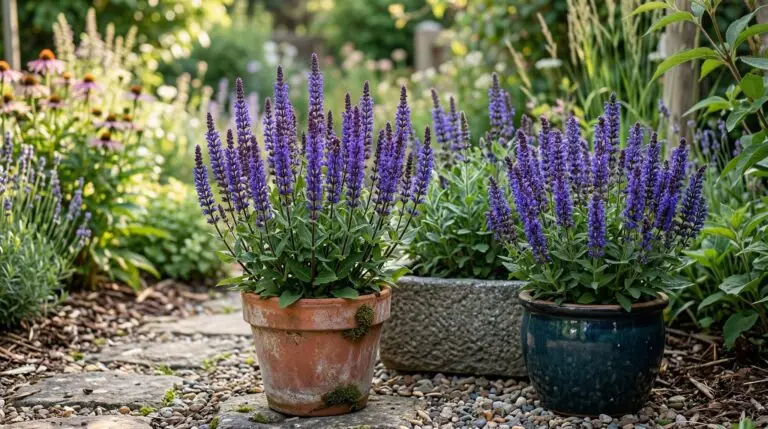
Yes. Use a pot with drainage holes and a well-draining potting mix. A 10 to 12 inch container works for one plant, and bigger pots stay more even in summer heat. Keep the pot in sun, water more often than in-ground plants, and feed lightly during the growing season.
Interesting tips
- The name Salvia comes from a Latin word linked with healing and saving, which makes sense given how many sages have been used in traditional herb gardens. Blue Salvia itself is mostly grown for ornament, but it shares the same family traits. One detail that is fun to watch is how salvia flowers handle pollination. Many salvias have a lever-like stamen that moves when a bee pushes into the bloom, dusting pollen onto the visitor and helping move it to the next flower.
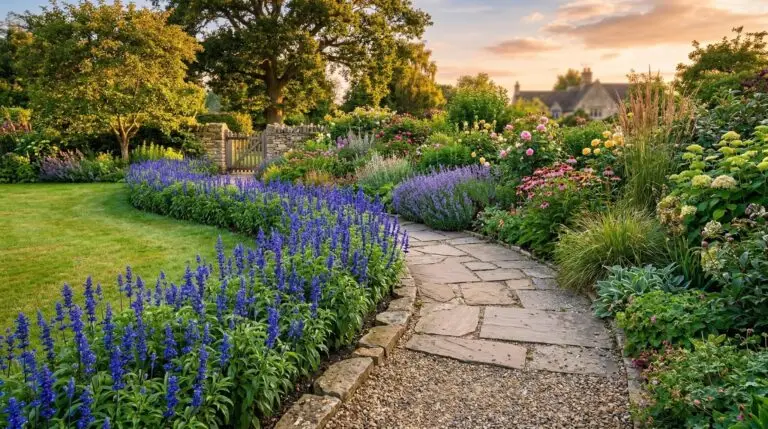
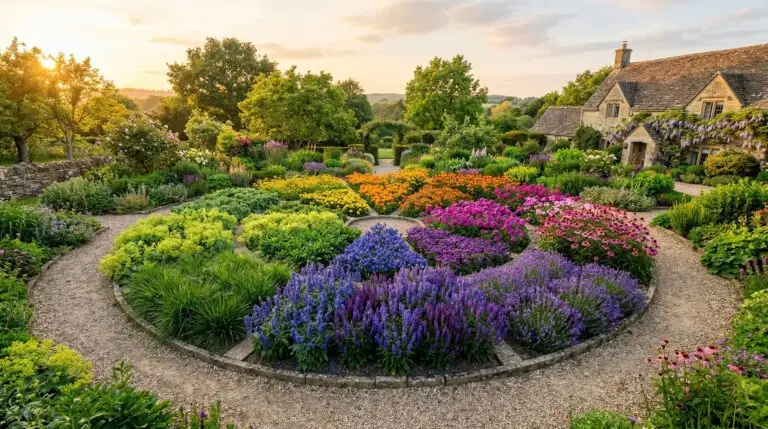
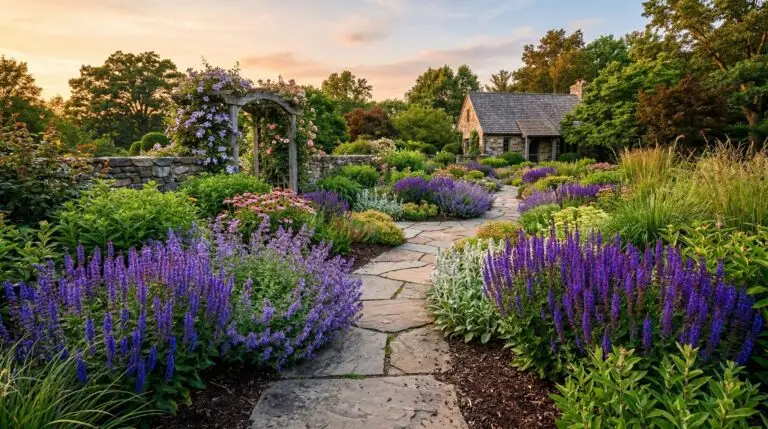
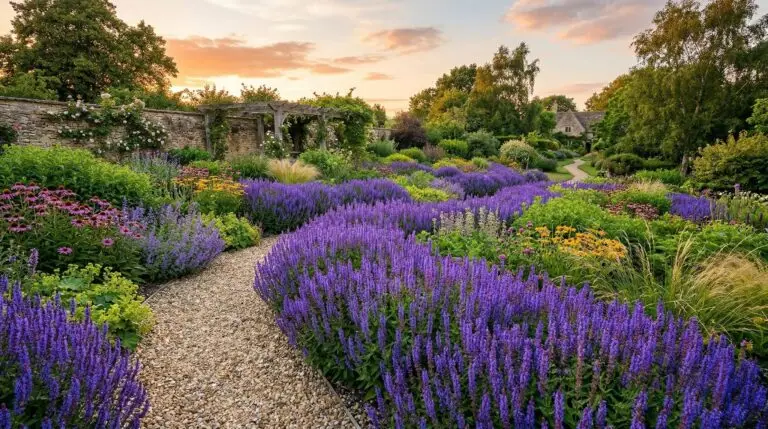
- Blue Salvia earns its place in color-focused beds because clear blue flowers are hard to come by. It pairs well with warm tones like yellow and orange, and it also looks sharp with white flowers and silvery foliage. If you like an all-blue palette, it plays nicely with other blue bloomers, but its upright form keeps the planting from looking flat.
- If you grow Blue Salvia as an annual, you can save seed for next year. Let a few spikes dry on the plant, then collect the small dark seeds and store them in a labeled envelope somewhere cool and dry. Seed-grown plants are usually close to the parent type, but named cultivars and hybrids may not come true from seed.
- Blue Salvia is a staple in pollinator gardens because it is easy to grow and blooms for a long stretch. It is also a good plant for beginners: the stems are sturdy, the care is straightforward, and deadheading is simple. Cut spikes can be dried too. Hang small bunches upside down in a dark, airy spot, then use the dried stems in arrangements once they are fully dry.
- Once established, Blue Salvia handles heat well and is often ignored by deer. If plants look tired or stop blooming during peak summer, a light trim can reset them. Cut back about one-third of the plant, water well, and you will often see fresh growth and new spikes within a couple of weeks. Set it in sun, give it soil that drains, and keep the spent spikes moving out. That is usually all it asks for.
Related Guides & Flowers
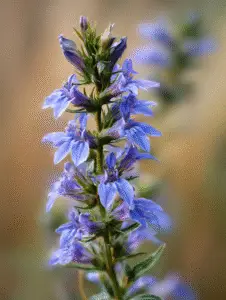
Great Blue Lobelia
deep blue spires for damp or part-shade borders; late-summer native.
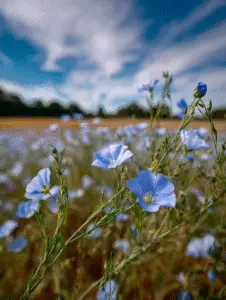
Blue Flax
airy, sky-blue cups on wiry stems; drought-tolerant and lovely in meadows.
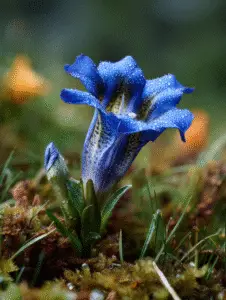
Gentian
intense cobalt bells; cool-season accent for moist, well-drained sites.
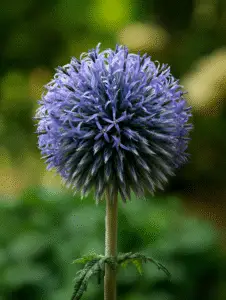
Globe Thistle
steel-blue globes loved by bees; architectural, heat-tough.
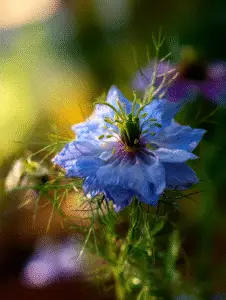
Love-in-a-Mist
powder-blue annual with fine, lacy bracts; easy cottage-garden filler.
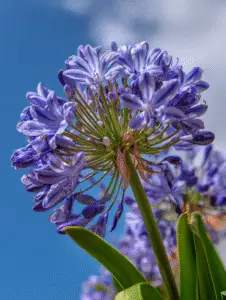
Agapanthus
umbels of blue trumpets; great in clumps for summer structure.
Bellflower – classic campanula bells in blue and violet; reliable cottage staple.
References
- NC State Extension Plant Toolbox – Salvia farinacea (mealycup sage): growth habit, bloom window, pollinator value, and hardiness notes.
- Missouri Botanical Garden Plant Finder – Salvia farinacea profile with native range, size, and key ornamental traits.
- UF/IFAS (EDIS) – Fact Sheet on Salvia farinacea ‘Rhea’ with dimensions, zones, and landscape uses; you can cite cultivar-level data when relevant.
- Lady Bird Johnson Wildflower Center – Salvia farinacea (mealy blue sage) native profile with habitat and wildlife notes.
- University of Wisconsin Extension – Mealycup sage overview with hardiness context and native distribution.
Enjoying our flower guides? Add YourFlowersGuide as a preferred source on Google. It helps more readers find us.
Add to Preferred Sources