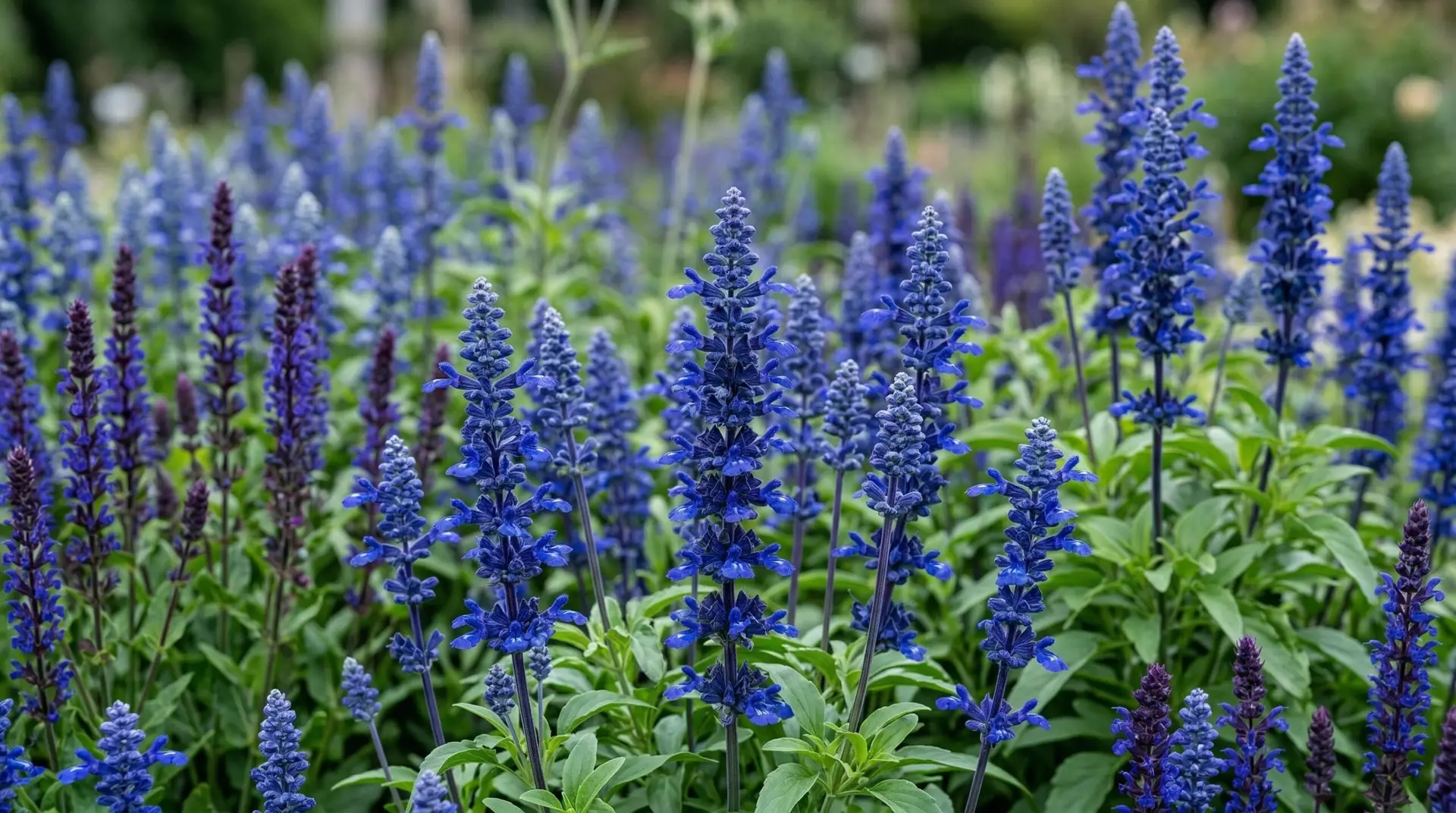
The genus Salvia contains nearly a thousand distinct species, making it one of the most confusing groups of plants for a home gardener to navigate. Walk into any nursery in May, and you will find tables crowded with blue spikes promising endless summer color. Most of those plants will bloom vigorously for three weeks before setting seed and looking completely exhausted by midsummer. To achieve true continuous color from late spring through the first frost, you must be ruthlessly selective about which blue salvia varieties you allow into your garden. A superior long blooming salvia needs to push new growth aggressively while holding its older flowers gracefully. I have evaluated dozens of popular cultivars to separate the reliable performers from those that require constant deadheading or simply stop blooming when temperatures rise. Instead of presenting an exhaustive catalog of every blue salvia available, I have curated a short list of four exceptional varieties that actually deliver on the promise of non-stop flowers.
Contents 5 sections
The standard for reliable color
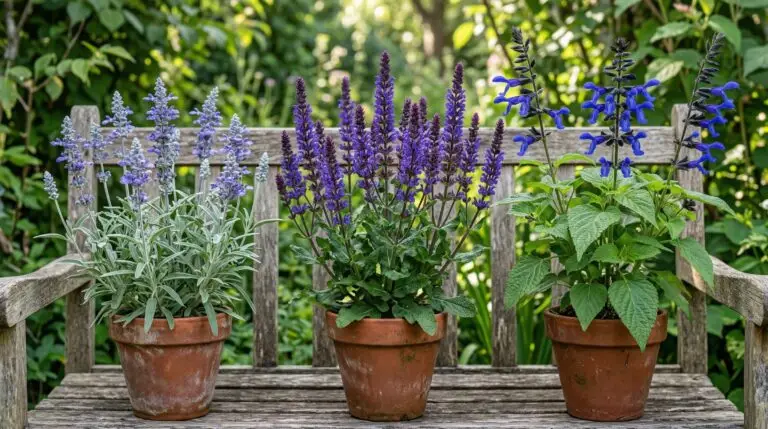
For decades, Victoria Blue has stood as the benchmark against which all other mealycup salvias are measured. This specific cultivar of Salvia farinacea earns its place in the garden through sheer dependability and a clear, piercing blue color that resists fading in intense sunlight. Growing to a tidy height of eighteen to twenty-four inches, it forms a dense mound of gray-green foliage topped with tightly packed flower spikes. The stems themselves have a slightly fuzzy, mealy texture that gives the plant its common name and helps it retain moisture during dry spells. While it is technically a tender perennial hardy only in zones eight through ten, it grows so quickly from seed or small nursery starts that most gardeners treat it as a high-performing annual. Unlike scarlet sage, which can sometimes look harsh or demanding in a mixed border, Victoria Blue provides a cooling visual anchor that pairs easily with almost any other color. I include it here not because it is the newest introduction, but because it remains one of the best salvia farinacea options for gardeners who want guaranteed results without tracking down expensive specialty plants.
A refined approach to the front border
Many guides recommend planting standard tall salvias at the edge of a bed, but in practice, they often lean or flop onto pathways after a heavy rain. If you need a plant for the front of the border or for a tight container space, Evolution is a far superior choice. This variety was bred specifically for a more compact, well-branched habit, usually topping out at just sixteen to eighteen inches tall with a very sturdy base. The color is also distinct from the typical medium blue of older varieties, offering a much deeper, richer violet-blue that reads beautifully from a distance. Because the flower spikes are shorter and more numerous, the plant maintains a highly uniform appearance throughout the entire growing season without ever looking leggy. It shares the same hardiness profile as Victoria Blue, performing as an annual in cold climates and a short-lived perennial in warm regions. Its refined structure makes it look much more deliberate in a formal garden design, providing a neat edge that requires absolutely no staking or support.
Scaling up for massive impact
When you need a plant with substantial presence to anchor a large garden space, traditional mealycup salvias can look somewhat lost among larger shrubs. This is where Mystic Spires enters the picture as a massive upgrade in both scale and flower production. A cross between two different salvia species, this hybrid grows into a robust bush reaching up to three feet tall and nearly as wide. The flower spikes are exceptionally long, often measuring twelve to fourteen inches, and they cover the plant in a dense cloud of dark blue. The true advantage of Mystic Spires is that it is entirely sterile, meaning it never wastes energy producing seed. Because it cannot reproduce, it channels all of its resources into generating new flowers continuously from late spring straight through to a hard frost, requiring absolutely no deadheading on your part. It is a highly effective substitute for catmint if you want a similar sprawling blue effect but with a much taller, more upright architectural form that will not flop open in the center.
Late season performance and dark accents
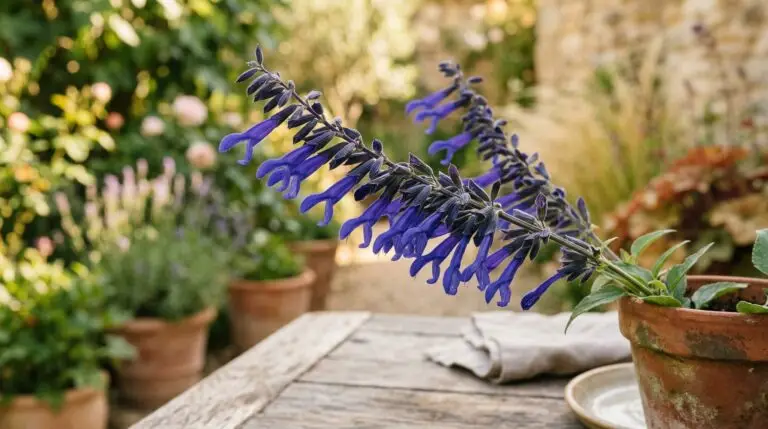
Most blue salvias rely entirely on their petals for color, meaning the show ends the moment the flowers drop. Rockin Blue Suede Shoes takes a different approach by producing bright blue flowers emerging from nearly black calyxes. Even after the individual blue petals fall away, those dark calyxes remain on the stem, extending the visual interest well into the late season. This variety grows quite large, reaching three to four feet in height, and has a more open, airy habit than the dense mealycup types. It is slightly hardier than the farinacea group, often surviving the winter reliably down to zone seven if planted in soil with excellent winter drainage. While many gardeners default to lavender for blue tones in a perennial bed, this salvia will out-bloom it by months, providing nectar for hummingbirds long after other perennials have gone dormant for the year. The contrast between the bright green foliage, the black stems, and the light blue flowers makes it a highly sophisticated addition to any mixed planting.
The definitive choice for continuous bloom
Selecting the single best option from this group requires looking strictly at the ratio of effort to reward. While Victoria Blue offers classic charm and Evolution provides excellent structure, neither can match the sheer blooming power of a sterile hybrid. Mystic Spires is my top recommendation for any gardener seeking a long blooming salvia that genuinely requires zero maintenance. The combination of its impressive three-foot stature, its deep blue color, and its biological inability to set seed makes it an unstoppable force in the summer garden. You can plant it in May, ignore it completely other than providing basic water, and watch it produce massive blue spikes until the freezing weather finally takes it down. For pure, uninterrupted performance and architectural presence, it stands entirely in a class of its own.
More About Blue Salvia
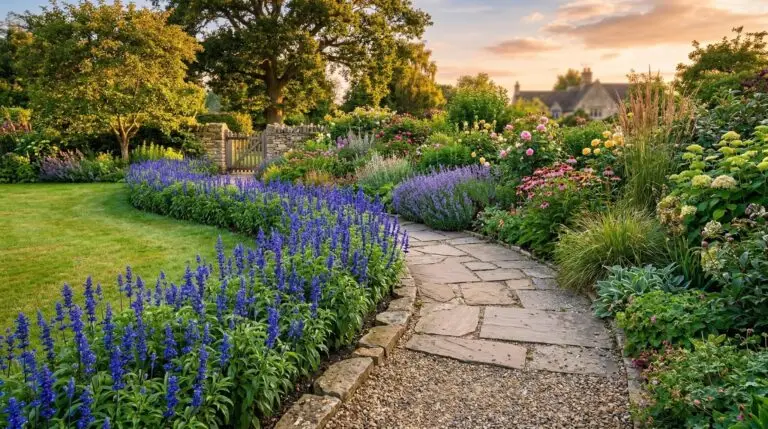
Growing blue salvia as a fragrant edging plant along walkways and garden paths
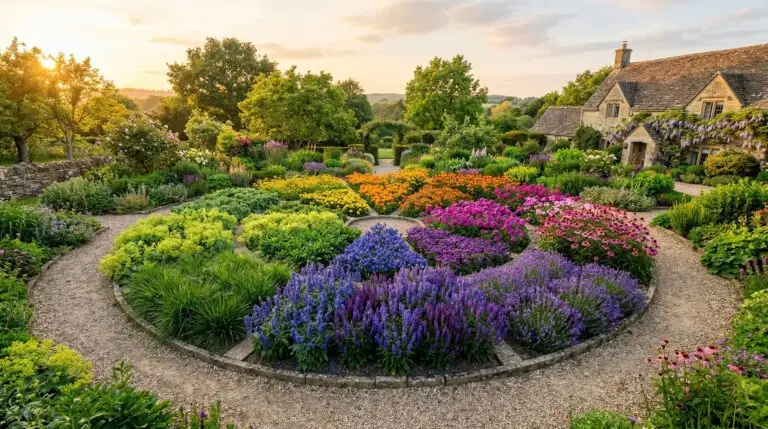
Blue salvia and yellow marigold together for a classic complementary color garden
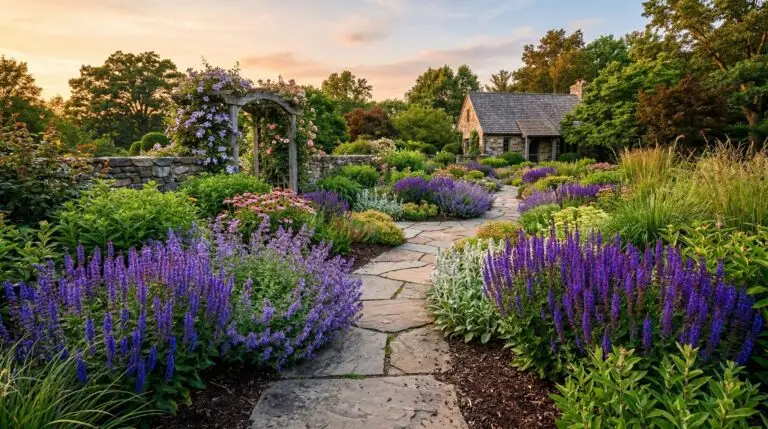
How to overwinter blue salvia in cold climates and bring it back stronger
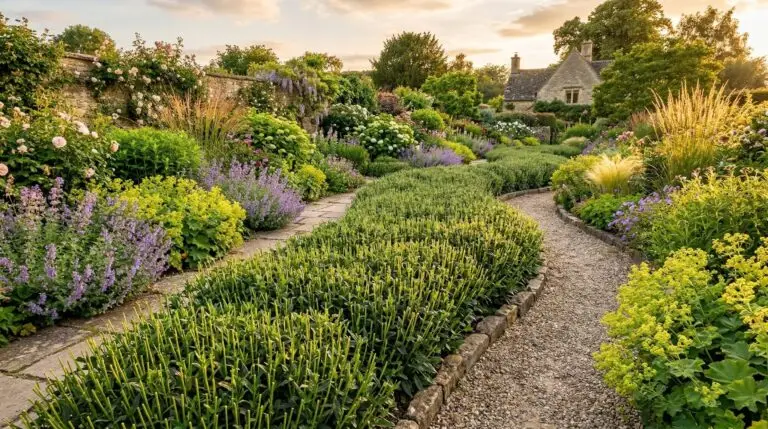
How to prune and deadhead blue salvia for a second and third flush of blooms
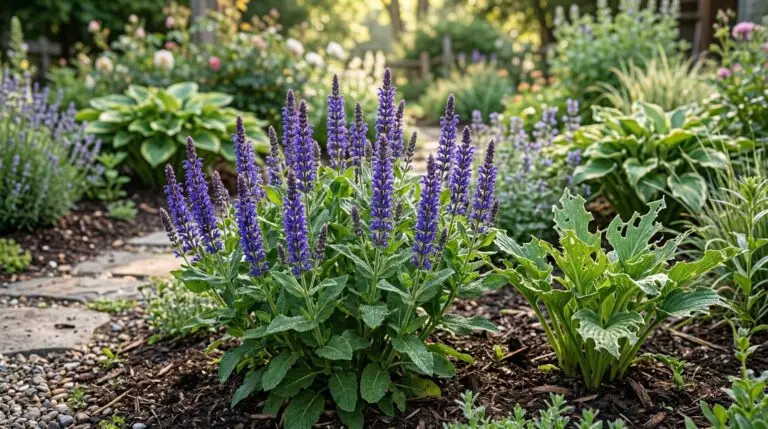
Blue salvia as a deer-resistant flower for gardens where deer are a constant problem
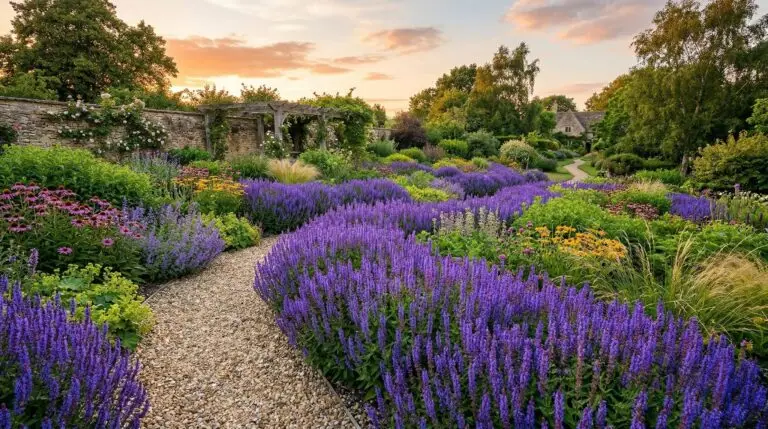
Blue salvia in mass plantings for dramatic sweeps of color in large gardens
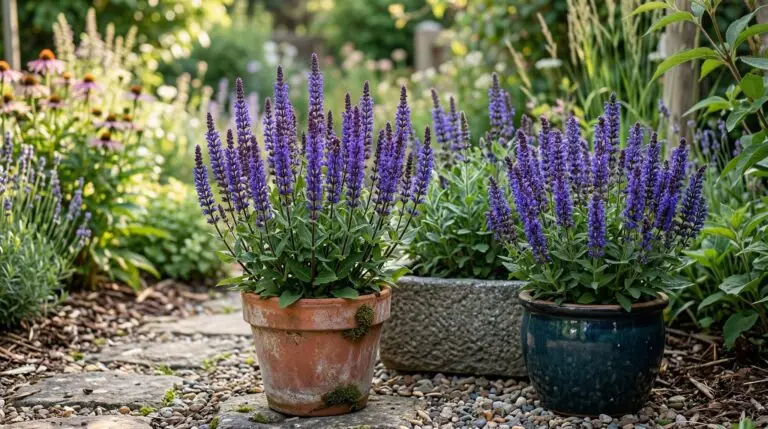
How to grow blue salvia in containers for a burst of color on sunny patios
Perennial salvia versus annual salvia and how to choose the right one
Blue salvia as the ultimate hummingbird and butterfly magnet for your garden
Enjoying our flower guides? Add YourFlowersGuide as a preferred source on Google. It helps more readers find us.
Add to Preferred Sources