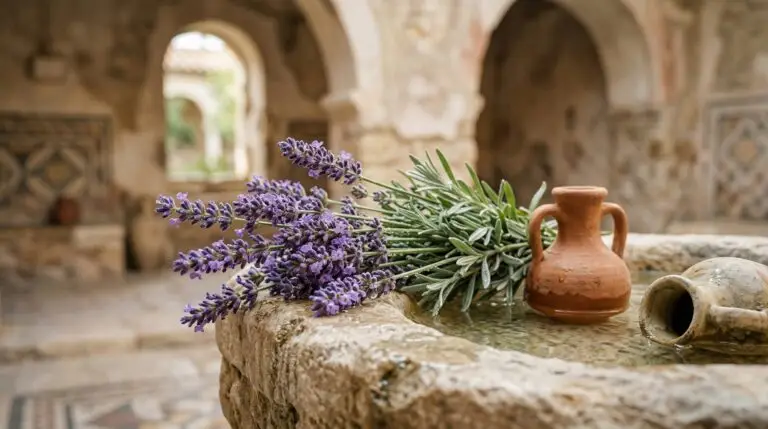
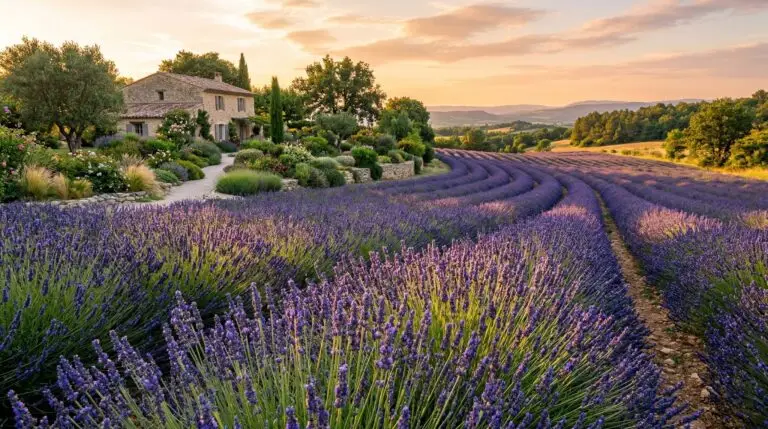
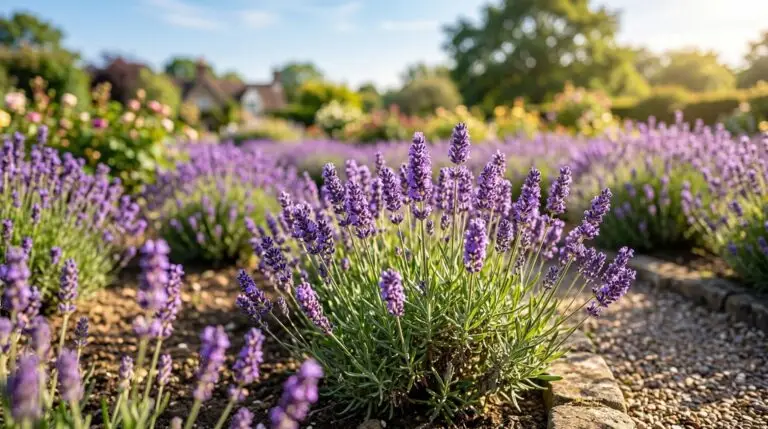
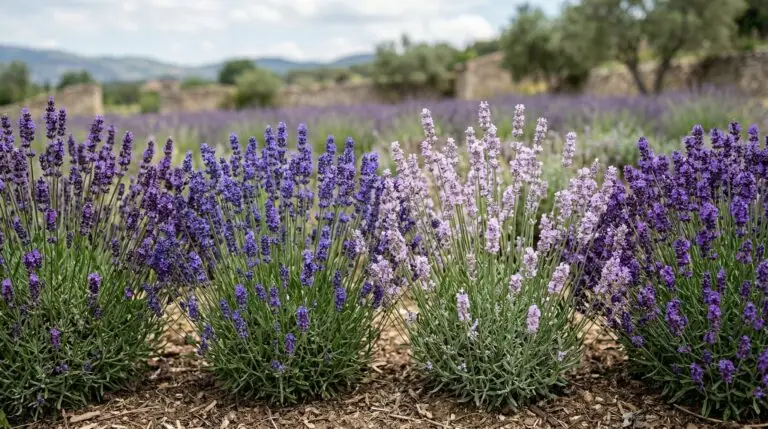
Lavender bloom time across the US
Interactive map
 See the interactive map
Drag the date and the bloom moves north across the country. Every point has its own window, and the map says where it has no records rather than guessing. Free, with nothing to sign up for. Open the lavender map.
City by city
Typical window, earliest first. Cultivars of the same flower can open days or weeks apart.
Taxonomy and origin
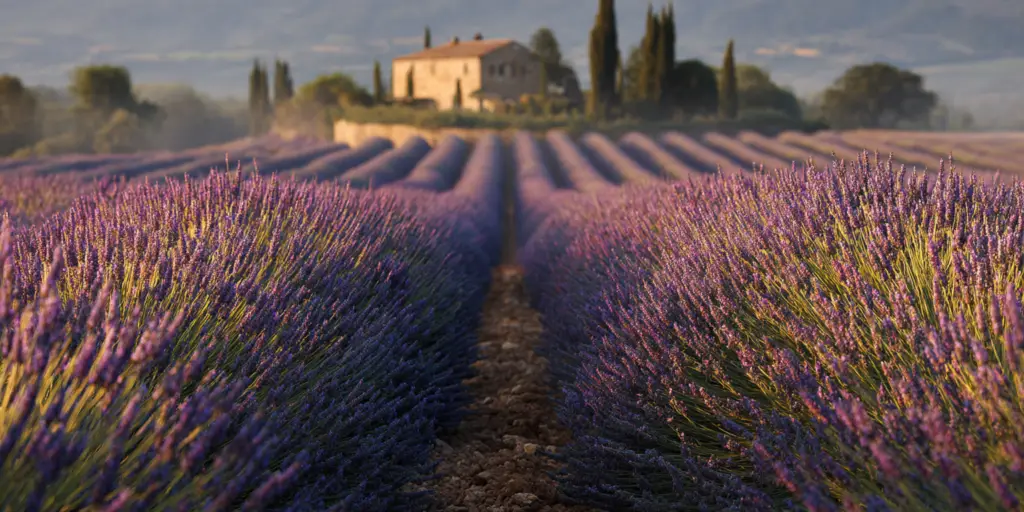
Lavender belongs to the genus Lavandula in the mint family, Lamiaceae, with the family's square stems and oil glands on every leaf and flower. Roughly 45 species of shrubs and subshrubs make up the genus, native from the Mediterranean basin across North Africa and into western Asia and India. The wild plants grow on dry, rocky, often limestone slopes in full sun, and every care instruction that follows is written in that origin: sharp drainage, lean soil, no crowding, no constant moisture. The name is usually traced to the Latin lavare, to wash, from Roman use of the flowers to scent baths and laundry, and Roman traders carried the plant north to Britain, where it settled into monastery physic gardens and later into the cottage-garden hedge. The purple fields of Provence that stand for lavender in photographs are mostly not English lavender at all but lavandin, a bigger hybrid grown for oil.
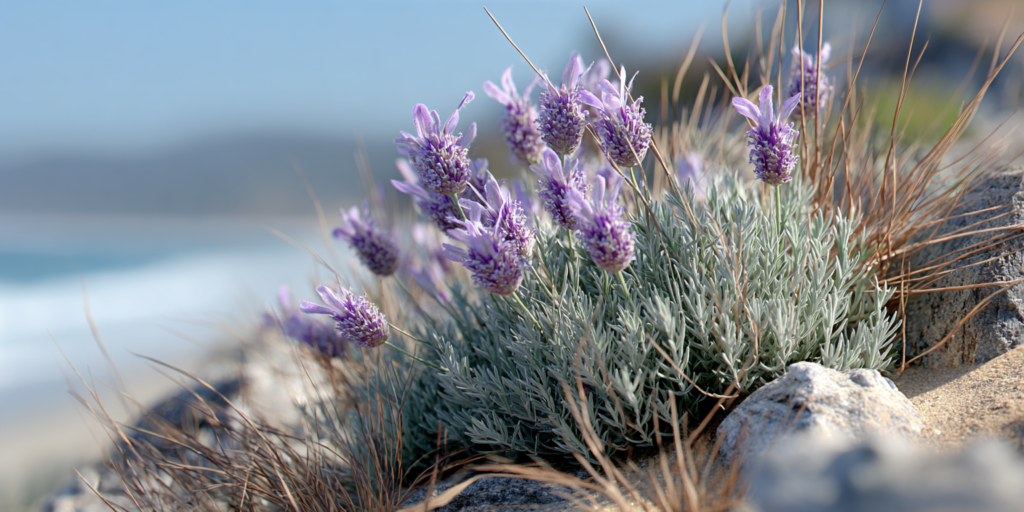
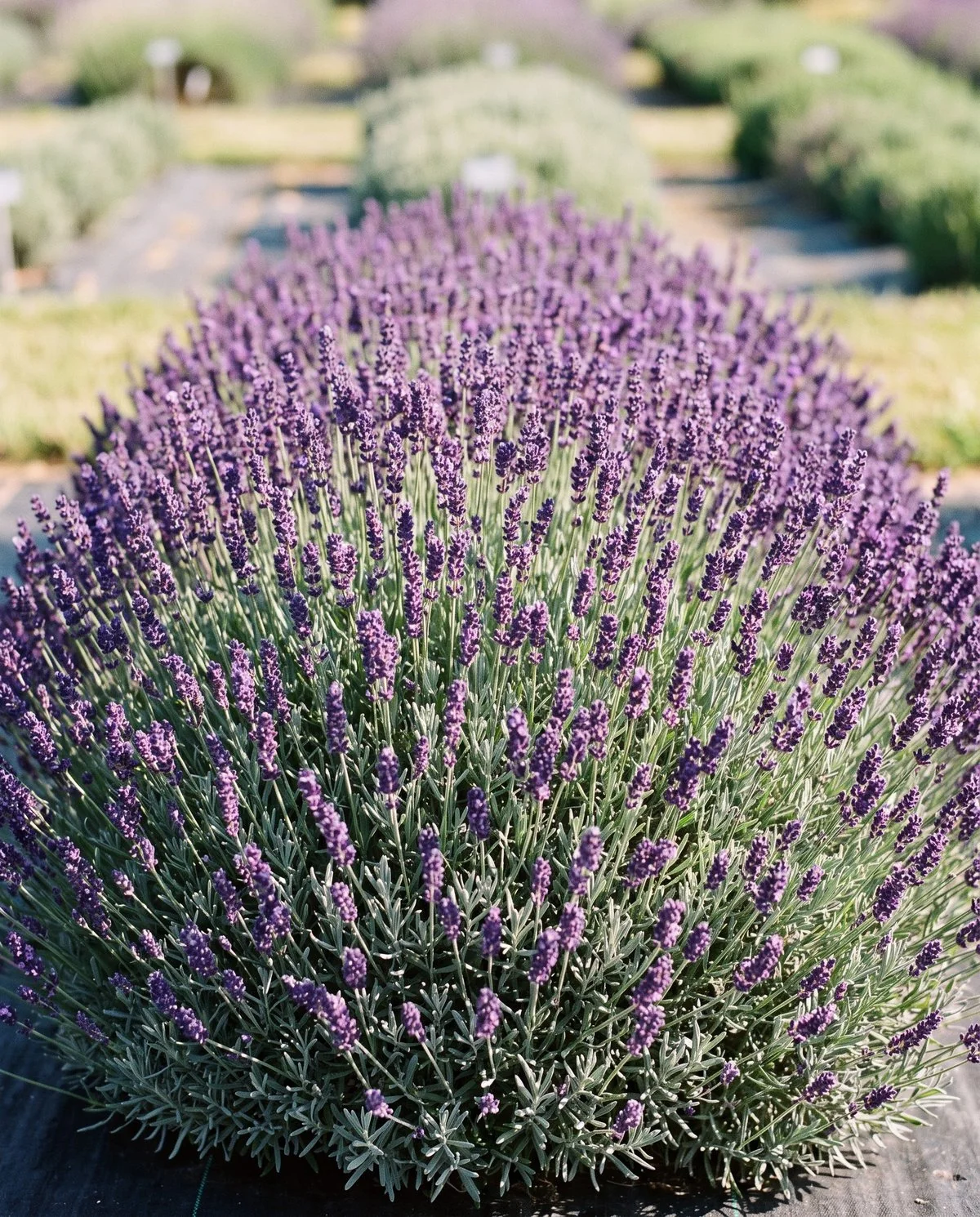
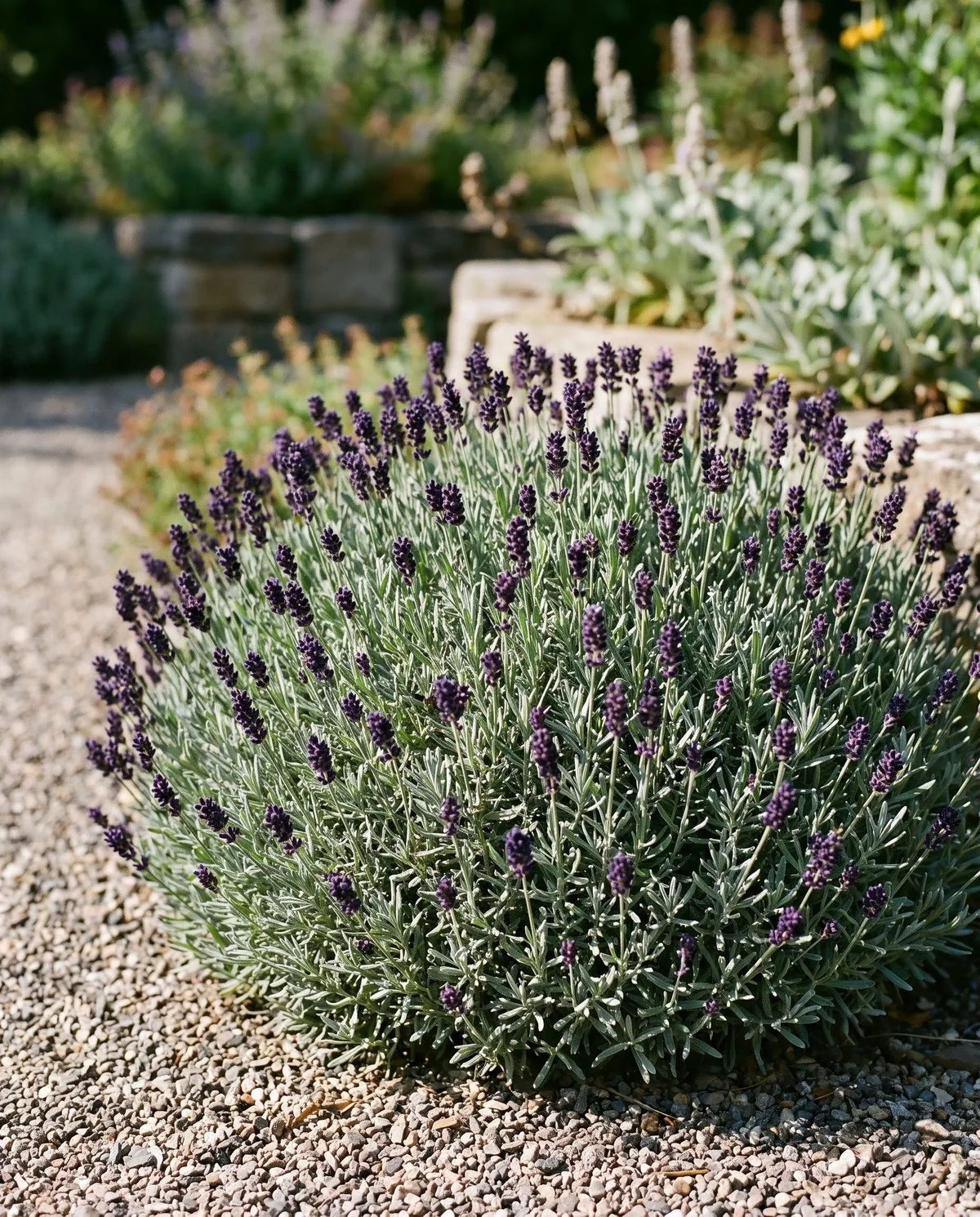
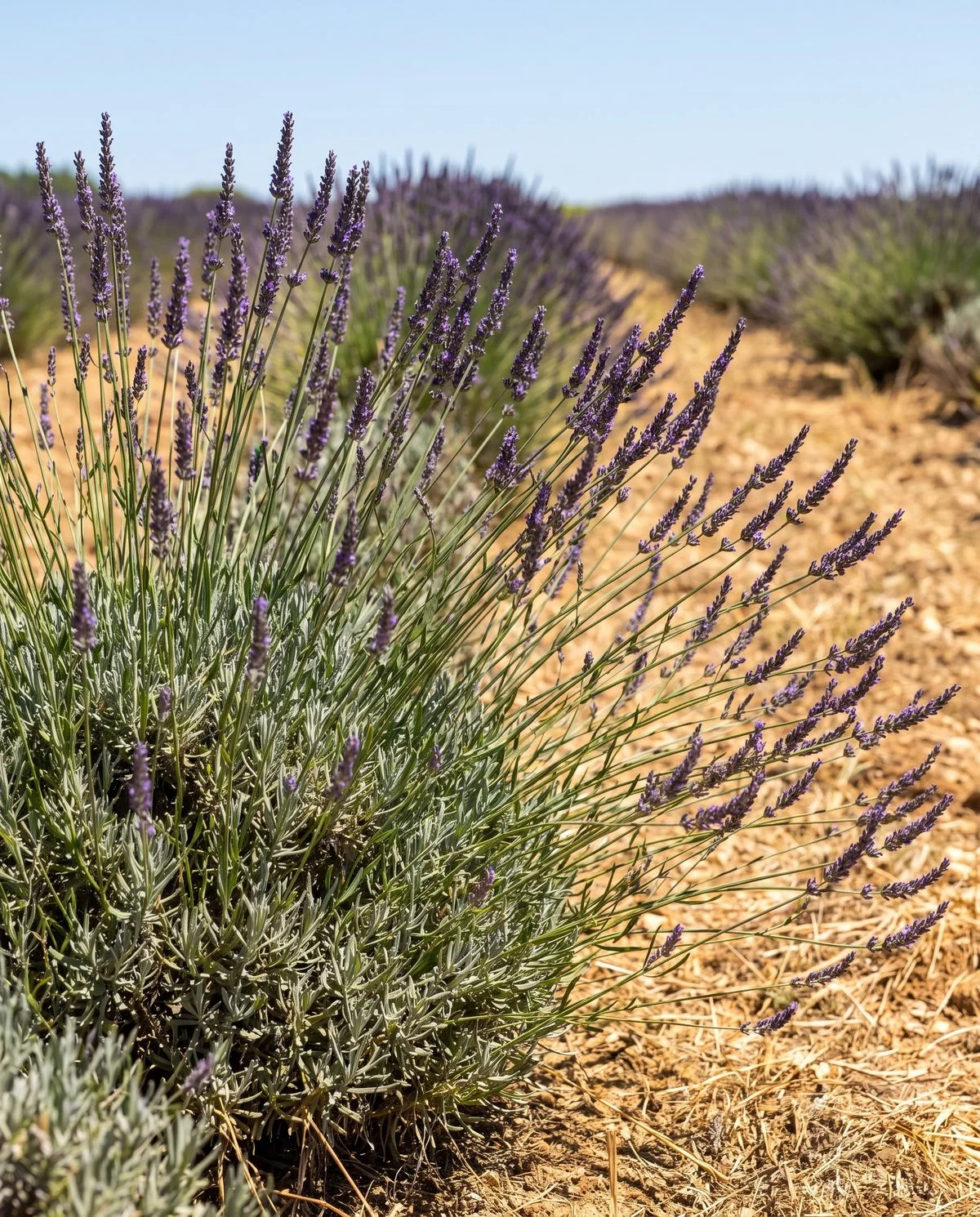
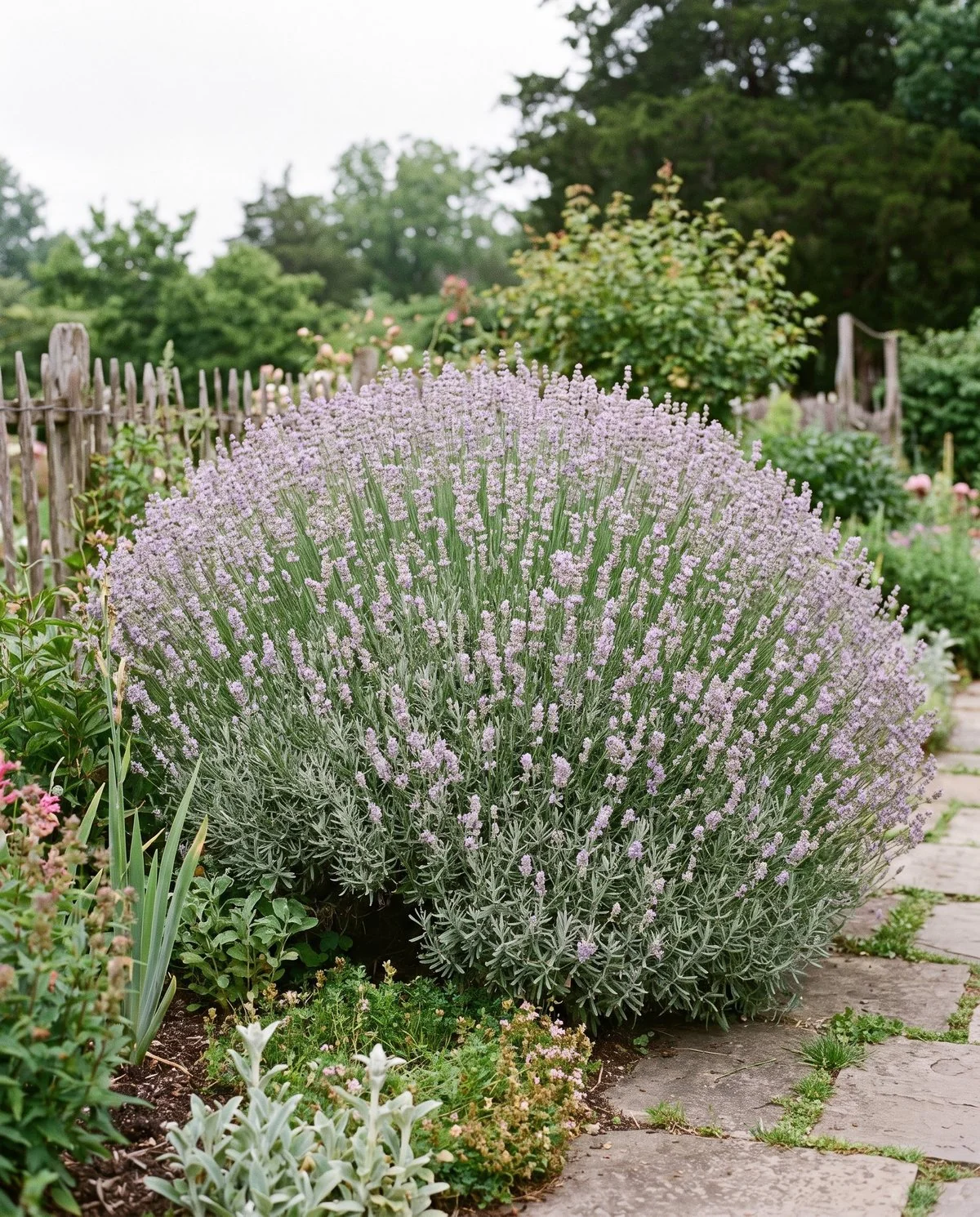
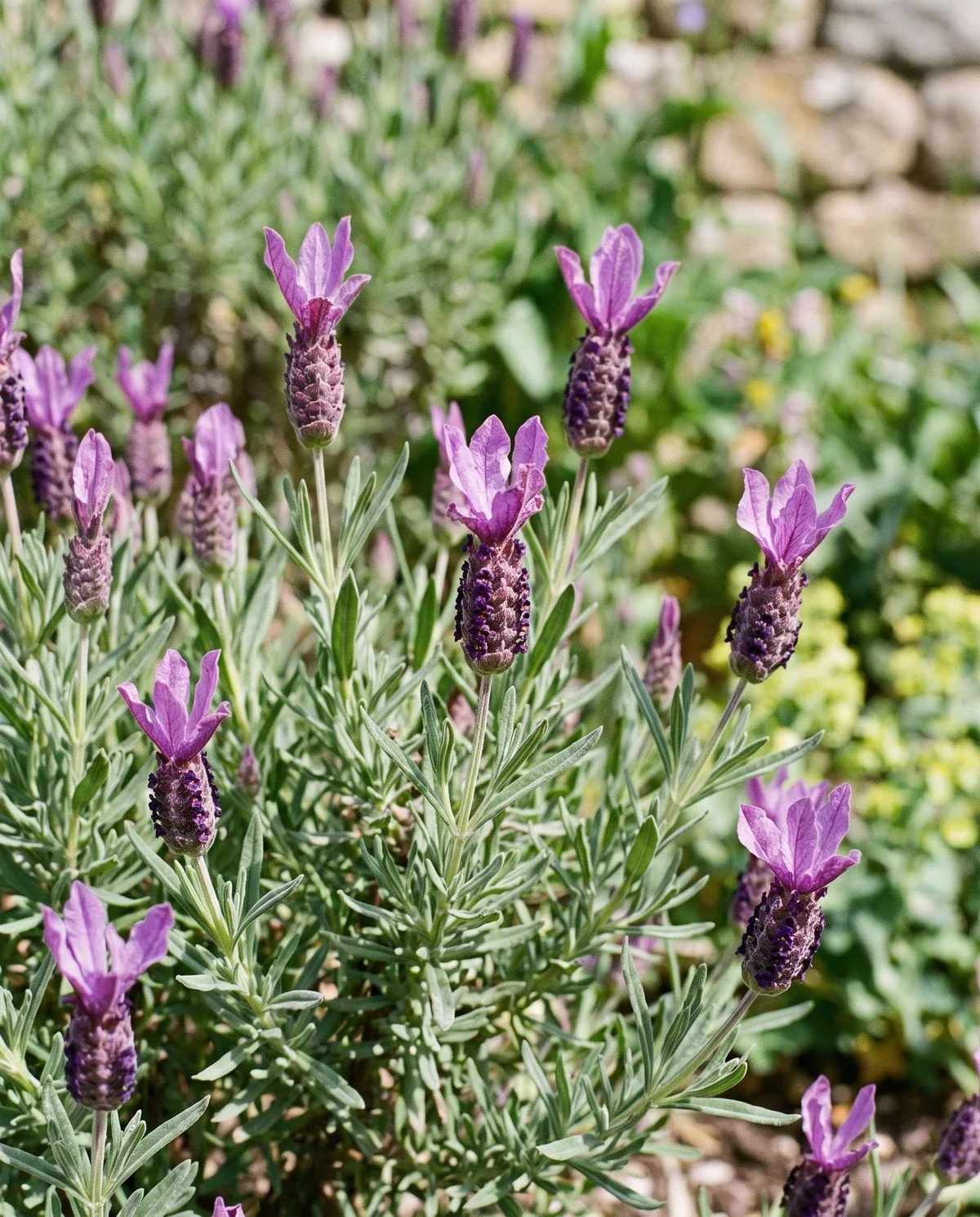
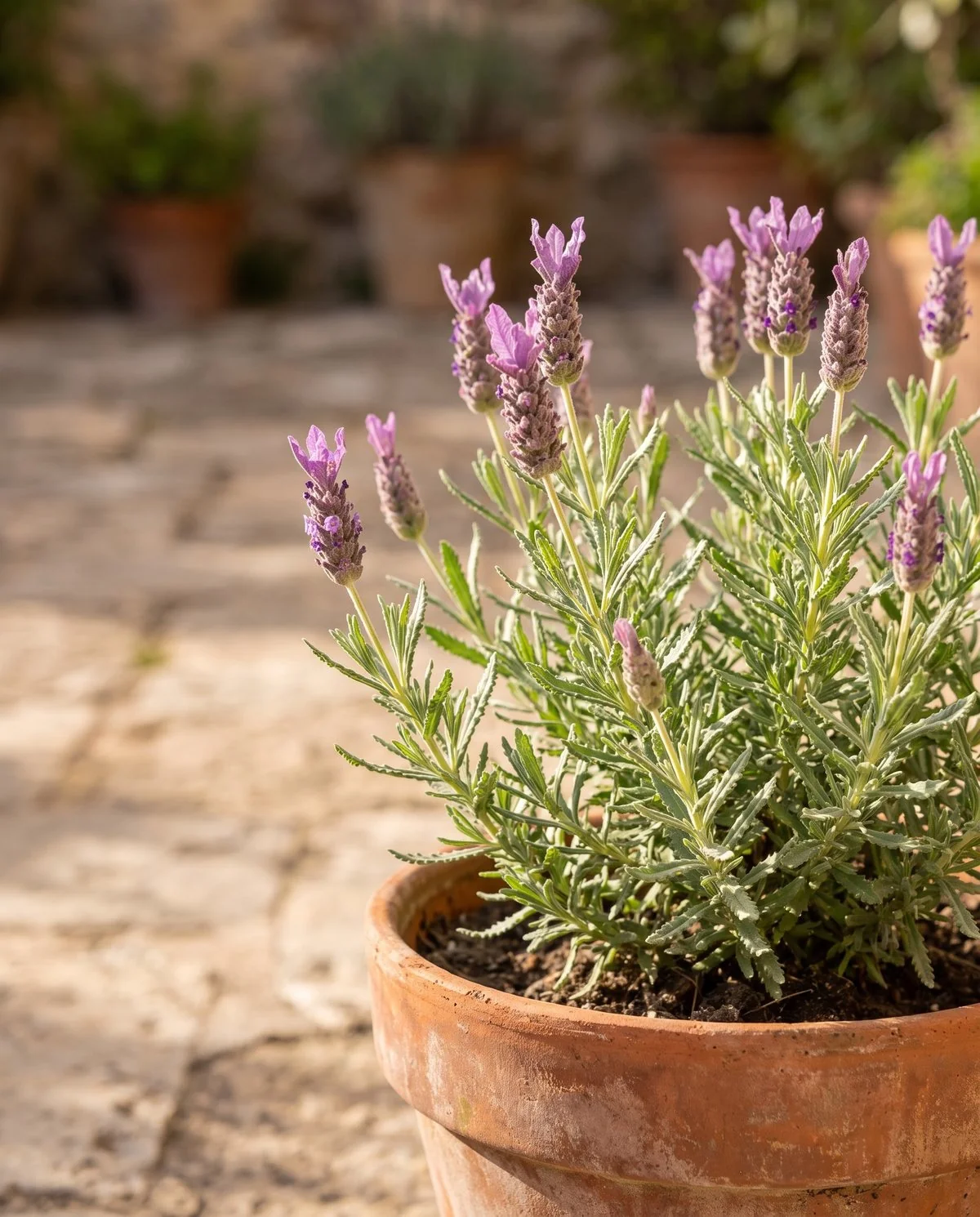
Choosing the right group matters more than any care tip, because hardiness, bloom season, and scent all follow from it, and the line that matters most runs between the two groups that survive a cold winter and the two that do not. English lavender, Lavandula angustifolia, is the cold-hardy standard, dependable in zones 5 through 9, flowering late spring into early summer, and carrying the sweetest oil in the genus with the least camphor in it, which makes it the only group worth planting for culinary buds and the one that clips into a low edging. Lavandin, Lavandula x intermedia, matches it for cold at zones 5 through 9 but blooms later, from mid into late summer, on a bigger plant whose long wands and stronger, more camphorous oil put it behind large hedges, commercial oil production, and almost every bundle cut for drying. Spanish lavender, Lavandula stoechas, and French lavender, Lavandula dentata, sit on the other side of that line, reliable only in zones 8 and 9. Spanish opens earliest, in mid spring, then repeats in waves, smells piney and camphorous, and tolerates humid summers better than the rest, which wins it the mild-winter South and a permanent place in pots. French lavender flowers over a long season wherever frost stays away, with a lighter, almost rosemary-like scent, and it is a container plant anywhere colder than a frost-free garden.
A fifth group is seldom sold as a garden plant but explains the rest. Spike lavender, Lavandula latifolia, is hardy in zones 6 through 9 and blooms mid to late summer with the sharpest, most camphorous oil of any lavender, grown for that oil and, crossed with English lavender, standing as the parent that gives lavandin its size and yield. From there the choice is regional. Cold-climate gardeners should start with English cultivars such as 'Hidcote' and 'Munstead', or with the lavandin 'Phenomenal', rated among the most cold- and humidity-tolerant selections and grown into zone 4 with winter protection. Gardeners in the mild-winter South and West can grow any of them and often do best with Spanish lavender, which blooms earliest and repeats. The full variety guide from Hidcote to Provence compares named cultivars in depth.
Cultivars with trial numbers behind them
Three real trials sit behind this grid: Chicago Botanic Garden's seven-year evaluation of 40 cultivars in zone 5b, which included the January 2014 low of minus 16 F that left 86 percent of the taxa with moderate to severe crown injury and still killed only 2 of the 40 outright; New Mexico State University's 2003 to 2005 randomized trial at 5,724 ft, which measured first-season survival, three-year dry-weight yield and camphor content; and a SARE-funded organic variety trial of 13 cultivars in eastern New York. Nobody selling lavender plants publishes these numbers.
Read the yield and camphor columns together and the NMSU trial becomes the most useful table in the genus: one trial, one site, the same years, tying a cultivar name to a hard production number and a hard chemistry number at once. No single trial covers hardiness, yield and fragrance chemistry for every cultivar, so this grid is stitched from three of them, cell by cell.
Bloom time
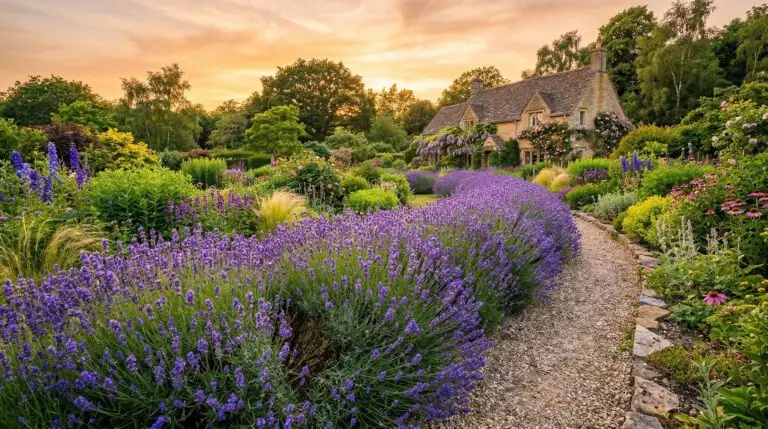
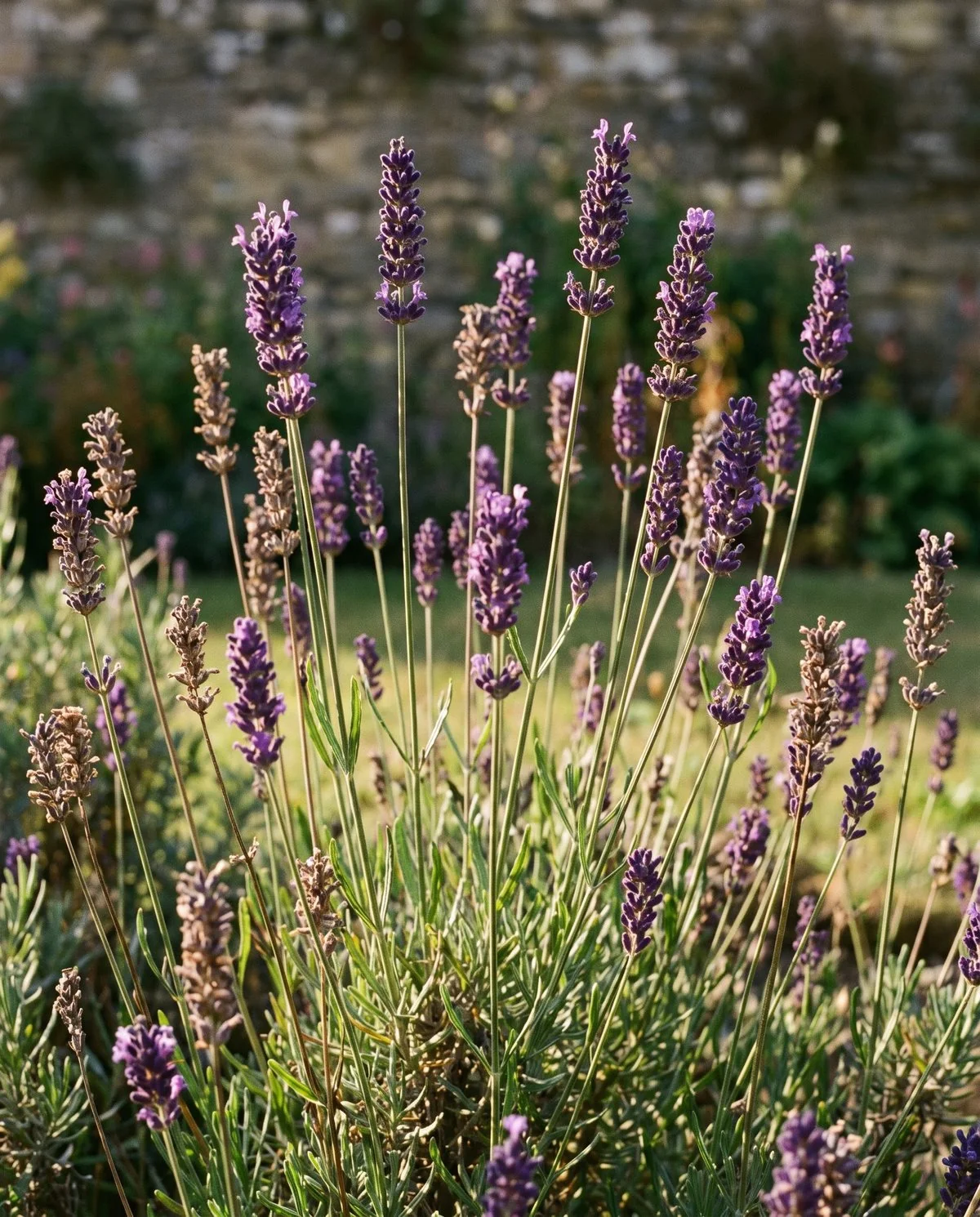
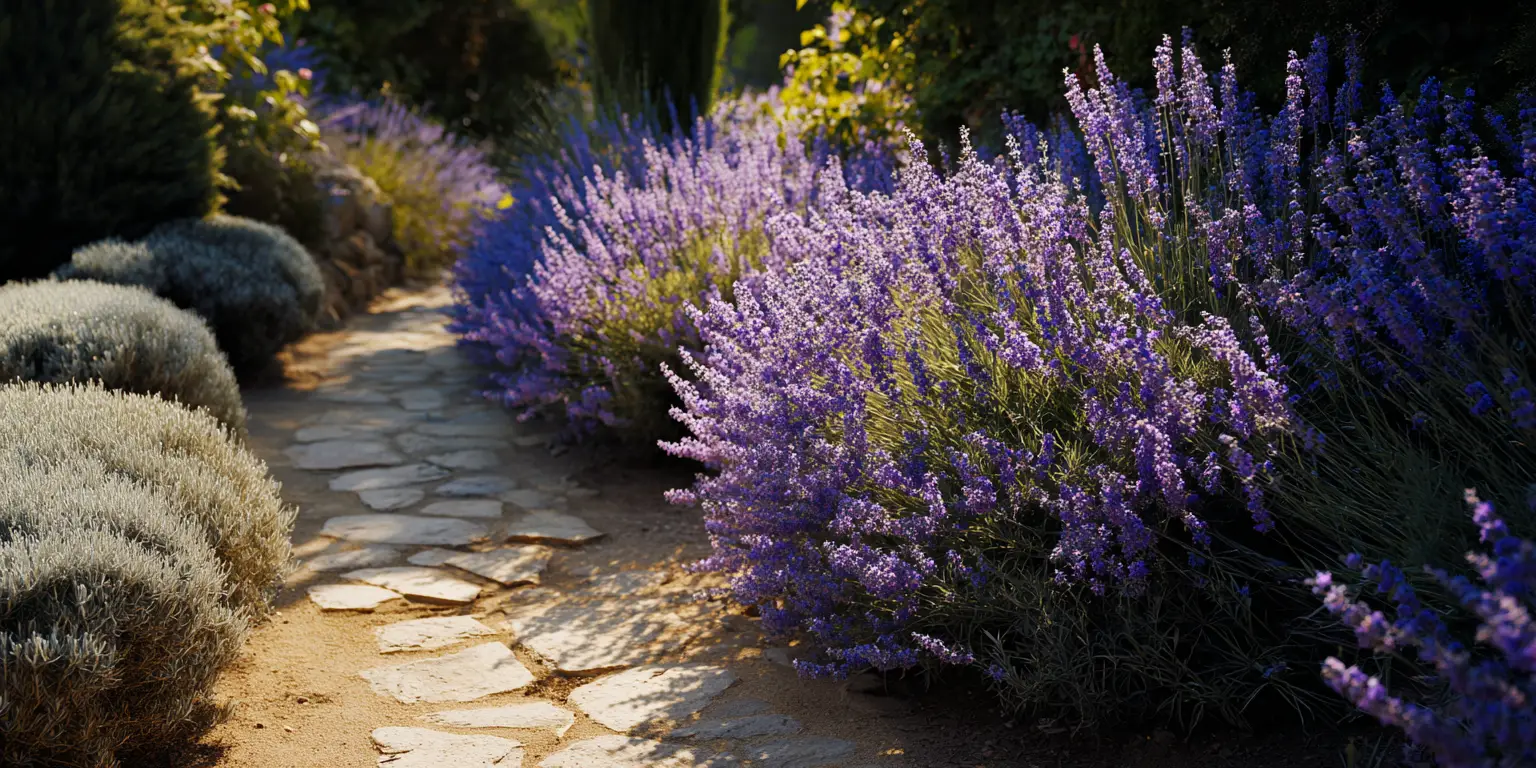
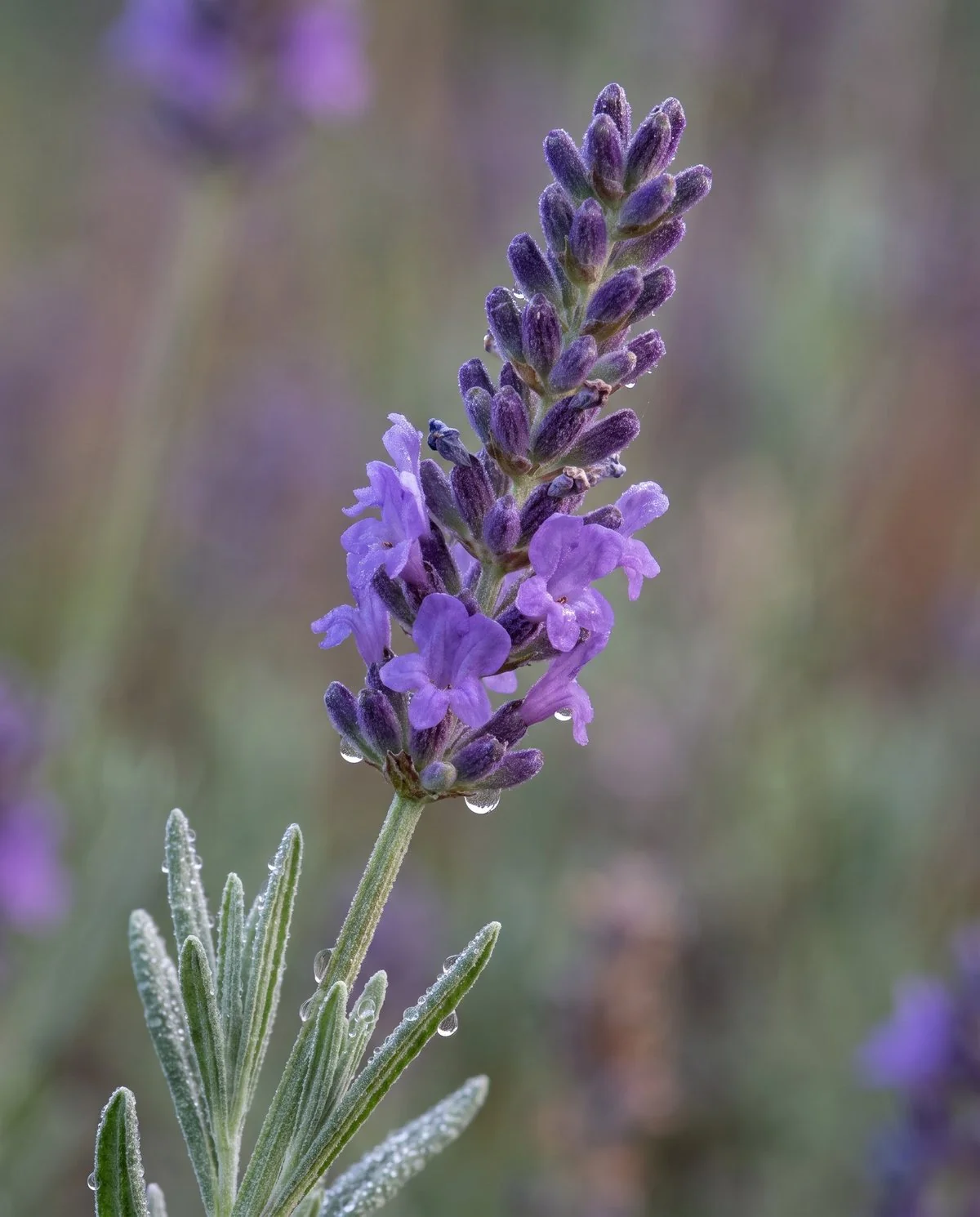
The groups bloom in sequence rather than together. Spanish lavender opens first, in mid spring in mild climates, carrying plump cone-shaped heads topped with the upright bracts that read as rabbit ears, and it often repeats in waves into fall where winters are soft. English lavender follows in late spring to early summer, usually around June, holding its slender spikes for three to four weeks. The lavandins finish the relay from midsummer into August with the longest wands and the heaviest oil scent. Shearing spent spikes off an English lavender after the first flush often draws a second, lighter bloom in late summer, and it keeps the plant compact at the same time. A planting that mixes all three groups, where the zone allows it, holds purple from mid spring to early fall, and the bee-covered spikes make lavender a mainstay of pollinator borders.
Three years to full size, and what comes after
Year one is an establishment year and not a performance year, which is where most of the trouble in the forum sample happens: Illinois Extension asks for regular watering right through it, and Utah State's fact sheet has first-year plants clipped to encourage lateral shoot development rather than pushed for bloom. Utah State also puts a number on the wait that most sources leave vague, giving time to full size as three years, and the Chicago Botanic Garden trial shows what full size means in absolute terms and how much of it arrives later than that: 'Imperial Gem' reached 45 inches wide only after six years, and 'Munstead' spread to 56 inches over a similar span, so a cultivar that looks settled at year three is often still filling out at year six. At the far end, Utah State gives English lavender 10 to 15 years with proper care, while grower-tier consensus narrows the realistic home-garden window to well-sited plants rarely thriving beyond 8 to 10 years, with the Spanish and French types shorter-lived again at a commonly cited 5 to 7. Those last figures are not university-sourced and are worth reading as a rhythm rather than a lifespan: the number is the reason cuttings get taken in a plant's later years rather than after it splays open.
Height and spread
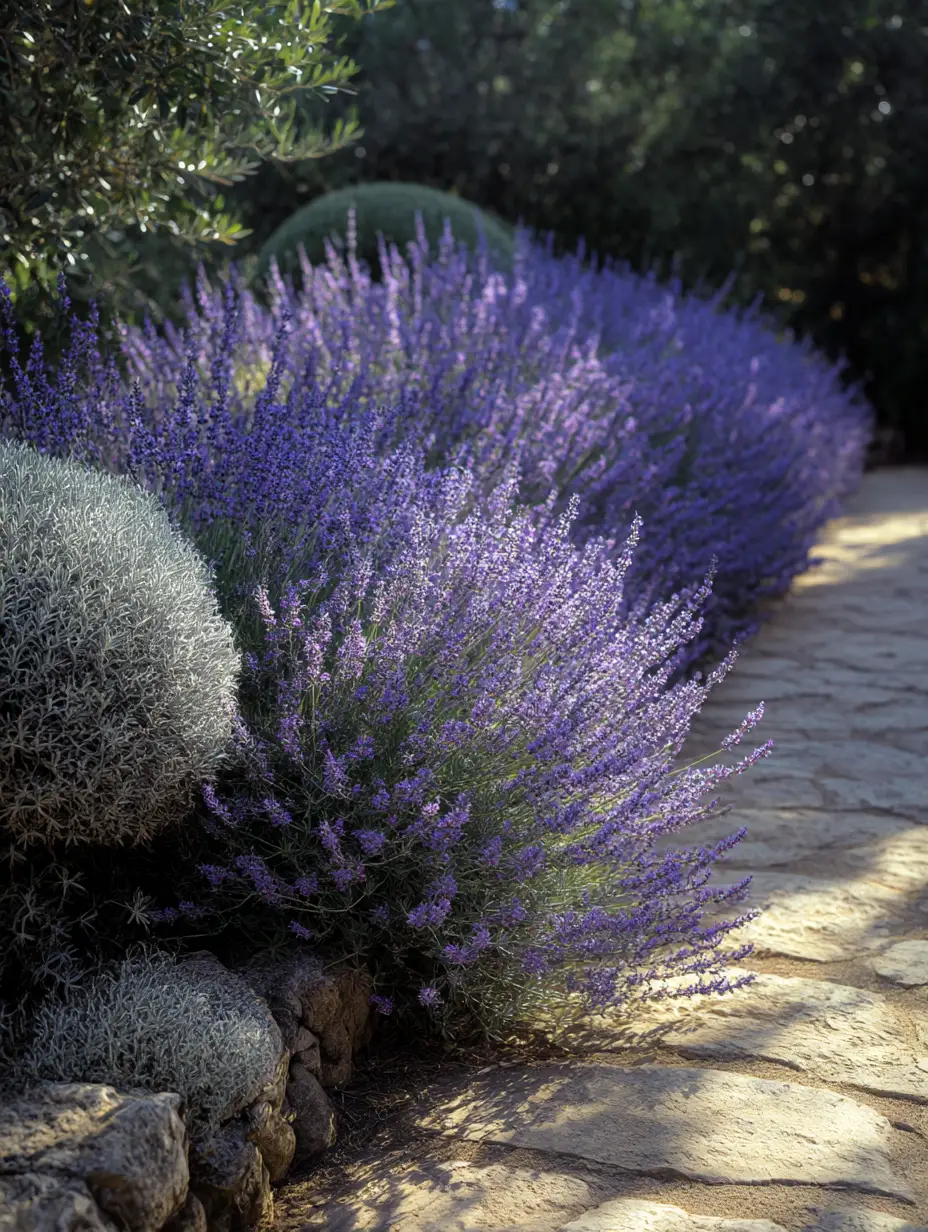
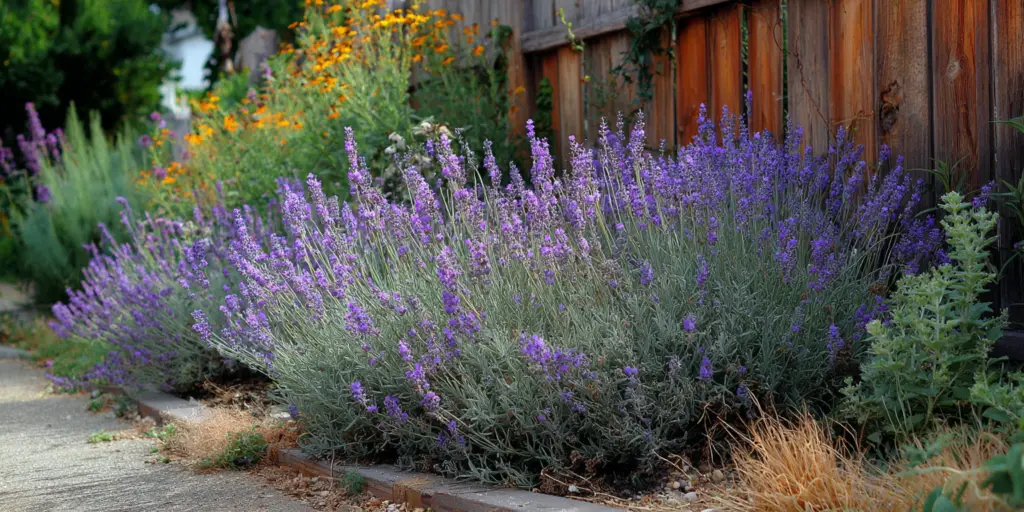
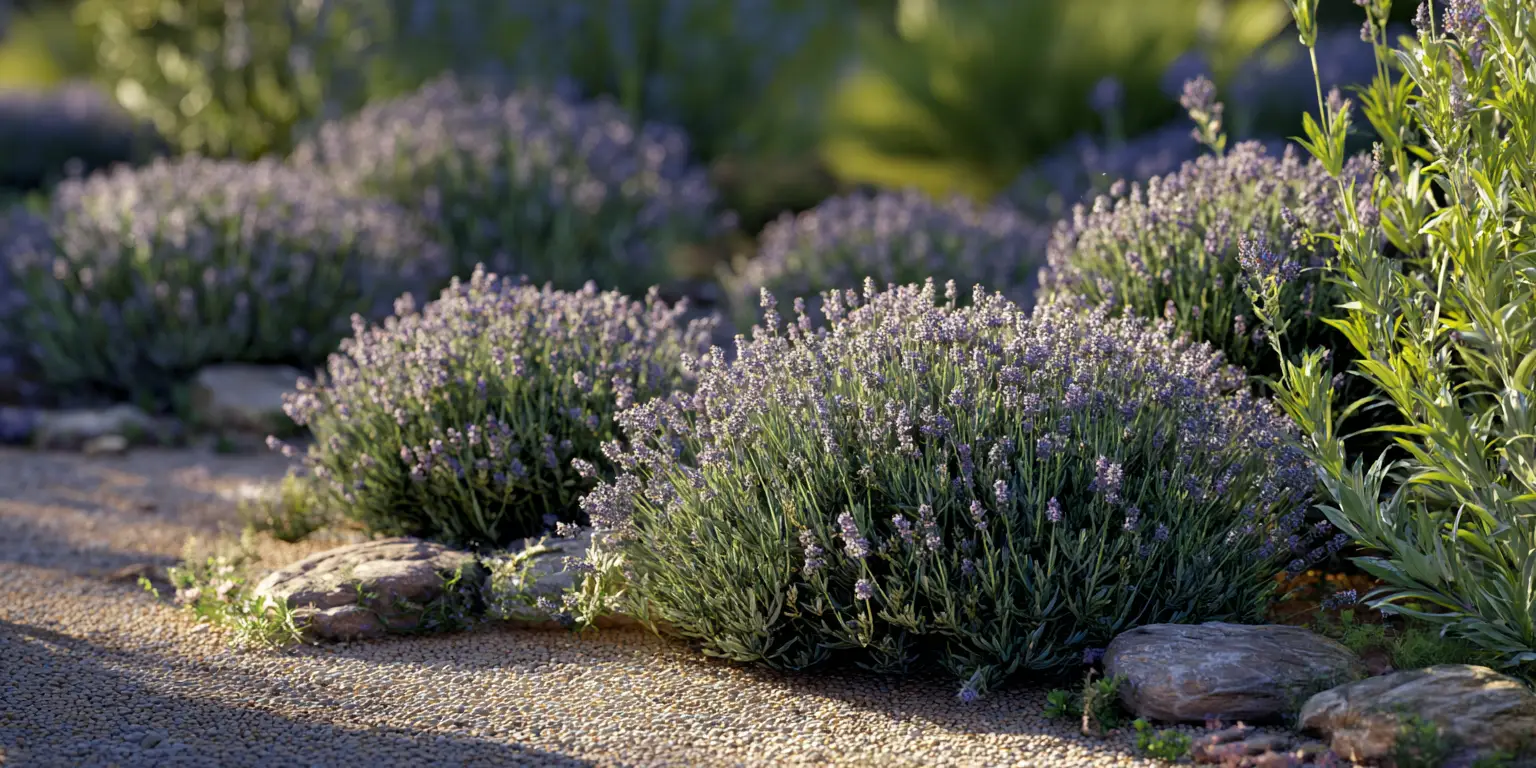
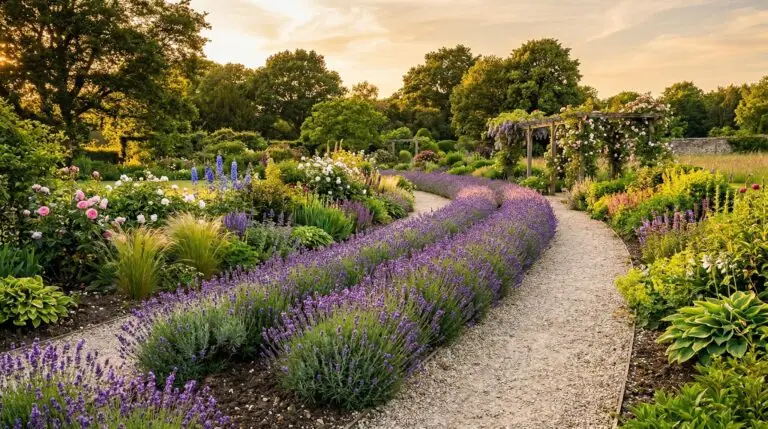
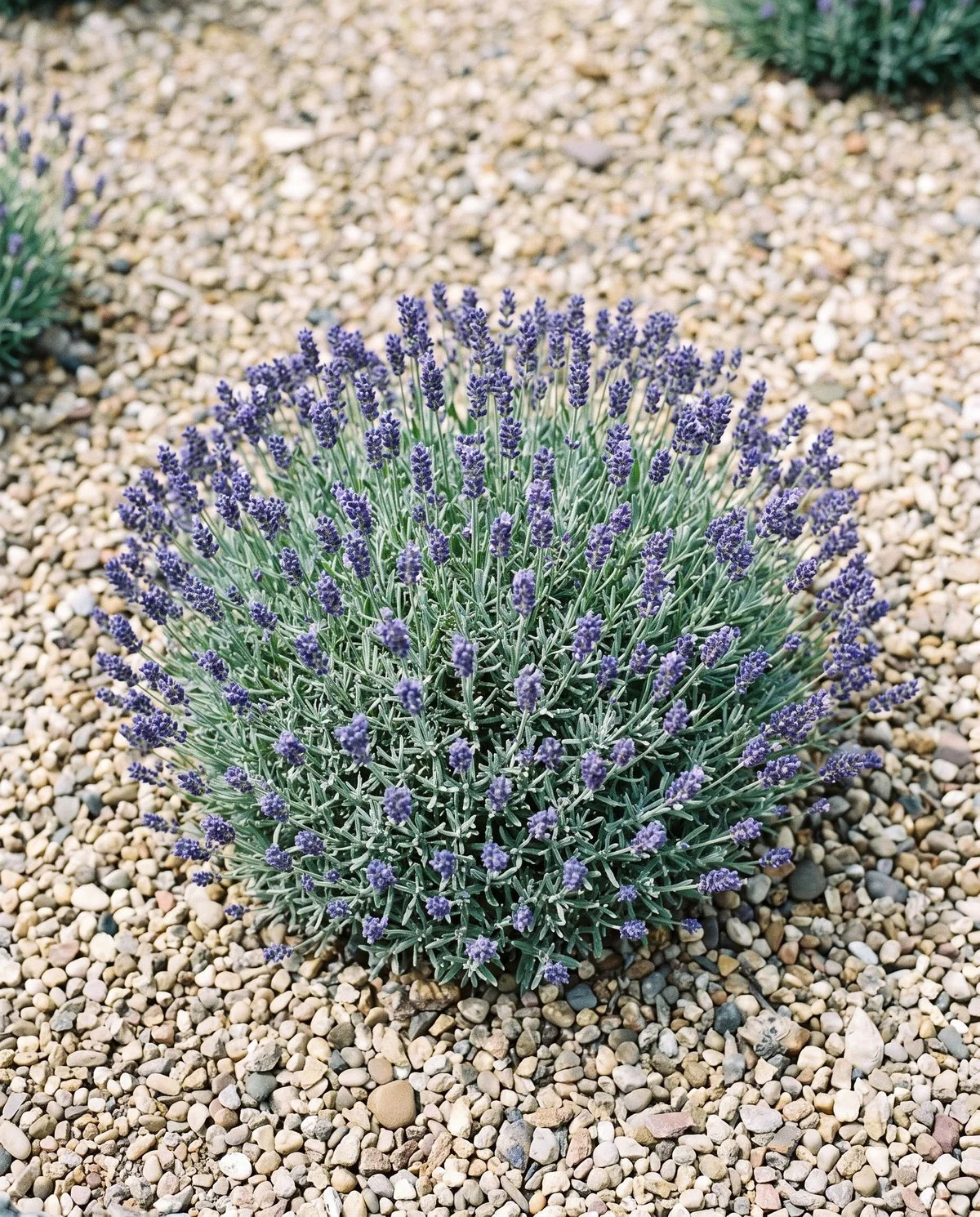
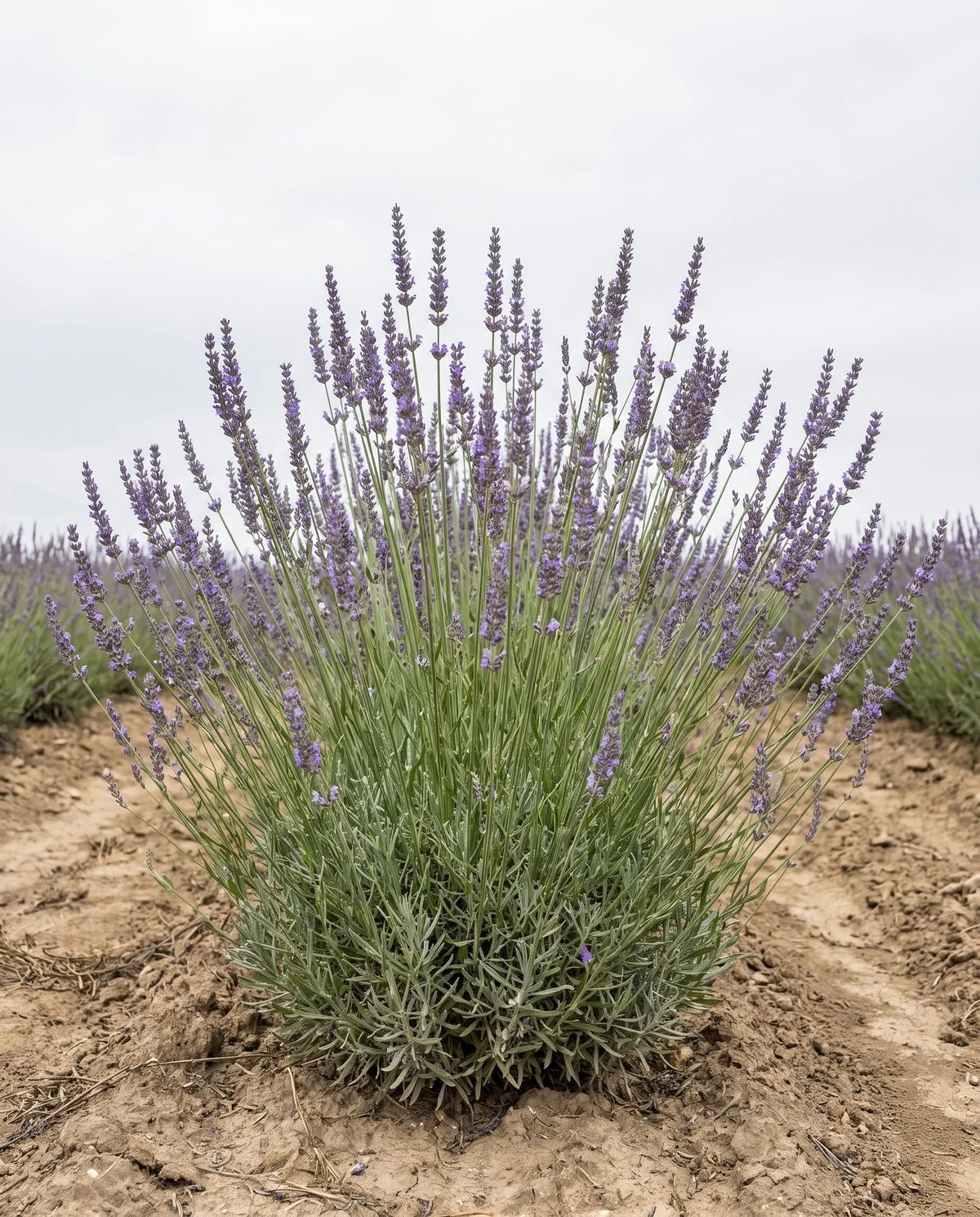
Most lavenders form a rounded mound 1 to 3 feet tall and about as wide, with the flower stems standing above the foliage. Dwarf English cultivars such as 'Munstead' stay near 12 to 18 inches, 'Hidcote' holds a tidy 18 to 24 inches, and the lavandins run largest, with 'Grosso' and 'Provence' building 2 to 3 foot shrubs whose flower wands push wider still. The frame beneath the softness is woody: old plants carry thick gray trunks at the base with slender flowering shoots above, which is why annual pruning, covered below, decides how long the plant stays dense. Space plants at their mature width so air moves between them, and close the gap to roughly 12 to 18 inches only when planting a solid low hedge of the compact English types.
Light
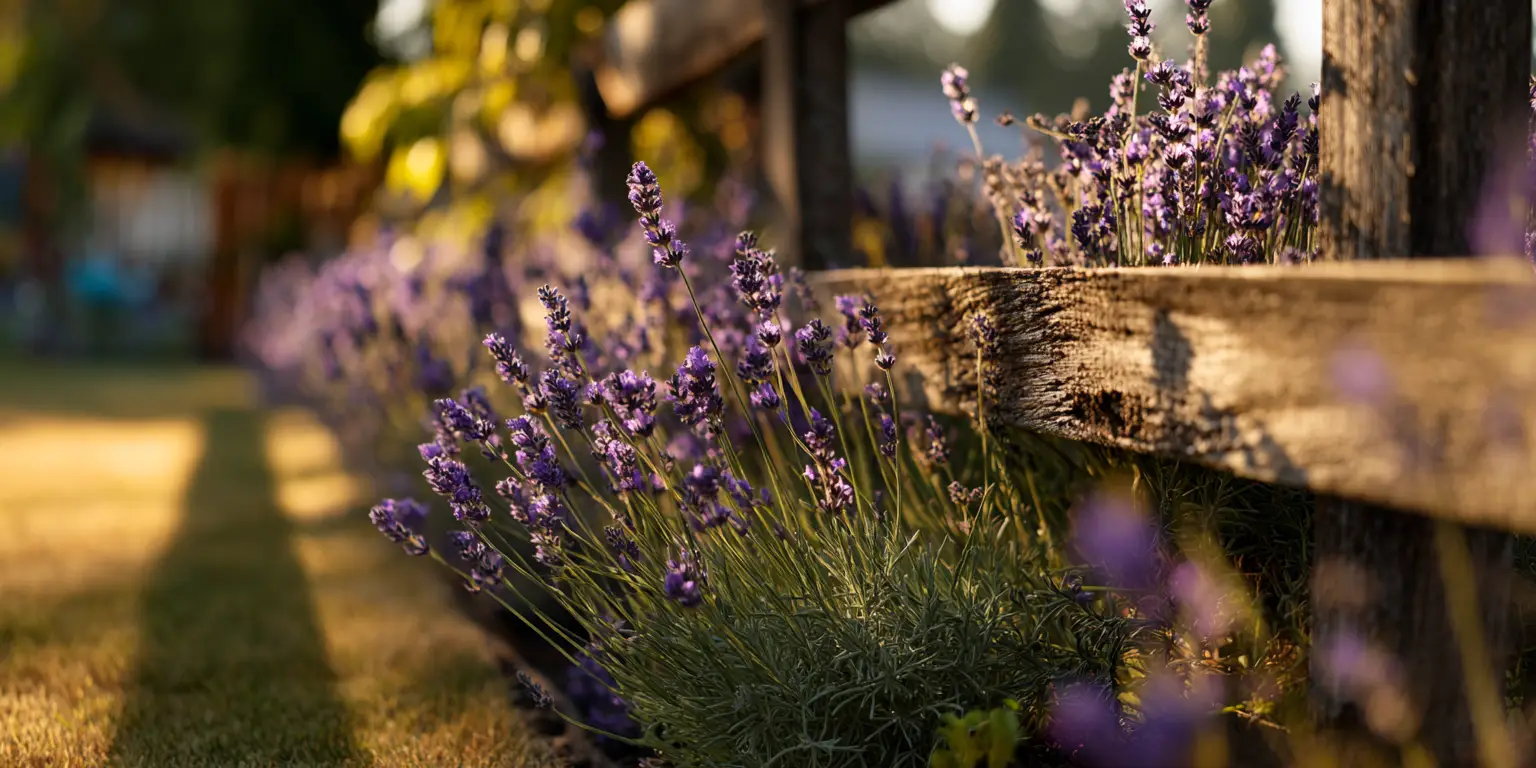
Lavender needs full sun, at least 6 to 8 hours of direct light a day, and takes as much more as the site can give. Sun drives oil production, bloom count, and the tight silver mound; shade produces a sparse, leaning plant with few spikes and soft growth that stays damp and sickens. Morning sun matters most because it dries dew off the foliage early, the same disease logic that governs watering. Reflected heat is welcome rather than a threat: a spot beside a south-facing wall, a stone path, or a gravel bed recreates the baked hillside the genus evolved on. Only in the hottest desert climates is a little afternoon shade worth trading for, and even there the plant wants sun through the morning. A lavender that quietly stops blooming in an older garden has usually been shaded out by shrubs and trees that grew up around it.
Water
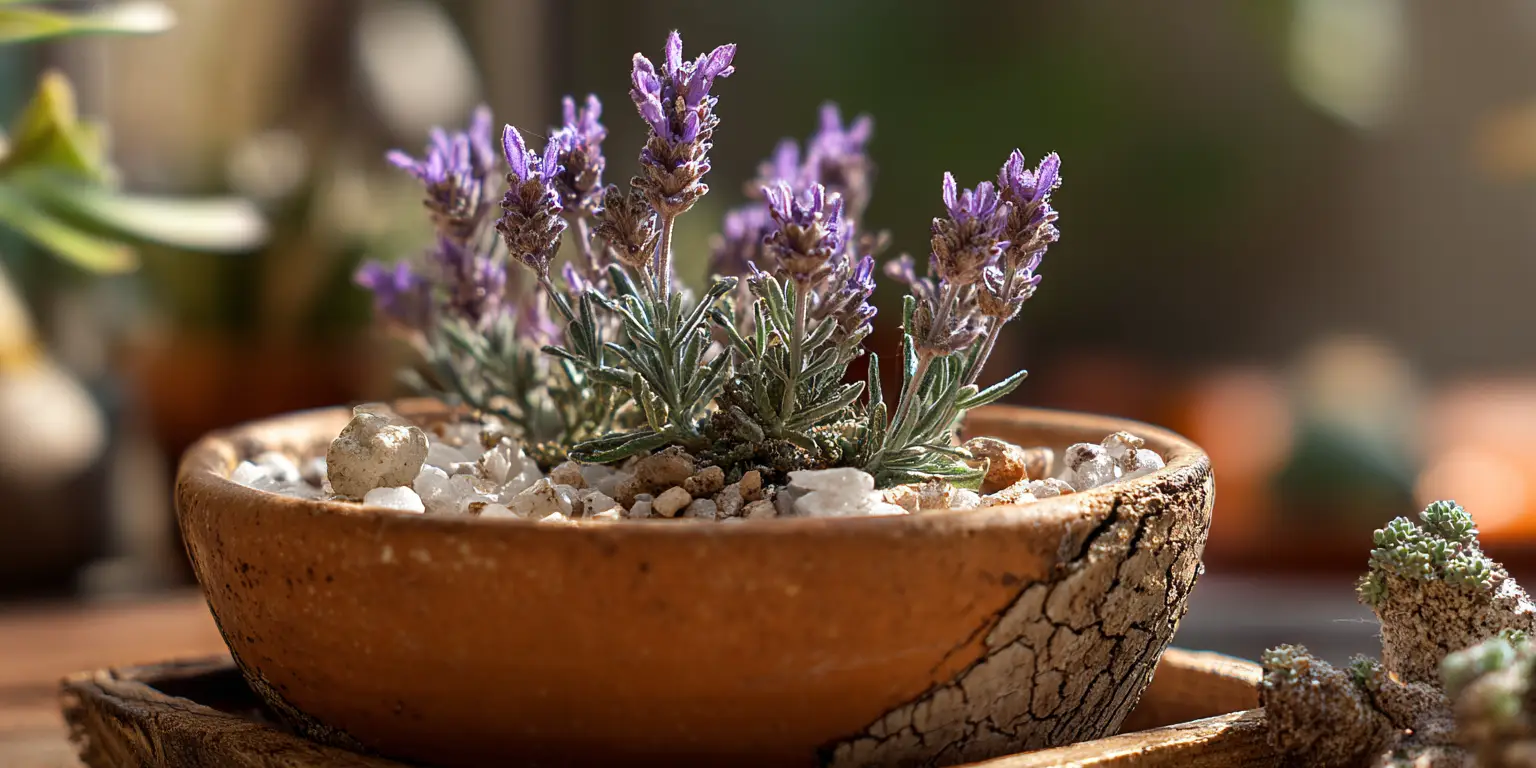
Water lavender like the dryland shrub it is. Through the first season, water deeply whenever the top inch of soil dries, because the plant needs that time to build the deep root system its drought habit depends on. From the second year on, rain covers most needs in most climates, and a deep soak every couple of weeks through a hot, rainless stretch is plenty. Overwatering kills far more lavender than drought ever does, since constantly moist soil suffocates and rots the roots. Let the ground dry between waterings, water at the base instead of over the foliage, and do it in the morning so splash dries fast. A gray, wilting lavender in damp soil is not asking for more water; that is rot, and more water finishes it. Containers dry faster but follow the same rule, and must never stand in a filled saucer.
Four beliefs that kill lavender
The myth: Lavender is drought tolerant, so it never needs watering.
The reality: True only after establishment. Illinois Extension's own wording is that new plantings benefit from regular watering during the first year: the drought tolerance the plant is famous for is earned by a full season of root development rather than present from the day it goes in. Skipping year-one water is a quiet, leading cause of the why-did-my-new-lavender-die pattern.
The myth: Plant it in pure gravel and you are done.
The reality: Overstated. The technique that actually works is a gravel sump, a gravel-filled planting hole or a gravel and sand amended mix, commonly around 30 percent gravel to 70 percent soil and compost, plus gravel as a surface mulch to keep the crown dry. Lavender still needs a soil component for nutrition and moisture buffering. The surface-mulch half of this is well supported by Illinois Extension and the state extensions in the calendar above; the not-gravel-alone caveat is grower consensus, and no university page was found stating it outright.
The myth: Coffee grounds acidify the soil, which helps lavender.
The reality: Backwards twice over. Used coffee grounds test close to pH neutral, around 6.5 to 6.8, so the acidifying claim does not hold even for acid-loving plants. More to the point, lavender wants the alkaline end: UF/IFAS and the University of Maryland both stress lime-rich conditions, and UF/IFAS puts a hard floor at pH 6. Grounds also add nitrogen and hold moisture, which pushes a lean, dry-loving plant in exactly the wrong direction on both counts.
The myth: A lavender plant keeps mosquitoes out of the yard.
The reality: This conflates the living plant with concentrated essential oil. Laboratory work on lavender oil applied to skin or enclosed surfaces has shown real but short-lived repellency, and the percentages that circulate for it could not be traced to their primary journals in this research, so they are deliberately not quoted here. A planted or potted lavender releases nothing close to those concentrations into open air, and the CDC does not recommend lavender oil as a mosquito repellent at all. What is real is smaller: brushing against the plant bruises the leaves and releases a burst of oil that briefly deters insects in immediate contact.
Soil and pH
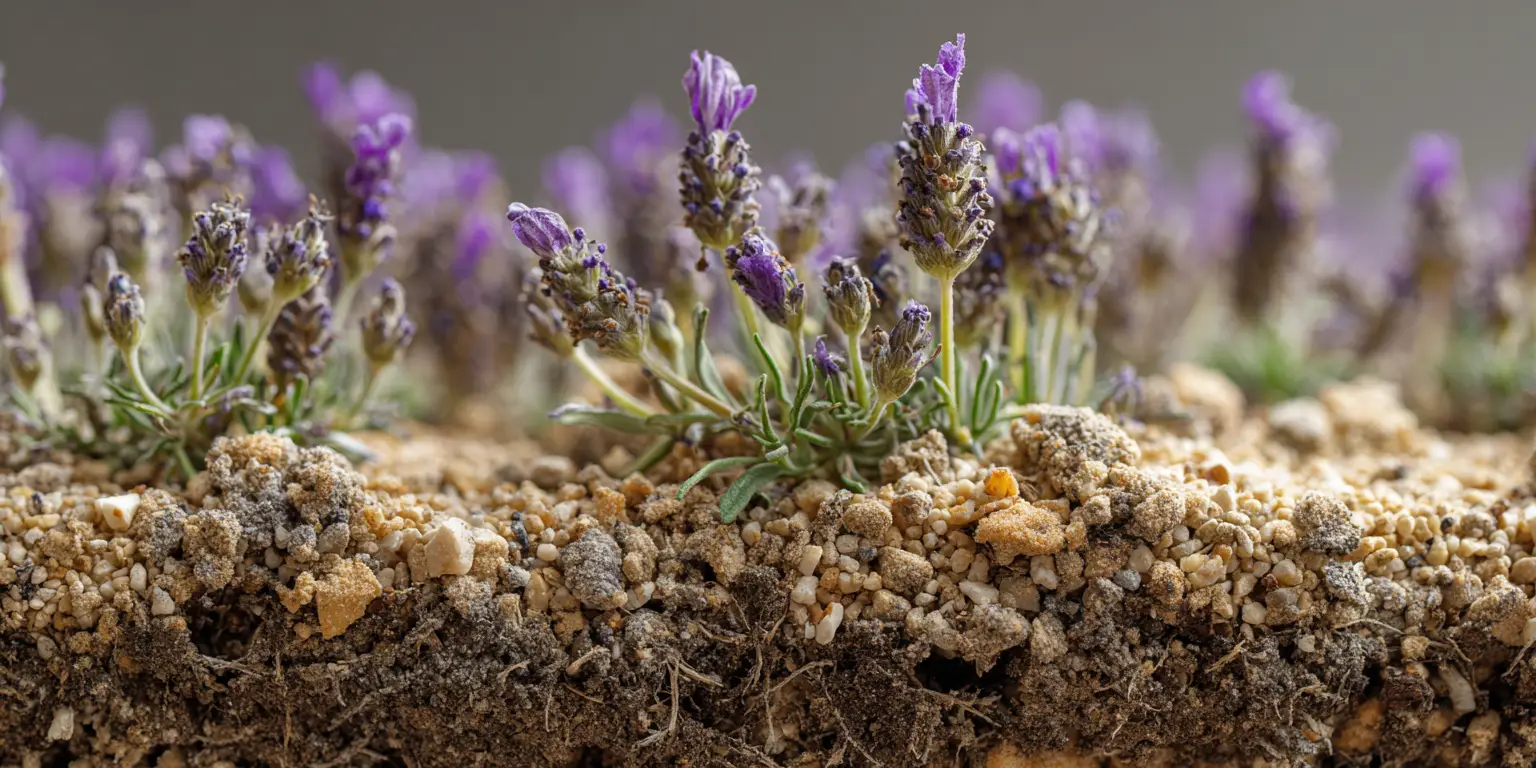
Drainage decides whether lavender lives, before pH, before fertility, before anything. The ideal is a lean sandy or gravelly loam that sheds water within hours. In clay, plant on a mound or in a raised bed 8 to 12 inches high and work coarse grit into a wide area, because a single amended hole in clay acts as a bathtub that collects water around the roots. Set plants slightly high, and mulch with gravel or coarse sand rather than bark or wood chips, since a mineral mulch keeps the crown dry where an organic one holds damp against the stems. Lavender prefers neutral to slightly alkaline ground, about pH 6.5 to 7.5, and acidic gardens benefit from a dressing of garden lime worked in before planting. Fertility should stay low. Rich soil and nitrogen feeding grow a lush, sprawling plant that flops open and blooms poorly, so skip the fertilizer program entirely on garden plants and give containers at most a light spring feed.
USDA hardiness
English lavender and the lavandins are dependable in zones 5 through 9 when the soil drains sharply, and the lavandin 'Phenomenal' has proven hardier still, grown into zone 4 with winter protection. Spanish and French lavenders are tender, reliable only in zones 8 and 9, worth attempting in a sheltered zone 7 spot and otherwise grown in pots that overwinter in a bright, cool, barely heated room. The subtler point is that winter drainage kills before cold does. A zone 6 English lavender in wet winter clay dies while the same plant sails through zone 5 in gravel, because roots sitting in cold, saturated soil rot long before the top freezes out. Winter preparation is therefore mostly water management: plant high, mulch with stone, and site against a south wall out of the worst wind. Make no hard cuts from early fall on, since late pruning pushes soft shoots that winter burns, and in the coldest zones lay evergreen boughs over plants after the ground freezes to buffer the freeze-thaw swings.
Regional dates and thresholds
Seven extension services, each answering for its own climate, which is why the planting advice legitimately points in different directions depending on where you are reading from.
Propagation and longevity
Lavender is propagated from cuttings far more than from seed. A 3 to 4 inch tip of this year's growth, taken in summer once the base of the shoot has firmed, roots in a few weeks in a gritty mix kept humid but never wet, and the new plant is an exact clone of the parent. Layering works on the same schedule with less equipment: pin a low stem to the soil, cover the middle of it, and sever the rooted section the following season. Seed is the slow road, germinating unevenly and often only after chilling, and named cultivars do not come true from it. The lavandins set no viable seed at all, being sterile hybrids of English and spike lavender, so every 'Grosso' and 'Phenomenal' in the world is a cutting.
Pruning is what longevity actually depends on, and it follows one mechanical rule: old, leafless wood almost never resprouts, so every cut must stay above green growth. Prune twice a year. In spring, when the new gray-green shoots are clearly showing, cut the plant back by about a third into a tight mound, always leaving live foliage below each cut. After the first bloom flush, shear off the spent spikes plus an inch or two of the foliage beneath them, which keeps the dome dense and often triggers a second flush on English types. English lavender tolerates the firmest hand; Spanish and French types prefer lighter, more frequent trims after each bloom wave. Never cut hard in late fall. A plant skipped for a few years splays open into bare gray stems with tufts of green at the tips, and recovery at that point is a gamble, since cuts into the bare wood usually stay bare. The dedicated pruning guide walks the calendar in detail. Pruned annually, a lavender stays handsome for 10 to 15 years; unpruned, most look finished inside 5, and the graceful exit is to root a few cuttings from the old plant and start its replacement.
Fragrance
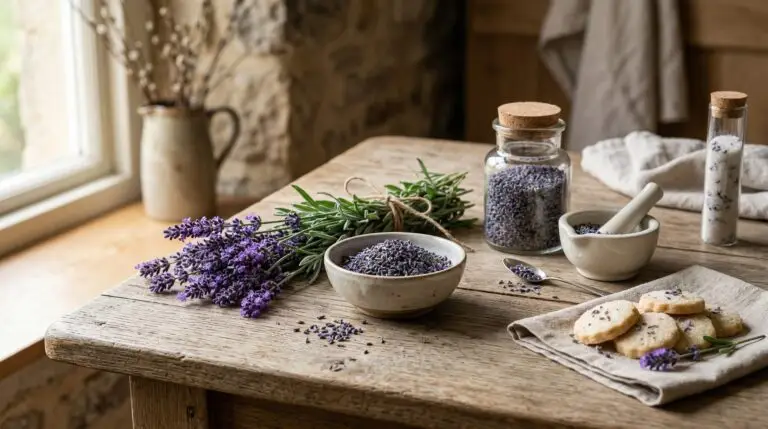
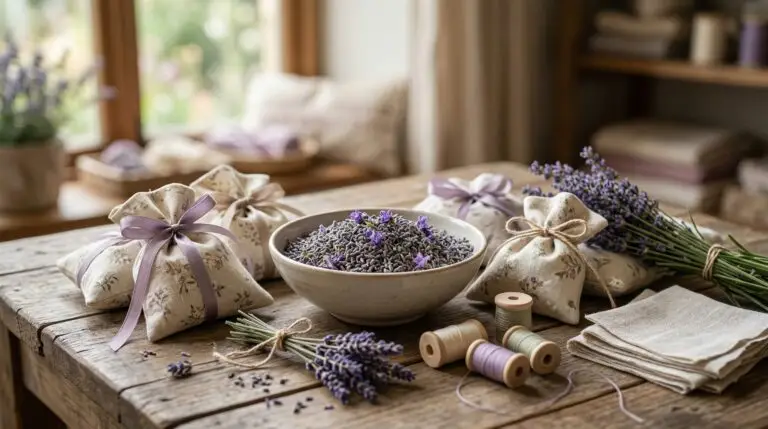
The scent lives in oil glands across the flowers and foliage, built mainly on linalool and linalyl acetate, and it varies by group far more than buyers expect. English lavender carries the sweetest, softest profile with the least camphor, which is why perfumers and cooks prize it. The lavandins yield far more oil per plant with a stronger, more camphorous edge, which suits soap, detergent, and the commercial fields of Provence. Spanish and spike lavender push further toward sharp and resinous. In the garden the scent releases at a touch, so the plant belongs where people brush it, along a path or a doorstep or the front of a border. Dried, the buds hold fragrance for months, which is why sachets of lavender have kept moths out of stored linen since Roman times. A pinch of dried unsprayed English lavender buds also seasons shortbread, lemonade, or a tea, though a light hand matters because the flavor turns soapy fast.
Toxicity and pet safety
Lavender is not a pet-safe plant, though the risk from a garden shrub is small and worth stating precisely. The ASPCA lists lavender as toxic to dogs, cats, and horses because of the same linalool and linalyl acetate that make the scent, and a pet that chews the plant may show nausea, vomiting, or a lost appetite. Serious poisoning from grazing on a live plant is rare, and most animals leave the strongly scented foliage alone after one investigation. The concentrated essential oil is the genuine hazard. A licked spill, an oil-treated coat, or a chewed diffuser bottle delivers a dose the plant itself never could, and cats handle these compounds especially poorly, so oils belong shut away and never applied to an animal. In the yard, lavender with normal supervision is a reasonable planting for pet households, and the guide to flowers safe for cats and dogs sorts truly risk-free choices for the cautious. For people it is safe to touch and safe in food at culinary amounts, with English lavender the species a recipe means.
Vase life
Fresh lavender is a short vase flower and a long dried one, and the harvest stage sets which you get. For the vase, cut stems in the morning after dew has dried, when a third to half of the florets on the spike are open, and get them into water quickly; expect about 5 to 7 days with fresh water and a cool spot out of sun. For drying, cut earlier, just as the first few florets open, because spikes cut at that stage keep their color and hold their buds instead of shattering. Strip the lower leaves, gather small bundles, bind them with a rubber band that tightens as the stems shrink, and hang them heads down in a dark, dry, airy place for two to four weeks. Dried spikes keep color and scent for months in arrangements and for years as loose buds in sachets. The lavandin 'Grosso' is the classic drying lavender for its long stems and heavy oil, English types dry sweetest, and Spanish lavender drops apart dry, so it stays a garden and vase flower. The harvesting and drying guide covers timing spike by spike.
Cutting stage, and the chemistry behind it
The stage a spike is cut at decides how much scent survives, and there is a measurable reason for that rather than a rule of thumb.
Pests and diseases
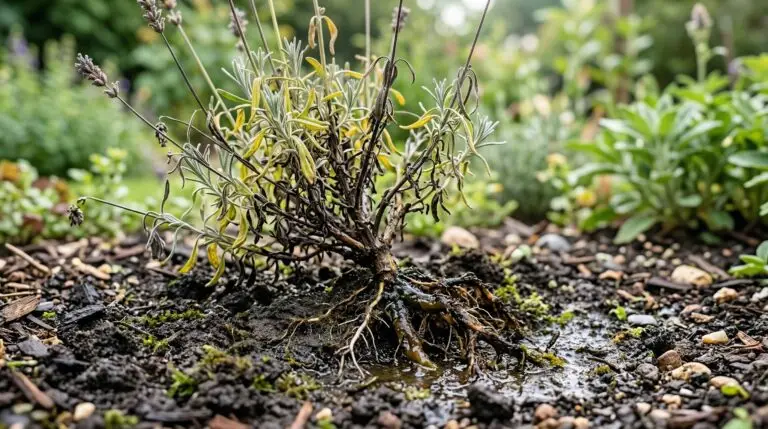
The oils that scent lavender defend it, which is why the plant sits on nearly every deer-resistant list and rabbits pass it by as well, a real advantage for edging beds of more tempting plants. Insect trouble is minor and cosmetic: spittlebugs leave white foam on stems in spring and rinse off with a hose, aphids sometimes gather on soft new tips until predators find them, and the four-lined plant bug stamps small round spots on leaves in early summer without harming the plant. The killers are all water. Root rot from Phytophthora and related fungi in poorly drained soil turns a plant dull gray-green, then wilted, then brown, often one branch at a time, and there is no cure once it sets in, only prevention through drainage and restraint with the hose. In humid-summer regions the common pattern is browning from the center of the plant outward after warm rains, where a crowded, damp crown breeds fungal blight; the answers are wider spacing, gravel mulch, morning watering at the base, shearing off spent bloom, and choosing tolerant varieties, and the guide to lavender in humid climates goes deeper for southern gardens.
| What you see | Likely cause | What to do |
|---|---|---|
| Gray, wilting plant in moist soil | Root rot from poor drainage | No cure; stop watering, replant survivors high in gritty soil |
| Browning from the center after rain or humidity | Fungal blight in a crowded, damp crown | Space plants, gravel mulch, water at the base in the morning |
| Bare woody stems with green only at the tips | Years without annual pruning | Prune above green wood each spring; replace if mostly bare |
| Few or no flowers | Shade, rich soil, or nitrogen feeding | Move to full sun, stop feeding, keep soil lean |
| Plant splays open at the center | Soft growth from rich soil, or age | Lean regimen and a firm spring pruning |
| White foam on stems in spring | Spittlebugs | Rinse off with water; harmless |
| Plant dead after winter | Wet winter soil, or a type too tender for the zone | Improve drainage; use English or lavandin types in cold zones |
Almost every entry in that table traces back to the same two decisions, drainage and pruning, which is the quiet truth of lavender care: the plant is far more often loved to death than left to fail on its own.
What goes wrong with lavender, in order
From 92 real posts across r/gardening, r/Lavender, r/plantclinic, r/IndoorGarden, r/landscaping and r/HomeGarden, every one read individually rather than counted by keyword. Themes overlap, since a single post routinely carries two problems, so the shares below are a ranked index rather than a division of the whole.
Soil moisture and root condition, since this umbrella is where almost every specific problem below eventually lands. Roughly 90 percent of these posts carry a photo.
Root color and smell. One poster's description of the tissue under the bark as yellow-white with roots smelling of rotting vegetables is the classic presentation.
Which side of the planting hole holds water. Root rot, winter dieback and ordinary aging are visually identical at this stage, and posters genuinely cannot tell them apart.
Light intensity at germination, not watering. These stretch under a windowsill or a weak grow light and rarely recover their shape.
Sun hours first, then soil richness. One of the highest-engagement threads in the sample, at 32 comments, is exactly this question.
Bruise a leaf. True lavender releases scent from oil glands at a touch, and a clearance-rack plant with no scent in the crushed foliage is very likely mislabeled.
Whether new growth has started, and which species it is before any hard cut.
The weather record for the past week. This is the mirror image of the rot problem and resolves on its own.
Light intensity, honestly measured. Only four posts by count, but the single highest-engagement post in the whole sample at 2,399 upvotes and 161 comments, against a next-highest of 53, which is a demand signal the raw count completely hides.
Two ordered paths
Both of these arrive constantly, and both are answered in the wrong order by instinct. Work down the list.
Six pairs that look alike and want opposite treatment
Lavender's diagnostic problem is that its two commonest failures look identical above ground and need opposite responses. Where a card carries fewer photographs than sides, the missing image is a root, crown or lesion detail that needs a real reference photo rather than a generated one.
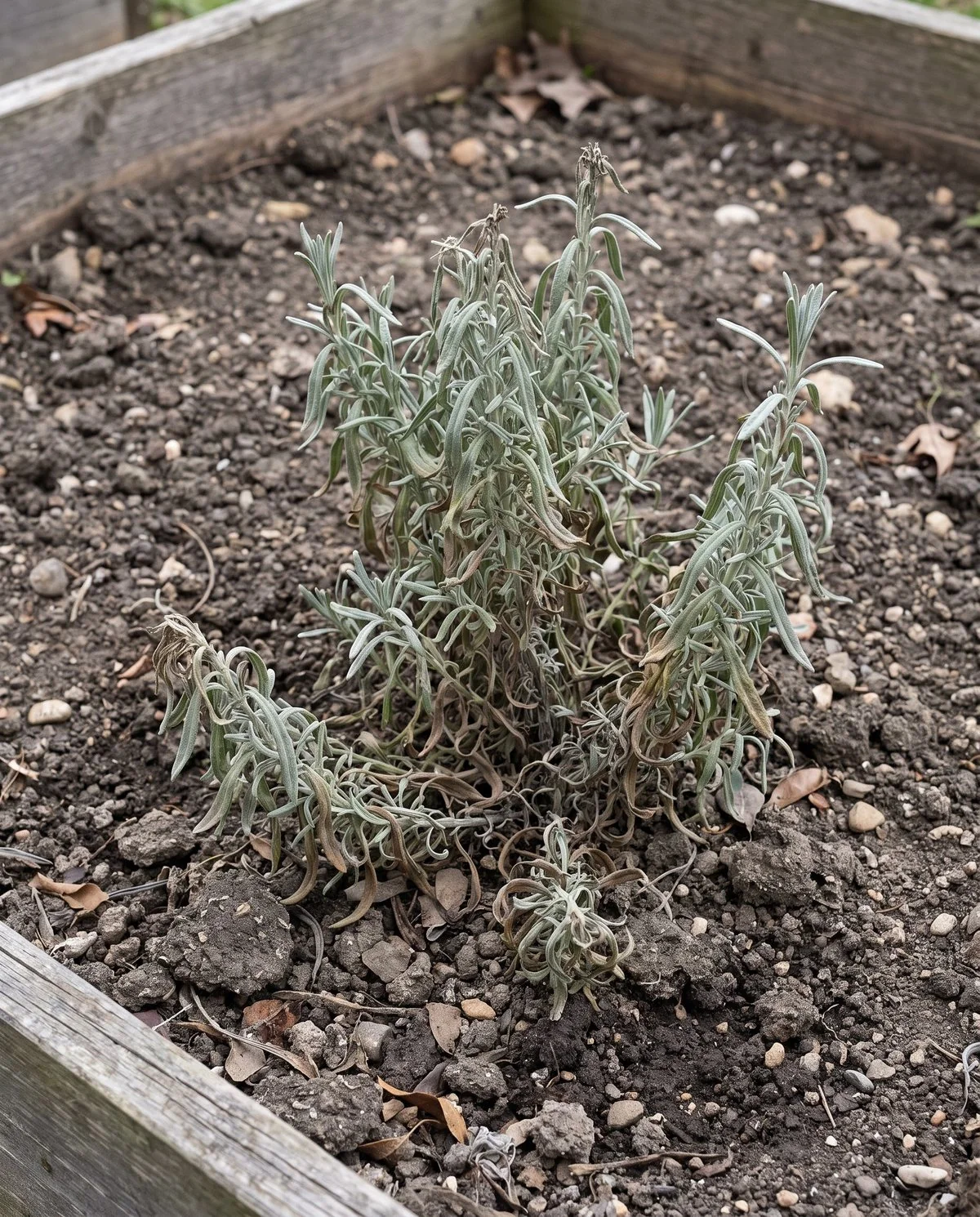
Above ground these are close to indistinguishable, which is why the answer is below ground. Drought-stressed roots are firm and pale and the soil smells of nothing in particular; rotted roots are soft and dark brown instead of white, and the soil smells sour or rancid. The fixes are opposites: drought wants more water, rot wants the plant lifted, the rotten roots cut away, and less water in drier soil from then on. When an Oregon grower with 150 plants reported what he took for Botrytis or powdery mildew killing them, Oregon State's own extension answer was to check the roots first, because this type of foliar damage can be the result of root disease.
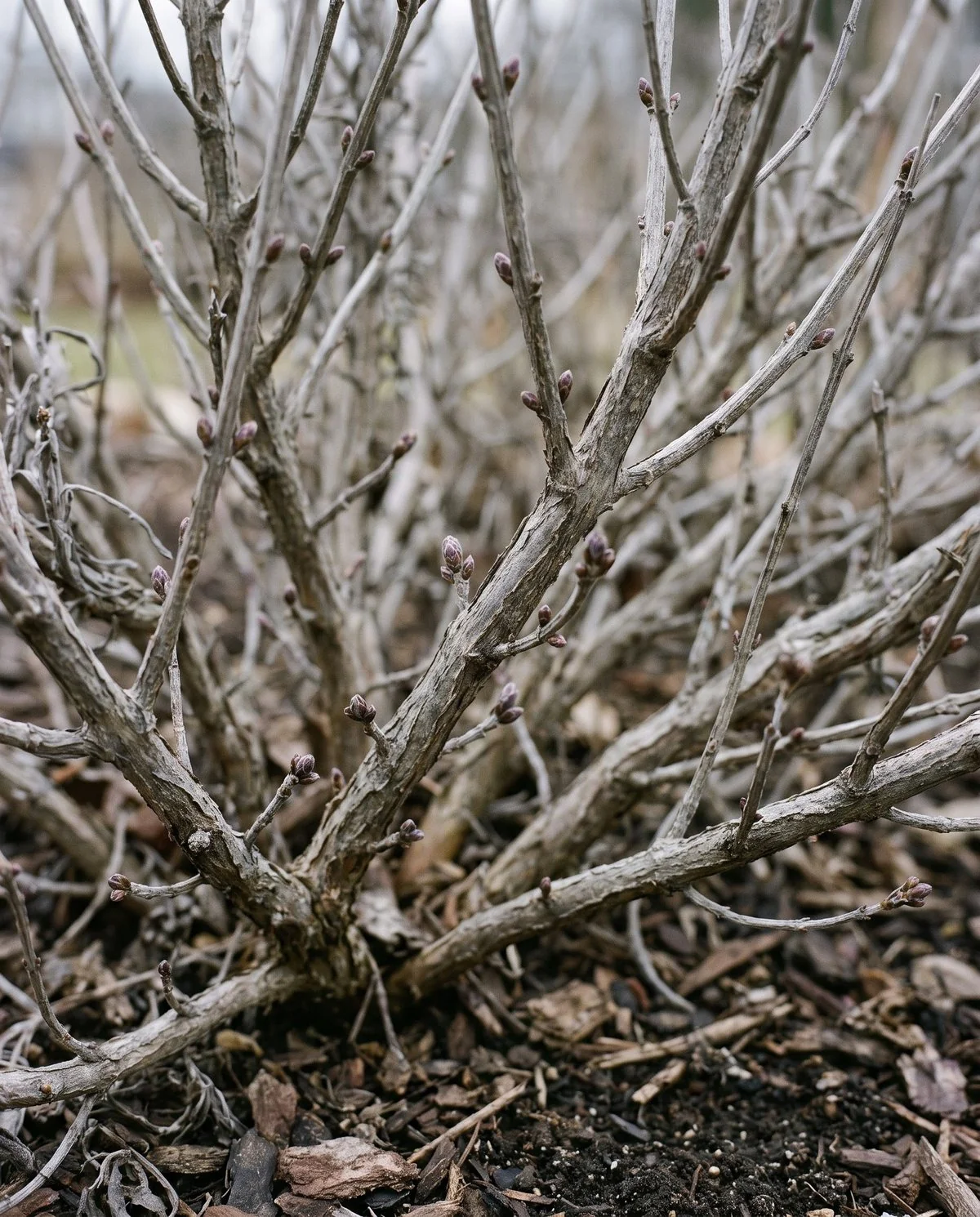
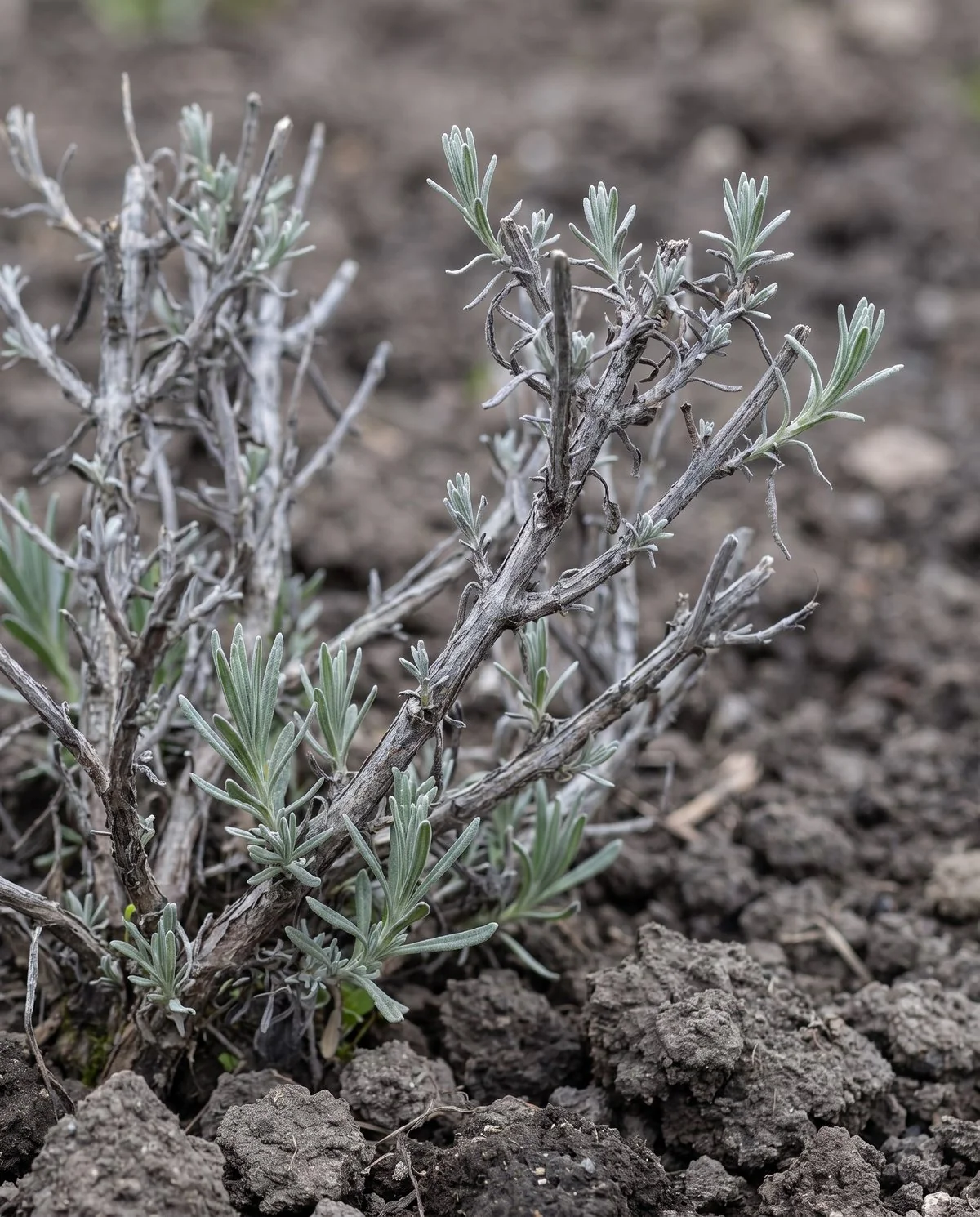
Purdue's consumer horticulture guidance says it plainly: it is easy to mistake live branches for dead while they are still dormant, which is why pruning waits until new growth is well underway. The university test is the presence of new green growth, not the appearance of the old wood, and the University of Maine's answer to a reader whose pruned plants still looked bare in August was that no green by then means the plants are most likely dying or already dead. The thumbnail scratch test for green cambium is everywhere in grower writing but was not found on either university page, so treat it as a technique rather than as the sourced rule.
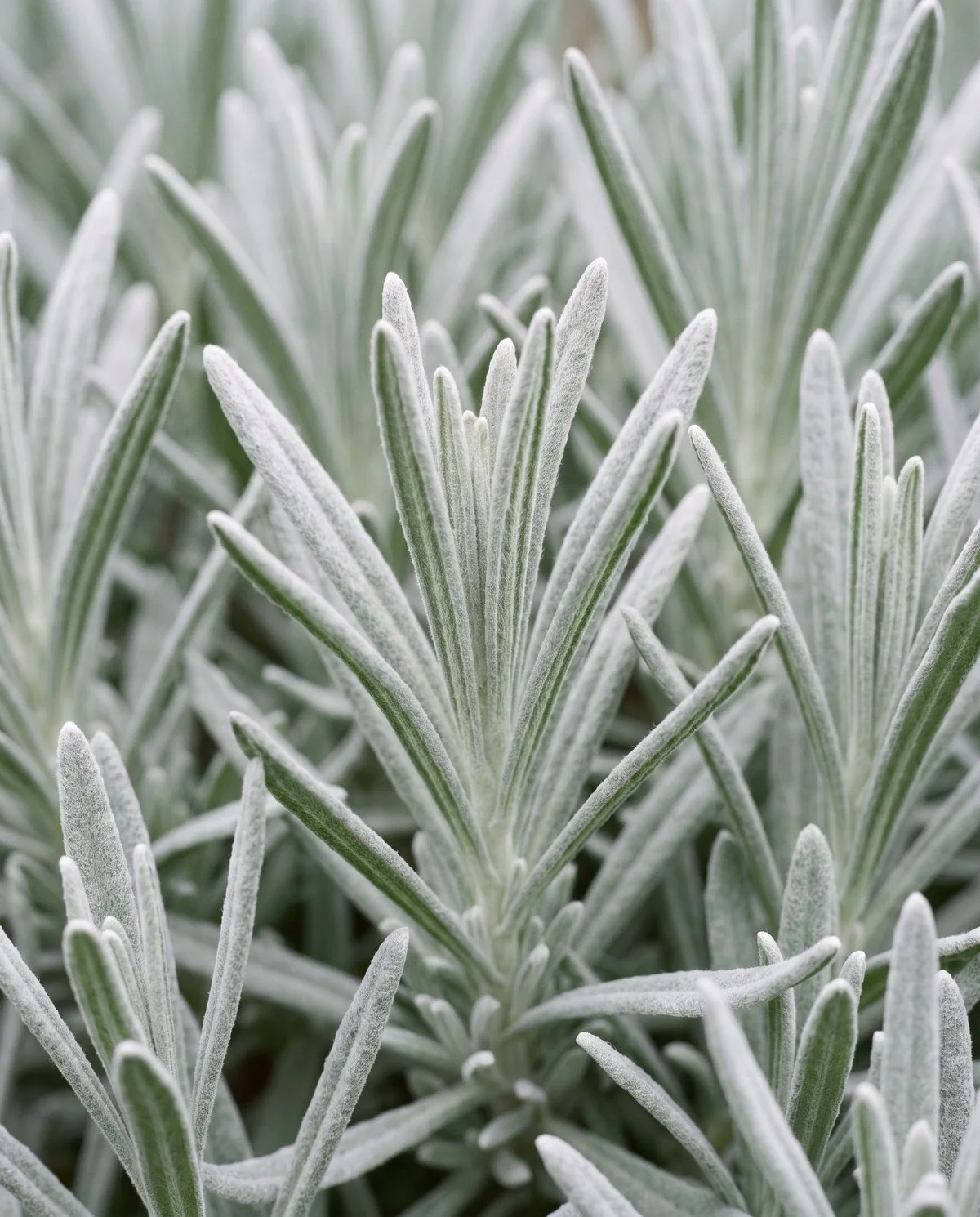
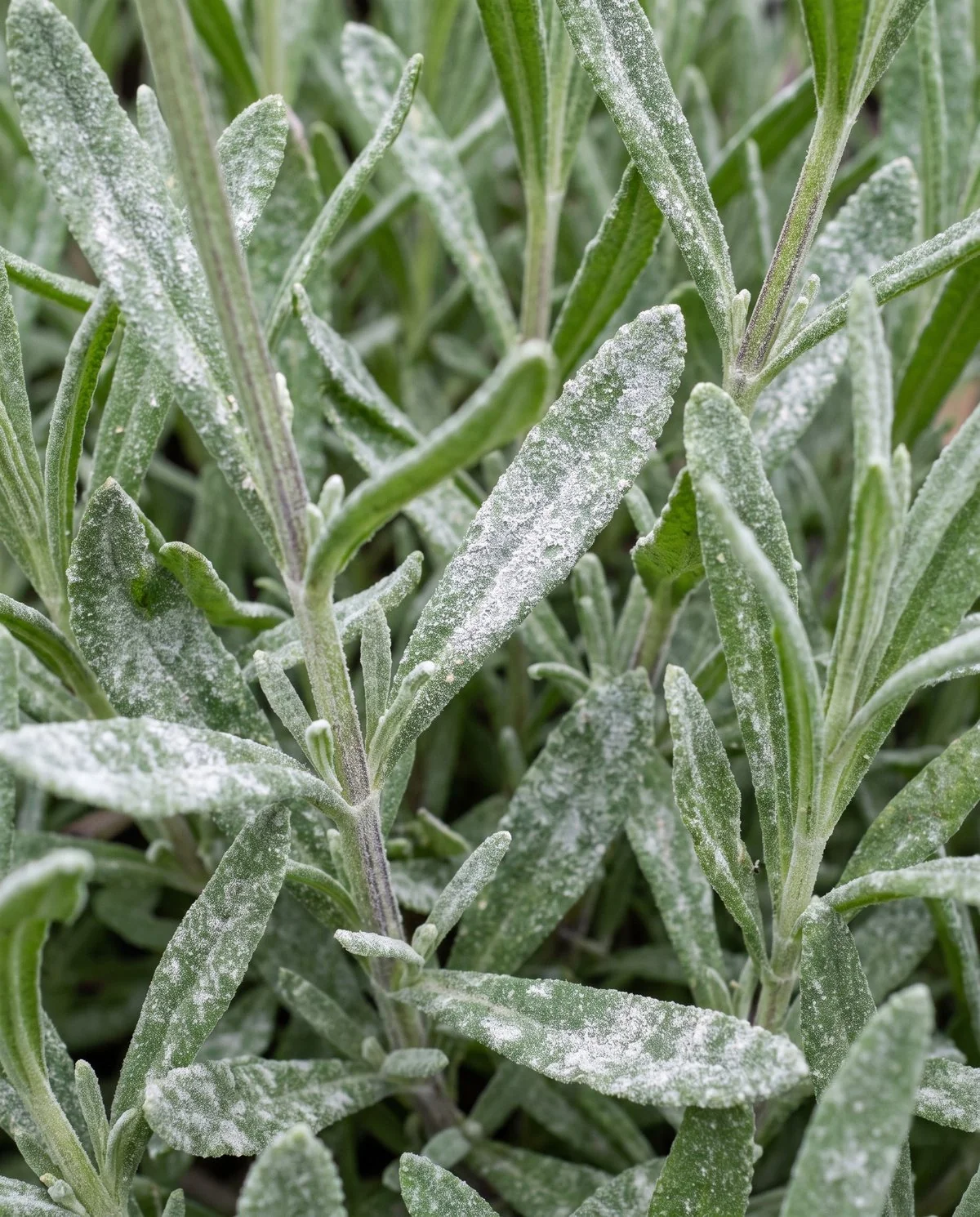
This is a three-way problem, not a pair. Healthy lavender foliage is silver-gray all over, evenly, from the fine hairs on the leaf itself. Powdery mildew is a superficial white to gray powdery coating sitting on top of the surface, worse with poor air circulation, temperatures under 70 F and low light. Septoria lavandulae leaf spot looks nothing like either up close: small dark defined spots with lighter centers, starting near the edges of older, lower, shaded leaves, enlarging and sometimes merging into blotches with purple-brown borders, and it needs repeated high humidity and spreads by rain splash and irrigation rather than through the air. The Oregon exchange above shows how muddled this gets in practice: the grower described his damage as very rusty looking with black dots and suspected two different diseases, and the extension agent ruled out root disease first.
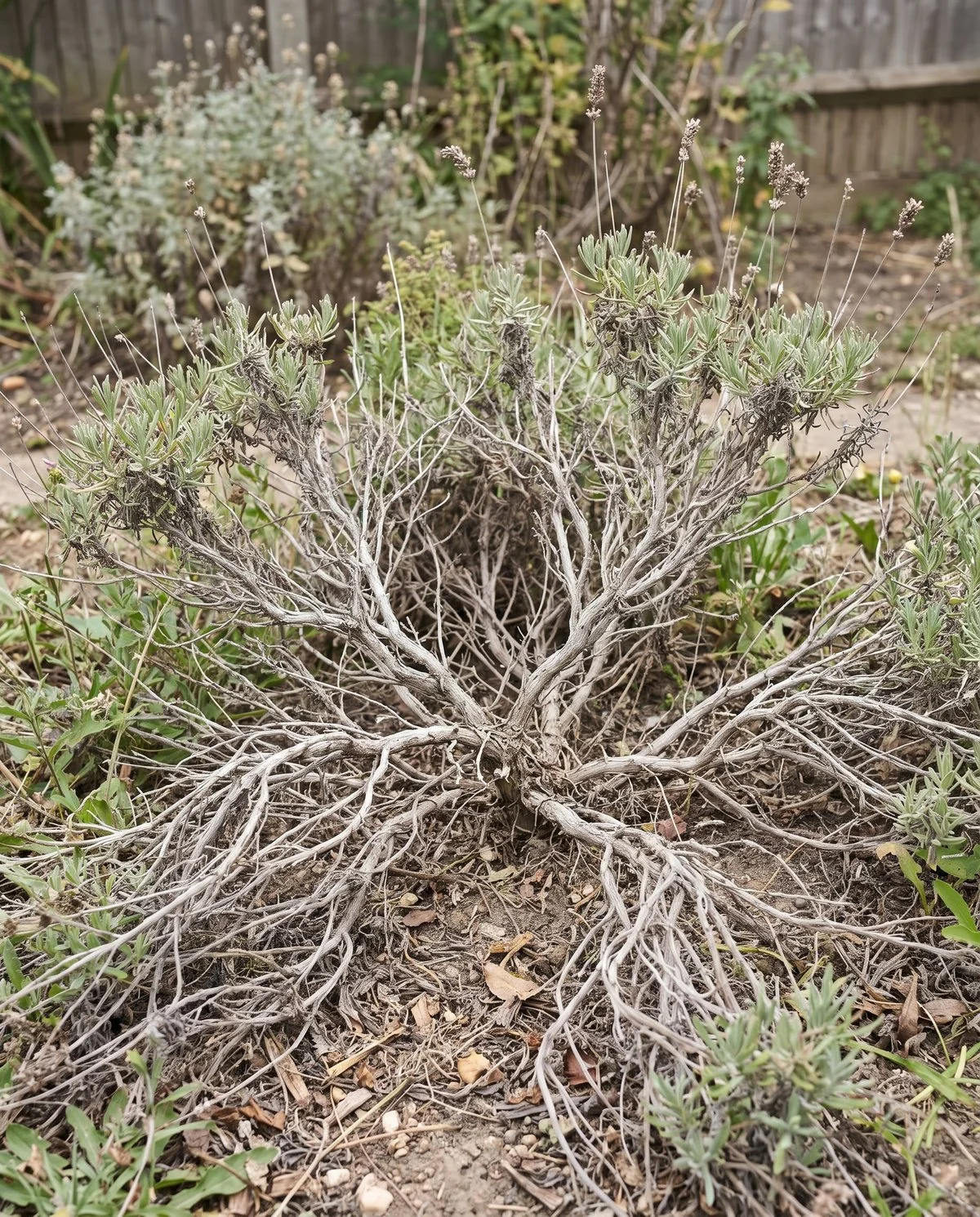
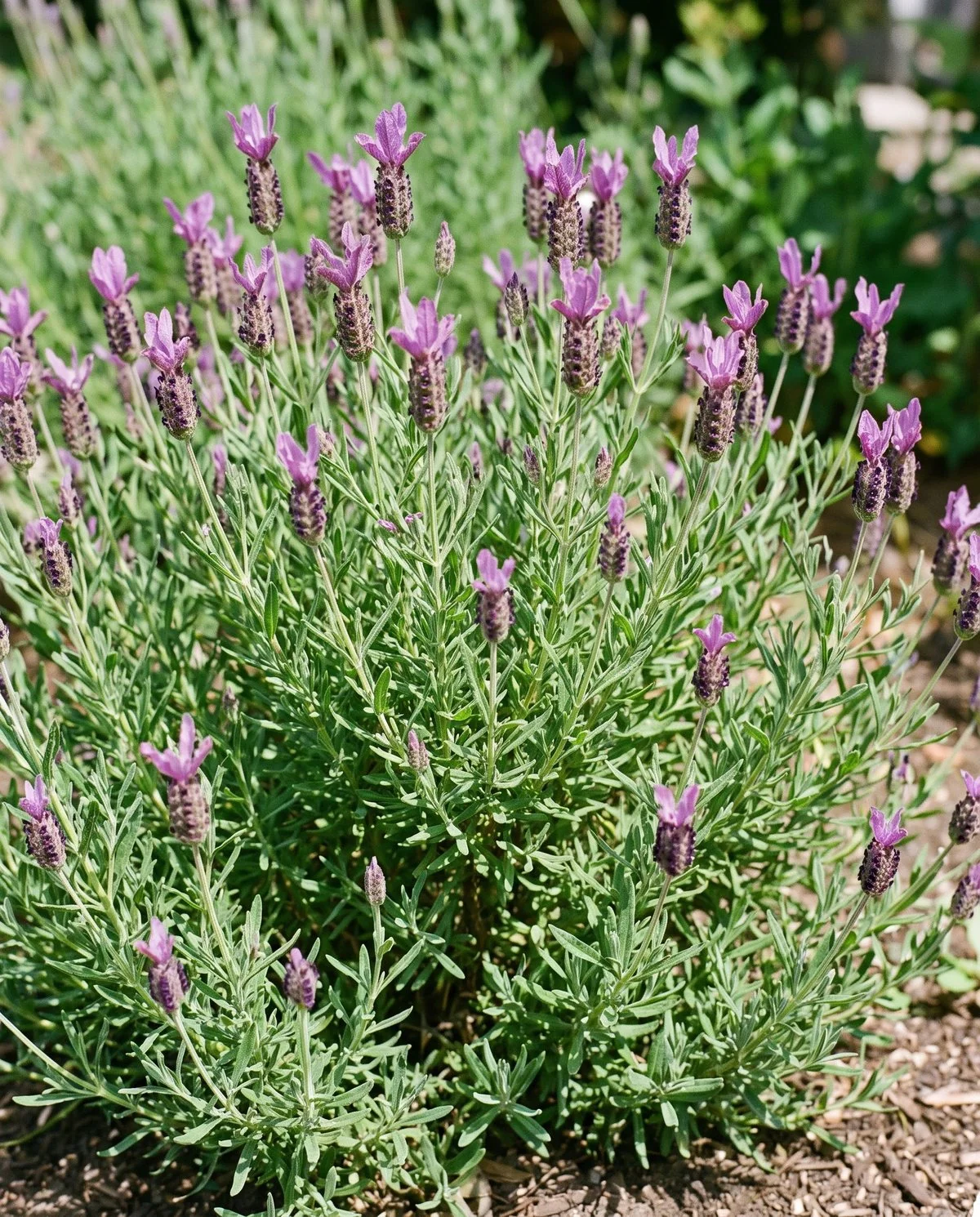
This one can kill a plant. English lavender tolerates and needs a firm annual cutback to stay dense, and left alone for years it splays into bare woody stems with green only at the tips. Spanish lavender looks superficially similar when it opens up, but NC State's own species page states that Lavandula stoechas will often die after being cut back hard to the ground. The correct treatment is the opposite of the English instinct: a light shear after the summer bloom, never a rejuvenation cut into old wood. Identify the species before the secateurs come out.
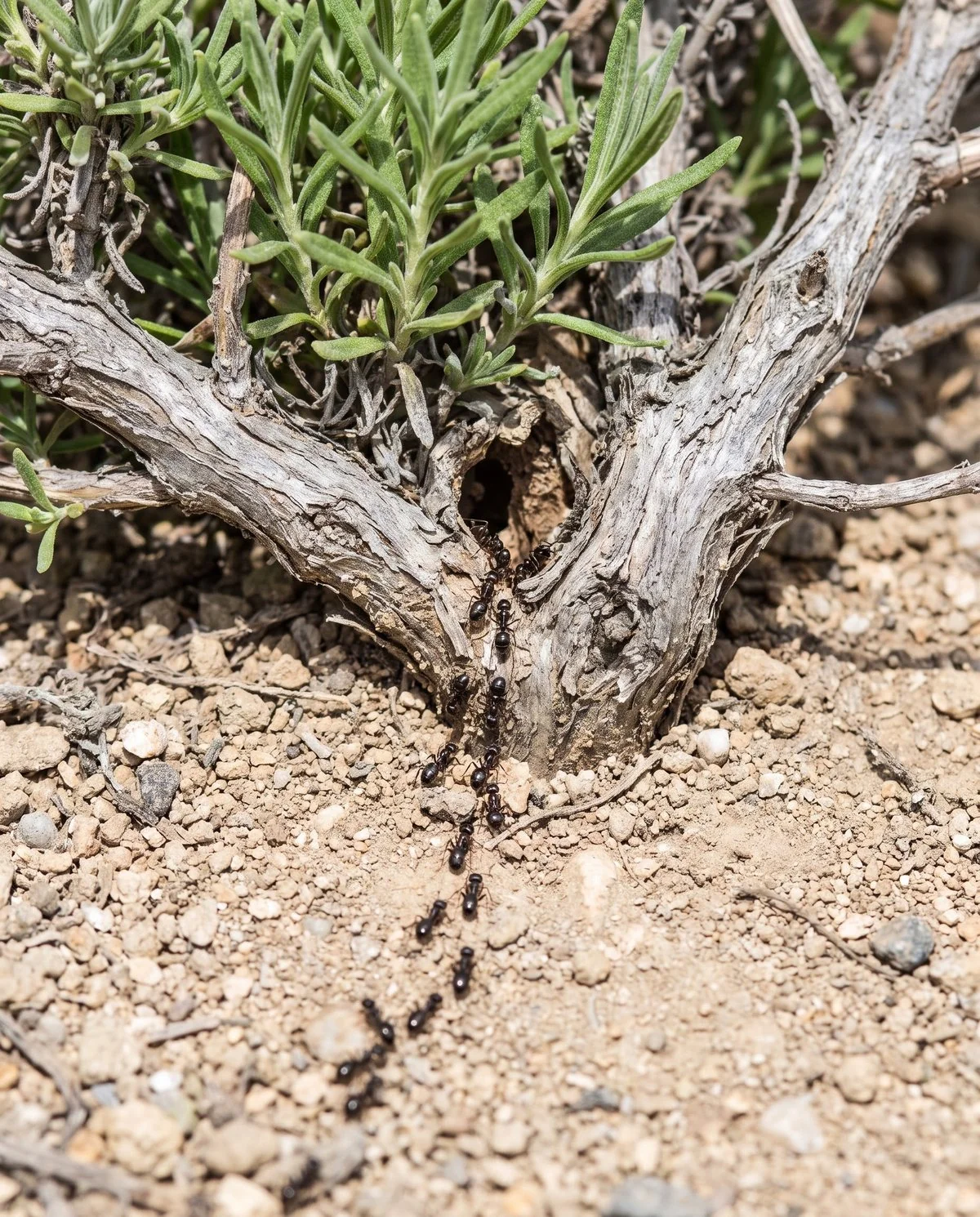
Ants in a lavender are almost always nesting in dry mulch or in a hollow woody crown rather than feeding on the plant, and on their own they are not a problem. The check that settles it is the same one from the first card: if the crown and roots smell sour or rancid and feel soft, the ants found a plant that was already rotting, and the rot is what needs answering. No smell and firm tissue means they are opportunists and can be ignored.
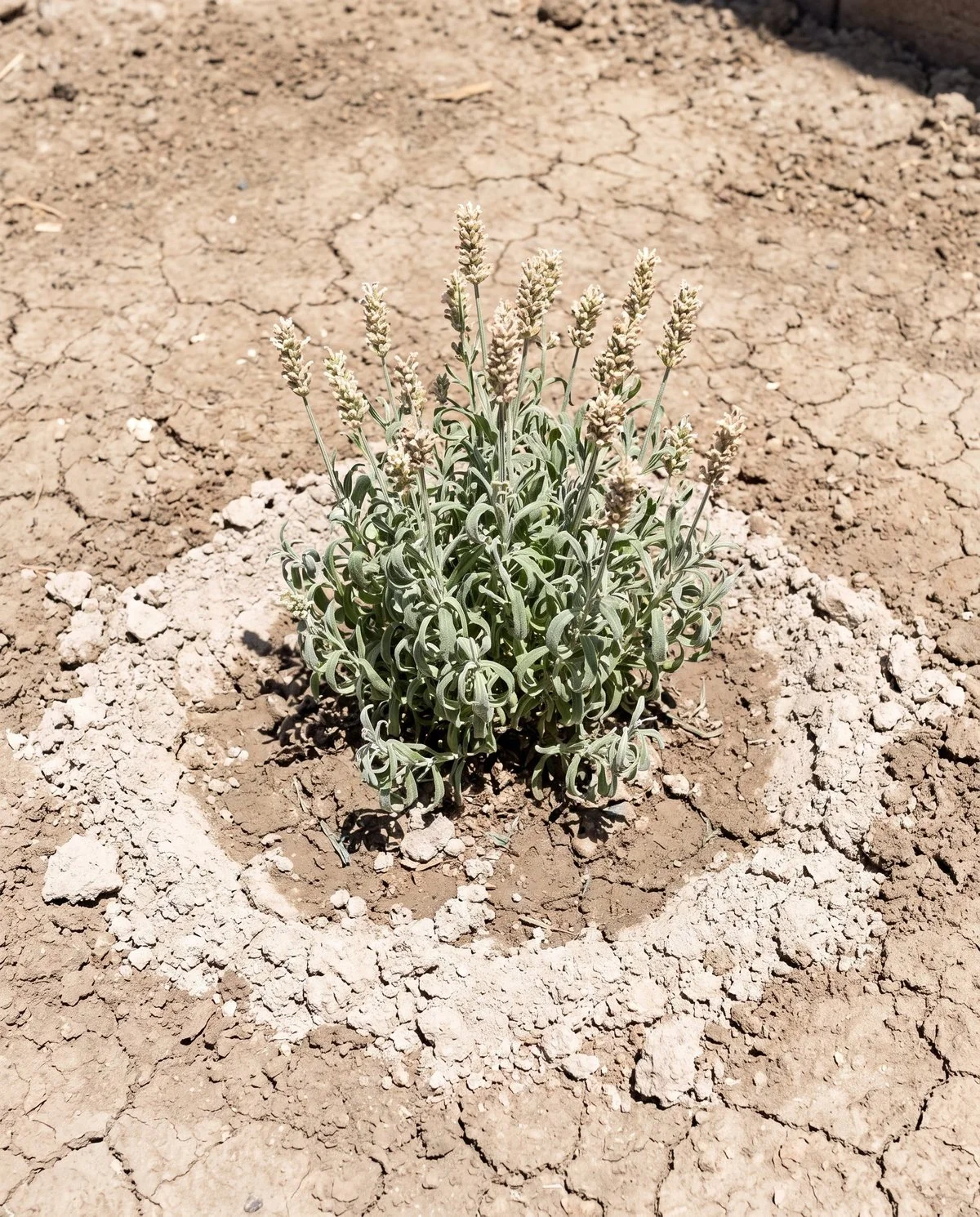
A newly planted lavender in 100 F weather commonly curls and drops its purple color temporarily, and recovers with shade and consistent, not excessive, water as it establishes. A plant that keeps wilting despite soil that is already wet, or that declines steadily over weeks instead of during one heat event, is collapsing from root rot and needs the opposite response. Separating the two takes two questions about recent weather and recent watering, not a closer look at the leaves.
Flower photos
FAQ
When and how should lavender be pruned?
Twice a year, and never into bare wood. In spring, once new gray-green growth shows, cut the whole plant back by about a third, leaving green foliage below every cut. After the first bloom flush, shear off the spent spikes plus an inch or two of foliage to keep the mound tight, which often brings a second flush on English types. Skip hard fall pruning, and never cut into leafless woody stems, because they rarely sprout again.
Why is my lavender turning gray or brown and dying?
In moist soil, the cause is almost always root rot from overwatering or poor drainage, and watering more will finish the job. In humid-summer regions, browning that starts in the center of a crowded plant after warm rain is fungal blight in a damp crown; give plants space, mulch with gravel, and water at the base in the morning. A plant browning in dry, well-drained soil during a drought is the one case that actually wants a deep soak.
What is the difference between English, French, and Spanish lavender?
Hardiness and bloom, mainly. English lavender (Lavandula angustifolia) is the cold-hardy one, to zone 5, with the sweetest scent and early-summer bloom. Spanish lavender (L. stoechas) blooms earliest, wears upright petal tufts like rabbit ears, repeats through the season, and only survives winter in zones 8 and 9. French lavender (L. dentata) has toothed leaves and a long mild-climate bloom with the same tenderness. Lavandins are English-spike hybrids: the biggest plants, midsummer bloom, strongest oil.
Why is my lavender not blooming?
Too little sun is the usual reason, since lavender needs 6 to 8 hours of direct light to set spikes. Rich soil or nitrogen feeding is next, growing leaves at the expense of flowers, and a plant gone woody from years without pruning blooms only at the tips. Full sun, lean soil, no fertilizer, and a firm spring cut restore bloom in almost every case.
Can lavender grow in pots or indoors?
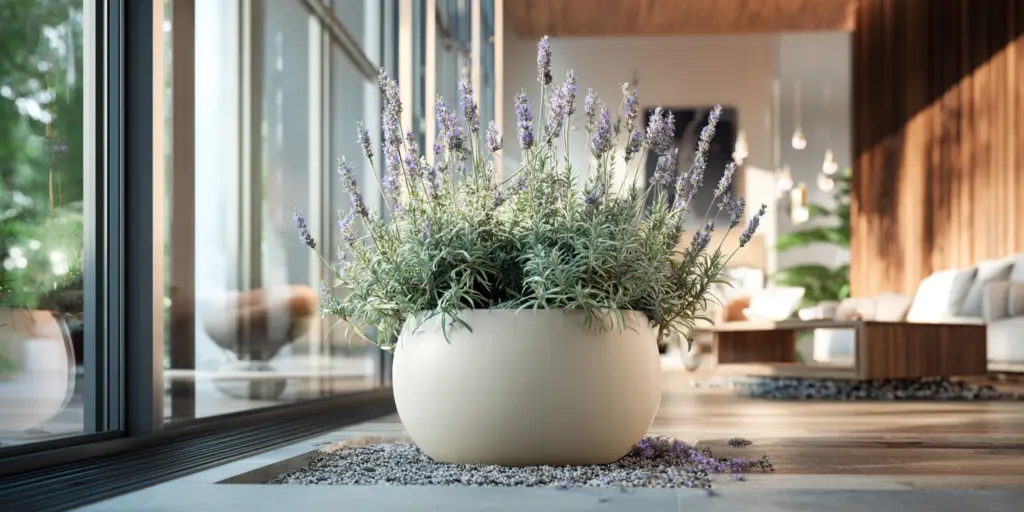
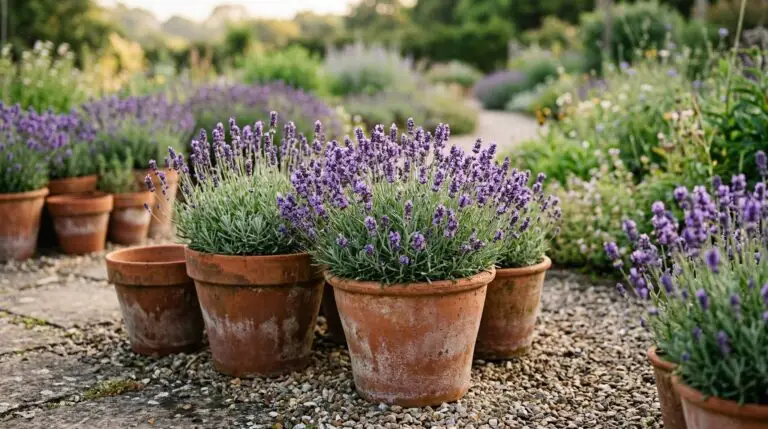
Pots suit lavender well and are the standard way to keep Spanish and French types in cold climates, moving them to a bright, cool room for winter. Use a container with open drainage holes, a gritty mix, and full sun, and water only when the top inch is dry. Indoors, without a south-facing window or a grow light the plant stretches and stops blooming, so most indoor lavender is really a pot brought in for winter.
Is lavender safe for cats and dogs?
Not strictly. The ASPCA lists lavender as toxic to both, and chewing the plant can cause nausea, vomiting, or appetite loss, though serious cases from a garden plant are rare and most pets avoid the scented foliage. The real risk is concentrated lavender essential oil, which should never be applied to pets or left where they can reach it; cats are especially sensitive to it.
When should lavender be harvested for drying?
Cut in the morning after the dew dries, just as the first few florets on each spike open. Spikes cut at that stage keep the deepest color and hold their buds through drying, where fully open spikes fade and shatter. Hang small bundles upside down in a dark, airy place for two to four weeks.
Will deer or rabbits eat lavender?
Rarely. The aromatic oils make the foliage unpalatable, and lavender appears on deer-resistant plant lists consistently, which is why it often edges beds of more vulnerable flowers. No plant is deer-proof in a hard winter, but lavender is close to the last thing eaten.
Is lavender a perennial or an annual plant?
Lavender is a perennial shrub in most regions. If you plant a lavender in the ground and it’s appropriate for your climate, it will come back year after year. Most common lavenders (such as English lavender) are hardy in USDA Zones 5 to 9, meaning they can survive winter cold and regrow each spring. In colder zones, lavender may not survive the winter outdoors, so some gardeners treat it as an annual or keep it in a pot to bring indoors during freezing weather. But in the right conditions, lavender is a long-lived perennial that will bloom each summer for many years.
Does lavender attract bees or other pollinators?
Absolutely. Lavender is well known as a pollinator-friendly plant. When it’s in bloom, you’ll often see honeybees, bumblebees, and butterflies flitting around the purple spikes. The flowers produce nectar and pollen that many insects find irresistible. This makes lavender a great choice for pollinator gardens. It provides food for beneficial insects while you get to enjoy the sight and scent of the blooms. In addition to bees and butterflies, lavender’s scent can also attract hummingbirds in some regions. So, by planting lavender, you’re likely to see an increase in friendly garden visitors. Plus, the abundance of pollinators will help out any other blooming plants nearby.
Can I cook with lavender or use it in food and drinks?
Yes, lavender is edible and is used culinarily, though in moderation. The most commonly used type for cooking is English lavender (Lavandula angustifolia), because it has the sweetest fragrance and flavor, with less of the medicinal or camphor note that some other species have. You’ll find recipes that include dried lavender buds in cookies, cakes, or lemonades, and lavender is one of the herbs in the classic Herbes de Provence blend for savory dishes. The key is to use only a small amount, because the flavor is very potent. Even a little can impart a pleasant floral note, but too much can make food taste perfumey. Always make sure any lavender used in food hasn’t been sprayed with chemicals. You can dry your own lavender from the garden for culinary use. A few dried flower buds can be steeped to make a calming tea as well. So while lavender is not a staple herb like basil or rosemary, it certainly has its place in the kitchen for adventurous cooks.
Is lavender used in weddings and bouquets?
Yes, lavender is quite a popular choice for weddings, especially for rustic, garden, or vintage-themed ceremonies. The plant carries symbolism of purity, devotion, and serenity, which makes it meaningful for marriage celebrations. Fresh sprigs of lavender are often included in bridal bouquets, bridesmaid posies, and boutonnieres, adding a lovely fragrance and a touch of casual elegance. Lavender can also be used dried as confetti (for guests to toss) or as fragrant decorations tied into favors. Its soft purple color complements many other blooms and fits well with romantic color schemes. Because of its seasonal availability in summer, lavender shows up frequently in outdoor summer weddings. For more ideas on incorporating flowers into wedding decor, couples often consult a wedding flowers guide for inspiration and planning.
My lavender's roots smell like rotting vegetables. Is it already dead?
That section of it is. A sour or rancid root smell is one of the two reliable rot tells, the other being soft dark roots instead of firm pale ones. Cut back to roots that are still firm and pale, discard the rest, and replant high in fresh gritty soil. Do not write the whole plant off until you have looked at how much root is still good.
I went away for a week and came back to a browning lavender. Under or over?
On a newly planted lavender the two look alike, but overwatering is by far the more common real cause in this research: sprinklers left running or a house-sitter watering on a schedule is a specific, recurring story in the sample. Check soil moisture and root color before assuming it needs more water.
Half of it is dead and half looks fine. Cut the dead half, or dig up the whole plant?
Cut only what is confirmed dead, meaning brittle wood that snaps rather than bends and no green under the bark, and leave the living half where it is. Sectional death is usually rot in one part of the root system, often the wetter side of the planting hole, or the oldest wood aging out first. Digging up a half-alive plant throws away one that needs a hard prune on the dead side and better drainage.
Can I keep lavender as a houseplant the way it was sold to me?
Rarely, and this is the most-upvoted lavender question found anywhere in this research. The problem is light intensity: lavender comes from full unfiltered Mediterranean sun, six to eight hours or more, and even a bright windowsill delivers a fraction of that. Indoor plants typically survive a few months, stretch, stop blooming and decline, whatever the watering. Without an outdoor spot, the realistic bar is a very bright cool unheated sunroom or a serious full-spectrum grow light, not an ordinary window.
My lavender seedlings are leggy and falling over. What went wrong?
Almost always too little light at the seedling stage rather than a watering or soil problem. Seedlings under a weak grow light or on a windowsill stretch toward the source and end up thin and horizontal. More, closer, stronger light from germination onward is the fix going forward, since badly stretched seedlings rarely recover their shape and are usually better started again.
Why did it come back with different-looking leaves after a hard prune?
If it is a Spanish lavender, or a plant that was shaped into an unusual nursery form such as a clipped topiary, new growth that looks different in shape or color is often the plant reverting to its natural habit once the artificial shaping is removed, rather than damage or a different variety underneath. Compare the new growth to that species' natural unshaped habit before assuming dieback or a mislabeled pot.
When does established actually start?
After a full first growing season of root development, per Illinois Extension's guidance to water new plantings regularly through year one. Treating a spring-planted lavender as established by its first summer is the commonest way the drought-tolerant reputation kills a plant that would otherwise have run for a decade.
Do I cut Spanish lavender back hard every year like the English types?
No, and doing it is actively risky. NC State Extension's own guidance for Lavandula stoechas is that it will often die after being cut back hard to the ground, unlike English lavender, which tolerates and needs that firm annual cut. Spanish lavender wants a light shearing after its bloom flush instead.
Interesting tips
The cheapest insurance is buying right: a small spring-planted lavender establishes faster than a root-bound gallon planted in fall, and in cold zones spring planting buys a full season of rooting before the first winter test. For a hedge, buy cutting-grown plants of one named cultivar rather than seed-raised stock, because seed strains vary in height and color and the hedge shows every difference; give the lavandins about 30 inches apart and the compact English types 12 to 18 inches. The classic pairing of lavender under roses works only when the lavender sits at the dry outer edge of the bed, since the deep watering and feeding roses want will rot it. Where soil stays rich and damp, catmint gives the same haze of violet-blue over gray foliage with none of the drainage demands. Rosemary, thyme, and sage share lavender's taste for hot, lean, dry ground and make the traditional low-water herb bed around it. And from year 8 or so, root three or four cuttings each summer, because the day the old plant finally splays open, its free replacements are already blooming.
- Color Combinations: Lavender’s cool purple hue plays well with other flowers. For example, in spring, low-growing forget-me-nots can carpet the ground in blue beneath emerging lavender shoots. As summer arrives, the purple spikes of lavender blend beautifully with other blue flowers like catmint or salvia. This creates a soothing monochromatic palette in the garden. You can also contrast lavender with yellow or orange blooms for a pop of complementary color.
- Natural Pest Repellent: Take advantage of lavender’s natural oils by drying the flowers. Place dried lavender sachets in your closet or drawers. They will help repel moths and keep fabrics smelling fresh. Historically, people scattered lavender on floors or kept sprigs among linens to deter insects. Even today, planting lavender near doorways or seating areas may reduce mosquitoes and flies in that area while perfuming the air.
- Choose the Right Variety: Always select a lavender type suited to your climate. If you live in a region with harsh winters, opt for English lavender or an extra-hardy cultivar (some are bred to survive colder temperatures). In warmer climates, you can grow French or Spanish lavender, which will reward you with nearly year-round blooms. Matching the lavender variety to your zone will ensure your plants come back each year. When in doubt, check the plant’s labeled USDA hardiness range before buying.
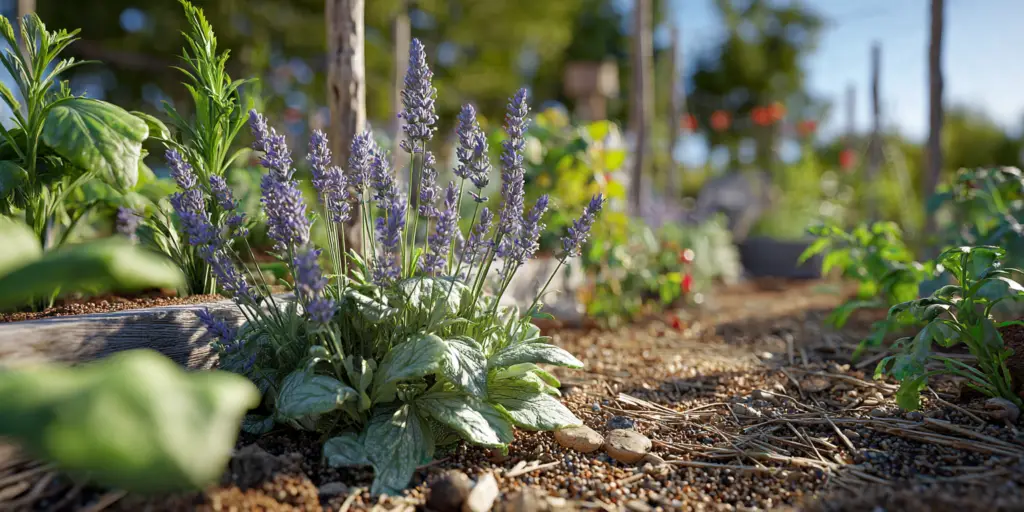
- Mediterranean Herb Partners: Lavender makes a great companion in drought-tolerant landscapes. Consider planting it alongside other sun-loving herbs and perennials that thrive in similar conditions. A classic combination is lavender with rosemary, thyme, and sage. Together they create a fragrant Mediterranean herb garden that needs very little water or fuss. Ornamental grasses, santolina, or succulents can also complement lavender’s texture and fill in the landscape for a beautiful, low-maintenance design.
- Harvesting for Fragrance: To get the most fragrance out of your lavender, time your harvest wisely. The best time to cut lavender stems is in the late morning on a dry day, after any dew has evaporated but before the strongest midday sun. This is when the essential oil concentration in the flowers is highest. Use sharp pruners and cut just above a leaf node. Gather bunches and hang them upside down in a dark, ventilated place to dry. In a week or two, you’ll have wonderfully aromatic dried lavender for crafts, sachets, or arrangements.
Related Guides & Flowers
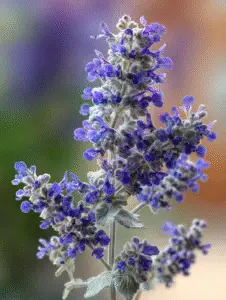
Catmint
Soft gray green foliage and long lavender blue flower spikes. Similar drought tolerant cottage garden vibe and strong pollinator value.
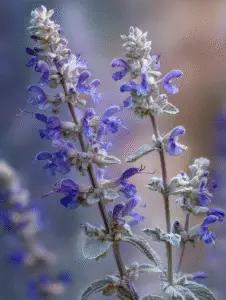
Russian Sage
Airy purple haze on silvery stems, heat and drought friendly, great next to lavender for a Mediterranean look.
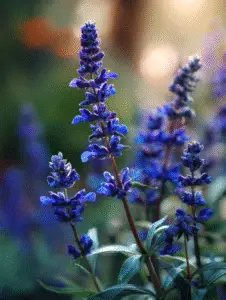
Blue Salvia
Vertical blue to violet spikes with a clean, modern border shape. Pairs well with lavender for long seasonal color.
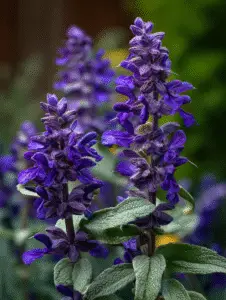
Salvia May Night
A popular deep violet spike salvia choice for borders. Strong contrast and a similar upright form to lavender blooms.
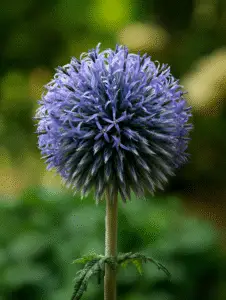
Globe Thistle
Steel blue round blooms and silver foliage that matches lavender tones and adds texture to dry sunny beds.
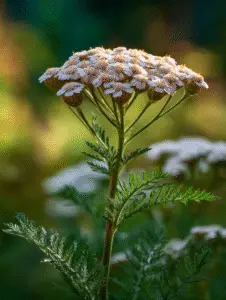
Yarrow
Tough, sun loving perennial that supports pollinators and fits the same low water garden style as lavender.
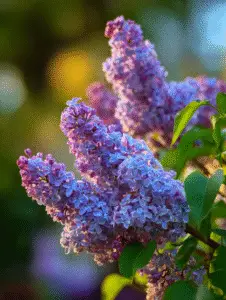
Lilacs
Fragrant spring shrub option if you want to extend the scent theme in a garden plan beyond summer lavender.
References
- Utah State University Extension, How to Grow English Lavender in Your GardenPractical growing basics: sun, drainage, soil pH, zones, plus propagation notes.
- University of Illinois Extension, Essential tips for growing lavender in your backyardClear pruning guidance for shape and bloom, including timing and how far to cut back.
- University of California Agriculture and Natural Resources IPM, LavenderPest and disorder overview with cultural prevention tips for home landscapes.
- NC State Extension, Plant Toolbox, Lavandula angustifoliaHabit, size, bloom season, basic maintenance, and landscape use notes.
- ASPCA, Lavender toxicity informationPet safety reference with toxicity status, main compounds, and typical clinical signs.
Enjoying our flower guides? Add YourFlowersGuide as a preferred source on Google. It helps more readers find us.
Add to Preferred Sources