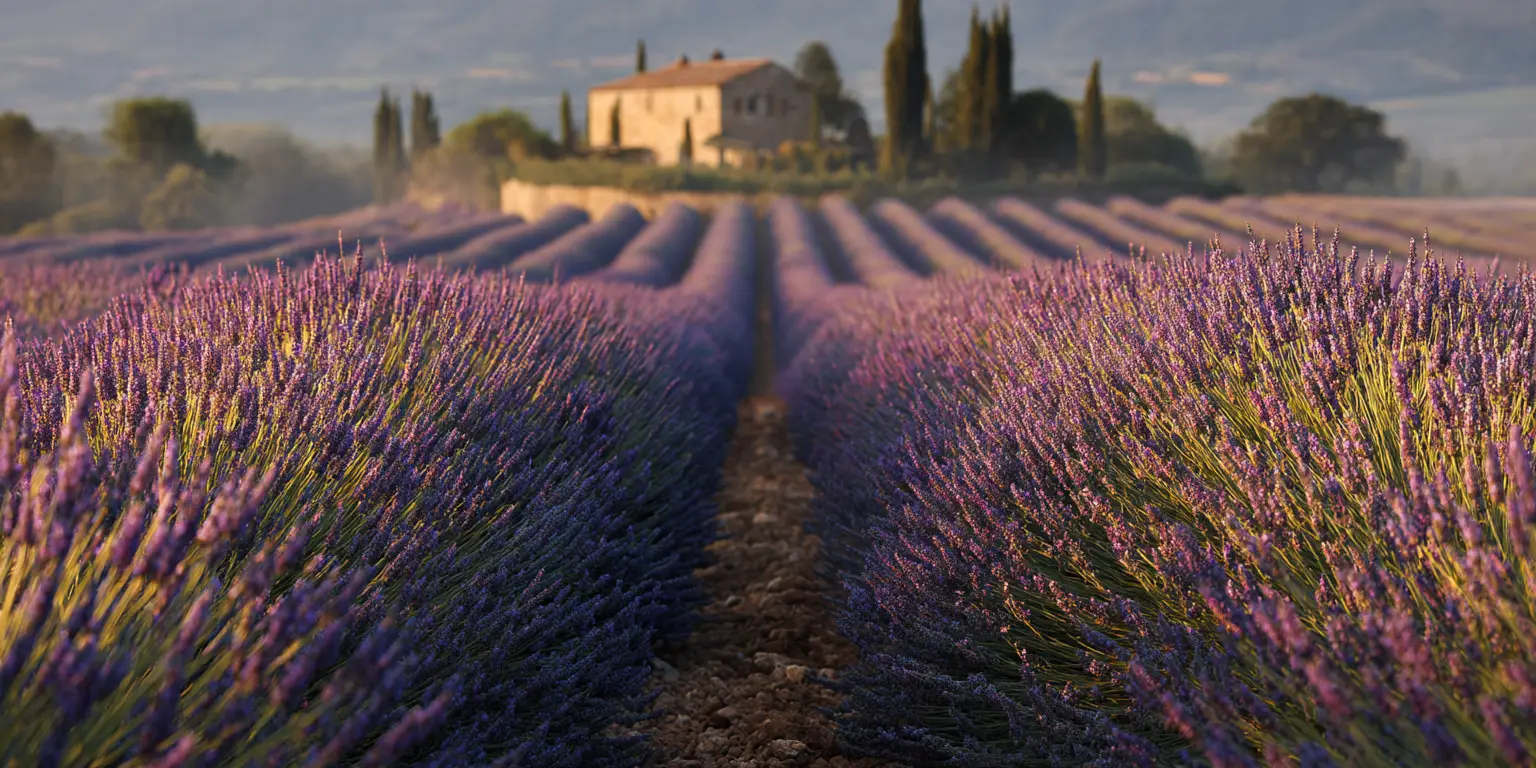
in bloom
now
through Aug
Bloom calendar
Lavandula × intermedia
Lavandin hybrid
At‑a‑glance
- Group/Class: Lavandin hybrid
- Height × spread: 24 to 48 in × 24 to 48 in (60 to 120 cm × 60 to 120 cm)
- Bloom window: mid to late summer
- Color & flower form: lavender to violet spikes, often long and showy
- Fragrance: 3 strong
- USDA hardiness: zones 5 to 8
- Breeder / Year / Origin: unknown, natural hybrid of L. angustifolia × L. latifolia, Europe
- Cut-flower notes: long, sturdy stems; dries well; fresh vase life varies by cultivar and handling
- Pet safety: avoid
How it differs
- Blooms later than true lavender in most climates
- Taller plants with longer spikes and strong stems
- Scent commonly more camphoraceous than true lavender
- High yield for essential oil and dried bundles
Strengths
- Heat tolerant compared with true lavender
- Abundant flowering on long stems
- Drought tolerant once established
- Useful for informal low hedges
Care in one minute
Plant in full sun and lean, well drained soil at neutral to slightly alkaline pH.
Irrigate to establish, then water deeply and infrequently.
Clip spent spikes after bloom to keep plants compact.
Avoid rich fertilizers; excess nitrogen reduces flowering.
Provide winter drainage and wind protection in cold sites.
Watch‑outs
- Requires excellent drainage to avoid root rot
- Can suffer winter injury in exposed sites
- May lodge without a light post-bloom trim
Best uses (tags)
Provenance note
Recognized in Europe where the parent species overlap; widely grown for oil and dried stems.
References
- NC State Extension Plant Toolbox: Lavandula × intermedia
- Missouri Botanical Garden Plant Finder: Lavandula × intermedia ‘Provence’
- MDPI review: Volatile compounds and sensory notes of Lavandin
- ASPCA: Lavender plant toxicity
Similar Flowers
Enjoying our flower guides? Add YourFlowersGuide as a preferred source on Google. It helps more readers find us.
Add to Preferred Sources