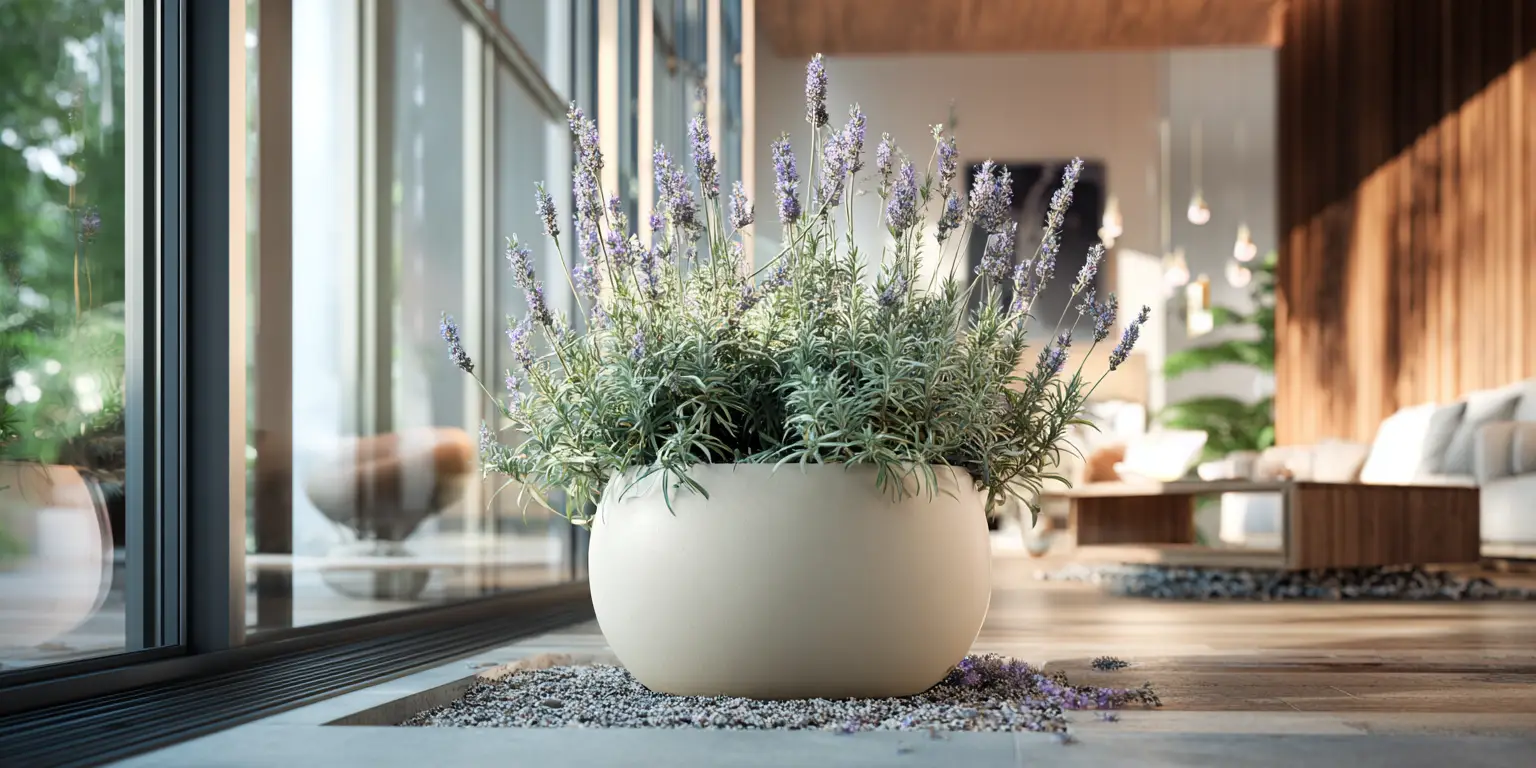
in bloom
now
through Aug
Bloom calendar
Lavandula dentata
Fringed lavender
At‑a‑glance
- Group/Class: Fringed lavender
- Height × spread: 24 to 36 in × 24 to 36 in (60 to 90 cm × 60 to 90 cm)
- Bloom window: early summer to fall in mild regions
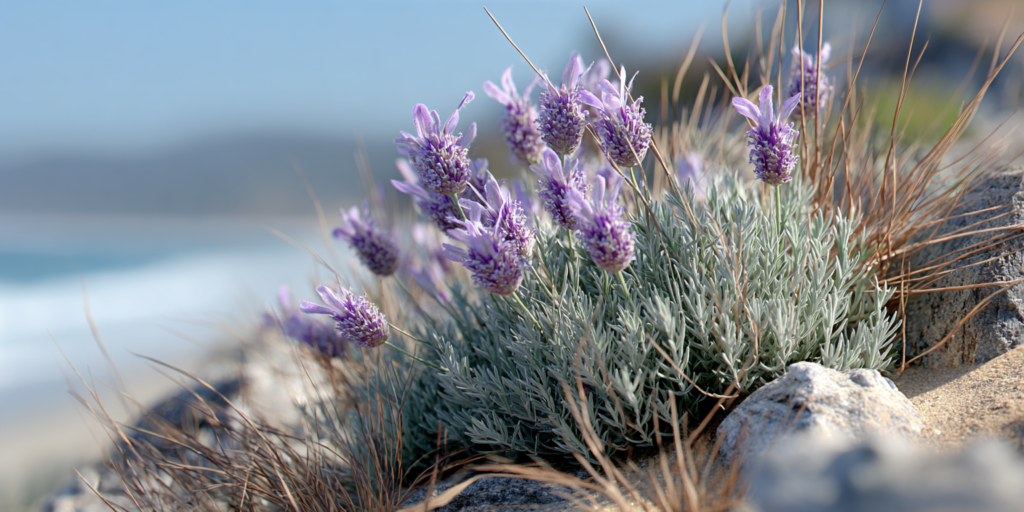
- Color & flower form: purple flowers on short dense spikes with bracts
- Fragrance: 2 noticeable
- USDA hardiness: zones 8 to 11
- Breeder / Year / Origin: unknown, Mediterranean region
- Cut-flower notes: moderate stem strength; good dried; fresh vase life varies
- Pet safety: avoid
How it differs
- Toothed foliage and soft texture are distinctive
- Longer bloom period where winters are mild
- Less frost hardy than English and lavandin types
- Often better suited to containers and coastal gardens
Strengths
- Heat and drought tolerant once established
- Tolerates salt spray in coastal sites
- Attracts pollinators
- Responds well to light shearing
Care in one minute
Provide full sun and very well drained, sandy or rocky soil.
Water to establish, then allow soil to dry between soakings.
Avoid high nitrogen fertilizers; use a light spring feeding if needed.
Shear lightly after flushes to keep plants compact.
Overwinter indoors north of zone 8 with bright light.
Watch‑outs
- Frost tender; protect or overwinter indoors in cold regions
- Root rot risk in heavy or wet soils
- Can become leggy without periodic trims
Best uses (tags)
Provenance note
Native around the Mediterranean and nearby islands; widely cultivated in mild climates.
References
- University of Arizona CALS Arboretum: Lavandula dentata
- RHS profile: Lavandula dentata
- UC ANR Master Gardeners: Lavandula (general care)
- ASPCA: Lavender plant toxicity
Similar Flowers
Enjoying our flower guides? Add YourFlowersGuide as a preferred source on Google. It helps more readers find us.
Add to Preferred Sources