The pairing · pick a flower
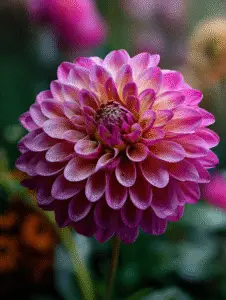 Dahlia+
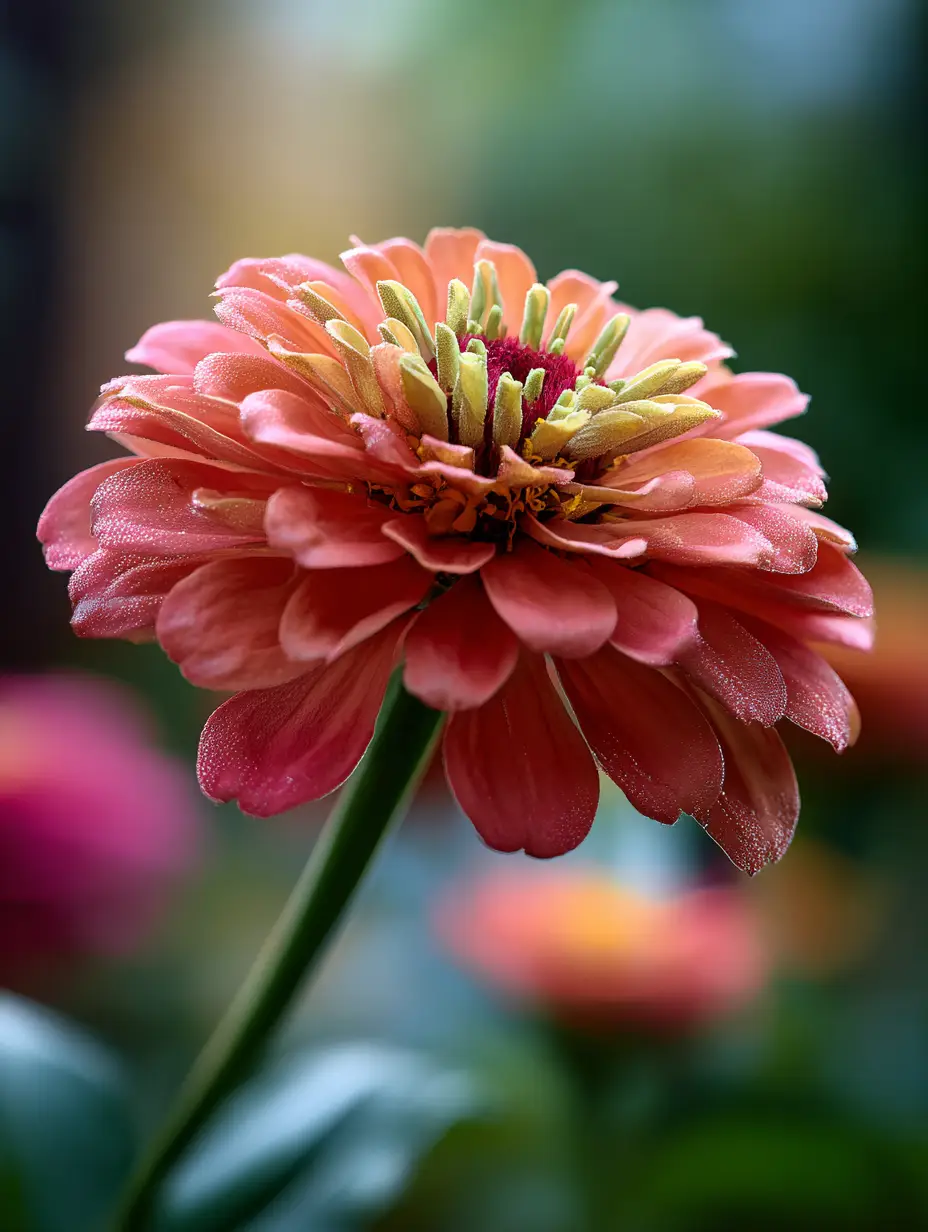 ZinniaPartial
Near-identical sun, soil, and water needs make zinnia the closest match on this list, and its upright habit and long bloom season echo a dahlia bed almost exactly, though both share a mildew weakness that rewards real spacing.
Dahlia+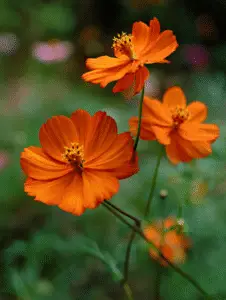 CosmosPartial
The most repeated dahlia pairing for good reason: cosmos wants the same full sun and well-drained soil, and its fine, feathery foliage is the single strongest texture contrast to a dahlia's broad, solid leaves on this whole list.
Dahlia+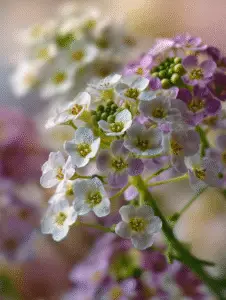 Sweet alyssumPartial
A shallow-rooted, low mat that stays under 6 inches, sweet alyssum is the most consistently named answer for hiding a dahlia's bare lower stems without competing for the tuber's own root run.
Dahlia+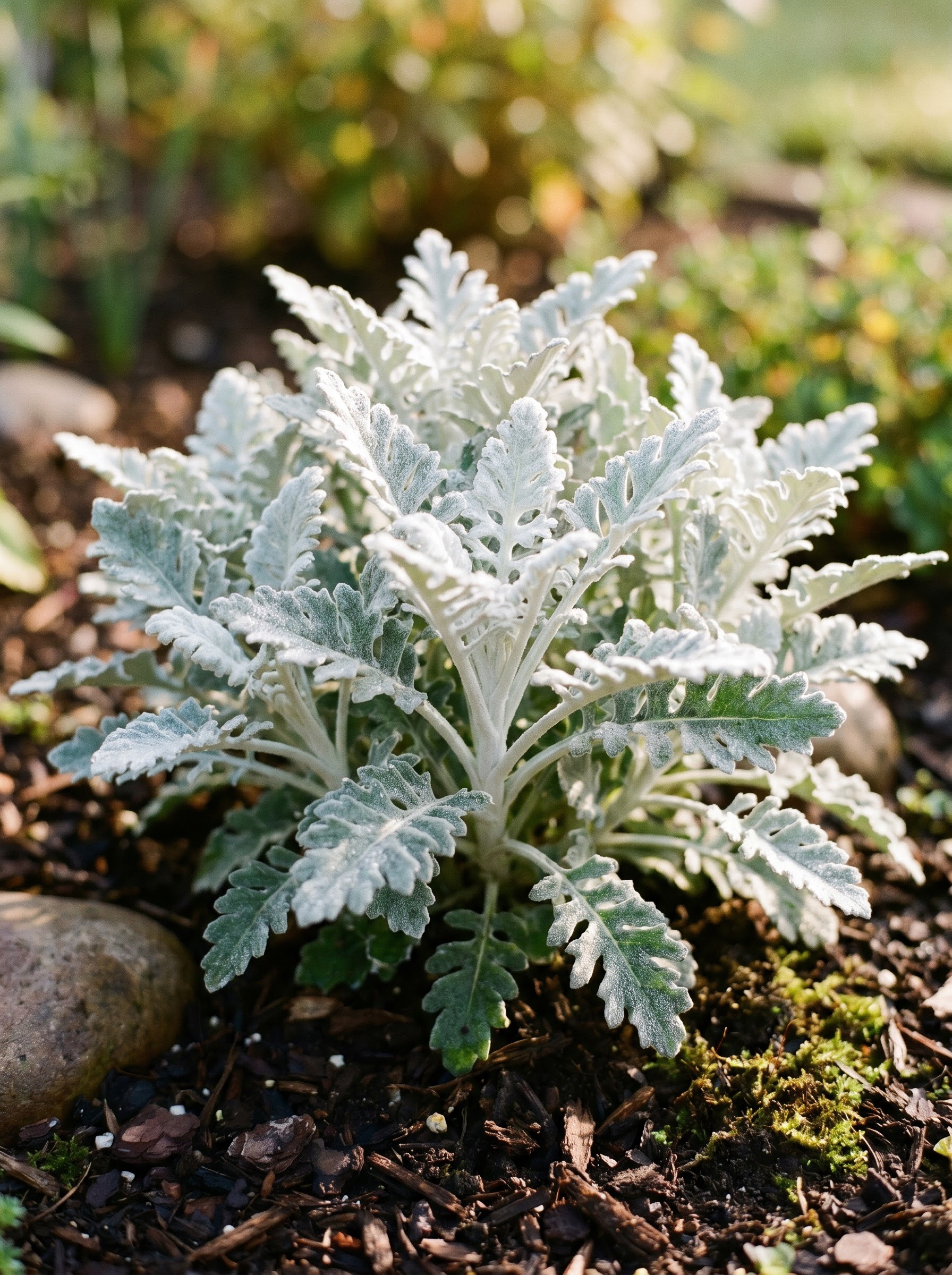 Dusty millerPartial
Silvery-gray foliage works as a neutral foil against a dahlia's saturated blooms, and because dusty miller is grown for its leaves rather than a short flowering flush, it covers bare stems all season, not just early on.
Dahlia+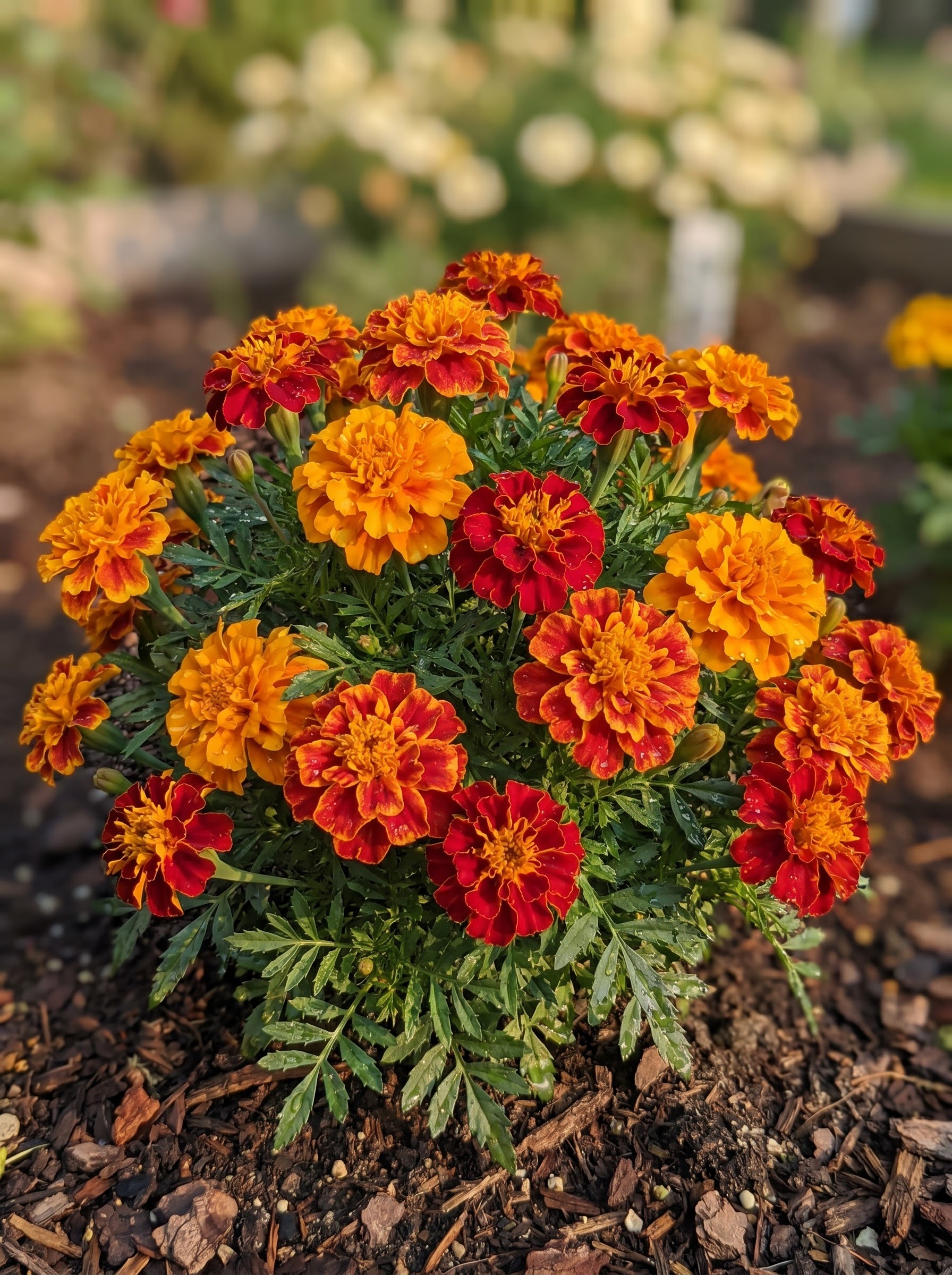 French marigoldPartial
Compact French marigold fills the same low, bare-stem gap as dusty miller and shares dahlia's heat tolerance, and one real trial found it draws western flower thrips away from nearby ornamentals, though only that pest and only under the tested conditions.
Dahlia+ VerbenaPartial
Tall Verbena bonariensis adds see-through height and movement without ever blocking a dahlia's own display, while low trailing verbena weaves through the base as a container spiller, and both take the same full sun and well-drained soil.
Dahlia+ SnapdragonPartial
Snapdragon flowers earliest in cool weather and fades as summer heat builds, filling the display gap before a dahlia comes into its own in midsummer, and it shares the same full sun, rich, well-drained bed in both borders and pots.
Dahlia+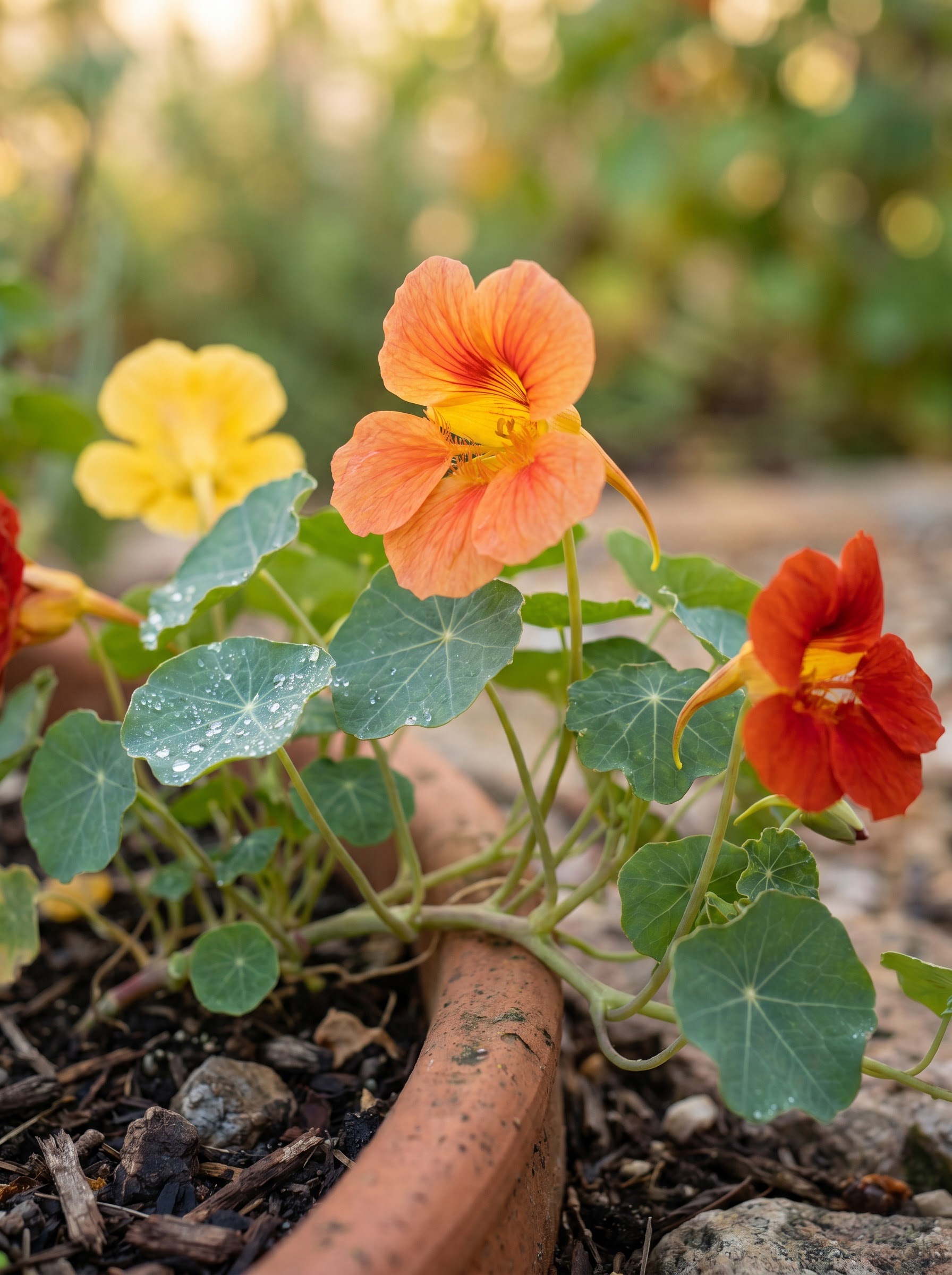 NasturtiumFolklore
Nasturtium tolerates poorer soil than a dahlia needs, so it never competes for the same fertility, and it is one of the most commonly named aphid trap crops, though the trap-crop mechanism itself is still an unsettled, only-partly-proven claim rather than a guarantee.
All dahlias companions
8 flower companions, best match first
What not to plant near dahlias
Most bad neighbours are not evil, they just want the opposite light, water or root run. Here is what to keep away, and what to do instead.
Sunflower
A sunflower's deep, far-reaching root system is documented to pull more water from a given volume of soil than even a corn plant can, and packed into a dahlia's small bed or container that same root aggression pulls water and nutrients hard enough to leave the dahlia short. This is resource competition, not a chemical or allelopathic effect.
Bog and marginal wet-soil plants (calla lily, marsh marigold, moisture-loving iris)
These plants want soil that stays wet to boggy, while a dahlia tuber rots quickly in exactly that condition, especially right after planting before the first shoots break the surface.
Succulents and cacti
Succulents and cacti need their soil to dry out completely between waterings to avoid root rot, the exact opposite of a dahlia's steady, never-dry-out watering habit, so one of the two is always on the wrong schedule in a shared pot or bed.
Tomato, pepper, eggplant
All three are documented hosts for two-spotted spider mite, one of dahlia's most damaging pests, especially in hot, dry weather, so growing them in the same bed raises the odds of a shared infestation spreading between them.
Mint and other aggressive runners
Mint spreads by underground rhizome fast and wide enough that extension guidance recommends containing it in a buried pot rather than open soil, and left loose it will run straight into a dahlia's own root run and compete hard for water and space.
The best companions for dahlias, explained
A dahlia bed sets its own terms: full sun, rich fertilized soil, and steady moisture that never sits wet, and the companions that actually work are the ones built for that exact profile rather than plants chosen because they look good in a catalog photo next to a dinnerplate bloom. Zinnia is the closest match on every axis that matters, wanting the same six to eight hours of direct sun and the same well-drained, amended bed a dahlia needs, and its upright habit visually echoes the dahlia’s own structure rather than fighting it. The two share the "Mexican cut-flower annuals" cluster with cosmos and marigold for a real reason: all three trace back to the same hot, sunny native range and bloom on the same long summer-into-frost schedule a cutting gardener actually wants. Cosmos earns its reputation as the single most classic dahlia pairing for a more specific reason than shared conditions alone. Its fine, feathery foliage is the strongest textural contrast available against a dahlia’s broad, solid leaves, and when both are grown as single-flowered forms rather than doubles, the open centers draw noticeably more bees and other pollinators, since a closed double bloom hides the pollen a forager is actually after.
Sweet alyssum solves a different problem entirely: it is the most consistently named answer anywhere for a dahlia’s bare, leggy lower stems, which go unattractive by midsummer because the plant pours its energy upward into the flowers rather than into filling out its base. A shallow-rooted mat that stays under six inches tall, sweet alyssum tucks in as a skirt without competing for the tuber’s own root run, and it works the same job in a container rim as it does at a bed’s front edge. Dusty miller does a related job at a different scale, its silvery-gray foliage acting as a neutral color foil against a dahlia’s saturated blooms rather than a groundcover, and because it is grown for leaf rather than a short flowering flush, it holds that look from spring through frost instead of fading after one early show. Compact French marigold rounds out the low, bare-stem layer and shares dahlia’s heat tolerance, and it carries the one dahlia companion with a genuine peer-reviewed trial behind it: a controlled greenhouse study found flowering Tagetes patula draws western flower thrips away from nearby ornamentals, though that finding is narrow, tested on one pest under specific conditions, not a blanket claim that marigolds repel everything a dahlia grower is fighting.
Height and structure round out the picture. Tall Verbena bonariensis threads an airy, see-through frame of purple through the bed without ever blocking a dahlia’s own display, while low trailing verbena cultivars do the container-spiller job, weaving through the base of a pot the way sweet alyssum does in open ground. Snapdragon fills a timing gap rather than a height or texture one: it flowers earliest in cool spring weather and fades as summer heat builds, handing the display off right as a dahlia is coming into its own midsummer peak, and it shares the same full-sun, rich, well-drained bed in both borders and pots. Nasturtium closes the list as the honest edge case: it genuinely tolerates poorer soil than a dahlia needs, so it never competes for the same fertility, and it is one of the most commonly cited aphid trap crops anywhere, though that trap-crop mechanism itself remains only partly proven rather than a guarantee, a distinction worth keeping straight rather than promising more than the evidence shows.
What not to plant near dahlias
The most avoidable mistake with dahlias is not attack from a hostile neighbor, since no allelopathy claim exists for this flower the way it does for black walnut against roses. It is starving the plant by resource competition, because dahlia is itself a documented heavy feeder that needs regular fertilizing to produce its big blooms. Sunflower is named specifically and repeatedly as the wrong neighbor for exactly this reason: its deep, far-reaching root system is documented to draw more water from a given volume of soil than even a corn plant can, and packed into the same small bed or container that same root aggression pulls water and nutrients hard enough to leave a dahlia short. This is a straightforward competition-for-resources problem rather than the chemical allelopathy some sunflower pairings carry against other crops, and the honest fix is real distance, at minimum a few feet in open ground and entirely separate pots in containers, rather than a compromise spot.
Moisture mismatch is the second real failure mode, and it cuts both ways around a dahlia’s narrow water band. Dahlia tubers rot readily in wet soil and want consistently moist ground that is never boggy, which rules out pairing with bog and marginal plants like calla lily, marsh marigold, or moisture-loving iris that specifically want soil staying wet to waterlogged; put those in a low, wet corner of the yard or a pond margin instead. The opposite extreme causes the same problem from the other direction: succulents and cacti need their soil to dry out completely between waterings to avoid root rot, which is the exact reverse of a dahlia’s steady, never-let-it-dry habit, so one of the two plants is always being watered wrong in a shared pot. A third, more specific risk applies mainly to gardeners interplanting flowers into a vegetable bed rather than a pure ornamental border: tomato, pepper, and eggplant are all documented hosts for two-spotted spider mite, one of dahlia’s most damaging pests, especially in hot, dry weather, so growing them nearby raises the odds of a shared infestation moving from one planting to the other. Mint and other aggressive runners round out the avoid list for the most generic reason on this page, spreading fast enough underground that extension guidance recommends containing them in a buried pot; left loose, mint’s rhizomes will run straight into a dahlia’s undisturbed root zone and compete hard for the water and space the tuber needs to itself.
Do they like the same conditions?
The rule that filters every candidate on this page is full sun, rich well-drained soil, and steady moisture that is generous but never wet, tested against each companion before it earns a spot. Dahlias want six to eight hours of direct light daily, with morning sun especially prized, and only a little dappled afternoon shade tolerated in the hottest climates as relief rather than a substitute for the daily minimum. That sun requirement is what makes the dahlia companion set draw almost entirely from full-sun perennials and annuals, plants like lavender or hosta that thrive in a shade bed would simply stretch and stop flowering here. Water is a narrower band than it first sounds. A dahlia tuber sitting in cold, wet soil rots before it ever sprouts, so growers hold off watering until green shoots break the surface, but once the plant is established it wants consistent moisture and is not a drought-tolerant xeriscape plant the way lavender or Russian sage are. That "moist but never wet" requirement is exactly why the moisture-mismatch avoids run in both directions: bog plants want wetter than a dahlia can tolerate, and succulents want drier.
Soil pH sits in a wide enough band, roughly 6.0 to 7.5 with 6.5 to 7.0 cited as the sweet spot for nutrient uptake, that pH matching is a soft constraint rather than a hard rule for most candidates on this list, closer in spirit to how forgiving a rose bed’s pH range is than to a true acid-obligate plant. The trait that actually shapes the avoid list is dahlia’s status as a confirmed heavy feeder: Penn State Extension recommends monthly fertilizing with a low-nitrogen formula precisely because the plant draws hard on the soil to produce its blooms, and that hunger is what rules out sharing a small footprint with another equally greedy plant like sunflower. Zinnia deserves one honest caveat here rather than a blanket yes, since both dahlia and zinnia are more susceptible to powdery mildew, and crowding either one reduces the airflow that keeps the fungus from taking hold on damp foliage. That is not a reason to skip zinnia, which remains one of the best-matched companions on this entire page, it is a reason to give it the spacing its own extension guidance already recommends.
How to plant them together
Layer by height and by the job each plant is doing, rather than filling the bed with everything blooming at once. Zinnia and cosmos work best as a middle layer, spaced 18 to 24 inches and 12 to 18 inches from the dahlia respectively, close enough to share the bed’s richness but far enough that neither is fighting the tuber for the exact same soil pocket. Sweet alyssum, dusty miller, and French marigold belong at the front edge and directly under a dahlia’s lower stems, spaced roughly 6 to 12 inches out, precisely where the bare-leg problem is worst by midsummer. Verbena splits into two placements depending on type: tall Verbena bonariensis goes 18 to 24 inches behind the dahlia where its see-through height adds movement without blocking the display, while trailing verbena cultivars belong up close at 8 to 12 inches, doing the same low-skirt job as sweet alyssum. Snapdragon slots in at 10 to 12 inches and does its real work early in the season, since it fades once summer heat peaks right as the dahlia is taking over the display. Give sunflower, if grown anywhere nearby at all, real distance, several feet at minimum, and never share a container with one.
In pots the same logic holds at a smaller scale, and it is worth naming plainly: the dahlia is the thriller, and every genuine companion on this list is either a filler or a spiller, never another thriller-sized competitor for the same limited soil volume. Sweet alyssum and trailing verbena do the spiller job at the rim, tumbling over the edge while barely touching the dahlia’s own root run, and nasturtium can do the same at a larger scale if the container is deep enough to give it room without crowding the tuber. Dusty miller and compact French marigold work as fillers around the dahlia’s base, low enough to stay entirely below the blooms. Water containers more often than an in-ground bed, since pots dry out faster, but hold to the same rule that matters everywhere on this page: never water a freshly planted, unsprouted tuber until green shoots appear, and once they do, keep the whole container consistently moist rather than letting it swing between soaked and bone dry.
Does companion planting actually work for dahlias?
Some of it clearly does, and some of it is closer to a repeated design habit than a tested horticultural fact, which is worth separating out plainly. The shared-conditions matches are the strongest claims on this page: zinnia, cosmos, sweet alyssum, dusty miller, verbena, and snapdragon all genuinely want the same full sun and well-drained, richly amended soil a dahlia does, and that overlap is verifiable against extension guidance rather than being a marketing line repeated across garden blogs. The bare-stem cover job is just as real and specific to this flower: a dahlia genuinely does go leggy and bare low down by midsummer, the same structural problem hydrangea has for a very different reason, and low skirting plants close that gap because they are simply the right height and habit for it, not because of any deeper mechanism.
Where the evidence thins out is the pest-defense claims, and dahlia needs more care here than most companion pages give it. The one real controlled trial in this dataset, a greenhouse study on Tagetes patula, found marigold works as a trap plant for western flower thrips specifically, under tested conditions, which is genuine evidence for one narrow claim rather than support for the popular, much broader idea that marigolds repel dahlia’s actual worst enemies, aphids, earwigs, and spider mites, none of which show up in that trap-crop literature. Nasturtium’s aphid-decoy reputation rests on a similar gap: it is one of the most repeated trap-crop claims in gardening writing, but the underlying mechanism, whether a decoy plant actually draws pests away rather than simply hosting a reservoir of them right next to the flower it is meant to protect, is not settled by the evidence available. Match the sun, soil, and water first, use height and bloom timing to solve the real bare-stem and succession problems second, and treat any specific pest-repellent promise as a narrow, conditional finding rather than a fix companion planting has been shown to reliably deliver.
FAQ
What can I plant in front of dahlias to hide the bare stems?
Sweet alyssum is the most consistently recommended answer, since its shallow roots and low, spreading mat stay under six inches and cover a dahlia’s leggy base without competing for the tuber’s root run. Dusty miller and compact French marigold do the same job at a slightly larger scale and hold their cover through the whole season rather than fading early.
What should you not plant near dahlias?
Avoid sunflower, since both plants are heavy feeders competing hard for the same water and nutrients in a small bed. Skip bog plants like calla lily and marsh marigold, which want wetter soil than a dahlia tuber can tolerate, and skip succulents and cacti for the opposite reason, since they need to dry out fully between waterings while a dahlia wants steady moisture.
Can I plant zinnias and dahlias together?
Yes, and zinnia is one of the closest matches on this whole page for sun, soil, and water needs. The one caveat is that both share a vulnerability to powdery mildew, so give them the airflow their own spacing guidelines already call for rather than crowding them tight against each other.
Can you plant marigolds with dahlias?
Yes. Compact French marigold shares dahlia’s heat tolerance and fills the same low, bare-stem gap as sweet alyssum, and one controlled trial found it draws thrips away from nearby ornamentals. That finding is specific to thrips, though, not a guarantee against aphids, earwigs, or spider mites, dahlia’s more damaging pests.
Do sunflowers and dahlias compete for nutrients?
Yes, and this is a resource-competition problem rather than a chemical one. Both are documented heavy feeders and heavy drinkers with aggressive root systems, and packed into the same small footprint a sunflower typically outcompetes a dahlia for water and fertility, which is why the two are better grown with real distance between them or in entirely separate containers.
Sources
- Penn State Extension, The Dirt on Dahlias
- NC State Extension Gardener Plant Toolbox, Dahlia
- NC State Extension Gardener Plant Toolbox, Caltha palustris (Marsh Marigold)
- Iowa State University Extension, Common Problems and Issues of Succulents
- Illinois Extension, Garden Gone Awry? How to Control Aggressive Garden Plants
- Illinois Extension, Prevent, Protect Zinnias from Powdery Mildew
- Wisconsin Horticulture Extension, Zinnias
- NC State Extension Gardener Plant Toolbox, Cosmos bipinnatus
- North Dakota State University Extension, Sunflower Production Guide
- UMass Amherst Center for Agriculture, Food, and the Environment, Two-Spotted Spider Mite