

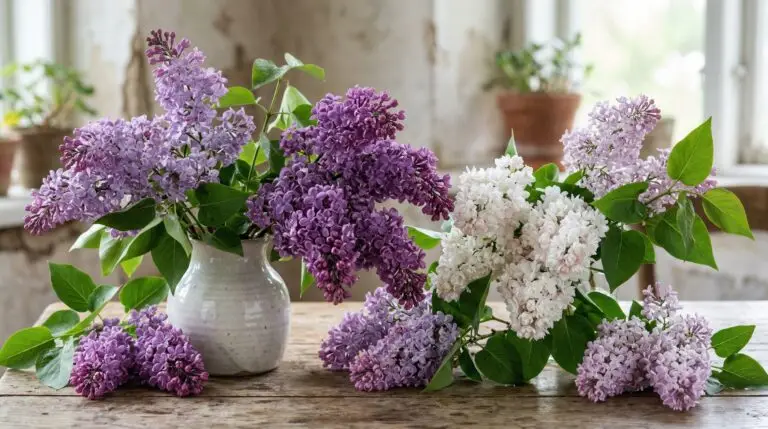

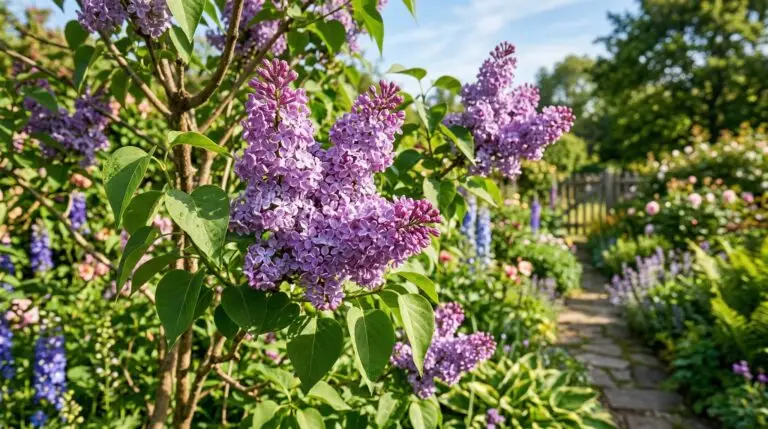
Lilac bloom time across the US
Interactive map
 See the interactive map
Drag the date and the bloom moves north across the country. Every point has its own window, and the map says where it has no records rather than guessing. Free, with nothing to sign up for. Open the lilac map.
City by city
Modeled window, earliest first. Cultivars of the same flower can open days or weeks apart.
Taxonomy and origin
Lilacs belong to the genus Syringa in the olive family, Oleaceae, which makes them relatives of olives, jasmine, privet, and forsythia. Botanists recognize anywhere from a dozen to about thirty species depending on how they are counted, native from southeastern Europe across to eastern Asia. The common lilac, Syringa vulgaris, came from the mountains of the Balkans and was carried west out of Ottoman gardens into Europe around the sixteenth century, and later to North America with early colonists. Much of the color and doubled fullness seen in modern shrubs traces to the French breeder Victor Lemoine, whose work in the nineteenth century gave rise to the many cultivars still sold as French lilacs. The genus name comes from the Greek syrinx, meaning pipe or tube, a reference to the hollow pithy stems, and the common lilac is the state flower of New Hampshire, chosen for its hardiness.
Knowing the type matters more than knowing the species, because size, bloom timing, and where a plant will thrive all follow from it. The table below sorts the main groups a buyer will meet, and the guide to the best lilac varieties from classic purple to reblooming and dwarf forms goes deeper on named cultivars.
For a first lilac in a cold-winter garden, the common lilac delivers the strongest scent and the fullest spring show. Where space is tight, the dwarf Korean and 'Miss Kim' give the same fragrance on a plant a third the size, and 'Miss Kim' also holds up better in heat. Gardeners who want a small shade tree rather than a shrub choose the Japanese tree lilac, which blooms weeks later in creamy white. Match the type to the space and the climate first, then narrow by flower color.
Four groups, and the two things that actually separate them
Height is the least useful way to choose a lilac, because two figures decide whether the plant satisfies its owner: how many years it takes to flower, and whether it gets powdery mildew every August. Iowa State Extension and UMN Extension publish both, cultivar by cultivar, and Missouri Botanical Garden and the Arnold Arboretum fill in the rest.
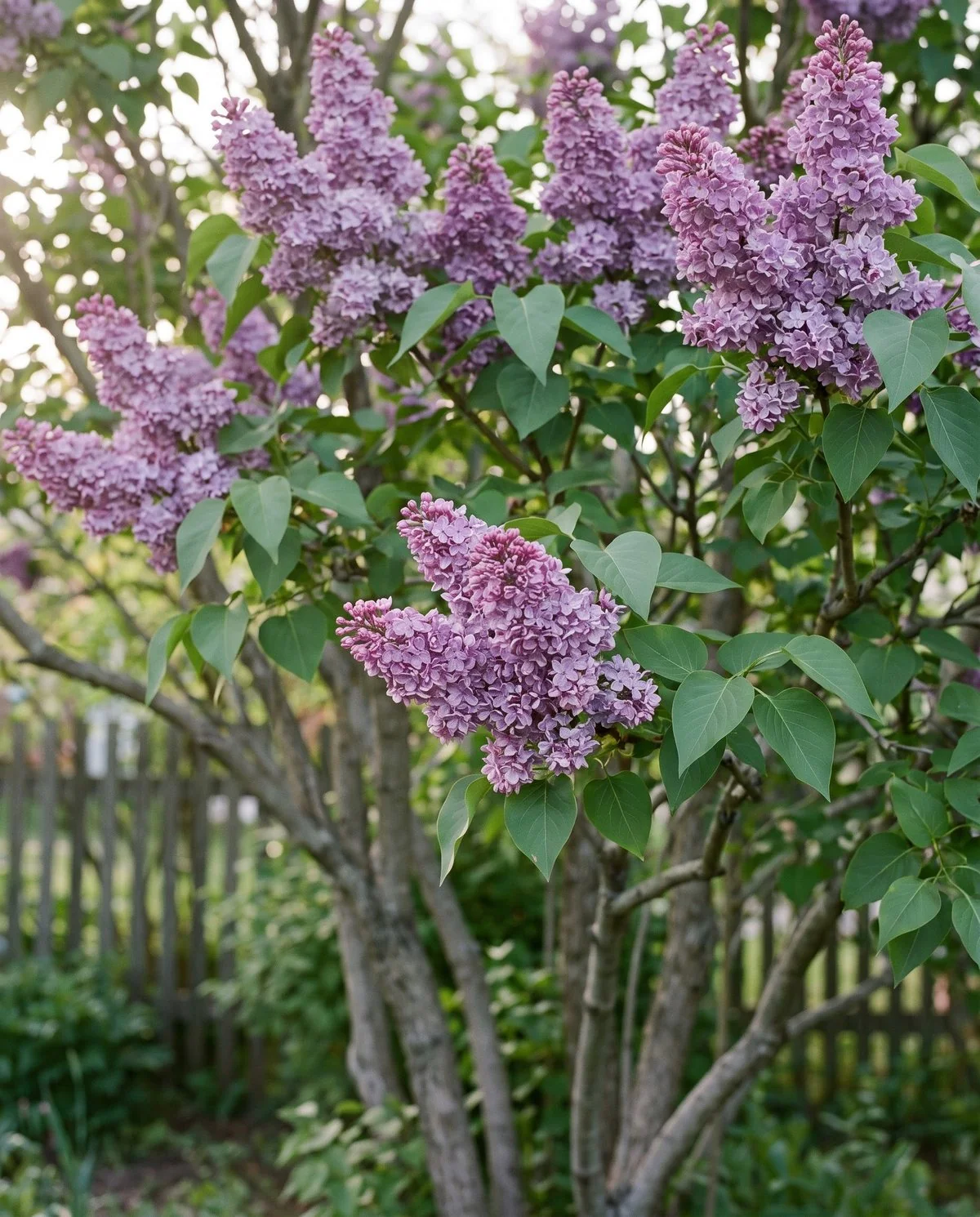
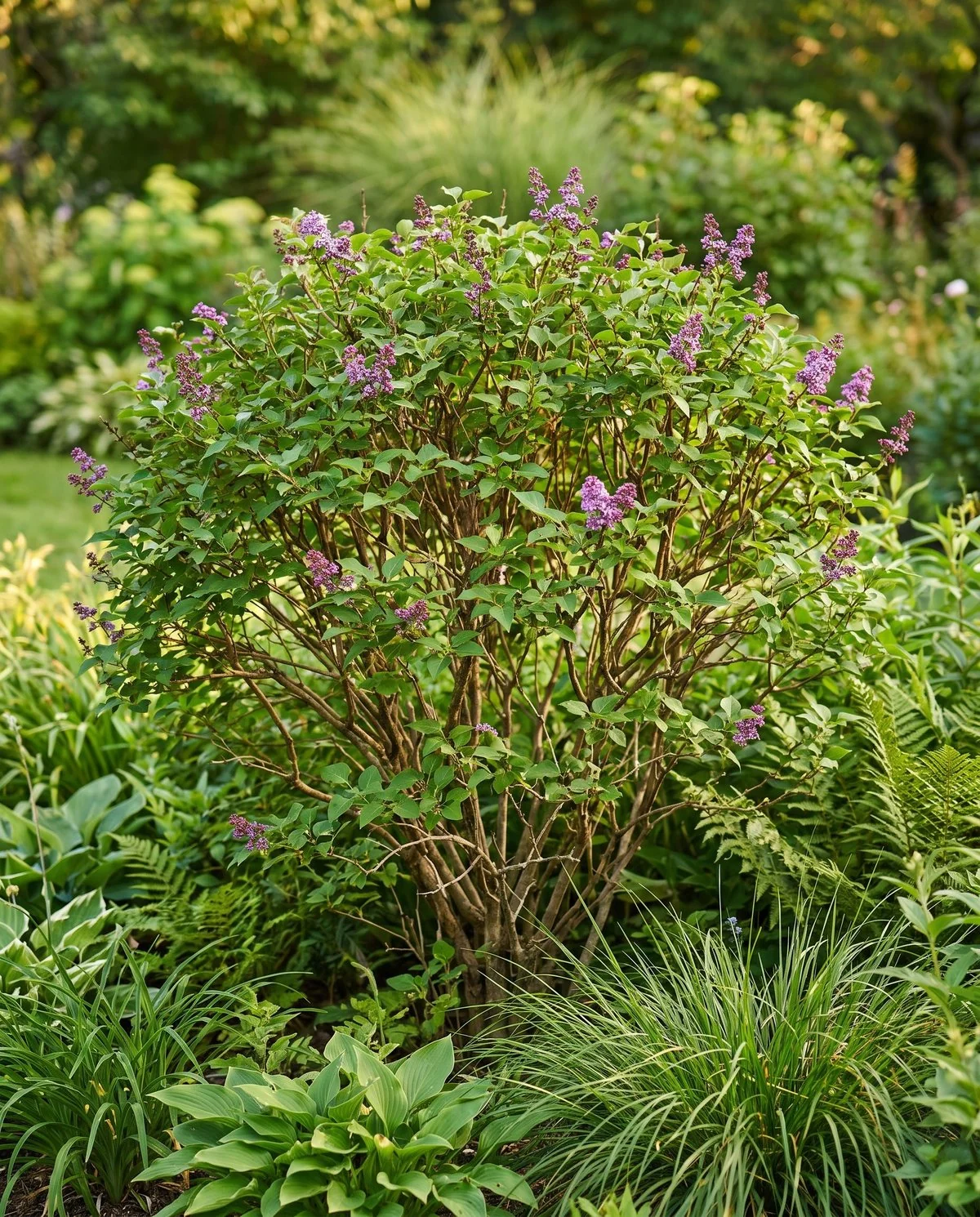
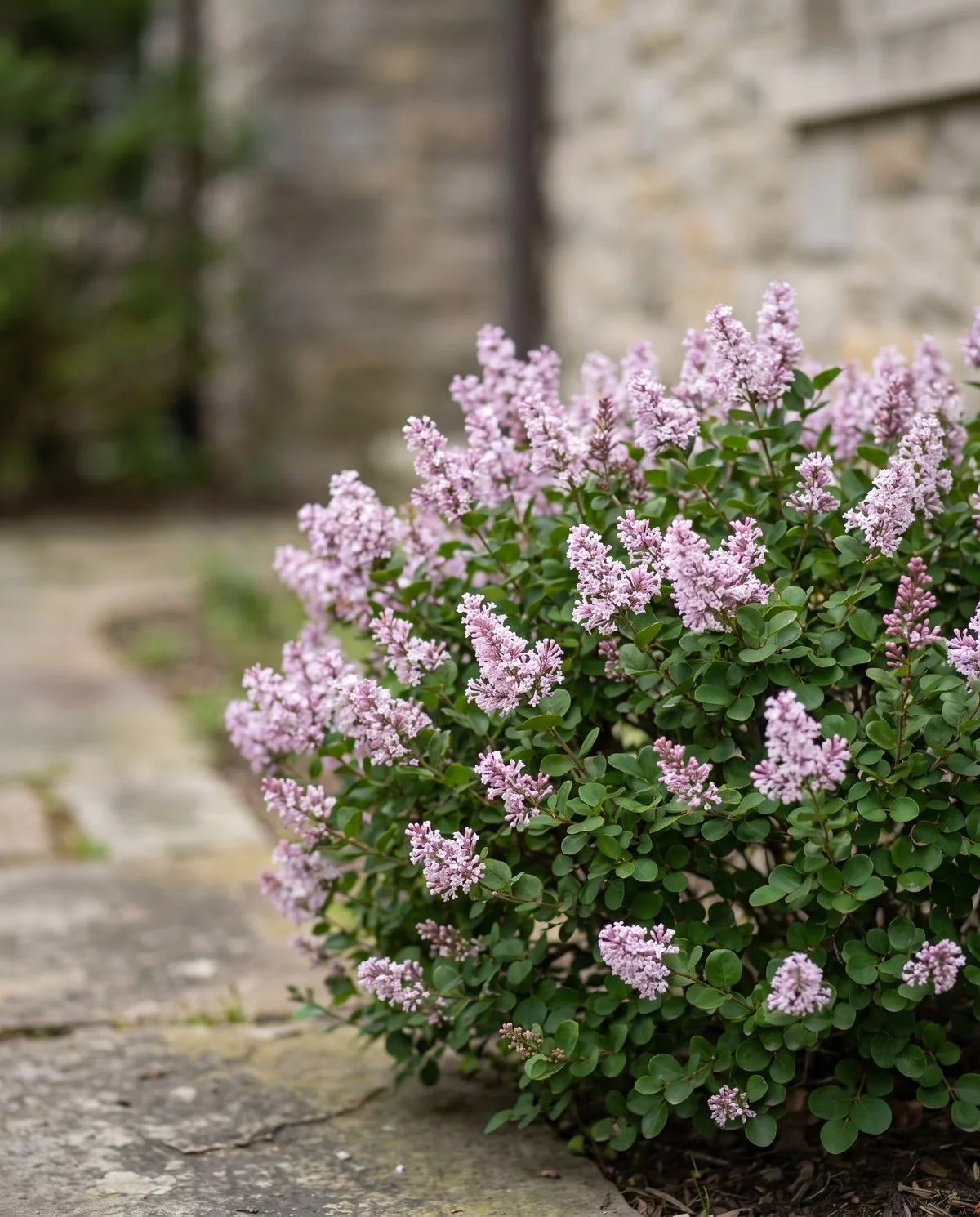
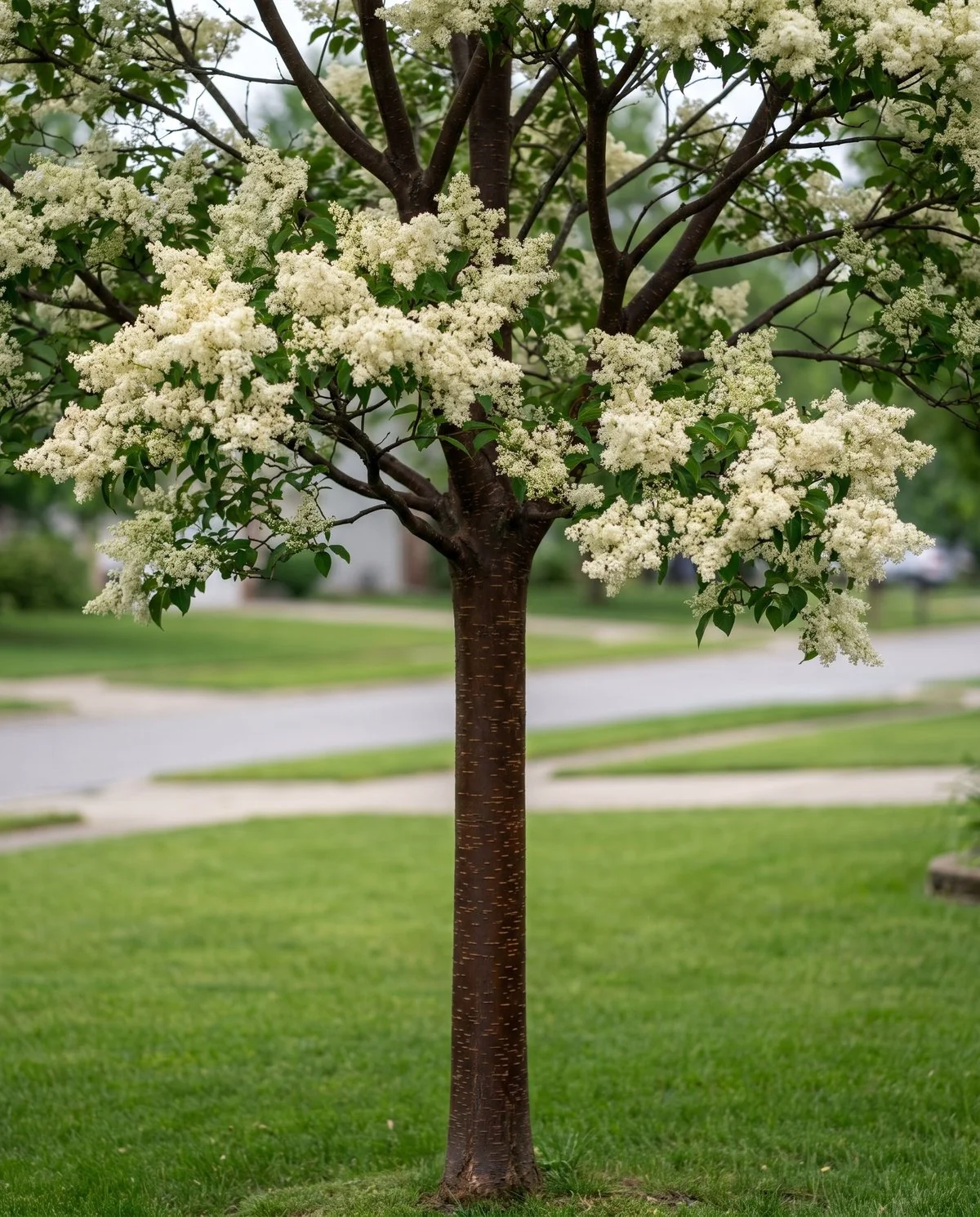
UMN's own list carries five more groups worth naming. Syringa x hyacinthiflora is an early-flowering hybrid at 7 to 12 ft that UMN calls disease-resistant and a good foundation plant, with 'Excel', 'Maiden's Blush' and 'Pocahontas'. S. x chinensis, the Chinese lilac, is susceptible to both mildew and blight. S. x persica, the Persian lilac, is sterile and susceptible to both. S. x laciniata, the cutleaf Persian lilac, is disease-resistant and needs little pruning. S. x prestoniae, the Preston lilac, is cold-hardy to Zone 3, blooms later, carries what Iowa State describes as a spicier fragrance that is milder, and is named alongside Meyer and 'Miss Kim' as one of the fast-to-bloom types.
Bloom time
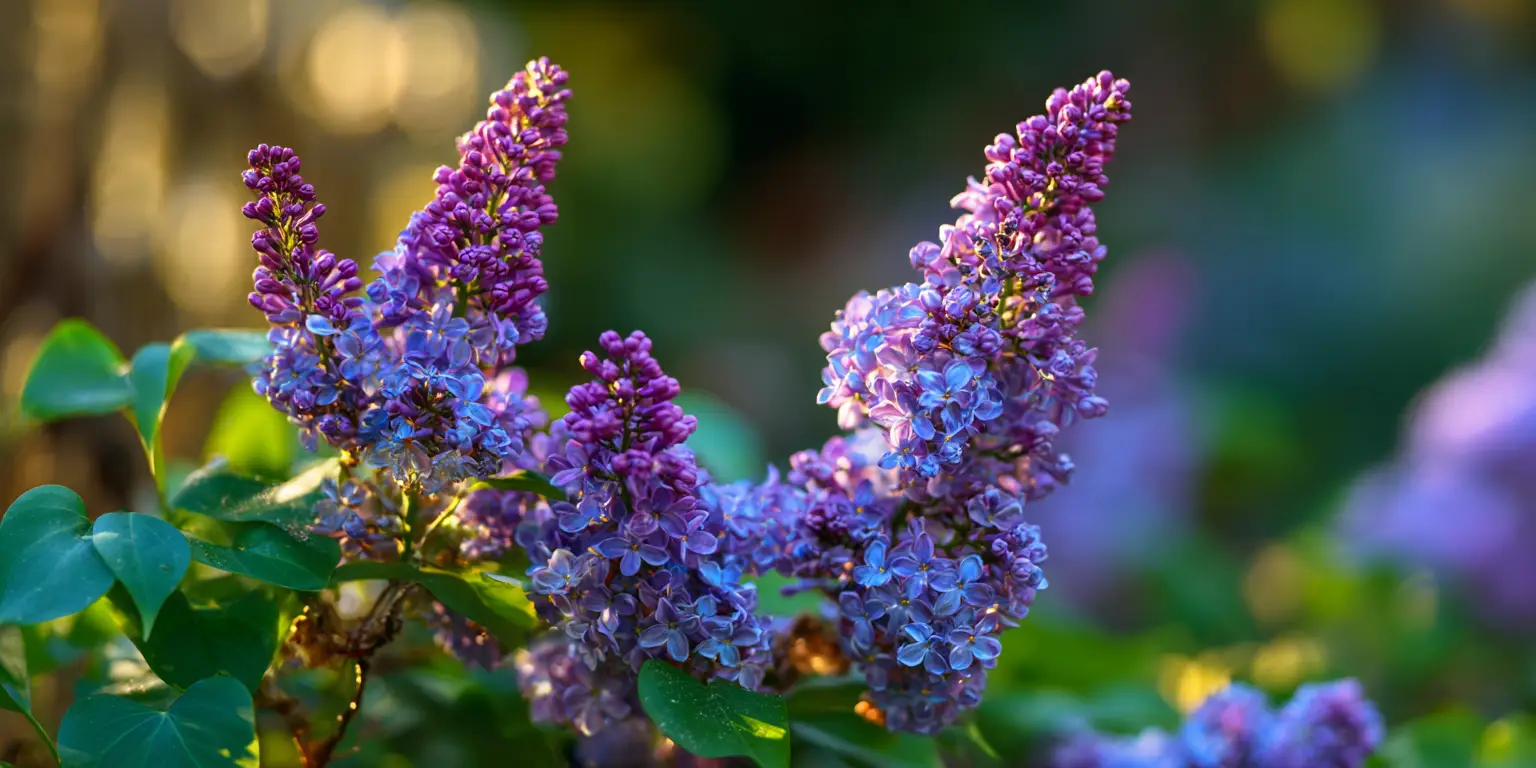
Most lilacs flower once a year in mid to late spring, and in much of the country the common lilac opens in May, after the daffodils and tulips have finished but before summer heat sets in. Early hybrids such as Syringa x hyacinthiflora can open a week or two ahead of that, and later species like the Hungarian lilac stretch the season toward early summer, so planting a mix of early, mid, and late types widens the window. Any single bush holds its display for roughly two to three weeks, longer in cool weather and shorter in a warm spell, which is part of why the season feels so brief and so anticipated. The reblooming Bloomerang lilacs are the exception, giving a full spring flush followed by scattered flowers into summer and fall, but they are a minority.
The detail that decides next year's flowers is when the buds form. Lilacs set their buds for the following spring on old wood, within a few weeks of the current bloom fading, so any cutting done later removes the flowers before they ever open. Deadheading the spent clusters soon after bloom tidies the shrub and directs energy into those new buds rather than seed. When a plant leafs out well but stays flowerless, the reasons are usually the same handful of things, laid out in the guide to why lilacs stop blooming and the pruning-timing mistake behind it.
The two questions this plant generates, worked in order
The first path is UMN's own ranked list of causes, in its order rather than a rearranged one. The second is the corpus's biggest question, and it starts by identifying the shrub, because the two pruning techniques are not interchangeable.
Height and spread
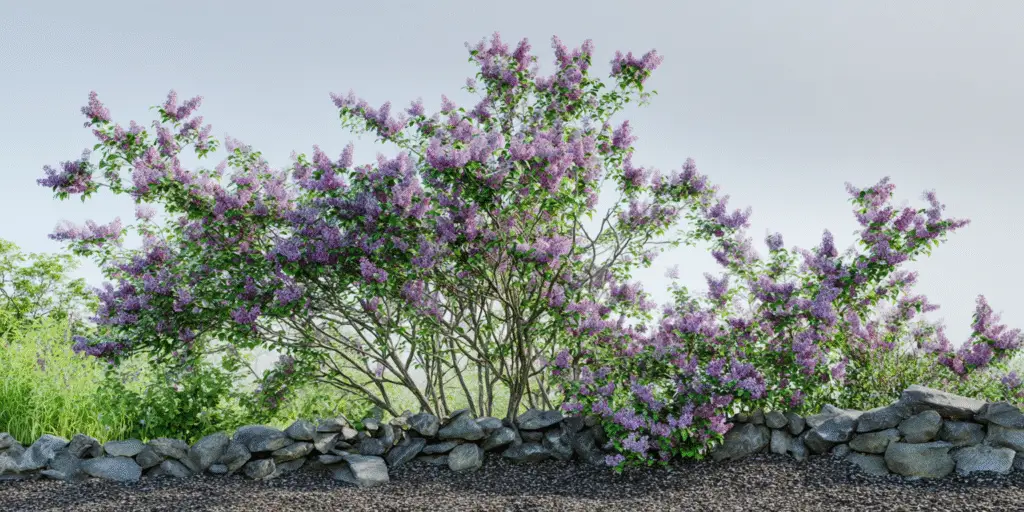
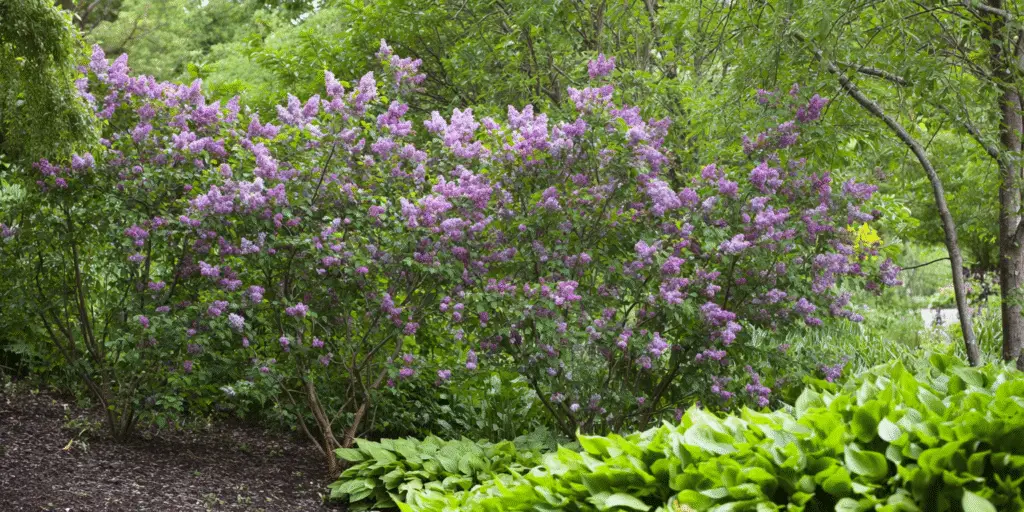
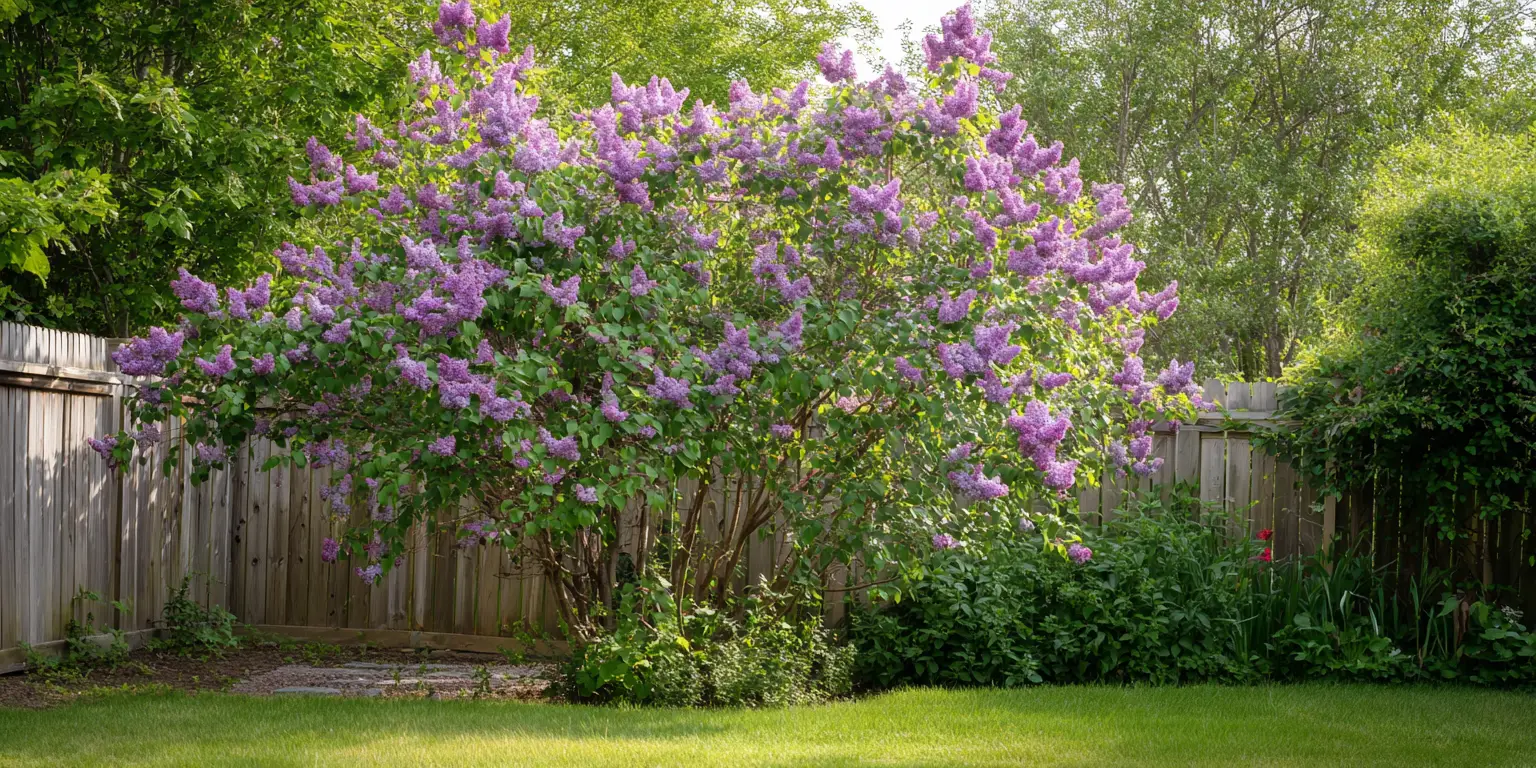
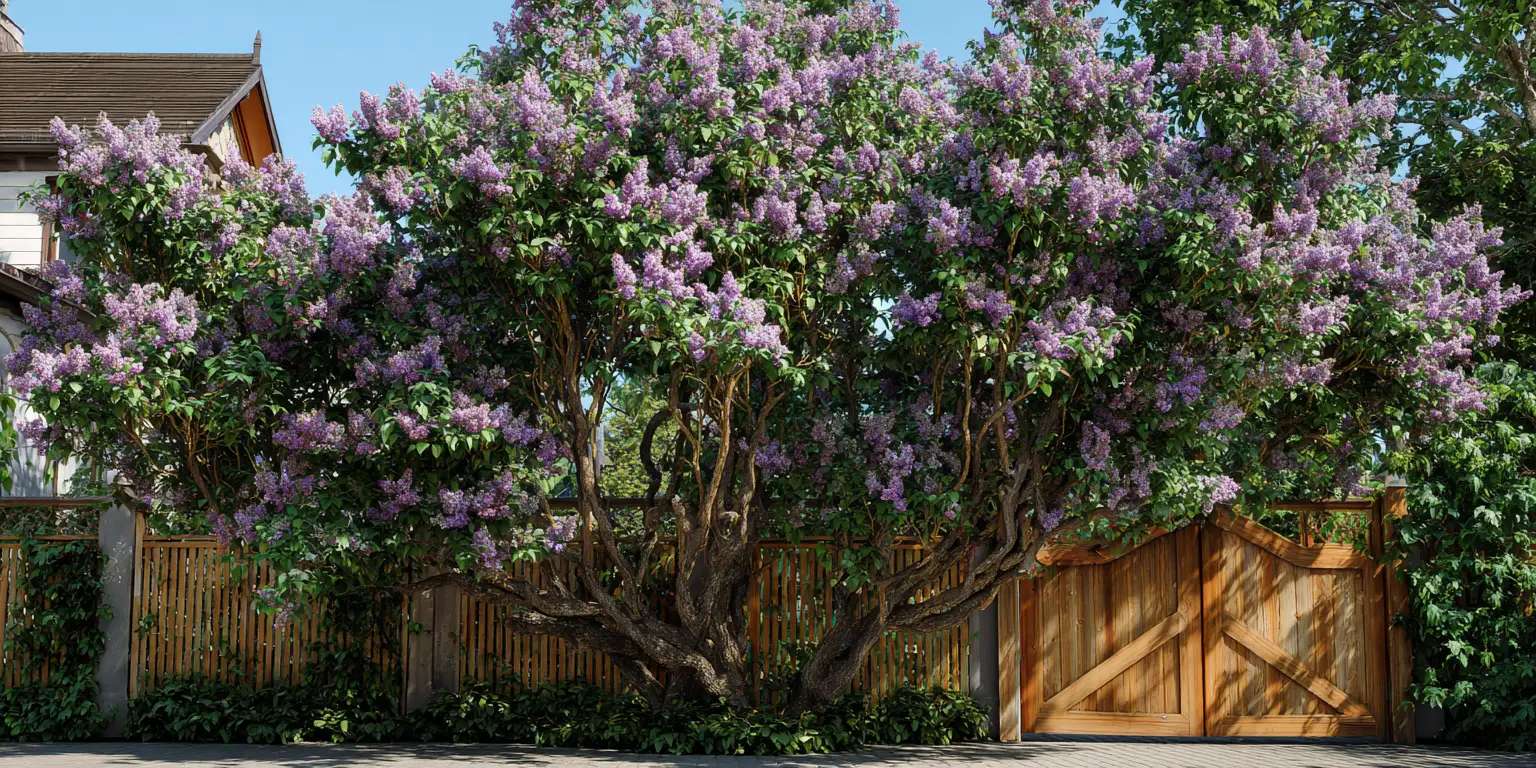
Size depends entirely on the type. A common lilac grows into an upright, multi-stemmed shrub of about 8 to 15 feet tall and 6 to 12 feet wide at maturity, with several trunks rising from the base into a loose vase or fountain shape, and an old specimen in a good spot can reach twenty feet. Dwarf forms such as the Korean lilac stay near 4 to 5 feet in both directions, and 'Miss Kim' holds to 5 to 7 feet, while the Japanese tree lilac is a different animal altogether, forming a single-trunk small tree of 20 to 30 feet. Common lilacs also sucker, sending up new shoots from the roots that widen the clump into a thicket over time unless the extra shoots are dug out or mowed off. Give each shrub room to reach its mature width, roughly 5 to 15 feet apart depending on the variety, so that air moves freely between plants and the foliage dries quickly after rain.
Light
Lilacs need full sun to bloom, meaning at least six hours of direct light a day, and more is better. In full sun a shrub sets the most flower buds and keeps a dense, sturdy form, while in shade it grows leggy, reaches for the light, and produces few flowers or none at all. Too little sun is one of the leading reasons a healthy-looking lilac fails to bloom, so a shaded plant is worth moving before anything else is tried. Morning sun carries a second benefit, drying dew off the leaves early and cutting the humid, still conditions that let powdery mildew take hold. A site that gets sun and good air movement beats a sheltered corner on the north side of a building or under tall evergreens, where damp lingers and bloom suffers.
Water
A lilac has moderate water needs, doing best in soil that stays evenly moist but drains freely. A newly planted shrub benefits from a deep soaking about once a week whenever rain is short, wetting the whole root zone and then letting the top of the soil dry before the next watering. After the first year or two an established lilac is fairly drought-tolerant, though a long dry spell can cost blooms or bring on early leaf drop, so watering through drought keeps the plant vigorous. What lilacs will not tolerate is wet feet: soil that stays soggy invites root rot, so heavy clay should be opened with organic matter or the shrub set on a slight rise to shed standing water. A two to three inch layer of mulch over the roots holds moisture and steadies soil temperature, kept a few inches back from the stems so the base does not stay damp. Through winter dormancy the plant wants little water at all.
Four things done to lilacs every year that the sources do not support
Each reality is attributed, and where the framing of the correction is thinner than the underlying fact, that is said rather than smoothed over.
The myth: Lilacs need lime every year
The reality: False as a blanket rule, and the sourcing behind the popular version is thinner than the advice. Lilacs do prefer neutral to slightly alkaline soil, but UMN Extension's instruction is to have the soil tested, at the U of M Soil Testing Lab in its own words, before fertilizing or amending at all, rather than to lime on a schedule. Adding lime to soil already in range pushes the pH higher and can trigger iron and manganese lockout, which is the opposite problem and harder to reverse than an untreated shrub. The test-first, lime-only-if-needed framing itself is a synthesis in this pack rather than a single quoted extension sentence, and it is labelled that way here instead of being dressed up as a direct quotation.
The myth: A lilac has to be cut back hard every year to stay young
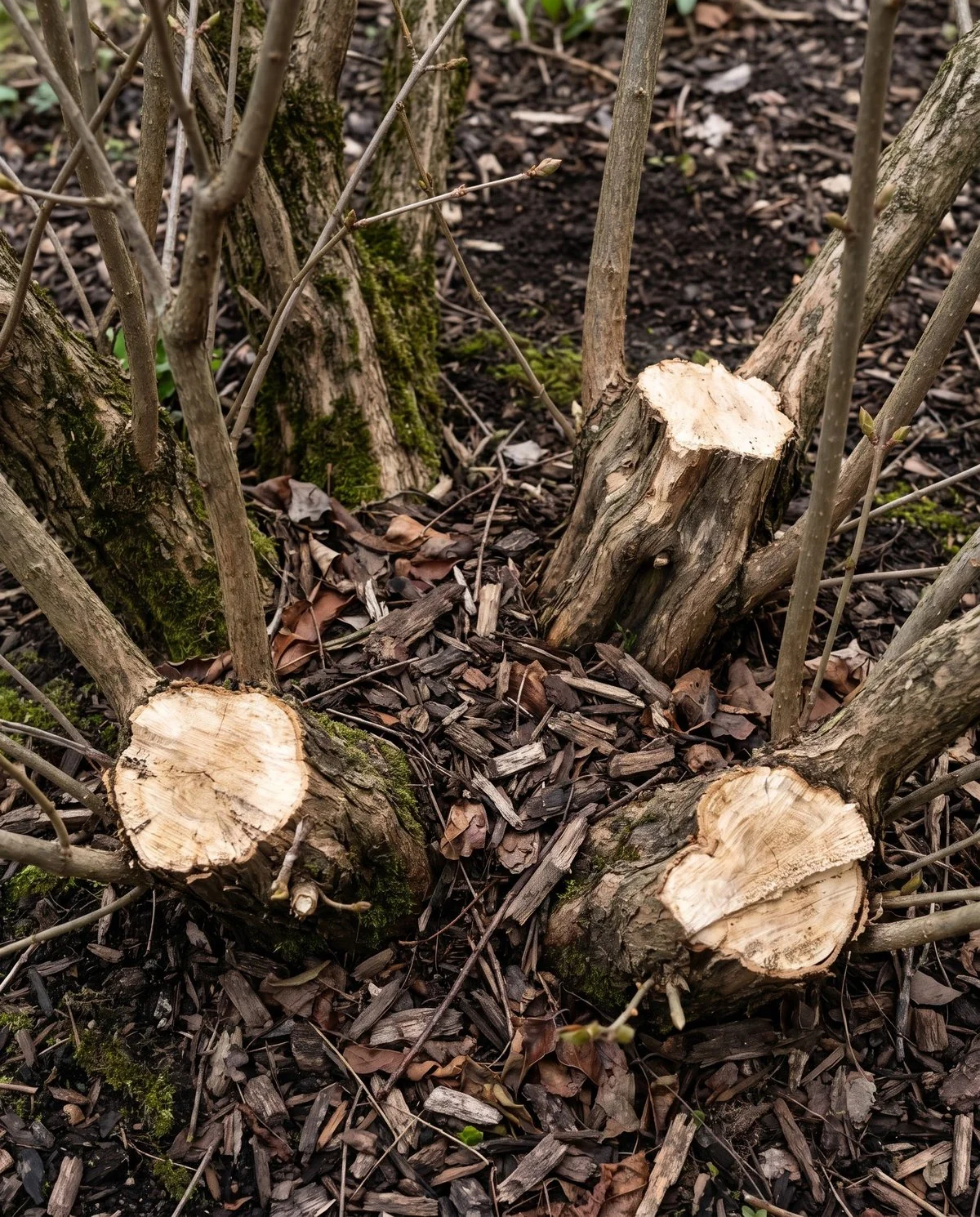
The reality: False, and the belief confuses two techniques with different names, different timings and different prices. Renewal pruning removes about one-third of the oldest, thickest stems at the base each year and never the whole plant at once, and it is the maintenance route for larger, older shrubs. Rejuvenation, cutting the entire plant to the ground in late winter, is what UMN names as an occasional rescue for smaller, densely-branched Korean and Meyer types, and UMN states the cost in the same breath as the method: the plant may not bloom, or will bloom only sparsely, for 1 to 2 years afterwards. Anyone doing it annually is buying permanent foliage and paying for it with every flower.
The myth: A lilac will bloom well enough in part shade
The reality: False on both counts, bloom and disease, and two universities reach it independently. UMN Extension requires 6 or more hours of direct sun daily and records that less sun reduces flowering and increases powdery mildew, so a shaded site produces the two most-asked lilac problems from one cause. UMN ranks insufficient sunlight as the second cause of a lack of flowers, behind only the plant not being established yet, and Iowa State's own problems page names insufficient sun in the same position in its own list.
The myth: Powdery mildew will damage or kill the shrub
The reality: Both university sources checked frame it as cosmetic rather than a plant-health emergency: UMN calls it common and cosmetic only, and Iowa State describes its impact as mainly aesthetic damage. What the sources supply instead of a spray is a list of names. Iowa State records that Meyer lilac is not affected by powdery mildew and calls it free from disease, and names Adelaide Dunbar and Charles Joly as comparatively resistant among the common-lilac cultivars. UMN's own listings call the 'Bloomerang' series, Syringa x hyacinthiflora and the cutleaf Persian lilac disease-resistant. Choosing from that list, and giving the plant sun and air movement, matters more for appearance than any treatment does for the shrub's survival.
Soil and pH
Fertile, well-drained soil that runs neutral to slightly alkaline, roughly pH 6.5 to 7.5, suits lilacs best. That preference sets them apart from acid-loving shrubs and makes them an easy match for many ordinary garden soils. They adapt to loam, tolerate clay as long as it is not chronically wet, and grow in sandier ground when organic matter is worked in to hold moisture. Very acidic soil tends to leave lilacs weak and shy to bloom, and a soil test followed by a dose of lime will raise the pH into a friendlier range. These shrubs are not heavy feeders, so a balanced fertilizer or a topdressing of compost in early spring is plenty. Overdoing nitrogen backfires, pushing lush leafy growth at the expense of flowers, which is why a lilac planted at the edge of a frequently fed lawn often grows vigorously yet barely blooms.
USDA hardiness
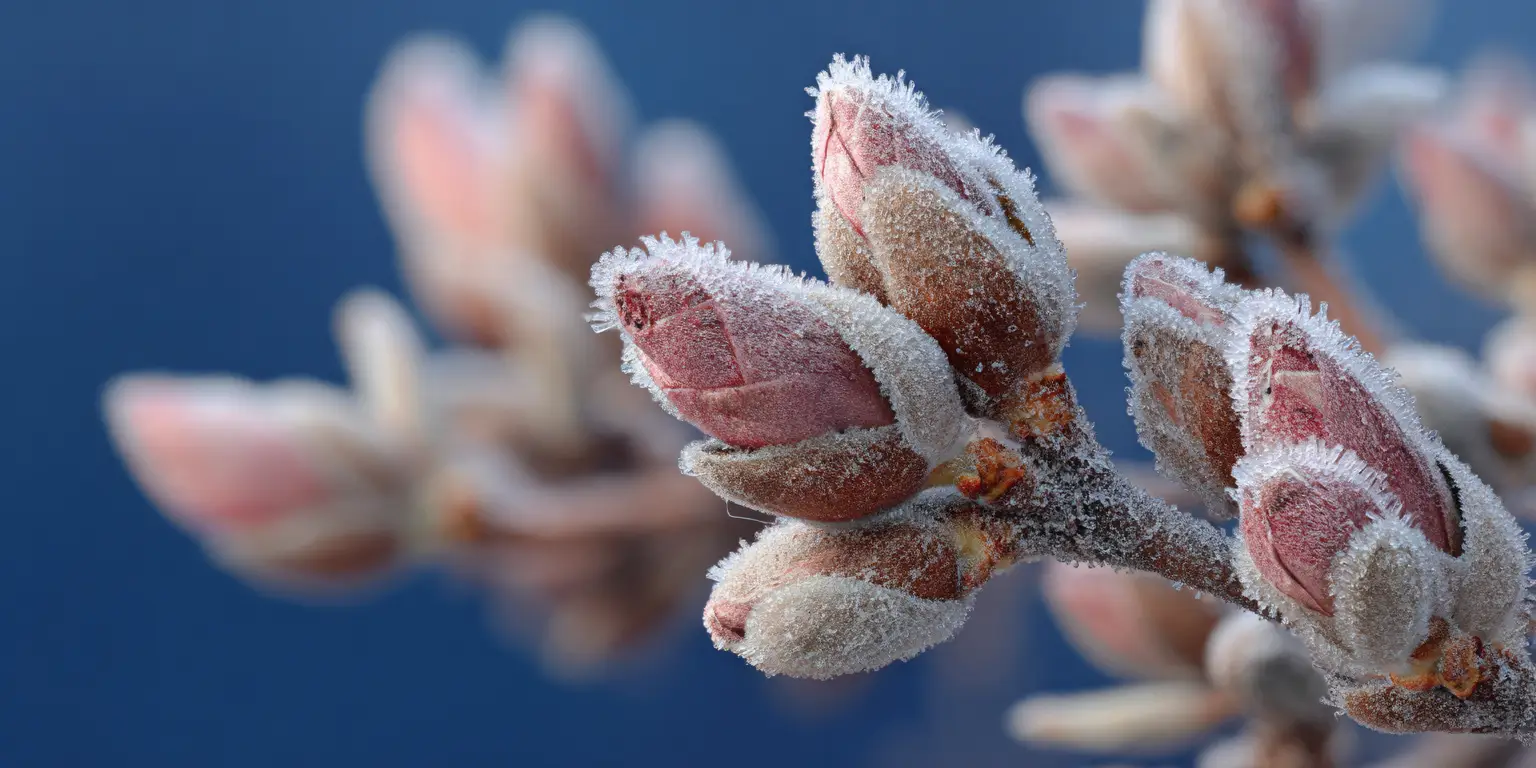
Lilacs are shrubs of cold winters, reliably hardy and at their best in USDA zones 3 through 7. The cold is not something they merely survive; the accumulated chill is what triggers them to set flower buds, and the common lilac shrugs off winter lows in the range of minus 20 to minus 40 degrees Fahrenheit typical of zones 3 and 4. Warm regions are the hard case. Standard lilacs planted in zone 8 and beyond often grow leaves well but bloom poorly or not at all, because the winter never gets cold enough for long enough, and the heat and humidity also invite more disease. Gardeners in mild-winter areas are not entirely shut out, though, because a handful of low-chill selections were bred for exactly these conditions: the Descanso hybrids such as 'Lavender Lady' and 'Blue Skies', developed in Southern California to flower on only 200 to 400 chill hours, along with 'Miss Kim' and the Korean lilac. Below about zone 9, even these struggle, and the practical options for growing lilacs where winters stay mild are covered in the guide to lilacs for warm climates and the low-chill varieties that bloom without cold.
Every published figure for this plant, with its service named
Nine rows, each attributed. Where three services state the same rule independently that is recorded, and where none of them attaches a date to a rule the reader expects a date for, that is recorded too.
Propagation and longevity
Few flowering shrubs are simpler to propagate, and the easiest route uses the plant's own suckering habit: a rooted shoot dug from the base of an own-root plant in early spring or fall transplants readily and grows into a copy of the parent. Layering works too, pinning a low branch under the soil until it roots over several months, and softwood cuttings taken just after spring bloom will root under humidity with some patience, though grafted plants and seed are mostly the province of nurseries and breeders. Given a decent site, a lilac is a long-lived shrub, commonly thriving for 30 to 50 years and sometimes well past a century, because the plant keeps renewing itself with fresh shoots from the base even as the oldest trunks slow down.
Pruning is where longevity and bloom meet, and the timing rule is the whole game. Because lilacs flower on old wood and form next year's buds soon after blooming, all pruning should happen within a few weeks of the flowers fading, never in summer, fall, winter, or early spring when the cut would take the coming season's buds with it. Light pruning at that moment means deadheading the spent clusters and shortening any wayward branches. An overgrown, leggy old lilac that blooms only at the top responds to renewal pruning: remove about a third of the oldest, thickest stems at ground level, then repeat the next year and the year after, so younger shoots take over at reachable heights without stripping the plant of all its flowers at once. The full staged method for renewing a leggy, overgrown lilac walks through the three-year cycle. Shearing a lilac like a hedge does the opposite, trading next spring's bloom for a flush of leafy regrowth.
One to two years, or five or more, decided at the nursery
Year one belongs to the roots. UMN's words: after planting, a lilac's energy reserves will be used to develop a strong root system rather than flowers or leaves, and it separately advises that newly planted lilacs usually do not need pruning for 2 to 3 years. After that the timeline forks by type rather than running as a single curve, and the sharpest fact in this pack sits in two sentences on one Iowa State page. The dwarf Korean lilac, 'Miss Kim' and the Preston lilacs often flower within one or two years of planting. Cultivars of the common or French hybrid lilac often do not bloom for several, five or more, years after planting. The group chosen at the nursery therefore decides whether the wait is one season or five, which is a larger difference than any care decision made afterwards. Between the two sits a softer figure, two to five years for nursery-grown common lilac, which is consumer-nursery consensus rather than an extension figure and is labelled as the weaker of the two. From seed the wait runs 5 to 10 years, also consumer-tier and also flagged, and it is the least gardener-friendly route by a wide margin. At the far end the picture is genuinely long: UMN's own quick facts say lilacs can live a long time, and the Arnold Arboretum's collection includes specimens plausibly dating to the 1750s, still alive centuries later. Individual shrubs decline all the same. Iowa State's problems page and this corpus's own 120-year-old example, described by its owner as no longer producing shoots and clearly reaching some age limit, point at the same end state, where a lilac stops sending new growth from the base and renewal or rejuvenation pruning is the sourced intervention rather than a promise of restored vigour. Anyone taking the rejuvenation route should price in 1 to 2 bloom-light years before the shrub flowers properly again.
Fragrance
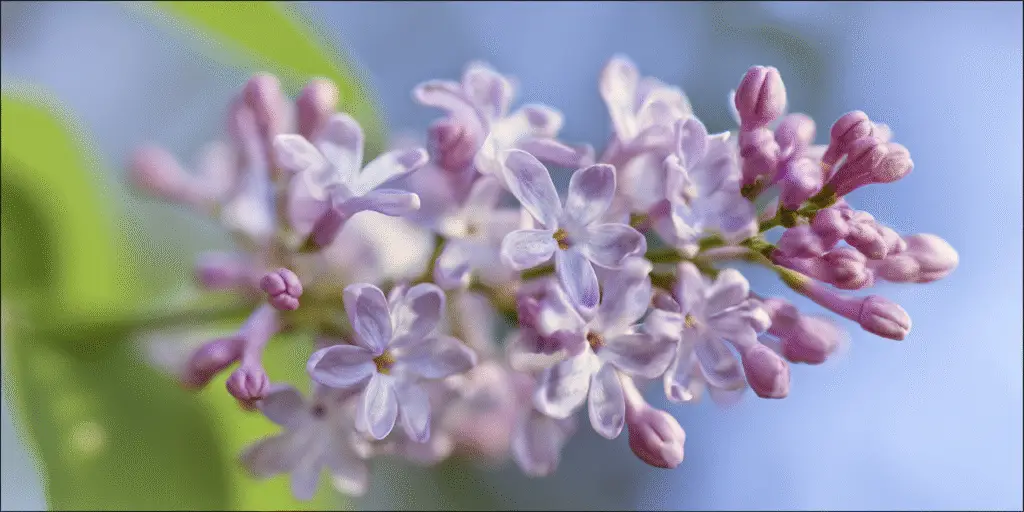
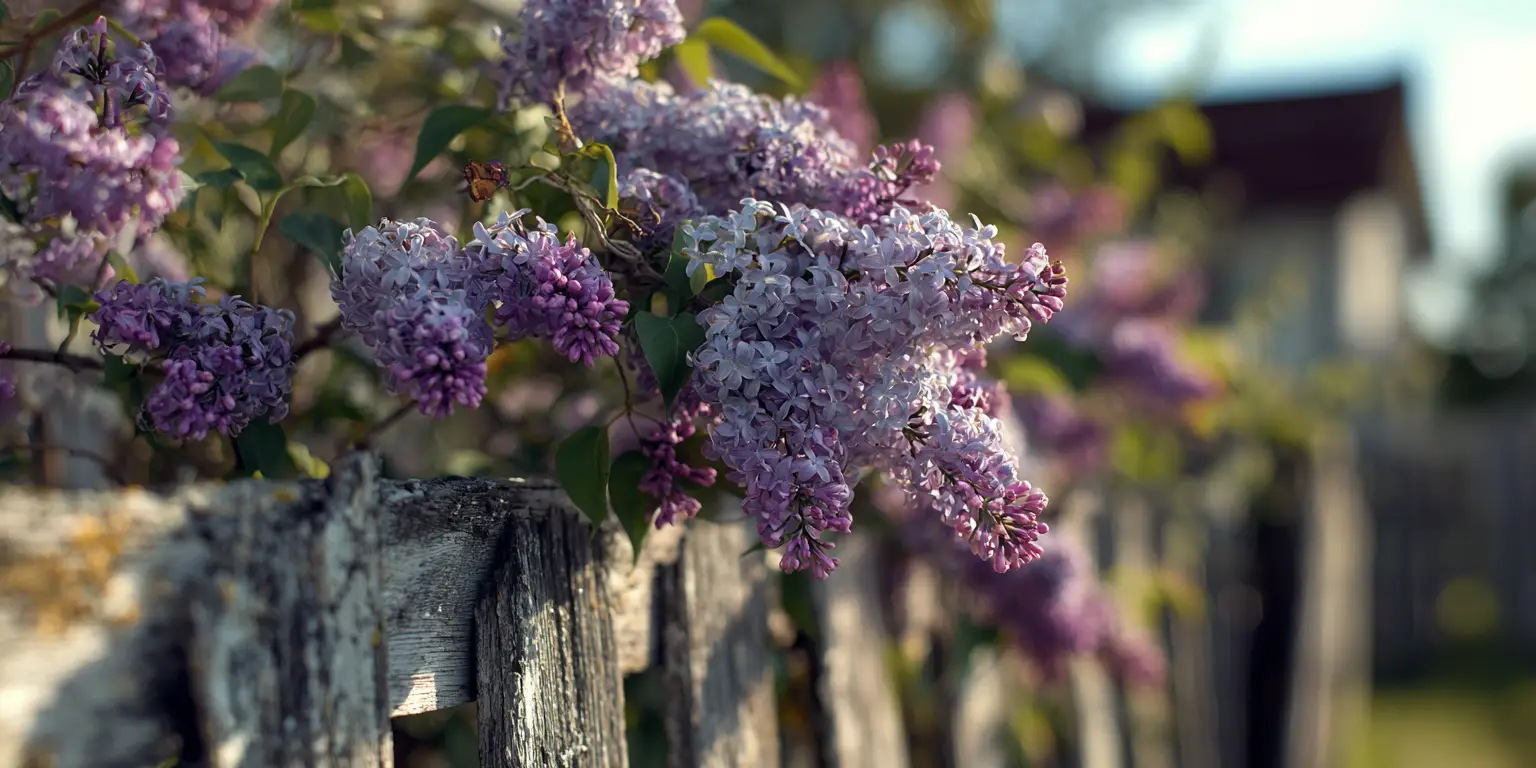
Fragrance is the reason many gardeners grow lilacs at all, and few spring shrubs match it. A lilac in full bloom throws a rich, sweet perfume with a faint powdery edge that carries on the air, strong enough that a single mature bush can scent a whole yard on the right day. The classic purple common lilacs generally hold the deepest fragrance, though white and pink cultivars are usually fragrant too, and the scent comes on strongest in the warmth of a still, sunny afternoon and fades after rain or on a cool morning. That elusiveness carries into the lab: true lilac oil is difficult to extract in any quantity, so nearly every lilac-scented product relies on a synthetic recreation rather than the flower itself. The blooms are not only for people, either, producing enough nectar to draw bees, butterflies such as swallowtails, and the occasional hummingbird. To make the most of the perfume, plant a lilac where spring breezes carry it toward a window, a door, or a patio.
Toxicity and pet safety
True lilacs are non-toxic to cats, dogs, and horses, so a pet that mouths a flower or leaf faces no real poisoning risk, and the strong scent and bitter foliage usually keep animals from grazing in the first place. At most, eating a large amount of any plant matter can bring on mild, passing stomach upset. The catch is entirely in the name, because a couple of unrelated plants borrow the word lilac and one of them is genuinely dangerous. The so-called Persian lilac, Melia azedarach, also sold as chinaberry, is toxic to pets and people and is a completely different plant from true Syringa, and California lilac is not a lilac at all but Ceanothus, a separate genus. The reassurance about pet safety applies only to actual lilacs in the genus Syringa, so identify the plant before trusting it around animals. For a wider view of which blooms are safe to grow around cats and dogs, see the guide to flowers that are safe for pets.

Vase life
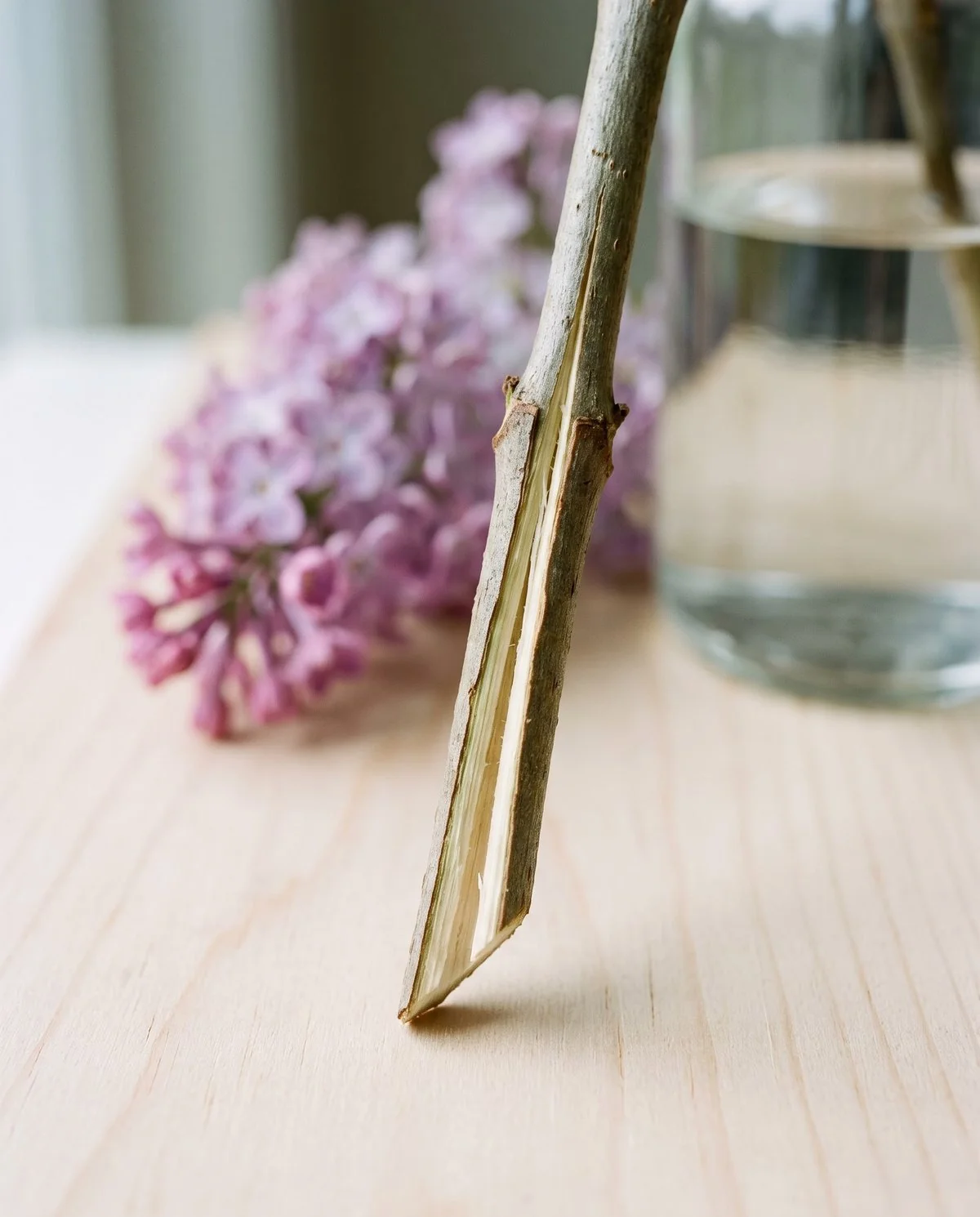
Cut lilacs are gorgeous and short-lived, holding about four to seven days in a vase even with good handling, which is the honest trade for bringing that fragrance indoors. Cutting well makes the difference. Take stems early in the morning when they are fully hydrated, and choose clusters that are half to three-quarters open so the remaining buds finish in water. The stems are woody, so they drink poorly unless the base is prepared: recut each stem at a sharp angle and split or crush the bottom inch to open more surface to the water, then set it straight into lukewarm water. Strip nearly all the leaves, since lilac foliage is large, wilts fast, and pulls moisture away from the flowers. Use clean water with a floral preservative, keep the arrangement in a cool spot out of direct sun, and change the water every day or two with a fresh recut. Even done right the display is fleeting, so cutting a few fresh stems every couple of days keeps the scent going while the shrub is still in bloom.
Cut lilac, and which of these figures a university actually measured
One institution in this list is a botanical garden speaking about woody stems, and the rest of the numbers are consumer-source consensus. Each is labelled, because this pack found no controlled university postharvest trial for cut lilac at all.
A penny in the vase water keeps cut lilac fresh.
NC State Extension supplies the reason it stopped working: pennies minted before 1982 were mostly copper, a mild fungicide, but pennies are now made of mostly zinc so are no longer effective. The folk remedy outlived the coin it depended on.
A hot-water dip clears the blockage in a woody lilac stem.
Unconfirmed for lilac, and the gap is named rather than papered over. Plunging freshly cut, freshly split stem ends into briefly boiling water for a few seconds before moving them to cool water is a widely repeated florist technique for lilac specifically, and no extension or botanical-garden source found in this pack confirms it for lilac. Brooklyn Botanic Garden confirms the same hot-water principle only for a different category of stems, the milky-sapped flowers such as euphorbia and poinsettia, and this pack does not extend that to lilac on its own authority.
Pests and diseases
Powdery mildew is the problem lilac growers meet most, a white, dusty coating that spreads over the leaves in mid to late summer. It looks bad and can bring on early leaf drop, but it rarely does lasting harm, arriving late enough in the season that the shrub has already done its growing, so many gardeners simply tolerate it until the leaves fall. Full sun, room between plants, and resistant cultivars keep it in check better than any spray. The other troubles are less common and mostly manageable by keeping the plant vigorous and cutting out what is affected. The table below pairs the ones worth knowing with what addresses them.
| Problem | What you see | Cause | Fix |
|---|---|---|---|
| Powdery mildew | White dusty film on leaves in late summer | Fungus in humid, crowded, shaded sites | Full sun and airflow, resistant cultivars; mostly cosmetic |
| Bacterial blight | Blackened young shoots and flower buds in a wet spring | Pseudomonas bacteria | Prune out infected wood, clean tools, improve airflow |
| Lilac borer | Wilting shoots, holes and sawdust-like frass near the base | Clearwing moth larvae tunneling in stems | Keep the shrub vigorous, prune and destroy infested stems |
| Scale and aphids | Sticky residue, clustered insects on stems or new growth | Sap-sucking insects | Dormant oil for scale, a water blast or insecticidal soap for aphids |
| Verticillium wilt | Sudden dieback of a branch or two | Soil-borne fungus | Remove affected wood; no cure, so keep the plant healthy |
Regular renewal pruning does double duty here, since clearing out the oldest stems both keeps the shrub blooming and removes the aging wood that borers prefer. Lilacs also carry a useful reputation with larger pests: deer and rabbits tend to leave the bitter, olive-family foliage alone, which makes a lilac one of the safer flowering shrubs to plant where browsing animals are a problem.
Photo pairs, and the four fingerprints left to real photographs
Two of the pack's six pairs are safe on both sides and are here in full. Three have one safe side only, so the normal state is shown and the disease or damage side waits for a real reference photograph. The mildew-against-scale pair has no safe side at all, because a reader uses that texture to choose between two completely different treatments.
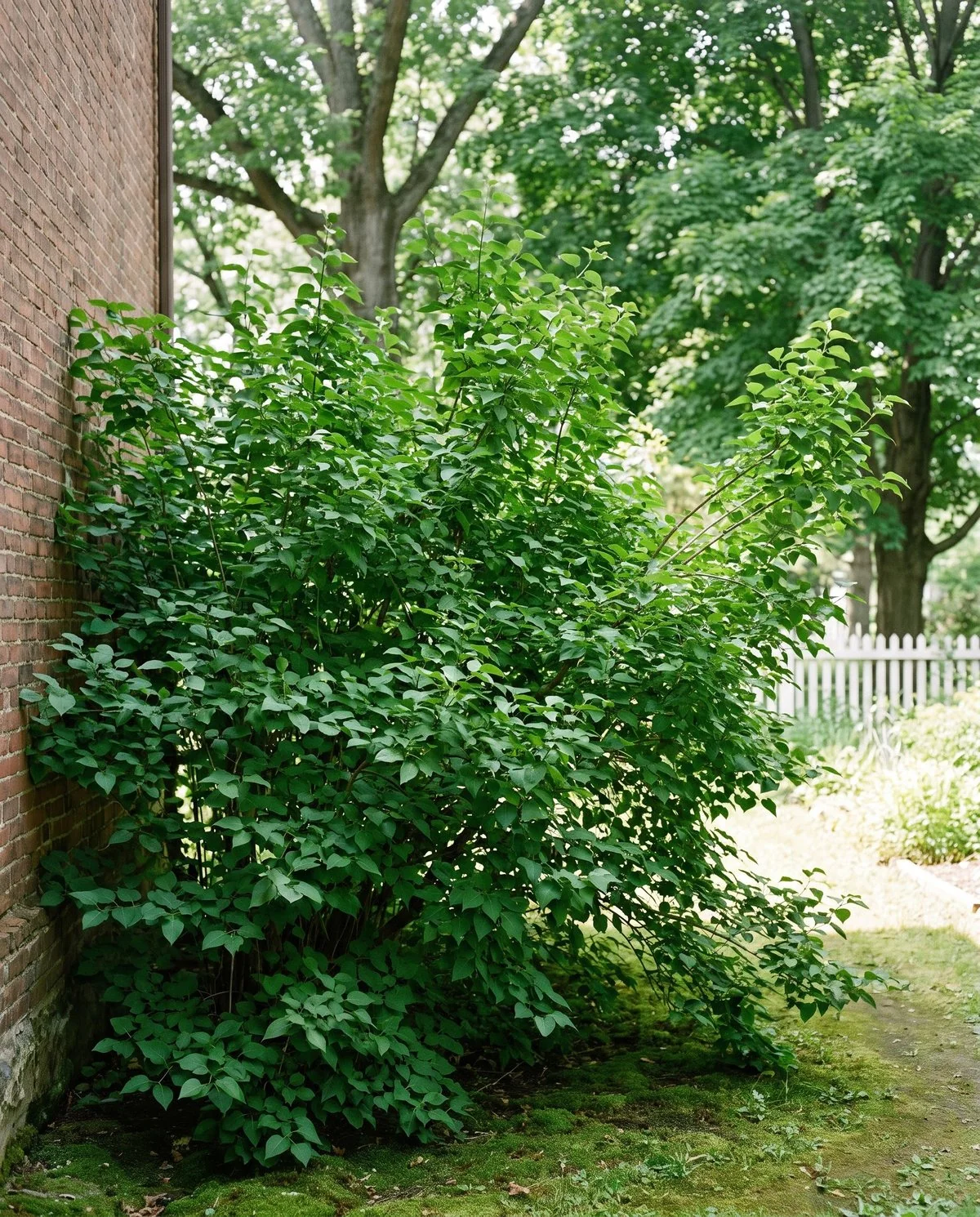
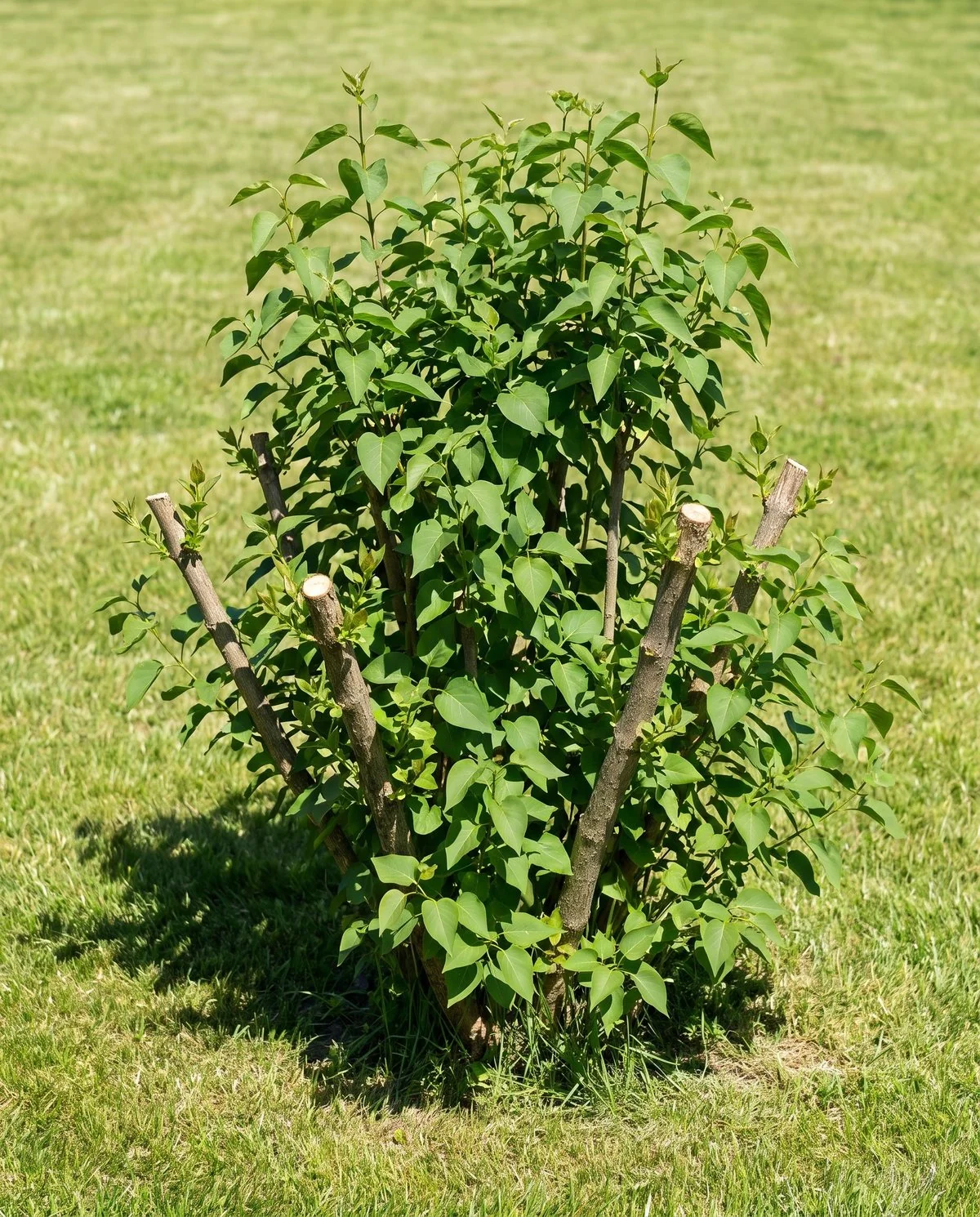
Nothing in the photograph separates them, and that is the point of showing them together. A shrub in under six hours of direct sun and a shrub in full sun that was cut back in late summer, fall or winter, after next year's buds had already set on the current year's growth, both present as an equally leafy, equally healthy lilac with no bloom, year after year. Only the growing history decides which one it is: how much sun the site actually gets, and when the shrub was last cut. UMN names both as the top two causes of a lack of flowers in the same list, in that order, behind the plant simply not being established yet.
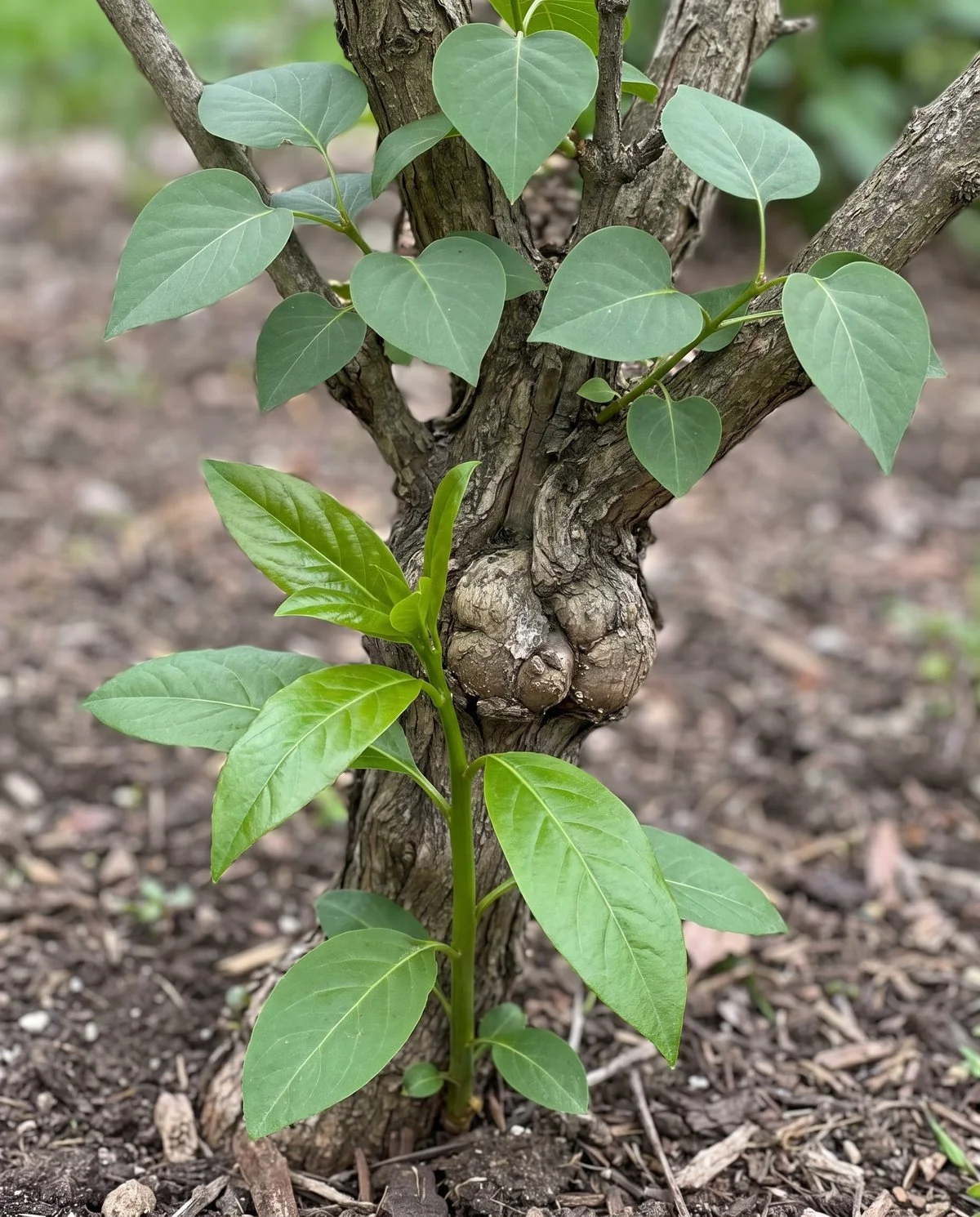
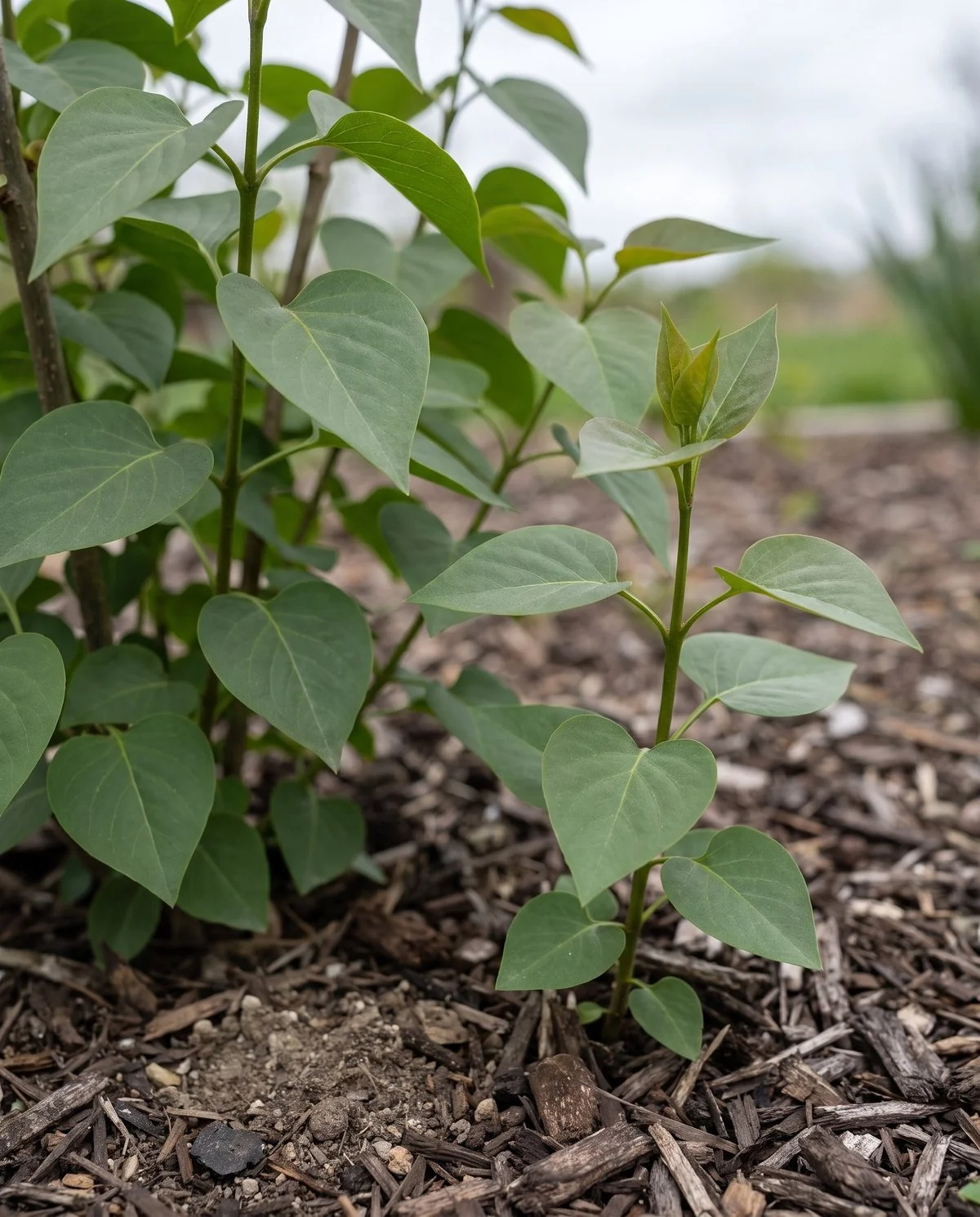
Compare the leaves, then find the graft union. A rootstock sucker rises from low on the trunk or from below the union and carries leaves of a different size, shape or colour, because it is a different species growing from the understock and will never come true to the grafted variety. The lilac's own growth matches the rest of the plant's leaf shape, colour and texture, whether it comes from the crown, which UMN describes as normal habit, or higher on established wood. Cornell's grafting course material records that lilac was historically nurse-root-grafted onto privet rootstock and that the practice has lost popularity because the rootsystem will sucker, eventually outgrowing the lilac scion, with the graft union sometimes failing outright years later. Most lilacs today are propagated by tissue culture specifically to avoid it.
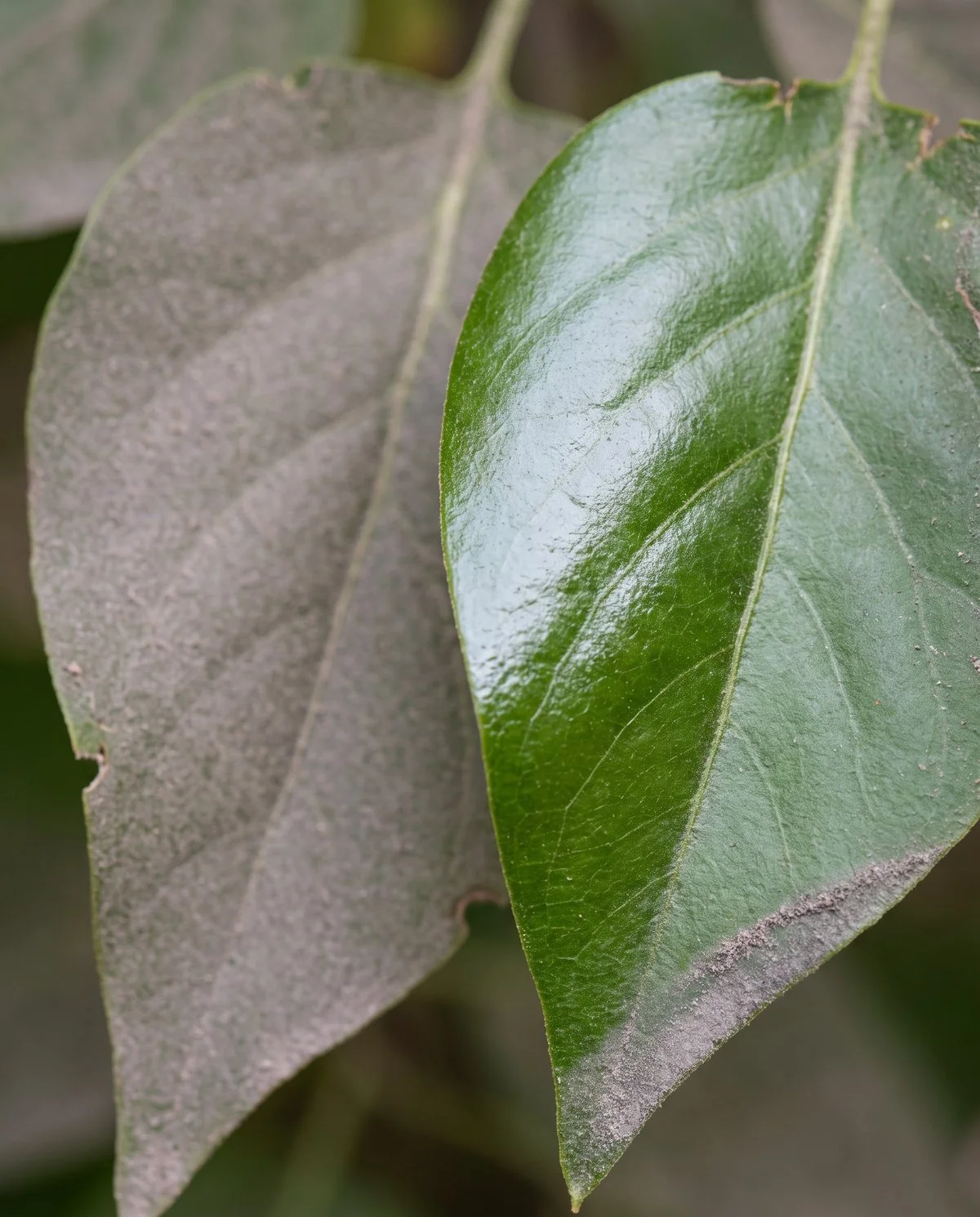
Wipe it, then come back in a few days. Dust and ordinary late-season dulling wipe off completely, leaving a clean shiny surface behind, and they do not return. University of Maryland Extension describes the fungus itself: the white powdery fungal spores grow on the surfaces of leaves, young stems, and shoot tips, blocking light needed for photosynthesis, and late in the season tiny dark specks, the fungal fruiting bodies, develop inside the powdery patches. It does not wipe off cleanly and tends to recur within days. Only the clean side is photographed here, because that late-season speck pattern and the non-wiping texture are the checkable part.
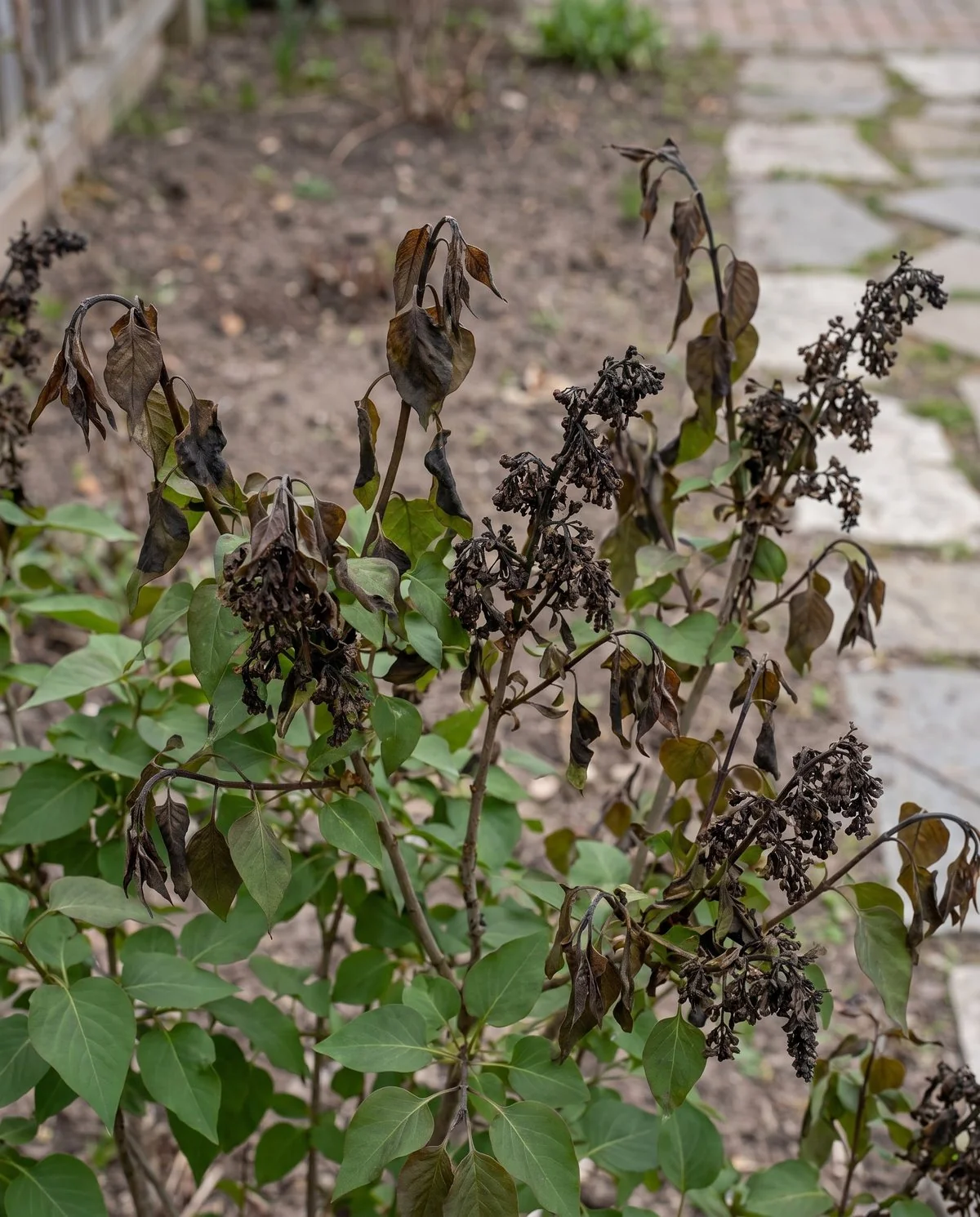
Ask whether it appeared overnight, and whether the damage has edges. Frost damage is uniform browning, blackening and shrivelling of new growth and open flowers, appearing right after one specific cold night, and Iowa State puts lilac's threshold at 28 to 26 degrees Fahrenheit or any hard freeze once buds are close to opening. Bacterial blight develops over days instead, as discrete brown water-soaked spots, pinpoint at first and expanding to an eighth of an inch or more, often ringed by a yellow halo, with young stems girdling into the shepherd's crook bend Oregon State names, and leaves blackening from the margins inward on young growth. In advanced cases a bacterial-ooze test under magnification is the definitive confirmation. Only the frost side is photographed.
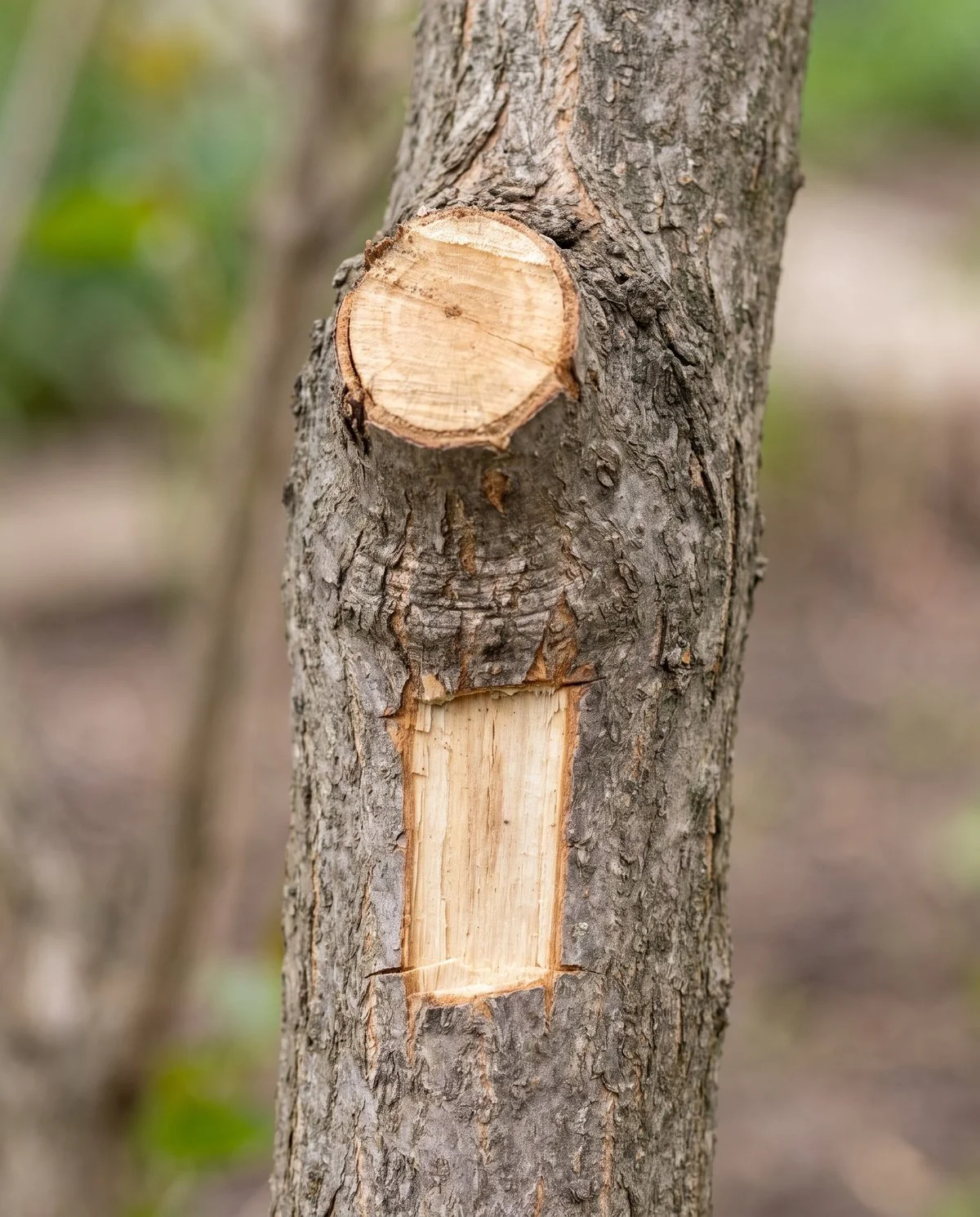
Look at what came out of it. NC State describes borer entrance holes as marked by cracked bark and holes with protruding material resembling sawdust, with a thin wet stain around the entry point maturing into a frass-and-sap mix, sunken tissue around the wound, and later a clean circular exit hole about a quarter of an inch across when the adult moth emerges, sometimes leaving a shed pupal case behind; the larva is a brown-headed white caterpillar that can grow up to 25 mm long, and the adults emerge in August and September. A mechanical or pruning wound has clean blade or impact edges, no frass, no sawdust accumulation and no circular exit hole. Only the clean wound is photographed.
Feel whether it is raised, and understand that neither side of this is generated. Powdery mildew is a flat fungal dusting sitting on the surface. Scale insects, armored or cottony, are small raised waxy or cottony bumps attached to stems and leaf undersides, an actual insect body rather than a coating, and Iowa State names oystershell scale as a distinct lilac problem in its own right. This corpus contains the confusion running both ways, one poster asking whether it is powdery mildew or cottony scale and another certain it is not mildew because it will not rub off. The two lead to entirely different treatments, cultural control against mechanical removal or horticultural oil, which is exactly why this pair wants real reference photographs rather than an approximated texture.
What lilac owners actually ask about, ranked, with the sample's own limits stated first
1,538 unique posts from r/gardening, r/plantclinic and r/whatsWrongWithMyPlant, deduplicated by post id and spanning 4 May 2010 to 23 July 2026, close to the whole lifespan of r/gardening. The caveat is bigger than the table: 986 of those posts, 64.1 percent, carry a photo and little or no diagnostic text, so no keyword pass could classify them at all, and every percentage below is a share of the full 1,538 rather than of the classifiable remainder. A further 198 posts, 12.9 percent, are pure bloom and fragrance admiration and are excluded as not being problems. Categories overlap, so the shares do not sum to 100.
Which type it is, because the answer splits in two. UMN's renewal pruning removes about one-third of the thickest stems at the base each year, repeated annually until all the old large stems are gone. Its rejuvenation cut, taking the entire plant to the ground in late winter, is named for smaller densely-branched Korean and Meyer types and is an occasional rescue rather than maintenance. Iowa State independently names large, overgrown shrubs as its own recognised problem category, saying lilacs get large, leggy and unattractive.
Whether the pattern is discrete or uniform. Oregon State's own words for blight are that when shoots begin to die they tip over in what is called a Shepherd's crook symptom, alongside brown water-soaked spots often ringed by a yellow halo. Frost browning is uniform and arrives immediately after one specific cold night, with no spots and no crook.
UMN's own list, in UMN's own order: plant is not yet well-established, plants are not receiving enough sunlight, too much nitrogen fertilizer, and pruned at the wrong time of year and cut off flower buds. Iowa State's independent list adds warm winters as a fifth cause.
Whether new stems are still rising from the base. Read this row as a floor, because it is a slow multi-year pattern that does not photograph dramatically. One poster in this corpus describes a conservatively 120-year-old shrub that is no longer producing shoots and is clearly reaching some age limit.
Where the damage sits. On lilac this is bark-girdling and browsing rather than anything dug up, because a lilac offers no bulb to cache, which is why the figure runs below what a bulb flower's animal-damage share would be.
How long the plant has been in the ground. This bucket splits between newly-planted transplant stress and yellowing on an established older shrub, and those are different problems with different answers.
The overnight low against Iowa State's own figure. It names lilac specifically and puts flower-bud damage at 28 to 26 degrees Fahrenheit, or at any hard freeze once the buds are close to opening, with damaged new growth that shrivels, turns brown or black, becomes limp, and eventually drops.
Read this as a floor rather than a total. Many of the 986 photo-only posts and the 67 brown-or-black-spot posts almost certainly include mildew that the keyword pass missed simply because the poster never used the word.
Whether it is a problem at all. UMN records that lilacs usually produce new growth from the root area, so a fair share of these posts are describing normal growth habit as something requiring intervention.
The bloom date first, then the size. The groups separate by when they open: early to mid May for common lilac and Meyer, late May into June for Manchurian 'Miss Kim', early to mid June for the Japanese tree lilac. This is inherited-unlabelled-shrub demand, and it feeds straight into the grid above.
Whether the coating is raised. Iowa State names oystershell scale as a distinct lilac problem separate from mildew, and this corpus contains posters unable to tell one from the other in both directions.
Whether the lean follows the light or follows a cut. Twelve posts is a small enough count that the pack draws nothing further from it and says so.
The planting date, and then patience. UMN's own framing sets the expectation: after planting, a lilac's energy reserves will be used to develop a strong root system rather than flowers or leaves.
Whether material is being pushed out of the hole. NC State describes borer entrance holes as marked by cracked bark and holes with protruding material resembling sawdust, and notes that borer wounds can let in a wood-rot fungus, Polyporus versicolor, as secondary damage. Small in count, high in stakes, which is why it matters more than its share suggests.
How the stem end was cut. Lilac is woody, and a plain diagonal cut leaves too little open vascular surface for the large panicle above it, which is the mechanism behind every conditioning step in the vase block.
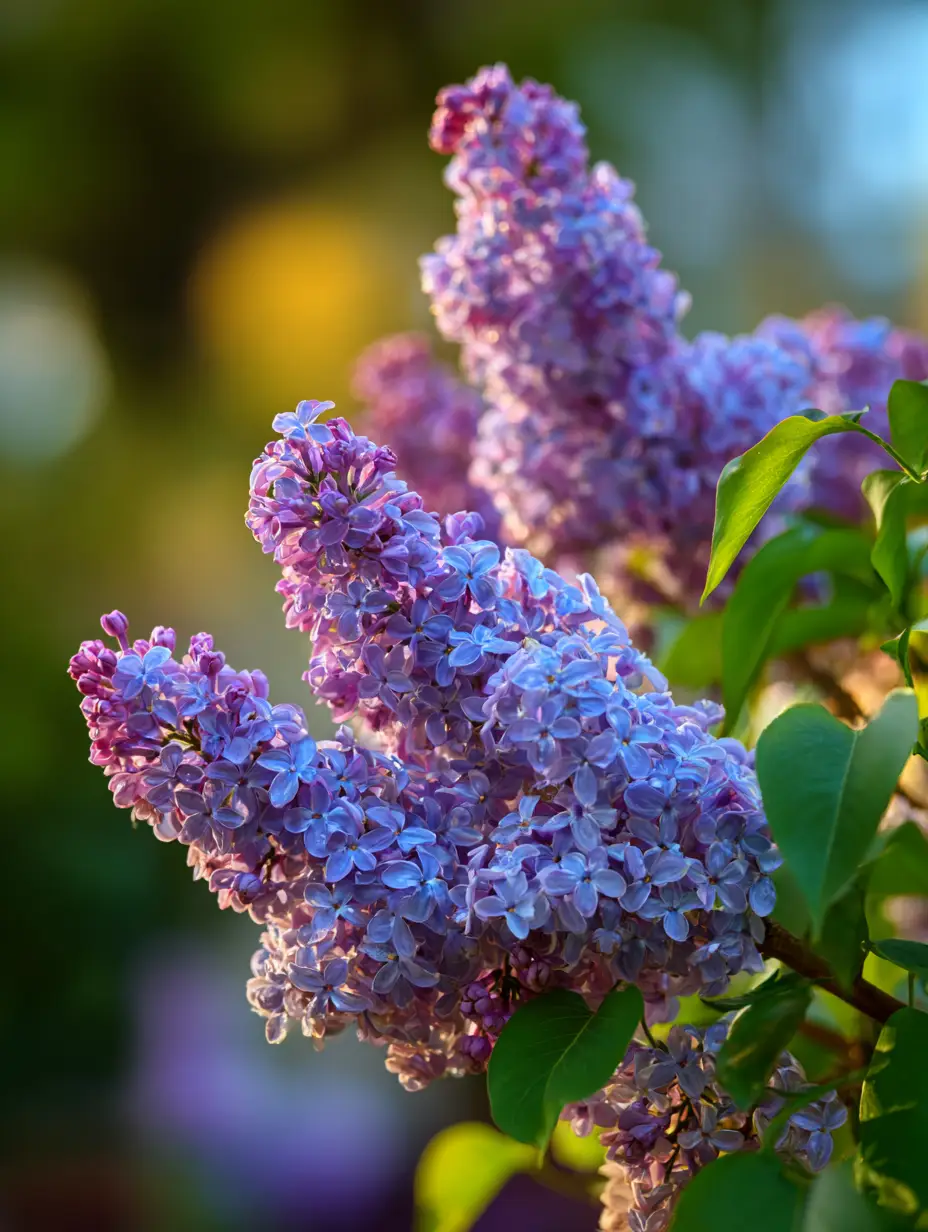
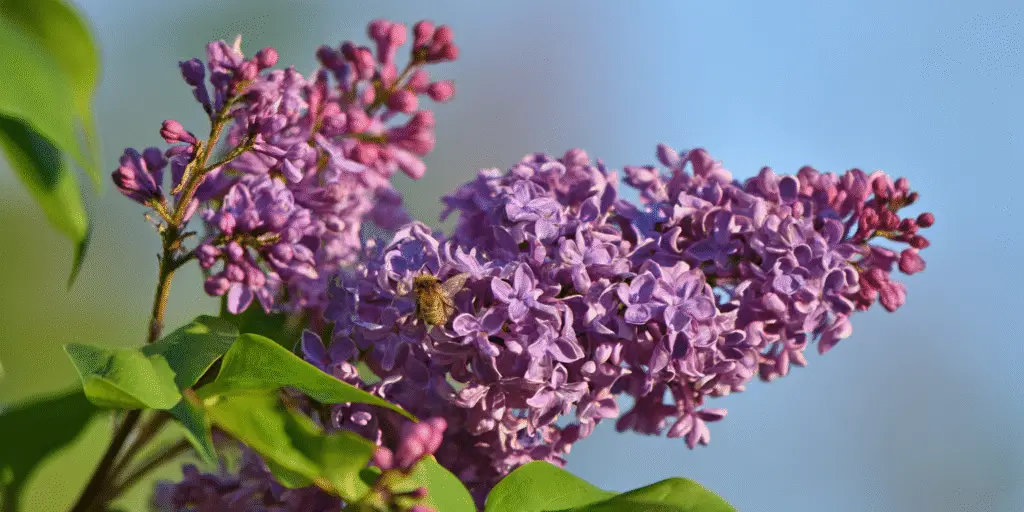
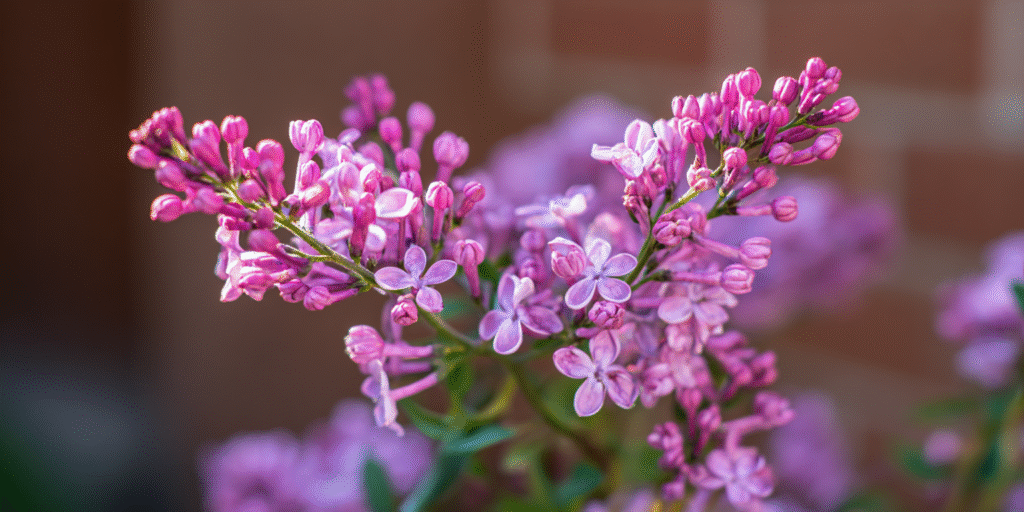
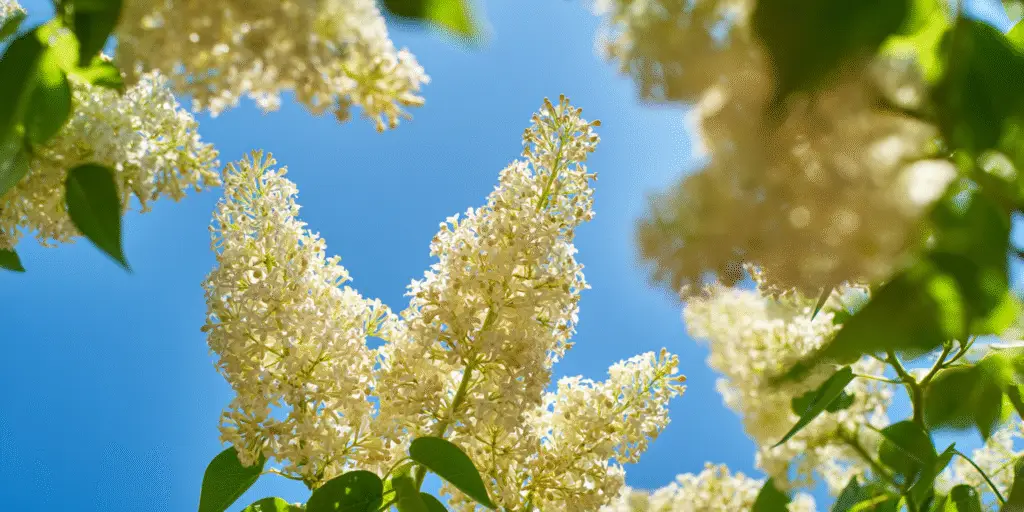
Flower photos
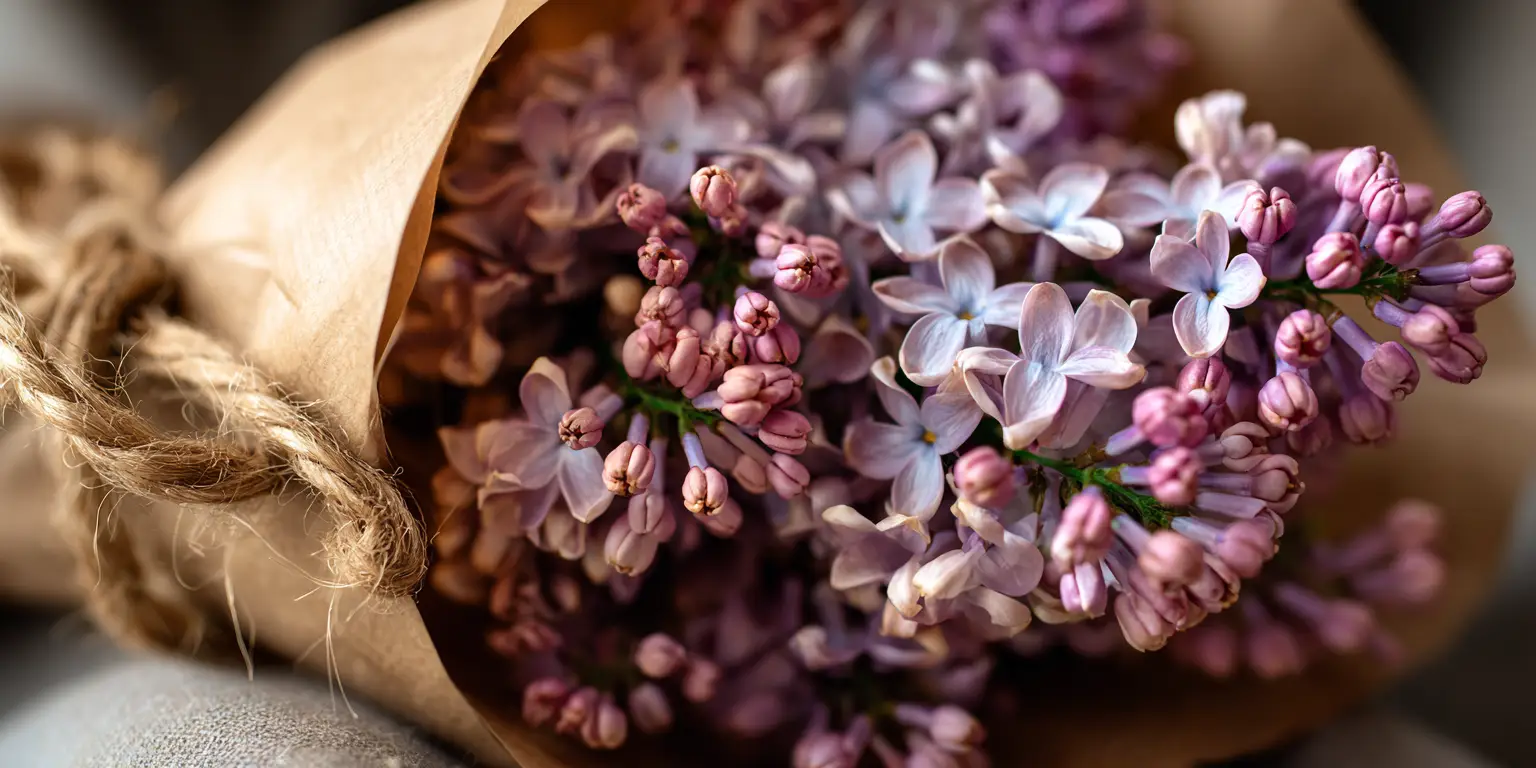

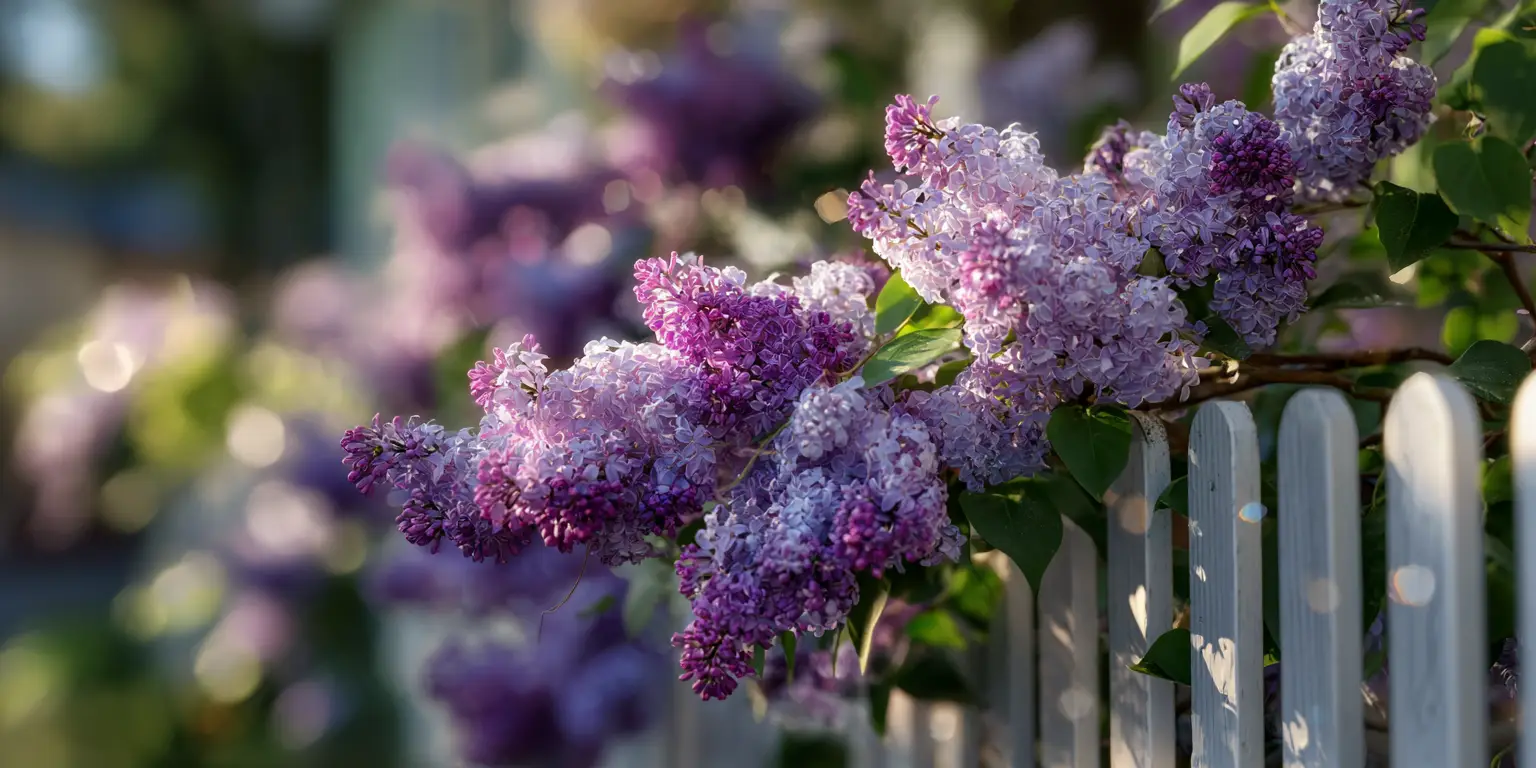
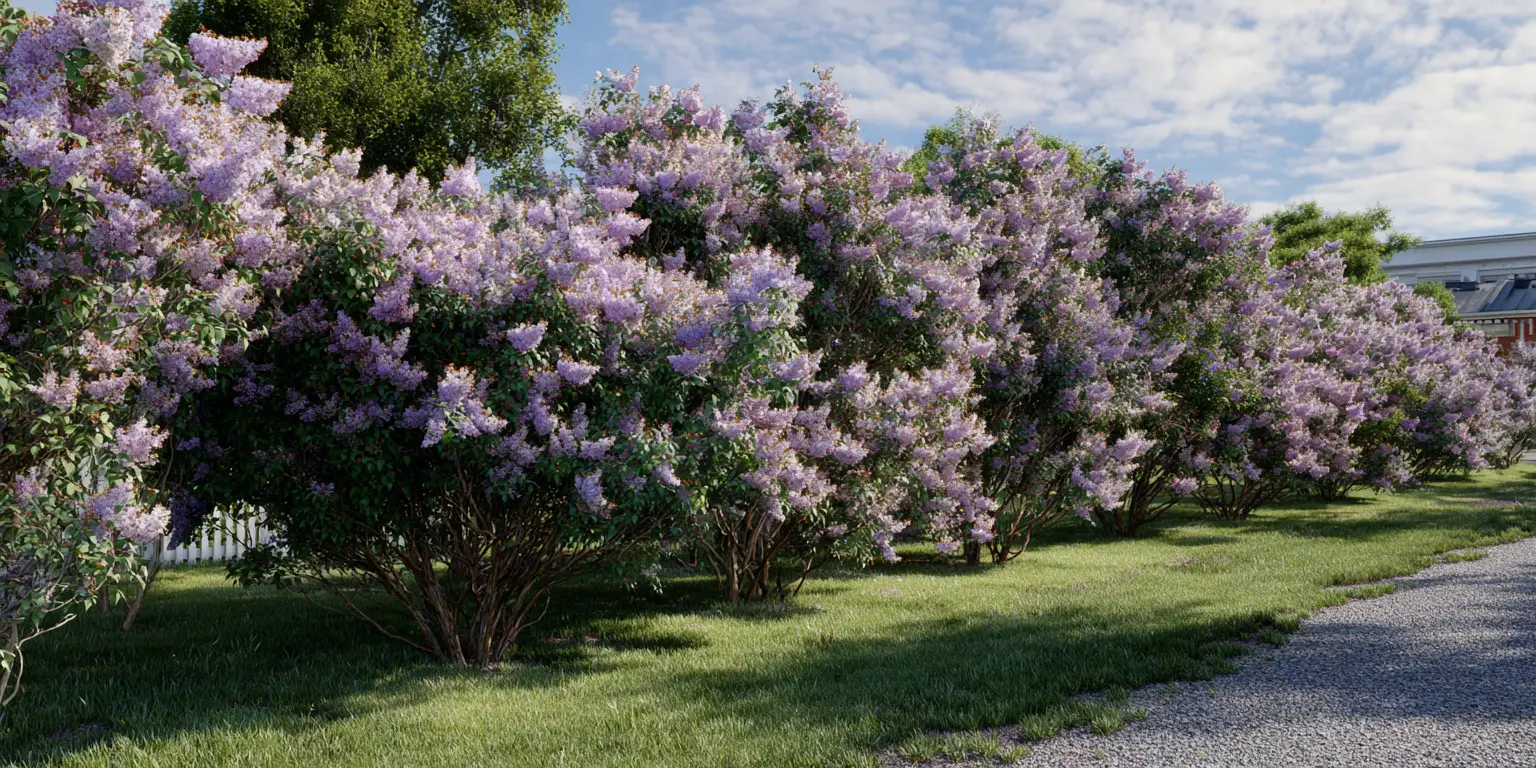
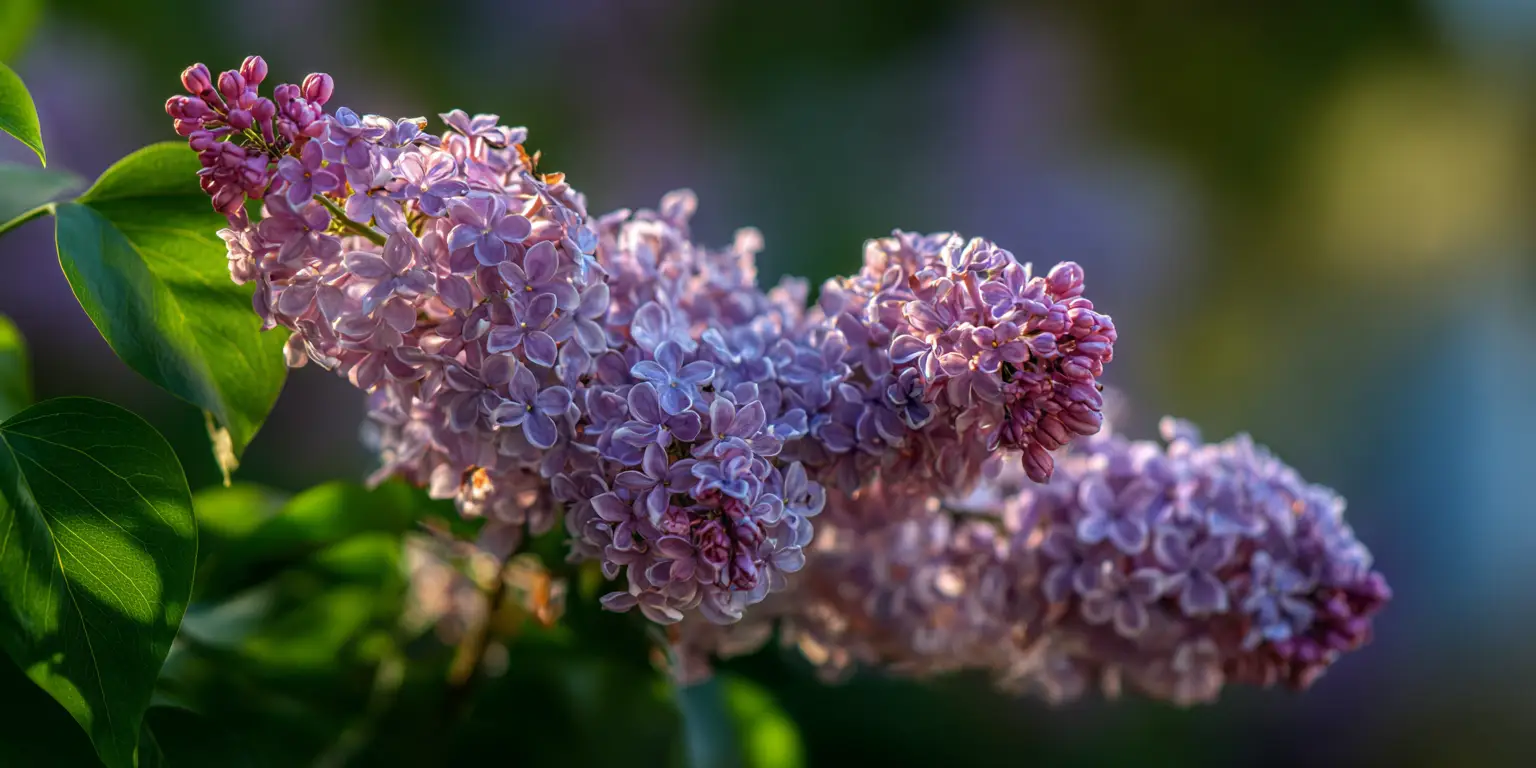
FAQ
How and when should I prune lilac bushes?
Prune within a few weeks of the flowers fading in late spring, and no later. Lilacs bloom on old wood and form next year's buds soon after this year's bloom, so cutting in summer, fall, winter, or early spring removes the coming flowers. At the right moment, deadhead the spent clusters, shorten stray branches, and thin a few of the oldest stems at the base. Never take more than about a third of the shrub in one year, and avoid shearing it like a hedge.
Why isn't my lilac blooming?
A lilac that grows well but will not flower is usually short on sun, since it needs at least six hours a day, or it was pruned at the wrong time and lost its buds. Other common causes are a plant still too young to bloom heavily, often three to five years from planting, too much nitrogen from fertilizer or a nearby fed lawn, too little winter chill in a warm climate, or a shrub set too deep. Correct the cause and bloom generally returns within a season or two.
Can lilacs grow in warm climates (Zone 8 or Zone 9)?
Standard lilacs thrive in zones 3 through 7 and need cold winters to set buds: unless they bank enough cumulative hours below about 40°F, the flower buds never form properly, which is why bloom is unreliable in zone 8 and warmer. A few low-chill types do better, especially the Descanso hybrids such as 'Lavender Lady' and 'Blue Skies', along with 'Miss Kim' and the Korean lilac. Give them full sun, good drainage, and whatever winter cold the site can offer. Below about zone 9 even these struggle, and in truly hot, humid gardens the added stress brings fungal disease and general decline.
How long does a lilac bush live?
A long time. Thirty to fifty years is routine, and lilacs on old homesteads are sometimes well over a century old, often outliving the buildings around them. Individual trunks slow down and turn woody after 10 to 20 years, but the plant renews itself with new shoots from the base. Removing a few of the oldest stems each year keeps a lilac vigorous and blooming for generations.
Are lilacs deer-resistant?
Yes, for the most part. Deer and rabbits find the bitter, slightly rough olive-family leaves unappealing and usually pass lilacs by, which makes them a dependable choice where browsing is heavy. Nothing is entirely deer-proof when food runs short in a hard winter, and very young plants are the most vulnerable, but an established lilac rarely takes serious damage.
How hard can I cut back the overgrown lilac I inherited?
It depends on which type it is, and this is the most common real question in the whole 1,538-post sample. For a large, old, tree-like common lilac, UMN's renewal pruning removes about one-third of the thickest stems at the base each year, repeated annually until all the old large stems are gone, which keeps some bloom going while the shape rebuilds. For a smaller, densely-branched Korean or Meyer lilac that has become a tangle, UMN describes a full rejuvenation cut to the ground in late winter, with the cost stated: the plant may not bloom, or will bloom only sparsely, for 1 to 2 years afterwards. Where the timing is a choice, all three extension services say the same thing, cut immediately after flowering ends.
Is this powdery mildew, or something else?
Three different things produce a whitish coating, and two tests separate them. Dust and ordinary late-season dulling wipe off completely and stay gone. Powdery mildew does not wipe off cleanly, tends to recur within days, and late in the season develops tiny dark specks, its fruiting bodies, inside the powdery patches; University of Maryland Extension describes the spores growing on the surfaces of leaves, young stems and shoot tips, blocking light needed for photosynthesis. If the coating is raised, waxy or cottony rather than a flat dusting, suspect scale insects instead, which Iowa State names as oystershell scale, a distinct lilac problem in its own right with a completely different treatment.
What are these brown or black spots, and is it blight?
Look for edges and for timing. Bacterial blight gives discrete brown water-soaked spots, pinpoint at first and expanding to an eighth of an inch or more, often ringed by a yellow halo, and in dying young shoots Oregon State's own words are that when shoots begin to die they tip over in what is called a Shepherd's crook symptom. Frost damage is uniform instead, a blanket browning and blackening of new growth appearing right after one cold night, and Iowa State puts lilac's threshold at 28 to 26 degrees Fahrenheit. Spotted with halos points to blight; uniformly blanched overnight points to frost.
How long until my newly planted lilac blooms?
Iowa State answers it by type on one page. Dwarf Korean lilac, 'Miss Kim' and Preston lilac often flower within one or two years of planting. Cultivars of the common or French hybrid lilac often do not bloom for several, five or more, years after planting. UMN adds that some blooming may begin in years 2 and 3, because year one goes into the root system rather than into flowers or leaves. A lilac grown from seed can take 5 to 10 years, which is a consumer-tier figure rather than an extension one and is flagged as such, and nursery-grown stock is always faster than seed.
Why does one branch of my bicolor 'Sensation' lilac carry plain purple flowers?
This is left open rather than answered, deliberately. A bicolor cultivar throwing a branch of plain-coloured flowers is a real, documented phenomenon in plants generally, known as bud sporting or reversion, and this pack found no lilac-specific extension or botanical-garden source confirming the exact mechanism for Syringa. Rather than supply a plausible-sounding explanation that no source backs, it is recorded here as a genuine open question: the observation is real and recurring in this forum sample, and the mechanism behind it in lilac specifically has not been verified.
Interesting tips
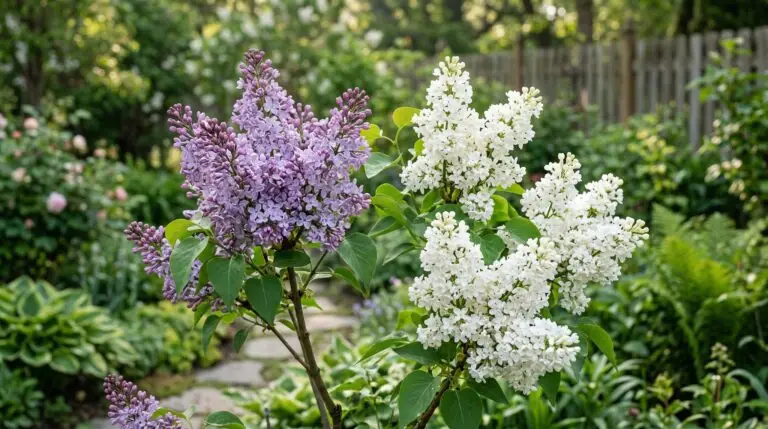
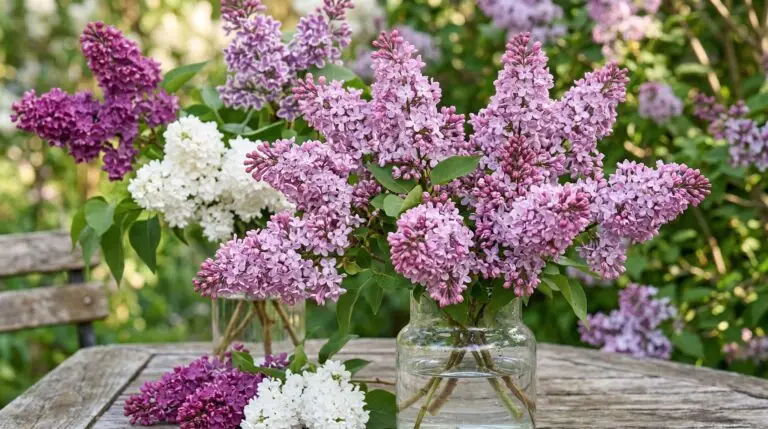
Not every lilac is lavender-purple. Breeders have pushed the palette into white, pink, magenta, deep blue-purple, and even a pale yellow in the cultivar 'Primrose', while a bicolor like 'Sensation' edges each purple floret in white, so a mixed planting can carry several colors through the same short season. Because lilacs bloom early and then recede into a plain green backdrop, they pair naturally with companions that follow them, peonies and early roses that open around the same time and later perennials that take over the border once the flowers finish. For a color-led garden, the purple flowers guide gathers blooms that carry the lilac tone into summer.
An inherited lilac is worth saving rather than replacing. An old, neglected shrub that flowers only at the top will come back over about three years of renewal pruning, and the same durability is why lilacs so often mark the site of a vanished farmhouse long after the building is gone. The flowers are edible in small amounts, crystallized in sugar or steeped into syrup, provided they were never sprayed and are rinsed first. One last point spares confusion at the nursery: the California lilac sold on the West Coast is Ceanothus, an unrelated evergreen with blue flowers, so a gardener after the fragrant spring shrub should look for the genus Syringa.
- Color Variety: Not all lilacs are purple. While the classic lilac bloom is lavender-purple (giving its name to the color "lilac"), breeders have expanded the palette. You can find lilacs with pink flowers, magenta, white, bluish-purple, and even a rare yellow-toned variety (‘Primrose’). Some cultivars like ‘Sensation’ are bi-colored, with purple petals edged in white. Planting a mix of colors can make your spring lilac display even more enchanting.
- Companion Planting: Lilacs look great alongside other spring blooming shrubs and perennials. Traditional companions include peonies (which bloom around the same time), viburnum, and early roses. Since lilacs are tall, they can form the back layer of a border with lower plants in front. Just ensure companions also like sun and well-drained soil. After lilacs finish blooming, summer perennials can take over the show in the same area.
- Planting for Airflow: When situating lilacs, remember they benefit from breathing room. Space them apart from each other and away from walls so air can circulate through the foliage. This helps prevent powdery mildew and other fungal issues. A spacing of at least 5-10 feet between mature lilac bushes (depending on their size) is recommended. Good airflow plus full sun equals healthier plants.
- Scent in the House: To enjoy the amazing lilac fragrance indoors, try placing a bouquet in different rooms during its short vase life. For example, a vase in the bedroom can provide a natural air freshener at night, and one on the dining table or living room fills the home with a welcoming scent. Just be mindful that very fragrant lilacs in a small enclosed room can be overpowering to some people. You might want to ventilate lightly.
- Lilac Festivals: Many regions celebrate the beauty of lilacs each year. For instance, Rochester, New York hosts one of the largest lilac festivals in May, showcasing hundreds of lilac varieties in full bloom. Such events are great opportunities to see mature lilac specimens, discover new cultivars, and learn care tips from experts. Visiting a lilac festival during peak bloom can inspire new ideas for your own garden.
- Rejuvenation Tip: If you move into a home with an old, neglected lilac that only blooms at the very top or not at all, don’t give up on it. Lilacs respond well to rejuvenation pruning. In late winter, cut a third of the oldest trunks down to near ground level. Do the same the next year, and again the year after. Over three years, you will have a completely renewed lilac made up of younger shoots that bloom eagerly at reachable heights. This phased approach avoids losing all blooms at once and gradually brings the shrub back to glory.
- Historical Note: Lilacs have a storied past. Thomas Jefferson and George Washington both grew lilacs in their gardens, and lilacs were often found in old farmsteads, symbolizing the arrival of spring each year. The presence of a lilac bush is sometimes used as an indicator of former homesteads in rural areas long after the buildings are gone, because the durable lilac bushes often survive on their own. Planting a lilac is planting a piece of horticultural history.
- State Symbol: As mentioned, the common lilac is the state flower of New Hampshire (chosen in 1919) for its hardy character. New York recognizes a specific lilac cultivar (‘Mount Baker’, a white lilac) as its state bush. These honors reflect how cherished lilacs are in American culture for their toughness, beauty, and fragrance.
- Avoiding Confusion: Don’t confuse true lilacs with so-called "California lilac", which is actually a different genus (Ceanothus). Ceanothus is an evergreen shrub with blue flowers that grows well on the West Coast and is also beautiful, but it’s not related to Syringa. When gardeners talk about lilacs in the context of fragrant spring shrubs, they mean Syringa. Knowing the difference can help ensure you get the plant you want for your region.
- Enjoy the Edible Blooms: While grown for ornament, lilac flowers are actually edible and sometimes used in recipes. You can crystallize lilac blossoms in sugar for cake decorations, make lilac-infused syrups or lemonades, or even lilac jelly. Just be sure the flowers haven’t been sprayed with any pesticides or chemicals and rinse them gently. The flavor is delicate and floral (with a slight bitterness), but the scent carries into the dish. It’s a fun way to savor lilac season in a culinary fashion.
Related Guides & Flowers
Forsythia
Early-spring shrub with bright yellow blooms that pair well with lilac’s May color and signal the season’s start.
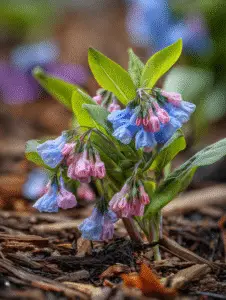
Virginia Bluebells
Woodland perennial with nodding sky-blue bells that overlap spring bloom and love part shade.

Blue Flax
Airy, meadow-style perennial with delicate blue petals that bridge spring to early summer.
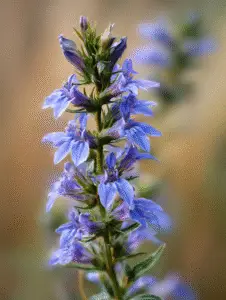
Great Blue Lobelia
Late-summer spikes of blue that extend the cool-tone palette after lilacs finish.
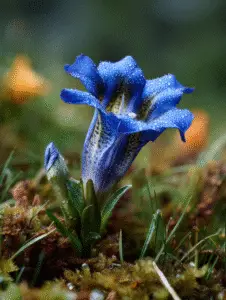
Gentian
Deep, saturated blues and purples for rock gardens and edges; a connoisseur’s pick.

Globe Thistle
Architectural orbs in silvery blue that add structure and pollinators later in the season.
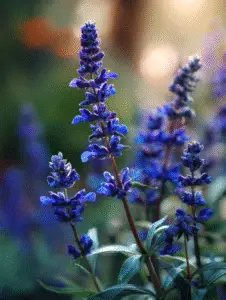
Blue Salvia
Reliable blue spires for borders and containers; long bloom into summer.
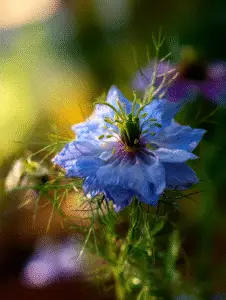
Love-in-a-Mist
Ethereal, lacy annual with soft blue flowers that complements lilac bouquets.
References
- University of Minnesota Extension – Growing lilacs for Minnesota landscapes→Practical guidance on site, sun, pruning renewal, and establishment timelines. Useful for "Care," "Pruning," and "Why new shrubs don’t bloom yet."
- Penn State Extension – Lilac Care→Clear note that flower buds form the summer before bloom; prune right after flowering or you’ll remove next year’s buds. Great for the pruning timing paragraph.
- Oregon State University Extension – Keep lilacs healthy and blooming with regular pruning→Reinforces annual light pruning soon after bloom; avoid winter cuts that remove set buds. Good for a "Do/Don’t" callout.
- NC State Extension Plants – Syringa vulgaris (Common Lilac)→Solid plant profile with taxonomy, bloom season, size, flower colors, and landscape notes; helpful for your "At a glance" box.
Enjoying our flower guides? Add YourFlowersGuide as a preferred source on Google. It helps more readers find us.
Add to Preferred Sources