

Peony Wedding Bouquets: 2026 Styles, Colors & Combinations
Planning a 2026 wedding bouquet? Discover the best peony styles, color combos, and flower pairings. Real tips on varieties, seasonal availability, and budget. No fluff.
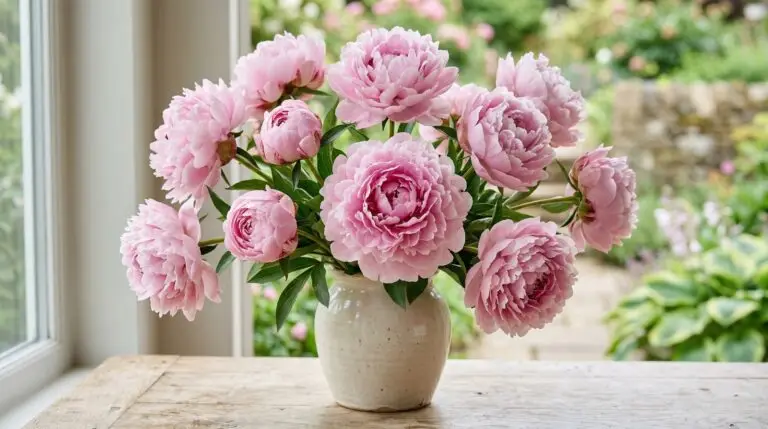
Best peony varieties from classic Sarah Bernhardt to trendy Coral Charm
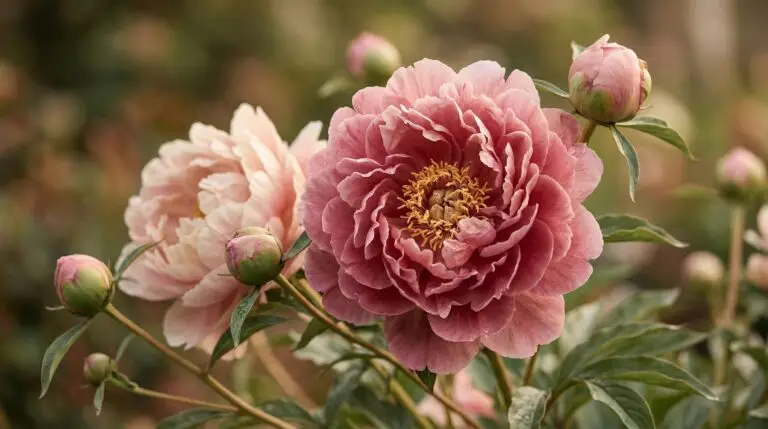
Peony flower meaning and why this bloom represents romance prosperity and good fortune
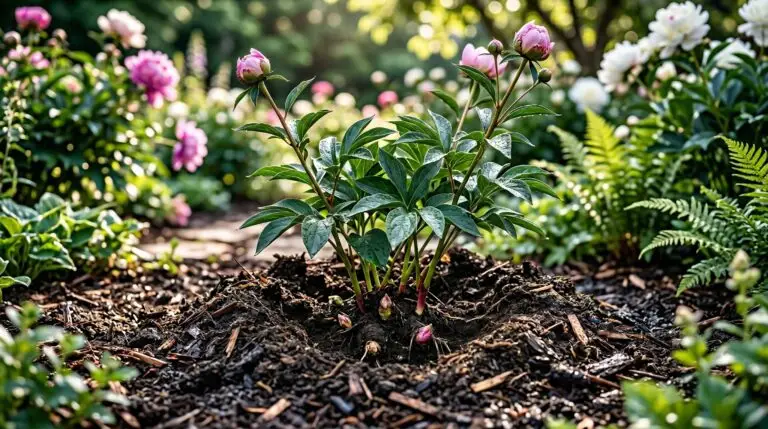
Why peonies fail to bloom and the planting depth mistake that keeps them flowerless
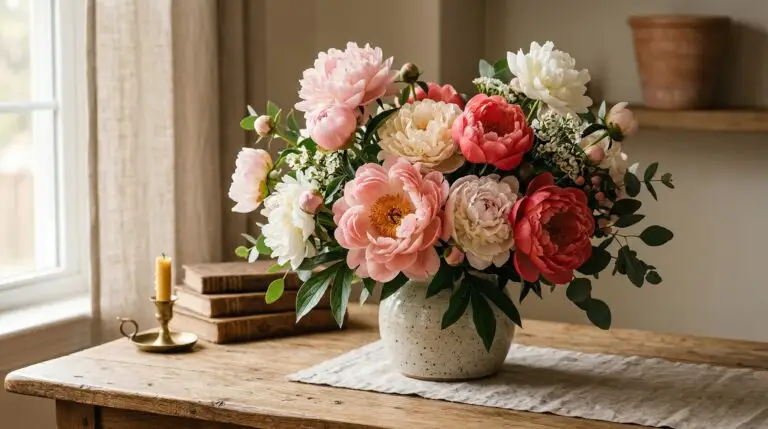
Peonies as the most coveted wedding flower and why brides pay premium for peony season

Companion plants for peonies that extend the beauty season beyond peony’s brief moment
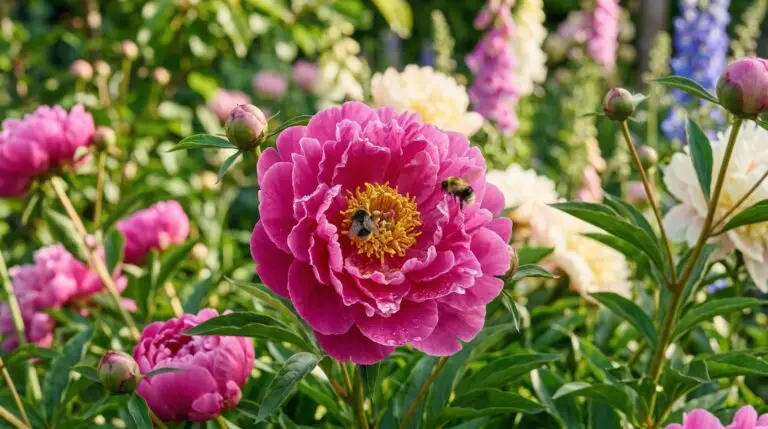
Why peonies need ants and the truth about the ant myth that refuses to die
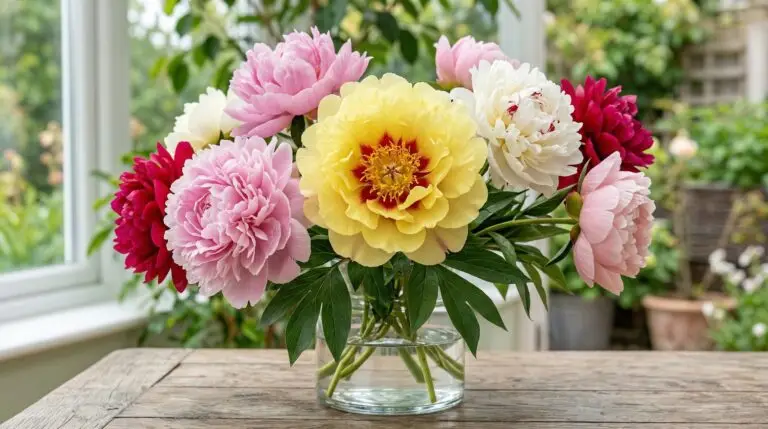
Itoh peonies the hybrid breakthrough that gives the best of both herbaceous and tree peonies
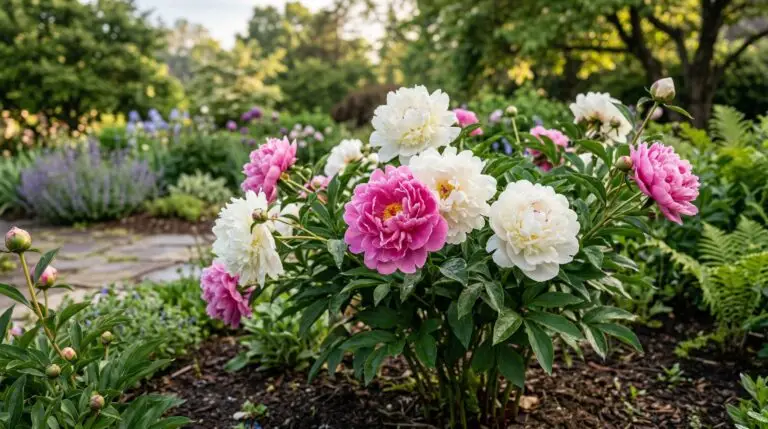
Growing peonies in warm climates and the chill-hour challenge in zones 8 and above
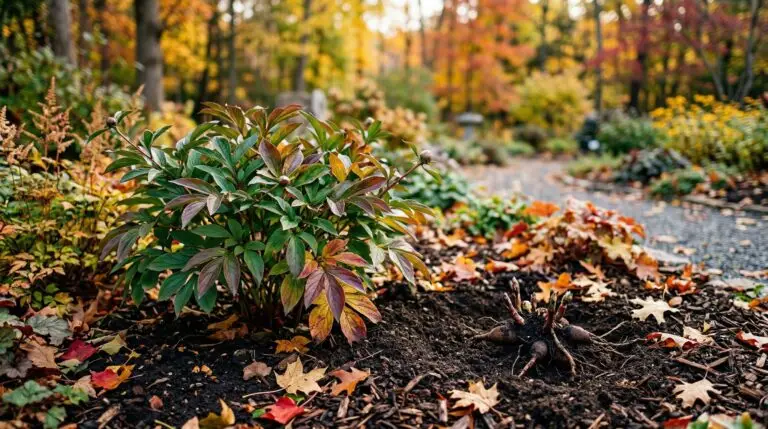
How to grow peonies for lush romantic blooms that last a lifetime in your garden
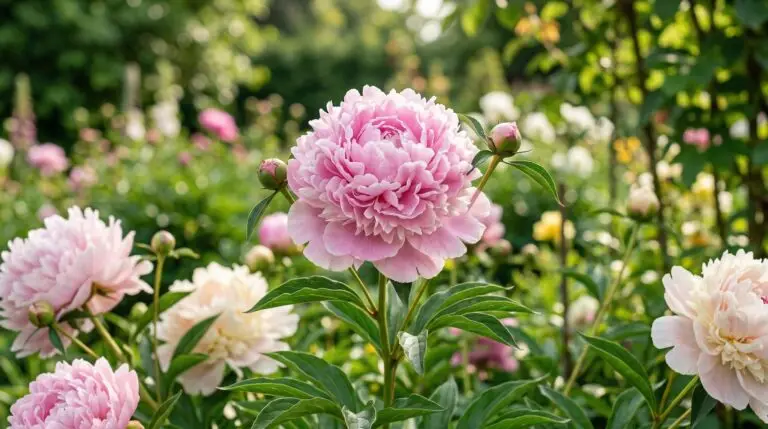
Cutting peonies at the perfect marshmallow stage for the longest vase life

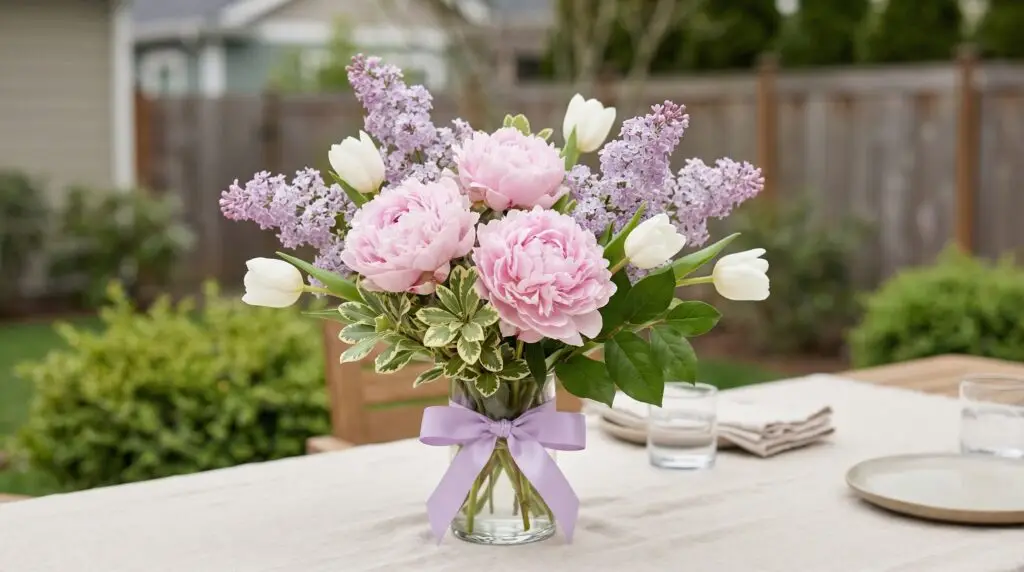
Peony Centerpieces for Weddings and Events
Learn how to design beautiful peony centerpieces for weddings and events. Practical stem counts, low vs tall designs, best filler flowers, and real budget tips that work.
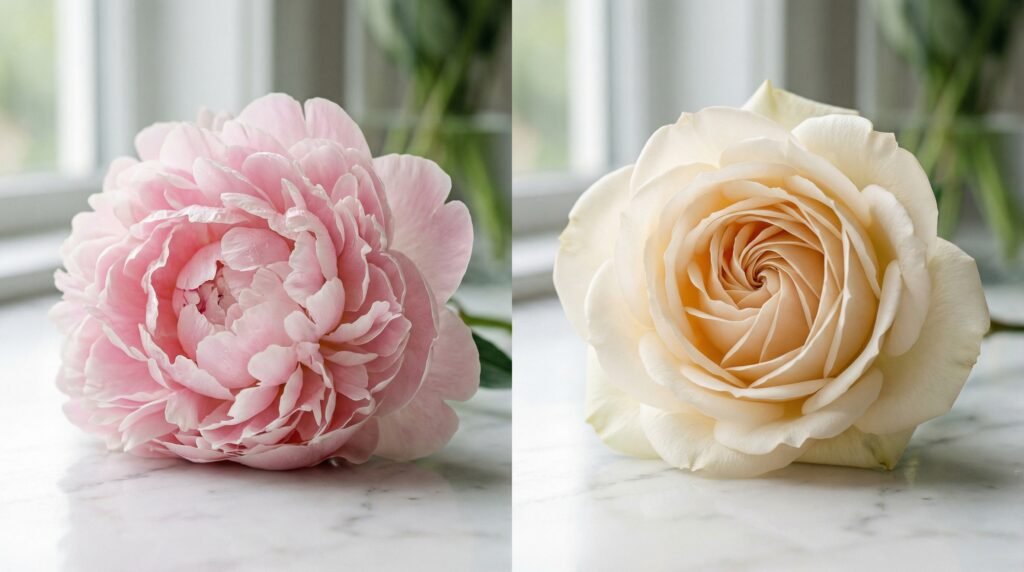
Peonies vs Garden Roses: Which Is Better for Your Bouquet?
Peonies vs garden roses: which wins for weddings? Compare fragrance, vase life, texture, price, and availability to choose the right flower for your bouquet.

How to Grow Peonies from Bare Root: Step-by-Step Guide
Learn how to plant bare root peonies the right way: when to plant, correct depth, what to expect the first year, and how to care for them after planting. Practical guide for beginners.

Peony Problems Why Your Peony Is Not Blooming (And How to Fix It)
Peonies not blooming? The most common reasons: planted too deep, wrong sunlight, frost damage, too much nitrogen, or plant too young. Find out what is stopping yours and how to fix it.
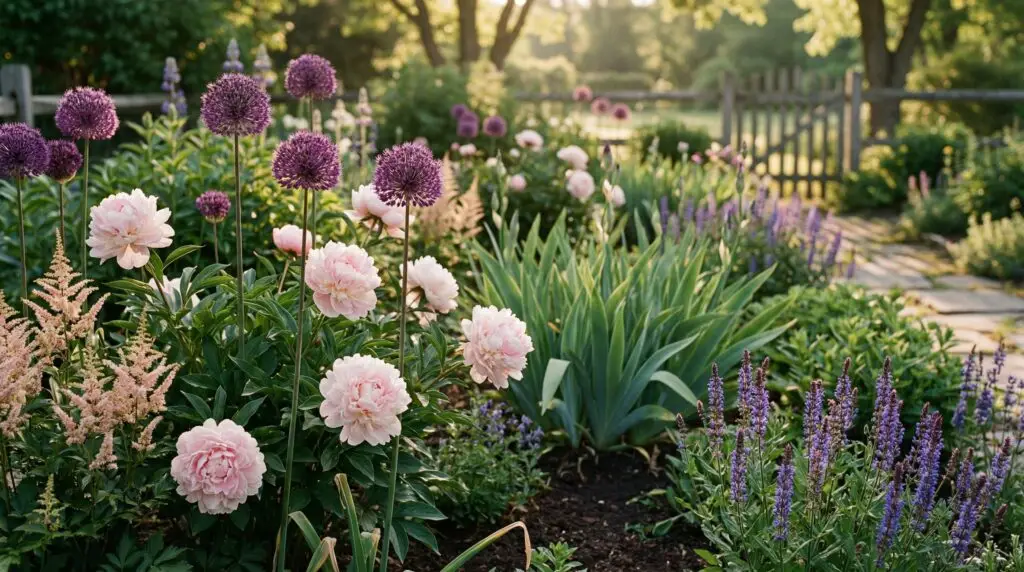
Peony Companion Planting What to Grow Next to Peonies
Discover the best companion plants for peonies: flowering partners that look great together, foliage plants that cover dying leaves, and plants to avoid near peonies in your garden.
Tree Peonies vs Herbaceous Peonies vs Itoh Peonies: Full Comparison
Tree, herbaceous, or Itoh peony: which type is right for your garden? Compare bloom time, ease of care, lifespan, and the best varieties in each category before you buy.
How to Cut and Keep Peonies Fresh: Complete Vase Life Guide
Learn when and how to cut peonies, how long they last in a vase, the florist refrigerator trick, and the most common vase mistakes that shorten peony life. Real tips that work.
In the language of flowers
What peony symbolizes
A wish for a happy, prosperous, love-filled life: romance, prosperity, good fortune, and a happy marriage. It is one of the most requested wedding flowers, and people also give it for engagements, anniversaries, and congratulations.
The Victorian reading. In the Victorian language of flowers the peony stood for bashfulness and a happy life, sometimes carrying a faint note of shame or hiding. That shy reading has largely faded from how the flower is used today.
What to write on the cardFor a wedding: 'A full, lucky, love-filled life ahead.'
Three types, one name
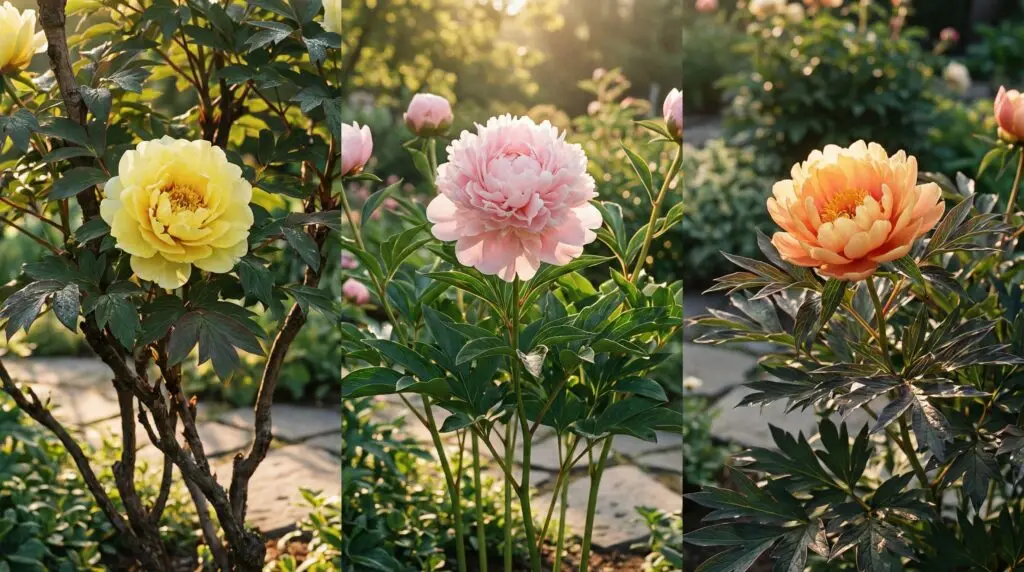
Gardeners usually choose between herbaceous, tree, and intersectional peonies, though UConn recognizes four types grown in home landscapes, including an overlooked woodland type. That fourth kind is the woodland peony, Paeonia japonica, a white-flowered plant that opens first among the four and blooms for about two weeks. Herbaceous peonies remain the familiar standard. They push up leafy stems each spring, carry heavy flowers, and die back to the soil line every autumn. Paeonia lactiflora cultivars make up most of these garden selections, often called Chinese peonies, and trace their origin to China. Tree peonies take a different approach. They form woody shrubs that keep their branch framework through the winter, leafing out from existing wood as spring returns. Intersectional hybrids cross the two, and carry the name of the Japanese botanist who first made the cross, Toichi Itoh. These plants, often called Itoh peonies, are deciduous and put out fresh foliage each spring from short woody stems. A side-by-side comparison of tree peonies, herbaceous peonies, and Itoh peonies shows how their habits differ in the garden.
Botanically they all sit in one family, Paeoniaceae. The familiar garden peonies grown across North America trace back to Paeonia lactiflora, Paeonia officinalis, Paeonia japonica, or about 26 other species. Woody peonies fall into Lutea, Rockii, Suffruticosa, and Intersectional classes, with intersectional crosses using Paeonia lactiflora as their herbaceous parent. Centuries of careful selection across these wild plants have created great variety, and the American Peony Society's registry now recognizes over 8,000 named peony cultivars. Peonies have been grown in Asia for more than 2,000 years before reaching Europe and later arriving in the United States around 1800. Longevity comes with the genus. Herbaceous peonies can live past a hundred years in undisturbed soil, tree peonies can reach a similar age while increasing slowly in size and bloom count, and established plantings commonly keep flowering for more than fifty years.
Cold is the price of flowers
Peonies are cold-hardy plants that need a cold period to set buds, which is what frustrates gardeners in warm climates. UConn puts a number on it: flowering takes a minimum of six weeks below 40 F, and even a peony grown indoors still wants about three to six weeks between 32 and 40 F over winter, depending on the variety. How much chill a given plant needs varies by cultivar, and suppliers usually rate it. Published hardiness ranges differ a little depending on who is writing and which peony they mean. The working answer for a herbaceous peony is zones 3 through 8, with the best performance in zones 5 to 7 and plants often still doing well in the northern part of zone 8. UConn stretches the range further, calling peonies hardy from zone 9 to zone 3 with some exceptions. Tree peonies run across zones 3a to 8a and do best in zones 5 to 8, languishing wherever their chilling requirement goes unmet.
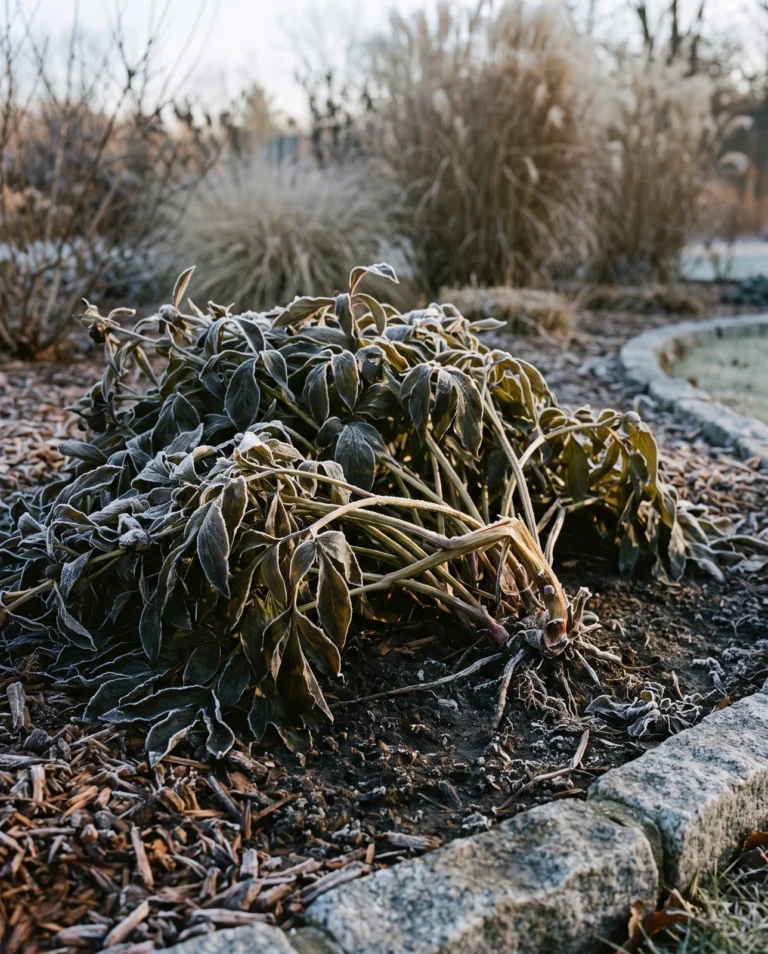
Frost is the other half of the cold story, and it works against you in spring. Light freezes usually show as wilting stems that bounce back later in the day, while colder nights kill shoots that do not recover. Bud damage generally becomes lasting once temperatures fall below 25 F, though on an established plant the shoots lost early are often replaced from dormant eyes and can still flower the same year. Further south, the problem inverts: there is not enough cold rather than too much. When growing peonies in warm climates, winter microclimates decide whether plants get enough rest. In San Francisco, zone 8, tree and intersectional peonies do fine without special care while herbaceous peonies struggle for chill, and a little north in Sebastopol, in that same zone, herbaceous peonies chill reliably. Gardeners in zones 8 and 9 cut intersectional and herbaceous peonies to the ground in November to force dormancy.
When peonies bloom across the country
Peonies bloom from late spring into early summer, opening across the country in a wave that follows warming weather. Peak bloom by region runs mid-May in southern zones, late May in mid zones, and early June in colder zones. Published bloom dates are approximate for a New Jersey location, while locations to the south bloom earlier and locations to the north bloom later. Once open, each peony flower lasts approximately 7 to 10 days in bloom, and cultivars bloom for an average of 5 to 7 days. You can stretch the whole season to about six weeks by growing early, midseason and late cultivars together. Spring weather still moves those dates, and a late cold snap can take the first flush of buds before it opens.
Interactive map
 See the interactive map
Drag the date and the bloom moves north across the country. Every point has its own window, and the map says where it has no records rather than guessing. Free, with nothing to sign up for. Open the peony map.
City by city
Typical window, earliest first. Cultivars of the same flower can open days or weeks apart.
Planting the eyes
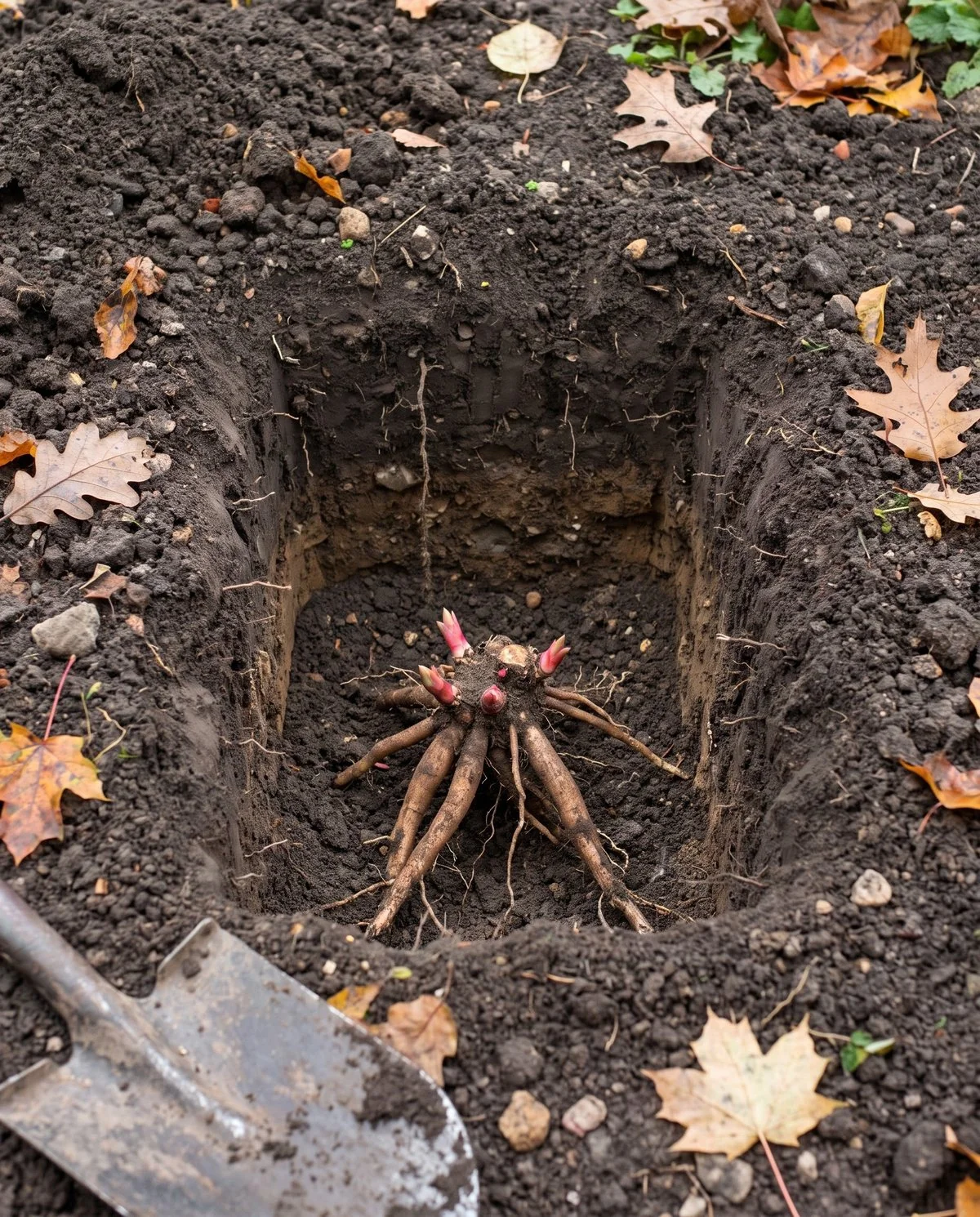
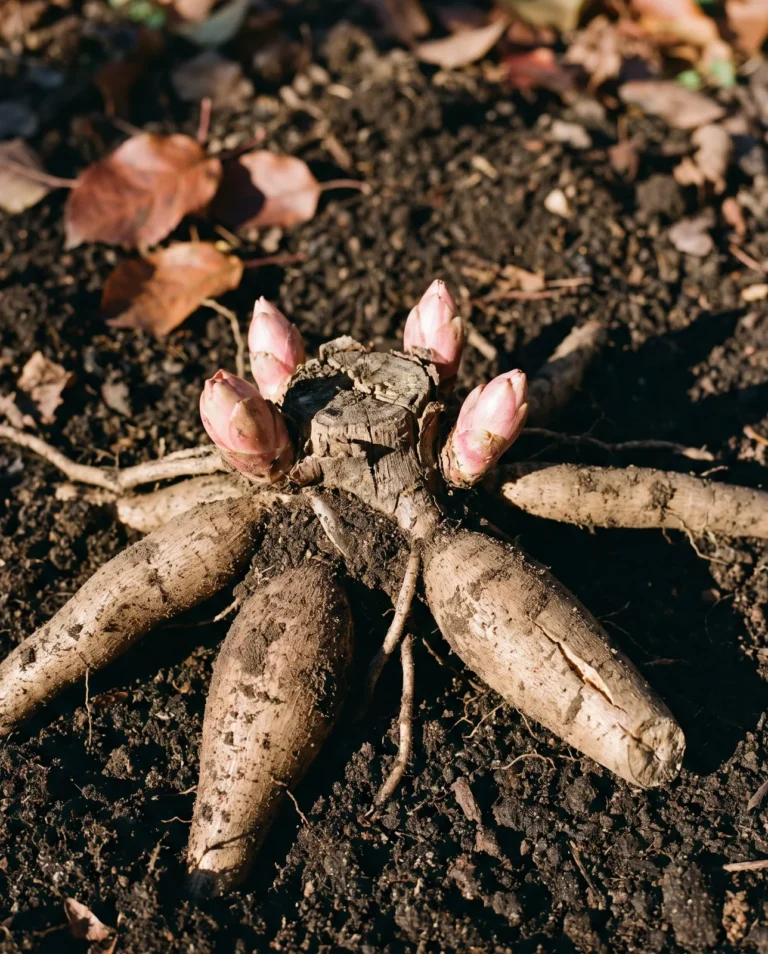
Plant herbaceous peony eyes 1 to 2 inches below the soil surface, because setting them too deep is the most common reason peonies fail to flower. Planting depth scales with local winter cold. In cold northern gardens across zones 3 and 4, set the crown 2 inches deep beneath the surface. Through middle regions across zones 5 and 6, 1 inch of soil over the crown produces good growth. In warmer areas across zones 7 and 8, cover the crown with only 0.5 inch of soil. Early-blooming varieties in southern gardens also do well when planted about 1 inch deep with some shade. Tree peonies follow a different rule because of the graft union. UConn covers the graft with 4 to 5 inches of soil, while Clemson sets the graft union only about an inch below ground level.
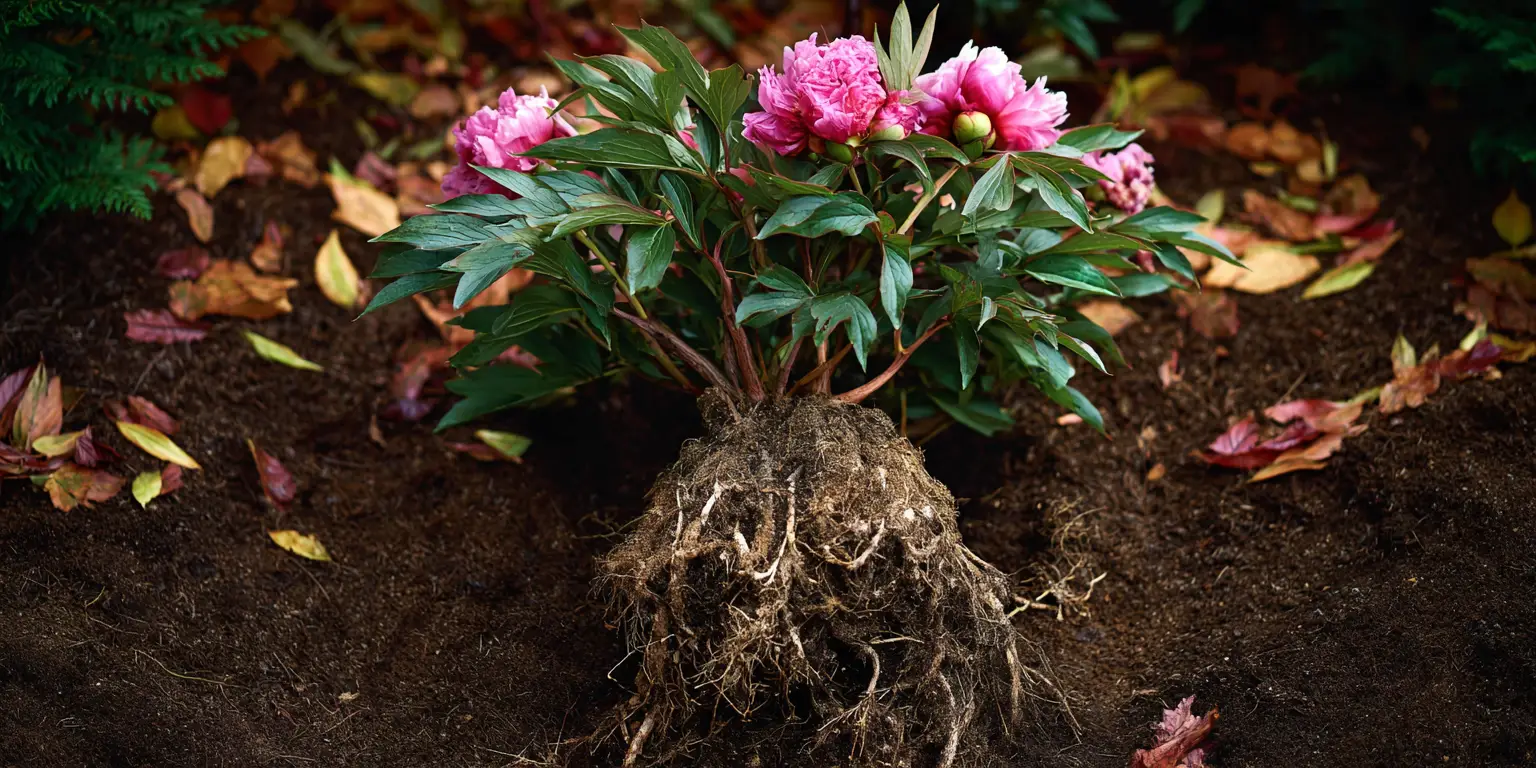
Bare roots need about 6 weeks to establish before the ground freezes hard, which makes planting peonies in fall the most dependable way to start. You can plant in spring, but spring-planted peonies generally lag about a year behind those put into the ground in autumn. In South Carolina, fall planting is best for both herbaceous and tree peonies, with late September or October providing the ideal window. In warm winter regions like Dallas, in zone 8, that planting calendar shifts later into November and December or late January and February. Pick ground where peonies have not grown before so young roots establish cleanly. Dig each planting hole 12 to 18 inches deep to loosen the bed, setting the eyes no deeper than 1 inch below the soil surface. If you fertilize at planting, use just 1/4 to 1/2 cup of a low-nitrogen 5-10-10 blend placed well below the crown roots, because excess nitrogen reduces flower production. After planting, garden peonies usually take 2 to 3 years to begin blooming from bare roots. Tree peonies begin blooming at about the same time as herbaceous types, but they increase slowly in size and flower count.
Depth and planting window, by zone band
The one number that decides whether the plant flowers changes with your zone, and the sources do not all print the same figure. Both are below, with who says what.
Why a peony will not bloom
A peony that produces lush green foliage but fails to flower is most often planted too deeply in the ground. When working through why your peony is not blooming, checking the planting depth is the best place to begin. The pink growth buds on the crown should sit only 1 to 2 inches below the soil surface, and no deeper than 1 inch in warm southern gardens. When roots sink too deep or heavy mulch piles up over the crown, the plant puts up tall leafy stems but cannot set buds. If the crown is buried under more than 2 inches of soil, gently scrape away excess mulch, or lift and reset the root in late September or October. The next most common obstacle is shade. Herbaceous peonies need at least 6 to 8 hours of direct sunlight every day to bloom freely, while low light decreases flower numbers. Plants will tolerate 5 to 6 hours of partial shade, though they produce fewer blooms. A mature clump that bloomed reliably in earlier seasons often slows down as surrounding shrubs or tree canopies expand. Thinning out overhanging tree branches or shifting the root to an open, sunny spot solves the problem.
Excess fertilizer also robs peonies of flowers. Giving plants too much nitrogen feeds heavy green foliage at the expense of buds, so excess nitrogen actually decreases flower production. Peony nutritional needs are modest, and spring feeding calls for a low-nitrogen 5-10-5 or 5-10-10 blend. Spread 2 to 3 pounds per 100 square feet once new shoots grow 2 to 3 inches tall. At planting, a small dose of just 1/4 to 1/2 cup of 5-10-10 fertilizer worked well below the crown roots is plenty. Other times, the plant simply needs more time to settle. Peonies started from bare roots or recently moved typically take 2 to 3 years to bloom, and garden peonies usually flower within 3 years. Clumps take 3 to 5 years to establish fully and reach maximum bloom counts. Planting a division with fewer than 3 eyes delays blooming by several years. A healthy division should have at least 3 to 5 eyes on a sound root system. When an immature peony looks healthy and leafs out cleanly, it usually needs another year of growth before setting flowers.
Overcrowding and underground competition also choke off blossoms. As a clump ages and stems become densely packed, flower production declines, while root competition from nearby trees and shrubs reduces flower size. Digging and replanting whole overgrown clumps without dividing them leads to a slow decline, whereas dividing the root into pieces with 3 to 5 eyes spurs vigorous new growth. When an established clump forms buds that wither, turn brown and fail to open, a late spring frost or bud blast is the usual culprit; the temperature at which that damage becomes lasting is covered in the section on cold above. One more cause sits a season back: flower buds form the previous fall inside the underground eyes, so cutting the foliage down too early can cost the next year's blooms. Leaving foliage intact until late autumn allows those buds to develop fully beneath the soil.
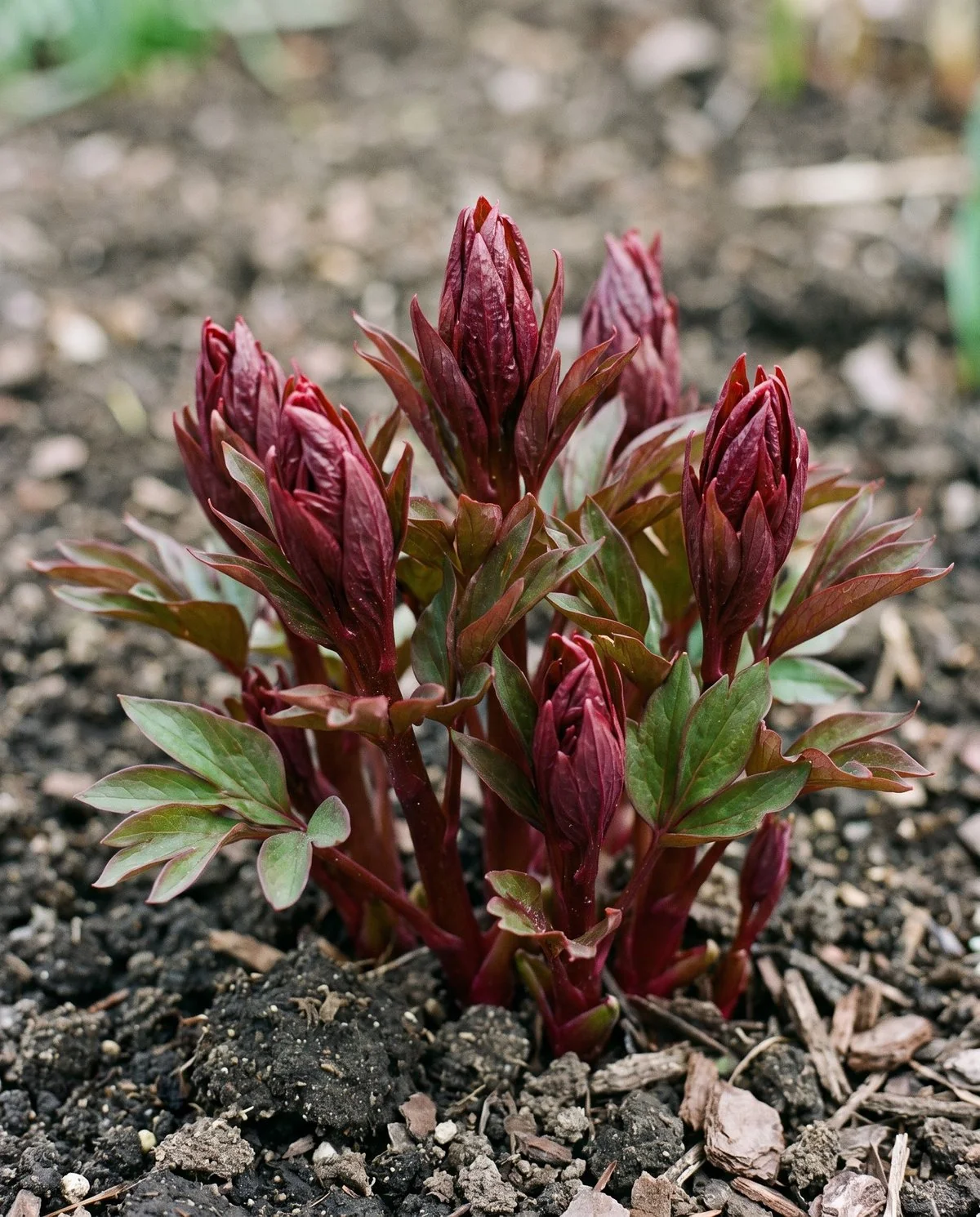
A healthy plant with no flowers: work down this list
Run the checks in this order. The spade comes before the sprayer, because the two most common answers are both about where the plant sits, not what is eating it.
Yellow leaves: normal or not
Whether yellow peony leaves signal natural dormancy or root trouble depends on the season. As autumn arrives, foliage naturally begins to shut down: Iowa State expects only some marginal yellow fall color as the plant goes dormant. Because flower buds are set the previous fall in underground eyes, removing foliage too early can cost next year's bloom when cutting back peonies. When foliage turns yellow in spring or midsummer, the plant is facing active stress. Ask Extension diagnosed yellow, distorted foliage as chlorosis, meaning a failure to take up enough chlorophyll. That chlorosis stems from poor drainage, compacted or damaged roots, high alkalinity, or nutrient deficiencies. If a mineral shortage is the cause, low iron, manganese, or zinc are the most common culprits. Too much water triggers that same sickly cast: soggy soil turns leaves yellow, and persistent wetness in a bed with poor drainage leads to repeated plant losses. Established peonies become very drought resistant and thrive when watered thoroughly and deeply once every 10 to 14 days.
Fungal infections and insect pests cause distinct yellow patterns that look nothing like seasonal dormancy. Ordinary fungal wilts and rots cause leaves to yellow and take on a scorched look, usually starting with the lower leaves on one side of the plant. When yellowing leaves collapse at the crown, southern blight is often responsible; this fungal crown rot attacks the stems and is distinct from ordinary end-of-season color change. In wet, poorly drained soil, Phytophthora blight is another severe threat. Caused by a soil-borne water mold, it darkens and softens stems right at the soil line and can rot the whole plant. Pests and viral infections also leave recognizable traces across the foliage. Peony scale insects can cause leaves to turn yellow and drop.
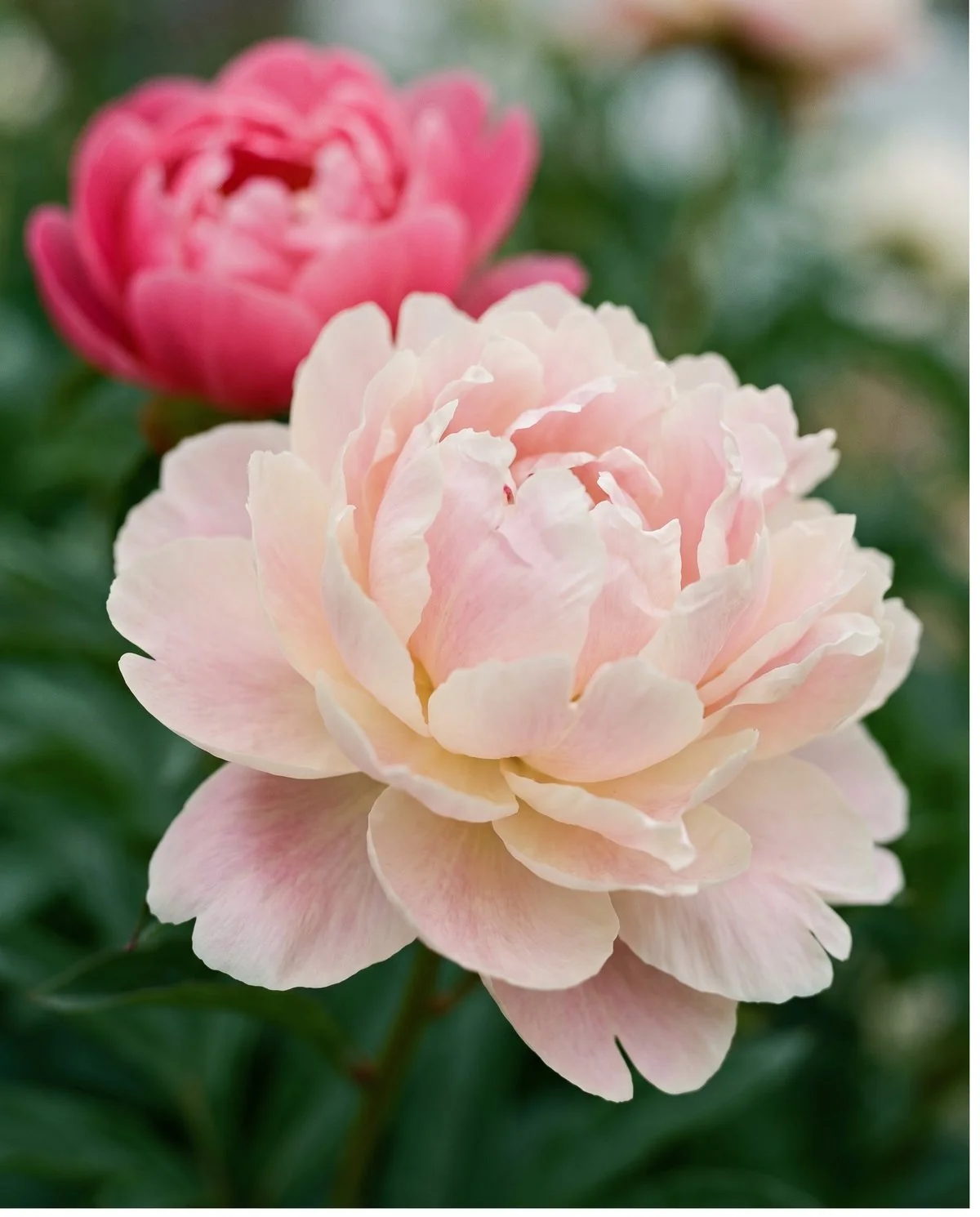
What the symptom is telling you
Match what you are looking at, then read the cause. Yellow leaves have four different endings and only one of them is a problem.
Iowa State expects little seasonal interest from peony foliage beyond bloom, with some marginal yellow colour as the plant goes dormant. Nothing to fix. Cut the stems down once the foliage has died back.
This is chlorosis, a failure to take up enough chlorophyll, and not a disease. The diagnosis traces it to poor drainage, compacted or damaged roots, high alkalinity or a nutrient shortage. Check drainage first, then pH: UConn puts the useful range at 6.5 to 7.5.
The Missouri guide attributes that pattern to ordinary fungal wilts and rots, and notes it usually starts with the lower leaves on one stem.
UConn notes that peony scale insects can turn leaves yellow and make them drop. Clemson calls scales and Japanese beetles the only insect pests of any consequence on an otherwise nearly pest-free plant.
Phytophthora blight, a soil-borne water mould, does this in wet, poorly drained ground and can rot the whole plant. This one is about drainage, not spray.
UConn puts leaf spots and blotches down to several fungi and one bacterial pathogen, and calls them usually harmless while under 30 percent of the leaf area. Peony blotch is not immediately lethal, though repeated years of it affect vigour and looks.
Diseases, blight and leaf spots
Most peony foliage problems come from fungal blights that thrive in cool, wet spring weather. Botrytis blight is the most common peony disease. It rots young shoots at ground level when they stand 5 to 8 inches tall. The fungus also attacks emerging flower buds, turning them dark and dry before they open. Late spring frosts with visible buds can kill them as well. In a severe botrytis outbreak, up to 90 percent of flower buds can fail to develop. These damaged buds are one major reason why a peony fails to bloom. Gardeners who face botrytis each spring rely on early prevention. Fungicide programs start when tips break the ground, repeat two weeks later, and then continue every 14 days until mid-June. In wet, poorly drained soil, phytophthora blight darkens and softens stems at the soil line. This soil-borne water mold can rot the whole plant.
Leaf spots look alarming on peony foliage, but many cause little lasting harm to an established plant. Peony blotch, or red spot, appears on young leaves each spring just before bloom. It starts as small circular red or purple spots that run together into larger dark purple blotches. Peony blotch is not immediately lethal, but repeated bouts over several years affect plant vitality and appearance. Several fungi and a bacterial pathogen cause these leaf spots. They are usually harmless when they cover less than 30 percent of leaf area. Later in summer, powdery mildew coats leaves and stems in light gray or whitish powder. It can deform flowers, but is considered more unsightly than harmful. Peony viruses can also cause dwarfing, abnormal growth, or yellow mottling, mosaic, or ring patterns. These viruses spread between plants through insect feeding or sap contact.
Dividing an old clump
A peony can sit in the same spot for decades without being touched, so division is something you do when the plant asks for it, not on a schedule. The ask looks like this: an old clump with densely packed stems that flowers less than it used to, because crowding is what cuts production and dividing is what restores vigour. The American Peony Society is blunt about the half-measure, warning that lifting a crowded clump and replanting it whole brings a slow decline, while dividing the crown spurs vigorous new roots. Crown or root division is the usual way herbaceous peonies are propagated, on plants three years old or more. The window is late September or October, which gives the roots cool soil to settle into before the ground freezes, and it is the same calendar as planting.
Lift the clump gently and wash the soil off so the eyes are visible, then cut the crown with a sharp knife into pieces that each carry three to five eyes on a sound root system. Replant each piece immediately, before the roots dry. The number of eyes is not a detail: fewer than three is a recognised cause of a peony that will not flower, and a small root piece can push the first bloom back by several years. Even a clean division takes its time. Expect two to three years to the first flowers, with most plants coming into bloom within three once the new root system has taken hold.
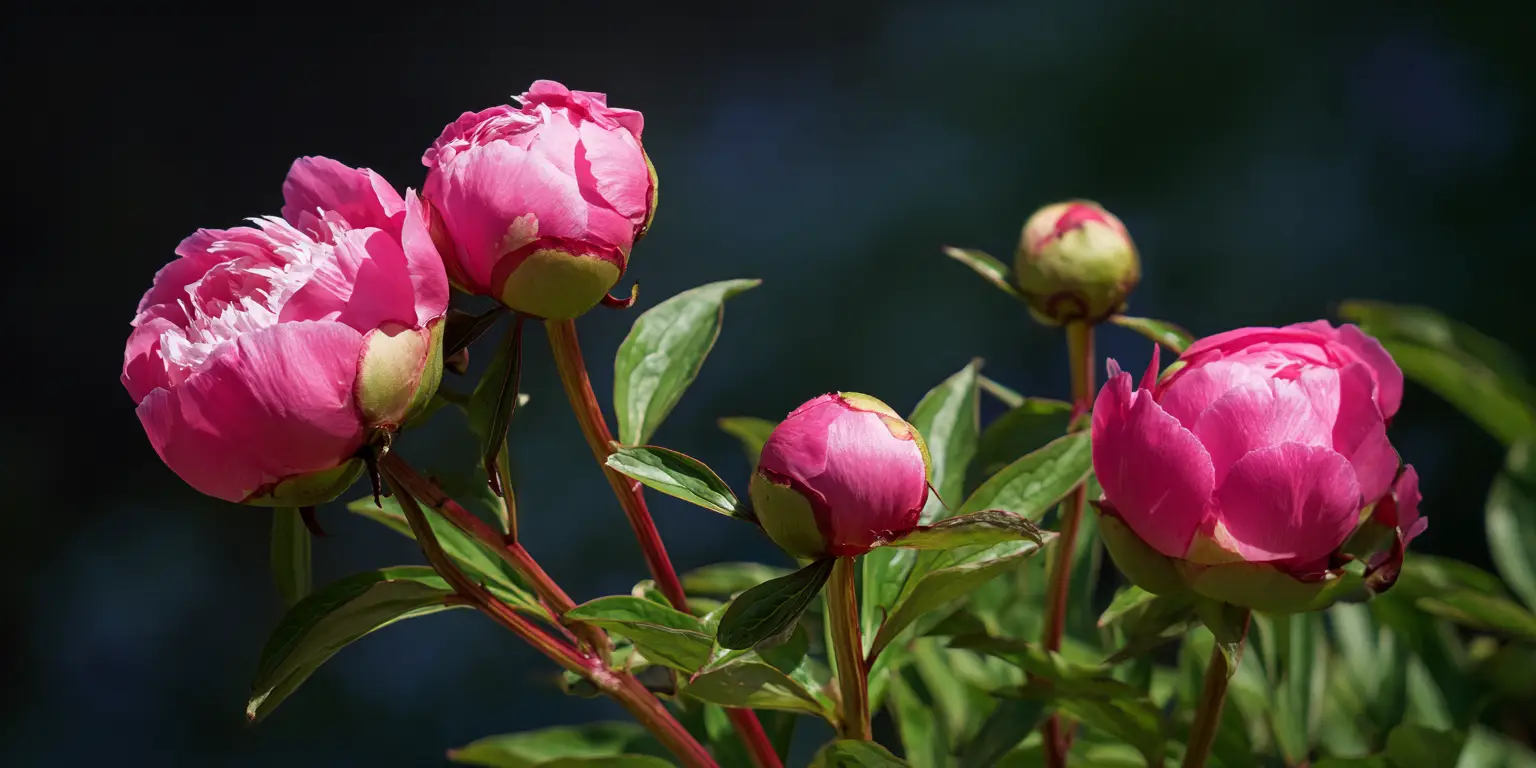
The six official flower forms
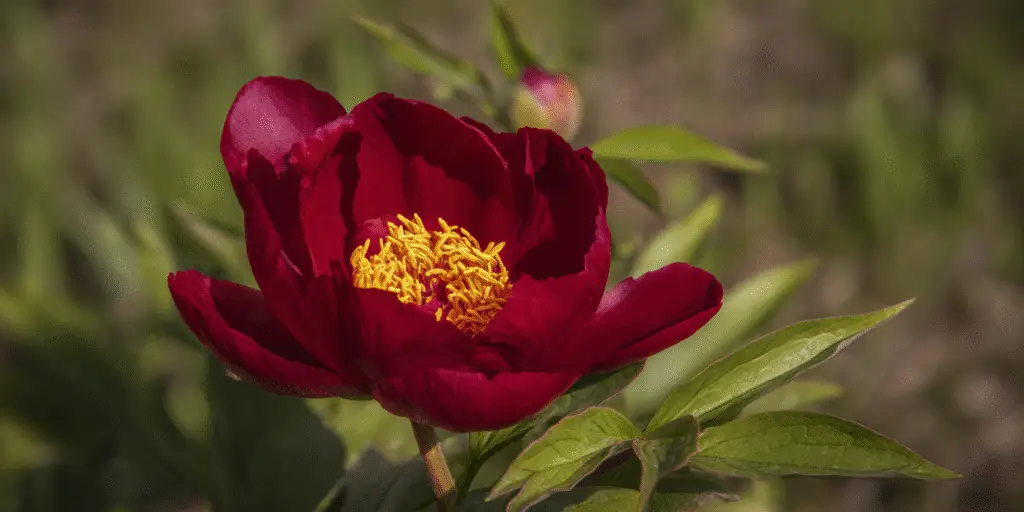
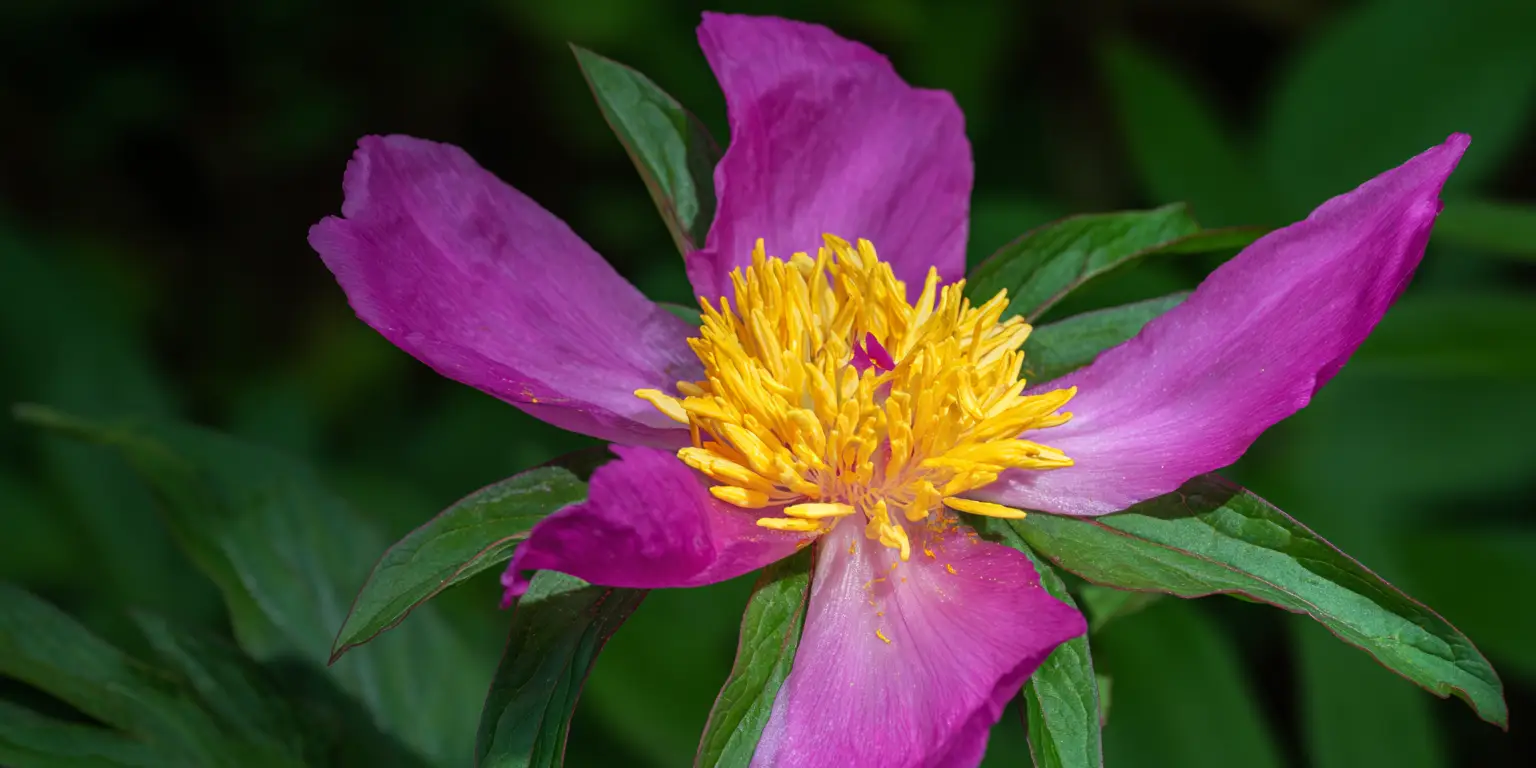
Peony blooms are grouped by how their center parts develop into petals. The official standard recognizes six flower forms: single, Japanese, anemone, semi-double, bomb, and full double. Single-form peonies look closest to the wild species. They open with 5 or more petals spread in a saucer shape around center stamens that shed pollen. In Japanese-form flowers, those center stamens become staminodes. Their pollen stays encased within tissue and does not shed.
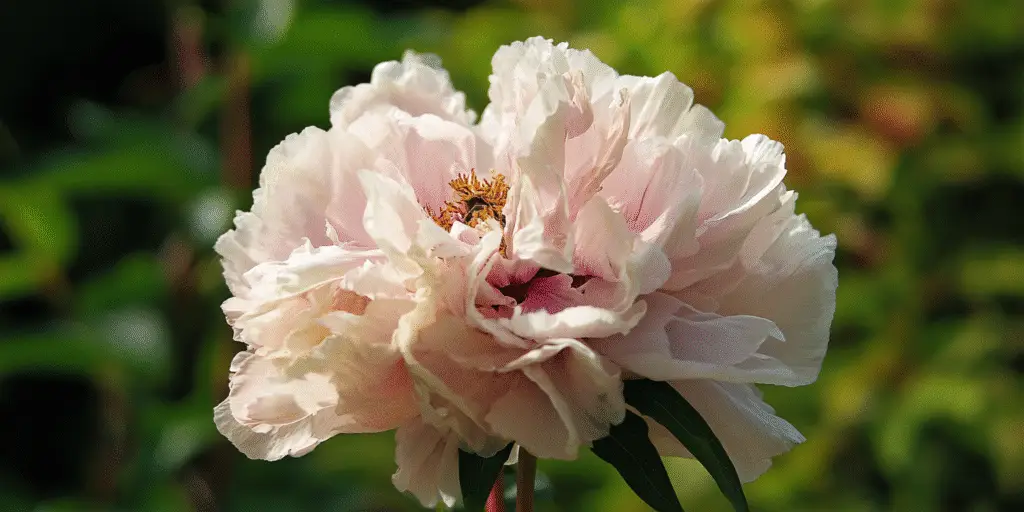
Double and crowned blooms carry far more petals than open single flowers. In the bomb form, transformed inner parts become full petals. They build a dense ball on a plate of larger guard petals. A full double completes that shift across the whole blossom. All stamens and carpels turn into petals, leaving any remaining pollen-bearing stamens obscure or hidden. These packed flower heads carry real weight as they open.
Six flower forms, and what separates them
The American Peony Society's standard sorts every cultivar into six forms by what happened to the stamens. Four of them are shown here.
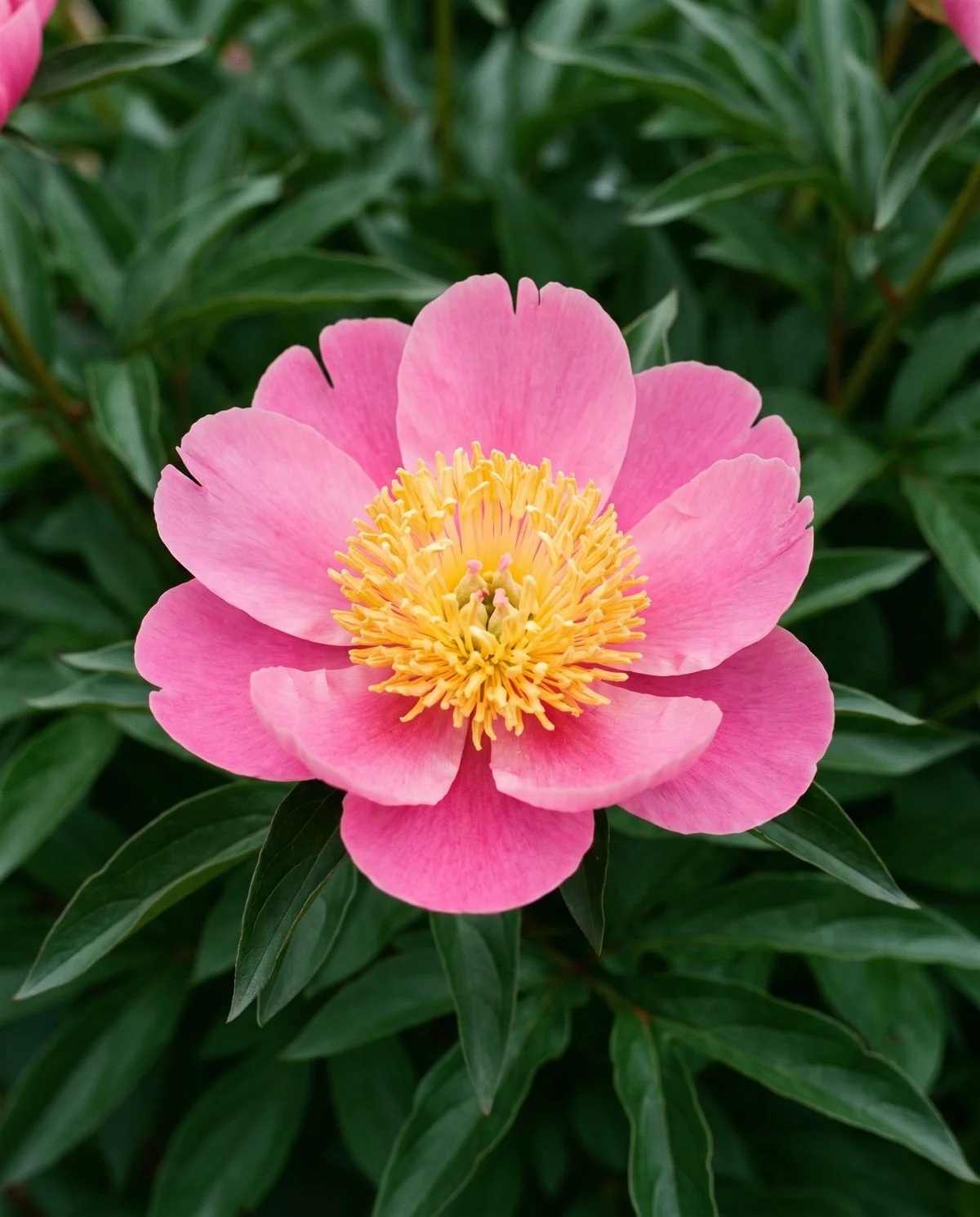
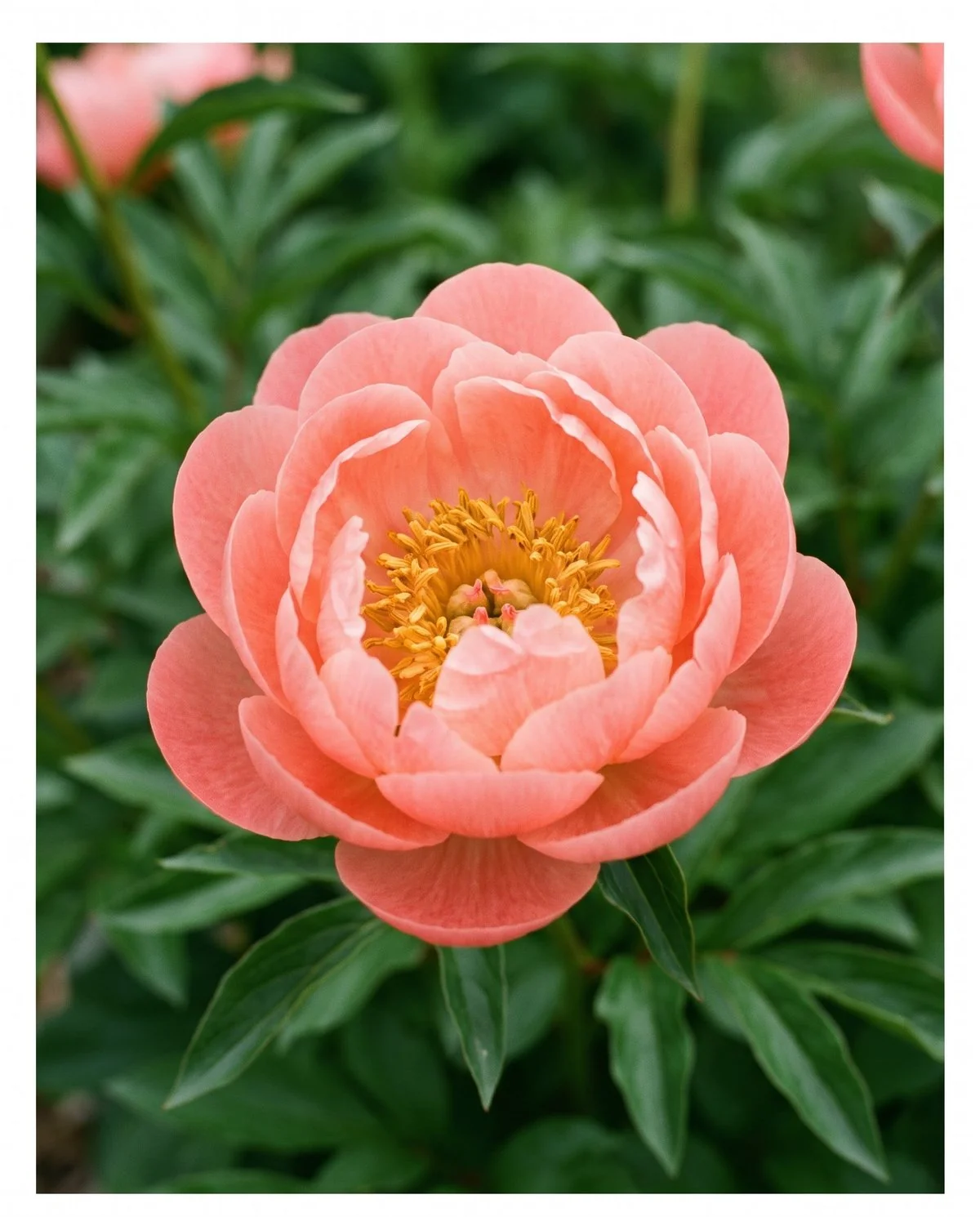
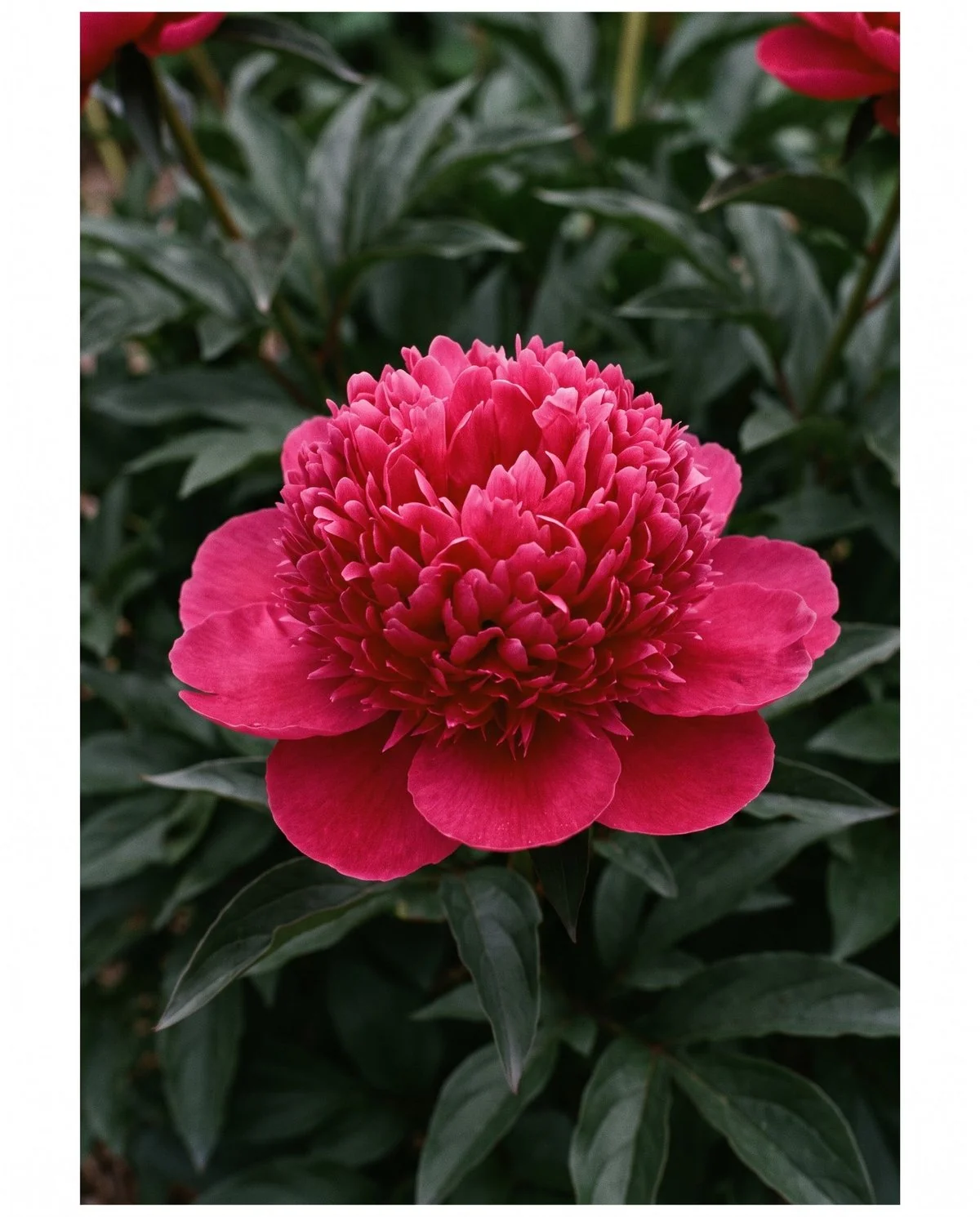
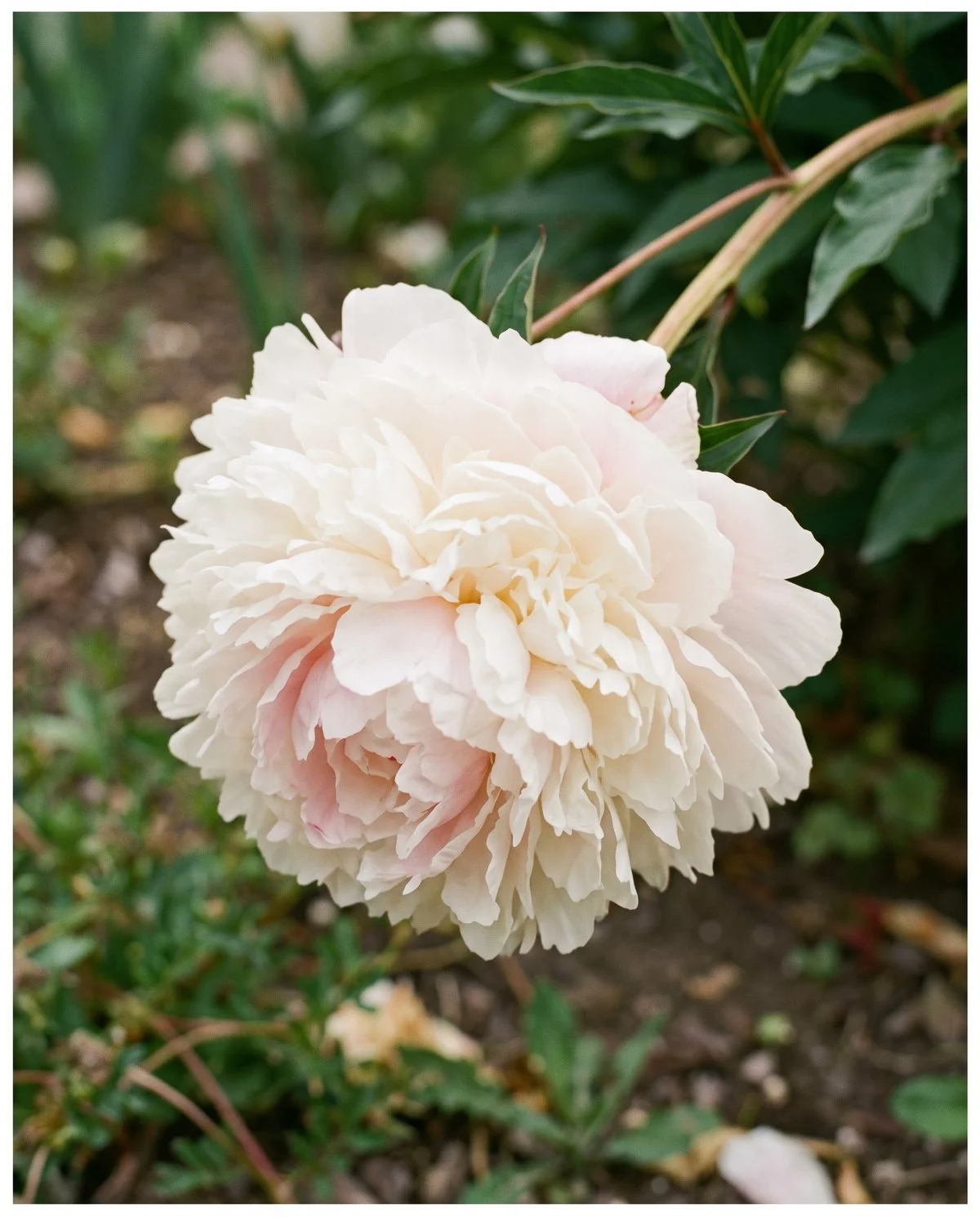
Species and varieties worth knowing
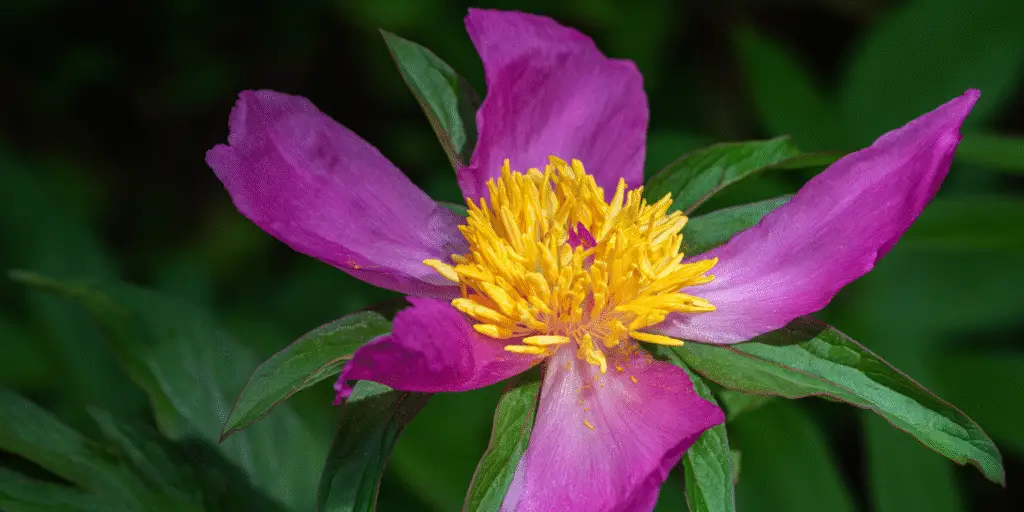
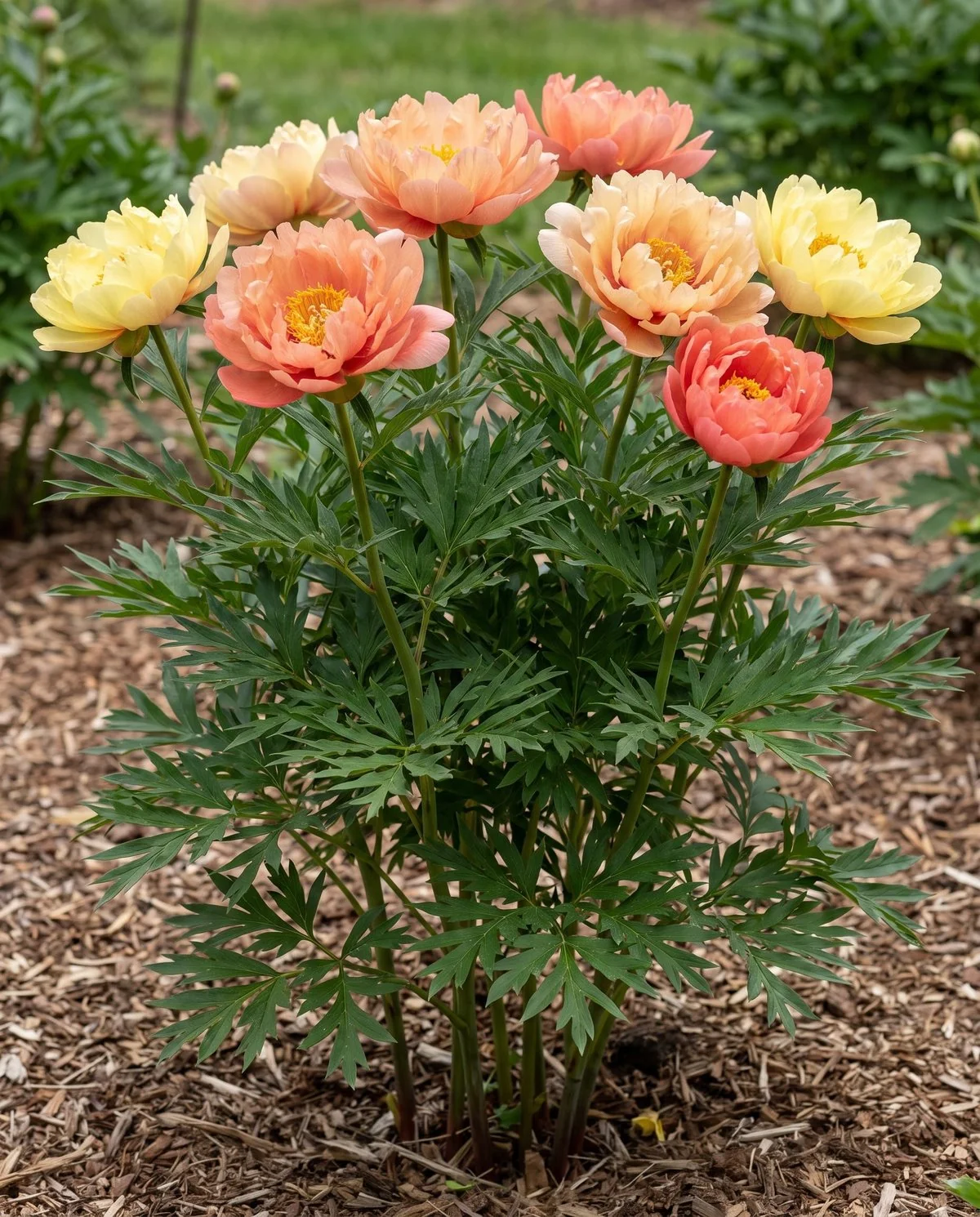
Behind the eight thousand named cultivars on the American Peony Society's register sits a much smaller set of wild species, and knowing which one a plant came from tells you how it will behave. Paeonia lactiflora is the one most gardeners actually buy, a herbaceous plant of about one and a half to two and a half feet in height and spread. Paeonia japonica, the woodland peony, is the outlier that opens first and holds its white flowers for roughly two weeks. Fernleaf peony, Paeonia tenuifolia, stays short with finely divided leaves and deep red single or double flowers, and it is the earliest of the season. The coral peonies that have become fashionable for cutting are a cross of Paeonia peregrina with Paeonia lactiflora, single flowers on sturdy stems that shift from coral to cream as they age.
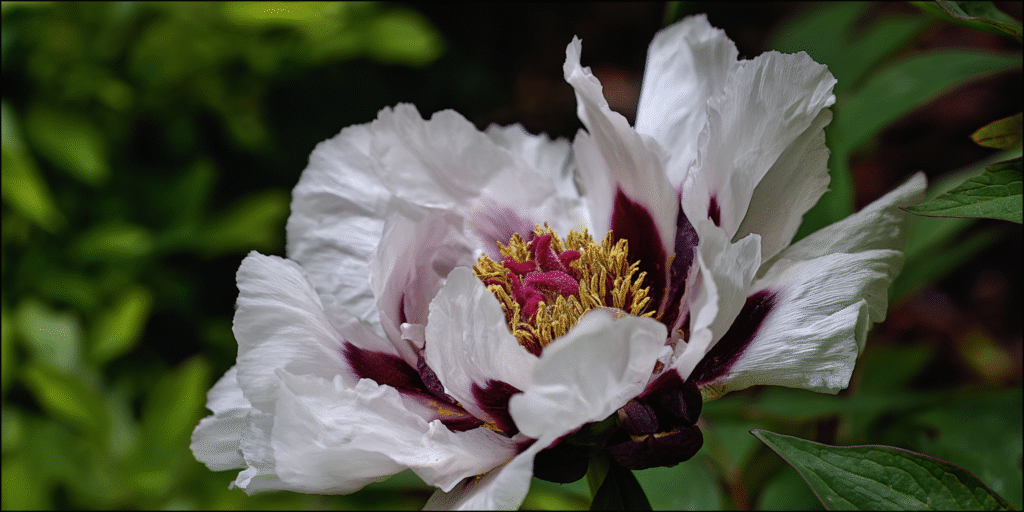
The woody side splits into its own classes: Suffruticosa, Rockii and Lutea. A tree peony holds a permanent framework above ground through winter and reaches about three to six and a half feet tall and three to five feet wide, which is a shrub, not a perennial, and it wants to be sited like one. Suffruticosa hybrids are hardy and come in white, red and pink, but they are intolerant of winter wet. Rockii hybrids are generally very hardy and easy to recognise, because each petal carries a dark maroon spot at its base.
The garden groups, and what each one is for
Most garden peonies trace back to a handful of species. These are the groups a catalogue will actually offer you.
What to plant with peonies
Peonies have no strict list of forbidden companion plants, but they struggle when crowded by aggressive neighbors that steal sunlight or soil moisture. The main danger comes from placing peonies too close to large trees and shrubs, where root competition reduces flower size. Dense roots nearby can starve the crown of nutrients and water, turning root competition into a direct cause of peonies failing to bloom. Overhead clearance matters just as much because peonies need at least 6 to 8 hours of direct daily sunlight for strong flowering. When taller companions cast heavy shade, flower production drops or stops altogether. Helpful companion planning arranges surrounding plants by their physical position and bloom season. Neighbors can sit below, beside, or above the peony clump, timed to bloom before, with, or after the peonies open. When setting out a new peony, avoid beds where peonies have grown before. Giving each clump its own open bed lets the roots settle without competing for ground.
Sun, soil and water
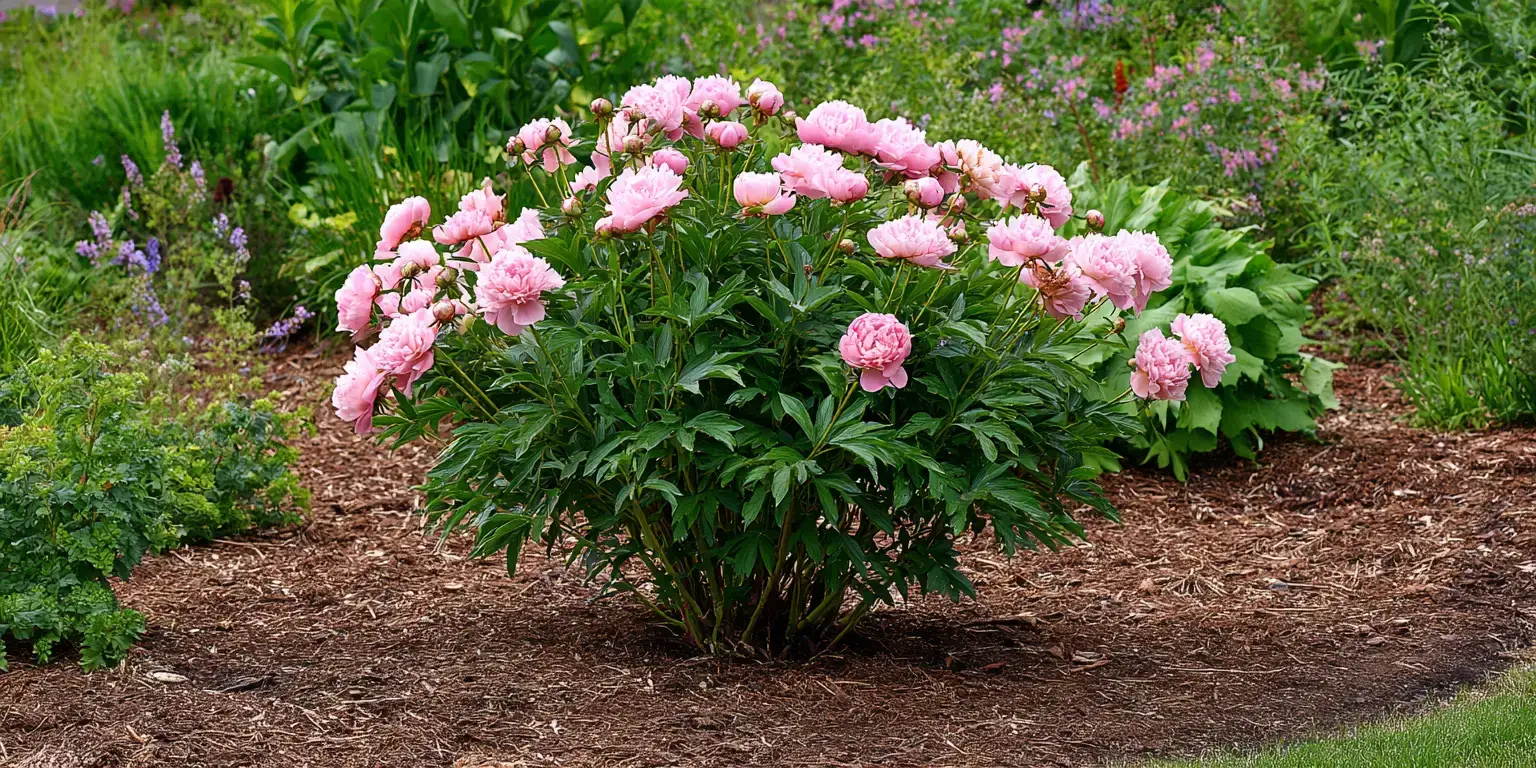
Peonies produce their best blooms in full sun, where herbaceous types receive at least 6 to 8 hours of direct sunlight each day. Plants will tolerate 5 to 6 hours of partial shade, but lower light noticeably reduces the number of flower buds. Tree peonies differ because they benefit from dappled or afternoon shade, which protects their large, silky petals from harsh sun damage. Spacing also requires planning for the mature spread of the clump. Herbaceous peonies typically grow 2 to 3 feet tall with a 3 to 4 foot spread at maturity. Some Paeonia lactiflora selections stay more compact, between 1.5 and 2.5 feet tall and wide. Tree peonies develop slowly into shrubs about 4 to 5 feet tall under normal conditions, with woody selections spanning 3 to 6.5 feet in height and 3 to 5 feet across. Giving clumps generous space when planting peonies in fall helps avoid root competition from neighboring trees and shrubs, which otherwise causes blossoms to shrink.
Peonies require fertile, sharply drained soil with a pH between 6.5 and 7.0, though plants grow well up to a pH of 7.5. Good drainage is essential because standing water quickly damages the crown. In waterlogged soil, phytophthora blight softens and rots stems at the ground line, and poor drainage triggers yellow leaves from root damage. Once established, peonies become very drought resistant and need only a thorough, deep watering every 10 to 14 days. Severe drought can cause flower buds to abort, but soggy soil causes far worse root decay. Feeding should remain modest because excess nitrogen actually reduces peony blooms. Scratch a low-nitrogen 5-10-5 or 5-10-10 fertilizer into the soil at 2 to 3 pounds per 100 square feet in spring once shoots stand 2 to 3 inches tall. At planting time, mixing 1/4 to 1/2 cup of 5-10-10 fertilizer into the hole well below the crown roots supplies all the food a young start needs.
Do peonies need ants to bloom?
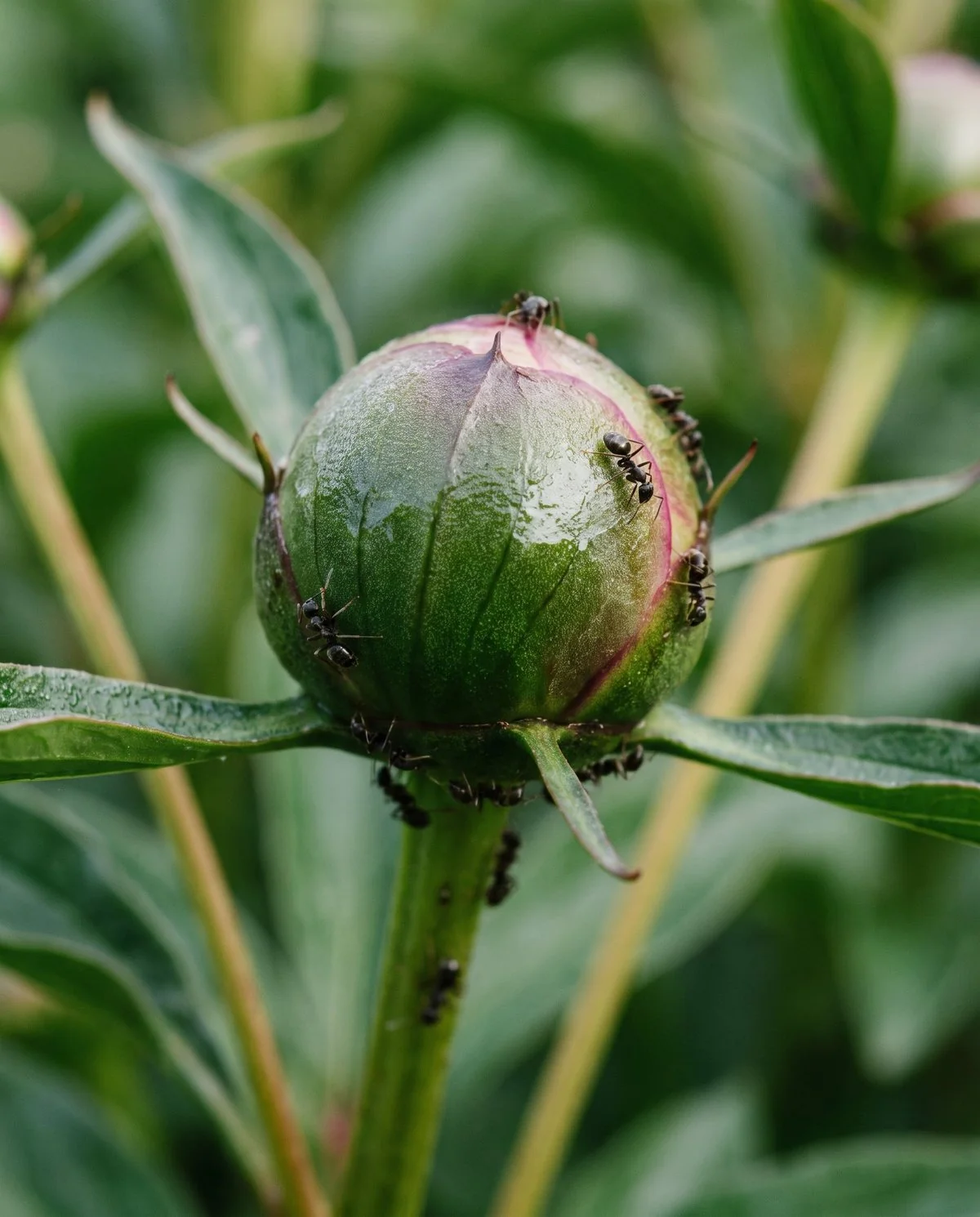
Peonies do not need ants to open, and the belief that ants pry buds open is an old myth. The insects visit because sweet sap gathers on the green sepals at the base of each flower bud. Small plant glands called extrafloral nectaries release this sweet liquid. The droplets contain sugars, amino acids, and lipids. The relationship is biological mutualism: peonies provide food, and in return the ants defend the swelling buds from aphids and thrips. The ants protect their food source and actively chase off other feeding insects. Ants on the buds are common and harmless to the plant and the flower. They rank as a nuisance pest if you carry them indoors on cut stems. Except for scales and Japanese beetles, garden peonies remain nearly pest-free.
Four things gardeners are told about peonies
Each of these turns up in the search results for this plant. Here is what the sources actually say.
The myth: Peony buds need ants to open.
The reality: Missouri Botanical Garden calls the ants common, totally harmless, and not needed to open the flower. Clemson names the idea a myth outright and explains what the ants are really after: the sweet sap the buds secrete.
The myth: A peony that stops flowering has caught something.
The reality: Disease is near the bottom of the list. UConn's causes of bloom failure are planting too deep, an immature plant, excess nitrogen, a nutrient shortage, too little sun and overcrowding, and Clemson says most failures come from deep planting alone.
The myth: Planting deeper protects the crown in a cold zone.
The reality: Depth does shift with climate, but in the other direction and by very little: half an inch of soil over the crown in zones 7 to 8, one inch in zones 5 to 6, two inches in zone 3. Utah State calls excessive depth the most common reason a peony never blooms.
The myth: A new peony should flower the first summer.
The reality: The Old Farmer's Almanac gives bare roots two to three years to their first bloom, and Clemson says garden peonies usually begin within three years of planting. One planted in spring generally runs about a year behind one planted in fall.
Cutting peonies for the vase
Cut peonies in the morning when the flower buds reach the marshmallow stage. At that point, a gently pressed bud gives slightly like a marshmallow, which reduces stem breakage and extends storage life. Harvesting during cool morning hours keeps stems fresh before they go into storage. Commercial grading standards require a minimum stem length of 20 inches for US Number 1 cut peonies and 18 inches for US Number 2. Stems picked at this stage can be stored dry, packed in plastic on a cooler shelf, for 2 to 4 weeks. You can also hold wrapped stems in a home refrigerator for days to weeks. The best storage temperature sits between 32 and 34 F, though home refrigerators run warmer at 36 to 40 F and give a shorter storage life.
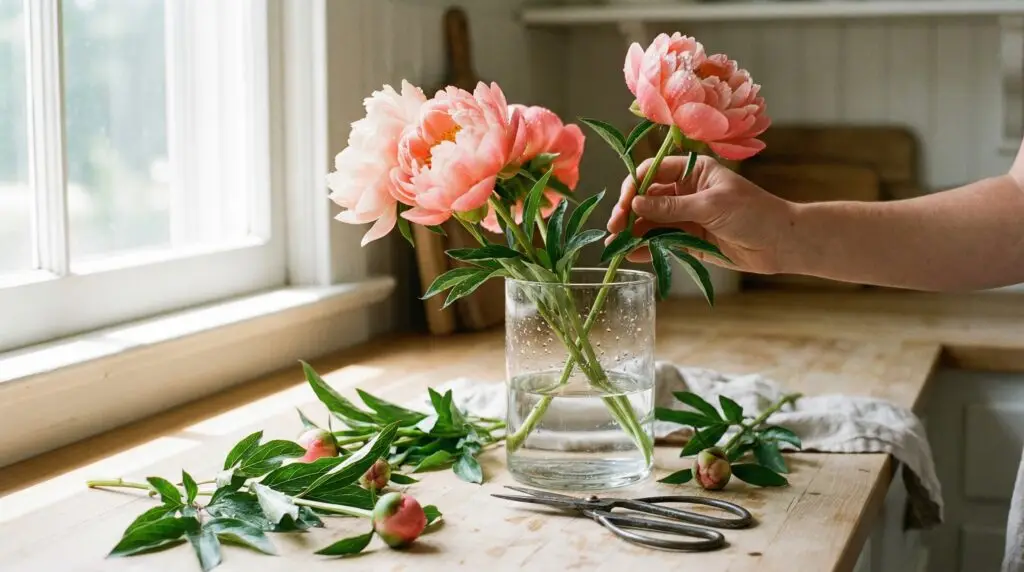
When you take stems out of cold storage, trim the ends and set them in clean water. The resting buds soon expand into blooms measuring 3 to 8 inches across. Seller promises often suggest cut peonies last for weeks on a table, but measured trials record an actual vase life of 3 to 7 days. That brief window makes good handling essential from the start. Stems open quickly in a warm room, so keeping your vase in a cool spot away from bright sun helps the flowers last. Clean water and fresh containers keep the stems clear so the heavy petals stay hydrated. Following the steps in the peony vase life guide shows how to prep cut stems and arrange blooms so they hold their shape indoors. Changing the water regularly and trimming stem ends keeps the blossoms crisp throughout their vase life.

What is the downside of peonies?
The main downside of peonies is a short bloom season and heavy flowers that flop in the rain. Each individual bloom lasts about 7 to 10 days. Across an entire plant, one cultivar blooms for an average of 5 to 7 days. You can stretch bloom time to about 6 weeks by planting early, midseason, and late types together. When the flowers open, large semi-double blooms tend to arch toward the ground and often need stakes. A hard rain can drive those heavy flowers flat into the dirt. Metal peony rings or wire cages help hold up stems when the blossoms grow too heavy to stand alone. Setting those supports early keeps a spring storm from ruining the flowers.
The higher price of peony plants comes from how slowly they multiply and settle into a garden. Growers propagate plants mainly by dividing the crowns or roots of stock that is 3 or more years old. Each division needs 3 to 5 eyes on a crown with a good root system. Dividing the clump spurs strong new roots, while moving an undivided plant leads to a slow decline. Because each mother plant yields few divisions over several seasons, nursery stock builds slowly. After planting from bare roots, peonies typically take 2 to 3 years to bloom. Most plants begin flowering within 3 years. They generally take 3 to 5 years to establish and reach full flower production. That slow start makes peony plants costly, but established plants often stay in production for 25 years.
Are peonies toxic to pets?
The ASPCA lists the peony as toxic to dogs, cats and horses, names paeonol as the toxic principle, and gives vomiting, diarrhea and depression as the signs of a pet eating it. That is the whole of the official entry, and it is worth reading for what it does not contain: no quantity, no severity grade, and no separate verdict for the different kinds of peony. The listing even carries the botanical name with a typo, which is a fair reminder that a database card is a starting point and not a diagnosis.
In practice that puts peonies in the same bracket as most flowering perennials a household already grows: not a plant to panic about, not a plant to let a dog chew through. The roots hold the interest for a digging dog, and the fallen petals hold it for a grazing one. If an animal has eaten part of the plant and starts vomiting or goes quiet, the signs in the listing are the ones to describe to a vet.
Peony meaning and symbolism
Peonies carry a long cultural tradition that still shapes how they are given and grown. The plants were cultivated in Asia for more than two thousand years before reaching Europe and the United States around 1800, and that history is where the associations with romance, prosperity and good fortune come from. The traditions themselves, and what the different colours are taken to mean, are set out in the guide to peony meaning and symbolism.
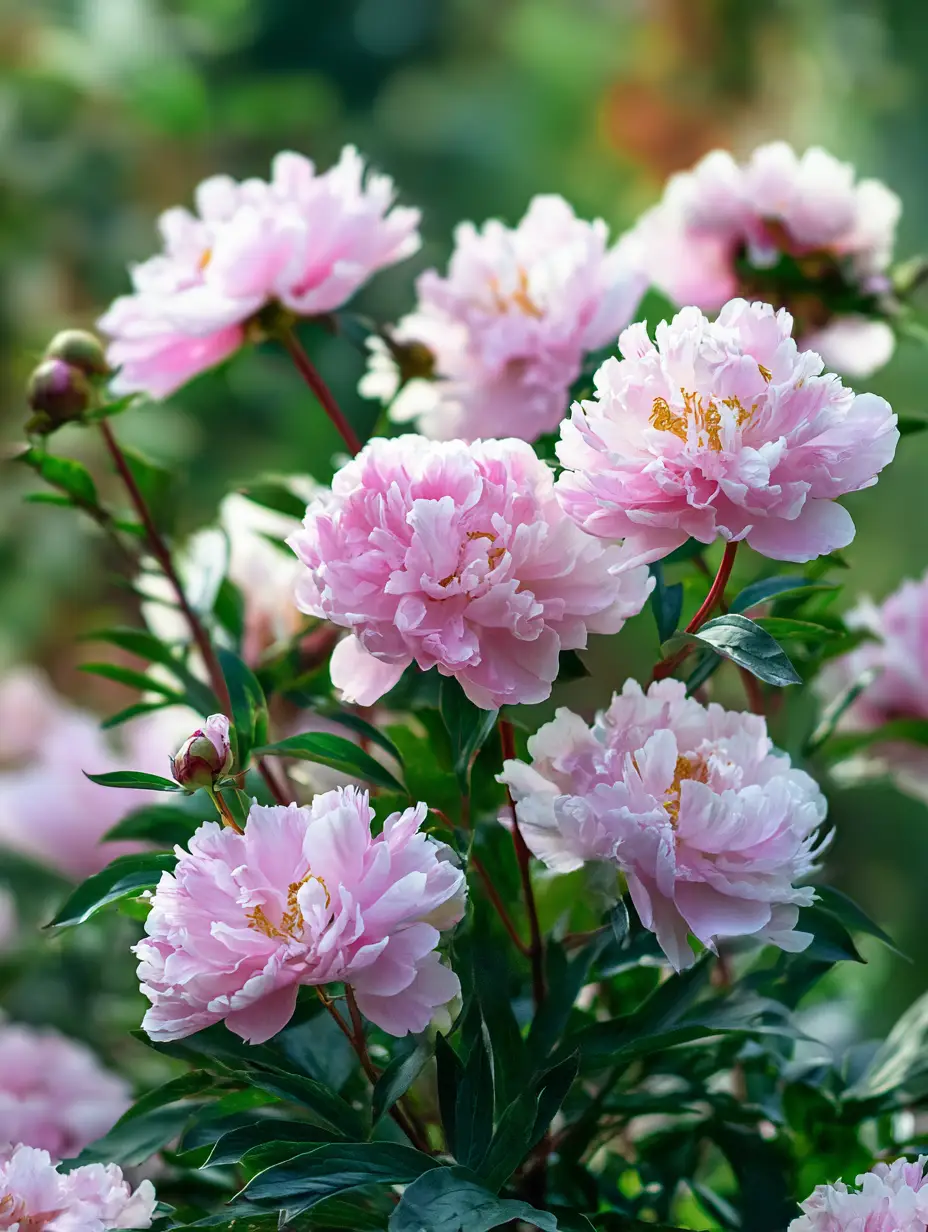
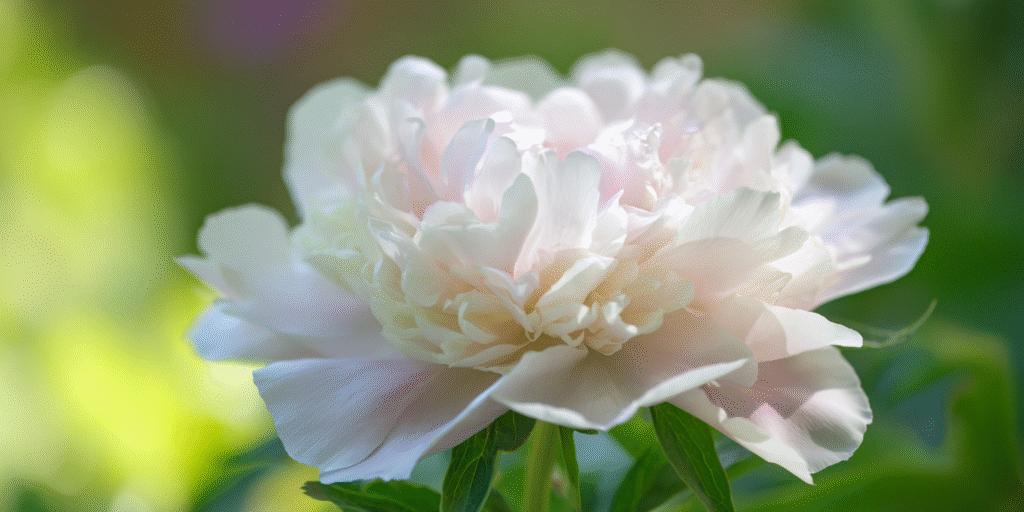
Flower photos



FAQ
What is the downside of peonies?
Peonies bloom for a short window, with individual flowers lasting about 7 to 10 days and a plant flowering for an average of 5 to 7 days. The large, heavy blossoms also tend to arch toward the ground and can be driven flat into the dirt by a hard spring rain. Setting metal peony rings or wire cages in early spring keeps the heavy stems upright through rough weather.
Where do peonies grow best?
Peonies grow best in zones 5 to 7, where winters provide at least 6 weeks of cold below 40 F to set bloom buds. Choose a spot that receives at least 6 to 8 hours of direct sunlight each day. They thrive in rich, well-draining ground with a soil pH between 6.5 and 7.5.
Why is peony so expensive?
Peonies cost more because growers multiply them by dividing root crowns from mature plants that are at least 3 years old. Each division yields only small sections with 3 to 5 eyes on sound roots, so nursery stock builds slowly. Young plants then take 3 to 5 years to establish and reach full flower production, though established clumps often keep blooming for 25 years.
Does a peony come back every year?
Peonies return every spring and rank among the longest-lived perennials you can plant in a garden. Many plantings keep flowering for more than 50 years, with some documented past 100 years. Herbaceous stems die back to the ground in late autumn, and fresh shoots sprout each spring from underground eyes formed the previous fall.
Why are my peonies not blooming?
The most frequent reason peonies fail to flower is that their root crowns sit too deep in the soil. Eyes buried deeper than 1 to 2 inches below the surface produce lush foliage but struggle to form buds. Peonies may also miss a season if they get fewer than 6 hours of direct sun, receive heavy nitrogen fertilizer, or need 2 to 3 years to mature after planting.
How deep should you plant peonies?
Set herbaceous peony eyes no deeper than 1 to 2 inches below the soil surface. Recommended depth scales with climate: use 2 inches of soil in zones 3 to 4, 1 inch in zones 5 to 6, and 0.5 inch in zones 7 to 8. Burying the eyes too far down prevents the plant from flowering.
What month should you plant peonies?
The best time to plant peonies is in the fall, usually during late September or October across most regions. Aim to get roots settled into the garden about 6 weeks before the ground freezes hard for winter. In mild southern areas like zone 8, planting runs later into November or December, while spring planting is possible but generally lags a year behind in growth.
What not to plant near peonies?
Keep peonies away from large trees and spreading shrubs that cast heavy shade and steal soil moisture. Aggressive roots from woody neighbors compete directly underground, which decreases peony flower size. You should also avoid siting plants in garden beds where peonies have been grown before.
Which peonies are best for zone 5?
Nearly all standard herbaceous and tree peonies thrive in zone 5, which sits right in the prime hardiness range for the genus. Zone 5 winters deliver plenty of cold weather to satisfy the chilling requirement of at least 6 weeks below 40 F needed for strong bud set. Both classic Chinese herbaceous selections and hardy woody types like Rockii tree hybrids perform reliably in this climate.
Why are my peony leaves yellowing?
Peony leaves most often turn yellow from chlorosis caused by poor drainage, compacted roots, high soil alkalinity, or nutrient shortages. When nutrients are lacking, low iron, manganese, or zinc are usually responsible for the pale foliage. Yellowing can also stem from scale insects, viral mottling, fungal rots on lower leaves, or simply normal color change before autumn dormancy.
What does an overwatered peony look like?
An overwatered peony shows drooping, yellowing foliage in soggy ground, often mistaken for disease when poor drainage is the true culprit. In persistently wet soil, water mold pathogens cause Phytophthora blight, which softens and darkens stems right at the soil line and can rot the entire plant. Established peonies handle drought well and prefer a thorough, deep watering only once every 10 to 14 days.
What does peony leaf blotch look like?
Peony blotch, also known as red spot, starts as small circular red or purple speckles on young foliage just before bloom. As spring progresses, those small spots coalesce into larger dark purple patches across the surface of the leaves. The fungus is not immediately lethal and is usually harmless when covering under 30 percent of leaf area, but repeated infections over several years reduce plant vigor.
Interesting tips
- Give tree peonies dappled or afternoon shade, because direct sun damages their large, silky petals.
- If a light freeze wilts spring stems, wait before cutting, because shoots usually bounce back later in the day. Lasting bud damage generally sets in once temperatures drop below 25 F, though established plants often push up new growth that still flowers.
- Leave green foliage on the plant through late summer, because removing leaves too early can cost next year's bloom while underground eyes set flower buds.
Related Guides & Flowers
Why your peony is not blooming
The same diagnosis at length, one cause at a time.
Planting peonies in fall
The depth that decides whether the plant flowers at all.
Tree, herbaceous and Itoh
The three garden groups set side by side.
Ranunculus
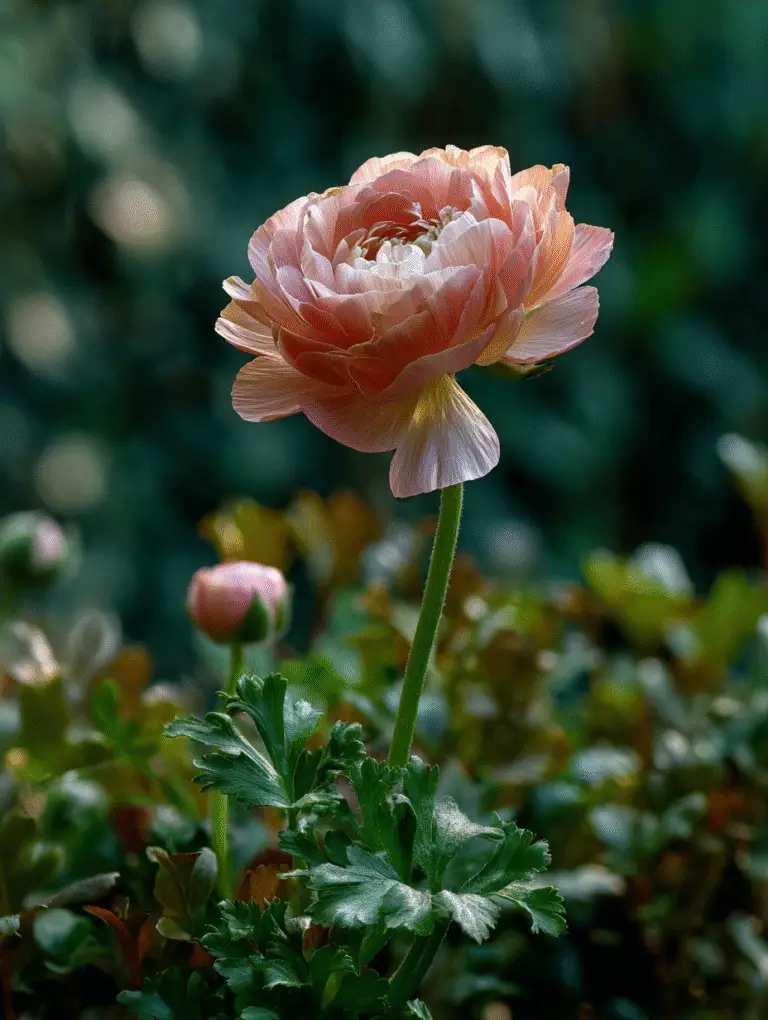
The other layered spring flower people reach for when peony season ends.
Enjoying our flower guides? Add YourFlowersGuide as a preferred source on Google. It helps more readers find us.
Add to Preferred Sources