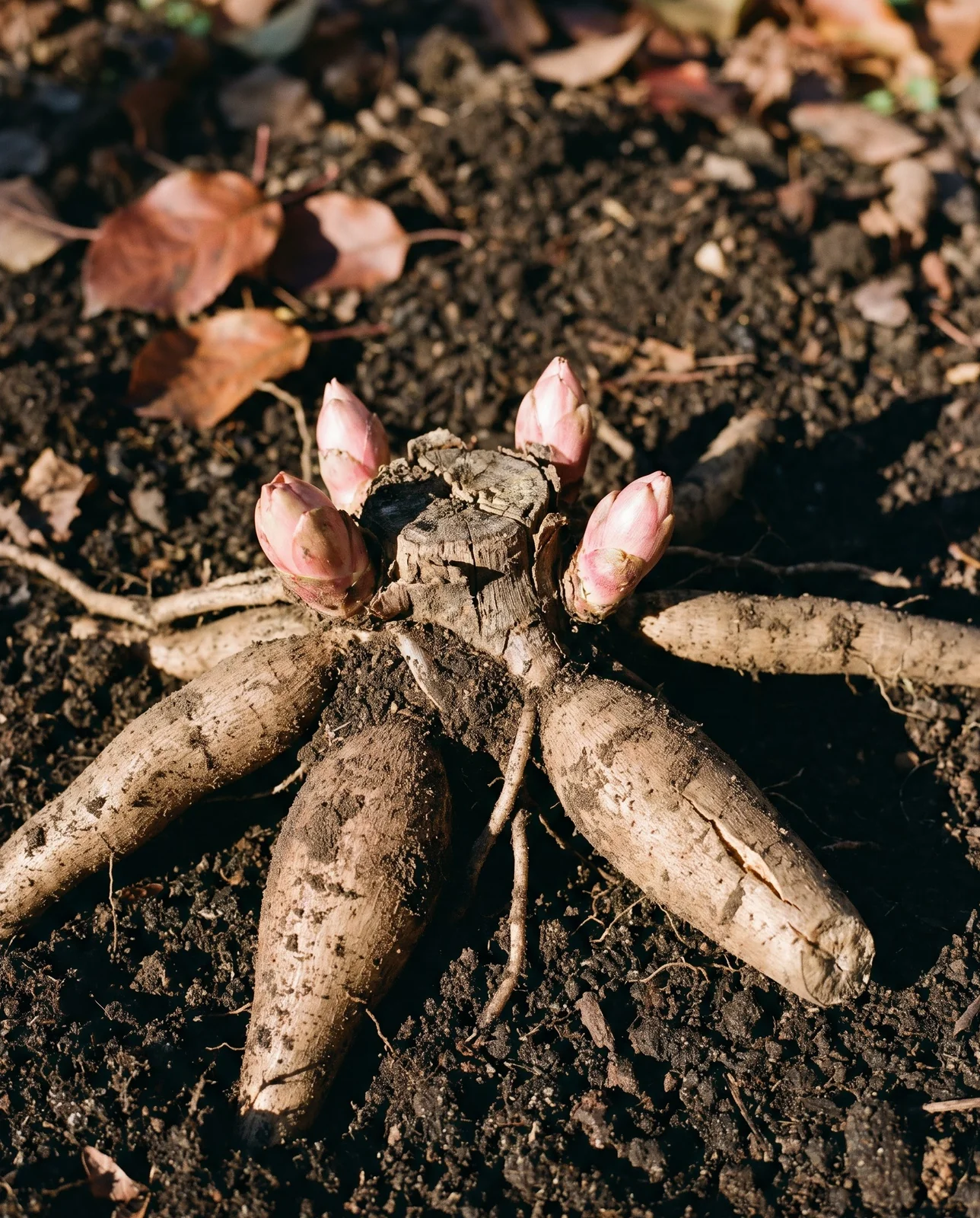
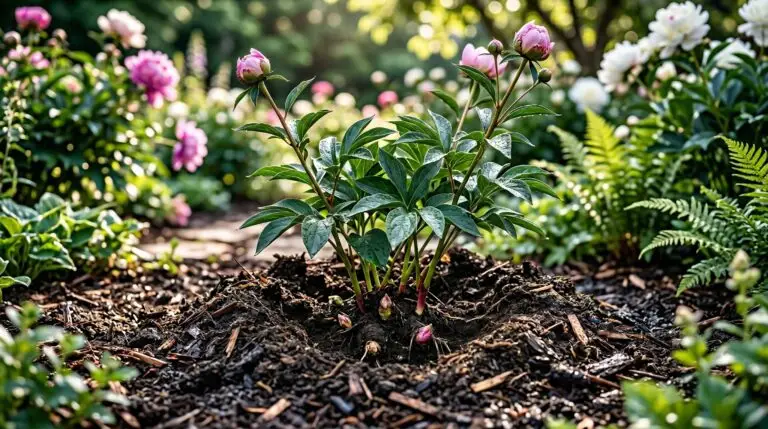
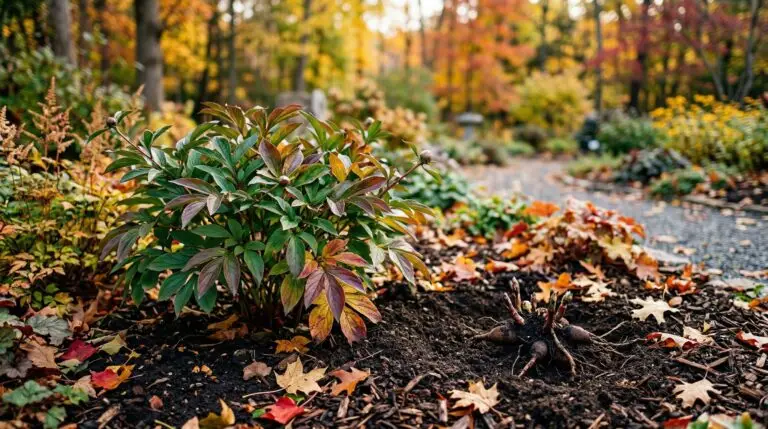
Bare-root peonies go into the ground in fall, and the whole planting turns on one measurement: the pink buds on the crown, called eyes, sit 1 to 2 inches below the finished soil surface and no deeper. Set them lower and the plant builds a healthy leafy clump that never flowers, which is the most common reason a newly planted peony disappoints its owner for years. Everything else about fall planting is ordinary perennial work: full sun, ground that drains, a bed dug and loosened before the soil turns cold.
Garden peonies come mostly from two species, the Chinese Paeonia lactiflora and the southern European Paeonia officinalis, and they carry their own long-standing meaning of prosperity and honor. The common garden types are herbaceous perennials that die back to bare ground every winter and rise again from the same crown, and planting a division in September or October gives those thick storage roots weeks to push feeder roots into cool, settled soil while the top of the plant stays dormant, which is the advantage spring planting cannot match. What follows covers why fall beats spring, how to read a bare-root division before it goes in the ground, the planting protocol with the depth rule at its center, when to plant by region, what the first three springs actually look like, and how to water and mulch a new crown into winter.
On this page 7 sections
Why fall, not spring
A bare-root peony planted in fall has one job, and that is to grow roots. Herbaceous peonies die back to the ground each winter and sit fully dormant, so a crown set out in September or October is not being asked to hold up stems or feed leaves at the same time. The soil still carries residual summer warmth while the air cools off, and the fleshy storage roots spend those weeks regenerating fine feeder roots into the ground around them. Autumn planting hands any perennial that head start before active growth resumes in warm weather. With peonies the effect is larger, because the plant has nothing else to spend the season on.
Spring planting asks for both at once. A division set into warming ground has to push red shoots upward and rebuild feeder roots downward, drawing on storage reserves already depleted by being lifted, trimmed and shipped. Transplant shock, aborted buds and a stunted first season follow from that split. A fall-planted division finishes its anchoring in autumn, rides out the freeze-and-thaw cycles safely below the surface, and comes up in early spring on roots that already work. For cultivars, bloom seasons and year-round care, see the full peonies reference.
Picking and inspecting bare-root stock
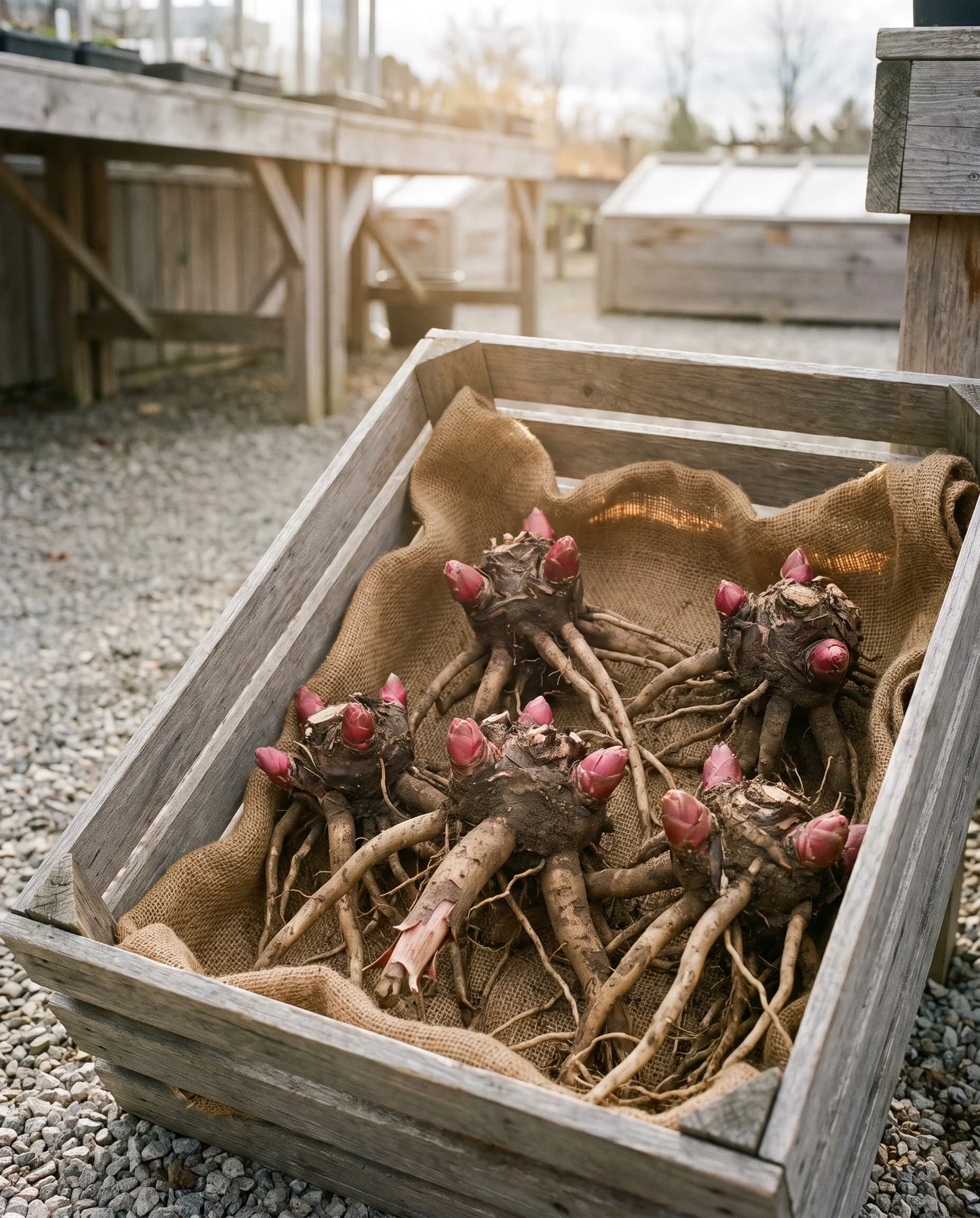
A bare-root peony division is a piece of firm, woody crown with thick, fleshy storage roots hanging off it and several pointed buds, the eyes, standing along its top edge. Standard nursery-grade stock carries 3 to 5 of them, pink, red or white triangular nodes sitting on the crown tissue. Whether the division arrives in a mail-order box or comes off a nursery table in a paper bag, judge it on three things: the size of the crown, its firmness, and the eye count. The roots should feel plump, heavy and solid, closer to a clean sweet potato than to anything soft, shriveled or rubbery. Soft rot, mold, a sour smell or a badly snapped crown are all reasons to send a division back rather than plant it.
Small pieces carrying only one or two eyes will survive, but the University of Wisconsin-Madison Extension notes that smaller divisions need considerably longer to develop into large, full plants, which matters on a plant that is slow off the mark anyway. Very large pieces are not the answer either: an oversized clump lifted from an old garden plant does not establish any faster, and cutting it into balanced 3-to-5-eye divisions is what rejuvenates it. That is also the only reason to divide at all. The University of Arkansas Cooperative Extension points out that peonies, unlike most herbaceous perennials, never need routine division to hold their vigor, and that you lift one only when you want to pass a portion of the plant to another gardener.
The planting protocol, step by step
The site is decided before the shovel comes out. Peonies want full sun, 6 to 8 hours of unfiltered light a day, and freely drained soil with a neutral to slightly alkaline pH. Light matters well past the first season: the University of Arkansas Cooperative Extension notes that while newly set plants that refuse to bloom are usually planted too deep, an established clump that quietly stops flowering has almost always been shaded out by trees and shrubs that grew up around it. To test drainage, dig a hole roughly 10 inches deep, fill it with water, fill it again the following day, and confirm that the second filling drains away completely in 8 to 10 hours or less.
Prepare the bed before any root division goes near it. The University of Georgia Cooperative Extension puts the figure at 8 to 10 inches of deeply spaded ground, and it applies to the planting area rather than to a single hole. A mature clump stands about 3 feet tall with an equal 3-foot spread, so space planting holes 3 to 5 feet apart, which keeps air moving through the foliage instead of crowding it.
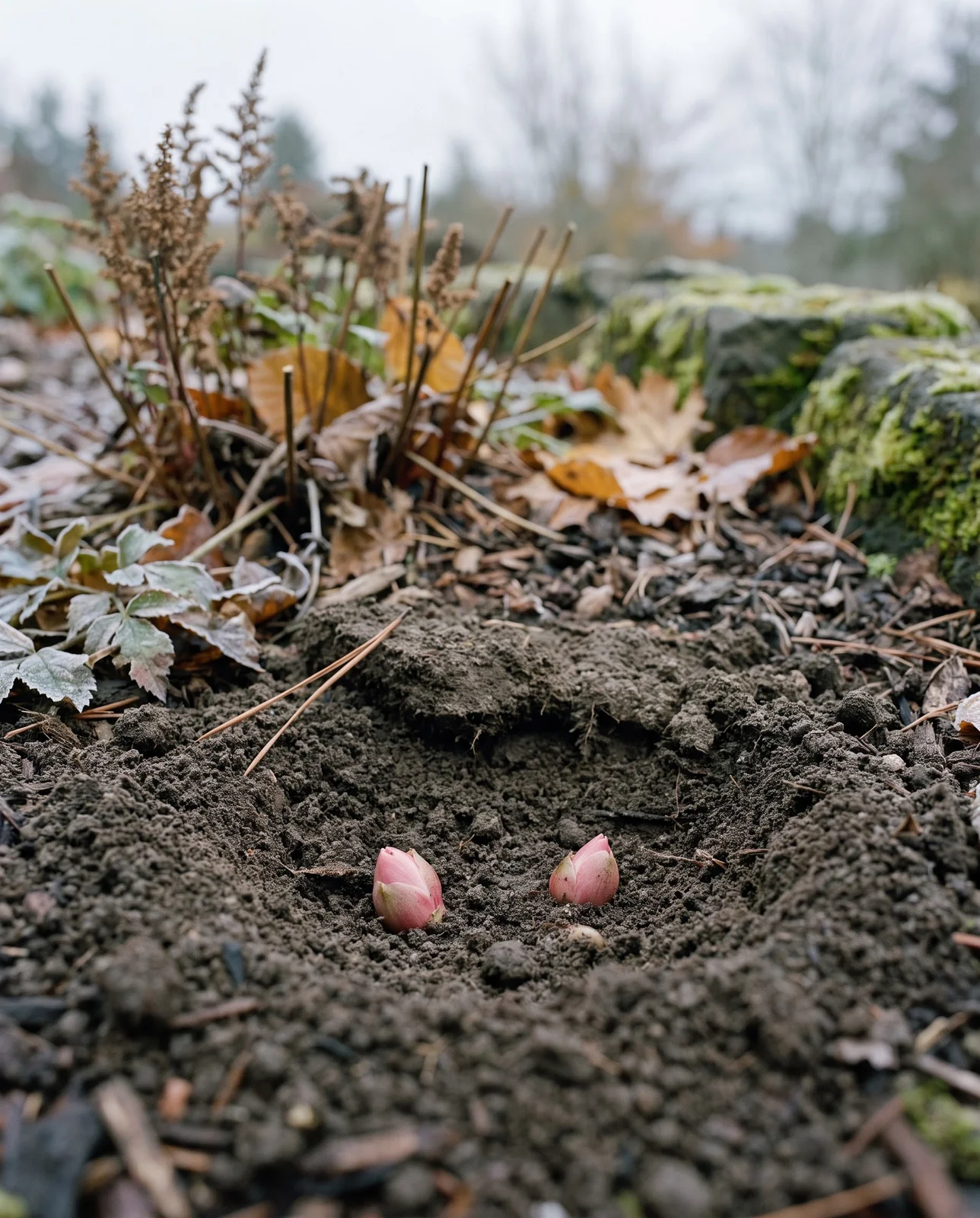
Then comes the step the entire planting turns on. The University of Arkansas Cooperative Extension and the University of Wisconsin-Madison Extension agree on the number: the main buds of the crown belong 1 to 2 inches below the finished soil surface. Arkansas names planting the crown too deeply as the most common cause of bloom failure on newly set plants, and Wisconsin puts the threshold in the same place, warning that peonies flower poorly once the buds sit more than 2 inches down. Deeper still, in ground that holds water, a buried crown can rot outright. Nothing else in the process is this unforgiving.
Dig the hole wide enough to take the full spread of the roots inside the spaded bed, then build a firm mound of loose soil in the center of it. Rest the crown on top of the mound with the pink eyes pointing straight up and the fleshy side roots draping down the slopes. Lay a ruler, a bamboo cane or a tool handle flat across the rim of the hole to read eye level against the surrounding grade: the top of the highest eye belongs 1 to 2 inches below that line.
Backfill gently with native soil, firming it around the roots by hand to close air pockets without snapping the brittle buds. Water thoroughly to settle everything, let the moisture drain, then top the soil up to the surrounding grade. Do not tamp the bed with your boots, which breaks eyes. Water deeply a second time. Nothing else goes into the backfill: excess nitrogen at planting encourages lush foliage at the expense of blooms, which is the opposite of what a new peony needs from its first year.
Zone-by-zone timing window
Fall timing follows the soil rather than a date on the calendar. USDA hardiness zones are drawn from average annual extreme minimum winter temperatures, mapped in 10-degree Fahrenheit zones and 5-degree half zones, so they describe how cold your winter gets, not when your ground closes for the season. The goal is the same everywhere: roots in the ground after summer heat breaks, while the soil is still workable and before winter freezes arrive. For northern climates the University of Wisconsin-Madison Extension documents September through October as the ideal transplanting window.
Cold-climate gardeners plant early in that window; gardeners further south wait for the soil to cool, which can push planting into late autumn. It is the same trip to the garden center that brings home tulips, and peony crowns go into prepared beds on roughly the same calendar as naturalizing daffodils.
There is a southern ceiling worth naming out loud. Peonies need an extended cold period to break bud dormancy and initiate floral buds, and the University of Georgia Cooperative Extension calls them marginal in central Georgia and not generally recommended for south Georgia, where winter chilling runs short and summer heat runs long. Where they are grown in the warm Southeast at all, early-blooming cultivars perform noticeably better than late-season selections. Tree peonies (Paeonia suffruticosa) carry a tighter limit still, and are not recommended anywhere in Georgia except the northernmost mountainous part of the state.
Regional fall planting windows for peonies
One fall planting window carries a documented date, and it covers northern climates. Further south the trigger is the state of the soil, and the rows below say so instead of naming a week nobody has measured.
What to expect year one, two, three
A fall-planted division spends its first spring underground, whatever the top of the plant looks like. The University of Wisconsin-Madison Extension states it plainly: transplanted peonies may not bloom in the first year after transplanting, and blooms increase in subsequent years. A first spring of leaves and no flowers is the plant working, not the plant failing, and knowing that in advance saves a lot of unnecessary digging up and second-guessing.
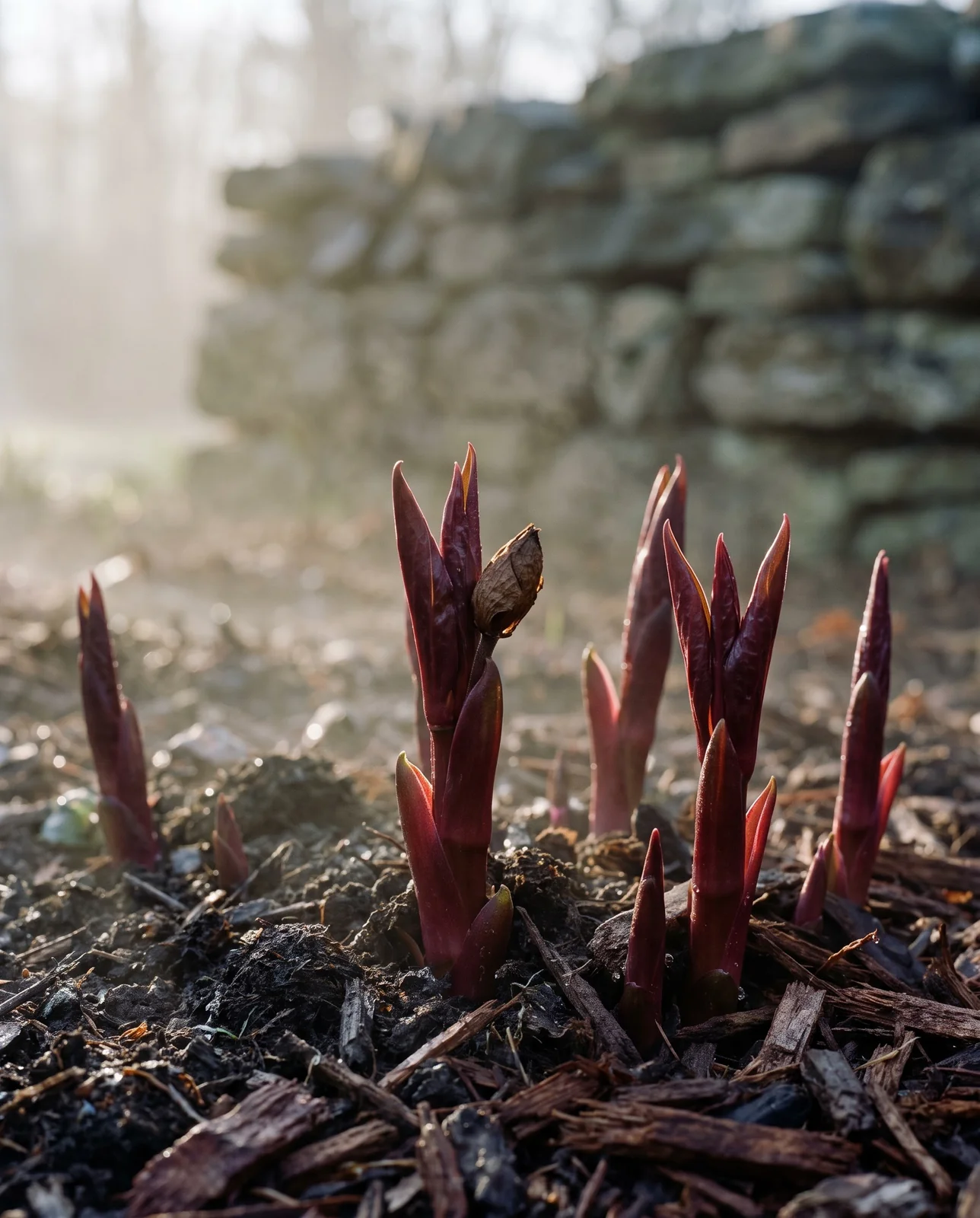
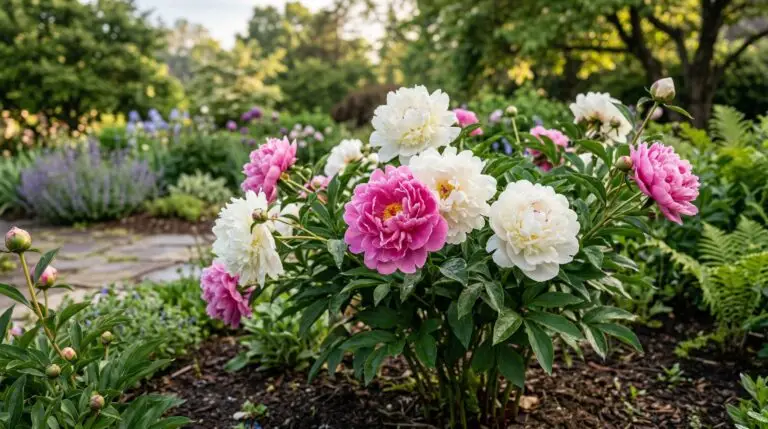
In that first spring, slender red or bronze shoots push through the soil and green out into a modest clump while the energy goes into feeder roots below. The flower count is zero, or a single small bloom. By the second spring the expanding root system supports multiple stems and a bushy, rounded clump, with a first modest set of flowers opening in late spring. By the third the plant is grown: a lush, shrub-like mound roughly 3 feet tall with an equal 3-foot spread, carrying blossoms that measure up to 8 inches across, and it can hold that same spot for 100 years or more without being moved.
What to expect in year one, year two and beyond
Year one, the first spring after fall planting, brings modest red-purple shoots that unfurl into a small foliage clump, often with zero blooms or a single small flower; the University of Wisconsin-Madison Extension treats non-blooming in year one as normal rather than a sign of trouble. Below ground, feeder roots run out through the spaded soil and the storage roots settle into taking up moisture, so the work at this stage is keeping the soil evenly moist through dry spells and keeping nitrogen fertilizer away from the crown, since it pushes foliage at the expense of blooms. Year two brings multiple strong stems and a fuller, rounded clump, with a modest number of flowers opening reliably in late spring as the root system catches up to the plant. The crown widens, secondary storage roots thicken, and the job shifts to holding 6 to 8 hours of full sun on the bed and keeping competing weeds off it. By year three and beyond the plant is at full size: a shrub-like mound roughly 3 feet in height and 3 feet in spread, carrying an abundant annual flush of flowers up to 8 inches across on a root system that can persist in garden soil for 100 years or more. From there the only regular task is autumn sanitation, cutting the dead stems flush to the ground each fall, with division reserved for propagating or for sharing plants rather than for anything the peony needs.
Fall aftercare through winter
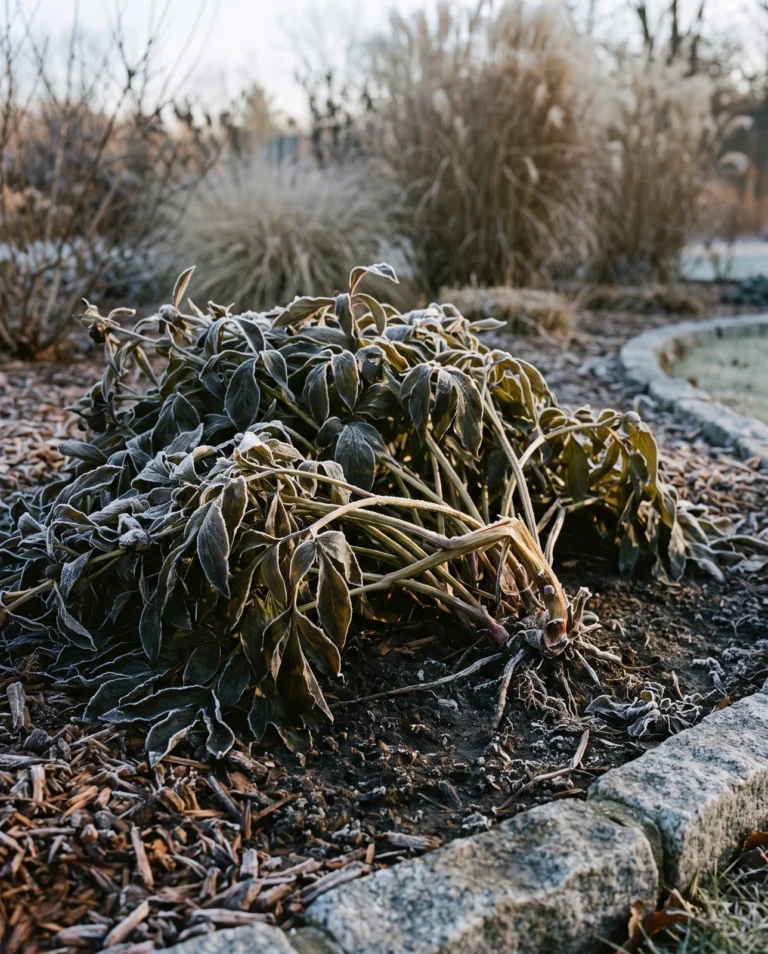
Autumn work in an established peony bed starts with sanitation. The University of Wisconsin-Madison Extension is specific about it: cut all old peony foliage down to ground level in the fall and destroy the debris rather than composting it. Spent leaves carry overwintering spores of botrytis blight, the fungal disease that blights emerging buds during wet spring weather, and leaving them on the bed hands next spring’s outbreak a running start.
Watering a new division is a question of depth, not frequency. The root piece needs enough moisture to settle into contact with the soil, but frequent light waterings only wet the upper layers, which encourages shallow rooting and leaves damp surface conditions that invite disease. Give the planting spot one slow, deep soaking right after planting, then add water only through a prolonged dry autumn spell before the ground freezes. Unlike tender summer tubers such as dahlia roots, which have to come up and go into storage before freezing weather arrives, hardy peony roots stay where they are all winter.
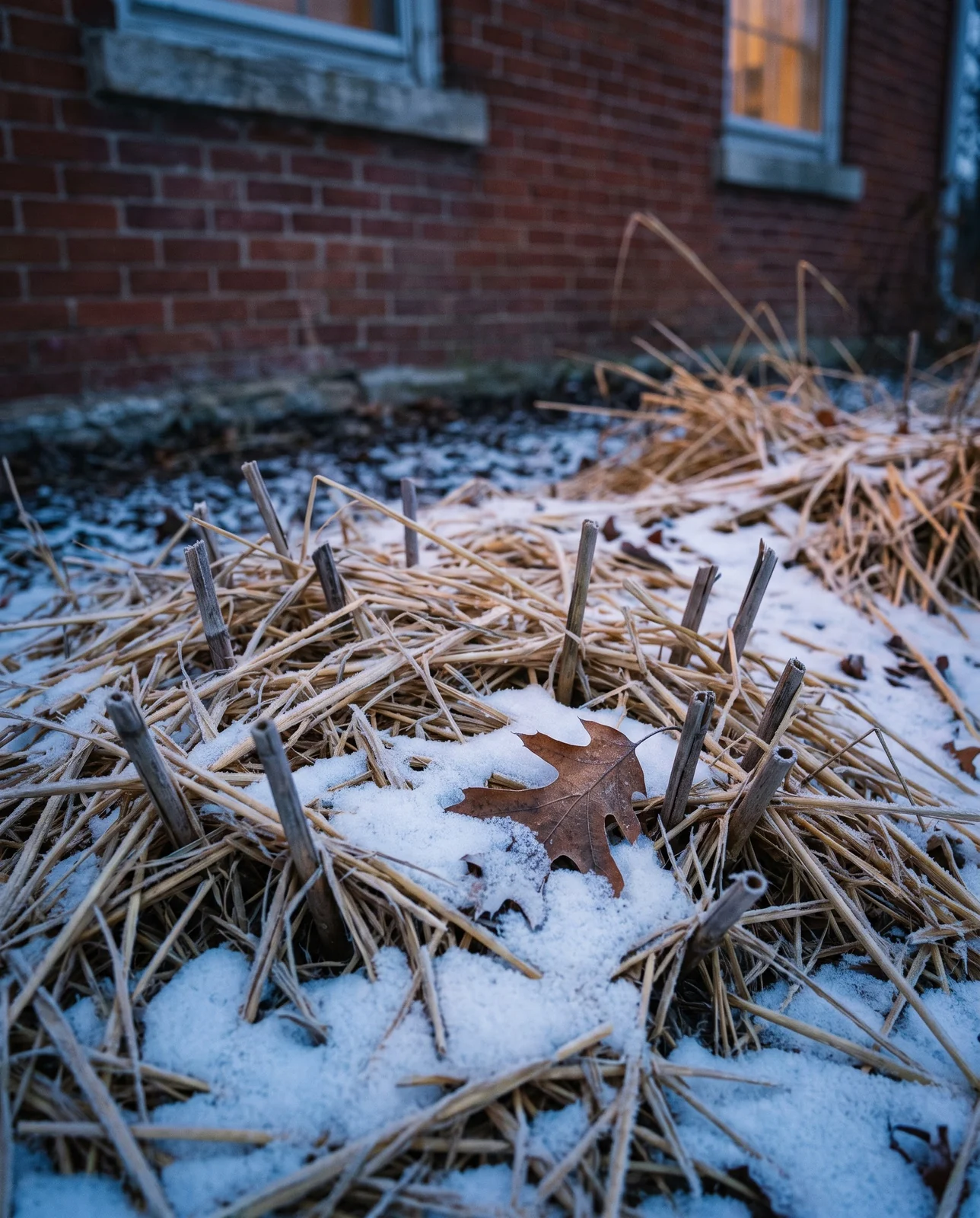
Mulch in moderation, and late. A light layer of woodchips helps hold soil moisture and suppress weeds, but a heavy pile over a newly set crown works against the plant: the University of Georgia Cooperative Extension warns that mulches heavy enough to retain excess moisture predispose crowns to rot. Wait until the ground has begun to freeze, then spread the layer thin, and pull it back from the exact center of the crown so the soil sitting over the eyes stays inside the 1-to-2-inch limit. Mulch counts as depth.
FAQ
How deep should peony eyes be planted?
Set the crown so the pink buds, or eyes, sit 1 to 2 inches below the finished soil surface. The University of Arkansas Cooperative Extension and the University of Wisconsin-Madison Extension both put the limit at 2 inches, and burying the buds past it is the leading reason garden peonies grow well and never flower.
Will my bare-root peony bloom the first spring after planting?
Often not. Newly planted bare-root peonies frequently spend their first spring on root establishment and produce no flowers at all, which the University of Wisconsin-Madison Extension describes as normal for a transplanted plant. Flower counts climb steadily from the second spring onward.
How late in the fall can you plant bare-root peonies?
As late as the soil stays workable and has not frozen solid. September through October is the ideal stretch across northern zones, which leaves the root division time to settle in before hard freezing weather sets in.
Can you plant potted nursery peonies in the fall?
Yes, and the depth rule does not change. Set the root ball so the top of its soil rests flush with the surrounding garden grade, which leaves the crown buds underneath it 1 to 2 inches below the surface.
What happens if you plant a peony crown too deep?
It grows abundant, healthy green foliage and sets no flower buds, year after year. In moist, poorly drained ground the cost is worse than a missed bloom season: the University of Georgia Cooperative Extension warns that crowns planted too deeply there are highly susceptible to crown rot.
Do ants harm peony buds in the spring?
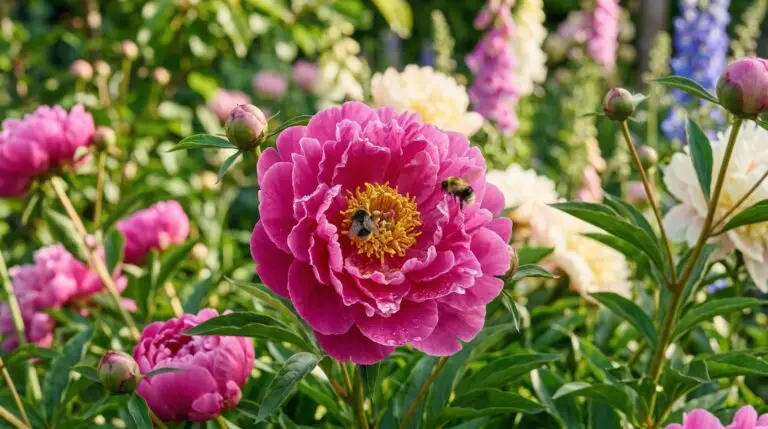
No. Ants come to developing peony buds for the sweet nectar they secrete, feed, and move on. They do not damage the buds or the flowers, and the blossoms do not need them in order to open.
More About Peonies
When to cut back peonies (and which ones to leave alone)
Best peony varieties from classic Sarah Bernhardt to trendy Coral Charm
Peony flower meaning and why this bloom represents romance prosperity and good fortune
Why peonies fail to bloom and the planting depth mistake that keeps them flowerless

Peonies as the most coveted wedding flower and why brides pay premium for peony season

Companion plants for peonies that extend the beauty season beyond peony’s brief moment
Why peonies need ants and the truth about the ant myth that refuses to die
Itoh peonies the hybrid breakthrough that gives the best of both herbaceous and tree peonies
Growing peonies in warm climates and the chill-hour challenge in zones 8 and above
How to grow peonies for lush romantic blooms that last a lifetime in your garden
Cutting peonies at the perfect marshmallow stage for the longest vase life
Enjoying our flower guides? Add YourFlowersGuide as a preferred source on Google. It helps more readers find us.
Add to Preferred Sources