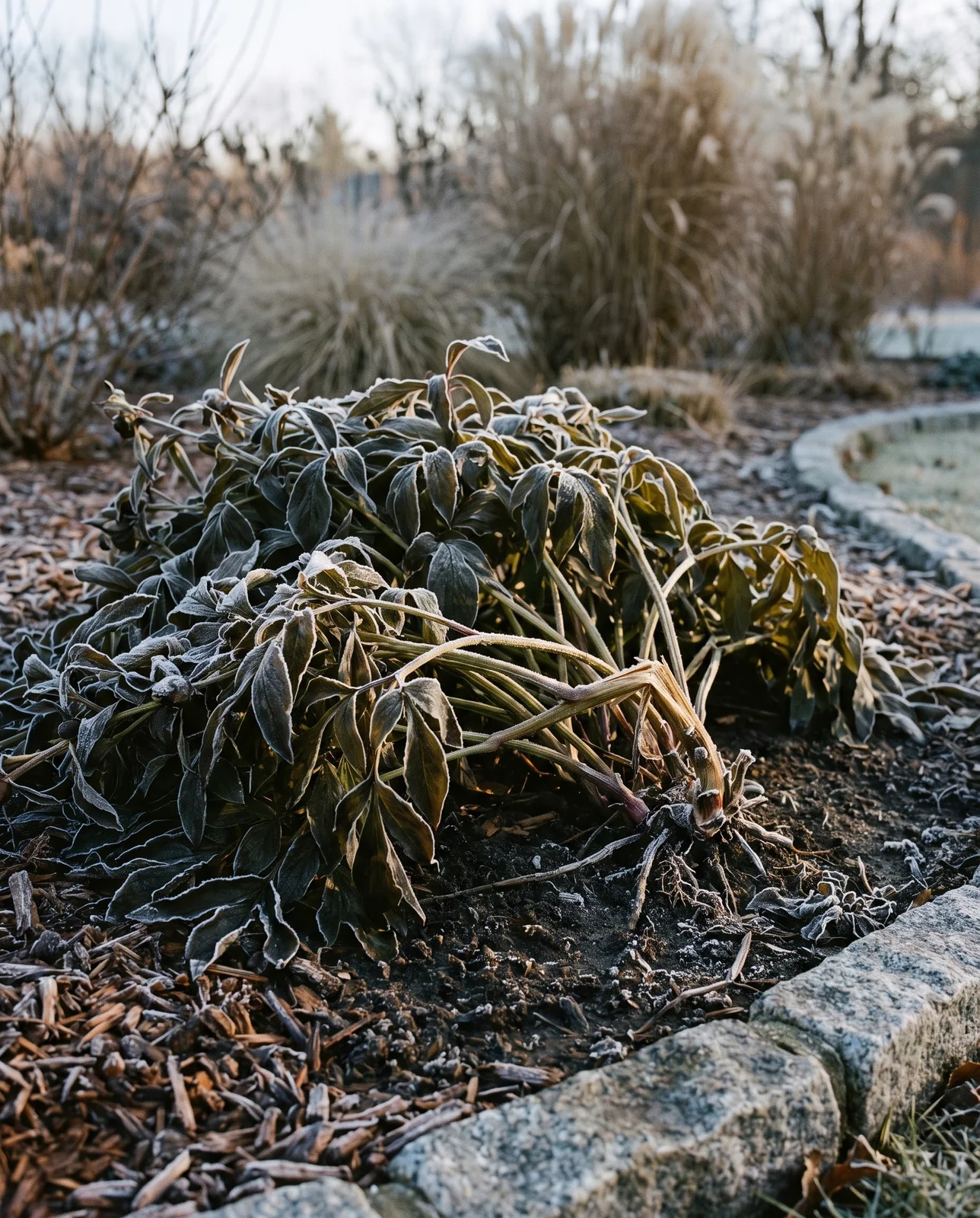
Herbaceous peonies are cut to the ground in late fall, once the first hard frost has blackened the foliage and folded the stems flat over the crown. The cut is sanitation rather than tidying: it strips out the leaves where fungal disease waits through winter and clears the ground above the buds that will push up in spring. Timing matters as much as the cut itself. Green leaves are still feeding the root, and blackened leaves left lying all winter hand the fungus a running start.
One check comes before the pruners, and it changes everything: not every peony dies back. Herbaceous types collapse to an underground crown each winter and regrow from it, while tree peonies keep permanent woody stems above ground all year and shed only their leaves, so cutting one to the soil surface removes framework that never comes back. Intersectional Itoh hybrids sit between the two and follow the herbaceous rule. Both kinds carry the same long heritage of meaning, from romance and good fortune to the Chinese king of flowers, which is reason enough to look closely before the first cut. What follows covers how to tell the three apart before you cut, the frost signal that opens the window, how low the stems come off and why no stub is left standing, the two fungal diseases that make the whole job worth doing, where the debris goes, and the one plant in the bed you leave alone.
On this page 6 sections
Herbaceous peony or tree peony: check before you cut
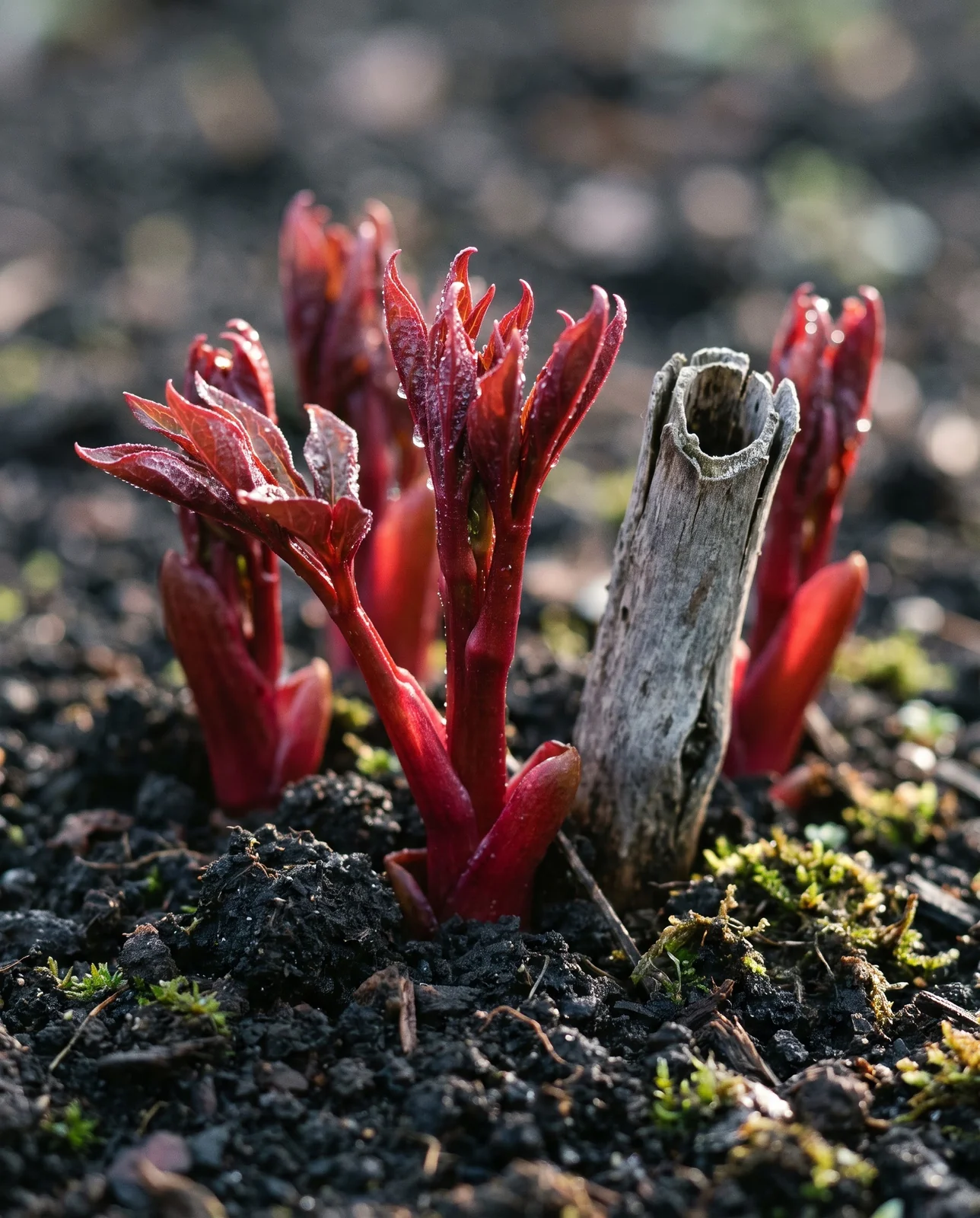
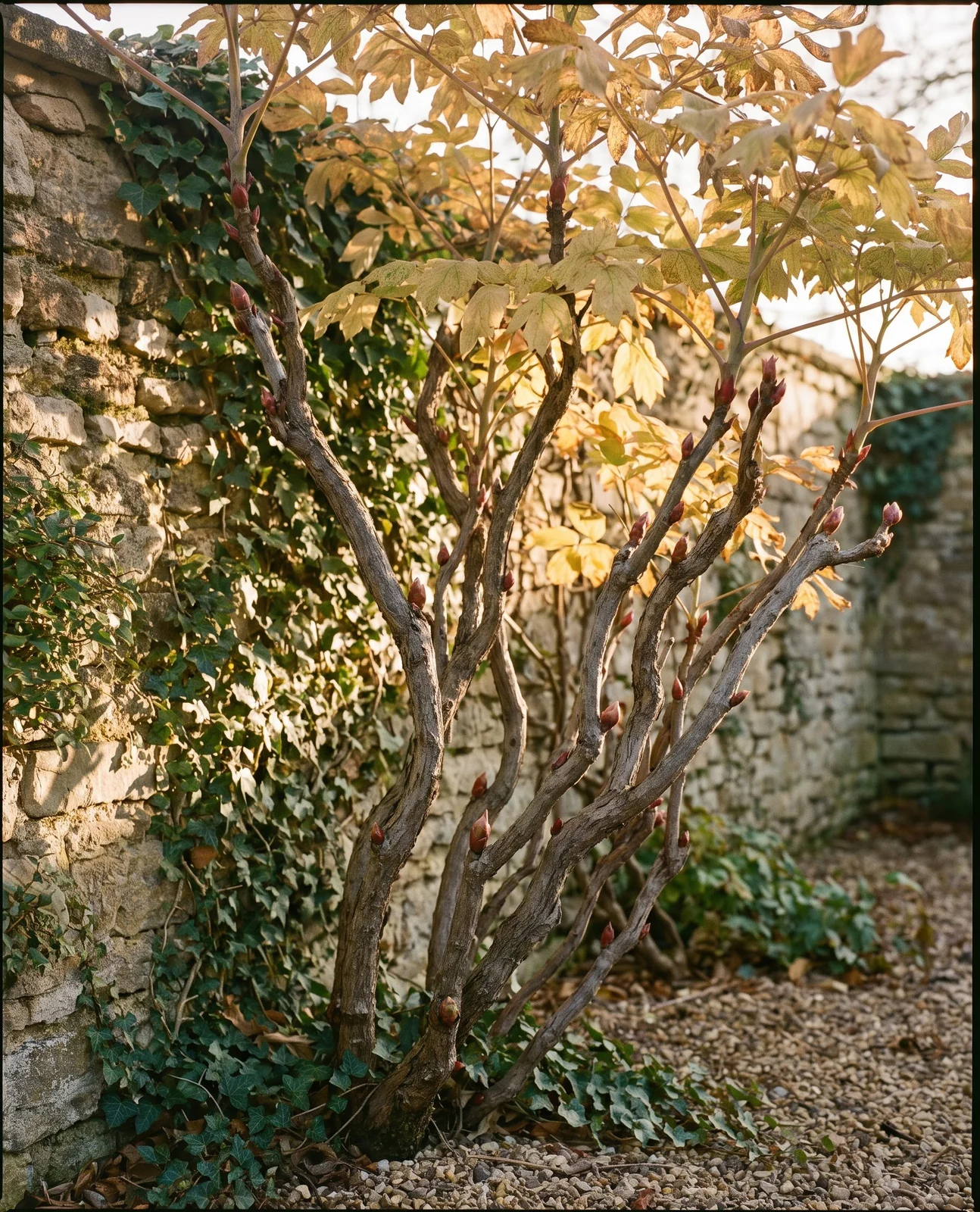
The common garden peony (Paeonia lactiflora) grows as a soft green mound 2 to 3 feet tall and 3 to 4 feet across, and every stem in that mound is temporary. The fleshy growth dies back to the soil surface as winter comes on and leaves nothing above ground but a root crown carrying pink or reddish resting eyes just under the surface. A tree peony (Paeonia suffruticosa) is a different structure entirely: an upright, multi-stemmed woody shrub 4 to 5 feet tall whose branches are permanent. It drops its leaves in autumn like any deciduous shrub and holds the bare framework through winter; University of Wisconsin-Madison Extension notes that those woody stems are kept year-round to carry the next season of growth. Intersectional Itoh peonies, crosses between the two, form short woody stems at the base but still die to the ground in winter, so they are treated as herbaceous. One question settles it before you prune peonies at all: limp blackened growth over a bare crown, or standing wood with buds on it. Getting it wrong costs years of structure in an afternoon.
When to cut back herbaceous peonies
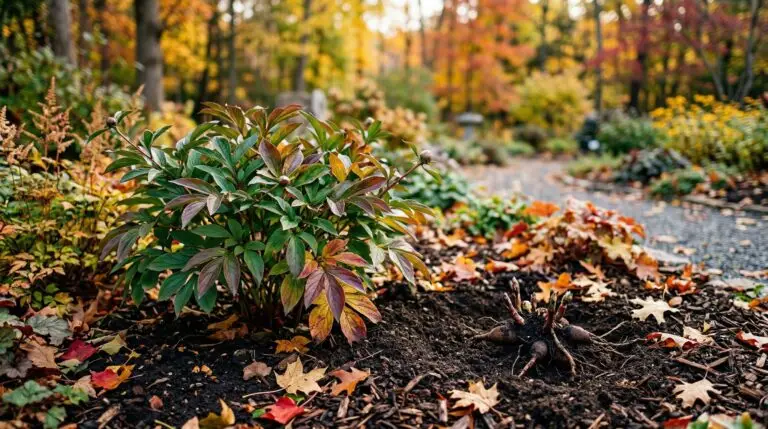
Wait for the first hard frost. Clemson Cooperative Extension puts the cut after frost has occurred, and what happens inside the plant explains why the order matters. While the leaves stay green through late summer and early autumn they are running photosynthesis and moving carbohydrate down into the roots, building the reserve that drives next spring’s growth, so cutting early for the look of a tidy bed takes that food from the crown. A killing freeze ends the process on its own: the pigment breaks down, the foliage turns dark brown or black, and the stems collapse flat onto the soil. That collapse is the visible sign that the top growth has stopped and the crown is fully dormant.
Cold-hardy garden chrysanthemums are often left standing so the old top growth traps insulating snow. Peonies gain nothing from that and come off as soon as the frost has flattened them. If you also plan to divide or move an established clump, that work belongs in late September or October rather than late winter, with 3 to 5 eyes on every division. On plants you are simply maintaining, let the freeze make the call and leave the pruners alone until it arrives.
When and how to cut back peonies after frost
Herbaceous peonies come down in one pass, in the same order every autumn.
How far down to cut
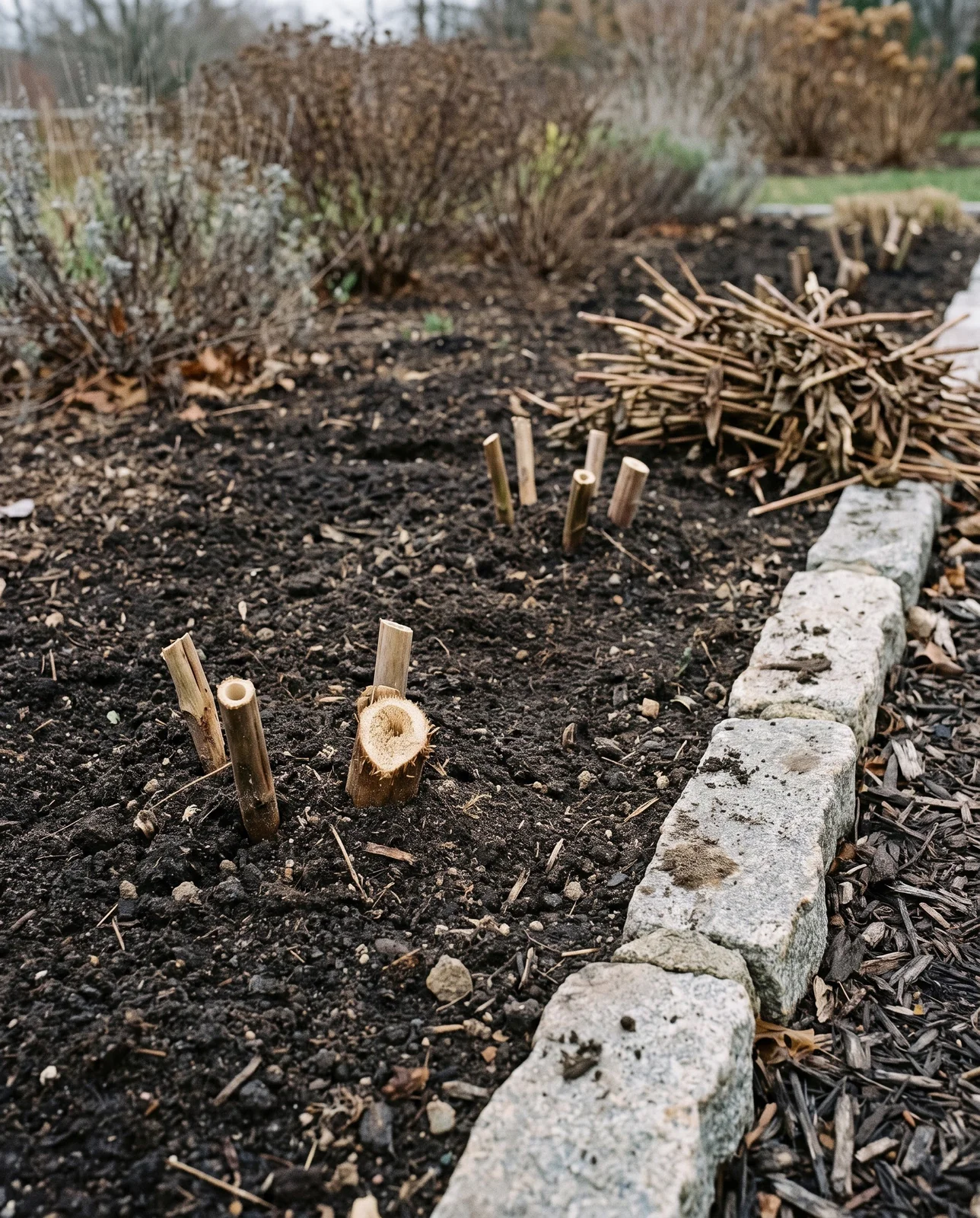
Cut flush with the soil surface. Ground level means ground level here: several inches of standing stem does no work over winter, and a hollow stub sitting directly above the crown gives fungal spores a sheltered place to sit out the cold. The whole plant comes off, and nothing is left for winter structure.
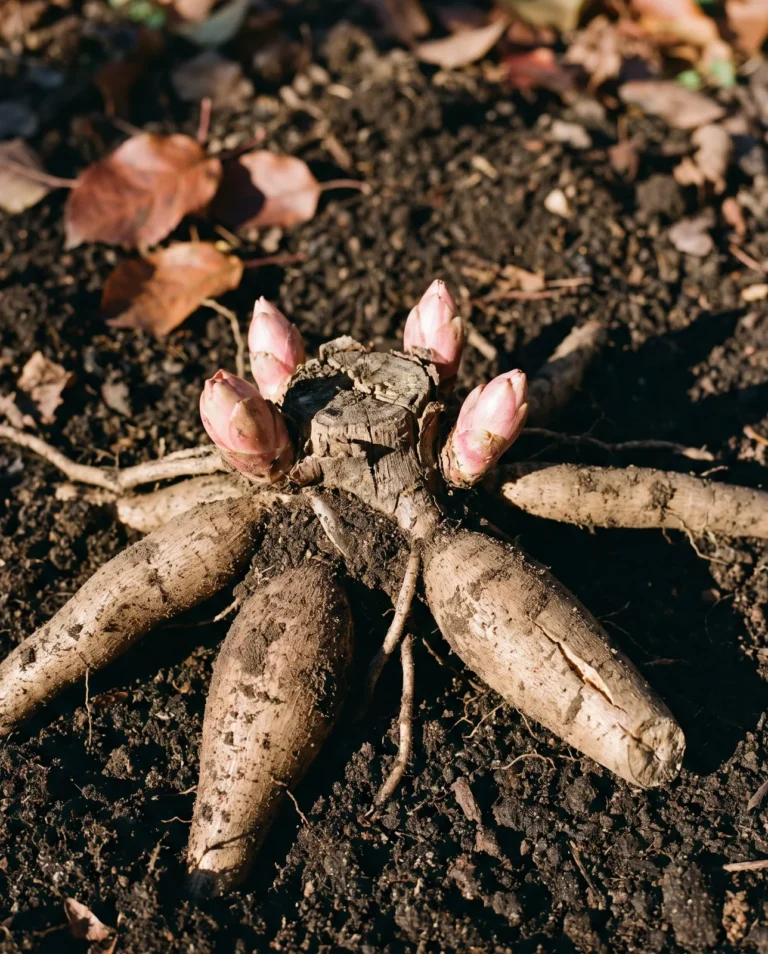
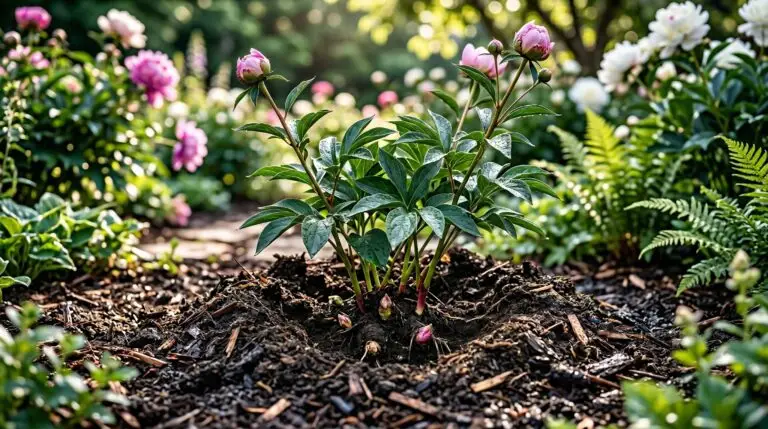
Use clean, sharp bypass pruners and slice through the collapsed stalks at the ground line rather than pulling or tugging on them. A tug can dislodge the resting eyes just below the surface, and those eyes are particular about depth. University of Wisconsin-Madison Extension sets them 1 to 2 inches below the soil, and Clemson Extension wants the tips no deeper than 1 inch. Eyes buried too deep are the most common cause of bloom failure in home gardens. Cutting flush, without scraping soil over the crown or dragging any away, leaves that depth exactly where it was.
Why the fall cutback matters: botrytis and leaf blotch
The autumn cutback is a disease measure before it is anything else. Clemson Extension names Botrytis blight and leaf blotch as the two diseases peonies run into most often. Botrytis works on stems, leaves, and flower buds, and it shows as buds that wither before they open and foliage that wilts without an obvious cause. Leaf blotch is easier to read: irregular brownish-purple spots spread across the leaf surface, cutting into what the plant can photosynthesize and degrading the foliage. Both fungi survive winter inside dead plant tissue, resting on old stems and fallen leaves where they dropped, and spring rain splashes the spores back up onto the new shoots. The bed reinfects itself.
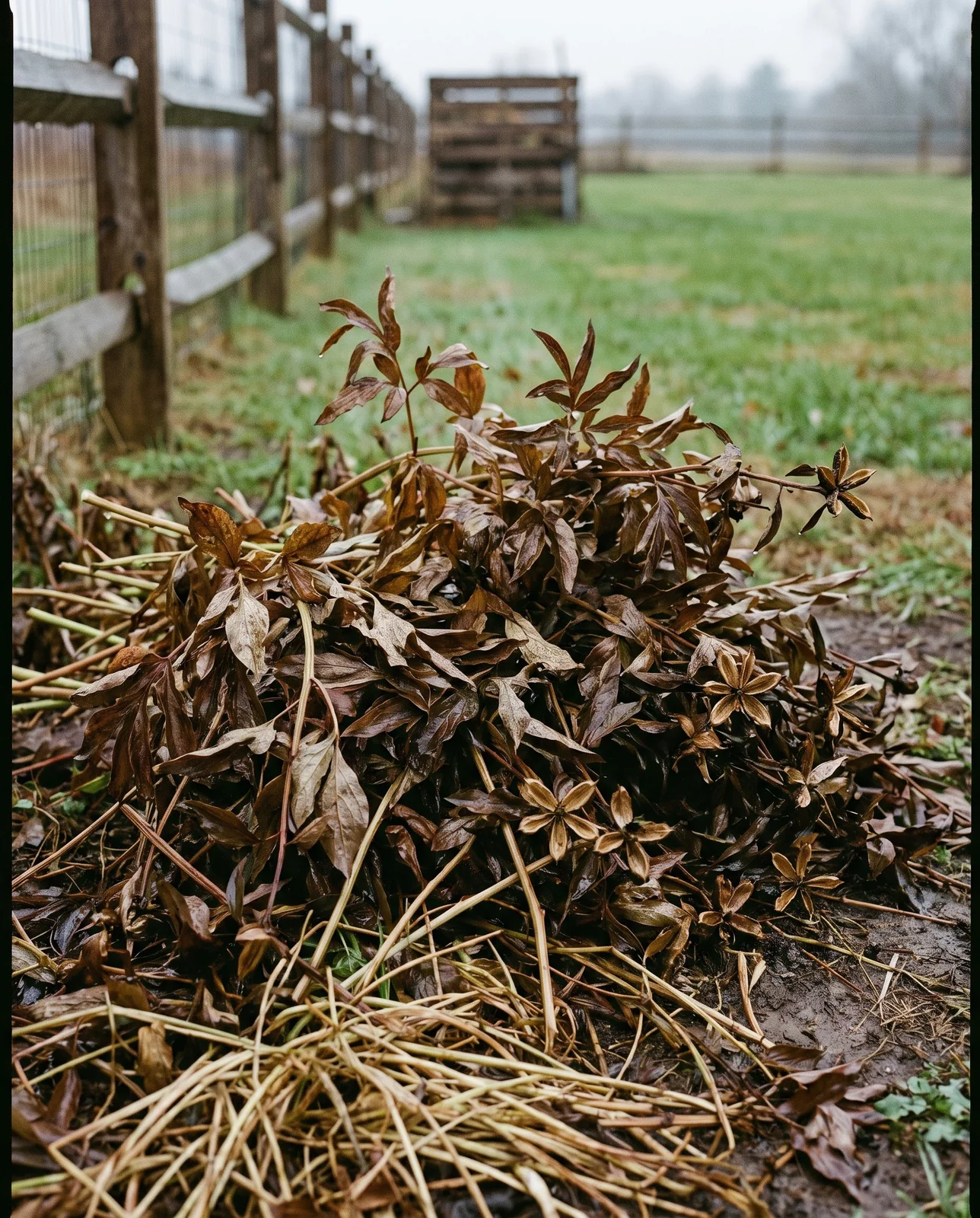
Taking every scrap of above-ground growth off the plant in autumn breaks that cycle. Clemson and University of Wisconsin-Madison Extension both attach the same second instruction: the cut material is destroyed or thrown out, never added to the compost pile. A home heap rarely reaches the internal temperature that kills fungal structures, so compost made from diseased peony tops carries the problem back into the beds it is spread on. Fungal trouble on hydrangea macrophylla answers to the same cultural control: what comes off the plant, and where it goes afterward.
Tree peonies: never cut them back
Tree peonies are not cut back at all, in any season. Clemson Cooperative Extension leaves no room in the wording: never cut back tree peonies, because they are shrubs and will not grow back if cut down. Those permanent branches carry dormant buds on bare wood through the winter, and the flowers open off that wood one to two weeks ahead of herbaceous peonies. Remove the branches and the bloom goes with them, much the same way removing live branches on roses sacrifices future flowers.
Autumn work on a tree peony amounts to cleanup around its base. Rake the fallen leaves out from under the shrub so less fungal material sits on the soil, and leave the bare woody skeleton untouched. A shrub in its first year in the ground is the one case that wants more: Clemson Extension recommends mounding extra soil around the base for that first winter, with the graft union an inch below ground level. Once a tree peony has built its 4 to 5 feet of permanent branching, it needs no annual cutting whatsoever.
A pruning myth worth retiring
The myth: Every peony wants hard pruning to ground level each autumn, tree peonies included.
The reality: Tree peonies are permanent woody shrubs. Cutting one to the ground removes structural branches that will not regrow.
FAQ
Do you cut peonies back for the winter?
Yes. Once the first hard frost has killed and flattened the foliage, herbaceous peonies come down completely. The point is removing the dead tissue that fungal pathogens overwinter in, so the bed starts clean in spring.
How far down do you cut peonies in the fall?
Down to the soil surface. Standing stubs shelter disease spores directly above the crown, so slice the stems flush with the ground using sharp pruners rather than tearing them off.
Can peony trimmings go in the compost?
No. Cut peony leaves and stems are discarded or destroyed, never added to a compost pile. A home heap rarely reaches the internal temperature that kills Botrytis blight and leaf blotch spores, and the finished compost then carries them back to the beds.
Do you cut back tree peonies?
No, never. Tree peonies are woody shrubs that keep their stems year-round, so cutting one to the ground takes out the permanent framework, and the plant does not grow back from it.
Is it too late to cut back peonies if I missed the fall window?
Cut the dead, weathered herbaceous stems to the ground in late winter, before the new spring growth breaks the surface. Work carefully around the pink or reddish eyes sitting just beneath the soil, since those buds produce the coming season’s stems.
Are ants on peony buds harmful?
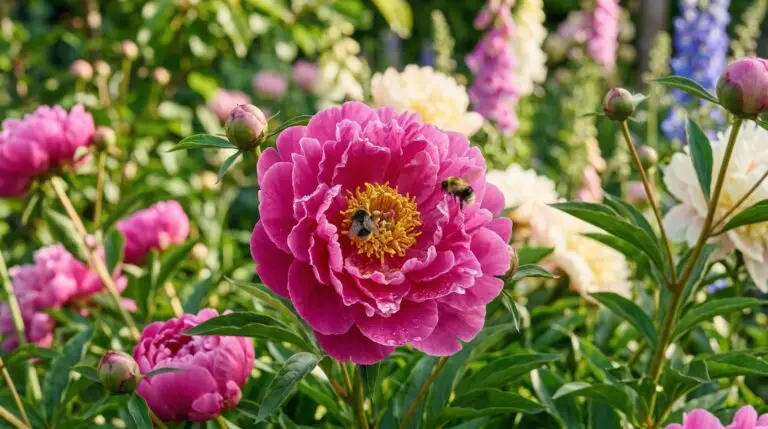
No. Ants on peony buds are feeding on the sweet sap the buds give off and do nothing to the plant or the flowers. It is also a myth that peonies need ants in order to open.
More About Peonies
Planting peonies in fall: the depth that decides blooms
Best peony varieties from classic Sarah Bernhardt to trendy Coral Charm
Peony flower meaning and why this bloom represents romance prosperity and good fortune
Why peonies fail to bloom and the planting depth mistake that keeps them flowerless

Peonies as the most coveted wedding flower and why brides pay premium for peony season

Companion plants for peonies that extend the beauty season beyond peony’s brief moment
Why peonies need ants and the truth about the ant myth that refuses to die

Itoh peonies the hybrid breakthrough that gives the best of both herbaceous and tree peonies
Growing peonies in warm climates and the chill-hour challenge in zones 8 and above
How to grow peonies for lush romantic blooms that last a lifetime in your garden
Cutting peonies at the perfect marshmallow stage for the longest vase life
Enjoying our flower guides? Add YourFlowersGuide as a preferred source on Google. It helps more readers find us.
Add to Preferred Sources