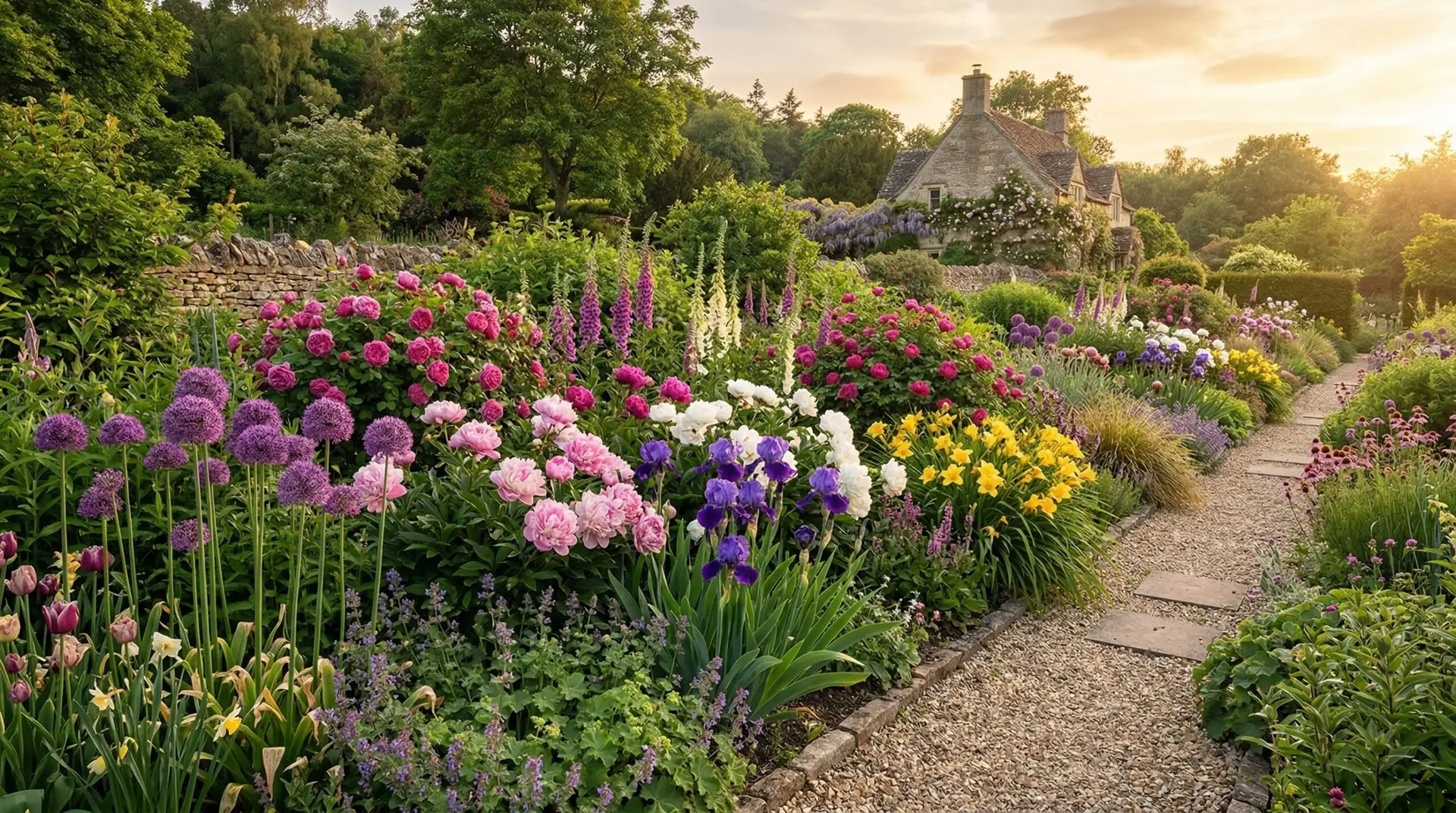
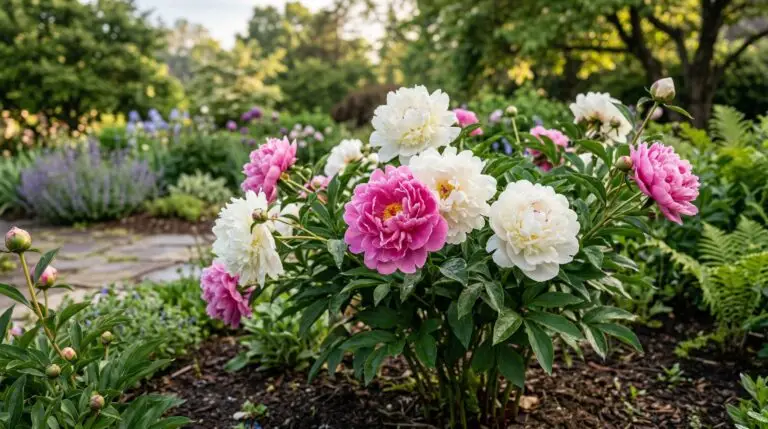
Peonies command attention through sheer mass and dramatic form. When planning a garden composition, we treat the peony as an anchor plant because of its substantial volume and dense, rounded habit. The challenge with peony garden design is the fleeting nature of the flowers themselves. For two weeks in late spring, they dominate the visual field with massive, heavy blooms that pull the eye immediately. Once the petals drop, you are left with a structural green shrub that must transition from focal point to backdrop. Good design requires thinking about the entire spatial volume around the peony throughout the growing season. We select peony companion plants based on how their textures, forms, and bloom times interact with both the spectacular flowers and the quiet green foliage that follows. This sequence of bloom ensures the garden remains visually active long after the main event has passed.
Contents 4 sections
Early spring companions that set the stage
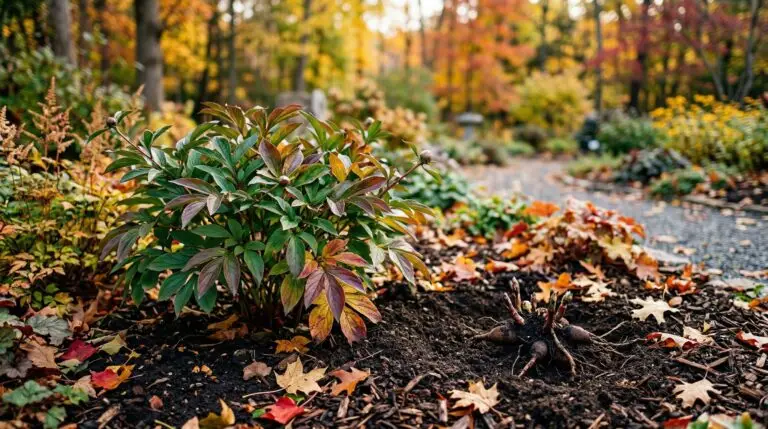
Long before the heavy buds open, peony foliage emerges from the soil in deep shades of burgundy, bronze, and dark red. This early foliage provides a rich, dark groundcover that contrasts beautifully with early spring bulbs. When deciding what to plant with peonies for early interest, structural bulbs offer the best contrast. The spherical purple heads of alliums create a strict geometric contrast against the loose, deeply lobed leaves of the emerging peony. Planting these tall, globe-shaped flowers directly behind or between your peonies creates a layered effect where the dark peony stems ground the floating purple orbs. You can also use lower growing spring bulbs like grape hyacinths or early daffodils to create a bright carpet around the base of the dark red shoots. The sharp, strappy leaves of the bulbs contrast with the divided, coarser foliage of the peony, establishing a textural dialogue even before any major colors appear.
Designing the main event with simultaneous bloomers
When peonies finally open, their massive, rounded flower heads require companion plants with entirely different shapes to prevent the border from looking heavy or congested. Vertical forms are essential here to break up the visual weight of the dominant blooms. Tall spikes of foxglove planted behind peonies draw the eye upward, providing a necessary architectural lift to the composition. The tubular bells of the foxglove contrast sharply with the dense, ruffled petals of the peony. Similarly, introducing iris into the same sightline adds both structural and textural variety. The stiff, sword-like leaves of the iris cut through the mounding, relaxed habit of the peony shrub. From a color perspective, pairing pale pink peonies with deep purple bearded irises creates a high-contrast, dramatic composition, while matching white peonies with pale blue irises offers a cool, harmonious palette. The goal is to surround the heavy anchor plant with contrasting vertical lines and finer textures.
Passing the baton to summer flowering perennials
As the peony blossoms shatter and fall, the plant shifts its role from the star of the border to a supportive, leafy backdrop. The deep green, lobed leaves provide excellent structure and mass for the next wave of summer flowers. This is the moment to introduce classic summer bloomers like roses into the spatial arrangement. Shrub roses planted near peonies benefit from the solid green foundation the peony foliage provides, which helps ground the sometimes leggy canes of the rose bush. You can also plant daylilies in the midground just in front of the peonies. The arching, grassy foliage of the daylily softens the rigid, woody stems of the mature peony plant. Bright yellow or orange daylilies pop intensely against the dark green peony leaves, creating a warm summer palette that completely changes the mood of the garden bed from its soft pastel spring origins. The peony is no longer the focal point, but its substantial volume is exactly what makes the summer flowers look grounded and intentional.
Managing the late season transition
By late summer and early autumn, peony foliage often begins to look tired, developing brown spots or powdery mildew depending on the climate. The spatial relationship between plants becomes a tool for concealment during this phase. Tall, late-blooming perennials with fine, airy textures should be positioned in front of or woven through the peony clumps to obscure the declining leaves. Plants like Japanese anemones, tall asters, or ornamental grasses work exceptionally well in this role. The fine, misty texture of a panicum or miscanthus grass creates a visual veil that distracts the eye from the coarse, fading peony leaves behind it. Purple asters provide a final burst of cool color that draws attention away from the yellowing foliage near the ground. By carefully layering these late-season plants in the foreground and midground, you maintain a clean, active composition while allowing the peony to die back naturally without compromising the overall garden view.
A successful garden relies on the principle of succession planting within a shared spatial volume. When you place a peony in your design, visualize a cylinder of space rising from the ground to a height of about three feet. Your task is to activate the edges of that cylinder before the peony blooms, contrast with it during its peak, and obscure it when it fades. By layering fine textures in front, vertical spikes behind, and complementary colors alongside, you integrate the peony into a complete community of plants. This approach shifts the focus from a single isolated specimen to a continuous, evolving composition that holds visual interest through every phase of the growing season.
More About Peonies
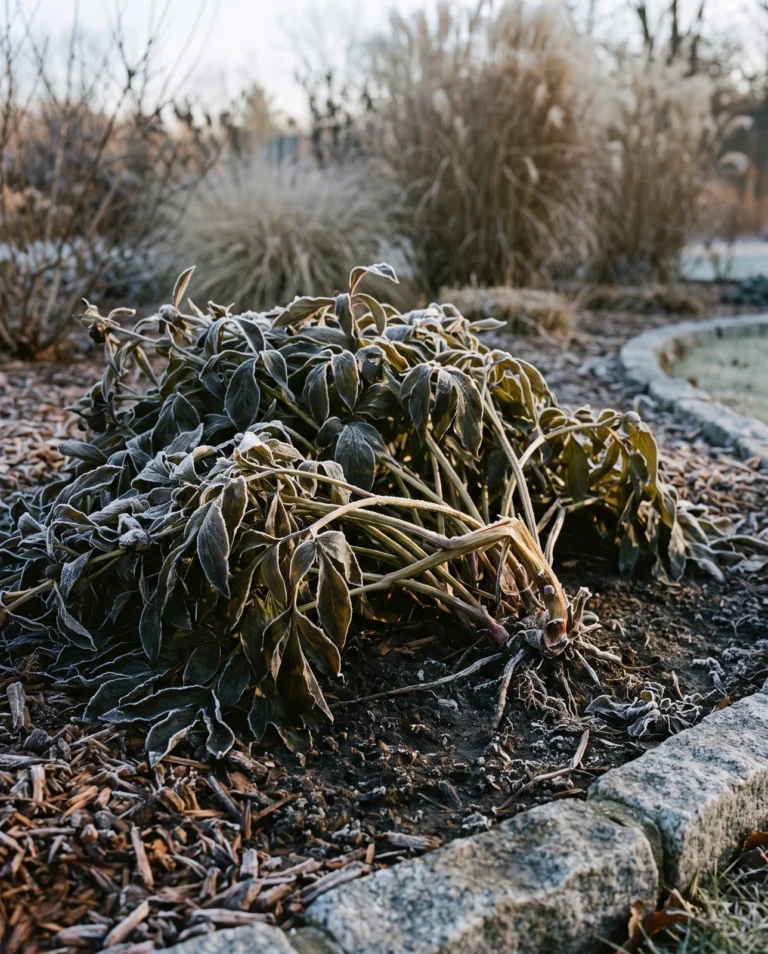
When to cut back peonies (and which ones to leave alone)
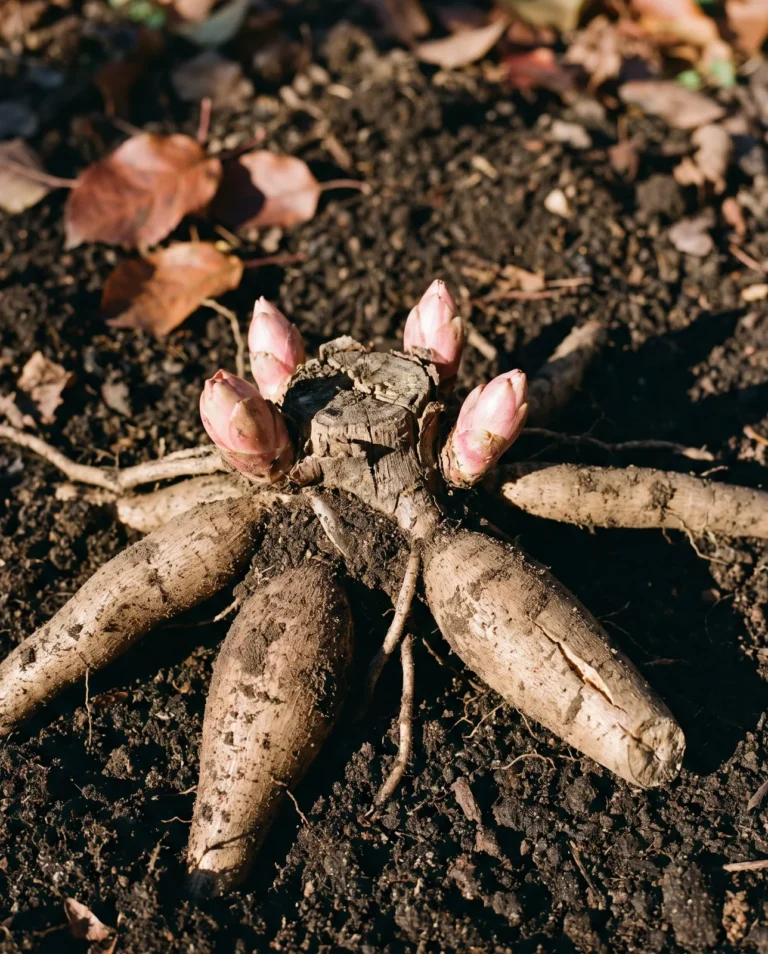
Planting peonies in fall: the depth that decides blooms
Best peony varieties from classic Sarah Bernhardt to trendy Coral Charm
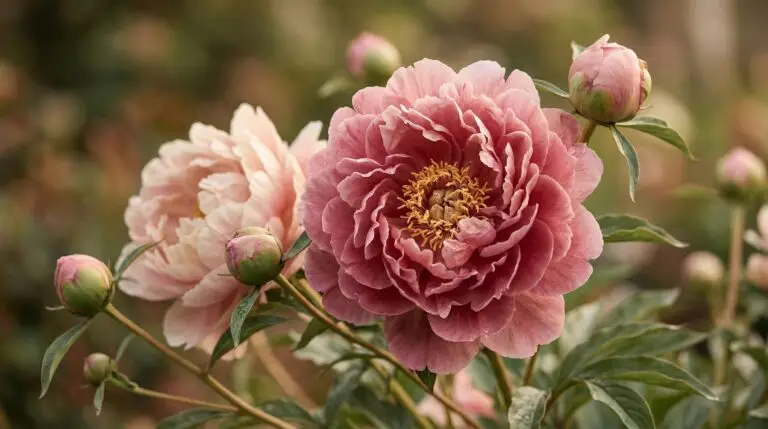
Peony flower meaning and why this bloom represents romance prosperity and good fortune
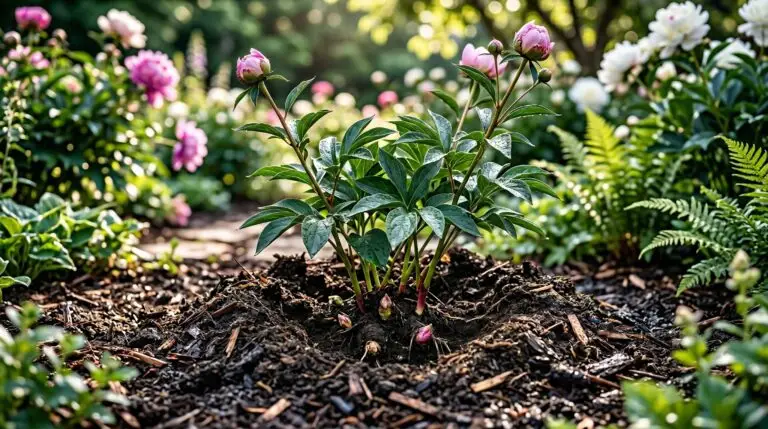
Why peonies fail to bloom and the planting depth mistake that keeps them flowerless
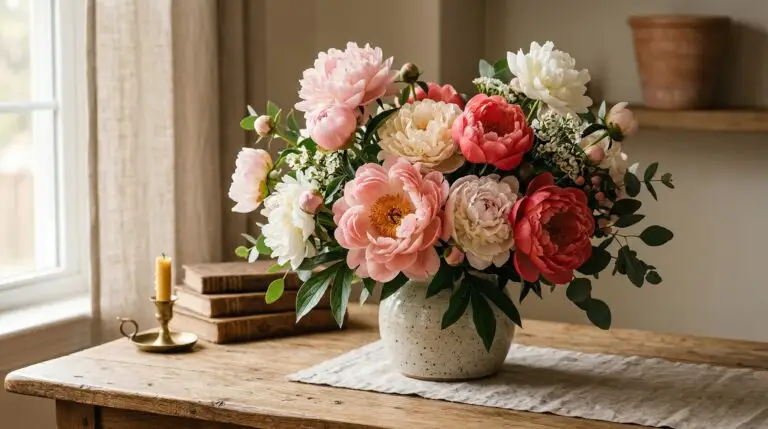
Peonies as the most coveted wedding flower and why brides pay premium for peony season
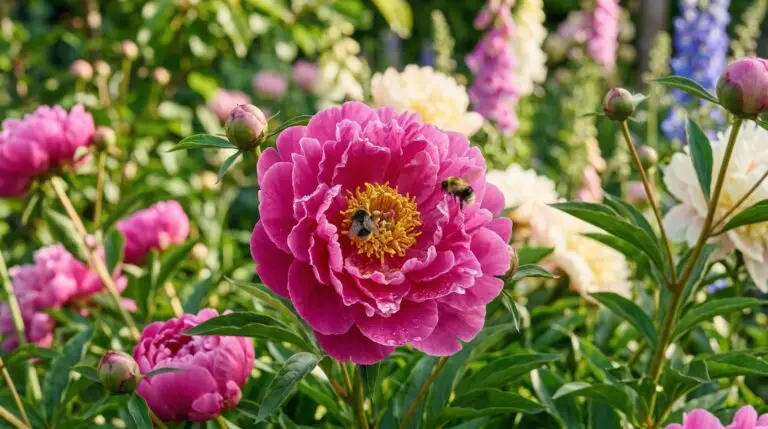
Why peonies need ants and the truth about the ant myth that refuses to die
Itoh peonies the hybrid breakthrough that gives the best of both herbaceous and tree peonies
Growing peonies in warm climates and the chill-hour challenge in zones 8 and above
How to grow peonies for lush romantic blooms that last a lifetime in your garden
Cutting peonies at the perfect marshmallow stage for the longest vase life
Enjoying our flower guides? Add YourFlowersGuide as a preferred source on Google. It helps more readers find us.
Add to Preferred Sources