


Daylily bloom time across the US
Interactive map
 See the interactive map
Drag the date and the bloom moves north across the country. Every point has its own window, and the map says where it has no records rather than guessing. Free, with nothing to sign up for. Open the daylily map.
City by city
Typical window, earliest first. Cultivars of the same flower can open days or weeks apart.
Taxonomy and origin
The genus name Hemerocallis comes from the Greek hemera, day, and kallos, beauty. The structure matters more than the family name: a daylily grows from a fibrous crown with thickened storage roots and produces its leaves in flat fans, while a true lily grows from a scaly bulb and sends up one leafy stem with the flowers at the top. Cut a daylily open and there is no bulb to find, which is why true lilies of the genus Lilium behave so differently in a vase.
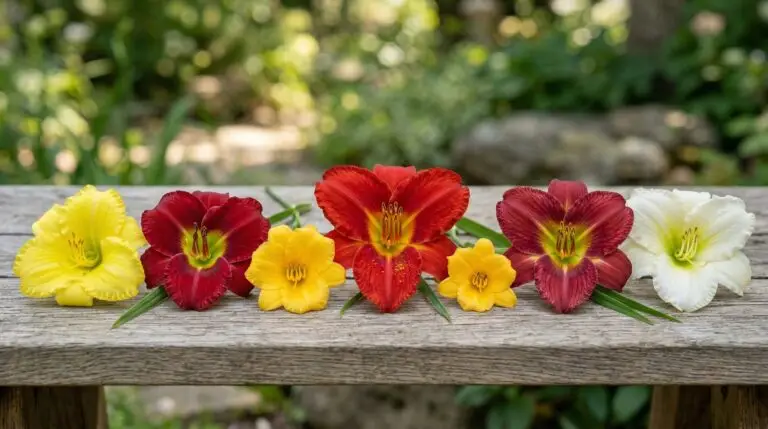
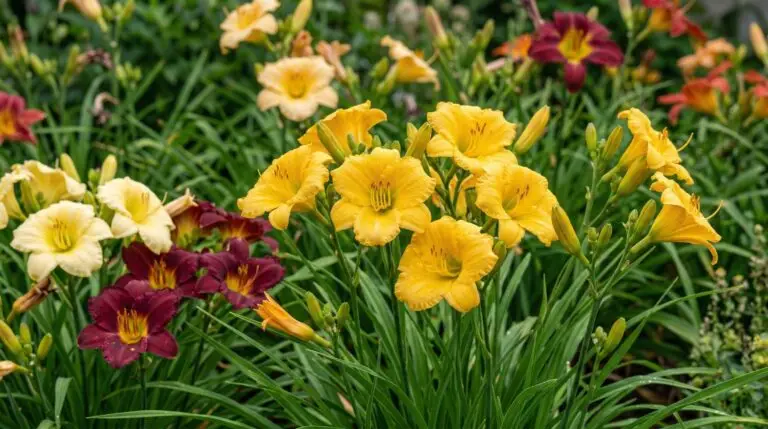
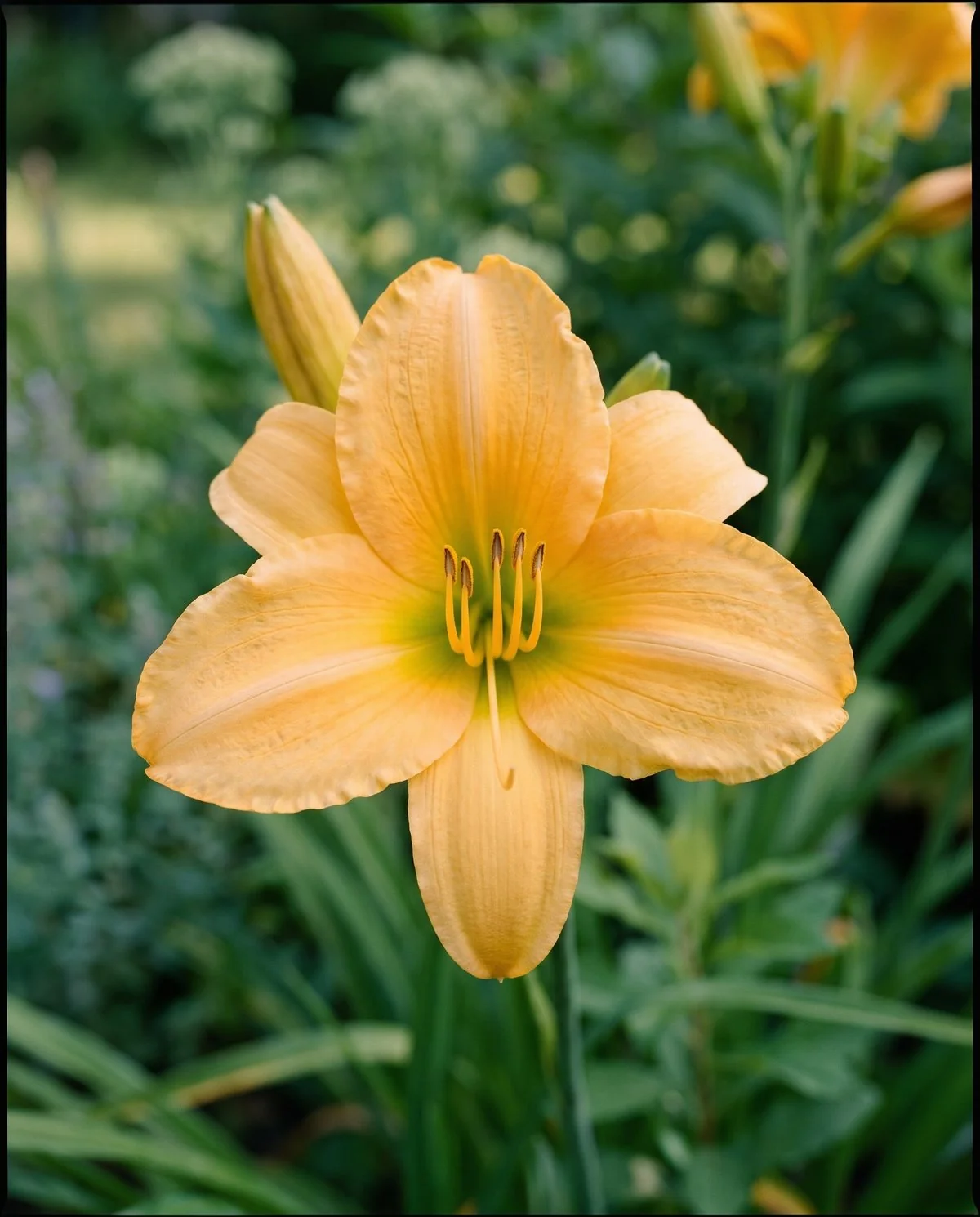
Of the fifteen to twenty wild species, from China, Japan, Korea, and eastern Siberia, one naturalized so thoroughly that most Americans assume it is native: the orange Hemerocallis fulva, the roadside ditch lily, a sterile triploid that travels by rhizome and is listed as invasive in several states. Named garden cultivars are a different proposition, an enormous hybrid population of diploids and tetraploids, the latter carrying double the chromosomes and tending toward heavier substance and larger flowers. They come in every color but true blue and pure white, with eyes, edges, and picotees layered on top, which is why the palest cultivars are sold as near-white.
What the words on a daylily tag actually guarantee
The American Daylily Society has been the international registration authority for Hemerocallis since 1955, and Iowa State Extension counts over a hundred thousand registered names. Some of the words that reach a nursery tag are registration classes with a measurement behind them; others record what one plant did in its hybridizer's garden. The difference decides how much a tag can promise.
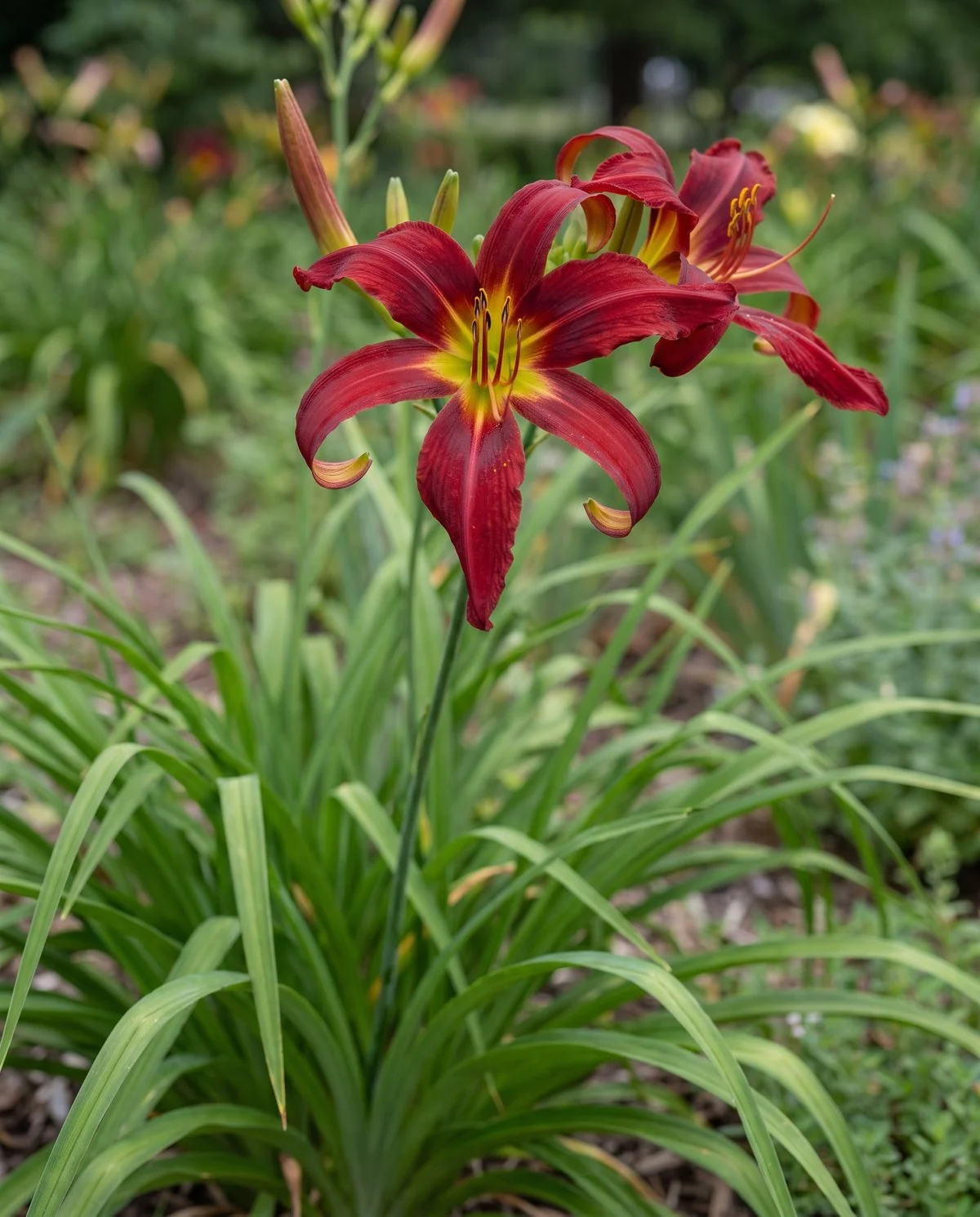
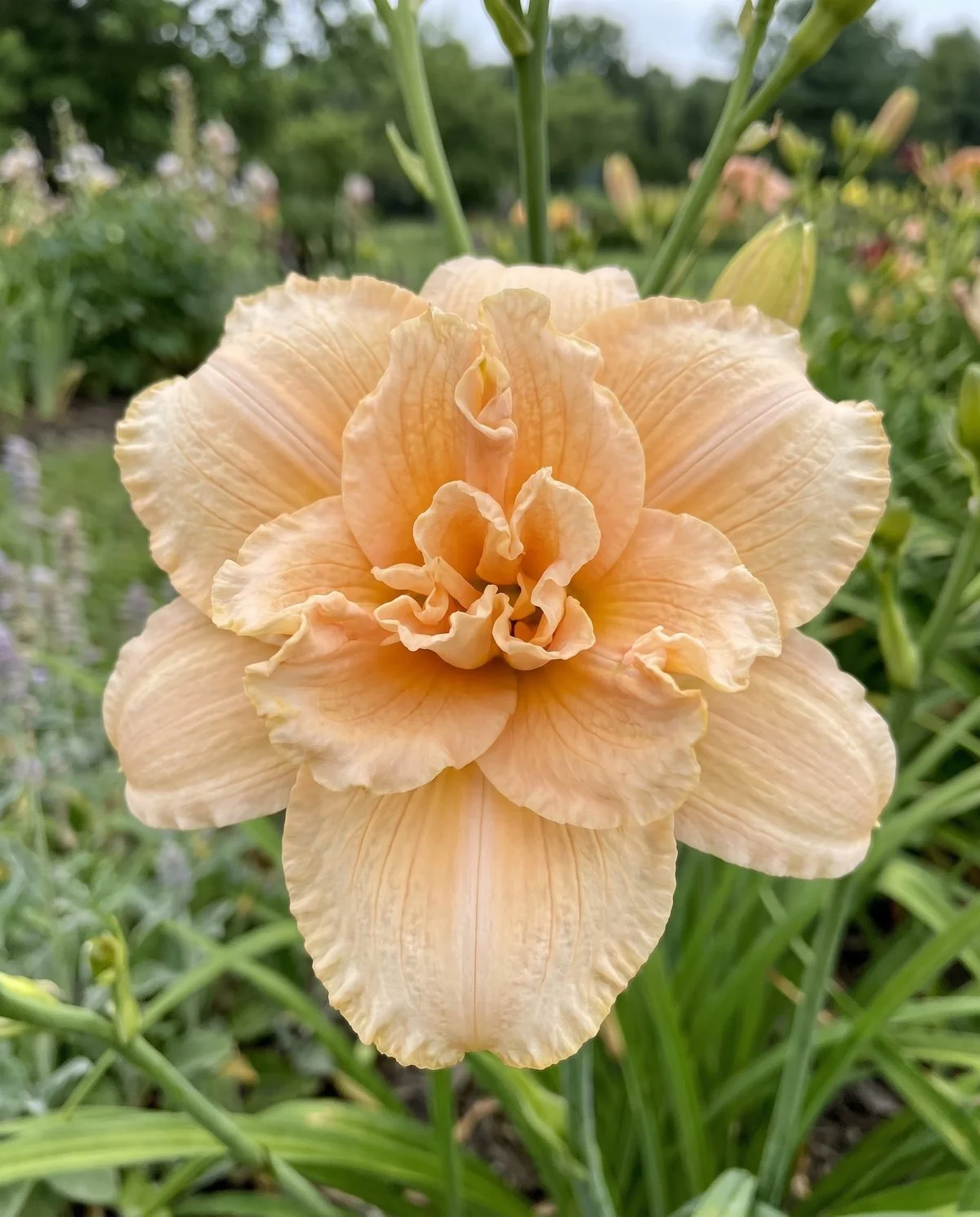
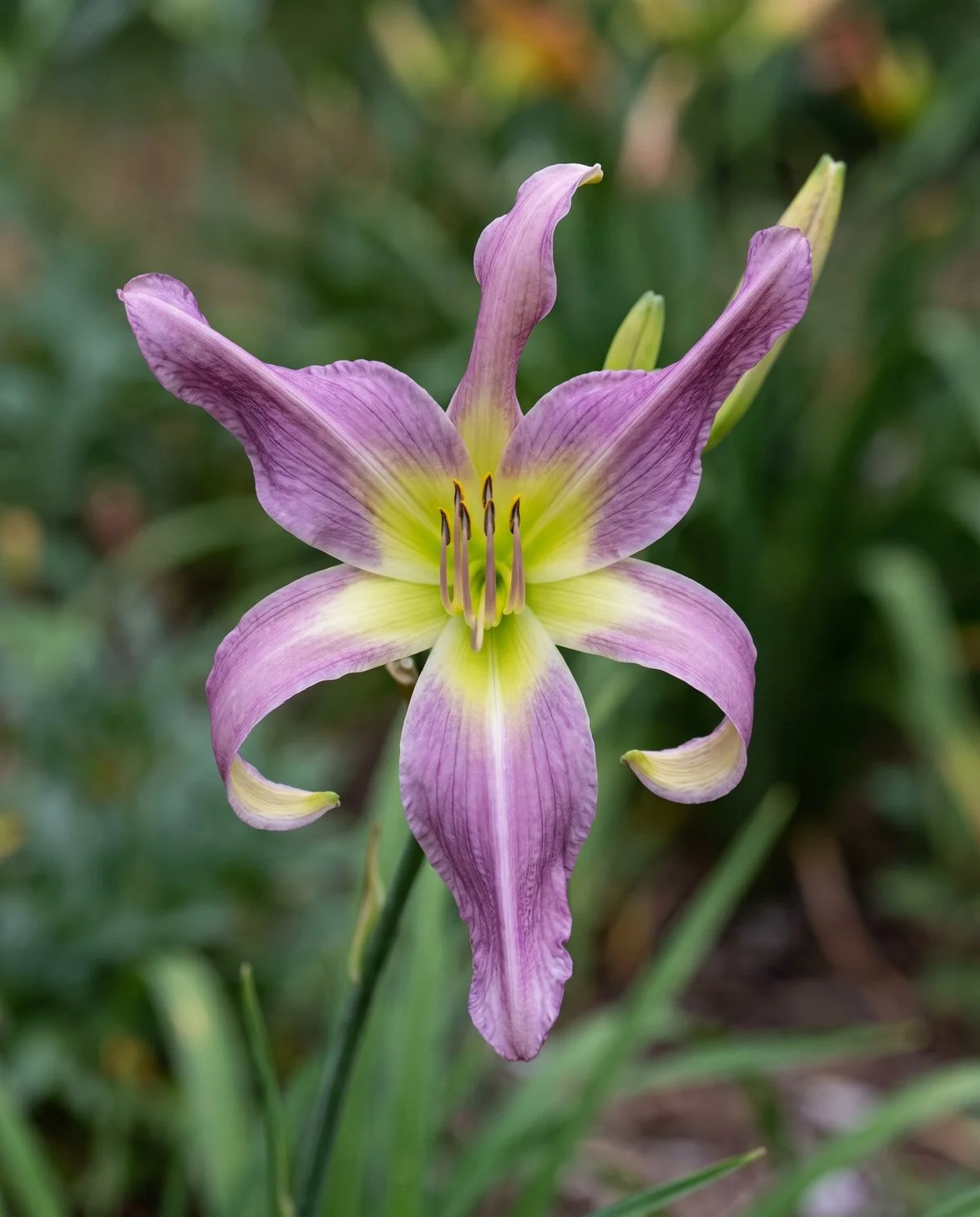
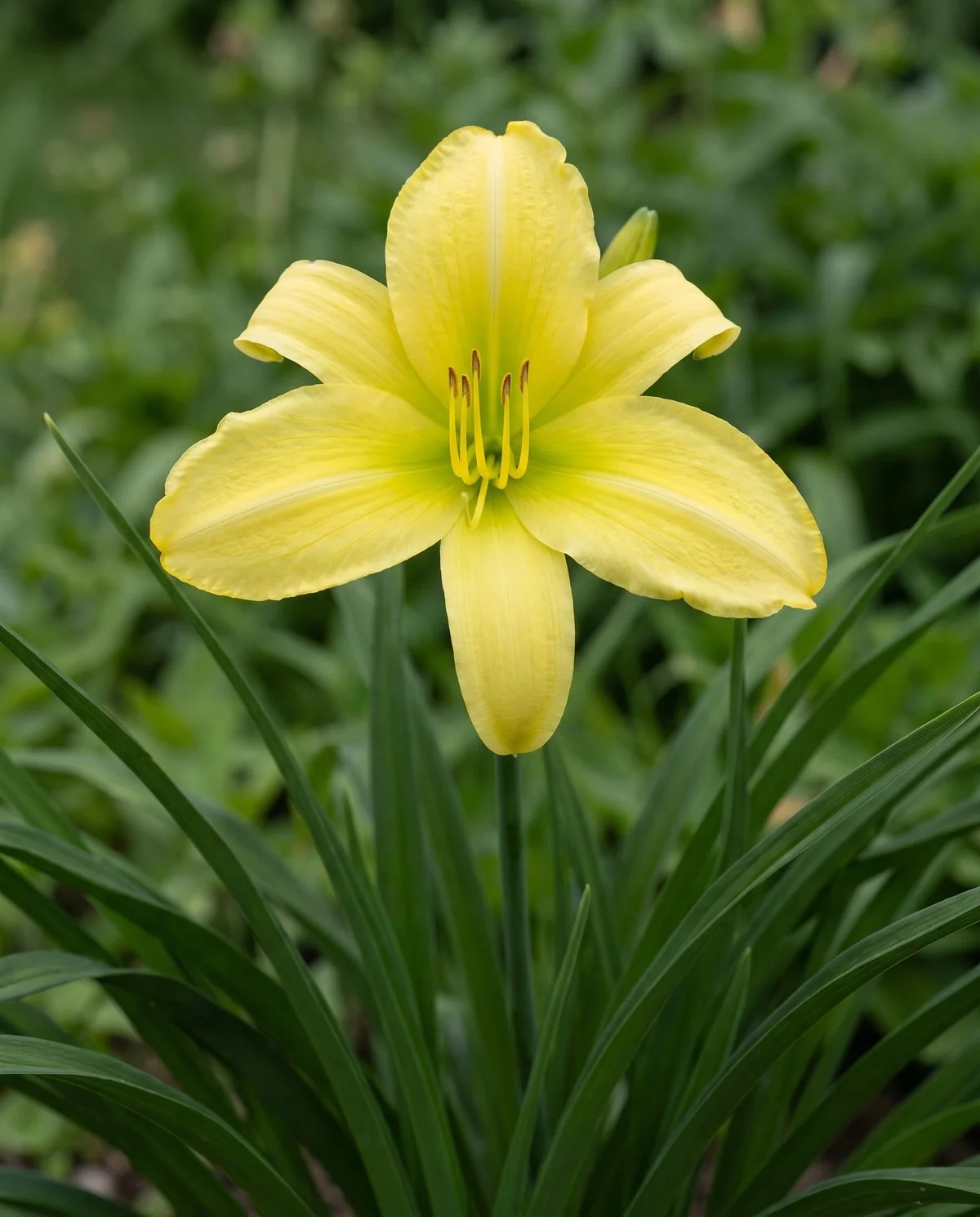
Two further registered classes sit outside this grid. Sculpted covers three-dimensional petal surfaces, pleated, cristate or relief, judged on a separate axis from shape, so a sculpted cultivar can also be an unusual form. Multiform is the Society's own term for a cultivar registered as two or more of spider, unusual form, polymerous or double at once. Semi-evergreen sits between the two foliage labels and, in the Society's words, may appear evergreen in mild regions and lose its leaves in cold ones. One buying note runs across all of it: the Society states that spider and double forms remain more prevalent in the diploid ranks, even though tetraploids have taken every Stout Award since 1996 and carry, per University of Arkansas Extension, larger and thicker leaves and flowers, stronger flower scapes, more intense coloration and increased vigour on 44 chromosomes against the diploid 22.
Bloom time
Each daylily flower opens in the morning and collapses by night. This is not fragility or a reaction to heat: the flower runs a genetically programmed sequence that dismantles the petals on a schedule, reliably enough that plant biologists use daylily petals as a laboratory model for programmed cell death. No preservative or shade cloth buys a second day.
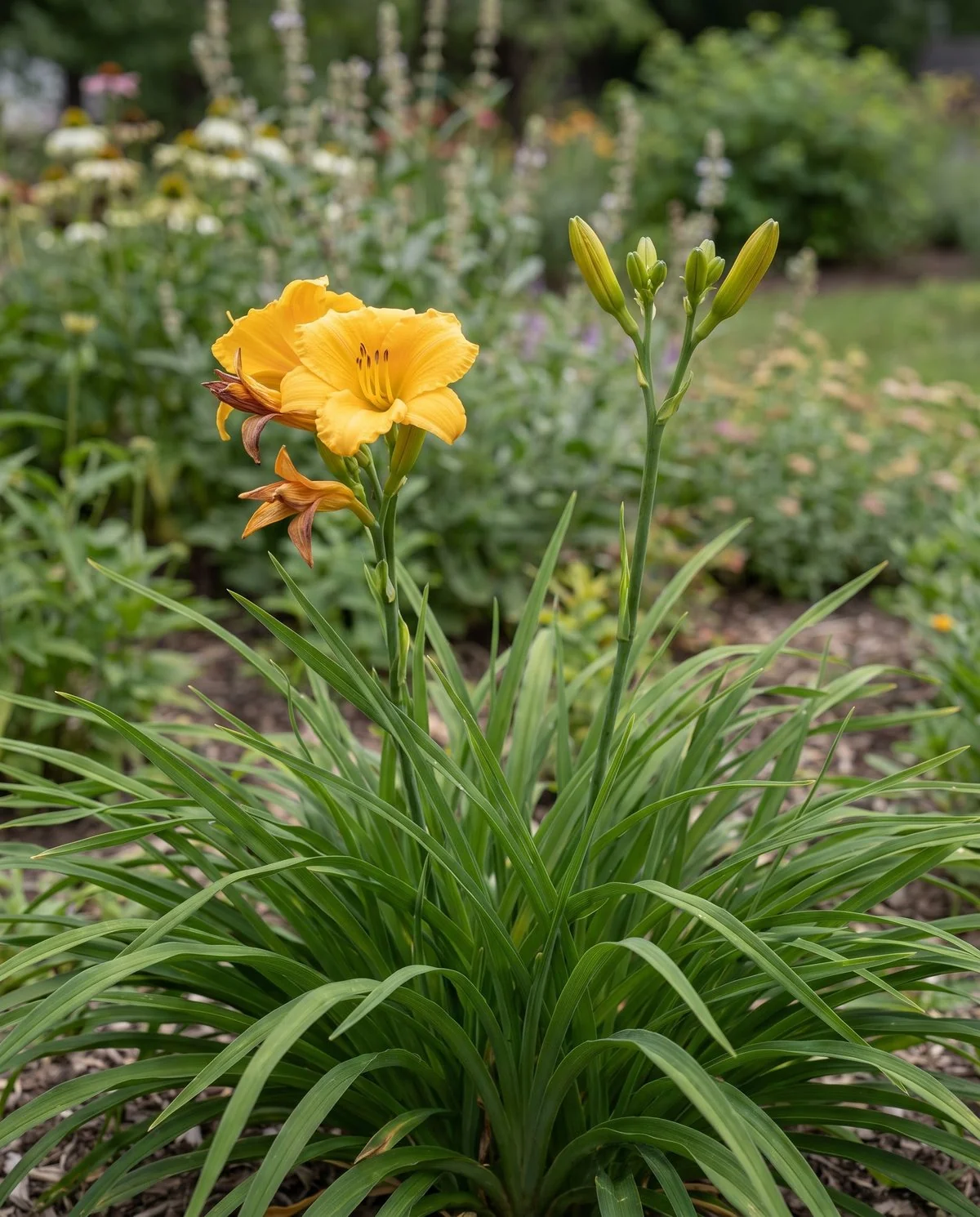
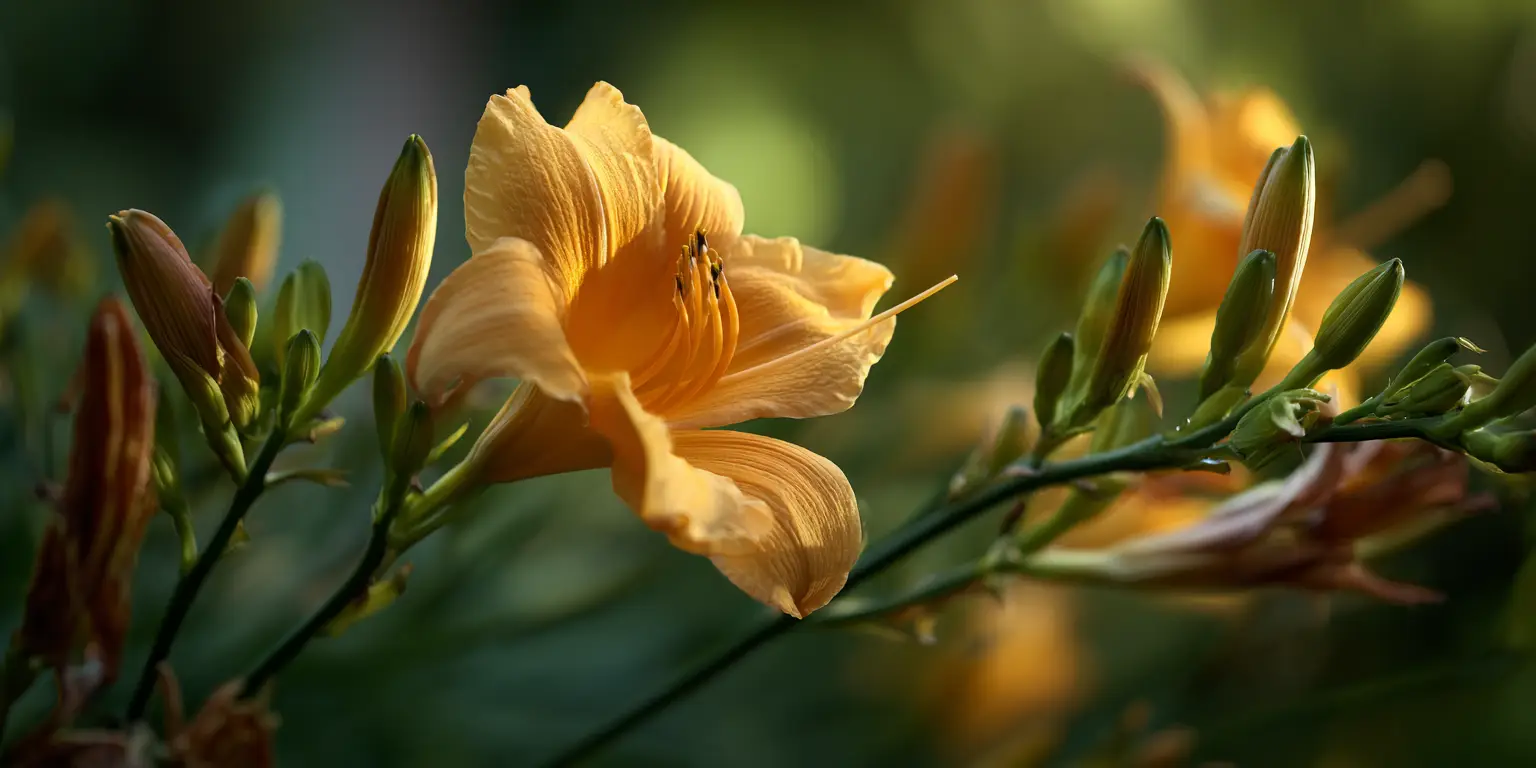
What saves the plant is the scape, the leafless stalk that carries not one bud but a branched cluster of them opening in succession. Branching multiplies the count: a modest cultivar holds ten buds to a scape, a heavily branched one well over fifty, most garden types fifteen to thirty. Divide the bud count by the flowers open on a given day and that is roughly how long the stalk stays in color: twenty-five buds opening two at a time is about two weeks, and three or four staggered scapes turn that into a month or more.
Registration data makes it checkable: cultivars carry a bloom season class, running from extra early through the midseason classes to very late, and a bloom habit code. Diurnal cultivars open in the morning and close at night, nocturnal ones open in late afternoon or evening and stay open through the following day, and the code that matters most to anyone who leaves the house before dawn and returns after dark is "extended," meaning the flower holds open at least sixteen hours. Mixing season classes across a border stretches daylily color from late spring to frost.
Reblooming or once-blooming
Garden center labeling obscures the real buying decision. A once-blooming cultivar sends up its scapes, flowers for three to five weeks depending on bud count and weather, then makes foliage. A rebloomer produces additional flushes in one of two patterns: instant rebloom, where a single fan pushes a second scape while the first is still working, and rest rebloom, where the plant pauses and sends up a second wave later, the more common behavior in cooler gardens.
The word on the tag describes what the plant did in the hybridizer's garden. Rebloom is strongly climate-dependent: three flushes in a long southern season may be one flush and a scattered second in a short northern one. Treat the label as a probability, and treat bud count and branching as the numbers that actually predict weeks of color, because a once-blooming cultivar with a well-branched forty-bud scape out-flowers a thin-scaped rebloomer in most gardens.
Two small rebloomers put daylilies into commercial plantings: the dwarf gold 'Stella de Oro' and the softer lemon-yellow 'Happy Returns', which also appears on published university lists of cultivars with strong resistance to daylily rust alongside the pink 'Barbara Mitchell'. Where rust returns every year, resistance matters more than flower size. The specific reblooming daylily varieties worth planting beat whatever happens to be flowering on the sales bench. Snap off each spent flower in the morning, when it pulls away cleanly, and cut each scape at the base once its last bud has opened, so the plant banks that energy instead of setting seed.
Year one, year three, and the plateau after it
Year one is unusually generous for a perennial: Clemson states that daylilies may bloom the first year of planting, though a young division rarely carries its mature scape count or flower size. Clemson puts mature size at three to four years and Kansas State Research and Extension puts it more sharply still, saying plants reach their prime flower production about the third year, so year three rather than year one is the honest milestone. Dividing resets that clock, and Iowa State Extension gives the clearest expectations figure in this research: divided plants usually do not bloom well for one or two years. That applies equally to a clump split at home and to a small division bought from a nursery, so a light first season on healthy foliage is a recovery period rather than a mistake. Once a clump is established the volume is the number worth knowing, and it is unusually well confirmed: University of Minnesota Extension and Kansas State, working independently, both state that an established clump often produces 200 to 400 flowers in a season with each plant blooming for 30 to 40 days. After that the curve does not fall the way it does for large hybrid tulips. No source in this research suggests an inherent decline in daylily cultivars; every extension service consulted ties decline to overcrowding instead, which is why division belongs on a schedule rather than in a rescue.
Two paths, worked in order
Both start with the things that are not a pest or a disease, because for a plant this healthy that is nearly always where the answer is.
Height and spread
Foliage forms an arching mound of narrow, strap-shaped leaves one to two feet long, with the scapes rising above it. Registered heights refer to the scape, not the leaves, a common source of disappointment: a twelve-inch daylily has twelve-inch flower stalks, and the foliage mound underneath may still be a foot tall and wider. Dwarf selections keep scapes under about eighteen inches and suit edging and containers, most garden cultivars stand two to three feet, and tall ones push past four feet but lean in wind. A single fan becomes a clump eighteen inches to three feet across within a few seasons, thickening at the crown rather than running, so space small and medium cultivars about eighteen inches apart and large ones at least two feet.
Light
Daylilies want at least six hours of direct sun, and full sun produces the highest scape count, the highest bud count, and the cleanest color. With less the plant survives but throws fewer scapes and stretched foliage, and in deep shade it becomes a leafy mound that rarely blooms. Pigment is the one qualification: dark red and deep purple cultivars scorch or bleach in fierce afternoon sun and hold their color better with afternoon shade, while pale yellows, creams, and near-whites look thin in shade and gain their best substance in open sun.
Water
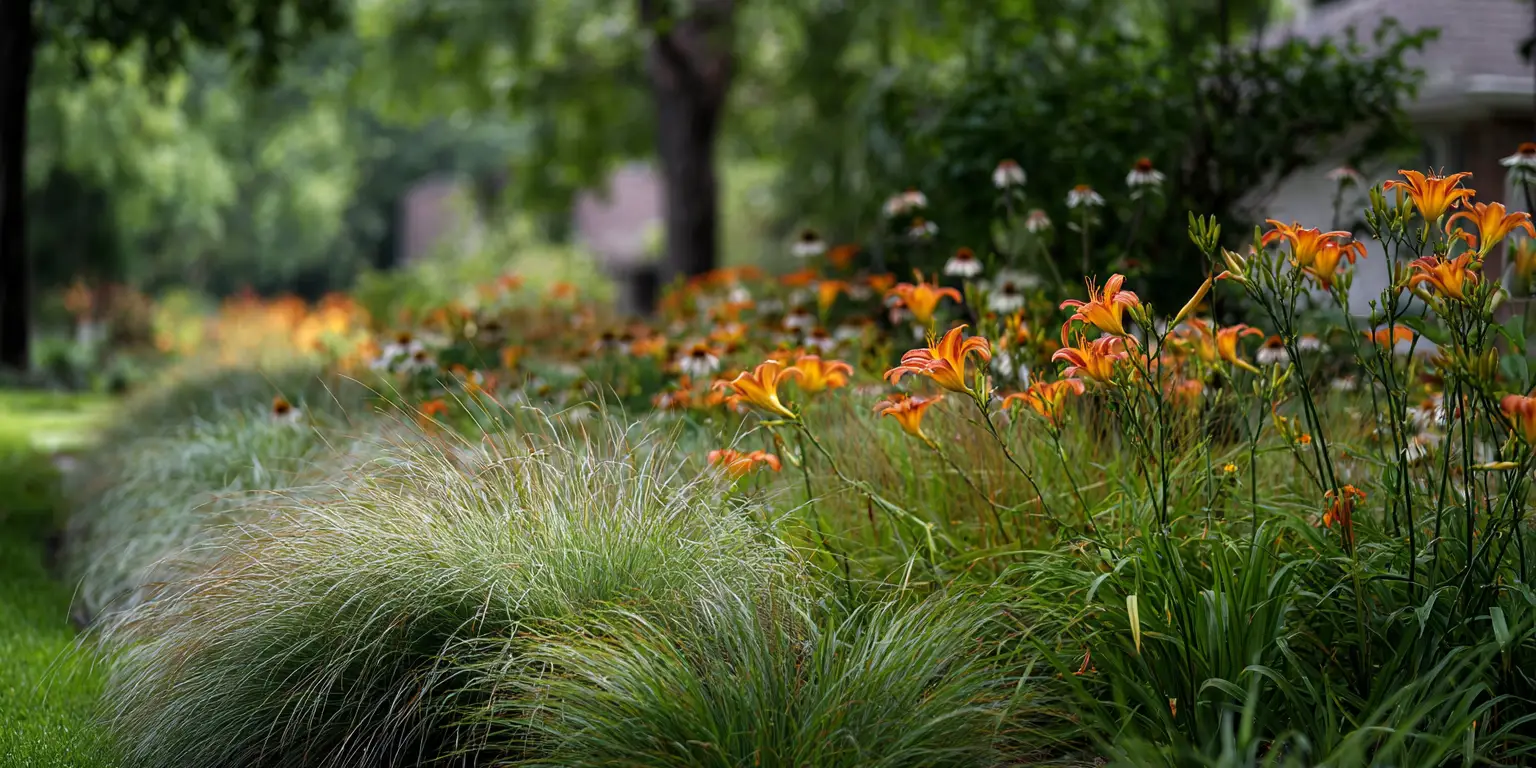
An established daylily tolerates drought better than almost anything else in a perennial border, but tolerating drought and flowering well through it are different things. About an inch of water a week is right, and the weeks that matter most are when scapes rise and buds size, because a plant short of water then aborts buds and shortens its own season. New plantings need steady moisture until the roots take hold, and a two to three inch mulch holds it, pulled back from the crown, since a crown buried in damp mulch is a crown that rots. Water at the base rather than over the foliage, because both major leaf diseases spread in splashing water and in overnight films of moisture on leaves.
Soil and pH
Daylilies ask mainly for drainage. Loam enriched with compost is ideal, heavy clay works once loosened or raised into a mound, and sandy ground benefits from the same amendment. A pH of 6.0 to 6.8 suits them and they tolerate 6.0 to 7.5, so pH is rarely the reason a daylily disappoints.
Planting depth usually is. Set the crown, the pale junction where the leaf fans meet the roots, no more than about an inch below the soil surface: deeper and the plant makes foliage while bloom falls away, or the crown rots outright in wet ground; shallower and the roots dry and the fan sits loose. With a bare-root division, build a low cone of soil in the bottom of a wide hole, set the crown on top, drape the roots down the sides, backfill so the crown finishes an inch under, and water it in thoroughly. Feed lightly after that: a balanced or slightly low-nitrogen fertilizer in spring, or a topdressing of compost. High-nitrogen feeding, including drift from a lawn program, produces broad dark foliage and noticeably fewer scapes, which is why the lush daylily that will not bloom is so often the one at the edge of a lawn.
USDA hardiness
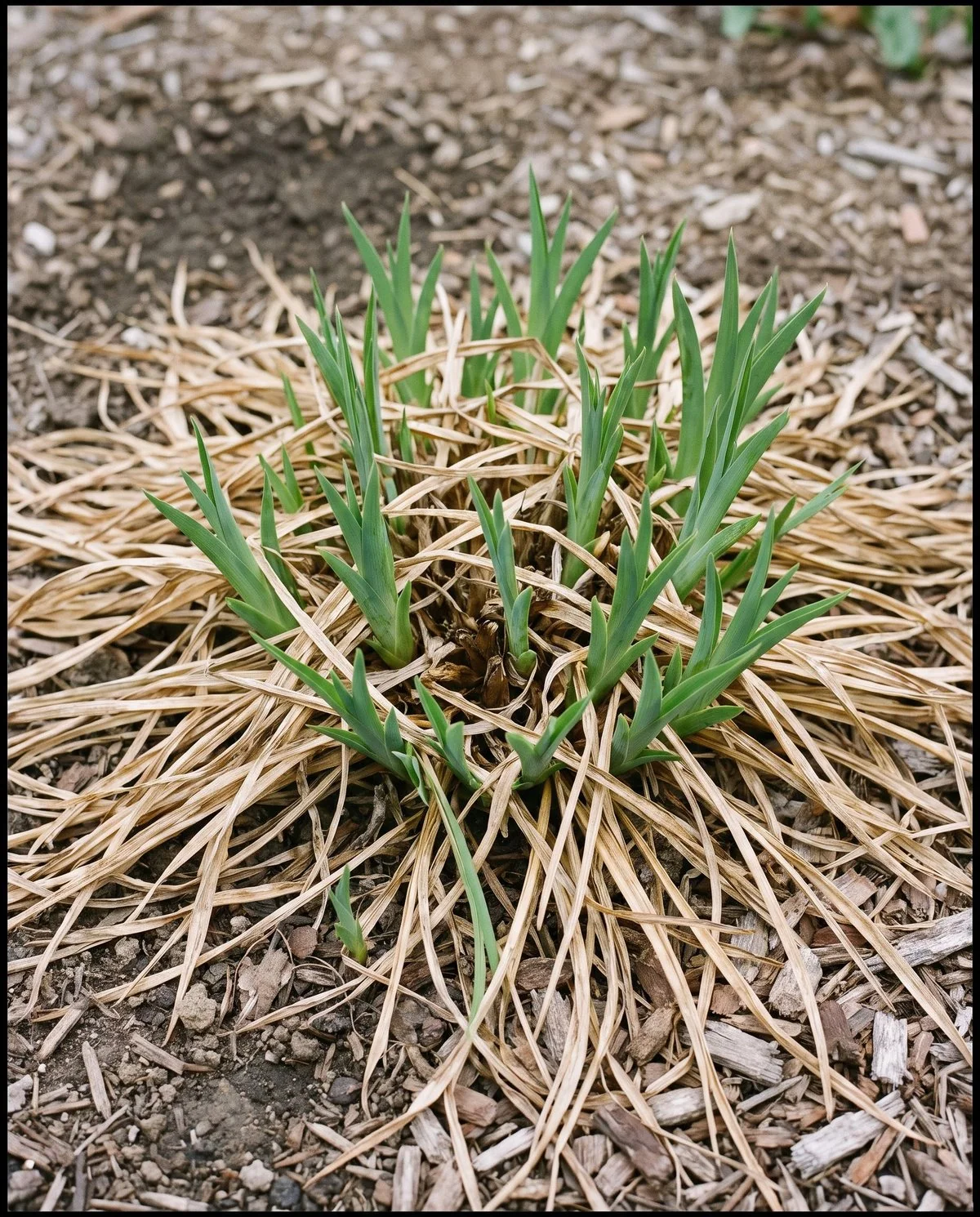
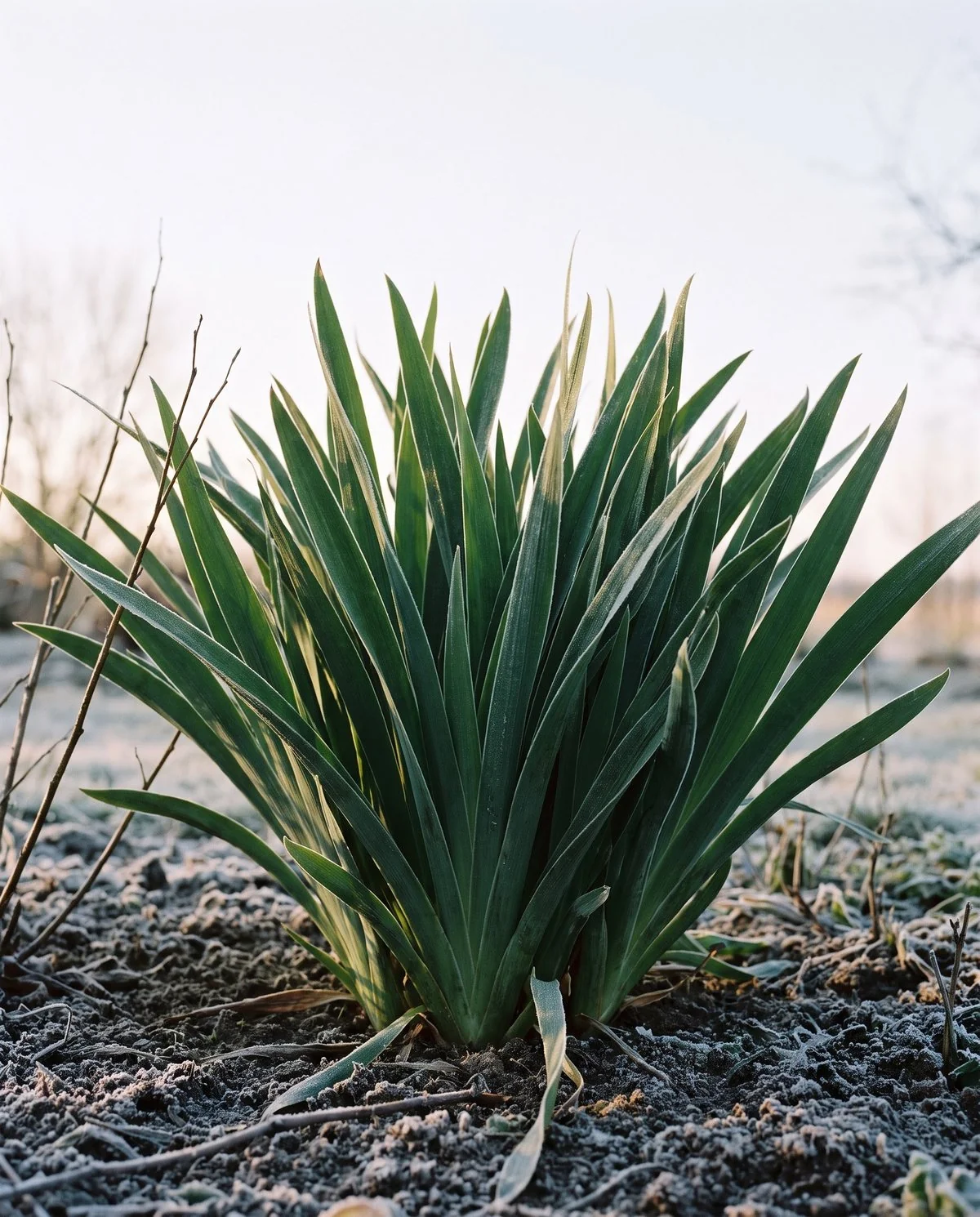
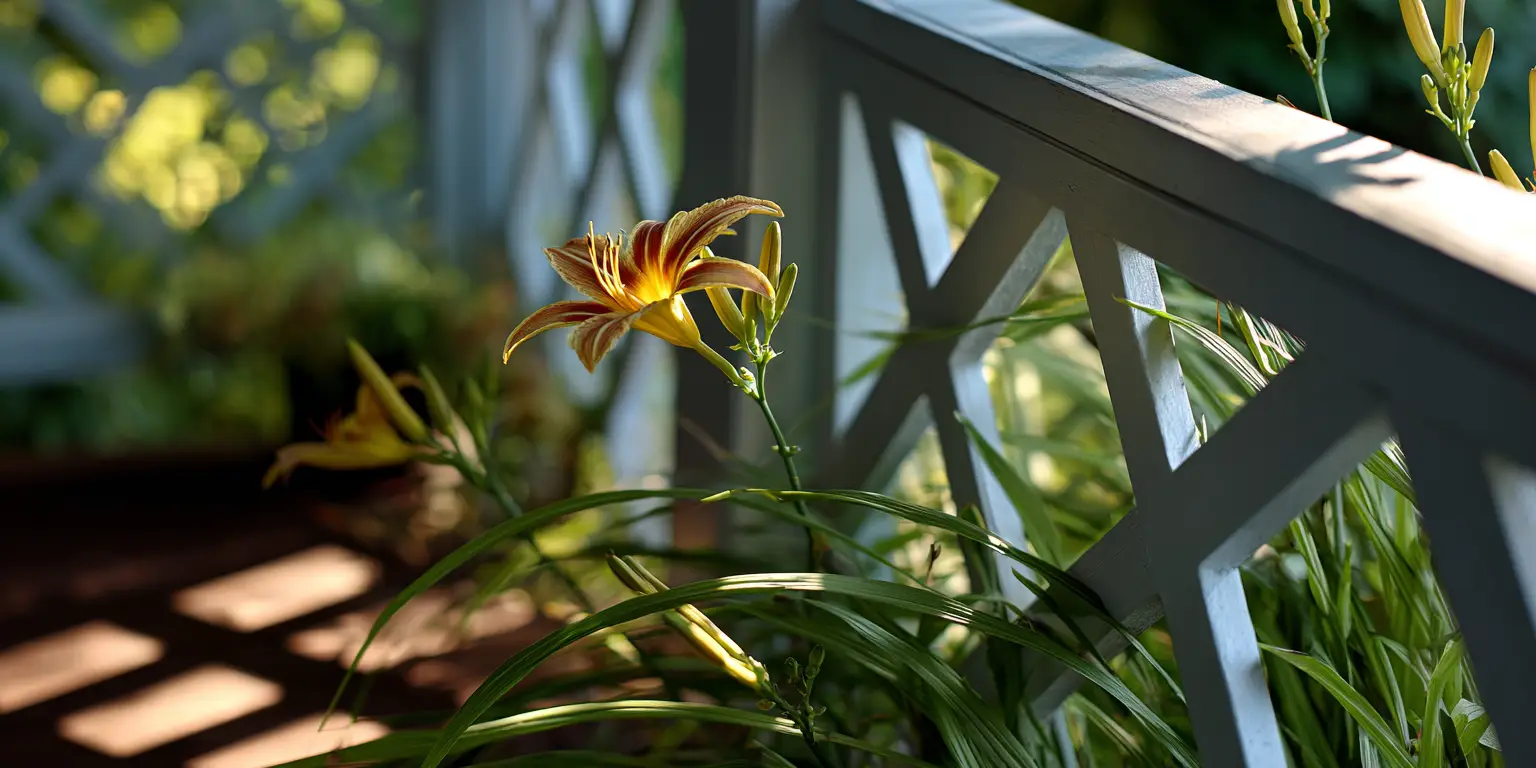
Most daylilies are hardy through USDA zones 3 to 9 and established plants need no winter protection. A loose mulch through the first winter after a fall planting is still sensible, not against cold but against frost heave, which lifts a new division before its roots anchor it.
The part that trips up almost everyone is foliage habit. Cultivars are registered as dormant, semi-evergreen, or evergreen: dormants die back completely and form resting buds at the crown, evergreens stay green year-round in mild winters, and semi-evergreen covers everything between. The widely repeated rule says dormant cultivars are cold-hardy and evergreen ones tender, so northern gardeners should buy dormants. That rule does not hold. Cold hardiness and foliage habit are inherited separately, plenty of evergreen cultivars grow perfectly well in cold gardens, and some dormants sulk in them.
What foliage habit does predict, reliably, is disease. Daylily rust survives winter only where living green tissue survives winter, which in North America means roughly zone 7 and milder; in zone 6 and colder the foliage dies, the fungus dies with it, and rust arrives only on shipped plants. An evergreen cultivar that stays green through a mild winter is exactly that reservoir. So the practical reading runs opposite to the folk rule: choose foliage habit with rust pressure in mind, and settle hardiness by buying from a nursery growing in a climate like your own.
Planting and dividing windows, as five extension services wrote them
No university publishes a single zone-by-zone daylily calendar, so these windows come from five separate state services and are quoted as each one gave them rather than averaged into one date. The interval that changes with the cultivar rather than the climate is division: three to five years for most, every two to three for rebloomers.
Propagation and longevity
Division is both how daylilies are propagated and what keeps a planting flowering. Clumps expand by adding fans until the center becomes crowded, at which point scape and bud counts both fall even though the plant looks large. The signal is bloom thinning at the center of a clump still vigorous at its edges, which most gardens reach every three to five years.
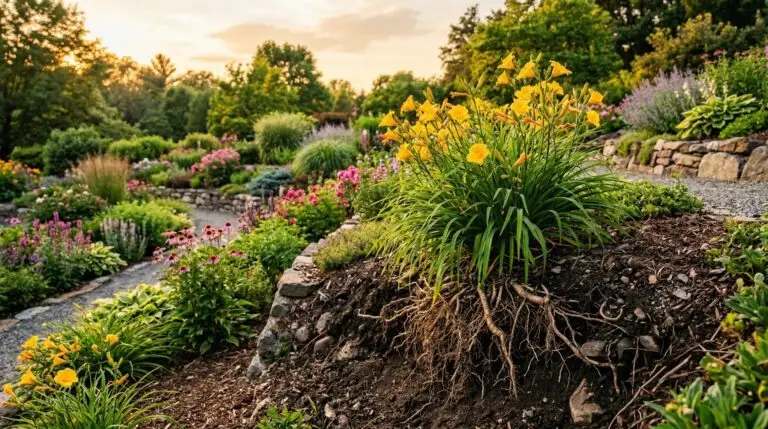
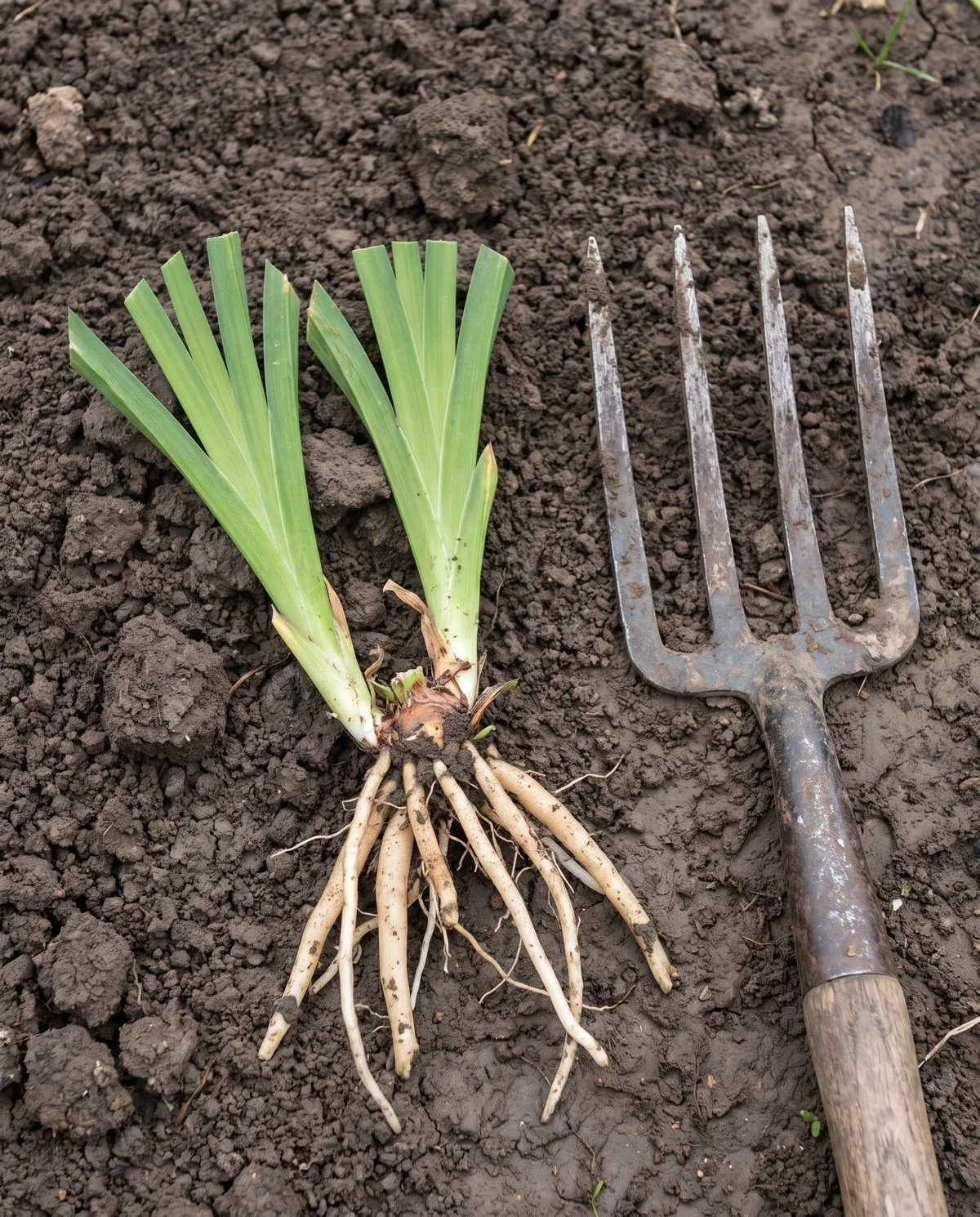
Divide in early spring as new growth begins, or in late summer once flowering finishes, leaving about six weeks of root growth before the ground freezes. Lift the whole clump with a fork from a wide circle, since the storage roots reach further than expected, then wash off enough soil to see the individual crowns and work the fans apart, prying with two forks back to back and cutting the crown with a clean knife where it will not pull. Each division wants two or three fans with a share of crown and roots; single fans root fine but flower a season later. Trim the leaves to a six to eight inch fan, replant with the crown an inch under, and water thoroughly. The full mechanics of splitting an overgrown clump for more blooms reward reading before the first attempt.
Some cultivars produce proliferations, plantlets on the scape that root as exact copies of the parent. Seed belongs to breeders: seedlings take years to flower and none matches its parents.
Fragrance
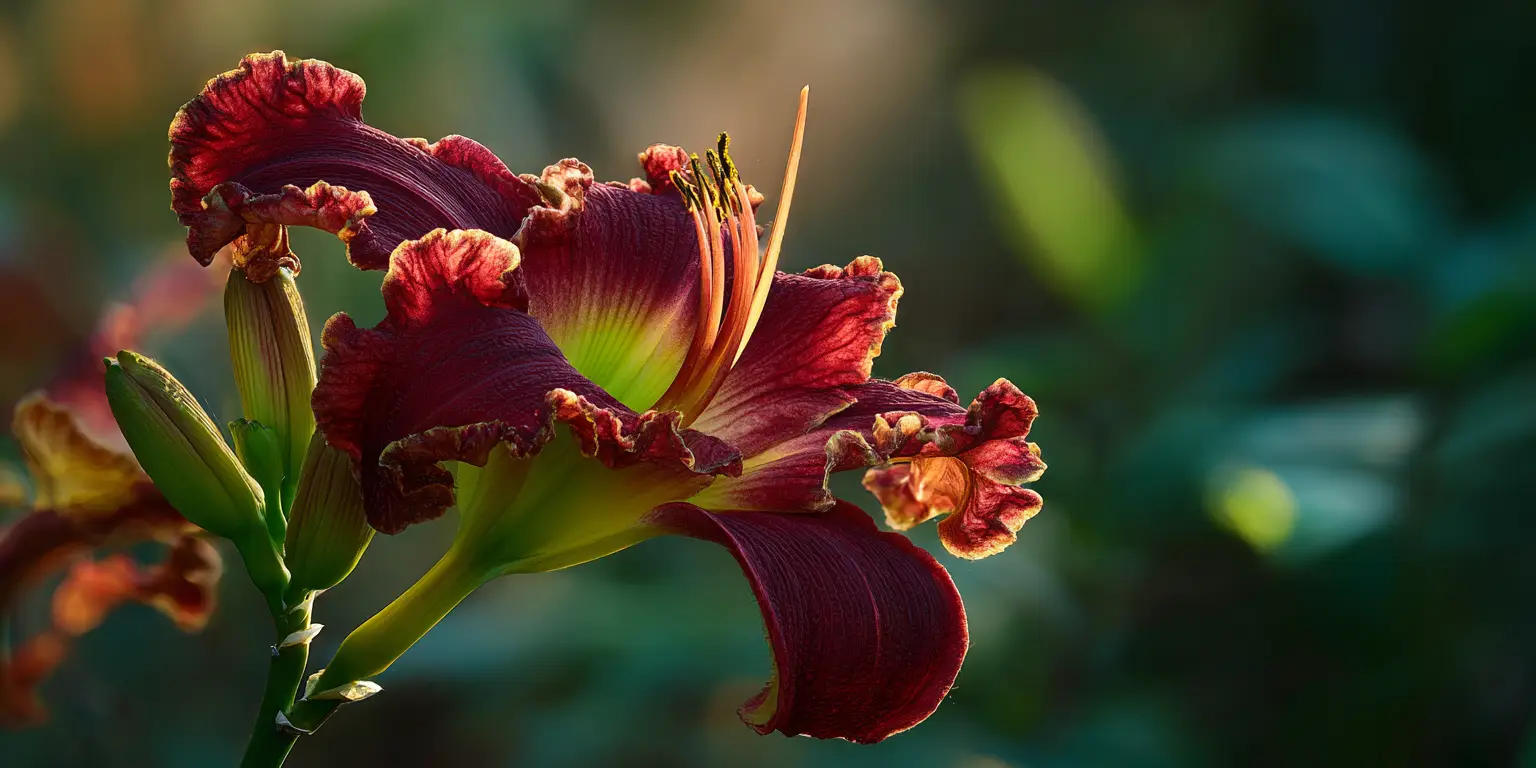
Fragrance is entirely cultivar-dependent, and most modern hybrids carry little or none, selected for color, form, and substance instead. What scent exists traces back to two species: Hemerocallis lilioasphodelus, the lemon lily, with a clear sweet lemon fragrance on slender early flowers, and Hemerocallis citrina, a nocturnal species with pale yellow trumpets and the strongest evening scent in the genus. Their descendants skew yellow and cream, so a fragrant daylily is more often a soft yellow than a red. Scent peaks in warm still air and usually at dusk, so a midday sniff at a garden center underrates it; buy a nocturnal or extended cultivar and plant it where people sit after dark.
Toxicity and pet safety
Daylilies are poisonous to cats. The ASPCA lists Hemerocallis species as toxic to cats and reports vomiting, loss of appetite, lethargy, kidney failure, and death among the clinical signs, while listing the same plants as non-toxic to dogs. The mechanism is acute kidney injury. The responsible compound has never been identified, but the damage is well described, with destruction of the proximal tubule cells that filter the blood. Veterinary case reviews of daylily exposures reported to poison control describe the pattern clearly: drooling and vomiting first in most cats, neurological signs in a smaller group, and acute renal failure in a substantial minority of confirmed cases, with poor survival among the followed cats that reached that stage. Cats treated early with decontamination and aggressive intravenous fluids do well, and the window for that treatment is measured in hours rather than days, so a suspected exposure is an emergency call to a veterinarian or a pet poison control line rather than a wait-and-see situation.
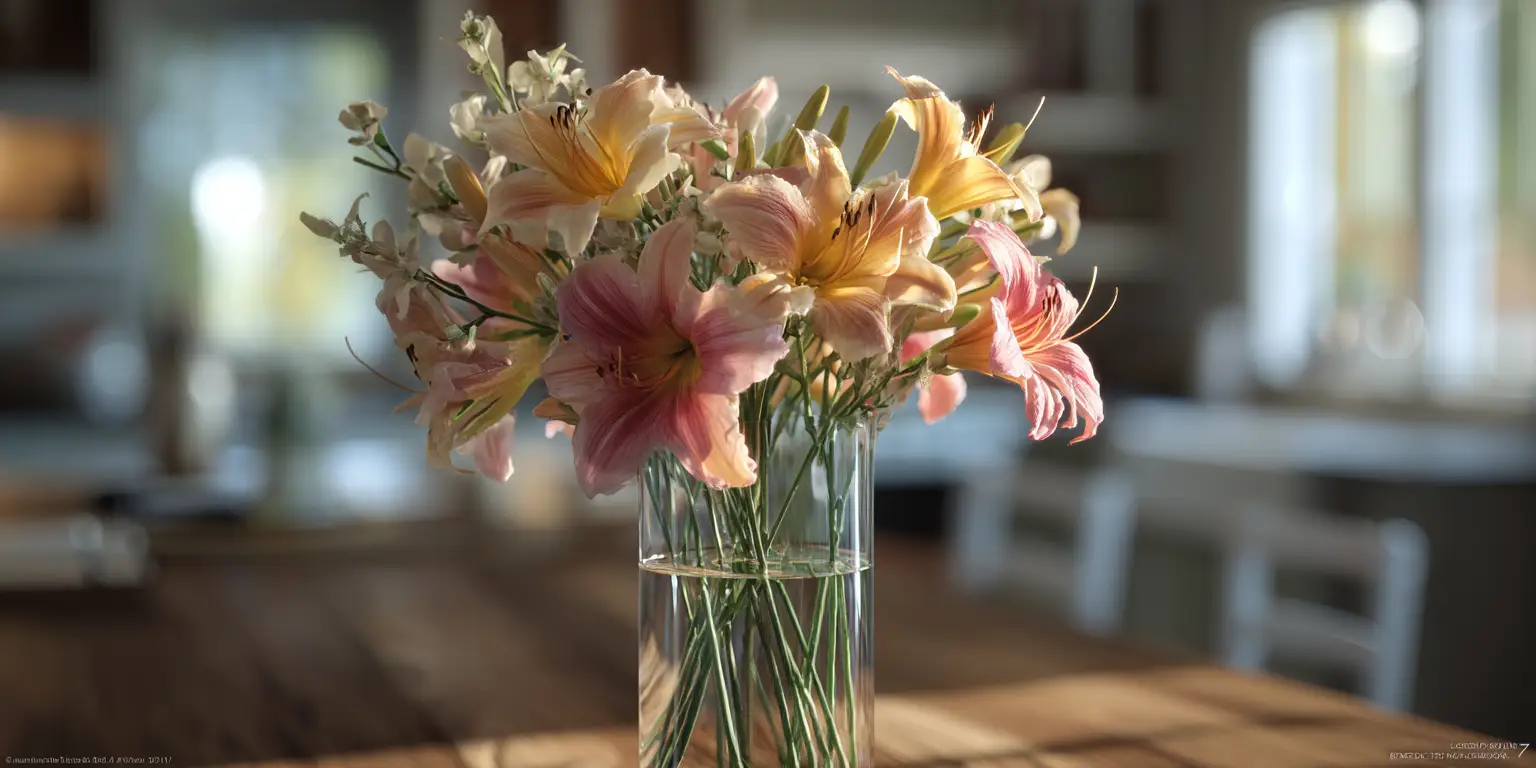
Every part of the plant counts as exposure, including the pollen. A cat does not have to eat a leaf: brushing against an open flower and then grooming pollen off its fur is enough, and so is drinking water from a vase that held the flowers. That is why the household risk splits in two. A clump in an outdoor border is a modest risk, since outdoor cats rarely chew fibrous strap leaves, though a cat that grooms after pushing through the planting is not risk-free. A bouquet on the kitchen counter is a serious risk, and it is where most feline lily emergencies actually begin. A florist bouquet labeled simply "lily" is also far more often a true Lilium, an Asiatic, Oriental, or stargazer, and those are more dangerous still. For a cat household one rule covers both genera: no lilies and no daylilies indoors, and a look through flowers that are safe around cats and dogs before ordering anything for a home with a cat in it.
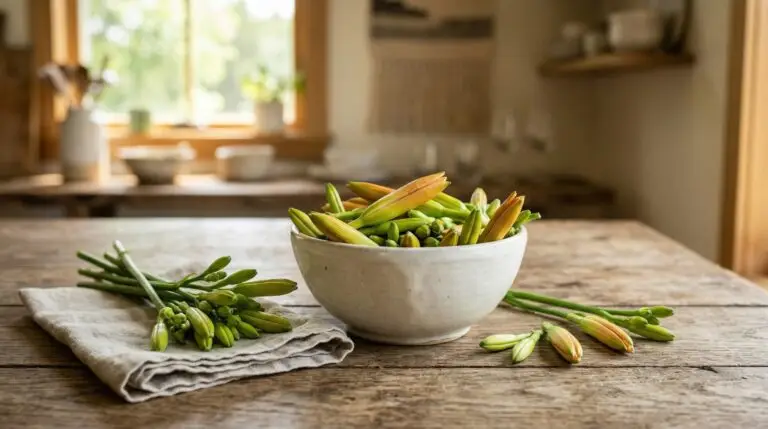
Dogs are a different story: the ASPCA lists daylilies as non-toxic to dogs, and the kidney injury seen in cats does not occur in them, though a large mouthful of any plant material can upset a dog's stomach. Daylily buds are a traditional food in Chinese cooking, sold dried as golden needles, though some people react to them raw.
Three claims worth pinning down
The myth: A plant that can kill a cat cannot also be a human food.
The reality: Both are true of this one at the same time, and they are separate questions rather than contradictory ones. Iowa State Extension states that daylily leaves and flowers are edible, naming young foliage three to five inches long and flower buds at all growth stages, with raw petals tasting of buttered lettuce; NC State records the buds and flowers of Hemerocallis fulva as edible with a sweet-spicy or peppery flavour. Iowa State attaches two cautions of its own: gather only from plants that have not been sprayed with pesticide, and eat in moderation, because daylilies can act as a diuretic.
The myth: About one person in fifty reacts badly to eating them.
The reality: That figure circulates in foraging and herbal writing and was not confirmed against any university or clinical source in this research, so it is reported as community knowledge rather than as a statistic. The sourced caution behind it is narrower: modern ornamental cultivars were bred for the flower rather than tested for eating, unlike the wild species and the old dried-food cultivars used for centuries as golden needles.
The myth: Daylilies are close enough to deer-proof to plant in deer country.
The reality: No university palatability study for daylily specifically turned up in this research, unlike the mule-deer work that ranks tulips, grape hyacinth, crocus, iris and daffodil, so there is no trial to lean on in either direction. What the forum corpus documents is buds and open flowers taken overnight and taken again the next night, with rotated repellents or fencing as the answers people land on.
Vase life
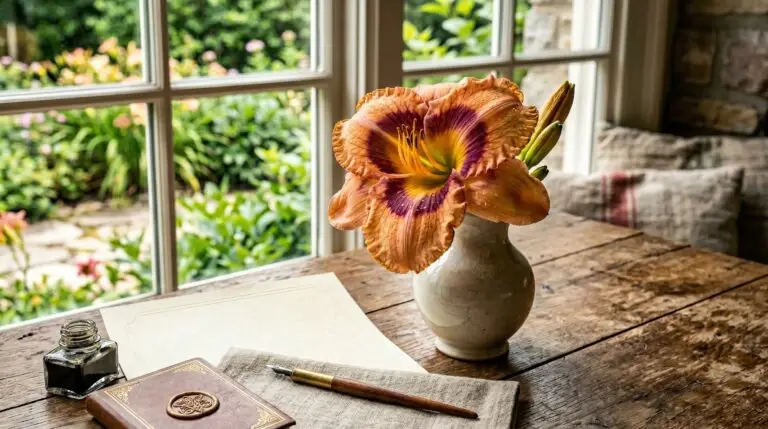
A cut daylily flower dies on the same schedule as one left on the plant, which rules out the conventional bouquet. The technique that works is to cut the scape rather than the flower: choose one carrying several fat buds showing color, cut it at the base in the morning, strip the lower leaves, and stand it in clean cool water. One bud opens each morning for three to five days, and the previous flower gets pinched off before it collapses into a stain. No preservative is needed, and a single tall stem in a narrow vase suits this better than a mixed bouquet. In a home with cats none of it is safe, since the flowers, the pollen shed onto a table, and the vase water are all routes to poisoning.
The numbers behind cutting the scape
The measured daylily numbers are about the plant rather than the vase, so this block gives the bloom economy the cut-the-scape technique rests on, and marks plainly where a measurement does not exist.
A 2019 Cornell study found that deadheaded 'Stella de Oro' produced 27 percent more scapes than untouched controls.
No such study exists. The claim circulates word for word with a consumer gardening article named as its source; that article was read in full and contains no Cornell study, no 27 percent figure and nothing resembling one in its own reference list, which cites New Hampshire, Minnesota, Oregon State, Arkansas and South Dakota instead.
A cut scape opens its second bud on day three, its third on day six and its fourth on day nine.
That schedule traces to a single consumer blog rather than to any trial, and it is not repeated here as a measured result. What is sourced is the sequence itself, which is the whole reason the scape rather than the flower is what gets cut.
Pests and diseases
Daylilies are among the least troubled perennials in cultivation, but several problems that do occur look alike, and the treatment for one does nothing for another.
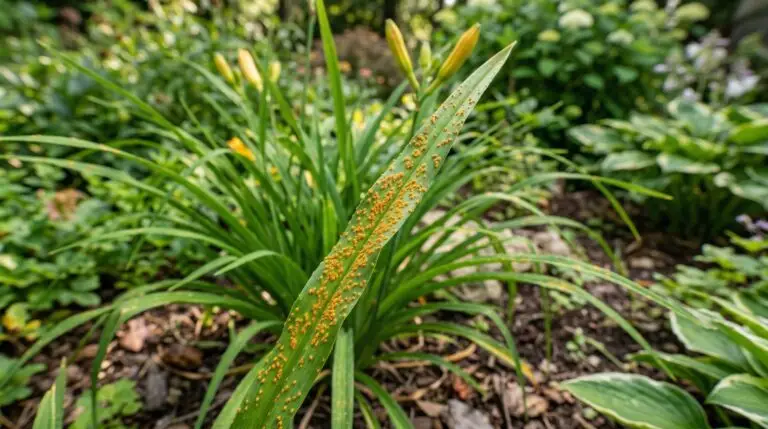
Daylily rust, caused by Puccinia hemerocallidis, shows as yellow-orange pustules on leaf undersides. The definitive test takes two seconds: wipe a leaf underside with a white tissue, and rust leaves orange powder behind while nothing else does. It disfigures foliage and weakens plants but rarely kills a healthy clump. Daylily leaf streak, caused by Aureobasidium microstictum, is the disease it gets confused with: a yellow streak along the midrib and browning from the tip, with nothing that rubs off. Leaf streak overwinters on dead foliage rather than on the living plant, so fall cleanup does more against it than any spray, and extension trials have identified cultivars resistant to both.
Spring sickness is the third look-alike. New growth emerges distorted and lopsided, and sometimes the central leaves of a fan wilt and pull away rotten at the base. The cause has never been established; bulb mites and the leaf streak fungus have both been implicated, and the damage begins underground before growth emerges, which rules out late frost. Crown rot announces itself differently, following waterlogged soil in hot weather: the crown turns soft, the fans pull away with no resistance, and there is a strong smell that no leaf disease produces.
The daylily gall midge is the most distinctive insect problem, a regional one in Britain and the Pacific Northwest: affected buds swell into short fat shapes that never open. Later-flowering cultivars often escape it. Deer do more damage than any insect, rated as frequent browsers of the genus, stripping buds and open flowers overnight and returning as long as new buds keep coming, which leaves a rotated repellent program or fencing as the only dependable answer. There is more in the guide to daylily rust and the other problems to watch for.
| What you see | Most likely cause | The tell that confirms it | What to do |
|---|---|---|---|
| Orange-yellow specks, mostly on leaf undersides | Daylily rust | Orange powder rubs off onto a white tissue | Remove worst foliage, water at the base, replace repeatedly infected cultivars with resistant ones |
| Yellow streak along the midrib, browning from the tip down | Daylily leaf streak | Streaks follow the vein and nothing rubs off | Clear and destroy all old foliage in fall, widen spacing, avoid overhead water |
| Spring growth twisted, one-sided, ragged and holed | Spring sickness | Only the earliest growth is affected; later leaves emerge normal | Nothing to treat; cut away the worst fans and let the clump grow out of it |
| Buds swollen, short and fat, never opening | Daylily gall midge | Tiny translucent maggots inside a split bud | Pick and destroy affected buds, do not compost them; favor later-blooming cultivars |
| Fans pull away easily, crown soft, bad smell | Crown or soft rot | The smell; no leaf disease produces one | Dig out and discard affected crowns, improve drainage before replanting |
| Leaf tips brown and dry in midsummer, plant otherwise fine | Drought or normal aging of old foliage | Damage starts at the tip and the crown is firm | Trim for appearance, water more deeply while scapes and buds are forming |
Photo pairs for the daylily look-alikes
The normal-biology pairs carry photographs on both sides. The disease pairs do not: rust pustules, leaf-streak flecking, mite stippling and the swollen gall-midge bud are checkable fingerprints, so the healthy side of each is shown and the damage side waits for a real reference photograph.
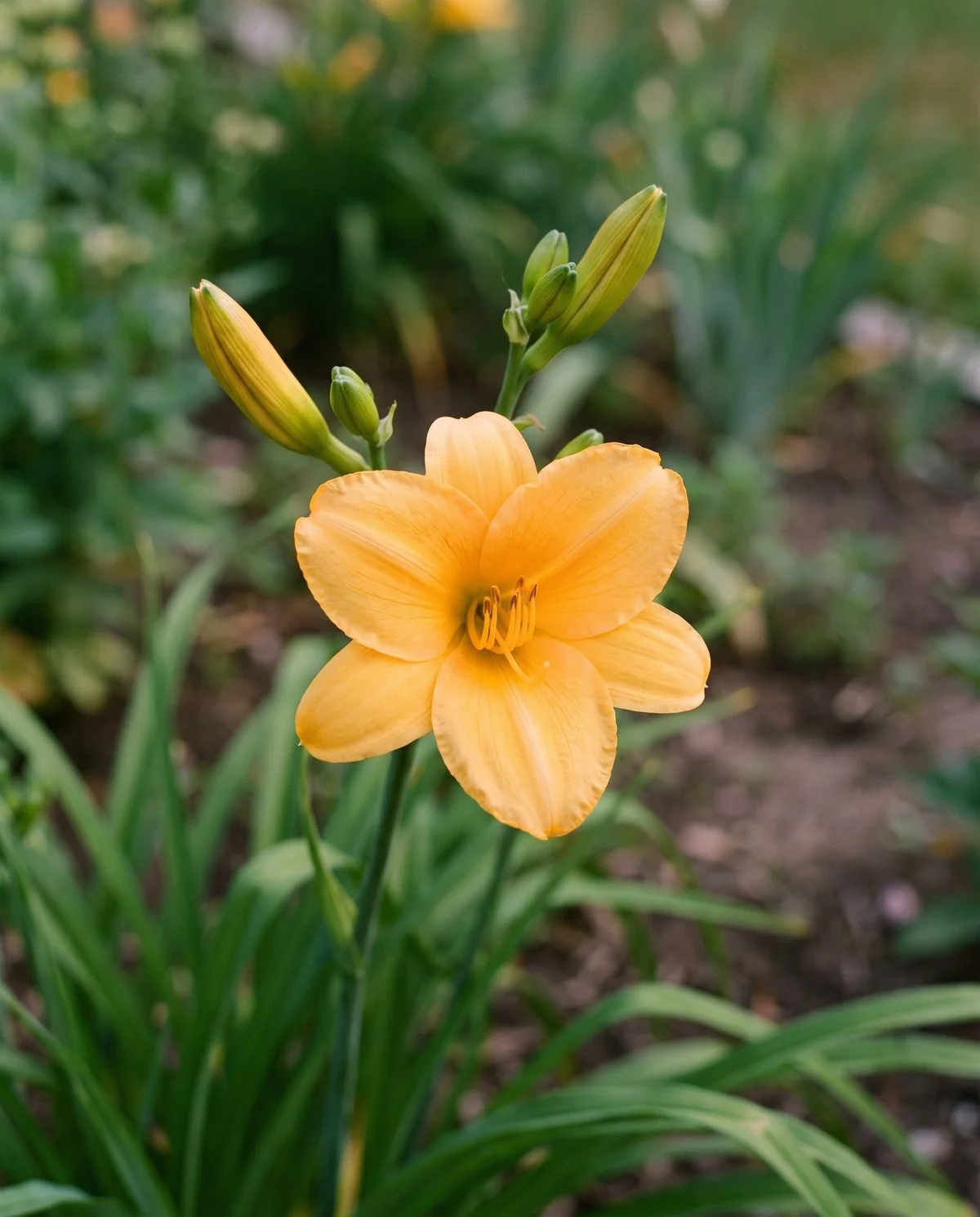
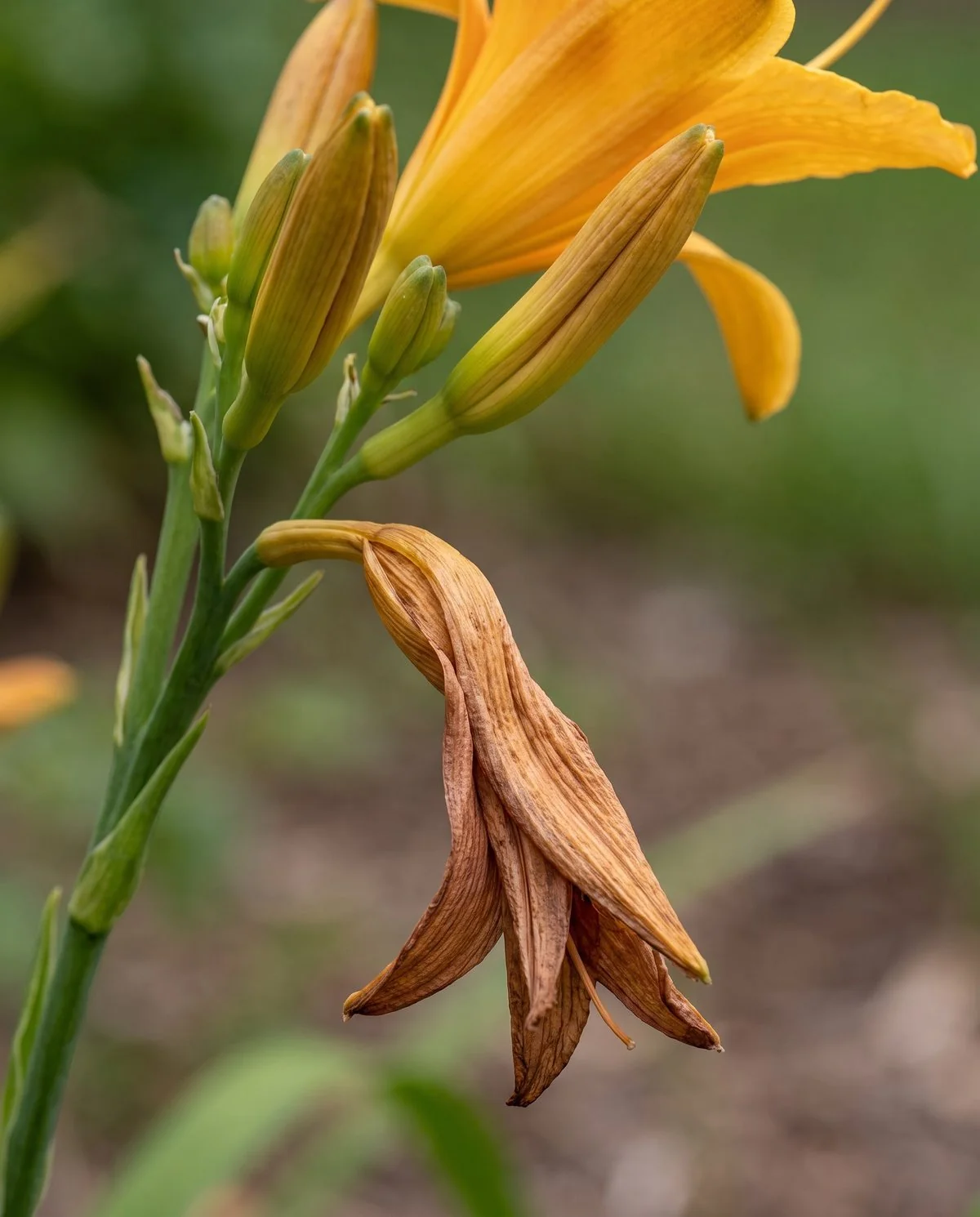
Nothing on the flower separates these, which is the point: a spent daylily simply closes and browns evenly across the whole flower, with no spots, no streaks and no distortion, while the scape beside it carries the next buds. Damage differs by pattern rather than by lifespan, showing as a bud already swollen or distorted, streaking carried up from the foliage, or silvery stippling on a flower that has not yet reached its own close.
Texture, before the rub test. Leaf streak starts as yellowing along the midvein, often from the tip downward, then adds dead tissue and small reddish-brown flecks, and its fruiting bodies are hard to see even with a hand lens; rust adds raised pustules on either surface, especially the underside, yellow-orange to reddish brown, shedding abundant spores that rub off. University of Illinois Extension records rust arriving in the United States in 2000 with new infections appearing in two to three days on susceptible cultivars, and Iowa State adds that it struggles to survive Midwest winters while the Southeast fights it every year. Neither side is photographed here.
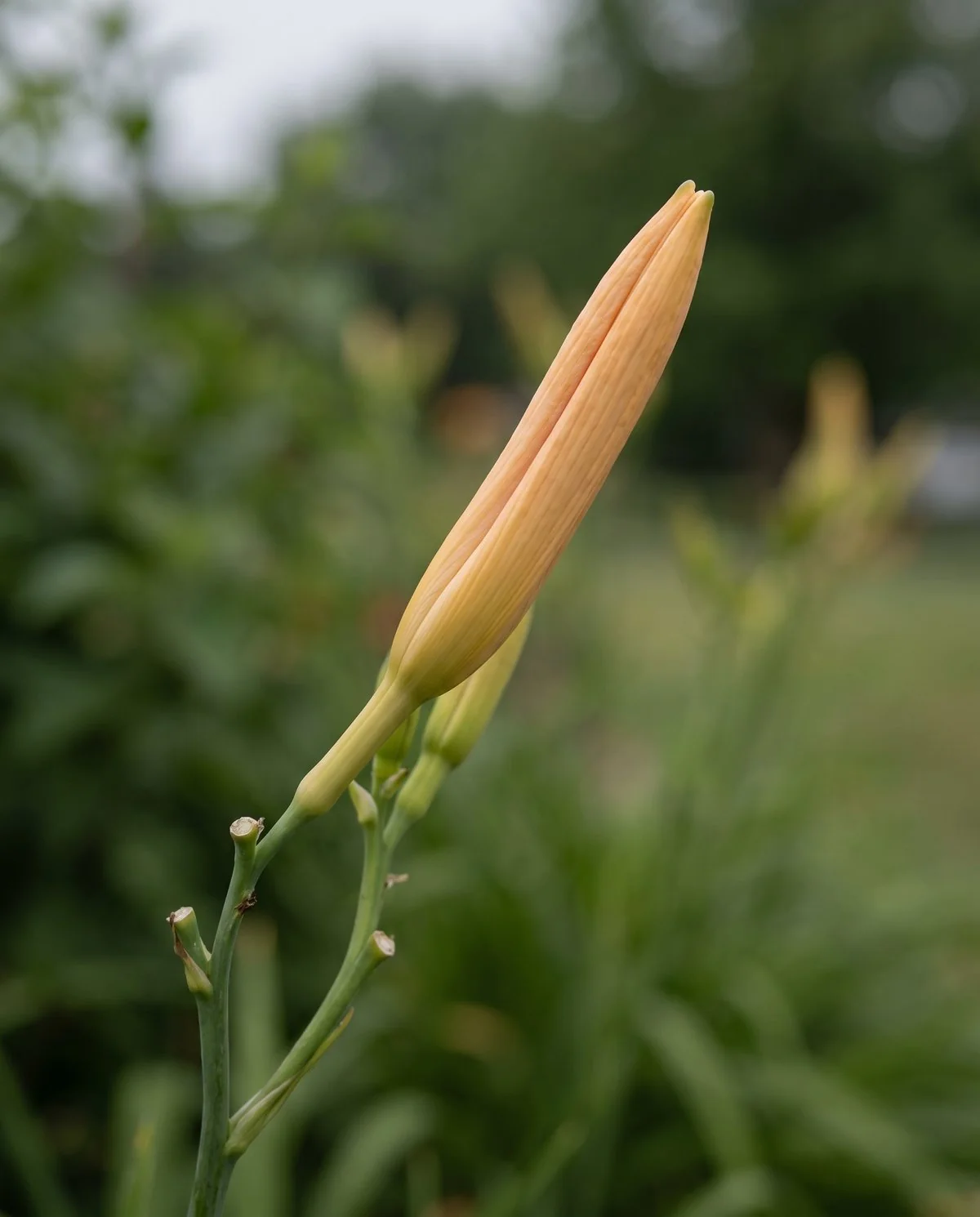
Open one bud, then check the map. Washington State University records up to 300 legless maggots feeding inside a single flower bud, and Oregon State adds that the flowers that do open often have crinkled petal edges. Range narrows it hard: the two sources that map it put confirmed North American gall midge in British Columbia and Washington State, with Oregon on alert. Thrips are the confusion, winged rather than maggot-like and leaving silvery speckling on flowers instead of swelling the bud. Only the healthy bud is photographed.
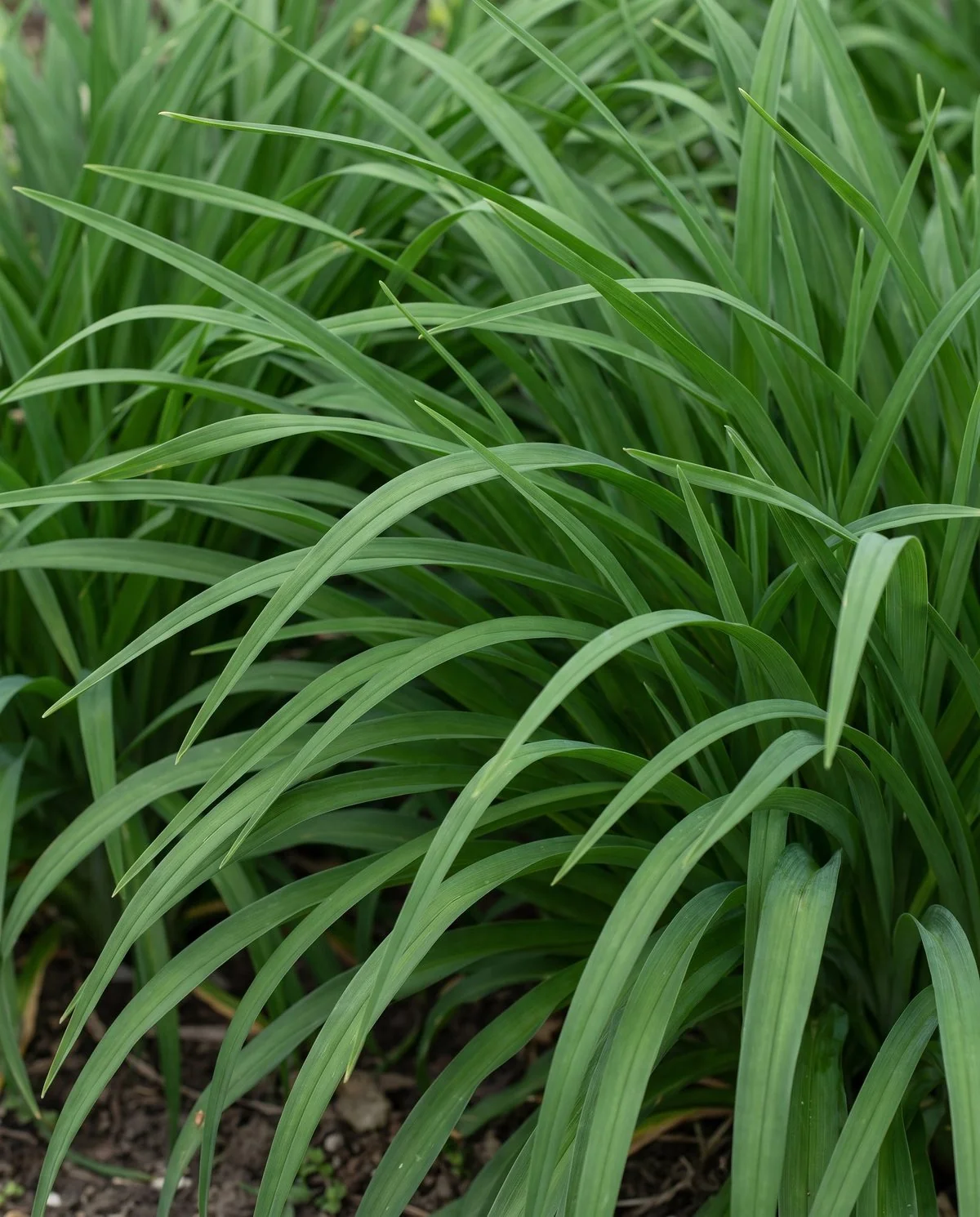
The pattern rather than the webbing. Clemson puts the two-spotted spider mite at under a fiftieth of an inch, and its feeding empties individual cells so the upper surface stipples pale, running to bleached dead tissue as numbers build. Oregon State's general guidance is that visible webbing is a late sign rather than an early one, so stippling with no webbing is already worth acting on. Only the clean side is photographed.
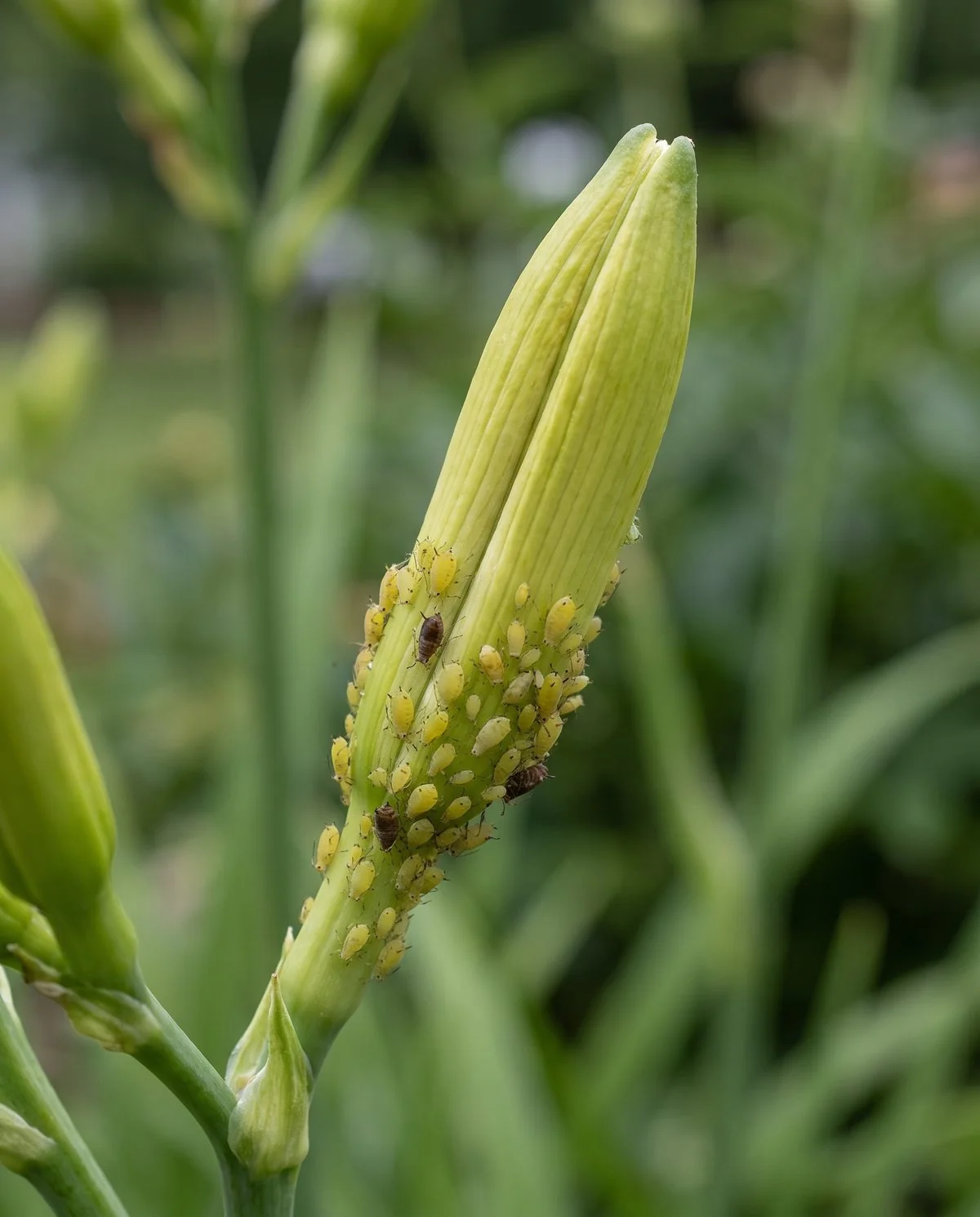
Colour and company. Clemson describes daylily aphids as soft-bodied and anywhere from yellow-green to almost black, clustering at the bud, with sooty mold following on their honeydew where numbers are high. A clean bud is smooth and uniformly coloured with nothing at the seam. The warty bud deformity heavy aphid feeding can cause is left unphotographed here, since that texture is a diagnostic detail rather than an illustration.
What daylily owners actually ask about, ranked by frequency
915 posts, deduplicated by permalink, from r/gardening, r/plantclinic and the entire post history of r/daylilies. The headline is the shape of that corpus rather than any single row: roughly seventy percent of it is photographs and admiration rather than problems, which is why every percentage here is small in absolute terms. University sources describe the same plant the same way, University of Illinois Extension calling daylilies easy to grow and relatively pest free. Themes overlap and do not add to 100.
Which plant it actually is. This theme is about Hemerocallis fulva, the roadside species NC State's plant database tags weedy and spreading and records naturalizing especially at older homesites, rather than about the named hybrids, which thicken at the crown instead of running.
What is missing. Buds and open flowers taken overnight, with the foliage largely intact, is a browser working from above; fans that topple over a tunnelled bed with nothing chewed at the top is something working underneath.
The age of the clump against the interval for its type: three to five years for most cultivars per University of Minnesota Extension, and every two to three years for rebloomers per University of Illinois Extension, because on a rebloomer it is the new rhizomes that carry the extra flush.
Whether the plant was divided or newly planted within the last two seasons. Iowa State Extension states that divided plants usually do not bloom well for one or two years, so healthy foliage carrying few scapes may simply be inside that window.
The surface texture before anything else. Leaf streak begins as yellowing along the midvein, often from the tip and moving down, then adds necrotic tissue and small reddish-brown flecks, and it raises no pustules at all; rust raises pustules on either leaf surface that shed abundant spores when touched.
Drainage before any spray. SDSU Extension names root rot as a problem of poorly drained soil specifically, and the fans of a rotting crown pull away with no resistance while a leaf disease leaves them anchored.
The bud surface. Clemson describes aphids as soft-bodied and yellow-green to almost black, producing deformed leaves, warty flower bud growths and sooty mold on their honeydew; University of Minnesota Extension treats them as a minor problem answered by insecticidal soap or a repeated strong spray of water.
Whether the plant in the photograph is a daylily at all. Two posts in this corpus are asking exactly that from an emergency veterinary waiting room, which is why identification matters here beyond curiosity.
Where the growth is coming from. A plantlet on the scape is a proliferation, an exact copy of the parent that some hobbyists actively seek cultivars for, rather than a pest or a disease.
The buds further up the scape rather than the flower that just collapsed. Every source in this research agrees each flower lasts a day; the corpus produced a single post asking about it, which measures how rarely people post about normal biology rather than how rarely they wonder about it.
The vocabulary rather than the plant. Clemson, Illinois and Washington State all name these as real daylily problems, and dedicated searches of this corpus returned no clearly matching post for any of them, most likely because people write bugs and something is eating it.
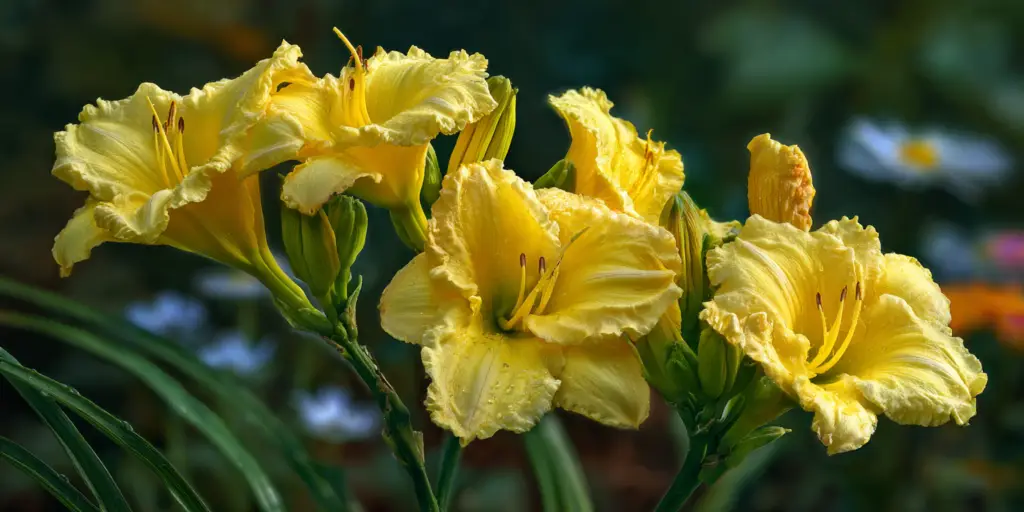
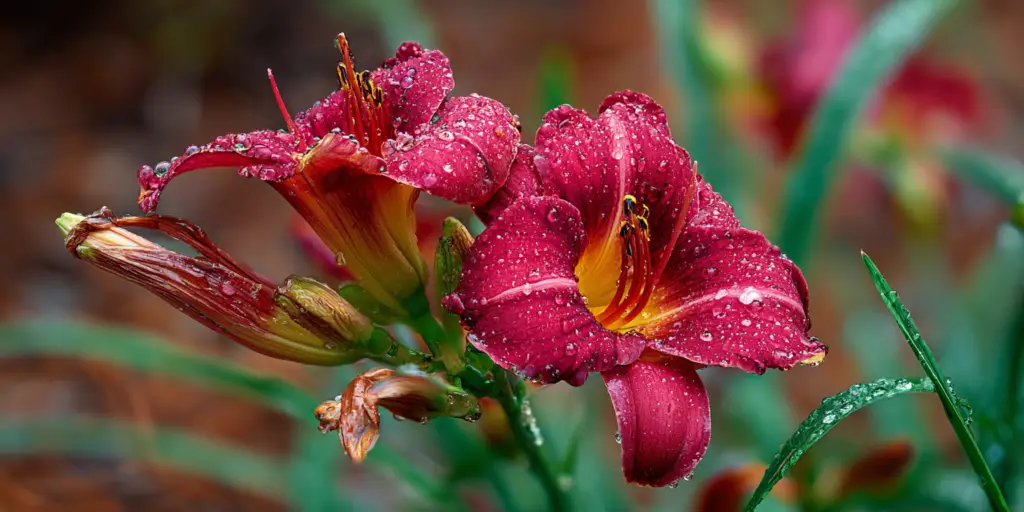
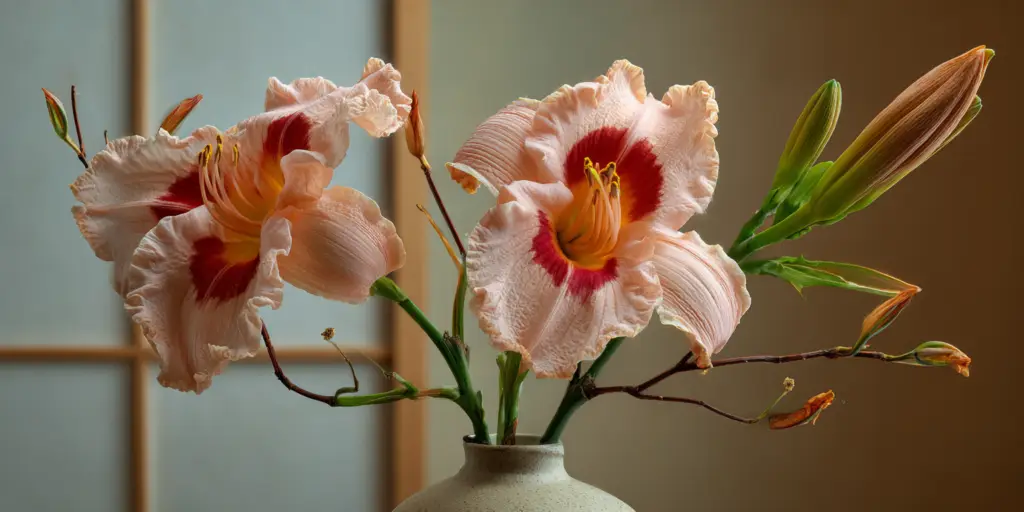
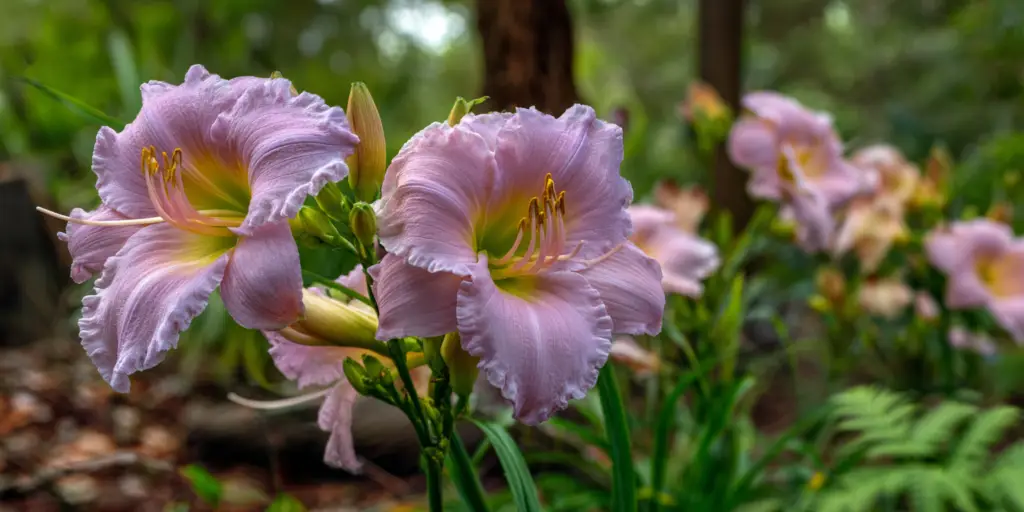
Flower photos

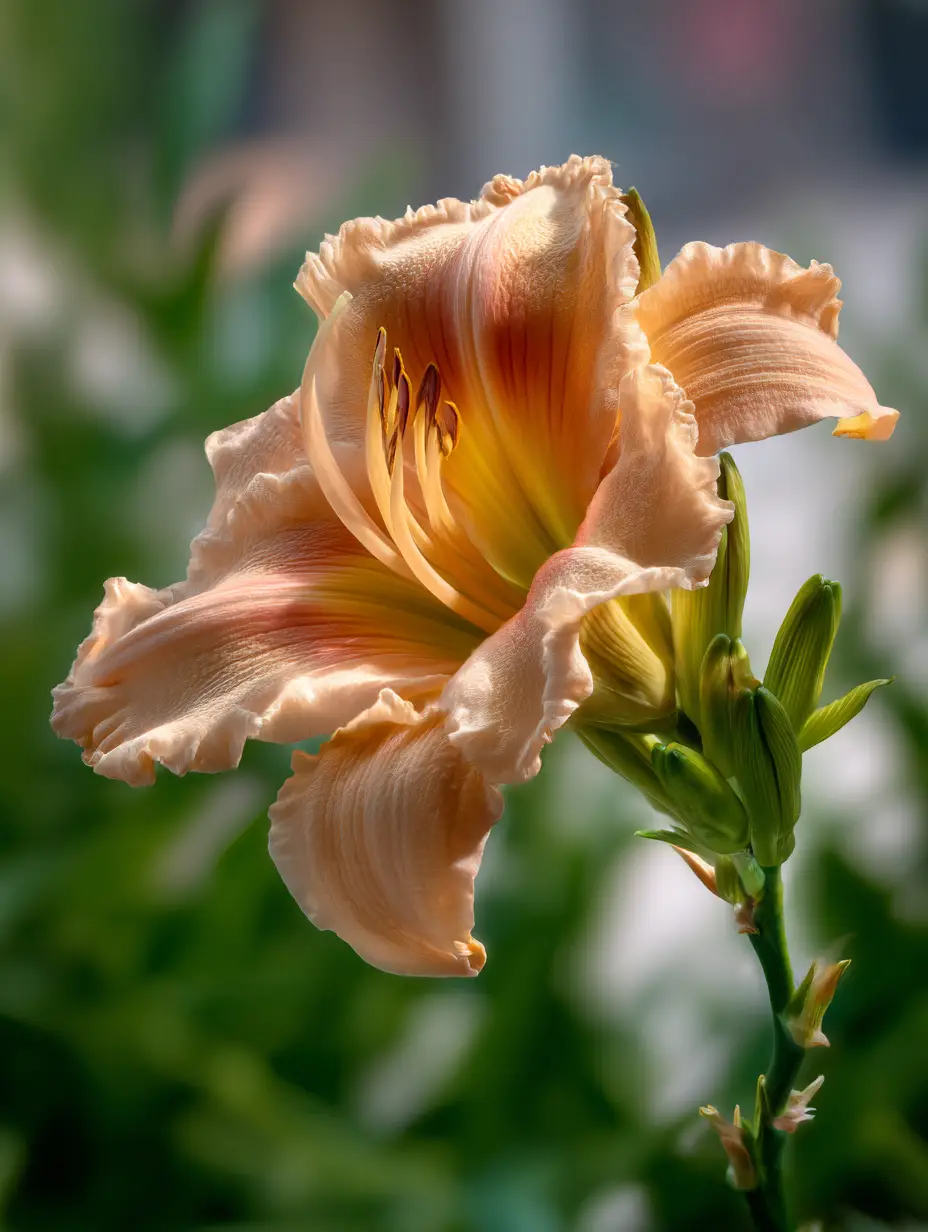

FAQ
Are daylilies poisonous to cats and dogs?
Daylilies are toxic to cats and can cause acute kidney failure. The ASPCA lists Hemerocallis species as toxic to cats, reporting vomiting, appetite loss, lethargy, kidney failure and death, and lists the same plants as non-toxic to dogs. All parts count, including pollen groomed off fur and water from a vase that held the flowers. Treatment works when it starts within hours rather than days, so a suspected exposure means calling a veterinarian or a pet poison control line at once. Keep daylilies out of any house with a cat in it.
What is the difference between a daylily and a true lily?
A true lily is Lilium: a scaly bulb, one leafy stem, flowers at the top, each lasting a week or more. A daylily is Hemerocallis: a fibrous crown, fans of strap-like leaves, leafless flower stalks, each flower lasting a day. They are not even in the same family, since true lilies sit in Liliaceae and daylilies in Asphodelaceae. Both are dangerous to cats, and how daylilies and true lilies differ covers what to check at a garden center.
Do daylily flowers really last only one day?
Yes, and it cannot be prevented. The display comes from the scape, a branched stalk whose buds open in succession over weeks. Cultivars registered as extended hold each flower open at least sixteen hours, and nocturnal types stay open through the next day.
Which daylilies rebloom, and can I trust the label?
'Stella de Oro' and 'Happy Returns' are the best known. Treat the label as a probability, since rebloom is registered from the hybridizer's garden and depends on climate, season length, and clump maturity. Bud count and branching predict weeks of color more reliably.
Why is my daylily not blooming?
Too little light is the most common cause, arriving gradually as nearby trees grow. Crowding comes next: a clump left undivided beyond three to five years puts up fewer scapes. High-nitrogen fertilizer, a crown planted deeper than an inch, and drought while scapes form each suppress bloom on their own. A recently planted division often needs a full year to settle before it flowers well, and buds that disappear instead of opening usually mean deer or other browsing.
When and how do I divide daylilies?
In early spring as growth starts, or in late summer with about six weeks left before the ground freezes. Lift the clump with a fork, wash off enough soil to see the crowns, separate the fans, and replant each two or three fan division with the crown an inch under.
Are daylilies invasive, and is the orange one along the road the same plant?
The orange roadside plant is Hemerocallis fulva, the ditch lily, genuinely invasive in parts of North America, spreading by rhizome into mats that crowd out native plants. Named garden hybrids expand slowly at the crown and stay put.
Will deer eat daylilies?
Yes, enthusiastically, taking the buds and open flowers first and returning night after night. No daylily is deer-proof. Rotating repellent products so the animals do not habituate, or fencing, are the only dependable defenses.
How do I propagate or divide daylilies?
Most gardeners make new plants by dividing a clump in early spring or after flowering in late summer. Lift the clump, shake off soil, and split it into smaller pieces, each with a few fans of leaves and a portion of crown with roots. Replant at the same depth and water well. Divisions may take a season to settle in, then bloom strongly again. Growing from seed is possible, but seedlings take longer to flower and often do not match the parent.
Can daylilies grow in shade?
They will grow in partial shade, but fewer flowers is the trade-off. A spot with at least half a day of sun usually gives decent bloom, especially with morning sun. In heavy shade, plants often stay leafy and bloom very little. If shade is unavoidable, choose tolerant varieties and expect a lighter show.
I divided them last year and they have barely bloomed. Did I do it wrong?
Probably not. Iowa State Extension states plainly that divided plants usually do not bloom well for one or two years after the split, and Kansas State puts prime flower production at about the third year, so a light season on healthy foliage is the expected recovery rather than a sign of damage.
What is the real difference between a diploid and a tetraploid, and does it matter which I buy?
Diploids carry 22 chromosomes and tetraploids 44, which University of Arkansas Extension calls twice the normal somatic number for the species, and the practical consequences it names are larger and thicker leaves and flowers, stronger flower scapes, more intense coloration and increased vigour. Every winner of the American Daylily Society's top annual award since 1996 has been a tetraploid. Diploids remain the deeper pool for spider and double forms, per the Society's own FAQ, and the two levels cannot be crossed with each other. One honest gap: no university or Society page in this research explains how a buyer is supposed to tell which is which at the point of sale.
Which cultivars actually get rust?
A University of Illinois Extension newsletter named ten susceptible cultivars by name: Attribution, Pardon Me, Gertrude Condon, Crystal Tide, Colonel Scarborough, Starstruck, Joan Senior, Imperial Guard, Double Buttercup and Stella D'Oro. Geography matters as much as the name: Iowa State Extension notes that after its arrival rust exploded nationally but does not appear to survive Midwest winters, while nurseries and hobbyists in the southeastern United States still struggle with it every year.
Is daylily gall midge something I need to worry about?
Almost certainly not, unless you garden in the Pacific Northwest. The two sources that map its North American range put it in British Columbia, on the Lower Mainland, Bowen Island and Vancouver Island, and in Washington State, first found there in 2007, with Oregon State naming Whatcom, the Skagit Valley, Bellevue, Everett, Granite Falls and the Puget Sound area, and Oregon itself described as on alert. A widely repeated claim that it had reached Maine, Ontario and Nova Scotia was checked against three candidate sources in this research and could not be supported by any of them.
My plants arrived from a reputable seller with leaf streak already on them. Is that normal?
It happens, and it is worth knowing which disease travelled. Leaf streak overwinters on dead foliage, so a fall cleanup does more against it than a spray does. Rust is the one that moves on shipped plants: University of Illinois Extension records it arriving in the United States in 2000 and new infections appearing within two to three days on susceptible cultivars, and Iowa State notes the southeastern trade still fights it while it fails to overwinter in the Midwest.
Interesting tips
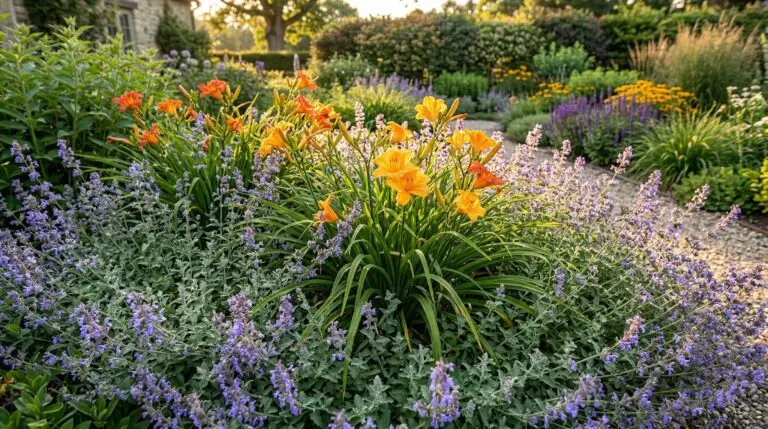
The most useful habit at the point of purchase is to read the registration rather than the sales tag, since bud count, branching, bloom season class, and the diurnal, nocturnal, or extended code all predict the garden result better than a photograph does, and buying in bloom at a specialist nursery settles the rest by eye. Once home, the placement trick that earns daylilies their spot in mixed borders is to set them in front of tulips and daffodils, where the arching new fans rise exactly as the bulb foliage yellows and hide the mess without anything being cut down early.
- Many gardeners are surprised that daylily buds and flowers are edible. In Chinese cooking, dried buds, often called "golden needles," are used in soups and stir-fries for their mild flavor and texture. Fresh blooms are sometimes battered and fried as a seasonal treat. Only taste flowers you can identify and that have not been treated with pesticides.
- The orange daylily you see along roadsides is often Hemerocallis fulva, commonly called the "ditch lily." It was brought to North America as a hardy garden plant and later naturalized. It tolerates poor soil, roadside salt, and competition from weeds, and it still blooms reliably year after year.
- Modern reblooming daylilies changed how people use the plant in borders. A famous example is the dwarf cultivar "Stella de Oro," introduced in the 1970s, which can keep producing flowers through much of summer. Its compact size also works well along edges and in containers.
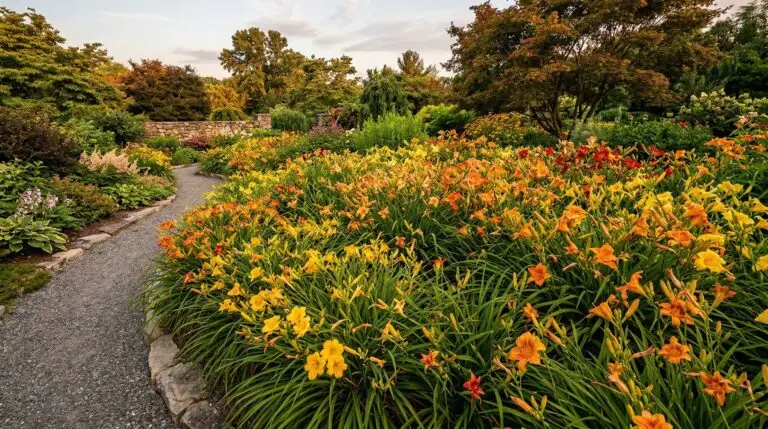
- Daylilies mix well with spring bloomers. Plant them in front of tulips or daffodils so the daylily leaves cover fading bulb foliage as summer starts. They also look good near lilacs or forsythia, taking over when those shrubs finish their spring show. This kind of layering keeps a bed looking full across the season.
- A few daylilies open in the evening instead of the morning. Night bloomers such as Hemerocallis citrina unfurl pale yellow flowers at dusk and often smell sweetest after dark. They can be a fun choice near a patio or window where you spend summer evenings.
- Because most daylilies have a peak bloom window, pairing them with longer-blooming plants helps keep the bed colorful later. Zinnias, black-eyed Susans, and purple coneflowers can carry the display into late summer and fall, while daylilies provide early to mid-summer punch. The mix also adds contrast between daisy-shaped flowers and the trumpet form of daylily blooms.
Related Guides & Flowers

Iris
Sword like foliage and bold blooms, a great companion plant with a similar garden role and season overlap.
Crocosmia
Arching strap leaves and summer spikes, pairs well with daylilies in sunny borders.
Tiger Lilies
A true lily look for readers comparing daylilies vs lilies, with similarly dramatic flowers.
Canna Lily
Big tropical style foliage and bold color for the same hot summer, full sun vibe.
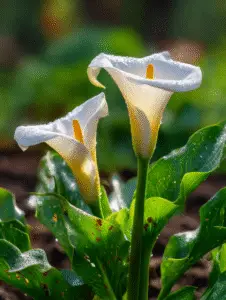
Calla Lily
Elegant lily like form for bouquets and landscape contrast, useful for readers planning floral style.
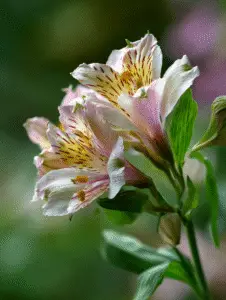
Alstroemeria
Lily like blooms used in cut flowers, good for readers who want a similar bouquet effect with different care.
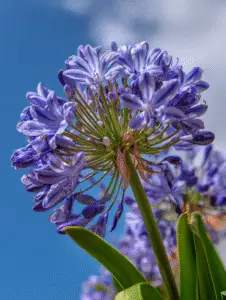
Agapanthus
Strappy leaves plus globe flower heads, similar structure in borders and containers.
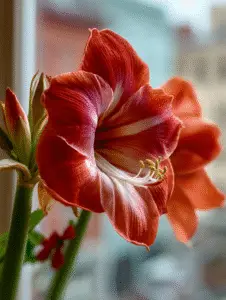
Amaryllis
Bulb flower interest for readers exploring bulb care and dramatic trumpet blooms.
References
- North Carolina State University Extension Gardener Plant Toolbox, HemerocallisNotes key plant facts and includes a warning that these plants are toxic to cats.
- University of Minnesota Extension, DayliliesPractical growing overview and general plant behavior in gardens.
- Iowa State University Extension and Outreach, Understanding DayliliesBackground on daylilies and why each bloom lasts one day, plus basic context for gardeners.
- UC Davis School of Veterinary Medicine, Lily Toxicity in CatsExplains lily risks for cats and explicitly includes daylilies in the warning.
- Invasive Species Information, Orange Daylily Hemerocallis fulvaNoncommercial extension resource on invasive behavior and identification.
Enjoying our flower guides? Add YourFlowersGuide as a preferred source on Google. It helps more readers find us.
Add to Preferred Sources