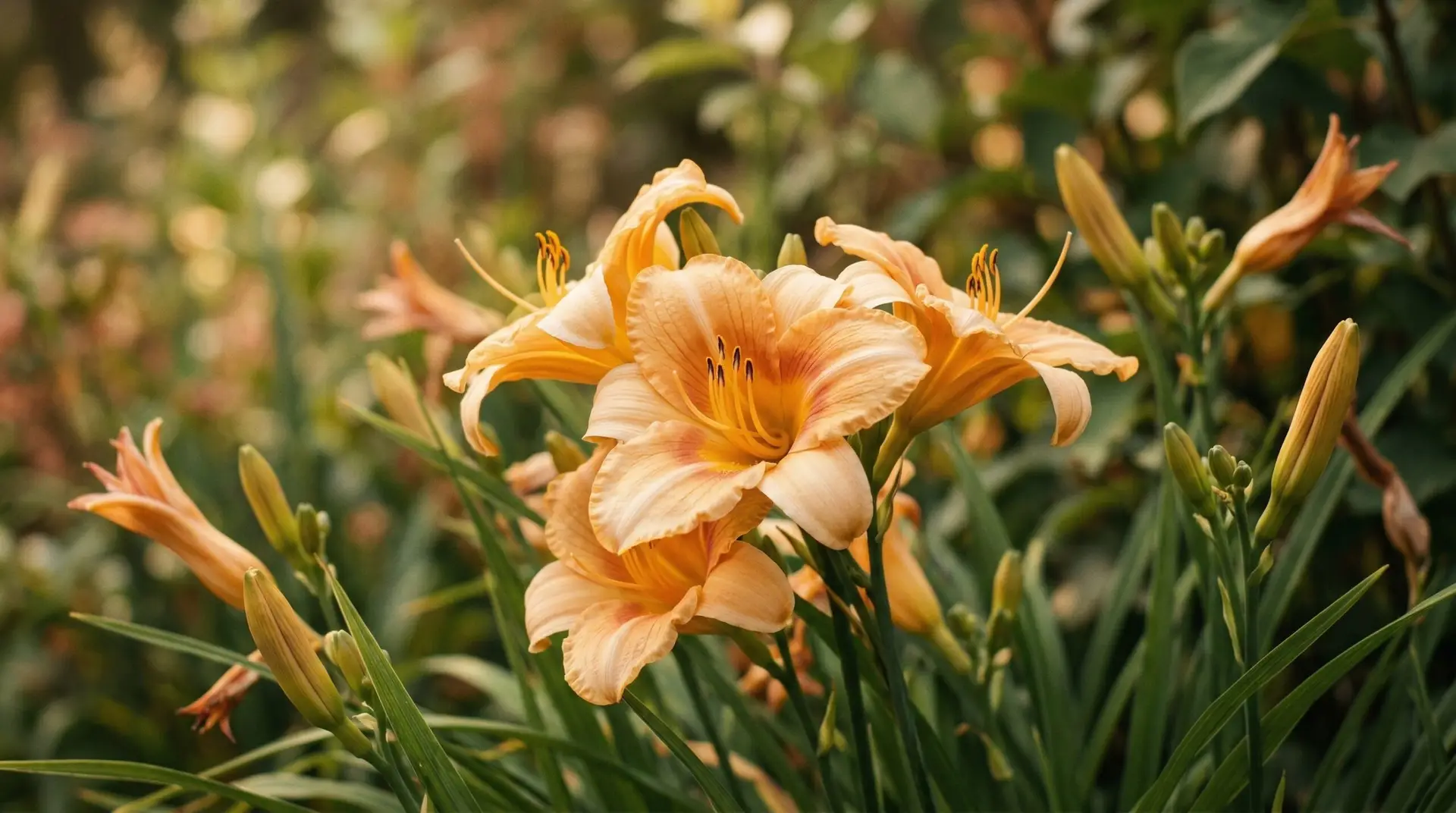
The garden wakes up slowly, but the daylily is already at work before the sun fully clears the horizon. Its petals unfurl in the cool morning dew, stretching outward to catch the first light. This precise moment is the beginning of a very short clock, as the botanical name Hemerocallis tells us everything we need to know about its life. The Swedish botanist Carl Linnaeus combined the Greek words hemera, meaning day, and kallos, meaning beauty, to capture the whole existence of this plant. A single blossom lives for exactly one day, opening at dawn and withering by dusk. There is no second act for that specific flower, no lingering through a weekend rainstorm or holding on for a few extra days in a vase on the kitchen table. The daylily meaning is entirely bound up in this brief, singular performance. It asks the gardener to pay attention right now, because the bloom they see today will be entirely gone by tomorrow morning.
Contents 4 sections
A mother’s flower from the ancient East
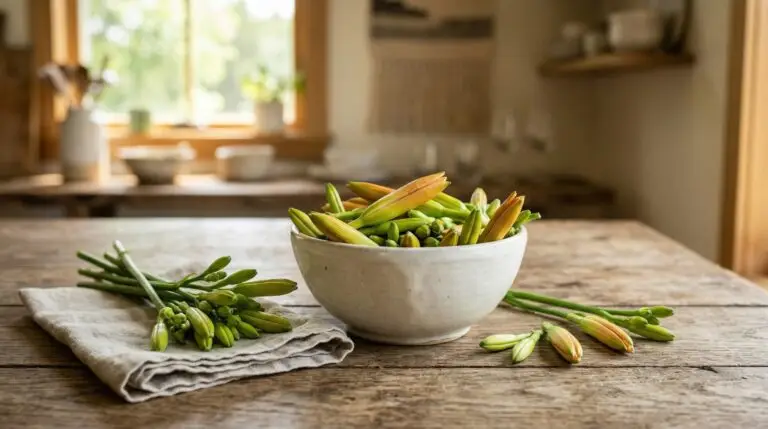
Long before these plants lined American driveways and summer borders, they grew wild across the hillsides of Asia. In ancient China, the daylily was cultivated as a crop of both medicine and sustenance, with the unopened buds harvested and dried for warm soups. The Chinese called it the forget-sorrow plant, rooted in a belief that eating the flowers could ease a troubled mind and erase the heavy burdens of grief. Over centuries, this practical use evolved into a deep cultural tradition where the daylily became the official flower of motherhood. Sons and daughters would plant them in the courtyard of their mother’s home before leaving on long journeys, hoping the bright blossoms would distract her from the pain of their absence. It is easy to confuse this plant with the true lily, which carries its own heavy weight of royal and religious history. The daylily, however, grows from thick, fleshy roots rather than scaly bulbs, making it a rugged survivor that can withstand drought, poor soil, and neglect. When European merchants finally brought the roots westward along the trade routes in the sixteenth century, they carried both the hardy plant and its quiet associations of maternal love and resilience.
Reading the language of summer colors
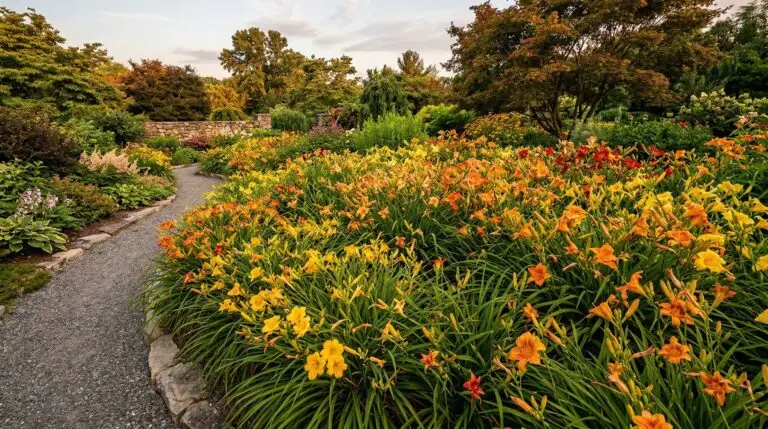
The original plants that made their way to early American settlements were mostly the common orange daylily, often seen growing wild in ditches and along old property lines. That familiar orange blossom carries a daylily symbolism tied directly to courage and unyielding endurance, persisting for decades around abandoned farmhouses long after the gardeners have gone. As horticulturalists began crossing different species in the twentieth century, the daylily flower language expanded to match a new spectrum of colors. Yellow blooms arrived in the garden to communicate joy and the bright energy of midsummer, often given as gifts to celebrate new beginnings or to lift a neighbor’s spirits. Red daylilies emerged from the breeding programs to convey deep passion and romantic devotion, a sturdier alternative to delicate hothouse flowers. Purple varieties, with their dark throats and ruffled edges, took on the meaning of nobility and quiet dignity. Gardeners began mixing these colors in long, sweeping beds, creating a daily rotation of messages that changed depending on which specific buds decided to open that morning. The meaning of hemerocallis shifted from a simple story of survival to a complex expression of human emotion, all written in petals that would barely last the afternoon.
The philosophy of a fleeting blossom
By late afternoon, the heat of the summer sun begins to take its toll on the open blooms. The petals that were crisp and rigid at breakfast time start to soften, curling slightly at the edges as the day’s energy is spent. There is a specific kind of melancholy in watching a daylily fade, but it also carries a profound philosophical lesson about accepting the temporary nature of beautiful things. We are conditioned to want our flowers to last as long as possible, to preserve them in water and keep them fresh against the natural progression of time. The daylily refuses to cooperate with this human desire for permanence, demanding instead that we appreciate it entirely in the present tense. This short lifespan shares a philosophical space with morning glories, another plant that tightly controls the hours we are allowed to witness its color. Instead of mourning the withered bloom, the gardener learns to see the fading flower as a completed task, a perfect circle of life executed in a single rotation of the earth. The plant pours all its resources into one brilliant display, holding nothing back for tomorrow, which is perhaps the most powerful daylily meaning of all.
The promise of tomorrow’s garden
Evening falls over the garden, and the day’s blossoms finally collapse into damp, twisted ribbons of color. A dedicated gardener will often walk the paths at dusk, gently snapping off these spent flowers in a practice called deadheading, clearing the way for the next generation. Beneath every withered bloom sits a long green stalk, called a scape, loaded with a dozen or more tightly closed buds waiting in a neat, organized queue. This is the true magic of the daylily and the reason its fleeting nature never feels like a loss. The plant does not give us one day of beauty; it gives us a continuous, rolling sequence of single days stretching out for weeks on end. When you stand in your own garden tomorrow morning, a completely new set of flowers will be waiting to greet the sun. They will carry the exact same history, the same maternal devotion, and the same brief brilliance as the ones that came before them, ready to start the clock all over again.
More About Daylily
Growing daylilies in containers for small spaces and apartment balcony gardens
Daylilies versus true lilies and understanding the differences that matter for your garden
Best reblooming daylily varieties that flower from June through September
How to divide overgrown daylily clumps for healthier plants and more blooms
Collecting daylilies and the world of hybridizing with over 90000 named varieties
Using daylilies for erosion control on slopes and banks where nothing else grows
Edible daylilies from garden to plate and how to cook with hemerocallis flowers
Daylily rust and other common problems and how to keep your plants healthy
Companion plants for daylilies: what to grow, what to avoid
Enjoying our flower guides? Add YourFlowersGuide as a preferred source on Google. It helps more readers find us.
Add to Preferred Sources