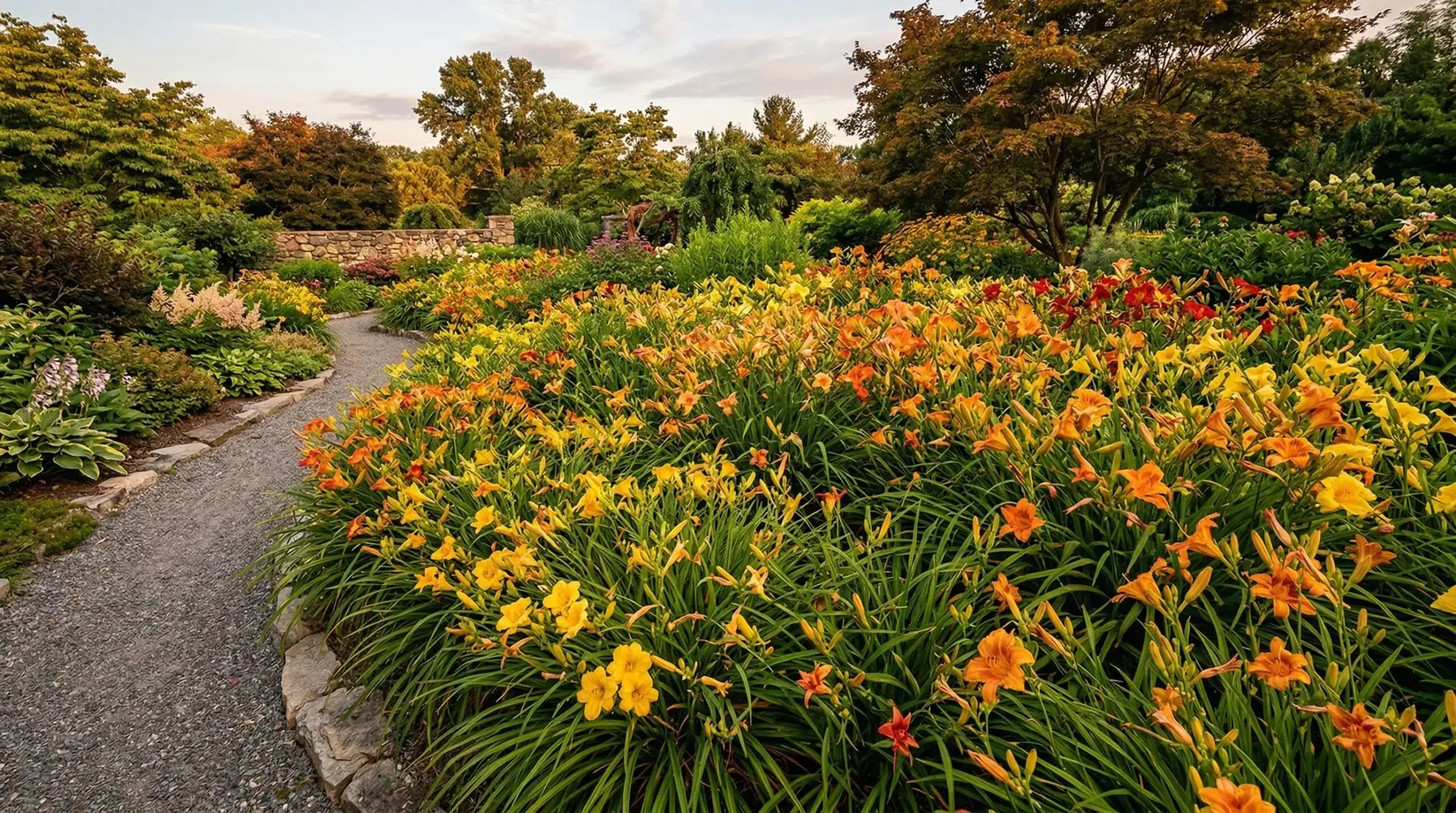
Daylilies are incredibly resilient perennials that can thrive in a garden for decades with minimal intervention. Over time, a single plant will multiply by producing new shoots right next to the original stem, creating a dense cluster known as a clump. Each individual shoot is called a fan, and a healthy clump will eventually consist of dozens of tightly packed fans competing for water, nutrients, and sunlight. When this crowding reaches a severe point, the plant struggles to support its own mass, leading to a noticeable decline in both the quantity and quality of the flowers. Dividing daylilies is a straightforward gardening task that relieves this congestion, rejuvenates the plant, and gives you free additions to your garden beds. Understanding the mechanics of the plant’s root system and growth habits makes the process simple and highly rewarding.
Contents 5 sections
Recognizing the signs of an overgrown clump
Most daylilies need to be divided every three to five years, but observing the plant is more reliable than following a strict calendar. The most obvious signal that your daylily needs attention is a dramatic reduction in flower production during the summer months. You might notice that the stalks, known as scapes, are shorter than usual or carry fewer buds. Another clear indicator is a physical change in the clump itself, where the outer edges remain green and leafy while the center dies out and becomes a woody, barren patch. This dead center effect happens because the oldest parts of the plant exhaust the soil nutrients directly beneath them and become choked by the younger, more vigorous outer fans. Much like a bearded iris, an overgrown daylily needs to be lifted and separated so the individual fans have the space they need to draw up moisture and nutrients efficiently. Taking action when you see these signs ensures the plant does not decline further and sets the stage for a much healthier root system.
Choosing the right time for daylily division
Knowing exactly when to divide daylilies depends entirely on your local climate and the seasonal cycles of the plant. The two safest windows for this task are early spring and late summer or early autumn. Spring division should happen just as the new green shoots emerge from the soil and daytime temperatures consistently stay above sixty degrees Fahrenheit. At this stage, the plant is actively pushing out new roots, which helps the fresh divisions establish quickly in their new locations. If you prefer to wait until the blooming season has finished, late summer or early fall is an equally effective time to dig up the clumps. You want to complete the task at least six weeks before your region experiences its first hard frost, giving the newly planted fans plenty of time to grow a strong root network before the ground freezes. Dividing during the heat of midsummer is generally a bad idea because the intense sun and high temperatures will severely stress the unrooted plants and cause the foliage to scorch.
Lifting and separating the root mass
The actual process of daylily division begins with digging up the entire plant, which requires a sturdy garden spade or a digging fork. You need to insert your tool about a foot away from the visible edge of the foliage, working your way around the entire perimeter to loosen the soil. Daylilies have thick, fleshy roots that store water, and digging too close to the center will slice right through them. Once the soil is loose, pry the entire root ball out of the ground and transfer it to a tarp or a clear patch of lawn. The root mass will likely be caked in dense soil, making it nearly impossible to see where one fan ends and another begins. Use a garden hose with a spray nozzle to wash away as much dirt as possible until the individual crowns and the tangled roots are clearly visible.
With the roots exposed, you can begin the physical work of separating the clump into smaller sections. Sometimes you can simply grasp the clump with both hands and wiggle it back and forth until it naturally breaks apart into smaller groups of three or four fans. For older, tightly bound clumps, you might need to insert two garden forks back to back into the center of the root mass and pull the handles outward to force the clump apart. Similar to an agapanthus, a mature daylily can have an incredibly dense root system that requires a fair amount of physical effort to separate. Do not worry if you hear roots snapping or if you accidentally break a few fans during this process. Daylilies are tough plants, and as long as each division has a section of the crown and a few healthy roots attached, it will successfully grow into a new plant.
Replanting the divided fans at the proper depth
Before putting your new divisions into the ground, take a moment to prepare the planting site and trim the plants. Use a pair of sharp, clean shears to cut the leaves down to about six inches in length, cutting them in an inverted V shape. This pruning reduces the amount of water the plant loses through its leaves while it works on growing new roots. You also need to ensure your planting location has well-drained soil, as daylily roots sitting in heavy, waterlogged clay will quickly develop root rot. You can test your drainage by digging a hole and filling it with water; if the water takes more than an hour to drain away, you should mix in organic compost to improve the soil structure. Dig a hole for each new division that is wider than the root mass and create a small mound of soil in the center of the hole.
Place the daylily division on top of the soil mound, spreading the fleshy roots out evenly down the sides. The most important part of replanting is getting the depth right, which means the crown, the solid base where the roots meet the leaves, should sit no more than one inch below the final soil surface. If you plant the crown too deeply, the plant will struggle to produce flowers and may rot in the ground. If you plant it too shallowly, the roots will dry out and the plant will be unstable in the wind. Backfill the hole with soil, pressing down firmly around the base of the plant to eliminate any hidden air pockets that could dry out the roots. Water the newly planted daylilies deeply right away to settle the soil and give the stressed roots an immediate drink.
What to expect during the recovery timeline
After replanting, your daylilies will go through a brief period of shock as they adjust to their new environment. Over the first week or two, you might notice the outer leaves turning yellow or the entire fan looking a bit wilted and tired. This is a completely normal reaction to the root disturbance, and you should simply pull off the dead leaves as they dry up. Keep the soil consistently moist but not soggy during this initial recovery phase to encourage the roots to stretch out into the surrounding dirt. If you divided your plants in the fall, they will spend the remaining weeks before winter quietly establishing their roots below ground without putting on much new top growth.
When spring arrives, you will see fresh green shoots emerging from the center of each fan, signaling that the division was a success. Keep in mind that daylilies divided in the spring might skip blooming their first summer, or they might produce a smaller flush of flowers than usual. Fall divisions often bloom the following summer, but they usually take a full calendar year to reach their normal height and flower size. By the second year in the ground, your divided daylilies will look completely at home in the garden, rewarding your effort with thick foliage and a heavy production of colorful blooms. The plants will continue to expand outward each season, eventually forming lush new clumps that will bring life to your garden beds for years before needing division again.
More About Daylily
Growing daylilies in containers for small spaces and apartment balcony gardens
Daylily flower meaning and why each bloom lasts only one beautiful day
Daylilies versus true lilies and understanding the differences that matter for your garden
Best reblooming daylily varieties that flower from June through September
Collecting daylilies and the world of hybridizing with over 90000 named varieties
Using daylilies for erosion control on slopes and banks where nothing else grows
Edible daylilies from garden to plate and how to cook with hemerocallis flowers
Daylily rust and other common problems and how to keep your plants healthy
Companion plants for daylilies: what to grow, what to avoid
Enjoying our flower guides? Add YourFlowersGuide as a preferred source on Google. It helps more readers find us.
Add to Preferred Sources