




Iris bloom time across the US
Interactive map
 See the interactive map
Drag the date and the bloom moves north across the country. Every point has its own window, and the map says where it has no records rather than guessing. Free, with nothing to sign up for. Open the iris map.
City by city
Typical window, earliest first. Cultivars of the same flower can open days or weeks apart.
In the language of flowers
What iris symbolize
Faith, hope, wisdom, and courage, with the older idea of a message running underneath, which is why an iris suits good news, encouragement, and congratulations more than romance.
The Victorian reading. A message. In the nineteenth-century language of flowers the iris simply meant a message, taken straight from its name: Iris was the rainbow that links heaven and earth.
What to write on the cardFor good news: "Wisdom and good fortune go with you."
Taxonomy and origin
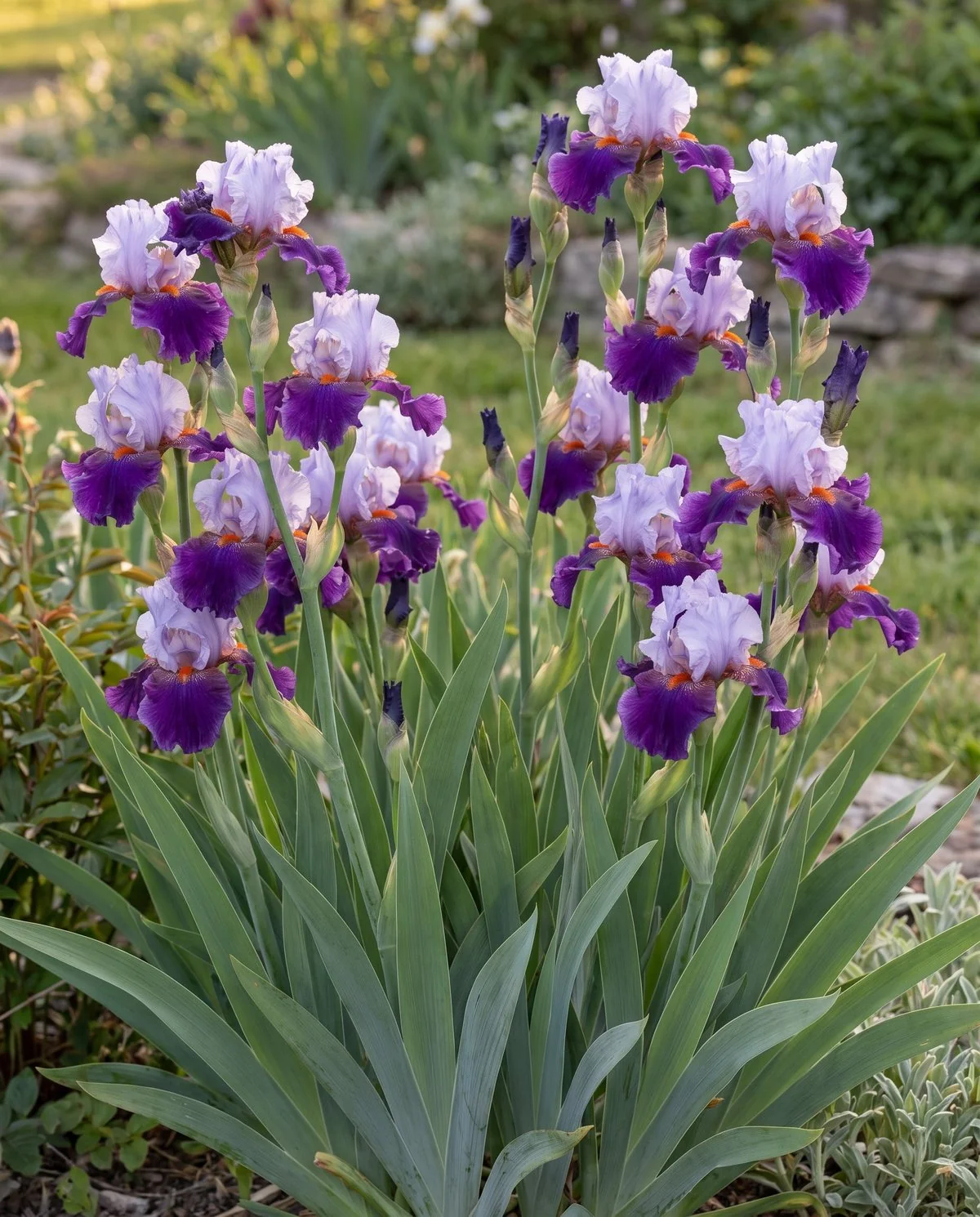
Bearded iris belong to the genus Iris in the family Iridaceae, and most garden plants sold under the name are Iris germanica, a hybrid group rather than a single wild species, which is why botanists often write it as Iris x germanica. The common name translates as German iris, but the parent stock came from the Mediterranean and the Middle East, not Germany, and the plant has been grown since antiquity both for the flower and for orris root, the violet-scented material dried from the rhizome and still used in perfumery. The genus takes its name from the Greek goddess of the rainbow, fitting for a plant that breeders have pushed into almost every color. The wider genus of irises runs past 300 species, and the bearded types are set apart by the strip of fuzzy hairs down the center of each fall. That beard is a landing strip: it steers bees toward the pollen. Beardless relatives such as Siberian and Japanese iris carry smooth falls instead, which is part of why they look so different from the classic cottage-garden iris.
The six registered size classes, in the register's own order
Bearded iris is registered rather than merely sold, and the body that does the registering, the American Iris Society, sorts the whole plant into six size classes that set both height and position in the bloom order. The heights below are AIS's own, carried in centimetres first because that is how the register states them. The badge tracks the other thing buyers pay a premium for, rebloom, which AIS treats as a trait separate from size.
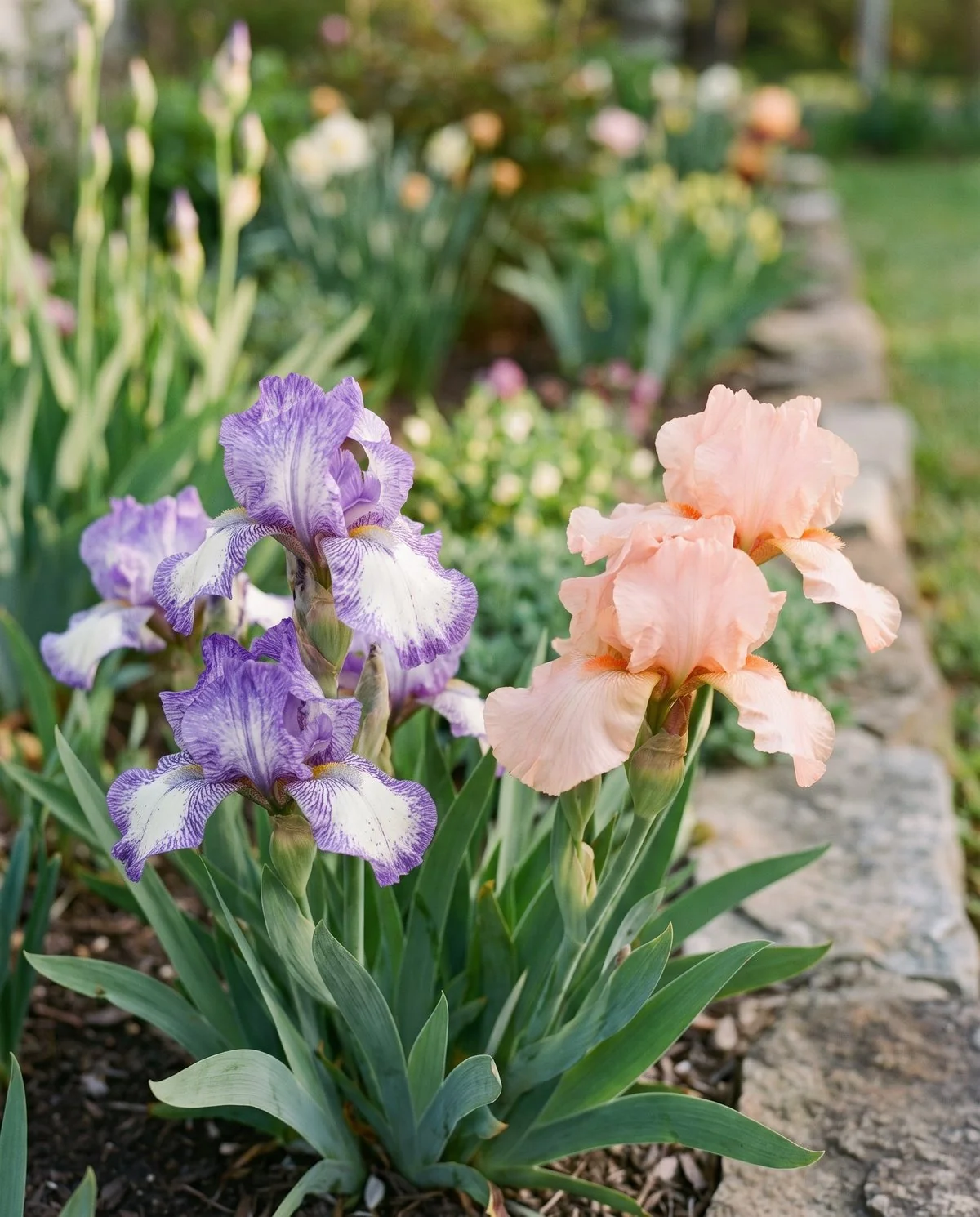
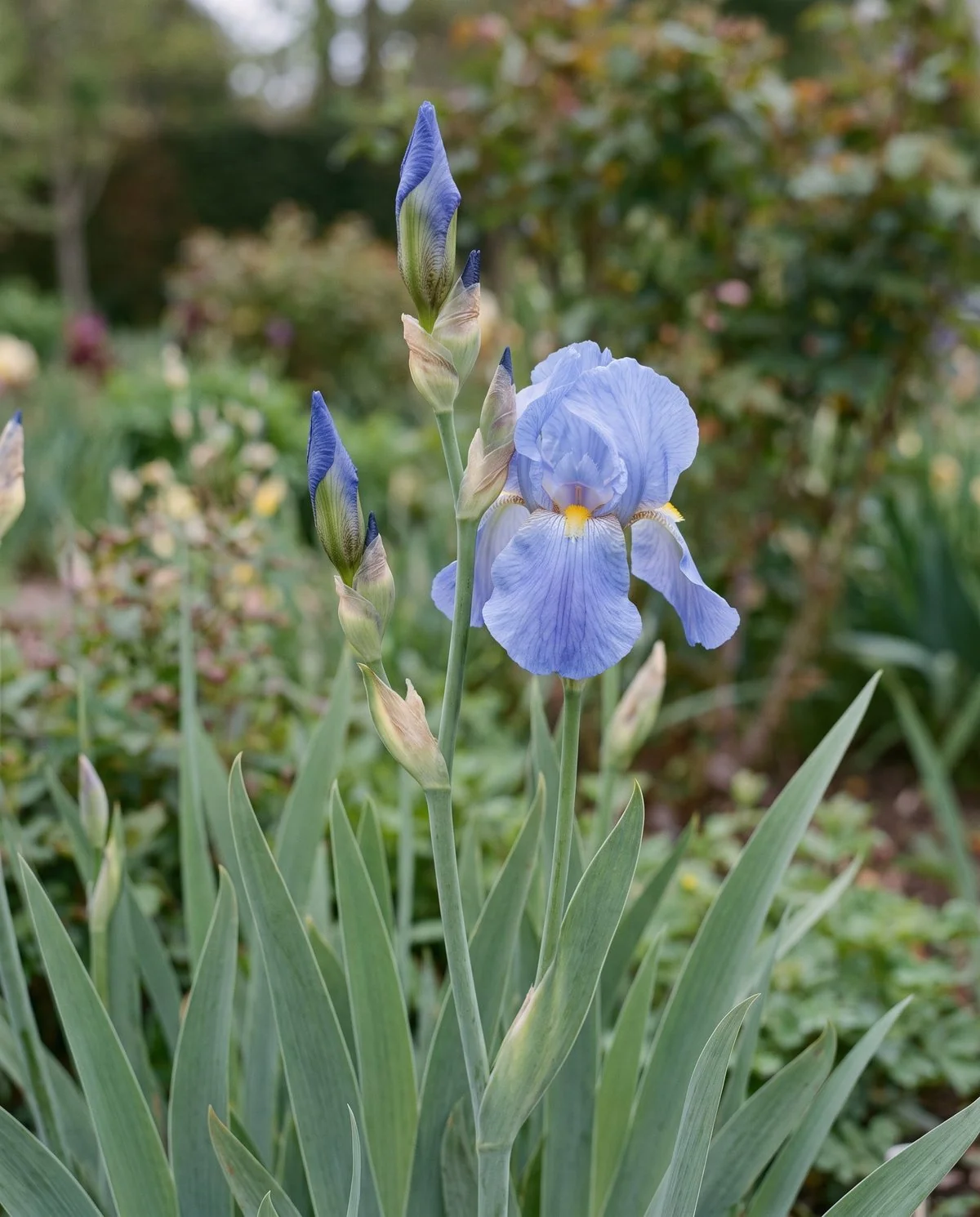
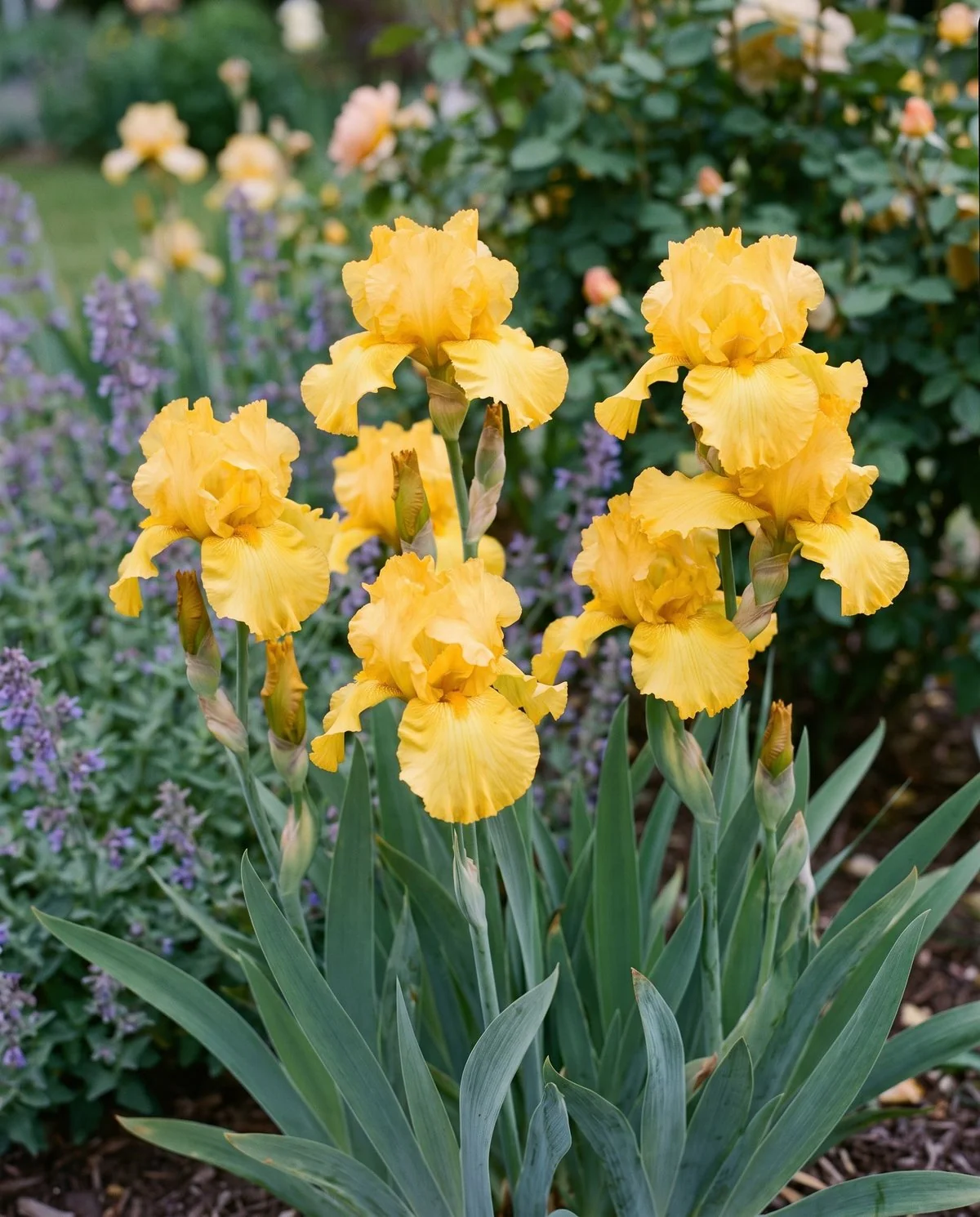
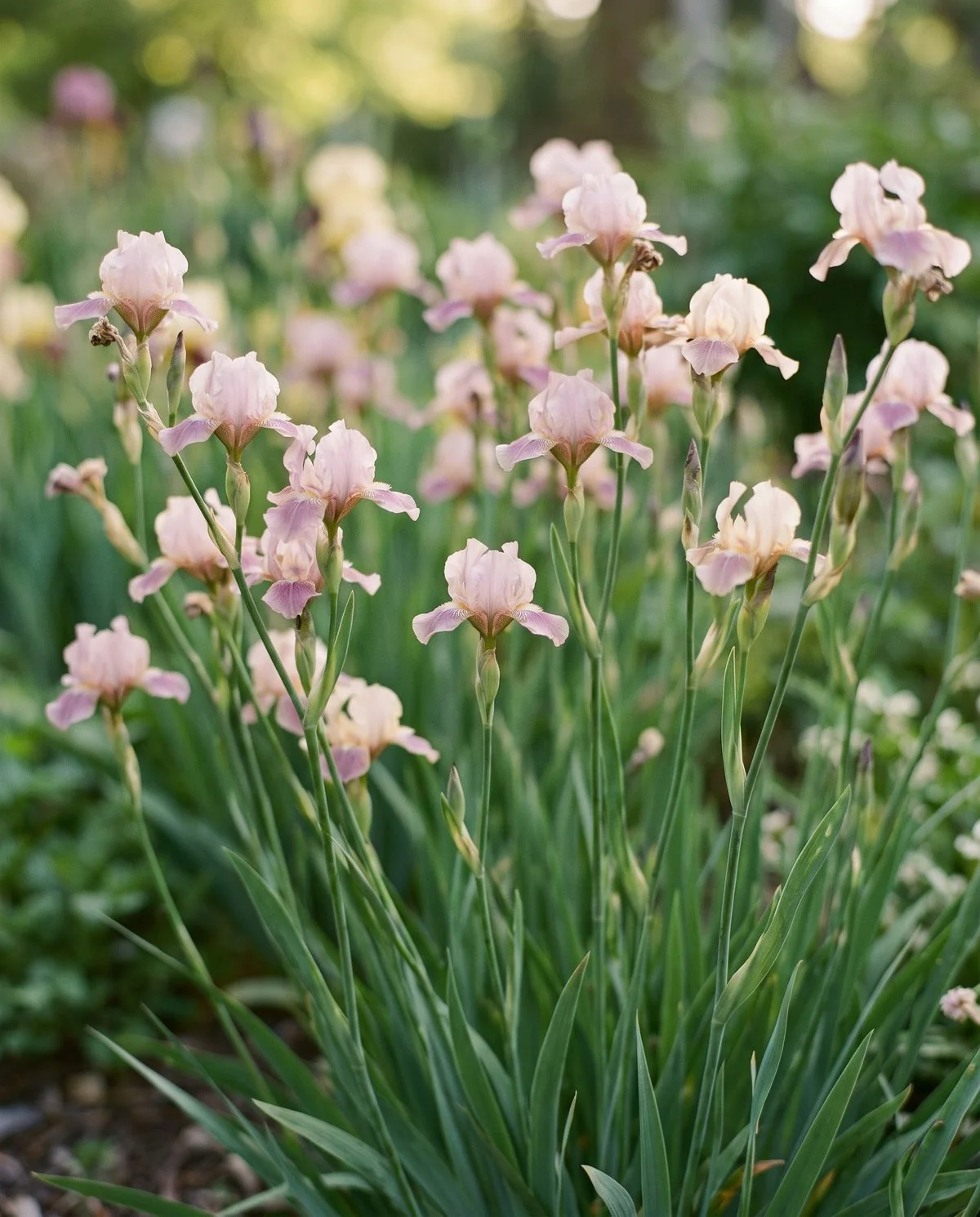
Two cautions straight from AIS terminology, because loose usage here contradicts the one body that defines these words: median covers the SDBs, IBs, BBs and MTBs together, which is everything except the miniature dwarfs and the tall beardeds, and dwarf strictly means only the MDBs. On the rebloom card, this research found no sourced share of registered cultivars that actually rebloom and no AIS statistical classification of how strongly a given cultivar reblooms, so no figure is given: AIS itself discusses rebloomers qualitatively.
Bloom time
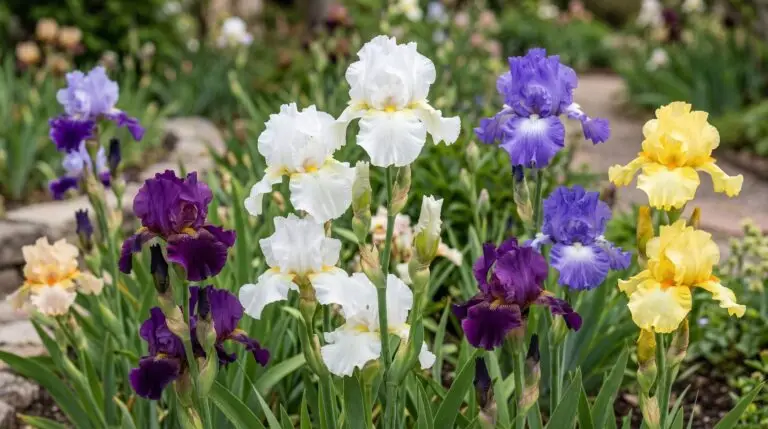
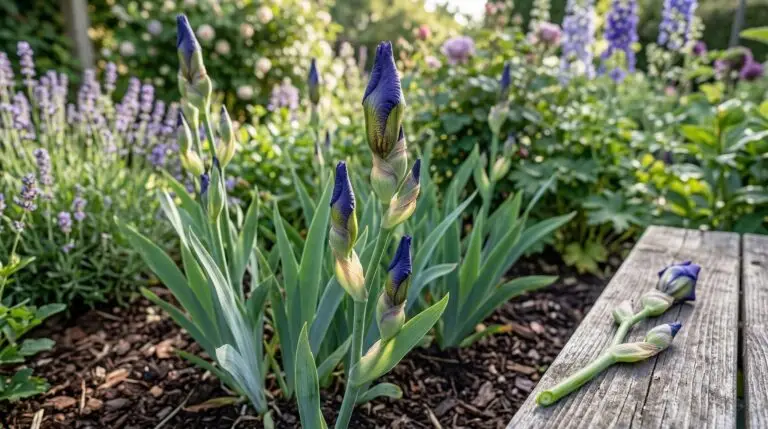
Bearded iris flower in mid to late spring, often peaking in May, opening as early as April in warm regions and stretching into June where spring stays cool. Tall bearded iris fill a useful gap in the border, coming on after the tulips and lilacs fade and before the peonies and roses reach their peak. Each spike carries several buds that open in succession, so a single stalk stays in flower for one to two weeks even though any one bloom lasts only a few days, and a planting that mixes early, mid, and late cultivars can hold color for a month or more. Most bearded iris bloom once a year. A separate group of reblooming cultivars, with Immortality among the best known, sends up a second flush in late summer or fall where the growing season is long and the plants are fed and watered through the heat. Deadhead spent flowers as they fade to keep the clump tidy and steer energy back into the rhizome rather than into seed pods.

Year one to year five, and the one number Iowa State puts on it
Year one has the clearest sourced expectation in this whole research pass, and it is a low one: Iowa State Extension states that a newly planted or newly divided bearded iris gives sparse flowering the first spring, with full bloom by the second year. A thin first season is the normal shape of the plant rather than a fault in it. Year two is the full display, on the same source, the clump having had a whole growing season to root before flowering. Through years three to five the clump fills in and, left undivided, begins the decline that this page's own myth section explains: old central rhizomes stop contributing bloom while the plant still looks green and healthy from outside, which is why the recurring complaint is not a dead iris but an iris that used to flower well and now flowers worse. The extreme version of that curve is in the sample too, a Tennessee gardener whose inherited clump has not flowered in six years. Accidental damage reads differently from decline: one gardener snapped their plant's only two bloom stalks, lost the season entirely, and reported a far stronger return the following year, so a lost season is not a lost plant. Rebloomers add a genuine second period in early to mid fall, which AIS makes contingent on additional water and fertilizer through the summer months, and AIS gives no figure for how that second flush compares in size with the spring one, so none is invented here. Nor is there a ceiling: no source in this research states a maximum lifespan or a year count at which an undivided clump goes fully blind. The mechanism is sourced, the deadline is not.
Height and spread
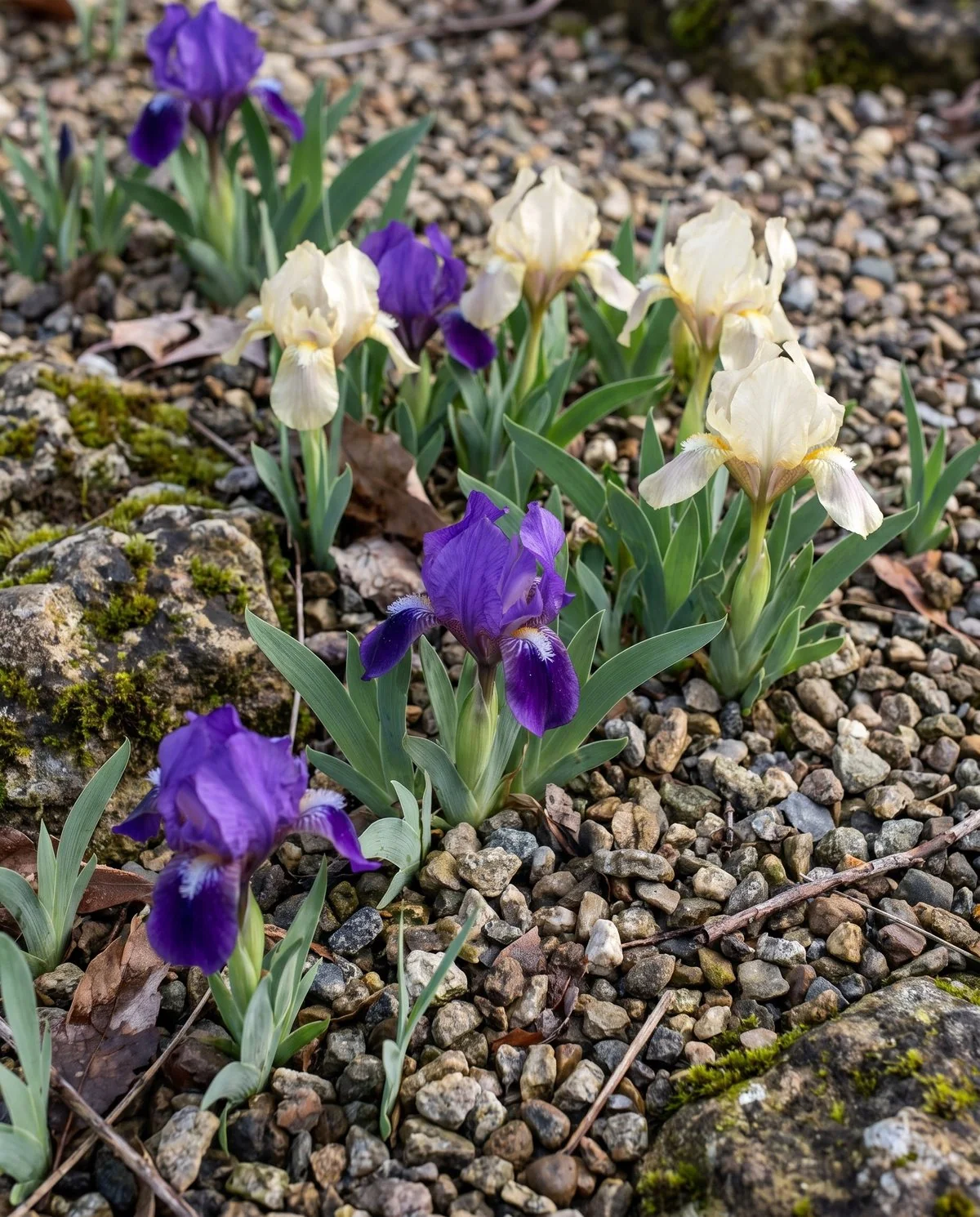
Bearded iris are sorted into size classes, and the class decides both how tall the plant stands and roughly when it blooms. The tall bearded types are by far the most common, rising 28 to 38 inches on sturdy stalks above fans of gray-green, sword-shaped leaves. The dwarfs and intermediates bloom earlier in the season and suit the front of a bed or a windy site where tall stalks would flop. The table below sorts the main classes so a buyer can match the plant to the spot.
| Size class | Height | Bloom timing | Best for |
|---|---|---|---|
| Miniature dwarf | Under 8 inches | Earliest, early spring | Rock gardens, edging, bed fronts |
| Standard dwarf | 8 to 15 inches | Early spring | Edging, small spaces |
| Intermediate | 16 to 27 inches | Mid spring, before tall types | Mid-border, breezier sites |
| Border and miniature tall | 16 to 27 inches | With the tall types | Smaller flowers on shorter, steadier stems |
| Tall bearded | 28 to 38 inches | Mid to late spring | Borders, cutting, the classic display |
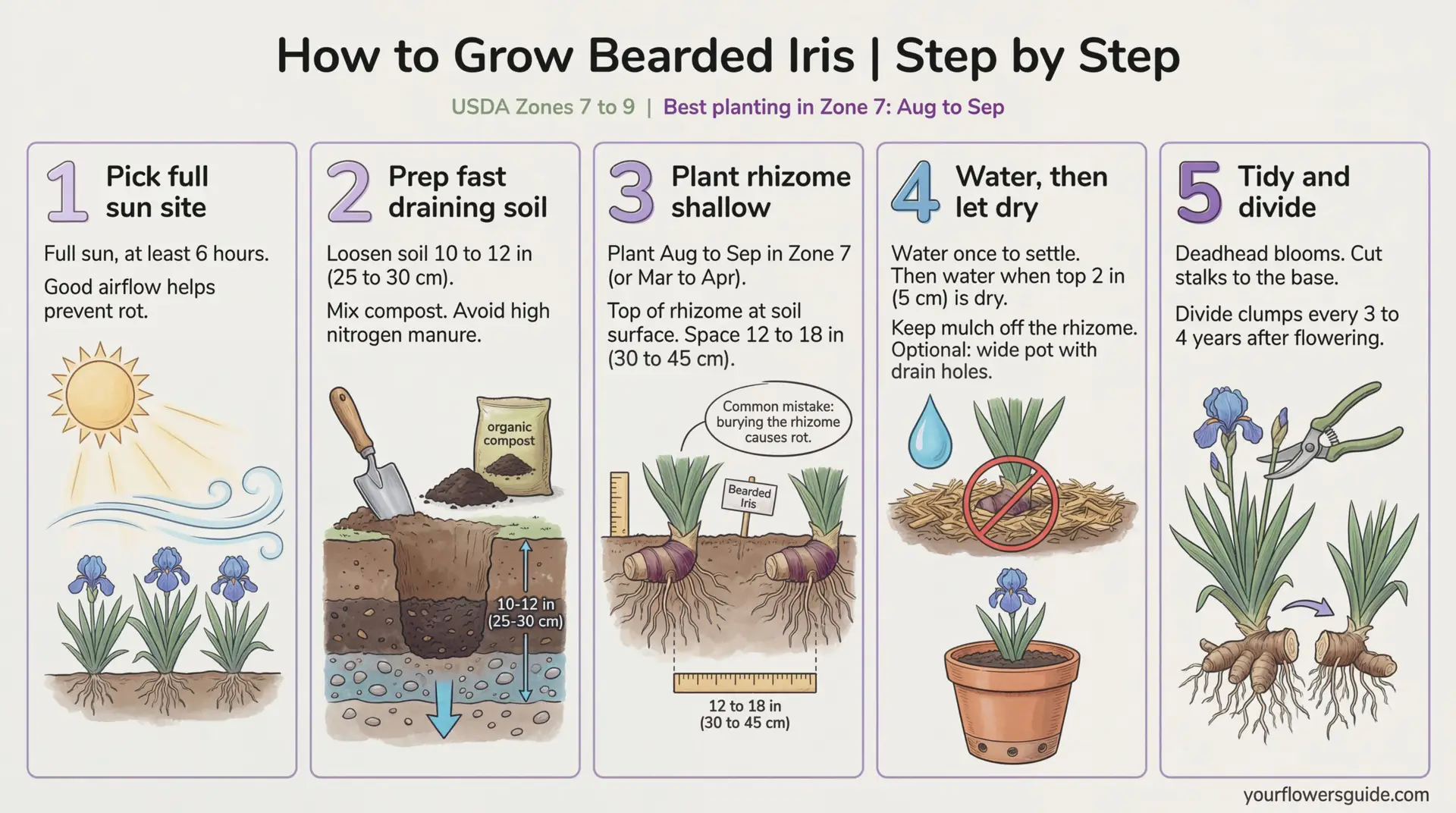
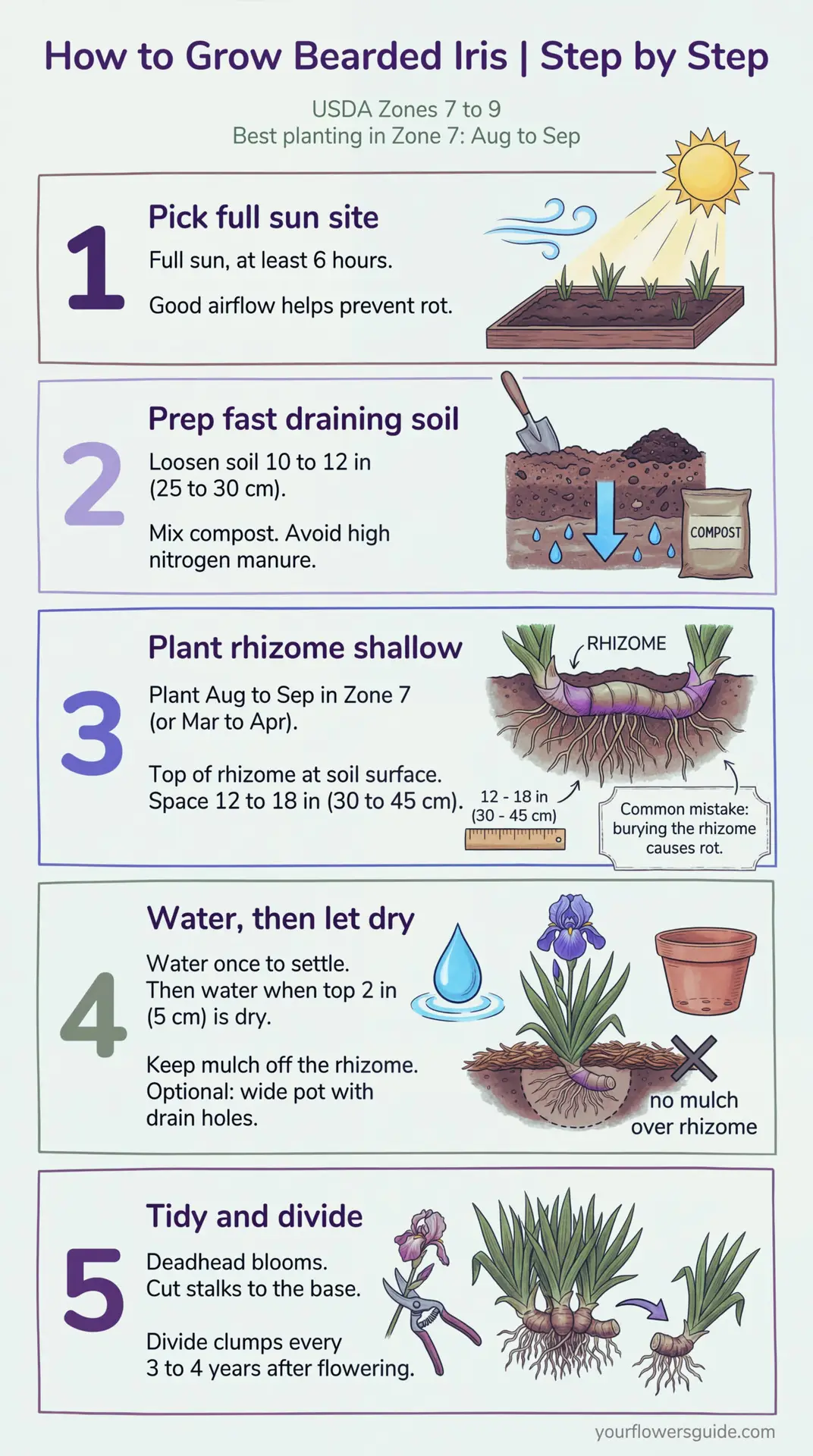
Space rhizomes 12 to 18 inches apart at planting. That looks sparse at first, but each rhizome sends out offshoots and the clump widens to a foot or two within a few years, and the gaps keep air moving between the fans, which is one of the cheapest defenses against rot and borer. A clump that fills in and then starts to thin at the center is telling you it is ready to divide.
Light
Full sun is the rule: at least six hours of direct light a day, and more is better. Morning sun earns its place twice over, because it drives bloom and it dries the dew off the fans early, and dry leaves shrug off the fungal leaf spot that settles on foliage left damp. In too much shade an iris makes leaves and few or no flowers, so thin light is one of the first things to rule out when an established clump stops blooming. In the hot South a little afternoon shade spares the flower color without costing much bloom, but anywhere cooler the plants want as much sun as the spot can give, well clear of the drip line of trees and the shadow of walls.

Water
Once rooted, bearded iris are genuinely drought-steady. The fat rhizome stores water, and the plant would rather run dry than sit wet. Through spring growth and bloom, water when the top inch of soil has dried, roughly an inch a week between rain and irrigation, and give it as a deep soak rather than frequent light sprinkles so the roots reach down. After bloom, as summer settles in and the plant enters a half-rest, keep it on the dry side, because warm, wet soil around the rhizome in July and August is exactly what starts rot. Drainage counts for far more than volume here. An iris in fast-draining ground rides out a dry spell without complaint, while the same plant in soggy soil rots from the rhizome outward no matter how carefully the watering is measured. Persistent wilting or browning in a real drought is the signal to give an occasional deep drink, and little else.
Soil and pH
Well-drained soil matters more than rich soil. Loam or sandy ground suits bearded iris well, and heavy clay is the usual source of trouble, holding water against the rhizome until it turns soft. Open clay up with grit and compost before planting, or set the plants on a low mound or a raised bed so water sheds away, and in clay leave the rhizome even higher, with up to half of it standing proud of the soil. The pH question is easy: anywhere from about 6.0 to 7.0 works, and mildly alkaline ground is fine, so no special amendment is needed for most gardens. Two habits protect the rhizome from rot. Keep mulch off it, since a blanket of mulch traps the moisture that invites decay, and pull any mulch you use a few inches back from the base. Go light on nitrogen as well. A balanced or low-nitrogen feed as growth starts in spring supports flowering, but rich, high-nitrogen soil pushes soft, leafy growth at the expense of blooms and raises the odds of rot.

USDA hardiness
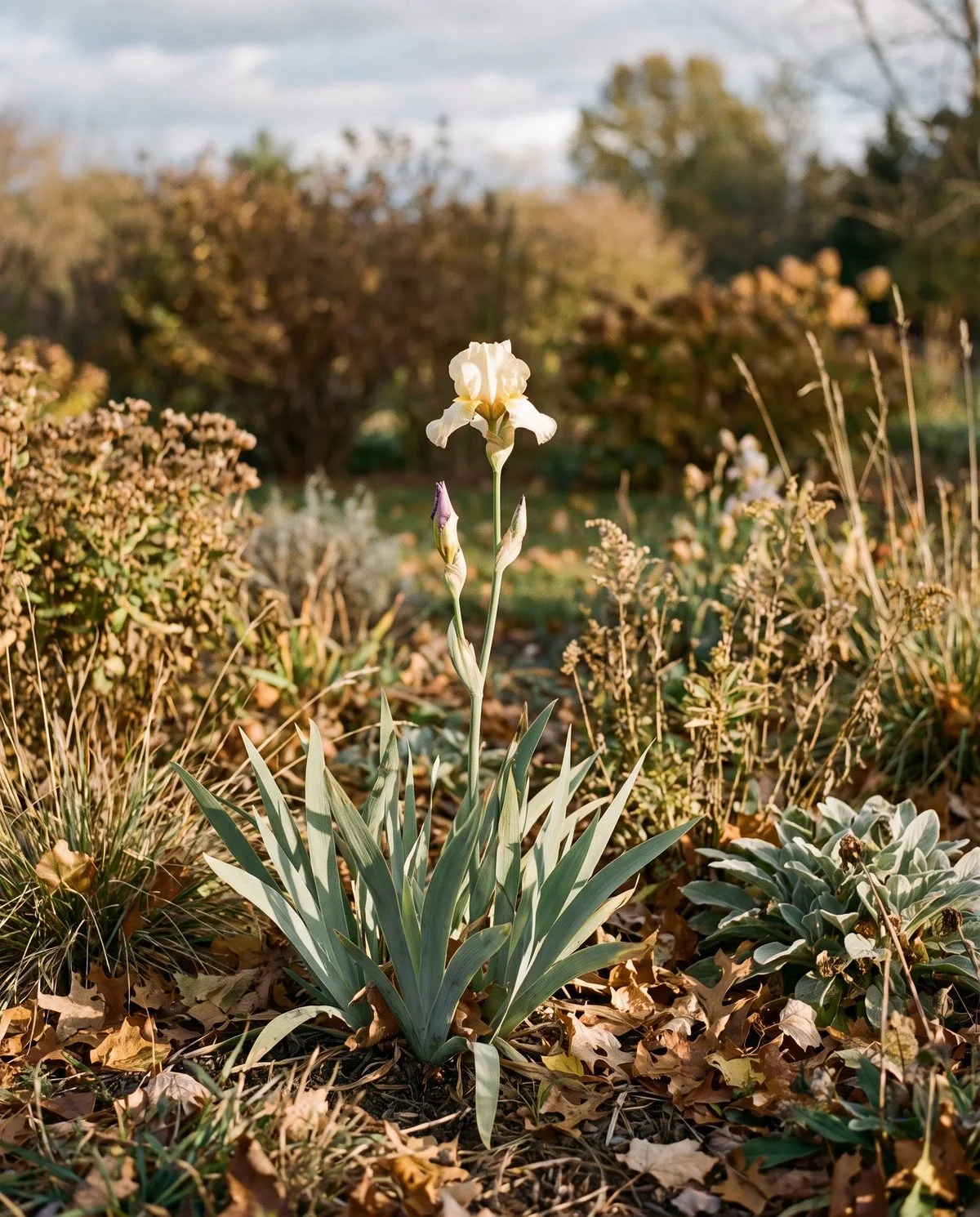
Bearded iris are cold-hardy across USDA zones 3 through 9, which covers the great majority of North American gardens, and a few cultivars stretch into zone 10 in dry-summer, Mediterranean-type climates. In zones 3 and 4 the rhizomes ride out hard winters under snow, and a loose winter mulch pulled back in early spring adds insurance in the coldest gardens that lack reliable snow cover. The plants need a cool dormant spell to set flower buds, so they do not perform in frost-free tropical climates where winter never arrives. At the mild end of the range the fans often stay green or half-green through the winter, giving the border some structure while most perennials are cut to the ground. Near either limit, a cultivar suited to the climate matters more than any amount of extra care.
The dated jobs, and the threshold behind each one
No iris authority publishes a zone-band calendar the way the bulb trade does for tulips, which makes sense for a plant sold as a growing rhizome rather than a dormant bulb with a pre-frost deadline. What does exist is a short list of dated jobs, each with a named source and a real threshold attached.
Propagation and longevity
Division is the standard way to make more iris and the single most useful thing you can do for an old clump. Every three or four years, once flowering thins or the rhizomes crowd and jostle each other, lift and split them, and do the job in July or August, in the summer lull after bloom when the plants root quickly and still have weeks of warmth to settle before winter. Dig the whole clump, rinse the soil away so you can see what you are cutting, and separate the rhizomes with a clean knife. Keep the young, firm outer pieces, each with a fan of leaves and a section of healthy rhizome, and throw out the old woody center and anything that feels soft, hollow, or tunneled. Trim each fan back to a stubby hand of leaves about six inches tall so it does not topple while new roots take hold.
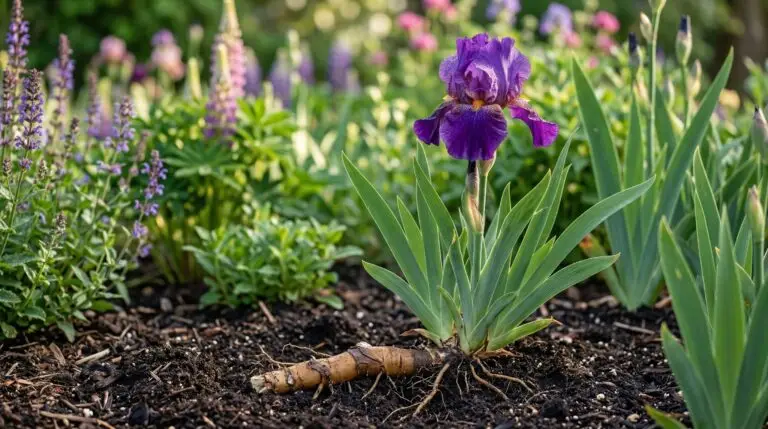
Replanting is where bearded iris break the usual rule. Dig a shallow hole, build a small mound of soil in the middle, set the rhizome on top with its roots spread down the sides of the mound, and cover only the roots, leaving the top of the rhizome exposed at the surface where the sun can reach it. A rhizome buried like a tulip bulb sulks and refuses to bloom, and that single mistake is the most common reason a healthy-looking iris never flowers. Point the leaf fan in the direction you want the clump to travel, since new growth marches out the leaf end. There is a fuller walkthrough of dividing the clump in summer for anyone tackling a large, congested planting. Seed is a breeder's route only, taking two or three years to reach bloom and rarely coming true from a hybrid parent. Cared for on that division schedule, a clump renews itself indefinitely, and heirloom cultivars have been handed between gardens for generations.

Two things everyone repeats about iris, checked against the sources
The myth: Iris never need dividing. Plant them once and leave them alone.
The reality: A bearded iris rhizome flowers once from a given growing point and never again from that same point. Only its newer offsets, out at the clump's edge, carry future bloom, so an undivided clump fills its centre with old, spent, leafless rhizomes and flowering falls away while the plant still looks lush from the outside. Iowa State Extension, Clemson HGIC and the UC ANR Master Gardener Program each publish a division cycle because of that mechanism rather than for the look of the bed.
The myth: You have to cut the leaves back into a neat inverted V fan after bloom.
The reality: The Maine Iris Society Newsletter of September 2018, edited by Harriet Robinson, says the opposite in its own words: many growers routinely cut back bearded iris to an inverted V or fan, although the fan shape is not necessary, it looks nice, and it is done primarily to avoid a foliage mess that may harbor disease. The same newsletter adds that irises growing in good health might not need to be cut back during the growing season at all. Where a cut is made, it puts the height at five to nine inches depending on plant size and the cut at an angle, because a flat cut pools water on the crown.
Two paths, worked in order, through the two things iris owners ask about most
The two largest themes in this page's own forum sample are not pests at all. They are a rhizome that has just changed hands, at 5.8 percent, and winter, cold and moving iris between zones, at 5.4 percent. Both are calendar problems before they are plant problems, which is why both lists open on the calendar rather than on a symptom.
Fragrance
Scent in bearded iris runs the full range and depends entirely on the cultivar. Some carry a clean sweetness close to violets or orange blossom, a nod to the orris root once distilled from the same genus, while others surprise people with a whiff of grape soda, and a handful of the darkest maroon and near-black flowers turn up notes of chocolate or root beer. The perfume tends to sit close to the flower rather than carry across the garden on the air, and it opens up on warm, still mornings when the blooms are fully spread. Because a spectacular iris can be almost scentless, anyone shopping for fragrance should choose a cultivar named or described as fragrant, or better still smell it in bloom before buying. A few cut stems bring the scent indoors, where still air carries it better than the open garden.
Toxicity and pet safety
Iris is toxic to cats, dogs, and horses, according to the ASPCA. The irritant compounds, a group of pentacyclic terpenoids, occur throughout the plant but concentrate most heavily in the rhizome, so the underground parts a digging dog can reach are the riskiest. A pet that chews leaves or flowers usually drools and then develops an upset stomach, with vomiting, diarrhea, and lethargy, and the reaction is generally self-limiting once the plant clears the system. Even so, a call to the veterinarian is warranted if an animal has eaten a large amount, particularly of rhizome. The same sap can redden sensitive skin, which is reason enough to wear gloves when cutting rhizomes apart at division time. The upside of those bitter compounds is real: deer and rabbits leave iris alone, which makes it one of the more dependable perennials in a browsed garden. For a wider view of which garden flowers are safe around cats and dogs, the companion guide sorts the toxic from the harmless.
Vase life
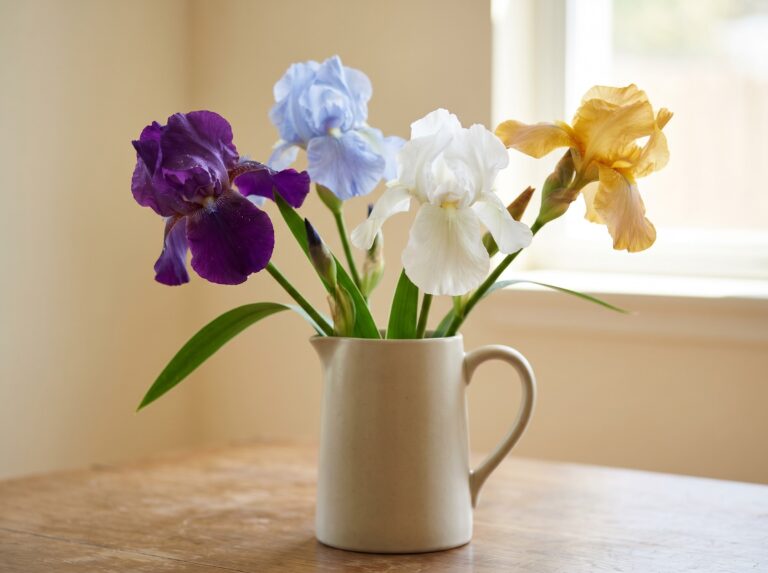
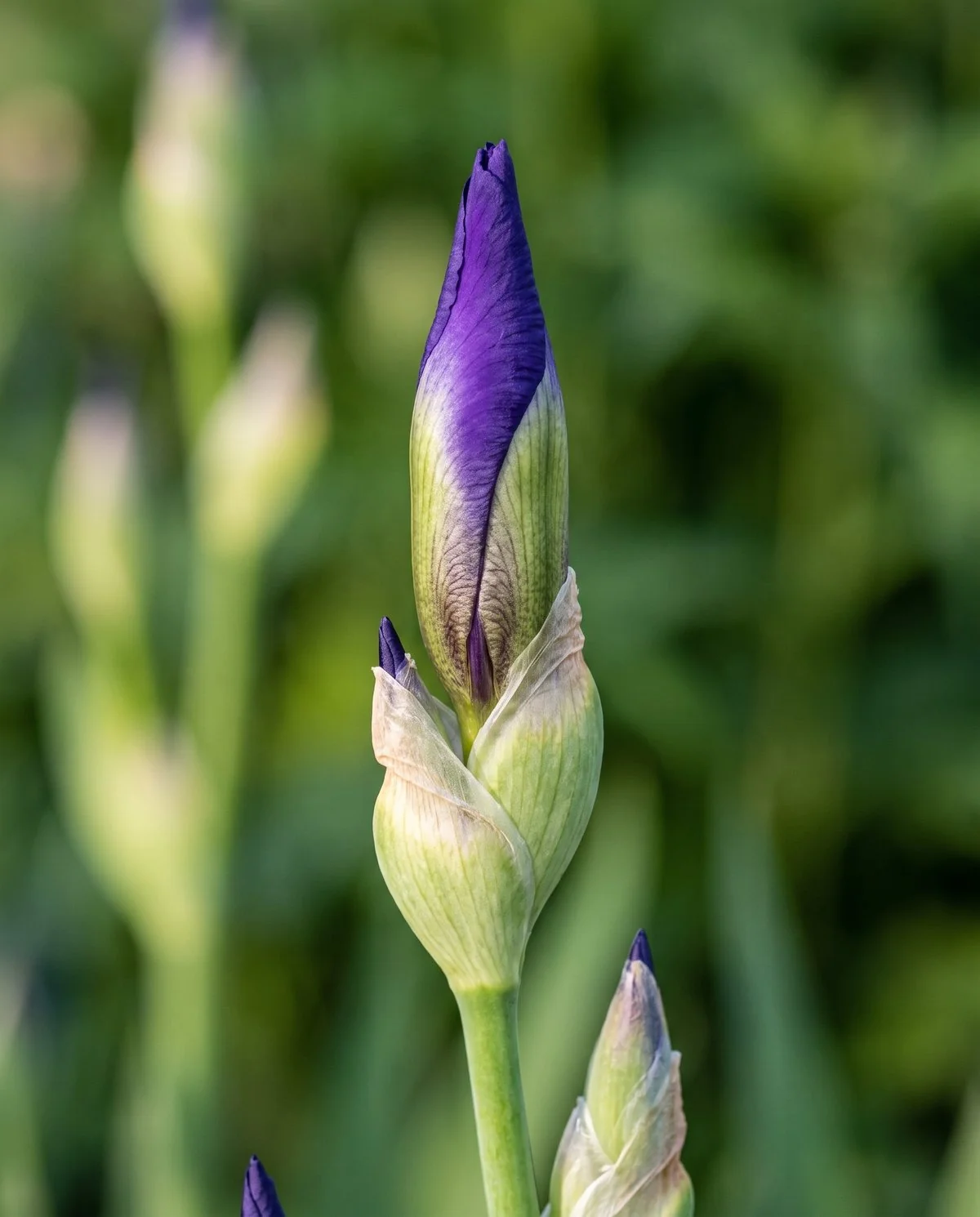
Bearded iris make a dramatic cut flower with an honestly short life. Cut in the cool of the morning, and take the stalk when its lowest bud has cracked open just enough to show color, because that bud opens reliably in the vase and the buds stacked above it follow in turn. Any single flower lasts about three to five days, but the succession of opening buds keeps a stalk in show for close to a week. Pull each spent bloom as it collapses so the fresh ones read clean, change the water every day or two, recut the stem at each change, and keep the arrangement out of direct sun and away from heat. Iris will not outlast a chrysanthemum or a rose, but the tall spike and the clean vertical line earn it a place in spring arrangements, and pairing it with longer-lasting stems covers the gap as the iris fades.
What a named postharvest researcher says about iris as a cut flower
The headline here comes from a postharvest scientist rather than from florist copy, and it is not flattering to the flower.
Wait until the flower has opened properly, then cut it.
The trade does the opposite. UC Davis names the pencil stage, colour showing out of the sheath with the petals still furled, as the buying point, because a bloom that has already opened on the plant has spent part of a very short life there before it ever reached water.
There is a trick to it: a coin in the water, an aspirin, a splash of vodka.
This research went looking and found no iris version of that folklore at all, unlike the penny that follows tulips around. The two levers it did find are both physical: cut at the pencil stage, and hold cold, dry and upright at 32 F for no more than a week.
There is a published day count for bearded iris in a vase.
Not in this research. No university source found here gives a day count for bearded or German iris specifically, which leaves UC Davis's comparative wording, shorter than Dutch iris, as the most precise sourced claim available, and the consumer-tier day ranges in circulation are reported at that tier rather than promoted.
Pests and diseases
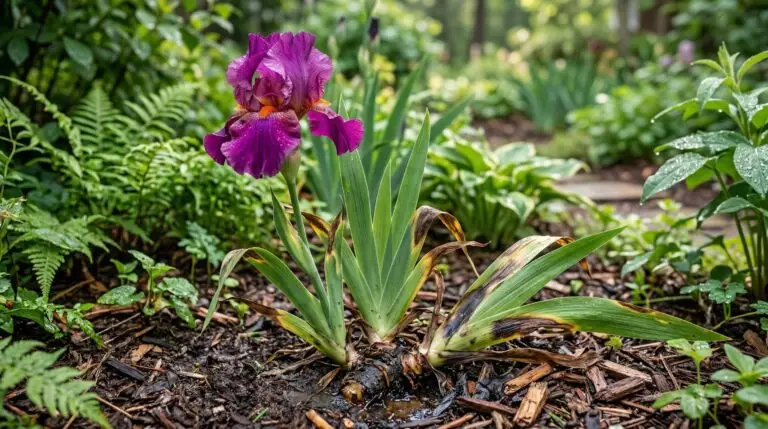
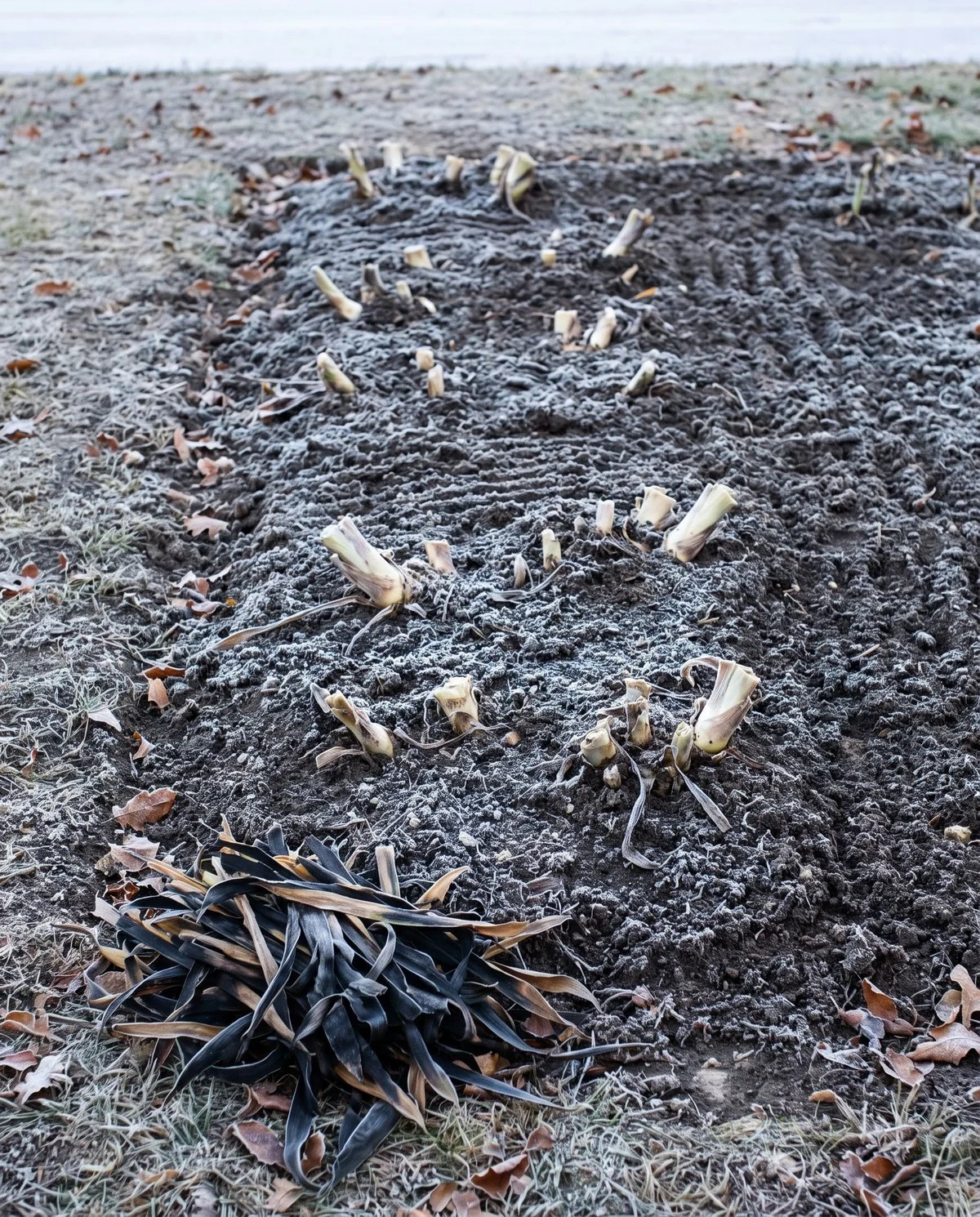
Iris borer is the one pest worth building a routine around, and it is the reason fall cleanup is not optional. The borer is the caterpillar of a night-flying moth, Macronoctua onusta, that lays its eggs in late summer on old iris leaves and nearby debris. The eggs overwinter there and hatch in April or early May, and the young larvae chew into the fans while the leaves are only four to six inches tall, tunnel down inside the leaf, and ride it into the rhizome, where they fatten into pink caterpillars an inch or more long and hollow the rhizome out. Their tunnels open the door to bacterial soft rot, so borer damage and a foul, mushy rhizome usually turn up together. Two habits break the cycle. Cut down and destroy every old leaf and all bed debris in fall or very early spring, before the eggs hatch, which removes most of next year's borers in a single pass. Then in spring watch the young fans for ragged notches and dark, water-soaked streaks, and pinch each mined leaf hard between finger and thumb to crush the borer inside before it works down to the rhizome. Where a planting has a history of the pest, an insecticide timed to fans four to six inches high, or a drench of beneficial nematodes, adds cover, and dividing on schedule lets you catch and cut out any borer or rot before it spreads.
Bacterial soft rot is the other headline trouble, a slimy, sour-smelling breakdown of the rhizome that follows borer holes, careless spade cuts, deep planting, or a wet crown, and the smell is the surest tell. Dig out the soft tissue back to firm white flesh, let the cut surface dry in the air, and replant the sound piece high and dry. Fungal leaf spot prints brown lesions on the foliage in damp weather, and the answer is to water at the base, give the fans room to breathe, and strip off badly marked leaves. In ground that stays wet, crown rots can take hold, and mosaic virus, spread by aphids, streaks the leaves and flowers with no cure but removal of the plant. Nearly all of it comes back to the same three things: full sun, sharp drainage, and a clean bed, and there is a closer look at identifying and stopping the iris borer for gardens where it recurs.
- Iris Borer: This is one of the most destructive pests for iris in certain regions (particularly the eastern United States). The iris borer is the larva of a moth that lays eggs on iris foliage and debris in late summer. The following spring, the tiny caterpillars hatch and burrow into the new leaves, eventually making their way down into the rhizome itself. There, the fat borers chew tunnels through the rhizomes, often introducing bacteria that lead to a mushy soft rot. Affected plants may show signs of yellowing or not blooming well, and you might find foul-smelling, rotted sections of rhizome with borers inside. To control iris borers, gardeners should practice good sanitation: in autumn, remove and destroy the dried iris leaves and any plant debris where eggs might overwinter. In spring, watch for signs of leaf streaks or chew marks and promptly remove any infested foliage. In severe cases, an appropriate insecticide can be used at the time of egg hatch (consult local extension guidelines). Regular division of overcrowded clumps also helps because it allows inspection of rhizomes; any that show borer damage can be cut out and discarded.
- Rhizome Rot (Soft Rot): This is a bacterial disease (often caused by Erwinia spp.) that turns iris rhizomes into a smelly, mushy mass. It commonly occurs when conditions are warm and wet, especially if iris borer damage or mechanical injury provides an entry point for bacteria. Preventing soft rot involves maintaining good drainage and not burying the rhizomes too deeply. If you notice a section of a rhizome that has gone soft and foul-smelling, dig it up and cut away all the affected tissue, disposing of it in the trash (not the compost). Allow the cut rhizome to dry out a bit before replanting the healthy portion. Dusting the cut ends with a fungicide or even household cleanser (some gardeners use a dilute bleach solution) can help disinfect and stop the spread. Ensuring proper spacing for airflow and avoiding overwatering are key preventative measures.
- Leaf Spot: Fungal leaf spot (often caused by Didymellina or related fungi) can appear on iris leaves, especially in damp weather. It shows up as small brown spots or lesions on the leaves, sometimes coalescing and causing leaves to turn yellow and die back prematurely. While leaf spot is usually not fatal to the plant, it can weaken it and make it less attractive. To manage it, remove and destroy badly infected leaves. Try to water at the base of the plant (avoid overhead watering that keeps leaves wet). If leaf spot is persistent and severe, fungicidal sprays labeled for ornamental leaf spots can be applied in spring when new growth appears, as a preventative.
- Crown Rot and Other Fungi: In addition to bacterial rot, irises can suffer from fungal rots in very wet conditions. Sclerotium rot (southern blight) is one example that can cause a rotting crown and wilting leaves. The strategies to avoid these are similar: excellent drainage, avoiding waterlogged soil, and removing infected parts promptly.
- Viruses: Iris can be infected by mosaic viruses, which cause streaked or mottled patterns on the leaves or flowers. There is no cure for viral diseases in iris. Infected plants should be removed and destroyed to prevent spread (viruses often transmit via sap-sucking insects like aphids). Fortunately, viruses are not extremely common in bearded iris grown in gardens.
When the tunneled rhizome is worth saving
The advice earlier on this page to throw out anything tunneled is the safe default, and it is one authority's flat instruction. The second authority splits from it, and the split matters when the tunneled piece is a named cultivar you cannot simply rebuy. Its rescue route runs like this: at dividing time, find and kill the larva, cut the rhizome back past every tunnel and every trace of soft rot until only firm white tissue is left, and then let the cut pieces cure in the open for several days so the wounds dry instead of rotting. For extra insurance the cut rhizomes can sit for about ten minutes in a solution of one cup of household bleach to a gallon of lukewarm water, then be rinsed well and dried completely before replanting. A piece that stays firm through all of that is worth ground; a piece that keeps softening was already lost.
Two smaller findings from the same sources close the loop. If a dug rhizome turns out hollowed and empty, the borer has already left it, so search the surrounding soil for the pupa, a shiny, dark chestnut-brown case, and get rid of it before it becomes next year's moth. And there is no benefit in drenching or treating the soil itself when replanting after an infestation: the eggs wait on old leaves and debris above ground, not in the dirt, which is why the fall cleanup this page already prescribes is the part that actually breaks the cycle.
Photo pairs, and the four fingerprints left deliberately unphotographed
Planting depth, a hollow clump and a storm-flattened stalk are safe to photograph. Four subjects here are not: the borer's tunnel and streak, a soft-rotted rhizome, iris leaf spot and iris rust. Those are checkable pathogen fingerprints, and UMN Extension's own borer page exists partly because several different iris problems produce the same browning leaf tips, so an approximated image would mislead the one reader it is meant to help.
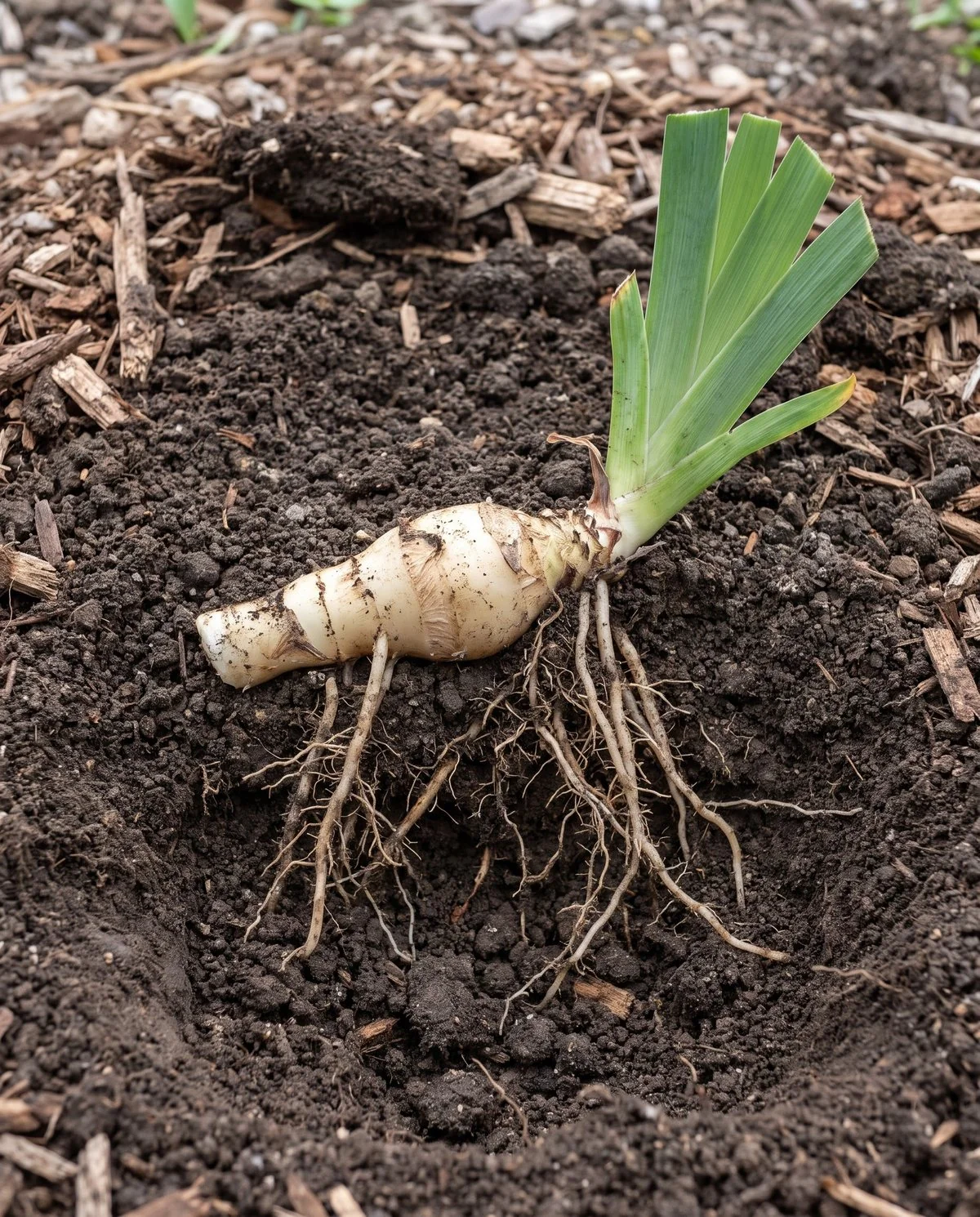
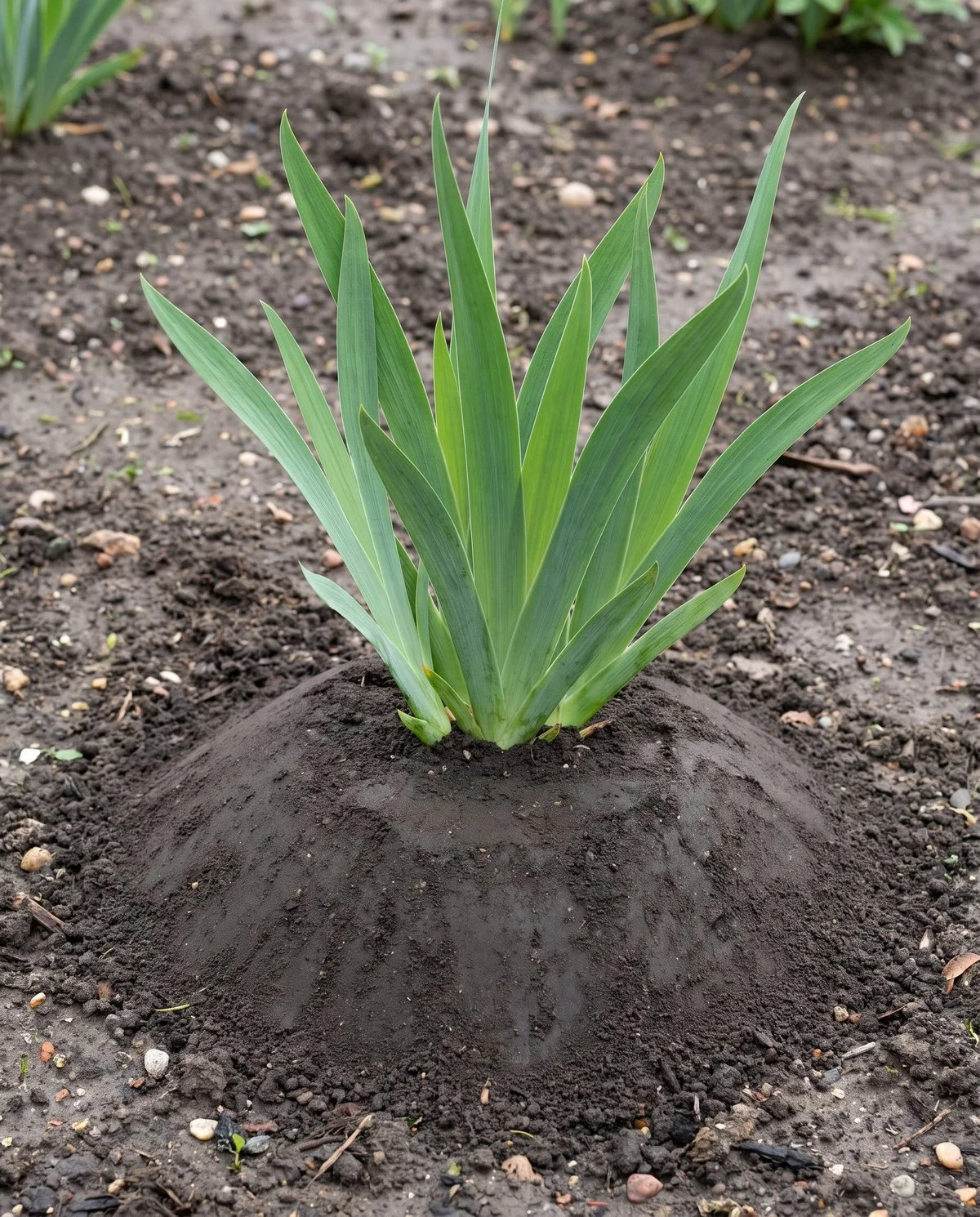
Look for the rhizome itself rather than at the leaves. Planted correctly the top of the rhizome is visible or barely covered, sitting at or just below the soil surface with the roots spreading downward; buried, no rhizome surface shows anywhere at all. AIS, Iowa State Extension and Clemson HGIC give that instruction independently of each other, and Clemson adds the soil-type nuance: in clay the rhizome rests just above ground level, in sandy soil its top can sit up to half an inch below.
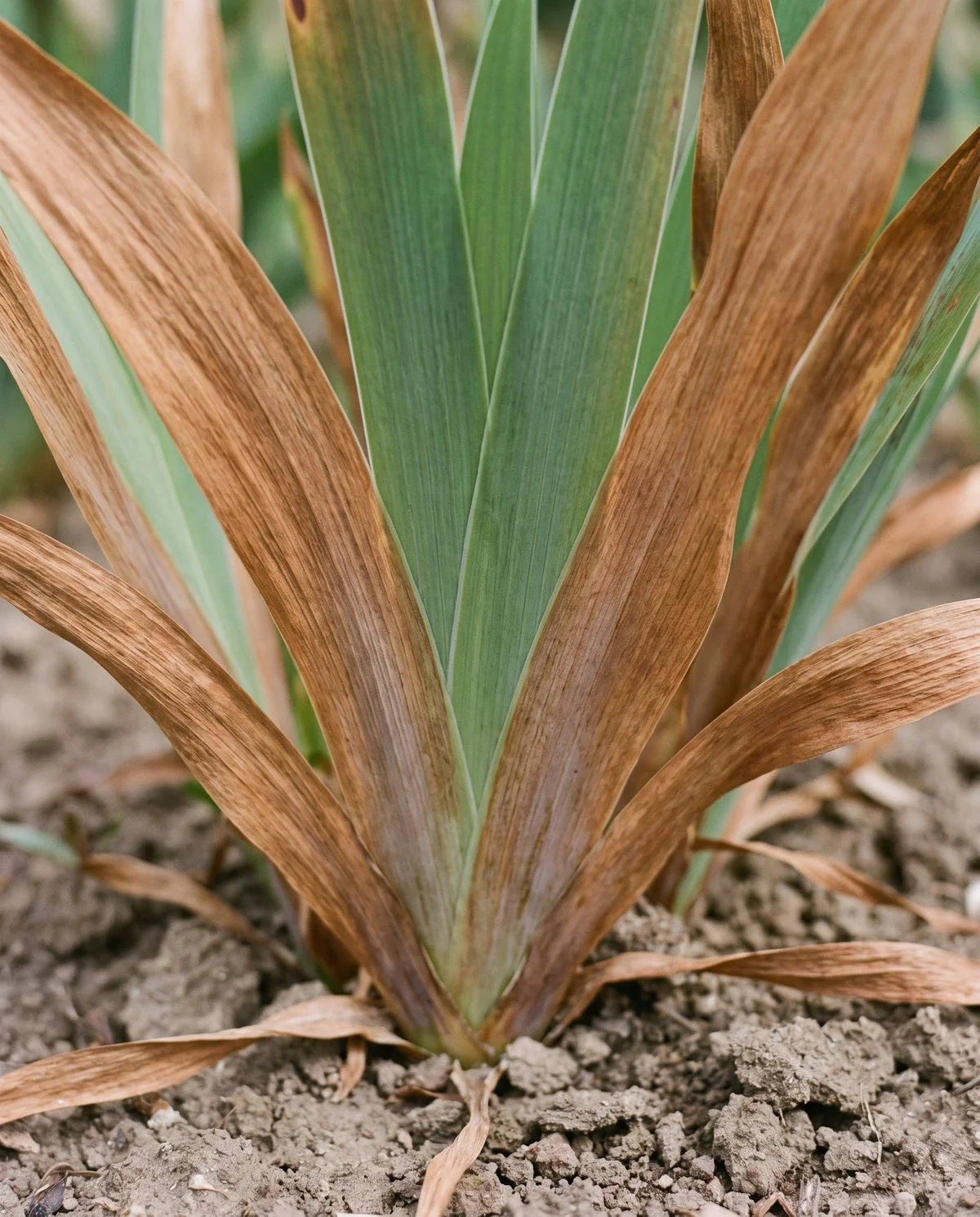
Ask where in the year you are and which way the mark travels. UMN Extension describes borer feeding as pinprick-sized holes and streaks that appear tan or water-soaked, progressing downward through the leaf toward the rhizome as the caterpillar grows, and reaching the rhizome by mid summer, July in Minnesota. Ordinary dieback is a uniform whole-leaf browning of the outer, oldest leaves after bloom has finished, with no streak and no tunnel. UMN then states plainly that bacterial soft rot, iris scorch and fungal leaf spot may show the same symptoms even when no borer is present, which is a university extension service saying this call is hard from a photograph alone. Only the ordinary dieback is photographed here.
Use your nose and your thumb before your eyes. The Pacific Northwest Plant Disease Management Handbook, a joint Oregon State, Washington State and University of Idaho publication, describes yellowing or browning of the fan's outer leaves, water-soaked streaks on the blades progressing upward from the base of the leaf fans, and rhizomes that become rotted and may be foul smelling, with one blunt detail of its own: when infected plants are lifted for dividing, often empty shells are all that remain of the rhizomes. A healthy rhizome is firm, unscented and unstreaked at the leaf base. Neither side is photographed here, because the texture is the diagnosis.
Turn the leaf over. Iris leaf spot begins as tiny brown spots with water-soaked borders that develop into irregular spots with grayish centres and dark borders, enlarging and coalescing after bloom, and Iowa State names various leaf spots among the plant's own common problems. Rust instead sits as small orange-brown pustules on the leaf undersides with matching yellow spots on the upper surface, releasing powdery orange spores when mature; that rust description was not traced back to a primary university page in this research and is reported at that lower confidence rather than dressed up. Neither fungus is photographed here.
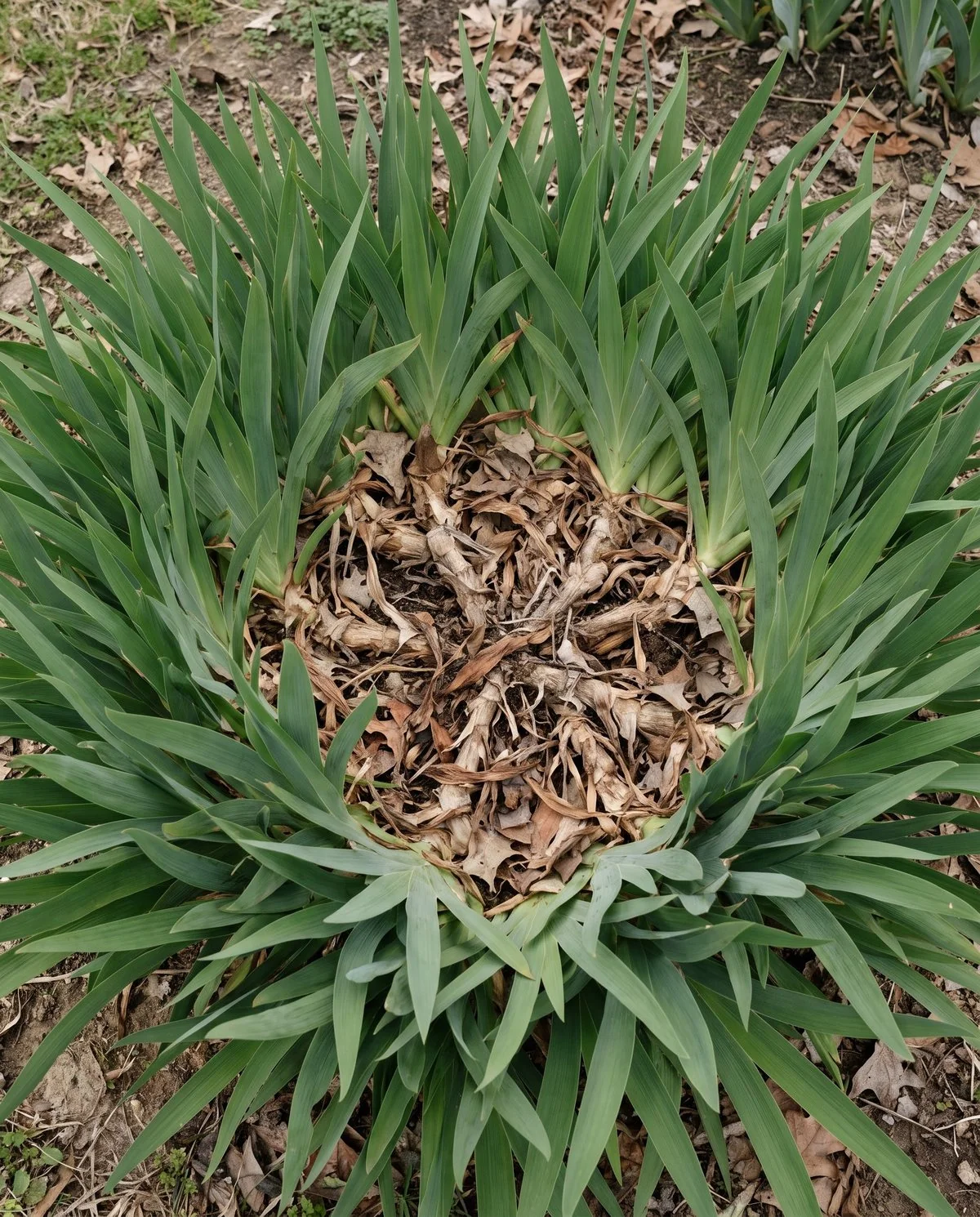
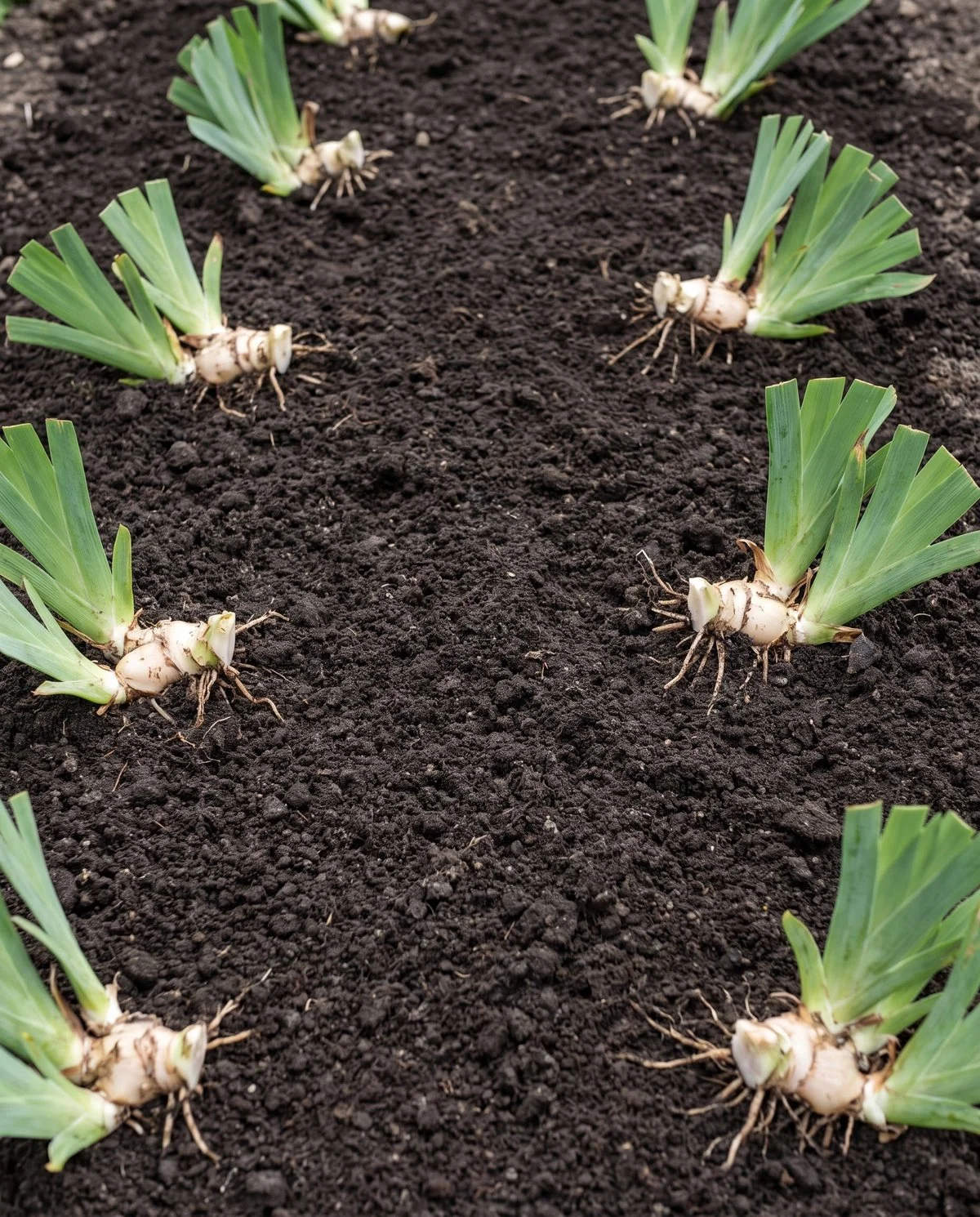
Look at the centre of the clump. Iowa State's division page describes what to throw away: old, leafless, diseased and insect-damaged rhizomes, keeping only pieces that carry a fan of leaves, a healthy rhizome and several roots. A rhizome that has already flowered does not flower again from that same growing point, so bloom migrates outward to the newer sections at the clump's expanding edge while the middle goes hollow and the outside still looks lush.
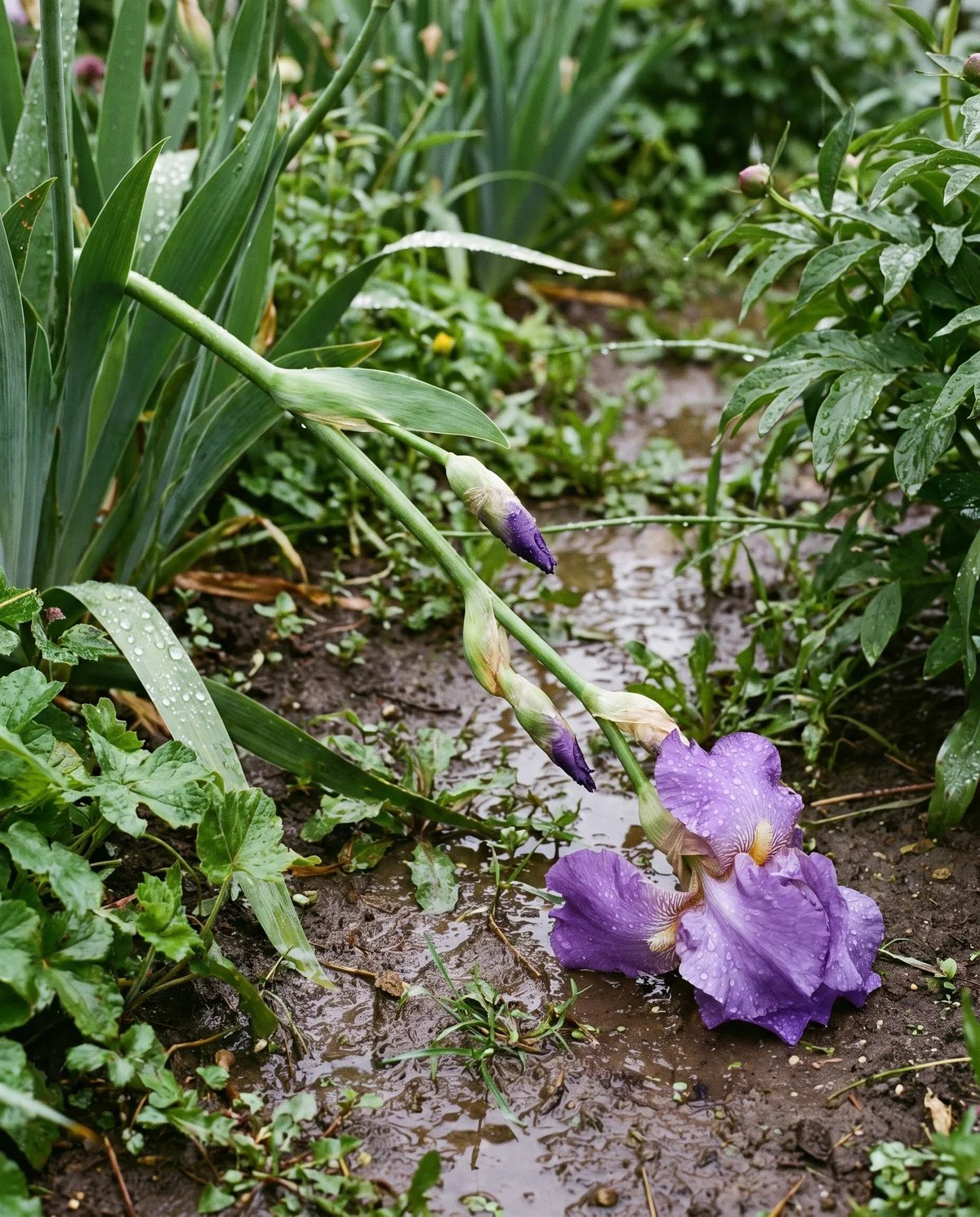
Feel the bend. A mechanical flop is an intact stalk bent or laid over right after wind or heavy rain, with no discolouration and no softness at the point of bending, and gardeners in this sample report it recurring every year on the same plants. A rot collapse shows soft, discoloured tissue exactly where the stem failed, and the PNW handbook notes that decay can also occur on the floral stems rather than only on the rhizome. Only the mechanical flop is photographed here.
What iris owners actually post about, ranked by frequency
473 posts mentioning iris were pulled from r/gardening and r/plantclinic with no theme filter, so these are base rates rather than an artefact of what was searched hardest. One methodological choice is stated rather than hidden: 70.2 percent of those posts never say which iris the writer owns and only 16.1 percent say bearded, so the ranking below runs on a 411-post focus set, the posts that say bearded, say nothing at all, or name Iris pallida. Themes overlap and do not add to 100.
Whether any rhizome surface is visible now that it is in the ground. This is the largest theme in the sample and it is about rhizomes moving between people, bought at a big-box store, passed over a fence, or inherited with a house rather than arriving as a cut bouquet. One poster in it planted too deep following the directions printed on the bag the rhizomes came in, then lifted and reset them nearer the top.
The number of weeks left before the first hard frost. This theme is distinctly iris-shaped: gardeners moving rhizomes across state lines in late October, a zone 8 to zone 7 move with transplant shock feared on top of freezing, and a zone 5b bed with new shoots already up as an ice storm forecast lows of minus 6 C.
The middle of the clump rather than its edge. Several posts here describe inheriting a neglected, decades-old bed with bare patches in it and asking where to start, which is the same mechanism as the no-bloom rows further down.
Whether the plant is even a bearded iris. These are inherited and volunteer plants with no name attached, a consequence of the gifting culture in the top row, and the single highest-scoring identification post in the corpus, at 1,275 points, is about iris growing like a weed in a Tokyo park.
Whether a borer got there first. These posts are frequently entangled with the borer row below, and the two are genuinely linked rather than merely adjacent.
Whether tissue has been removed or only discoloured. The highest-engagement problem post in the whole iris corpus, at 164 points and 95 comments, is an image-only post asking what the creatures attacking an iris are.
The direction the streak runs. The raw count is small and a university source outranks it: Iowa State Extension names the iris borer the most destructive pest of bearded iris, and its own common-problems list runs borer first, bacterial soft rot second as the borer's frequent consequence, and leaf spots third, which is the same cluster and the same order as the rows here.
How much of the rhizome you can see, then the light, then the age of the clump. One post in this row is a Tennessee gardener whose iris has not flowered in the six years since they moved in.
Whether the stem is soft where it bent. This is a real and distinctive iris behaviour with its own verbatim texture in the sample, one gardener reporting that it happens every year and asking whether that is simply normal.
The underside of the leaf, because two different fungi both read as spots to a non-expert.
The rhizome, by feel, before the watering can. Iris stores water in the rhizome and its wilting is more often a root or rhizome failure than thirst.
Read this row as a floor rather than a measurement. A rhizome planted too deep grows leaves and skips flowers, which means most of its real damage is hiding inside the no-bloom and dividing rows above: a gardener rarely diagnoses depth without first being told to look for it.
Flower photos


FAQ
| Most likely cause | Why it stops the bloom | Fix |
|---|---|---|
| Planted too deep | A buried rhizome will not initiate flowers | Reset it so the top of the rhizome sits exposed at the surface |
| Too little sun | Under six hours, the plant makes leaves, not buds | Move it to full sun or clear away what shades it |
| Overcrowded, overdue for division | Congested rhizomes compete and quit flowering | Lift and divide in July or August, replant the young pieces |
| Too much nitrogen | Rich feeding drives foliage at the expense of flowers | Switch to a low-nitrogen feed and stop feeding rich soil |
| Recently moved or divided | Iris often skip a year to settle in | Wait a season; established plants resume blooming |
| Borer or rot in the rhizome | A hollowed or rotten rhizome cannot support bloom | Dig it, cut out the damage, replant firm healthy pieces |
For a fuller walk through each of these, see the guide to why bearded iris stop blooming.
Why won't my bearded iris bloom?
Healthy leaves but no flowers is the most common iris complaint, and the cause is almost always on the short list below, arranged in rough order of how often it is to blame. Planting depth leads it: a buried rhizome will not flower, full stop.
How deep do I plant a bearded iris rhizome?
The rhizome sits right at the soil surface. Dig a shallow hole about four inches deep with a firm mound of soil in the center, drape the roots down the sides of the mound, and cover only the roots so the top of the rhizome stays visible at the soil line. In heavy clay, set it higher still, with up to half the rhizome above ground. Firm it in, water once to settle the soil, and point the leaf fan in the direction you want the clump to spread.
How often should I divide bearded iris, and when?
Every three or four years, or whenever bloom thins and the rhizomes look crowded. The window is July or August, after flowering, when the plants root fast in warm soil. Dig the clump, split off the young firm fans, discard the old woody center and any soft or tunneled pieces, trim the leaves back to a six-inch fan, and replant shallow with the rhizome tops exposed.
Why are they called bearded iris?
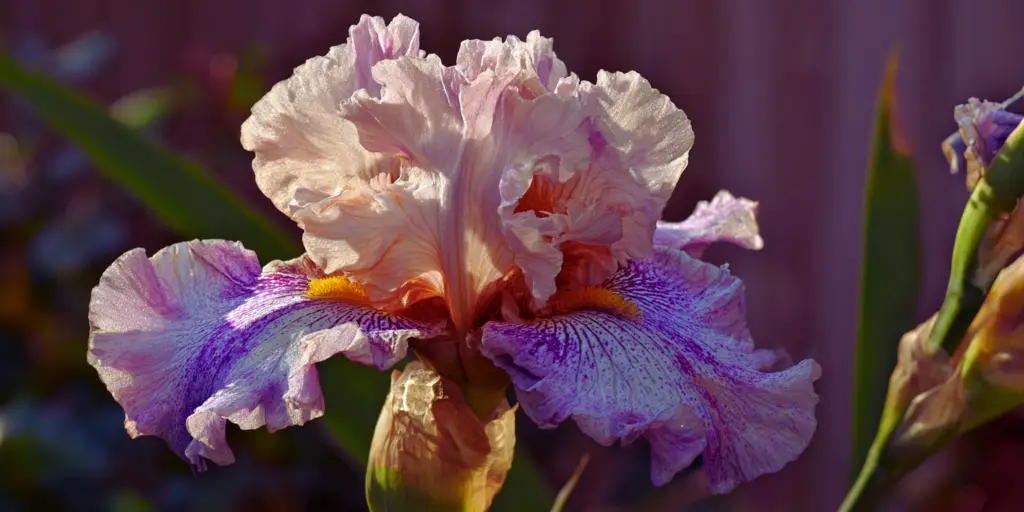
The name is literal. Each of the three drooping falls wears a strip of fuzzy hairs, the beard, usually in a contrasting color that guides bees into the flower. Beardless irises, Siberian and Japanese among them, have smooth falls with no such tuft, which is the quickest way to tell the groups apart.
Do bearded iris rebloom?
Some do. Reblooming cultivars flower in spring like any iris and then again in late summer or fall where the growing season is long and the plants stay fed and watered through the heat; Immortality is a widely grown one. Most bearded iris, though, bloom once a year in spring, so check the label if a second flush is what you want.
Are bearded iris deer-resistant?
Yes, reliably. The bitter, mildly toxic compounds that make iris a poor meal also make it one of the more dependable deer- and rabbit-resistant perennials, which is worth a great deal in a garden where those animals browse. A very hungry deer will sample almost anything, but iris sits near the bottom of its list.
Can I grow bearded iris in a container?
Yes, in a wide pot with excellent drainage and a gritty mix, the rhizome set shallow with its top exposed just as it would be in the ground, placed in full sun and watered sparingly to keep rot away. Dwarf and intermediate types suit pots better than the tallest bearded iris, which want more root room and can grow top-heavy in a container.
When do Bearded Iris typically bloom?
Most bearded irises bloom in mid to late spring. In many temperate climates, they start flowering around April or May. The exact timing can depend on the variety and local climate. Some early varieties may bloom in early spring, while others peak in late spring to early summer (May or June). If you have a mix of different cultivars, you can get a sequence of blooms. Additionally, some special "reblooming" bearded iris will bloom again later in the season (often late summer or fall) after the main spring display.
My iris leaves are healthy but it didn't bloom this year. What could be wrong?
When an established bearded iris fails to bloom, common reasons include:
Insufficient sunlight: Iris need lots of sun to set flower buds. If nearby trees or shrubs have grown and now shade the iris, or if it’s planted in a too-shady spot, it may not bloom.
Overcrowding: If the clump has not been divided in many years, the rhizomes may be competing and inhibiting each other. Overcrowded iris often stop blooming. Dividing the clump can restore vigor.
Planted too deep: If the rhizome is buried under too much soil, it can prevent blooming. The top of the rhizome should be at or near the surface. Gently remove some soil from atop the rhizome if you suspect it’s too deep.
Excess nitrogen: Fertilizer that is high in nitrogen (or soil that’s very rich) can cause irises to grow lush leaves but few or no flowers. Iris prefer a balanced fertilizer or one a bit higher in phosphorus and potassium to promote blooms. Avoid over-fertilizing.
Immaturity or recent transplant: A newly planted or recently divided iris may take a year to establish before it blooms well. Sometimes patience is needed; they often skip a year of blooming right after being moved.
Pests or disease: Iris borer or rot can weaken the plant internally, so it doesn’t have the strength to flower. Check that the rhizomes are healthy (firm, not mushy or tunneled). If you find problems, treat accordingly and allow recovery.
By troubleshooting these factors, you can usually get your iris back to blooming. Often, sunlight and division are the first things to verify.
Are bearded irises really low maintenance?
Yes, bearded iris are generally considered easy and low maintenance flowers in the garden, provided they are planted in suitable conditions. They don’t require a lot of pampering: they tolerate drought once established, they don’t need heavy fertilizing or constant care, and they aren’t fussy about soil as long as it drains well. The main maintenance tasks are: planting them properly (shallow in sun), removing spent flower stalks after bloom, occasional weeding around them (they don’t like competition from weeds or groundcover crowding their rhizomes), and dividing the clumps every few years. They also benefit from having old foliage cleaned up annually to prevent pests, but that’s about it. Compared to many other flowering perennials, irises are quite forgiving. They’re hardy through cold winters and can handle hot summers. So, in the spectrum of garden plants, bearded irises rank as very low-care. Just remember that "low maintenance" doesn’t mean "no maintenance". For example, if they’re never divided or if they sit in waterlogged soil, they will suffer. But with minimal routine care, they thrive and provide beautiful blooms year after year.
What is eating my iris, and are these borer holes?
Borer feeding shows as pinprick-sized holes and tan or water-soaked streaking that worsens down the leaf toward the rhizome as the season progresses, reaching the rhizome by around midsummer, July in Minnesota, per UMN Extension. UMN also says outright that bacterial soft rot, iris scorch and fungal leaf spot may show the same symptoms with no borer present, and that all of them brown the leaf tips and weaken the plant, so treat a photograph as a starting point rather than a verdict. A real post in this research asks precisely that question about a Georgia rhizome: bug holes, or just where the roots have died?
Why did the base of my iris leaves go brown and mushy?
Most likely bacterial soft rot, particularly if there is a foul smell and the tissue is genuinely soft rather than dry and brown. It frequently arrives as a secondary infection behind borer tunnelling, which is why Iowa State's own framing pairs them: find one, look for the other. The Pacific Northwest Plant Disease Management Handbook describes water-soaked streaks progressing upward from the base of the leaf fans, with rhizomes rotted and foul smelling, and notes that lifted plants sometimes leave nothing but empty shells where the rhizome was.
Why do my iris flop over every single year?
Usually mechanics rather than disease: heavy blooms on a tall stalk in a bed with nothing to lean on, right after wind or heavy rain. Gardeners in this page's own sample report it recurring every year on the same plants, one asking whether that is simply normal. If the stem is soft or discoloured where it gave way rather than merely bent, read it as a possible rot symptom instead, since the PNW handbook notes decay can occur on the floral stems and not only on the rhizome.
Someone else's iris looks nothing like mine. Is it even an iris?
It may not be a bearded iris, and it may not be an iris at all. In the 473-post sample behind this page, 70.2 percent of posts never say which iris the writer means and only 16.1 percent say bearded; the rest name Siberian at 3.0 percent, walking iris at 2.3, Dutch at 2.1, water or flag iris at 1.3, crested dwarf at 1.3, African iris at 1.3, Louisiana at 1.1 and Japanese at 0.8. Two of those are not true irises despite their names: walking iris is Neomarica and African iris is Dietes. Everything on this page is written for bearded iris, the rhizomatous, sword-leaved garden iris with the fuzzy beard on its falls.
Interesting tips
The biggest lever is the buy itself. A named cultivar chosen for your climate, and if you can for disease resistance or rebloom, prevents more trouble than any amount of later fussing, and a plump, firm rhizome with a healthy fan outperforms a soft bargain division every time. Give each rhizome room when it goes in, 12 to 18 inches, so air moves between the fans and borer and rot find less purchase; the temptation to pack them for instant effect nearly always backfires within a couple of seasons. Because iris travel in the direction their leaves face, point each fan where you want the clump to grow, and over a few years a row will march forward exactly as planned. Label the cultivars at planting or sketch a map of the bed, since out of bloom every iris fan looks alike and division a few years on turns into guesswork otherwise. Resist cutting the foliage down after flowering, because those green leaves feed next year's blooms; leave them until they yellow, then tidy, and save the hard cleanup for fall to deny the borer its egg-laying litter. Pair iris with partners that cover the gap it leaves behind, since peonies bloom alongside and their foliage hides ripening iris leaves, while later daylilies and coneflowers carry the border on through summer.
- Planting Depth: When planting bearded iris rhizomes, remember the adage "shallow is best." Keeping the rhizome near the soil surface (with the top even showing slightly) allows sun to warm it and prevents rot. Deeply buried rhizomes often refuse to bloom.
- Avoid Over-Mulching: Unlike many perennials, bearded iris do not like a thick layer of mulch over their rhizomes. Heavy mulch can hold too much moisture and encourage rot. If you mulch your garden, keep mulch a few inches away from the iris rhizomes so they get air circulation.
- Deadheading and Grooming: After the iris finish blooming, promptly cut off the spent flower stalks down to the base. This tidies the plant and directs energy back to the rhizomes rather than into seed production. Let the green leaves continue growing to feed the plant, but you can trim away any browned or diseased leaf tips. In autumn, you may trim foliage back to about 6 inches to clean up the garden, especially if you’ve had issues with iris borer or leaf spot.
- Divide for More Blooms: If your irises start to form large clumps with many crowded rhizomes and fewer flowers, it’s time to divide. Ideally do this every 3-5 years. Division not only reinvigorates the mother plant to bloom better, it also gives you new rhizomes to expand your garden or share. Late summer is the perfect time for this task, as the weather is warm enough to heal cuts and the plants will establish before winter.
- Fertilizing Iris: Bearded iris are not heavy feeders. In fact, too much fertilizer (especially nitrogen) can harm them. A light application of a balanced fertilizer or a bulb fertilizer in early spring (when new growth starts) is usually sufficient to promote good flowering. Some gardeners also add a small dose of low-nitrogen fertilizer right after spring bloom to help rebloomers along. Always avoid fertilizer directly touching the rhizome, and scratch it into the soil nearby instead.
- Choose Complementary Companions: To get the most impact, plant irises alongside other plants that complement their lifecycle. For instance, peonies and irises make a classic pairing. They bloom around the same time, creating a lush, layered display. Also, when iris blooms fade, peony foliage can help cover the iris leaves. Similarly, daylilies and coneflowers will take over blooming in summer after the irises are done, ensuring continuous color in the bed.
- Iris Lore: The iris has cultural and historical significance. The fleur-de-lis symbol, associated with French royalty, is a stylized depiction of an iris. And in the language of flowers, iris often symbolizes wisdom, hope, or valor. Knowing these tidbits can add an extra layer of enjoyment to growing these flowers.
- Pest Check: Each fall, make it a habit to clean up around your iris clumps. Remove dead leaves and debris, as this is where iris borer moths like to lay their eggs. By keeping the area clean, you break the life cycle of this pest and protect your plants for the next year.
- Label Your Cultivars: With so many iris varieties in different colors, it’s easy to forget which is which in your garden, especially when they’re not in bloom. Consider labeling them with durable plant tags near each clump, or sketch a garden map. This way, when dividing or replanting, you’ll know which ones are the prized blue flowers versus the apricot or yellow, etc., and you can arrange or share them as intended.
- Enjoy the Evergreen Foliage: In mild winter climates, iris leaves can stay green through much of the winter, offering structure in the garden when many other perennials are dormant. Even where winters are cold, the leaves often remain until a hard freeze. Don’t be too quick to cut them back in fall unless needed. They help feed the rhizome. Trim in late fall or early spring if the foliage has died back.
Related Guides & Flowers
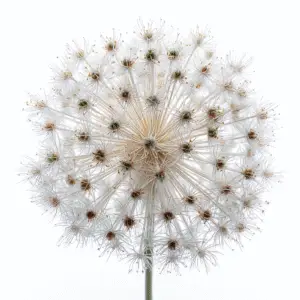
Alliums
Spring bulbs with bold pom pom blooms that pair well with iris fans and help add height and structure in the same sunny beds.
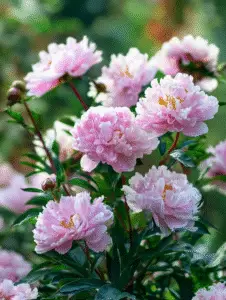
Peonies
Classic late spring partners for bearded iris, with big blooms and similar full sun to part sun garden placement.
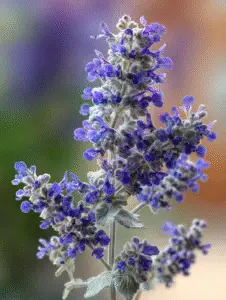
Catmint
A soft, low mound that fills gaps around iris clumps and supports a long season of pollinator friendly color.
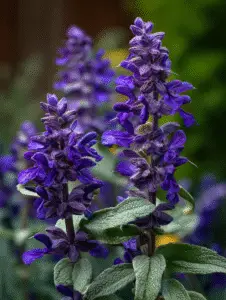
Salvia May Night
Upright purple spikes that echo iris tones and keep the border blooming after iris season.
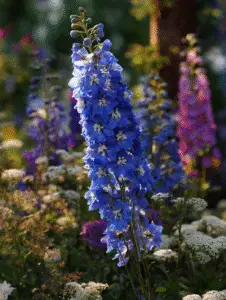
Delphinium Elatum
Tall vertical bloom spikes that create a dramatic backdrop behind bearded iris in cottage style borders.
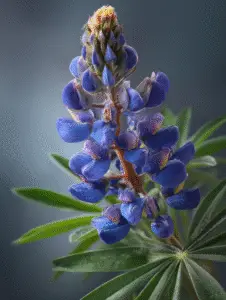
Lupine
Another spike flower for late spring that layers well with iris and likes similar garden sun exposure.

Globe Thistle
Summer texture and blue tones that extend interest after iris blooms finish, great for sunny and well drained beds.
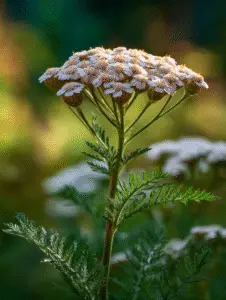
Yarrow
Tough, drought tolerant blooms that work well near iris in brighter, drier borders and add long lasting flower clusters.
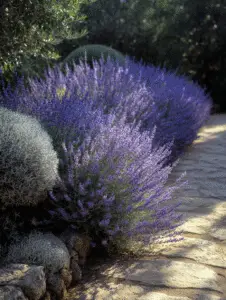
Lavender
Mediterranean style companion for sunny borders, adds fragrance and a clean contrast to iris foliage shape.
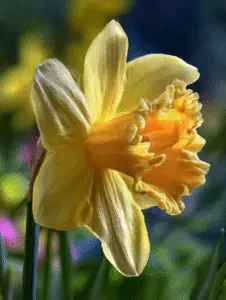
Daffodils
Early spring bulbs that can bloom around the same time as many irises, useful for layered spring color.
References
- Bearded Iris, Clemson University HGICUse for: basic care, sun needs, spacing, fertilizing, and general planting guidance.
- German Bearded Iris, Penn State ExtensionUse for: site selection, full sun guidance, and planting basics for bearded iris types.
- How to divide and plant bearded iris, University of Illinois ExtensionUse for: division timing, spacing, and replanting technique after bloom season.
- How can I control the iris borer, Iowa State University Extension and OutreachUse for: iris borer prevention, cleanup timing, and treatment timing based on shoot height.
- Iris, ASPCA Poison ControlUse for: pet toxicity details, symptoms, and the note that rhizomes have the highest concentration of toxic compounds.
Enjoying our flower guides? Add YourFlowersGuide as a preferred source on Google. It helps more readers find us.
Add to Preferred Sources