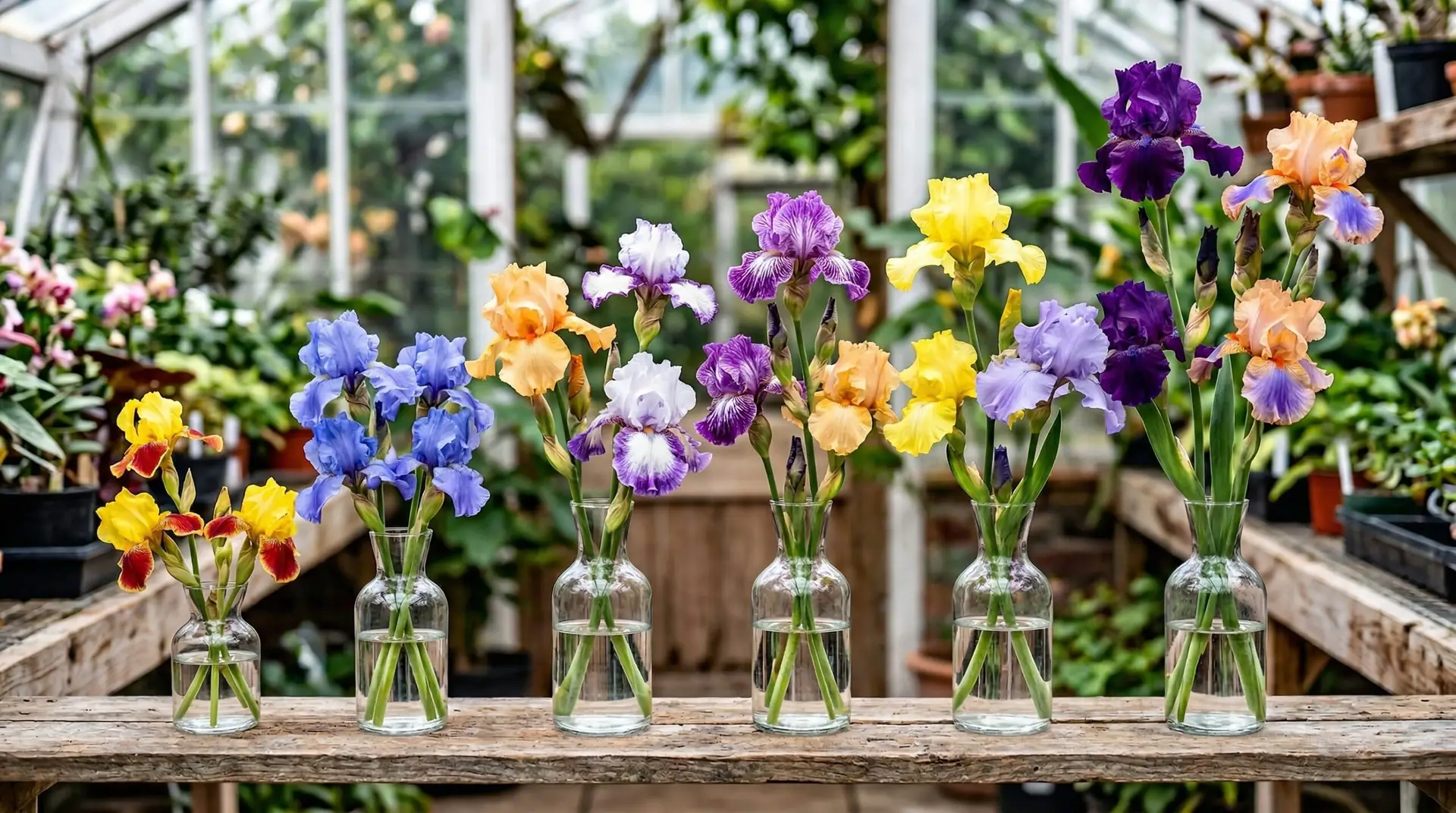
When you decide to plant bearded irises, you quickly realize that the common name covers a massive range of plants. You are choosing between plants that hug the ground at eight inches tall and plants that tower over three feet high. This size difference dictates where the plant belongs in your garden, when it will bloom, and how much maintenance it will require. All bearded irises share the same basic flower anatomy, featuring three upright petals called standards and three downward-falling petals called falls, complete with the fuzzy caterpillar-like beard in the center. However, the physical scale of these plants changes entirely how they function in a garden design. The size you choose will dictate which companion plants make sense nearby, as a tall iris can easily shade out delicate ground covers, while a dwarf iris might be swallowed up by aggressive neighbors. Understanding how these different sizes behave will help you pick the right plant for your specific garden conditions.
Contents 5 sections
Understanding the six official iris sizes
Gardeners often group these plants simply as tall or short, but the American Iris Society divides bearded irises into six distinct classes based on height and bloom size. At the very bottom of the scale are the miniature dwarf bearded irises, which stay under eight inches tall and produce tiny, delicate blooms. Next are the standard dwarf bearded irises, growing between eight and fifteen inches high and offering slightly larger flowers on sturdier stems. Moving up the scale, you find intermediate bearded irises and miniature tall bearded irises, which occupy the middle ground between sixteen and twenty-seven inches. Border bearded irises share this same middle height range but produce larger flowers and thicker stems that mimic the tall varieties. These middle classes are excellent for gardeners who want the look of a tall iris without the extreme height, offering a sturdy compromise for windy areas. Finally, the tall bearded iris group includes any plant growing over twenty-seven and a half inches, with many varieties easily reaching three or four feet in height.
The case for dwarf and miniature bearded irises
If you have a smaller garden or want to plant at the very front of a flower bed, dwarf bearded irises are usually the better choice. These compact plants are the first irises to wake up in the spring, often flowering at the exact same time as your early spring bulbs. You can plant them alongside a tulip display to create a dense, low-growing carpet of early spring color. Because they are so short, miniature bearded irises are completely immune to wind damage and never require staking. They are also highly suited for rock gardens, where their small rhizomes can tuck neatly between stones and thrive in the sharp soil drainage. Even after the blooms fade, the short, grassy foliage of the dwarf types remains neat and unobtrusive through the summer months. The main trade-off with dwarf varieties is that their individual flowers are much smaller, making them less useful for indoor flower arrangements. Also, these shorter plants multiply so quickly that you will need to dig and divide the clumps more frequently than you would with taller types.
The appeal of tall bearded irises
The tall bearded iris is the classic garden plant most people picture when they think of this flower category. These plants produce massive, ruffled blooms that can measure six inches across, and they come in every imaginable color combination and pattern. Because of their height, they belong in the middle or back of a mixed perennial border where their large, sword-like foliage can provide vertical structure even after the flowers fade. When planted in large groups, these tall varieties create a strong focal point that draws the eye completely across the yard. They bloom later than the dwarf varieties, usually bridging the gap between late spring and early summer perennials. A well-grown tall bearded iris will produce multiple branches on a single thick stalk, allowing one plant to open several large flowers in succession over a period of weeks. You can easily cut these long, sturdy stems to bring large, fragrant bouquets inside your home.
Managing the trade-offs of taller plants
The significant drawback to tall bearded irises is their vulnerability to heavy weather and spring storms. A heavy spring rainstorm or a strong gust of wind can easily snap a three-foot flower stalk in half, entirely ruining the floral display for the year. The large, ruffled petals of the tall varieties act like cups during a rainstorm, holding water that makes the flower heads incredibly top-heavy. This means you will often need to spend time staking individual stems with bamboo or metal supports to keep them upright as the heavy buds begin to open. If your property is located on an exposed hill or receives constant high winds, tall irises will require constant monitoring and physical support. The dwarf varieties bypass this problem completely, as their short stature keeps them safely below the wind line. You have to weigh the desire for giant, dramatic flowers against your willingness to go out into the garden and tie up heavy stalks before a rainstorm hits.
Comparing bloom timing and garden maintenance
The choice between tall and short varieties strongly affects your garden maintenance schedule and your sequence of spring blooms. Dwarf irises will give you color in early spring, while tall irises wait until late spring or early summer to put on their show. Some gardeners choose to plant both sizes of iris in the same bed to ensure a continuous month or more of flowers as the different classes take turns blooming. When it comes to long-term care, both types require full sun and excellent soil drainage to prevent their fleshy rhizomes from rotting in the ground. Both sizes also need their rhizomes planted near the soil surface so they can bake in the summer sun, a requirement that applies regardless of the plant’s ultimate height. The tall varieties demand more hands-on attention during their specific bloom season because of the staking requirement and the need to deadhead large, spent blooms. Conversely, the dwarf varieties demand more physical labor every three years because their rapid growth rate leads to overcrowded centers that stop producing flowers until the rhizomes are dug up and separated.
Choosing the right size ultimately depends on your specific garden layout and your tolerance for routine maintenance tasks. If you live in an area with high spring winds, or if you want an easy-care plant for a rockery or border edge, the dwarf and miniature varieties make the most practical sense. If you want large, dramatic flowers for cutting, or if you need a tall architectural plant to anchor the back of a flower bed, the tall bearded varieties are worth the extra effort of staking. You do not have to limit yourself to just one extreme, as the intermediate and border classes offer a helpful compromise in height and bloom time. Take the time to measure your available space and observe your local wind patterns before ordering your rhizomes. By matching the plant’s mature height to your garden’s physical conditions and your own maintenance preferences, you can enjoy these reliable perennials for decades.
More About Bearded Iris
Why bearded iris stops blooming and the six most common causes
How to identify and prevent iris borer the most destructive bearded iris pest
How to grow bearded iris in hot southern climates where summer heat is intense
How to plant bearded iris rhizomes for a stunning spring flower show
Bearded iris color combinations and how to design a rainbow iris bed
Reblooming bearded iris varieties that flower twice in a single growing season
Dividing bearded iris in summer for healthier plants and more blooms next spring
Using bearded iris as cut flowers for elegant spring bouquets and arrangements
Iris meaning and iris colour meanings, honestly explained
Enjoying our flower guides? Add YourFlowersGuide as a preferred source on Google. It helps more readers find us.
Add to Preferred Sources