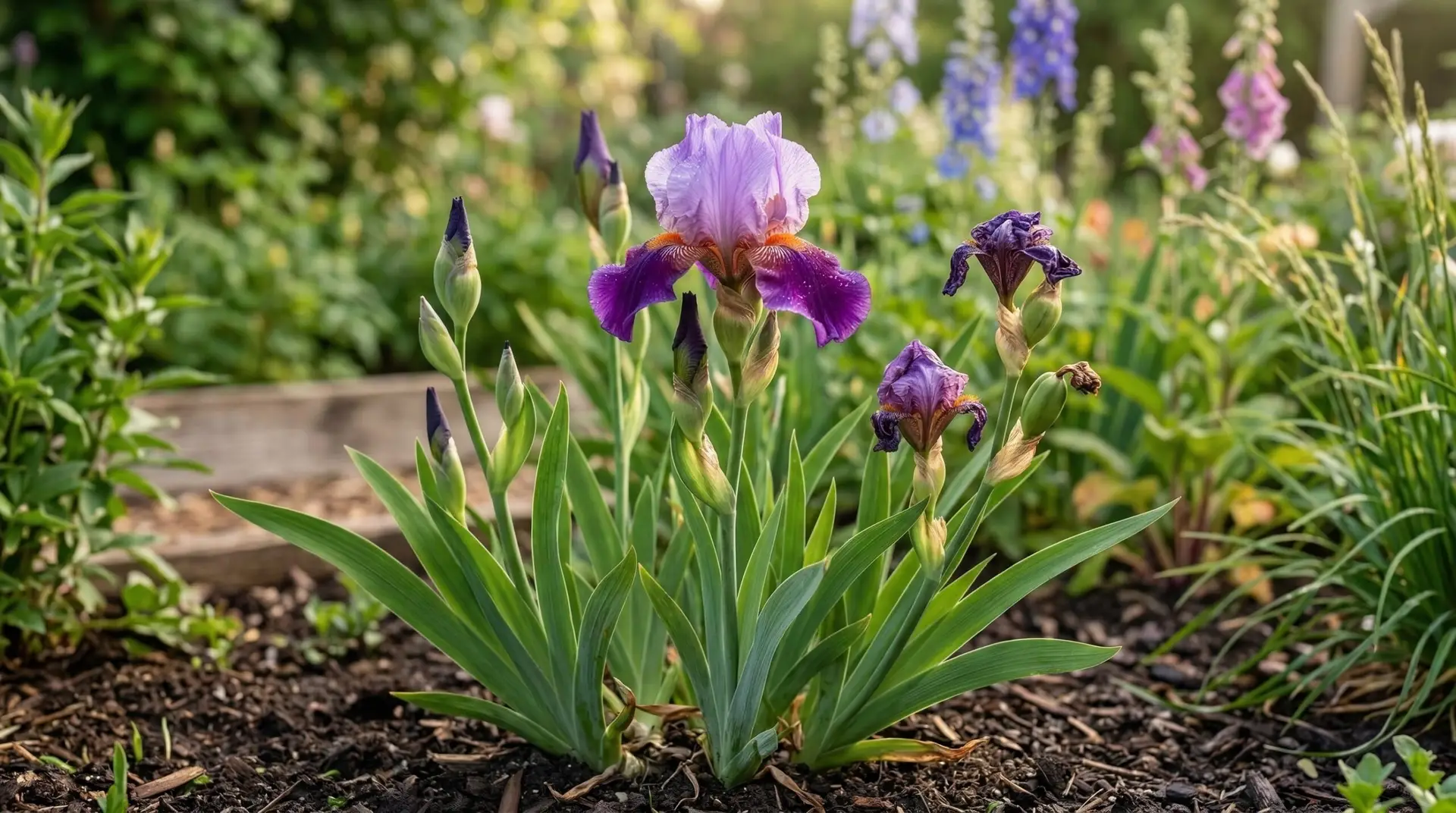
Anyone who has grown bearded irises for more than a few seasons knows the quiet dread of finding a collapsed fan of leaves in midsummer. The iris is generally a resilient plant, thriving in well-drained soil and full sun, but it faces one truly devastating enemy in the garden. The iris borer, known scientifically as Macronoctua onusta, is a native North American moth that has evolved to feed almost exclusively on these plants. While many gardeners blame bacterial soft rot for the sudden foul-smelling mush that consumes their prized rhizomes, the rot is usually just a secondary infection. The true culprit is the borer larva, which hollows out the fleshy underground stem and creates the perfect environment for opportunistic bacteria to multiply. Understanding the exact life cycle of this pest is the only reliable way to protect your collection from total loss.
The lifecycle of this destructive iris pest begins quietly in late summer and early fall when the adult moth lays clusters of eggs on old, dry foliage. These eggs overwinter in the garden debris, waiting for the ambient temperatures of early spring to trigger their hatching. When the tiny caterpillars emerge, they crawl up the newly developing green leaves and chew microscopic holes to enter the interior tissue. You will rarely see the caterpillars themselves at this stage, but you can identify their presence by looking for water-soaked streaks or ragged, bleeding edges along the fan of the leaf. If you hold an infected leaf up to the sunlight, you can sometimes see the dark silhouette of the tiny larva mining its way downward. Catching the infestation during this leaf-mining stage is your best opportunity to stop the insect before it reaches the vulnerable base of the plant.
Contents 3 sections
Early intervention and biological treatments
When you spot those telltale streaks in April or May, immediate physical intervention can save the plant. You can often kill the young caterpillar simply by pinching the leaf firmly below the water-soaked damage and sliding your fingers upward to crush the insect inside the foliage. For larger plantings where manual inspection is impractical, a carefully timed application of Bacillus thuringiensis, commonly known as Bt, offers an effective biological control. This naturally occurring soil bacterium paralyzes the digestive tract of caterpillars, but it must be applied when the larvae are actively feeding on the outside of the leaves or just entering the leaf tissue. Once the borer is safely sealed inside the leaf or has reached the rhizome, spray treatments are completely useless. Timing the Bt application requires close observation of your local spring weather, usually coinciding with the period when the foliage is about five to six inches tall.
Surgical rescue for infested rhizomes
If the larva successfully navigates down the leaf fan, it enters the rhizome, which is the modified, creeping stem that stores the plant’s nutrients. By midsummer, the caterpillar grows to nearly two inches long, sporting a pinkish body and a dark brown head, and consumes massive amounts of tissue. The damage becomes obvious when the entire fan of leaves turns yellow, falls over, and pulls away from the base with a gentle tug. At this point, the only viable iris borer treatment is to dig up the entire clump and perform a surgical rescue. You must wash the soil away completely and use a sharp, sterilized knife to cut away all soft, damaged, or rotting tissue until you reach clean, firm, white flesh. During this excavation, you will likely find the fat caterpillar itself, which must be destroyed immediately. Leave the newly trimmed rhizomes out in the sun for several days so the cut surfaces can dry and callous over before replanting them in fresh soil.
The relationship between the physical damage caused by the insect and the subsequent bacterial soft rot is a subject of frequent discussion among commercial growers. The borer introduces Pectobacterium carotovorum, a common soil bacterium, directly into the wounded tissue as it feeds and defecates inside the rhizome. This bacterium thrives in warm, moist conditions and rapidly breaks down the plant’s cellular structure, producing a distinctively foul odor that experienced gardeners immediately recognize. If you catch the borer early enough and remove it, a healthy rhizome can sometimes wall off the damage with a layer of corky tissue, provided the soil is well aerated and dry. However, heavy clay soils or overwatering will compound the problem by creating the exact anaerobic conditions the rot bacteria need to finish destroying the plant. Understanding this secondary infection explains why chemical insecticides alone fail, as they do nothing to address the bacterial decay that actually kills the plant.
Fall sanitation and long term prevention
While rescuing a damaged plant is possible, strict cultural practices provide the most reliable iris borer prevention. Because the adult moth specifically seeks out dead foliage to lay her eggs, leaving garden debris in the beds over the winter guarantees a severe infestation the following spring. You must remove all brown, dried, or diseased leaves after the first hard frost, cutting the remaining healthy foliage down to about six inches. Bag this debris and send it to the municipal landfill rather than adding it to your home compost pile, as home compost rarely reaches the sustained high temperatures required to kill the overwintering eggs. Maintaining excellent weed control around the beds also reduces the hiding places for the adult moths and improves air circulation around the plants. Gardeners often plant species like the daylily nearby to provide continuous bloom, but you must ensure these neighboring plants do not flop over and trap moisture or dead leaves against the base of your irises.
Managing this specific insect requires vigilance and a willingness to act decisively at the first sign of trouble. You cannot rely on chemical sprays to fix the problem once the damage is visible at the base of the plant. By combining meticulous fall cleanup with careful spring observation, you break the reproductive cycle of the moth and protect the structural integrity of the rhizomes. Even if you lose a few fans to an undetected borer, prompt excavation and trimming can usually save the parent plant and encourage new offsets. Keep a close watch on your garden as the spring foliage emerges. Make leaf inspection a regular part of your early season routine to catch these pests before they migrate below ground.
More About Bearded Iris

Why bearded iris stops blooming and the six most common causes

Tall bearded iris versus dwarf bearded iris and choosing the right size for your garden
How to grow bearded iris in hot southern climates where summer heat is intense
How to plant bearded iris rhizomes for a stunning spring flower show

Bearded iris color combinations and how to design a rainbow iris bed

Reblooming bearded iris varieties that flower twice in a single growing season

Dividing bearded iris in summer for healthier plants and more blooms next spring
Using bearded iris as cut flowers for elegant spring bouquets and arrangements

Iris meaning and iris colour meanings, honestly explained
Enjoying our flower guides? Add YourFlowersGuide as a preferred source on Google. It helps more readers find us.
Add to Preferred Sources