

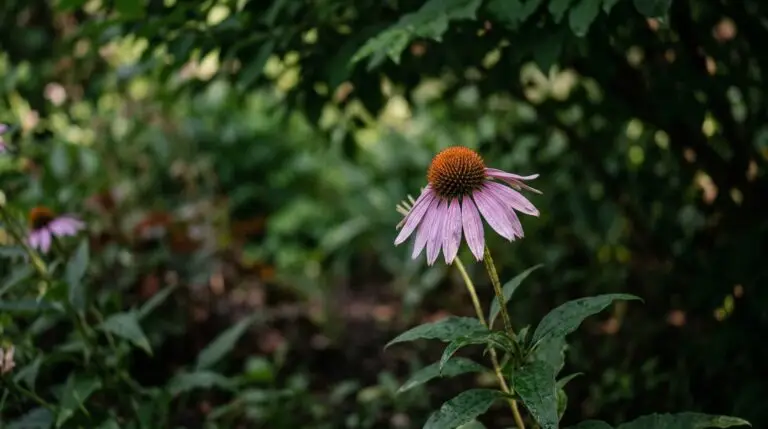
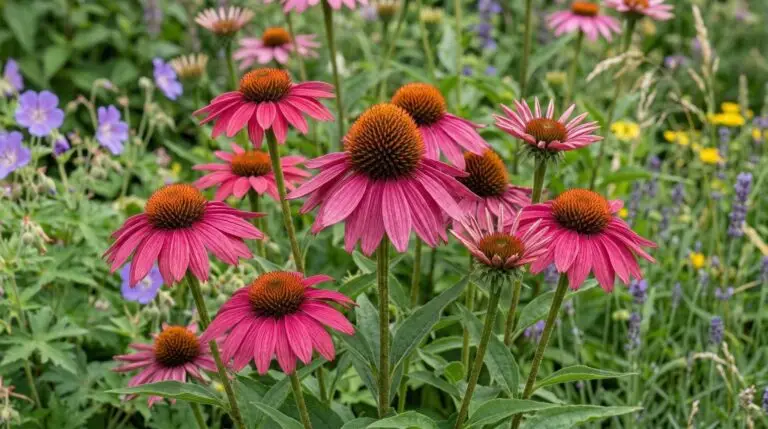
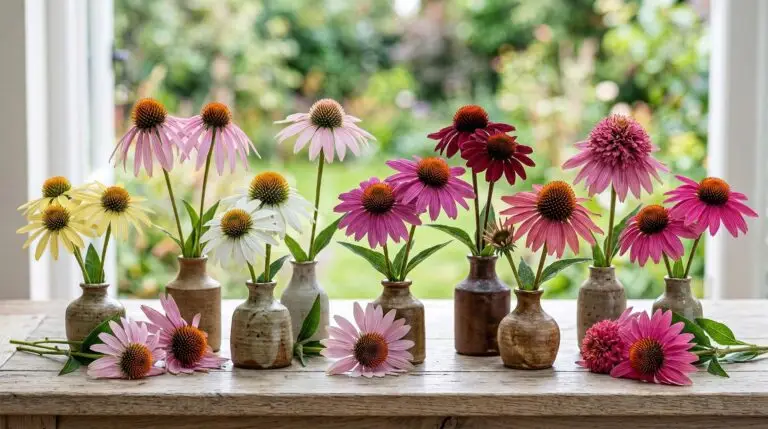
Coneflower bloom time across the US
Interactive map
 See the interactive map
Drag the date and the bloom moves north across the country. Every point has its own window, and the map says where it has no records rather than guessing. Free, with nothing to sign up for. Open the coneflower map.
City by city
Typical window, earliest first. Cultivars of the same flower can open days or weeks apart.
Taxonomy and origin
Echinacea belongs to the daisy family, Asteraceae, is entirely North American, and takes its name from the Greek echinos, hedgehog, for the spiny cone at the center of every flower head. Species counts are disputed: the traditional treatment used by nurseries and native plant societies recognizes nine, while a revision by Binns, Baum, and Arnason in Systematic Botany collapsed the genus to four species with eight varieties. Nine is the useful reading for a gardener: nursery labels follow it, and the plants it separates behave differently in a bed.
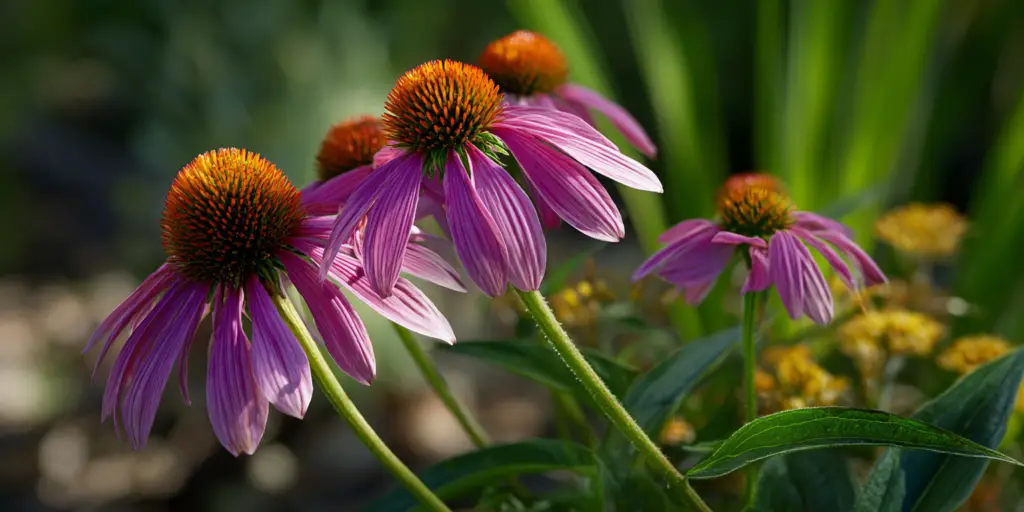
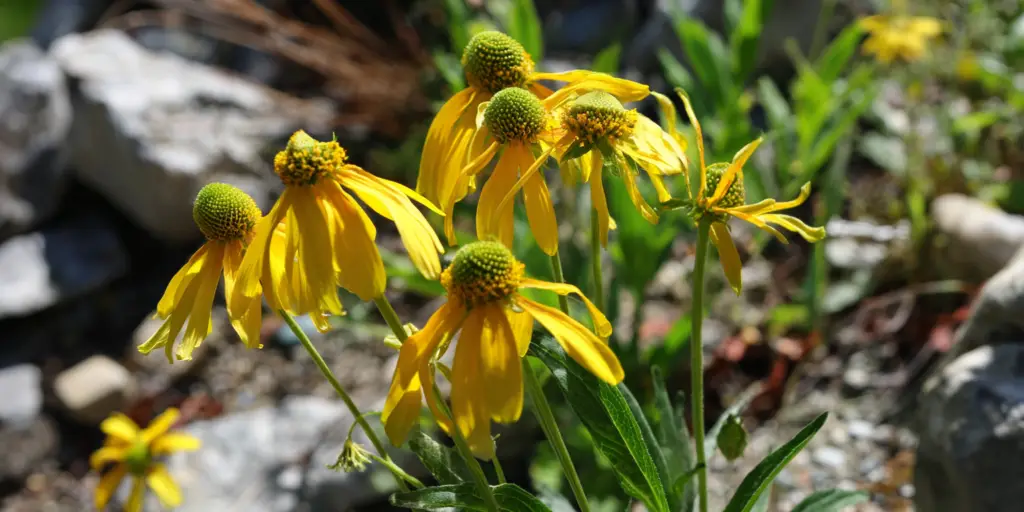
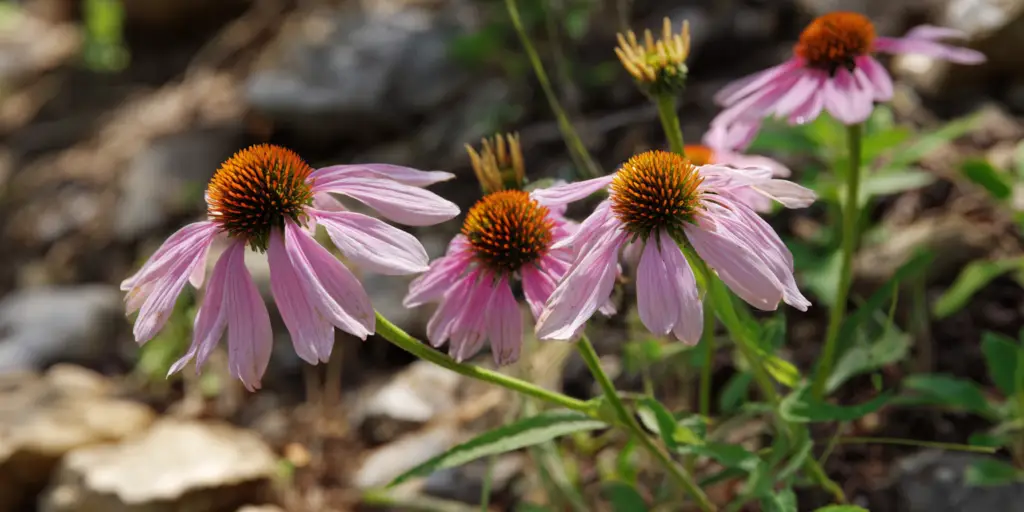
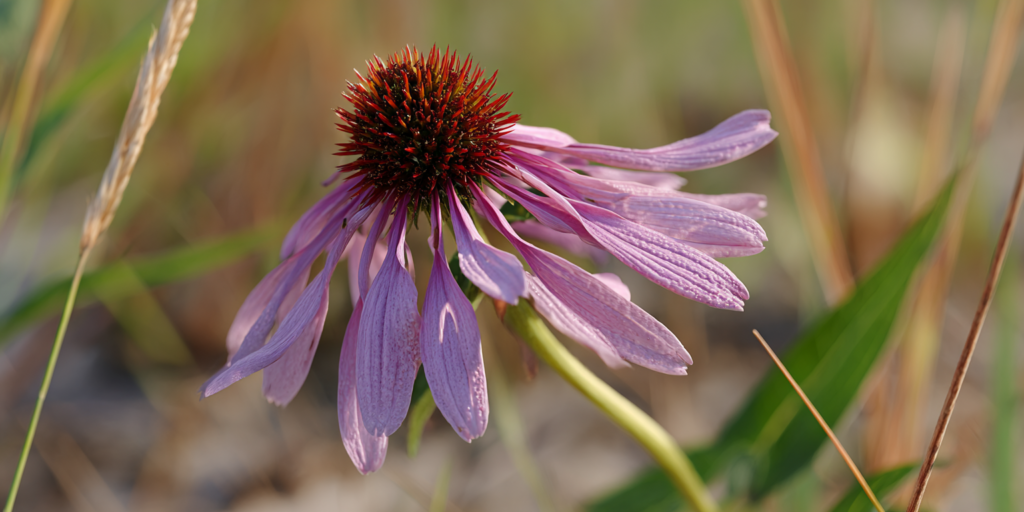
The ones you actually meet are purple coneflower, Echinacea purpurea, from moist prairie; narrow-leaf coneflower, E. angustifolia, from the dry plains; pale purple coneflower, E. pallida, whose long petals hang like wet ribbon; and yellow coneflower, E. paradoxa, the only yellow-flowered member of the genus. All four want the same ground: open, sunny, sharply drained, with hard summers and no standing water. Which species suits which conditions is worked through in the guide to the native coneflower species of North America.
Four species and two cultivar groups, rated by a trial rather than a catalogue
Mt. Cuba Center compared 75 taxa over three years in Delaware, five plants each, in full sun and clay loam, with first-year watering only and no fungicides, which is to say grown the way an ordinary garden is grown. The badge on each card is that trial's own verdict: none of the five species it grew reached top-performer status, and several coloured cultivars did.
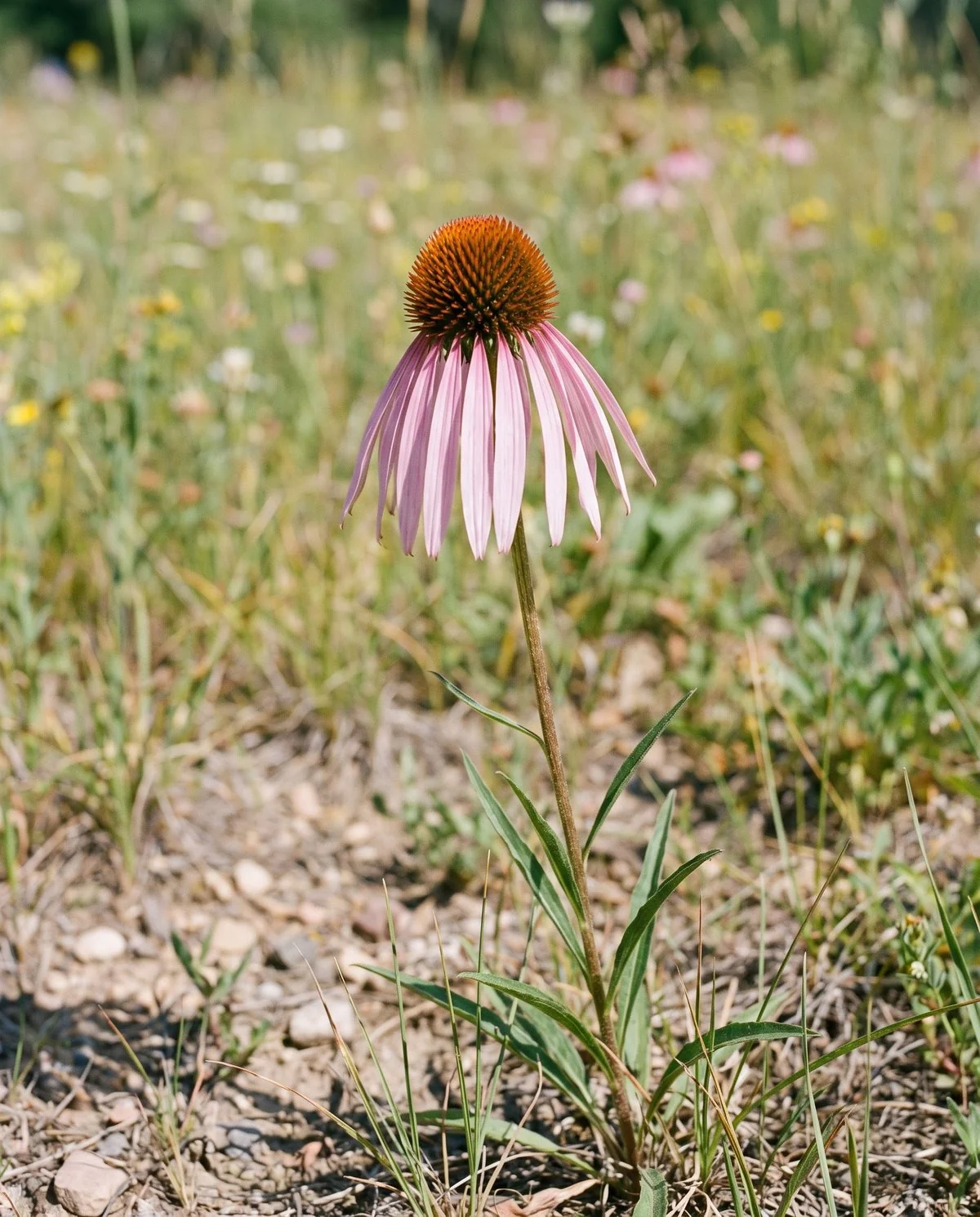
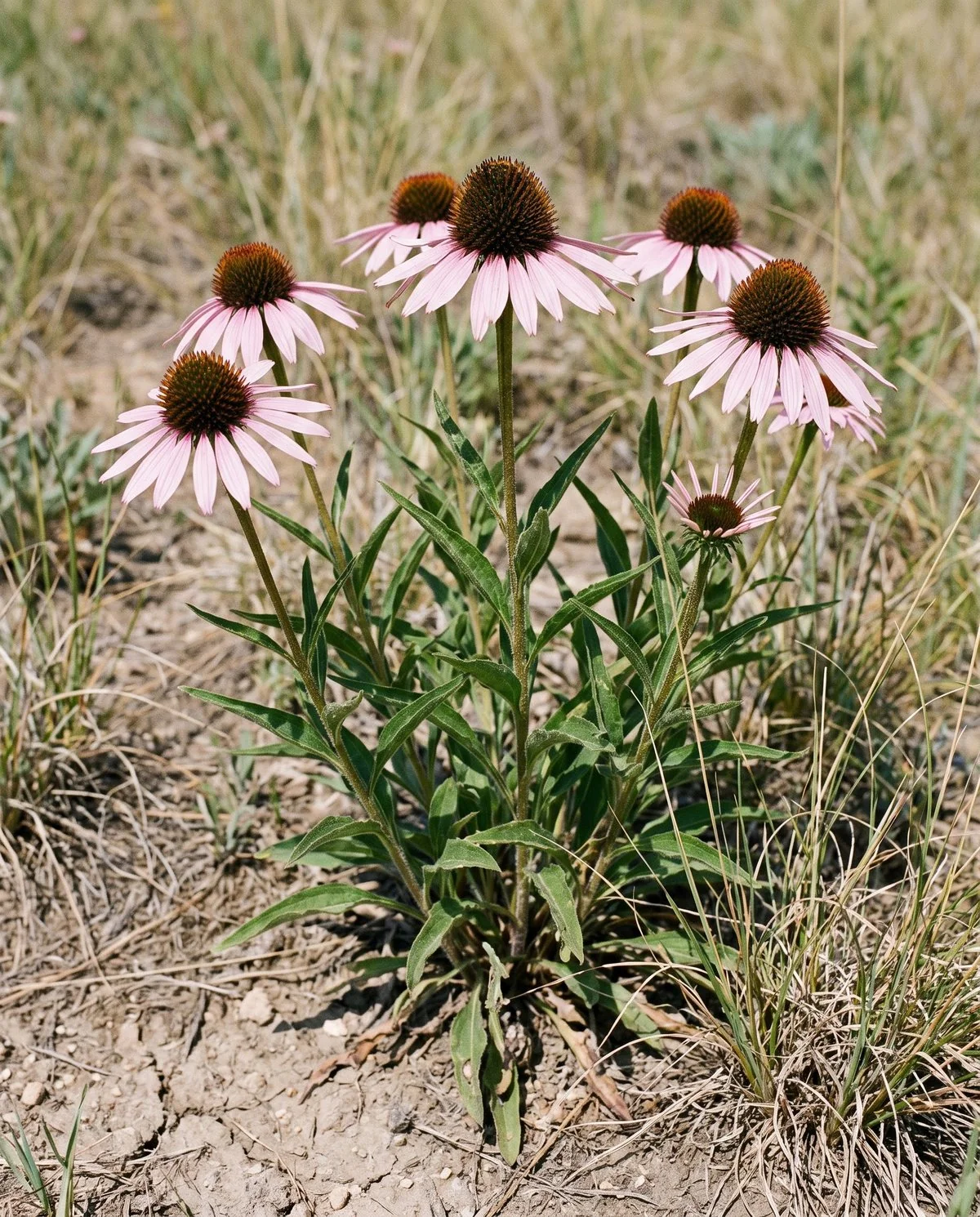
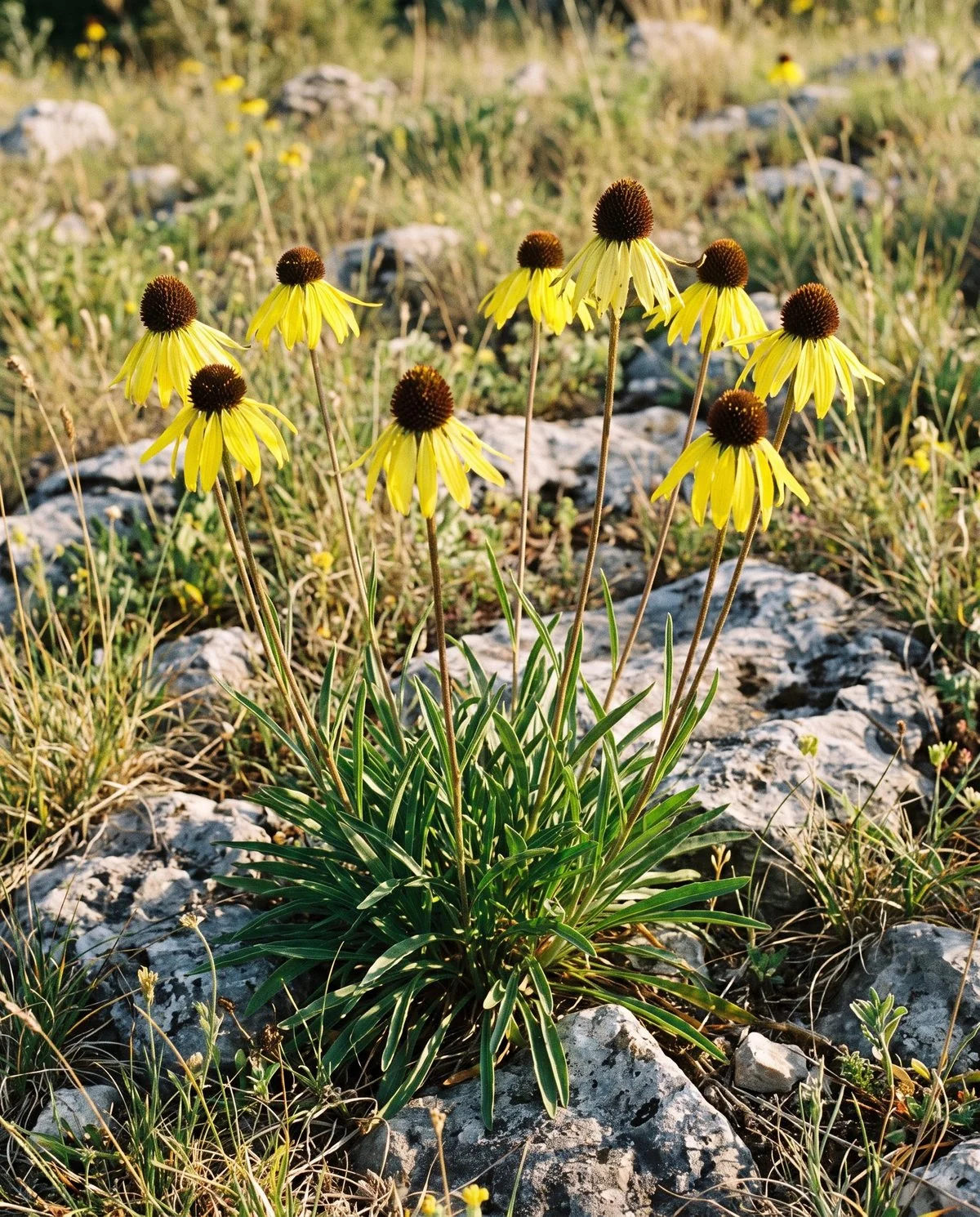
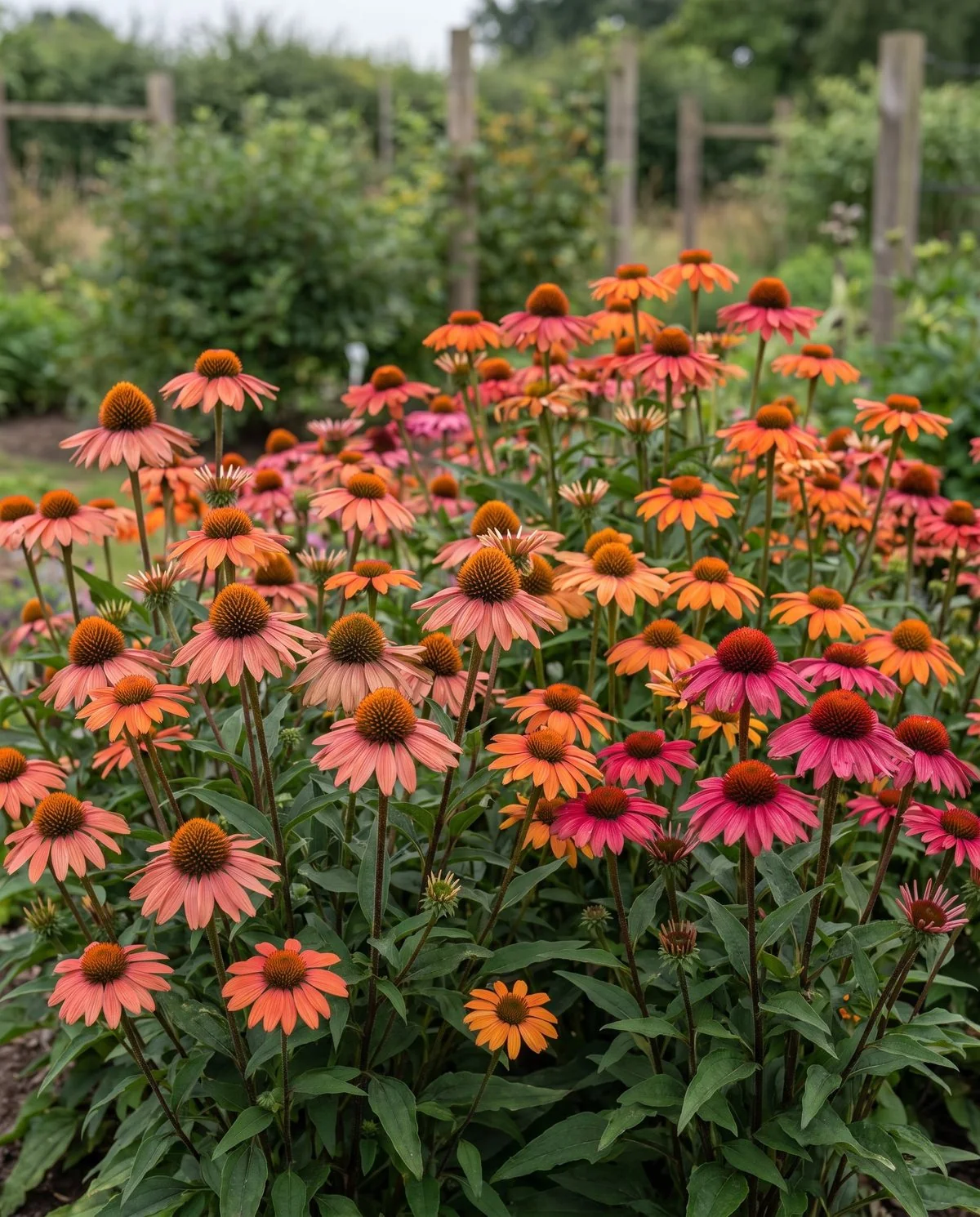
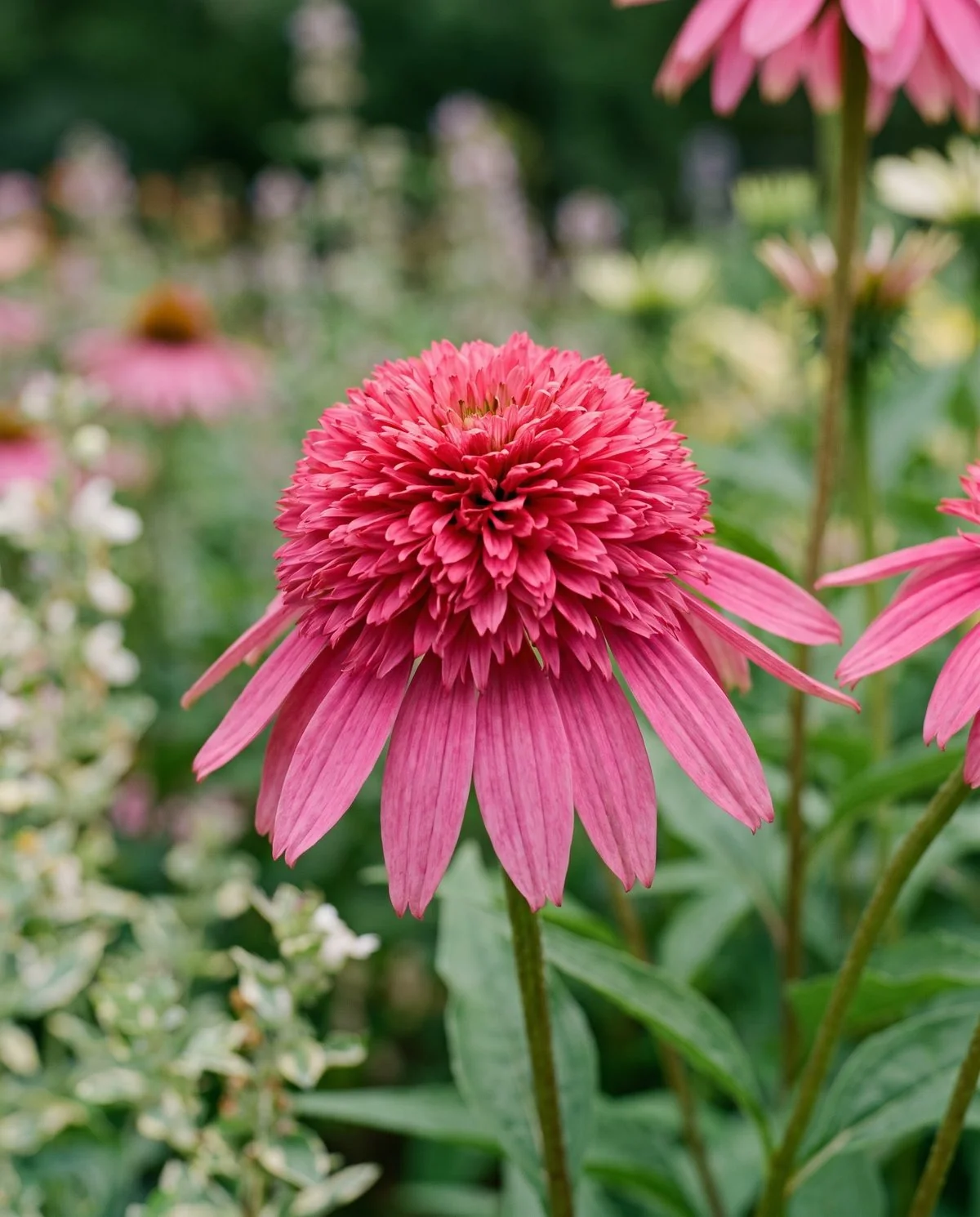
Ten named cultivars failed to complete Mt. Cuba's three years at all, six of them dying inside a single year: 'Southern Belle', 'Butterfly Kisses', 'Solar Flare', the double 'Elegance', 'Dixie Sun', Orange Skipper, Innocent Meadow Mama and SOMBRERO Sandy Yellow, with 'Peacock' and SOMBRERO Lemon Yellow reaching two years. Against that, E. purpurea 'Pica Bella' and 'Fragrant Angel' were top performers in both Mt. Cuba's 2007 trial and its 2018 trial, which the report describes as withstanding the test of time, and 'Fragrant Angel' drew the most pollinator visits and the most butterfly visits of all 75 taxa. Illinois Extension's own educator arrives at the same place from field experience rather than trial data, reporting very good luck with establishment and longevity in the straight species and less so with named cultivars, and advising gardeners to buy only names that have already been through a multi-year trial. A fourth data point from another continent: the Royal Horticultural Society trialled 142 Echinacea varieties over four years and gave its Award of Garden Merit to nine of them, a pass rate of 6.3 percent, reported here at second hand rather than from the RHS trial document itself.
Bloom time
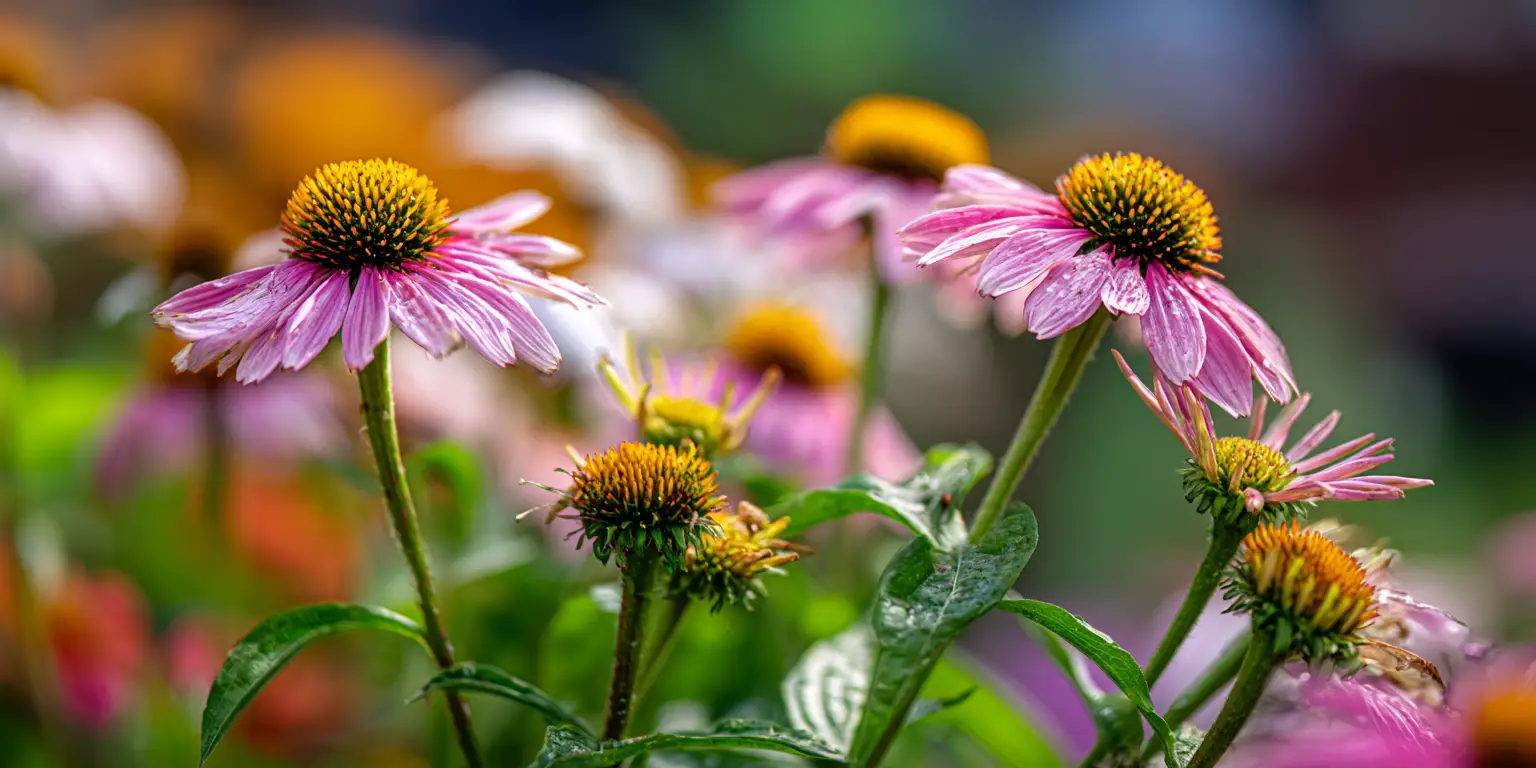
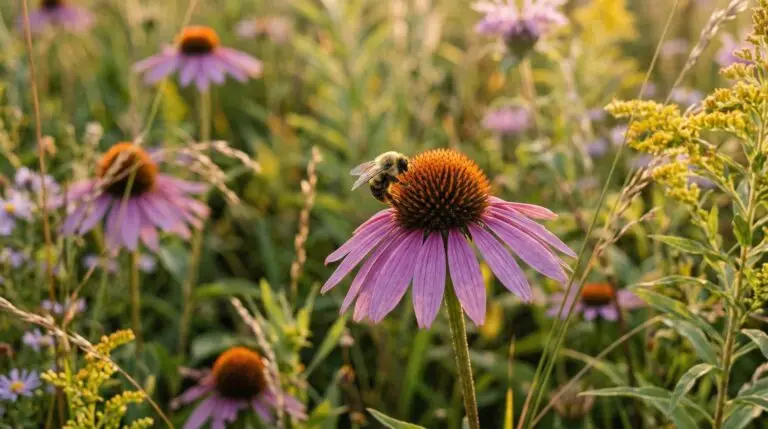
Coneflowers open in early to midsummer, generally from June into September, and hold the display far longer than most perennials because each head lasts weeks rather than days. The petals unfurl first, while the cone darkens and stiffens as its hundreds of tiny disk florets open in a slow spiral from the outside in, which is why a coneflower keeps feeding bees long after it stops looking fresh. Plants raised from seed usually skip flowering their first year. Left alone, a clump puts on one heavy display and slows down; deadheaded through midsummer, it pushes a second and sometimes a third wave into early fall.

Year one to year five, with the trial numbers attached
Year one depends on how the plant was raised. A nursery-grown potted coneflower set out in spring commonly flowers the same season, though not always: one gardener in this research had resigned himself to no blooms in the first year and then got a single triumphant flower that warm fall. From seed the wait is longer, most Echinacea species holding off until their second or third year, and Wisconsin Extension putting E. paradoxa at about five years before it produces its best flower show. Years two and three are where the difference between a species and a heavily bred colour selection becomes visible in a real garden rather than in a trial table, and the Chicago Botanic Garden's own number gives the shape of it: 75 of 274 trial plants, 27 percent, died across a single winter, attributed to weakened vigour and a lack of robust basal growth rather than to cold. The failure window for a weak plant is one particular winter rather than a gradual fade. By year five the odds are documented from two directions at once: nearly half of the Chicago Botanic Garden's 52 cultivars still had good survival across the full five years, which means roughly half did not, while Mt. Cuba's 'Pica Bella' and 'Fragrant Angel' were top performers in two trials run a decade apart. Aster yellows sits across the whole timeline as a wildcard that claimed 24 percent of every plant in Mt. Cuba's trial and about 13 percent of the Chicago Botanic Garden's, and it was severe enough at Mt. Cuba that the report says the infection rate made it difficult to determine what the natural life span of the various cultivars would even have been.
Height and spread
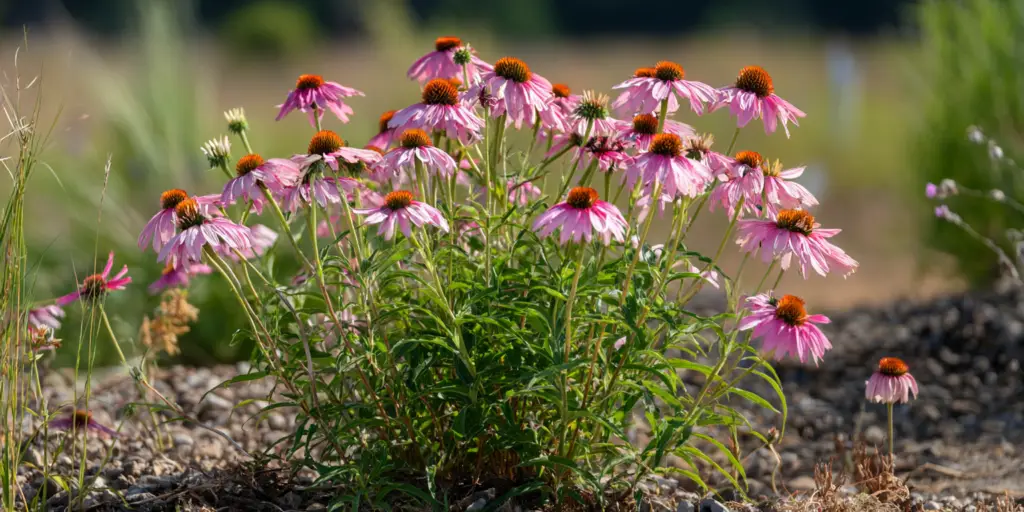
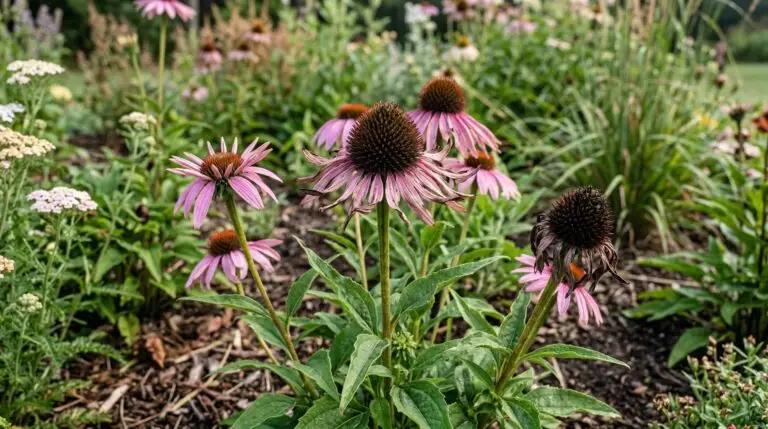
Most garden coneflowers stand 2 to 4 feet tall on stiff, rough stems, with dwarf selections holding to 12 to 24 inches, and a clump spreads 18 to 24 inches across. Set plants 18 to 24 inches apart: any tighter and the clumps shade each other into thin drawn stems, air stops moving through the sandpaper-rough foliage, and powdery mildew arrives by late summer. Crowding also produces flopping, the most common complaint about coneflowers and almost never a fault of the plant; too little sun and too much fertility do the rest. Where a tall selection still leans, cutting the stems back by a third before buds form gives a shorter, branchier plant. The full set of causes and fixes is in the guide to why coneflowers flop over and how to grow them upright.
Light
Full sun, at least six hours of direct light a day, is what a coneflower is built for, and eight is better in the north. In part shade the plant survives and even flowers, but stems stretch and soften, flower count drops sharply, and foliage that would dry fast after rain stays damp long enough for powdery mildew to take hold. Four hours of morning sun looks acceptable in the first year and disappointing by the third. Heat is the exception: in the lower south and the desert west, afternoon shade through the worst weeks holds flower color, particularly on the orange and coral cultivars whose pigments bleach in hard sun.

Water
New plants want a thorough soak once or twice a week through their first season without rain; established clumps then get through weeks of dry weather on rainfall alone. Water at the base rather than overhead, since wet foliage in still air invites powdery mildew and leaf spot. The more consequential half of the question is winter drainage. Coneflowers rarely die of cold. When the Chicago Botanic Garden reviewed losses across its coneflower evaluations, the plants that failed had either gone into winter weakened by poor health or had sat in wet soil through it, rather than having been killed by low temperatures. A crown that stays saturated through freeze and thaw rots, and the plant does not reappear. In heavy clay or where meltwater collects, raising the bed a few inches does more for survival than any amount of summer care.
Three claims about the medicinal side, reported rather than adjudicated
The myth: The scientific verdict on echinacea and colds is settled.
The reality: Two named authorities read the same literature and emphasize different things, and both deserve stating. The National Center for Complementary and Integrative Health, part of NIH, says taking echinacea may slightly reduce your chances of catching a cold, that it is still unclear whether it can shorten one, and that more research is needed, citing a 2014 Cochrane review of 24 double-blind randomized trials covering 4,631 participants which concluded that echinacea products have not been shown to provide benefits for treating colds. Kelly Kindscher, ethnobotanist at the Kansas Biological Survey and professor at the University of Kansas, who has spent decades researching this genus specifically, puts it more directly, saying clinical trials demonstrate positive benefits in its use as a treatment for upper respiratory tract infections, including the flu, and calling it one of the safest herbal products on the market. This page reports who says what and offers no health advice.
The myth: Echinacea's medicinal reputation is a modern health-food idea.
The reality: It was mainstream medicine within living memory. Kindscher's own research records E. angustifolia as the most-prescribed medicine made from an American plant through the 1920s, reaching that position through Meyer's Blood Purifier in 1885 after long prior use by Indigenous peoples of the Great Plains, and declining only when sulfa drugs and antibiotics arrived. NCCIH names three species used in supplements today, E. purpurea, E. angustifolia and E. pallida, with most commercial products made from E. purpurea, which is also the species its own cold-evidence review examined.
The myth: Wild harvesting is destroying the wild populations, so the plant is on the edge.
The reality: The pressure is real and the ranking is more moderate than the framing assumes, according to the researcher who measured it. Kindscher's field research found that roughly 50 percent of harvested E. angustifolia plants resprout even after the top 15 to 20 cm of root is removed, leading his team to rank the overharvesting risk as only moderate at this time next to the larger threat of prairie being converted to agriculture. Mt. Cuba's own report names E. angustifolia as the species most historically prized for medicinal use and recommends commercially farmed, nursery-propagated stock rather than anything dug from the wild.
Soil and pH
Coneflowers are forgiving about soil texture and unforgiving about drainage. They grow in loam, sand, and gravel, and handle clay as long as water does not stand on it after rain, across a wide pH range of roughly 6.0 to 8.0. Fertility is where good intentions do damage. A rich, heavily amended, regularly fertilized bed produces a large leafy plant with tall soft stems that lodge in the first storm, and nitrogen in particular pushes foliage at the expense of flowers, while plants grown hard in lean ground stand stiffer. Average garden soil with a little compost at planting needs no feeding at all, and mulch stays pulled back an inch or two from the crown, where packed mulch would start crown rot.

USDA hardiness
Purple coneflower is reliably perennial in USDA zones 3 through 8, and the genus as a whole runs from zone 3 into zone 9 depending on species and selection. Top growth dies to the ground each winter and regenerates from the crown in spring, often later than gardeners expect, so a plant that has not shown by mid-spring deserves a few more weeks before it is written off. Cold hardiness is rarely the real constraint. In the south, humid nights and dense planting bring foliar disease that drains the reserves a plant needs to return; elsewhere the killer is winter wet.
Species, hybrids, and why the fancy colors fade
Two different products sit side by side on the same nursery bench, and telling them apart is the most useful thing a coneflower buyer can learn. The first is a species or a seed strain, where every plant in the tray is a genetically distinct individual grown from seed. The second is a named clone: one selected plant multiplied by tissue culture so that every unit sold is genetically identical, usually carrying a trademark name and a patent code, and usually the one with the unusual color, double center, or compact habit. Neither label explains the difference. The color range beyond purple exists because of one plant. Yellow coneflower, E. paradoxa, is the only yellow-flowered species in the genus, and the first orange coneflower came from a deliberate cross between a white form of purple coneflower and E. paradoxa, made by Jim Ault's breeding program at the Chicago Botanic Garden and released as 'Art's Pride'. Nearly every orange, coral, mango, and yellow coneflower on the market descends from that interspecific line, and that matters practically: most modern hybrids carry purple coneflower somewhere in their ancestry, and purple coneflower is itself short-lived. The Chicago Botanic Garden, which has assessed more than 220 Echinacea taxa across four successive trials, puts it plainly. Two or three years is a common lifespan for purple coneflower, and since it is at least one parent of most hybrids, longevity is an issue for the hybrids too.
That is the mechanism behind the complaint that an expensive orange coneflower turned purple. Almost nothing reverts. The named clone declines over two to four years and dies, while the seed it dropped in the meantime germinates around it, and because a hybrid does not come true from seed, those offspring open in the ancestral purple or pink. The gardener sees the same clump position occupied by a different color and reads it as a color change. The tell is timing and position: reversion on one stem of an otherwise healthy plant is possible but rare, whereas a whole clump gone purple in its third or fourth season, flowers slightly smaller and stems slightly different, is a colony of seedlings standing where the parent used to be.
None of this makes hybrids a bad buy. The Chicago Botanic Garden's most recent comparison grew 52 coneflowers side by side over five growing seasons and gave its top rating to nine, among them 'Cheyenne Spirit', 'Glowing Dream', 'Mellow Yellows', 'Sensation Pink', and members of the KISMET and SOMBRERO series. Mt. Cuba Center, working in the mid-Atlantic on a separate three-year trial with its own five-point scale, put E. purpurea 'Pica Bella' at the top with a perfect score, followed by 'Sensation Pink', 'Santa Fe', KISMET Raspberry, 'Postman', 'Snow Cone', 'Glowing Dream', KISMET Intense Orange, 'Purple Emperor', and 'Fragrant Angel'. Two independent programs, two climates, two rating systems, and three names clear the bar in both: 'Sensation Pink', 'Glowing Dream', and KISMET Raspberry. Agreement across trials that share no staff, no soil, and no methodology is a stronger signal than any single rating. Notes on the individual selections sit in the guide to the best coneflower varieties.
The pollinator question has the same shape. Mt. Cuba Center counted insect visits and found double-flowered cultivars drew far fewer visitors, which follows from what a double flower is: the mutation converts nectar- and pollen-producing disk florets into petal-like tissue, so the food is not there to be found. That is evidence against doubles rather than against cultivars generally, since the strongest pollinator plant in the same trial was a named cultivar, E. purpurea 'Fragrant Angel'. Buy singles if pollinators are the point.
Deadheading, seedheads, and when to cut back
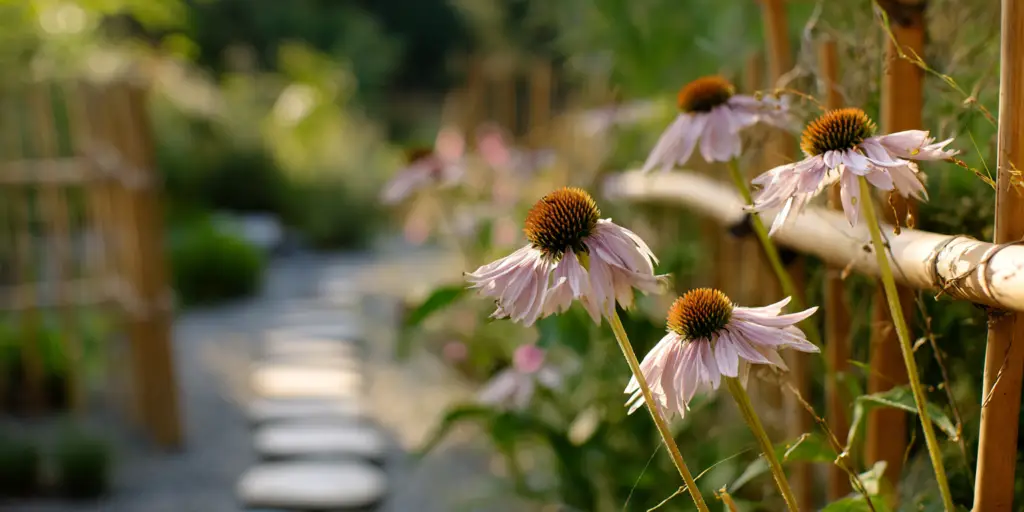
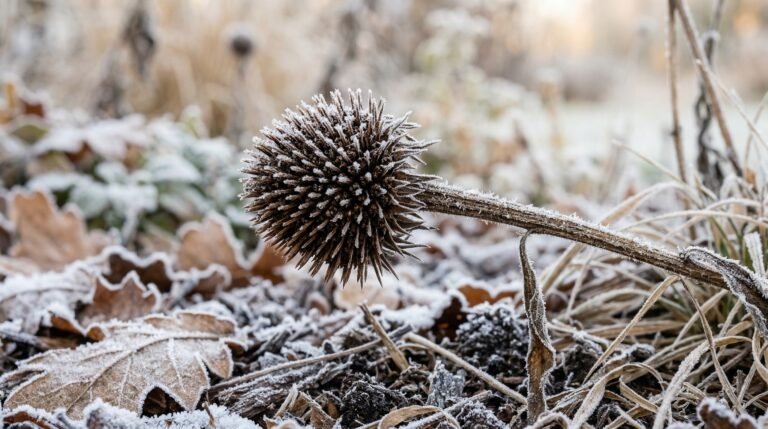
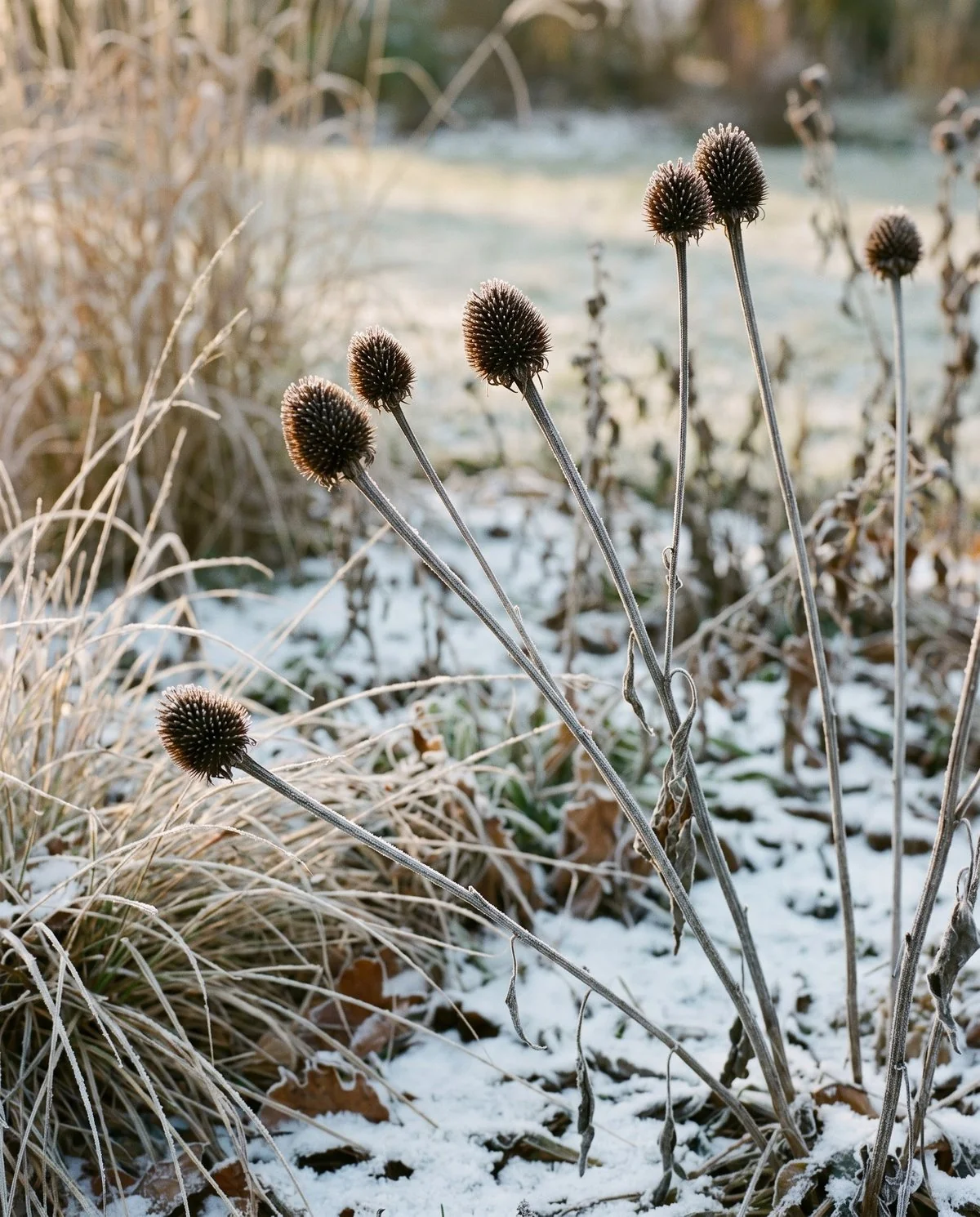
Two seasonal decisions pull in opposite directions. Removing spent flowers pushes the plant to make more of them and stops it self-sowing, which is what you want from a named cultivar whose color you would like to keep. Leaving them to ripen into seed heads feeds birds, particularly American goldfinches, which work the dried cones through fall and into winter; Clemson's home and garden information center advises delaying deadheading for exactly that reason. The compromise is a schedule rather than a policy. Deadhead through the first half of the season, cutting each spent head back to the next bud or leaf node as the petals brown, then stop around late summer and let everything that opens after that mature and stand. Seed set that late is small enough to keep self-sowing manageable.
Whether to cut the plant down in fall or wait until spring has the same answer for the same reasons. The hollow and pithy stems shelter stem-nesting native bees over winter, and North Carolina State Extension lists purple coneflower specifically as providing nesting sites for them, on top of hosting the larvae of the silvery checkerspot and wavy-lined emerald. Cut everything to the ground in late winter or very early spring, before new growth pushes from the crown. The reasons to cut in fall are narrow: a plant that had powdery mildew, leaf spot, or aster yellows should come out then and go in the trash rather than the compost pile.
The dated jobs, and the numbers attached to them
No university publishes a zone-band planting calendar for Echinacea the way one exists for tulip bulbs, which makes sense for a plant sold as a growing potted perennial rather than a dormant bulb with a pre-frost deadline. What does exist is a short list of dated jobs with real thresholds behind them.
Propagation and longevity
Seed is the easiest route to more coneflowers and the only sensible route for most of the species. Collect ripe cones once brown and dry and break them apart wearing gloves; the bracts are sharp. Purple coneflower germinates without cold treatment, though a week at refrigerator temperature improves the rate and the evenness, while the taprooted species want 30 to 60 days of cold moist stratification, easiest to supply by sowing outdoors in fall. Division works on exactly one species and fails on the rest: purple coneflower has a fibrous, branching root system that lifts and splits easily, while every other Echinacea grows from a deep brittle taproot that usually dies when it is cut. Divide it in early spring as growth begins.
Straight species in sharply drained soil, full sun, and lean ground hold a position for many years. Purple coneflower as an individual plant is short-lived, and a clump that seems to persist for a decade is often a rolling population of parent and offspring. Named hybrid clones are the shortest-lived group: in the Chicago Botanic Garden's five-year comparison of 52 selections, roughly half the entries came through five winters with all or nearly all of their specimens alive, and the rest did not.

Two paths, worked in order
Both start away from pests and diseases, because the trial data says the usual answers are the winter, the propagation method and the age of the plant.
Fragrance
Coneflowers are not a fragrance plant, and a bed of them will not scent the air. Most selections have no perceptible smell, and what little there is reads as faintly sweet at close range on a warm still day, which makes coneflower a useful cut flower for anyone who reacts badly to scented arrangements. A few selections are exceptions and were named for it, among them the white single E. purpurea 'Fragrant Angel'. Where scent matters, supply it from companions such as catmint or lavender.
Toxicity and pet safety
Coneflower does not appear on the ASPCA's list of plants toxic to dogs, cats, or horses, and is generally treated as non-toxic to pets and to people. No dangerous compound is known in any part of the plant at the quantities an animal would eat, and there is no reported pattern of serious poisoning. A dog or cat that chews a mouthful of foliage may get a passing stomach upset, and the bristly cone is prickly enough that most animals lose interest quickly. Non-toxic is not the same as edible in quantity, since any plant material eaten in bulk can obstruct a small animal. For a wider view of what is safe to keep around animals, see the guide to flowers safe for cats and dogs.

Echinacea as a supplement, and what is actually claimed
Some people searching for echinacea are not looking for a garden plant at all. The genus has a long history of medicinal use among Native peoples of the Great Plains, and supplements sold under the name are marketed for immune support and for preventing or shortening colds. The products are not one thing: some use the aerial parts of E. purpurea, others the root of E. angustifolia or E. pallida, at widely different concentrations, which is one reason trial results conflict. The National Center for Complementary and Integrative Health, part of the National Institutes of Health, summarizes the evidence as unconvincing: a Cochrane review of 24 double-blind randomized trials covering more than 4,600 participants concluded that echinacea products have not been shown to benefit the treatment of colds, and reviews of preventive use have found any effect small and of unclear clinical significance. Whether to take a supplement, and in what form, is a question for a clinician and a pharmacist rather than a gardening page.
A coneflower in a border is not a standardized extract, and there is no way to read a dose off a plant. The demand also carries a conservation cost: narrow-leaf coneflower is the species most sought for its root, and wild collection has pressured prairie populations, an argument for buying cultivated material rather than digging anything. The claims and their history are treated at length in the article on echinacea, immunity, and the garden coneflower.
Vase life
Cut coneflowers last about 5 to 7 days in a vase and give structure to loose, informal arrangements. Cut in the cool of the morning, once the petals have opened fully and are still firm, strip every leaf below the water line since the rough foliage fouls water, and change the water every couple of days. The cone outlasts everything: bare cones stay sculptural as petals drop, and cones cut dry and brown hold their shape indefinitely in wreaths. Cutting for the house competes with leaving seed heads for the birds, so cut from the mid-season flush and leave the late cones standing.
Measured vase life, cultivar by cultivar
NC State's cut-flower and postharvest trials ran named cultivars rather than the genus, and the spread between them is wider than any single figure suggests. These are trial numbers, not catalogue copy.
Any coneflower lasts about the same week in a vase.
The measured spread is close to twofold within one genus. NC State's own trials put 'Ruby Star' at 6 to 7 days and 'Tomato Soup' at 11.7, a holding solution moved 'Merlot' from about 8 days to about 12, and a hydrator pre-treatment was recommended against for 'Tomato Soup' while a holding solution alone beat the combination for 'Purity'. The variables are the cultivar and the treatment rather than the genus.
Drying the seedheads takes a technique.
They dry standing. The cone is an aggregation of spiny-bracted disc florets, and that rigid structure is exactly what holds its shape in a wreath, which is the same structure that carries seed for the goldfinches in the garden. NC State's own 'Ruby Star' trial page simply records the cultivar as good for the seed pod dried.
Pests and diseases
Most of what goes wrong with a coneflower traces back to shade, crowding, or wet soil rather than to a pest. Japanese beetles are the most visible insect problem, chewing ragged holes in petals and skeletonizing leaves in midsummer; handpicking them into soapy water early in the morning, while they are sluggish, beats spraying in a garden. Powdery mildew and leaf spot disfigure rather than kill, and both respond to spacing, base watering, and clearing debris at season's end. The serious diseases are the rots: Rhizoctonia and southern blight attack the crown and stem base in warm wet soil, and root rot follows any bed that stays saturated.
A deformed flower head has three different causes calling for three different responses, plus one lookalike that is only feeding damage.
| What the flower head looks like | What the rest of the plant looks like | What it is | What to do |
|---|---|---|---|
| Petals green or partly green and misshapen; leafy shoots or secondary heads growing out of the cone | Leaves yellowed, curled, or stunted; growth distorted; often a witches' broom of shoots from one point | Aster yellows, a phytoplasma spread by leafhoppers | No cure. Dig the whole plant with its roots, bag it, put it in the trash. Do not compost. Control weeds nearby |
| Elongated green or reddish tufts of stunted flower parts sprouting from the top or side of the cone; petal color normal | Normal. Foliage healthy, growth normal, other flowers unaffected | Coneflower rosette mite, an undescribed eriophyid mite | Cut affected heads into a bag and remove them. The plant is fine and stays in the ground |
| Petals green and evenly so from the day the flower opens, the same on every head | Normal and healthy | A green-flowered cultivar behaving as bred | Nothing |
| Petals chewed ragged, leaves reduced to lace | Normal apart from feeding damage; beetles visible | Japanese beetle | Handpick into soapy water in the morning |
The decision rule is to read the foliage rather than the flower. Aster yellows always shows in the leaves and in overall growth, because the phytoplasma moves through the whole plant and reprograms its development, turning petals green and flower parts into leaves. The rosette mite never does, because it lives inside developing flower buds and its damage stays confined to the head it fed in. Ohio State's extension entomologists note that this mite has never been formally described and needs about 40x magnification to see, so the tufted cone is the practical diagnosis. Aster yellows earns the harsh response because it has no treatment, infects hundreds of plant species, and travels on leafhoppers, which makes a diseased coneflower left standing a reservoir for the rest of the bed. It is also common, recorded in 13 percent of the plants in the Chicago Botanic Garden's most recent trial. Pulling a plant on a wrong call costs one plant, leaving a genuinely infected one costs the border.
Photo pairs, and the pairs deliberately left unphotographed
Animal damage, beetle damage and an honest leaning plant are safe to photograph. The disease signatures are not: aster yellows, mite galls, powdery mildew and a rotting crown are checkable fingerprints, and a generated approximation of any of them would mislead the reader who is trying to match a photograph to their own plant.
Count how much of the plant is involved. Fasciation comes from abnormal cell division after environmental stress, mechanical injury or an inheritable tendency, and it usually affects a single stem or flower on an otherwise normal plant. SDSU Extension names coneflower as one of the plants that most commonly display it and calls it generally not a cause for concern, since the triggering conditions are unlikely to repeat, and it is not contagious. Aster yellows by contrast is systemic, with chlorotic curled foliage and stunted stems as well as a deformed flower. Neither side is photographed here, because the whole value of the comparison is that they look alike at a glance.
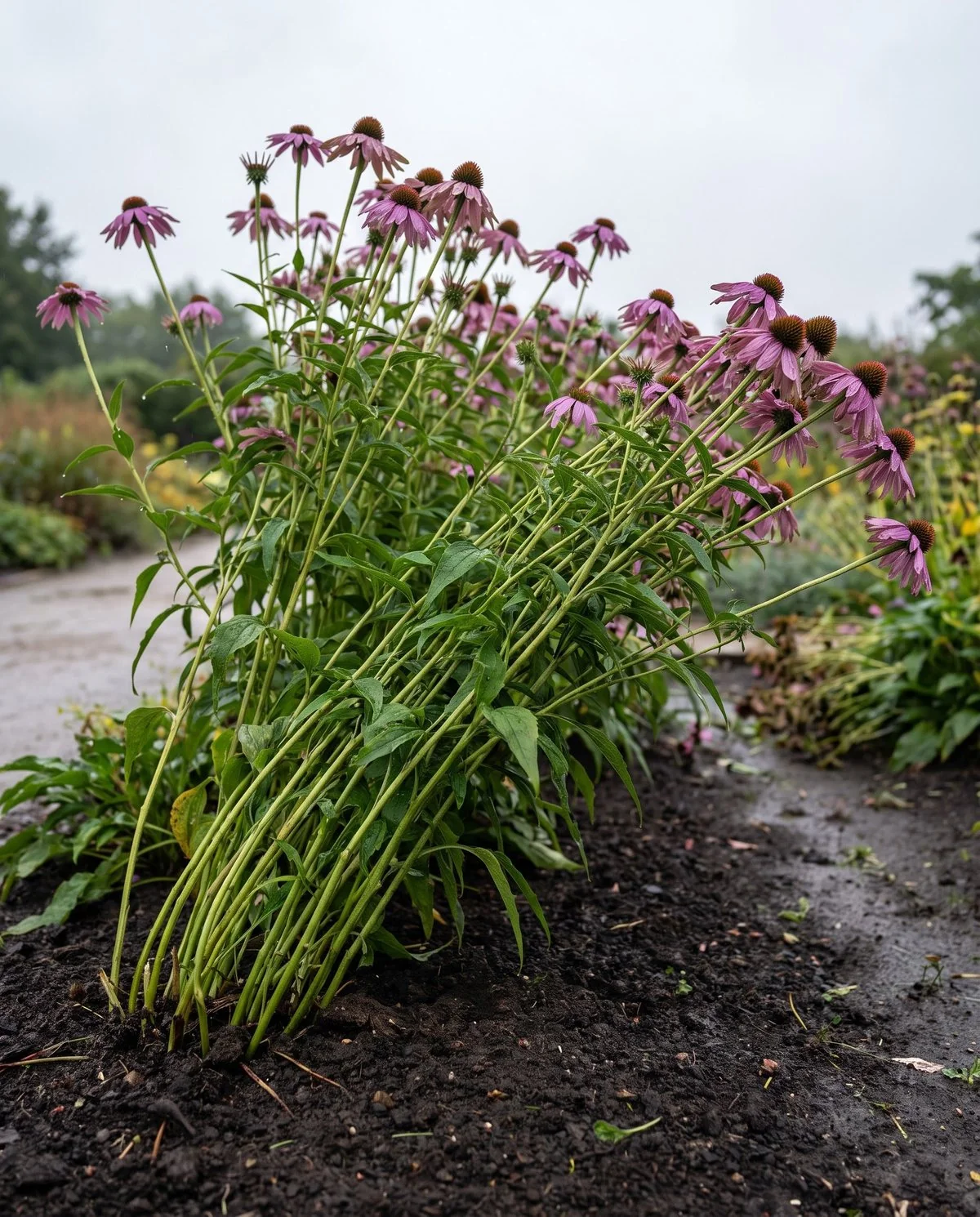
Check the base rather than the lean. A plant that is only flopping stays green and structurally sound with a firm upright base, and Mt. Cuba attributes the flopping in its own trial beds to excess moisture and nutrients, recording that even the straight species has a tendency to list late in the season. True rot, per the Pacific Northwest Pest Management Handbooks, brings necrosis along leaf margins followed by wilting and death, with darkened vascular tissue for Fusarium, or water-soaked decayed roots and dark brown wet-looking stems for Pythium. Only the healthy leaning clump is photographed.
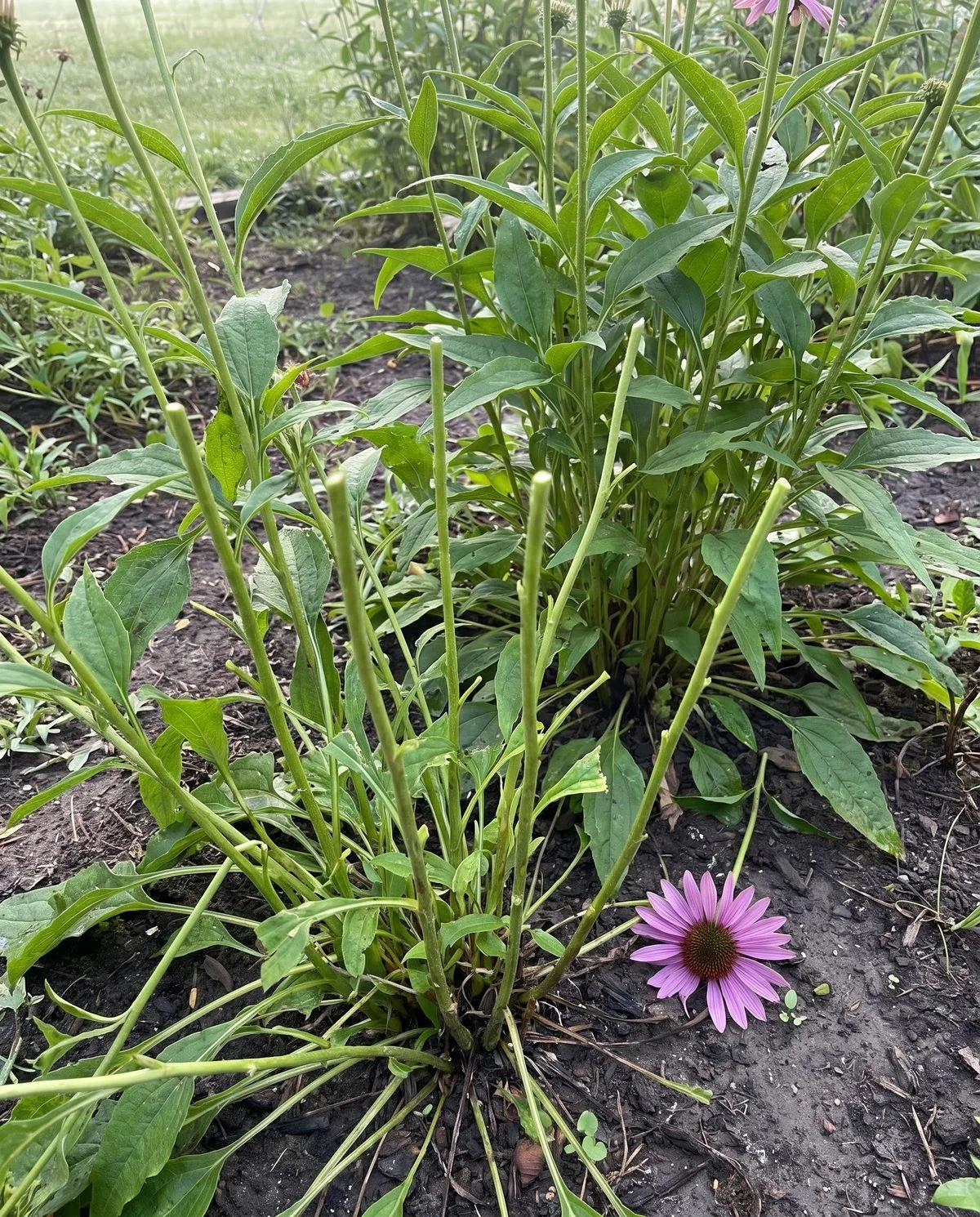
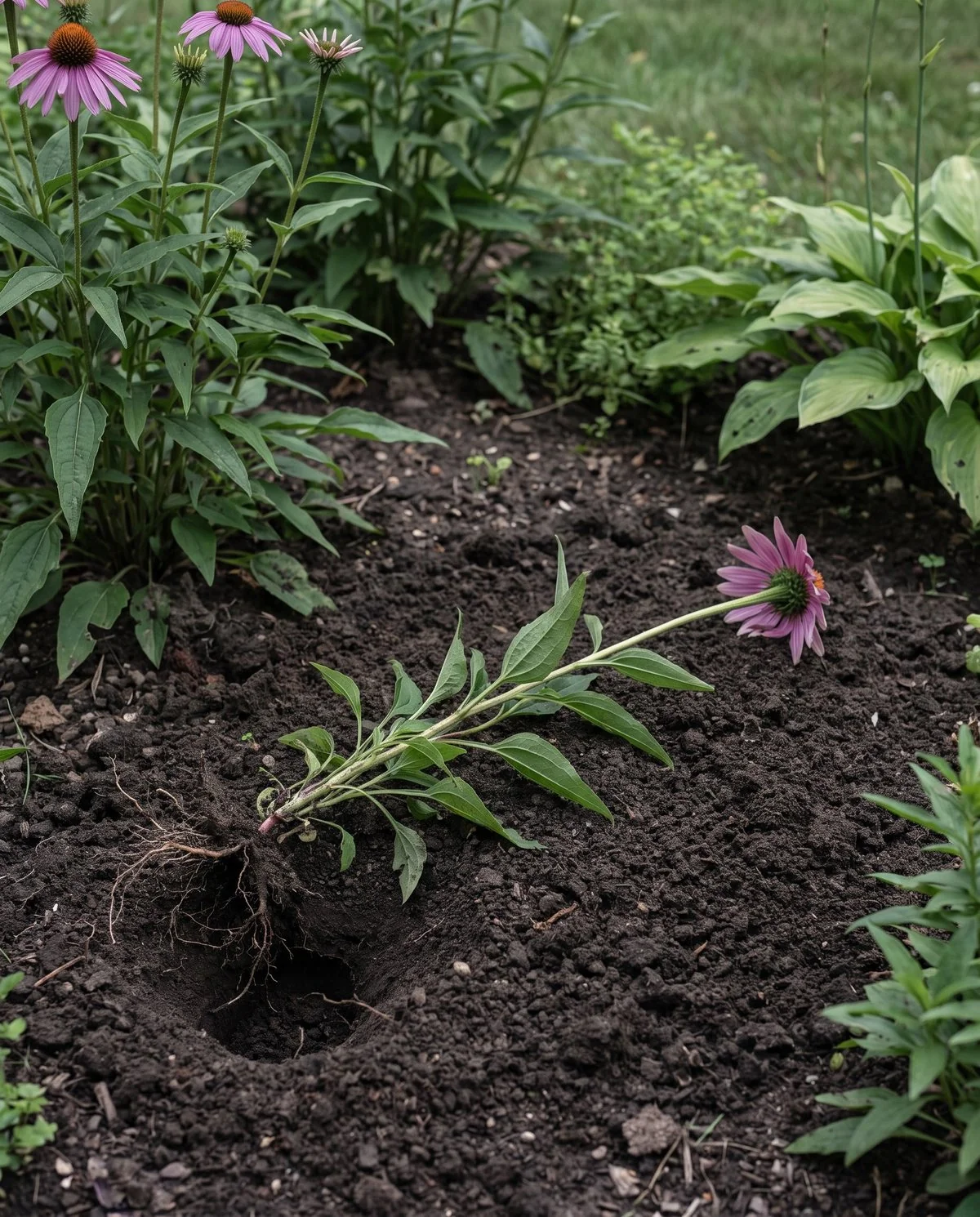
Look for the bite. Deer and rabbits leave clean or ragged bites on foliage, buds and flower heads, often overnight, sometimes with whole heads found dropped nearby uneaten; one gardener here describes cuts so clean he assumed somebody in the house had taken shears to the plant. A plant that topples, wilts or dies with no visible chewing above ground points instead at squirrels or voles at the crown and roots.
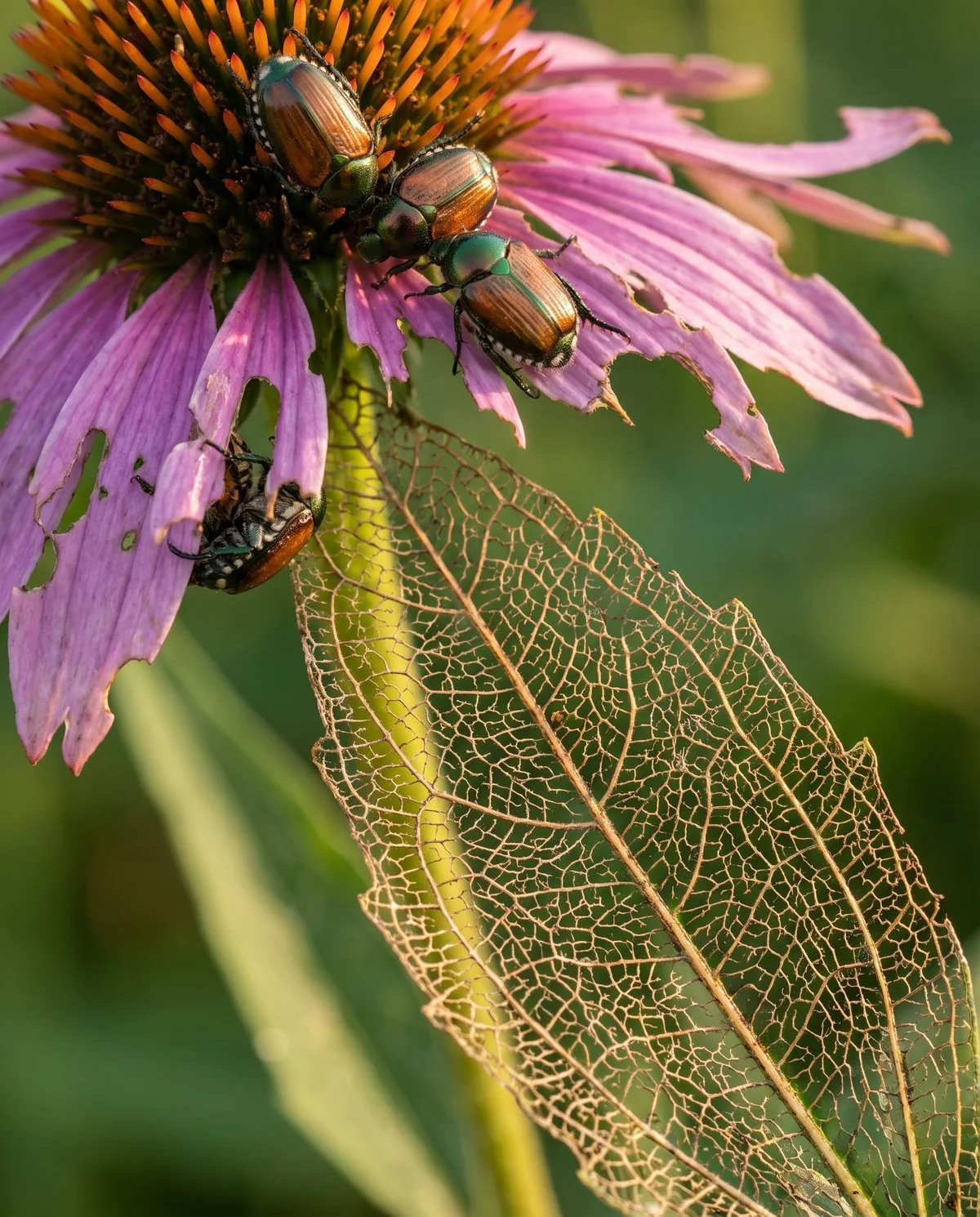
Ask whether tissue has been removed. Beetles eat the soft tissue between the leaf veins and leave a lacy see-through leaf with the vein network intact, plus ragged chewed petal edges, and the insects themselves are usually visible in clusters during warm sunny hours. None of the diseases removes tissue: aster yellows changes colour, powdery mildew coats the surface, leaf spot makes discrete dark spots.
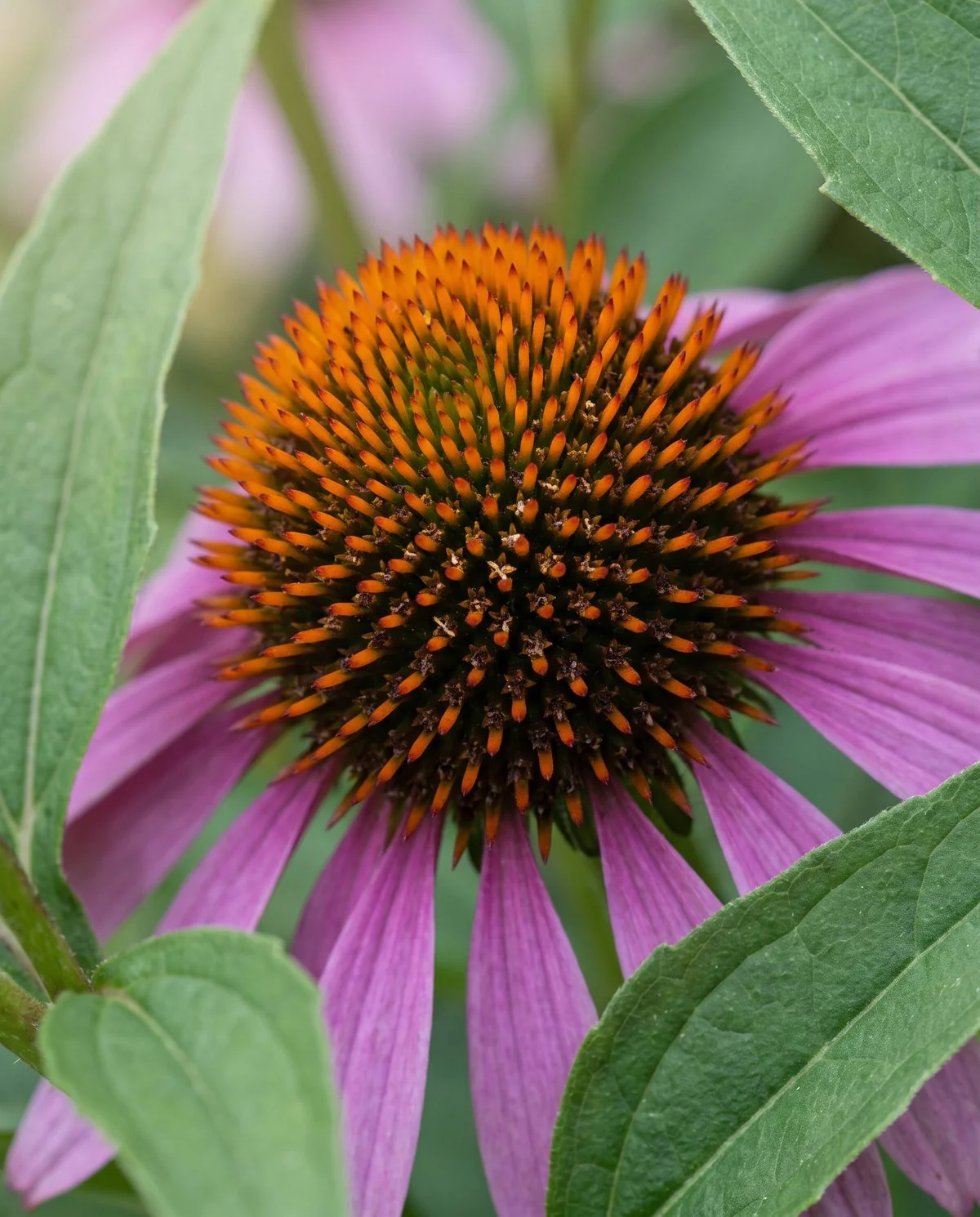
Two things get called a problem here and only one of them is. The cone's bristly texture is structure rather than damage: it is an aggregation of spiny-bracted disc florets, and the genus is named from the Greek for hedgehog. Powdery mildew is a separate matter and starts as small round white powdery spots on the upper side of older leaves, spreading into a whitish-grey coating over whole leaves and stems, favoured by warm dry days and cool humid nights running at least three day-and-night cycles. The coating itself is not photographed here.
What coneflower owners actually ask about, ranked by frequency
474 posts from r/gardening, r/plantclinic and r/NativePlantGardening, pulled with no theme filter, so these are base rates rather than an artefact of what was searched hardest. That distinction changes the picture here: a dedicated search for aster yellows alone returned over 200 posts, and folding those in would have pushed it to about 35 percent of all coneflower traffic instead of the 8.5 percent it actually occupies. Themes overlap and do not add to 100.
Whether removal is warranted at all, because the three causes take three different answers. One poster in this corpus describes having pulled an entire planting by the roots five years earlier, then reading about mites afterwards.
The calendar since it went in the ground. This cluster sits almost entirely in the transplant window, one poster's plant having wilted within six hours of planting on a Friday.
Whether the damage is above ground at all. Bites on foliage, buds and heads, sometimes with whole heads dropped uneaten, is browsing; a plant that topples or dies with nothing chewed above ground points at the crown or roots instead.
What else in the same bed is affected. These posts usually arrive with a second disease in the same garden in the same year, which is why spacing and watering at the base do more than treating one plant.
Whether the answer changes what happens next. It does: the trial survival data is organized around exactly this distinction, so identifying which one is in the ground sets the expectation for how long it stays there.
Soil richness and spacing before reaching for a stake. Mt. Cuba attributes the flopping in its own trial to the excess moisture and nutrients of the trial garden soil rather than to any pathogen, and one gardener here rediscovered the same link, with five-foot stalks battered flat while better-spaced plants stood.
Whether the seedheads were left standing. Seed left for the goldfinches is also seed dropped into the bed, and those volunteers are the mechanism behind most complaints about a plant changing colour.
The plant's age and its light before anything else, since seed-grown plants often need two to three years to reach flowering size. Read the figure as a floor: a plant that simply never buds is undramatic to photograph, so a photo-driven forum under-counts it.
Whether anyone has dug. The tell sits at the root and crown, and casual posters rarely lift a plant before asking, which is why this row is thin without the problem being rare.
What is missing rather than what is discoloured: soft tissue eaten from between intact veins, and ragged petal edges. NC State's own cut-flower trial notes flag beetles as a real production problem for this genus, with the line that insects like echinacea as do deer, so the low count reflects a narrow midsummer window.
How long ago it was planted, and what it was. Read this as the most under-counted row in the table: it is a slow multi-year failure with nothing dramatic to photograph, and the highest-engagement problem post in the entire sample, at 523 upvotes and 202 comments, is a gardener asking why coneflowers planted three or four years ago simply did not come up.
Flower photos


FAQ
Are coneflowers perennials, and will they come back every year?
Yes, in USDA zones 3 through 8 and into zone 9 for some species, with new shoots rising from the crown each spring, often later than expected. Species and seed-grown plants persist longest; named clones commonly last two to four years, and winter wet kills more than cold.
Why did my orange or coral coneflower turn purple?
It almost certainly did not. The original died and its seedlings took its place, and because hybrids do not come true from seed, those seedlings open purple or pink.
Should I deadhead coneflowers or leave the seed heads?
Both, in sequence. Deadhead through the first part of the season to keep the plant flowering, then stop in late summer and let the rest ripen into cones that feed goldfinches through winter.
When should I cut back coneflowers, fall or spring?
Late winter or early spring, before new growth pushes from the crown, since standing stems shelter overwintering bees and the cones feed birds. Cut in fall only if the plant had powdery mildew, leaf spot, or aster yellows, and bin the debris.
What is wrong with my coneflower, the flowers are green and deformed?
Look at the leaves. Yellowed, curled, or stunted foliage means aster yellows, incurable, so the plant comes out and goes in the trash. Normal leaves with green tufts on the cone mean the coneflower rosette mite: cut those heads off and leave the plant standing. A flower green from the day it opened is a green-flowered cultivar.
Are coneflowers deer resistant?
About as reliably as any garden perennial. The rough foliage and spiny cone put deer off, though rabbits browse tender spring shoots and hungry deer will eat almost anything.
How do I divide coneflowers, and when?
Divide purple coneflower in early spring as new growth appears, every three or four years, into pieces that each carry roots and several buds. Do not try it on the taprooted species, which usually die when cut.
Are coneflowers and black-eyed Susans the same plant?
No. Coneflower is Echinacea, with a raised spiny dome of a center and petals that often sweep backward; black-eyed Susan is Rudbeckia, usually Rudbeckia hirta, with a flatter dark disk and golden petals held horizontally. Both sit in the same family, Asteraceae, and the two combine easily in one planting. Several Rudbeckia species also carry "coneflower" as a common name. The profile of black-eyed Susan sets the two side by side.
Do coneflowers spread or invade the garden?
Coneflowers are not invasive. They grow in clumps that slowly widen, and they may self-seed if seed heads are left to mature. Seedlings are easy to pull or move if they pop up where you do not want them.
Can coneflowers grow in shade?
Coneflowers prefer full sun. They tolerate partial shade, but in too much shade they bloom less and get leggy as stems reach for light. Aim for at least half a day of sun if that is your only option.
Can I grow coneflowers in containers?
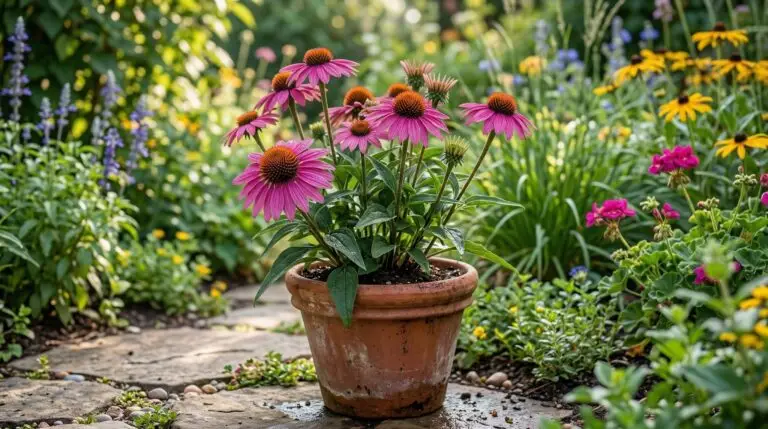
Yes, many coneflowers grow well in large pots as long as there is depth for the roots. A container about 12 to 16 inches wide and deep (30 to 40 cm) works for most types, with drainage holes and a well-draining potting mix. Containers dry out faster than garden beds, so you will water more often, and in very cold winters the roots may need extra protection.
How do I propagate coneflowers?
? Seed is the simplest route. Collect seed from dry cones and sow it, or let plants self-seed. For clumping types such as Echinacea purpurea, you can also divide an established clump in early spring. Taprooted species do not divide as easily, so seed is usually the most reliable option.
Is echinacea deer-resistant or not?
Resistant is a tendency rather than immunity. NC State's Plant Toolbox carries a deer resistance tag for E. purpurea, and gardeners in this research report deer and rabbits browsing it anyway, particularly young or newly transplanted plants when other food is scarce; one thread on deer fencing opens with more than thirty coneflower groupings munched to the ground overnight. One caution about the rabbit half of the claim: a sentence circulating online about rabbits eating the foliage down to ground level is credited to NC State's own page, and a direct re-check of that page found no text about rabbits at all, so it is not repeated here.
Is this aster yellows or fasciation?
Fasciation shows as a flattened, ribbon-like stem or a doubled, fused-looking flower, usually on one stem of an otherwise normal plant, with no green leafy overgrowth from the flower centre and no chlorotic foliage elsewhere. SDSU Extension names coneflower as one of the plants that most commonly display it, attributes it to environmental stress, mechanical injury or an inheritable tendency, and calls it generally not a cause for concern and not contagious. Aster yellows affects the entire plant and needs full removal, roots included.
How common is aster yellows, really?
Common enough to distort a research trial. Mt. Cuba records it as the greatest loss of Echinacea plants in its trial at 24 percent of every plant grown, and says the infection rate made it difficult to determine what the natural life span of the various cultivars would otherwise have been. The Chicago Botanic Garden's trial reported roughly 13 percent, from a source page rather than a directly-read report, so the two figures come with different confidence attached.
When exactly should I cut the stems back if I want to keep the stem-nesting bees?
NC State Extension's Growing Small Farms programme gives dates rather than a season: late February into March, with at least some stems cut back by early March for mason bees and most of the cutting done by early April for other species. It also notes that E. purpurea's stems are pithy rather than truly hollow, so only a subset of stem-nesting bees can use them, carpenter bees and some leafcutter and resin bees, out of a group whose body sizes run from 3 to 25 mm.
My pale purple coneflower looks nothing like the picture. Did I get the wrong plant?
Probably not. E. pallida carries long narrow drooping petals that Mt. Cuba describes as hanging like tassels on an antique lamp, quite unlike E. purpurea's broader outline, and it blooms two to three weeks earlier, over about three weeks in June and July. Two checks confirm it: its pollen is white where E. purpurea's is yellow, which also separates it from the near-identical E. simulata, and it prefers drier ground than a typical garden bed, which is why Mt. Cuba says it would be more at home in drier soils than its own trial garden.
Interesting tips
The most consequential decision with coneflowers happens at the nursery bench, and it comes down to reading the label for propagation rather than for color: a plant listed as a species or a seed strain will usually outlive a trademarked clone with a patent number, so where permanence matters more than an exact shade, that is the one to take home. Coneflowers earn their place by lasting: they hold the middle of a sunny border for months and then hand the season over, so plant them where goldenrod, asters, and ornamental grasses can take up the display as the cones darken.
- Coneflowers earn their keep in pollinator gardens. Bees and butterflies visit the blooms, and finches clean out the seeds later.
- The spiky cones of Echinacea dry well. Cut stems at season’s end and hang them upside down for dried arrangements or simple crafts.
- Different species have noticeably different flowers. Pale coneflower has narrow, drooping petals, while some hybrids of purple coneflower make doubles or unusual color blends.
- If you can, leave a few coneflower stalks standing over winter. The cones feed birds, and the dry stems look great with frost or snow.
- For a prairie-style mix, pair coneflowers with plants that enjoy similar sun and soil, such as salvias, black-eyed Susans, and ornamental grasses.
Related Guides & Flowers
Yarrow
Short description: Flat-topped blooms and ferny foliage that pair well with coneflower in sunny, low-water borders and pollinator beds.
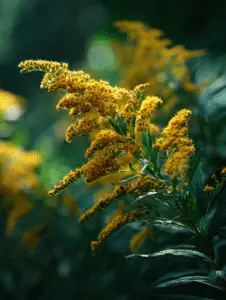
Goldenrod
Short description: Late-summer to fall color with strong pollinator value, useful for extending the season after coneflower peak bloom.
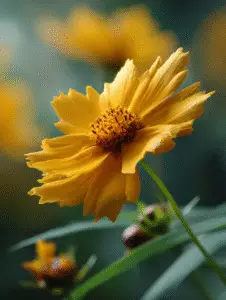
Coreopsis
Short description: Bright, long-blooming daisy-type flowers that create a similar meadow look and mix easily with echinacea-style plantings.
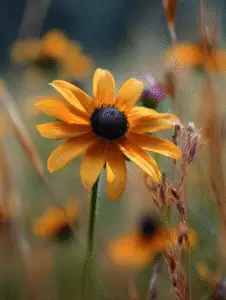
Black eyed Susan
Short description: A close visual match with the same bold cone and ray-flower shape, great for prairie-style combinations.
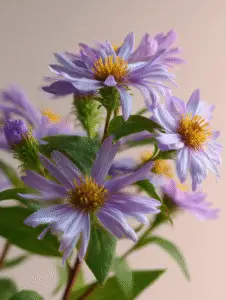
Aster
Short description: A classic late-season companion that keeps beds looking full when coneflower seed heads start to form.
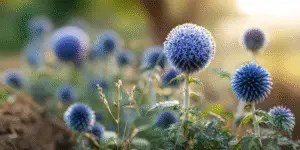
Globe Thistle
Short description: Spiky, architectural texture in the same daisy family, strong contrast with coneflower cones and excellent for bees.
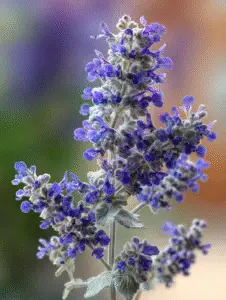
Catmint
Short description: Soft, haze-like blue flowers that calm down hot coneflower colors and fill gaps between taller perennials.
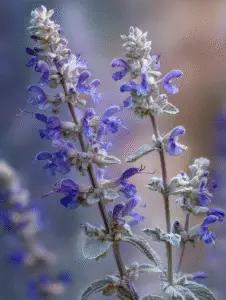
Russian Sage
Short description: Airy lavender-blue bloom spikes and silver foliage that thrive in similar sun and drainage conditions as coneflower.
References
- NC State Extension Plant Toolbox: Echinacea purpureaUse for: light, soil, drought tolerance, bloom season notes, and general plant profile facts.
- Clemson University HGIC: How to Grow EchinaceaUse for: care basics plus common pests and diseases (powdery mildew, anthracnose, aster yellows) and practical prevention. (hgic.clemson.edu)
- Iowa State University Extension and Outreach: Growing Coneflowers in IowaUse for: species notes, zones, site needs, and bloom timing details by type.
- University of Minnesota Extension: Diagnose coneflower leaf spotsUse for: symptom-based guidance for powdery mildew and other leaf issues, helpful for troubleshooting photos and reader questions.
- NC State Extension Plant Toolbox: Echinacea pallidaUse for: pet safety line stating no known toxic effects to cats and dogs (useful as a citation for toxicity sections).
Enjoying our flower guides? Add YourFlowersGuide as a preferred source on Google. It helps more readers find us.
Add to Preferred Sources