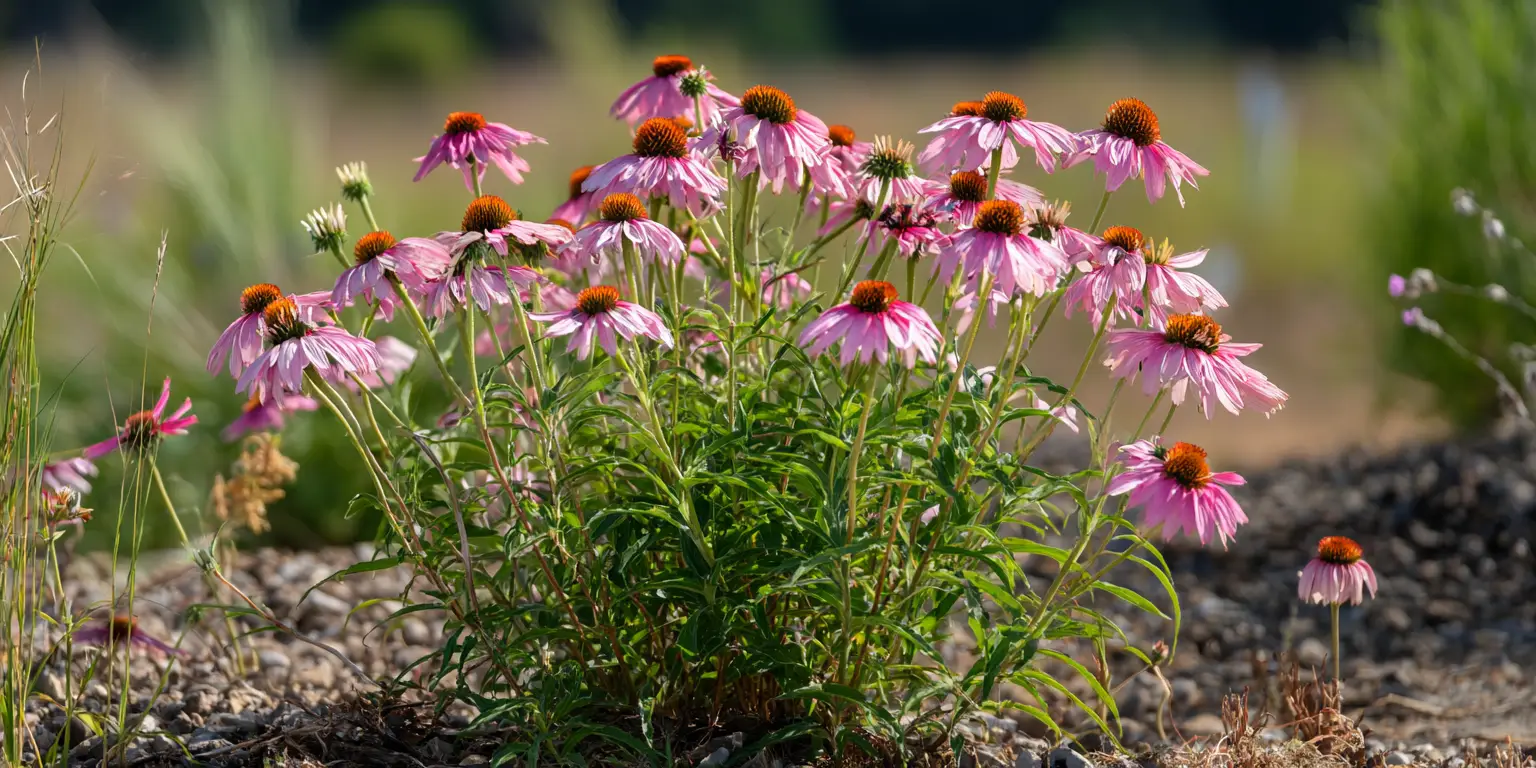
in bloom
now
through Aug
Bloom calendar
Echinacea angustifolia
species; herbaceous perennial
At‑a‑glance
- Group/Class: species; herbaceous perennial
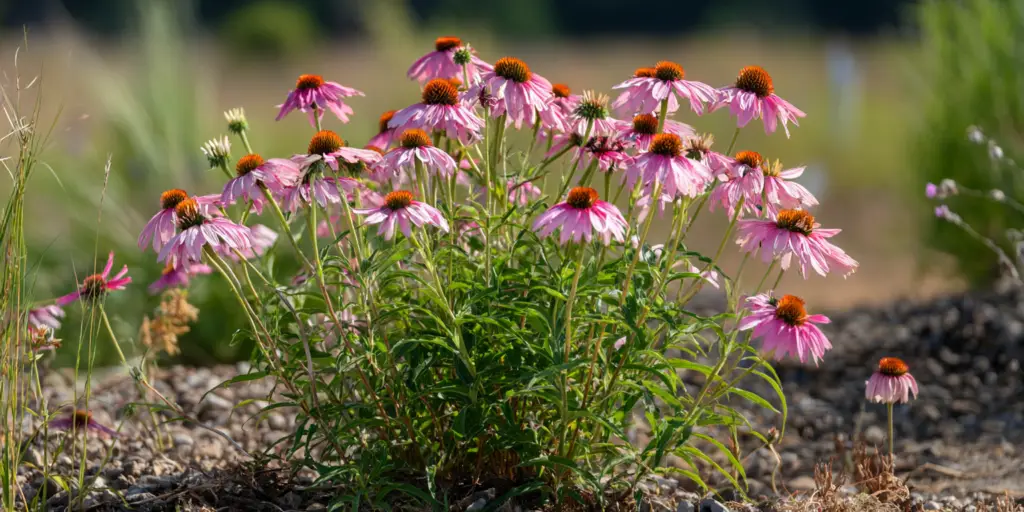
- Height × spread: 12 to 24 in × 9 to 18 in (30 to 60 cm × 23 to 45 cm)
- Bloom window: June to July
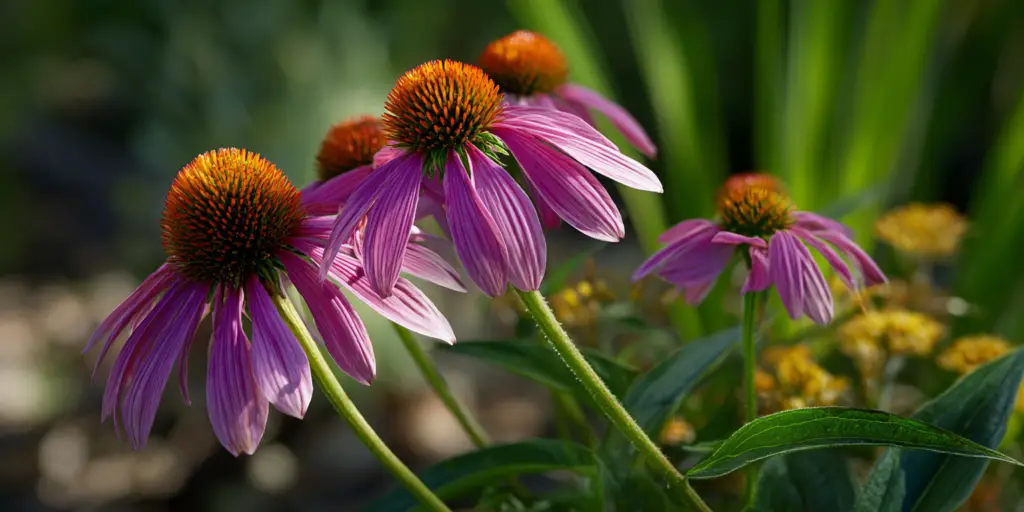
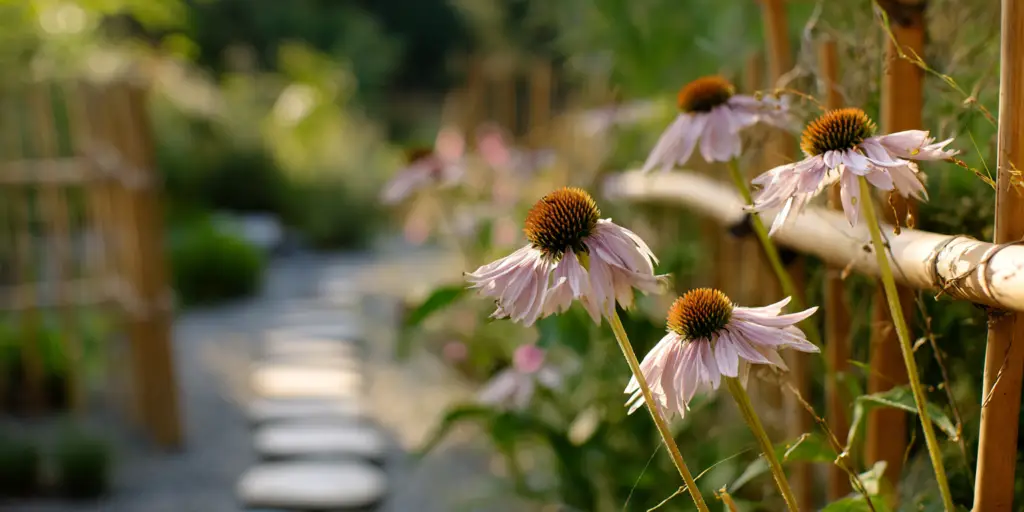
- Color & flower form: light pink to pale purple rays; cone orange-brown; rays often slightly drooping
- Fragrance: 0 none
- USDA hardiness: zones 3 to 8
- Breeder / Year / Origin: wild species, unknown, USA and Canada
- Cut-flower notes: stems sturdy for size; typical vase life 5 to 8 days with cool conditioning
- Pet safety: safe
How it differs
- Shorter and narrower-leafed than typical purple coneflower.
- More drought-adapted and suited to lean, rocky soils.
- Smaller flower heads with rays that may droop modestly.
- Earlier peak bloom compared with many garden forms.
Strengths
- Compact habit for small gardens and prairie edges.
- High drought tolerance after establishment.
- Low fertilizer needs and good heat tolerance.
- Supports pollinators in open, sunny sites.
Care in one minute
Choose full sun with free drainage; raised beds help on clay.
Maintain slightly dry to medium moisture; avoid overwatering.
No rich feeding is needed; a thin spring compost layer is enough.
Deadhead to tidy or leave some seedheads for wildlife.
Divide or transplant in early spring if clumps become crowded.
Watch‑outs
- Can struggle in heavy, wet soils.
- Shade reduces flowering and encourages flop.
- Aster yellows can occur in warm, leafhopper-active periods.
Best uses (tags)
Provenance note
Native to upland prairies and plains of central North America with a long history in dry grassland communities.
References
- Missouri Botanical Garden Plant Finder: Echinacea angustifolia
- Utah State University Extension: Echinacea Cut Flower Production
Similar Flowers
Enjoying our flower guides? Add YourFlowersGuide as a preferred source on Google. It helps more readers find us.
Add to Preferred Sources