
in bloom
now
through Aug
Bloom calendar
Echinacea tennesseensis
species; herbaceous perennial
At‑a‑glance
- Group/Class: species; herbaceous perennial
- Height × spread: 12 to 24 in × 12 to 24 in (30 to 60 cm × 30 to 60 cm)
- Bloom window: June to August
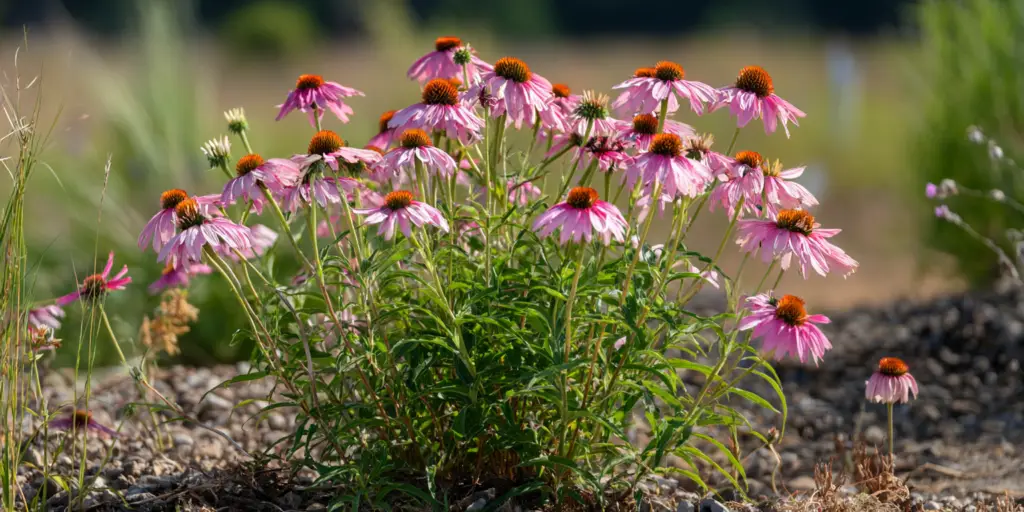
- Color & flower form: rose-purple rays held more upright; coppery-orange cone
- Fragrance: 0 none
- USDA hardiness: zones 5 to 6
- Breeder / Year / Origin: wild species, unknown, USA
- Cut-flower notes: compact stems; typical vase life 5 to 8 days with cool conditioning
- Pet safety: safe
How it differs
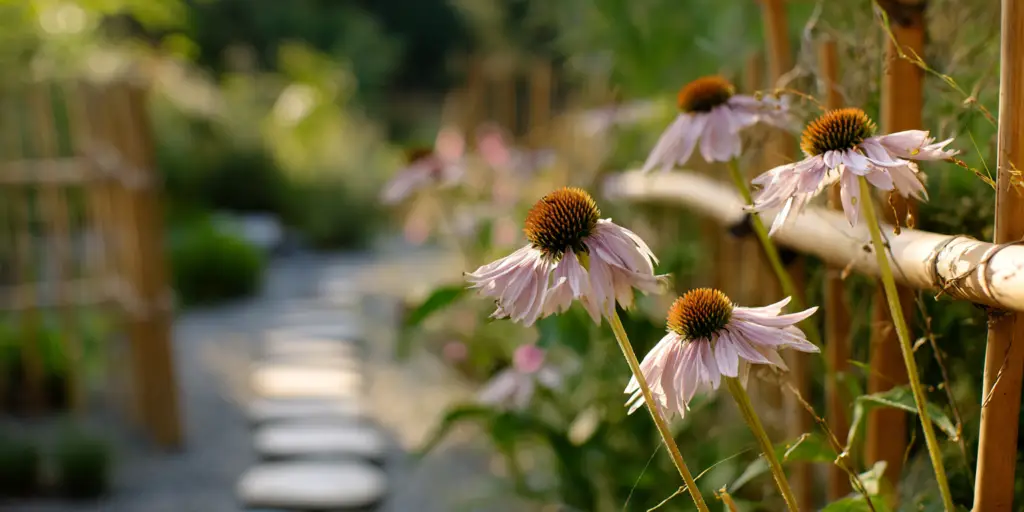
- Rays tend to face upward and often orient east in the garden.
- More compact habit than many purple coneflowers.
- Prefers very well-drained, limey soils typical of cedar glades.
- Hardiness range is narrower than common purple coneflower.
Strengths
- Distinctive flower posture for design contrast.
- Tidy size for smaller beds and front-of-border use.
- Good heat tolerance in sunny, well-drained sites.
- Supports pollinators and provides seed for birds.
Care in one minute
Site in full sun with excellent drainage; gravelly or rocky soils suit it.
Water to establish; then water deeply only during extended dry spells.
Avoid heavy mulches and winter-wet conditions around crowns.
Deadhead to tidy or leave seedheads to feed finches.
Do not overfertilize; lean soils keep stems upright.
Watch‑outs
- Overly rich or wet soils can cause flop or decline.
- Aster yellows can affect growth in mid-summer.
- Not reliably hardy where winters are very cold and wet.
Best uses (tags)
Provenance note
Endemic to limestone cedar glades of middle Tennessee and now recovered in the wild under conservation management.
References
- Lady Bird Johnson Wildflower Center: Echinacea tennesseensis
- S. Fish & Wildlife Service: 2011 delisting rule
- NC State Extension Plant Toolbox: Echinacea tennesseensis
- Plant Select: Echinacea tennesseensis
Similar Flowers
Enjoying our flower guides? Add YourFlowersGuide as a preferred source on Google. It helps more readers find us.
Add to Preferred Sources