
in bloom
now
through Aug
Bloom calendar
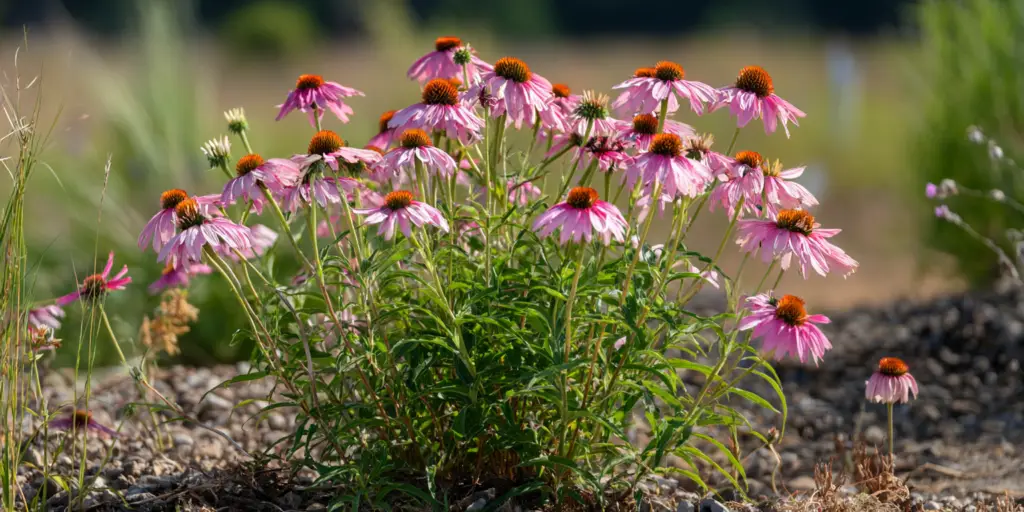
Echinacea simulata
species; herbaceous perennial
At‑a‑glance
- Group/Class: species; herbaceous perennial
- Height × spread: 24 to 36 in × 12 to 24 in (60 to 90 cm × 30 to 60 cm)
- Bloom window: June to July
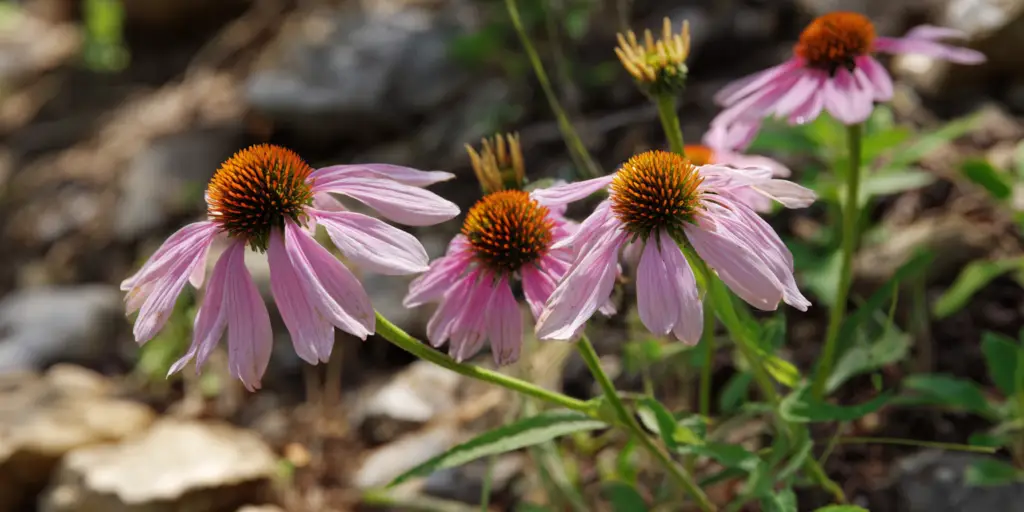
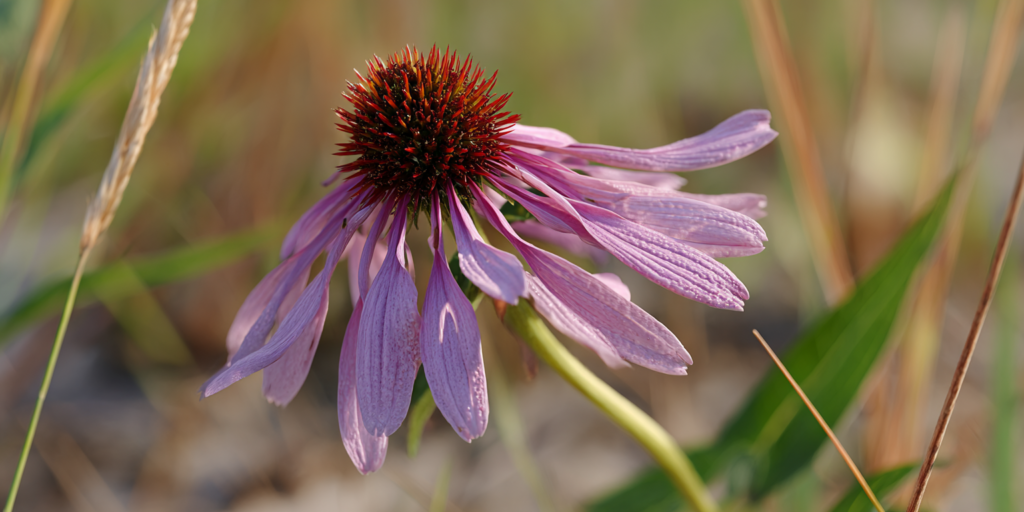
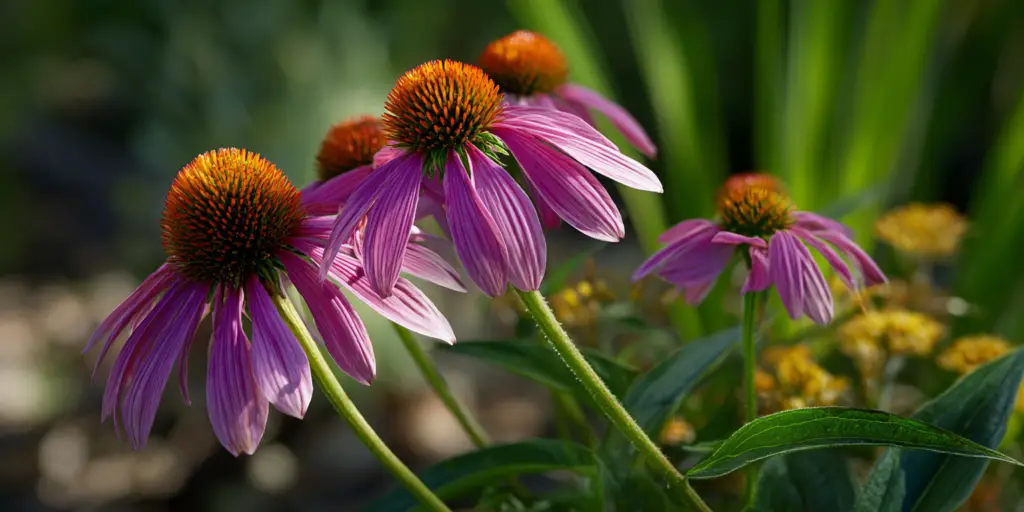
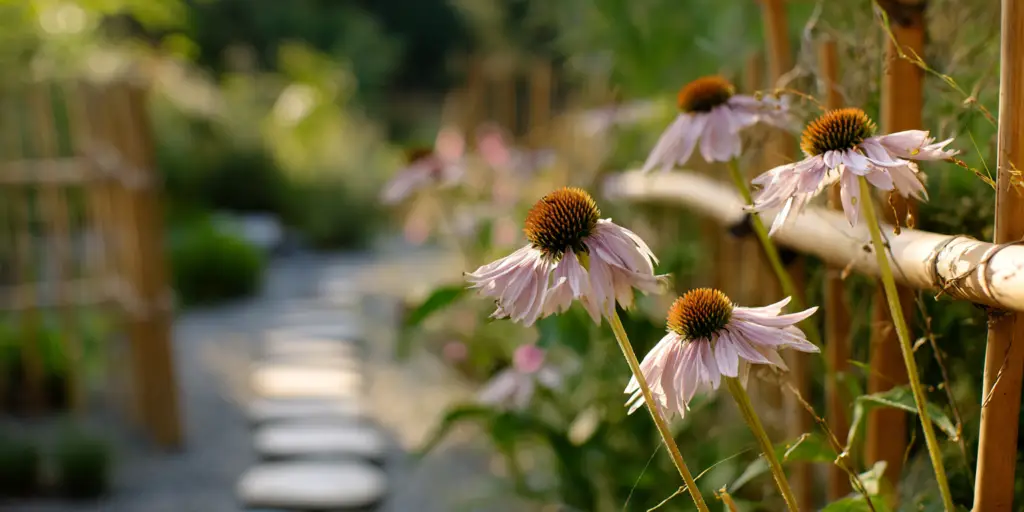
- Color & flower form: pale pinkish-purple rays that droop; coppery-orange cone; yellow pollen
- Fragrance: 0 none
- USDA hardiness: zones 5 to 8
- Breeder / Year / Origin: wild species, unknown, USA
- Cut-flower notes: stems sturdy; typical vase life 5 to 8 days with cool conditioning
- Pet safety: safe
How it differs
- Similar to pale purple coneflower but with yellow pollen rather than white.
- Prefers glades and rocky openings with excellent drainage.
- Habit and size are moderate with strong, unbranched stems.
- Best performance occurs in full sun and lean soils.
Strengths
- Good drought and heat tolerance once established.
- Distinctive wildflower look in native or meadow plantings.
- Low maintenance in well-drained sites.
- Seedheads offer wildlife value and winter texture.
Care in one minute
Grow in full sun on dry to medium, well-drained soil; rocky or gravelly sites suit it.
Irrigate to establish; then water deeply only during extended droughts.
Do not overfeed; excess fertility reduces flower display.
Deadhead to tidy or leave some seedheads for birds.
Divide or move only in early spring if needed.
Watch‑outs
- Poor drainage or heavy mulch can cause crown rot.
- Shade leads to stretched stems and fewer blooms.
- Standard coneflower pests and aster yellows may occur.
Best uses (tags)
Provenance note
Native primarily to the Ozark region with disjunct populations from Illinois and Indiana south through Kentucky and Tennessee to northern Alabama and Georgia.
References
- Missouri Botanical Garden Plant Finder: Echinacea simulata
- Lady Bird Johnson Wildflower Center: Echinacea (database, images)
- USDA PLANTS: Echinacea simulata
- Missouri Plants: Echinacea simulata (ID notes)
Similar Flowers
Enjoying our flower guides? Add YourFlowersGuide as a preferred source on Google. It helps more readers find us.
Add to Preferred Sources