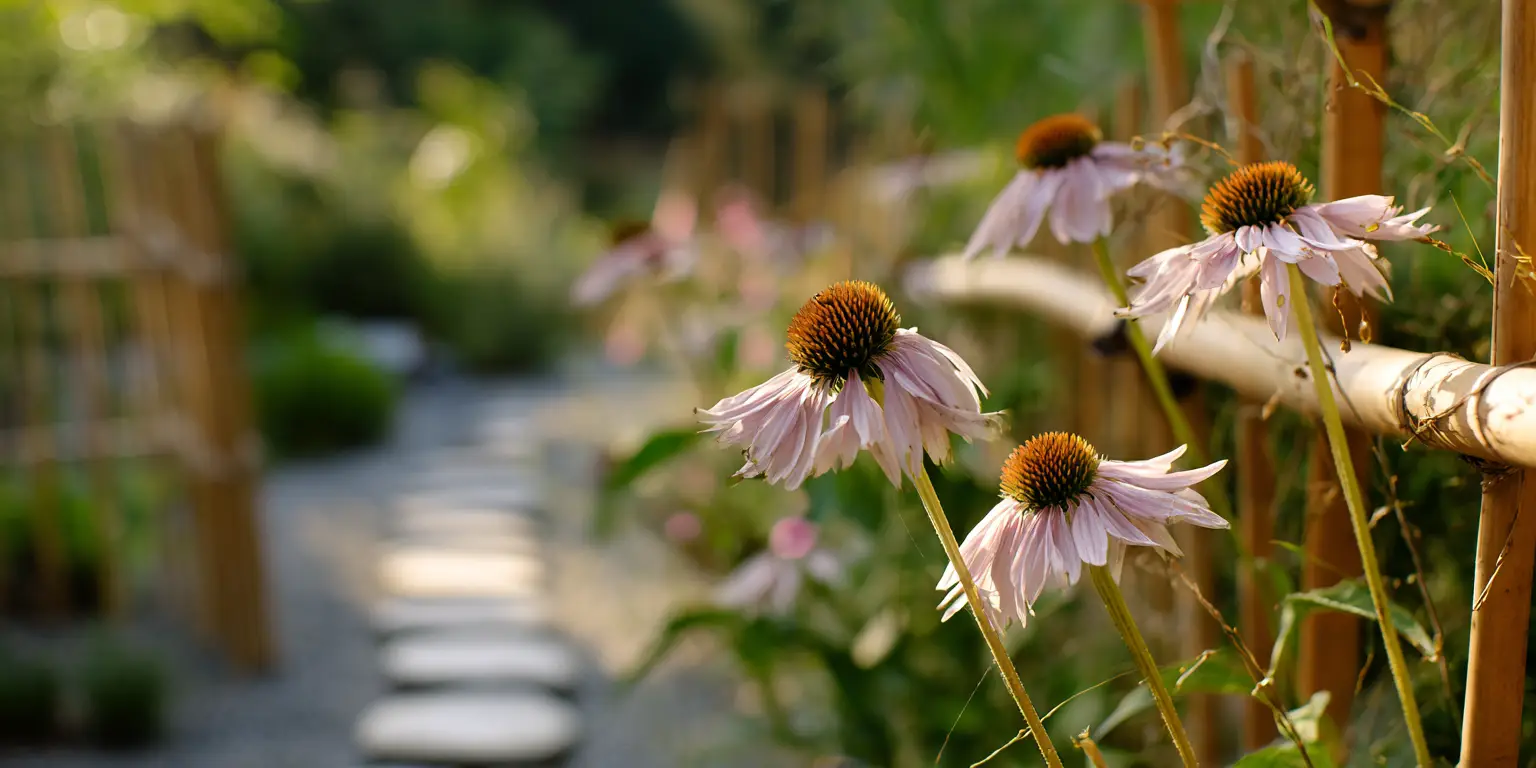
in bloom
now
through Aug
Bloom calendar
Echinacea pallida
species; herbaceous perennial
At‑a‑glance
- Group/Class: species; herbaceous perennial
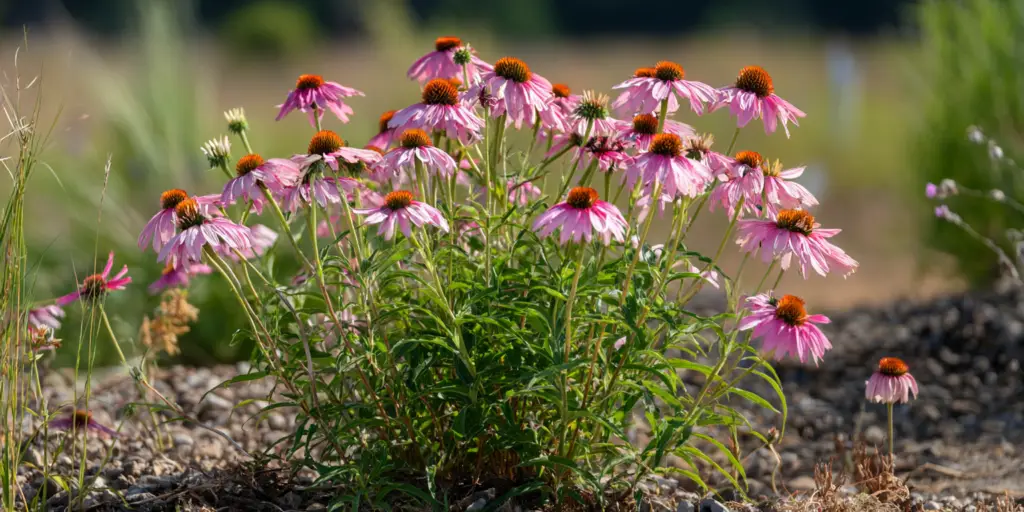
- Height × spread: 24 to 36 in × 12 to 18 in (60 to 90 cm × 30 to 45 cm)
- Bloom window: June to July
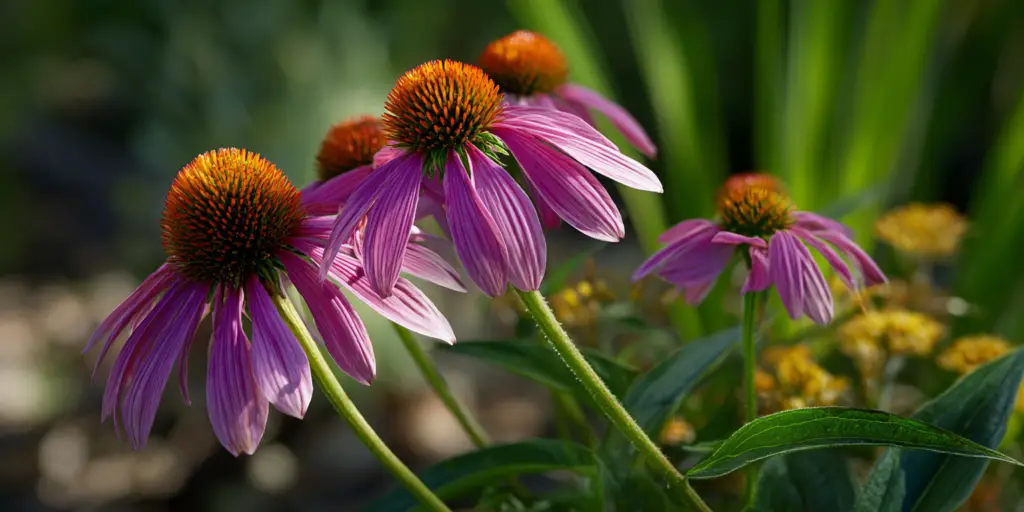
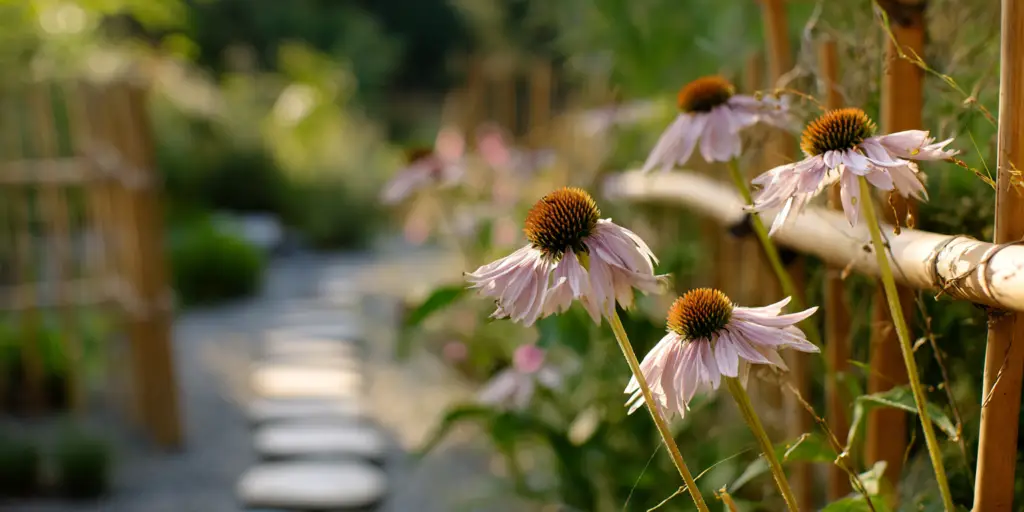
- Color & flower form: pale pinkish-purple rays that droop strongly; coppery-orange cone
- Fragrance: 1 trace
- USDA hardiness: zones 3 to 10
- Breeder / Year / Origin: wild species, unknown, USA
- Cut-flower notes: good for fresh or dried; typical vase life 5 to 8 days with cool conditioning
- Pet safety: safe
How it differs
- Rays are thin and strongly reflexed compared with typical garden coneflower.
- Leaves are narrower and parallel-veined.
- Often blooms slightly earlier than common purple coneflower.
- Thrives in dry, open sites with excellent drainage.
Strengths
- Performs in lean and rocky soils.
- Handles drought and summer heat.
- Elegant, airy look for meadows and naturalized plantings.
- Good seedheads for wildlife interest.
Care in one minute
Plant in full sun with dry to medium, well-drained soil.
Water to establish; allow soil to dry between deep soakings thereafter.
Avoid heavy mulches that trap winter moisture around crowns.
Deadhead to tidy or leave seedheads to feed finches.
Divide only if clumps decline or crowd.
Watch‑outs
- Wet or heavy soils can stunt plants or cause crown rot.
- Aster yellows can distort growth in mid-summer.
- Shade encourages floppy stems and fewer blooms.
Best uses (tags)
Provenance note
Native to prairies, savannas, and glades from Nebraska and Michigan south to Georgia and Texas.
References
- Missouri Botanical Garden Plant Finder: Echinacea pallida
- Lady Bird Johnson Wildflower Center: Echinacea pallida
- North Carolina Extension: Echinacea pallida
Similar Flowers
Enjoying our flower guides? Add YourFlowersGuide as a preferred source on Google. It helps more readers find us.
Add to Preferred Sources