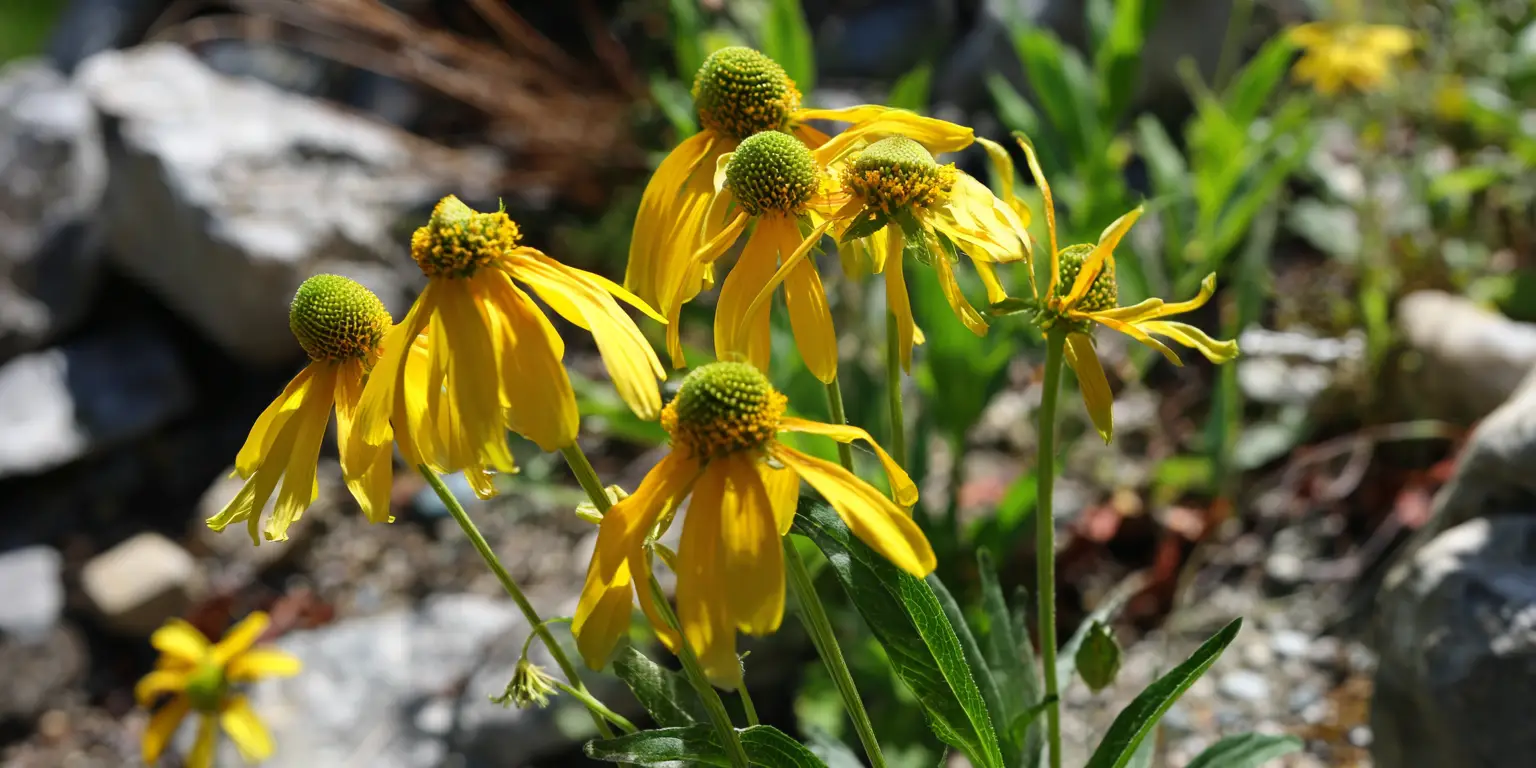
in bloom
now
through Aug
Bloom calendar
Echinacea paradoxa
species; herbaceous perennial
At‑a‑glance
- Group/Class: species; herbaceous perennial
- Height × spread: 24 to 36 in × 12 to 18 in (60 to 90 cm × 30 to 45 cm)
- Bloom window: June to August
- Color & flower form: yellow to orange-yellow rays with a large coppery-brown cone
- Fragrance: 1 trace
- USDA hardiness: zones 5 to 8
- Breeder / Year / Origin: wild species, unknown, USA
- Cut-flower notes: stems sturdy; typical vase life 5 to 8 days with cool conditioning
- Pet safety: safe
How it differs
- Only Echinacea species with naturally yellow rays.
- Prefers hotter, glade and prairie conditions of the Ozarks.
- Similar height to many purple forms but with a brighter color impact.
- Less cold-hardy than some purple species in Zone 3 to 4 climates.
Strengths
- Striking color contrast in mixed sun borders.
- Tolerates drought once established.
- Low maintenance in lean, well-drained soils.
- Seedheads add fall and winter structure.
Care in one minute
Grow in full sun on well-drained soil; avoid soggy sites.
Water to establish; then water deeply only during extended drought.
Do not overfertilize; excess nitrogen softens growth.
Deadhead to tidy or leave some seedheads for birds.
Mulch lightly and pull back from the crown going into winter.
Watch‑outs
- Winter-wet soils can cause crown loss.
- Partial shade reduces flowering and color intensity.
- Standard coneflower issues include aster yellows and leaf spots.
Best uses (tags)
Provenance note
Native to glades and prairies in the Ozark regions of Missouri and Arkansas with outliers in Oklahoma and Texas.
References
- Missouri Botanical Garden Plant Finder: Echinacea paradoxa
- Lady Bird Johnson Wildflower Center: Echinacea paradoxa
Similar Flowers
Enjoying our flower guides? Add YourFlowersGuide as a preferred source on Google. It helps more readers find us.
Add to Preferred Sources