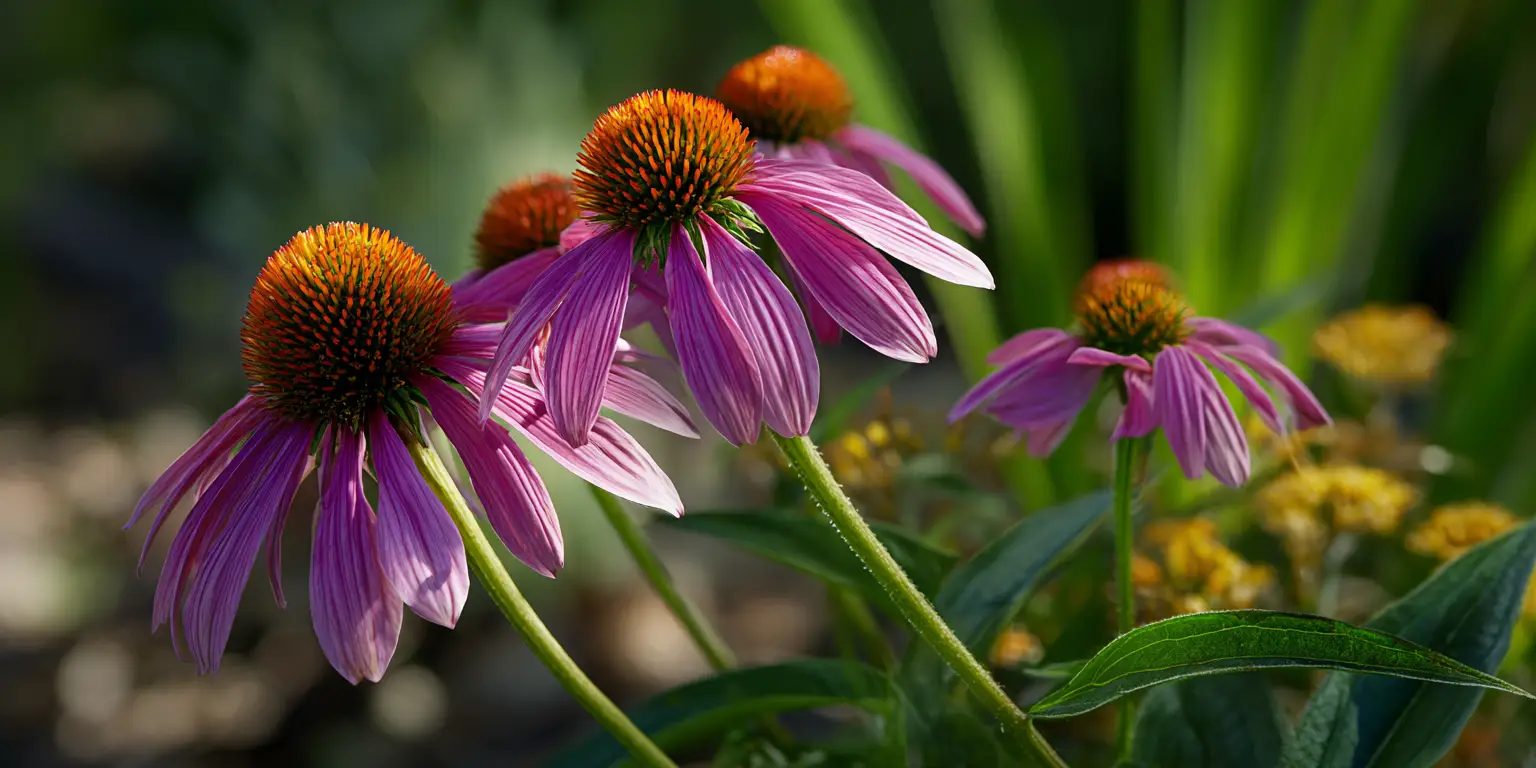
in bloom
now
through Aug
Bloom calendar
Echinacea purpurea
species; herbaceous perennial
At‑a‑glance
- Group/Class: species; herbaceous perennial
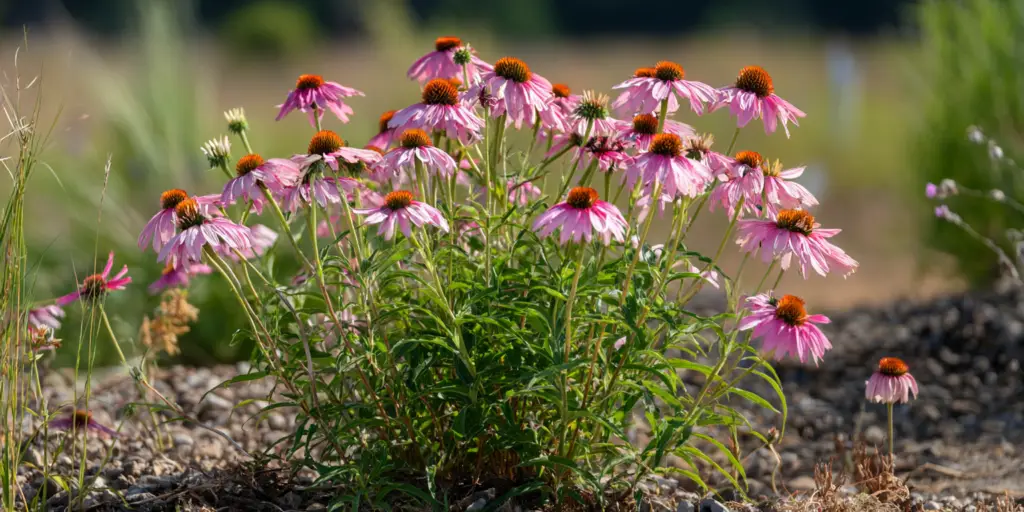
- Height × spread: 24 to 60 in × 18 to 24 in (60 to 150 cm × 45 to 60 cm)
- Bloom window: June to August
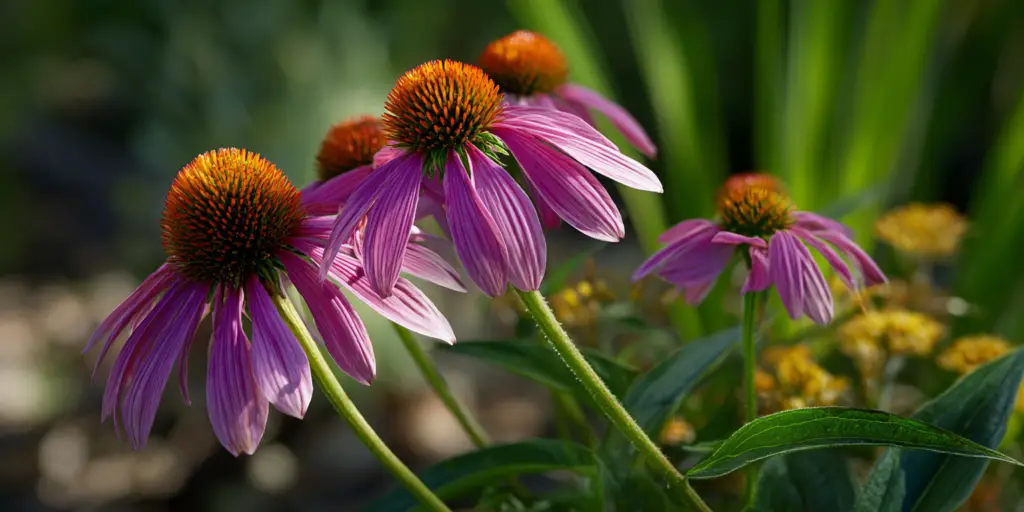
- Color & flower form: purplish pink rays with a raised orange-brown cone; rays mostly horizontal
- Fragrance: 0 none
- USDA hardiness: zones 3 to 8
- Breeder / Year / Origin: wild species, unknown, USA
- Cut-flower notes: stems sturdy; typical vase life 5 to 8 days with cool conditioning
- Pet safety: safe
How it differs
- Broader leaves and fuller habit than narrow-leaf coneflower types.
- Rays are less drooping than in pale purple species.
- Taller average stature than many wild species in the genus.
- More tolerant of richer garden soils and light part shade.
Strengths
- Long bloom period in summer.
- Handles heat and brief drought once established.
- Good garden and cutting performance.
- Attracts pollinators and provides winter seed for birds.
Care in one minute
Site in full sun for strongest stems and most bloom.
Provide average, well-drained soil; pH near neutral is fine.
Water regularly the first year; reduce to deep, occasional soaks after establishment.
Feed lightly in spring; avoid high-nitrogen fertilizers.
Deadhead for tidiness or leave some seedheads for birds; no staking usually needed.
Divide clumps only when crowded and replant promptly.
Watch‑outs
- Susceptible to aster yellows spread by leafhoppers.
- Can develop leaf spots in prolonged wet weather.
- Poor drainage can lead to crown or root rot.
- Can self-seed where spent heads are left.
Best uses (tags)
Provenance note
Native to moist prairies, meadows, and open woods of the central to southeastern United States.
Now widely naturalized in gardens across North America.
References
- Missouri Botanical Garden Plant Finder: Echinacea purpurea
- Lady Bird Johnson Wildflower Center: Echinacea purpurea
- Utah State University Extension: Echinacea Cut Flower Production
- Penn State Extension: Echinacea Diseases
Similar Flowers
Enjoying our flower guides? Add YourFlowersGuide as a preferred source on Google. It helps more readers find us.
Add to Preferred Sources