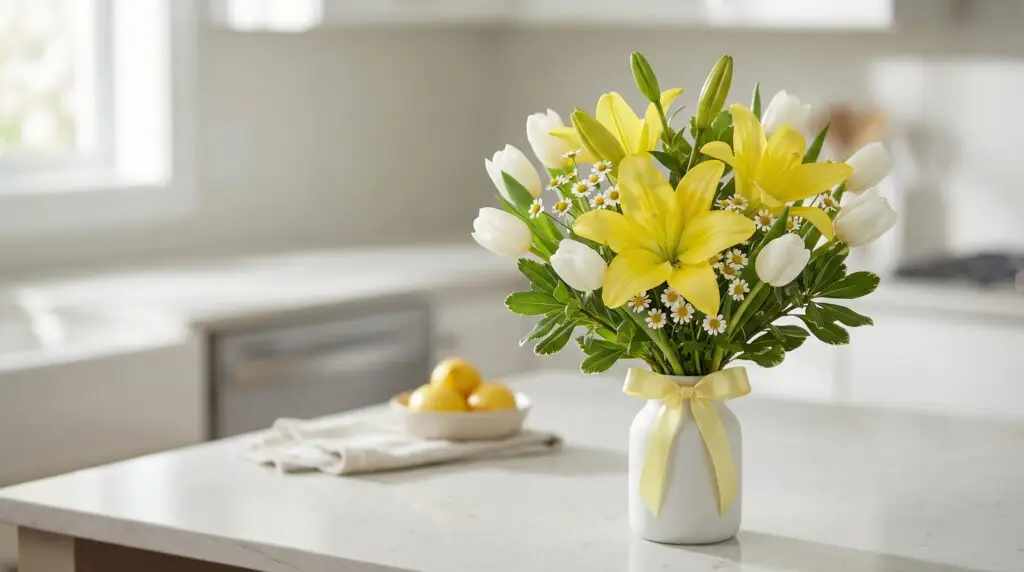
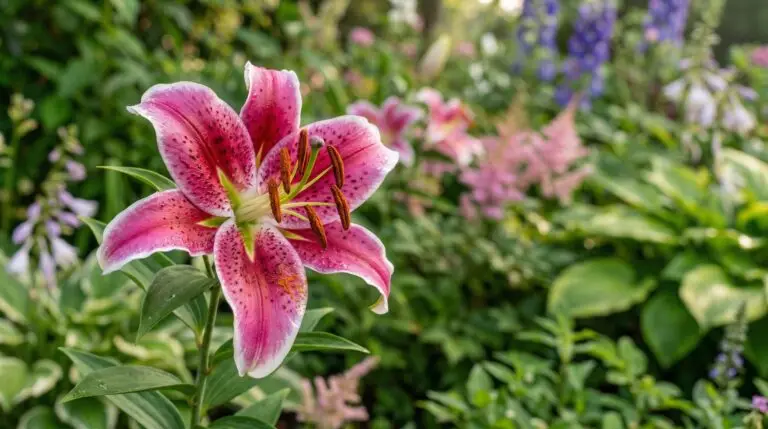
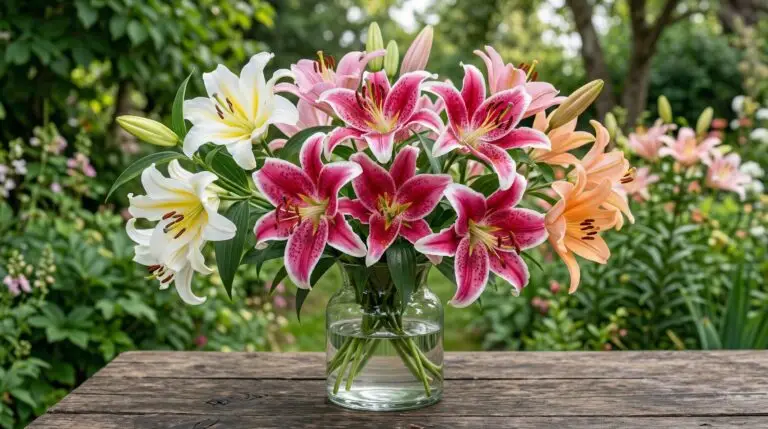



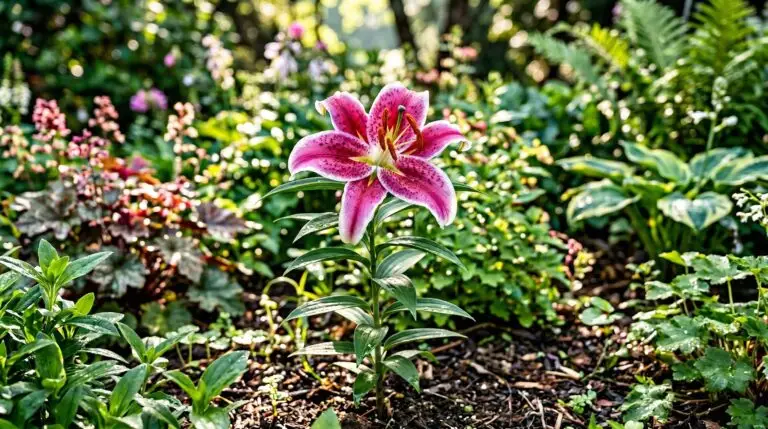
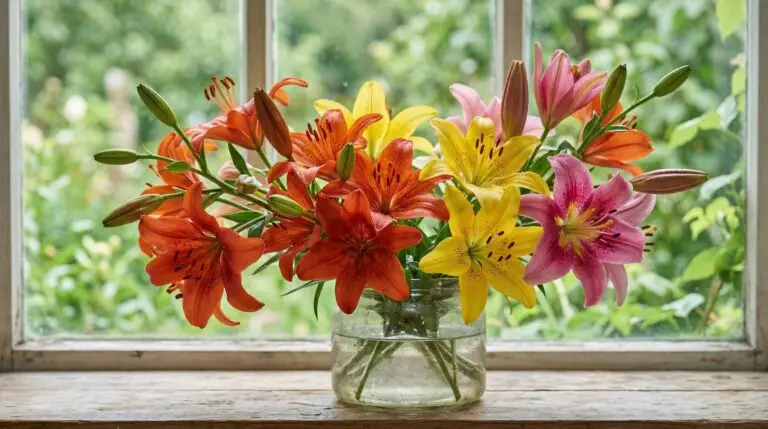
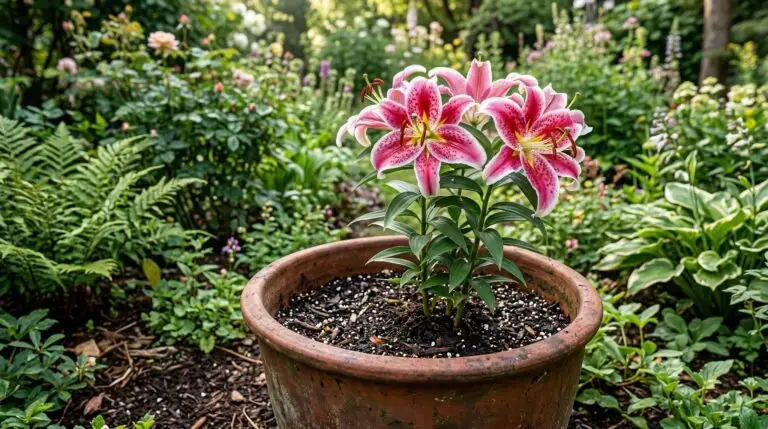

Lily bloom time across the US
Interactive map
 See the interactive map
Drag the date and the bloom moves north across the country. Every point has its own window, and the map says where it has no records rather than guessing. Free, with nothing to sign up for. Open the lily map.
City by city
Typical window, earliest first. Cultivars of the same flower can open days or weeks apart.
Taxonomy and origin
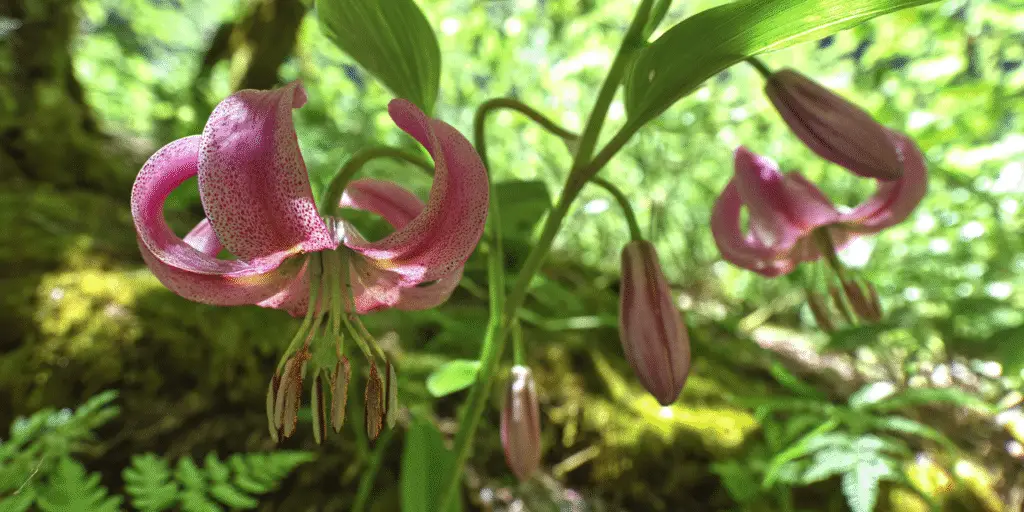
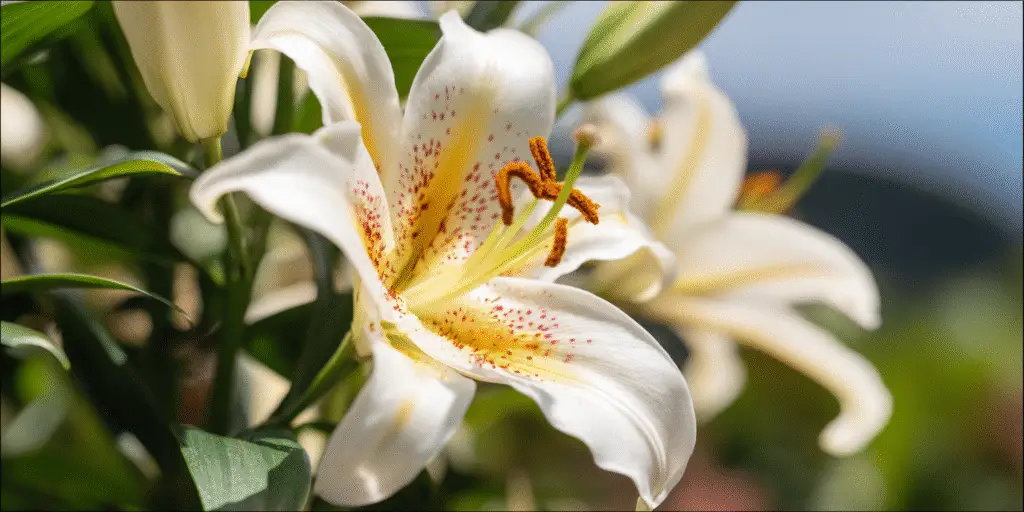
Lilium is a genus of roughly 80 to 100 species in the family Liliaceae, spread across the temperate Northern Hemisphere, with the greatest natural diversity in East Asia (China, Japan, and the Himalayan region) and additional species native to Europe and North America. Every true lily grows from a scaly bulb and produces a flower with six tepals, which is the trait that separates the genus from its many imitators. Familiar species include the Madonna lily (Lilium candidum) from the eastern Mediterranean, grown since antiquity, and the tiger lily (Lilium lancifolium) from East Asia. Most garden lilies you buy are not pure species but hybrids, sorted into horticultural divisions such as Asiatic, Oriental, trumpet, and others.
The bigger source of confusion is the long list of plants that carry "lily" in the name without belonging to the genus. Daylilies are Hemerocallis, in a different family entirely; each bloom lasts a single day, and the leaves are strap-like, growing from a clump of fleshy roots rather than a bulb. The calla lily is Zantedeschia, an arum that grows from a rhizome and forms a colored spathe wrapped around a central spike, not a six-petaled flower. The peace lily (Spathiphyllum) is another arum, sold as a houseplant. Lily of the valley and canna lily are likewise unrelated. If the plant grows from a true scaly bulb and opens a six-tepaled flower on a leafy stem, it is a Lilium; if not, it is one of the look-alikes, and the care and toxicity rules below do not transfer cleanly.
| Is it a true lily? | Genus / family | Grows from | Tells it apart | Cat toxicity |
|---|---|---|---|---|
| True lily | Lilium, Liliaceae | Scaly bulb | Six-tepaled flower on one leafy stem | Deadly (kidney failure) |
| Daylily | Hemerocallis, Asphodelaceae | Fleshy roots | Each bloom lasts one day, grassy leaves | Deadly (kidney failure) |
| Calla lily | Zantedeschia, Araceae | Rhizome | Colored spathe around a spike | Milder oxalate irritation |
| Peace lily | Spathiphyllum, Araceae | Rhizome | Houseplant, white spathe | Milder oxalate irritation |
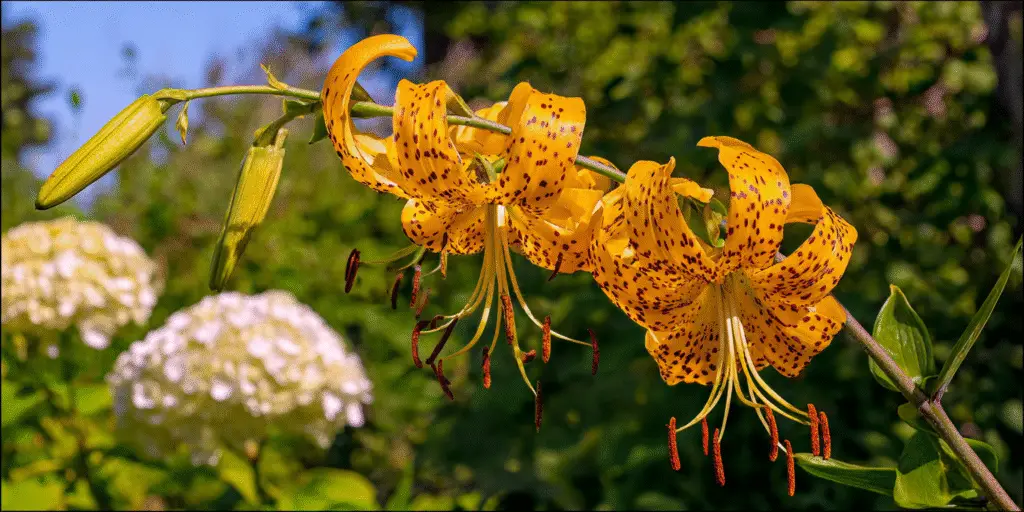
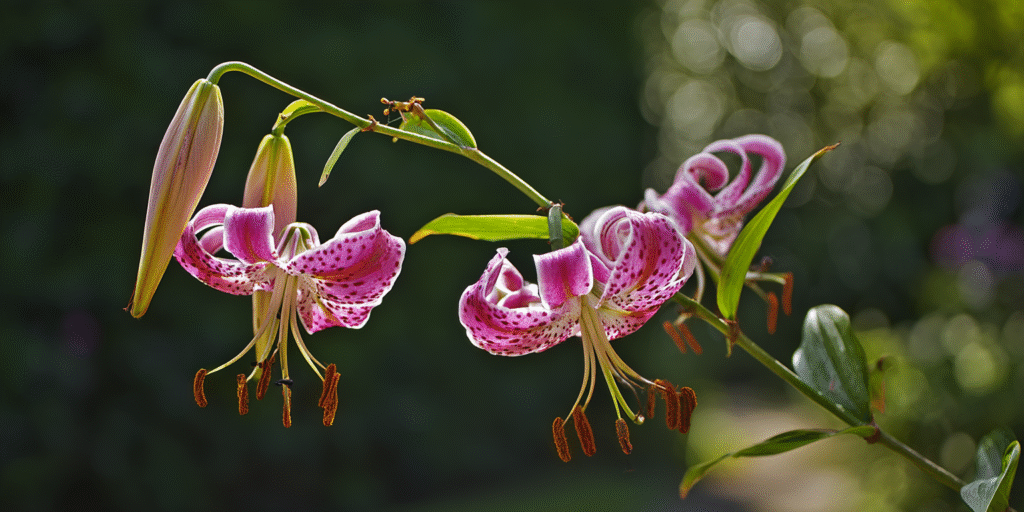
The garden lilies people actually grow fall into a handful of divisions that differ in scent, bloom time, and stature, and choosing among them is most of the decision. Asiatic lilies are the earliest, hardiest, and easiest, in bold colors but with little to no scent. Oriental lilies bloom later, stand taller, and carry the heavy sweet perfume most people picture, including cut-flower favorites like ‘Stargazer’ and ‘Casa Blanca’. Easter lilies (Lilium longiflorum) are the white trumpets forced for spring. Trumpet lilies are tall and strongly scented, and tiger lilies are the freckled, recurved orange types that also spread by little bulbils.
| Division | Scent | Bloom time | Typical height |
|---|---|---|---|
| Asiatic | Little to none | Late spring to early summer | 1 to 4 ft |
| Oriental | Strong, sweet | Mid to late summer | 3 to 5 ft |
| Easter (longiflorum) | Moderate, sweet | Early summer | 2 to 3 ft |
| Trumpet | Strong, sometimes spicy | Mid summer | 4 to 6 ft |
| Tiger | Mild | Mid to late summer | 3 to 5 ft |
The divisions and species, and what each one is known for
The North American Lily Society sorts true lilies into nine numbered divisions by parentage and flower shape, a system adopted from the Royal Horticultural Society in the 1960s. The rows below cross that framework with NC State Extension's own per-species records, Iowa State and Penn State. Every card carries the same warning badge for the reason set out under the grid.
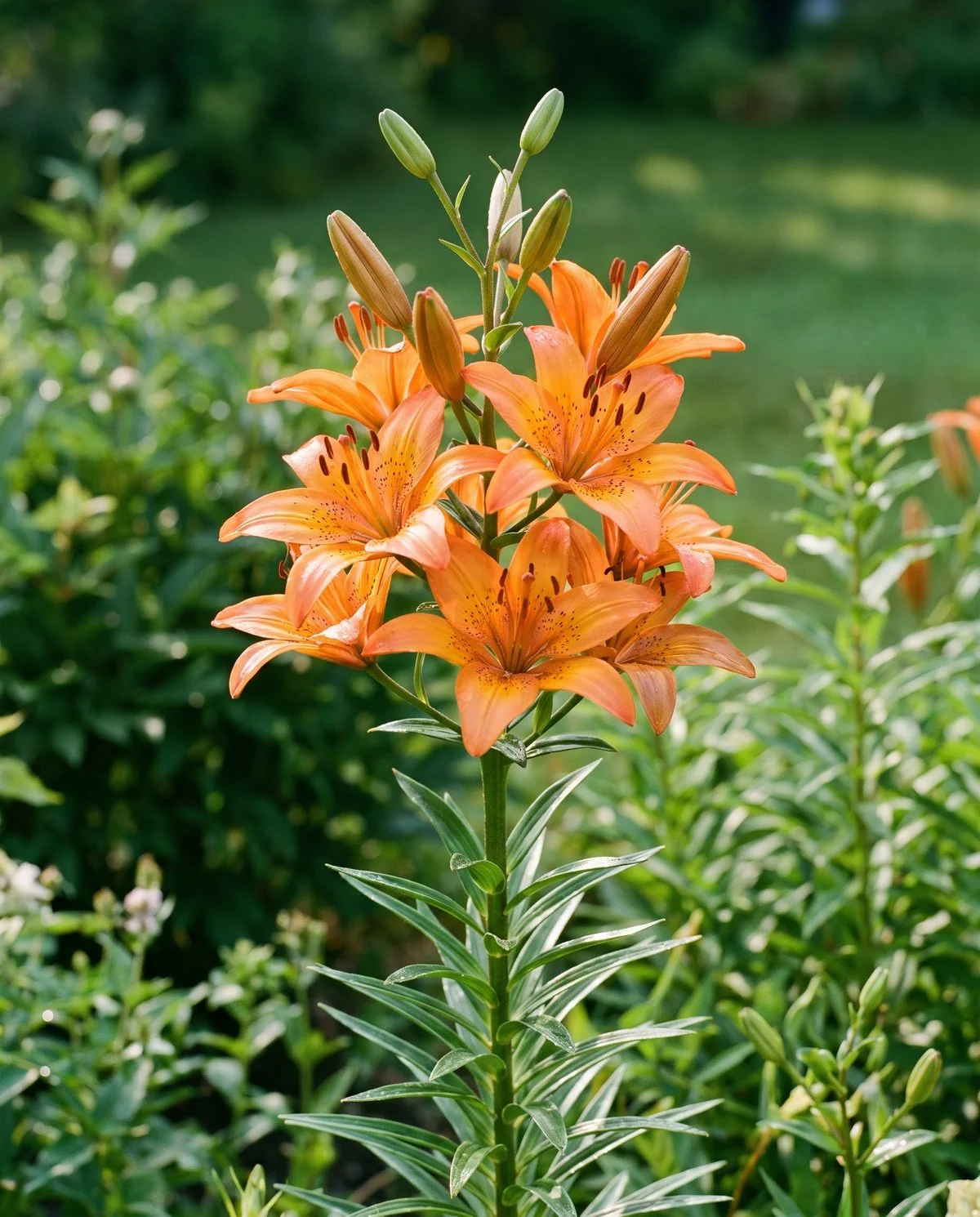
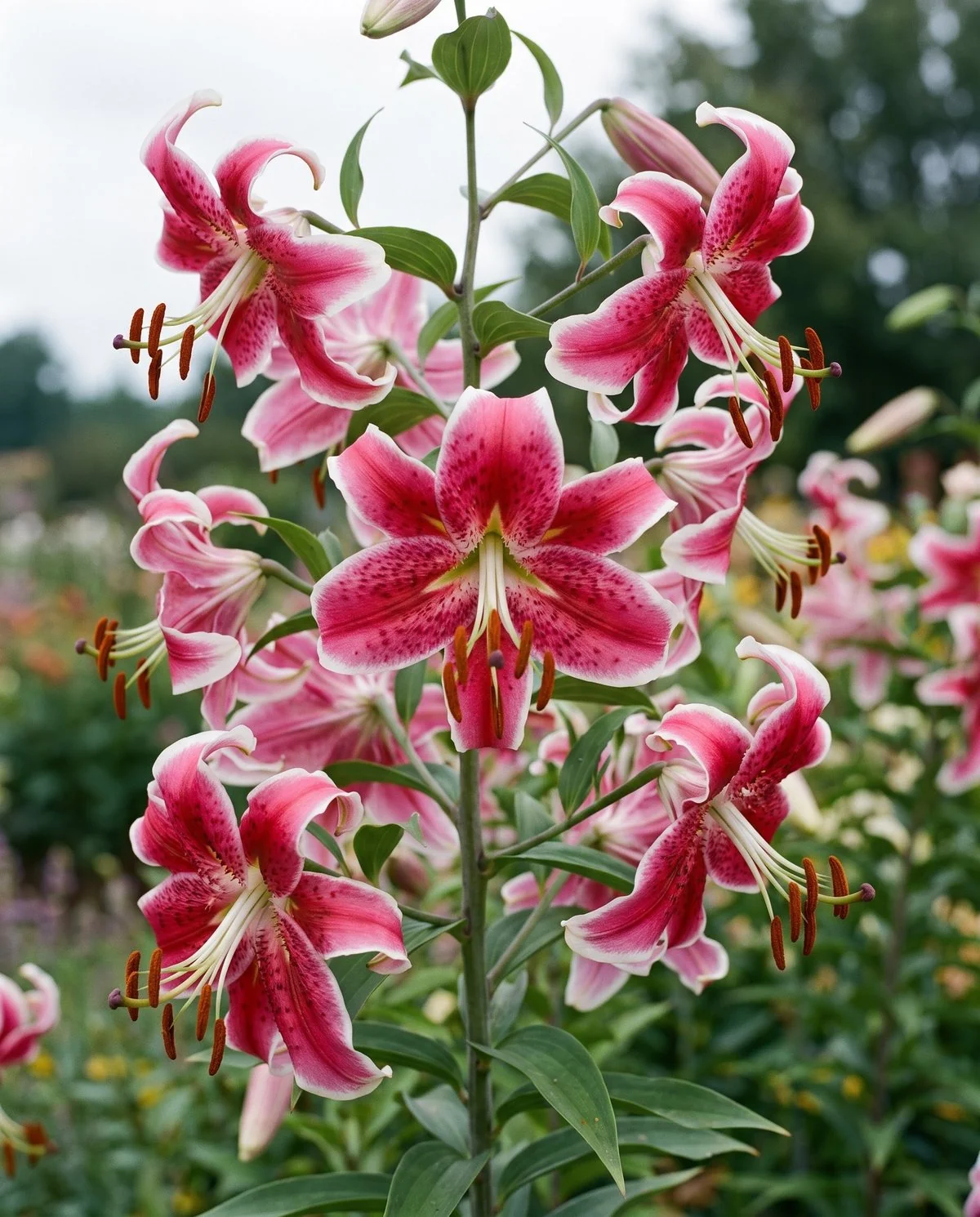
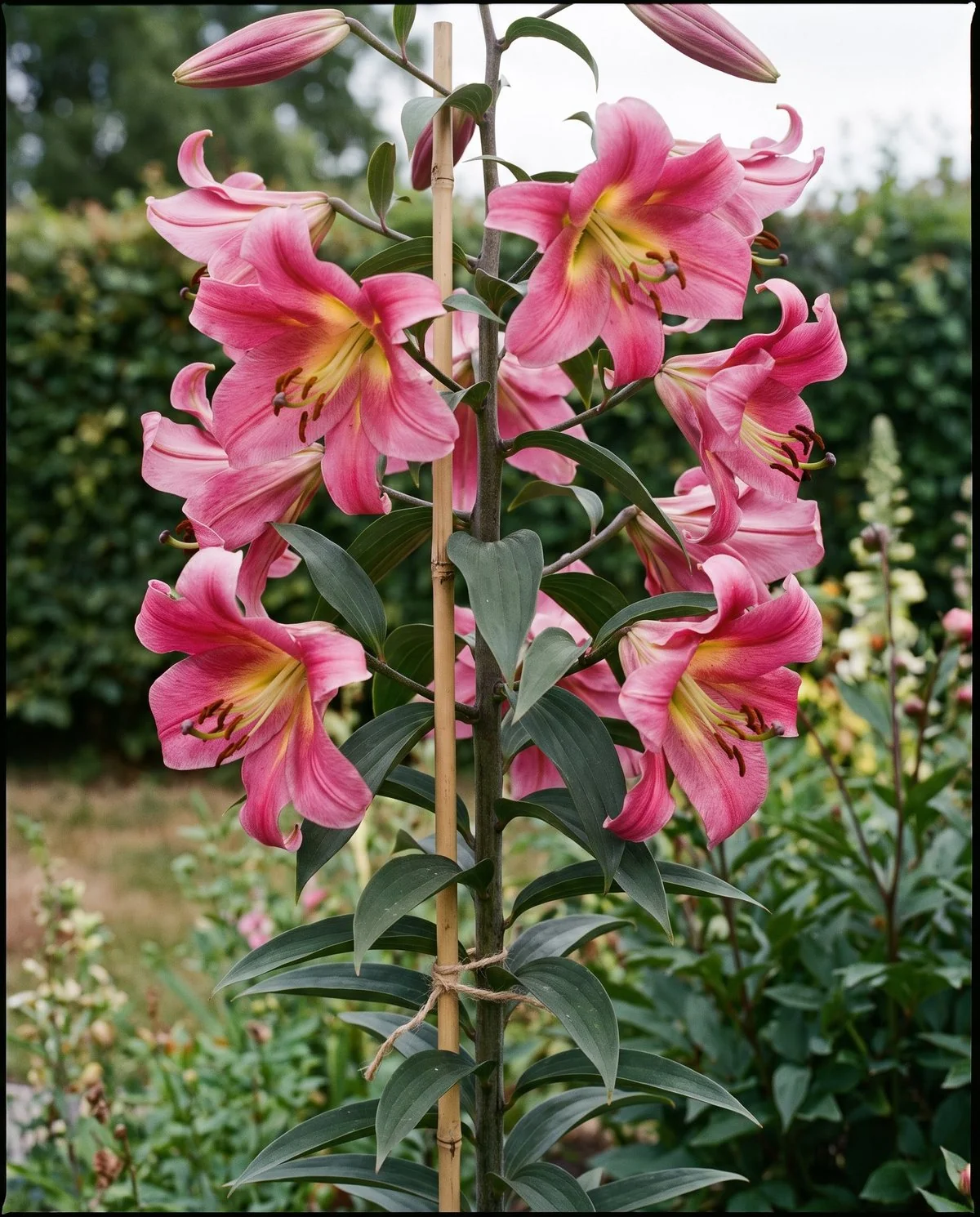
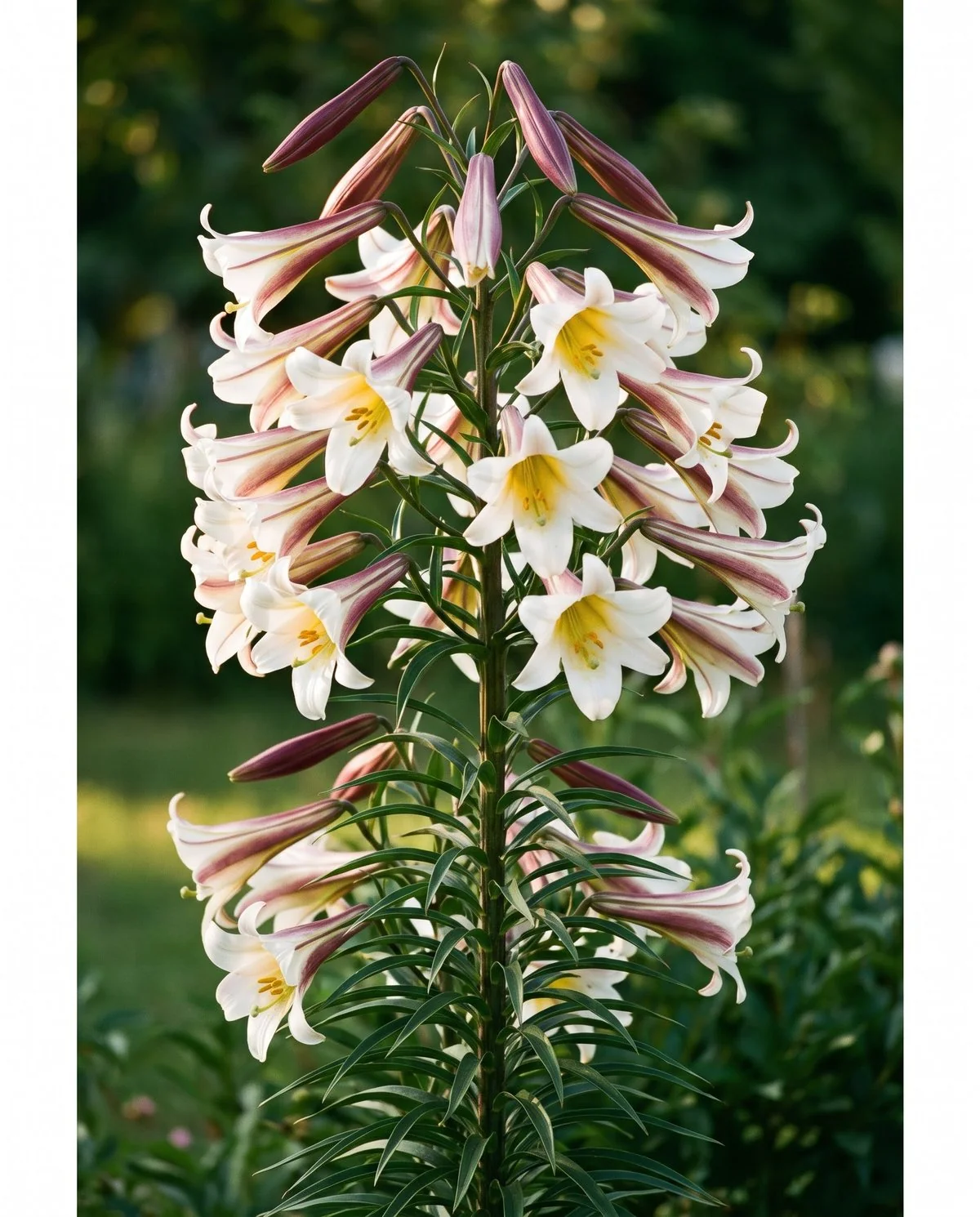
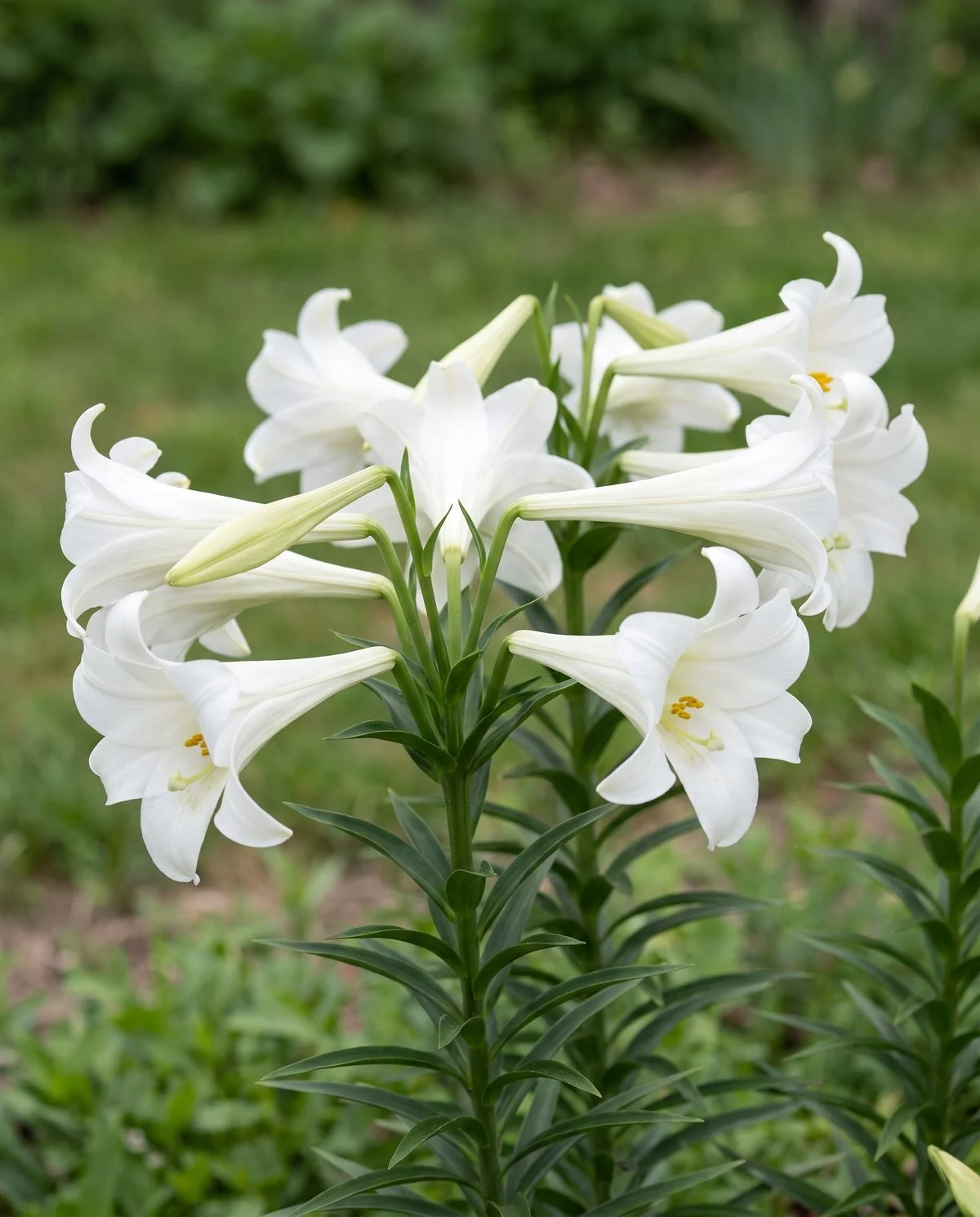
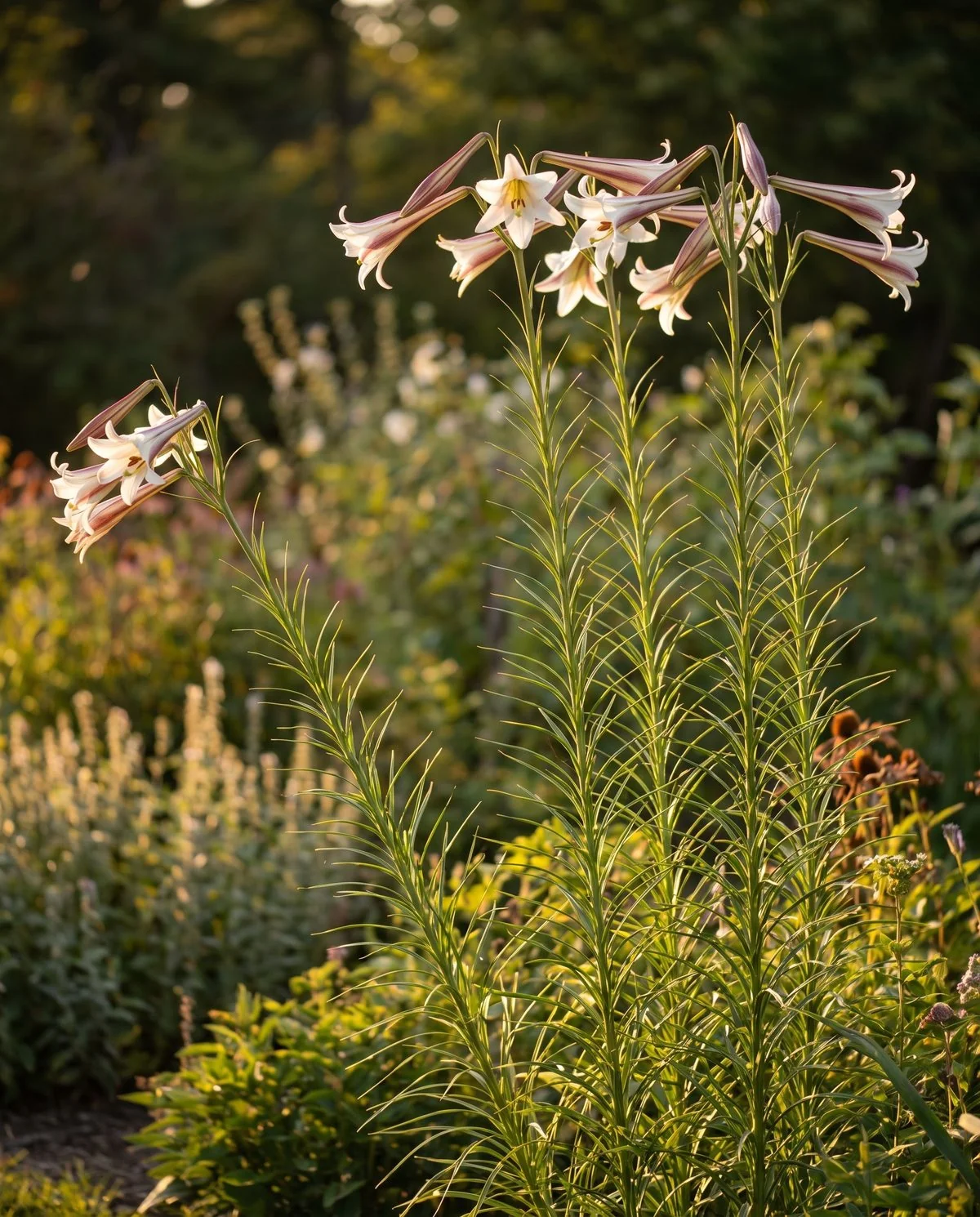
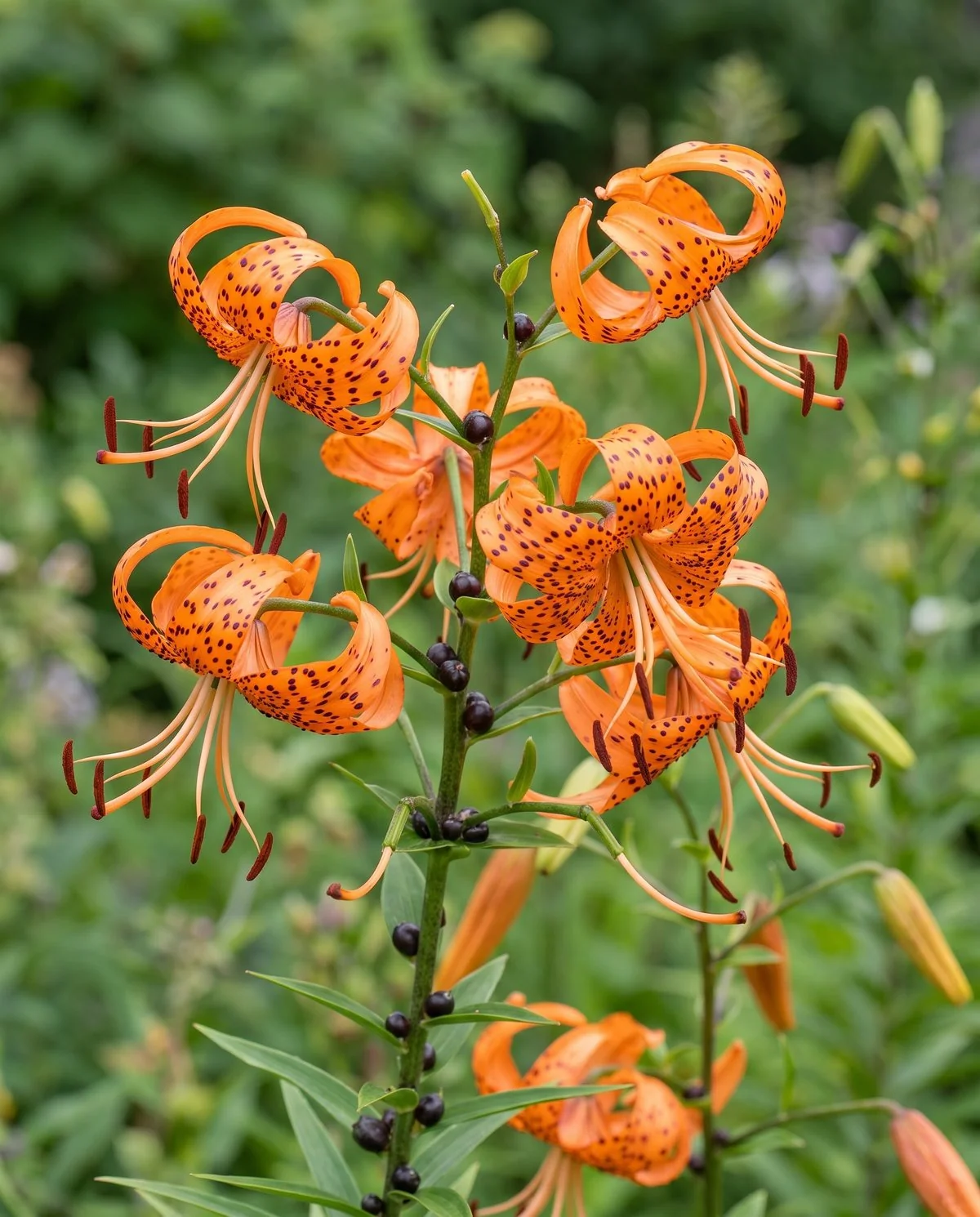
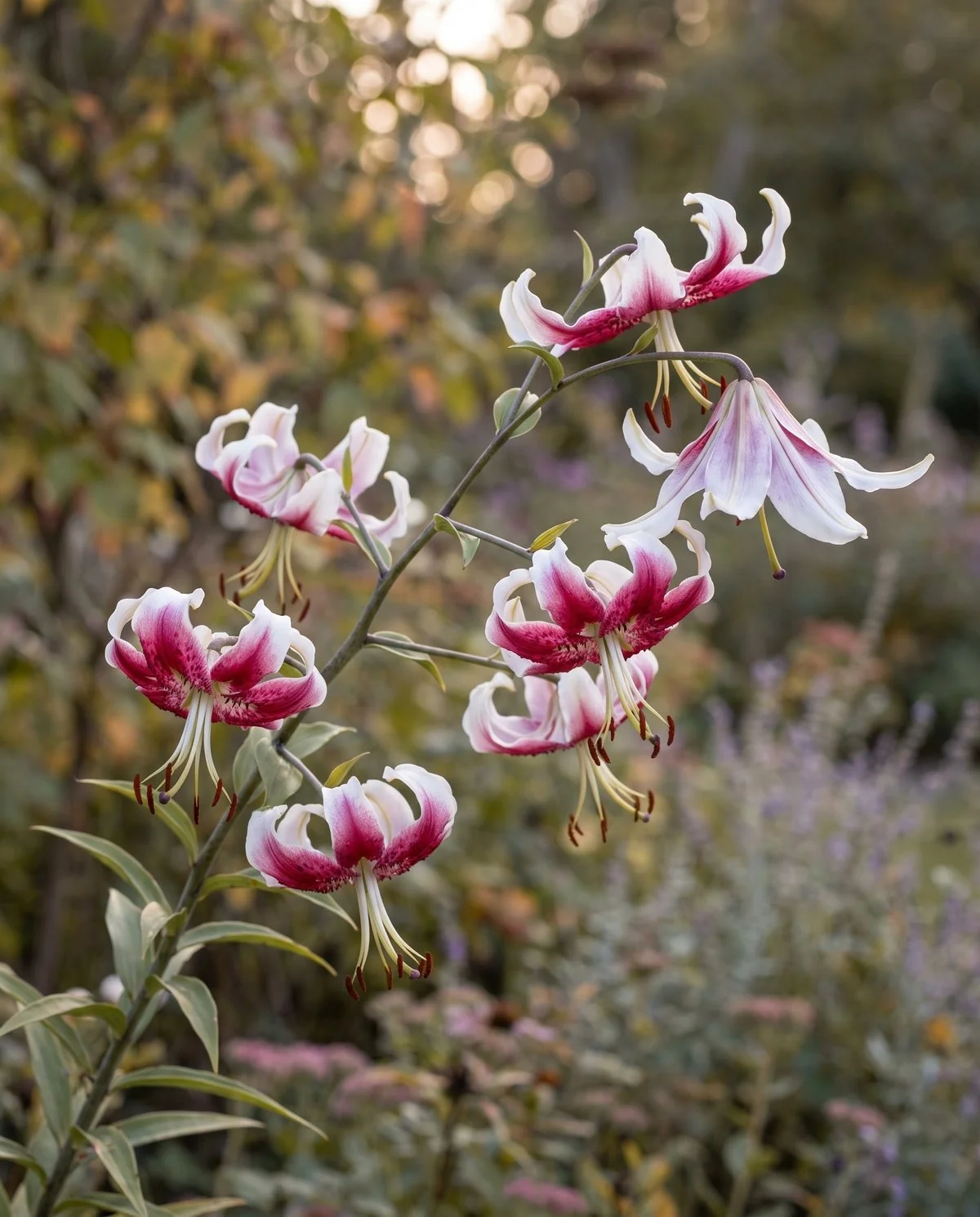
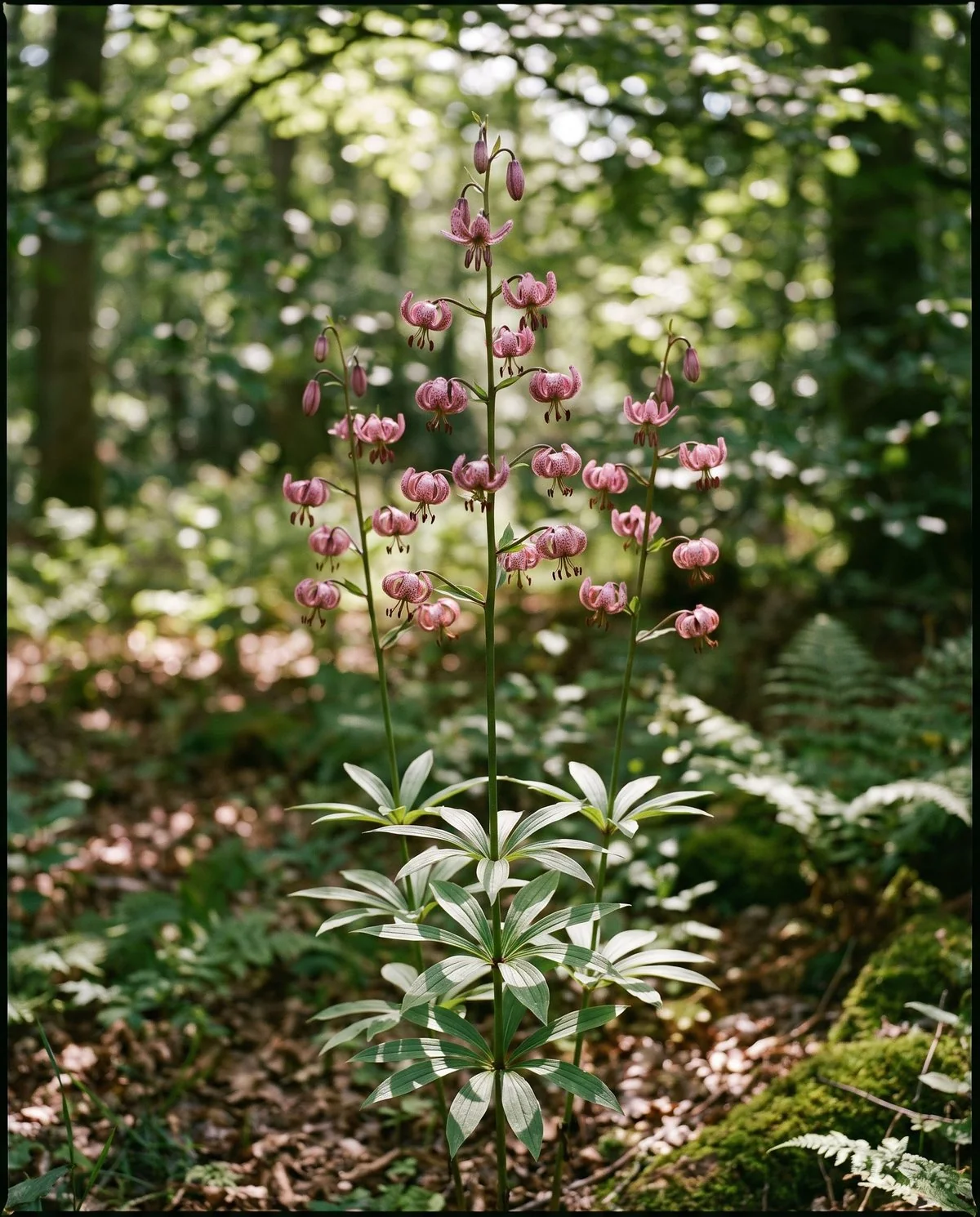
The badge is identical on every card because the danger is. NC State's own toolbox pages state toxic to cats on the Asiatic, Oriental, Longiflorum, Formosanum, Lancifolium and Speciosum entries individually, and UC Davis School of Veterinary Medicine names Easter, Stargazer and Asiatic lilies as the highest-risk types while confirming that daylilies, a different genus in a different family, cause the same acute kidney failure. Choosing a division or a cultivar changes the flower, the scent and the season, and changes nothing at all about a cat.
Bloom time
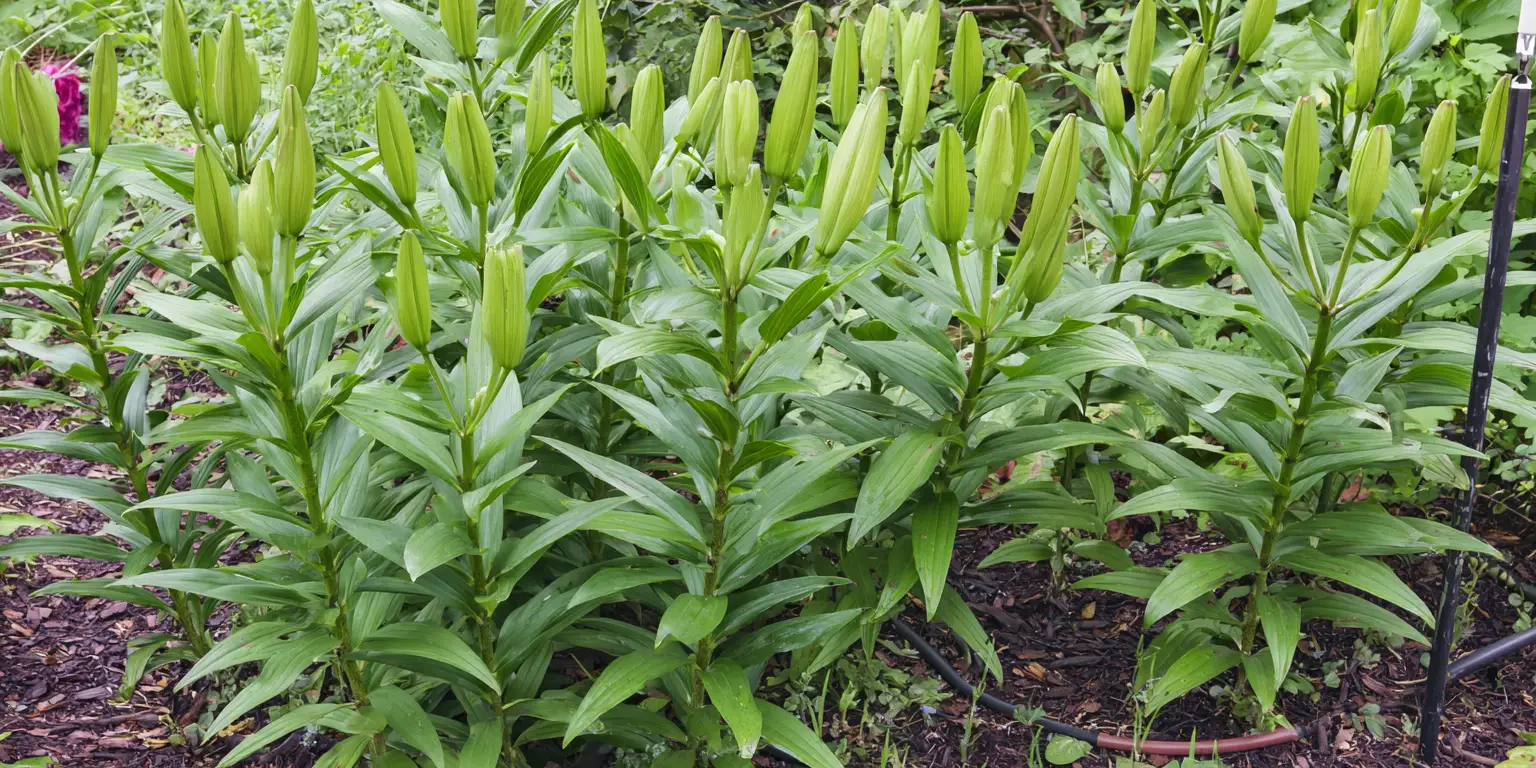
True lilies flower across the warm months, and choosing types from different divisions stretches the display from late spring into early fall. Asiatic hybrids open first, roughly May to June, followed by trumpets, Aurelians, and many species through late June and July, with Oriental hybrids closing the season in July and August. Each stem carries several buds that open in succession rather than all at once, so a single flower lasts only a few days but a stem stays in flower for one to two weeks. Planting a mix of early, mid, and late divisions in one bed gives months of color from a single planting.

Buds that form and never open
A lily can set a full head of buds and then open none of them. The buds pale, dry from the tip, and drop while the foliage below still looks healthy, which is what makes the failure so disorienting: nothing about the plant says it is in trouble until the flowers do not arrive. The name for it is bud blast, and it is a plant abandoning flowers it can no longer afford rather than a disease taking them.
Water explains most cases, and the detail that matters is steadiness rather than amount. Too little, too much, and a sudden swing between the two all trigger the same response, so a bed that dried out hard during a hot week and was then soaked heavily is a more likely cause than either drought or overwatering on its own. Heat compounds it, and so does the opposite of what people expect: too much shade blasts buds as reliably as too much sun, because a plant in low light cannot fund what it started. Aphids feeding at the bud cluster do it mechanically, which is why the undersides of the buds are worth turning over before blaming the weather.
A potted lily brought indoors has one extra trigger that a garden plant does not. Ethylene, the gas that ripening fruit gives off, pushes lilies to drop buds, and the effect is strong enough that it is used deliberately in research to induce blasting. A gift lily standing next to a fruit bowl is in the worst place in the house for it. Move it away from ripening fruit, keep it cool and bright, and water on a rhythm rather than in response to panic, and the buds that are left will usually open.
What to expect, year by year and month by month
How long the wait is depends entirely on what went into the ground. A full-size, blooming-grade bulb planted in spring after frost can flower the same season, which Iowa State's Easter lily guidance confirms for Iowa plantings reaching bloom by July, while a small division or bulblet commonly needs two to three years to reach blooming size, a figure that sits on extension consensus rather than one single citation. After that the sequence through the summer is set by division rather than by care: Asiatics open first, around June, the Orienpet and trumpet hybrids follow, with Penn State noting that Orienpets bloom earlier than their Oriental parents, the Orientals close the summer through mid-July into August, and Lilium speciosum is the last of all, opening late August into September per NC State. That ordering is solid; the exact week boundaries are assembled from several different sources rather than one calendar, and should be read as a shape rather than as dates. Over longer time a well-drained lily planting does not fade, it multiplies into a fuller clump, which is why shrinking flowers after several good years reads as congestion rather than decline and is answered by lifting and dividing rather than by feeding.
Height and spread
True lilies range from about 1 foot to well over 6 feet depending on type. Dwarf and patio selections stay 1 to 2 feet, the typical garden lily reaches 3 to 4 feet, and the giant Oriental and trumpet "tree lilies" push past 6 feet in a mature clump. Each bulb usually throws a single upright stem, occasionally two, with foliage only 6 to 12 inches wide, so lilies take up little horizontal room and slot easily between other plants. Space bulbs 8 to 12 inches apart so the stems can stand without crowding, and plant the tall divisions where they have something to lean into or a stake, since heavy flower heads can topple a thin stem in wind or rain.
Light
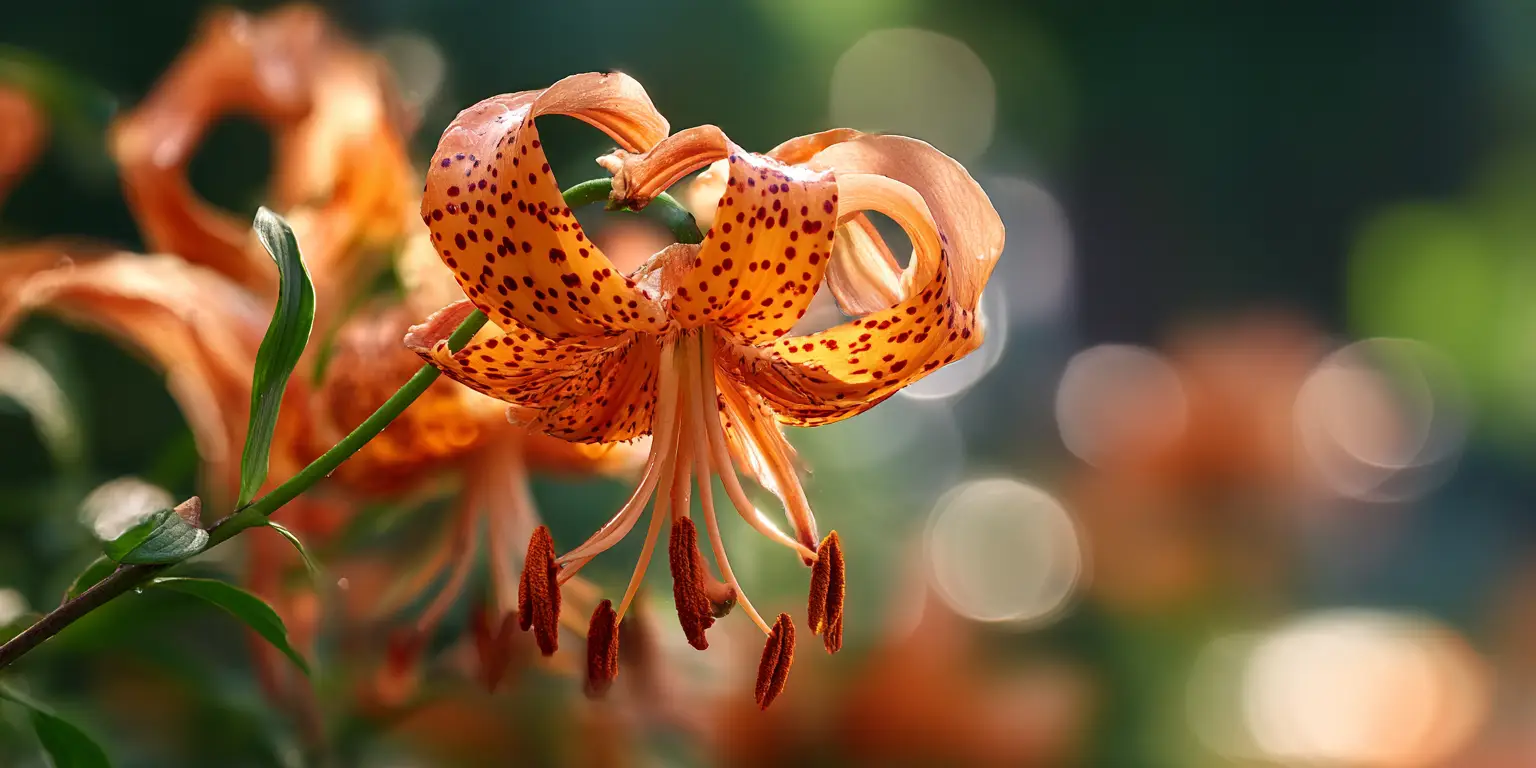
Six hours of direct sun a day is the minimum, with full sun to light afternoon shade giving the strongest stems and the most buds. Too little light makes plants stretch, grow spindly, and flower poorly. The classic advice is to keep the head in the sun and the feet in the shade: the flowering top wants full exposure while the bulb and roots prefer to stay cool, which a layer of mulch or a low groundcover around the base provides. In hot southern gardens a little shade during the fiercest afternoon hours protects the flower color without costing bloom.
Water
Steady moisture through the growing season suits lilies, but they will rot in standing water, so drainage matters as much as watering. Keep the soil lightly moist, like a wrung-out sponge, and water deeply once the top inch or two has dried rather than giving frequent shallow sips; in moderate climates that usually means watering once or twice a week. Water at soil level instead of over the foliage, since wet leaves invite fungal disease. After flowering in late summer many lilies tolerate drier soil as they head toward dormancy, though Oriental types still appreciate water during hot dry spells while their foliage is green and feeding the bulb.
Three things repeated about lilies
The myth: Lilies are shade plants.
The reality: Oversimplified to the point of being wrong. The rule Clemson HGIC uses, echoed across NC State's own toolbox pages, is heads in the sun and feet in the shade: the foliage and flowers want six or more hours of direct sun for strong bloom, and only the root zone benefits from cool, mulched shade. The single genuine exception is Lilium martagon, which Iowa State says performs best in partial shade. Every other division and species page checked in this research lists full sun to partial shade, never full shade.
The myth: Snipping the anthers out makes the flower last longer.
The reality: Not by itself. The horticultural writer Larry Hodgson tested the claim directly and concluded that removing the anthers will not add five minutes to how long an individual flower lasts, since that lifespan is set by genetics and weather. The real mechanism is narrower and better documented: Mississippi State Extension confirms that pollen landing on the stigma wounds the style tissue, which spikes ethylene production and speeds senescence in a flower already unusually sensitive to ethylene, so removing the anthers before pollen sheds prevents that specific decline. The undisputed reason to do it either way is the permanent stain.
The myth: Daylilies are the safe option for a cat household because they are not real lilies.
The reality: False, and dangerous. Hemerocallis is a different genus in a different family from Lilium, and UC Davis School of Veterinary Medicine and the FDA both confirm it causes the same acute kidney failure in cats. The one lily-named flower that genuinely is safer is a third plant again: the ASPCA lists Alstroemeria, the Peruvian lily, as non-toxic to cats, dogs and horses, which is exactly why the identification in the triage section above is worth doing carefully.
Soil and pH
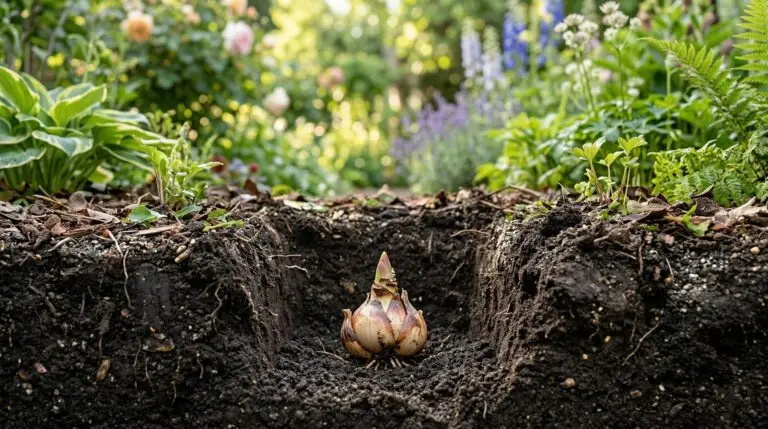
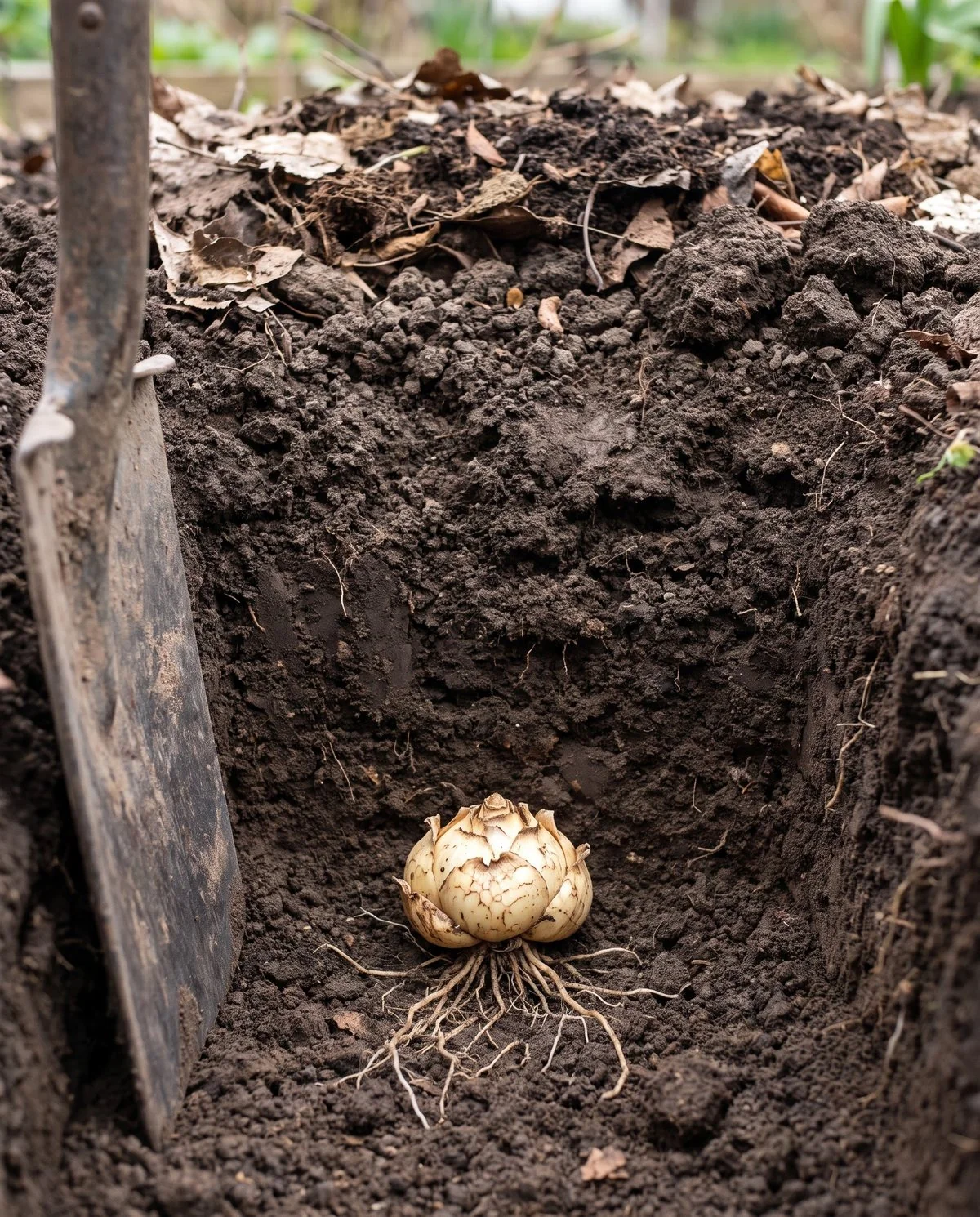
Fertile, free-draining soil is the non-negotiable requirement; a loose loam or sandy loam is ideal, and heavy clay should be opened up with compost and coarse grit before planting or the bulbs will rot. Most lilies are happy in a soil pH of 6.0 to 7.0. Oriental and trumpet types lean toward the acidic end, around 6.0 to 6.5, while Asiatics tolerate up to about 7.5. Plant depth is the rule that decides whether the stem can support itself: set bulbs about two to three times their own height deep, which for most lilies means 4 to 6 inches of soil over the top. The one exception is the Madonna lily (Lilium candidum), which is planted shallowly with its nose just below the surface.

USDA hardiness
Most garden lilies are hardy across USDA zones 4 to 9, with the division setting the exact range. Asiatic lilies are the toughest, reliable from zone 3 (or even colder with a winter mulch) up to about zone 8 or 9. Oriental lilies run zones 4 to 9, trumpets and Orienpets roughly zones 4 to 8, and martagon lilies cope down to zone 3, withstanding winters near minus 40 degrees. In the coldest regions a winter mulch of straw or shredded leaves protects the bulbs, and in the very warmest zones (9 and above) lilies often lack the winter chill they need, so bulbs may have to be pre-chilled before planting or treated as a one-season planting.
The numbers, and who publishes them
Assembled from the North American Lily Society's own culture pages, NC State Extension's per-species records, Iowa State, Penn State, the Pacific Northwest Pest Management Handbooks and South Dakota State via the University of Washington's Miller Library digest.
Propagation and longevity
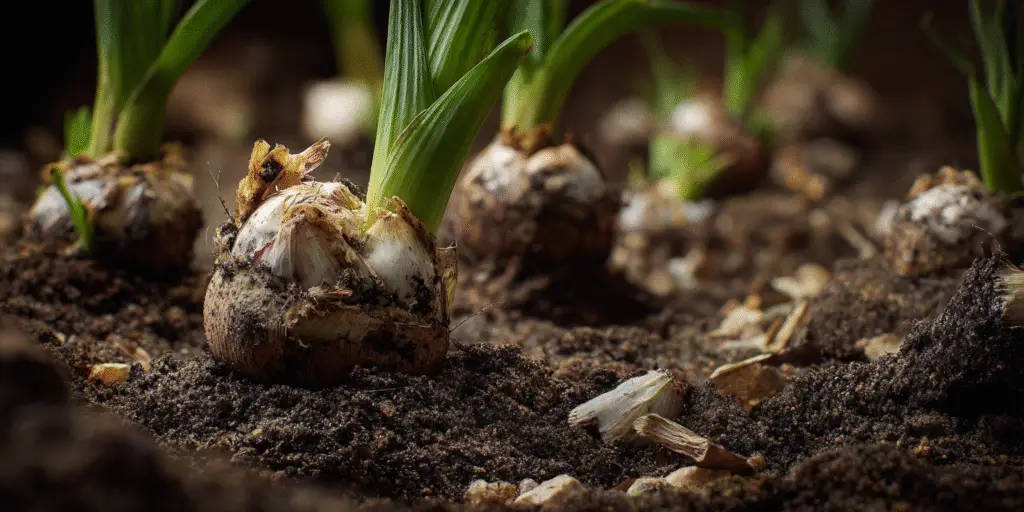
A healthy lily bulb lives and reblooms for many years, often multiplying into a fuller clump over time, so the main "propagation" job is simply dividing crowded plantings. Every three to five years, or whenever flowering thins out, lift the clump in fall or early spring, separate the offset bulblets, and replant them at the proper depth; small divisions take a year or two to reach blooming size. Tiger lilies and some Asiatics also make tiny bulbils in the leaf axils that can be picked off and planted half an inch deep, flowering in two to three years. Scaling, where outer bulb scales are peeled and set in a moist medium to sprout new bulblets, and growing from seed (two to six years to bloom, and hybrids will not come true) are slower routes. Whatever the method, let the foliage die back naturally after bloom rather than cutting it green, because those leaves are recharging the bulb for next year.
Fragrance
Scent in lilies tracks the division, so fragrance is something you choose at purchase rather than something you can coax later. Oriental hybrids such as ‘Casa Blanca’ and ‘Stargazer’ carry the famous heavy, sweet perfume that can fill a room, and trumpet lilies and Orienpets are strongly scented too, sometimes with a spicy edge; Lilium regale is prized for its rich fragrance. Asiatic lilies, by contrast, have little to no scent, which makes them the better pick for anyone sensitive to perfume or for tight indoor spaces. The fragrance comes from the petals and their oils, not the pollen, so removing the anthers will not quiet a scented lily, though it does prevent staining.
Toxicity and pet safety
This is the section that matters most. True lilies (any Lilium) and daylilies (Hemerocallis) are among the most dangerous plants you can bring near a cat. Every part is toxic to cats: the petals, leaves, stems, pollen, and even the water from a vase that held cut lilies. The poisoning does not depend on the cat eating much. A cat that chews a single leaf or petal, licks a few grains of pollen off its fur while grooming, or drinks lily vase water can develop acute kidney failure, fatal in under three days if untreated. Early signs are vomiting, drooling, and lethargy within hours, progressing to the kidneys shutting down and the cat producing little or no urine. Any suspected exposure is a same-day veterinary emergency: do not wait to see if symptoms appear, because treatment works best when started within the first 18 hours and may not save a cat once the kidneys have failed. The simplest safe rule for a cat household is to keep true lilies and daylilies out of the home and garden entirely.
Dogs are far less affected. A dog that eats lily plant material may get an upset stomach, but true lilies do not cause the catastrophic kidney failure in dogs that they cause in cats. The look-alikes carry a different, milder hazard: the calla lily and the peace lily are arums, not true lilies, and their toxicity comes from insoluble calcium oxalate crystals that irritate the mouth and throat of a cat or dog that bites them, causing drooling and oral pain but not the kidney injury true lilies inflict. Lilies are not poisonous to humans, and the bulbs of a few species are even eaten in Asian cooking, but that is no reason to relax around cats. If you share a home with cats, the safer choice is a different bouquet; for pet-friendly options see the guide to flowers that are safe for cats and dogs.

Vase life
Cut lilies are among the longest-lasting florist flowers, holding about a week and often up to two weeks indoors because each stem opens its buds in sequence. Buy or cut stems when the first one or two buds are just starting to color and open and the rest are still closed, so the display unfolds in the vase. Strip the lower leaves that would sit underwater, recut the stems at an angle, and stand them in clean lukewarm water with floral preservative, kept in a cool spot away from direct sun and ripening fruit; change the water and trim the ends every couple of days.
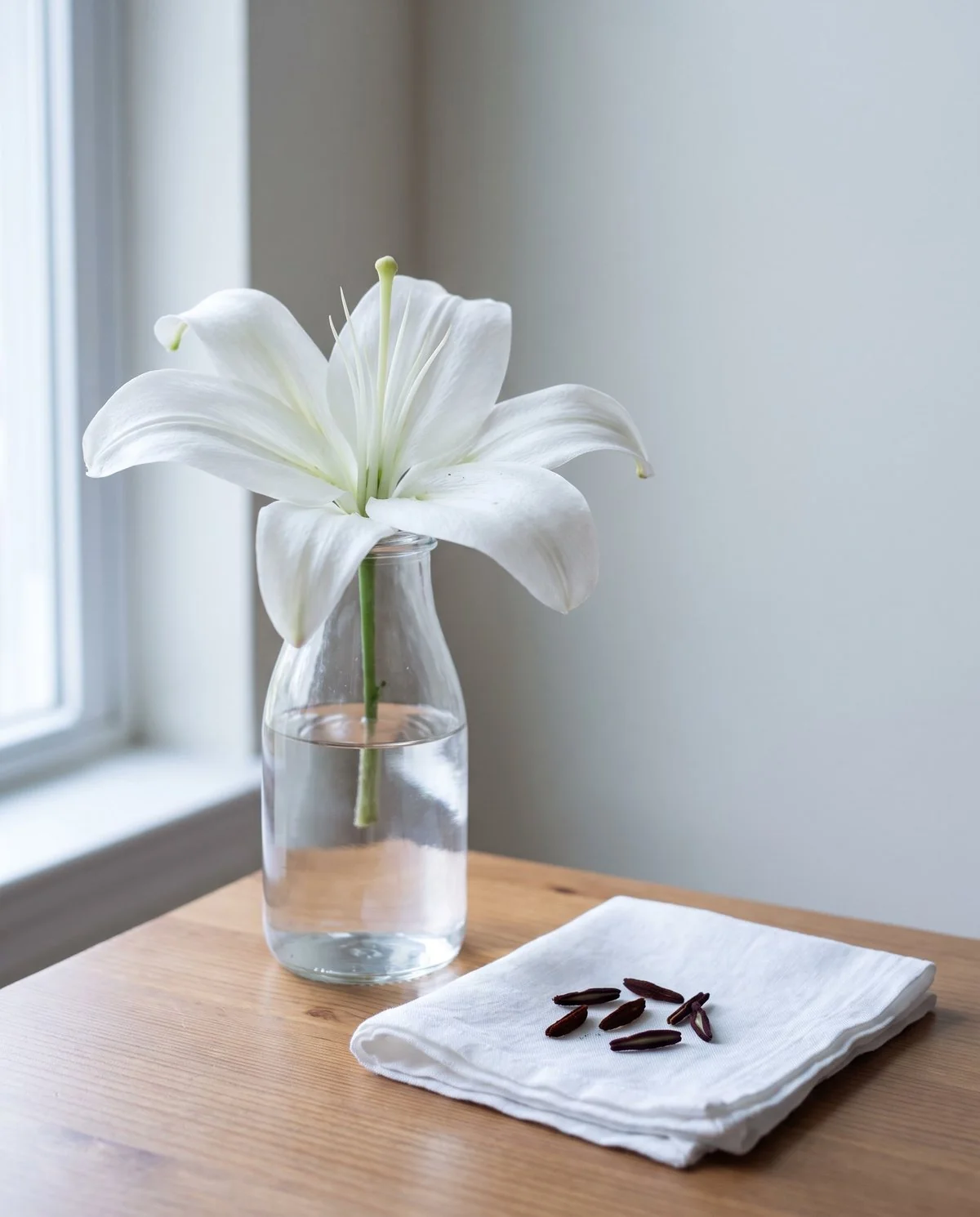
The pollen is the catch. As lily flowers open, their large anthers release a rust-colored pollen that permanently stains petals, skin, clothing, and furniture. The standard practice is to pinch or snip off the anthers with a tissue as each flower opens, which prevents staining and keeps the bloom looking clean a little longer. If pollen does land on fabric, lift it with sticky tape or a dry brush rather than rubbing, since rubbing or wetting it drives the stain in. And the warning from the toxicity section applies in full here: that same vase water and pollen are lethal to cats, so a cut-lily arrangement does not belong in a home with cats no matter how careful the placement.
What the postharvest research actually measured
There is no honest single day-count to quote here, and this section says so rather than inventing an average: no university source found in this research gives a plain-water baseline for a common garden Asiatic or Oriental cultivar. What does exist is measured treatment data.
Removing the anthers extends how long each flower lasts.
It does not, on a direct test by the horticultural writer Larry Hodgson. What it does do, per Mississippi State Extension, is prevent the ethylene spike that follows pollen landing on the stigma, plus the permanent stain.
Flower food, a preservative or a careful placement makes lily vase water safe around a cat.
None of them do. The water stays fully toxic for as long as any lily material has touched it, and a cut-lily arrangement is not compatible with a cat-occupied home regardless of what is in the vase or where the vase sits.
Pests and diseases
The signature pest is the red lily leaf beetle (Lilioceris lilii), a bright scarlet beetle about 8 mm long whose larvae, which coat themselves in their own excrement, can strip leaves, buds, and stems quickly; handpicking adults and larvae is the front-line control. Aphids matter less for the feeding damage than for the viruses they spread, while thrips blemish petals, and slugs and snails chew young shoots in damp, shady spots. Larger raiders include deer browsing buds and foliage and voles or mice eating the bulbs underground.
On the disease side, the common problems are fungal and viral. Botrytis (lily gray mold, sometimes called lily fire) shows up as brown spots with concentric rings on leaves and petals, spreading as a fuzzy gray mold in cool, wet, crowded conditions, which is why good spacing and watering at soil level pay off. Basal rot, caused by Fusarium and related fungi, rots the bulb from the base in warm, wet soil and collapses the shoot, and good drainage is the main defense. Several aphid-borne viruses (lily mosaic, lily symptomless virus, cucumber mosaic virus and others) cause mottling, streaking, and color break; there is no cure, so infected plants should be removed before the aphids spread them further.
What people actually ask about lilies
From 1,294 unique posts across r/gardening, r/whatsthisplant, r/GardeningUK, r/PlantIdentification, r/cats, r/plantclinic and r/perennials, of which 1,218 were retained after 76 posts about cats named Lily were filtered out. The figure beside each theme is the share of those 1,218 posts whose title reads as a live question. Themes are single-tagged in a fixed priority order, so real overlap between yellowing, pests and not-blooming exists but is not counted twice.
Depth, timing and how long since the clump was last split. The biggest bucket of genuine questions in the sample, bigger than any something-is-wrong theme.
Bulb or root, and whether the leaf twists at its base. 88 percent of these posts carry a photo and 96 percent are phrased as a question, the cleanest demand signal in the dataset.
The pattern of the yellowing before anything else, then the bulb's basal plate if the buds are wilting mid-season.
Whether it is Lilium or Hemerocallis at all, then the clock. Smaller in count than the three themes above and by far the highest-stakes: the top-scoring post in the entire sample, at 6,178 upvotes, is a cat at the emergency vet after eating two petals.
Whether anything fuzzy, moving or frass-covered is present. These arrive as what is this bug or virus or fungus, almost never by disease name.
Genus first. Calla, peace, canna, water lily and lily of the valley all sit in this bucket, and inside it sits the 21-post true lily versus Peruvian lily cluster.
Undersides of the leaves, for eggs and frass-covered larvae. Reddit-light relative to how dominant it is on university pest pages, because once it is identified the answer is unglamorous hand-picking.
Whether buds have been taken cleanly overnight. Under-represented here, but Iowa State lists lily among bulbs frequently damaged by deer.
Sun hours, then clump age. Smaller as a standalone theme than expected, because most of it is filed under dividing and under general what-is-wrong.
Three ordered paths
Each list runs in order, cheapest and most reversible check first. The first one is the one this page exists for.
Telling the pairs apart
Six pairs, each with the single visual detail that separates them. Two of them decide whether a bouquet is safe in the house. Where a card shows one photograph or none, the missing side is a pathogen or pest signature that the research marks unsafe to illustrate with anything but a real, verifiable photo.
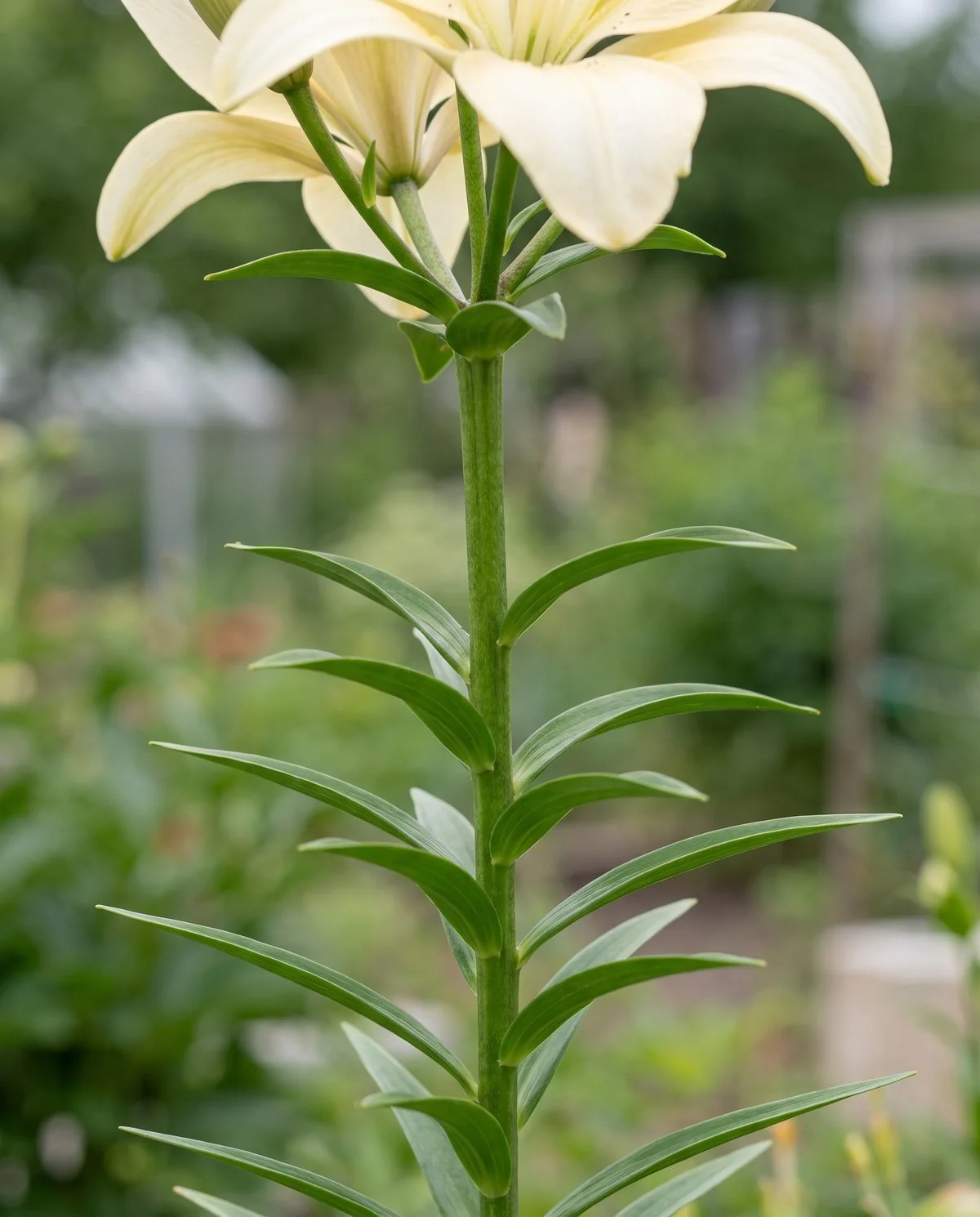
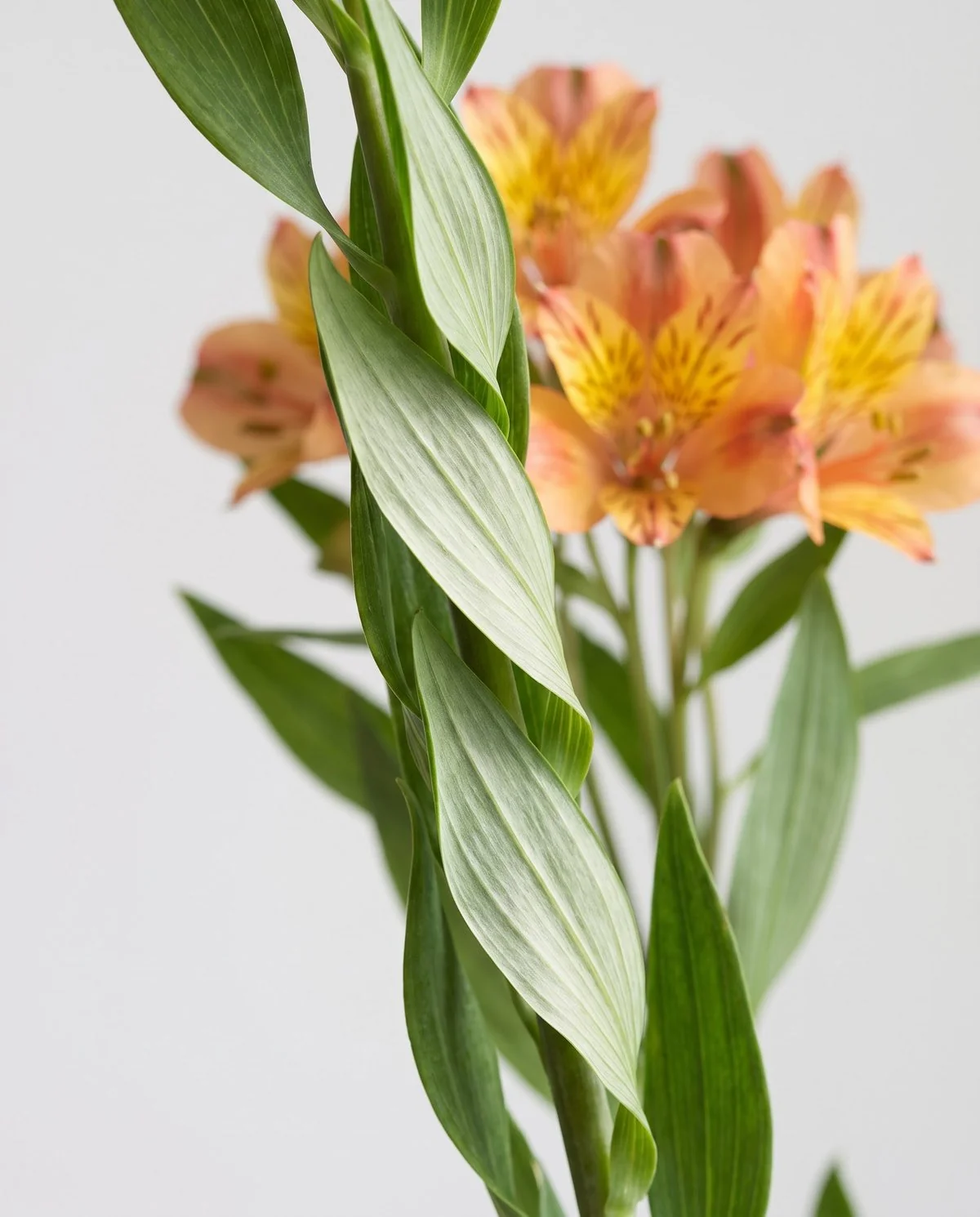
The tell is the leaf. Alstroemeria leaves are resupinate: the blade twists roughly 180 degrees at its base so the true underside faces up, a checkable detail no true lily has. A true lily grows from a scaly bulb with flat untwisted leaves off one thick stem and carries large, often fragrant, six-tepaled flowers whose pollen stains; Alstroemeria grows from a tuberous rhizome and carries smaller unscented flowers with pollen that does not stain. The stakes are not academic. The ASPCA lists Peruvian lily as non-toxic to cats, dogs and horses, while any true lily is potentially fatal to a cat, and this exact question appeared 21 near-identical times in the forum sample, almost always from somebody who had just been given flowers and owns a cat. Getting it wrong in the reassuring direction is the dangerous direction.
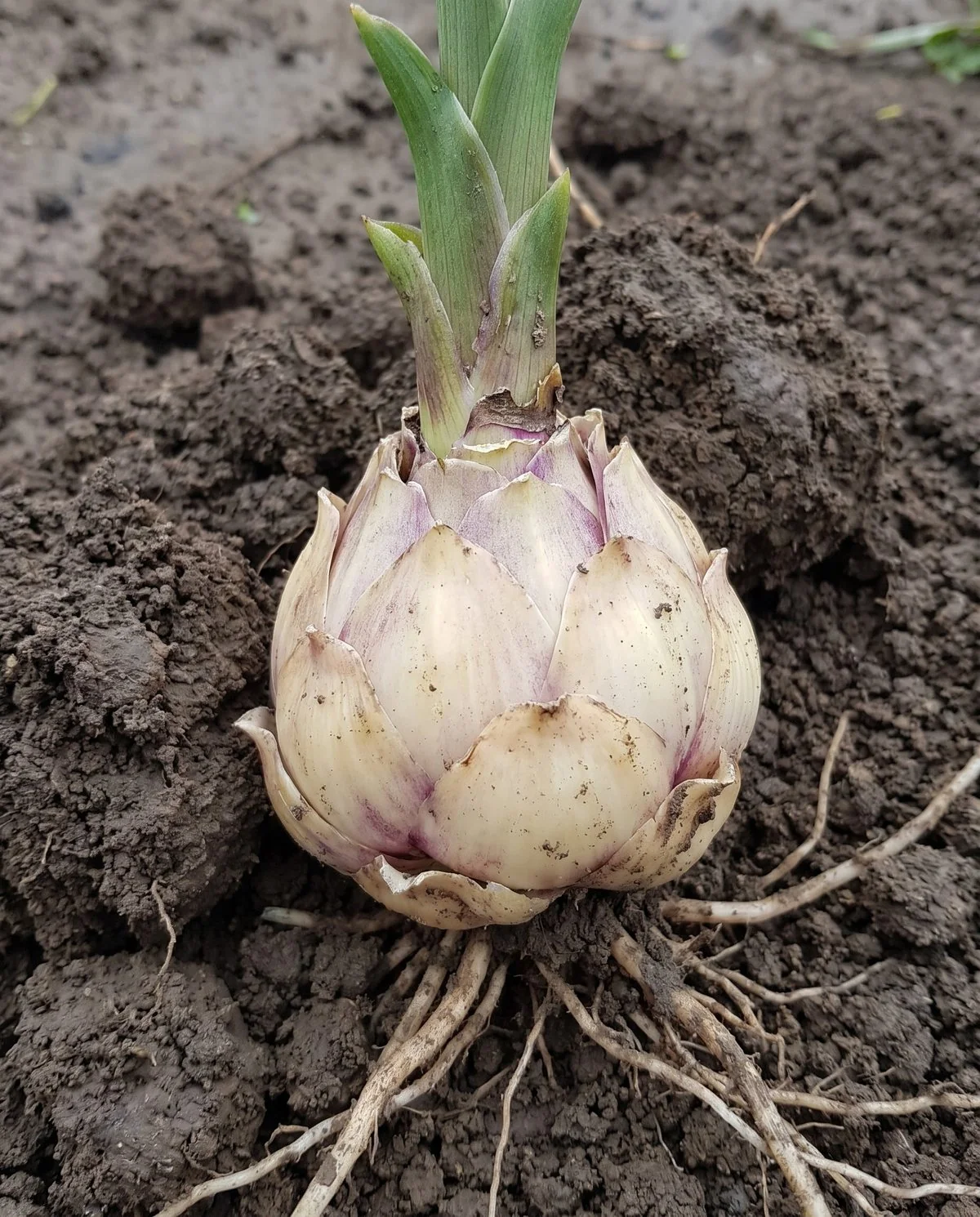
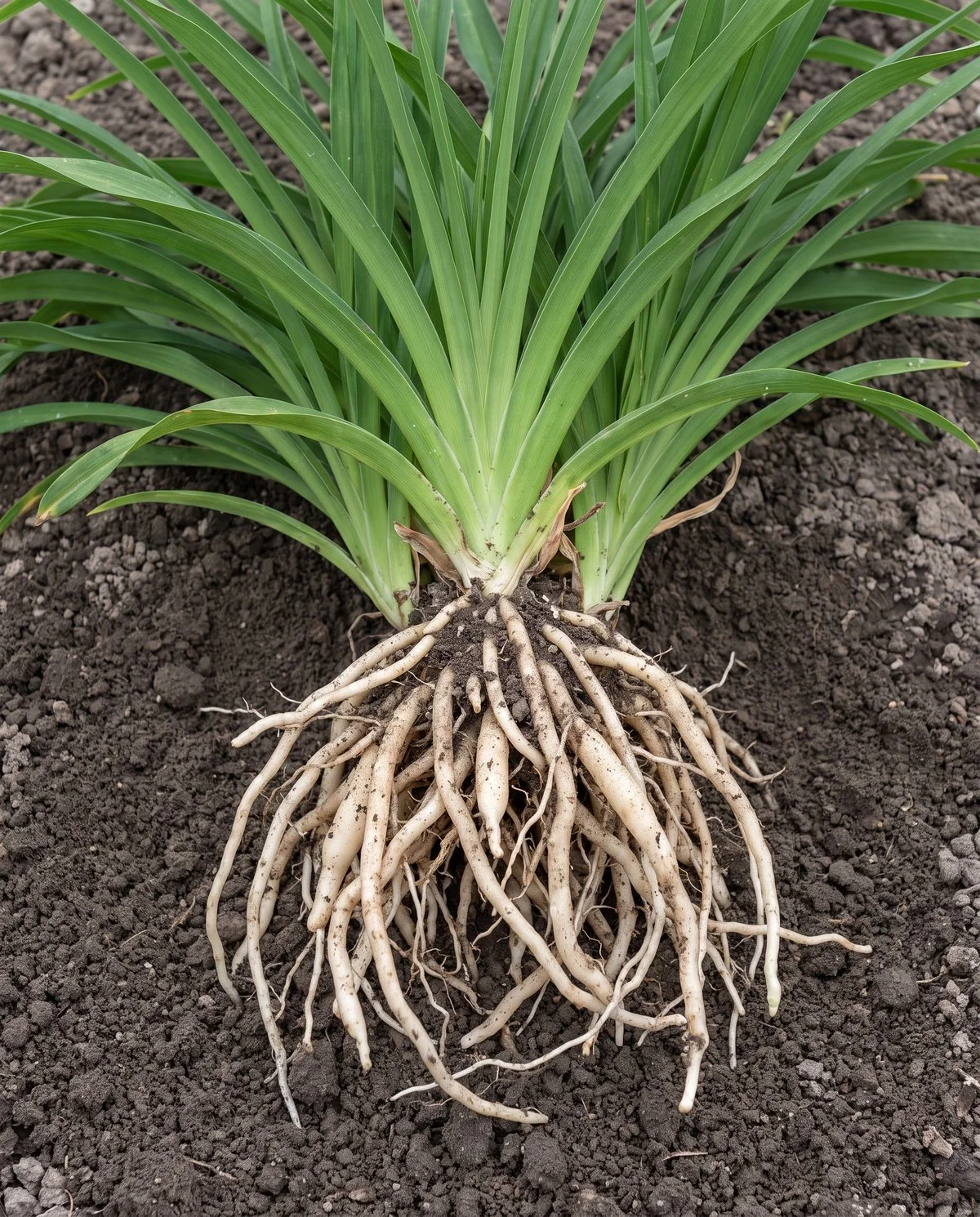
A true lily grows from a scaly bulb and sends up one leafy stem, and each flower lasts several days. A daylily grows from fleshy tuberous roots in a clump of grassy, strap-like leaves rising from the crown, and each individual bloom lasts exactly one day. For a cat household the distinction changes nothing: UC Davis confirms daylilies cause the same acute kidney failure despite belonging to a different genus and family.
No photograph here on purpose, because this is the one pair where a slightly wrong image sends somebody spraying a beneficial insect. In words: the lily leaf beetle is elongated rather than dome-shaped, brilliant scarlet with no spots at all, with a black head, legs and antennae, and about a quarter of an inch long. A ladybug is domed, spotted, and marked white on a black head. UMass Extension and the University of Maine record that the beetle reproduces exclusively on true lilies and fritillaries, overwinters as an adult and emerges from very early spring through June, so anything red on a lily in April deserves a proper look before anything is sprayed.
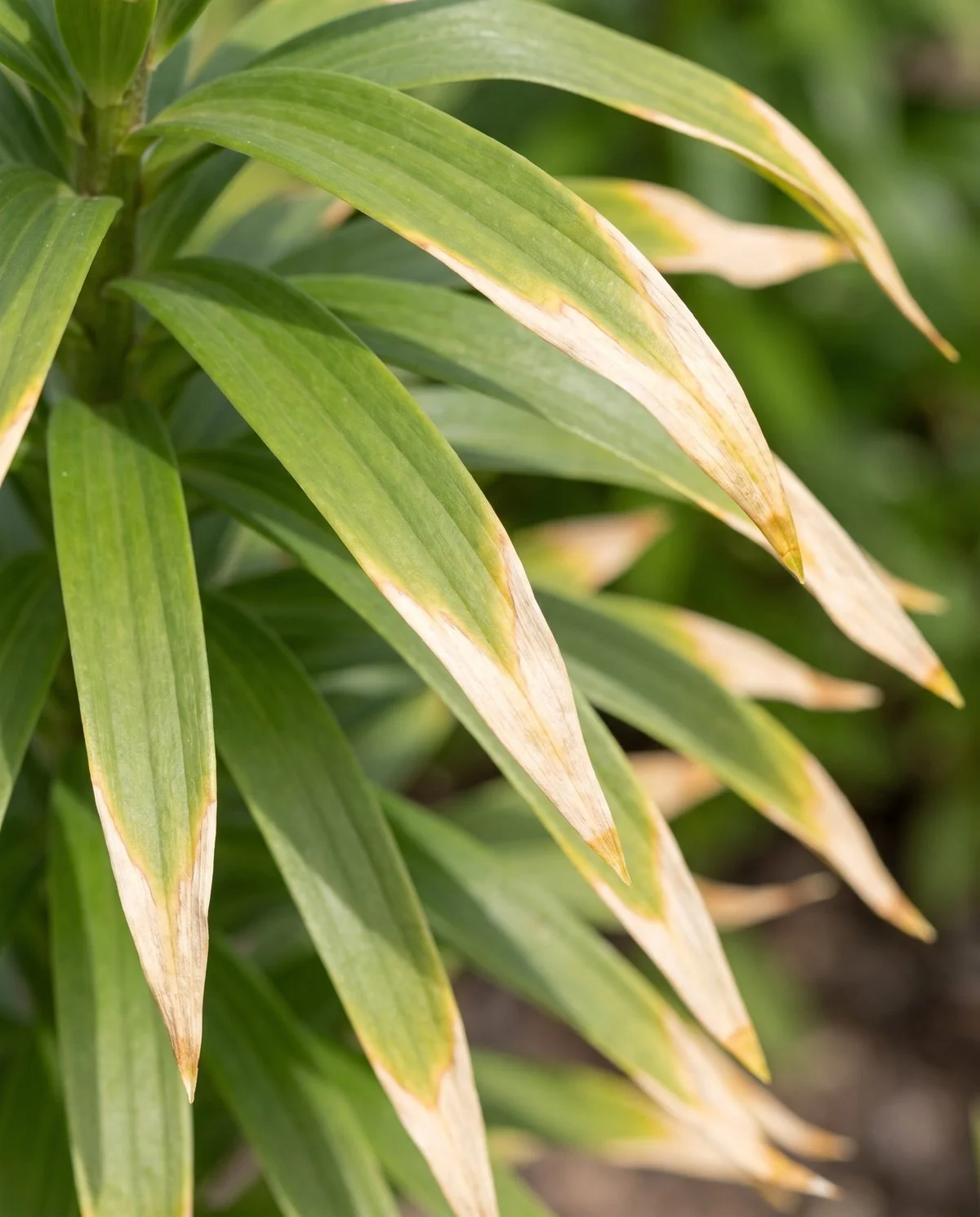
Botrytis, the disease growers call lily fire, makes brown to black lesions carrying visible gray fuzzy mold in humid or wet conditions, starting on older leaves or spent flowers, and the tissue collapses and the patch enlarges quickly. Leaf scorch is abiotic: pale tan or yellow burn at the tips and edges with no fuzzy growth anywhere, tissue that stays pliable rather than turning brittle, caused by heat, wind or root-uptake stress, and the plant usually carries on growing and flowering regardless. Check for the fuzz before assuming a disease.
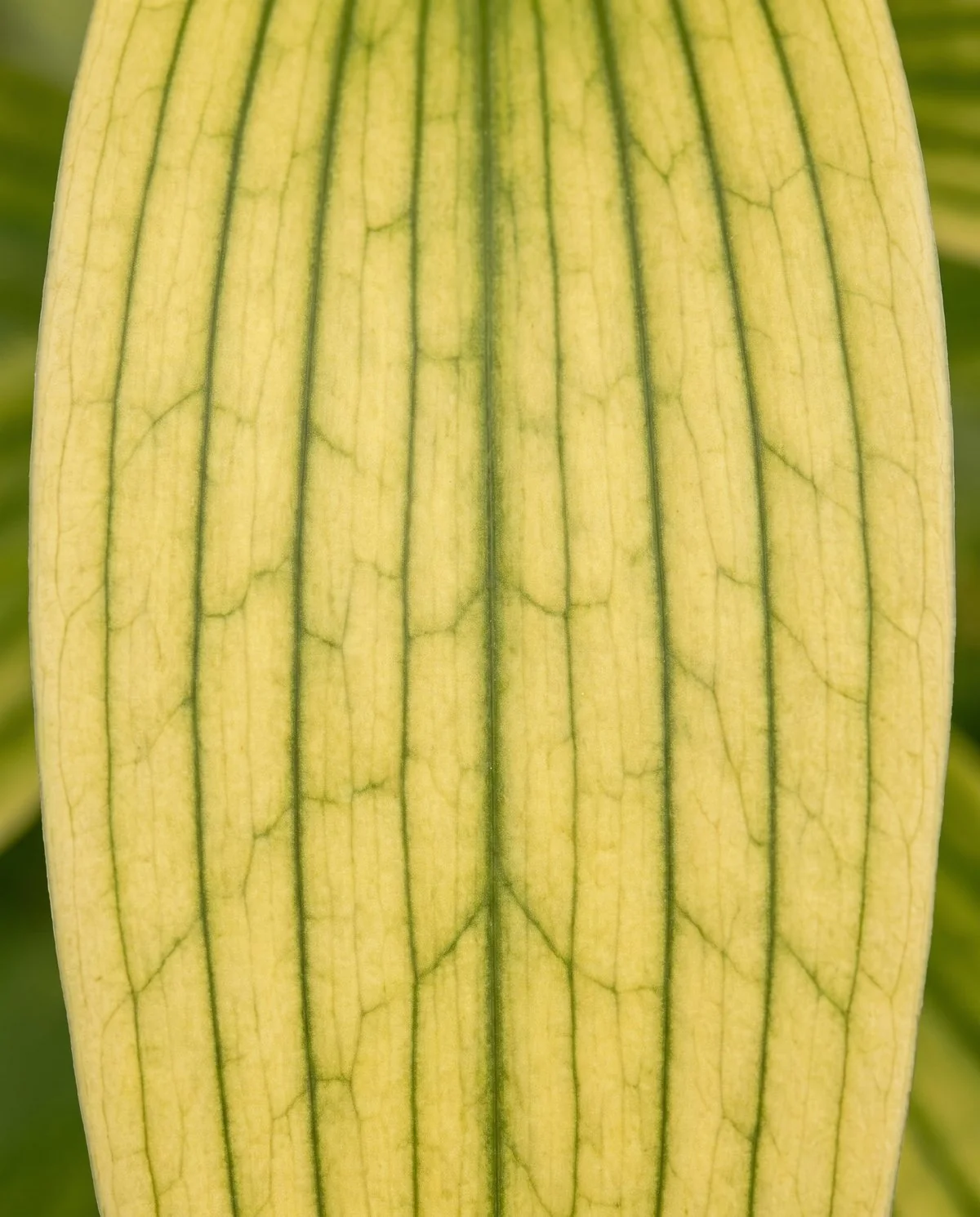
Nutrient patterns are regular: nitrogen shortage shows as uniform pale yellow-green, usually on the older lower leaves first, and iron chlorosis shows as yellow tissue with the veins staying distinctly green. Virus is the opposite of regular: mottling, streaking and distortion that follows no clean uniform or vein-only pattern, often with stunting, and there is no cure, so the plant is removed. If the pattern is tidy, look at feeding and soil pH first.
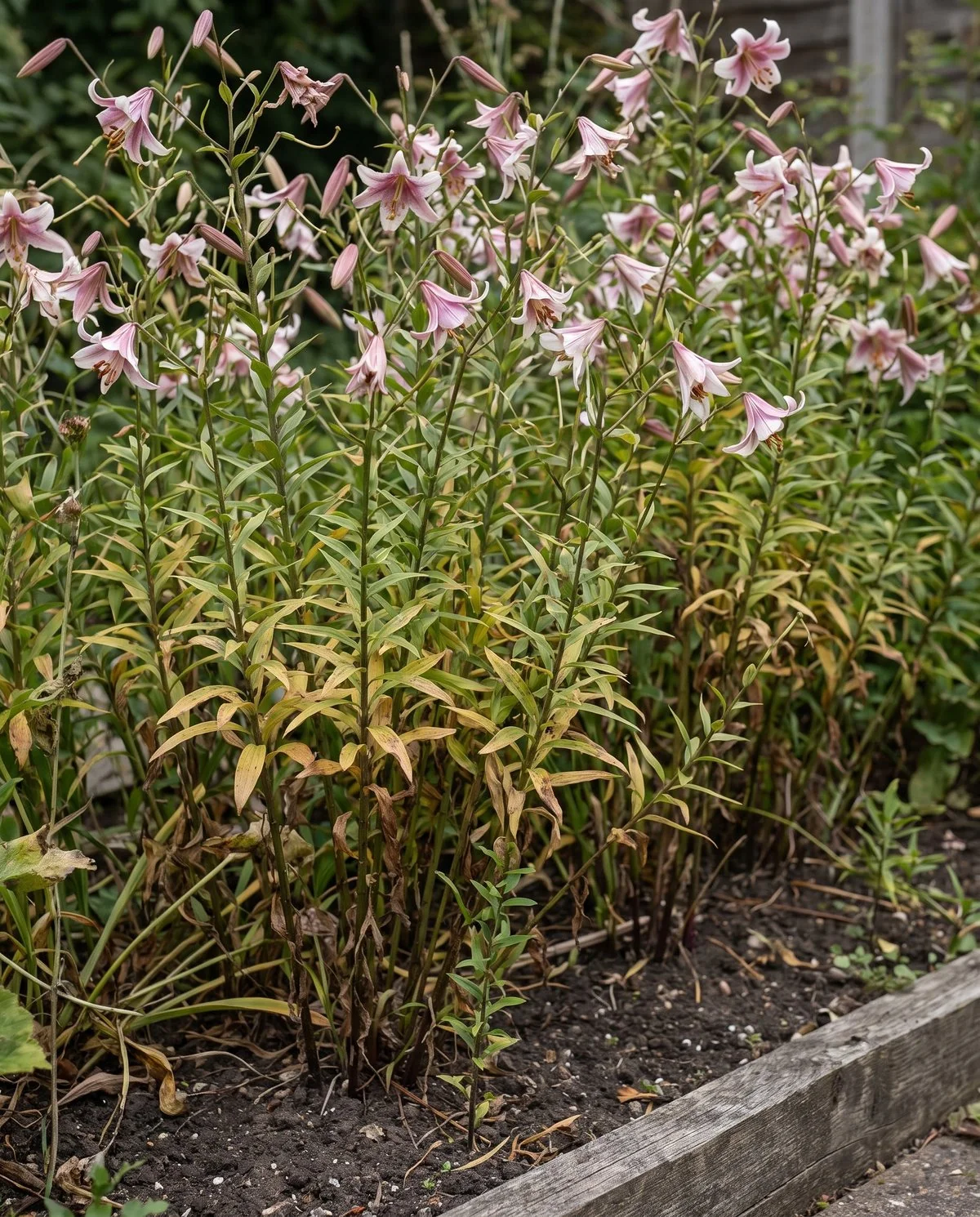
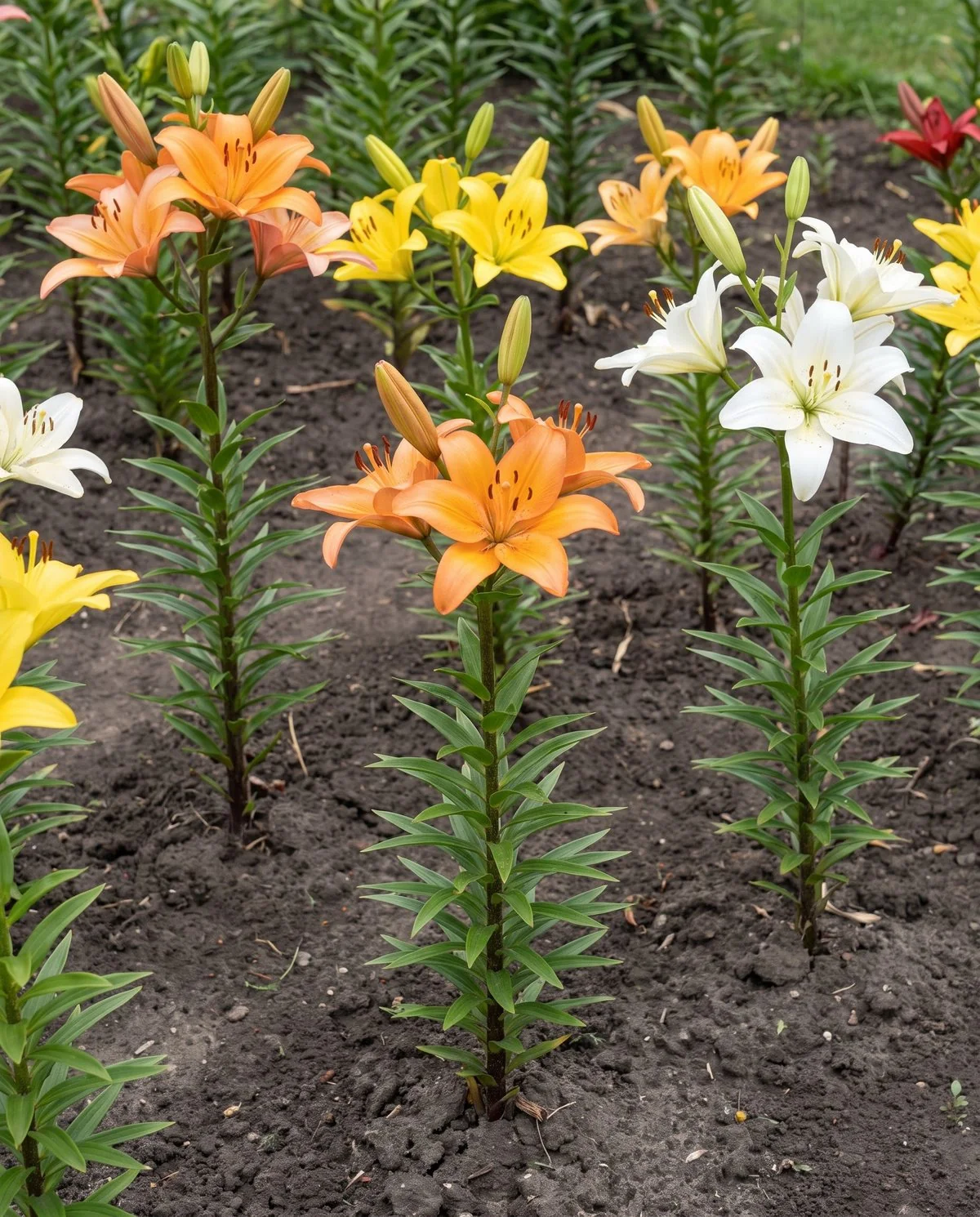
An overcrowded clump throws many closely packed thin stems, with visibly smaller and fewer flowers than in previous seasons, and foliage that may yellow early from competition. A divided planting carries fewer, sturdier stems with full-size blooms and space between them. This is the ordinary result of leaving a clump alone past the three-to-five-year mark, not a disease, and it is the pattern behind one of the highest-scoring questions in the whole forum sample.
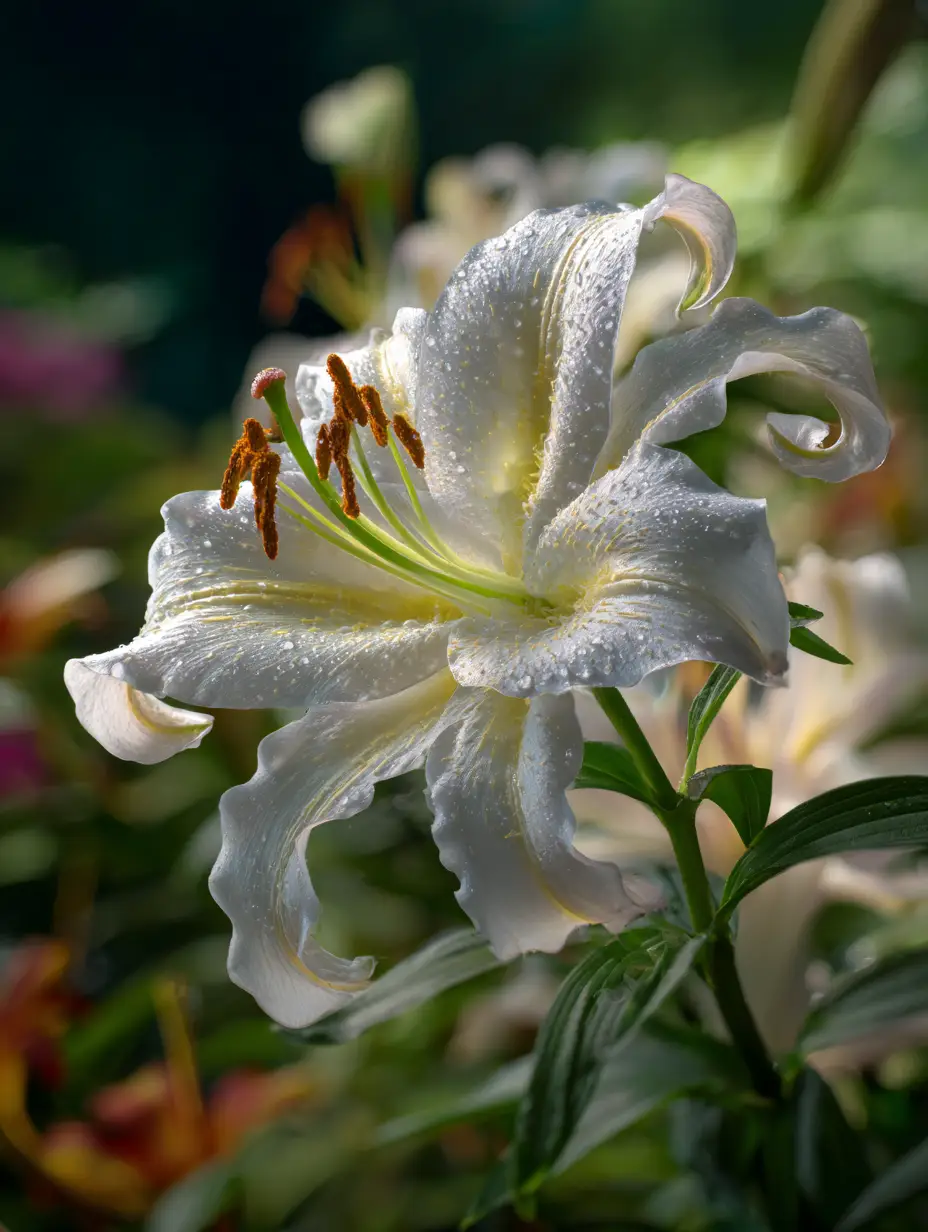
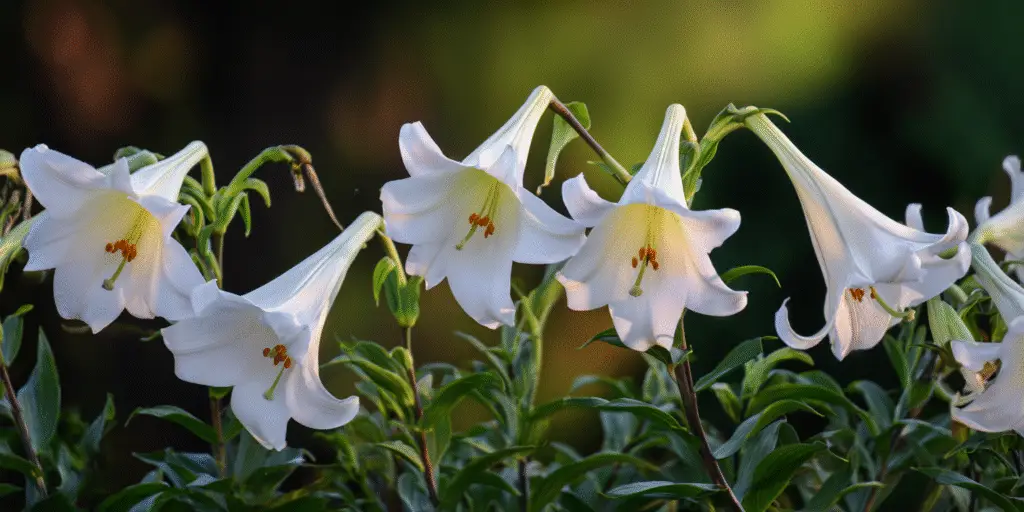
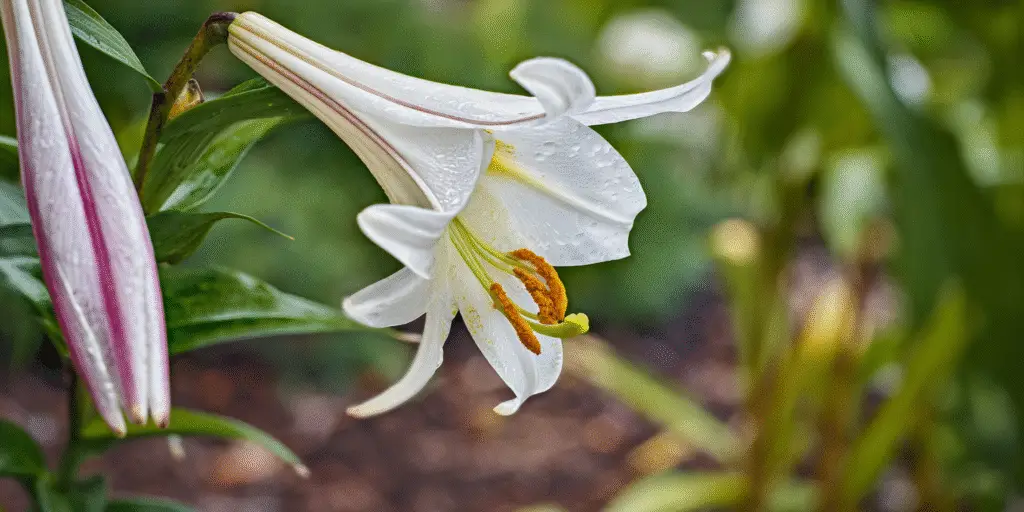
Flower photos
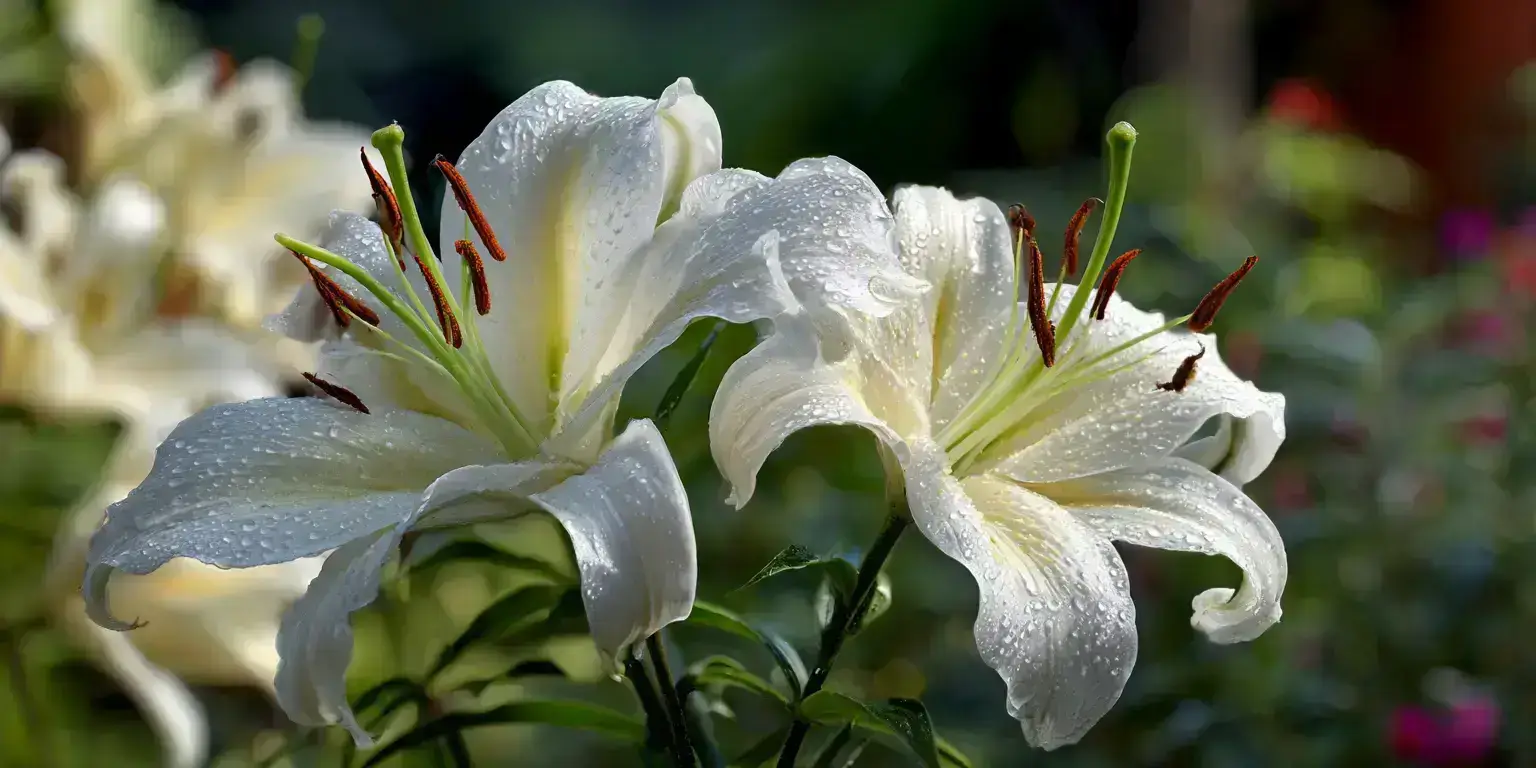
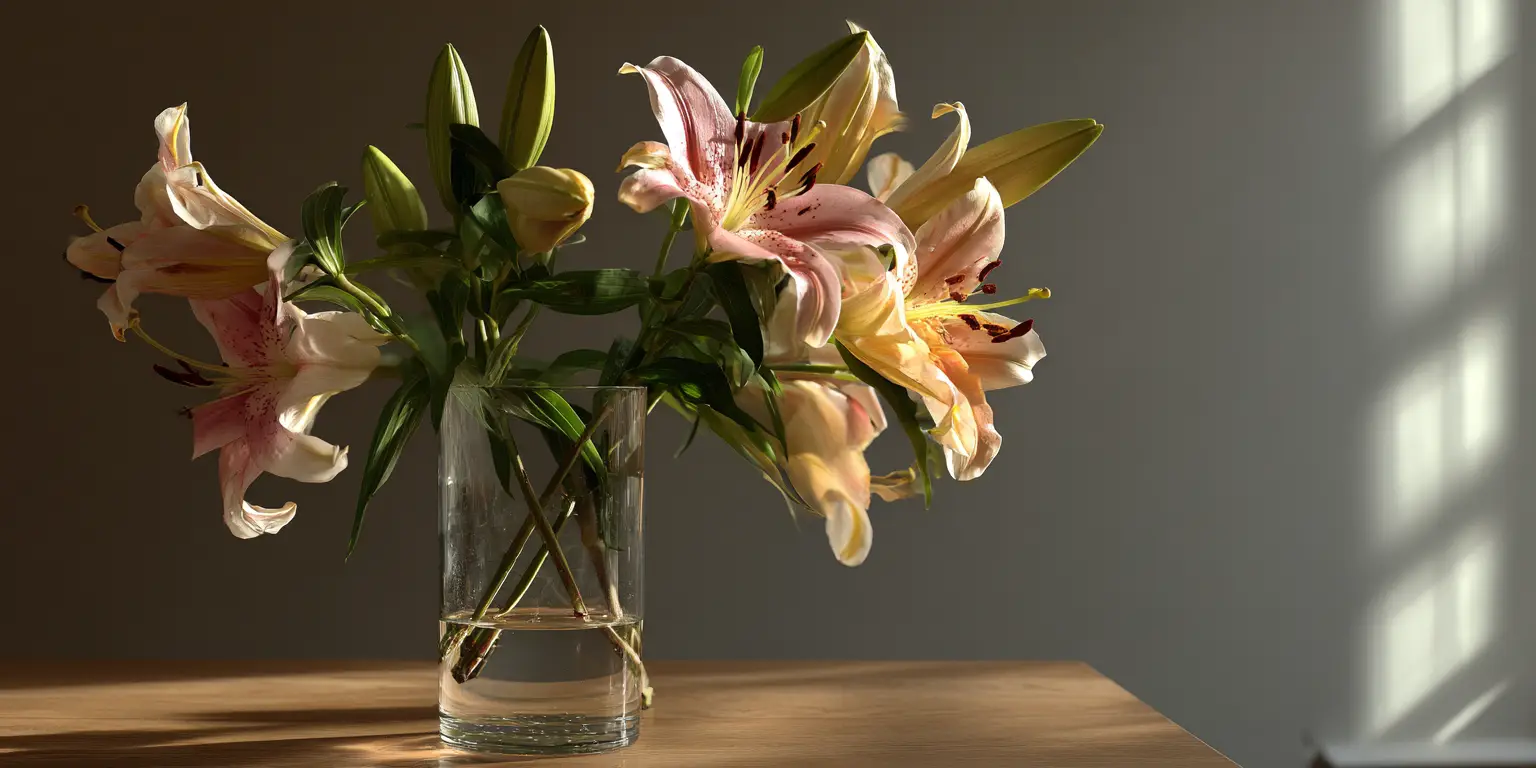
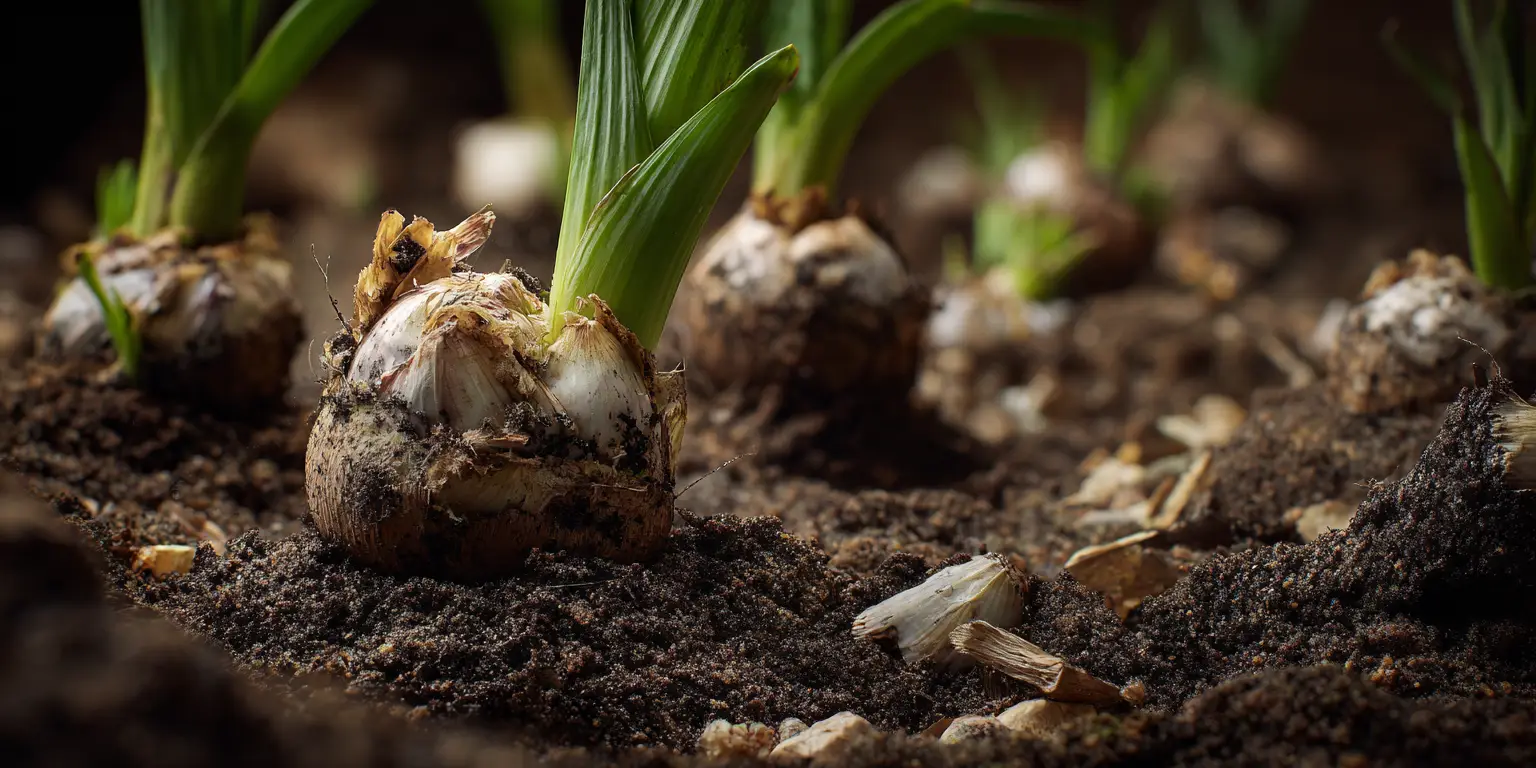


FAQ
Are lilies poisonous to cats?
Yes, dangerously so. All true lilies (Lilium) and daylilies (Hemerocallis) can cause fatal kidney failure in cats from even a tiny exposure, including pollen and vase water. Any contact is a same-day veterinary emergency. The safest choice is to keep them out of any home with cats.
Are lilies poisonous to dogs?
Far less. A dog that eats lily material may get a stomach upset but does not face the kidney failure that kills cats. Calla and peace lilies (which are not true lilies) cause mouth irritation in dogs from oxalate crystals.
How deep do you plant lily bulbs?
About two to three times the height of the bulb, which for most lilies is 4 to 6 inches of soil over the top, pointed end up, spaced 8 to 12 inches apart. The Madonna lily is the exception and is planted shallowly.
When do you plant lilies?
Fall is ideal, especially mid to late fall in cold climates so the bulb roots before winter. Spring planting also works in harsh-winter areas and blooms a little later the same year.
Do lilies come back every year?
Yes, they are perennials and the bulbs multiply over time, giving more stems and flowers. If blooms thin out after several years, the clump is usually overcrowded and ready to divide.
What is the difference between Asiatic and Oriental lilies?
Asiatic lilies bloom earlier (late spring to early summer), stand shorter, come in bold often spotted colors, have little scent, and are the hardiest and easiest. Oriental lilies bloom later (mid to late summer), grow taller, carry large strongly perfumed flowers, and prefer slightly acidic soil.
How long do cut lilies last?
About one to two weeks, since the buds open in sequence. Remove the pollen-bearing anthers as flowers open to prevent staining, recut the stems, and refresh the water every few days.
Why won't my lilies bloom?
The most common cause is too little sun (they need six-plus hours). Other causes are overcrowded or aging bulbs, too much nitrogen feeding leaves at the expense of flowers, foliage cut down too early the previous year, or weakening by pests or virus.
Is this a true lily or a Peruvian lily?
Look at where the leaf meets the stem. On Alstroemeria, the Peruvian lily, the leaf blade twists about 180 degrees at its base so the underside faces up, and the plant grows from a tuberous rhizome with smaller, unscented flowers and pollen that does not stain. A true lily grows from a scaly bulb, carries flat untwisted leaves on one thick stem, and has large six-tepaled flowers with staining pollen. This was the single most repeated exact question in the research, 21 near-identical posts, nearly always a gift bouquet plus a cat. The ASPCA lists Peruvian lily as non-toxic; a true lily is not.
Which lilies are the dangerous ones for cats?
All of them. UC Davis School of Veterinary Medicine names Easter, Stargazer and Asiatic lilies as the highest-risk types, and NC State's individual toolbox pages carry a toxic-to-cats line on the Asiatic, Oriental, Longiflorum, Formosanum, Lancifolium and Speciosum entries separately. Daylilies, a different genus in a different family, cause the same acute kidney failure. There is no safe Lilium.
What actually counts as exposure?
Far less than most people expect. A bitten leaf or petal, a few pollen grains groomed off fur, or a drink of water from a vase that held lilies is enough. The FDA's own staging runs stomach signs such as vomiting, drooling and loss of appetite in the first 0 to 12 hours, signs of kidney damage at 12 to 24 hours, and kidney failure at 24 to 72 hours, with treatment started after about 18 hours generally too late to prevent irreversible damage. The ASPCA's entry lists the toxic principle itself as unknown: the compound has never been isolated, only its effect.
What is eating my lily and leaving black slime on the leaves?
Almost certainly scarlet lily leaf beetle larvae, which cover themselves in their own excrement, a fecal shield they carry through four molts, and which read as bird droppings or plain dirt until they move. The University of Maine and UMass Extension record that the beetle reproduces only on true lilies and fritillaries, one generation a year, emerging from very early spring through June.
How do I get rid of them?
By hand, mostly. Ask Extension's own answer to a gardener with a bad infestation is that hand-picking adults, eggs and larvae, or a timed contact spray that avoids the open flowers to spare pollinators, are the only real options, since systemic control is not practical, and that there are no effective options to eradicate them while they are overwintering.
Why are the leaves turning yellow?
Match the pattern before treating anything. Uniform pale yellow-green points at nitrogen shortage; yellow tissue with the veins still green points at iron chlorosis from high soil pH; and yellowing after flowering as the season ends is the plant recharging the bulb and should be left alone. The one that has to be confirmed below ground is basal rot: premature yellowing with bud wilt in mid-season, verified by lifting the bulb and looking for chocolate or bluish-gray rot at the basal plate rather than guessing from the foliage.
Interesting tips
The most useful habit after flowering is to resist tidying. Deadhead the spent flowers so the plant does not waste energy setting seed, but leave the stem and leaves standing until they have turned fully yellow or brown in fall, then cut to the ground; those green leaves are feeding next year’s bulb, and removing them early is a leading reason lilies stop blooming. When cutting stems for the vase, take no more than about two-thirds and leave at least a third of the leafy stem in the ground for the same reason.
A couple of practical notes round out the genus. Lilies have been cultivated for thousands of years, with the Madonna lily appearing in Minoan frescoes and grown by the ancient Greeks and Romans. And there is no naturally blue true lily, because the genus lacks the genes to make blue pigment, so any "blue lily" on sale is dyed or mislabeled.
Related Guides & Flowers
Daylily
(Hemerocallis) – Lily-like blooms and strappy foliage; great for long summer color and easy care.
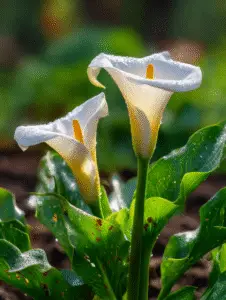
Calla Lily
(Zantedeschia) – Elegant trumpets for borders and bouquets; rhizomatous, not a true lily.

Irises
(Iris spp.) – Sword-like leaves and dramatic flowers; pairs well with lilies in mixed borders.

Daffodils
(Narcissus) – Spring bulbs with trumpet forms; extend the bulb display before lily season.
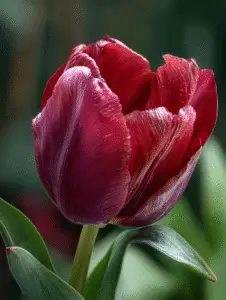
Tulips
(Tulipa) – Iconic spring bulbs; plan succession plantings with lilies for continuous bloom.
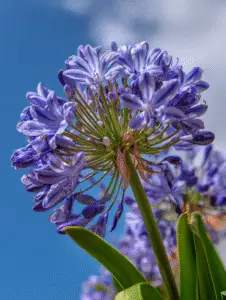
Agapanthus
Umbels on tall stalks and strappy leaves; a bulb-like accent for summer displays.
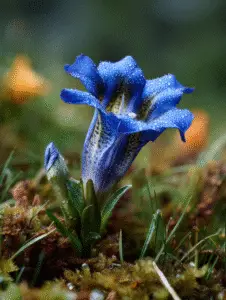
Gentian
(Gentiana) – Bell or trumpet-shaped blooms in deep blues; a niche pick for cool hues.
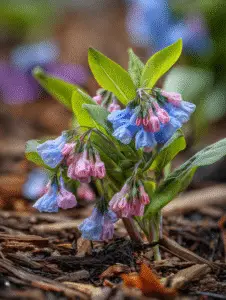
Virginia Bluebells
(Mertensia virginica) – Spring woodland bells; gentle, lily-adjacent look for shade gardens.
Bellflower (Campanula) – Bell-shaped flowers and cottage-garden charm; complements lily borders.
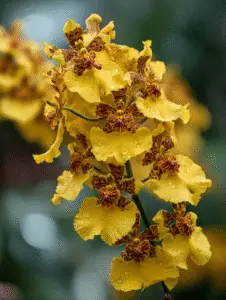
Oncidium Orchid
Airy sprays for indoor display; refined, florist-friendly alternative to lilies.
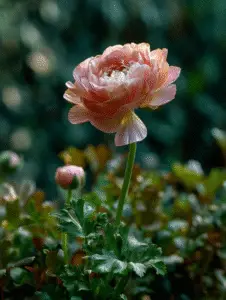
Ranunculus
A wedding staple with layered petals; overlaps with lilies in floral design use.
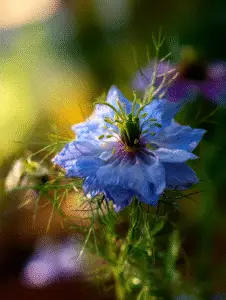
Love-in-a-Mist
(Nigella) – Delicate, airy blooms and ornamental seed pods; a rare but striking companion.
References
Enjoying our flower guides? Add YourFlowersGuide as a preferred source on Google. It helps more readers find us.
Add to Preferred Sources