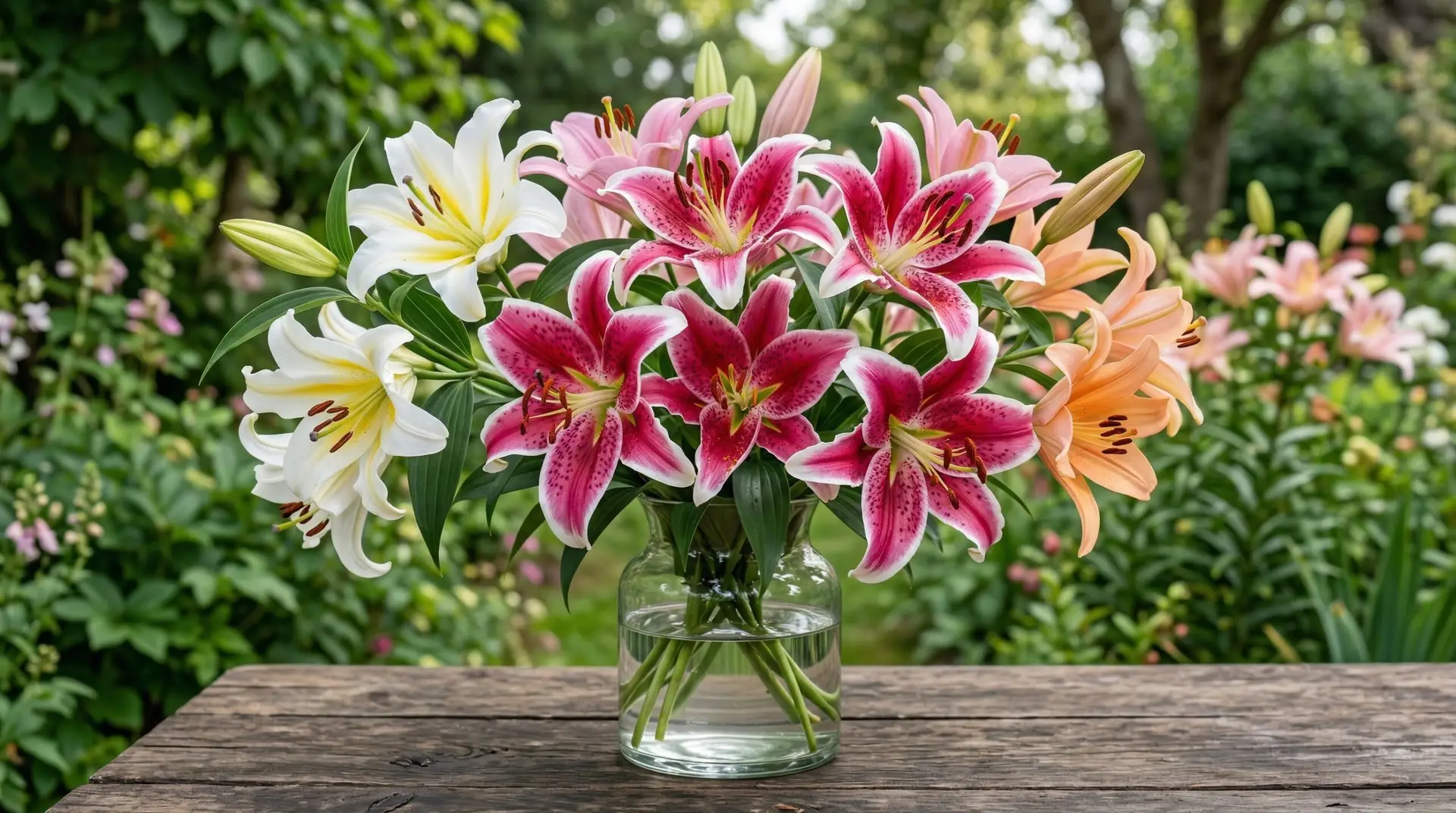
Plants do not waste metabolic energy producing scent when their target pollinators are asleep. Oriental lilies, which belong to the botanical group Lilium section Orientalia, ramp up their production of volatile organic compounds like linalool and ocimene just as the sun sets. This biological timing perfectly matches the activity cycle of their primary evolutionary partners, the crepuscular and nocturnal hawkmoths. These large-bodied insects require substantial amounts of nectar to sustain their hovering flight, and the lily provides a deep nectar spur accessible only to the moth’s long proboscis. The heavy, intoxicating perfume that fills a summer garden is simply the plant broadcasting a chemical map into the dark sky. To a botanist, that evening fragrance is a highly targeted communication system designed to ensure the survival of the species.
Understanding this evolutionary background changes how we experience a fragrant lily in the garden. The scent molecules are heavy and volatile, meaning they hang in the dense, cooling evening air rather than evaporating quickly into the hot midday sun. Gardeners who plant these bulbs near patios or open windows capture this nocturnal chemical communication firsthand. The Oriental lily has specialized its entire reproductive strategy around this night shift, investing enormous metabolic resources into scent production rather than relying solely on visual cues. The sheer volume of scent compounds produced by a single bloom easily rivals the output of an entire cluster of night-blooming jasmine. This high-energy strategy results in one of the most powerful floral experiences available in temperate horticulture.
Contents 4 sections
The structural biology of the bloom
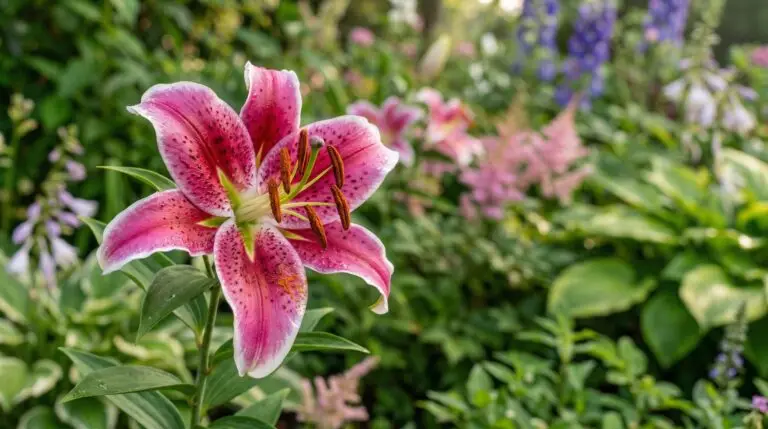
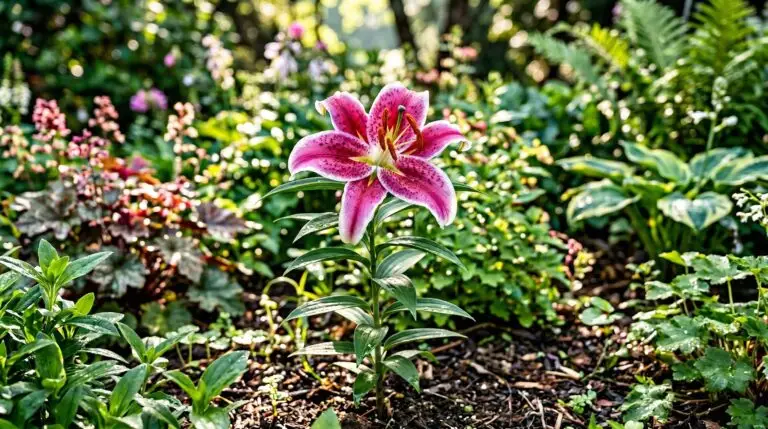
When you examine an Oriental lily closely, you notice that it does not have distinct petals and sepals like a rose or a daisy. Botanists call these structures tepals, and an Oriental lily produces six of them in a star-shaped arrangement. On varieties like the famous ‘Stargazer’ or the soft pink ‘Muscadet’, these tepals are covered in raised bumps called papillae. These papillae provide a textured surface for insects to grip while they navigate toward the nectaries at the base of the flower. The bold crimson spots on a ‘Stargazer’ lily function as visual nectar guides for daytime visitors, but the papillae provide essential physical cues for moths operating in near-total darkness.
The orientation of the flower itself tells a story of intense botanical breeding. Wild species of Oriental lilies, native to the forest edges and mountain slopes of Japan and Korea, typically develop downward-facing or nodding blooms. This nodding habit protects their pollen from being washed away by heavy summer rains. The ‘Stargazer’ lily gets its name because plant breeders selected for a genetic mutation that forced the blooms to face straight up toward the sky. This upward orientation made the flowers much easier to pack and ship for the floral industry, completely altering the commercial trajectory of the genus.
Chemical variations among popular cultivars
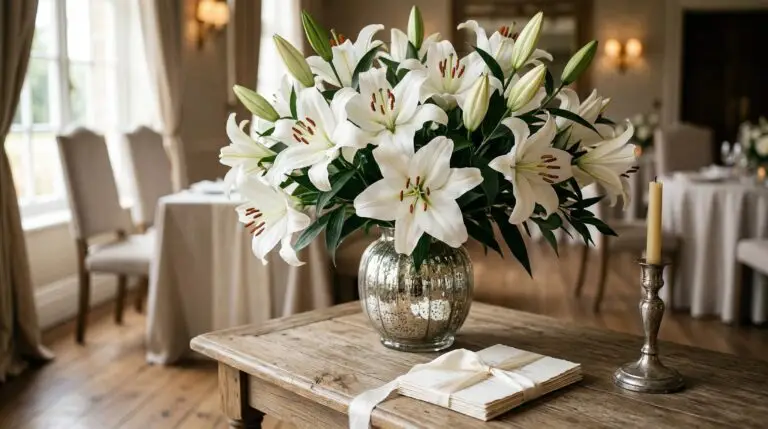
Different cultivars within the Oriental lily group express distinct chemical and pigmentation profiles. The pure white ‘Casa Blanca’ lacks the anthocyanin pigments that give other lilies their pink and red hues, allowing it to reflect moonlight brilliantly in an evening garden. Without the metabolic cost of producing complex red pigments, ‘Casa Blanca’ channels extra energy into its floral volatiles, resulting in what many consider the strongest scent of any Oriental hybrid. Its fragrance profile carries heavy notes of vanilla and clove, similar in intensity to the thick perfume of gardenia blossoms. The broad blooms can measure ten inches across, creating a massive target for nocturnal pollinators.
Cultivars like ‘Tom Pouce’ and ‘Muscadet’ offer different biological variations on the Oriental theme. ‘Tom Pouce’ produces a distinct bicolored tepal, with a soft purplish-pink base that fades out to a pale yellow or white margin. This gradient is the result of varying cell sap pH across the surface of the tepal, which alters how the anthocyanin pigments express their color. ‘Muscadet’ produces a much softer white flower with delicate pink spotting and a prominent green star at the center, known as a nectary furrow. These visual differences appeal to human gardeners, but to a hawkmoth, all these cultivars emit the same irresistible chemical signature once the sun goes down.
Root systems and Stargazer lily care
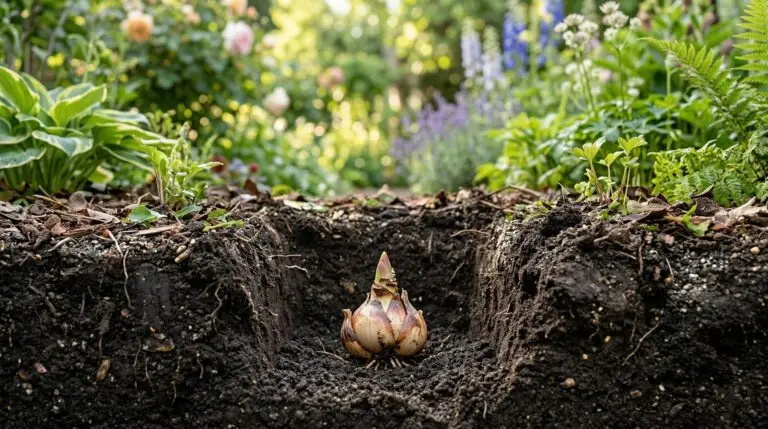
Successful Stargazer lily care requires understanding what happens beneath the soil surface. Unlike tulips or daffodils, which possess a papery outer skin called a tunic to protect them from moisture loss and physical damage, lily bulbs are imbricated. This means they are composed of fleshy, unprotected scales attached to a basal plate, making them highly vulnerable to rot in wet conditions. Because they originate from well-draining mountain soils, Oriental lilies demand high oxygen levels around their roots. Planting them in heavy, compacted clay suffocates the basal plate and encourages fungal pathogens to consume the starchy scales.
The physical structure of a lily root system is highly specialized and dictates how deep the bulbs must be planted. Oriental lilies are stem-rooting plants, meaning they produce two entirely separate sets of roots. The primary roots grow downward from the basal plate to anchor the heavy plant and access deep water reserves. A secondary system of fine, fibrous roots emerges from the stem itself, just above the bulb but still below the soil surface. These stem roots absorb the majority of the nutrients the plant needs to push out large, heavy blooms. If you plant the bulb too shallowly, the stem roots have no soil to grow into, resulting in stunted plants that easily topple over under the weight of their own flowers.
Soil chemistry plays a definitive role in how well these bulbs perform from year to year. Oriental lilies have a distinct preference for acidic soil, thriving in a pH range between 5.5 and 6.5. In alkaline soils, the plants struggle to absorb iron and magnesium, leading to a condition called chlorosis where the leaves turn yellow while the veins remain green. Gardeners with naturally alkaline soil often find better success growing these specific lilies in large pots where they can control the potting medium. This acidic preference separates them biologically from Asiatic lilies, which are far more forgiving of neutral or slightly alkaline garden beds.
Container botany and atmospheric placement
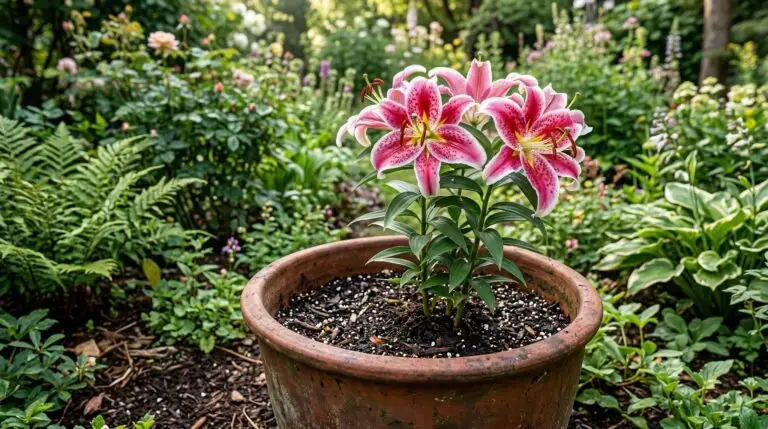
Growing Oriental lilies in containers is an excellent way to study their growth cycle up close, provided you respect their thermal requirements. Potted bulbs experience much wider temperature fluctuations than bulbs insulated by deep garden soil. During the summer, the sun heating the side of a plastic or ceramic pot can bake the delicate stem roots, so it is best to shade the container itself while leaving the foliage in full sun. In winter, the bulbs require a period of cold dormancy to reset their internal biological clocks for the next blooming cycle. However, the fleshy scales will turn to mush if they freeze solid, so pots in cold climates must be moved to an unheated garage or wrapped in thick insulation.
Strategic placement of these containers can dramatically alter how you experience their evening fragrance. Scent molecules travel on thermal air currents, which shift predictably as the day turns to dusk. As the ground cools, heavier cold air sinks and pushes the scent-laden warmer air upward and outward. Placing a pot of ‘Casa Blanca’ or ‘Stargazer’ lilies at the base of a retaining wall or near an enclosed courtyard traps these volatile compounds, creating a localized pocket of intense perfume. You can achieve a similar concentrated scent effect by growing tropical stephanotis in a protected patio corner, but the lily produces a much larger volume of scent in a shorter blooming window.
When you watch an Oriental lily open, you are witnessing an immense, carefully timed expenditure of biological savings. The bulb spent the entire previous summer capturing solar energy through its leaves, converting that light into starches, and packing those starches into its underground scales. It uses nearly all of those stored reserves in a matter of weeks to construct a towering stem and manufacture complex, heavy volatile compounds that evaporate into the night sky. The intoxicating fragrance we enjoy is actually the soundless shout of a plant desperately calling out to the dark, spending a year of accumulated energy for a few nights of successful pollination.
More About Lily
Lilies as magnificent cut flowers and how to arrange them without staining everything

Planting lilies in layers with spring bulbs for a succession of blooms from March to August

Companion plants for lilies: what to grow, what to avoid
Lilies in wedding flowers and the timeless elegance of white Casablanca arrangements
How to grow true lilies for towering fragrant blooms that crown the summer garden
The red lily beetle invasion and how to protect your lilies from this destructive pest
Best lily varieties from elegant Oriental Stargazer to towering Orienpet tree lilies
Growing lilies in containers for balcony and patio gardens with dramatic height

Lily meaning and lily colour meanings, honestly explained
Enjoying our flower guides? Add YourFlowersGuide as a preferred source on Google. It helps more readers find us.
Add to Preferred Sources