Taxonomy and origin
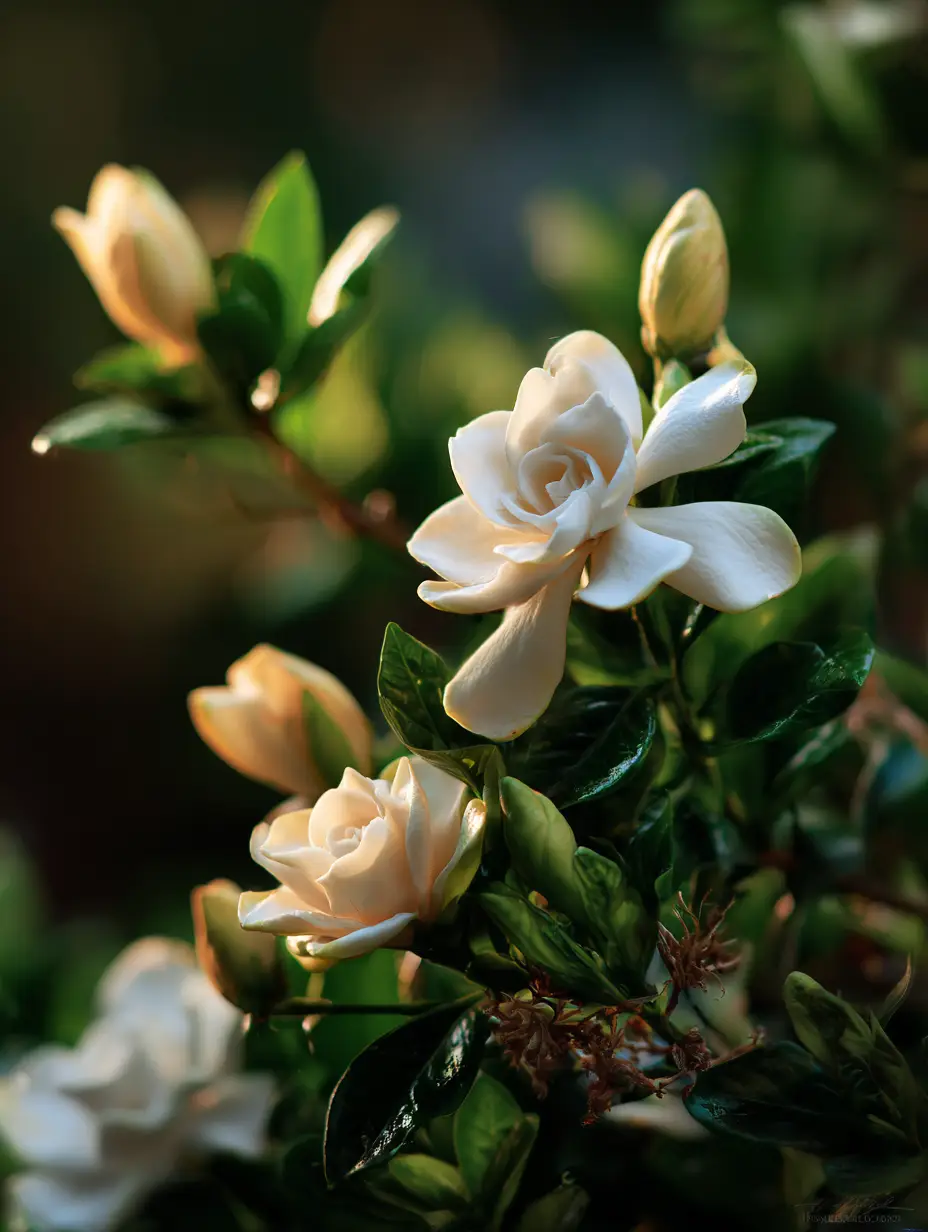
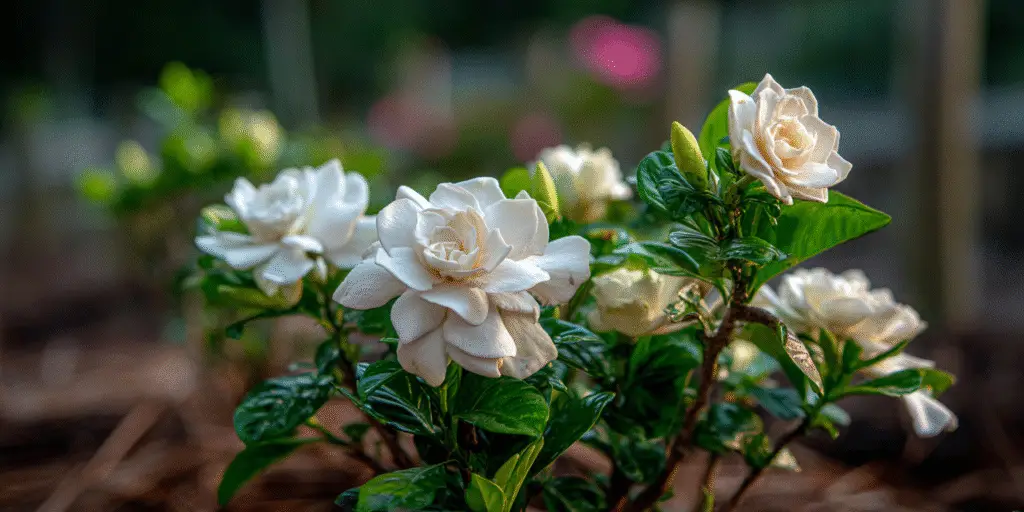
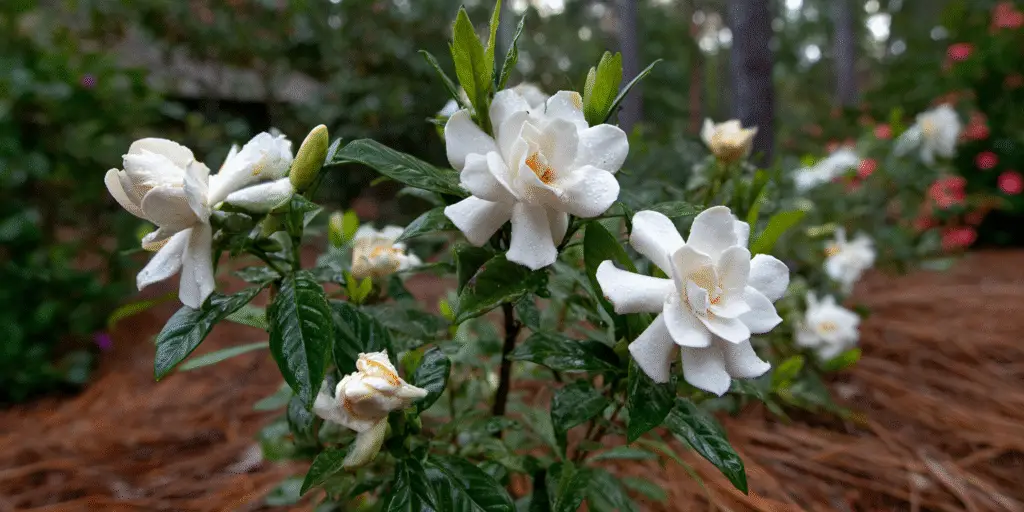
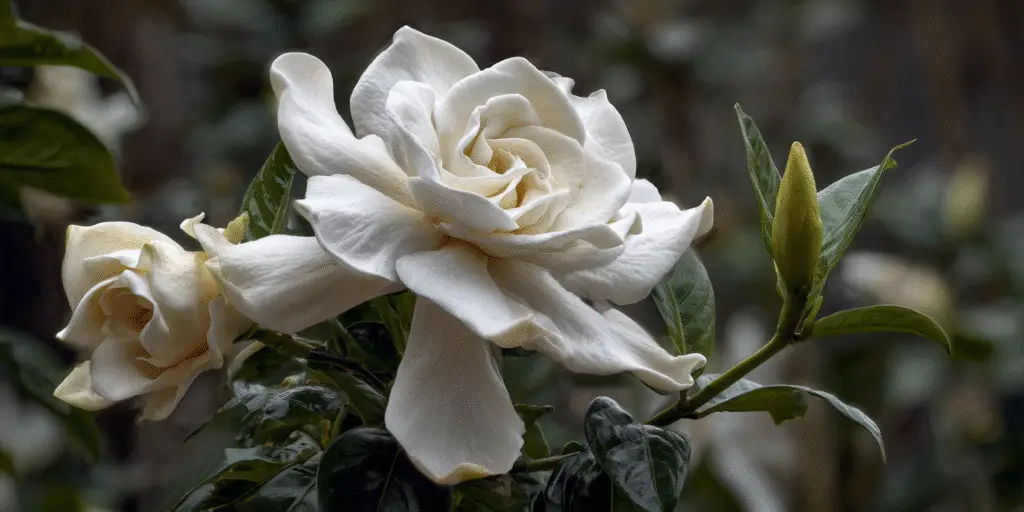
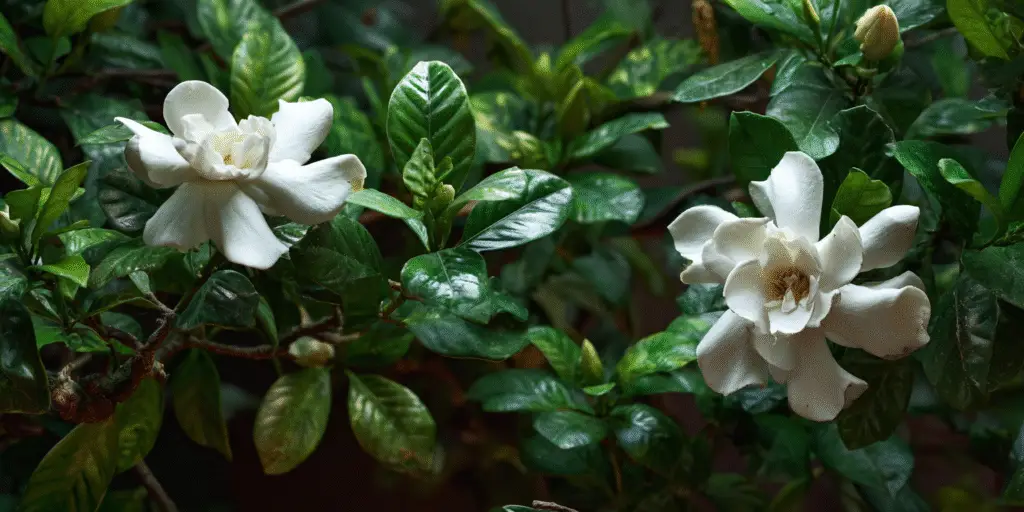
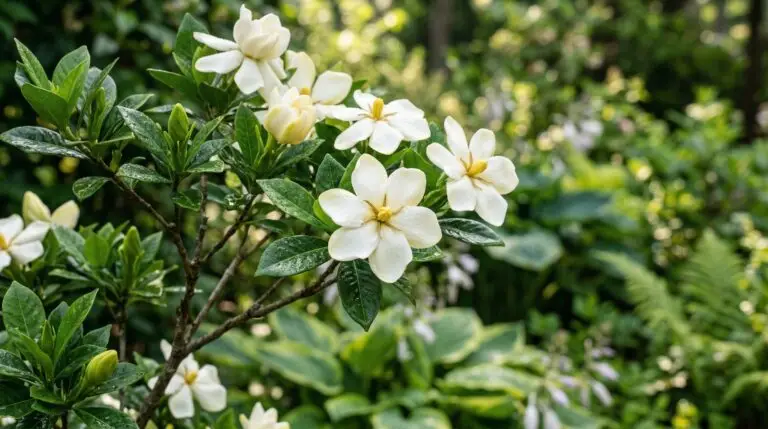
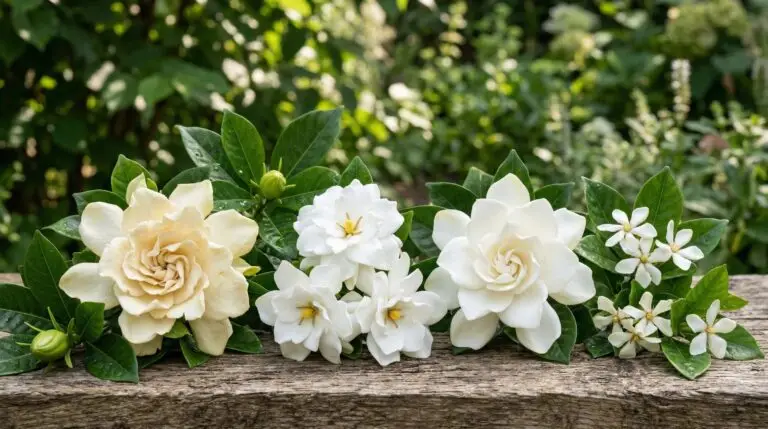
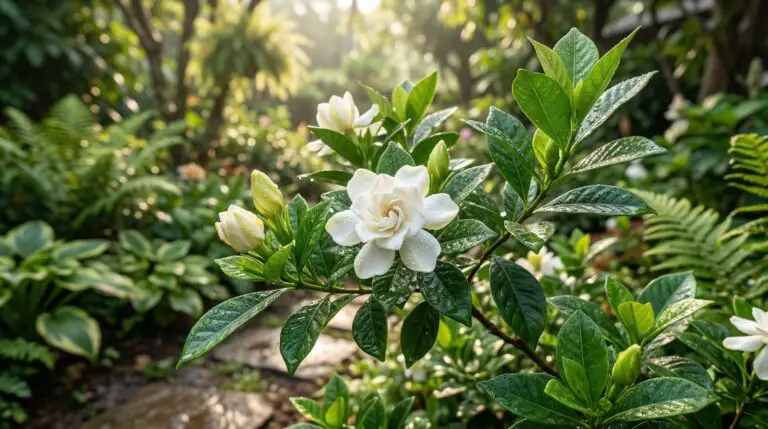
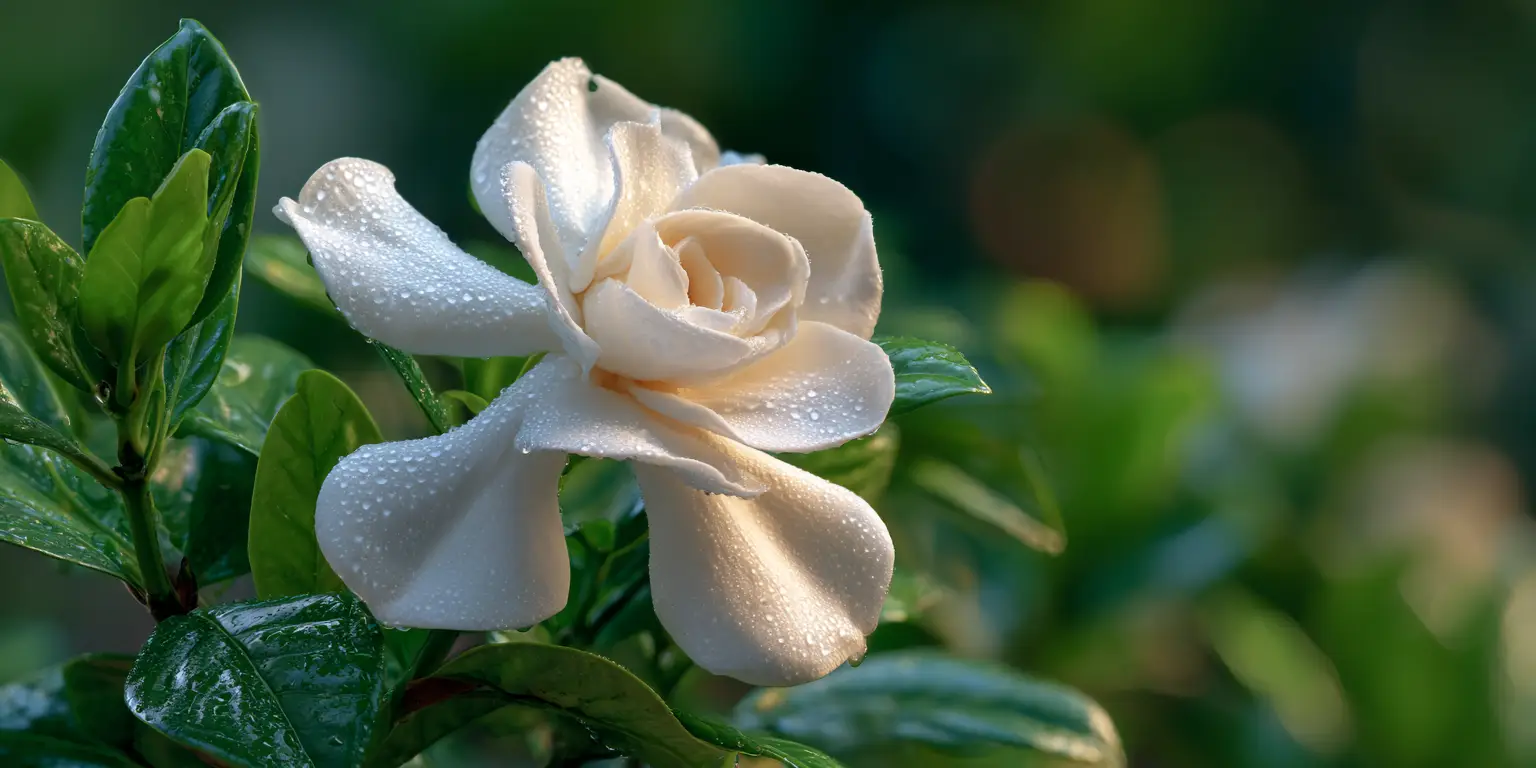
Gardenia belongs to the genus Gardenia in the coffee family, Rubiaceae, a group of roughly 140 evergreen species native to the warm parts of the Old World, from China, Japan, Taiwan, and Vietnam across to Africa and the Pacific islands. The plant that fills nurseries and gardens is Gardenia jasminoides, the common gardenia or Cape jasmine, which came out of China and Japan and reached European and American greenhouses in the eighteenth century as a prized scented novelty. The genus honors Alexander Garden, a Scottish-born naturalist who worked in colonial Charleston. Most gardenias carry glossy, leathery, deep-green leaves in opposite pairs, and their white to cream flowers release their strongest scent after dark, an adaptation that draws the night-flying moths that pollinate them in the wild.
For a gardener, the cultivar matters more than the species, because size, bloom season, and cold tolerance all follow from it. The table below sorts the varieties most often sold, from tall specimen shrubs to a groundcover that stays ankle-high.
The cultivars two universities actually measured
Clemson's factsheet and NC State's plant toolbox both publish cultivar dimensions, and UF/IFAS publishes its own cultivar list beside them. Where two universities give the same figure it is stated once. Where they disagree, both numbers stay in, because no third source reconciled them.
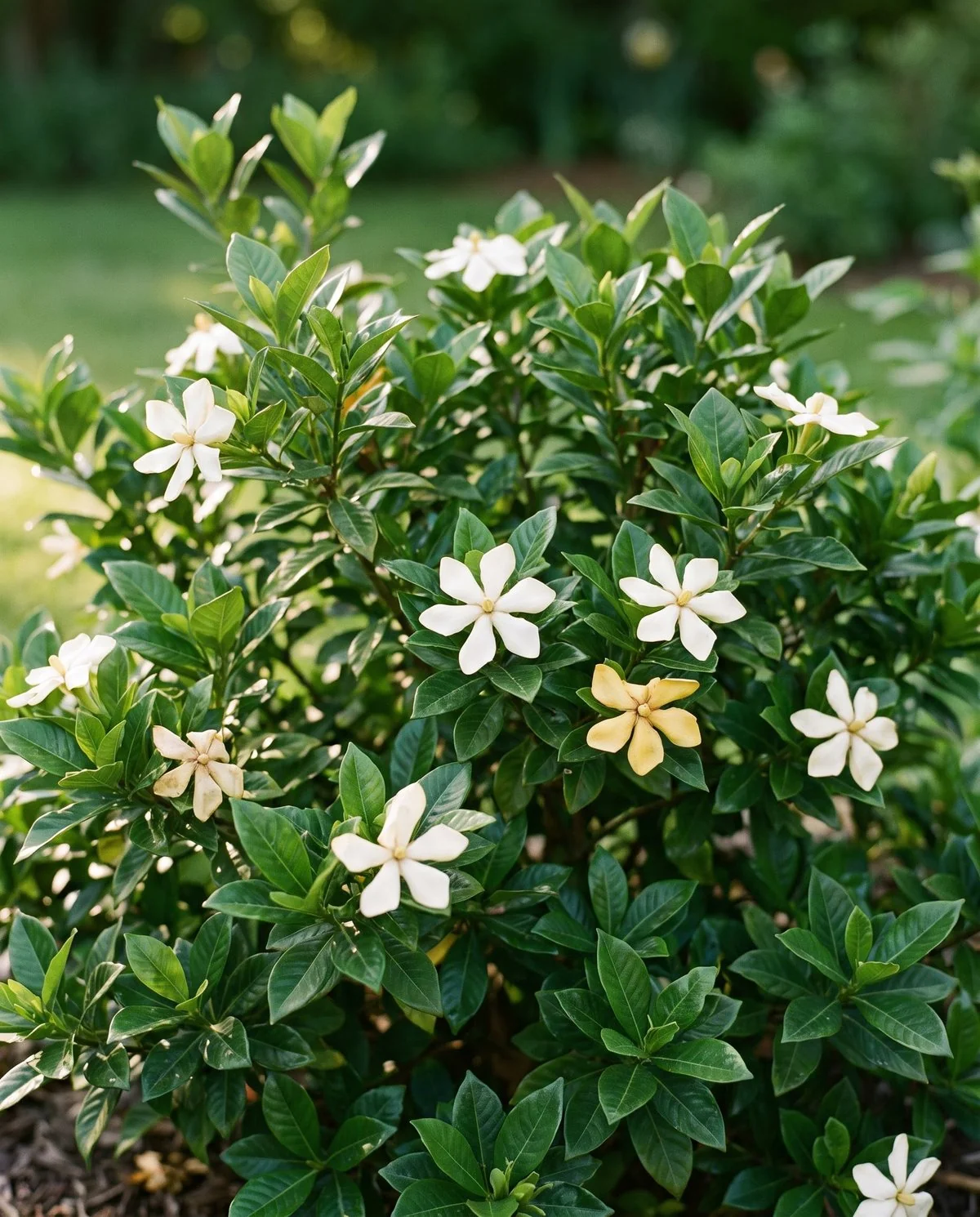
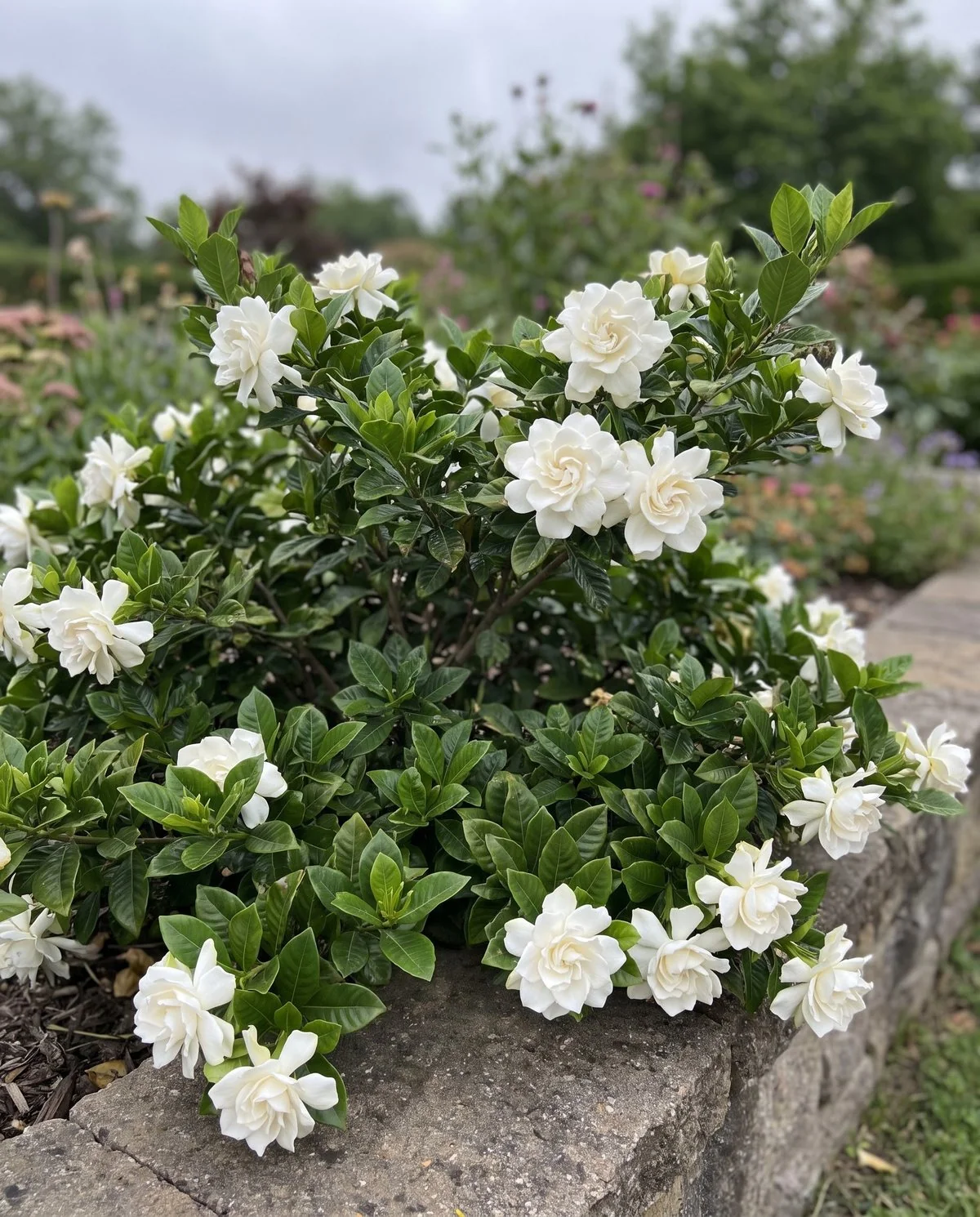
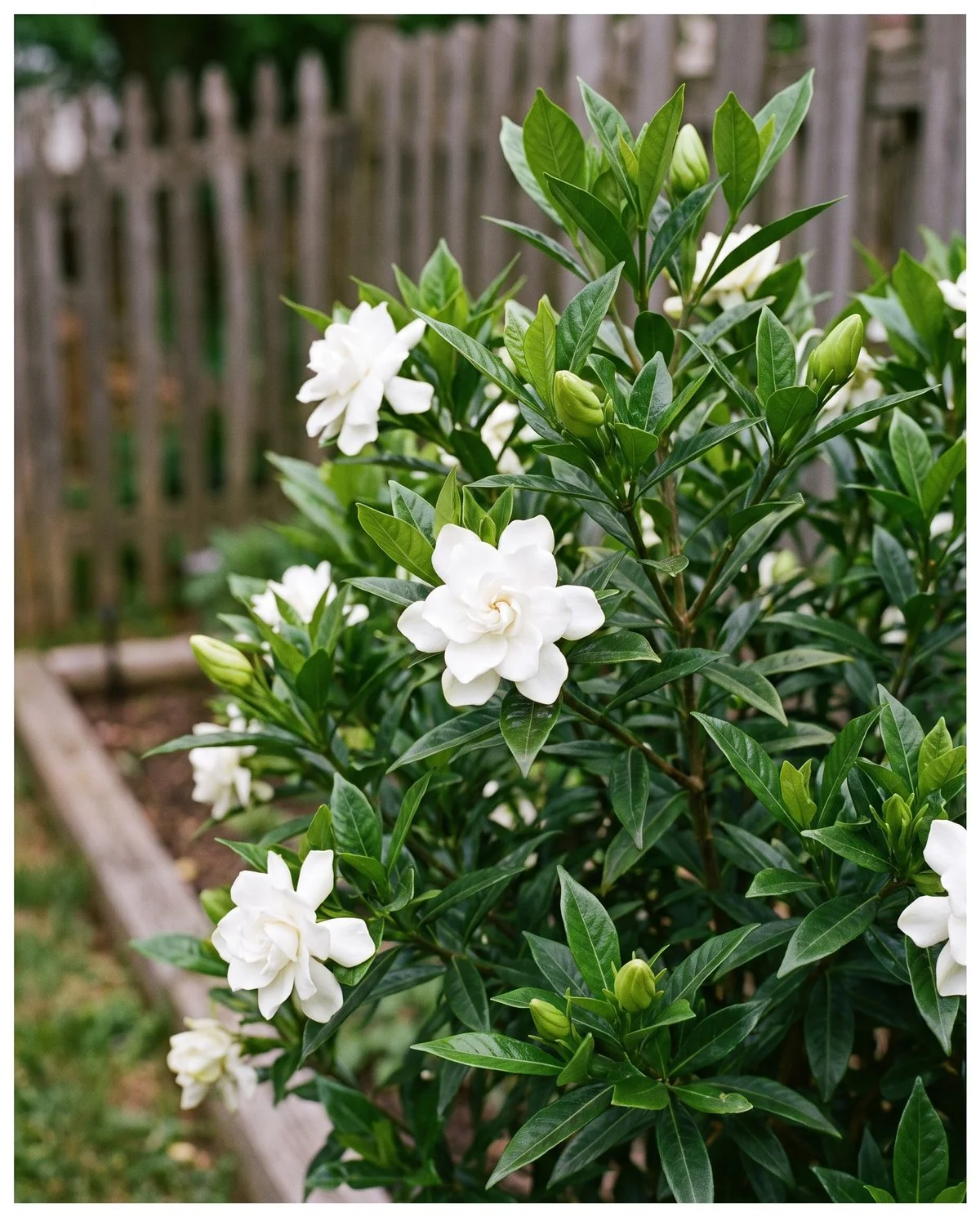
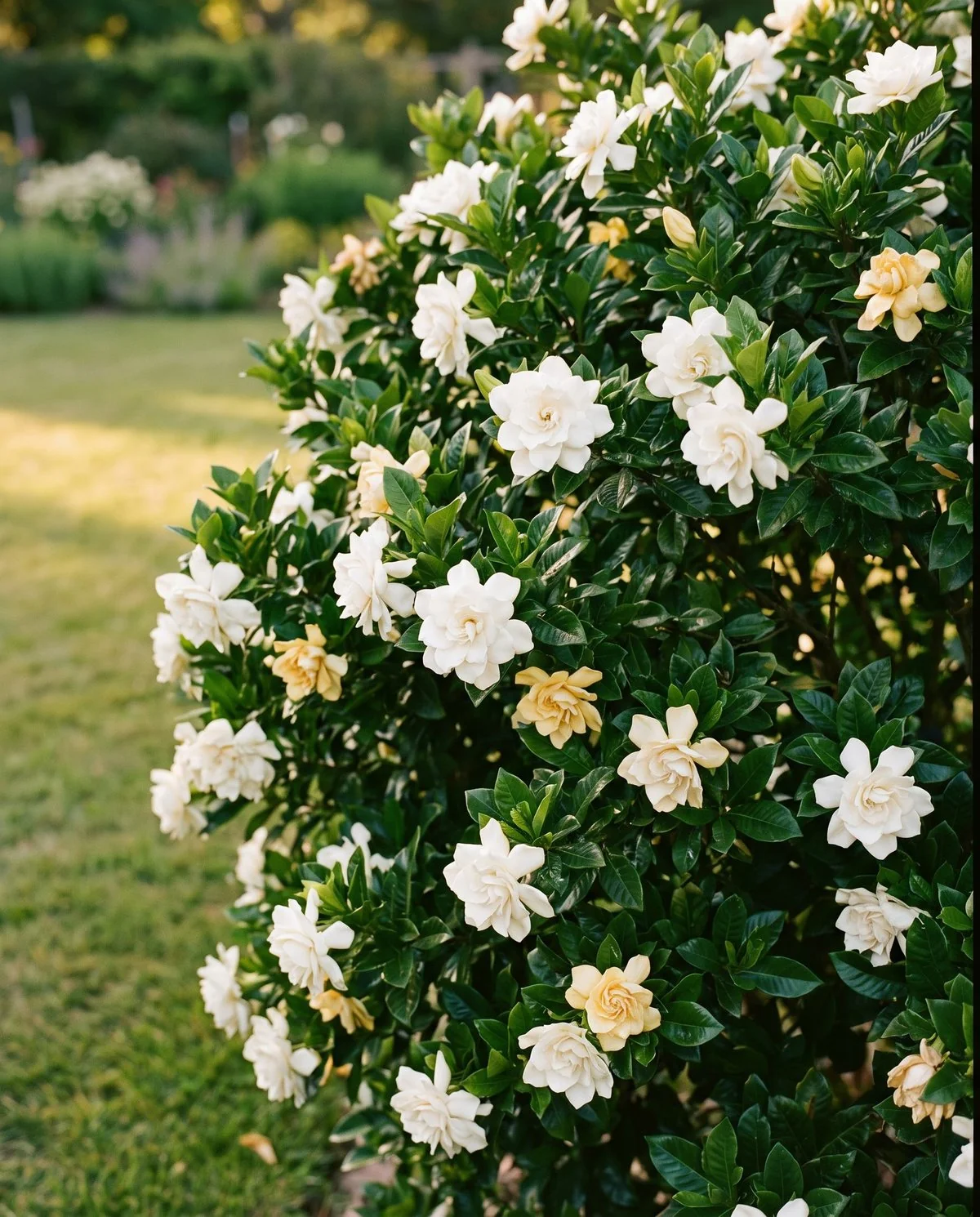
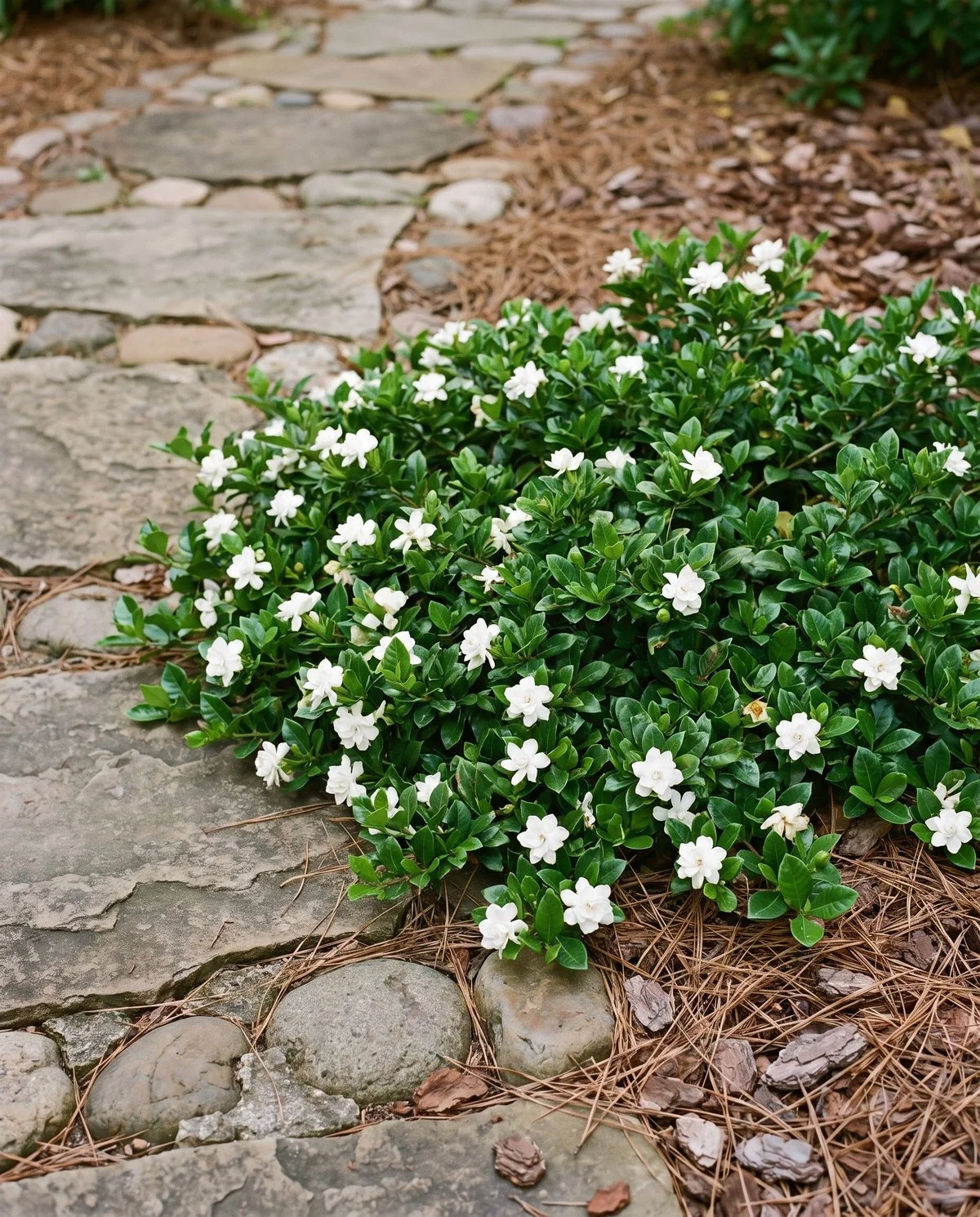
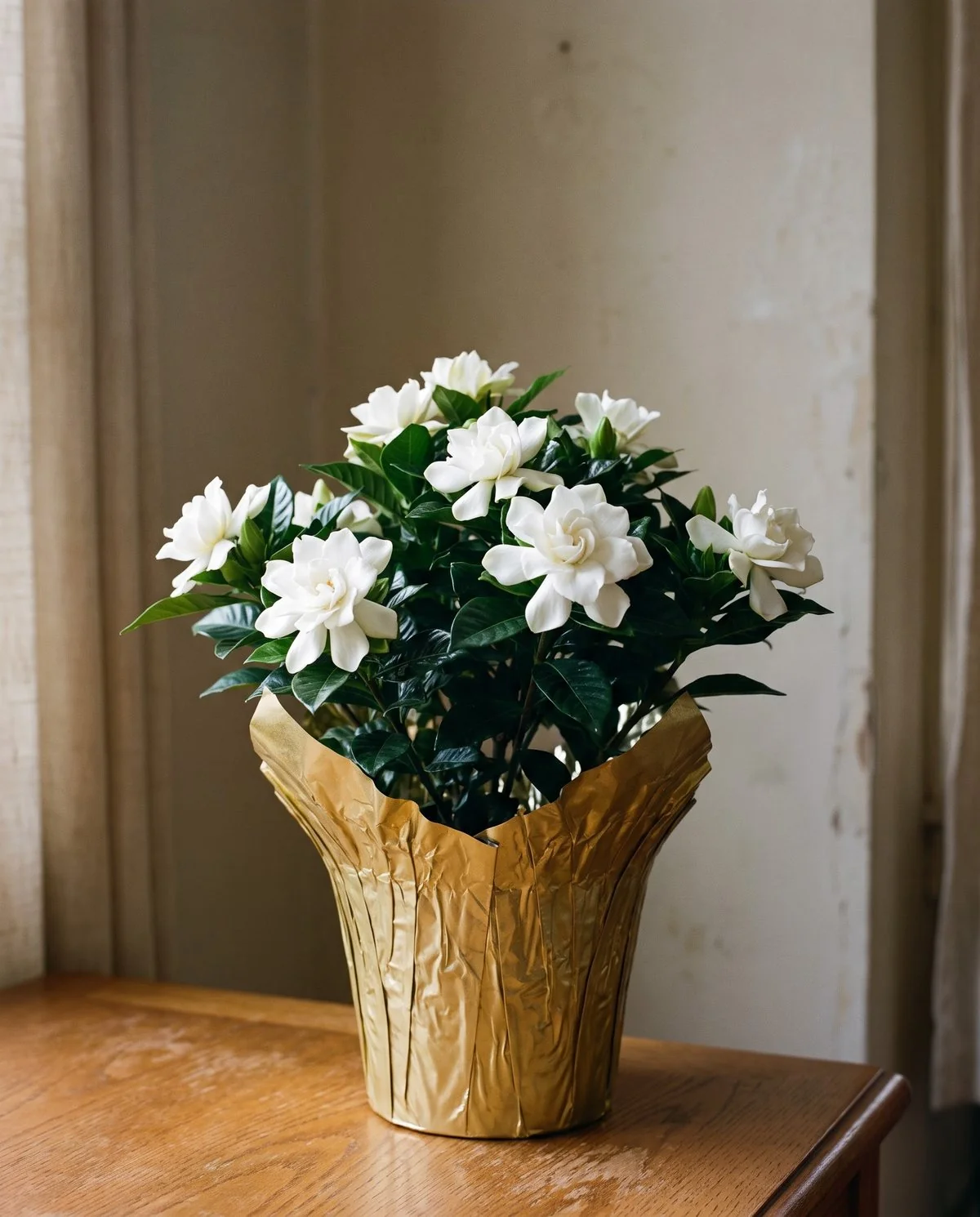
One more cultivar belongs in the sourced list without a photograph here: 'White Gem', which Clemson puts at 2 ft tall and 1 to 2 ft wide and calls a slow grower, the smallest named upright in the set. The florist-versus-garden split above is this pack's own synthesis rather than a formal category: the cultivar facts are Clemson's, NC State's and UF/IFAS's, and the corsage-gardenia trade name for 'Fortuniana' is real nursery usage, but no single university page frames the two trades as separate classes.
Bloom time
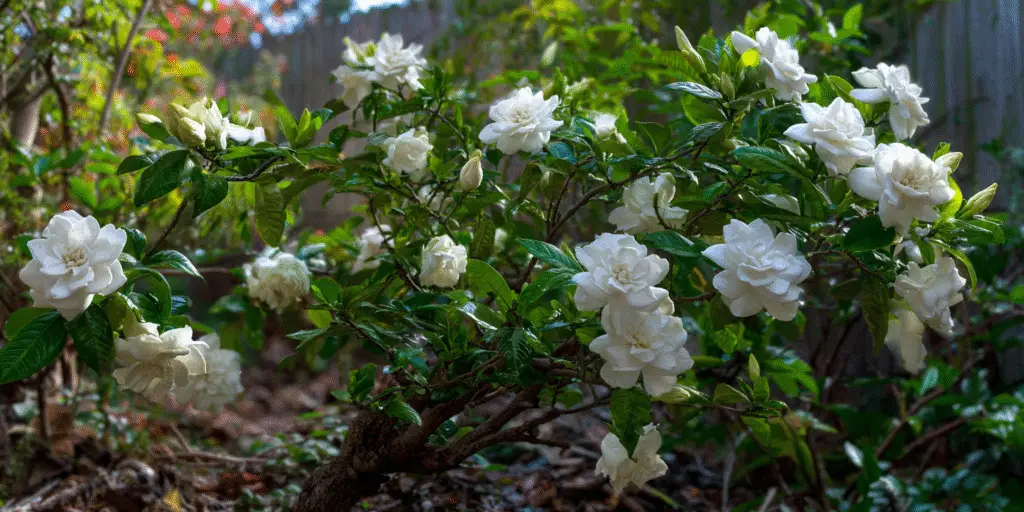
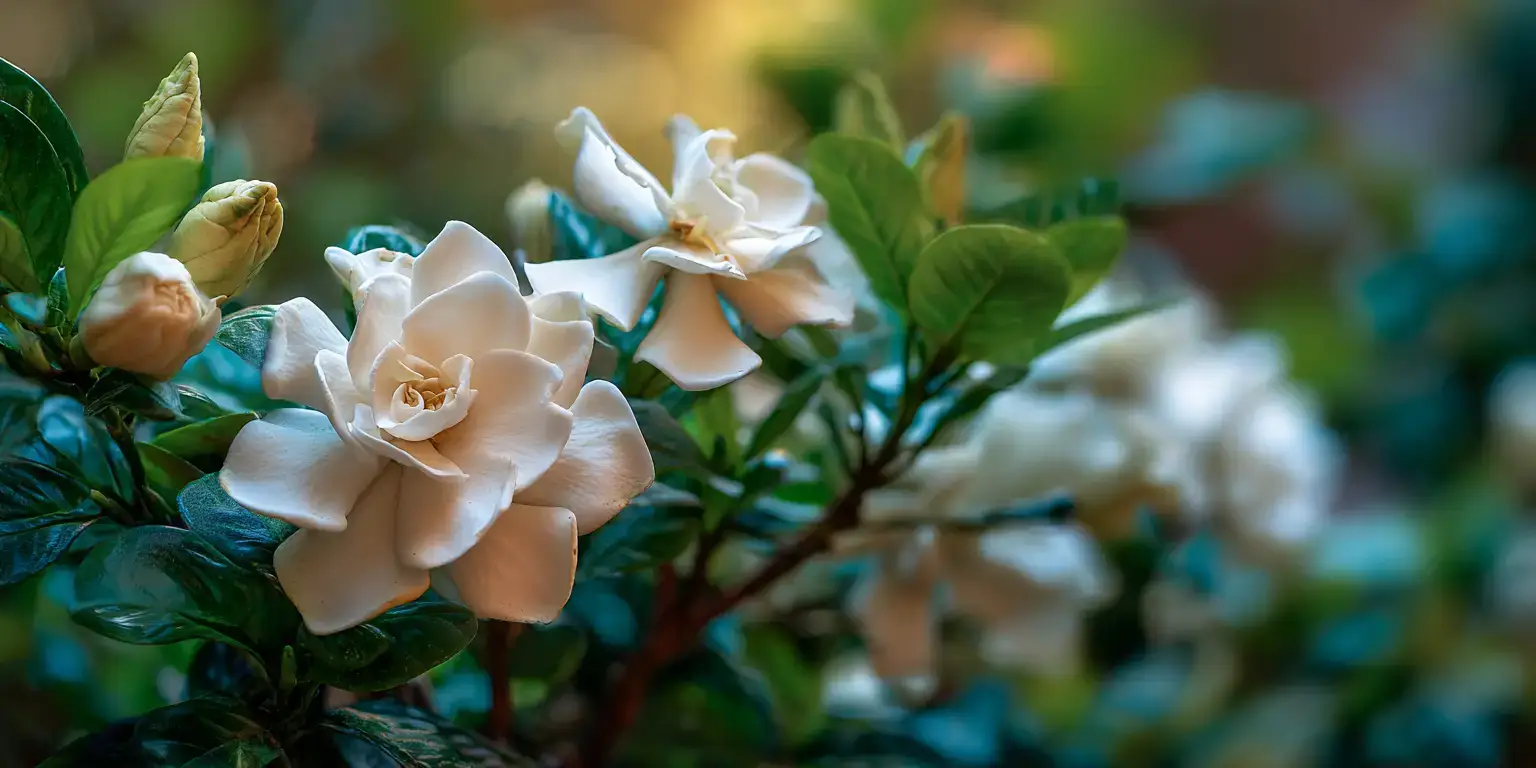
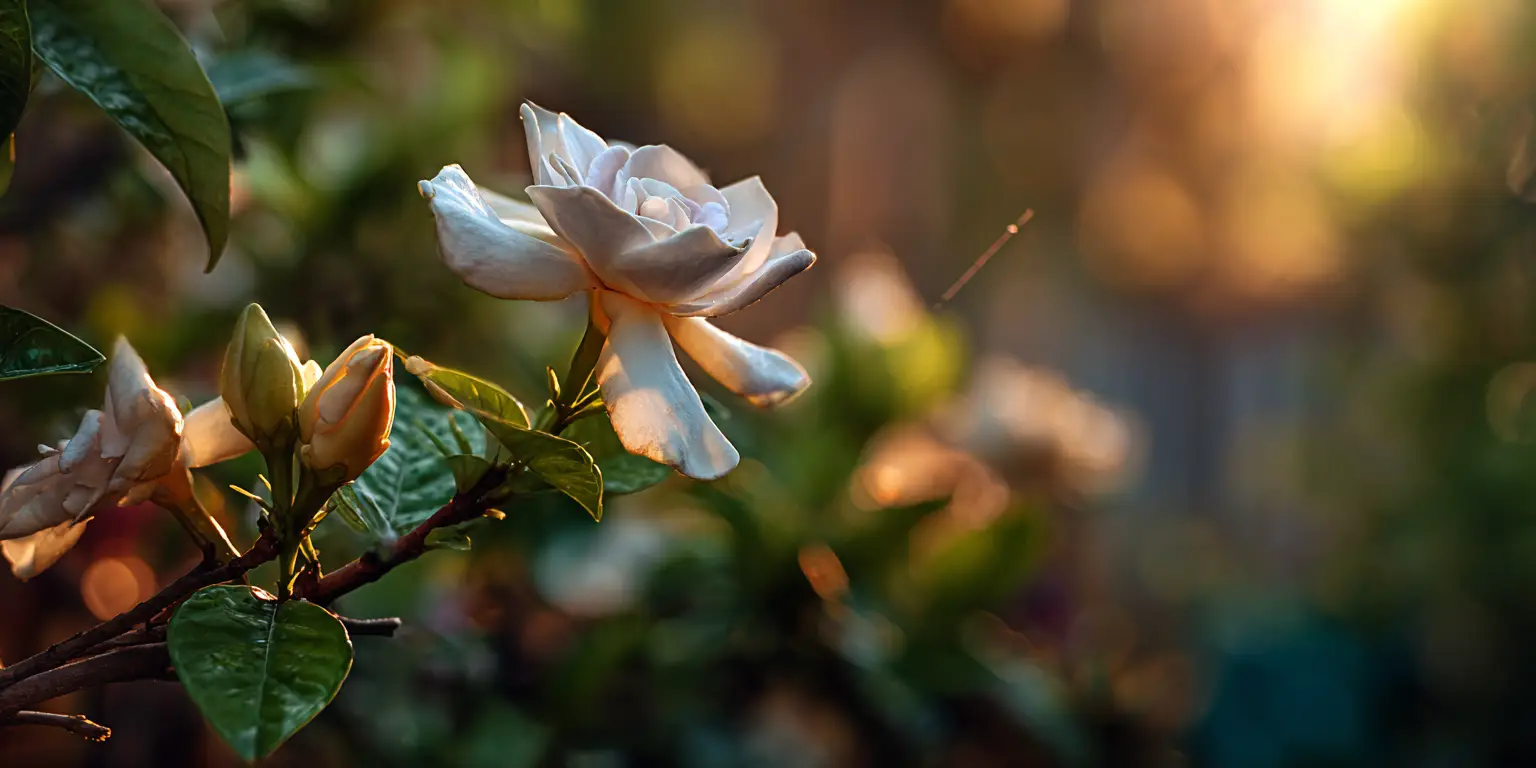
Gardenias bloom mainly in late spring and early summer, with the peak in most regions falling across May and June. Reblooming cultivars such as 'August Beauty' and 'Chuck Hayes' scatter a second flush through summer and into fall, and in frost-free climates a plant may flower on and off nearly year-round. Each individual flower opens creamy white, ages to soft yellow, and lasts only a few days to a week, but a healthy shrub carries many buds that open in succession, stretching the display over several weeks.
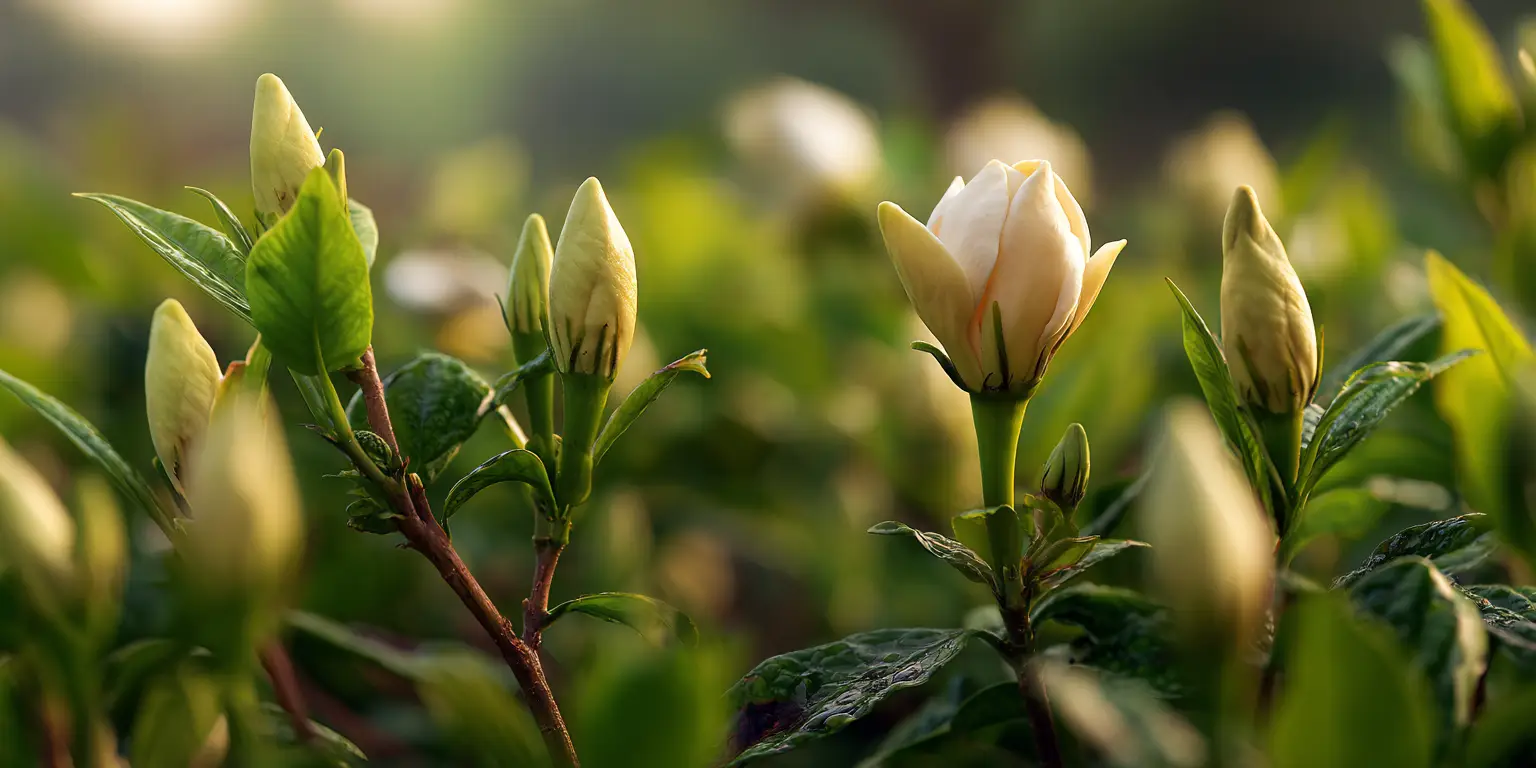
The catch that defines gardenia is bud drop: a plant loaded with buds that abort and fall before a single one opens. It is almost always a response to change or stress rather than a disease. Sudden shifts in temperature, a move to a new spot, cold drafts, swings between bone-dry and soggy soil, low humidity, and too little light will all make buds let go. Bud formation itself depends on cool nights, roughly 50 to 55 F, so a run of hot nights can stop a plant setting buds in the first place. The remedy is consistency: once a gardenia has set buds, keep its light, water, and position steady and do not move it, and far more of those buds will make it to open bloom.

The two failures gardeners bring to this plant, worked in order
Both paths start with what can be measured rather than with a pest, because UF/IFAS's and Clemson's own cause lists for gardenia are dominated by temperature, water and soil chemistry, with insects appearing partway down.
Height and spread
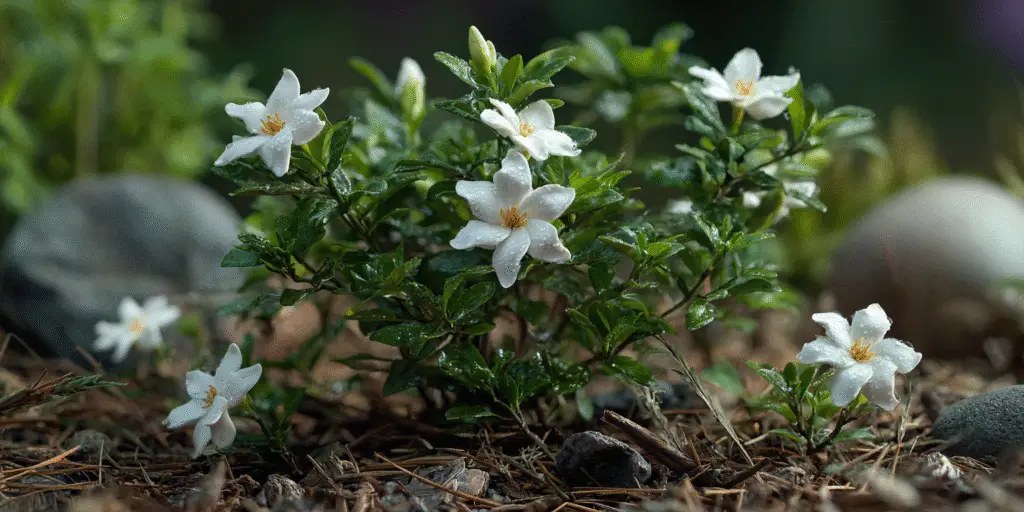
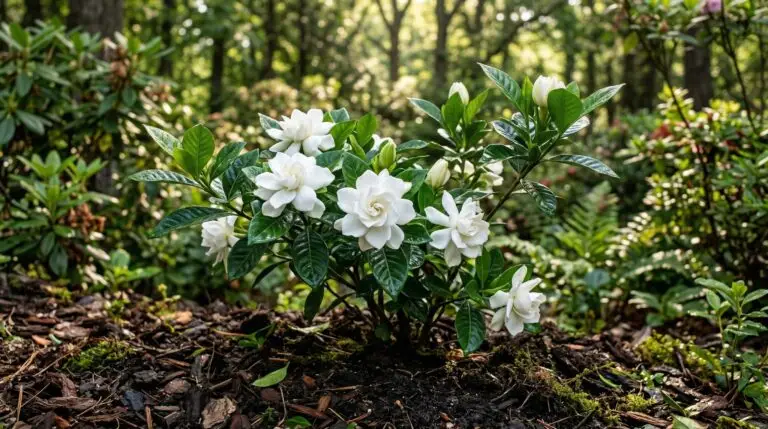
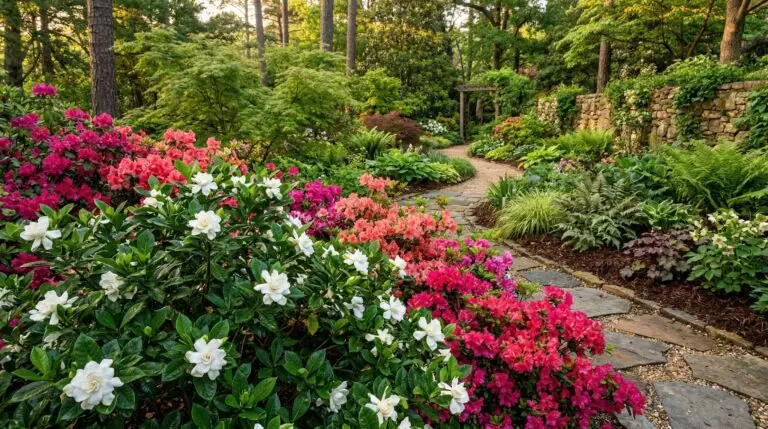
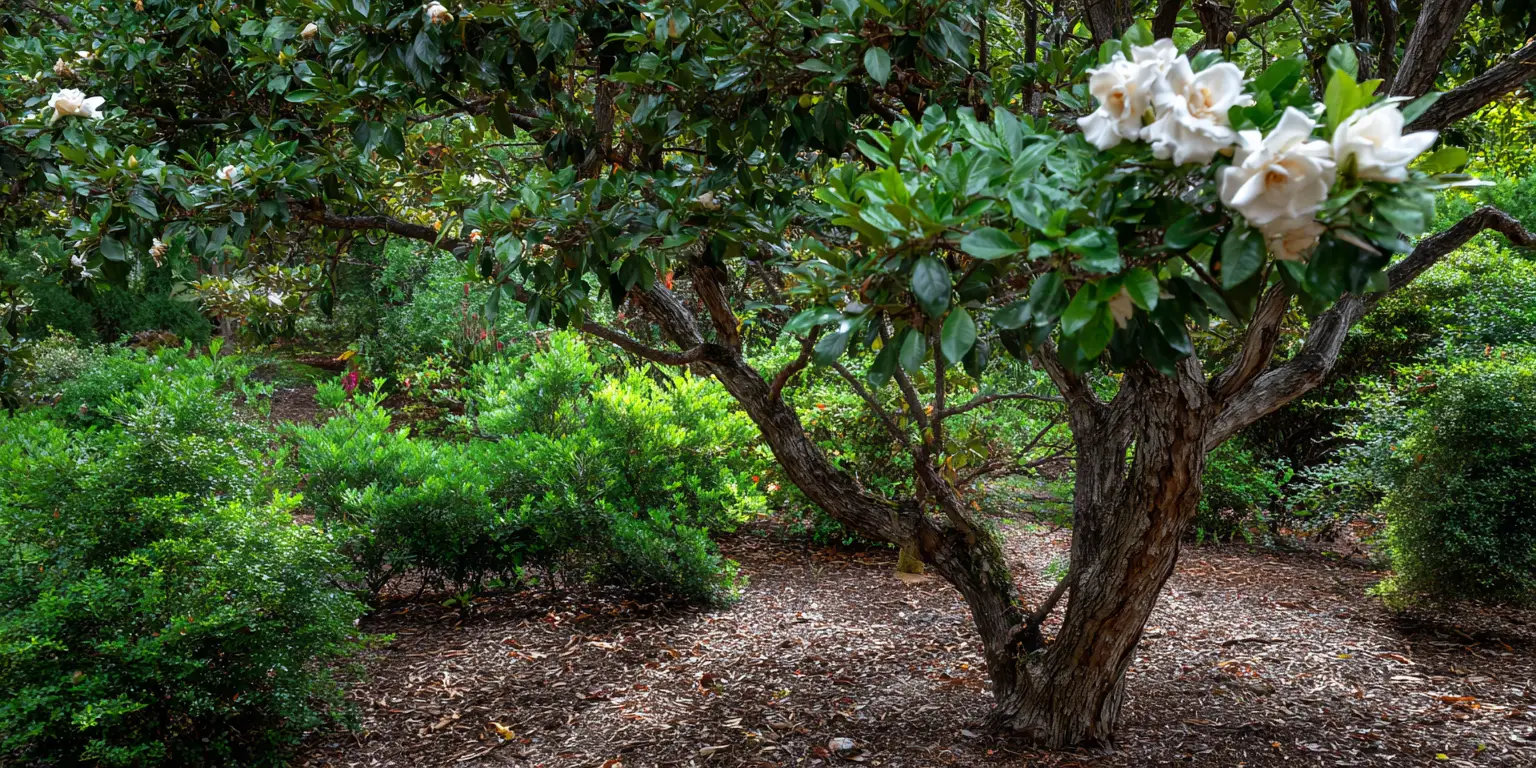
Size depends on the cultivar. Most garden gardenias grow into rounded, mounding shrubs about 3 to 6 feet tall and wide, and an old, well-sited plant can reach 8 feet. At the small end, the dwarf 'Radicans' stays just 6 to 12 inches tall while spreading 2 to 3 feet, which suits edging, containers, and low groundcover. The dense evergreen foliage gives the plant year-round presence even out of bloom, and it sits comfortably among other broadleaf acid-lovers such as camellia in a mixed border. Give each shrub room to reach its full width so air moves freely through the planting, since crowded, still air encourages both sooty mold and leaf spot. Gardenias resent hard cutting and root disturbance, so shape them only lightly and only right after they finish flowering.
Light
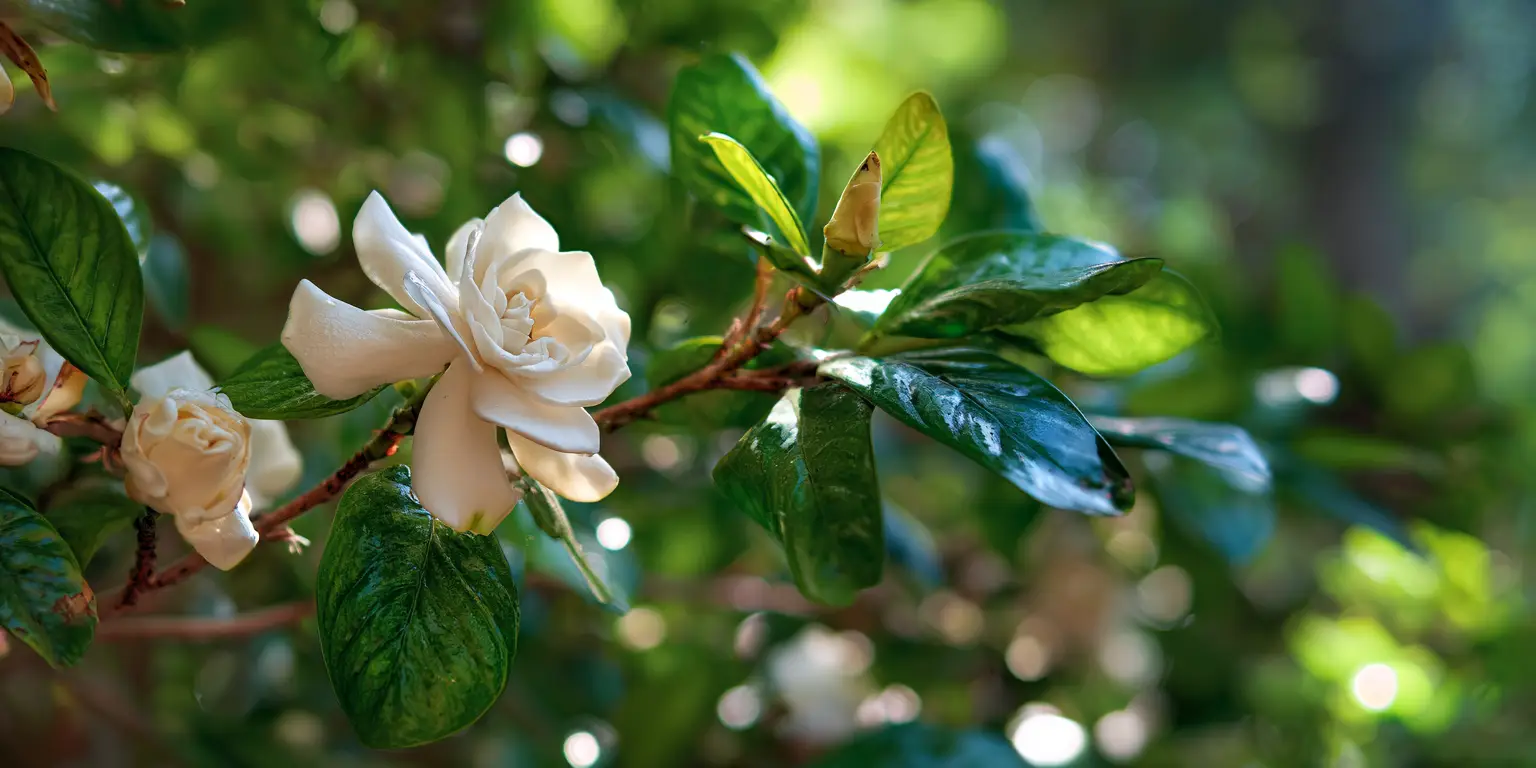
Gardenias want bright light but not a full day of harsh sun. The ideal outdoors is morning sun with afternoon shade, or the dappled light under a high tree canopy, which gives the plant enough energy to flower while sparing the foliage and buds from scorching midday heat. Too much hot afternoon sun bleaches and burns the leaves and dries buds off the stems, while too little light leaves the plant leggy and shy to bloom. Indoors the problem is almost always not enough: set a potted gardenia at the brightest window available, an east-facing sill for gentle morning sun or a south or west window softened by a sheer curtain. In a dim corner it will hold its leaves but produce few flowers, so if a plant stays green yet refuses to bloom, more light is the first thing to try.
Water
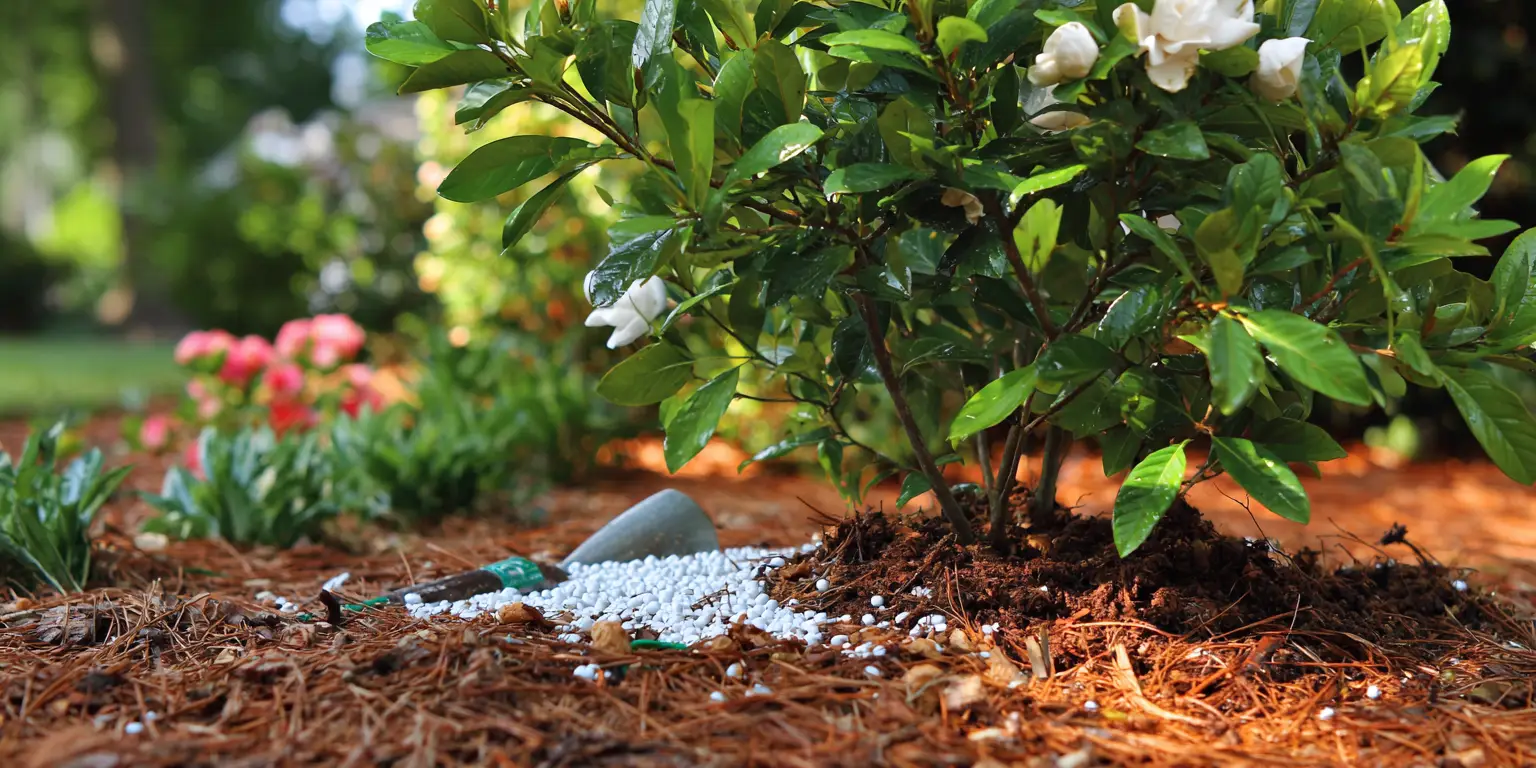
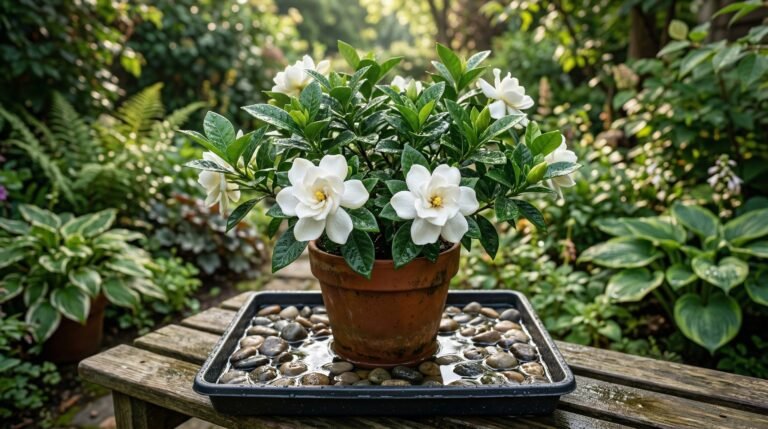
Aim to keep the soil evenly moist, like a wrung-out sponge, never bone-dry and never waterlogged. Water deeply whenever the top inch has dried, which in warm weather usually means once or twice a week in the ground and more often for pots, since containers dry out fast. The single most useful habit is to water at the base and keep the foliage dry, because wet leaves and flowers brown easily and invite fungal spots. A 2 to 3 inch layer of organic mulch such as pine straw over the root zone holds moisture and keeps the roots cool, though it should stop short of the stem. Gardenias also want humidity, so in dry air, and especially indoors in winter, group plants together, stand the pot on a tray of wet pebbles, or run a humidifier nearby. Both extremes show up fast: drought stress wilts the plant and drops its buds, while soggy soil suffocates the roots and yellows the leaves.
Three things done to gardenias that the research does not support
Each reality below is attributed to the institution that measured or published it, and where the sourcing is thinner than the claim, that is said rather than smoothed over.
The myth: Misting the leaves and flowers raises humidity enough to matter, so mist often
The reality: It does not raise humidity for long, and it wets the two things gardenia is least able to afford having wet. Ambient humidity around a misted plant lifts for a matter of minutes, while the water landing on the plant sits on blooms and foliage. The mechanism is worth naming precisely: what raises humidity is moisture in the air around the plant, which a pebble tray, a humidifier or a group of plants sharing one microclimate all supply, and not moisture landing on it. The two water-related problems gardenia is named for in the sourced material, sooty mold living on honeydew and the leaf-spot risk from wet foliage, both track wet-leaf routines, which is why Clemson's drip-irrigation note is phrased as preventing leaf spots rather than as saving water.
The myth: Coffee grounds acidify the soil enough to help an acid-loving plant like gardenia
The reality: Measured, and not dependable. WSU Extension Fact Sheet FS207E, by Linda Chalker-Scott, reports the pH of decomposing coffee grounds ranging from 4.6, mildly acidic, to 8.4, somewhat alkaline, so grounds can push soil pH the wrong direction rather than lowering it. The same research gives the reason: most of coffee's acid is water-soluble and ends up in the brewed cup, not in the leftover grounds. Where a gardenia genuinely needs a lower pH, and the interveinal pattern above is how that shows, the sourced fix is elemental sulfur or a fertilizer formulated for acid-loving plants rather than a kitchen byproduct with an unpredictable pH. The fact sheet addresses the mechanism generally and does not name gardenia by species; the University of Missouri Extension piece that does name gardenias directly returned a 403 and could not be read.
The myth: Gardenias are only mildly toxic, so a pet nibbling one is basically fine
The reality: The word mild describes the severity of the symptoms, not the classification, and two independent veterinary sources agree on both. The ASPCA classifies Gardenia jasminoides as toxic to dogs, toxic to cats and toxic to horses, names geniposide and gardenoside as the toxic principles, and lists mild vomiting and diarrhea and hives as the clinical signs. The LSU School of Veterinary Medicine's toxic-plants reference lists the identical toxic principles, the identical animals and the identical signs, which makes this a cross-confirmed classification rather than one source repeated back to itself. It is a real, named toxicity entry, not a plant the databases left off their list.
Soil and pH
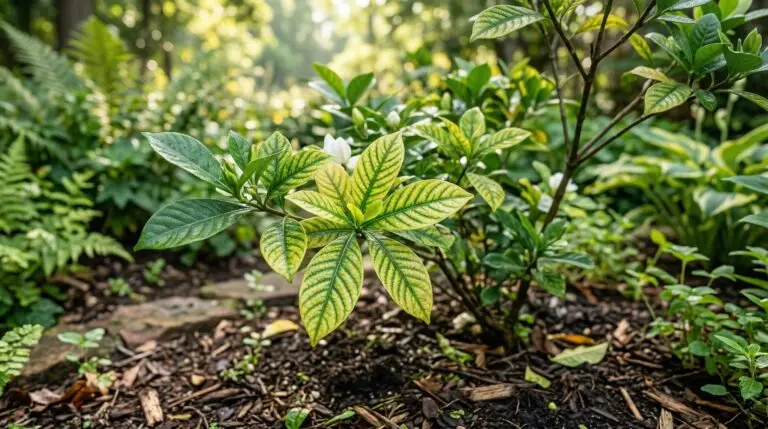
This is the section that decides whether a gardenia stays green or goes yellow. The plant needs acidic, humus-rich, well-drained soil, ideally around pH 5.0 to 6.5, and keeping it below 6.0 is what holds iron and other nutrients in a form the roots can take up. When the soil drifts alkaline, iron locks up and the newest leaves turn pale yellow while their veins stay green, the classic pattern of iron chlorosis. The usual culprits are lime leaching from a nearby concrete foundation or path and hard, alkaline irrigation water, both of which nudge the pH up over time. The fix is to test the soil, then acidify it by working in elemental sulfur, peat, or composted pine bark, and to feed with a fertilizer formulated for acid-loving plants like azaleas in spring once frost has passed, with a second light feeding about six weeks later. A chelated iron treatment greens up yellow new growth quickly while the pH correction takes hold. Avoid feeding after midsummer, since late feeding pushes soft growth that winter cold will kill.
USDA hardiness
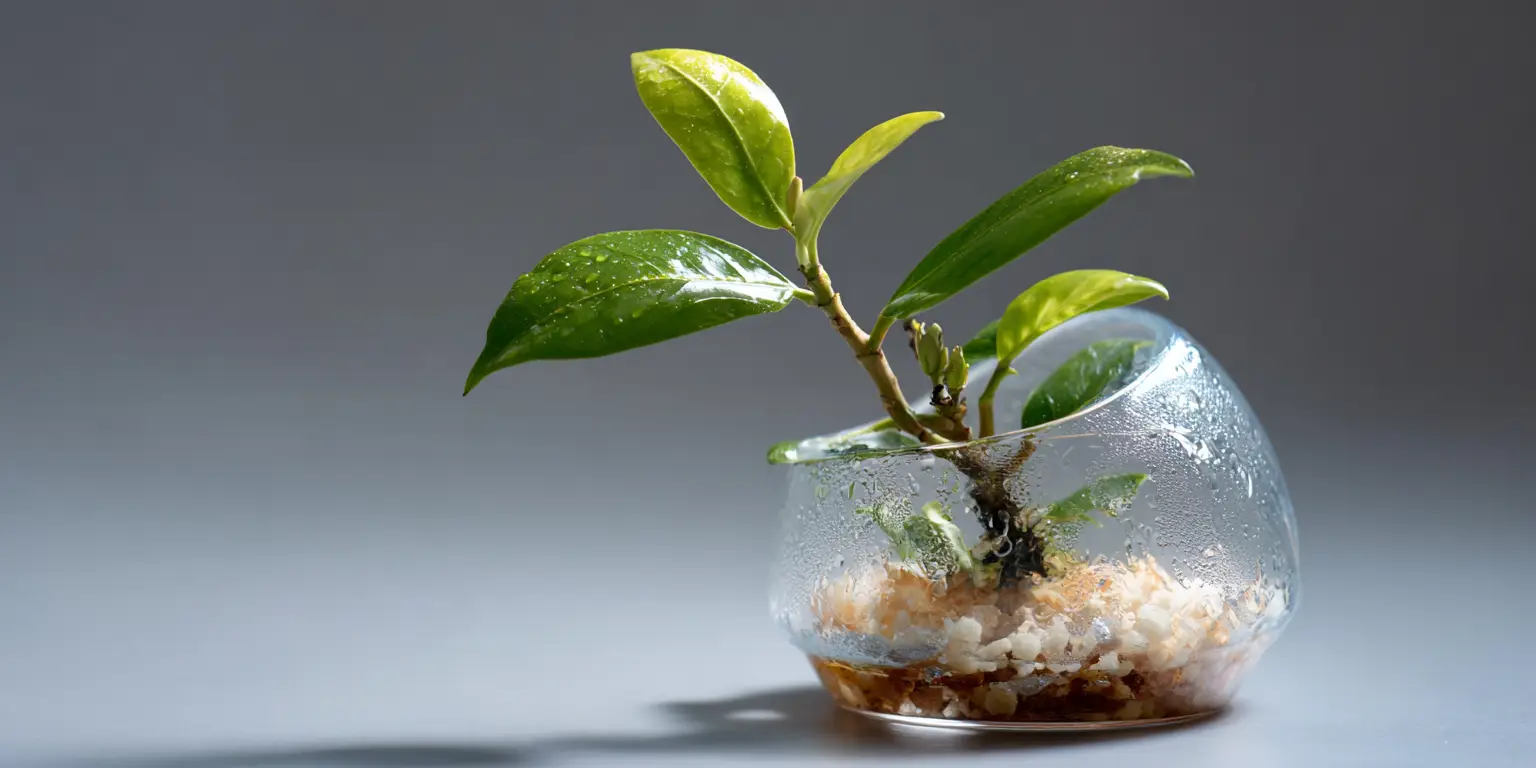
Gardenias are dependable outdoors year-round in USDA zones 8 through 11. Older cultivars are generally hardy to zone 8, while many newer and smaller selections hold on through zone 7a, and a few survive into zone 6b in a sheltered, protected spot. Gardeners on the cold edge should reach for the hardy cultivars by name: 'Frostproof', 'Chuck Hayes', and 'Crown Jewel' all take zone 7 winters, and 'Kleim's Hardy' tolerates temperatures down to about 10 F. Even these benefit from a thick winter mulch over the roots and, in a hard freeze, a burlap wrap. Anywhere colder than zone 7, grow the plant in a container and bring it indoors for winter, giving it the brightest, most humid spot you can and keeping it away from cold drafts and hot air from heating vents. Those cool indoor nights actually help it set buds. Move a potted gardenia back outside only once nights hold reliably above about 60 F, and reintroduce it gradually, first to shade and then to brighter light, so the change does not shock it into dropping buds.
What each zone band actually buys, and the dates published for it
Two things are published by band for this plant and they come from different services. Clemson and NC State rate cultivars by zone; UF/IFAS publishes fertilizer months by region, which for Florida is a zone band by another name. Both are below, unmixed.
Propagation and longevity
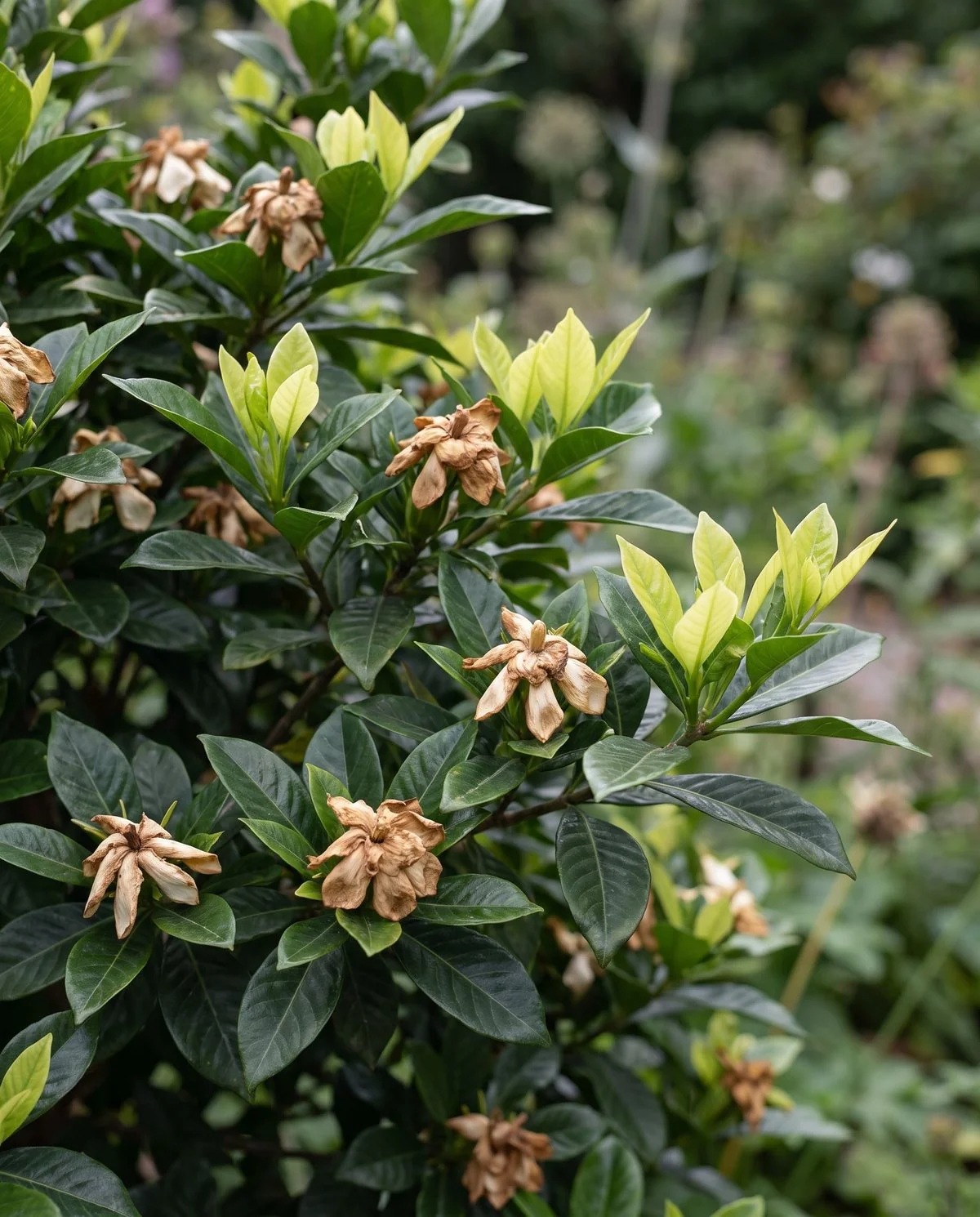
The reliable way to make more gardenias is from semi-ripe stem cuttings taken in late spring or summer. Cut a 4 to 6 inch piece of firm young growth just below a leaf node, strip the lower leaves, dip the base in rooting hormone, and set it in a moist, airy medium such as a mix of perlite and peat. Keep it warm, around 70 to 75 F, in bright indirect light, and hold humidity high with a plastic cover or a propagator until roots form in roughly four to eight weeks. Air layering works too but takes longer, and while gardenias do set an orange-red, berry-like fruit, seed is slow to germinate and will not come true from a hybrid parent, so cuttings remain the home grower's choice. Given steady care, acidic soil, and protection from hard cold, a garden gardenia lives for decades and grows into a substantial old shrub; container plants have a shorter run but still thrive for many years with occasional repotting into fresh acidic mix, done gently because the roots dislike disturbance.
Year one, the long run, and the gift plant that will not make it
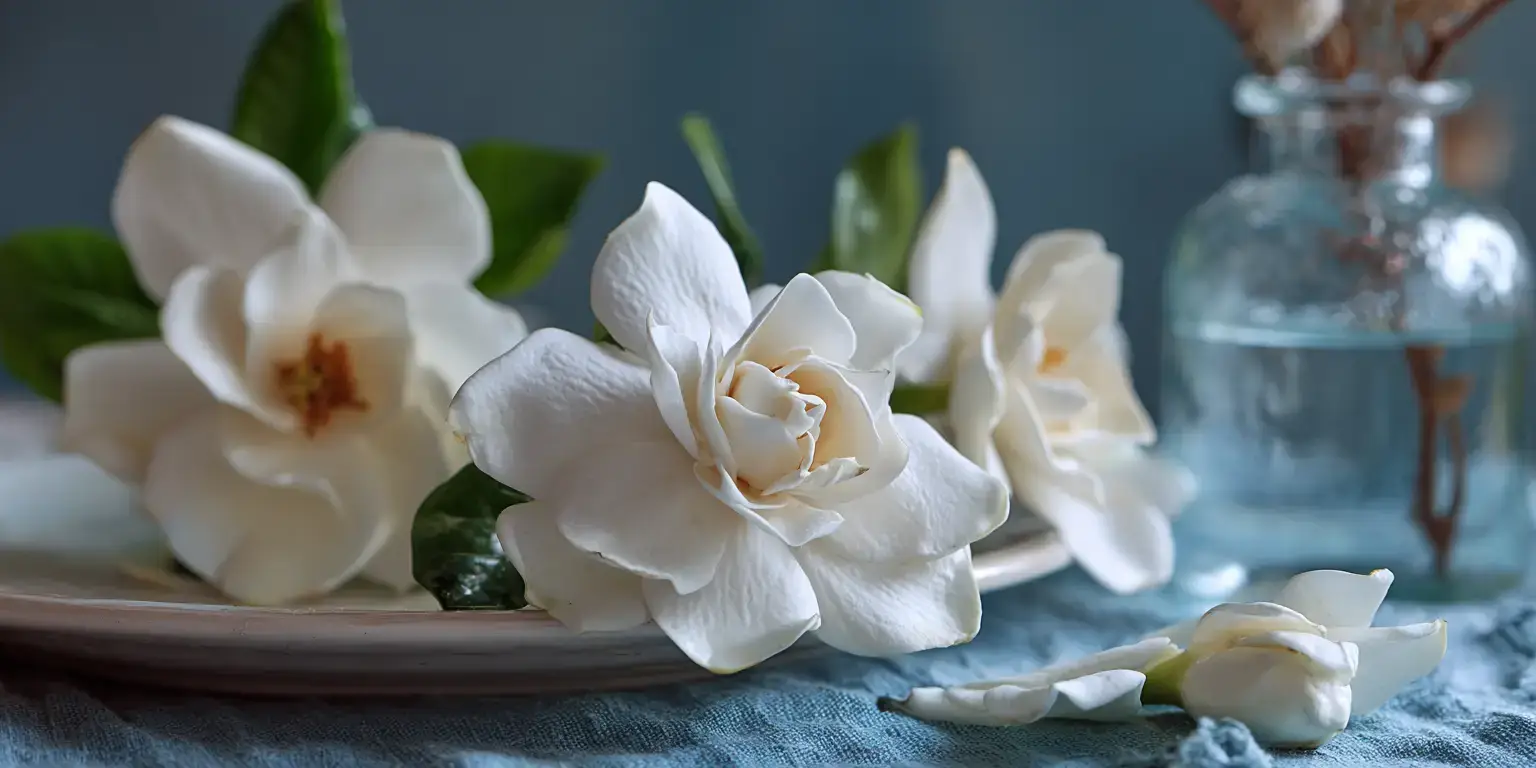
Year one is unusually undramatic for a shrub this fussy. Planted in fall, which Clemson calls the best time, into soil in the 5.0 to 6.5 range UF/IFAS specifies, a landscape cultivar establishes and flowers on its normal spring and summer schedule; gardenia is not slow to first bloom the way a seed-grown tree is. What year one settles instead is scale, and the cultivar decides that permanently: a 'Radicans' at 6 to 12 in, or 6 to 18 in in NC State's figure, will not become a 4 to 6 ft 'August Beauty' hedge no matter how many seasons pass, and a compact cultivar bought for hedge-scale coverage disappoints in exactly that way. Over the long run the extension sources frame gardenia as a durable Southern-garden staple rather than a short-lived ornamental, and the decades-scale figure on this page is inherited from it rather than freshly verified; no university-sourced maximum age for an outdoor gardenia was found. The sharpest point on the timeline belongs to the gift plant. A florist gardenia is typically a trade cultivar forced into bloom under greenhouse humidity, not a landscape cultivar chosen for a living room, and the obstacle is humidity rather than watering skill: gardenias are consistently described across consumer sources as needing roughly 50 to 60 percent relative humidity or more to hold their buds, a figure that sits at consumer tier rather than extension tier, while ordinary heated or cooled home air in winter commonly sits well below it. UF/IFAS's own number reinforces the same failure from another angle, since soil below 70 F contributes to both yellowing and bud drop, so a plant kept in a cool room or by a drafty window is fighting two compounding stresses rather than one. The sequence people report, buds forming and then browning and dropping in quick succession, followed by yellowing and leaf drop, is that specific gap between a greenhouse and a living room. No sourced survival-rate percentage for gift gardenias exists, and none is offered here in place of one.
Fragrance
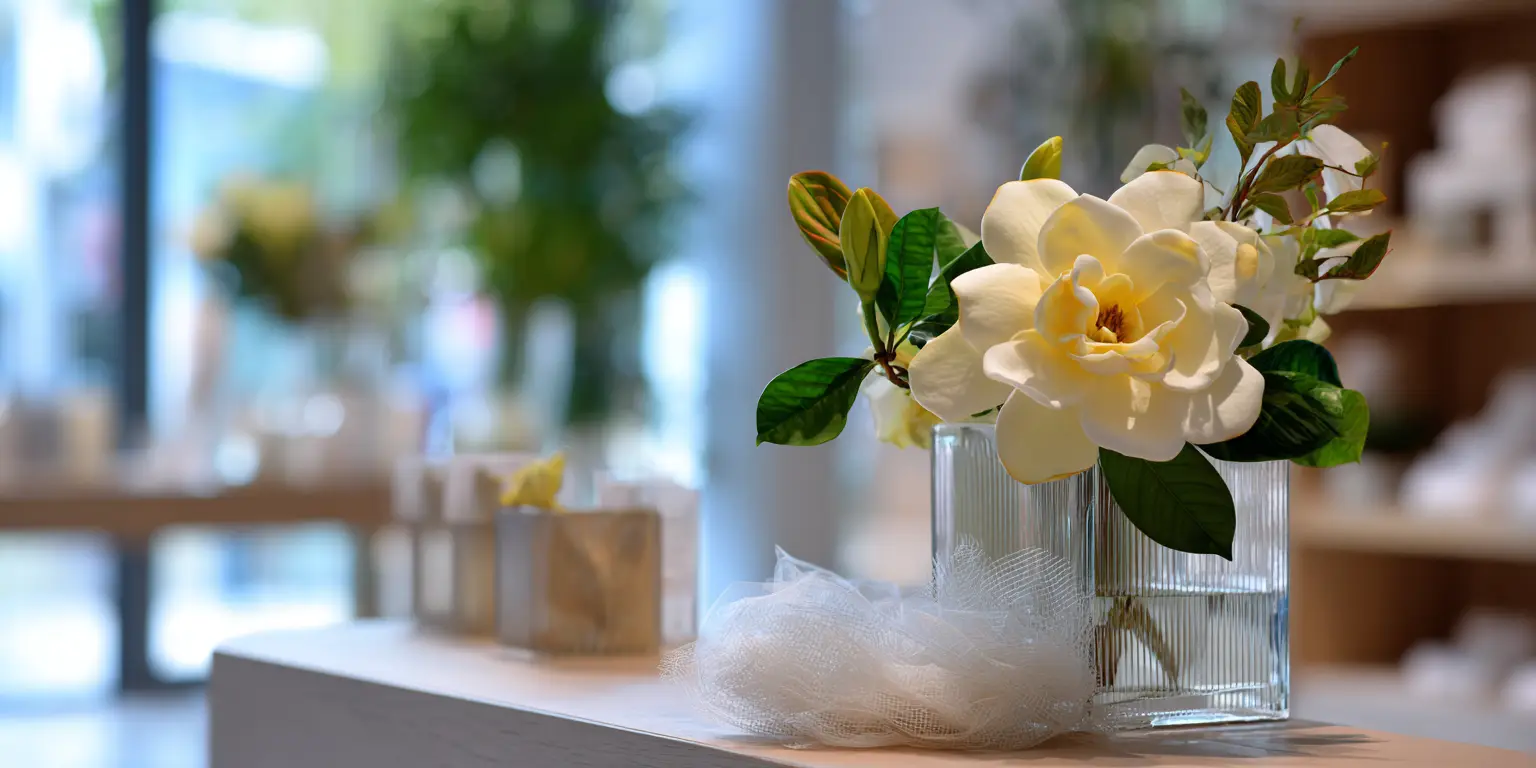
Fragrance is the whole point of a gardenia. The scent is rich, sweet, and jasmine-like with a touch of tuberose, strong enough for one open bloom to perfume a room or drift across a garden. It builds toward evening, part of the plant's moth-pollinated design, which is the practical argument for planting a gardenia where that evening scent is enjoyed: beside a patio, along an entry path, or under a window that opens on summer nights. The perfume is prized far beyond the garden, though true gardenia absolute is rare and costly to extract, so most gardenia-labeled perfumes lean on synthetic notes that copy the flower. Its likeness to true jasmine is exactly why Gardenia jasminoides carries the common name Cape jasmine.
Toxicity and pet safety
Gardenias are toxic to pets, though the reaction is usually mild. The plant contains the compounds geniposide and gardenoside, and the ASPCA lists Gardenia jasminoides as toxic to cats, dogs, and horses. An animal that chews the leaves, flowers, or berries may develop mild vomiting or diarrhea and sometimes hives, discomfort that generally passes on its own rather than turning serious. Even so, it is worth keeping the plant out of reach of curious pets and small children, and calling a veterinarian if an animal eats a large amount or reacts badly. The bitter foliage tends to put animals off after a taste, which is also why gardenias are considered deer-resistant, if never fully deer-proof. If you share your home with animals that browse the houseplants, it helps to know which blooms are genuinely safe around cats and dogs.
Vase life
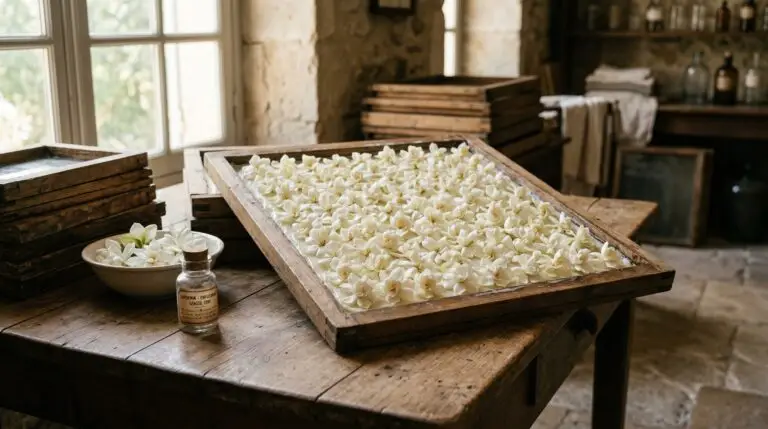
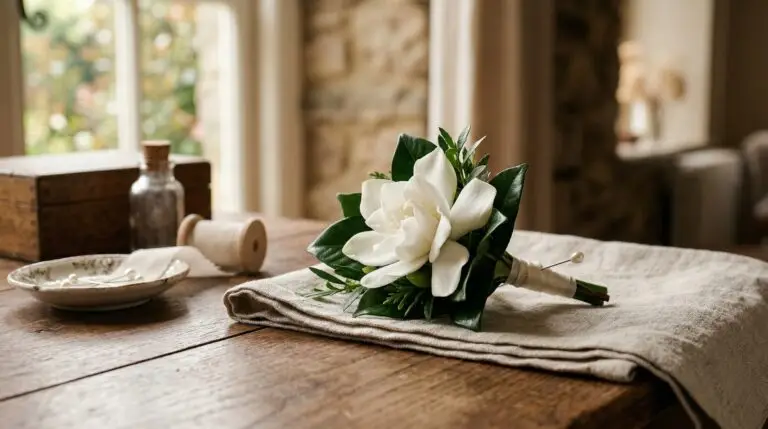
Cut gardenias are gorgeous and short-lived. A picked flower usually holds only about 2 to 3 days before it browns, and the petals bruise so easily that a careless touch leaves a brown mark within hours. To get the most from them, cut in the cool of early morning with a short length of stem, handle the bloom by the stem rather than the petals, and float the flowers in a shallow bowl of cool water, a classic display that also keeps them hydrated. Keep them cool and out of direct sun, and change the water to slow the browning. For a wedding or party, cut or buy gardenias the same day they are needed rather than trying to hold them. Their scent and clean white form have made them a fixture in wedding flowers, especially in corsages and boutonnieres, where a single bloom carries the whole fragrance. On the plant, pick off browning flowers so the shrub puts its energy into new buds.
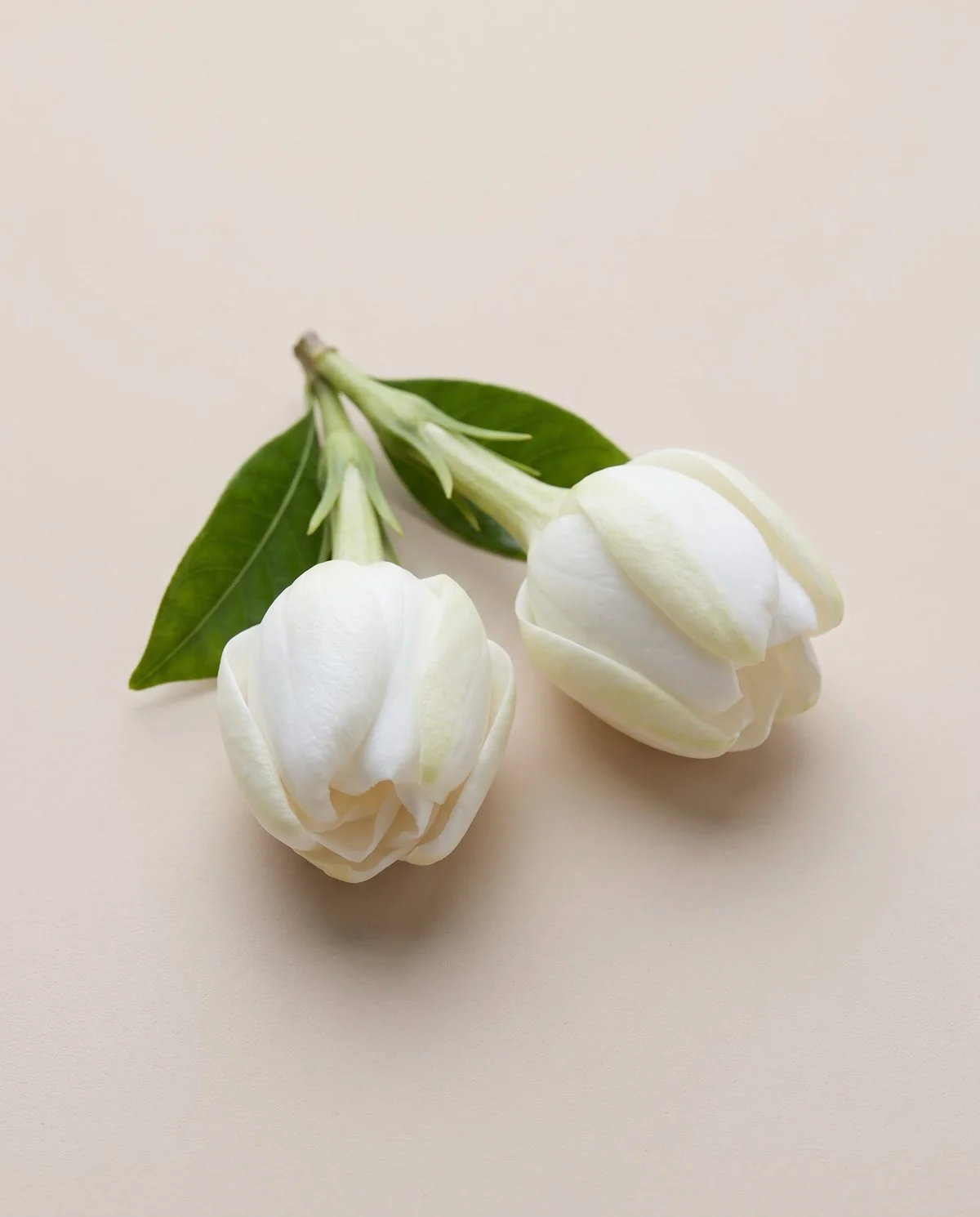
Why a corsage is made from a bud, and what a postharvest study measured
One peer-reviewed postharvest study for cut Gardenia jasminoides exists, and this pack could not get past its paywall. Its figures are reported below as read from a search-indexed abstract summary rather than from the primary text, and they are labelled that way at every point of use.
A longer stem and a standard floral preservative will hold a cut gardenia the way they hold a rose.
They do not, and the reason is mechanical rather than chemical. The postharvest literature's own framing is that the flower is not taking up water through the stem in the first place, which is why corsage-makers evolved hand-opened buds and anti-transpirant misting rather than simply cutting a longer stem.
Buy or cut gardenias a day or two ahead of an event to be safe.
The opposite of what the numbers support. At two to three days in water, and with bruising showing in minutes, the sourced material points at cutting or buying on the day the flowers are needed rather than holding them.
Pests and diseases
The most common gardenia pest by far is the whitefly, a tiny white insect that gathers on the undersides of leaves and rises in a cloud when the plant is disturbed. Whiteflies pierce the leaves to feed and drip a sugary honeydew that a black sooty mold quickly colonizes, coating the foliage in a dark film. The control is to spray insecticidal soap or horticultural oil onto the lower leaf surfaces where the insects live, repeating every few days until the population breaks; the sooty mold fades once the whiteflies are gone. Aphids, scale, mealybugs, and spider mites turn up as well, the mites mostly in dry indoor air, and all respond to the same wash-and-treat approach with an insecticidal soap or oil. On the disease side, root rot follows waterlogged soil, leaf spot follows wet foliage, and powdery mildew settles in where humid air sits still, while soil nematodes can stunt plants in sandy ground. Good drainage, base watering, and open spacing prevent most of it.
The two complaints that bring most people to a gardenia, though, are not caused by insects at all. The table below reads a symptom back to its likely cause and the fix.
| Symptom | Likely cause | Fix |
|---|---|---|
| New leaves yellow, veins still green | Alkaline soil locking up iron (chlorosis) | Lower the pH with sulfur or pine bark, feed an acid-forming fertilizer, apply chelated iron for a fast correction |
| Buds brown and drop before opening | Sudden change, low humidity, uneven watering, or too little light; warm nights preventing bud set | Hold conditions steady, raise humidity, water evenly, do not move a budded plant, site for cool nights |
| Black, sooty film on leaves | Sooty mold growing on whitefly or aphid honeydew | Treat the insects on the leaf undersides with soap or oil; the mold clears once they are gone |
| Whole plant wilts, lower leaves yellow, soil stays wet | Root rot from waterlogged soil | Improve drainage, water only when the top inch dries, repot a container plant into fresh mix |
| Few or no flowers | Too little light, or pruning at the wrong time | Move to brighter light and prune only right after bloom, since buds form on older wood |
- Aphids: tiny green or black sap-sucking insects that often cluster on new growth and buds. They can cause leaves to curl and distort new buds. Aphids excrete sticky honeydew which can lead to sooty mold (a black fungal coating on leaves).
- Whiteflies: minute white winged insects found on the undersides of leaves. When disturbed, they flutter up in a cloud. Whiteflies also suck sap and produce honeydew, causing leaf yellowing and mold growth.
- Scale insects: these appear as small brown or white bumps on stems and leaves. Scales are sap feeders too, a heavy infestation can weaken a gardenia significantly. They often hide along stems or leaf veins and can be tricky to spot at first.
- Mealybugs: cottony white fuzzy insects that tend to gather in leaf joints or along stems. They also suck plant juices and can cause stunted growth and leaf drop.
- Spider mites: these are more likely in dry conditions (especially on indoor plants or during drought). They are tiny and may cause a fine speckling or stippling on leaves, you might notice delicate webbing on the underside of leaves when infestations are severe.
- Powdery mildew: a white powdery fungal growth on leaves, usually in conditions of high humidity but poor air circulation. It can be managed by pruning for better airflow and using a fungicidal spray if needed.
- Leaf spots: fungal or bacterial spots can appear on foliage, especially if water sits on leaves. Removing affected leaves and avoiding overhead watering help prevent spread.
- Root rot: this can occur if the soil stays waterlogged. The roots begin to die off, leading to yellowing leaves and wilting. Ensuring proper drainage and not overwatering is key to prevention.
- Bud drop: while not caused by a pathogen, gardenias frequently suffer from buds falling off before opening. The causes can be environmental: sudden temperature changes, nights that are too cold (below about 60°F), low humidity, insufficient light, or even moving the plant around can trigger bud drop. Once a plant has set buds, try to keep conditions consistent.
- Chlorosis: as mentioned earlier, if the soil is too alkaline or lacking in nutrients like iron, the leaves may turn pale yellow with green veins. This nutritional issue can be corrected by adjusting soil pH and providing chelated iron or an appropriate fertilizer.
Four look-alike pairs, and the one detail that separates each
Three of the pack's four pairs are diffuse colour or surface states and are safe to photograph on both sides. The fourth has a side that is not: a close-up of a thrips-scarred bud interior with the insects visible is a forensic identification detail and waits for a real reference photograph.
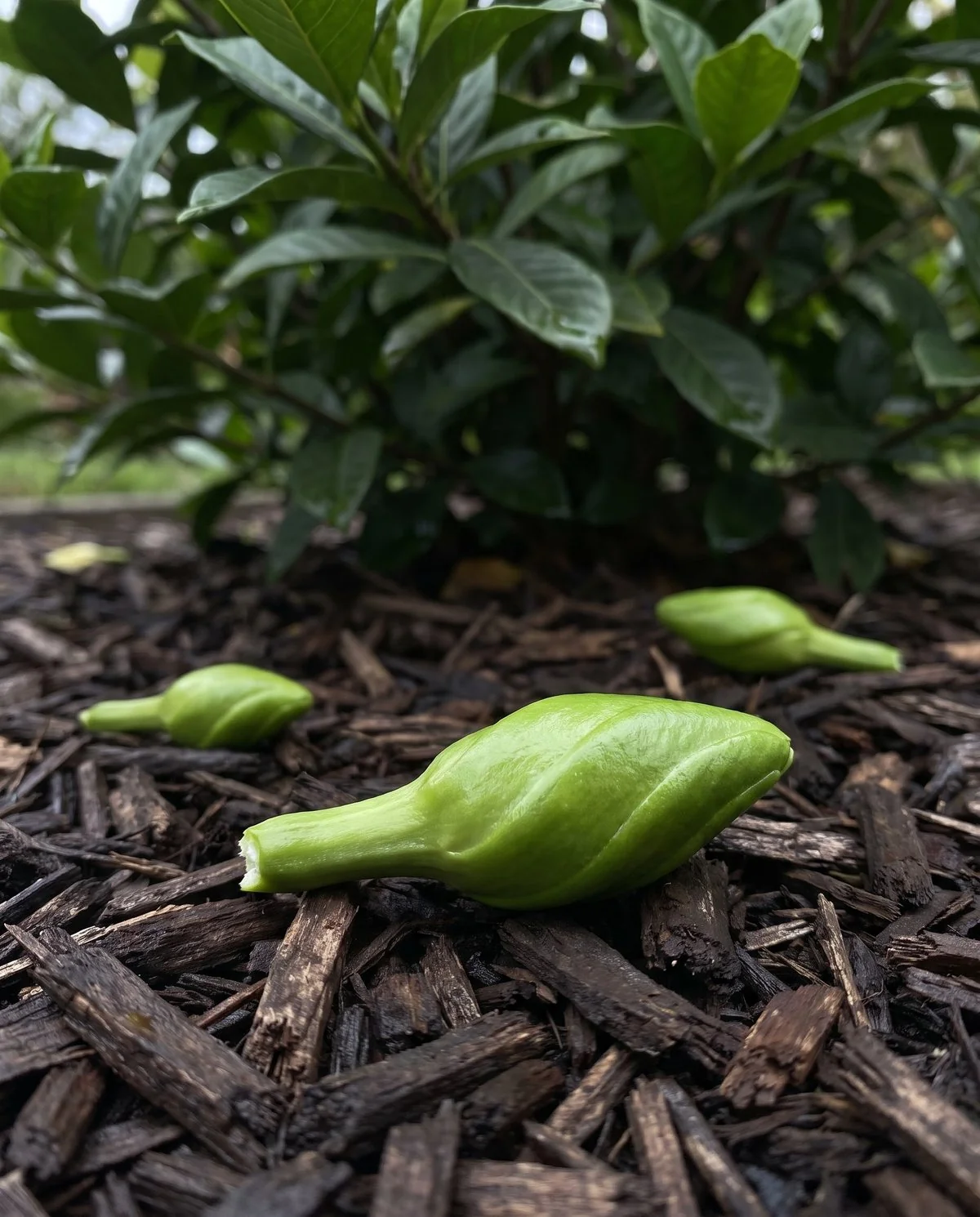
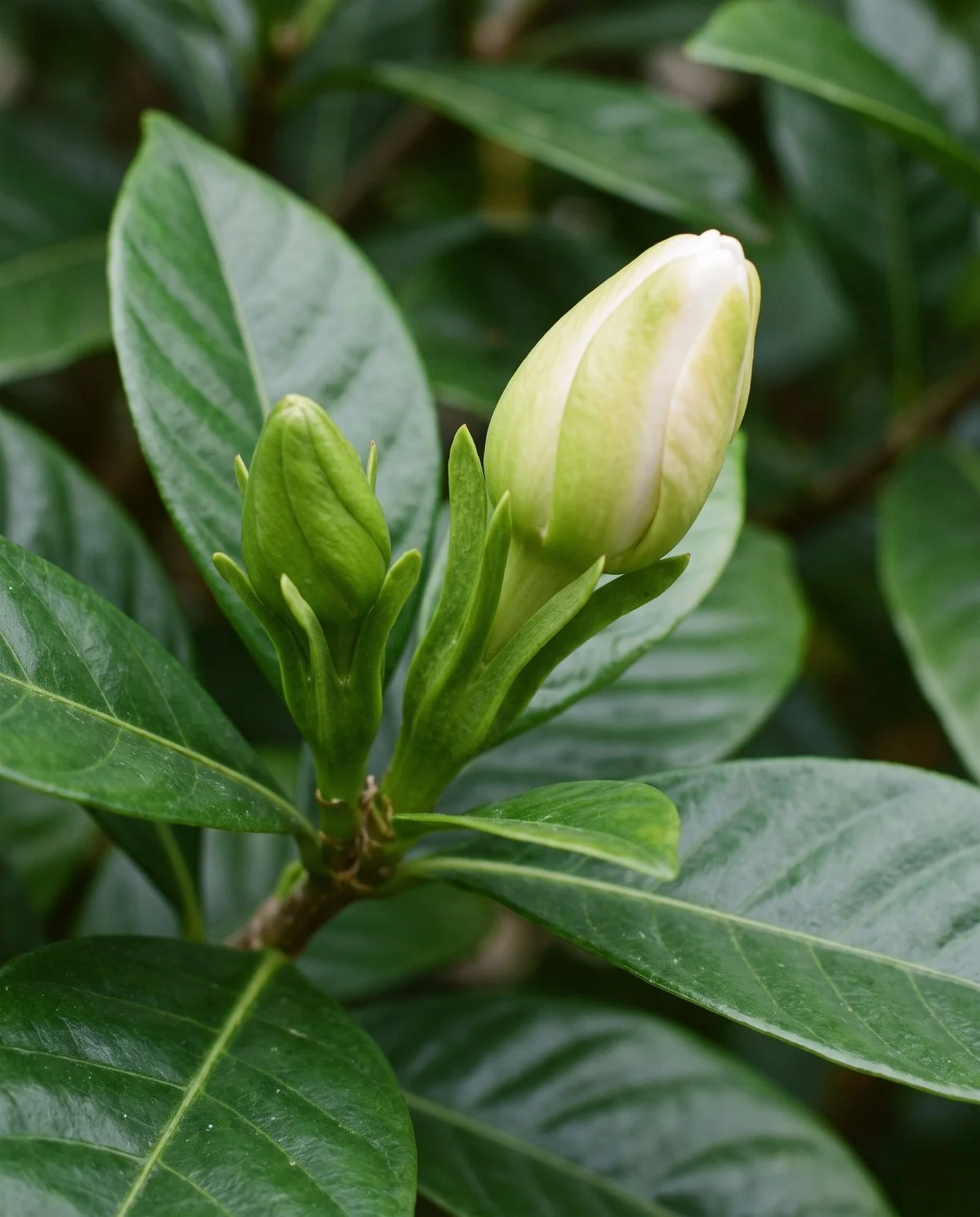
Look at the surface of the bud that fell. Environmental bud drop leaves it clean and unmarked; it simply detached. Thrips feed inside the still-closed bud and leave visible stippling, silvery streaking and scarring on it first, and Clemson's gardenia pest sheet names their damage as flower buds that die before opening, alongside silvery speckles and purplish-red spots on leaf undersides. The field test repeated across the sourced material settles it in a minute: break a fallen bud open over white paper and, if thrips are present, tiny slender insects will be moving on the paper. UF/IFAS names the environmental list directly, dry, hot or unusually cool weather, too much fertilizer or poor drainage, and Clemson adds low humidity and insufficient light to it.
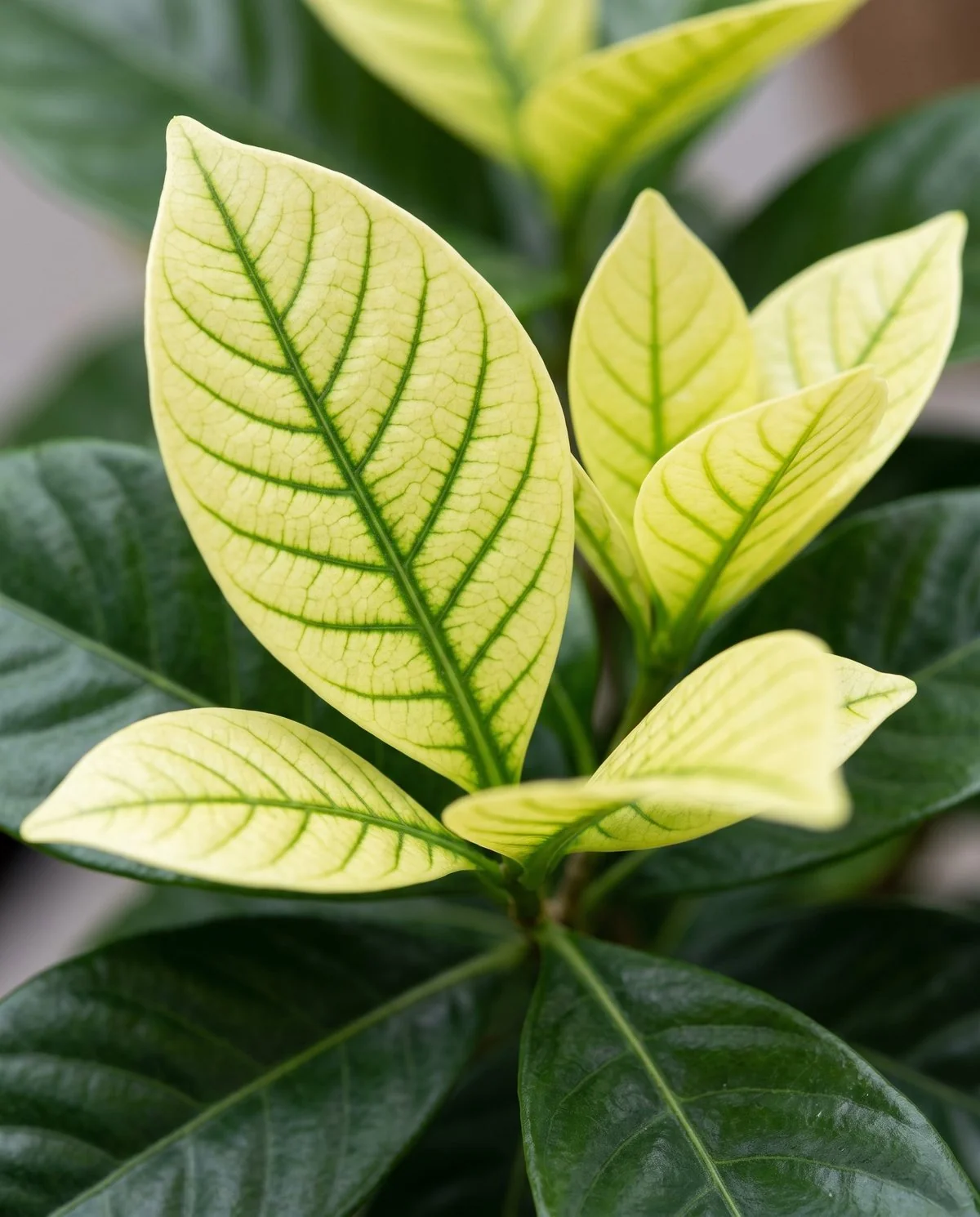
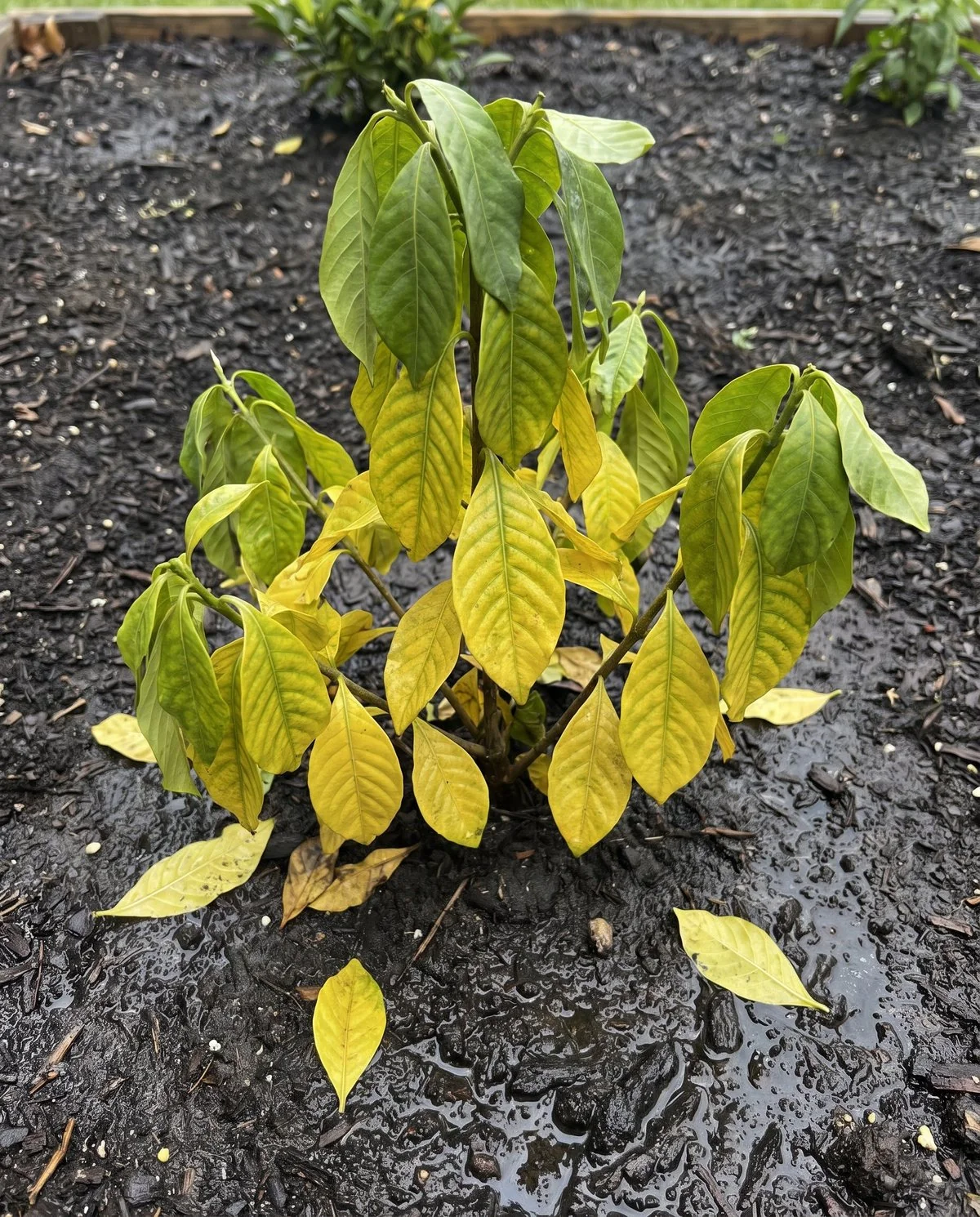
Follow the veins. Iron chlorosis spares them: UF/IFAS describes yellowing except for green veins, occurring when soil pH exceeds 7.0 and iron stops being available to the plant, and it shows on the newest growth first. Waterlogged roots yellow the whole leaf more uniformly, with leaf drop and a wilted look while the soil is still wet, and Clemson attributes gardenia root rot specifically to Phytophthora, Rhizoctonia and Pythium species primarily in poorly drained soils. The reason this pair matters more than most: the two problems are corrected in opposite directions, so acidifying a waterlogged root zone or withholding water from a plant that is chlorotic but dry both make the real cause worse.
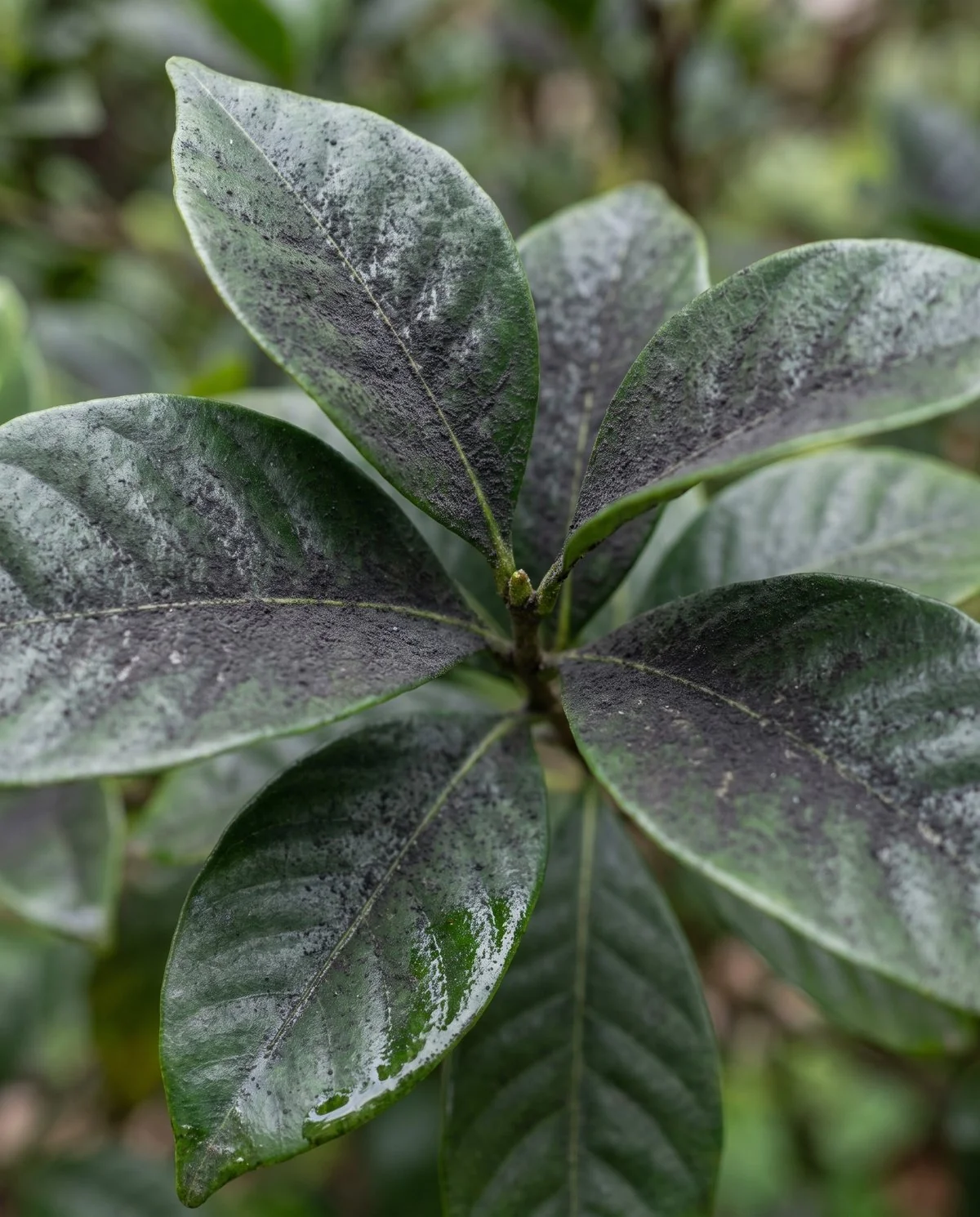
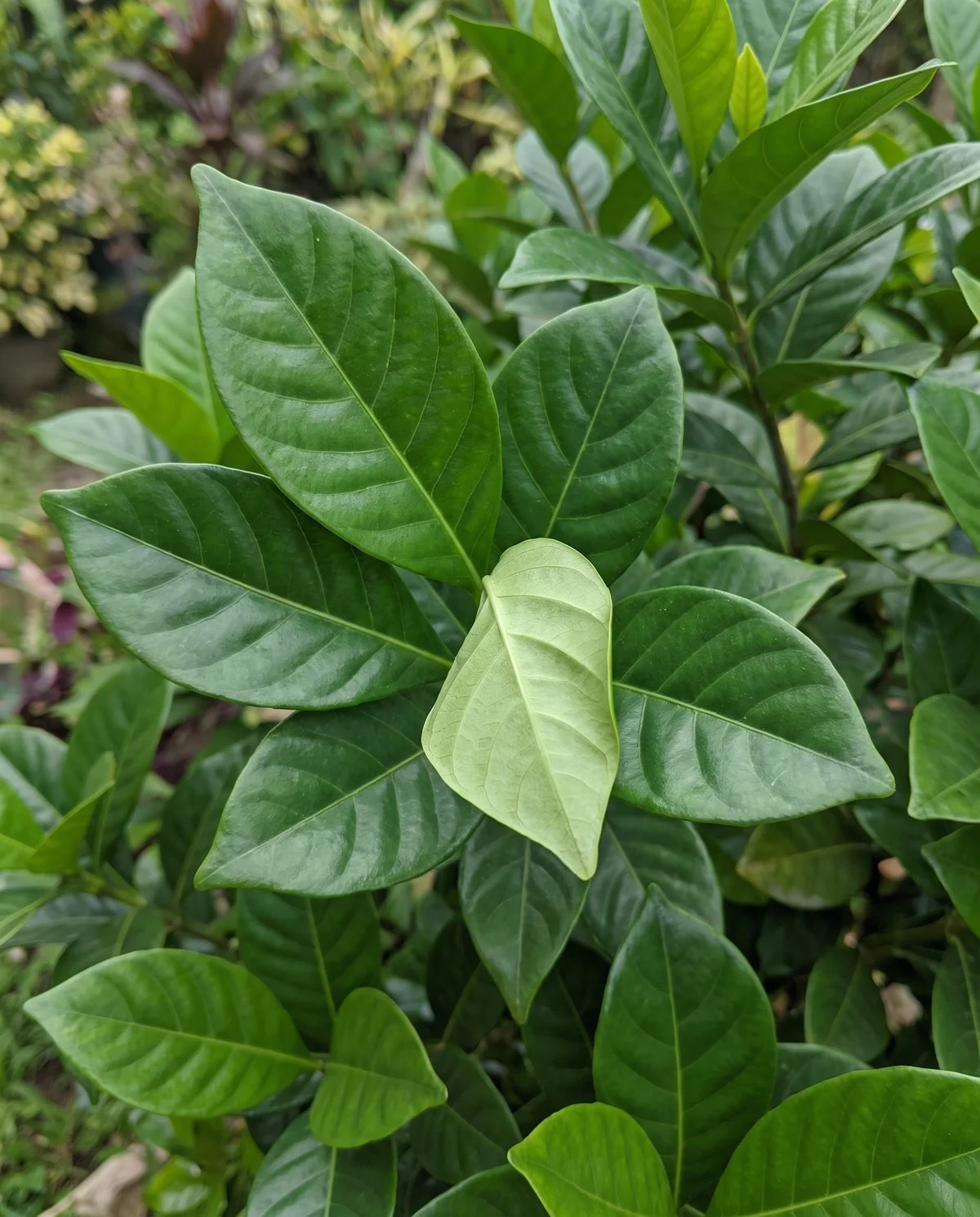
It sits on top of the leaf rather than in it. Clemson describes sooty mold as a charcoal-black, powdery or velvety coating on leaves and other plant parts, a superficial fungal growth living on the honeydew that aphids, soft scales and whiteflies drip, which is why it clears once the insects do. Healthy gardenia foliage is glossy and dark green with no sticky residue, and ants patrolling the stems are their own tell in the same pest sheet, because ants farm the honeydew.
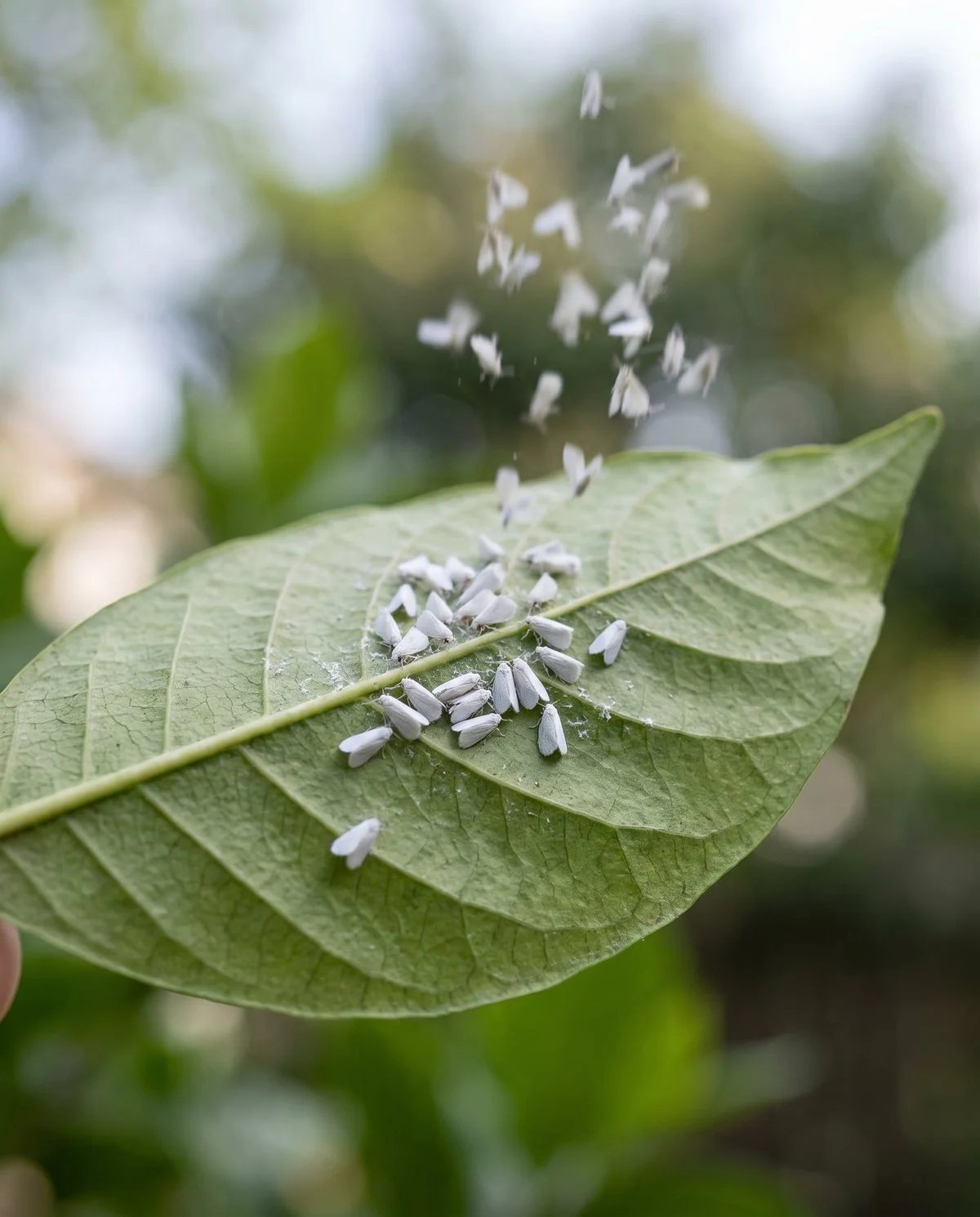
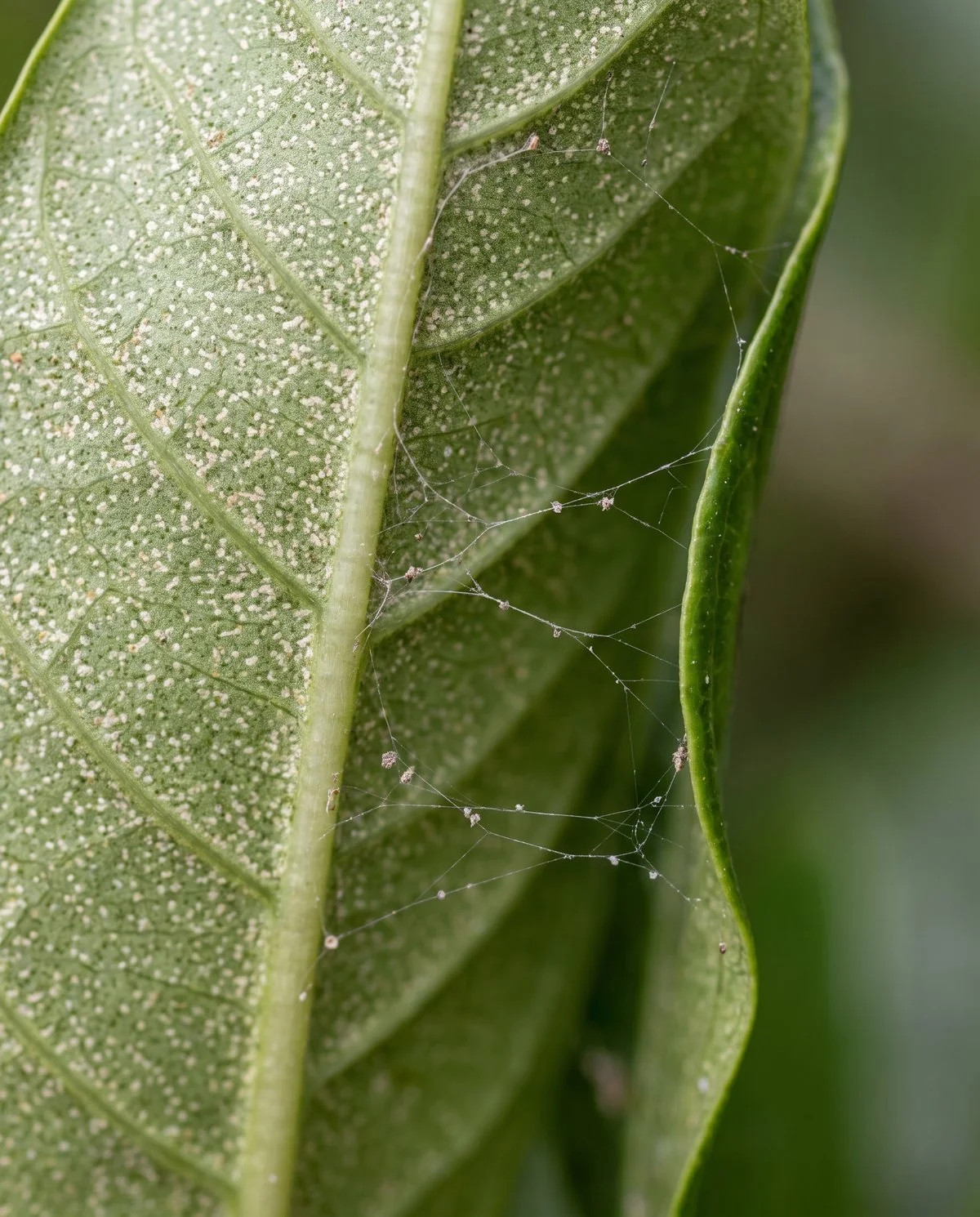
Disturb the plant and watch what happens. Whiteflies fly: Clemson puts them at about 1/10 to 1/16 inch long with a powdery white appearance resembling tiny moths, wings held roof-like, and they rise in a visible white cloud. Spider mites never do; Clemson notes they are not insects but arachnids with eight legs at about 1/50 inch, the two-spotted spider mite being the primary gardenia pest, and their tells are fine webbing on the undersides plus yellow or white speckling on the upper leaf surface, with heavy webbing and trapped debris in severe cases. Whitefly damage arrives with sticky honeydew and sooty mold; mite damage does not.
What 118 gardenia owners actually posted about, ranked
The sample is 118 unique gardenia posts pulled from r/gardening, r/plantclinic and r/houseplants through the Arctic Shift Reddit archive, spanning roughly 2018 to 2025. How they were counted belongs in the open rather than in a footnote: this research had no raw-JSON tool, so every archive call was fetched and summarised by a model first, and the themes below were hand-categorised by reading those summaries rather than by running a keyword pass over the original post text. Themes are not mutually exclusive, since one post routinely reports two or three symptoms at once, so the shares are of the 118-post sample and do not sum to 100 percent. One pattern the raw ranking hides is spelled out in the third row: the complaint the extension services diagnose most specifically is not the complaint posted most often.
Follow the veins before deciding anything. UF/IFAS describes yellowing except for green veins as what happens when soil pH exceeds 7.0 and iron stops being available to the plant. Only five of these thirty posters described that vein-green pattern in words; most simply wrote yellow, which is exactly why this row is the widest in the sample rather than the most useful. Overwatering, iron lockout, cold soil and bud-drop-adjacent stress all announce themselves as yellowing first, so the count measures how the plant fails visibly, not what is failing.
Feel whether the tissue is dead rather than discoloured. These eighteen posts were coded separately from the row above because the poster described brown, crunchy or burnt tissue, and the causes they named themselves were heat, underwatering and post-repot shock. Clemson's own establishment schedule is the thing to check the plant against: watered weekly during periods of drought in summer, and drip-irrigated because that prevents leaf spots. One poster in this group had been watering roughly every second week through winter, and another was bracing for a 40 C heat wave.
Pick up a fallen bud, but read this row's position first, because frequency and diagnosis rank differently here. Bud drop sits third by raw count and is still the most specifically diagnosed gardenia complaint in the university literature: UF/IFAS EP338 and Clemson each give it its own named cause list, dry, hot or unusually cool weather, thrips and nematodes, too much fertilizer, poor drainage and low humidity, which no other gardenia symptom receives in the same sourced material. Yellowing outranks it because yellowing is a shared downstream symptom of several different underlying problems, including bud-drop-adjacent stress itself, rather than one named condition. Treat the two rows above as louder, and this one as better understood.
Turn a leaf over, then shake the plant and watch. Clemson's gardenia pest sheet puts whiteflies at about 1/10 to 1/16 inch with a powdery white appearance resembling tiny moths, and they rise; the two-spotted spider mite at about 1/50 inch never does, and leaves fine webbing and stippling instead. The proportion matters as much as the identification. Twelve posts in 118, set against UF/IFAS's and Clemson's treatment of flower thrips as one named cause of bud drop among several environmental ones, puts insects as a real minority cause rather than the default explanation for a gardenia going wrong.
Ask what the plant was grown for before diagnosing anything on it. This row is not a symptom but an entry point, and it cuts across all four rows above: ten posters were usually within a week or two of receiving a wrapped grocery-store, mail-order or sympathy plant. UF/IFAS's figure is the one to check first in that situation, since soil below 70 F contributes to both yellowing and bud drop, and a plant standing in a cool room in winter is meeting that threshold and dry indoor air at the same time. The sample also under-reports what this row costs: these are snapshot rescue posts filed in the first fortnight, not follow-ups on whether the plant saw the next winter.
Take two readings before calling it. Ten posters could see the plant looked bad and could not say why, and a soil pH reading plus a soil temperature reading answer more of those than another photograph does, because UF/IFAS attaches a specific number to each: iron becomes unavailable above pH 7.0, and soil below 70 F contributes to both yellowing and bud drop. Both of UF/IFAS's and Clemson's cause lists for this plant are ordered the same way, temperature, water and soil chemistry first, with insects appearing partway down.
Decide whether the coating sits on the leaf or in it. Clemson describes sooty mold as a charcoal-black, powdery or velvety coating on leaves and other plant parts, a superficial fungal growth living on insect honeydew rather than a pathogen attacking the tissue, and Clemson separately ties leaf spot to wet foliage, which is why its irrigation note is phrased as preventing leaf spots. This row also holds the sample's one honest dead end: a post describing unusual clustered growth on the branches, after an eco-fungicide failed, could not be mapped to any named disease or pest in the university sourcing gathered here, and it is recorded as an open question rather than guessed at.
Read the cultivar tag against the zone before reading the damage as a care mistake. Clemson's summary line is that most of the older gardenia cultivars are cold hardy to USDA zone 8 while many of the newer and smaller cultivars are hardy to at least zone 7a, and it flags dwarf cultivars separately as often more cold sensitive, so a smaller plant is not the safer one. Five posts in 118 is a smaller share than a search on the genus would suggest, which fits a sample grown largely in protected and warm-zone settings rather than as an exposed landscape shrub.
Ask when the plant was last cut. UF/IFAS names the date rather than a season: pruning should only be done after the shrub has stopped flowering and before October 1, because pruning after then will hurt the next season's flower production. This is the smallest row in the sample for a reason worth noting, since it says something about the plant rather than about the posters. Only three of 118 described a gardenia that is otherwise fine and bloomless; on this shrub almost every no-flowers complaint arrives phrased as bud drop instead.
Flower photos
FAQ
Do gardenias need full sun or shade?
They do best in a balance of the two. Morning sun with afternoon shade is close to ideal, or bright filtered light through a canopy. Harsh, all-day afternoon sun scorches leaves and dries buds, while deep shade leaves the plant leggy and reluctant to flower. In cooler regions gardenias take more sun; in hot southern gardens they want relief from the midday heat.
Why are my gardenia's leaves turning yellow?
The usual cause is chlorosis, an iron shortage that comes from soil that is too alkaline rather than too little iron in the ground. New leaves go pale yellow with green veins. Test the soil, acidify it with sulfur or composted pine bark, feed a fertilizer made for acid-loving plants, and use chelated iron for a quick green-up. Overwatering and normal aging of old lower leaves can also yellow foliage, so check your watering too.
Why do my gardenia buds fall off before they open?
Bud drop is gardenia's signature frustration and almost always a reaction to stress or change, not a disease. Moving the plant, cold drafts, temperature swings, low humidity, erratic watering, and poor light all trigger it, and warm nights can stop buds forming in the first place, since bud set needs nights around 50 to 55 F. Keep everything steady once buds appear and leave the plant where it is.
How often should I water a gardenia?
Keep the soil evenly moist and water deeply whenever the top inch has dried, roughly once or twice a week in the ground and more often in a pot. Water at the base to keep the leaves dry, and never let the plant either dry out completely or sit in soggy soil.
How do I get my gardenia to bloom more?
Give it enough bright light, feed an acid-lover fertilizer through spring and early summer, and keep conditions steady so buds do not drop. Prune only right after the main bloom, because gardenias set their buds on older wood and late pruning cuts off next year's flowers.
Can I grow a gardenia indoors?
Yes, though it takes effort. Give it the brightest window you have, ideally one facing east or south. Raise the humidity with a pebble tray or humidifier, and keep it away from drafts and heating vents. Hold daytime temperatures around 65-75°F (18-24°C) and let nights run cooler, which is what sets buds. Many growers move potted gardenias outside for summer and back in before the first frost.
Are gardenias toxic to pets?
Yes, mildly. Gardenia is listed by the ASPCA as toxic to cats, dogs, and horses, and a pet that chews it may get mild vomiting, diarrhea, or hives. It is rarely serious, but keep the plant out of reach and call a vet if a lot was eaten or symptoms are bad.
When and how should I prune a gardenia?
Prune right after the main flowering flush, usually mid to late summer, cutting back leggy stems and removing spent blooms and any dead wood. Keep it light, since gardenias dislike hard cutting, and pruning in fall or winter removes the buds that would bloom next year.
How long do gardenia plants live?
With proper care, gardenias can live for a very long time. Outdoor gardenia shrubs in favorable climates can easily live for multiple decades: 15, 20, even 30+ years is not uncommon. There are reports of well-tended gardenias surviving up to around 50 years. Their longevity depends on factors like climate (they need protection from severe freezes), soil health, and pest management. Potted gardenias may not live as many decades as those planted in the ground, but they can still thrive for many years if repotted when needed and given attentive care. In short, a gardenia doesn’t have a fixed lifespan, it will continue to grow and bloom year after year as long as its basic needs are met and it avoids extreme stress or damage.
What’s the best way to propagate a gardenia?
The easiest way to propagate a gardenia is by taking stem cuttings. In late spring or summer, snip off a healthy branch tip about 4 inches long. Remove the bottom set of leaves, dip the cut end in rooting hormone, and plant it in a small pot of moist, well-draining medium. Keep the cutting warm, humid, and in bright indirect light. In several weeks, it should develop roots and begin to grow. At that point, you can transplant it to a larger pot. Gardenias can also be propagated by air layering (a technique where you encourage roots to form on a part of a branch while it’s still attached to the mother plant) or by seeds. However, growing from seed is very slow and the new plant may not be identical to the parent. For most gardeners, cuttings are the quickest and most reliable way to get a new gardenia plant.
Which gardenia should I plant if my winters are too cold for zone 8?
Two cultivars carry the sourced cold ratings. 'Kleim's Hardy' is hardy to 10 F, the one figure where Clemson and NC State independently state the same number rather than a zone label. 'Crown Jewel', a 'Kleim's Hardy' by 'Chuck Hayes' cross, carries NC State's own cultivar-page verdict, winter hardy, with protection, to zone 6, which is exceptional for gardenias. Clemson's general line sets the frame: most older cultivars are hardy to zone 8, many newer and smaller ones to at least zone 7a, and dwarf cultivars are flagged separately as often more cold sensitive.
Is there an actual date after which pruning costs me next year's flowers?
UF/IFAS names one: pruning should only be done after the shrub has stopped flowering, and before October 1, because pruning after then will hurt the next season's flower production. Clemson states the same rule without the date, prune shrubs after they have finished flowering in summer. The mechanism behind both is that gardenias set next year's buds on the growth that follows this year's bloom, so a cut made after that growth has set buds removes the wood that would have carried the flowers.
When exactly should I feed it?
UF/IFAS publishes an exact regional schedule rather than a season: South Florida in February and October, North Florida in March and September, with an optional third application during the summer. Use a fertilizer formulated for acid-loving plants, consistent with the 5.0 to 6.5 pH target, and note that too much fertilizer appears in UF/IFAS's own bud-drop sentence, so more is not better here.
Is the gardenia I got as a gift the same plant as the one at the garden center?
Frequently not. The cultivars named in university sources for landscape use, 'Radicans', 'Kleim's Hardy', 'Frost Proof', 'Crown Jewel' and 'August Beauty', all carry a stated USDA zone rating and were selected for outdoor performance. The florist-trade names that arrive wrapped, 'Fortuniana', which carries the corsage-gardenia common name, and 'Belmont', were selected for showy, fragrant, greenhouse-forced bloom and generally are not given a zone rating at all. Both are Gardenia jasminoides, and both appear in UF/IFAS's or NC State's cultivar lists, but they were bred against different tests.
Can a gift gardenia really be kept as a houseplant?
It is possible and genuinely difficult, and the obstacle is humidity rather than watering technique. Consumer sources consistently put the requirement at roughly 50 to 60 percent relative humidity or more to hold buds, which is a consumer-tier figure rather than an extension one, and heated winter air commonly sits well below it. UF/IFAS supplies the extension-tier number from the other direction: soil below 70 F contributes to both yellowing and bud drop, so a cool room compounds the problem. A pebble tray, a humidifier or grouped plants raise the odds; misting the leaves does not, and it wets the foliage and blooms that Clemson's own guidance keeps dry.
Interesting tips
The biggest decision is the one made at the nursery, not in the garden: a hardy, climate-matched cultivar like 'Frostproof' or 'Kleim's Hardy' survives a winter that would kill a tender variety, so choosing well up front prevents most heartbreak. The flower also carries a long cultural trail. The jazz singer Billie Holiday wore gardenias in her hair on stage, and in French Polynesia the related Tahitian gardenia, or tiare, is infused into coconut oil to make the fragrant Monoi used on skin and hair. In China the dried fruit of Gardenia jasminoides, known as zhi zi, has served both as a traditional medicine and as a yellow dye for food and cloth, a reminder that this shrub has been valued for far more than its looks.
- Named for a Botanist: The gardenia gets its name from Alexander Garden, a Scottish-American botanist from the 18th century. Carl Linnaeus honored Garden by naming this fragrant genus after him.
- Symbolism: In the language of flowers, gardenias symbolize purity, love, and refinement. They have often been used in wedding bouquets and corsages for this reason. Giving someone a gardenia can also signify secret love, an old-fashioned romantic gesture.
- Cultural Icon: Jazz singer Billie Holiday was known for wearing gardenia flowers in her hair when she performed. The bright white blooms against her dark hair became an iconic look, showcasing the flower’s elegance and allure on stage.
- Polynesian Beauty Secret: The Tahitian gardenia (tiare flower) is the national flower of French Polynesia. Its blossoms are infused into coconut oil to create Monoi oil, a traditional scented oil used to moisturize skin and hair. This highlights how valued the gardenia’s fragrance is in cultures around the world.
- Natural Dye and Medicine: Gardenia fruits have been used in traditional medicine and as a natural dye. In Chinese herbal medicine, the dried fruit of Gardenia jasminoides (called zhī zi) is used for its health properties, and it also yields a yellow dye that has been used to color foods and fabrics.
Related Guides & Flowers
Camellia
Evergreen, acid-loving shrub with glossy leaves and elegant white to pink blooms.
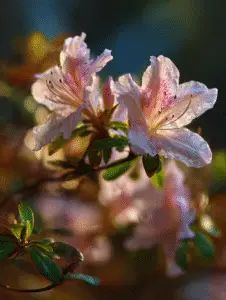
Azaleas
Acid-soil shrubs for dappled shade; pair well with gardenias in woodland borders.
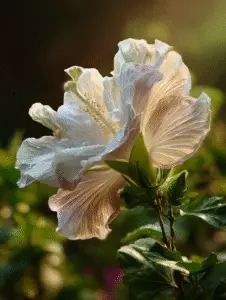
Hibiscus
Warm-climate shrub with large tropical flowers; good alternative for Zone 9 to 11 gardens.
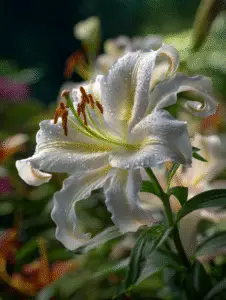
Lily
Powerfully fragrant blooms; white cultivars echo gardenia’s classic look for bouquets and near-entry plantings.
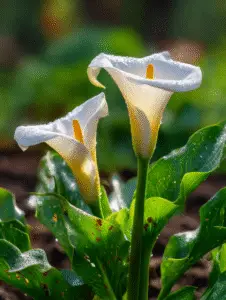
Calla Lily
Clean white spathes for the same refined palette in arrangements and containers.
Roses
Fragrant garden roses, especially whites and creams, for classic mixed borders with gardenias.
Hydrangea macrophylla
Prefers acidic soil; great companion shrub for part-shade beds.
Lilacs
Highly fragrant spring shrubs for cooler regions; an alternative where gardenias are not hardy.
References
- NC State Extension Gardener Plant Toolbox: Gardenia jasminoides – Extension profile with cultivation needs, origin, and notable characteristics.
- Clemson Cooperative Extension HGIC: Gardenia – Practical care guide with cultivar notes, pruning, and troubleshooting for home landscapes.
- UF/IFAS EDIS: Gardenias at a Glance (EP338) – Quick facts on pests, care, and management suited to warm climates.
- ASPCA: Gardenia Toxicity to Pets – Non-profit reference noting toxicity to cats, dogs, and horses with listed compounds and typical symptoms.
Enjoying our flower guides? Add YourFlowersGuide as a preferred source on Google. It helps more readers find us.
Add to Preferred Sources